Sharing experiences across continents – Year 4 2019
The Year 4 students were recently introduced to a class in Pakistan, who was studying water scarcity. They sent us a You tube link showing how certain villages in Pakistan only received fresh water every 2 weeks! Pakistan is set to have NO available drinking water by 2025.
Our class is very excited to share how we as a school and community in Cape Town have put measures in place to avoid our “Day Zero” in 2018. Much preparation, filming and editing occurred and 4 short videos were made. At the same time, the class in Pakistan was doing cultural presentations. They are going to send the presentations to us, assisting our students in learning about them. We also hope to share a Skype conference with them to share what we have learned together.
As an international School we have a responsibility to teach our students how to build diplomatic relationships worldwide. Our students are our future leaders and by empowering them to work together, the future is very bright indeed.
Mrs Carey Schoots
Year 4 Teacher

Jumping into Math! Year 2
Maths is fun!
“Tell me and I forget. Teach me and I remember. Involve me and I learn” – Benjamin Franklin
With that in mind, the Year 2 classes tackled this week’s Math concept of measuring from a totally different perspective.
The students were divided into three different groups, each group attempting a measurement task using different apparatus.
- One group had to estimate how many cubes would fill different size containers and then check their answer by actually counting the cubes.
- A second group had to measure and design a cardboard house for a soft toy they had brought to school.
- The third group worked on the mat, using their white boards to build a ramp for a toy car. They then used a measuring tape to measure the distance their cars traveled.
There was much excitement (and quite a bit of noise), as the groups worked in the passage to measure how far they could jump. My class agreed that this was the most “fun” two days of Math “ever”. They were so involved in the activities, that they completely forgot that they were actually learning about centimeters and millimeters. It was wonderful to see how they adapted the instructions given to think up new ideas to test their cars, make their houses and hopping instead of jumping.
So the objective of the lessons was achieved, by using a different approach, which kept the students engaged, and asking and answering questions. This approach has proven to be a successful way to improve lateral and analytical thinking and, despite the organised chaos, will definitely be repeated.
Mrs Kim Coetzer
Year 2 Teacher

Foundation Stage – Welcome Back Term 2
Our students were all excited to be back at school! They were eager to share their holiday news, telling their stories to the class. Some freely admitted to driving mommy “crazy” (hopefully not)… Each student had the opportunity to tell their friends all about their travels and adventures.
“We went to Angola and saw lots of trees” Heitor Dantas
“I went to the museum” Juan Amouhadi
“I played games with my dad’ Matthew Hack
“We made a play tent and we made cakes” Daisy Cronje
“I played outside with my friends” Shemot Tapfuma
We have a fun filled term ahead, this week our theme was Circus and in the coming weeks we will explore shapes and colours. The themes change often to ensure we create a stimulating environment where our students can play their way to knowledge.
Reception Year Teacher
Ms Monique Crawley


The Tudors – Year 4 Term 1 2019
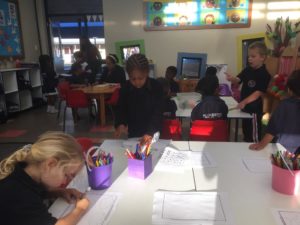
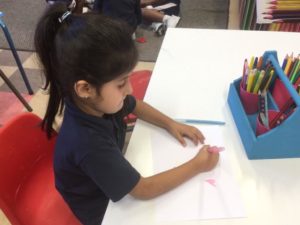
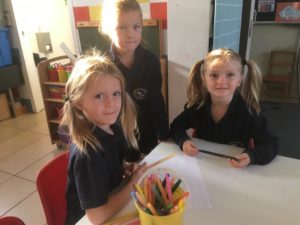
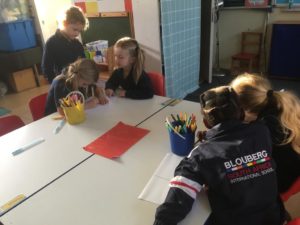
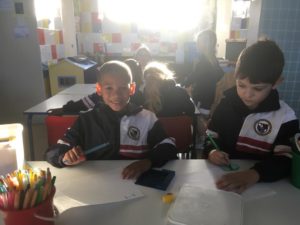
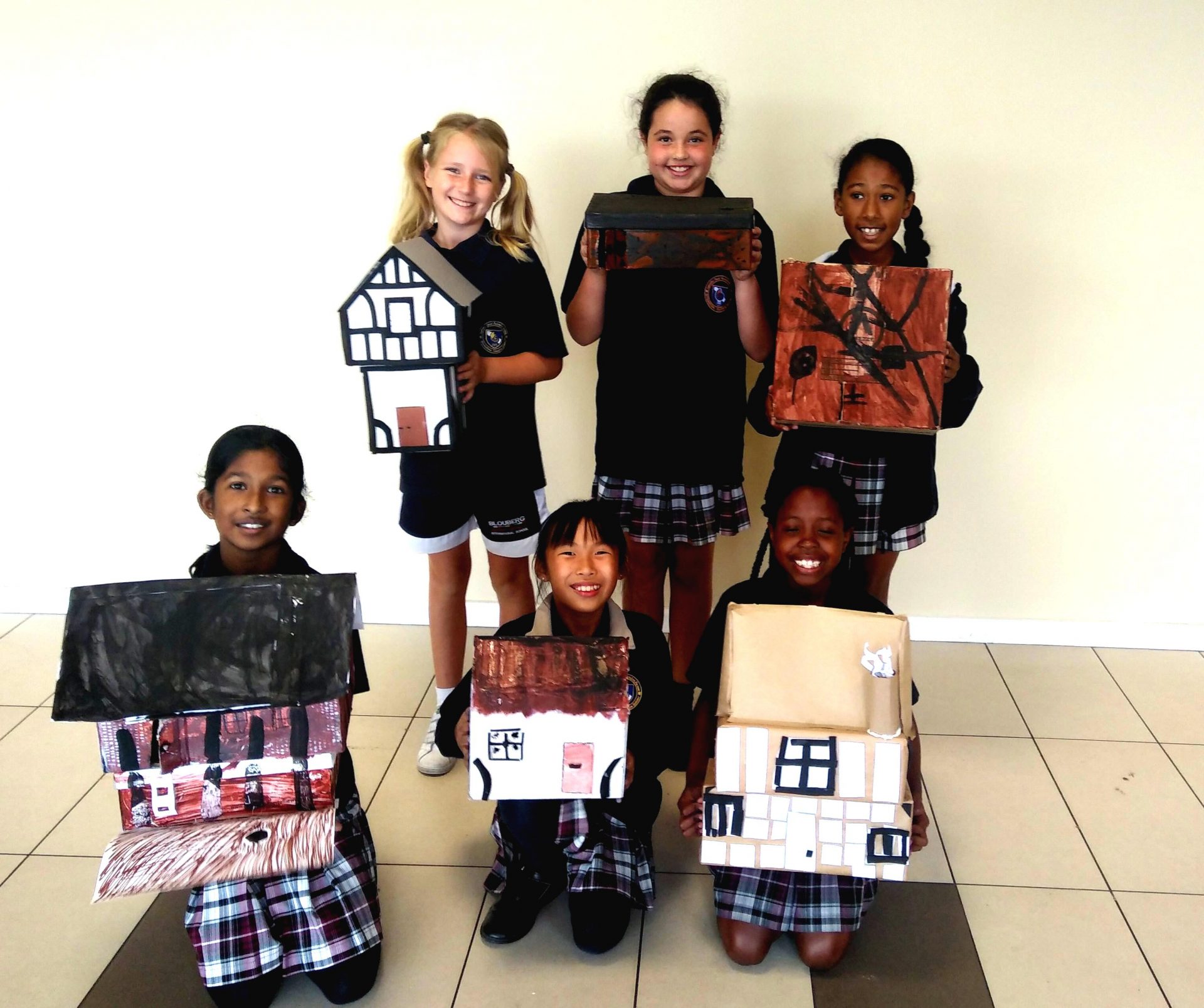
In Design and Technology this term the Year 4’s have done some cross-curricular work with our History topic on The Tudors.
We have learnt how to recognise a Tudor house by looking at their main features.
Most homes were half timbered with wooden frames and the spaces between were filled with small sticks and wet clay called wattle and daub. Tudor homes were known for their ‘ black- and- white‘ effect.
Some other key features included:
- The wooden timbers were often coated with black tar to help protect them from rotting.
- Tudor houses are made from a wooden framework of beams. The timber beams on Tudor houses are uneven because they were cut by hand rather than by machine.
- The wooden beams can be seen on the outside of Tudor houses. Tudor houses have steeply pitched roof covered with clay or stone tiles. Many older Tudors houses had a thatched roof.
- The upper floors of some Tudor houses were bigger than the ground floor and would overhang (called a jetty). The origins of the jetty are not entirely known but certainly in a town, it would have the effect of enlarging the floor space above whilst giving maximum street width.
We loved designing and building our own Tudor houses.
Ms Bridget Neal
Year 4 Teacher
Read More
The importance of play – Pre-Reception Term 1 2019
“Play is nature’s means of ensuring that young mammals, including young human beings, acquire the skills that they need to acquire to develop successfully into adulthood”
– Dr Peter Gray
As I observe my Pre-Reception class and reflect over the first term, I can’t believe how quickly the time has gone by and how much they have already developed. “Time flies when you are having fun!” The students have settled into the class routine beautifully and for some of them it is their first time at school.
Each week they have learnt about different themes, identifying numbers and sounds, number and letter formation, pencil control, shapes, colours, done activities to strengthen their fine motor skills, complete patterns, the importance of sharing and taking turns to name only a few of the things.
As I watch and interact with my students, it strikes me that people don’t realize the importance of play and what they actually learn through play. During play children are thinking, problem solving, developing memory, planning, investigating, developing language skills, concentrating and learning many more skills… Play is healthy for children, it reduces stress and anxiety by providing an outlet. Play is the medium through which children explore and experience their world around them. It’s how they learn! To a child, playing and working or learning are the same thing.
I noticed the children in my class engaging in various types of play throughout the day:
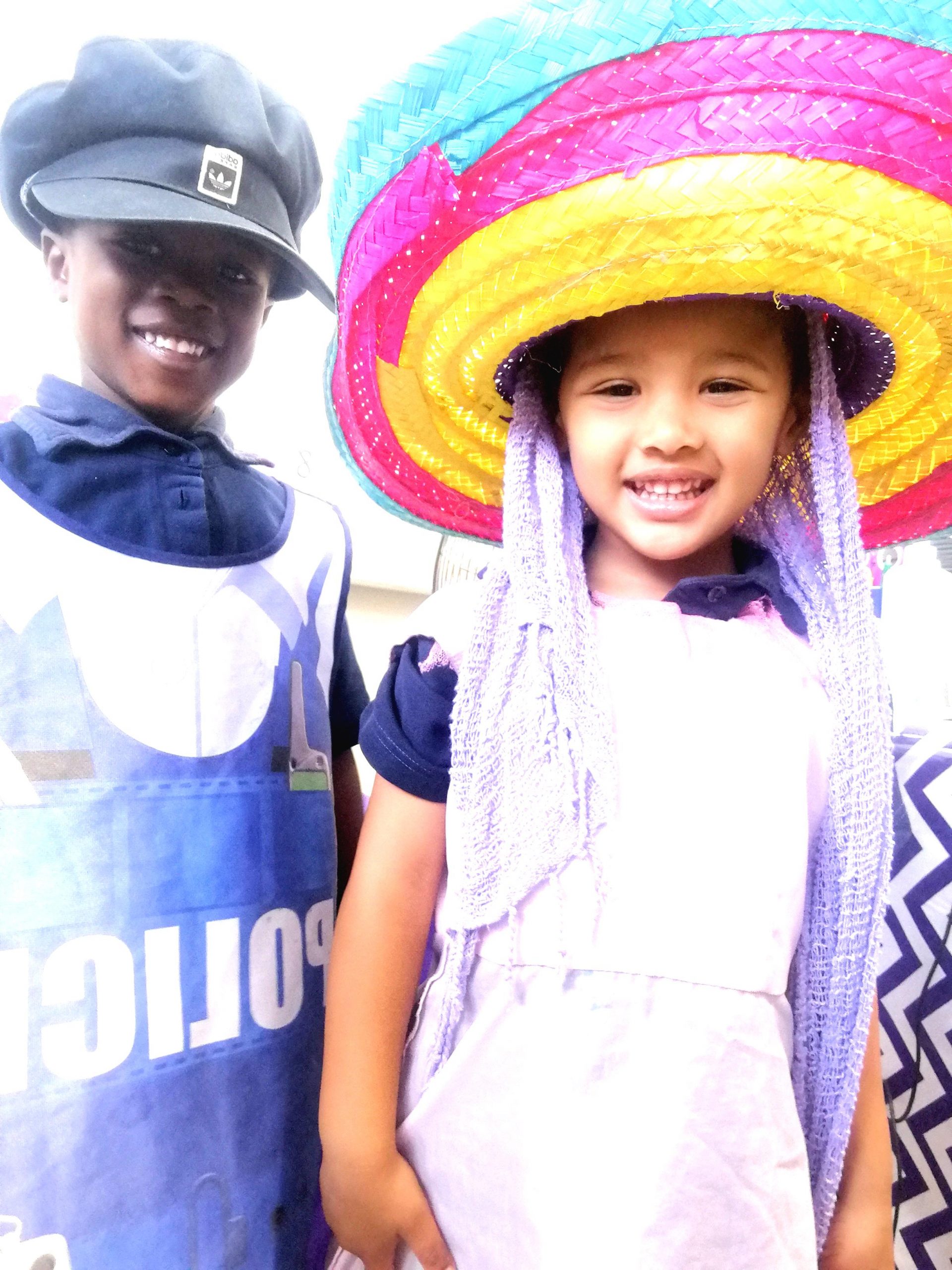
Fantasy or Dramatic Play also known as pretend play or make – believe play which involves “acting out” ideas and role playing activities.
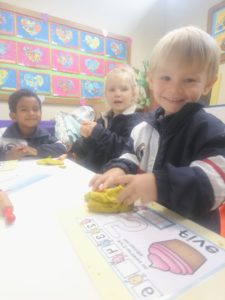
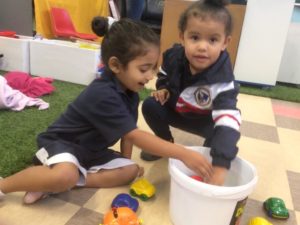
Sensory play involves stimulating the senses, tastes, textures, smells, colours, shapes and movements.
Investigative stage of play is when a child wants to see what happens when materials are manipulated in a certain way.
Competitive Play refers to games with rules that are more structured and may involve more than one player. My students love to play Hide and seek as well as Duck duck goose.
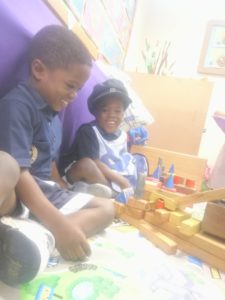
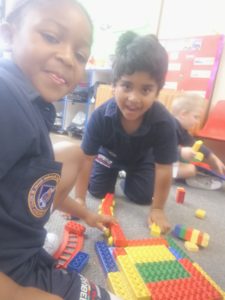
Constructive Play involves creating things and manipulating objects to make something. Some of the students really enjoy playing with the wooden blocks and building the most amazing constructions.
Physical Play refers to play that is purely physical, such as climbing a jungle gym, skipping etc.
Creative Play is about creating art using paint, crayons, cutting and pasting etc to express oneself.
Here are some tips how parents can support their child through play in the holidays:
-Allow enough time for play indoors and outdoors every day.
-Provide a safe environment.
-Play with your child and verbalise what they are doing and ask them questions to promote language development and problem solving.
-Allow your child to explore and get dirty during play.
-Provide stimulating toys and equipment.
-Encourage freedom of choice and do not interfere in the game.
-Provide clothes and accessories for dress-up play.
-Focus on the enjoyment of the game and not only on winning.
-Focus on games that teach mathematical and early reading skills.
-Play is not just good for your child but it’s good for parents too. Similarly to children, play helps parents relieve stress, mend and strengthen relationships and keeps everyone happy.
So the next time your children ask you to play with them, it’s not just good for them it’s good for YOU too!
Cindy Nunan
Pre-Reception Teacher