

Cool Beans!
Towards the end of last term, the Year 5’s began to explore the life cycle of plants, and investigated which factors are needed in order for a seed to begin to germinate, as well as what happens in the beginning stages of a plant’s life! We conducted an experiment where we gave two batches of seeds warmth and water, but only gave one batch of seeds air. Through this investigation, we learnt that seeds need all three factors, water, warmth AND air to germinate, as the seeds with air began to germinate, while the other batch did not!
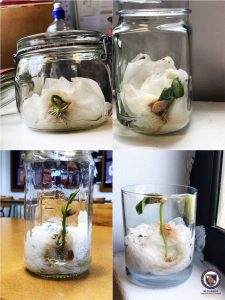
Just before the holidays, the Year 5’s “planted” their very own bean seeds in a clear jar with paper towel and some water. The seeds were left in a nice sunny, warm spot and given water when needed. On return to school, the kids were thrilled to see just how much their bean babies had grown! By the end of the holidays, all the seed coats had split open, most had grown in intricate series of roots, and a few had even grown a tall shoot with the first two leaves! After such an eventful introduction to the topic of plant life cycles, we just can’t wait to see what else we will be learning about our wonderful world in Science this term!
Robyn Pieters
Year 5 Teacher
Read More
Team Building Tournament
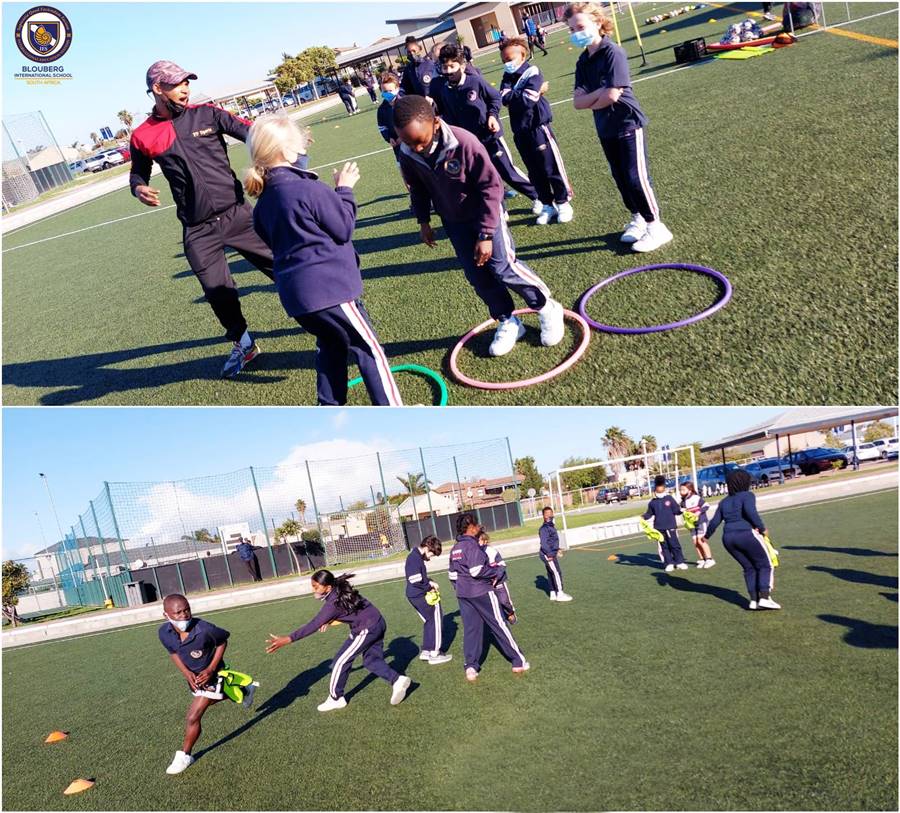
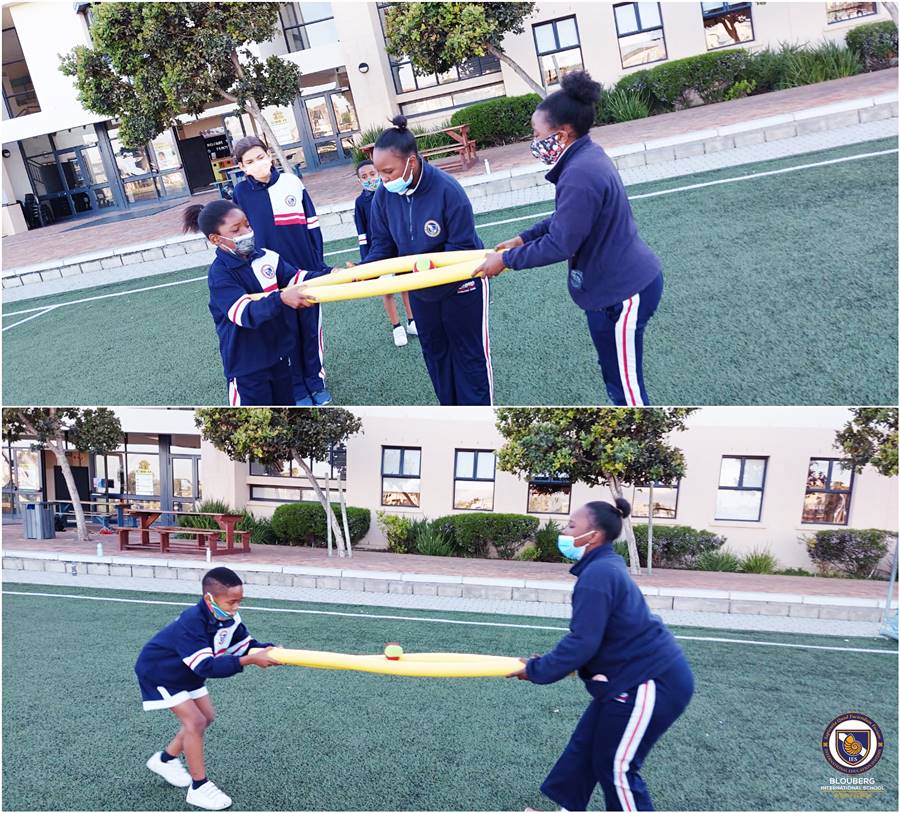
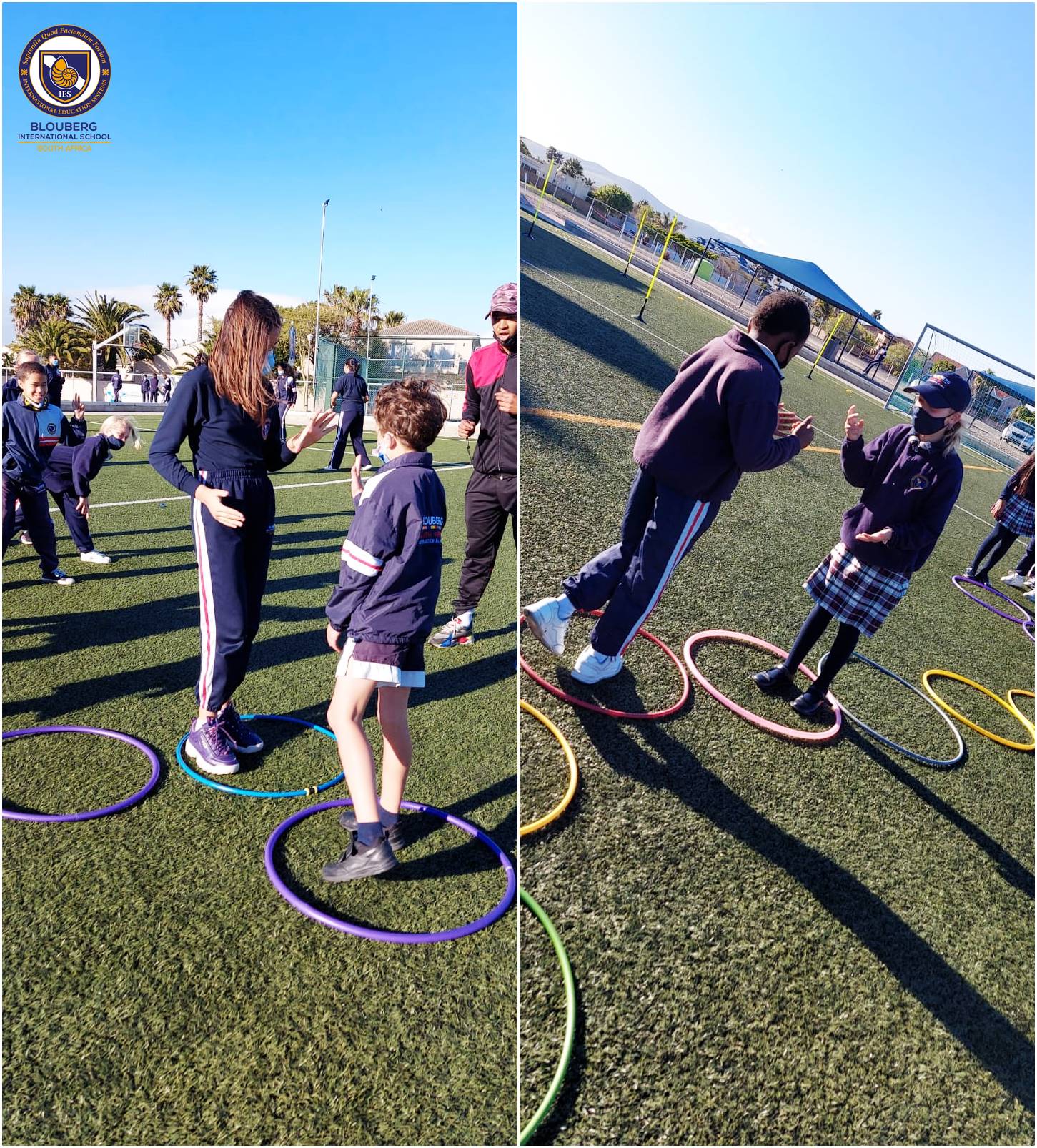
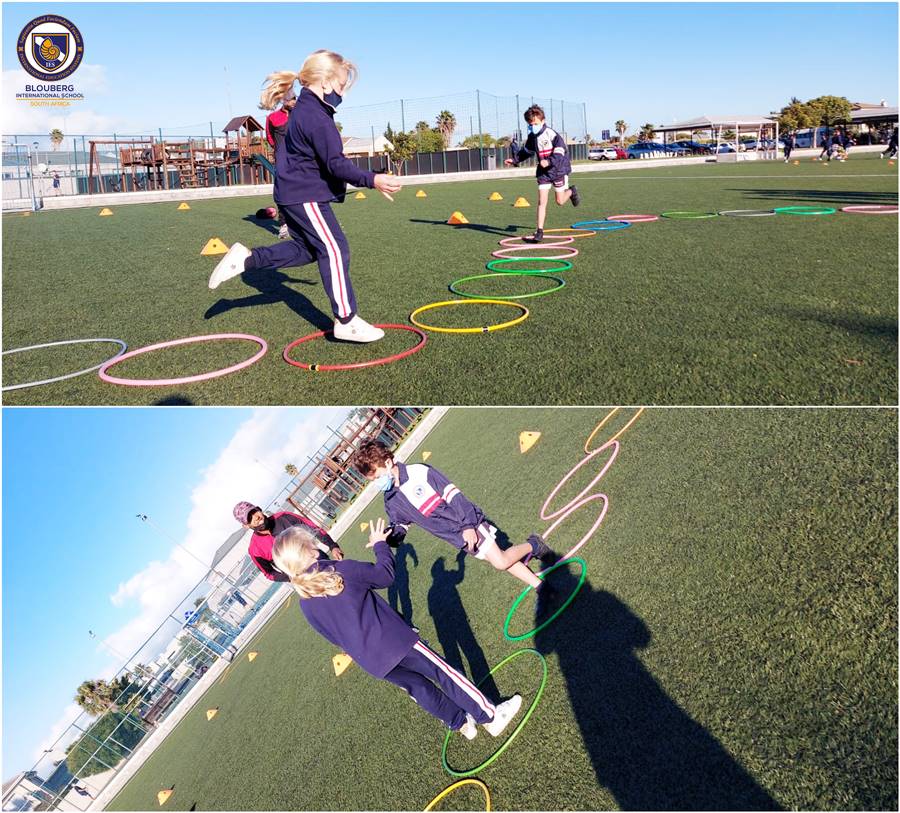
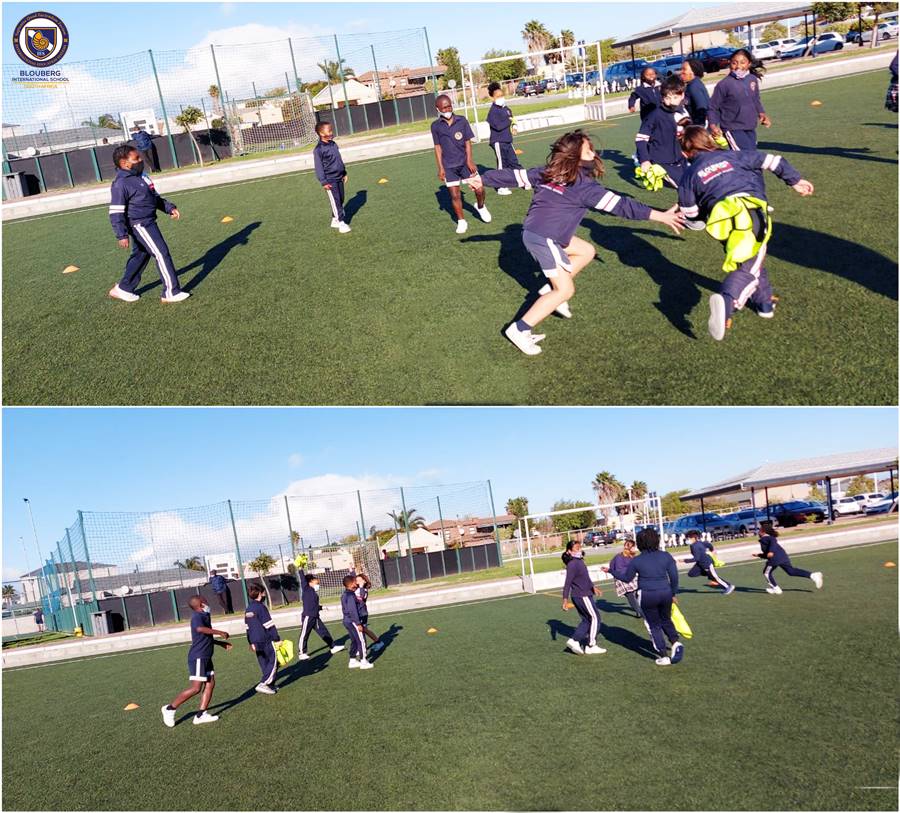
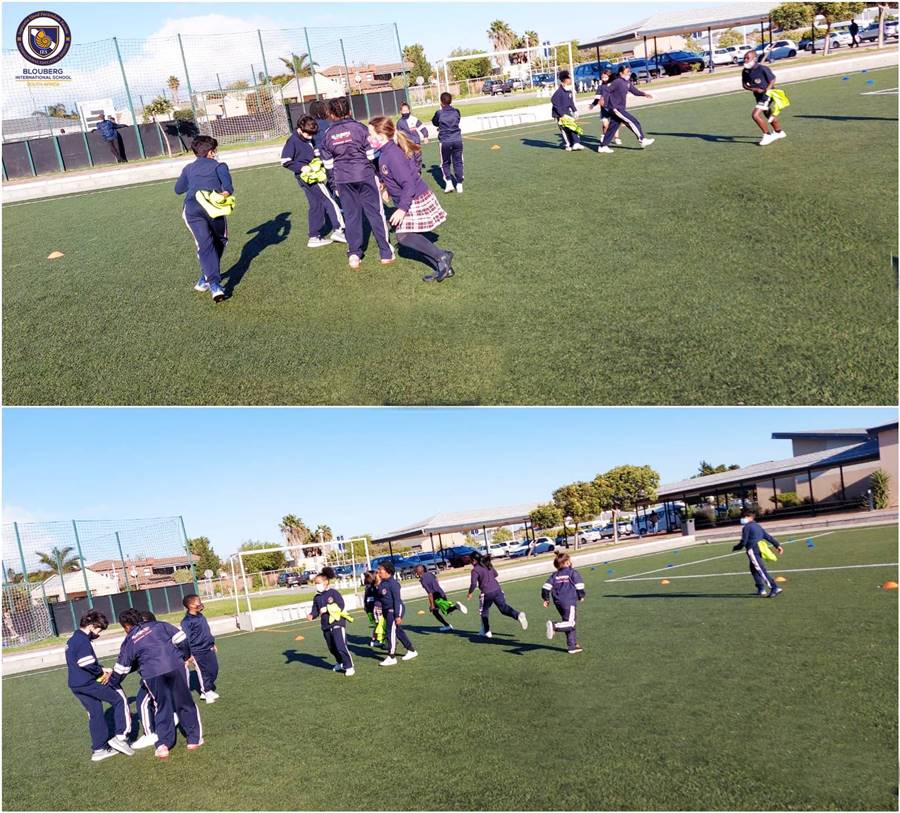
Year 4 students enjoyed a lovely morning of team building to end the term. Coach Fabein from FP Sports and his team of professional coaches organised some fun activities for the classes to complete in a Round Robin competition. The students had a great time and Mrs du Plessis’ class won the challenge overall.
We would like to thank our wonderful team of coaches for the care and support that they show our students every day. We look forward to a well-deserved holiday and to come back refreshed and ready in Term 4.
Yvette Fourie
Year 4 Teacher




Read More

Fun Day
As the end of term has arrived, it was with great excitement that the little ones came to school dressed in Civvies ready for their Fun day.
The teachers planned various activities, mostly making a big mess, because making a mess is always the most fun. The little ones painted the most beautiful pictures, dancing, playing outside and generally having lots of adventures.
We would like to thank our parents for everything they do to support their children’s learning journey. We cannot do this without them.
Wishing everyone a fantastic holiday!
Monique Meyer
Foundation Stage Coordinator


Read More
Robots And Our Futures
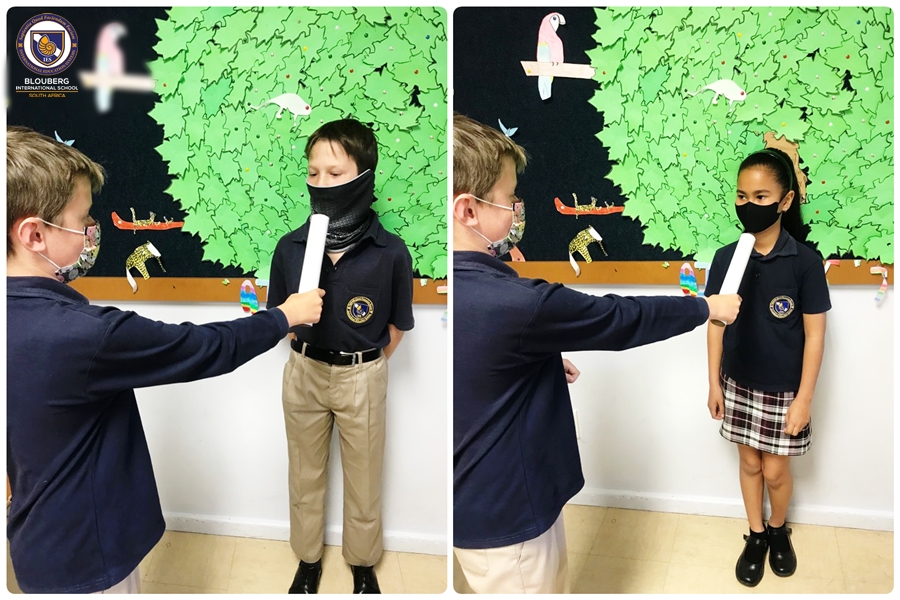
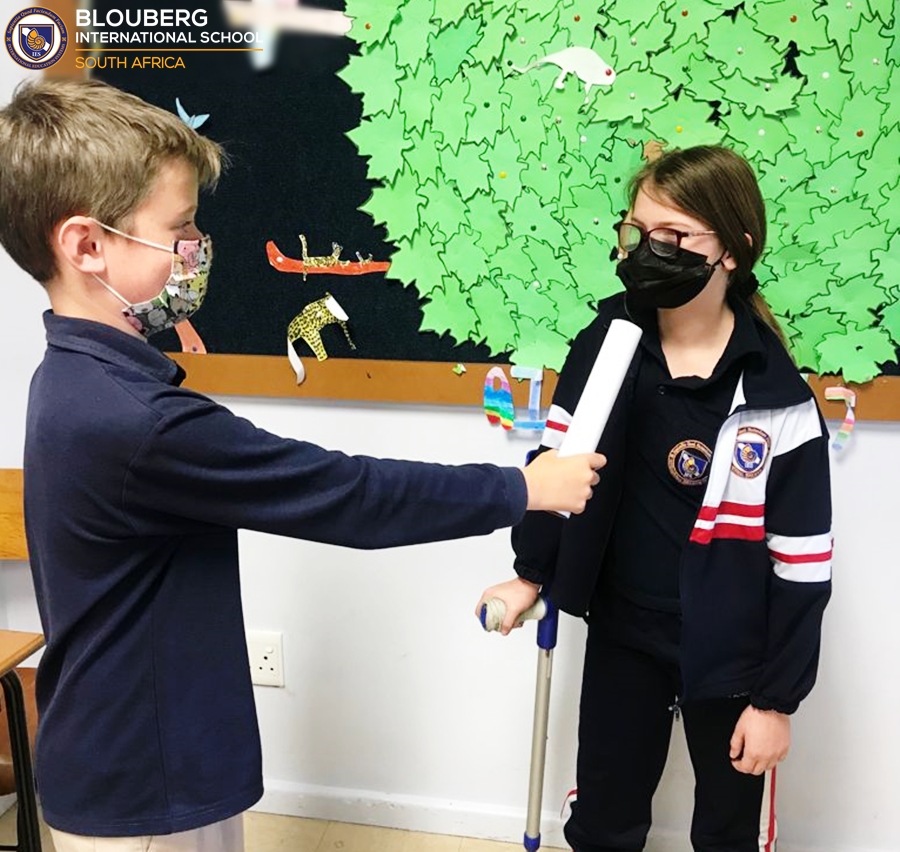
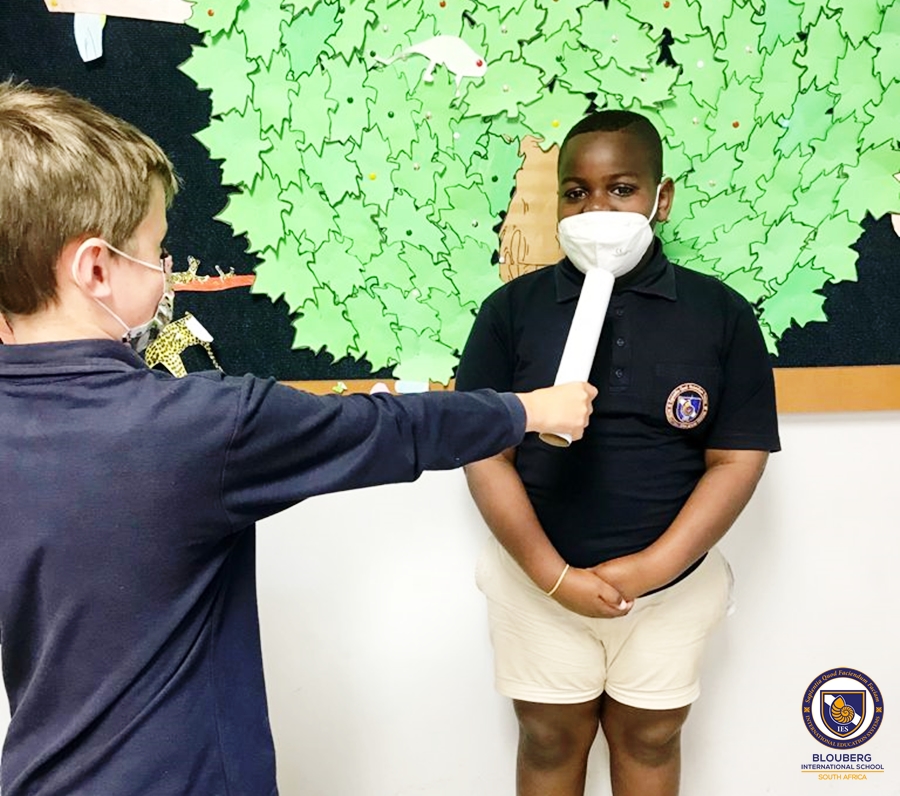
This term, the Year 5’s have been interestingly looking at the impact of modern technology on our world. We have specifically looked at Robots taking over our jobs. The students were asked to work in groups of 4 or 5 and put together a news broadcast, where they interview a factory owner who has decided to replace his factory workers with Robots.
Here is an example of a News Broadcast written by Nuraan Price (Year 5 Student)
News Reporter: Good morning all and thank you for joining our live broadcast! We have an interesting crisis for you this morning between a factory owner and his workers. Apparently he wants to replace them with robots! I am here today with all the people involved including Dave; the owner of the factory, one of his workers, the son of this worker and last but not least, the robot designer herself! Let’s start off with you Dave. How’s it going?
Factory Owner: Morning y’all, my name is Dave, and I’m the owner of Sweets & Treats, the Candy Factory.
News Reporter: So tell us Dave, what is the future you see for Sweets & Treats?
Factory Owner: Well, I’m a little ashamed to say, but Sweet & Treats hasn’t been doing so well this last year. And I know our employees are quite tired and a little stressed out trying to get orders and money in, so yeah, we’re struggling. Unfortunately, the factory might have to close down soon if this keeps up. So to anyone listening, go and order or buy some of Sweets & Treats’ delicious candy today! It’s available at any shop near you!
News Reporter: That must be hard, so what’s the deal with the robots?
Factory Owner: I think what’s best for the factory is for robots to do the work. That way all the candy can be made more cheaply and they can work faster for long periods and without making any mistakes. I am very aware this means that many people at my factory will lose their jobs, so when we make enough money from the robots I will give those who need it $1000 just to get them on their feet and help everyone out a little bit. The robots will probably be here and ready by January.
News Reporter: Thank you so much for sharing your opinion with us Dave! And you’re right, this must have a big impact on your workers, in fact we have one right here with us today! Would you mind telling us your name?
Factory Worker: Hello! Thank you for having me, my name is Tom, and I currently work at Sweets & Treats!
News Reporter: How has Dave’s new decision affected you and your life?
Factory Worker: Well I’ve worked at the factory for 7 years now and I’m one of Dave’s best workers and honestly I find it a little offensive that Dave would just throw us under the bus like that haha, but I know that he is just doing what’s best for the company and I respect that. I am however a little worried that I won’t be able to support my family anymore and trying to find a new job will be extremely hard for me especially during these times. Of course Dave’s $1000 will help a lot and I really appreciate it but I’m afraid that it won’t be enough until I find a job.
News Reporter: Wow, I hope it goes well for you and thank you for sharing with us. We also have your son here today to hear his say in the matter. Hi, would you mind introducing yourself?
Factory Worker’s Son: Hello there, my name is Alex and I’m 12 years old.
News Reporter: How are you today?
Alex: I’m good and you?
News Reporter: I’m very well thank you. How do you feel about the situation your dad is in right now?
Alex: Um, well I’m a little scared that my dad won’t be able to provide for me and my mom, but I think that it’s really nice of Dave to give us $1000. Another thing I’m worried about is my future. I’ve been studying and working as hard as I can in school and I’ve been getting A’s but I don’t know what job I’ll be able to get when I’m older since robots are taking over so many jobs. My mom says I can try to become a robot designer or programmer since robots can’t take over that job and I think that’s a great idea and it would be really cool to do, but I’m afraid that I’m not smart enough or it will be too difficult.
News Reporter: Don’t be silly Alex! Of course you’re smart enough! You can be anything you want to be. And if you do decide to study it, it will get easier over time. And I hope you enjoy it! Thank you to you and your father for sharing your sides of the story with us and I wish you the best of luck! I have one more person here with me, and that is the Robot Designer herself!
Robot Designer: Hi everyone, my name is Wendy Hensler. I’m 27 years old and I work for the tech company, AI. Inc.
News Reporter: So how has Dave’s decision helped your company?
Robot Designer: Sweets & Treats is the third company to call us and ask for this, we’ve been very busy and it’s pretty exciting to be able to design and make more robots than ever. I studied hard to become a robot designer, I love my job and I’m so happy to be able to work for one of the best tech companies in the country. Many manufacturers are moving to automation, to compete with overseas companies that are making the same product for much cheaper. I feel that without Robots, many companies will have to close down, but of course humans are just as powerful too.
News Reporter: Well there you have it folks, one robot and so many lives affected, is this the future? Good or Bad? I guess only time will tell. Well thank you to everyone for joining me today and thank you for sticking around, and I’ll see you next time folks, Good morning!
*End of interview*
We can never predict what will happen in the future, but we can rest easy knowing that we are preparing our students to ask the right questions and shape the world they want to live in.
Nadia Mahomed
Year 5 Teacher
Read More
High Frequency Words
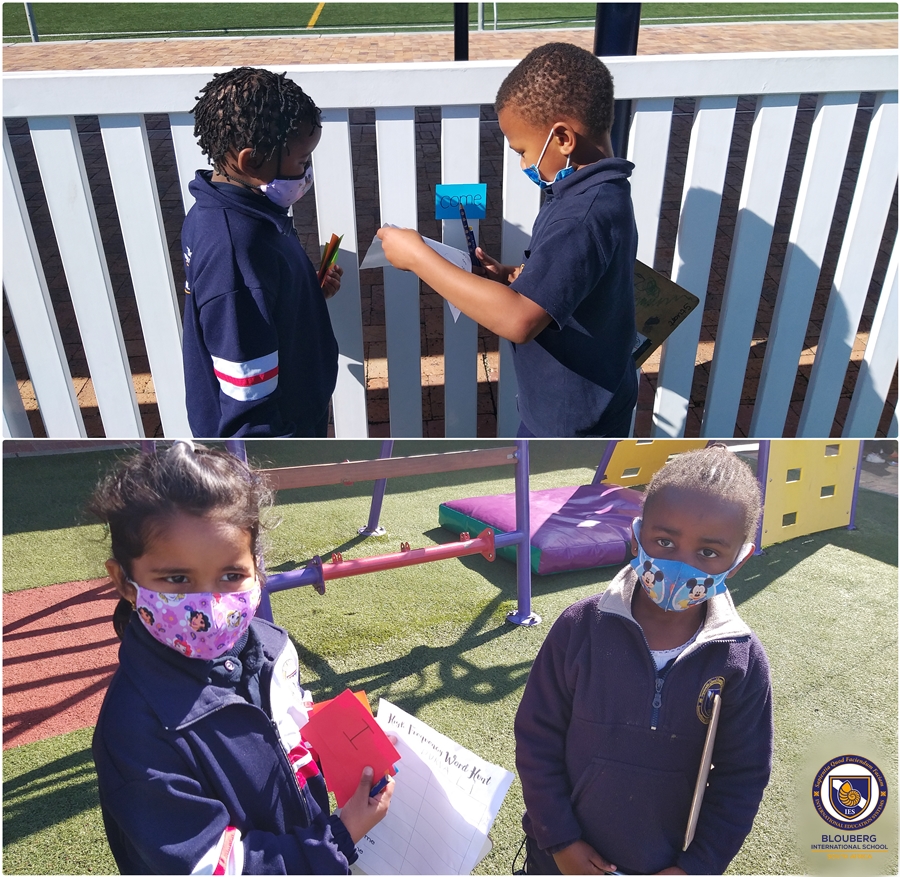
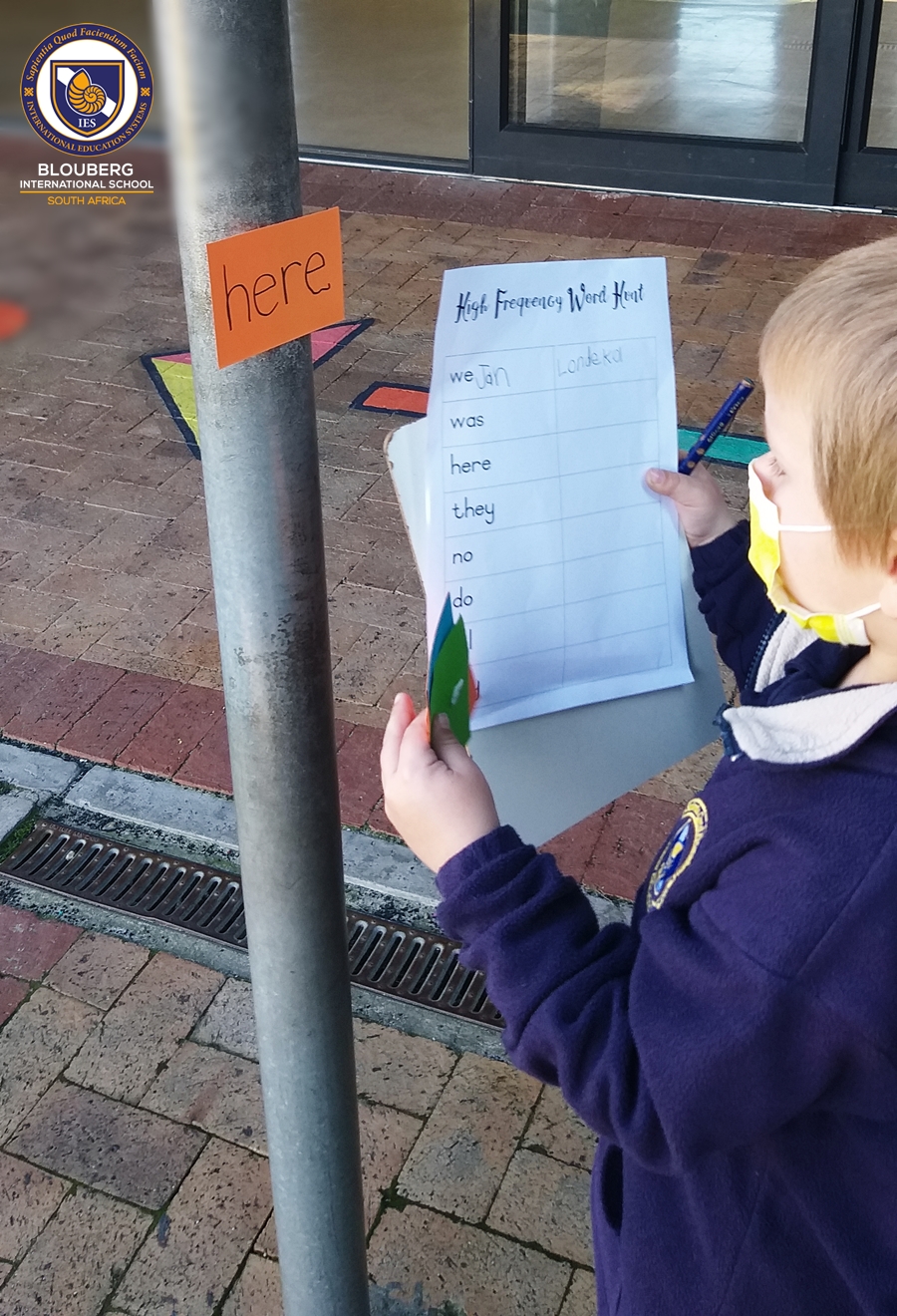
Last week we had a High Frequency Word Hunt. The students had to go and find flashcards of words on the playground according to a list in pairs. They thoroughly enjoyed this activity and excitedly showed the teachers all the words they could find from their lists.
Learning to read is a complex process, which involves many skills. Two of these skills is phonological knowledge and the other is memorising High Frequency Words. Phonological knowledge helps students to decode or sound out words. That is why it is more important to know the phonetic sound of letters rather than the alphabet name, so that words can be spelt out phonetically, like the word c-a-t. Knowledge of High Frequency words is important for those words that cannot be sounded out phonetically, such as the word ‘you’ or ‘the’. These words commonly occur in sentences, hence the term High Frequency Words. That is also why students have greater confidence and fluency when they have been spending time memorising High Frequency Words as part of their reading homework at home.
It’s important that parents try to make learning High Frequency Words fun. Here are some helpful ideas in the links below:
https://www.curiousworld.com/blog/sight-word-games
https://www.weareteachers.com/sight-word-activities/
https://www.themeasuredmom.com/25-low-prep-sight-word-activities/
Bronwen Nuthall
Reception Year Teacher

Read More

Picasso, Pianos and Portraits!
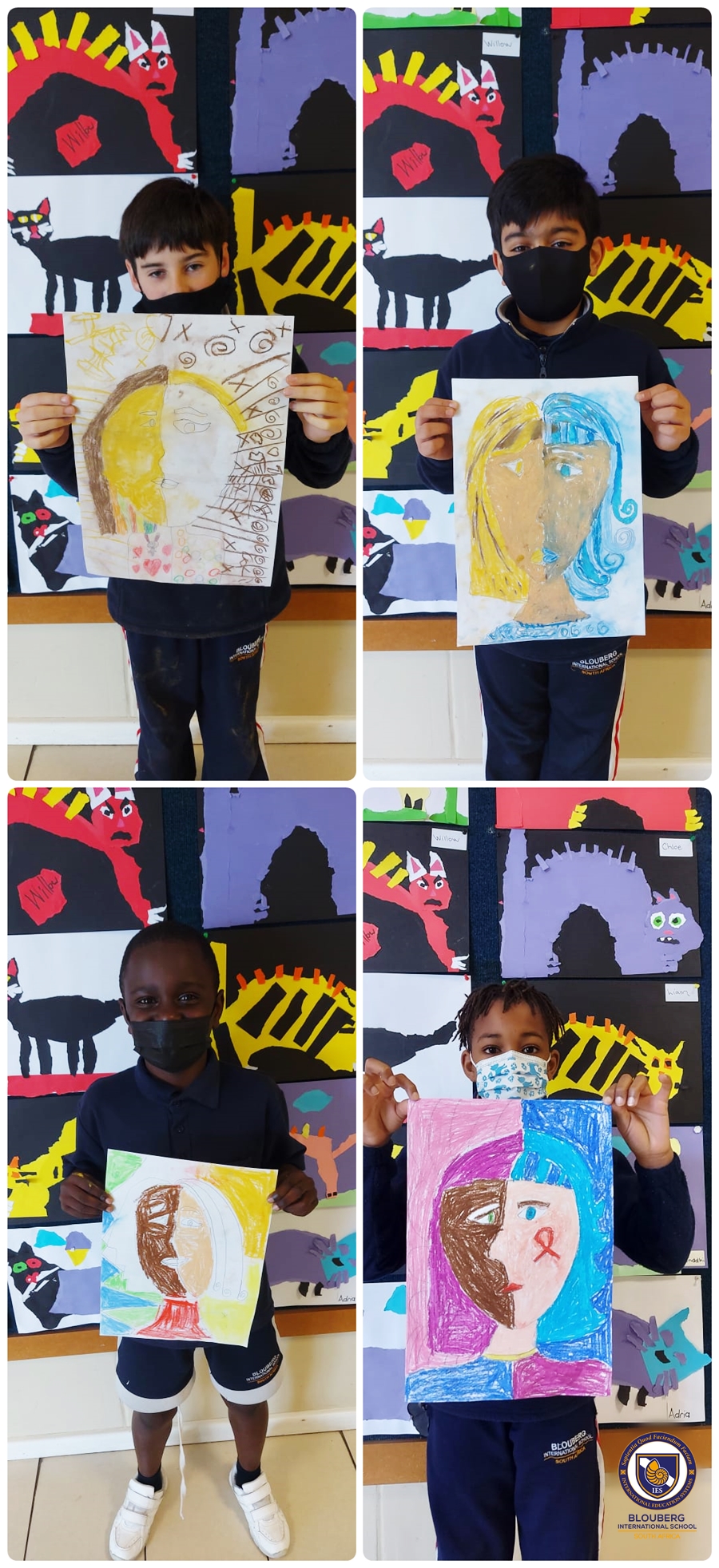
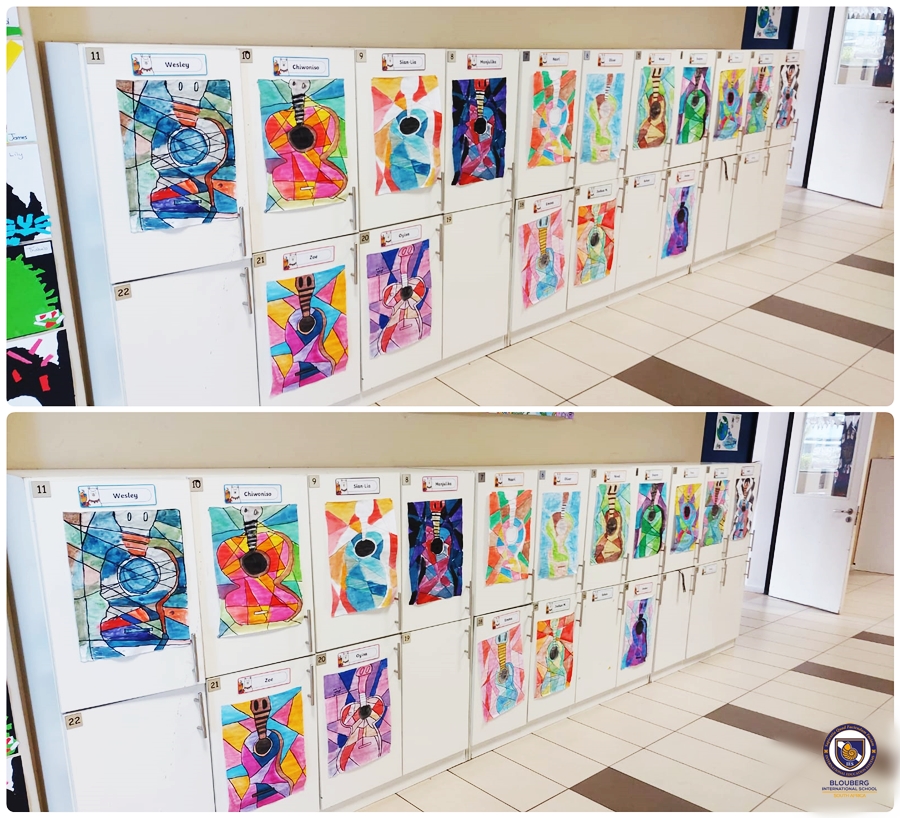
The Year 4’s have been focusing on an interesting technique in Art and Design for the past few weeks, namely Cubism.
A few facts about Cubism:
- Cubism is a style of Art invented in 1907.
- It was a very different way of painting to anything that had been done before.
- In Cubism, an artist tried to show different views of the same object or person all together in one painting. When you look at a Cubist painting, you might see the front, side and back of the same object.
- Cubist artists tried to break an object or person up into different parts. This often made the painting look like it was made up of geometric shapes like cubes.
Pablo Picasso was one of the first artists to explore Cubism. He wanted to paint things that he felt, remembered and saw all in one painting. Some of his most famous creations are the guitar sculptures made of cardboard and sheet metal, and the painting The Weeping Woman. We used these two art works as inspiration to create our masterpieces.
Have a look at our beautiful paintings of Picasso’s guitar and portraits using pastels and the Cubism technique.
“It took me four years to paint like Raphael, but a lifetime to paint like a child.” – Pablo Picasso
Ria du Plessis
Year 4 Coordinator



Read More

The Importance Of Outside Play
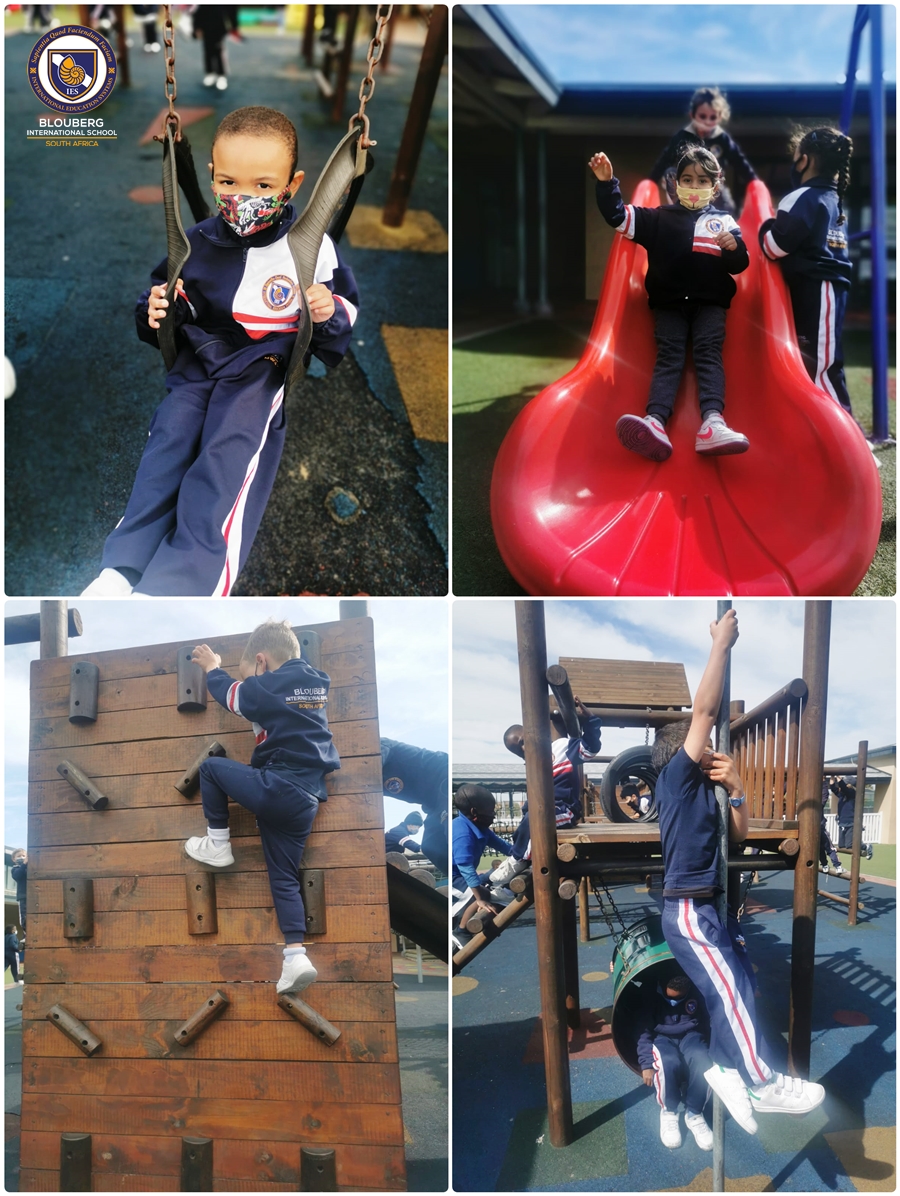
One of the main ways children learn and develop their gross motor skills is through playtime, on the playground, during outside time. As they play, their gross motor skills improve even without them knowing they are actually working on these abilities.
How playground equipment helps develop these skills:
- Climbing a ladder up to a slide or steps helps children learn to start balancing and shifting their weight. Going down a slide, children experiment with different body positions while working on balance and control of their bodies.
- While they are on swings they are in motion which helps them work on balance and coordination. When kids learn to pump up their feet to propel themselves on the swings, they work on sequencing and coordinating their body parts and movements to control the swing.
- The jungle gym strengthens arms, legs, their core and even their fingers. It provides an excellent way to work on balance, coordination and sequencing of which hand or foot moves next.
- The monkey bars strengthen hands and upper body strength as well as developing coordination and sequencing.
While there are many physical benefits to outside play, it provides a huge opportunity for social development in children as well. They also develop stronger reasoning and observation skills, giving them the opportunity to explore the world from a different perspective.
There are endless benefits to playing outside!
Cindy Nunan
Nursery and Pre-Reception Teacher


Year 3 Chess Champion
“Every Chess Master was once a Beginner” – Irving Chernev
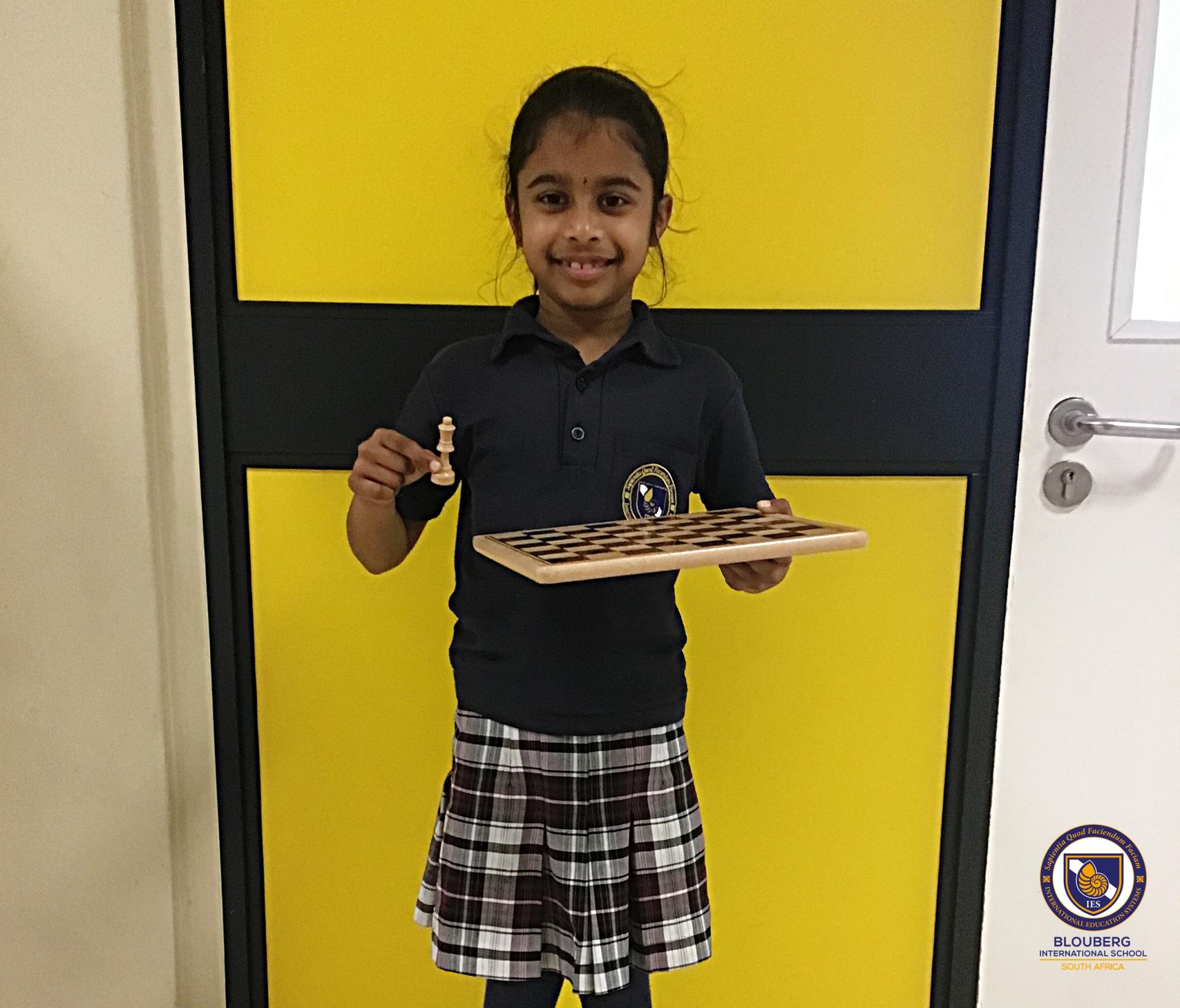
This is not a game of Chaturanga or a Queen’s Gambit, but it is certainly a move in the right direction for Sinddhizhai Divakaran in Year 3.
Sinddhizhai finished first in the Western Province Open Chess Championship and came second in the Under 8 Girls closed championship. Sinddhizhai matched the total points with the player who ranked first, but because of a tie breaker system, she ended up in second position.
Last week, Sinddhizhai took part in an International World Youth Under 10 Rapid online chess tournament, stage 1. Top players from 54 different countries participated in the tournament. Sinddhizhai managed 4 wins and drew 1 game, and also achieved an overall position of 97th out of 154 players.
Sinddhizhai got the chance to play with players from Slovenia, Malaysia, Sri Lanka, New Zealand, Malta, Belgium, Panama, Vietnam, Albania and South Africa. She also managed to directly win against the South African player, who previously won the under 8 National Championship in tie breaker.
An important highlight in this whole story is, that there is no separate section in the international arena for Under 8 girls, where Sinddhi actually belongs. She competed with a more senior group of under 10 players.
As Irving Chernev said, this is only the beginning for Sinddhizhai Divakaran.
We are super proud of you!
Wendy Menton
Year 3 Teacher

Read More

Hooked On Books in Foundation Stage
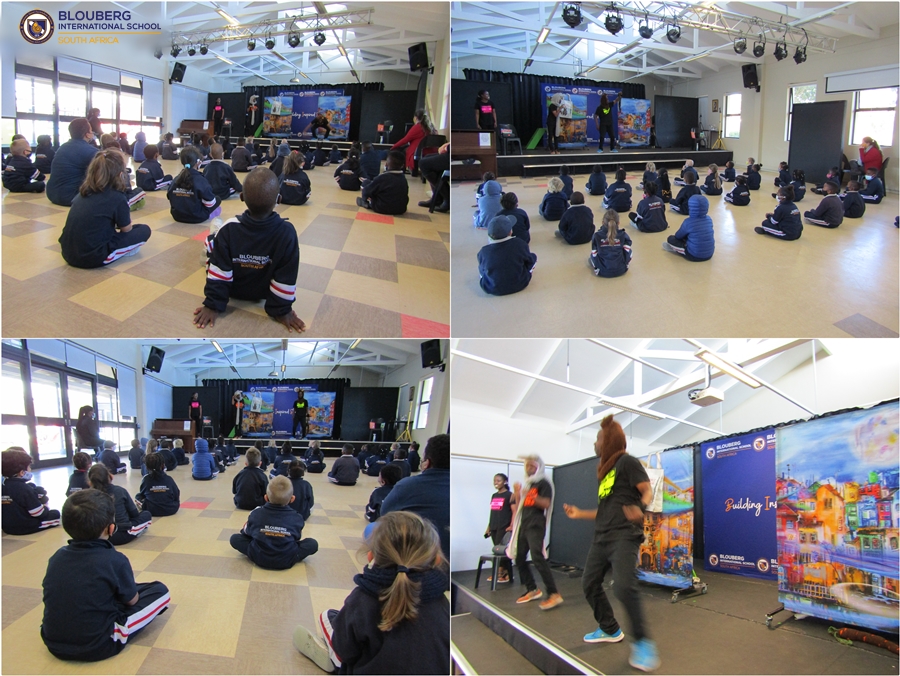
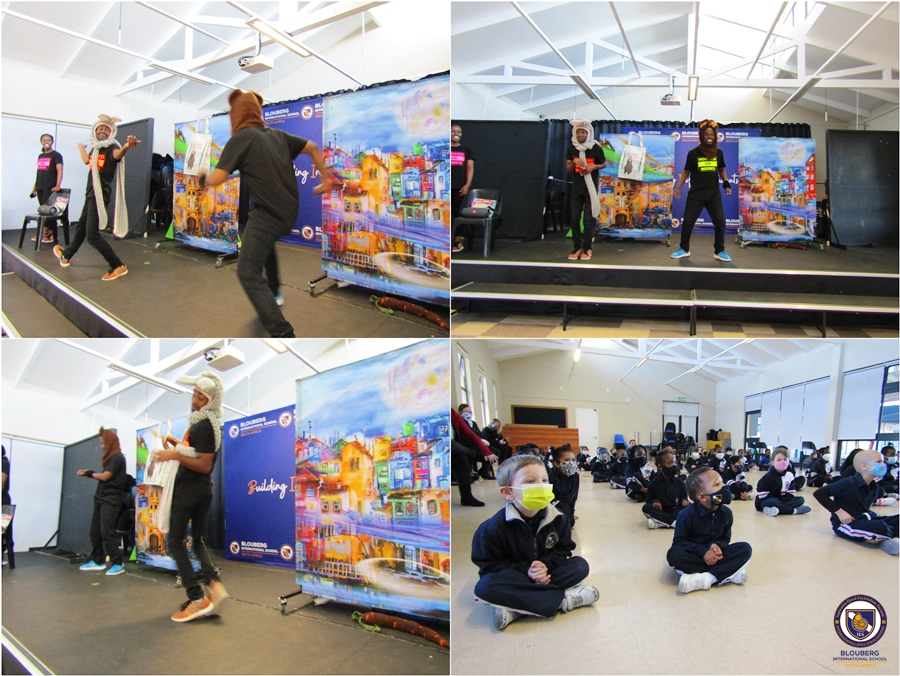
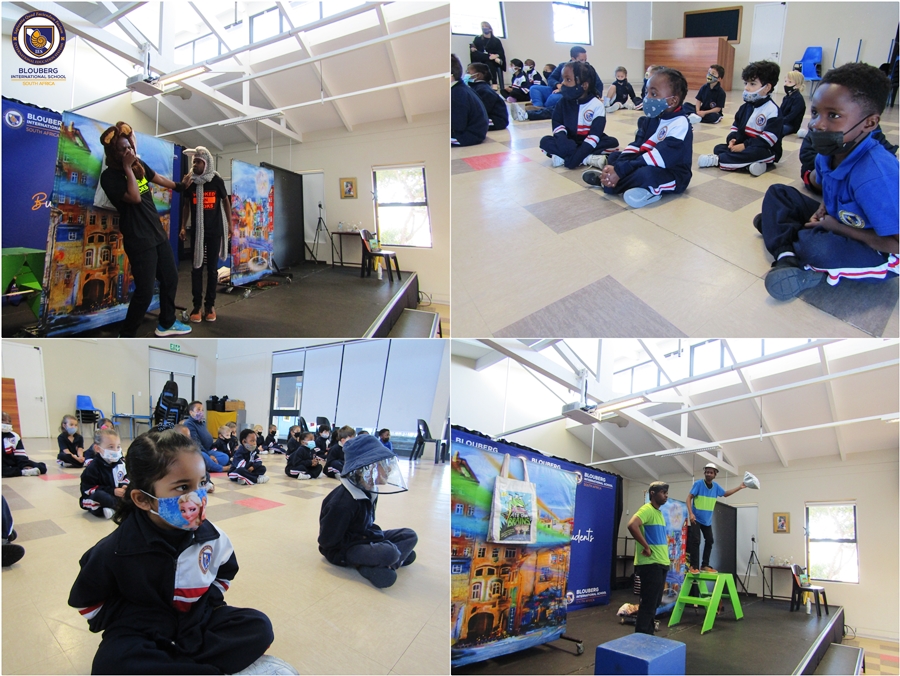
On Friday, 20th of August, we were elated to welcome the team from Hooked on Books to Blouberg International School. The annual event is a highlight in the school and it was with great excitement that the students lined up to go watch the performance in the Junior Hall.
Hooked on Books is a touring Educational Theatre Company that shares their love of books and stories with the students. Each year they choose a selection of stories and dramatise excerpts from the books. The actors are amazing and encourage audience participation, which of course the students love. They end each story on a cliff-hanger to encourage the students to go read the books for themselves.
It was a lovely day and we look forward to Hooked on Books visiting again next year.
Monique Meyer
Reception Year Teacher

Read More
Dynamic Classroom – Become actively involved in the process of learning!
One of the challenges after online teaching has been to bring the students back to be part of the dynamics of the class. We must adapt activities to help students continue to feel connected with their own learning, but also with their peers.
In my opinion, no online learning experience can replace the classroom dynamics that include student behaviour, emotions and imagination; giving space to the students for their self-expression.
It also includes a teacher’s way of presenting academic materials and students’ interactions. A teacher’s profession demands dynamism, you must also be organized, encourage participation, surprise your students, try new things, give them structure and consistency (beginning of the class routine, role-play lessons, oral projects) and challenge students to think through appropriate questioning strategies. We move from the simplest to more complex ones, helping them to build their confidence. (* Please see some examples below)
Teachers also need to promote relationships between students in the class, as with team work skills. These relationships need to be positive and productive, because they will have a big impact on the result of the group. We can make them positive by choosing useful aims, relevant topics, and appropriate and fun activity types. Effective teaching and learning cannot take place in a poorly managed classroom.
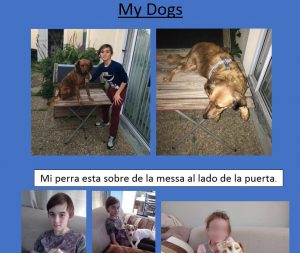
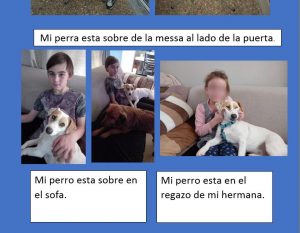
One recommendation is to make things more visual by showing your class ways they can use images to practice high-frequency structures in Spanish. For example, in my class, I worked on how to present the prepositions of place and present continuous form in a fun and practical way.
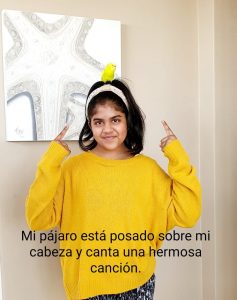
To expand on this idea, I asked the students to take “crazy” photos or capture funny videos of their pets during their holidays.
I asked students to describe in Spanish where the animals are and what they are doing in those images, using the prepositions of place and present continuous expressions that we are learning. These videos and photos have personal meaning to them, they are fun to watch and have an academic purpose.
In class, we display the images, and I start lessons by asking the students questions:
A simple yes/no question for the students to answer:
“Is the cat on top of the bed?” ¿Está el gato encima de la cama?
Then asking two option questions:
“Is the cat on top or under the bed?” ¿Está el gato encima o debajo de la cama?
Finally, more difficult and open questions:
“Where is the cat?” ¿Dónde está el gato?
Visual images have become an essential tool in language learning and such a big part of the new generations. They are so adaptable and help students interact with the Spanish language in multiple ways at the same time. During our Spanish lessons this last year, I have encouraged the classes more than ever to send me pictures or videos practicing everything that we have learned in the class.
Javier Vidal
Spanish Teacher
Here are some examples of the images that the students brought to the class or sent to Google classroom for their pets projects:
Read More