

Year 5 Effective Studying Workshop
This term is a big one for the Year 5s. It marks the first year of upper primary school – and with it, the dreaded June exams! Exams don’t necessarily have to be stressful though – after all, they are intended to help us by showing us where we are confident in our work, and where we still need some help. Through preparing thoroughly for exams, we can focus more on their benefits, rather than on the stress they can cause – and so our Year 5 Inting this term focused on just that.
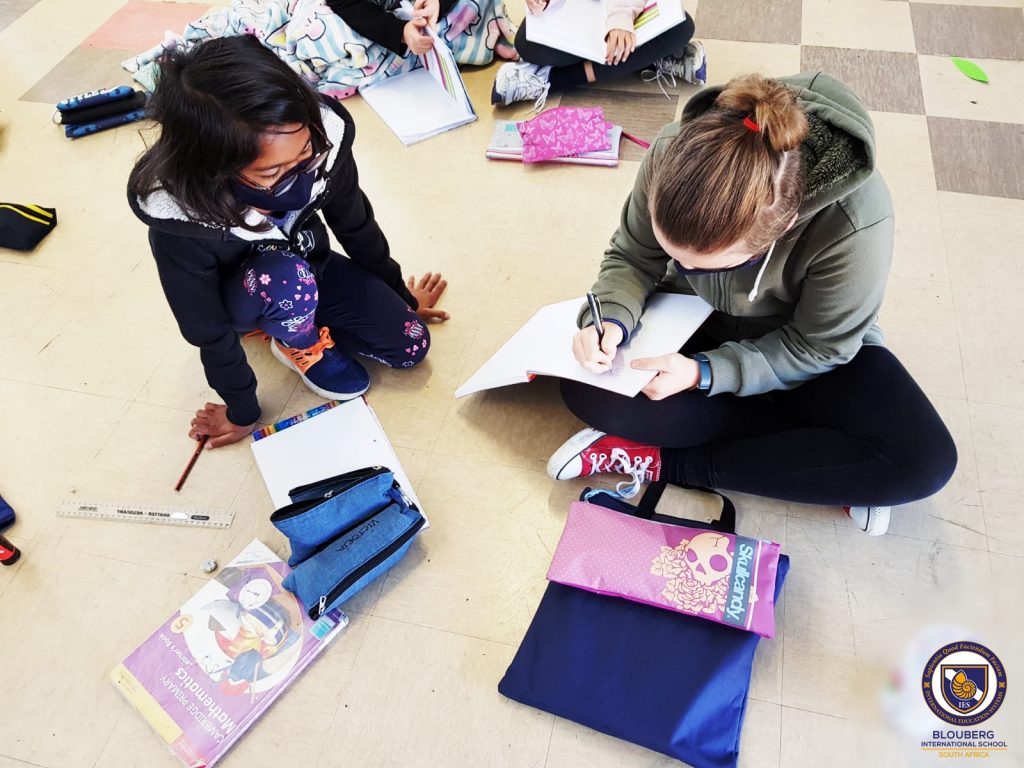
First, we practiced setting up a timetable to organise our studying, fitting in all the work we need to study, without having to cram and stress. Organising our time is the first step in combating exam stress – it breaks the work into manageable chunks, and shows us that we actually do have time to fit in everything we need to. After all, how does one eat an elephant? One bite at a time, of course!
We also spoke about preparing ourselves, inside and out, to make sure that we are in the best frame of mind for learning. The first step to doing this is making sure that you are healthy, so your brain can function at its best. This means enough food, water, rest and exercise – after all; healthy body, healthy mind! Speaking of the mind, we practiced the power of positive thinking. We made positive mantra cards to remind us of our goals, and how amazing each of us is. We also learnt a few grounding exercises, for when the stress does get a bit much – or for when our brain seems to be running in circles.
Finally, we looked at some study techniques, thinking about various ways of studying (and trying a few out while we were at it). Whether you enjoy studying by organising your notes into mind maps, or by teaching your teddy bear how to multiply and divide, it’s a good idea to have a few different study methods in your study toolkit.
Above all, we learnt that when it comes to studying for exams, everyone is different. What works for one of us might not work for another – and part of developing into an independent learner is figuring out what works for you. Hopefully all our Year 5s are a few steps further on that exciting journey!
Hannah Kirkaldy
Year 5 Teacher


The Benefits Of Gardening For Children
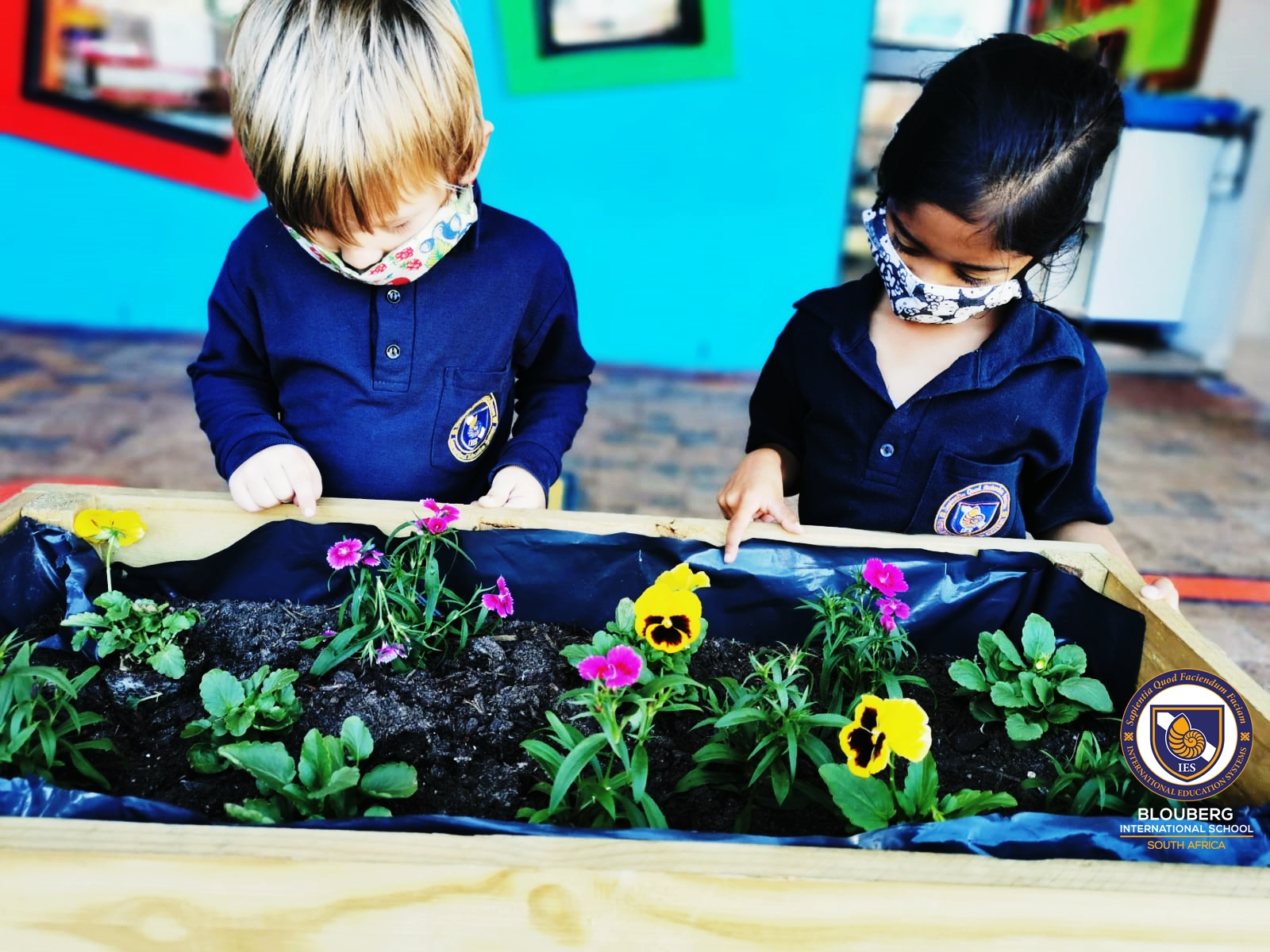
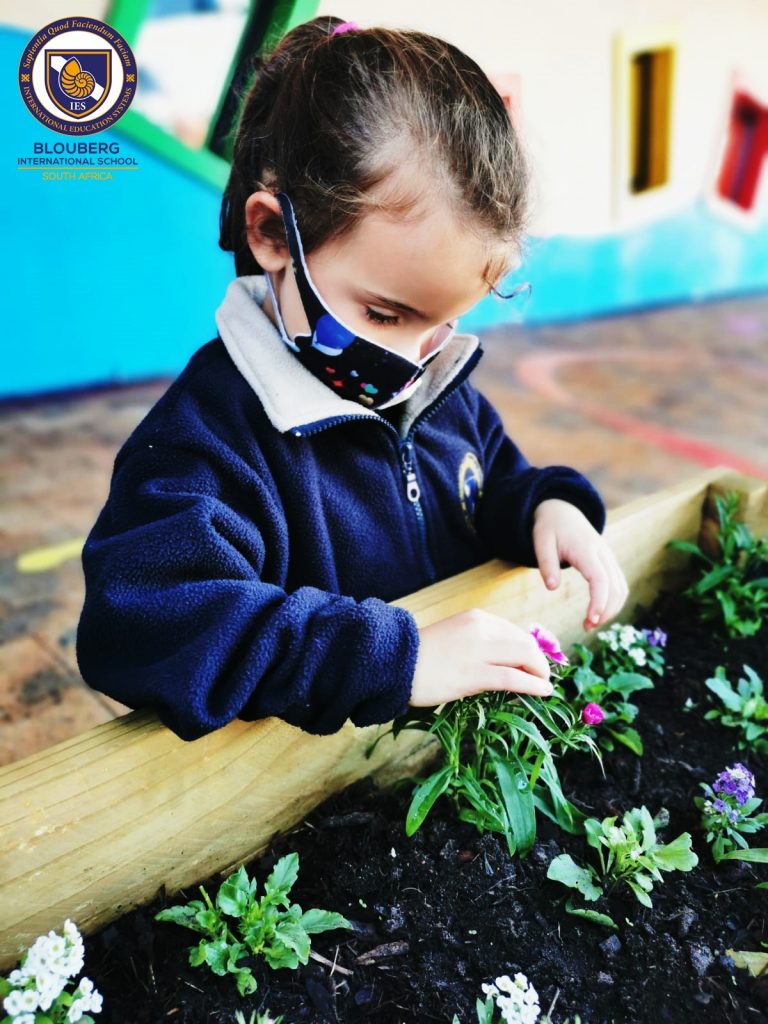
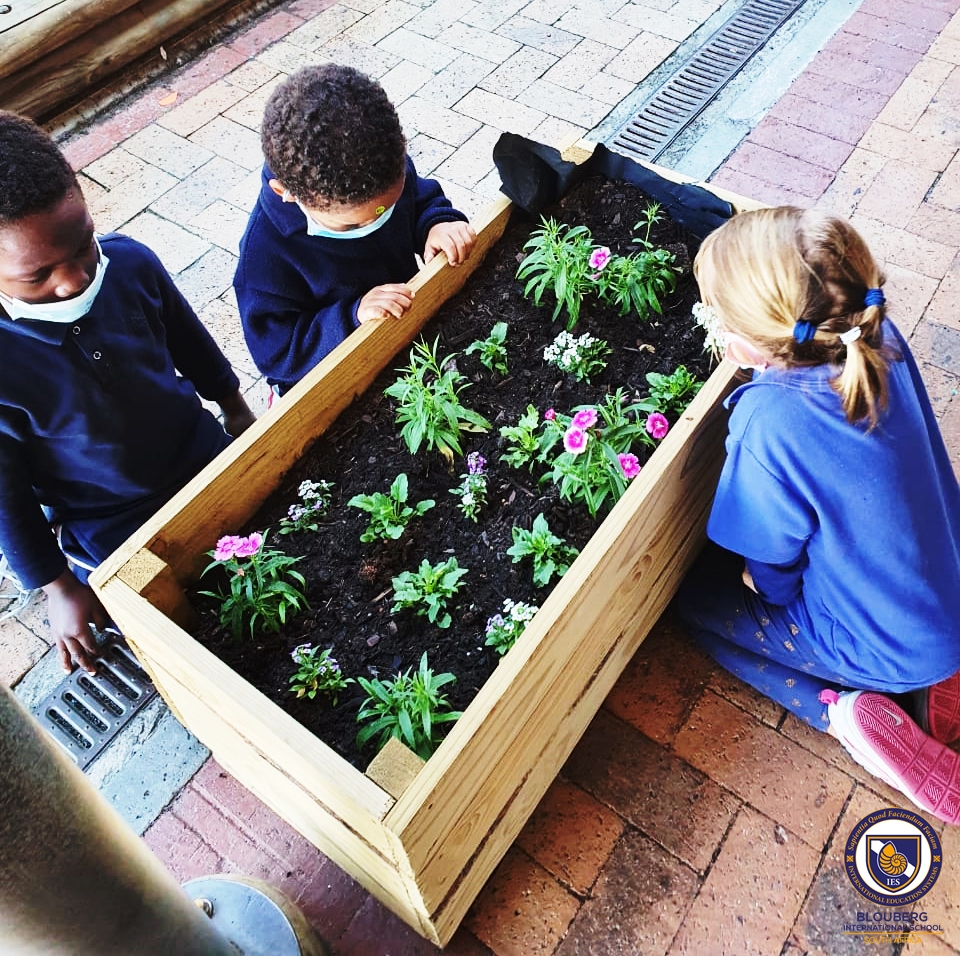
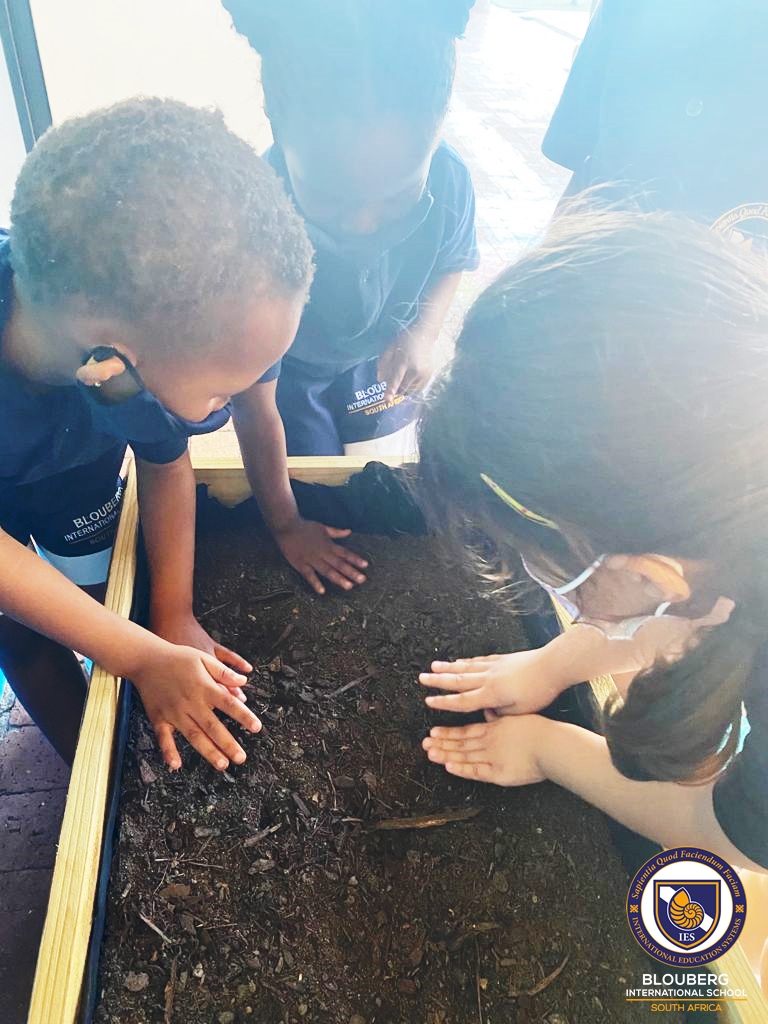
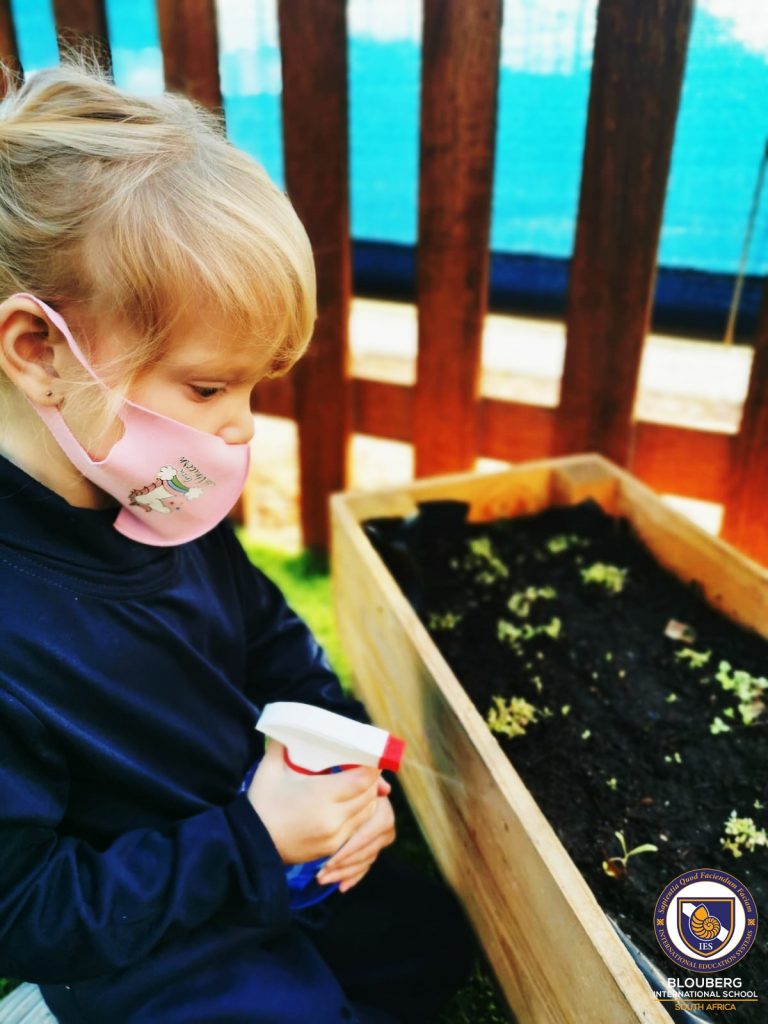
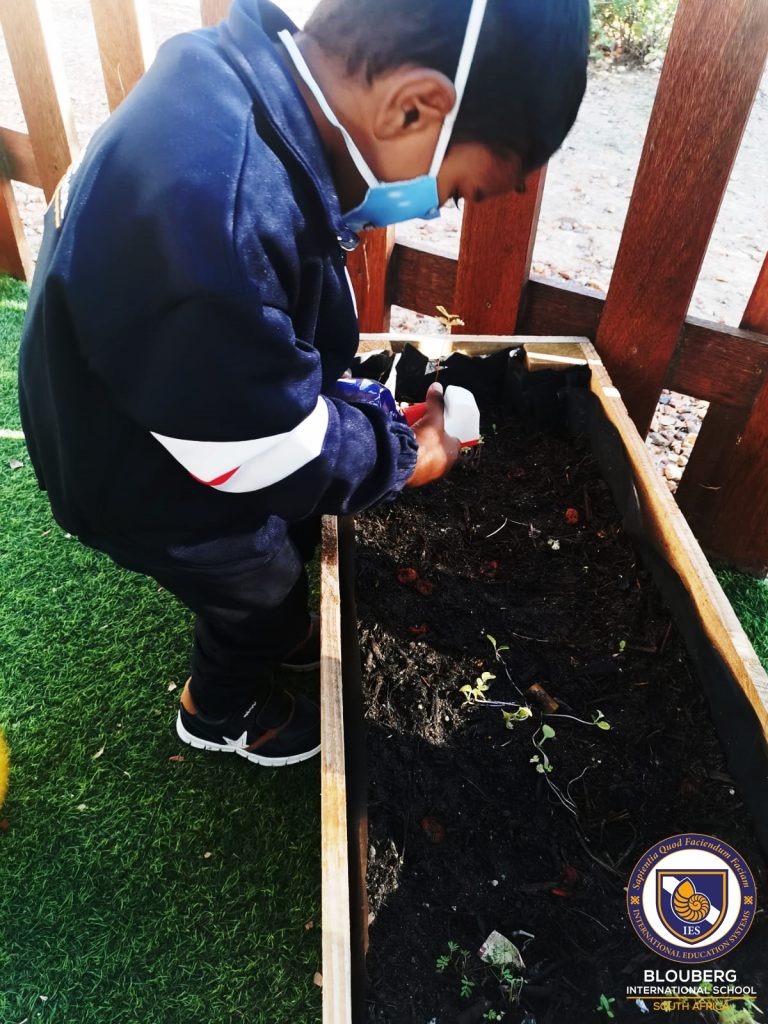
In the Foundation Stage we have decided to grow our own little class gardens in planters outside our classrooms. Gardening offers so many fun and interesting opportunities for the students and teaches them invaluable lessons.
They learn about the different types of flowers, vegetables and herbs and what they need to help them grow. It also offers an opportunity for the children to learn about different shapes and colours, etc.
Gardening engages all sorts of senses. They can feel the texture of soil, seeds, flowers, etc. They get to smell all the beautiful flower scents and see all the colourful petals. It also helps develop hand-eye coordination as well as physical strength.
If children grow their own vegetables, they gain a keen interest in eating them. Growing vegetables not only teaches them the hard work that it takes to grow them but also a sense of achievement! Growing any sort of flowers or vegetables requires daily attention and care. The students take turns to water their little gardens. They quickly learn if they are not watered regularly and taken care of they won’t flourish.
We have seen here at school, gardening is a good way to teach responsibility. The students are learning to be patient while waiting for their flowers and vegetables to grow. They need to remain engaged in the process and keep looking after their flowers and vegetables even when there are no clear results, but the anticipation makes the moment their flowers or vegetables sprout even more exciting!
Cindy Nunan
Nursery & Pre-Reception Teacher



The Importance Of A Few Simple Words:
We all love receiving a compliment. Giving compliments make you feel equally happy. They are like little gifts from the heart – they let you know that someone appreciates that you are special, and how hard you are trying. They let you know that you belong, that others value you.
We try to end every day with a compliment. Each member of the class (including the teacher) can give (and receive) as many compliments as they want to share. In this way, we leave for home, filled with the successes we achieved, and the joy of knowing that someone has noticed.
Here are some of this week’s compliments:

Carey Schoots
Year 4 Teacher

The Impact Of Kiddies Yoga
“Yoga is the dance of every cell with the music of every breath that creates inner serenity and harmony.” – Debasish Mridha
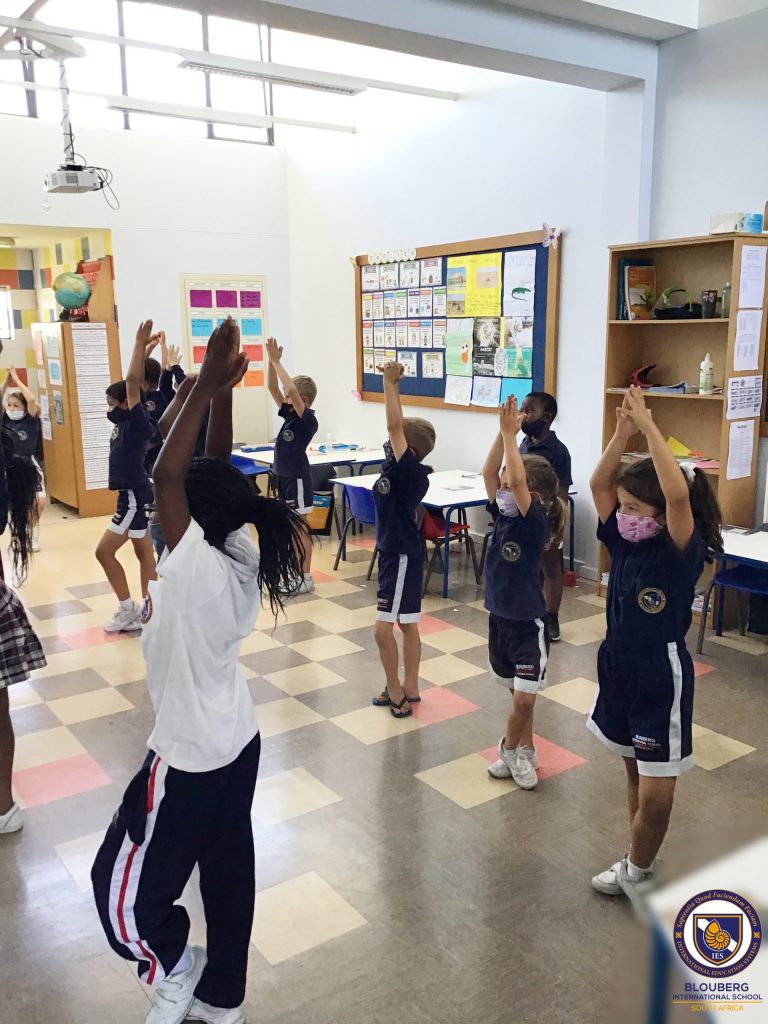
The Year 2 teachers have started using Kiddies Yoga in class when the students need a bit of a break. We have found that moving the students desks and chairs to the back of the class and playing Kiddies Yoga videos for them to follow has had a positive impact on the students.
Kiddies Yoga has several benefits for young students. It helps students manage their anxiety, improves emotional regulation, boost students self-esteem, increase students body awareness and mindfulness, it also enhances concentration and memory, teaches discipline and reduces impulsivity as well as builds strength and flexibility. The lovely thing about Kiddies Yoga is that it works for both girls and boys which can be quite a fun activity to do. There are Yoga stories which include a story along with the actions that keeps the students in class quite busy with a big smile on their faces.
The Year 2 teachers are happy to see that all the students approach Kiddies Yoga with positive and enthusiastic attitudes. We hope that the students will absorb the benefits from Yoga and continue with it more regularly.
“Yoga is the fountain of youth, you’re only as young as your spine is flexible.” – Bob Harper
Erin Hierse
Year 2 Teacher

What The IGCSE’s Taught Me
Our top achiever in the 2020 IGCSE’s recounts her experience and shares some advice with future candidates:
“A famous author once wrote “People say nothing is impossible, but I do nothing every day.” That author was Alan Alexander Milne, the creator of the “Bear of Very Little Brain”. A bear who would sit around all day, doing absolutely nothing but he enjoyed every second of it. So, if there was one thing I learned in the 2-year course that is IGCSE, it was that I needed to relax more, to take everything in my stride and to not worry so much about the little things. To take everything step-by-step, day-by-day, and before you know it, you’ll be running.
I remember in Year 9, when the concept of IGCSE was first introduced, everything became overwhelming. I found it tremendously difficult in the beginning. At first, I wasn’t able to grasp most of the concepts for certain subjects and I was very confused most of the time. I’d never say anything though because no-one in my class ever seemed like they were having trouble, so I assumed it was just me struggling. Thankfully I had my friends, parents and teachers to tell me otherwise. My previous idea of studying consisted of working all day at school, then coming home and doing the same thing. It took a lot to make me realise that this wasn’t going to work for me anymore.
So, by Year 10, I changed the way I studied. I stopped studying for long hours on end and began working for shorter periods of time with a little too many breaks. I found that I study better when I’m relaxed and not putting any pressure on myself. I study consistently through the year and study in moderation. In class, I told myself that I was going to start asking as many questions as it took for me to understand because understanding a concept makes remembering it easier. I’d try to make notes for my subjects in a separate book, to make them clear and orderly on paper hoping it would appear that way in head as well. I found the use of different highlighter colours made certain sections of information easier to recall during an exam because it had a colour associated to it. I tried my best in class to understand the concept first before I made notes on it so that when I did, all I had to do was solidify the ideas onto paper. My dad would make fun of my highlighters saying , “At school all I had was a pen, one that wrote if I was lucky.” But I’d like to think that it was the highlighters and the stacks of cue cards with equations that helped me retain the information better. I realised it was also very important to take care of myself first before my schoolwork, through staying healthy and remembering that school is not all there is to focus on. For me , staying relaxed, calm and enjoying my childhood would be my top priority. Getting all A’s was unexpected , my goal is simply to do the best I can.
“The forest through the trees” is something my parents would have me repeat to myself. It reminded me to look at the bigger picture and focus on the important things. Stressing about the small tests and assignments wasn’t going to do anything except burn me out before the race was even over.
My advice to other students would be: “Start where you are. Use what you have. Do what you can.” – Arthur Ashe “
Rifqah Price,
Year 11 Student
Blouberg International School

Rifqah Price, Blouberg International’s Top IGCSE Student 2020
The Duke Of Edinburgh’s Iinternational Award At Blouberg International School
Blouberg International School is working with The President’s Award for Youth Empowerment (TPA) to offer our learners new ways to broaden their curriculum. TPA delivers The Duke of Edinburgh’s International Award in South Africa, and both our organisations believe that learning should not be confined to the classroom but should also take place in the school environment and wider community.
Blouberg International School provides students with an opportunity to develop soft skills such as leadership, teamwork, and confidence. We are working together to develop confident, responsible, reflective, innovative, and engaged learners and create opportunities for young people to develop skills, get physically active, serve their local community and experience adventure. By offering the Award as non-formal education alongside the academic Cambridge programmes, we are able to provide students with a holistic education.
The President’s Award for Youth Empowerment (TPA) is affiliated to The Duke of Edinburgh’s International Award for Young People and is a full member of the International Award Foundation which oversees the Award Programme in over 130 countries globally, with 18 of these being in Africa, and over 1.3million active participants internationally. TPA is a registered non-profit organisation (004-920NPO) with Public Benefit Organisation status, registered with SARS (PBO#930001329).
TPA motivates young people to develop character, discover their purpose and determine their future to contribute towards building a great South Africa. The Award Programme targets 14–24-year-olds across the socio-economic spectrum, from public and private schools, children’s homes, correctional services centres, universities, etc.
There are more than 100 ISASA affiliated schools implementing the Award Programme nationally.
On the Programme, there are three levels: Bronze, Silver and Gold. Within those levels there are four sections:
1. Skills Development.
2. Physical Recreation.
3. Service to the Community and
4. an Adventurous Journey.
With guidance from volunteer adult Award Leaders, each young person builds confidence by reflecting upon their interests, abilities, and ambitions to set themselves challenges. Youth Participants progress at their own pace through the three Award levels; however, each level has minimum requirements.
At completion of the Award, young people get an internationally recognised certificate that bares the signatures of His Royal Highness the Duke of Edinburgh, Prince Philip, and President Cyril Ramaphosa. The certificates are recognised by employers and universities worldwide.
The Programme was founded in South Africa in 1983 under the banner of the Gold Shield Award, with Dr Ian Player, as the first Chairman. In 1994 the organisation was re-launched as The President’s Award for Youth Empowerment with Mr. Nelson Mandela as its Patron-in-Chief.
Once the individual is registered, participants manage their progress with the Online Record Book (ORB) application.
The Online Record Book (ORB) is an easy-to-use online system in which Participants can record their activities and achievements. Participants can set up activities, record their efforts, upload evidence, and submit assessor reports. Award Leaders can monitor progress behind the scenes and help if required.
For more information about The President’s Award (TPA) email Mr. Riaan Vosloo, email: riaan.vosloo@iesmail.com. You can also visit the official website of TPA: www.presidentsaward.co.za
Ms. Caroline Grix and Mr. Riaan Vosloo are the registered President’s Award Leaders at Blouberg International School:
Ms. Grix: caroline.grix@iesmail.com
Mr. Vosloo: riaan.vosloo@iesmail.com
Learning New Skills
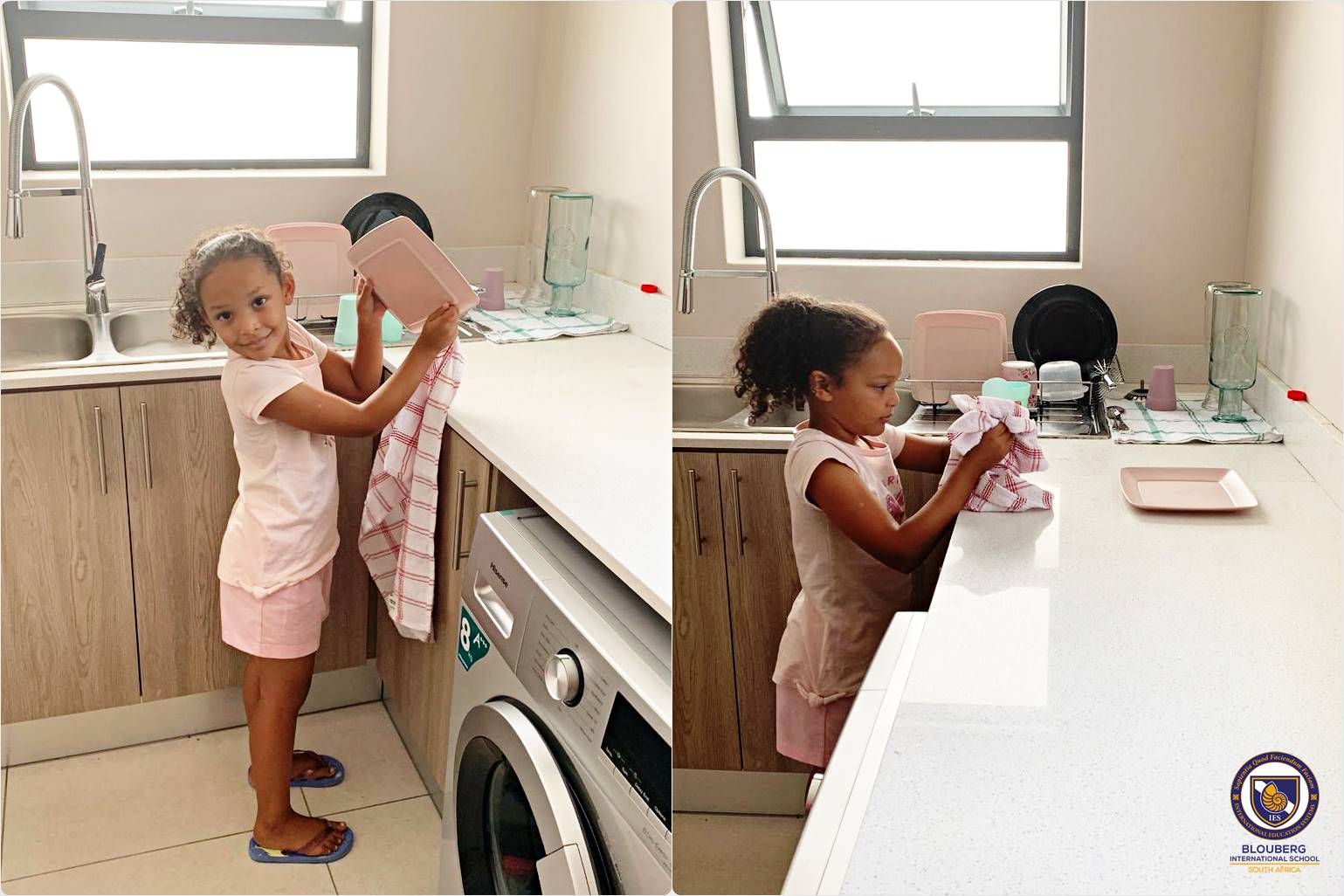
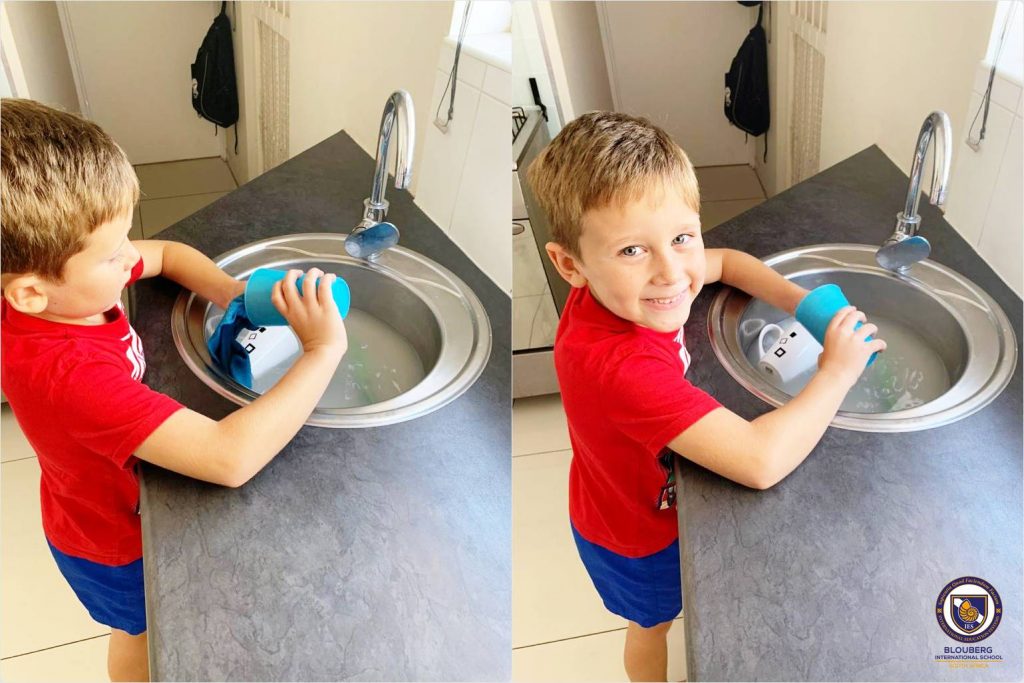
In Year 1, we are teaching our students to become independent and responsible. They are learning to do things for themselves, which are very important skills for children to learn and carry into their adulthood. It may feel like you are taking a risk at first, allowing them to feed the dog, or pour their own drink, but without taking a risk, we are not allowing our children to try and master new skills.
When independence grows a child’s confidence also grows. As they master new skills or take on some responsibility, they begin to see themselves as being capable. This gives them added confidence and makes them more likely to try out new things.
Life is full of choices, and learning how to make good decisions is crucial. You can help your child by giving simple choices early on. You might ask them which game they would like to play or which friend they would like to invite over. Go on give it a try…
Charlotte Cronje
Year 1 Teacher

The Importance Of Growing Up In Reception Year
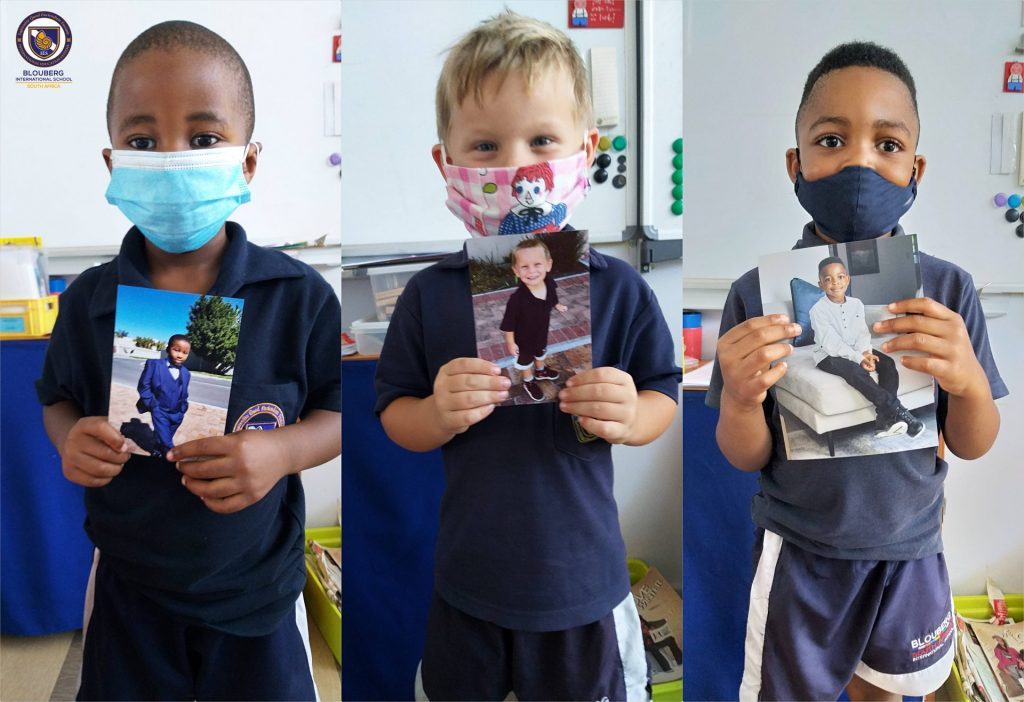
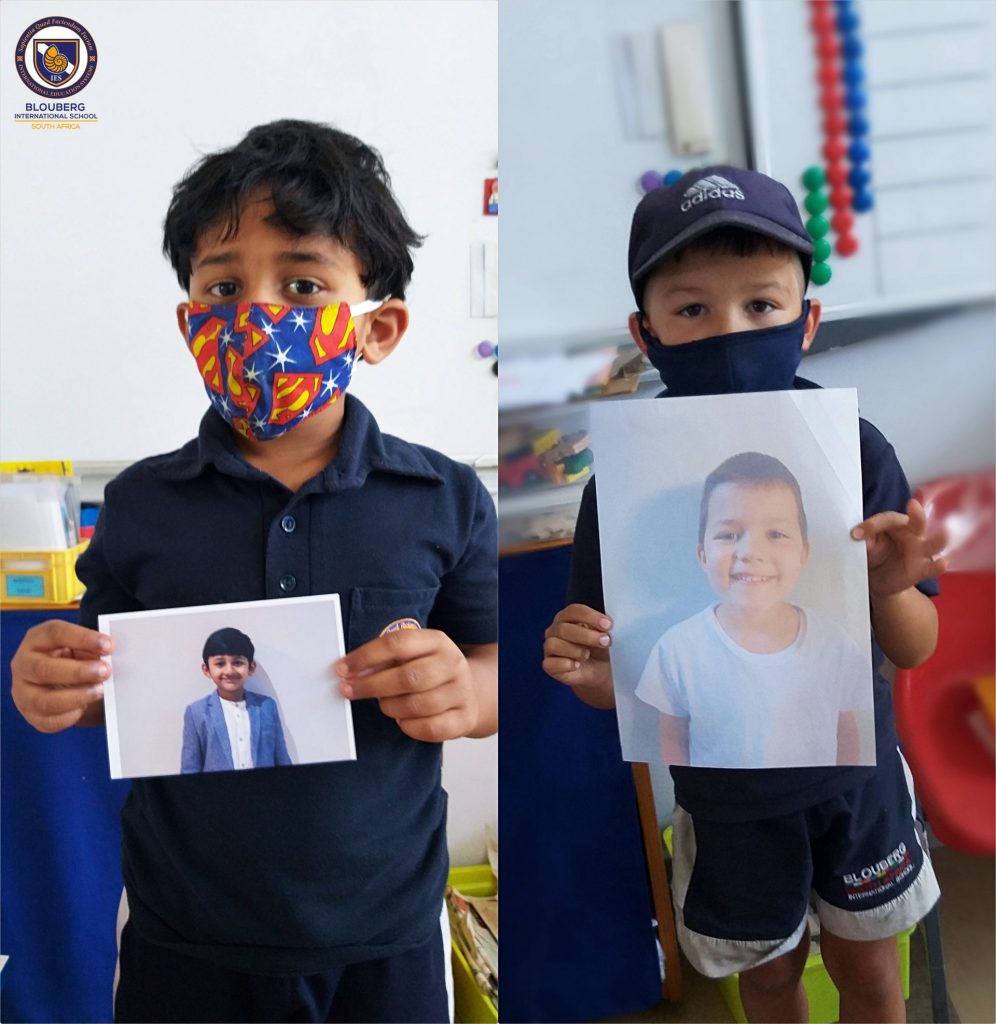
Last week the students brought in photographs of themselves and to introduce themselves to the class. Some of the children had photographs of when they were a bit younger. It was a reminder of how quickly they grow and that Reception Year is such an important year of growth for a young child. It is a year where they gain so many new developmental skills. Children also need to mature and develop independence so that they are ready for big school in Year 1.
So how do parents develop independence in their children? Here is some advice:
- Routine: Setting consistent routines is important for building independence and confidence.
- Rules: Set consistent rules in the home. Use a balance of positive reinforcement and consistent consequences that are followed through by all caregivers. Teach your child to take responsibility for their actions and make amends appropriately.
- Chores: Give your child chores to do at home. This helps them feel they are contributing in the family home, builds confidence and also teaches responsibility.
- Choice: Allow your child to choose. This gives a sense of freedom, and self- confidence. Too many options can sometimes be overwhelming, so limit the amount of choice when necessary.
- Free Play: Nurture free play and limit screen time. Children learn so much through free play. It helps them interact with the world around them and develop language skills. Play also helps develop fine motor and gross motor skills. It also helps them develop emotionally and socially.
- Problem Solving: Let your child solve problems: Don’t always give them all the answers and allow them to make mistakes.
- Don’t be too Overprotective: Don’t be too over protective or do too much for your child. Encourage your child to speak up for themselves in different situations and try not to answer for them. Doing too much for your child doesn’t allow them to try and do things on their own. This also reinforces that you can do things better, which hampers the development of independence and self-confidence
- Positivity: Lastly encourage a positive outlook in life. This teaches your child that they can choose joy, persevere and overcome in any situation.
Bronwen Nuthall
Reception Year Teacher
From the Principal’s Desk, 22 January 2021
Dear Parents
Despite the challenges we continue to face, the threat of schools closing, we have thrived this week at Blouberg International. It is heartwarming to see how happy our children are to be back at school. A right that should not be taken away from them.
I am sure the recent upheavals are causing anxiety in terms of your planning, but at Blouberg International we are set on giving our students the absolute best of service despite these challenges.
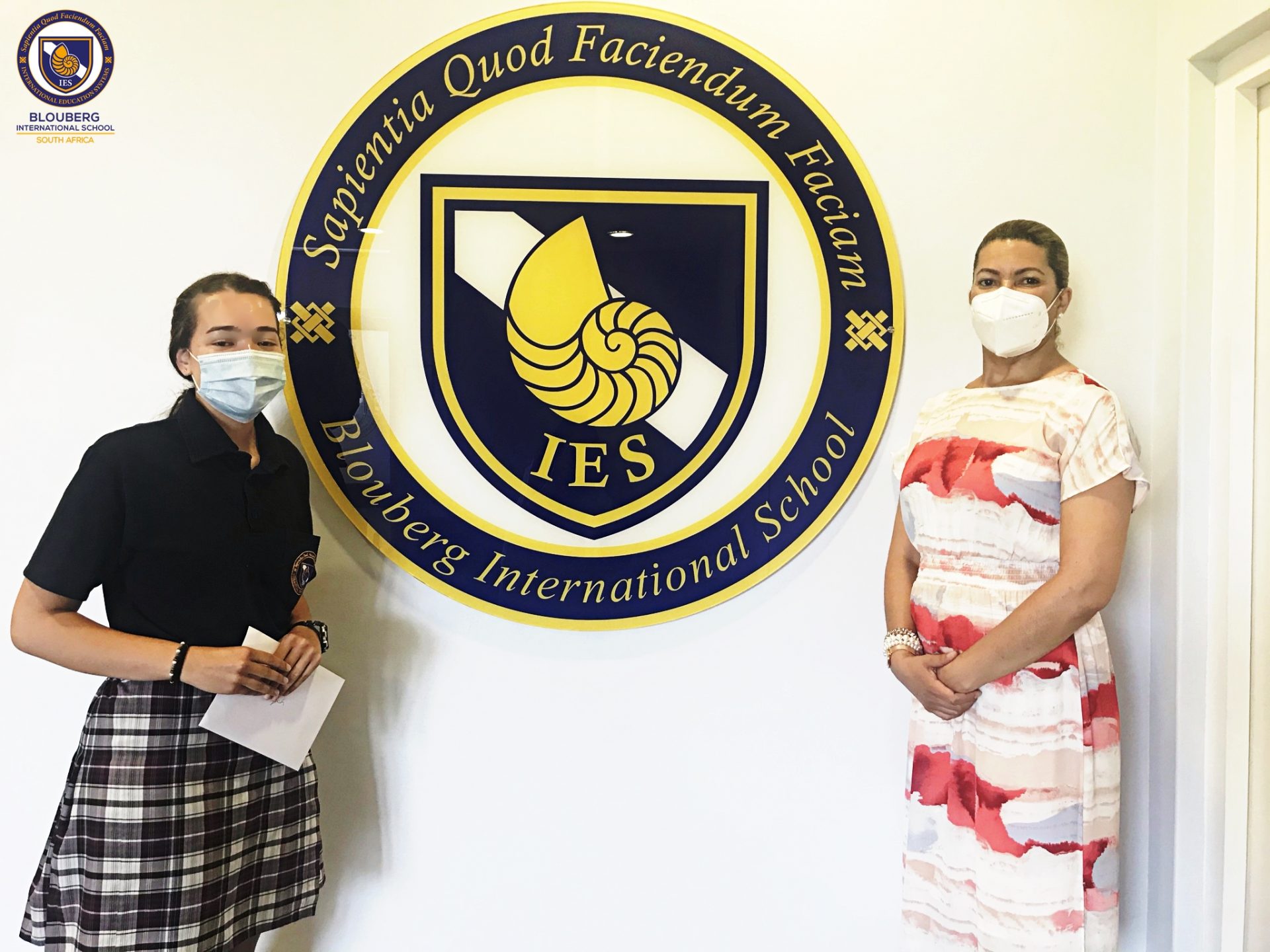
We received our November 2020 IGCSE (International General Certificate of Senior Education) results for our Year 10’s this week. It was a proud moment for every teacher in the High School as we celebrated the phenomenal marks achieved in all areas, but particularly Maths, Physics, Chemistry and Computer Science. Our cohort of 20 students achieved 30 A* (90% and above) 24 A’s (80% and above) and 22 B’s (70% and above).
Our top student, Rifqah Price, wrote a total of 9 subjects and received an A* for every one of them. Well done Rifqah, we celebrate your achievements with you.
Our children are experiencing this pandemic in such a different way to us adults and it is therefore important that we encourage them and ensure they are emotionally equipped to handle each day.
They might experience the feelings like:
I won’t do it.
I can’t do it.
I want to do it.
How do I do it?
I will try to do it.
I can do it.
I did it!
Each one of the above is a step as well as a choice. Let us continue to encourage them through each one and ensure they not only endure but also thrive during this time.
I wish you a wonderful weekend of quality family time.
Kind regards
Edna
Read MoreStudent Representative Council Portfolios 2021
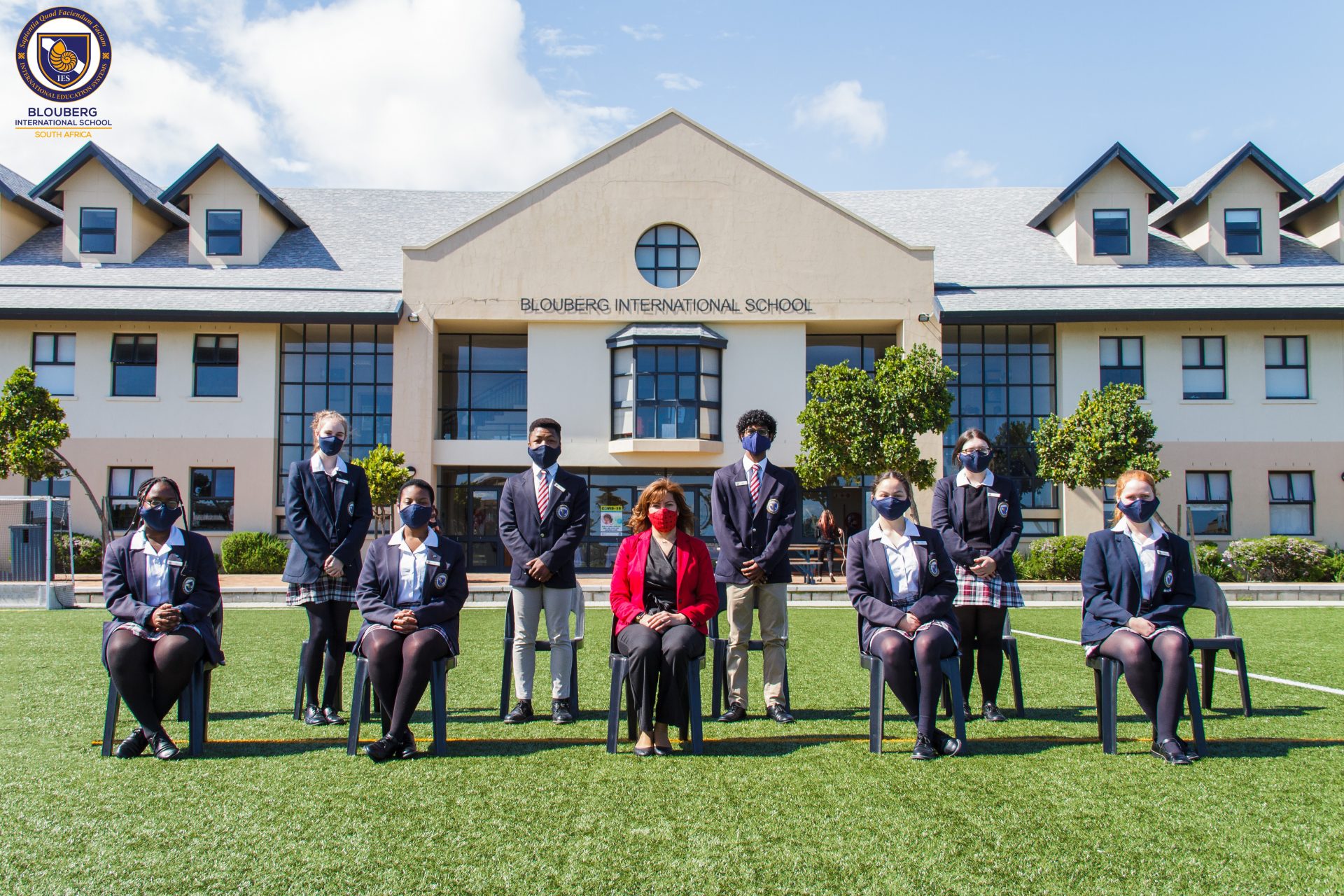
SRC 2021:
Back row left to right: Chloë Goldman, Tshephang Mashaba, Niklyn Pillay, Gabrielle Luyt
Front row left to right: Hope Munkondia, Karen Kambizi, Edna Lawrence (School Principal), Courtneigh Harris, Samantha Wynne
Karen Kambizi
I applied for Head girl and Culture because, I want to make a difference in the students’ lives- despite this pandemic, leaving a good legacy at Blouberg International is utterly important to me. I would like to implement great ideas that will make our school the best! With that being said, I plan to take BIS to greater heights by taking advantage of the leadership roles I have been honoured with and the help of the SRC. I would like to leave a mark at our prestigious and awesome school!
Niklyn Pillay
My name is Niklyn Pillay. I am the Head boy as well as one of the Heads of Sport of Blouberg International School. As Head boy I mainly serve the students by approaching the school with their ideas, and I try to inspire others to be greater by continuing to better myself. I also help my fellow SRC with their goals and duties. Being a Head of Sport I work on improving our physical activities and try to provide the students with the best and most exciting of sports. My goals for the year are: motivating students to have school spirit, redefining the word learning; in the minds of BIS students, and enabling the students to view school as more than just a place of education.
Hope Munkondia
DISCIPLINE
As head of discipline it is my duty and responsibility to communicate with the teacher in charge of this portfolio about the discipline of my peers. This includes being fair and opposing any and all forms of bullying, victimization and discrimination. This is an advantage to the wellbeing of the school because as a fellow student and peer to the students it makes it easier to approach and look out for them.
SECRETARY AND TREASURER
My duties as secretary of SRC involve taking minutes during our meetings, which are kept for later review and reference. As treasurer I am expected to keep record of profits and expenditures of the SRC. This is a great responsibility which I take a lot of pride in. All in all, I am super proud of both of my portfolios and I cannot wait to carry out my duties to my full potential.
Samantha Wynne
My name is Samantha Wynne, Head of Student Welfare. My plans for the school include creating a space for personal growth, engaging in helpful discussions about mental health, building a long-lasting support system for the students and making them feel heard by promoting inclusivity.
Chloë Goldman
My portfolio is Student Welfare. I wanted to be a part of this portfolio because I am passionate and interested in the wellbeing and comfort of the students at Blouberg in order to make their experience here as enjoyable as possible. Some things I wish to implement in the year ahead are Buddy systems / Support groups, more informative discussions on important topics such as Mental Health and Period Poverty, as well as introducing more clubs by popular demand such as a Debate club.
Gabrielle Luyt
As the head of discipline and sports, my hopes weren’t exactly sky high going into this year, due to Covid. However, even though we’re only a week in, great progress has already been made. Sports will resume, with a bunch of fun, new and inclusive options available for all age groups, as well as the introduction of a house cup and various ways to acquire house points. Despite the dreary situation we’re all in, this year we’re hoping to bring back and prioritize high school sport and morale.
Tshepang Mashaba
The Vision I have as the Interact Representative of SRC and the Director of the Interact Club, is to fulfil ‘service above self’. I would like Blouberg International School to host more fundraisers in 2021 to combat the problems that our under-privileged and the needy community face, especially during this Covid-19 Pandemic. It is my responsibility to empower the outreach of Blouberg International School to be a reaching hand in our community.
Courtneigh Harris
Hi, I am Courtneigh Harris and I am a part of the culture portfolio in the SRC. My main goal as culture portfolio is to improve school spirit and create a space in which students feel comfortable enough to want to expand their creative side. As a member of the SRC, my job is to be someone my juniors see as an older sibling, always there to support and encourage.
– Written by the SRC of 2021 –
Read More