
Year 2 Art Fun
“Art is a place for children to trust their ideas themselves, and to explore what is possible.” – Maryann F. Kohl
In the last couple of weeks, our Year 2’s have been having great fun during Art class! We explored and experimented with various mediums to make Lollipop and Animal Hand Art creations.
Being such wonderful hot summer weather lately, we found the Lollipop art to be particularly fitting. We thought about what our favourite lollipops flavours were and created them using cardboard, colouring things and some ice-cream sticks. The various flavours that the students selected look super yummy! From caramel chocolate to strawberry and even watermelon. How fun!
We also experimented with the idea of creating some cool animals using our hands as body cutouts. We had some really creative ideas like bunny rabbits, unicorns and even flamingos. The Year 2’s love getting creative and look forward to Art time every week!
Siobhan Hendry
Year 2 Teacher
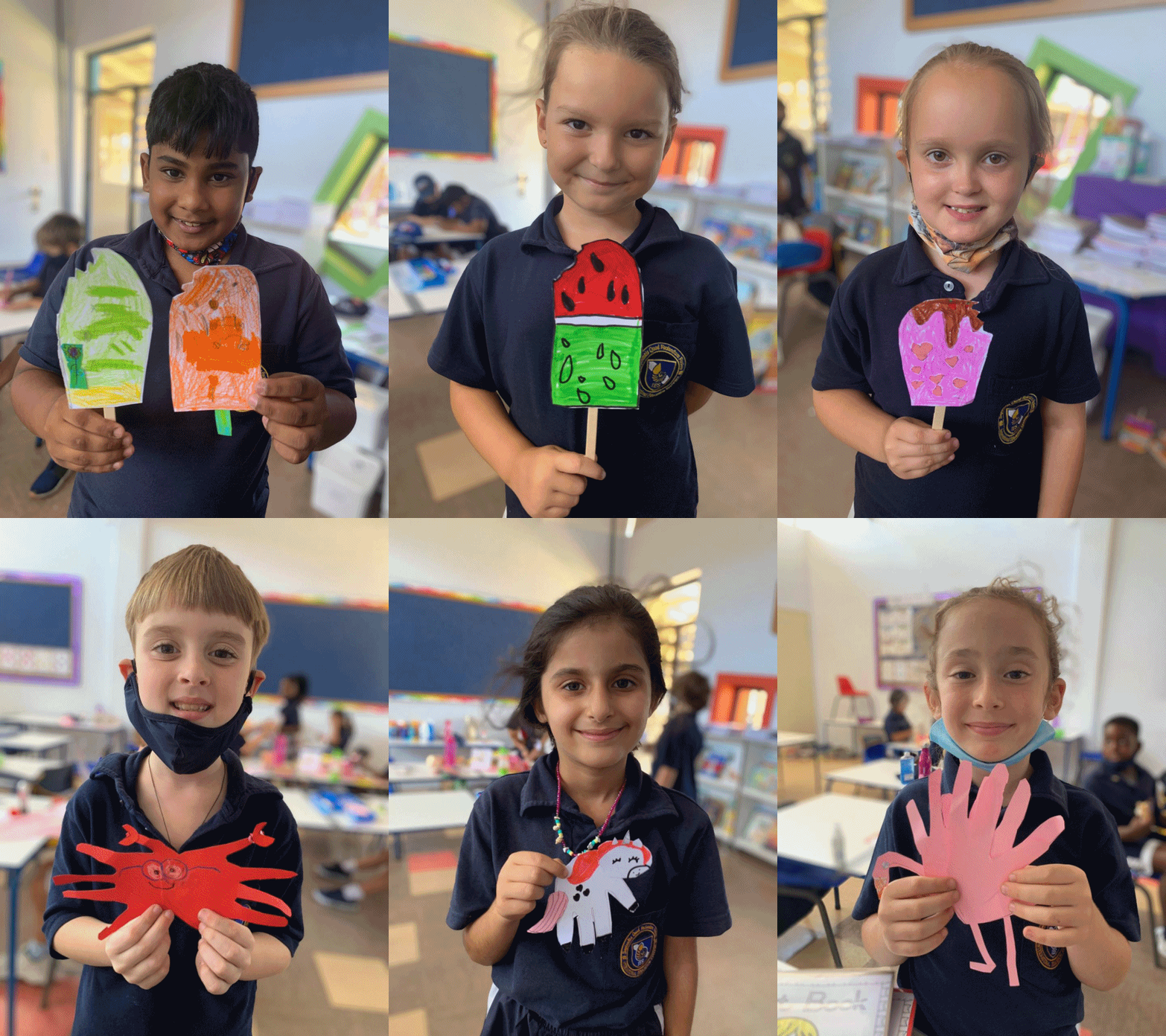
(*Masks were removed for photograph purposes only.)

Keeping Poetry Alive In Year 2
There are a number of reasons why poetry is important for young students. It helps motivate young readers to want to read, it builds on their vocabulary, fluency and writing skills. These skills are crucial in the development of strong readers.
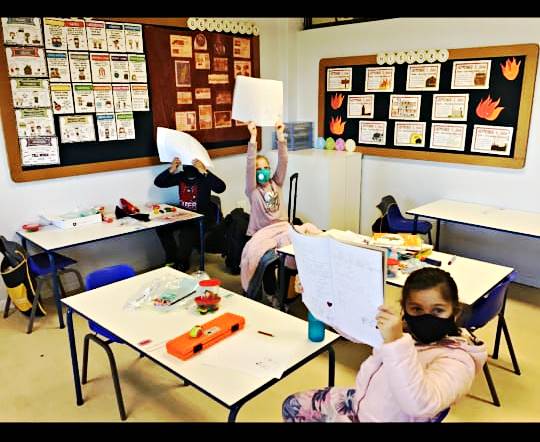
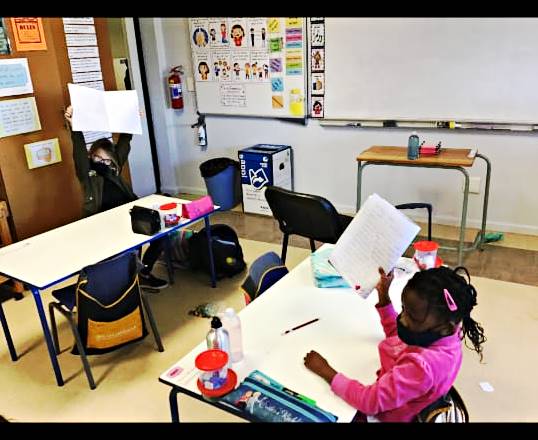
This past week, the students in Year 2 learnt about a poem written by Julia Donaldson, “The Food Train” poem, which brought a lot of fun and creativity in the class when the students were asked to write their own Food Train poems.
The poem uses words about food to make the rhythm of an old-fashioned train. The students therefore needed to create their own poem using different food names from their kitchen to recreate their own Food train poem which needed to sound like an old-fashioned train.
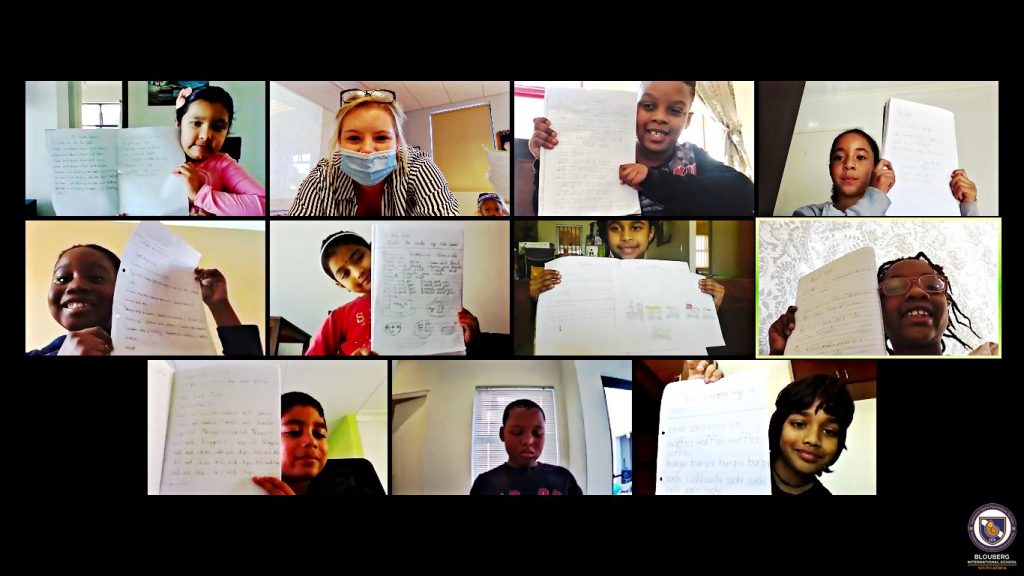
We used these poems for Show and Tell and included the students at home on a Zoom meeting. They read their poems out to the class. This brought a lot of laughter, excitement and some nerves as the students had not been able to stand in front of the class for Show and Tell in a while.
Teachers have always found that poetry allows for students to express their feelings, which is of great importance during this time of an emotionally changing situation. Keeping poetry alive in the classroom has proven once again just how creative and insightful students can be, and going forward, we will continue to develop and find creative means to spice up English, with the use of poetry.
Erin Hierse
Year 2 Teacher


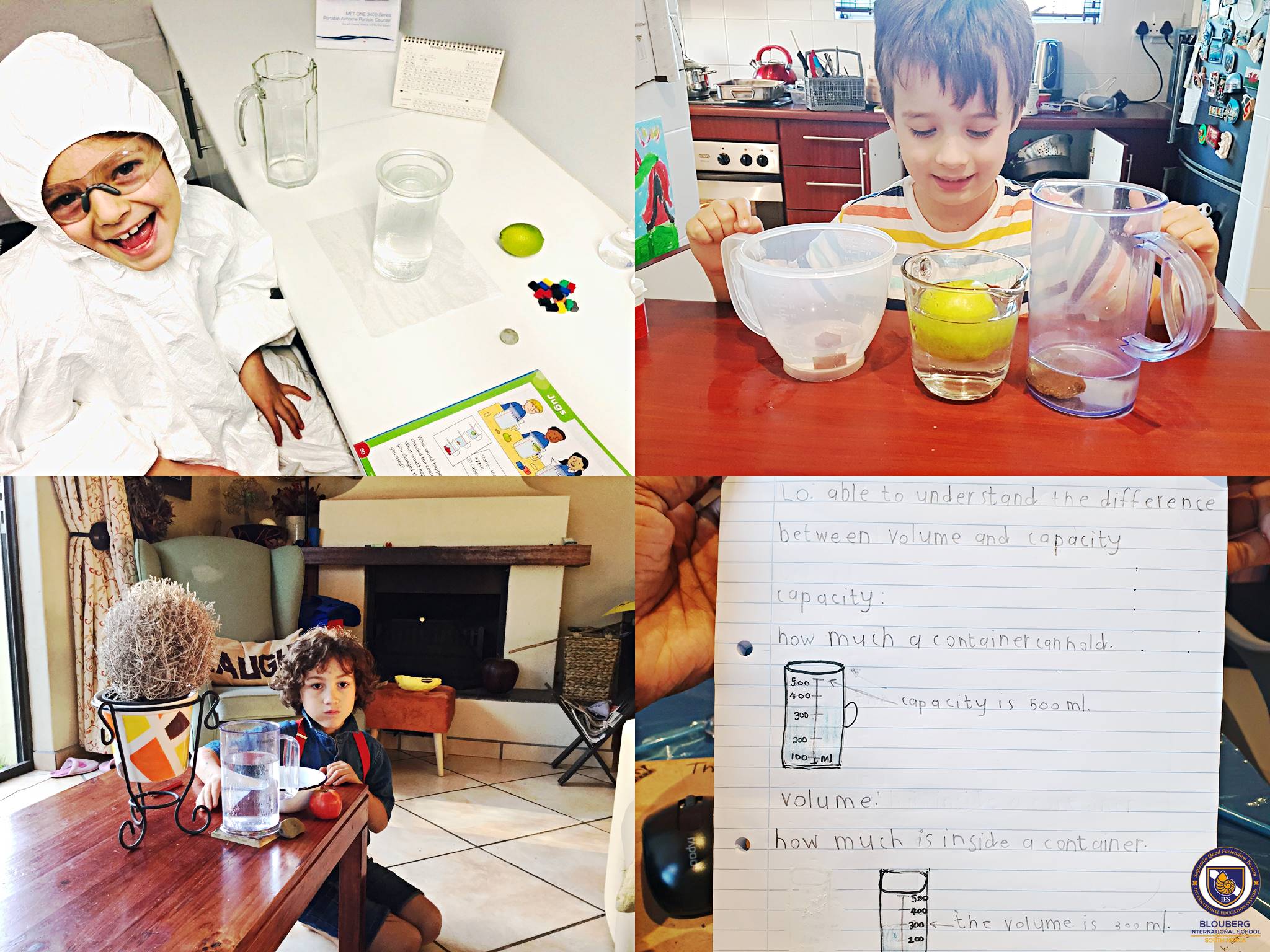
Measuring Fun
Learning Maths can be fantastic fun, as the Year 2 classes discovered this week.
We have been exploring volume and capacity and the difference between the two. In class we had some practical examples, experimenting with stones, Lego blocks, rice and water, in an attempt to identify which would float or sink. The students at home were asked to use items they have available to them to conduct experiments.
They had great fun predicting the outcomes of the different experiments. Some even remembered the Science topic about materials and could accurately predict the outcome and record their findings.
We are very proud of all our students for doing such great work!
Kim Coetzer
Year 2 Teacher


Year 2 Science Experiment
“Science is simply the word we use to describe a method of organising our curiosity” – Tim Minchin
This week for science our Year 2 students were asked to do a fun home experiment on Dissolving Matter. The test was to see which out of the given products would dissolve in a cup of water. Each child was given a worksheet where they could state their prediction of the probability of the product dissolving in the water, and also where they could record their findings after testing each. At least 5 or 6 cups of water was needed, placing each product in one cup at a time and stirring thoroughly. Some of the products used included salt, coffee, hot chocolate, soap, cooking oil, sugar and chalk. This is an exciting and fun way to watch as the product either sinks to the bottom, rises to the top or dissolves into the water completely. The important part is to watch and record as you’re going to make sure you’ve learned from your experiment and are able to ask more questions that will lead you to the next one.
Curiosity and discovery go great together. Much fun was had by all!
Siobhan Hendry
Year 2 Teacher






Year 2 Ostrich Farm Outing 2020
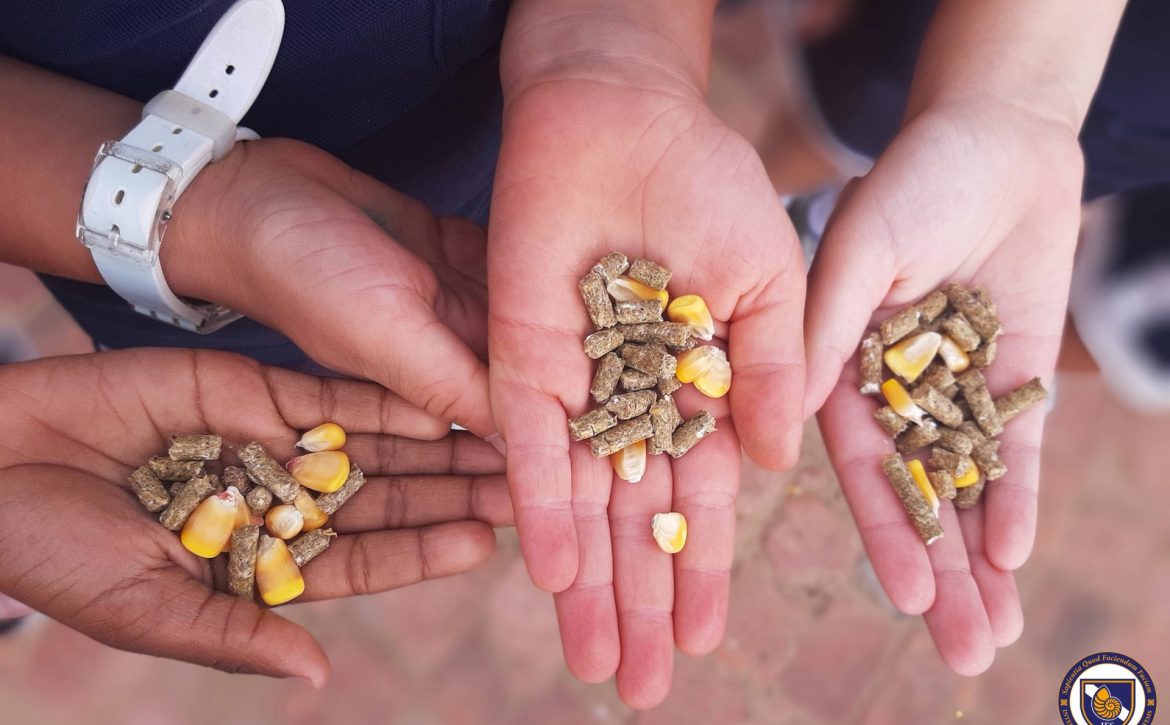
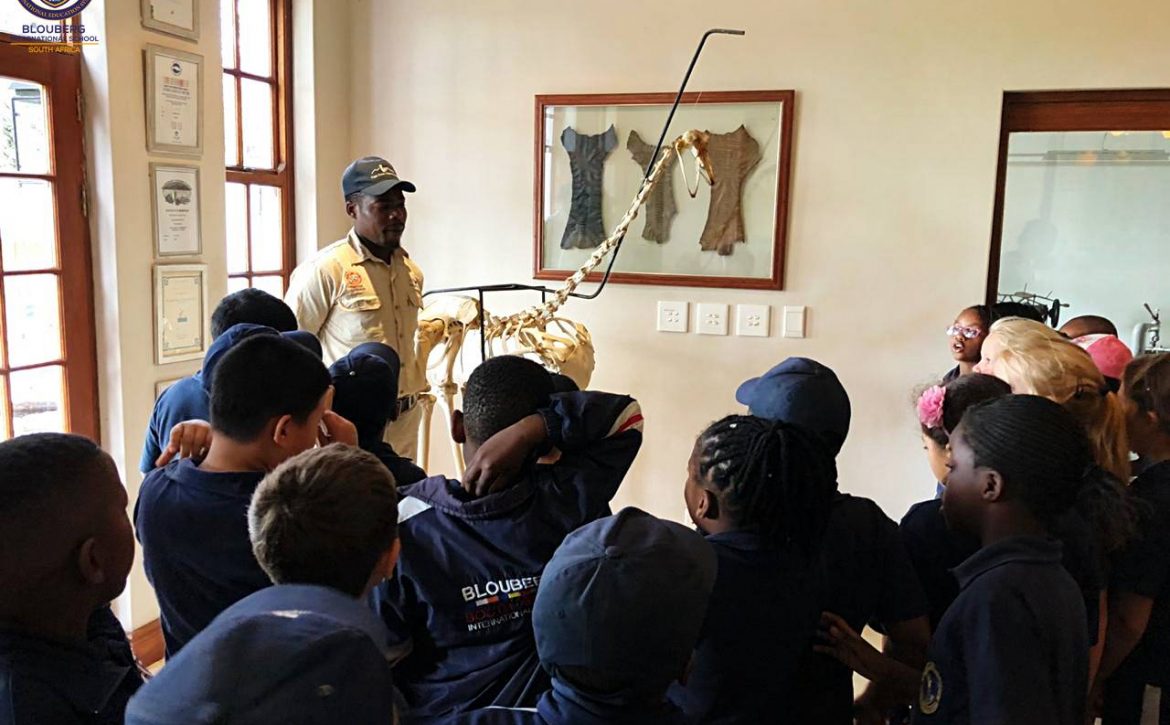
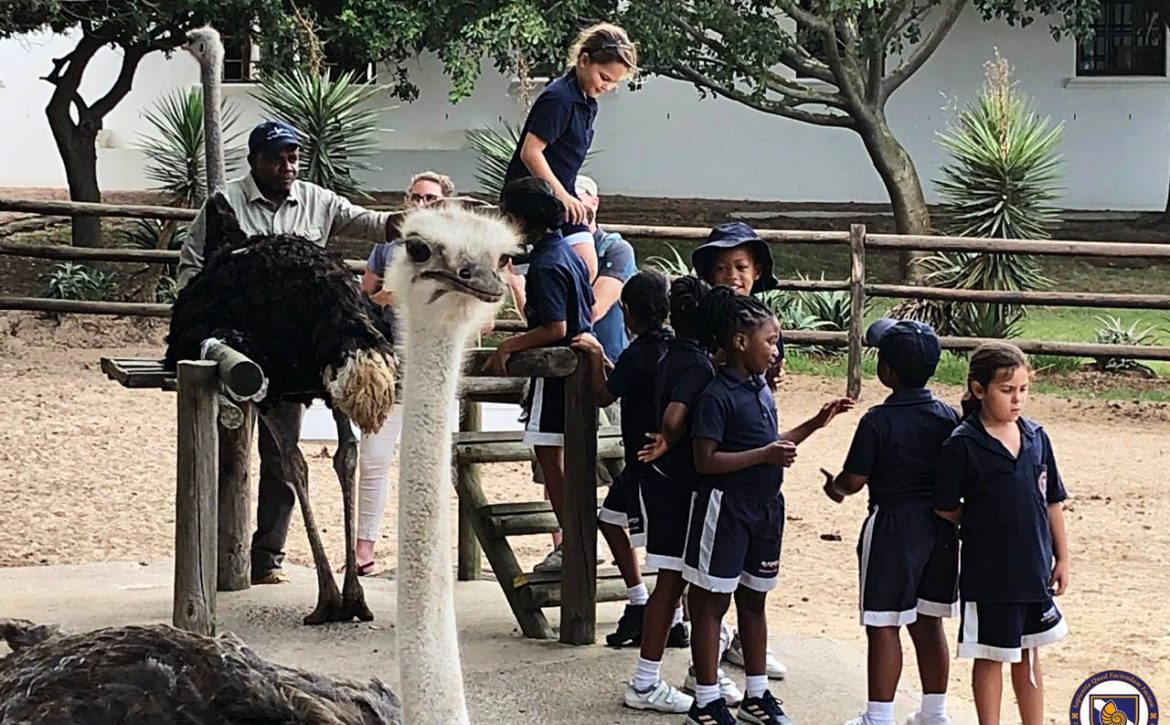
The Year 2 students had the pleasure of visiting the Ostrich Farm recently where they were fortunate enough to be taught the life cycle of an Ostrich and facts about their skeletons. Interesting facts such as their eyes are bigger than their brain and they are the world’s largest bird.
They spent their lunch break on the lush green lawns where they met two beautiful cheetahs and some lovable, yet hungry, goats…
A valuable life lesson the students also learned, according to Gamelihle Masuku, was “If an Ostrich comes after you, it is important that you lie on the floor and cover your head”.
An extremely interesting and enjoyable outing overall, we are all looking forward to visiting the Ostrich Farm again shortly.
Erin Hierse
Year 2 Teacher


London Bridge Is Burning Down!
Hear ye! Hear ye!
The fire swept through the central part of the English city, and has gutted 13 200 houses, 87 parish churches, St. Paul’s Cathedral, and most of the buildings of the City authorities.
At least six people were killed, although the final number has not yet been determined.
The Year 2’s have confirmed that it is impossible to get into the city. A melted piece of pottery has been found where the fire started, and shows that the temperature of the fire has reached an astounding 1,250 °C.
Due to the drought of the previous few months and the fact that these houses are mostly made from wood and straw, who knows how long it is going to take before they can get the fire under control. Perhaps 4 – 5 days.
It will take many years for the city to be rebuilt to its former glory and to make future improvements for the medieval city to stand strong and tall.
Here are a few pictures from reporters in the area that depict the extensive damage and extent of the fire.
Wendy Menton
Year 2 Relief Teacher
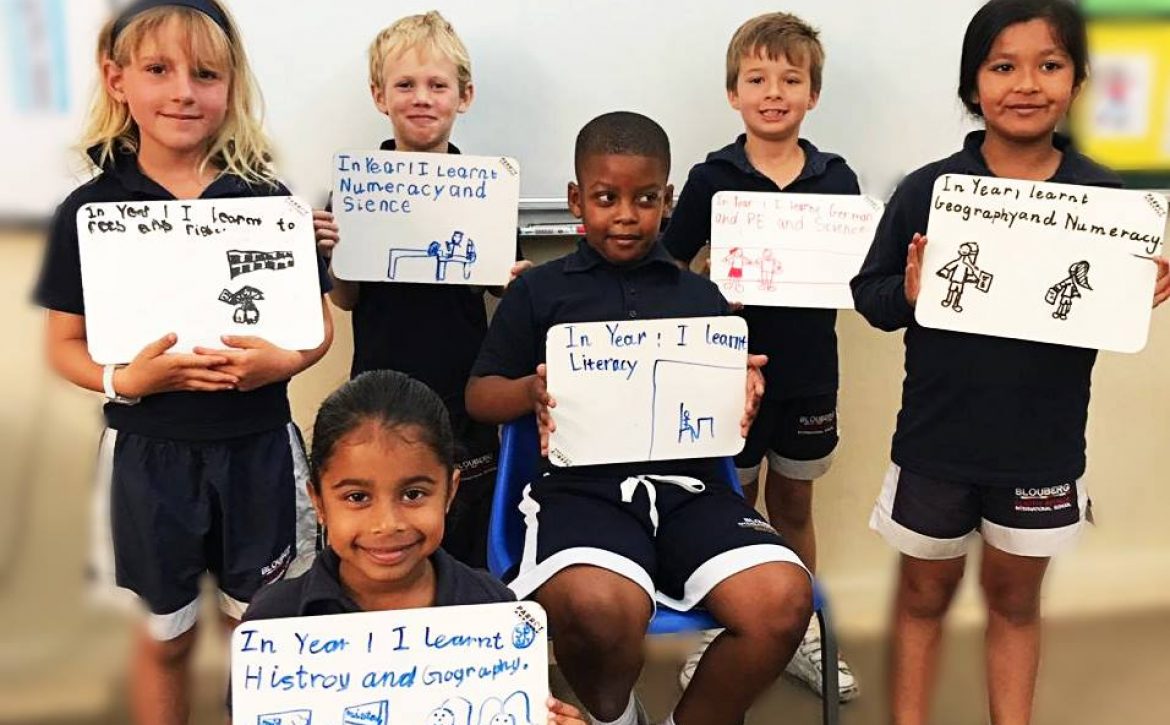
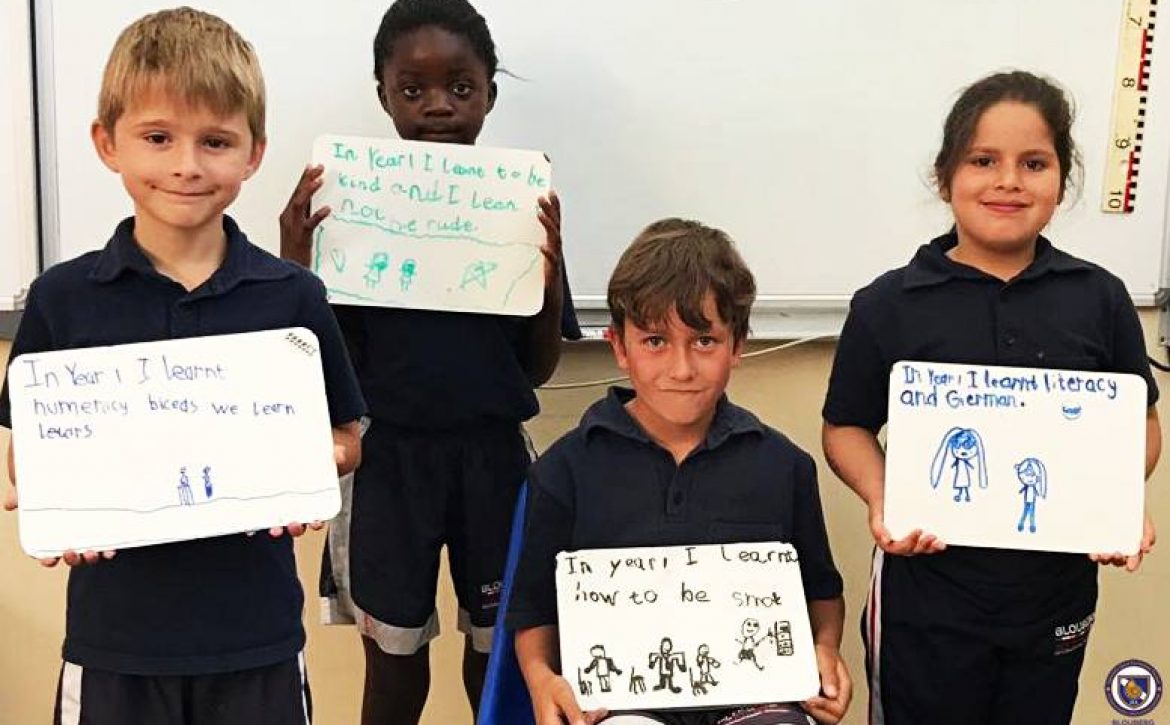

What I Learnt In Year 1
In Year 1 I learnt literacy. I loved numeracy because we do sums. Caleb
In Year 1 I learnt numeracy and science. I loved our science theme about Sounds. Aidan
In Year 1 I learnt German, P.E. and science. I loved P.E because it is fun. Liam
In Year 1 I learnt how to be good. I loved P.E. because we get to play soccer. Fernando
In Year 1 I learnt maths. I loved learning lots of new things. Eshwar
In Year 1 I learnt German. I loved P.E. because we play fun games. Callum
In Year 1 I learnt how to be smart. I loved school because I like sport and my favourite is tennis. Zach
In Year 1 I learnt numeracy. I loved P.E. because we do exercise. James
In Year 1 I learnt numeracy because we learn letters. I loved golden time because we make our own stuff. Joshua
In Year 1 I learnt geography and numeracy. I loved numeracy because we do fun things and lern. Divyanshi
In Year 1 I learnt History and Geography. I loved learning Spanish. Sinddhi
In Year 1 I learnt to be kind. I loved my teacher because she is the best in the world. Kwanda
In Year 1 I learnt to read and write. I loved Spanish. Paige
In Year 1 I learnt how to play games. I loved golden time because we play games. Tyler
In Year 1 I learnt new sounds. I loved golden time because we have fun. Isabella
In Year 1 I learnt literacy and German. I loved Mrs Pani teaching me German. Sulafa
In Year 1 I learnt to be kind and not to be rude. I loved my teacher because she lets us have golden time. Macca
Ann Cordner
Year 1 Teacher




Symmetrical Expression
What is Symmetry?
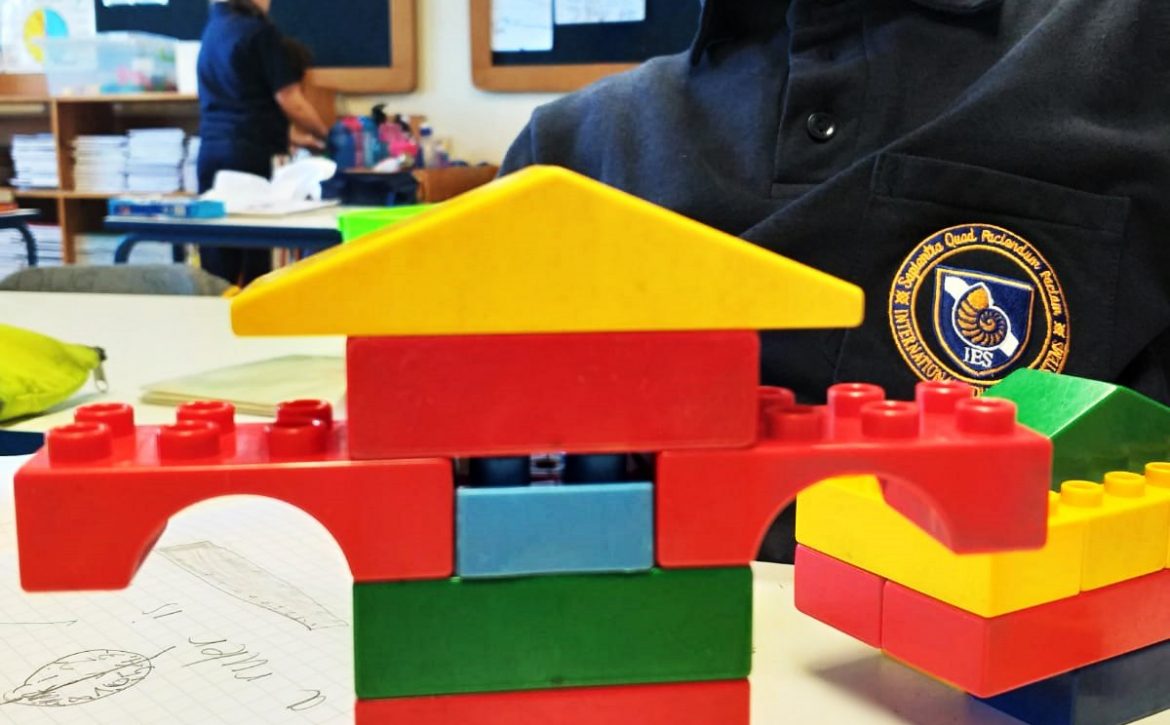
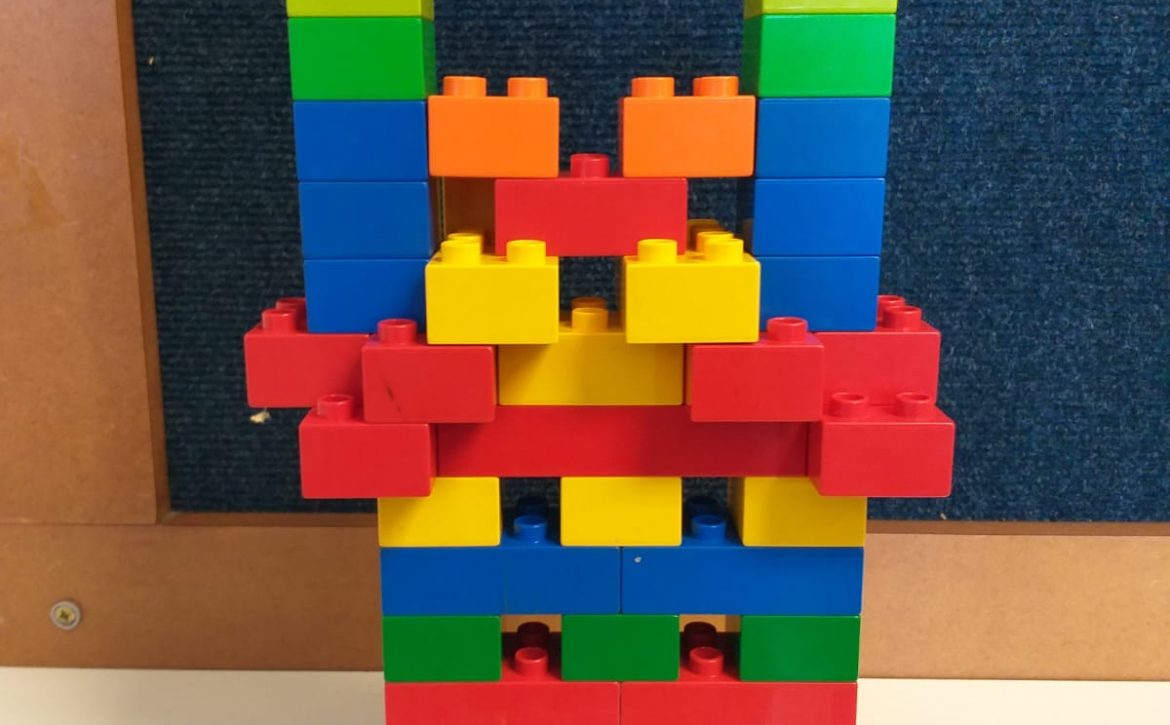
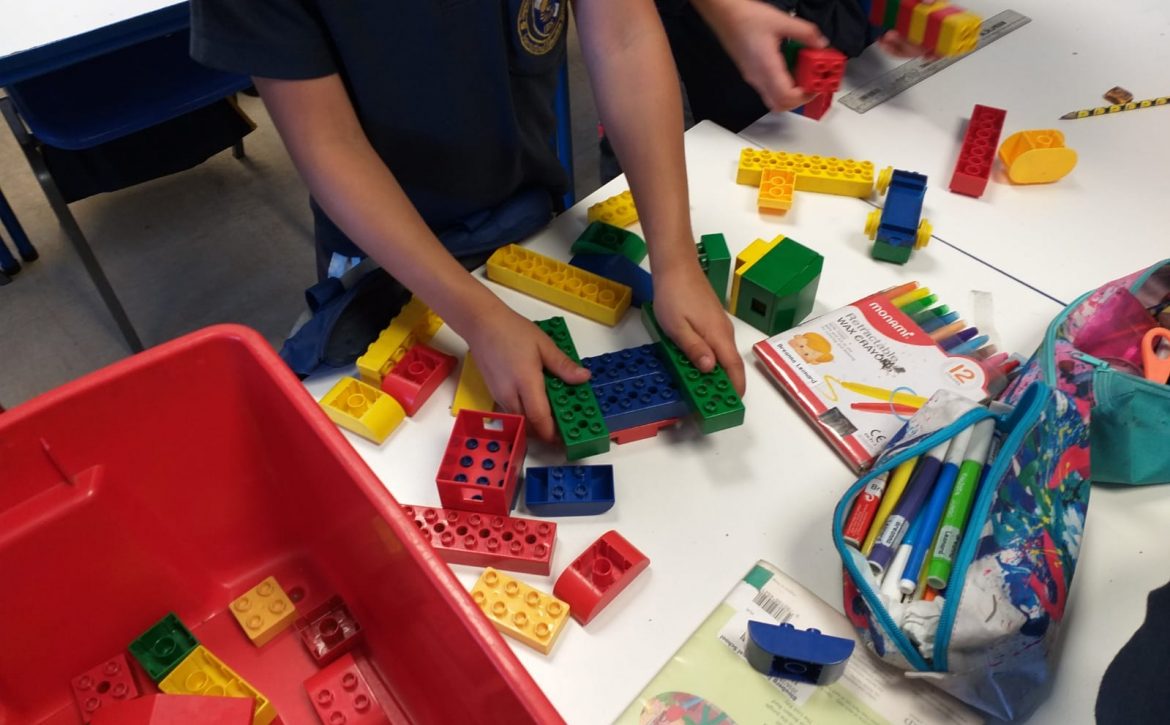
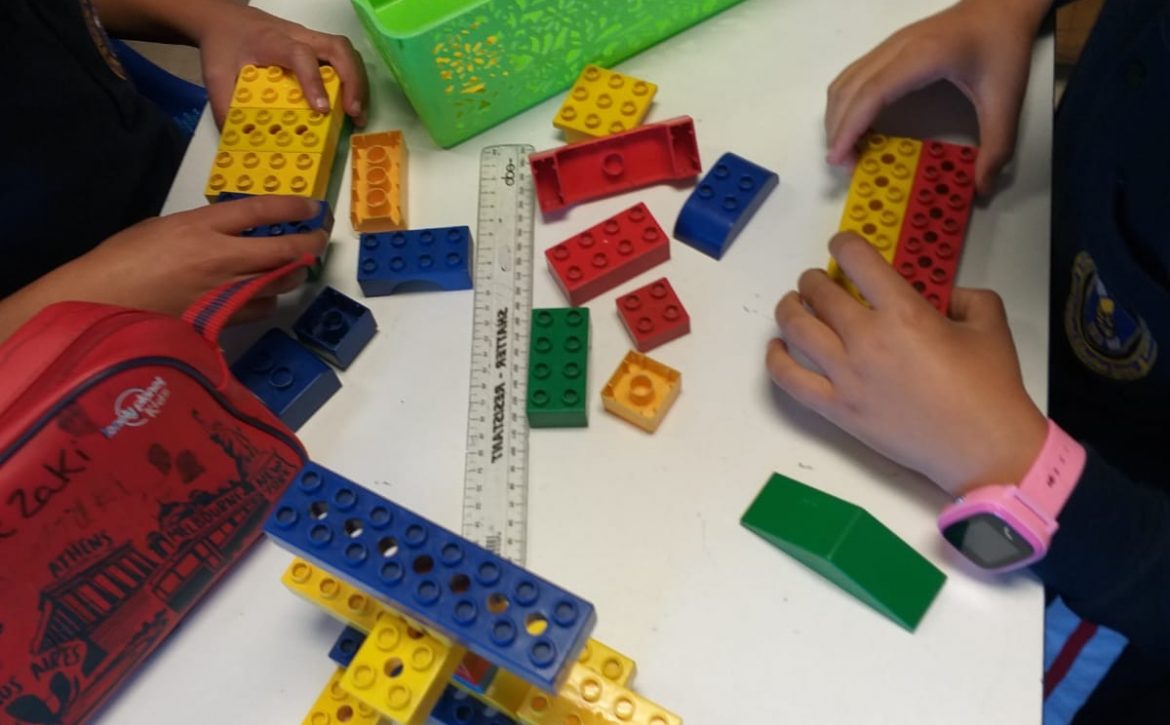
In Year 2, symmetry is part of the geometry section of the curriculum. Using Active Learning as our base, we attempted to allow the learners to discover symmetry in shapes, buildings and nature. First, the students explored the school grounds and had to find and draw as many symmetrical objects they could find. When they returned to class, they gave their own definition of symmetry using what they had just done. The following lesson, students were required to work in groups of four and had to build a symmetrical construction using Lego and building blocks. They had to ensure that the colours they used also demonstrated symmetry. After this, they drew what they had constructed and drew the middle line to show that they knew what the line of symmetry was.Students need to understand symmetry to be able to later grasp more complicated concepts like reflective, rotational and point symmetry. Ballerinas use symmetrical principles to complete a turn by turning their bodies on one spot. Even a simple calculation like 8 = 4 + 4 is a demonstration of symmetry; where the totals on each side of the equals sign need to balance.
“We are imprinted with a tendency toward symmetry and can learn new concepts more quickly if we can detect an element of symmetry in them.” – Katherine Buchholz (https://www.realcleareducation.com/articles)
Year 2 Teacher

Year 2 Experi-buddies Inting
“Our greatest weakness lies in giving up. The most certain way to succeed is always to try just one more time” – Thomas Edison
In science, this term, our Year 2’s are learning about all the wonders of electricity! We are so excited for fun in class and exciting new experiments.
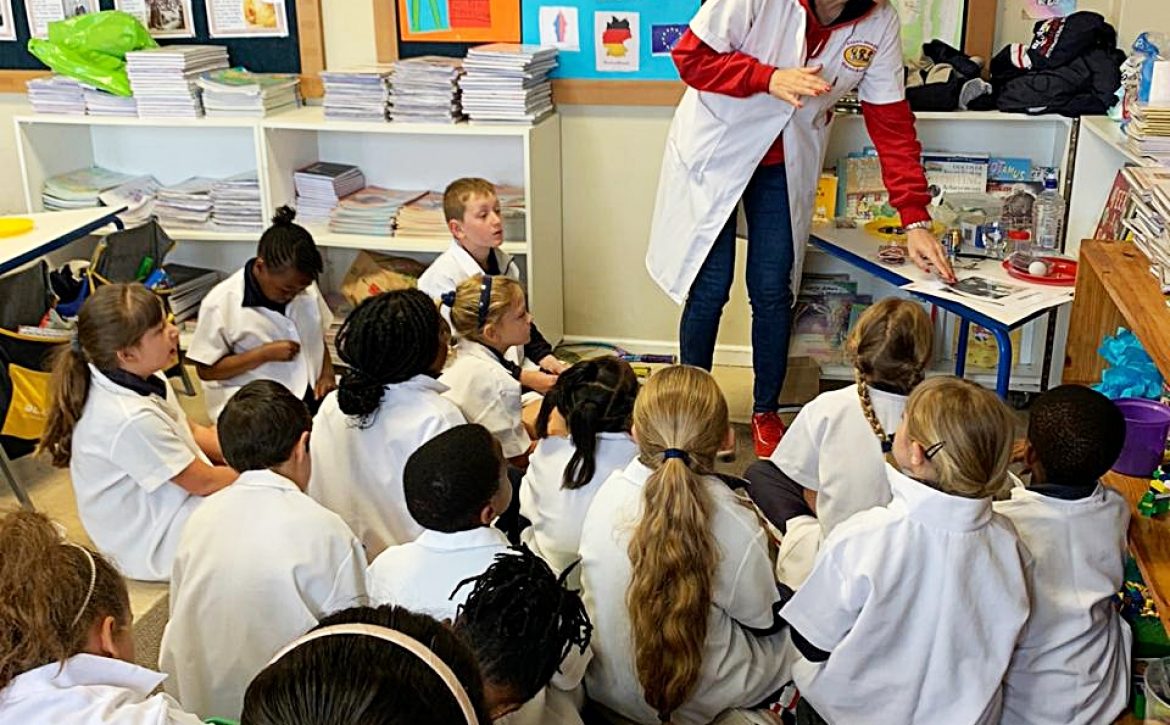
This week we enjoyed a visit from the Experi-buddies team. Our Inting started with a small demonstration from the team where we learnt about what Electricity is and who Thomas Edison was. After this we got into batteries and how we can use them to power up light bulbs, set off buzzers and even power up a small fan.
Our favourite part was when we got to go back to our tables and start experimenting with our own batteries and light bulbs. We learnt about open and closed circuits and exactly what we need to make the light go on. We also learnt about solar power and how that works, after experimenting with light switches too.
It was so much fun learning about things we are able to find and observe in our everyday lives!
Visit the link to learn more about Experi-buddies:
Siobhan Hendry
Year 2 Teacher


Capacity for Capacity
What is the difference between Volume and Capacity?
Capacity is the amount a container can hold if completely full to the brim.
Volume is the actual amount in the container e.g. 500ml.
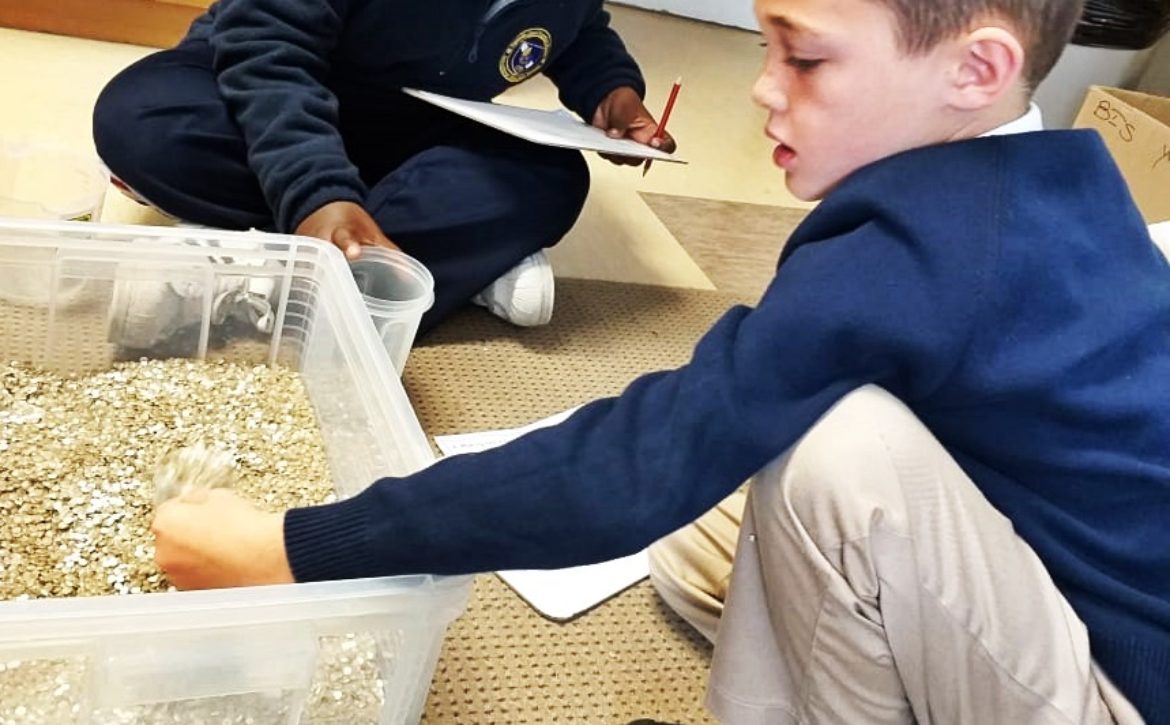
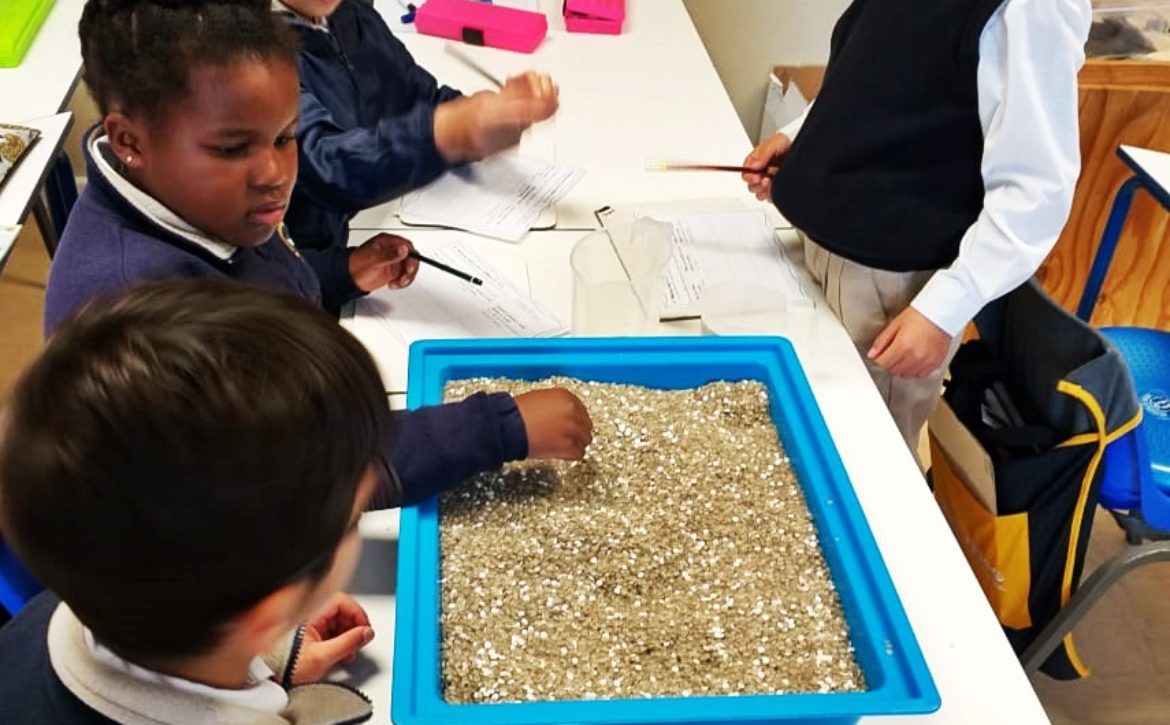
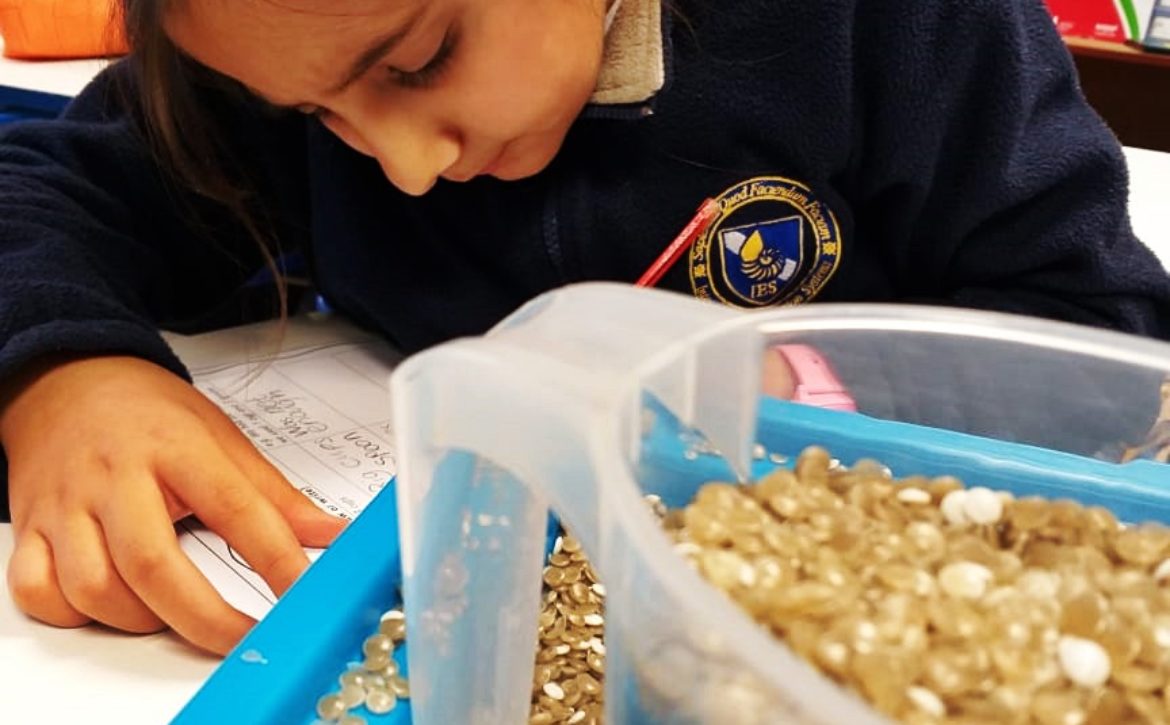
The Year 2’s explored Capacity and Volume using different sized containers and “dragon tears” (plastic chips used in recycling plants). They were learning how to fill a container to the litre or half litre mark. Some students quickly put two and two together and discovered that two half litres make up one litre.
I must say, it was a joy as a teacher to watch the Year 2’s exploring and discovering on their own terms. Although the task was set out for them clearly, with the use of a worksheet to guide them, the rest of the learning was up to them.
This discovery learning approach, also described as Active Learning, has many benefits for students:
– It helps students to take charge of their own learning
– Students become independent thinkers
– Problem solving and intellectual abilities of students is enhanced
– Students are more motivated, interested and satisfied with what they are learning
Active Learning for the win!
Gillian Baker
Year 2 Teacher