
A fun way to learn our initial sounds of words in Pre-Reception
A fun way to learn our initial sounds of words in Pre-Reception
It is important for children to learn letter-sound relationships because the English language uses letters in the alphabet to represent sounds.
Phonics teaches this information to help children learn how to read. Children learn the sounds that each letter makes.
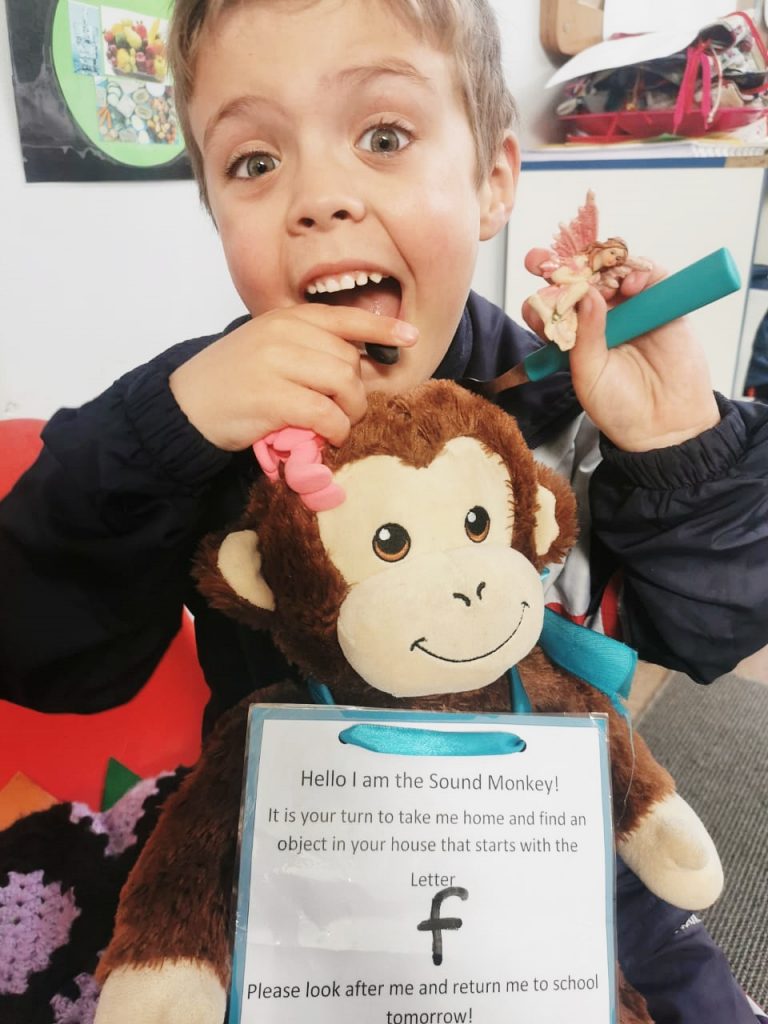
A fun way through which the Pre-Reception students learn the initial sound of words is… I would like to introduce you to a very important member of our class. His name is the Sound Monkey and the students take turns to take him home with them and find something that starts with the letter of the alphabet that we are learning about that week.
The students are always very excited when it is their turn and can’t wait. It is always very interesting to see what the sound monkey has in his bag the next day. It’s usually things that I did not even think of.
It is very interesting to see how quickly the students have been learning the initial sounds of words in this manner. Now let us see whose turn it is today!
Cindy Nunan
Pre-Reception Teacher



Read More

Shaping Positive Eating Habits
Wow! What a busy week it has been. Our main focus in Nursery this week has been on Healthy Eating, and believe me when I tell you that I have had to explain why chocolate is not a fruit more times than I have had to sing “Let it go”, and that’s A LOT.
Explaining to our students why their chips and chocolates should not be eaten in the morning, is similar to arguing with a qualified lawyer about the law, it hardly ever ends well. However, as the week progressed, our little ‘pre-lawyers’ began enjoying learning about healthy eating so much, that we actually had to send some of the unhealthy snacks back home, and that itself is like a snowy day in summer.
This has reinforced my belief that teaching young students about healthy living does not have to be done through a strict, structured routine, but rather through fun, play-based activities. Play-based learning helps support our children’s desire to explore and interact with the world around them. Providing them with opportunities to explore and learn about foods, separate from meal times, not only exposes them to new foods but allows those fussy eaters to explore non-preferred foods in an encouraging way.
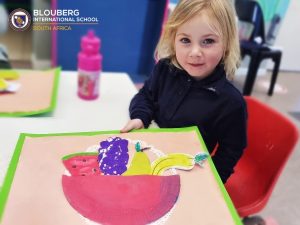
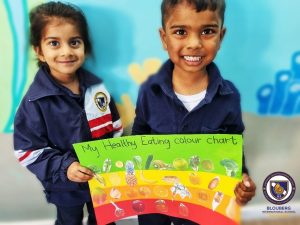
As our school follows the wonderful Traffic Light System, our students are already aware of the foods that are not healthy, but maintaining that diet can be tricky with toddlers. So this week, we introduced healthy eating through colour, exploration and a lot of gentle encouragement. Some of the students helped create a healthy eating colour chart that explored the principle of ‘eating the rainbow’ and even chose some of their favourite fruits and created crafty fruit baskets for our next picnic. We also explored shopping for fruits and vegetables, and students picked out various healthy foods that we can find at the grocery store.
By making healthy eating fun, engaging and hands-on, our students found it less daunting to face the vegetables on their plate and supported our long-term goal of building a foundation for lifelong healthy eating habits.
Jo-Anne Dickason
Nursery Teacher

Read More
Multi-Sensory Learning
The importance of teaching and learning with more than just sight and sound lessons.
Multi-sensory learning has the benefit of reinforcing strengths, improving students’ weaknesses and assisting the brain in making connections between current knowledge and the new knowledge that is being taught. It also helps students who differ in learning styles to make concrete connections during the lesson.
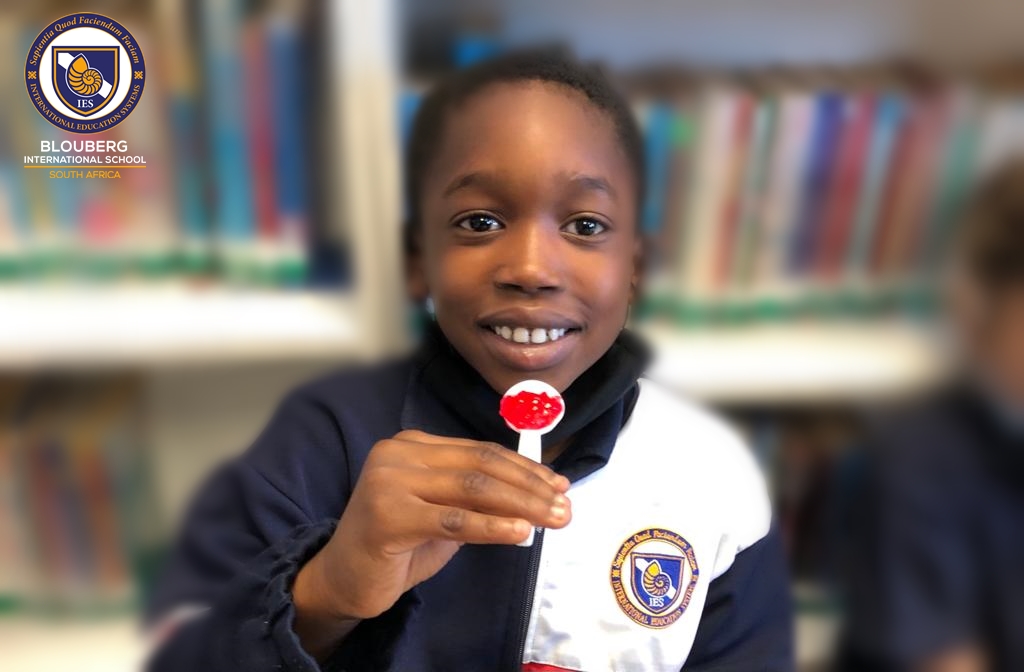
In the BIS Library – learning is dynamic, engaging and often involves more than three of the body’s senses. The ‘/j/’ sound lesson is the perfect example of a lesson where students are facilitated in remembering the sound by tasting jelly. After singing the jolly phonics song for ‘/j/’, they move their bodies like wobbling jelly and read a book about jelly. The students then have the opportunity to enjoy smelling and tasting some jelly. Multi-sensory lessons seem more like playing than learning to children and as research has shown, this is one of the best means for children’s brains to make connections and store information.
Facilitating learning through the senses is important, in particular learning to read because reading always leans towards sight and sound. Reading is an abstract concept that requires concrete learning methods in its teaching, and not only for those who need it with regard to their learning styles.
Kirsten Stoffberg
School Librarian and Teacher

Read More
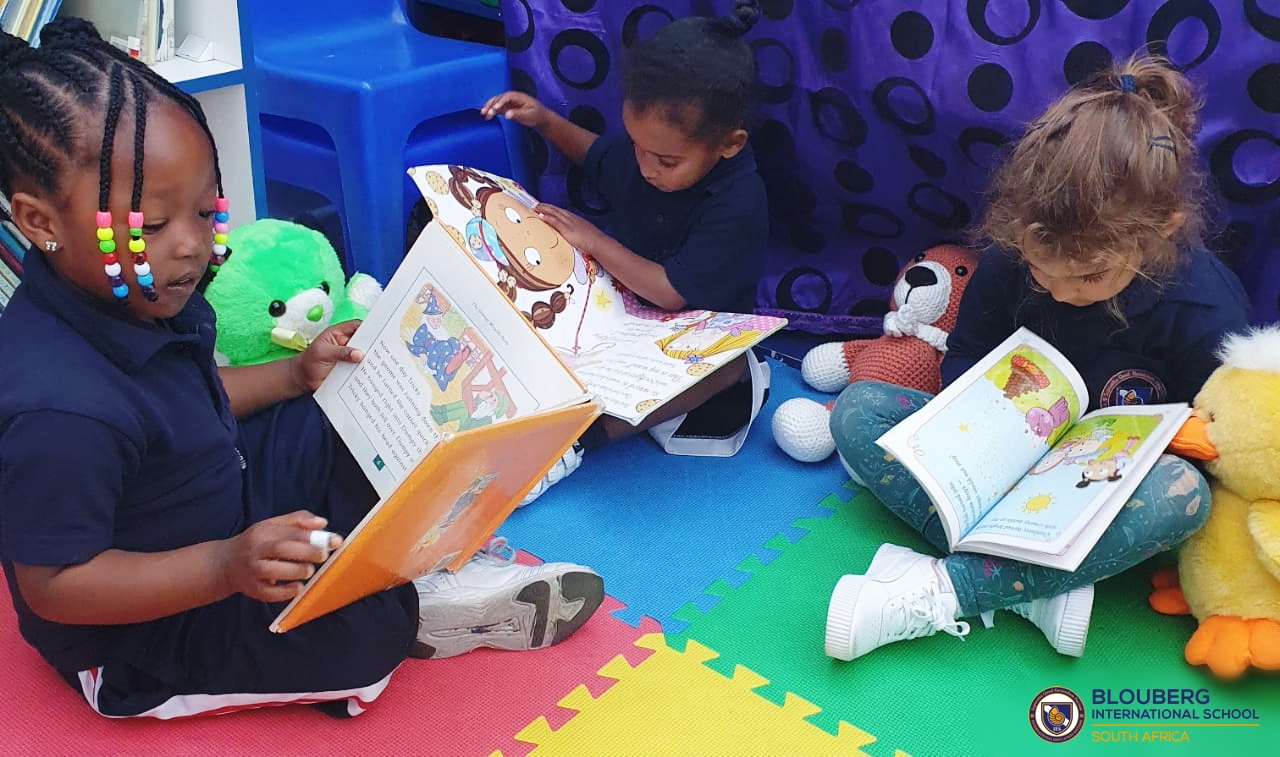
Next Week Is Book Week!
We will celebrate book week next week at BIS. It’s a fantastic opportunity to celebrate books and to see the young students getting excited about reading.
There will be many fun activities during Book Week:
- On Tuesday, 3 May 2022 we will do stop, drop and read. All students need to stop what they are doing and listen to or read a story for 10 minutes when they hear the bell ring.
- We are holding another night of fun stories and book sharing for Foundation Phase and Key Stage 1 students. Bedtime story evening on Wednesday, 4 May 2022 will start at 18:00. We invite all students to come along wearing pyjamas and snuggling their bedtime toy and listen to some great bedtime stories told by the teachers and parents.
- Book Character dress up day will be on Friday, 6 May 2022. Students are encouraged to bring a book to donate and dress up as their favourite book character.
As you can see our Book Week is packed full of exciting activities for the students.
Martie van Dyk
Pre-Reception Teacher


Read More

Learning About Mr Plus In Reception Year
Earlier on in the term we started off by learning about the concept of more, which also helped the students understand the idea of counting forward and numbers getting bigger when one more is added.
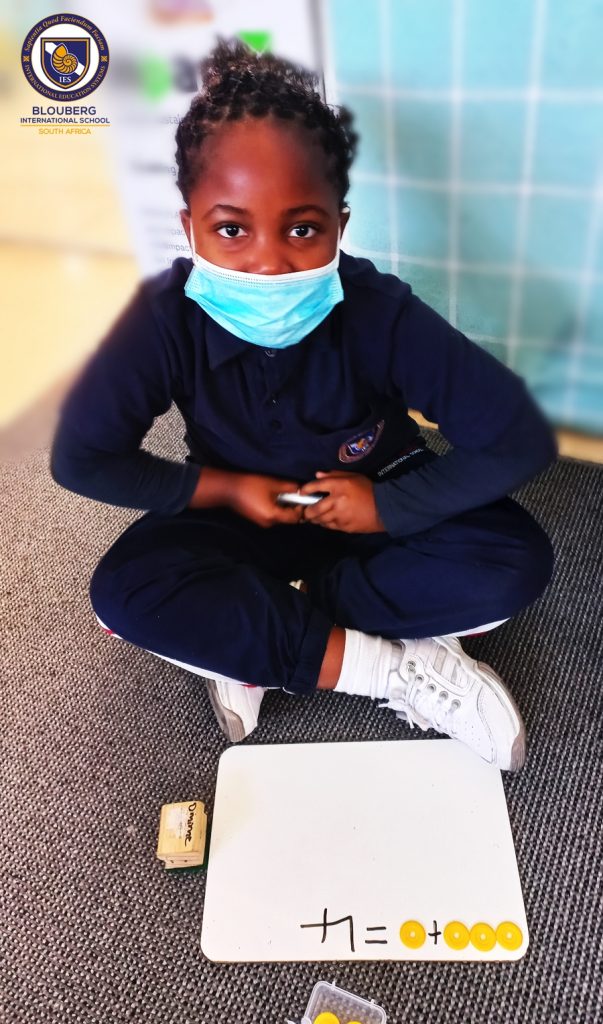
This week, the students were introduced to a very popular and friendly character in Numberland, called Mr Plus. Mr Plus likes to bring the numbers together by making friends with them and making them more. The students learnt a song about Mr Plus. Then the teacher pretended to be Mr Plus, using the students to make sums. The sums were made on the board using magnets and a whiteboard pen.
The students were reminded that the plus sign is in between the numbers to add them and the equals sign comes before the answer. Afterwards the students came to the mat in small groups for a focus group lesson with the teacher. They used their own counters on their whiteboards to make their own sums.
The students were so excited to be making sums with counters and learnt how to check if their answers were correct. Later on they will also be introduced to picture sums and progress to using counters or their own drawings to work out addition sums with numbers.
Mathematics can be so much fun!
Bronwen Nuthall
Reception Year Teacher
Read More
The Importance Of Art In A Child’s Development
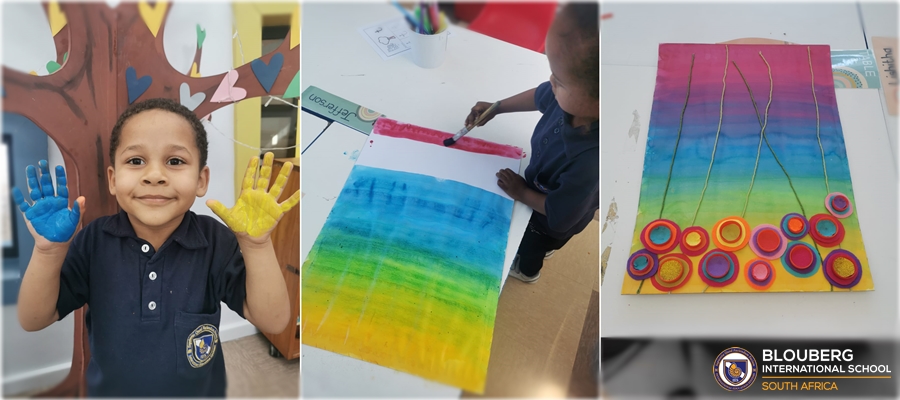
There is an overwhelming excitement and enthusiasm throughout the School as the students are busy creating the most amazing works of Art for the upcoming Art Auction on Tuesday, 26 April from 5:30pm.
It is wonderful to see the concentration on the students faces and the joyful expressions of art explored!
Creating art expands a child’s ability to interact with the world around them and provides a new set of skills for self – expression. Not only does art help to develop the right side of the brain, but it also cultivates important skills that benefit a child’s development.
SKILLS CHILDREN DEVELOP THROUGH ART ACTIVITIES:
- Life skills
- Communication skills
- Problem – solving skills
- Social & Emotional skills
- Fine Motor skills
- Self – expression & creativity
It is important, however, to separate “talent’ from ‘creativity” – a child does not have to create a masterpiece to have a meaningful artistic experience. Art is a process not just a product. It is the process of creating – exploring, discovering and experimenting – that is important and adds the greatest value. Through self – expression and creativity, a child’s skills will develop naturally. Art matters the same way language matters. It is a fundamental component of what makes us uniquely human.
Hope to see you all at our Art Auction!
Cindy Nunan
Pre-Reception Teacher

Read More

Healthy Eating
Going forward into a new term I encourage parents and students to consider adopting healthy eating habits throughout their day. In the Junior campus we have incorporated a robot system which gives the children a visual aid of which foods are a healthier choice.
The red light is used for foods which should be avoided in school lunches. “Red light” foods include items such as sweets, fizzy drinks, pastries, chocolates, etc.
The orange light is used for foods which can be incorporated occasionally in school lunches. “Orange light” foods include white grains (such as white bread or pasta), chips, etc.
The green light is used for foods which are encouraged in school lunches. “Green light” foods include fruit, vegetables, wholegrain foods (such as brown bread and whole-wheat products), water, etc.
It has been proven that sugar hampers a child’s ability to concentrate and focus. In the Junior classrooms the students are very proud when they have healthy items as snacks and love to show these to their classmates. We would like to encourage this behaviour and really adopt a positive attitude towards healthy eating habits. If we do this from a young age then we can be assured that our children will grow up with this healthy frame of mind regarding food habits.
For some inspiration for healthy school lunches, please see the below article entitled Healthy Food for Kids: Are your kids hooked on junk food? With these simple tips, you can get children to eat right without turning mealtimes into a battle zone.
https://www.helpguide.org/articles/healthy-eating/healthy-food-for-kids.htm
Kim Hahn
Reception Year Teacher

Making friends in Budapest
There is so much discussion about ‘all around the world’, interschool connections and online communication right now. Not only is it a fun way for children to explore the world around them, but they can also observe the learning of the other children they are in contact with.
This allows students the opportunity to become a part of the lives of people who live on the other side of the world. Unlike just showing a map of the world in the classroom or exciting pictures from countries we’re learning about, this vivid personal connection both inspires their learning and, in its own way, makes it more meaningful to them.
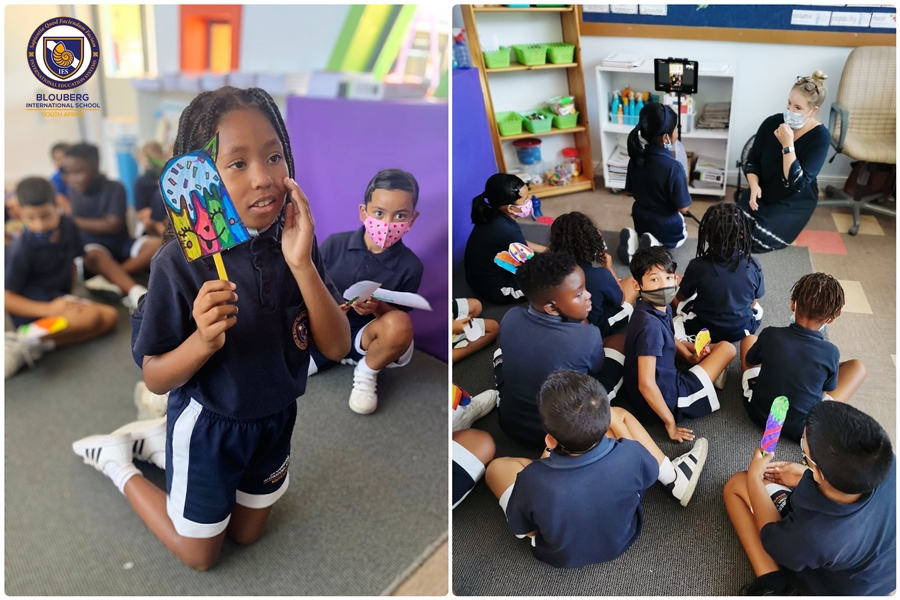
This week, our Year 2 students got to interact with children from our Budapest school. A country that most of them had never even heard of before.
It was so exciting for our students to see the other students, from our sister school, wearing the same uniform that they wear in a completely different environment.
The wonderful contrast of it being winter over there at the moment and summer here made for a very fun art idea. Our Year 2’s had to make and design their very own popsicles while the other children created their own snowmen and penguins. Students had an opportunity to come up one at a time and introduce themselves, while they very proudly showed off their art pieces.
This has been such an incredibly interesting and exciting experience. Mr. Swart also popped in for a visit to say hi and interact with the students.
A wonderful way to learn and a very unique way to explore the world around them. We can’t wait to meet up with our new friends again!
Siobhan Hendry
Year 2 Teacher

Read More
Traffic Light Eating
One of the best ways to help children eat healthy foods is to teach them Traffic Light Eating. Just like when we are driving a car, a traffic light tells us what to do:
Green means “GO”
Yellow means “Slow down”
Red means “STOP”

Green Light Foods
Green light foods are “grow” foods. You want to help children learn to eat as much as they want of these foods, which include all fruits and vegetables. Green light foods are: grown and not manufactured, low in calories, high in nutrients, colourful, and usually can be eaten raw.
Yellow Light Foods
Yellow light foods are “slow down” foods. These foods are okay to eat everyday, in moderation. Yellow light foods include: pasta, rice, bread, tortillas, noodles, eggs, lean meat, chicken, low fat yoghurt, nuts and seeds and whole grains.
Red Light Foods
Red light foods are “stop” and think foods. Red light foods are low in nutrients; high in calories, fat or sugar; or contain artificial sweeteners, hydrogenated oils, or trans-fats. They include: muffins, cakes, donuts, biscuits, cookies, sweets, chocolates, fast foods, pastries, chips, crisps and white bread.
Tips to Apply Traffic Light Eating
Traffic Light Eating makes eating healthy more fun. Learners are paying attention to what we eat, and setting a positive example is the key to turning healthy eating into a regular habit.
We we are excited to start using the Traffic light eating system at BIS.
Water is the healthy option and only drink allowed at school. Juices, cordials, Oros, milkshakes, yoghurt drinks should not be allowed and sent home unopened with an email explaining they are not allowed.
Each teacher from nursery up until Year 2 will display the traffic light eating poster in their classroom. The poster clearly shows which foods are healthy and allowed at school and which foods are not healthy and thus not allowed at school.
Aftercare will also help maintain the traffic light system in the Early/Aftercare. If a child attends a long day in aftercare or early care, then a separate healthy lunch box should be packed.
Red light foods: chocolates, muffins, cakes, sweets, chips, crisps, donuts, cookies, etc. should not be allowed in lunch boxes for class or after care and must be sent home.
Let’s make BIS a healthy eating school improving children’s health which in turn benefits their learning ability and behaviour.
Thank you for your ongoing support.
Charlotte Cronje and Cindy Nunan
Foundation and Key Stage 1 Teachers
Read More
Healthy Eating
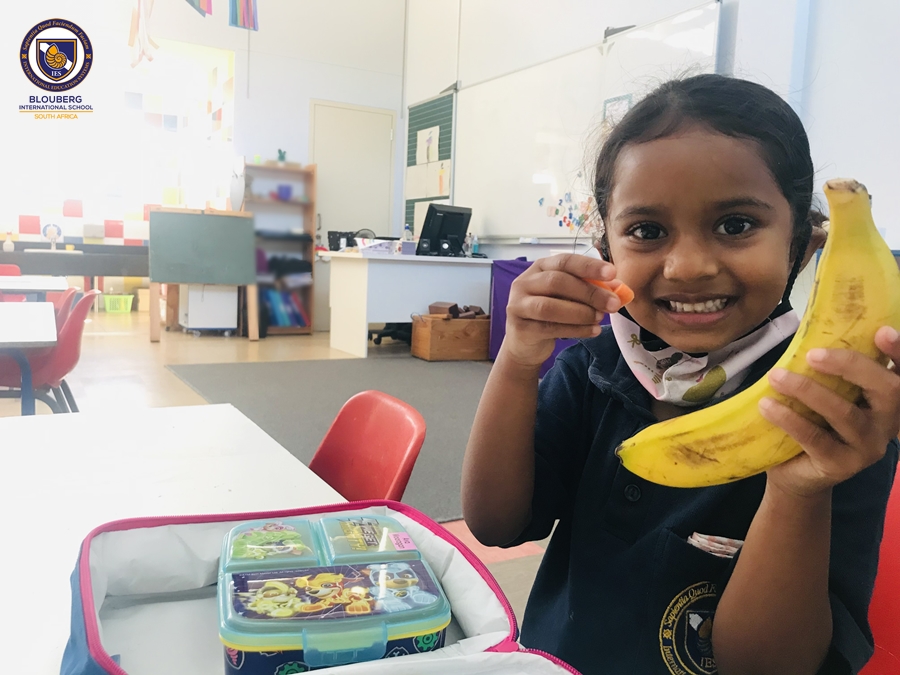
In Year 1, we often talk about what is in our lunch boxes for the day. We have competitions to see which child has the healthiest lunch box.
The importance of packing a healthy lunch box is immeasurable. Children are more alert and focused when they’re fuelled with healthy food. Higher levels of sustained concentration mean that kids can more readily retain information and therefore learn.
Crisps, chocolates, cakes and juice are full of sugar and additives, which do not help a growing child.
Below are some of my class’s awesome super healthy lunch boxes.
Charlotte Cronje
Year 1 Teacher
