

The Science of Life
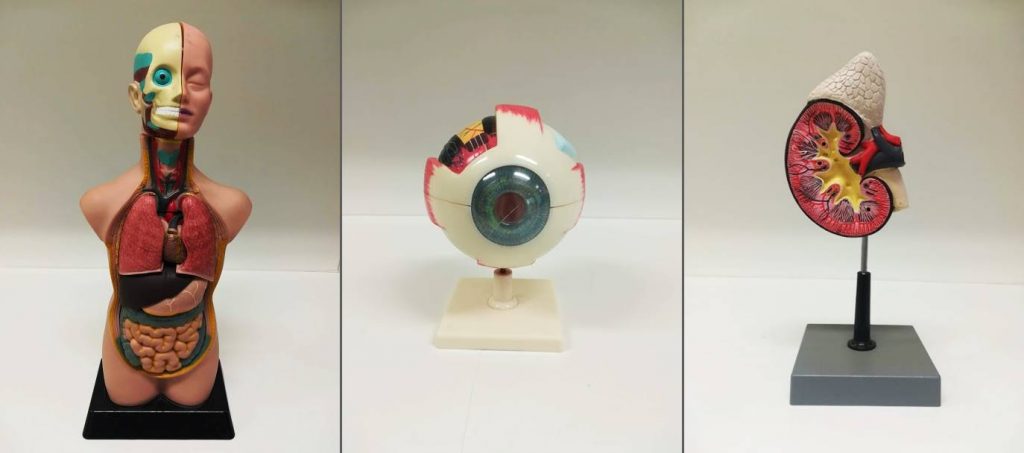
Biology is the study of living organisms, both in terms of their structure (anatomy) and how their different parts function (physiology). The cell is introduced as the basic unit of life, which then form tissues, organs, systems and ultimately an organism.
Biology can be divided into many different fields of study, such as biochemistry, genetics, microbiology and biotechnology to name but a few. Each of these directions delve deeper into the complexity of being alive. As a school subject Biology skims the surface on all these topics to provide a platform from which to launch for those interested in further studies at university level. It is important to understand how the different components of an organism function together as a whole. The intricacy of organs such as the heart or the eye is astounding and every part of these structures have a very specific and complementary purpose. Emphasis is placed on the practical application of Biology in the real world, from developing vaccines for infectious diseases, how gene therapy is able to provide hope to people with currently incurable conditions to understanding the impact of lifestyle choices on our health. Biology often overlaps with Chemistry as we investigate the chemical components of cells and study the equations of photosynthesis, respiration and the binding of gases to haemoglobin in blood. Mathematical calculations also make a regular appearance in Biology papers and is a necessary skill that students require.
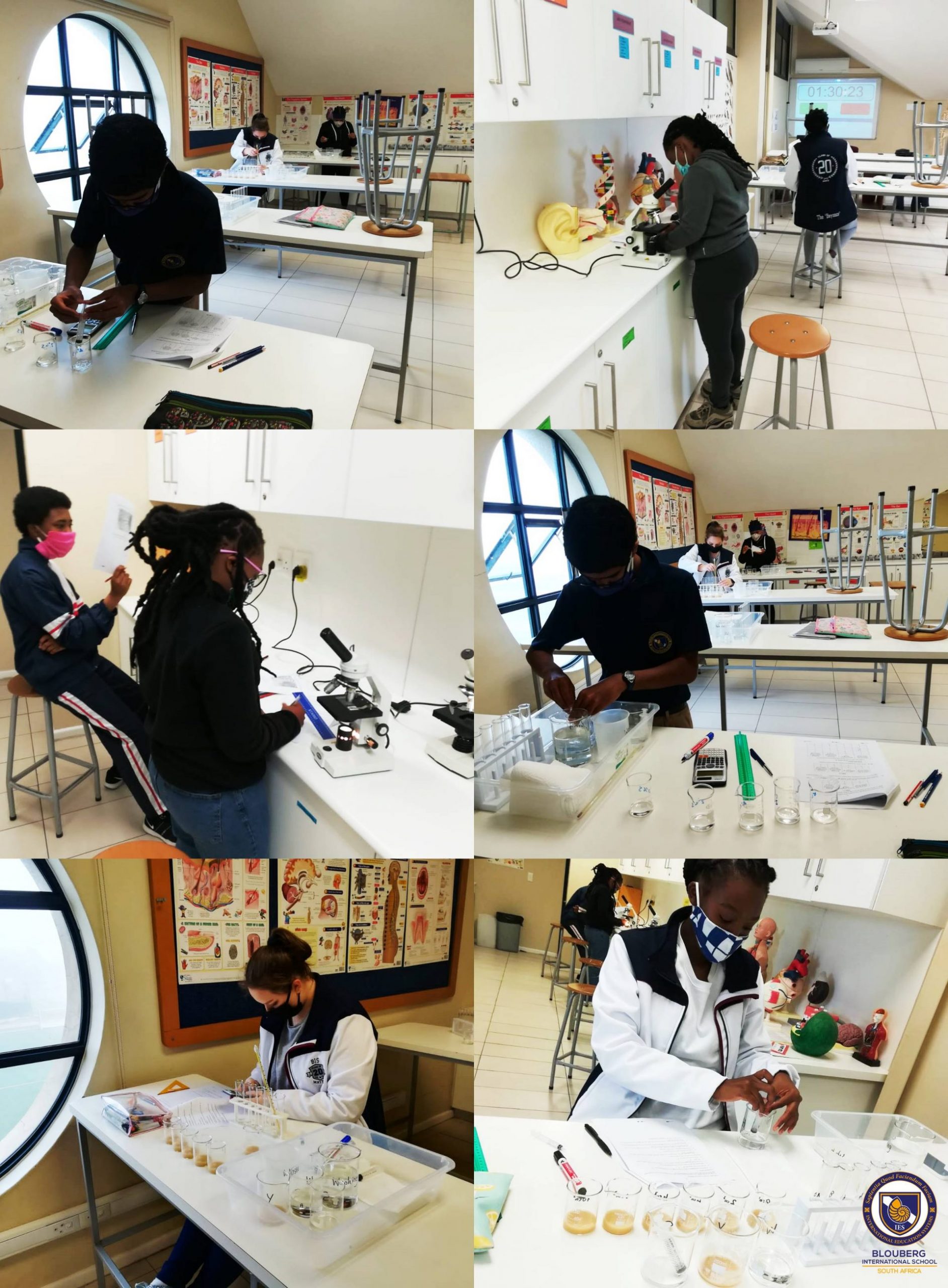
Practical work is another important component of Biology as it gives students the opportunity to handle apparatus and chemicals, while conducting a scientific investigation based on work covered in class. Other skills developed are the ability to present the results obtained from practical work in a suitable table as well as reading and interpreting graphs. AS students begin preparation for their practical exam from Year 11 to ensure they have the necessary confidence and skills when the Cambridge exams arrive. The Year 12’s recently did a practical where they investigated the effect of different concentrations of an enzyme (catalase) on the breakdown of hydrogen peroxide. Filter paper discs were soaked in a solution containing catalase and then placed in a container with hydrogen peroxide. As the enzyme breaks down the peroxide it produces oxygen gas which causes the filter paper discs to rise to the surface. Students had to time the movement of the discs dipped in different concentrations of catalase.
Biology is a subject which provides countless career options, especially in the field of medicine or research. It is a diverse Science involved with finding answers to some of life’s most interesting questions. Despite the biological advances made over the years there are still many things to learn and discover.
Marlene Feltoe
Biology Teacher
The Importance of Physics to Society
The future of any country and its contribution to the global economy is linked to its ability to develop its human capital in the field of science and engineering. Through its scientists and engineers, it is able to develop infrastructure for trade and industry.
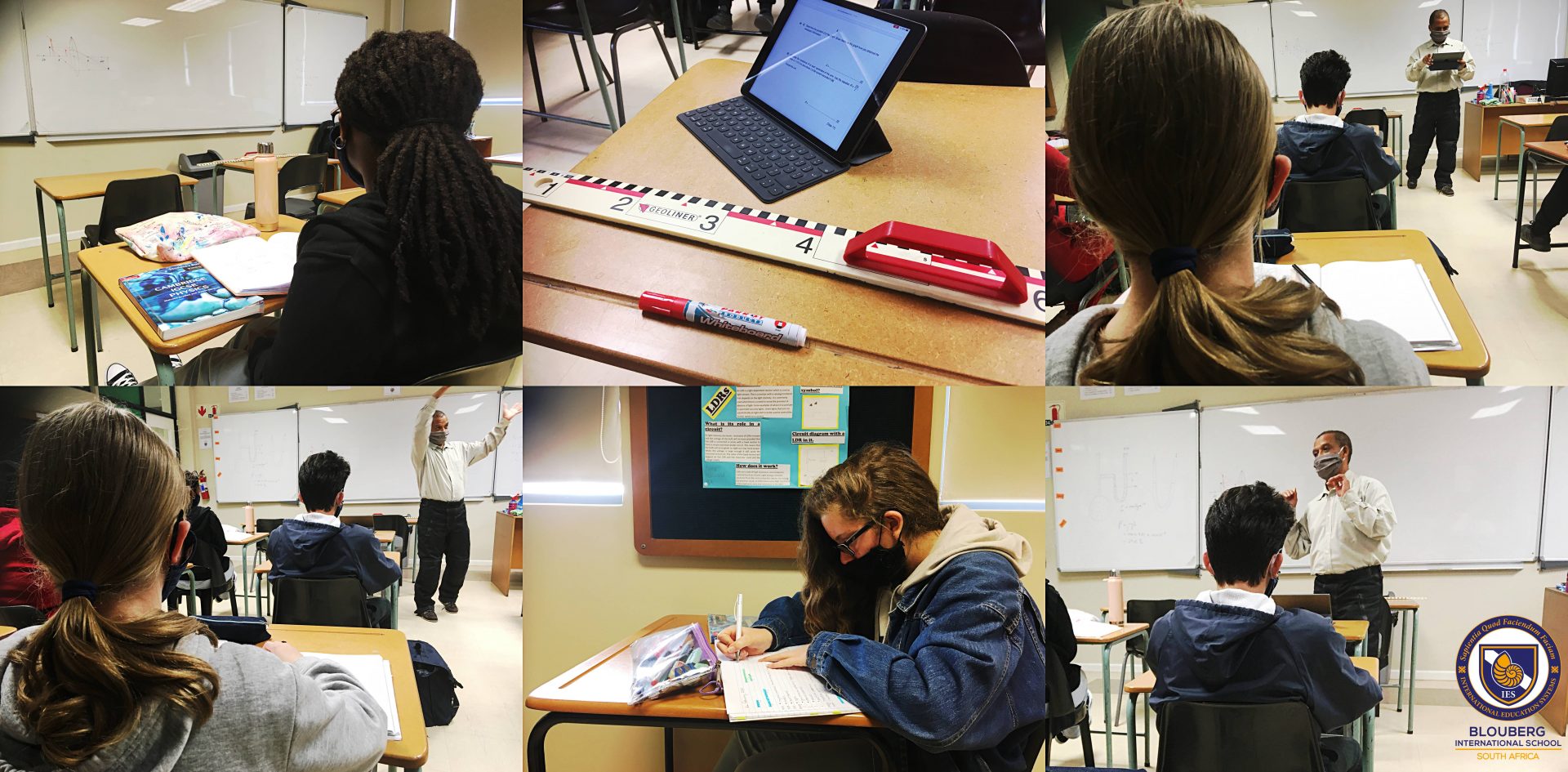
In order to pursue a career in science and engineering one needs to have the ability to think analytically. The student, in Physics, studies an array of interesting topics ranging from matter, energy and their interactions. Physics is an international enterprise, which plays a prominent role in the future progress and survival of humanity.
Support for Physics and research is important because:
- Physics is an exciting intellectual adventure that inspires young people and expands the frontiers of our knowledge about Nature.
- Physics generates fundamental knowledge needed for the future technological advances that will continue to drive the economic engines of the world.
- Physics contributes to the technological infrastructure and provides trained personnel needed to take advantage of scientific advances and discoveries.
- Physics is an important element in the education of chemists, engineers and computer scientists, as well as practitioners of the other physical and biomedical sciences.
- Physics extends and enhances our understanding of other disciplines, such as the earth, agricultural, chemical, biological, and environmental sciences, plus astrophysics and cosmology – subjects of substantial importance to all peoples of the world.
- Physics improves our quality of life by providing the basic understanding necessary for developing new instrumentation and techniques for medical applications, such as computer tomography, magnetic resonance imaging, positron emission tomography, ultrasonic imaging, and laser surgery.
All educational institutions should thus promote physics as a subject with fervor and commit the necessary resources to create the infrastructure where students will be able to explore and satisfy their quest for scientific knowledge and solutions to everyday challenges.
Patrick Katzen
High School Physics Teacher
Read More
Not only drawing and painting
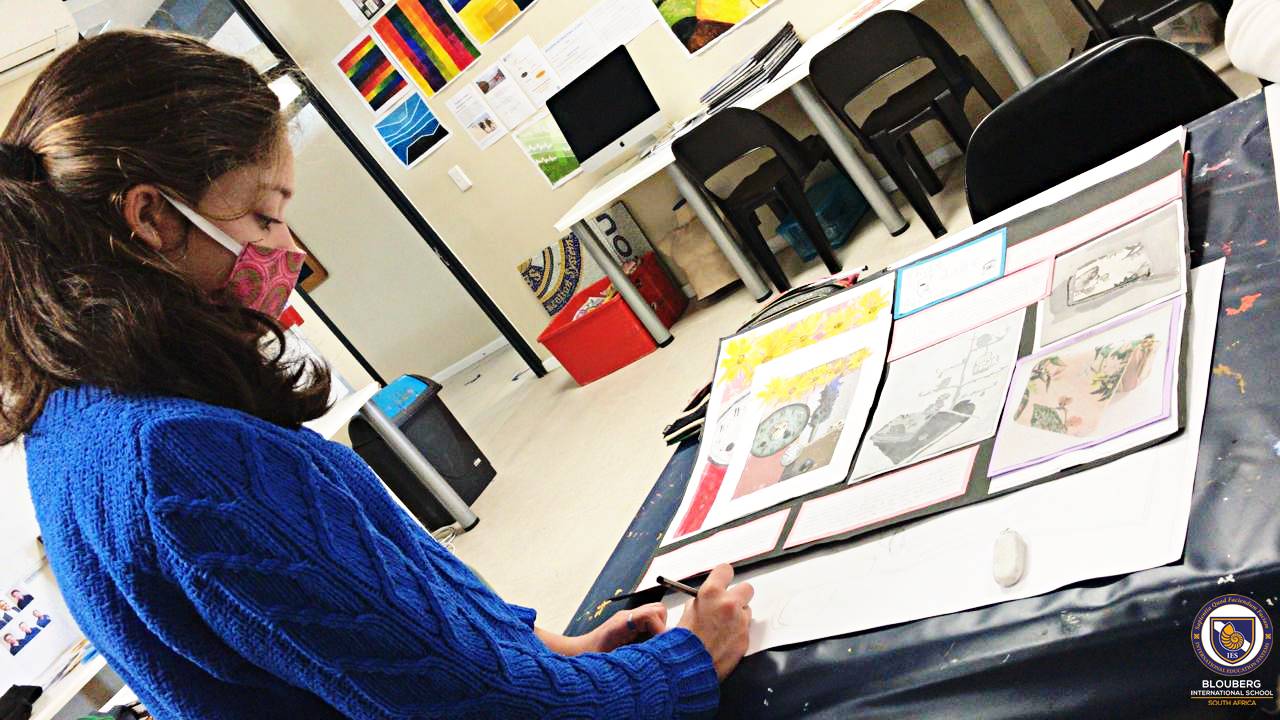
Cambridge Art and Design is not just one subject; it is many subjects. The syllabus covers a wide range of artistic activity divided into broad areas of study: Painting & related media, Non-traditional media, Mixed media, 3-D Painting, New Media, Printmaking, Three-dimensional studies, Photography and digital media, Graphic communication and Textile or Fashion Design and Craft design.
What is non-traditional media?
Non-traditional media include a wide range of modern materials that are used together or combined with traditional materials. They include collage, textiles, and waste materials. Collage artists often collect magazine photographs and coloured papers which enables them to choose a range of shapes and colours for their work.

BRC Designs’ Capped Out Chair consist of hundreds of salvaged bottle caps layered over a structure composed of 99% recycled steel finished with a white powder coating. The soda bottle caps are attached using zip ties, giving the chair a colourful and comfortable surface for sitting. The Capped-Out Chair is part of a collection also includes a spiky fruit bowl made from bottle tops and zip ties.

“The Scrabble Game, January 1”, 1983, David Hockney, photographic collage.
In the early 1980’s, English painter David Hockney began creating intricate photo collages that he called “joiners”. His collages consists of compositions made up of photographs.
3-D Painting
Combining painting with 3-D objects has been popular since Cubism. Picasso and Braque added small pieces of card, wood, and metal to their canvas. By painting this assemblage, the viewer must try and work out what is real and what is painted, and what is 2-D and what is 3-D.

One person’s trash can be another person’s treasure. Kirkland Smith makes assemblages with an overwhelming array of “found” objects. Smith’s assemblages have been displayed individually at environmental conferences and meetings, but more often are collected and displayed simply for their aesthetic appeal.
Three-dimensional studies
Three-dimensional (3-D) studies include a large variety of materials and approaches for creating art. These studies involve working in 3-D forms with one or more materials rather than on a flat, 2-D surface. This means you need to be particularly aware of space, volume, and form. 3-D studies can include: sculpture, ceramics, theatre and set design, environmental and architectural design, product design and craft design.
3-D studies can also overlap with other areas of art depending on which materials you work with. For example, a sculpture made of fabric might also be described as textiles.
Theatre design / Set design or Environmental / Architectural design
Theatre and set design involve creating ideas to support performances or productions of drama, dance, or music. This can include design work such as: a stage set or scenery, props or accessories, costumes, masks, and headdresses.
Like other areas of 3-D studies, you can present your work in various formats, including: photographs, digital images, scale drawings and 3-D scale models.
You can choose any aspect of theatre or set design as your focus, which will help to decide the materials and scale of your work. For example, if you enjoy working with fabrics and have an interest in fashion, you can design a costume for a character in a performance. Alternatively, you can make a stage set for a production as a scale model. You may also design the lighting for a stage production and consider what impact this has on the audience.

A set design for “Trick or Treat” by scenic designer, Michael Ganio.
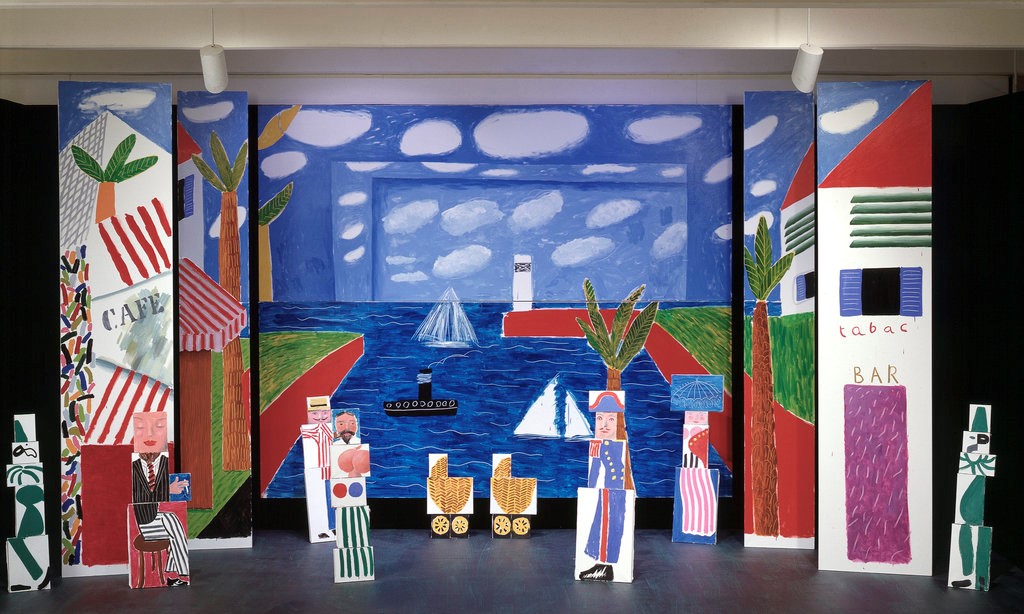
Small scale stage set design with painted environment with separate elements based on the set design for Poulenc’s opera, The Breasts of Tirésias, 1983 by David Hockney.
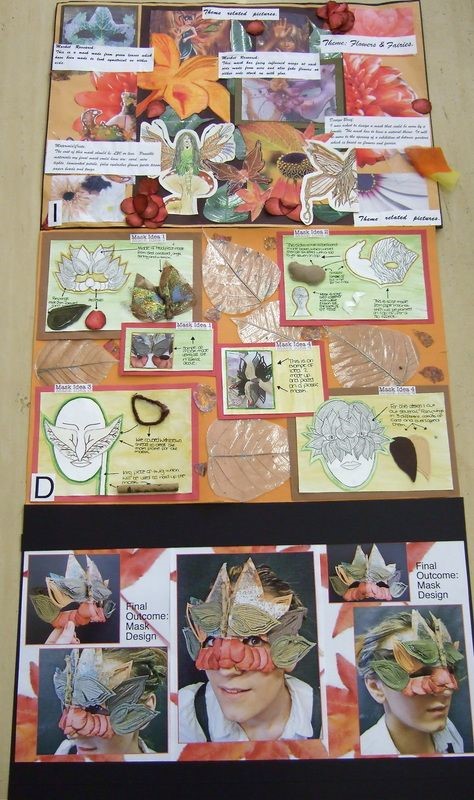
IGCSE design using craft to make designs for a mask.
What is environmental and architectural design?
Environmental and architectural design involves creating ideas on a large scale. It includes designing new buildings, structures, or spaces that people can use. This type of 3-D design is about enhancing the surroundings in which people live and work.
You could design for a domestic, commercial, or retail space, you might also consider designing a garden or landscape. Creating sustainable and environmentally friendly design can also be a consideration.

IGCSE Art project using corrugated cardboard
You can use the following techniques to present your work, or any other technique that you think is useful or relevant: scale models, scale drawings, CAD, and photo montage.
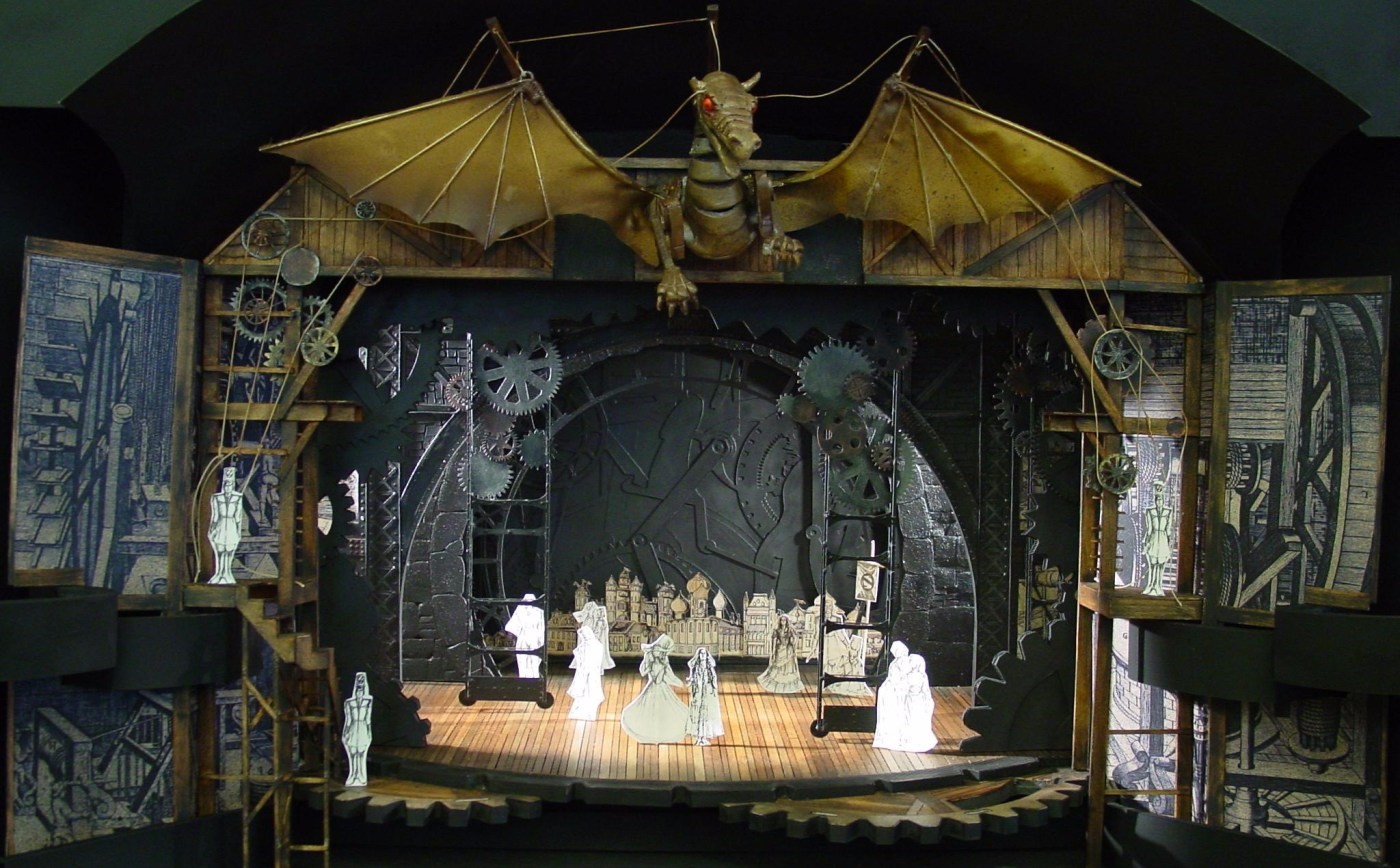
Set design for “Wicked” by Tony Award winner, Eugene Lee, and Edward Piece.
Product design
Product design involves inventing new items that are either functional, decorative or both. Most products overlap between the categories. Products are often created in response to a design brief. This means that the design of a product involves solving any problems and requirements that are necessary to fulfill the brief. This process includes selecting the right materials and making sure the product functions properly, as well as looks attractive. It must also include making sure that the product is cost-efficient.

Product designs

Product designs
Like other areas of 3-D design, product design can range in scale from small to exceptionally large. You may decide to design a large-scale product such as a piece of furniture, but you do not need to make a full-sized model. You can communicate your designs as a scale model. However, you do need to show your understanding of how the full-size product would be made. This should include any manufacturing processes or specific techniques that are required to make the outcome. You must also use 2-D techniques to record the various stages of your work and ideas.
Craft design
Craft design covers many types of skillful making by hand. Like most areas of 3-D studies, craft can be either functional or decorative, or both.
Examples of craft design are jewellery, wire and metalwork, paper mâché, mosaic, puppet-making and local craft such as basket weaving.

IGCSE Craft design
Jewellery
Jewellery is any sort of design object that can be worn on the body. It is usually fairly small scale but can also be quite large and elaborate. Consequently, jewellery is often linked with fashion design. Examples of jewellery are rings, necklaces or pendants, bracelets or bangles, earrings, and brooches or badges.
Traditional materials for making jewellery include wood, metal, glass, clay, precious stones and natural fibers or products such as shells, seeds, bone, or seedpods.
Modern materials and creative techniques use other materials such as plastic, paper, recycled materials, resin, and fabrics.
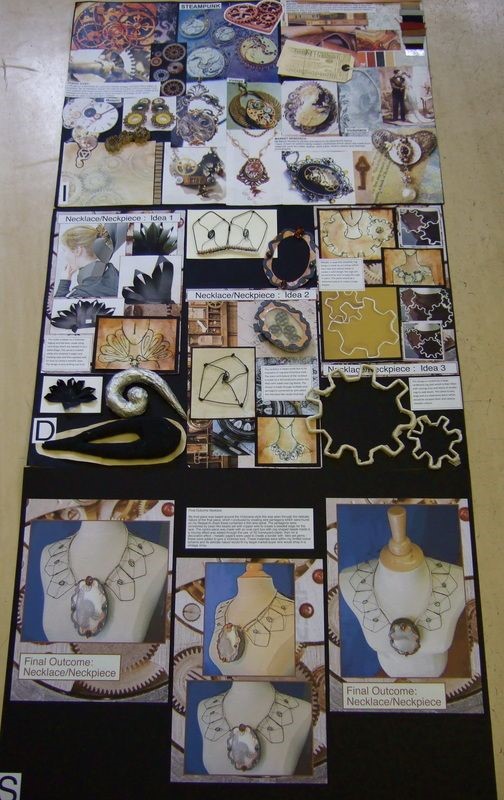
Jewellery design
The use of digital technology has also enabled some designs to be mass-produced. An example of this is plastic jewellery that has been laser-cut into a pattern so that the same design can be cut out in the same pattern lots of times.
Constructed textiles
Traditional textiles are made from yarns that are woven, knitted, crocheted, knotted, felted, or fused together. The yarns are placed close together to form a solid fabric, or spaced to form a more open structure. Constructed textiles can be large or small scale, handmade, or mass-produced by machine. They can be two-dimensional, like a carpet, or three-dimensional, like a yurt.
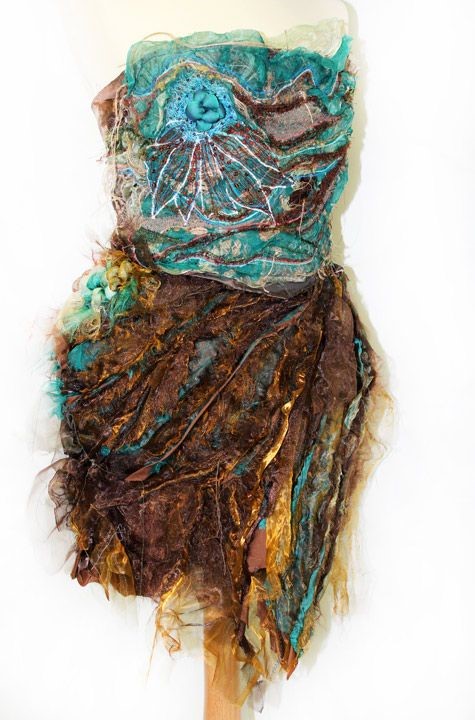
Fashion design with constructed textiles
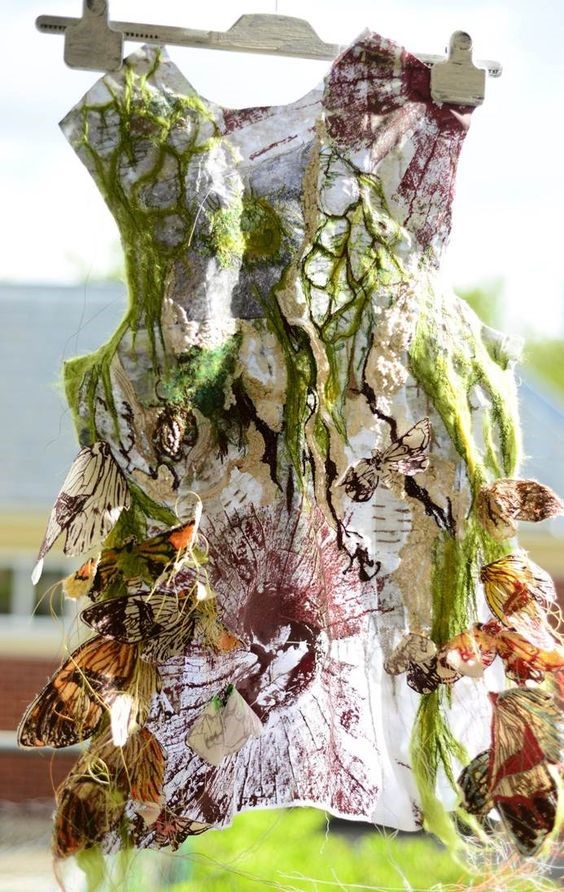
Fashion design with constructed textiles
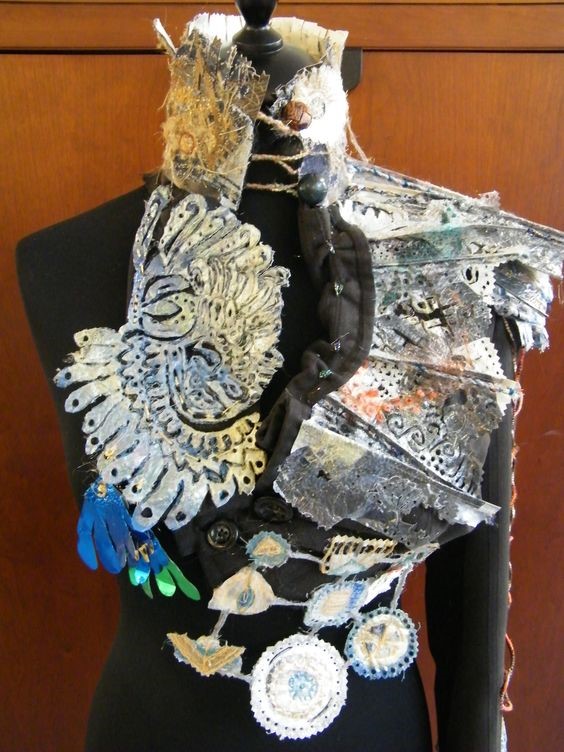
Jewellery design with constructed textiles
Riaan Vosloo
IGSCE/AS & A Level Art and Design Teacher

Welcome To Term 3
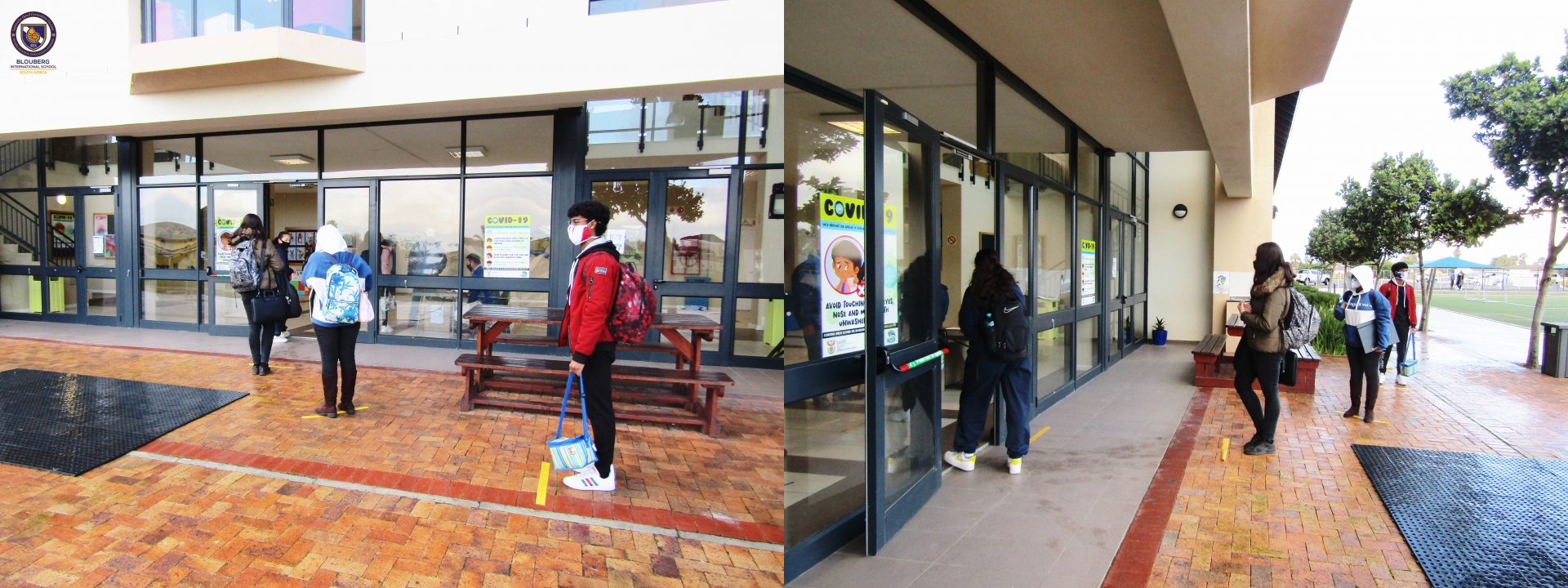
Blouberg International would like to welcome all High School students and parents to Term 3. We hope everyone is well rested and ready to take on the term with the “new normal” as we have come to call it. On Tuesday we welcomed back the Year 7’s, 10’s, 11’s, 12’s and 13’s. We look forward to welcoming back the Year 8’s and 9’s next week.
In terms of academics, it’s going to be a busy term with Year 10 and 12 students writing their prelim examinations. These examinations are an important step in preparing them for their final Cambridge IGCSE and AS/A Level examinations in Term 4.
We would also like to thank our parents for their ongoing support through this difficult time. By working together and supporting each other we will get through this.
Julian Harrison
Head of Academics High School



The Final Week of Term 2 (2020) And A Special Thank You
During the last two weeks of school our Year 12 Chemistry, Biology and Physics students came into school to complete practical work in the laboratories. Completing practical assignments is an important skill as it allows students to apply the theory they have covered in class and I am certain that when the Year 12’s return next term they will complete many more such assignments.
Finally, I would like to express my sincere gratitude to every one of you. Thank you to every student, parent, and teacher for all the hard work and effort you put in this term. Without your dedication and hard work our program of online learning wouldn’t have been possible.
Please look after yourselves during this holiday and we look forward to welcoming you back next term.
Julian Harrison
Head of Academics High School

Erfolg hat drei Buchstaben. TUN!
Goethe
As one of the arguably most famous German authors said – You can only achieve success through doing. This term has proven this to me again.
Eight years ago I did a course in modern language learning methods using technology. We learned about blended learning, flipped classrooms and different websites to use. Since then a lot has changed and throughout the years I always wanted to implement more technology in teaching. Unfortunately, it never came to fruition since teaching the traditional way was just easier and more accessible to students. This lockdown has forced us as teachers and students to finally use all those technological tools out there.
Learning German with online tools has never been easier. The German government has supported the teaching of German in other countries for years now and therefore we have many different online platforms to choose from. Sites such as Deutsche Welle and Lingoni offer great Video learning tools. Duo Lingo is a fun way to support what is learnt in class with fun activities. Additional to this it has become a lot easier to create your own online Quizzes or videos to share with students.
Even though this time has been trying and difficult it was a great step forward. Practicing a language does work better in a classroom setting, and will never become unnecessary, but the past couple of months have shown me how language learning can also be successful through other means. If you never try you will never learn.
Sabine Jahnke
German Teacher

Teaching Design and Technology Online
By the time you read this we will have been under lockdown for 49 days… who would’ve thought? Two weeks became 3 weeks then it was extended again or was it the other way around?
When we started online teaching most of us felt lost and must have watched the various “how to” videos at least 50 times. Now however, 49 days in, it’s old hat. Teaching Design and Technology has made me realise that things are always changing, and people are always looking for innovative ways to produce new products.
When reflecting on the situation in which we find ourselves today, I cannot help but think that Design and Technology will play a huge role in the future. For example, think about all those Zoom meetings you have attended. Now, as you know, you can change the background, but how professional is that Eiffel Tower in the background? Is that the look you want when hosting that all important board-meeting? I see that there is a South African company that sells professional-looking office and boardroom backgrounds. They can even recreate your actual office so you and your staff can feel right at home. Isn’t it amazing what Design and Technology software can do?
In Design and Technology, students are taught to improve the design of an existing product or design a something completely new altogether- the aim being to create something which will make our daily lives that little bit easier. My students are busy designing health care facilities made from shipping containers, vertical farming installations, fold-away study tables and an eco-friendly school, to name just a few of the exciting projects we have underway.
I am sure that we are all looking forward to seeing their final designs.
Julian Harrison
Design and Technology Teacher
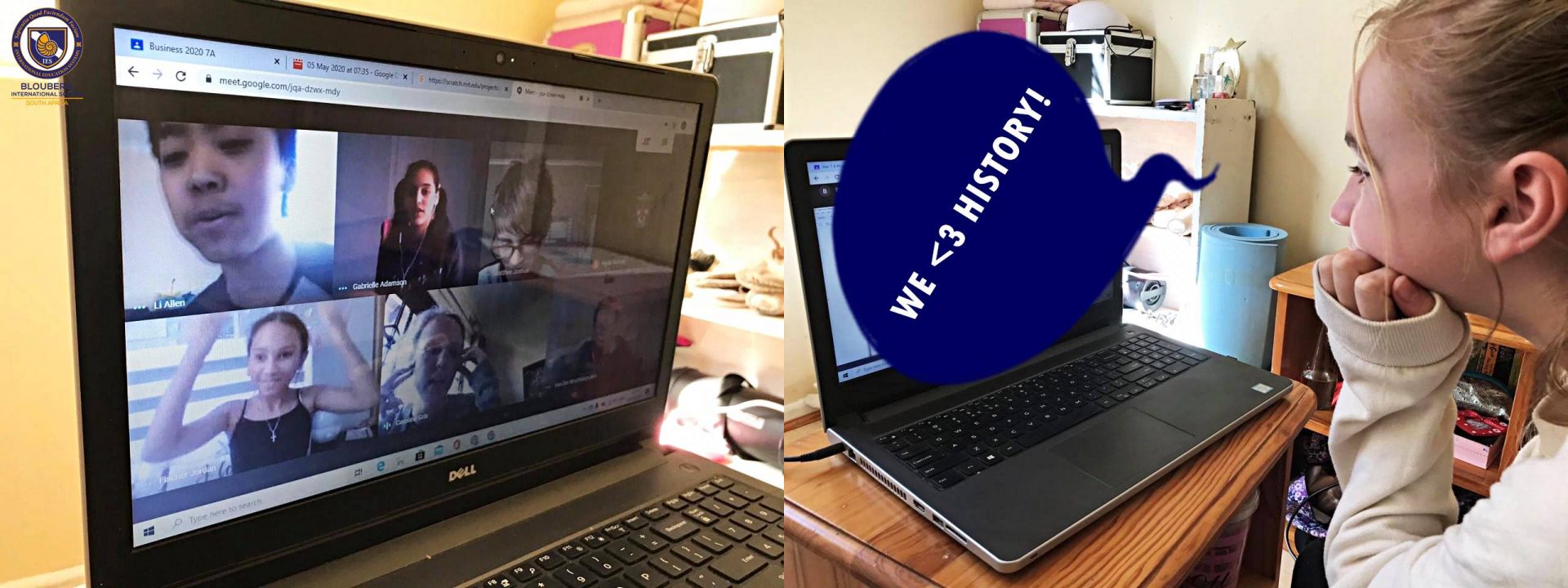
Teaching History Online – Experience and Tips
I will be one of the first to admit that online teaching and learning certainly took some adapting to. My students and I rose to the challenge and I’m proud of what they have achieved.
Once more traditional expectations regarding the teaching of History have been removed, one discovers that the subject rather lends itself to the online environment. While history may have been taught to many as a long (and very boring) list of dates, the best way to learn history is to study historical sources. This is where online learning comes into its own as students have more time and room to explore than they would in a conventional classroom setting. Many activities can be easily adapted to the online environment and even the shy students can make their opinions heard.
I’ll admit to being especially proud of my senior students. Their dedication and passion for the subject is extremely encouraging, as is their continued academic excellence. They are true Cambridge students in every regard. The world needs more diligent, creative and passionate individuals like them.
- Pace yourself and use your time effectively
- Remove distractions from your work environment (put the phone away)
- Plan your essays – it actually helps you to write faster
- Speak to the teacher if you are uncertain or experiencing problems – we are here to help
- Collaborate with your peers – online learning does not mean that you have to learn alone
- Shortcuts lead to long delays – complete that classwork task!
The Coronavirus has led me to think that it is likely more fun to read about history than to create it (the parts that make the History books at any rate). Will we study this in years to come?
Sheila Marais
High School History Teacher

Lockdown Learning
What Shakespeare can teach us about surviving online learning.
What do we English teachers do when times are tough? We look to the Bard of course! Who better to guide us through the online educational space than a writer who has been dead for over 400 years! Now before you scoff “nonsense” over the rim of your coffee mug and scroll to the next page, let’s consider this in a little more depth. The transition to online learning has been challenging for students and teachers alike and we have all been plagued by fears and doubts. First Language English is a subject which you may consider one of the easier subjects to study online and perhaps you have a point. I can email you a poem- you can read it- you can write me an essay about it. Bob’s your uncle, done and dusted. Bring on the next one… Well, not quite.
Why does an author write a book? Obviously they want people to read it, but more than that, they want people to talk about it; it’s the hushed conversation in smoky cafes, the heated discussions over a plate of Thai chicken niblets at an annual Book Club meeting and the dog-eared, coffee stained pages of a favourite book passed from parent to child. Literature provokes dialogue and debate and as I always say to my students “It’s okay to hate the story you’ve just read, but you must be able to tell me why”. Stories, poems, plays- they are meant to be read and shared and isn’t it a truism that it is just as satisfying to discuss something you love as something you hate?
This is why I want to be back in my classroom! Not just for my view of the mountain, but for the interaction; the back and forth across the classroom, the heated opinions and different perspectives which mingle and lap the edges of the room like a gentle wave on a summer’s day.
Simply put, it’s a lot more difficult to discuss a work of literature isolated from each other as we currently are. You can read the play yourself, sure, but where’s the fun in that? A play isn’t meant to be performed by one person, now is it? My belabored point is that teaching First Language English online is a challenge and no Zoom meeting or Google Hangout Meet can replicate the wonderful disorder of a good class discussion.
Back to my original point. So, what do we do when we feel the pressure, the stalking fear and self-doubt that comes with being chucked in the deep end of the pool and having to paddle like a crazed duck to stay afloat? To whom do we turn when the challenges of online learning become all too real? Why, to Shakespeare of course! As usual, our dear Bard has a few life lessons up his sleeve to help us cope.
- “Our doubts are traitors, and make us lose the good we oft might win, by fearing to attempt.” We have all suffered the pangs of fear and self-doubt in navigating online learning and adapting to different methods of teaching. We should not doubt our abilities, for nothing ventured is nothing gained, and I am fairly sure our students are prey to the very same emotions which trouble us. We are capable of a lot more than we think- from teachers, to students and parents and self-doubt is the enemy of success.
- “Give every man thy ear, but few thy voice.” Learn to listen. Perhaps the most valuable exercise I have done during online learning is to have my students to talk to me, rather than I to them. “Tell me the truth”, I say to them. “How is it really going?” I have spent many minutes at the beginning of online sessions just listening… listening to the complaints, the fears, the excuses and you know what? I really have learnt a lot. I am learning what is working and what isn’t. Online learning is a collaborative process and if both sides are honest about their expectations and progress, then the game is half won.
- “Better three hours too soon than a minute too late.” Don’t be late. Shall we leave it at that and move on?
- “Pleasure and action make the hours seem short.” Keep busy and keep your mind active. I always imagined myself as the perfect lounge lizard, but to be honest, if I wasn’t working, I would’ve gone mad on Day 3 (Day 4 if Netflix released Outlander season 4). It’s important to keep ourselves busy and I don’t just mean with hours of admin and slog in front of the computer; I mean busy with activities which stimulate the mind. This goes for our students as well- research tasks which require them to think and engage with material. I enjoy setting argumentative and discursive topics for my students; topics which require them to have a good think and do a bit of research to support their opinions. They had to write a magazine article on the topic of cosmetic surgery and boy, the opinions flooded the room like bees after Pooh’s spilt honey pot. But they were engaged, I can promise you that.
- “The miserable have no other medicine, but only hope.” I’m sure we’ve all felt the cold tickling of misery at least once during lockdown but on the bright side, as the saying goes, there’s no way but up from here. Shakespeare reminds us that the doldrums only increase our focus on the horizon and the calm flats which lie ahead. Let us remain positive and instill this positivity in the students. Complaining may be temporarily cathartic but does little good. We are learning new skills, finding hidden talents and drawing on resources we never knew we had. It’s an adventure and like all good tales, it starts out filled with peril and looming disaster, but by the end we’re all safe at home with a nice cup of tea. Or more aptly for our context, by the end we’re all in each other’s homes sharing a nice pot of tea.
Take the Bard’s words to heart. Enjoy a good book and don’t try and argue with me that Shakespeare is no longer relevant! Stay safe everyone.
Alice Pryor
High School English Language and Literature Teacher

An amazing article compiled by Catherine Fortuin (Year 8) while using the e-learning systems from Blouberg International School.

From the Principal’s Desk, 23 April 2020
Dear Parents
During this period of e-learning, the question in all our minds is: “Are the students coping?” This new method of teaching and learning is new to all of us and a shade of insecurity here and there is normal.
After observing my own daughter’s work habits, I have come to realise that the connection between students is incredibly important. Often after a lesson she will catch up with her peers as this is an opportunity for them to clear up any uncertainties about the lesson’s content or exchange information about pending assignments.
Collaboration is the key to success. This is not just true for the students, but also for teachers and parents. The support structure which exists between parents, teachers and students has never been more important in the goal of furthering and improving the e-learning experience. Let us not neglect student interaction during this time, as this sharing of information and collaboration would otherwise be a normal part of the school day.
In this theme of collaboration, we will be having our first online assemblies next week. A link will be sent to you via the Engage platform.
Monday, 27th of April, is a public holiday and we will thus continue our online lessons on Tuesday 28 April.
Don’t forget to have fun with your children during this time and I have therefore included a link to indoor activities for our children.
https://kidsactivitiesblog.com/50578/stuck-inside-games/
Kind regards
Edna