
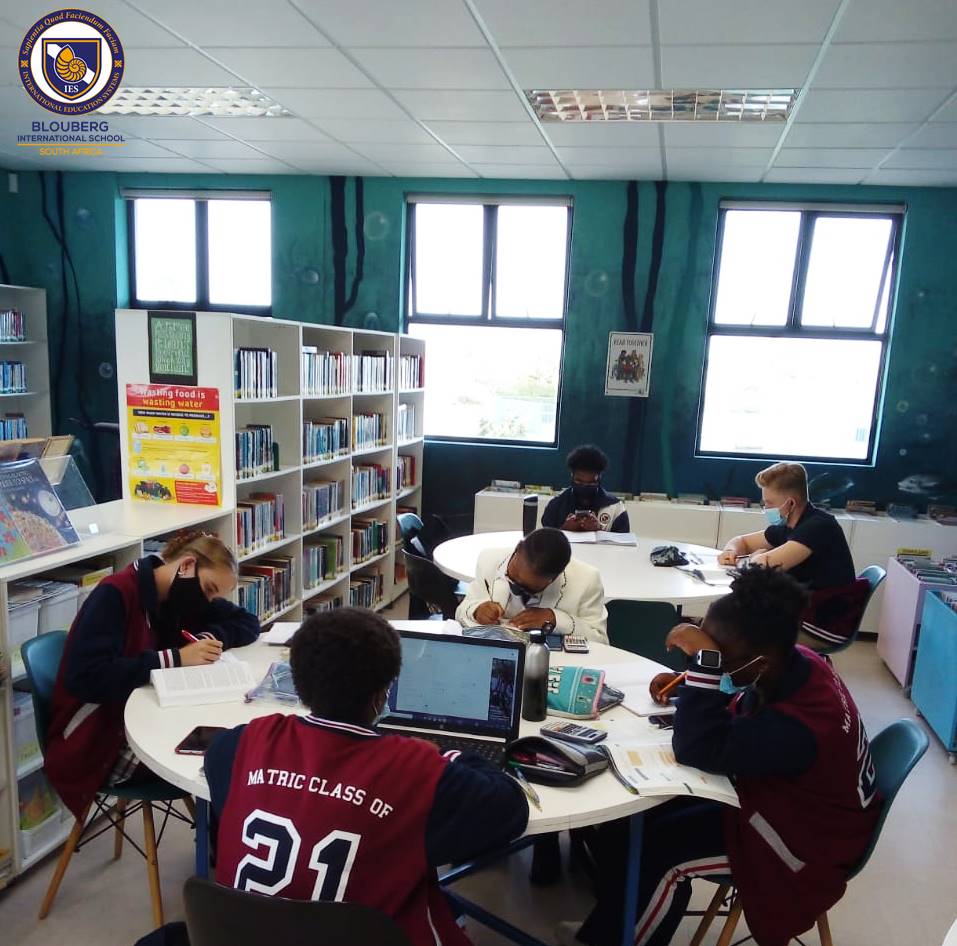
Welcome Back To Term 2
The High School staff welcomes all students and parents to the second term of 2021!
We hope you all enjoyed the well-deserved holiday. We also wish to extend a special welcome to our new principal, Mr. Andre Swart and wish him the very best for his first term at BIS.
Term 2 is a busy and important term. June examinations for Year 7, 8, 9, 11 and 13 start on the 7th of June 2021 and the Year 10 and 12 students start their Prelim examinations on the 31st of May 2021. Prelim examinations are extremely important in preparing students for the final IGCSE and AS Level examinations at the end of the year.
The High School will have online parent/teacher meetings next week and parents are encouraged to book with the relevant subject teachers. A letter has been sent on Engage regarding the online meetings and how to book.
Thank you for your ongoing support.
Julian Harrison
Head of Academics High School
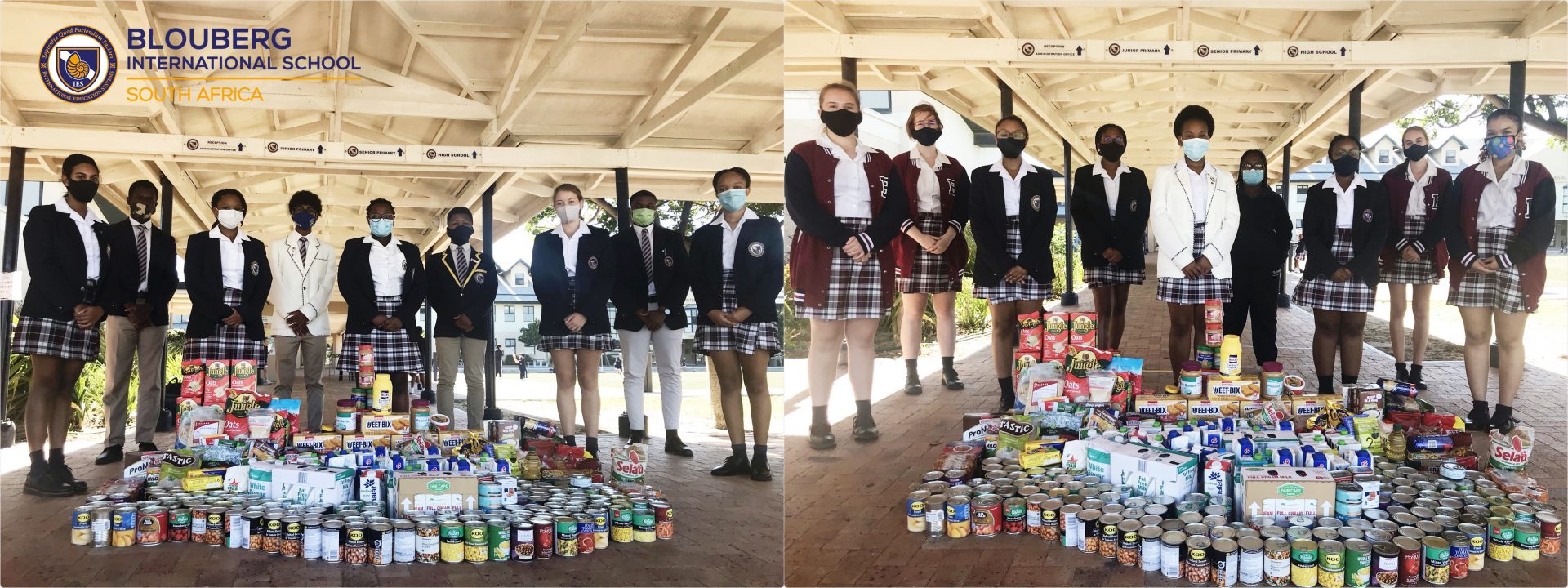
Term 1 High School 2021
2021 started with a bang and now that we have reached the end of the term, I can only wonder where the time has gone.
We were very fortunate that school sport and sport lessons for Year 7 and 8 could resume after February 15th when the Covid restrictions were eased. We remain positive that we will be able to resume with our winter sport in Term 2.
Term 2 will commence on Tuesday, 13 April 2021. Term 2 is an important term as students will be writing their June examinations. There will be parent-teacher meetings in Term 2, and we encourage parents to attend if they have concerns regarding progress in a particular subject. Parents will receive more information about these meetings next term.
We would like to thank Mrs. Lawrence for everything she has done for us as parents, students, and teachers. We wish her all the best for her new journey.
Finally, we would like to thank all the parents and students for their hard work in Term 1 and we look forward to a busy and exciting second term. If you are travelling these holidays, please be safe.
Julian Harrison
Head of Academics, High School.

My Journey In Computer Science
I have been at Blouberg International for as long as I can remember. I joined the school in Pre-Reception when I was only two years old. Now I am in Year 10 and I have seen the school grow so much over the years.
In Year 9 I was given the opportunity to take Computer Science and Coding as a subject. Since beginning the course I have taken a strong liking to the Coding aspect of the curriculum. In Coding, I am able to stimulate my mind and develop my problem-solving skills.
As the world we live in is continuing to advance in the digital aspect, taking up Coding as a subject is a huge benefit to anyone as it is a more sought-after job and skill set to wield in the current day and age.
Our school also offers a variety of different languages for the students to learn to code in, opening up many opportunities for the future.
With Computer Science, the possibilities are endless for future opportunities, whether you take it further in a career or continue to the code as a hobby.
– Shaylee Brandt (Year 10 Student)
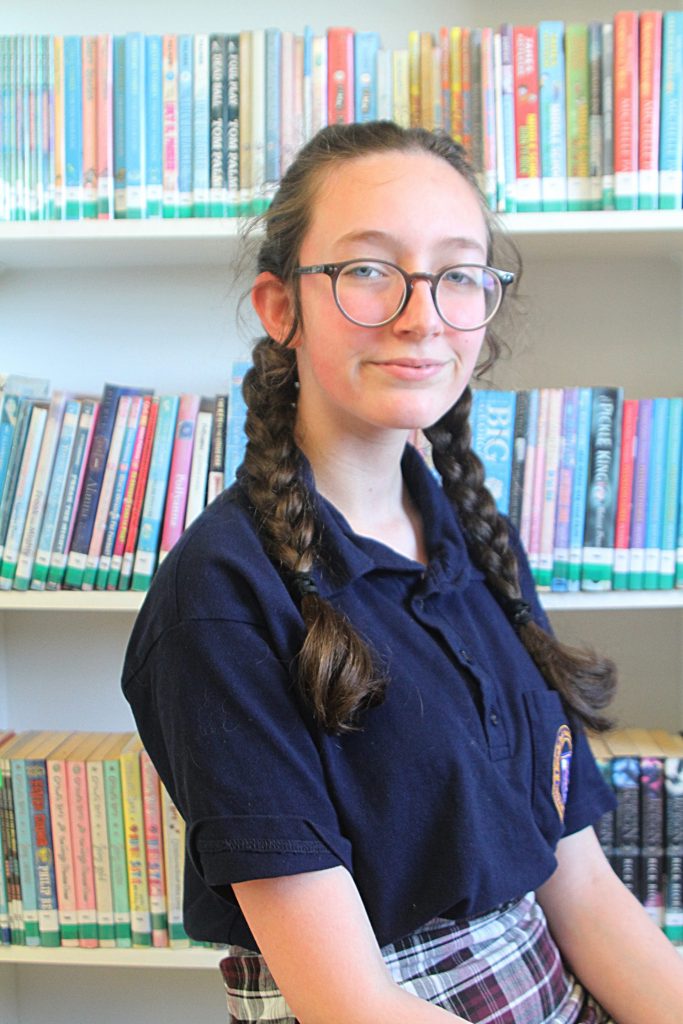
Shaylee Brandt (Year 10 Student)
Shaylee coding in the Apple Lab at Blouberg International School.
Read More
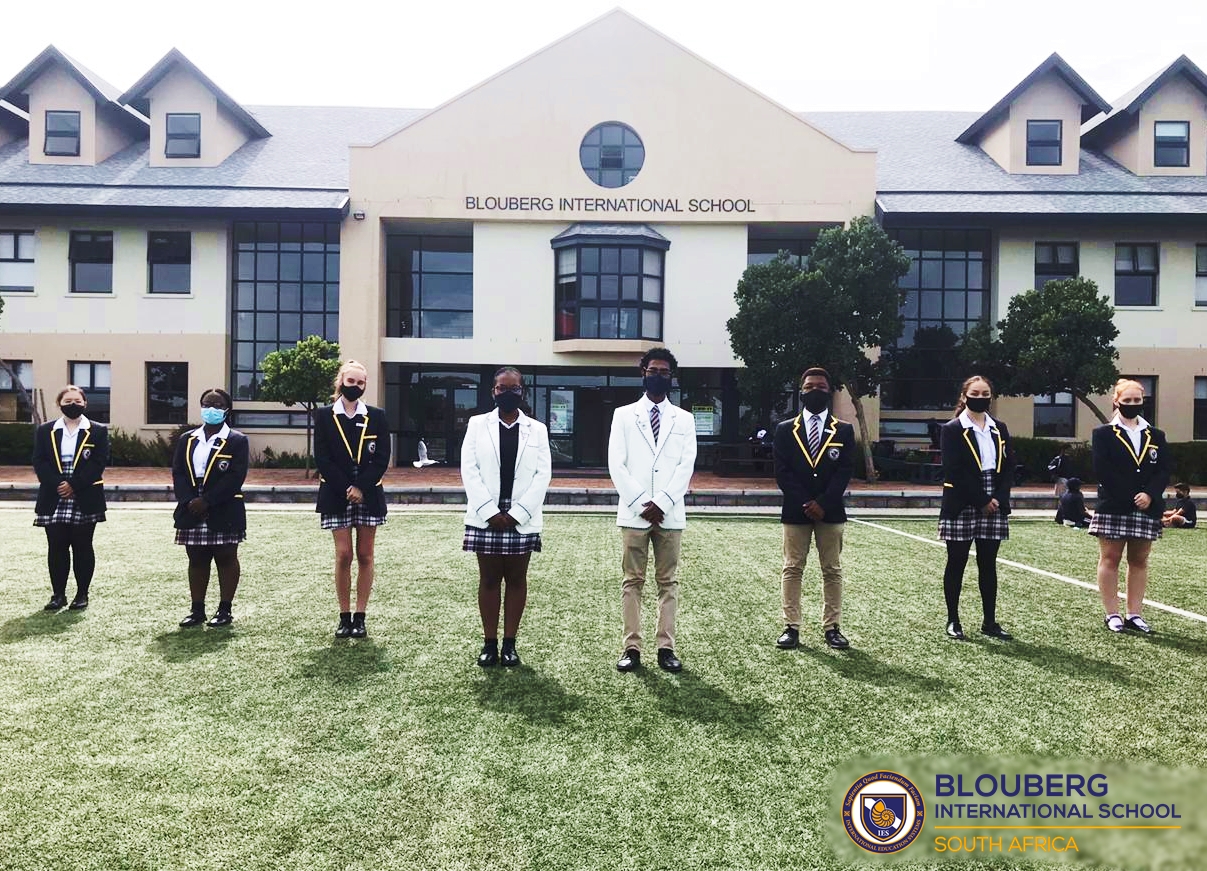
From the Principal’s Desk, 12 March 2021
Dear parents
As the term is drawing to a close, I find myself reminiscing about my nine years at Blouberg International. I have extremely fond memories of my time spent here and when I think about the students, past, present and future, I see achievement, greatness, and opportunity.
Blouberg International School is a family: a group of staff, parents and students which has expanded over the years. I have seen students matriculate and further their studies. I have seen primary students grow into high school students. I have seen little ones, Reception, or Pre-reception students I once towered over, grow into tall and confident young men and women. I have seen teachers grow and achieve the goals they’d set for themselves.
I have seen this school grow!
In my heart there is much pride as well as humility. There is gratefulness and satisfaction. There is so much I will miss about this journey and so much I am proud of.
Blouberg International’s board, staff and students will always have a special place in my heart, and I look forward to visiting in the future to celebrate future successes.
As parents, you can rest assured that the school will continue to flourish and be in good hands. The best is yet to come.
Next week our primary school will have verbal feedback meetings and the high school will start their test week.
I wish all our high school students the best of luck for the test week and wish to encourage them to stay focused and come to school well prepared. Proper planning prevents poor performance!
I wish you all a wonderful weekend ahead.
Kind regards
Edna
Read More
Biology – Term 1
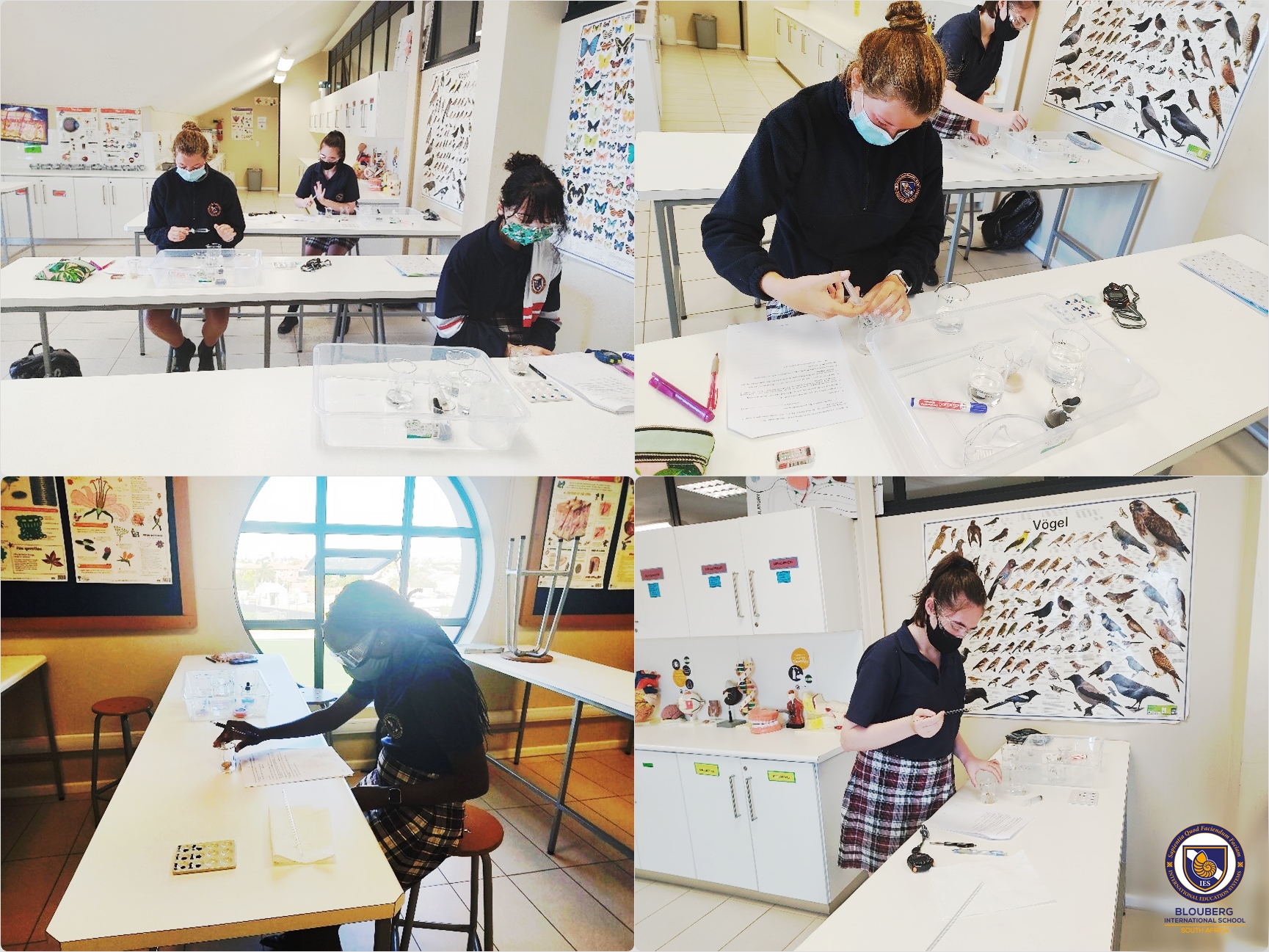
This term has been a busy one in the Biology laboratory with various topics covered and practicals completed.
IGCSE – The Year 9’s started the term with an introduction to IGCSE Biology. They had an overview of the work covered during the course, as well as the different exam papers they will write at the end of Year 10. Their biological journey began by discussing the features of different groups of organisms which are used by biologists to classify them into groups. We moved on to the cellular organization of living organisms and the processes involved in moving substances across the cell membrane. We did practicals to investigate the movement of water between potato cylinders placed in different solutions and investigated the nutritional content of unknown food stuff by doing various food tests.
In Year 10 we are fast approaching the end of the syllabus with only three chapters left to do. This term we compared the advantages and disadvantages of sexual and asexual reproduction, drew countless Punnett squares to look at the outcome of genetic crosses and discussed the various adaptations that organisms may have to survive in their environment. We are currently discussing energy flow in food webs, nutrient cycles and factors which regulate population size in species.
AS Level – We’ve made a gentle start in Year 11 as the jump from IGCSE to AS level is an intimidating one. We’ve spent many weeks discussing the ultrastructure of plant- and animal cells and the microscopy calculations associated with this chapter. A couple of microscope practicals were done to practice drawing skills and identifying structures in cells. Next, we looked at the building blocks of biological molecules and the chemical bonds that hold them together in complex arrangements. Currently we are investigating enzymes by comparing their affinities for their substrate and the commercial application of immobilizing them in alginate beads. A few “wet practicals” have also been done to practice the skills of diluting stock solutions using different methods, gathering accurate results and the ability to present these in a suitable table. The practical in the photos required students to test for the release of carbon dioxide from a suspension of yeast cells in a sucrose solution by using bromothymol blue indicator solution. This indicator will change to different colours depending on the concentration of carbon dioxide.
The Year 12’s finished the syllabus at the end of 2020, and we are currently revising by working through activities from a workbook and past papers. Practicals are also important to build confidence for Paper 3 at the end of the year.
A Level – We are firing on all cylinders, working through the A Level topics as this is typically a jam-packed and intense academic course. Various topics have been covered in great depth, from the biochemical pathways of photosynthesis and respiration, to how the kidneys regulate the osmotic potential of blood and tissue fluid. Currently we are delving into nervous and chemical coordination of animals, by looking at how action potentials are generated in neurons, the process of muscle contraction and how hormones regulate the female reproductive cycle. This has indeed been a very busy term.
Marlene Feltoe
IGCSE, AS and A Level Biology Teacher
Read More
Yes, Year 9 students are allowed to focus on Photography for their IGCSE Art & Design course and it is not too late to start.
Do you love taking photographs and playing around with the images?
IGCSE Photography is for creative students who love photography and image manipulation. The photography coursework requirements are the same as the IGCSE Art.
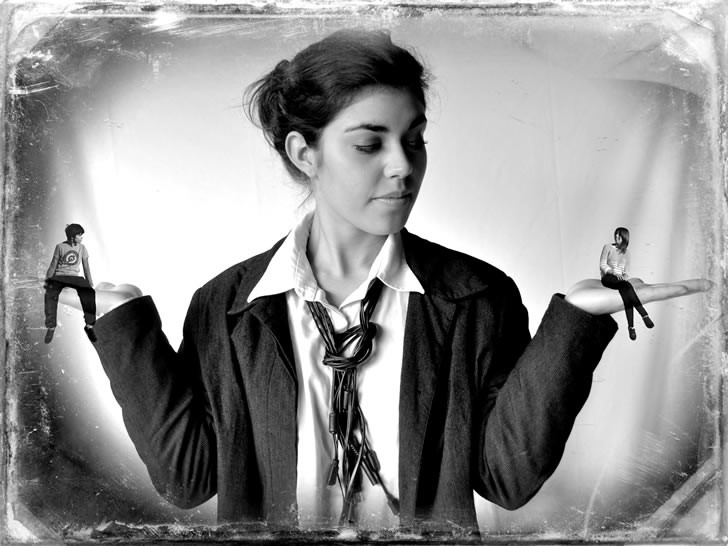
This image was awarded 1st place in the Youth Section at the Huntly Artz Festival in 2012. (Credit: Photography by Melissa Kelsey, ACG Strathallan. NZ. From www.studentartguide.com)

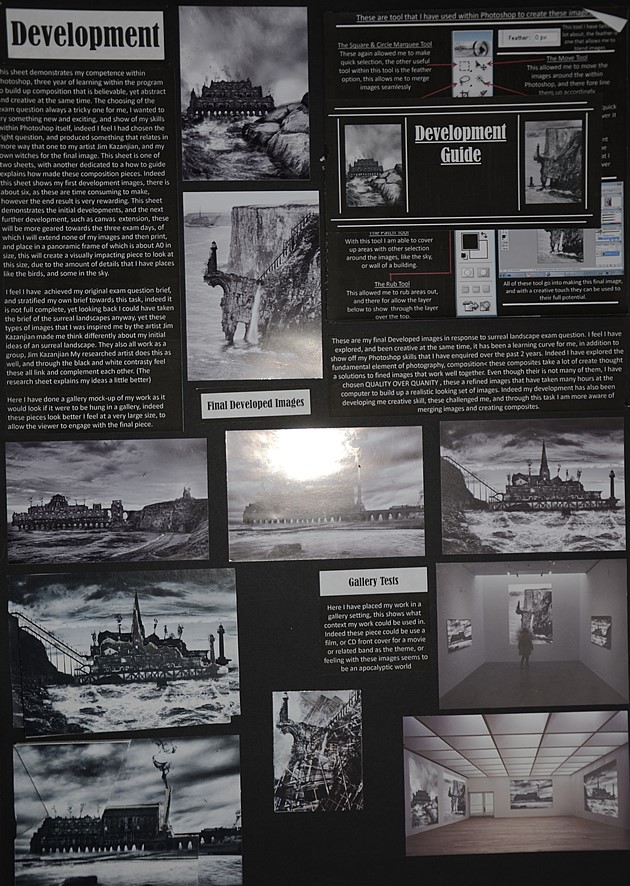


These coursework pages are excellent examples of how to approach a project in a riveting and original way: combining local imagery to create breathtaking fantasy scenes.
Students are required to research photographers and develop their own ideas. They will learn how to experiment with cameras, studio lighting and editing. They are required to have an entry level SLR camera with a standard 18-55 camera and access to a colour printer.
Candidates are taught how to use traditional and new media processes to produce outcomes such as photomontage, printed photography, and digital photography. Their photographic artworks will be in colour and black & white.
The Photography curriculum guides students in responding to the influences and characteristics of the world around them in creating photographic artworks. They explore the traditional and contemporary genres of photography and a range of techniques.
The curriculum includes the study of:
- Shutter speeds
- Aperture
- ISO
- Exposure
- Depth of field
- F-stop
- Digital editing and postproduction with Photoshop
All Art Photography candidates complete two components:
Component 1
This coursework is completed in Year 9 and 10 and counts 50% of their total mark. There are two parts to the coursework:
- a portfolio and
- a final outcome.
Component 2
This component is done in exam sessions in a total of 8 hours. Component 2 is completed in the third term of Year 10 and counts 50% of their total mark.
The four Cambridge assessment objectives count 25% each.
The Assessment Objectives (AOs) are:
- Record, 25%: Record ideas, observations, and insights relevant to intentions as work progresses.
- Explore, 25%: Explore and select appropriate resources, media, materials, techniques, and processes.
- Develop, 25%: Develop ideas through investigation, demonstrating critical understanding.
- Present, 25%: Present a personal and coherent response that realises intentions and demonstrates an understanding of visual language.
Riaan Vosloo
IGCSE, AS and A Level Art and Design Teacher
Read More

Hands on Chemistry
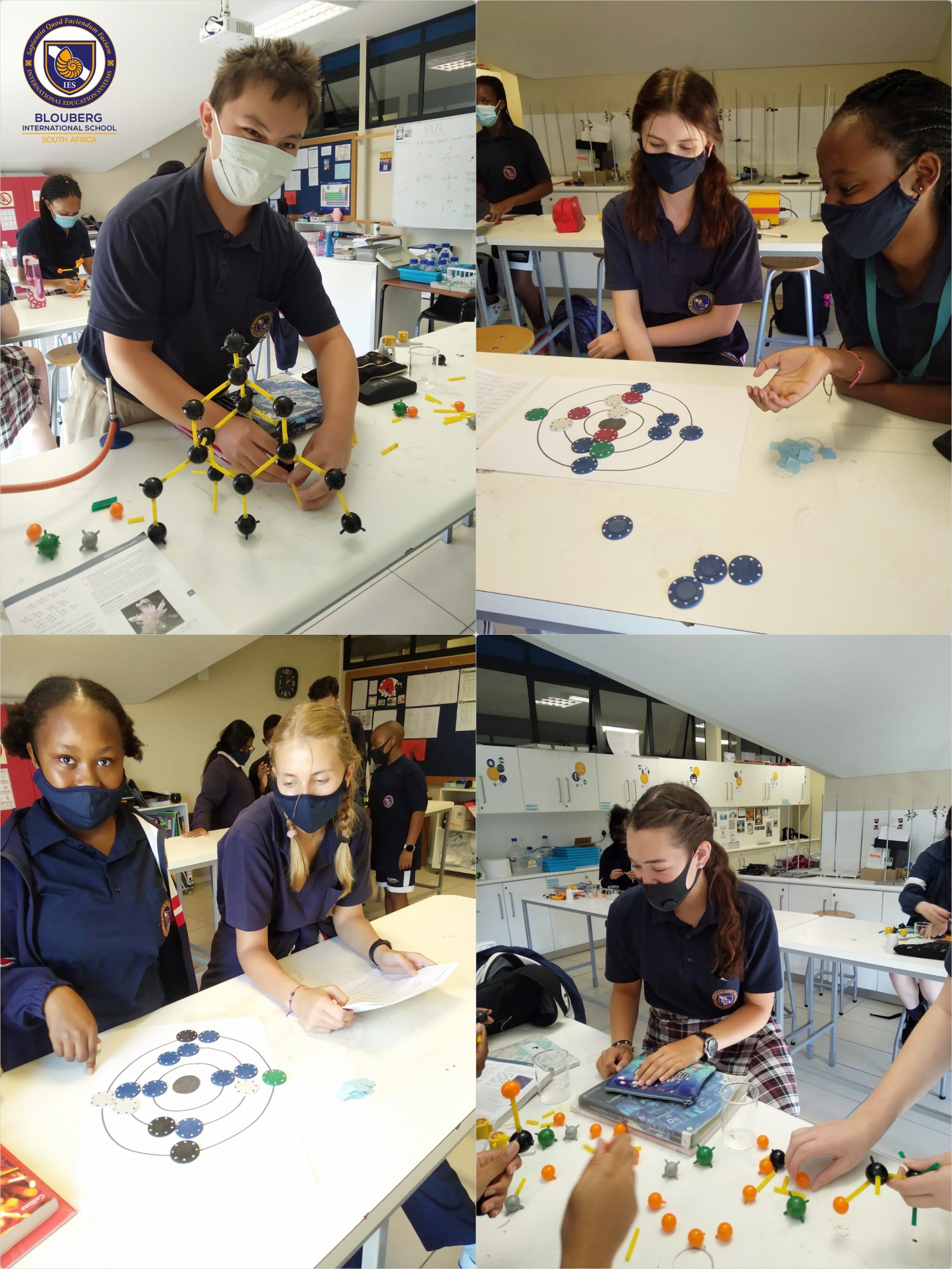
In Chemistry this term, we have focused on hands-on, student-centered learning. Chemistry is an interactive subject and what better way to experience science than to “do science”. Benjamin Franklin is quoted as saying “Tell me and I forget, teach me and I may remember, involve me and I learn”.
In Year 9, students are learning about the structure of atoms and where electrons are found around the nucleus. In order to understand this concept, students played a game with giant-sized atoms and had to correctly place poker chips representing electrons around a nucleus. The game became quite competitive and students very quickly learned their way around the Periodic Table.
In Year 10, students made their own soluble and insoluble salts and filtered and crystallised these to separate them from impurities. Different separation methods are used for different salts and so it is important that students can correctly identify and explain these methods. In the external IGCSE examinations, students write an alternative to practical examination. Hands-on experience in the laboratory is essential for students to understand laboratory techniques and be able to design their own experiments.
The Year 11 students started the AS Chemistry syllabus this term. Students are required to master laboratory techniques as they are assessed on this in an individual practical examination next year. As we cover the necessary theoretical concepts in class, we have done practicals to apply these concepts. Students are becoming more and more confident working individually and are able to obtain accurate experimental results. They have done both titration and gravimetric practicals.
The students in Year 12 had a challenging start to the AS Chemistry course with COVID-19 last year. We were not always able to do a practical experiment at the same time as the theoretical concept was introduced. But students are back in the laboratory this term, and with some extra lessons and hard work, they have been able to complete many practicals already. We have covered all possible laboratory techniques needed in the course and I have seen a marked improvement in the students’ laboratory skills. We are focusing on accurate data presentation and using appropriate data calculations.
This year BIS is also offering A-level Chemistry in Year 13. The syllabus compliments the AS syllabus and students enjoy this course because the added detail explains the trends and concepts covered in Year 11 & 12.
Philippa Goch
Chemistry Teacher – IGCSE, AS and A-level

From the Principals Desk, 12 February 2021
Dear Parents
“Whatever is true, whatever is noble, whatever is right, whatever is pure, whatever is lovely, whatever is admirable – if anything is excellent or praiseworthy – think about such things.”– Phil. 4:8 NIV.
MINDFULNESS
To be mindful means to be conscious or aware of something. “It is a mental state that is achieved by focusing one’s awareness on the present moment.”- Dictionary.
This is often easier said than done. It is easy to become fearful and negative in today’s world. Listening to the news, reading the newspapers, can be a depressing reminder of the situation worldwide.
I believe it’s so important, amidst the worry of our daily lives, to focus our hearts and minds on what is noble and lovely. We are in the middle of February and already our students and teachers have achieved so much. Public schools will only reopen on Monday 15th February and their teachers and students are only now preparing for the academic year.
I am proud that our students have been busy with their academic programme since the beginning of the year and commend their enthusiasm and dedication. Sir Winston Churchill once said, “young men and young women, take up your mantle and rise; it is time for change.” We, the educators and parents, are the ones who empower and equip this generation for change. Let us pass the torch with pride!
Our students are all dressed up and ready to celebrate Valentine’s Day today. Such celebrations are important for morale and fellowship. Therefore, it is with joy, laughter, treats and music they celebrate the day and share the love!
On Monday, 15th February, we will have all students back on campus and we are sure they cannot wait to join their peers. Teachers will continue to prepare work for students who are abroad or have co-morbidities. As communicated two weeks ago, all other hybrid teaching ends today. Although our hybrid programme is running smoothly, the students need to have the benefit of face-to-face communication with their teachers.
As we look forward to the weekend, I encourage you to share the love with your family and friends. We cannot know what tomorrow will bring but we can celebrate today!
Kind regards
Edna
(Follow us on Instagram to see some of the Valentine’s Day photos and videos.)
Read More
What The IGCSE’s Taught Me
Our top achiever in the 2020 IGCSE’s recounts her experience and shares some advice with future candidates:
“A famous author once wrote “People say nothing is impossible, but I do nothing every day.” That author was Alan Alexander Milne, the creator of the “Bear of Very Little Brain”. A bear who would sit around all day, doing absolutely nothing but he enjoyed every second of it. So, if there was one thing I learned in the 2-year course that is IGCSE, it was that I needed to relax more, to take everything in my stride and to not worry so much about the little things. To take everything step-by-step, day-by-day, and before you know it, you’ll be running.
I remember in Year 9, when the concept of IGCSE was first introduced, everything became overwhelming. I found it tremendously difficult in the beginning. At first, I wasn’t able to grasp most of the concepts for certain subjects and I was very confused most of the time. I’d never say anything though because no-one in my class ever seemed like they were having trouble, so I assumed it was just me struggling. Thankfully I had my friends, parents and teachers to tell me otherwise. My previous idea of studying consisted of working all day at school, then coming home and doing the same thing. It took a lot to make me realise that this wasn’t going to work for me anymore.
So, by Year 10, I changed the way I studied. I stopped studying for long hours on end and began working for shorter periods of time with a little too many breaks. I found that I study better when I’m relaxed and not putting any pressure on myself. I study consistently through the year and study in moderation. In class, I told myself that I was going to start asking as many questions as it took for me to understand because understanding a concept makes remembering it easier. I’d try to make notes for my subjects in a separate book, to make them clear and orderly on paper hoping it would appear that way in head as well. I found the use of different highlighter colours made certain sections of information easier to recall during an exam because it had a colour associated to it. I tried my best in class to understand the concept first before I made notes on it so that when I did, all I had to do was solidify the ideas onto paper. My dad would make fun of my highlighters saying , “At school all I had was a pen, one that wrote if I was lucky.” But I’d like to think that it was the highlighters and the stacks of cue cards with equations that helped me retain the information better. I realised it was also very important to take care of myself first before my schoolwork, through staying healthy and remembering that school is not all there is to focus on. For me , staying relaxed, calm and enjoying my childhood would be my top priority. Getting all A’s was unexpected , my goal is simply to do the best I can.
“The forest through the trees” is something my parents would have me repeat to myself. It reminded me to look at the bigger picture and focus on the important things. Stressing about the small tests and assignments wasn’t going to do anything except burn me out before the race was even over.
My advice to other students would be: “Start where you are. Use what you have. Do what you can.” – Arthur Ashe “
Rifqah Price,
Year 11 Student
Blouberg International School

Rifqah Price, Blouberg International’s Top IGCSE Student 2020
From the Principal’s Desk, 29th January 2021
Dear Parents
We have come to the end of another week which proved to be just as challenging for parents as for teachers. We are therefore grateful for your continued support of our school and educators.
A special mention is due to the PA members who assisted last Saturday morning in getting the students school supplies packed and organized for collection. These ladies were indispensable in having everything ready for collection during the rush on Saturday morning.
Your support and encouragement when collecting books was greatly appreciated. This is what makes Blouberg International a family and not just a school. A special thank you to Mrs. Izelle Williams, Mrs. Betsie Lott, Mrs. Nadine Romeikat, Mrs. Cheryl Muller and Mrs. Jaqueline De Wet. ‘Alone we can do so little, together we can do so much.’
Schooling for all year groups will resume on campus on Monday, 01 February 2021. Please remember that high school students are to use the gravel entrance and the primary school students, the main entrance. Siblings in different year groups may use the same entrance. Early care will be available from 07h00 and aftercare available till 18h00. Please remember to contact Mrs. Angelique Fraser on the aftercare line (064 625 9124) to arrange for collection of aftercare students.
It is important that you do not send any students to school who are showing any cold or flu symptoms. In the past, we have had to call parents to collect unwell students from school. To date we have been lucky not to have any reported positive cases amongst our students. Due diligence and adherence to protocols will allow us all to stay safe and well.
I wish you all a wonderful weekend. Stay safe and healthy.
Best regards
Edna
Read More