

Creative Writing in Year 2
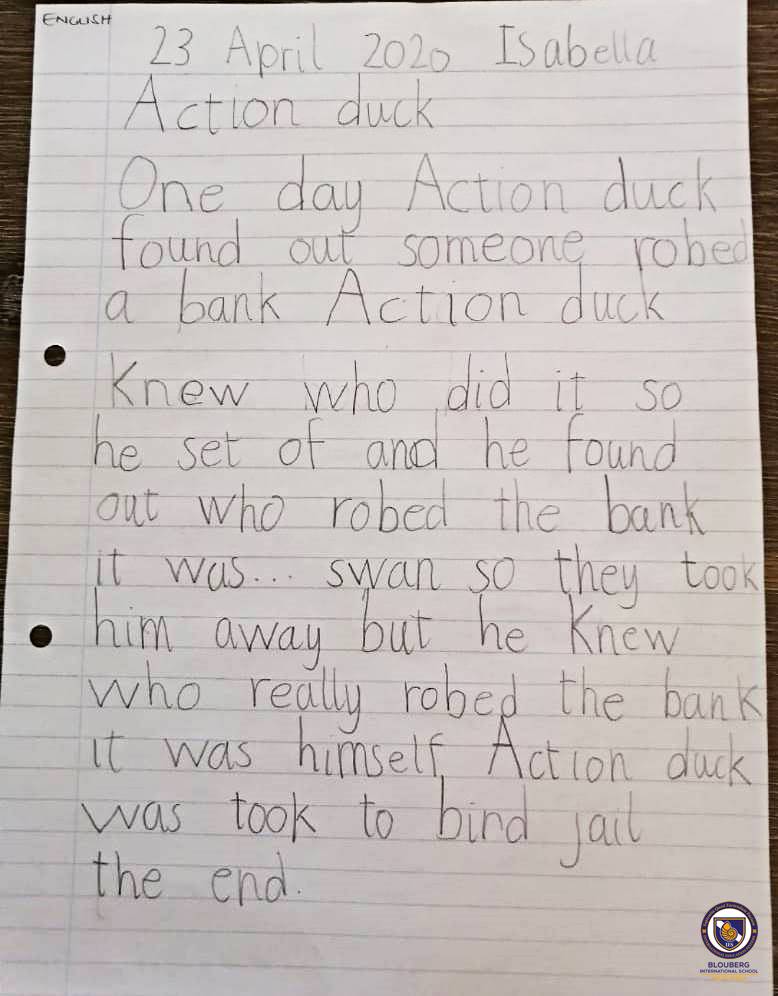
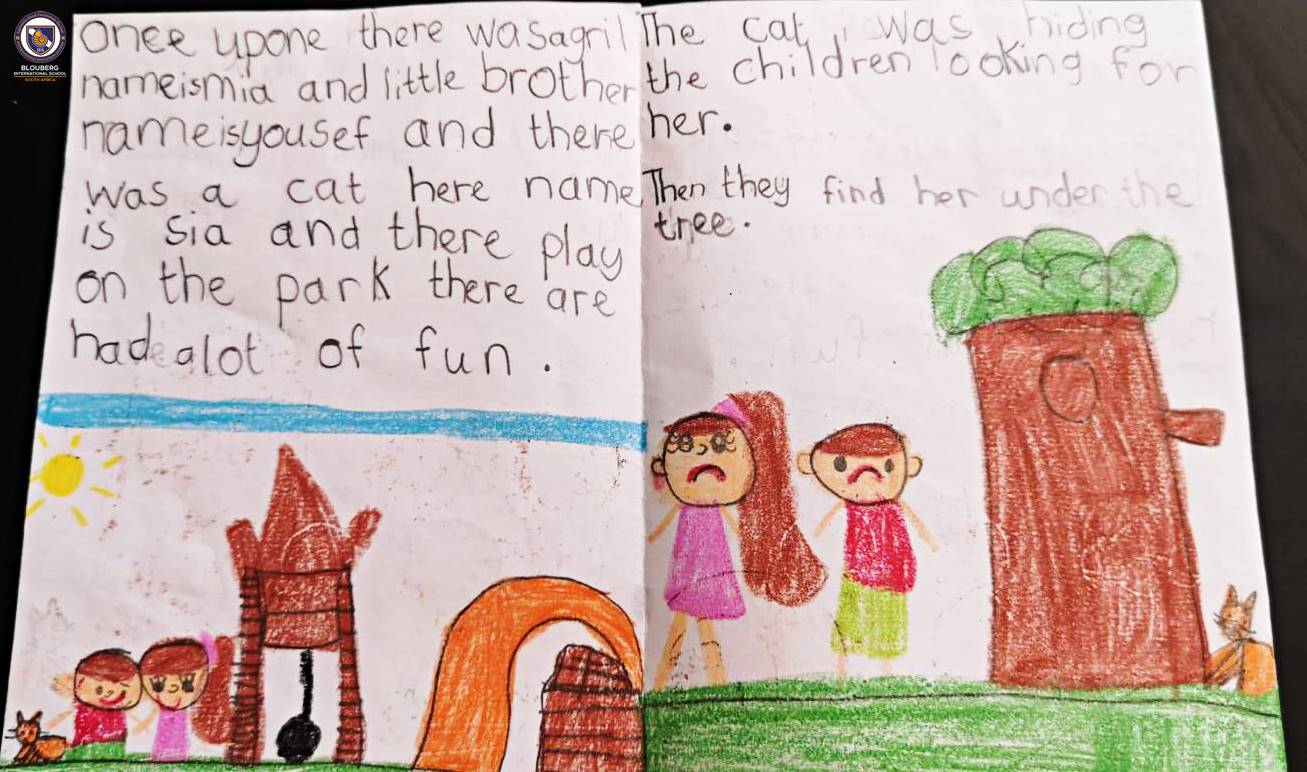
The students have put in great effort to create stories that take the reader on an adventure while in the comfort of their own home. Some of the stories involve action and heroism while others revolve around emotion, tugging on the strings of our hearts, leaving the reader with a soft and warm feeling. Other learners have chosen a more humorous path in their story, which has left readers feeling joyful and giggling.
We hope you enjoy reading some of the examples included here.
Erin Hierse
Year 2 Teacher




From the Principal’s Desk, 23 April 2020
Dear Parents
During this period of e-learning, the question in all our minds is: “Are the students coping?” This new method of teaching and learning is new to all of us and a shade of insecurity here and there is normal.
After observing my own daughter’s work habits, I have come to realise that the connection between students is incredibly important. Often after a lesson she will catch up with her peers as this is an opportunity for them to clear up any uncertainties about the lesson’s content or exchange information about pending assignments.
Collaboration is the key to success. This is not just true for the students, but also for teachers and parents. The support structure which exists between parents, teachers and students has never been more important in the goal of furthering and improving the e-learning experience. Let us not neglect student interaction during this time, as this sharing of information and collaboration would otherwise be a normal part of the school day.
In this theme of collaboration, we will be having our first online assemblies next week. A link will be sent to you via the Engage platform.
Monday, 27th of April, is a public holiday and we will thus continue our online lessons on Tuesday 28 April.
Don’t forget to have fun with your children during this time and I have therefore included a link to indoor activities for our children.
https://kidsactivitiesblog.com/50578/stuck-inside-games/
Kind regards
Edna

Living Life As An Artistic Being
Teenagers are at high risk for depression and anxiety. They know what we want to hear, and that is what they often give us. Teens know the buzzwords, and talking about their emotions can be wrongly impacted by their preconceived ideas about what they think we want to hear.
Teens who are good with words can use them as a disguise rather than a method of self-discovery. Furthermore, for other adolescents, discussing feelings may be frightening or uncomfortable. The creative process does not allow for that kind of manipulation to happen. Creative arts get teens out of their heads and into their bodies. The teen brain is wired for creativity. Consequently, creative expression is a natural fit to support thriving in adolescents. Creativity is part of building one’s identity. In addition, it supports brain development. Being creative even reduces anxiety. It makes us happier. Creativity and teen mental health go hand in hand.
The act of doing something creative employs various parts of the brain. That is why being creative enhances connectivity in the brain. Connectivity refers to the relationships between different areas of the brain. A study published in 2014 suggests that people with artistic training have improved connectivity between the two hemispheres of their brains. Creative arts, including music and visual art go beyond the rational mind, tapping into our most authentic self. Adolescents, in particular, are attracted to making symbols and graphic depictions. Therefore, they are more attracted to using art as language than to verbal questioning.”
Creativity help teens develop what is known as divergent thinking. Divergent thinking is a process of generating creative ideas by exploring many possible solutions. The creative experience produces a natural “high”. Simply viewing art and listening to music stimulates the brain to release dopamine, the “pleasure chemical”. This is the same chemical that is triggered when we fall in love.
Actively making art or music has a similar effect. In addition, it induces a state of flow, a term coined by psychologist Mihaly Csikszentmihalyi. This flow describes the experience of being completely absorbed in an activity. It means participating in a reality that is different from that of everyday life. As a result, experiences of flow are the key to sustainable happiness. Teenagers ascribe ‘happiness’ to their moods when they are able to engage in flow activities that stretch their skills and makes them feel alive and proud. Creativity, in particular, produces flow. Moreover, unplugged creative activities for teenagers offer both flow and a mini digital detox.
Creative arts prepares teens to be creative in other areas of life. It comes into play as teens learn new ways of relating to their past, present and new approaches to dealing with pain, trauma, or difficult relationships.
Riaan Vosloo
High School Art and Design Teacher

The Resilience Of Education
The Oxford Dictionary defines the term “resilience” as “the capacity to recover quickly from difficulties; toughness”.
This week, the Year 5 classes eagerly started prepping and practicing for their virtual oral presentations about their experiences of distance learning. They have quickly adapted to a different way of answering questions in the form of interactive Google Slides and Google Docs assignments. We have been performing experiments on shadows and mirrors at home, and are marveled at how much science can be done using nothing but ordinary household items!
If we take a look at the circumstances in which majority of the world currently finds itself, it is safe to say that we have all been exposed to a fair share of both difficulties and toughness over the past number of weeks. While observing how commendably the Year 5 students have been able to adapt to this uncertain and unstable situation, something beautiful has caught my eye; The Resilience of Education.
Before we could learn about shadows, periscopes, factors and multiples, we were faced with the challenge of teaching ourselves how to navigate through a new digital world in which this learning was to take place. A tremendous amount of pressure is placed on students, parents and teachers to not only ensure the schoolwork has been adequately done, but to do so without the support, structure and comfort of their daily school routines.
The Year 5 students have very quickly proven that no matter what obstacles or setbacks we are faced with, determination and hard work will always prevail. They have taken the bull by the horns and, in some instances, taught me a thing or two. Education could never be confined to the idea of only an educator providing insight and information to a student. If there is one thing that this lockdown has taught me it is that, even in a time of isolation and social distancing, there is so much we can learn from each other – no matter our age or title.
I could not be prouder to be a part of a community who has taken the unknown and, through strength and resolution, created an environment full of unity, understanding and bucket loads of support. We may have no classroom, no school desks, no whiteboards or projectors, but as long as we have eager minds – ready to learn – education and will always be possible.
Robyn Pieters
Year 5 Teacher


From the Principal’s Desk, 16 April 2020
Dear Parents
Today would have been the end of the lockdown period, a measure which called for rapid adjustment. I am sure that most of you were just as disappointed as I was to hear that lockdown has been extended. We all understand the necessity of such action, but the daily reality remains tough. We still have family and work commitments, whilst being mindful of what the future may hold. In no way do I mean to sound pessimistic; I would rather speak openly about the reality we face. We must try to not be fearful or become resentful and despondent. We will all undoubtedly suffer twinges of these emotions from time to time, but they are not a healthy place to dwell. We are not always aware of the specific challenges faced by each individual or family, but I believe there does exist a common empathy amongst South Africans. Practice kindness and wherever you can, stretch out a hand or a sympathetic ear.
Parents, we are so grateful for your support during this time. Your encouraging messages and emails are much appreciated. To all my staff, I wish for you to know how proud I am of your hard work and dedication. You continue to serve our students and their families with commitment and care. I am sure you are missing the students as much as I am. We are teachers because we love the interaction our job brings, the daily chatter and bustle of a busy classroom. We all miss the cheerful meet and greets in the morning, the laughter and games during break time. The chatter of voices in the corridors and the slam of lockers. Yes, we miss it all!
May the next two weeks of lockdown be a time of positivity and let’s look forward to the morning school run.
I wish you all a wonderful weekend ahead.
Edna
Read More
Teaching Biology Online – Experience And Tips
On the 1st of April, teachers and students alike embarked on a new and unfamiliar journey – the world of online teaching and learning. As a biology teacher it took some thought and much planning to adjust to the challenges of moving my subject onto a virtual platform. Getting to grips with the technological side of online teaching seemed like a daunting task at first.
I found myself being a student again, having to learn how to use Google Classroom in much greater depth than I ever thought I would have to. After a few days of trial and error, however, the sailing went much smoother and I realised just how adaptable a person can be when the situation requires it. Soon I was uploading videos of myself teaching content, having live Google Meet sessions to check in with my students, scheduling lesson content and doing online registers as though this is the way its always been done.
Navigating classes from a distance has been made easier by the many dedicated students that work to their full capacity at home and provide valuable feedback on their Biology online experience. This feedback is helpful in adjusting the system to ensure that the learning process continues even though we are not at school. I have been astounded by the resilience of many students who have also had to figure out how to approach online classes and manage their time independently from a typical school environment.
The following tips for working from home have been very helpful the past two weeks:
- Have a set routine: This is important as it brings some structure to your day in these uncertain times.
- Take regular breaks: Working from home can be taxing and intense so take many short breaks if you can.
- Spend some time outside: Being cooped up indoors for long periods of time can have a negative impact on your mood and well being so try to spend at least 15 minutes a day outside (weather permitting).
- Cuddle with your pets: If you have pets at home it can lower your stress levels and blood pressure by stroking them for a while.
- Be kind to yourself: Do the best you can do but do not push yourself beyond your limits.
“You will have bad times, but they will always wake you up to the stuff you weren’t paying attention to” – Robin Williams
Marlene Feltoe
High School Biology Teacher
Our Students Are Heroes Too
The Year 3 group has been working hard and playing hard!
During the lockdown our students are missing their friends and teachers and the norm of a routine that we all now long for. Despite all of the changes and obstacles, our students remain BRAVE and BRIGHT.
This weekend many of our Year 3 students participated in their own private Easter Egg Hunts, made crafts and shared what they miss most about BIS.
Among their efforts to help flatten the curve and focus on the schoolwork they have to do, they make us proud and light up the days of all who witness their commitment and drive.
We would like to say thank you to our little heroes for doing their part.
Sasha Rajah
Year 3 Teacher


High School Clubs 2020
The high school started various new clubs for students to join in 2020. Clubs play a big social role in a student’s school career. It fosters a great sense of school pride and responsibility. Joining a club also allows for students to form a stronger bond with their peers as well as discover new friendships.
We hope to see our clubs continue to grow from strength to strength.
SERVICE CLUB:
The Service Club is a new society that was founded in the high school at the beginning of 2020. Over thirty five students from Years 7 to 11 have joined the group. The purpose of the Service Club is to assist with tasks pertaining to day-to-day school activities, as well as serving at school events.
Although the Service Club has only been in existence for a short time, its members have been quite busy. Students assisted the SRC during Open Day, acted as messengers and raked the long jump pits at ISA, helped to entertain children in the nursery at the Food Fair and helped to set up chairs and tables for the Food Fair.
Perhaps the group’s most prestigious task yet was assisting with the school’s Shakespeare production. Members of the service club assisted with various backstage duties at the Fugard Theatre and also assisted with backstage work, ticket sales and helping parents to their seats when the production was held at the school.
The members of the Service Club are extremely diligent and show great loyalty to their school. They are always looking for more ways in which to serve. Members will be happy to learn that their long-awaited badges will be delivered soon.
Sheila Marais
Service Club Coordinator
_______________________________________________
GARDEN CLUB:
In Term 1 the Garden Club took on the Spekboom Challenge. This challenge was to propagate a 100 Spekboom and to plant them at school.
We gathered a lot of cuttings and received many generous plant donations from parents. To date we have propagated 118 Spekboom plants and all of them have been successful.
We are looking forward to going back to school so that we can plant them out in the gardens of the school.
Our project for Term 2 would have been to establish a sustainable herb garden, from which parents and teachers could gather lovely fresh herbs. As soon as we are able, we will get this project underway.
Julian Harrison
Garden Club Coordinator
_______________________________________________
Last term saw the official launch of the BIS Chess Club. The club began with only three students, but by the end of term we had more than doubled in size.Chess develops the students’ ability to think critically and fuels their competitive spirit, which has led to some highly entertaining matches! Special mention must be made of Nicholas Neethling in Year 7 who took it upon himself to coach new students who hadn’t played chess before.
This club has great potential and I am excited to see how the club expands as the year progresses and the difference it will make in these students’ lives.
Caroline Grix
Chess Club Coordinator
_______________________________________________
The after-school Walking Club had only a few keen participants during Term 1. There were some very hot, windy days and if that’s the reason why you have not joined, I encourage all the students who are not busy on a Wednesday afternoon to join in Term 2 when we have lovely cooler days to look forward to.
We leave the school campus at 15h10 and take a brisk walk down the green belt close to school and back. It is roughly 2.2 km. It is great to get some fresh air after a busy day in the classroom and we have so much fun, sharing jokes whilst getting fit. We are going to enter as a BIS team for various charity walks such as Blisters for Bread, as soon as we are able to.
It is also a great way to get to meet students from other grades.
I hope to see you sign up for Term 2.
Carmen de Villiers
Walking Club Coordinator
Let Them Play!
As we face the COVID-19 pandemic, we are all confronted with uncertainty. Research tells us that uncertainty increases anxiety and worry in both children and adults. We cannot remove much of the uncertainty we currently face, but what we can do is look for opportunities to feel some certainty and control. For this reason, following a normal routine and having some structure to the day is likely to be useful for kids and parents.
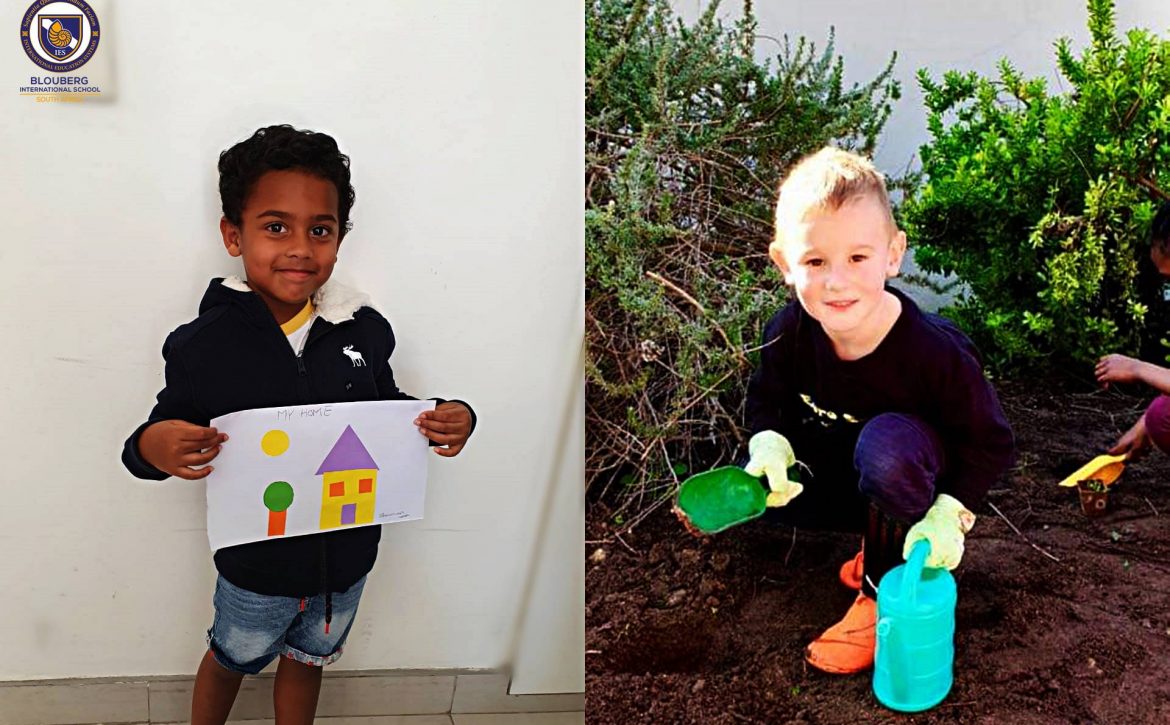
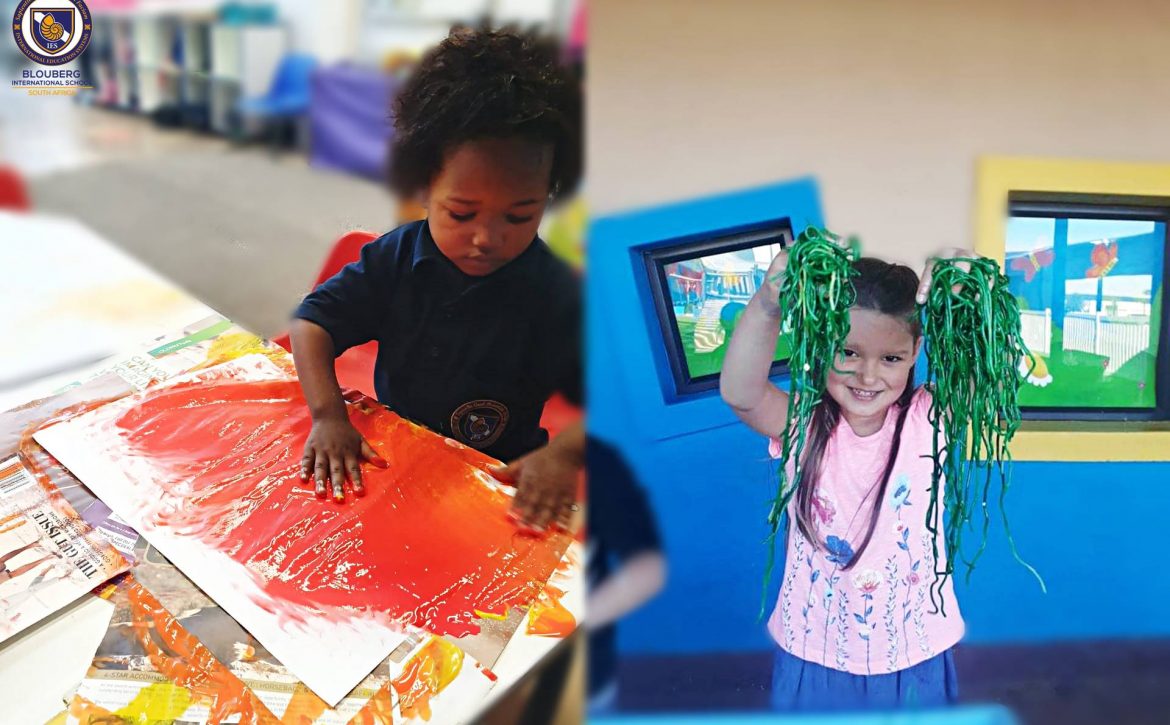
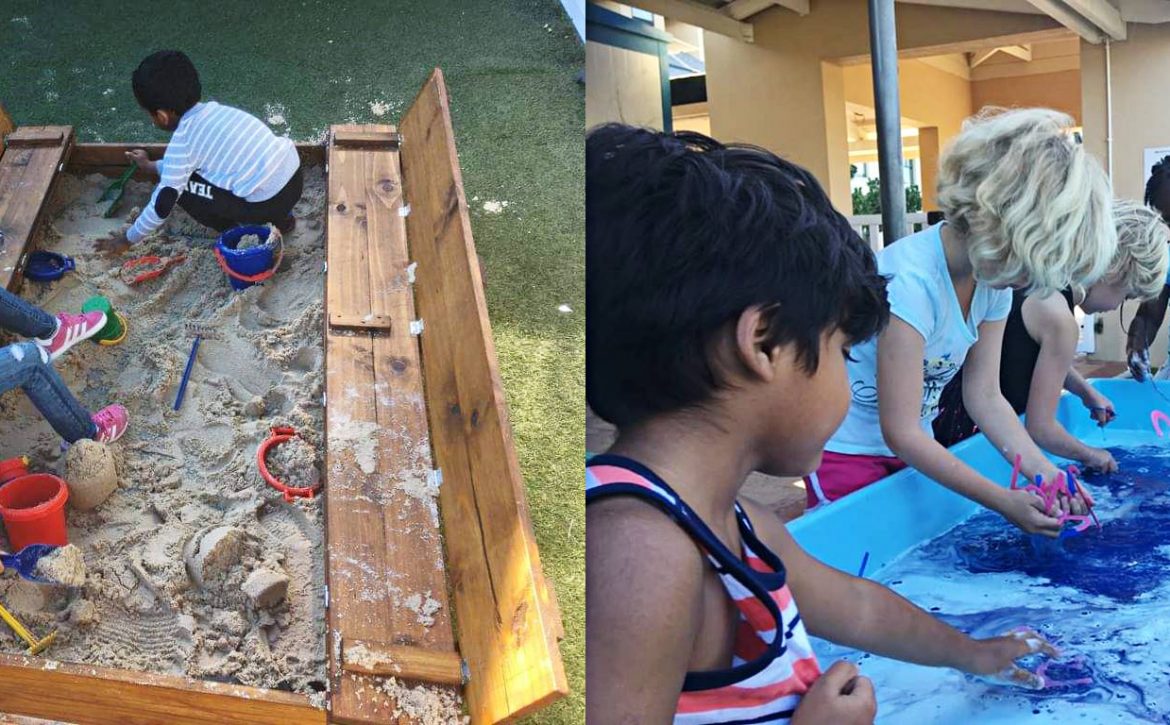
Attempting to school children at home puts pressure on parents at a time when anxiety is high. This is not helpful for them or their children. An alternative is to let the children play at certain times. The benefits of play are ranging. When children have more opportunities for play, they have better physical and mental health. It significantly decreases their stress levels, and more importantly it facilitates learning. Examples of play activities include building dens, dressing up, play dough or sensory play.
What is sensory play?
Sensory play includes any activity that stimulates a young child’s sense of touch, smell, taste, sight and hearing, as well as anything which engages movement and balance. Sensory play is not video games and TV. We use our sight and our hearing for those activities but sensory play involves actively engaging the senses to discover and explore the world around us.
Some examples of sensory play:
Sensory play for toddlers– observing light and shadow created by torch light on objects of different sizes, or watching colours mix and the patterns formed by finger painting.
Sensory play for pre-school aged children- creating shapes and playing with sand, or playing with musical instruments and listening to the tone and pitch as they strike or blow through instruments softly or forcefully.
The benefits of sensory play:
Many well-known early years pioneers such as Montessori, Froebel and Goldschmid recognised the importance of sensory play as a fundamental experience for a child’s growth and development. Such benefits include:
- Experimentation skills and recognition of the sense used during the exploration of different items.
- Attention and concentration by focusing on the given stimuli, such as exploring a light box or torches with coloured cellophane.
- Increased hand/eye co-ordination and both gross and fine motor skills.
A lack of sensory play leads to the brain not getting accurate information about its surroundings. As the child gets older, experts typically refer to this as a sensory processing disorder. A lack of sensory play may lead to a child with anxiety and poor coordination. It can also lead to difficulty learning and paying attention. It’s important to give the child ample practice in all the senses.
That is why its best to let them play!
Martie van Dyk
Reception Year Teacher

From the Principal’s Desk, 9 April 2020
Dear Parents
Here are a few ways to remain positive during this time:
- Set boundaries and take care of yourself, both mentally and physically.
- Take time away from the online world (internet, social media, emails etc.).
- Pursue a neglected hobby or take up a new one.
- Keep informed about the situation, but do not become burdened with negativity.
- Reach out to others (within the boundaries of social distancing) and be a blessing in someone’s life.
- Make time for family activities and value the time spent with loved ones.
There is a writer in you, in all of us! This is the perfect time to write that story which may prove to be the inspiration someone else so desperately seeks.
We are all looking forward to hearing our President say that our lives are going back to normal, but hopefully this experience will affect our perception of normal; hopefully it will have taught us new skills and offer us a different way of looking at life.
I wish you all a blessed Easter weekend and hope you enjoy some wonderful family time.
Edna
Read More