
Library Etiquette
Do you still remember the majesty of the Public Libraries that we had to frequent in our youth? The days before internet was a quick fix search. Dewey decimal systems and the smells of old and new books. The librarian peeking at you over her reading glasses as you quietly and carefully walked past her massive counter. The feeling of excitement when you held your first library card. The library was an ocean of possibilities, peacefully beckoning you to crack the spine of a hardcover adventure. Hours were spent finding corners to read in, and making sure you returned your books on time to avoid that dreaded R2 fine. If you were lucky, you didn’t have to take notes by hand, but could make copies of those precious pages before using them for your school projects.
As mystical as the library was, it was also a character forming experience. We all knew the rules, almost as sure as muscle memory. From the moment we walked through those heavy doors, we understood that this was a place of resolute respect and consideration, quietly whispering to one another as we discovered other universes hidden in the pages of classic novels.
I have asked our students during the course of this week if they have visited the local library and not surprisingly, most of them have not. We all know that with the hustle and bustle of this day and age, we rarely have the time for simple pleasures, like visiting our local library. If you do ever find that you have a free morning with your child, then I would like to recommend Milnerton Library to you. The facilities are very well kept, and the staff are knowledgeable and kind. This would be a wonderful introduction to the vast community of libraries that our city has to offer. Proper library use is a vital skill, especially when it comes to the later years of education. Why not set our children up for success sooner rather than later. University and high school notoriously consists of ample amounts of research, and knowing how to effectively utilize the available facilities would be extremely beneficial to our children.
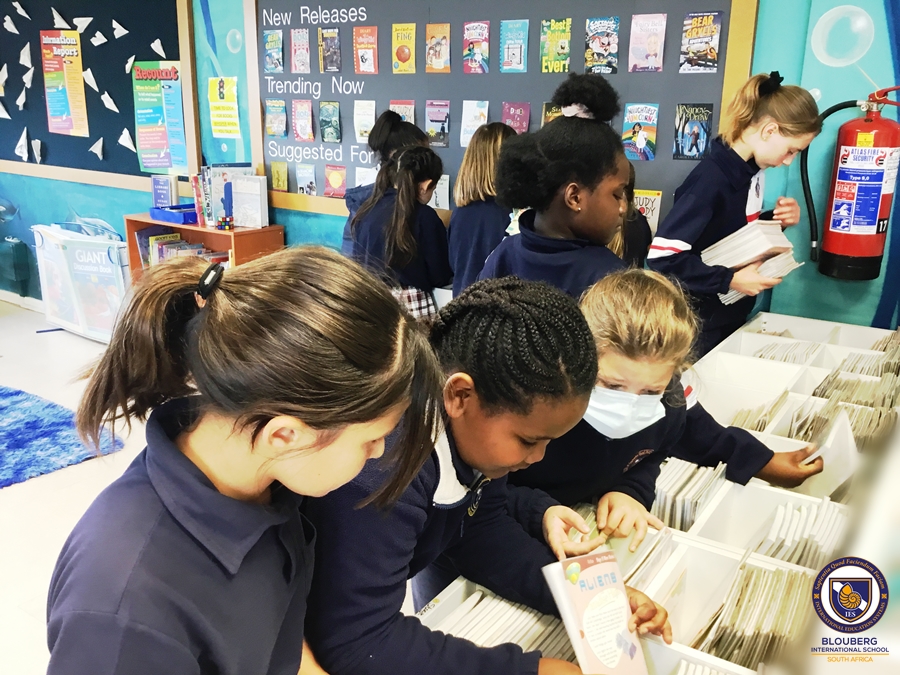
In our very own school library, we have discussed library etiquette this week during our lessons. It almost feels like a lost art and is certainly a worthwhile topic.
We discussed a few of the items below:
- What is the function of a library? We established that the library is one of the few places in society that is completely free. You don’t need to spend money to visit and enjoy the facilities. Being afforded the use of the facilities does come with some responsibility though. The resources are loaned to you in good faith, which makes you accountable for how it is treated and returned. Everyone is welcome in a library as it is a public space, cementing in our minds that education should be fully inclusive and knowledge freely available to all. Libraries can be used to study, do research, read, create awareness and so much more. However, the primary function is the loan and return of books.
- Where do we get our books? The students showed a great sense of understanding that the school library mainly grows through your kind donations, this includes the Birthday Book Programme as well as books that you would like to donate when you are no longer using them. We also discussed the purchasing of resources like our readers; and why we should look after the resources in the library. Some classes even delved into publishing, which is a very interesting topic in its own right.
- General Manners: We explored the rules of libraries and especially our school library. Students were reminded that we enter a library quietly; how to look for books and keep the shelves neat; and, where to return the books and how to check out new books for the week. Our conduct in a library is also extremely important: remembering that one must remain kind, caring and encouraging. If we conduct ourselves with consideration to our fellow library users, everyone will enjoy their experience and continue to benefit from the facilities.
- Returns: We discussed books not being returned and why we should always return our books. We should all have access to the knowledge in the library and if we fail to return our loaned books, the next student will not have access to the material. At this stage there are so many books outstanding at our library, that I would like to ask parents to please check if there are any school library books still at home. Your assistance with this will be greatly appreciated.
It has been such a privilege and a pleasure the last few weeks, getting to know the students even better, sharing stories, reading and brainstorming. I simply can’t wait to see what the future holds for our school library.
Trindade Camara
School Librarian

Read More
Why Should We Encourage Fantasy Play With Our Children?
Learning through play has become widely recognised by practitioners as an essential method of learning and development for young children. Many theorists and researchers have identified the values of pretend or fantasy play as a vital contribution towards the normal development of a child.
Children will use objects to represent something else, or assign themselves and others in their environment “roles” and then act them out. It may seem very simple as an observer, but in these moments of escaping reality children are learning and developing many different and important life skills.
Fantasy play allows different perspectives to be taken and ideas and emotions can be moulded and rearranged which are both key features of a child’s social and cognitive development.
Here are 5 key reasons why teachers of younger children encourage their students to get involved in the world of make believe and to participate in fantasy play daily:
1. To encourage imagination and creativity
2. To support social and emotional development
3. To improve language and communication skills
Fantasy play allows children to experiment with and learn about the power of language, how it affects us and those around us, helps them to understand that words give us the ability to re-enact scenarios, to relay our point across to others and to make ourselves heard and understood.
4. To develop thinking, learning and problem solving abilities
5. To enhance physical development
Aside from all the wonderful cognitive benefits that pretend play has to offer, it is important to remember that pretend play is very often physical and is a wonderful way for children to be active, to exercise and to develop their gross and fine motor skills.
Let us not forget the key factor to any type of play: It is fun! And when we let our imaginations take over and we really play together, as children do, there are no limits as to where our minds can take us and there is no chance of running out of things to enjoy!
Kim Hahn
Reception Year Teacher

Read More

Reading Mornings
“The more that you read, the more thangs you will know,
the more that you know learn, the more places you will go”. Dr Seuss
In the Foundation Stage classes, we love reading and story time is always our favourite time of the day. We look forward to going on different adventures, be it walking through the woods with the Gruffalo or swimming through the sea with the Fidgety Fish. So, to share our passion of stories, the Foundation Stage classes have started a weekly reading morning where we would like to invite all our moms, dads, grannies and grandads, even aunts and uncles to come and read with us. The little ones love having visitors in class and they are always very excited to share their favourite stories.
We look forward to welcoming you to our reading adventure.
Monique Meyer
Reception Year Teacher and Foundation Stage Coordinator


Read More

Up, Up And Away!
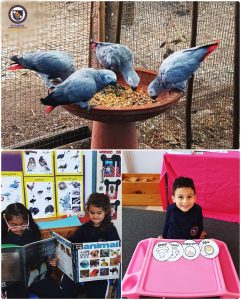
During the past two weeks, we have been learning more about birds in the Foundation Phase. We did many hand-on activities to learn more about the fascinating creatures. We made art pieces about penguins, peacocks, flamingos and owls. During Numeracy we counted feathers and eggs and during Literacy we wrote our sounds in bird seed. We threaded beads on feathers, we cut paper feathers and we even made playdough eggs to strengthen our fine motor muscles.
The students enjoyed looking at books and video clips with interesting facts about birds.
We learned the following facts about birds:
· There are 10000 species of birds.
· All birds lay eggs.
· Birds migrate to other countries.
· All birds have feathers.
· Birds don’t have teeth.
· Birds are great communicators.
· A group of birds is called a flock.
· Some birds can mimic humans.
· Ostriches are the largest birds.
· The smallest bird is a Bee Hummingbird.
I have read a lovely article about birds this weekend and I would like to share this with you. “Here are six life lessons, inspired by our winged friends.
1. Be confident. Birds learn to trust themselves before they take off in the sky. So have faith in your abilities and know that you will find a warm current to soar in.
2. Let your colours shine. Different birds have hundreds of different hues. Be bright and make sure you aren’t hiding what makes you one-of-a-kind.
3. Show up early and often. The legendary early bird gets the worm for a reason. So find something worth showing up for, and then show up every day.
4. Go with the seasons. Birds thrive despite changes in their environment. Be fluid and go with the flow, trusting your ability to always find a branch to land on.
5. Flock together. Birds seek strength and sustenance from one another. Keep friends and family close by as you navigate the days
6. Spread your wings. Eventually, all birds must leave the safety of the nest and become what they are meant to be. Have no fear of falling, and start flapping.”
The students learned that birds are very important. Many people (including myself) keep birds as pets and enjoy watching them in the wild or at the exotic animal world. Farmers raise poultry for their meat and eggs and we also use bird feathers in various product.
Martie van Dyk
Pre-Reception Teacher

Read More
Holiday News
The Reception students came to school this term very excited to see their teachers and classmates again. They were eager to share about all the fun things they had been doing this past holiday.
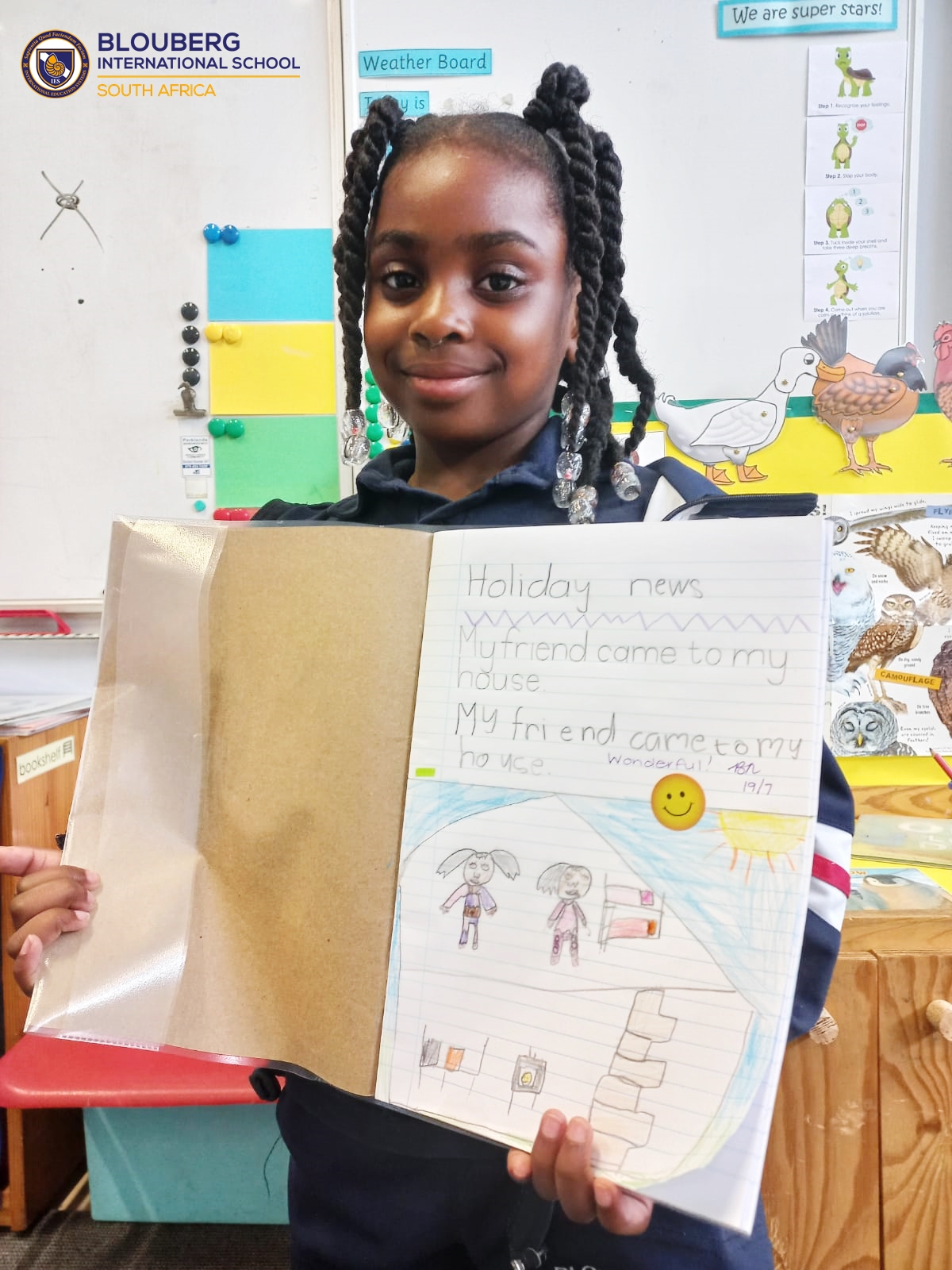
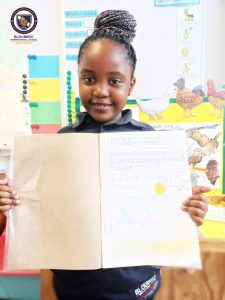
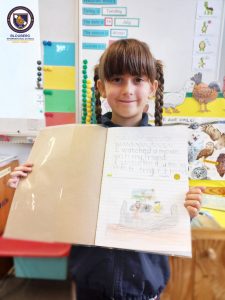
This term we are focusing on becoming more aware of punctuation and writing sentences. The students are learning about using capital letters to start a sentence, having finger spaces between words and using full stops to end a sentence. Each student told the teacher a sentence about their news. The teacher writes the sentence and the student copies the sentence in their books. They then draw a matching picture about their news. The following sentences are about the students’ favourite fun things that happened in the holidays.
Zion Durojaiye (5 years old) “I played with my truck at the beach.”
Sofia Haskins (6 years old) “I watched a movie with my friend.”
Omime Ogumah (6 years old) “I went to my friend’s house.”
Kaedy Frey (5 years old) “I went to the beach.”
Jonah Atson (5 years old) “I played with my cousin.”
Coco Baur Mazadiego (4 years old) “It was raining on the birthday.”
Ariah Mukubvu (5 years old) “I got an ice-cream at the beach.”
Amelia Engelbrecht (5 years old) “I got a dog called Rocky.”
Tiwatope Olanrewaju (5 years old) “I played with my brothers.”
Marcus de Beer (5 years old) “I saw lions and birds in the savannah.”
Chiamaka Davidson (6 years old) “I got an ice-cream.”
Onyinyechi Okoye (5 years old) “I went to a restaurant.”
Grayson Muller (5 years old) “I played outside.”
Rume Oriesa (6 years old) “My friend came to my house.”
Bronwen Nuthall
Reception Year teacher

Read More
Fairy Tales
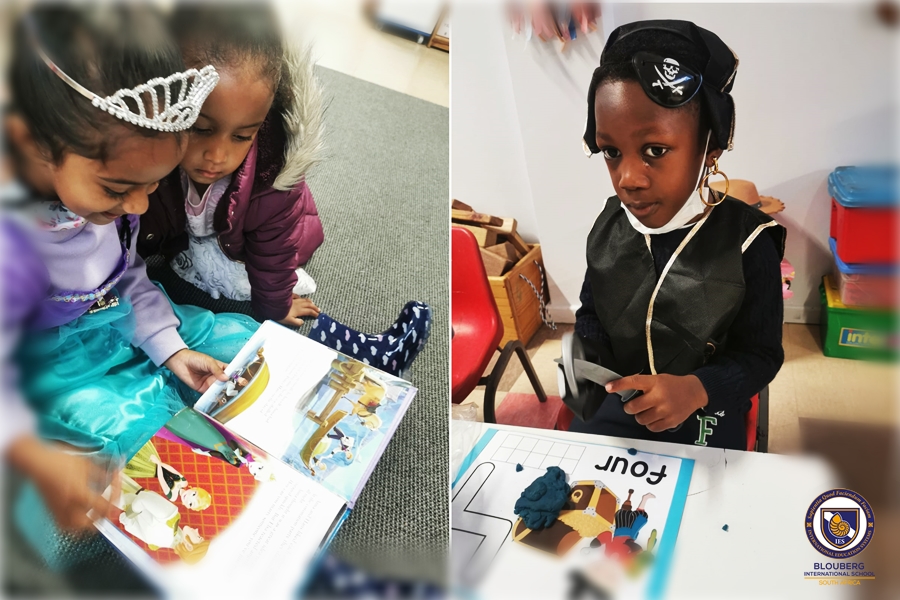
Our Foundation Stage students have been learning about Fairy Tales. The classrooms were abuzz with excitement as we embraced the theme by building Fairy Tale puzzles, made crowns fit for a prince and princess, paged through our many Fairy Tale books in the book corners, made beautiful crafts relating to the theme and of course read various Fairy Tales at story time.
Fairy Tales offer something a little different to a child’s development. They enrich imagination, cultivate a deeper understanding of life’s great truths as well as elevate an understanding of things that can be difficult and complex to convey.
Reasons Fairy Tales are good for children:
- They see good conquer evil
- Consequences for actions
- They see great obstacles overcome by ordinary characters
- They enrich imagination
- They benefit every age
- They build emotional resiliency
- Teach critical thinking skills
- Fairy Tales teach lessons
- Vocabulary
- Emotional Processing
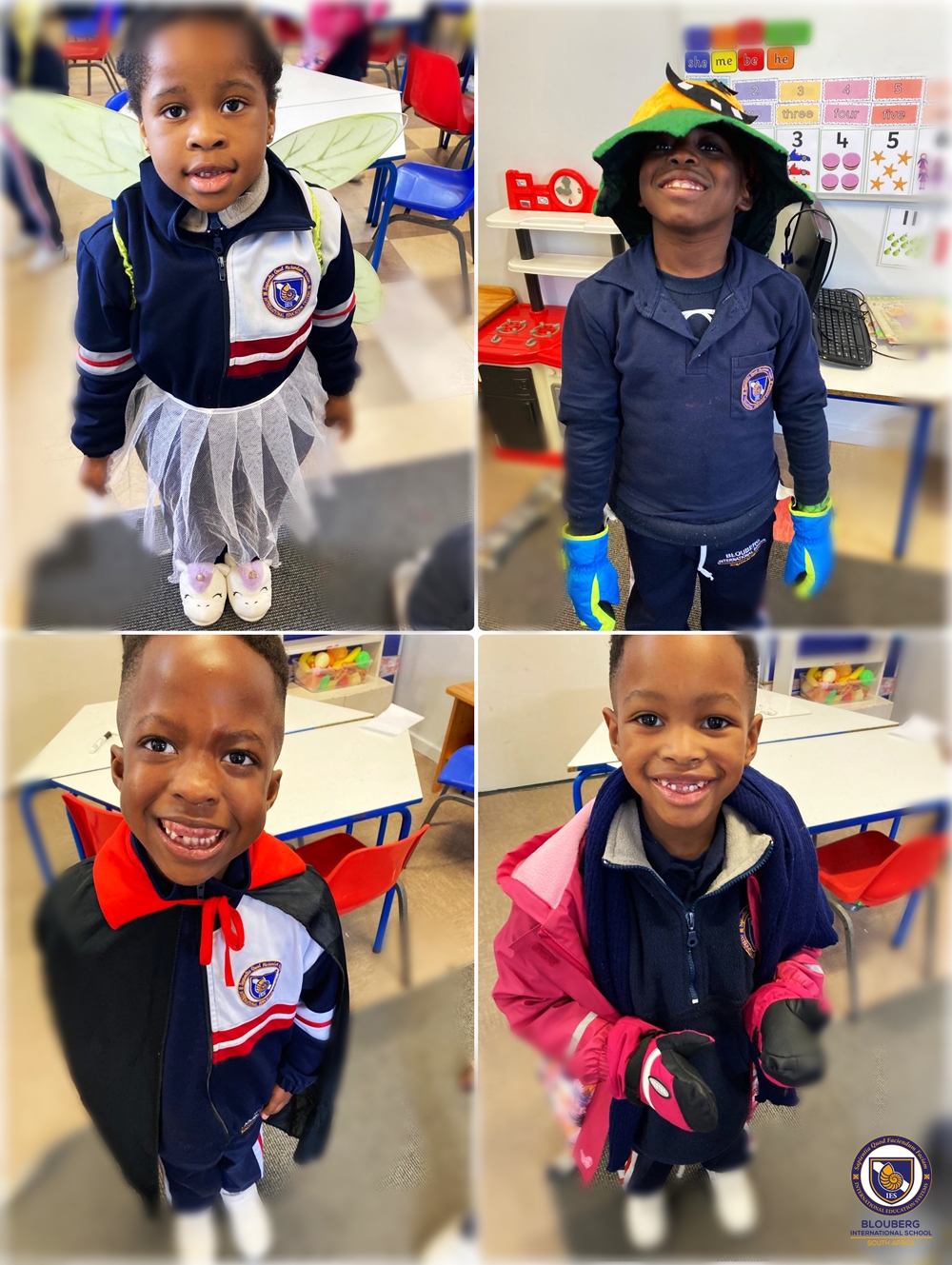
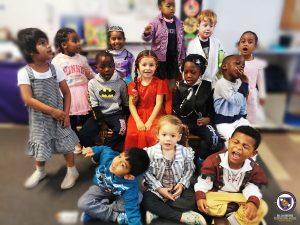
We ended off the theme with a dress up day, which was the most fun of all. The students got to tell the class about their favourite Fairy Tale and some got to dress up as and talk about their favourite characters (See photos). As Hans Christian Andersen once said: “Life itself is the most wonderful Fairy Tale.”
Cindy Nunan
Pre-Reception Teacher


Read More
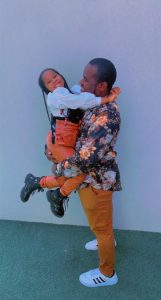
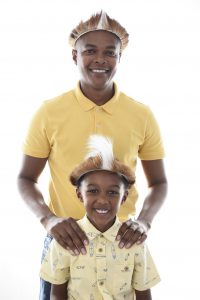
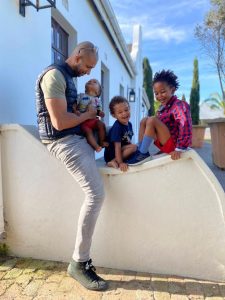
Happy Father’s Day
Father. Dad. Superhero. Protector. Best friend.
These are just a few ways that we can describe the most important men in our lives. Even as an adult, my dad is still my hero and I am still learning from him all the time. Father figures come in many different forms throughout the world and all of them represent beacons of light and a guiding path for those that they take care of.
In my Reception class, I asked the students some questions about their dads in preparation for Father’s Day this coming Sunday. Here are their responses:
How old is your dad?
Kopano: My dad is 44 years old.
Mahadhyuth: I don’t know – I didn’t ask him.
Lolwam: 14
Chimdindu: 60
Zande: 32
What does your dad do during the day?
Kopano: He showers and builds a library, church and school out of Lego.
Naif: He drinks Coke.
Chimdindu: My dad buys me stuff every day.
Bavani: He works and he goes to the shops and he takes my dog for a walk.
Isabella: He stays in bed or works with chicken.
What is your dad’s job?
Enhle: He sends messages for work.
Samuel: He works on his laptop.
Does your dad have super powers?
Naif: Yes, Sonic super powers.
Samuel: His muscles.
My favourite thing about my dad:
Enhle: He always let’s me play games.
Anam: Sitting down and watching movies as a family.
Bavani: For bringing me a dog.
Isabella: When he fetches me from school.
Is your dad funny? Why is your dad funny?
Purity: He tells me jokes.
Lolwam: No.
Amelia: Yes, he tickles me and tells jokes.
Anam: Sometimes, he tries to make puppets.
Zande: He plays tricks on me.
Emmanuel: He does magic tricks that are funny.
What is your dad’s favourite thing to do?
Purity: He likes to go camping.
Mahadhyuth: He loves to do work.
Amelia: Play with me.
Emmanuel: Work at the police station.
From the whole of the Foundation Phase we wish all of the Father figures in our lives a Happy Father’s Day and we thank you from the bottom of our hearts for all that you do for us!
Kim Hahn
Reception Year Teacher




Read More
Sensory Day
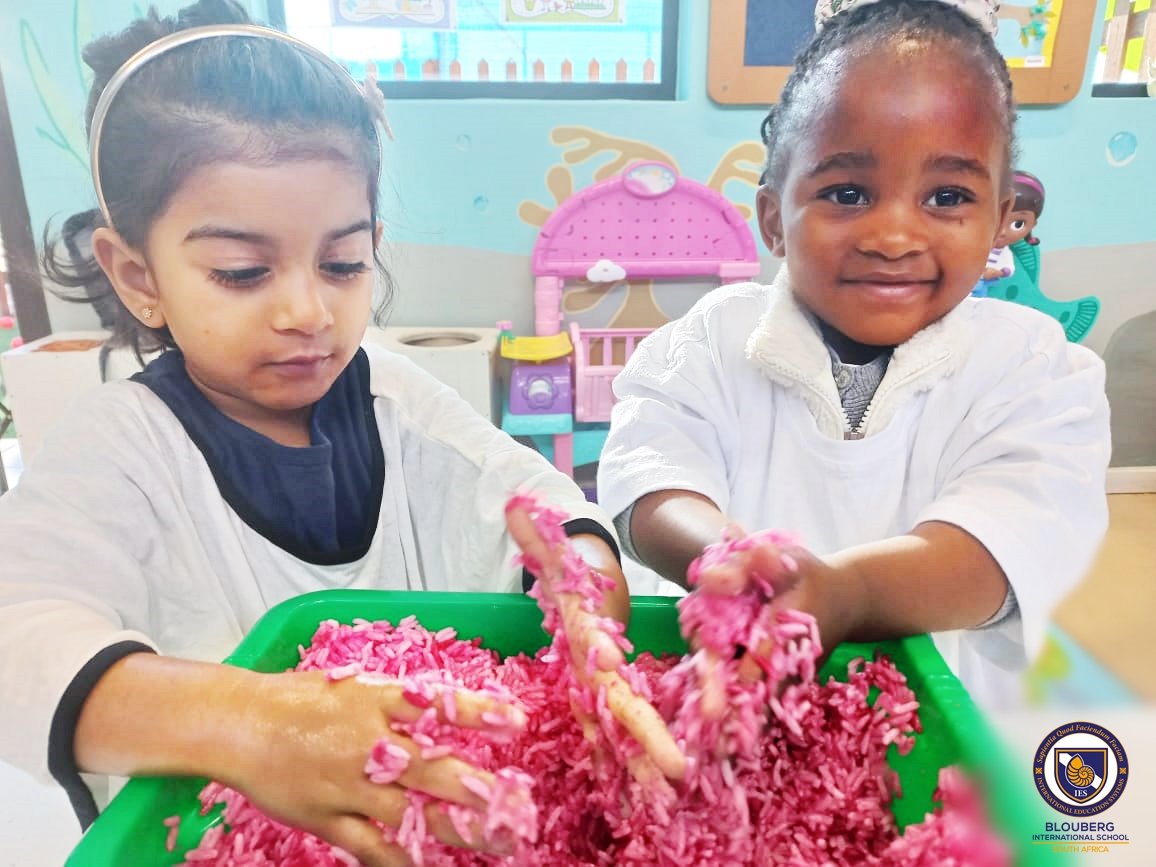
Even though it was messy, and oh the clean-up was a delight, the toddlers thoroughly enjoyed every minute of exploring the colourful spaghetti, the mushy sago and the sticky rice. They were able to hop out of the ‘clean class’ box and just enjoy making a mess.
Sensory play is an important part of childhood and there are really no limits to what you can use in your sensory activities. However, nature and food can often be your best friend when it comes to sensory play.
To help you keep your youngster busy during the holidays, here are a few great sensory play ideas for home:
- For keeping their hands busy:
- Soapy Jars: Fill a plastic peanut butter jar halfway with water, a pinch of dish soap and food colouring. Seal it tightly, and let your toddler roll it/shake it around outside.
- To explore their sense of smell (ages 4-6):
- Smell it and guess: Blend up six different fruits/vegetables in small quantities and pour them into separate dishes. Allow your little one to taste and guess.
- For co-ordination and organisation:
- Alphabet scoop and transfer: You will need alphabet magnets or water-safe letters, a storage container, a wooden spoon, two dish buckets and water. Pour enough water into your container to allow the letters to float and allow your child to scoop each letter out individually. You can practice various beginner literacy activities with them!
- To assist with emotions, and to keep them calm:
- Place beach sand or regular sand into a big container and hide small toys in the sand. Make sure the toys are all of the same themes. Once they have been able to scoop out each toy, engage with them to create a fantasyland on the sand. It’s like a zen garden for kids.
Jo-Anne Dickason
Nursery Teacher


Read More

Assessments And Amphibians
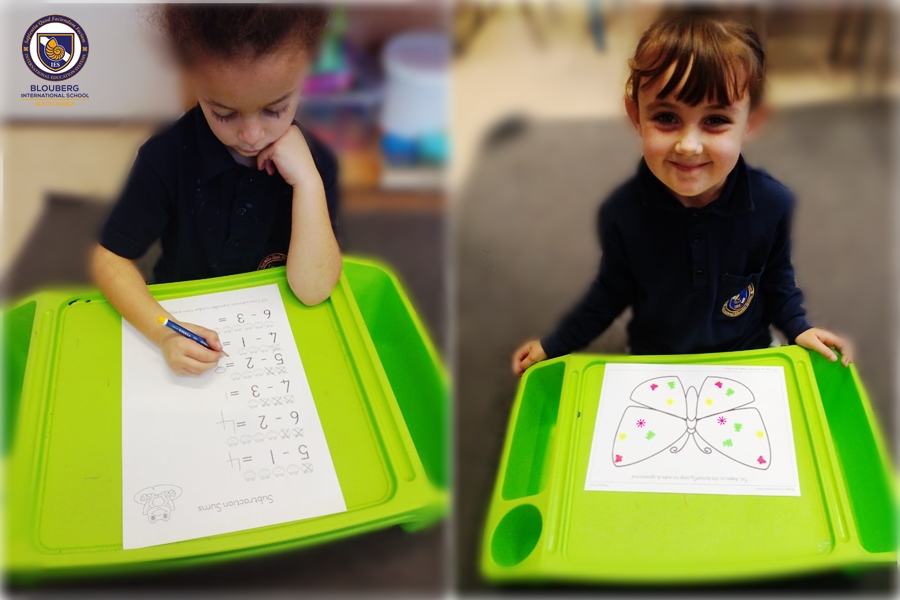
Over the last two weeks, Foundation stage have been doing their end of term assessments. Every day the students are learning new things and continue to approach each challenge with a positive attitude. The assessments have given each student an opportunity to show their teachers how much they have learnt this term and we are so proud of them.
Recently, Foundation stage have been learning all about amphibians. The students asked, what is an amphibian? What is the difference between a reptile and an amphibian? And what is the difference between a frog and a toad? They have learnt so many interesting facts, especially what makes a frog different from a toad.
Did you know that…
- Frogs are smaller and slimmer than toads and have a more pointed nose.
- Toads are much bigger and broader than toads and have a wider nose.
- A frog’s skin is smoother than a toad. Therefore, they need to live near water because they need to keep their skin moist.
- Toads have a hard, dry skin and don’t need to stay near water.
- A toad’s eye shape is also different from a frog’s. Frogs usually have big bulging eyes, as opposed to a toad’s, that is a bit more subtle in appearance.
- Frogs have long legs made for hopping and they can jump up to 20 times the length of their own body.
- Toads have shorter legs and prefer to crawl instead of hop.
The foundation stage students enjoyed learning about these interesting facts. We are confident that the next time they see an amphibian, they’ll be able to tell us whether it’s a frog or a toad.
Lauren Bloem
Reception Teacher


Read More
Bugs, Bugs, Bugs Everywhere…
Learning about bugs is so much fun for our Foundation Stage students. Isn’t it funny how young students are just curious about everything and don’t have the grossed out reaction that we have as adults.
During the past two weeks we have been learning about all sorts of bugs and insects through hands-on learning activities.
Some of the activities we have done includes:
- Butterfly life cycle sequencing: The students practised sequencing the cards in the correct life cycle order.
- Bug or not sorting: Is everything that crawls a bug? Is everything with wings a bug? With a container full of toys the students had to investigate what it takes to be called a bug. This sorting game helps them learn to scientifically classify and observe.
- Butterfly Symmetry Smash: We cut the butterfly out of card. The students then squirted paint onto one side of each butterfly. We folded the butterflies in half and smashed the paint.
- Which bugs can fly: The students learned which bugs could fly and which could not.
The students enjoyed looking at books about bugs and learning interesting facts about bugs by watching Blippi Wonders.
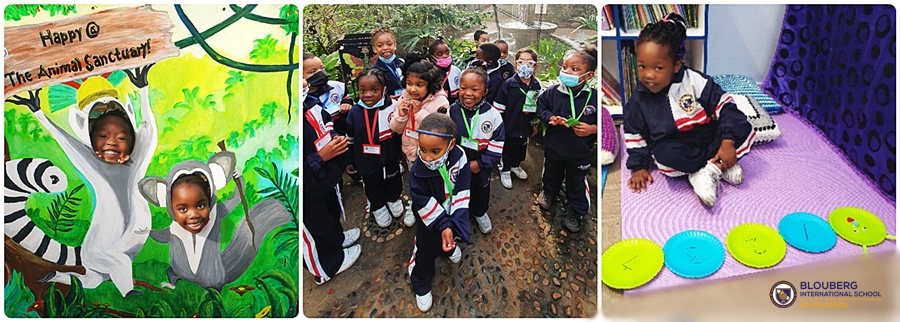
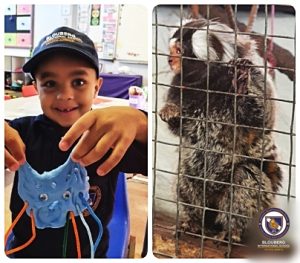
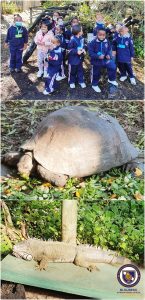
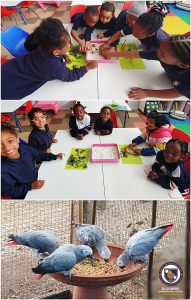
On Friday, 27 May, the Pre-Reception and Reception students went on an educational Outing to the Exotic Animal World. The students saw different types of insects, spiders, reptiles and animals like: birds, iguanas, tortoises and meerkats to name a few. The students enjoyed an interesting and informative lesson about reptiles. It was an amazing experience for the students to end off our theme.
Martie van Dyk
Pre-Reception Teacher

Read More