
From The German Classroom
“What’s red and black and brings good luck?”
If you ask anyone in Germany the above question the answer would be, the Marienkäfer! This is directly translated as the ‘Marie bugs’, also called Ladybug, Lady beetle or Ladybird as we know it. In many cultures they bring good luck and in Germany they are a popular good luck charm also called a Glückskäfer the ‘lucky bugs’. The true Marienkäfer is red and has seven spots. Red symbolizes love, while seven is a lucky number for some.
This is all attributed to the fact that they were traditionally seen as a gift to farmers because one Marienkäfer can eat up to 5,000 aphids and other common garden pests, in a year. A legend has it that the farmers in Europe prayed to Mother Mary when pests were destroying their crops. At this time of crisis, ladybirds came as their rescue, destroying the pests. Since then, the farmers named them “the beetle of our lady” and love them because they eat aphids and other plant-eating pests and save their crops every year.
The German people not only see the Marienkäfer as good luck, but also as a sign from nature that the summer has at last arrived in Germany usually after a very long winter. During summer, when they are most active, these incredible insects can be seen fluttering around or walking on the leaves of plants to the delight of the young and old. A group of Marienkäfer is called a loveliness, which so aptly describes them.
But as soon as it turns cold and autumn arrives in Germany, the Marienkäfer looks for a warm, secluded place to hibernate, such as in barks of trees, in logs, under rocks or even inside houses, usually with other ladybirds in groups of up to 1000. They then only come out the next summer.
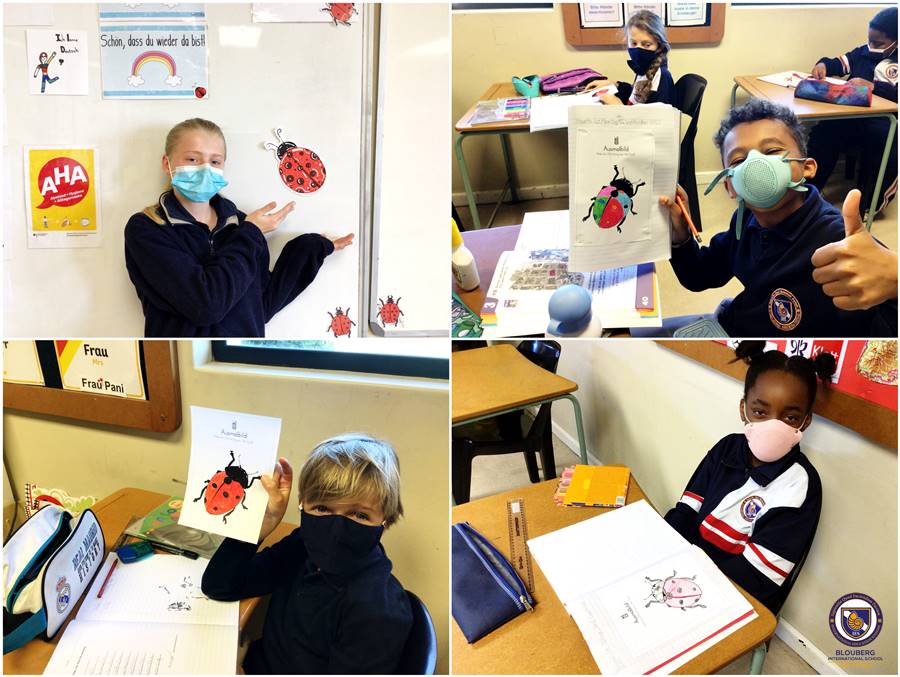
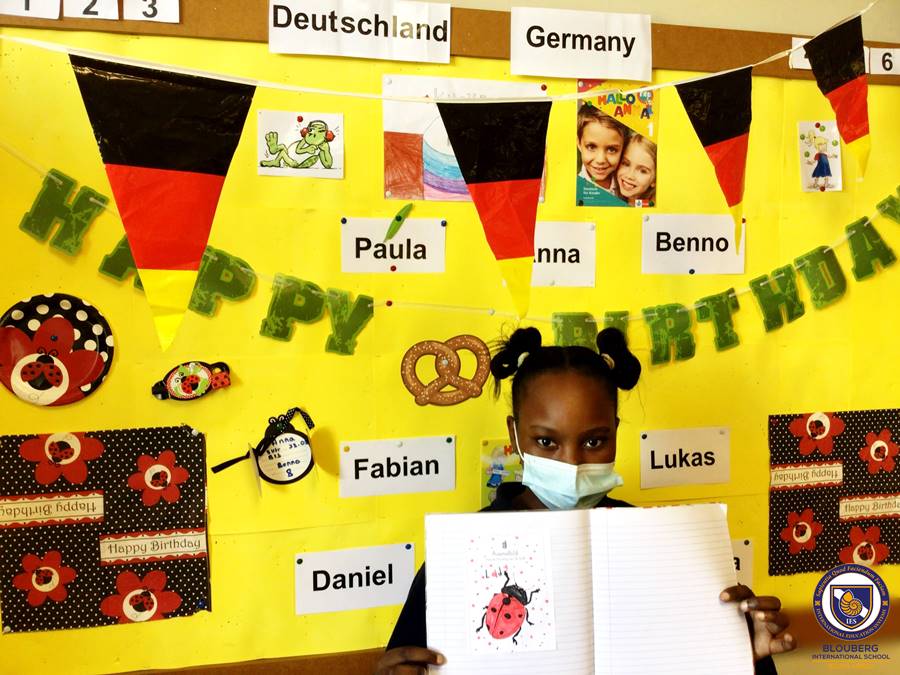
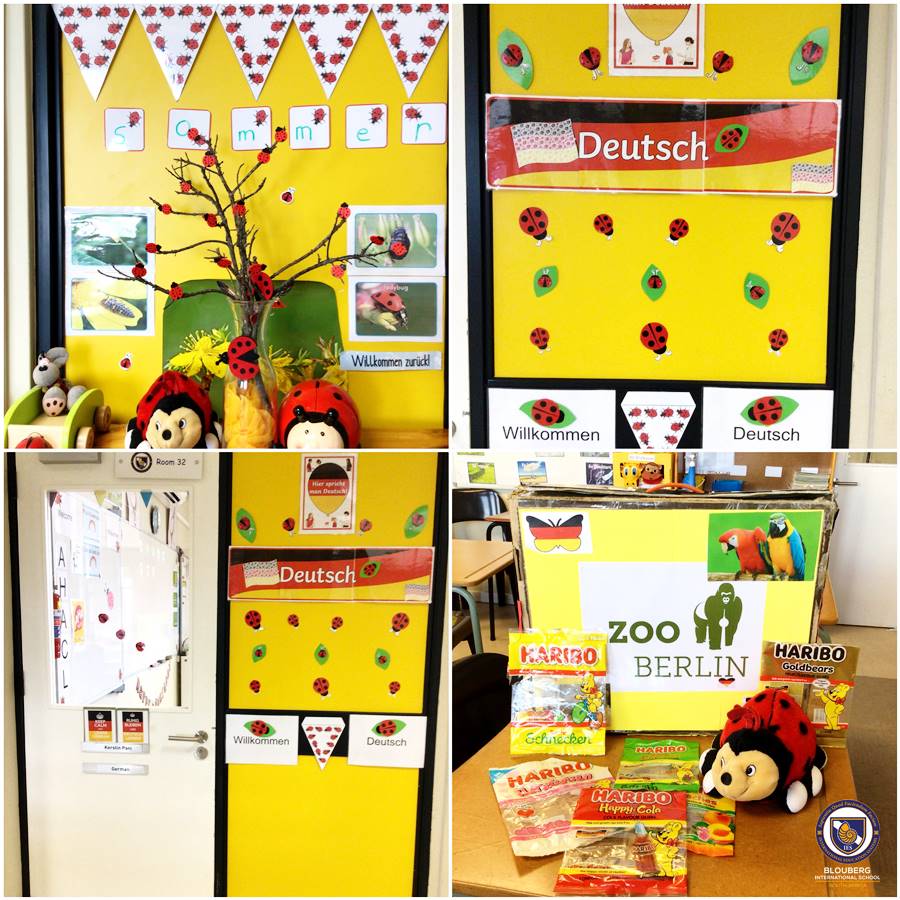
The German classroom received a special visitor from Germany this term, all the way from the Berlin Zoo arriving in the animal transport suitcase that travels between Berlin and our classroom at Blouberg International. The students in Year 1 and 2 were especially intrigued at what had arrived and were very excited to meet Marie the Marienkäfer. The animals from the Berlin Zoo also sent us a few packets of Haribo, the special German gummy bears, but we were surprised when we found all the packets empty and really wondered who had eaten them on the way from Berlin.
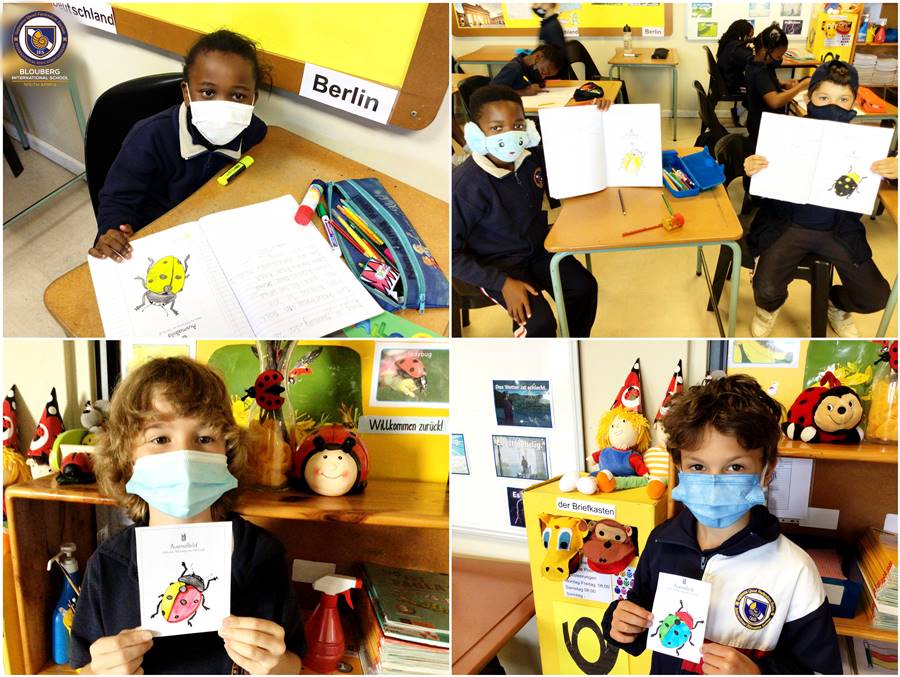
We also discussed the lifecycle of the Marienkäfer and we were fascinated by this little creature. Some students were also inspired to draw pictures of them and we included Marie in our greetings and songs at the beginning of the German lesson.
In Germany, the summer has come to an end and sadly the Marienkäfer are going into hibernation, but they will be back and are eagerly awaited next summer.
A student asked me this week if Marie the Marienkäfer will be returning to Germany and I was happy to let them know that she will be staying in South Africa to enjoy the coming summer months with us in our German classroom.
Have a good spring break.
Frau Kerstin Pani
Primary School German Teacher
Here are some links with more interesting information on the Marienkäfer:
https://www.dw.com/en/gl%C3%BCcksk%C3%A4fer/a-16555043
https://www.animalspot.net/ladybugs
https://www.natgeokids.com/za/discover/animals/insects/ladybird-facts/

Robots And Our Futures
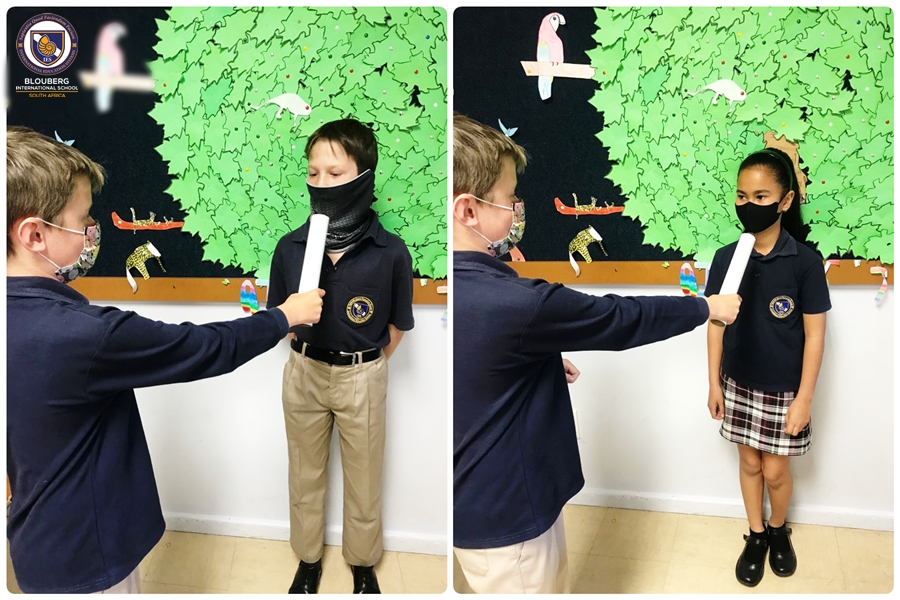
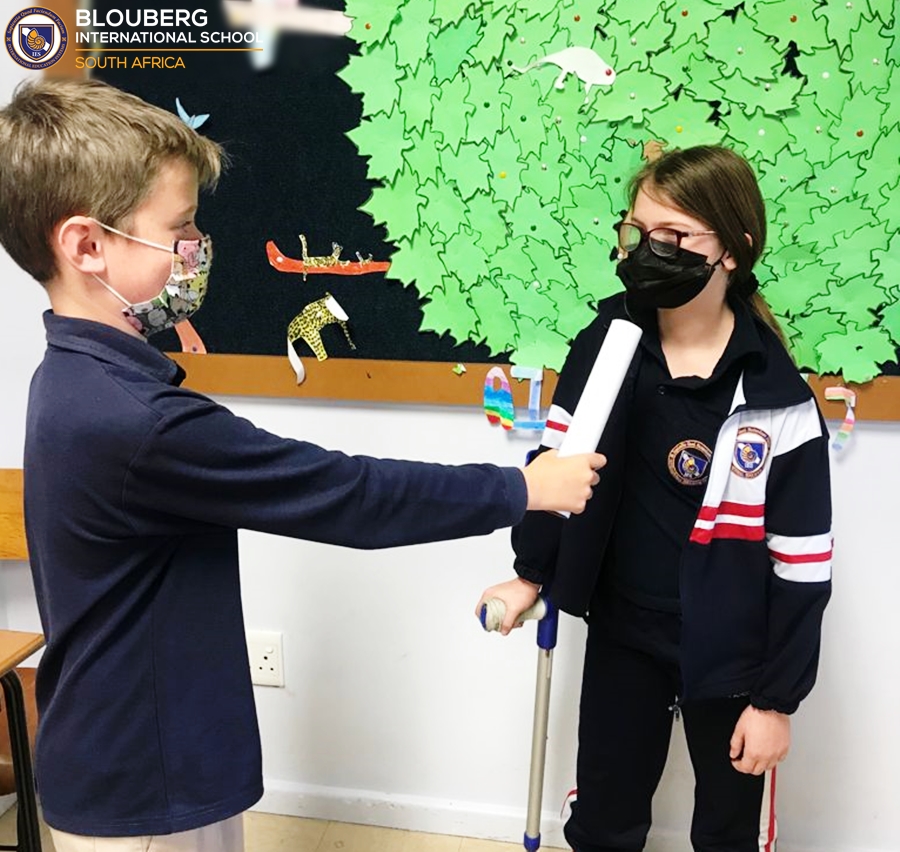
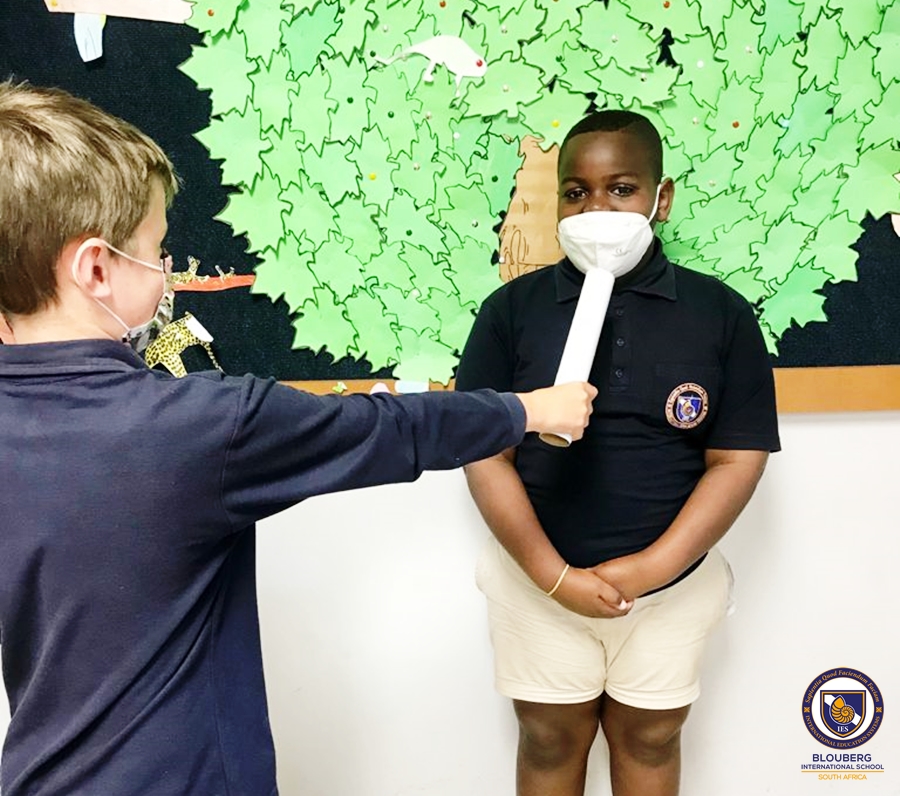
This term, the Year 5’s have been interestingly looking at the impact of modern technology on our world. We have specifically looked at Robots taking over our jobs. The students were asked to work in groups of 4 or 5 and put together a news broadcast, where they interview a factory owner who has decided to replace his factory workers with Robots.
Here is an example of a News Broadcast written by Nuraan Price (Year 5 Student)
News Reporter: Good morning all and thank you for joining our live broadcast! We have an interesting crisis for you this morning between a factory owner and his workers. Apparently he wants to replace them with robots! I am here today with all the people involved including Dave; the owner of the factory, one of his workers, the son of this worker and last but not least, the robot designer herself! Let’s start off with you Dave. How’s it going?
Factory Owner: Morning y’all, my name is Dave, and I’m the owner of Sweets & Treats, the Candy Factory.
News Reporter: So tell us Dave, what is the future you see for Sweets & Treats?
Factory Owner: Well, I’m a little ashamed to say, but Sweet & Treats hasn’t been doing so well this last year. And I know our employees are quite tired and a little stressed out trying to get orders and money in, so yeah, we’re struggling. Unfortunately, the factory might have to close down soon if this keeps up. So to anyone listening, go and order or buy some of Sweets & Treats’ delicious candy today! It’s available at any shop near you!
News Reporter: That must be hard, so what’s the deal with the robots?
Factory Owner: I think what’s best for the factory is for robots to do the work. That way all the candy can be made more cheaply and they can work faster for long periods and without making any mistakes. I am very aware this means that many people at my factory will lose their jobs, so when we make enough money from the robots I will give those who need it $1000 just to get them on their feet and help everyone out a little bit. The robots will probably be here and ready by January.
News Reporter: Thank you so much for sharing your opinion with us Dave! And you’re right, this must have a big impact on your workers, in fact we have one right here with us today! Would you mind telling us your name?
Factory Worker: Hello! Thank you for having me, my name is Tom, and I currently work at Sweets & Treats!
News Reporter: How has Dave’s new decision affected you and your life?
Factory Worker: Well I’ve worked at the factory for 7 years now and I’m one of Dave’s best workers and honestly I find it a little offensive that Dave would just throw us under the bus like that haha, but I know that he is just doing what’s best for the company and I respect that. I am however a little worried that I won’t be able to support my family anymore and trying to find a new job will be extremely hard for me especially during these times. Of course Dave’s $1000 will help a lot and I really appreciate it but I’m afraid that it won’t be enough until I find a job.
News Reporter: Wow, I hope it goes well for you and thank you for sharing with us. We also have your son here today to hear his say in the matter. Hi, would you mind introducing yourself?
Factory Worker’s Son: Hello there, my name is Alex and I’m 12 years old.
News Reporter: How are you today?
Alex: I’m good and you?
News Reporter: I’m very well thank you. How do you feel about the situation your dad is in right now?
Alex: Um, well I’m a little scared that my dad won’t be able to provide for me and my mom, but I think that it’s really nice of Dave to give us $1000. Another thing I’m worried about is my future. I’ve been studying and working as hard as I can in school and I’ve been getting A’s but I don’t know what job I’ll be able to get when I’m older since robots are taking over so many jobs. My mom says I can try to become a robot designer or programmer since robots can’t take over that job and I think that’s a great idea and it would be really cool to do, but I’m afraid that I’m not smart enough or it will be too difficult.
News Reporter: Don’t be silly Alex! Of course you’re smart enough! You can be anything you want to be. And if you do decide to study it, it will get easier over time. And I hope you enjoy it! Thank you to you and your father for sharing your sides of the story with us and I wish you the best of luck! I have one more person here with me, and that is the Robot Designer herself!
Robot Designer: Hi everyone, my name is Wendy Hensler. I’m 27 years old and I work for the tech company, AI. Inc.
News Reporter: So how has Dave’s decision helped your company?
Robot Designer: Sweets & Treats is the third company to call us and ask for this, we’ve been very busy and it’s pretty exciting to be able to design and make more robots than ever. I studied hard to become a robot designer, I love my job and I’m so happy to be able to work for one of the best tech companies in the country. Many manufacturers are moving to automation, to compete with overseas companies that are making the same product for much cheaper. I feel that without Robots, many companies will have to close down, but of course humans are just as powerful too.
News Reporter: Well there you have it folks, one robot and so many lives affected, is this the future? Good or Bad? I guess only time will tell. Well thank you to everyone for joining me today and thank you for sticking around, and I’ll see you next time folks, Good morning!
*End of interview*
We can never predict what will happen in the future, but we can rest easy knowing that we are preparing our students to ask the right questions and shape the world they want to live in.
Nadia Mahomed
Year 5 Teacher
Read More
From The Spanish Classroom
Some language teachers will say that one of the most important aspects of teaching, especially when the language is not spoken at home or outside of the classroom, is pronunciation. Many times, this can be difficult to apply in the class, because in the process of achieving our final goal of getting our students communicating in Spanish, we don’t want to discourage them. Sometimes we overlook pronunciation errors for the greater good of creating a positive learning environment and giving them the necessary confidence to start speaking the foreign language.
In my opinion, pronunciation can be something to improve on in the later stages of learning a second language or at least not be the focus in their first years. I am more prone to the idea of improving pronunciation in a more natural way, giving them some tips during class when they are learning new vocabulary, rather than during their oral presentations.
At Blouberg International, one my favourite ways of teaching the correct pronunciation is through songs, stories, and role plays.
Songs are the perfect resource for teaching pronunciation, especially when they have great rhythm, related and comprehensible vocabulary, and have repetitive and memorable lyrics.
Cesar, the creator of Rockalingua, explains it this way: “Focuses on creating songs that combine useful vocabulary with functional language structures, rhythm, and ample opportunities to repeat the words heard, using the pronunciation presented in the song.” I completely agree with him. Songs are a great way to practice meaningful listening while you work on pronunciation, but stories are as well.
By listening, reading, and creating stories – especially for the Year 5 and 6 students – that they can replicate using their own vocabulary during the role-play lessons, the students absorb more vocabulary in a more relaxed, practical and fun environment.
It is very important to listen to the stories more than once:
- The first time you can focus in identifying vocabulary and expressions that you have learned during the class.
- The second time focus on the content, try to understand the whole story.
- The third time you can focus on the pronunciation.
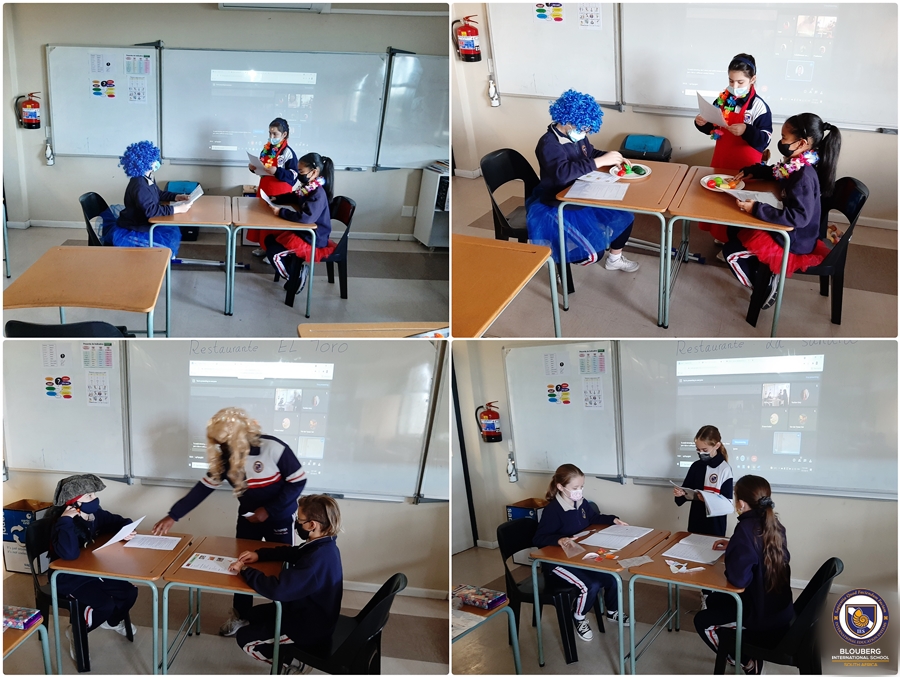
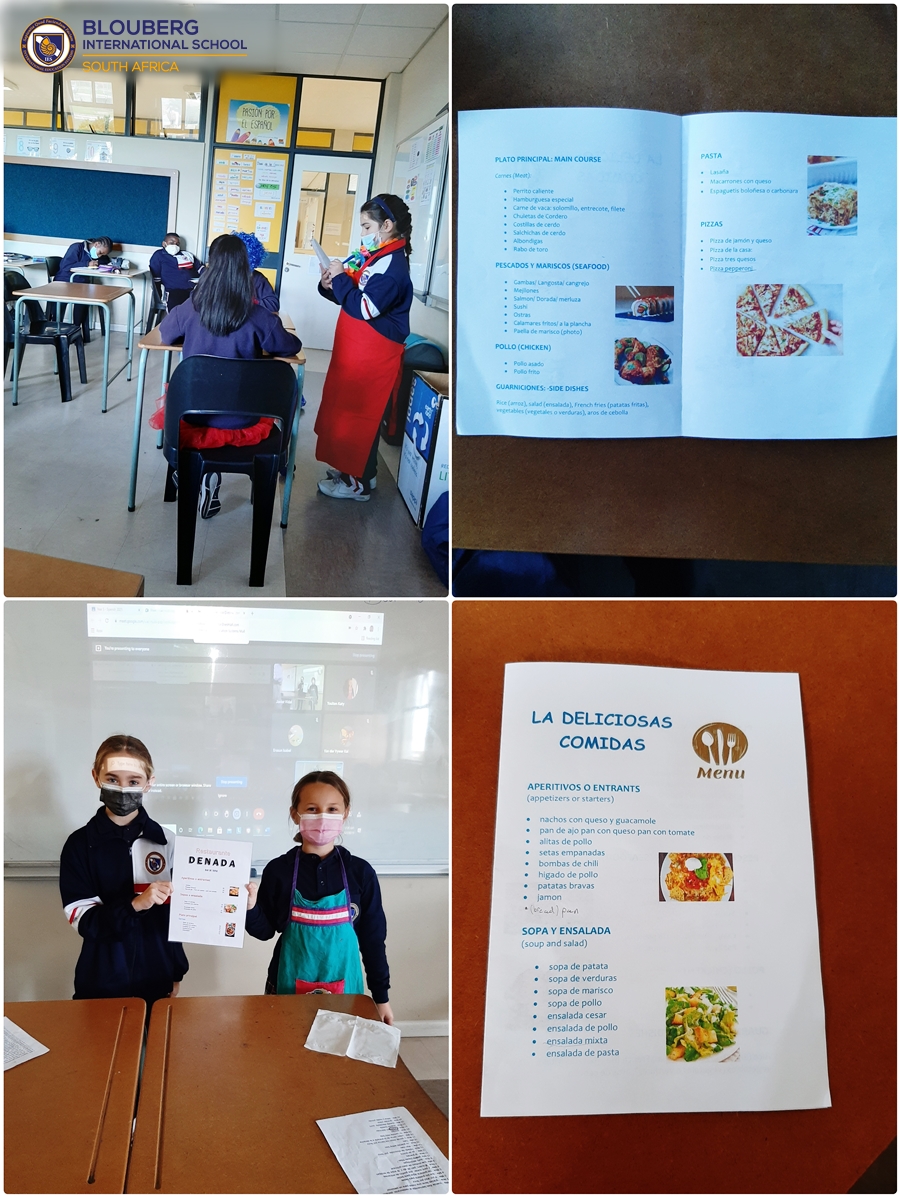
A good example of this is the Term 3 Year 5 project about the restaurant. This can apply to any topic that you wish your students to learn…
– Students learn the vocabulary and expressions related with the food. They also make use of book practice and Rockalingua.
– They create a menu with the food related vocabulary for their role-play.
– Add some relevant grammar to the mixture. “I would like; I prefer; I want or need”.
– Create a story using those expressions and vocabulary for the students to listen and practice during the class with some questions at the end.
– They need to decide the name of the Restaurant and the menu.
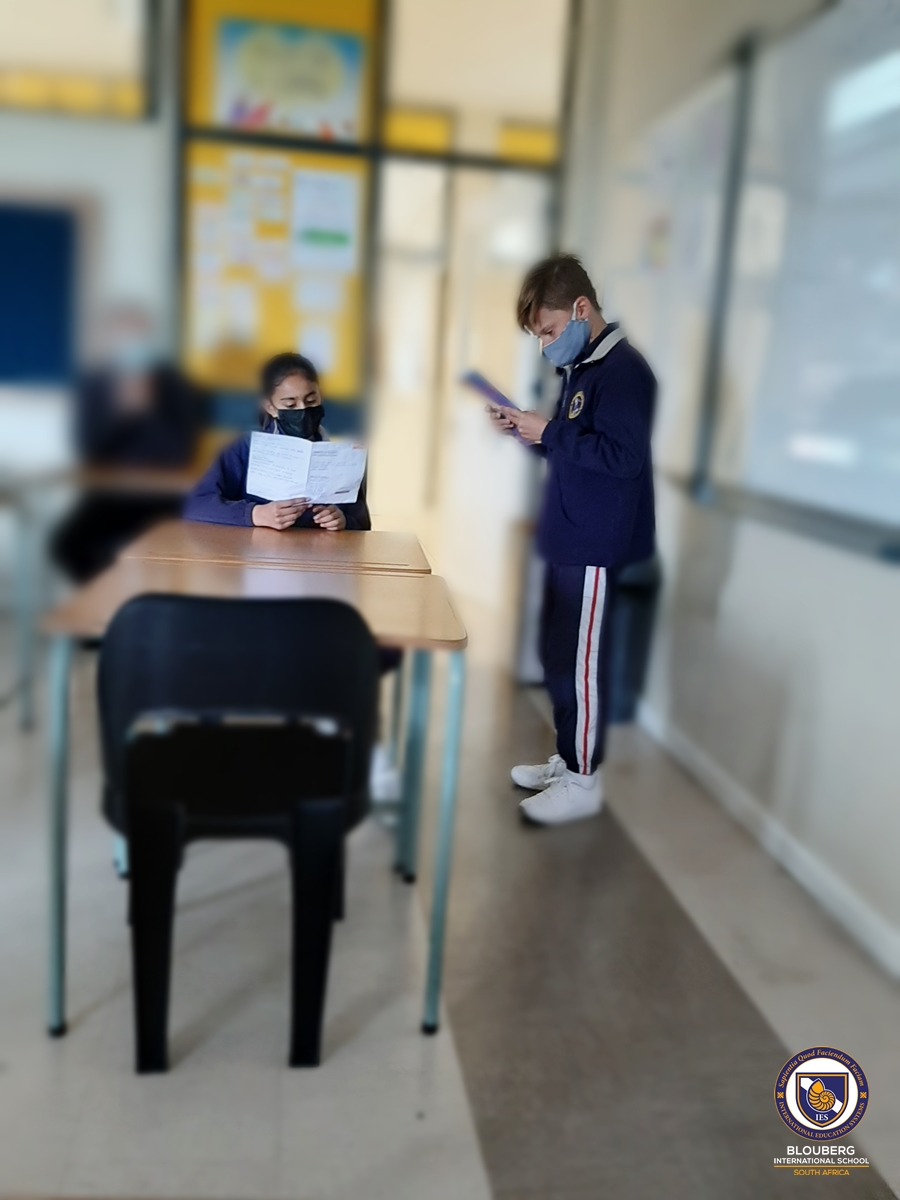
– Ask them to create a similar story and present it to the class.
I look forward to seeing my students develop even better pronunciation as the year progresses.
Javier Vidal
Spanish Teacher
Read More

The upcoming Cambridge IGCSE and AS/A Level examinations and how to prepare for them
The October/November Cambridge IGCSE and AS/A Level examinations are fast approaching, with the first examinations already taking place on 28 September 2021. It is vital that students prepare themselves for these examinations.
Below are some helpful hints and tips for preparing for the examinations:
- Familiarise yourself with your examination timetable.
- Ensure that you know exactly:
– what work will be covered in each subject;
– the format of each examination paper;
– the time allocation;
– the equipment that may be needed for the examination (e.g. calculator for mathematics).
- Get copies of old examination papers and worksheets.
- By now, all your notes should be up to date and you should have all that you need to study effectively for the examinations.
- Prepare your study area. Some things to consider are:
– have a good source of light;
– have lots of paper available;
– a clear work surface;
– coloured pens if you prefer to use colour;
– light or unobtrusive music if you prefer to learn with music.
- Keeping healthy! Eat fresh foods such as fruit and nuts. Pile up on the vegetables in the evenings and drink plenty of water and fruit juice to keep the flu at bay. The brain needs to be fed well to perform at its optimum.
- Try not to nibble on too many chocolates and sweets while studying.
- That said, the odd sweet or chocolate will provide an energy boost when you feel really tired.
- Getting a good night’s rest is also important. Sleep will rejuvenate you and keep you going.
Devising a Revision Timetable:
If you plan your revision carefully, you will enjoy the feeling of being well prepared for the examinations, secure in the knowledge that you have done your best and have covered all the work.
- Create a calendar for this purpose, using bright colours/larger paper etc.
- Start by marking in the dates and times of your examinations.
- Shade in the dates and times when you know you have other commitments, e.g. sports fixtures/family function.
- Work out how much time you would need per section per subject. Remember to spend more time on those subjects you find more difficult.
- Using a pencil, begin to draw up your revision timetable by writing in the subject and the sections that you wish to cover each day.
- You could leave a revision time blank each week, as a “safety net” for work not covered as planned. This may be as a result of those unforeseen circumstances that make life interesting.
- Do not get stressed out if you don’t stick rigidly to the timetable. Sometimes you start by expecting to cover too much at one time. The main idea is to get you to focus on the work that needs to be covered and to work towards a goal.
- Be sure to timetable rest and relaxation.
- Before changing subjects, take a longer break of about 20 – 30 minutes and try to get outside or do something different.
Study Methods:
Each one of you will have your own method of studying and it is important that you feel comfortable with your chosen style. It is equally important that you admit if your method has not worked in the past.
Here are some tips that you may like to try out. These are tried and tested methods.
- Start by reading through a section from beginning to end. This will give you an overview of what is to come. Focus on headings and pictures and diagrams.
- Ask questions as to the content of the section (why, what, when, where, how and who?). This will help to get your mind in touch with the main areas within each section (e.g. What do I need to know about this topic? What exactly is this text about? How does this section link up with what I have just studied?).
- Re-read the passage with the aim of answering your questions. Look up words you do not understand, refer closely to graphs and diagrams, highlight important ideas in colour, etc. Do not try to make notes at this stage.
- Aim to check that you have understood the work. Think about the passage and focus on key points. Re-read the passage, making notes on the relevant material. This may take the form of block notes or diagrammatic notes e.g. mind maps/spider diagrams.
- It is a good idea to redo mathematics exercises and worksheets as well as work through past papers.
- Diagrams can become excellent forms of summary in subjects such as geography and biology. A diagram should be drawn clearly with large labels for easy identification.
- When encouraging a difficulty concept, try to break it up into smaller units and talk your way through the steps of the problem.
- If you have difficulty remembering something, pin up key words on your bedroom wall or cupboard door as a constant reminder. Each time you walk past the word, stop, and ask yourself a question or two about it to trigger a response.
- In language, you need to understand the rule to apply it, e.g. rules for the past and present tense.
- Review. Aim to ensure that you remember what you have learned by reviewing worksheets/past papers/testing yourself with questions that you set or working with a friend and testing each other verbally.
Just before the examination:
- Get a good night’s sleep.
- Have a good breakfast.
- Arrive at the venue with time to spare.
- Make sure you have the right equipment, tissues, watch, etc.
During the examination:
- Don’t rush into answering questions.
- Read the instructions at the beginning to ensure that you know how to answer all the questions and how many questions to answer.
- Read through the questions carefully.
- If there is a choice of questions, make your choice carefully. Underline key words in the questions.
- Stick to the time plan given to you by your teacher.
- At the end of the examination, if you have time, read through your paper to check that you have answered all the questions.
I would like to wish all students the best with their 2021 examinations.
Julian Harrison
Cambridge Examinations Officer
Read More

Year 7 and 8 Art
Art, caft and design embody some of the highest forms of human creativity. A high-quality Art and Design education should engage, inspire and challenge students, equipping them with the knowledge and skills to experiment, invent and create their own works of Art, Craft and Design.
As students progress, they should be able to think critically and develop a more rigorous understanding of Art and Design. They should also know how Art and Design both reflect and shape our history, and contribute to the culture, creativity and wealth of our nation. Therefore, exposure to various fields and techniques is what Art in Year 7 and 8 is all about.
At the start of Year 7, we focus on the formal elements of Art as well as the principles of Design. These make up the foundation needed to create all artwork.
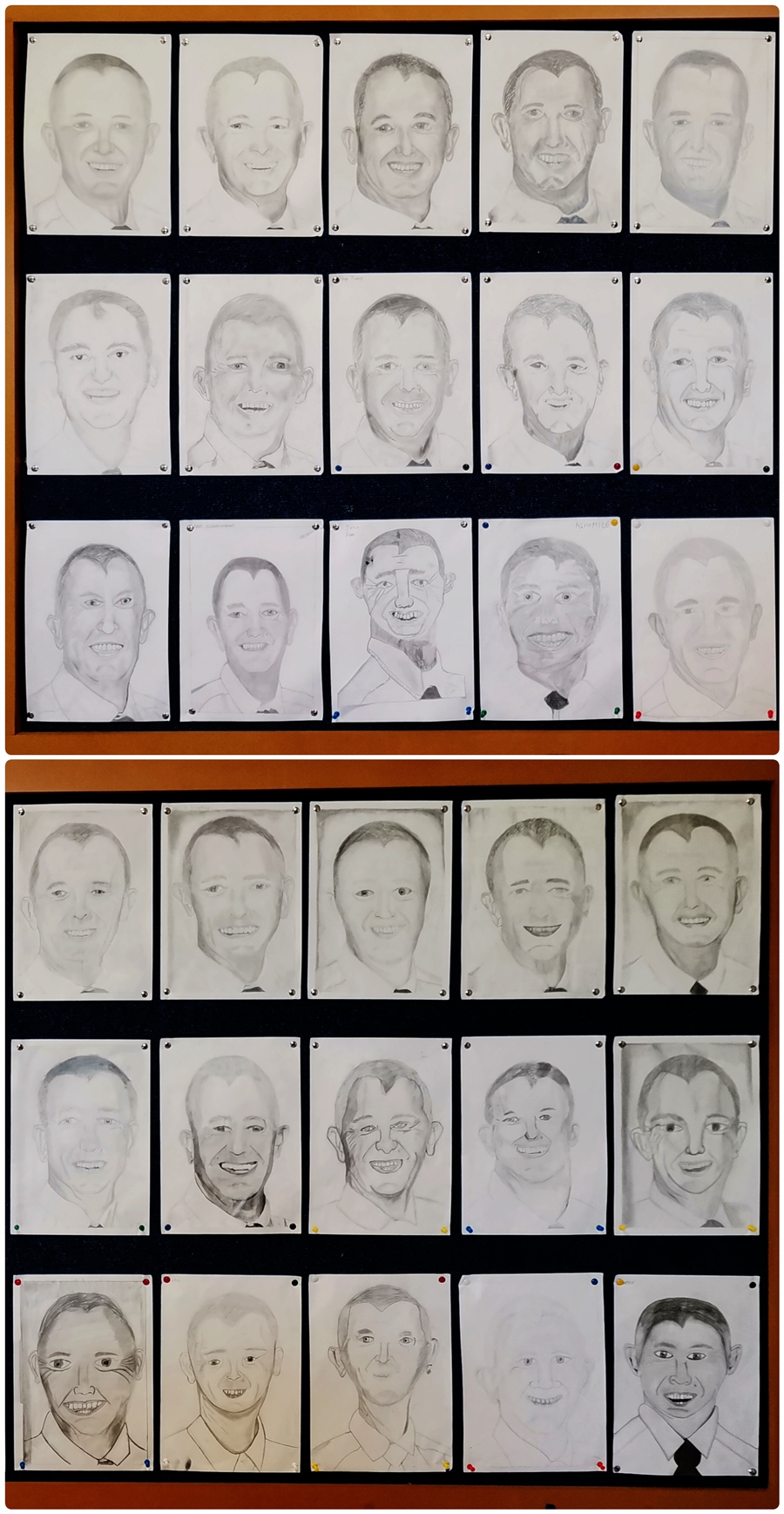
During Term 2, we started with teaching students the skills to draw different facial features. After this, they had to put their newly acquired skills to use by drawing a portrait of our principal from a photo. The results are astounding. This is in preparation for Year 8 where they do self-portraits.
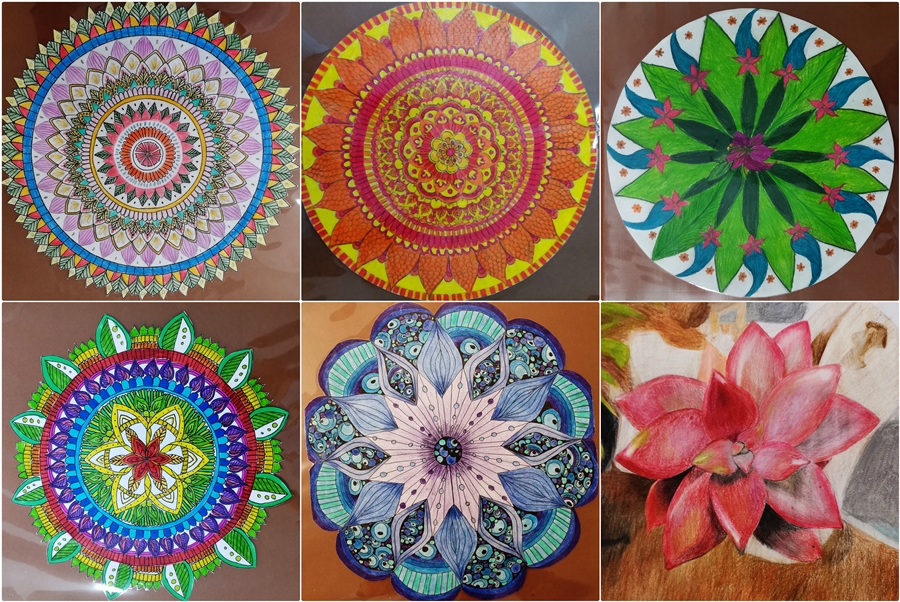
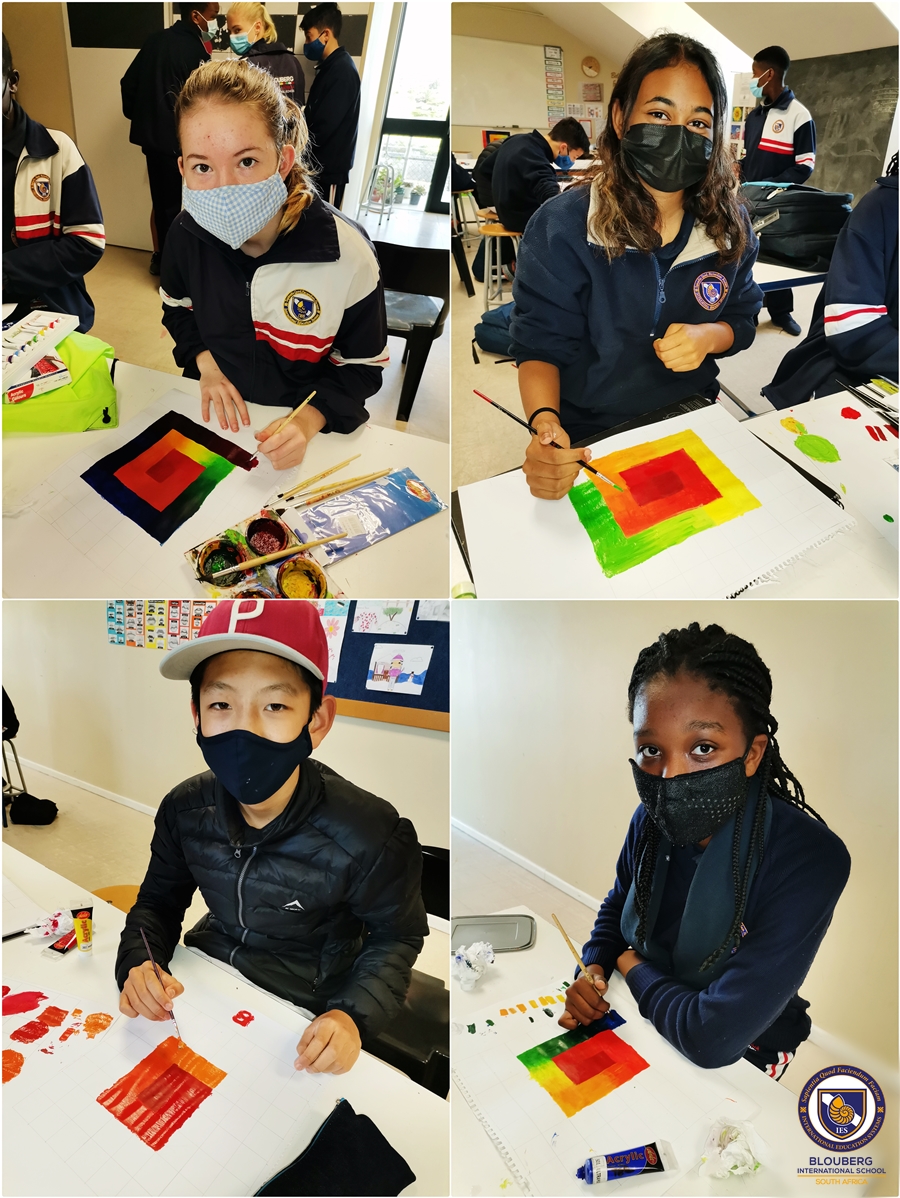
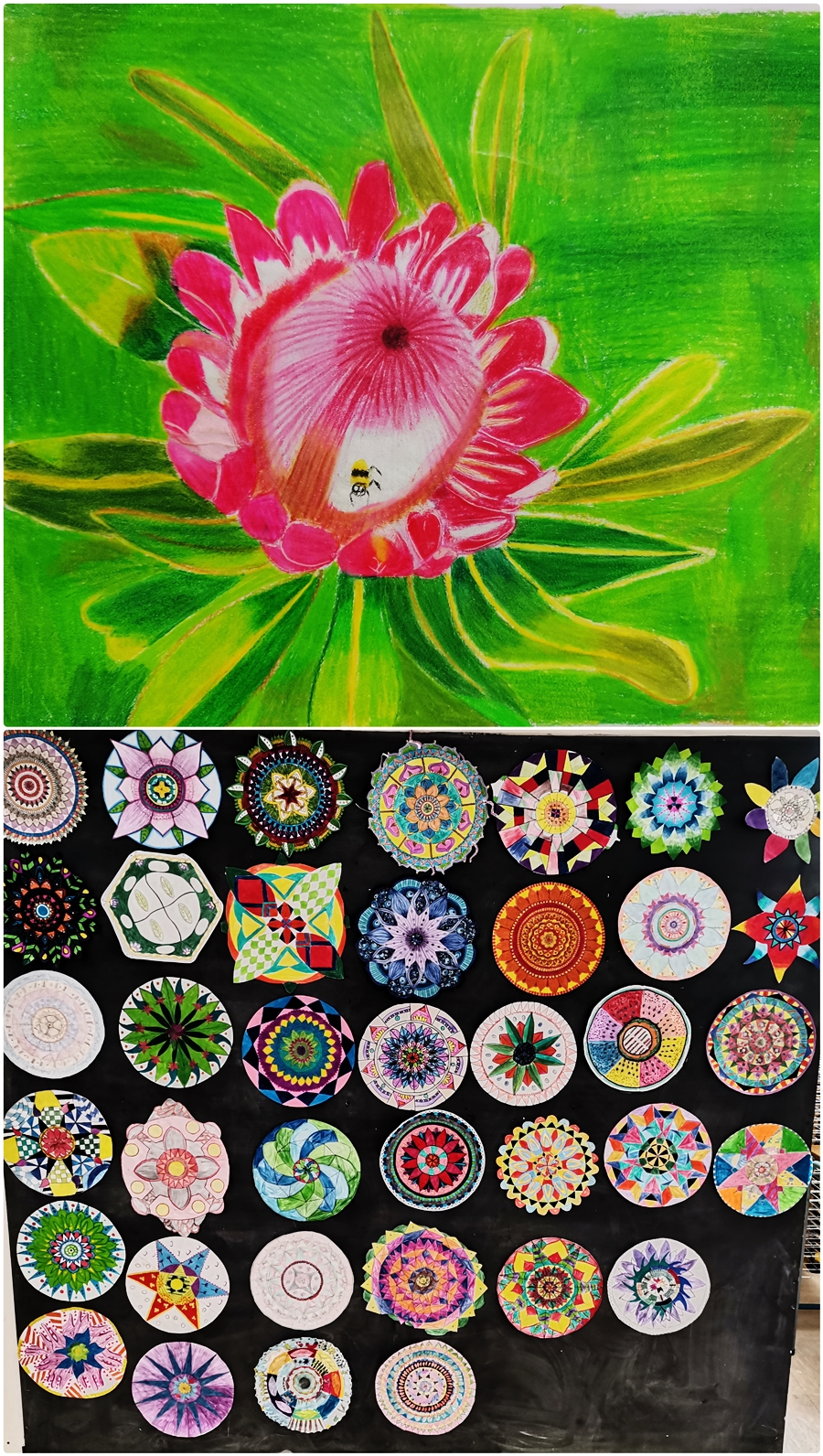
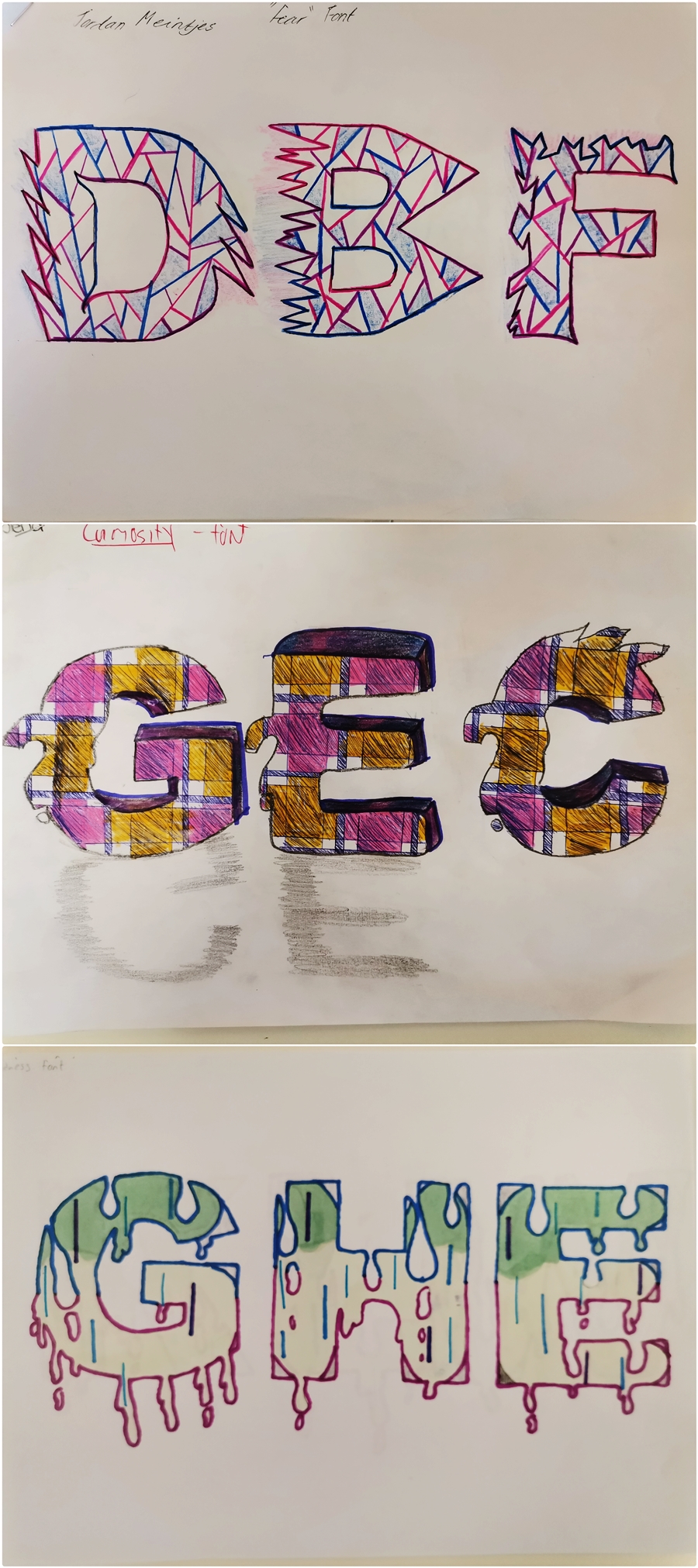
Colourful Mandalas were the order of the day in their June practical exam. This served as yet another opportunity to show their creative skills and freedom of expression. Currently the Year 7’s are busy with paint blending while the Year 8’s are exploring the world of Graphic Design. They are designing their own emotion-inspired font and using this in further practical tasks.
In Term 4, both Year groups will be exploring other areas of Art and Design as well. The purpose of exposure to the various areas of Art and Design is to help students make a more informed decision when it comes to taking Art as a subject at IGCSE or AS Level.
Art in Year 7 and 8 is exciting, challenging and a test for student’s creativity, thinking, hard work and dedication.
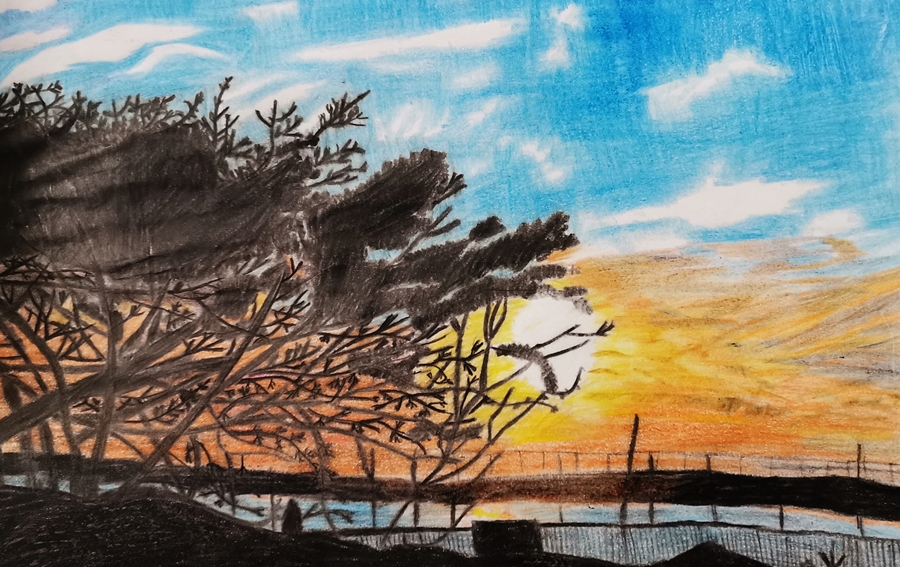
They say a picture is worth a thousand words so here are a few examples of what the Year 7 and 8’s have been up to thus far in 2021…
Ane Gornall
Year 7 and 8 Art and Design Teacher

Read More

Picasso, Pianos and Portraits!
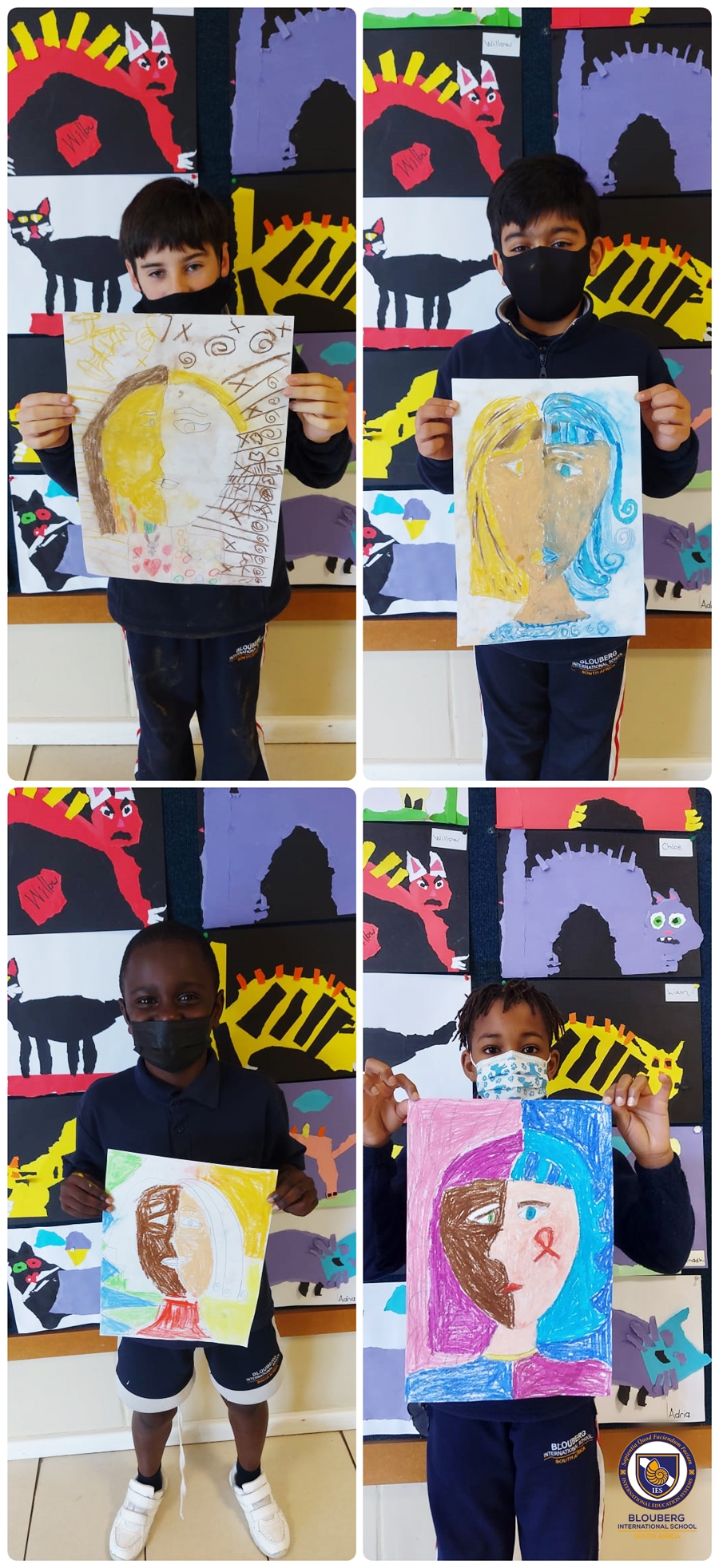
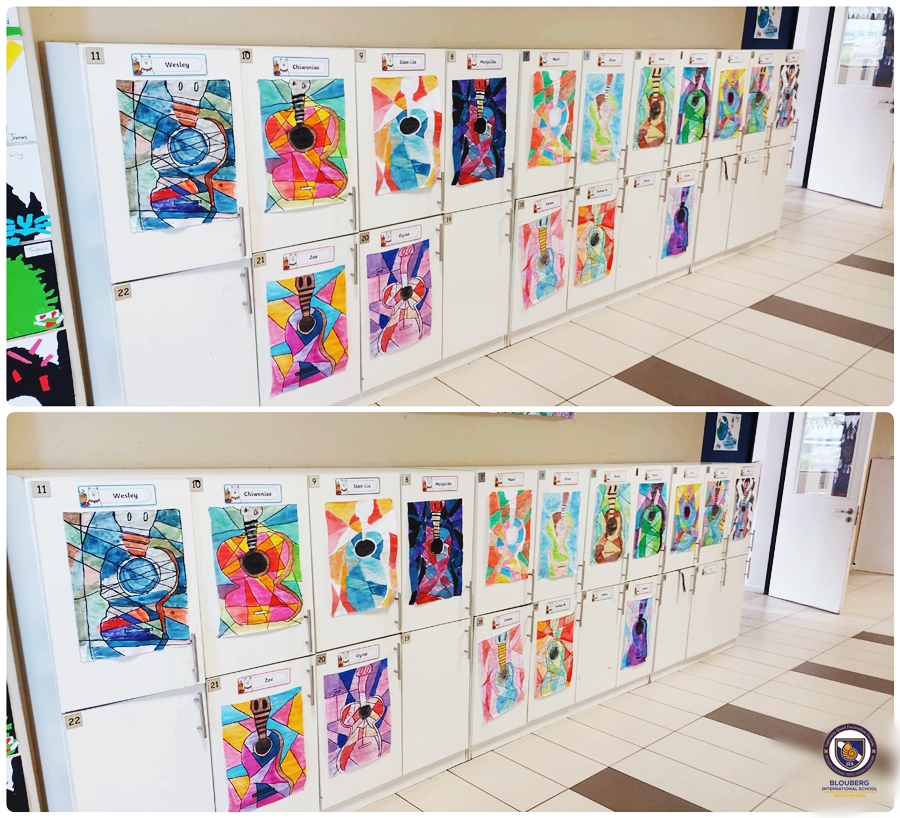
The Year 4’s have been focusing on an interesting technique in Art and Design for the past few weeks, namely Cubism.
A few facts about Cubism:
- Cubism is a style of Art invented in 1907.
- It was a very different way of painting to anything that had been done before.
- In Cubism, an artist tried to show different views of the same object or person all together in one painting. When you look at a Cubist painting, you might see the front, side and back of the same object.
- Cubist artists tried to break an object or person up into different parts. This often made the painting look like it was made up of geometric shapes like cubes.
Pablo Picasso was one of the first artists to explore Cubism. He wanted to paint things that he felt, remembered and saw all in one painting. Some of his most famous creations are the guitar sculptures made of cardboard and sheet metal, and the painting The Weeping Woman. We used these two art works as inspiration to create our masterpieces.
Have a look at our beautiful paintings of Picasso’s guitar and portraits using pastels and the Cubism technique.
“It took me four years to paint like Raphael, but a lifetime to paint like a child.” – Pablo Picasso
Ria du Plessis
Year 4 Coordinator



Read More
Why do the President’s Award?
71% of business leaders and 63% of young people asserted that formal education alone is not enough to equip young people to be world ready. According to business leaders surveyed during the 2020 Global Survey; the following skills in the order of importance are considered in helping young people become ready for the world out there:
– Individual skills, such as confidence, resilience and determination.
– Analytical critical thinking and problem-solving skills.
– Social skills, communication, teamwork and leadership skills.
– Humanitarian skills such as empathy, adaptability, intercultural and civic engagement.
– Technical ability, technical knowledge and practical technical skills.
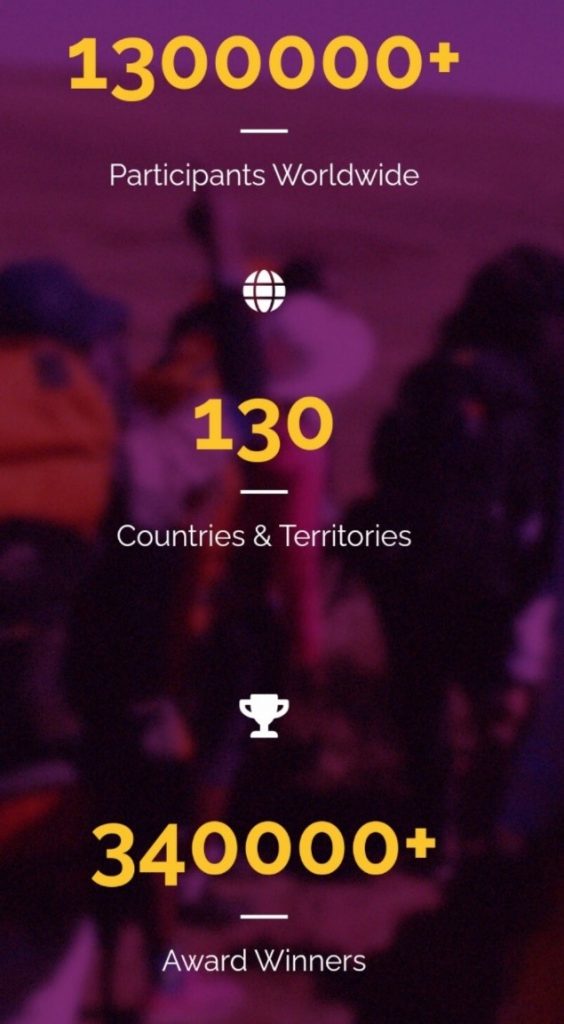
Achieving The President’s Award will give participants the skills, confidence and an edge over others when they apply for college, university or a job. Beyond their academic achievements, universities want to see evidence of so called ‘soft skills’ that they have developed through extra-curricular activities, such as communication, commitment, leadership and teamwork. The President’s Award is a fantastic way to demonstrate these practical skills.
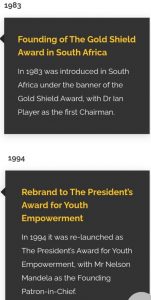
The President’s Award equips young people for life through the development of universal skills enabling them to become responsible, committed, dedicated citizens. It provides a framework for non-formal education and has set guiding principles, with proven outcomes for young people who complete the Award.
It creates experiential learning opportunities to help young people discover talents that do not necessarily show up in the classroom context.
The programme brings together practical experiences and life skills, building confidence, encouraging physical health and recreation, and motivating young people to engage with their communities.
For the thousands of young people who take part in developing themselves through the President’s Award each year, the benefits of achieving The President’s Award at any level are endless. The Award is about helping you along the path to a productive and prosperous future. Many of our participants say that it’s a life-changing experience. Participants will make a difference to other people’s lives and their community, be fitter and healthier, make new friends and memories to last them a lifetime.
Participants undertake regular activities in four main sections:
– Physical Recreation
– Voluntary Service
– Skills
– Adventurous Journey
The Award is comprised of three levels and four sections. Participants complete all four Sections at each level in order to achieve either their Bronze, Silver or Gold Award. At Gold level, participants also complete a Gold Residential Project.
Here follows the requirements of each level:
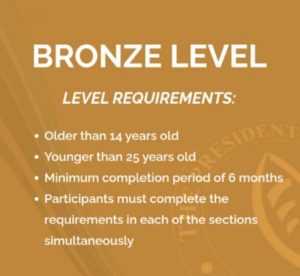
Bronze level requirements
Older than 14 years old.
Younger than 25 years old.
Minimum completion period of 6 months.
Participants must complete the requirements in each of the sections simultaneously.
Silver level requirements
Older than 15 years old.
Younger than 25 years old.
Minimum completion period of 6 months for Bronze Award holders and 12 months for non-Bronze Award holders.
Participants must complete the requirements in each of the sections simultaneously.

Gold level requirements
Older than 16 years old.
Younger than 25 years old.
Minimum completion period of 12 months for Silver Award holders and 18 months for non-Silver Award holders. Participants must complete the requirements in each of the sections simultaneously.

“South Africa’s youth are our future. Developing their potential is a top priority in our country. One practical way is to develop this huge reservoir of talent through their participation in The President’s Award Programme. The young people must take it upon themselves to ensure that they receive the highest education possible so that they can represent us well in the future as future leaders. ”
– The President’s Award Founding Patron-in-Chief, Mr Nelson Mandela.
To register for The President’s Award please contact Mr Riaan Vosloo,
email: riaan.vosloo@iesmail.com
Riaan Vosloo
High School Teacher and President’s Award Coordinator

Read More
Year 3 Chess Champion
“Every Chess Master was once a Beginner” – Irving Chernev
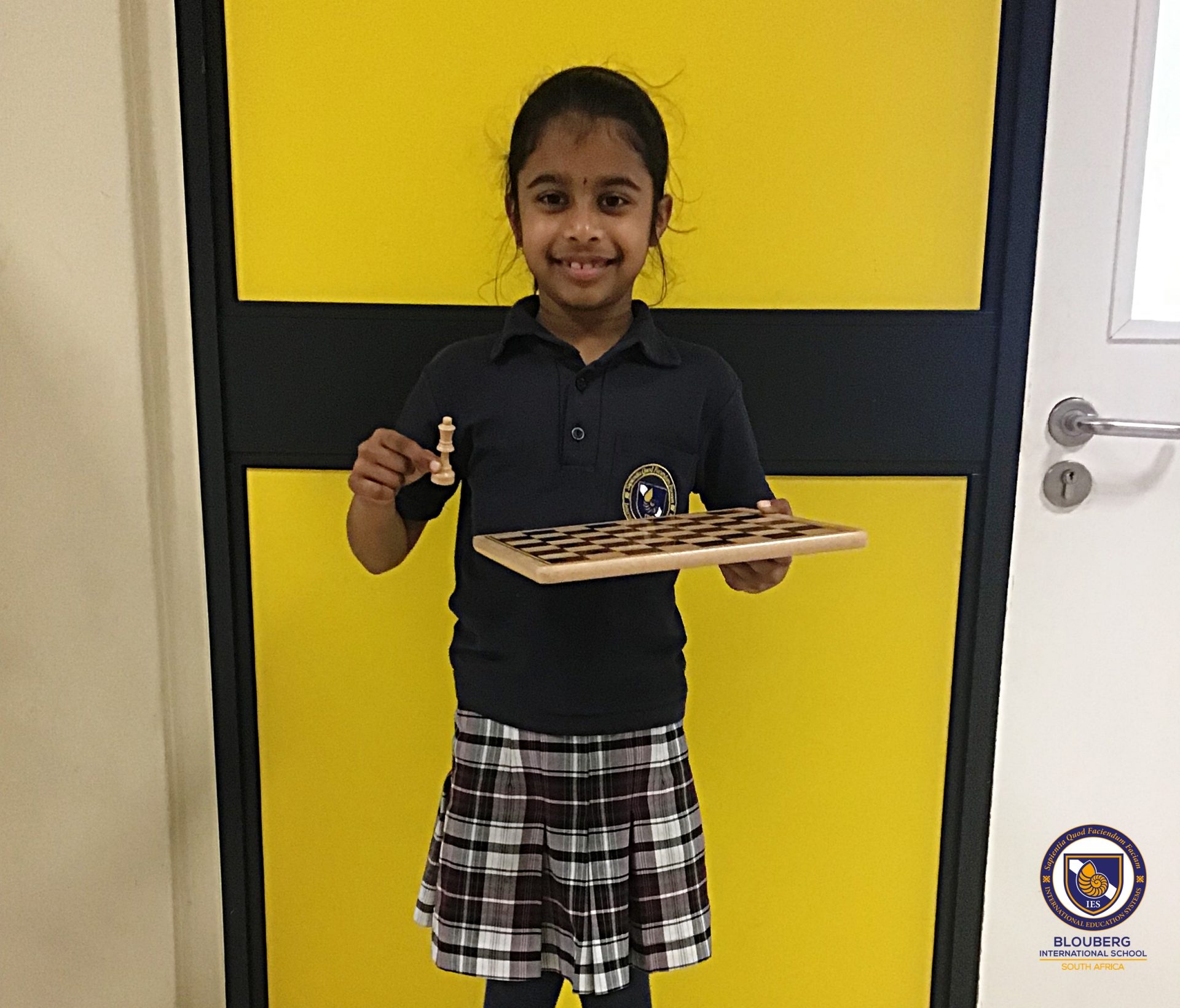
This is not a game of Chaturanga or a Queen’s Gambit, but it is certainly a move in the right direction for Sinddhizhai Divakaran in Year 3.
Sinddhizhai finished first in the Western Province Open Chess Championship and came second in the Under 8 Girls closed championship. Sinddhizhai matched the total points with the player who ranked first, but because of a tie breaker system, she ended up in second position.
Last week, Sinddhizhai took part in an International World Youth Under 10 Rapid online chess tournament, stage 1. Top players from 54 different countries participated in the tournament. Sinddhizhai managed 4 wins and drew 1 game, and also achieved an overall position of 97th out of 154 players.
Sinddhizhai got the chance to play with players from Slovenia, Malaysia, Sri Lanka, New Zealand, Malta, Belgium, Panama, Vietnam, Albania and South Africa. She also managed to directly win against the South African player, who previously won the under 8 National Championship in tie breaker.
An important highlight in this whole story is, that there is no separate section in the international arena for Under 8 girls, where Sinddhi actually belongs. She competed with a more senior group of under 10 players.
As Irving Chernev said, this is only the beginning for Sinddhizhai Divakaran.
We are super proud of you!
Wendy Menton
Year 3 Teacher

Read More

From the Principal’s Desk, 20 August 2021
Dear Parents
DROP AND GO
We would like to remind parents that children should always exit/enter vehicles on the left hand side. We would like to ensure that our students remain safe at all times.
COVID AND ONLINE LEARNING
Due to the Covid situation in the Western Cape, our hybrid teaching will continue for the remainder of this term.
Please ensure that if your child learns from home they are committed and attend every lesson. Sadly, we do have students who take advantage of the situation.
Every BIS student has an iesmail.com email address. Students are reminded that this address is for school related matters only. All private chats should be done using a private email address.
FEATURE PHOTO
Mr Brian Sizani is our Mathematics and Physics teacher at the High School. He has been at BIS since October 2017.
Did you know…..
- He only reads novels by Martina Cole. He has quite a collection of them.
- He aspires to be an Astrophysicist.
- He was part of the UWC choir for 4 years, singing tenor. He is also a choir member at church, singing tenor solos and at times he gets to conduct the choir.
- He loves traveling and exploring/learning about various cultures, especially indigenous cultures.
- As much as he admires the natural beauty of this planet, he has not been able to overcome his fear of the ocean yet. One day!
Thank you, Brian, for your commitment to the students and the school.
WEEKLY THOUGHT: Discipline in Life
“Only the disciplined ones in life are free. If you are undisciplined, you are a slave to your moods and your passions.” – Eliud Kipchoge
Freedom to do what we want to, when we want to, is usually the type of freedom that the majority of people wish for. But what does this “freedom” mean and how does it manifest practically in everyday life?
For us to better understand what Kipchoge – the world record holder in the marathon – is trying to bring across, let’s take a simple example that most of us can relate to:
Each of us believes that we are free to eat whatever we like. We also believe that we have the choice to exercise as much or as little as we want to. “Yes, we are truly free,” some will remark. But wait, there is a catch…
We all know that if a person eats without any restraint and does no exercise whatsoever, chances are very good that he/she will gain weight. If this continues over an extended period of time, they will gain a lot of weight. This lifestyle has long-term implications, including susceptibility to certain diseases and a variety of other health risks. People in this category are also often not able to participate in many activities, both indoor and outdoor. Though sad and unfortunate, these are facts.
Life gives us many examples like these, proving that exercising our “freedoms” does not always lead to true freedom.
Let’s look at Kipchoge’s words again. He is in fact saying that if we are not slaves to our moods and passions, but live lives of discipline, we will find true freedom.
This may not be the most encouraging message; but when it’s applied, it can be life-changing indeed.
Question: What “freedoms” in your life could lead to circumstances that you would rather avoid?
Have an amazing weekend, let’s remember to be grateful for all the privileges we enjoy daily.
Andre
Read More

Our First Ever Blouberg International School Arts Eisteddfod!
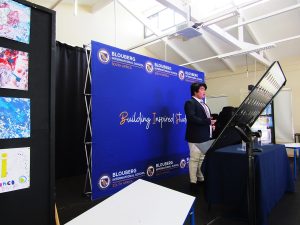
The BIS Arts Eisteddfod was created to offer students a chance to build confidence and skills through performing to an audience and provide feedback from external expert adjudicators. It is also an opportunity to watch and share with fellow musicians. We are excited for this to be the beginning of a new annual tradition at our school!
The Music category took place on Wednesday, 11 August 2021. As the music department, we aim to create multiple platforms for our students to perform in front of audiences and adjudicators, so that they have firm goals to work towards, and have the opportunity to learn something new and different from each experience. It is very important for our musicians to not only learn how to play their instrument, but to also learn how to become a confident performer.
We welcomed Ms Elizabeth Retief, head of music at Elkanah House, as our adjudicator for the music Eisteddfod. For the high school category, we congratulate Mateja Mitic, Faith Chivaka, Iviwe Matakata, Jéan Marie Schoots, Saumya Maharaj and Niklyn Pillay on their outstanding performances and results. A special congratulations to Zoe Onochie for winning the high school Eisteddfod Music category for 2021.
We hope to see and hear many more of our students in future Eisteddfods.
Heidi La Bercensie
Music Teacher – IGCSE Music

A special congratulations to Zoe Onochie for winning the high school Eisteddfod Music category for 2021.



Read More