
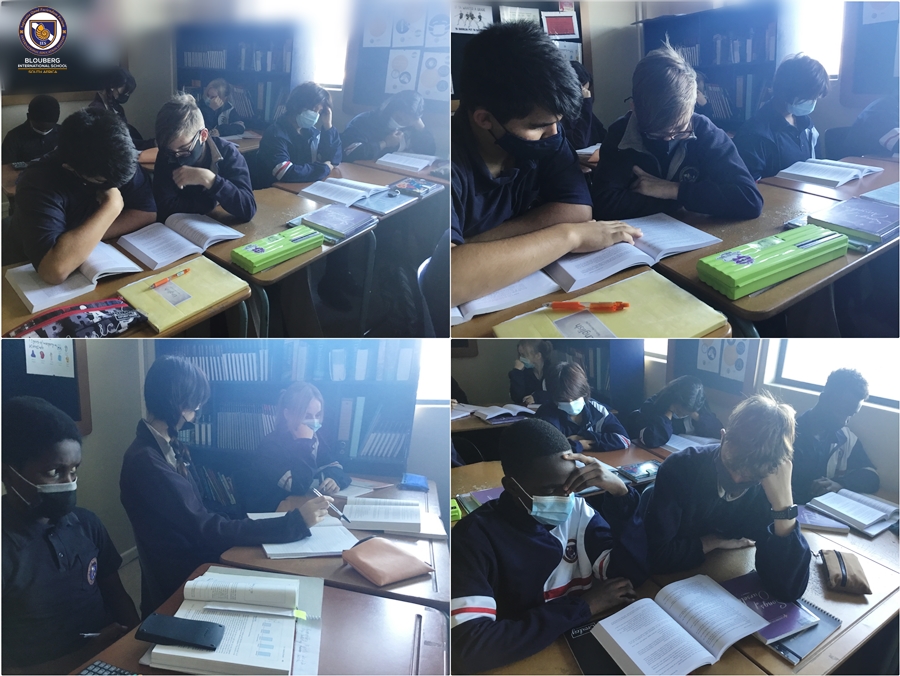
The Importance Of Reading
As an English teacher, I am no stranger to reading. I am also no stranger to students trying anything and everything they can to get out of reading. It has become apparent that children nowadays either refuse to read, or they are unaware of just how important reading is.
When I deal with students who are not performing up to standard, I always ask whether that student likes to read. The reason for this is that there is a proven correlation between achievement in English and the enjoyment of reading. This is because reading allows people to see how the language is supposed to be used. It enables one to see how to properly use grammar, how words are supposed to be spelled, how sentences are supposed to be structured, and it allows one to learn brand new words to expand one’s vocabulary.
In addition to reading having academic advantages, it also allows one to be transported into different worlds without even having to leave their couch. It enables the young aspiring adventurer to step into the world of swashbuckling pirates, crime fighting superheroes, or brave soldiers. Reading is an excellent way to broaden the imagination of young dreamers and creatives, as it inspires them to push the boundaries and think outside of the box.
I will forever encourage students to read as much as possible. For the non-reader, I always suggest reading articles or blogs – anything that contains subject matter that is of interest to them. Hate reading, but love soccer? Pick up an autobiography about your favourite soccer player. Can’t stand a novel, but love Science? Grab yourself a National Geographic magazine and read the articles. Reading can be so diverse that even the most stubborn nay-sayers will be tempted to pick something up and read.
In celebration of Book Week, I would like to encourage all our students, staff and parents to pick up a book this week, and immerse yourself in the joys of reading.
Mia Tossel
IGCSE, AS and A Level English Teacher

Read More
A Healthy Mind Is The Greatest Treasure To Find
As adults, our mental health- our psychological, emotional and social well-being — impacts every area of our life. Our mental health helps determine how we handle stress, relate to others, and make choices. This is no difference when it comes to children. Our children’s mental health helps determine their academic success, their motivation levels and drive, their levels of joy and their ability to healthily connect and socialise.
“It takes a village to raise a child.” For me, no proverb rings more true than this. It takes a community of people to provide for, support, and interact positively with children for those children to grow and develop into the person they are meant to be. I believe that we as parents, teachers, counsellors, assistant teachers, carers, grandparents, aunts and uncles- the adult role players are endless- are all responsible for helping cultivate our children’s mental health.
At BIS, we are committed to providing a quality and engaging learning environment. We prefer to work from a whole-child framework, where we believe that in order for our students to achieve academic success, their mental, emotional and social needs need to be considered and supported. As such, the counselling department is beginning with new ventures in Term 2, as a means to offer pro-active and preventative intervention. These will include more group work and engagement with the larger student body, in addition to the individual counselling sessions, which will continue at school.
The following are confirmed dates of workshops that will be taking place this term:
- Year 5 – 22 April ; 29 April and 6 May
- Year 6 – 22 April ; 26 April and 6 May
- Year 12 – 28 April
Additional information related to the Y5 and Y6 workshops will be shared with our parents ahead of each scheduled date.
Mental Health Day takes place on the 11th of May 2022. It is estimated that one in every five children presents with a diagnosable and treatable mental health disorder. During this week on campus, we will be raising awareness on youth mental health issues around the world; and how our children can support and safeguard their own mental health. “What mental health needs is more sunlight, more candour, and more unashamed conversation.” – Glenn Close
Let us, together as parents and teachers, intentionally strive to help our children in the search for their treasure – a healthy mind. With the treasure of a healthy mind, comes the jewels of joy, healthy self-esteem, positive relationships, motivation and empathy for others. Let us ensure that we are supporting, and mindfully playing our part, in raising happy, healthy and inspired children.
Kayla Smith
School Counsellor
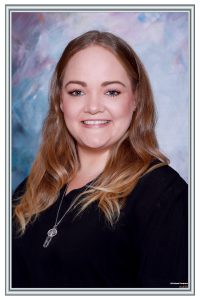
Ms Kayla Smith – Blouberg International School Counsellor
Read More
The Journey, 2022

On Wednesday, 9 March, thirteen Year 11 students, accompanied by Ms Sheila Marais and Mr Julian Harrison, departed on a ten day camp known as the ‘Journey’. The students were dubbed the ‘Pioneers’ as they were the first to participate in what will become a school tradition.
The Journey began at Elgin, wound its way through the mountains and followed the Overstrand Coast until its end at the Walker Bay Nature Reserve in De Kelders. The Pioneers hiked through mountains and towns and along the beaches. They kayaked to one of their campsites, as well as enjoyed a picnic on the bank of a river. Each stage of the Journey challenged the Pioneers both mentally and physically. In the late afternoon and early evening, students relaxed by swimming, playing card games or talking around the campfire.
The Pioneers stayed in camps at various campsites between Palmiet and Stanford. While some enjoyed the bustle of the campsites closer to the towns, many others enjoyed the peace of the more isolated options. Tents were pitched as soon as the students arrived at camp. While some wanted to rest after an eventful day, they certainly appreciated this forward planning by the time night fell.
The Pioneers were also required to prepare their own food. They cooked a variety of meals over gas or fire. While they did an outstanding job, I’m certain that they gained a new appreciation for the food they receive at home, as well as the effort that goes into preparing it.
The Journey taught the students much about overcoming challenges, leadership, teamwork and the importance of friendship. Students’ helpfulness, thoughtfulness and kindness really stood out. Students accompanied and carried the bags of those who found the day more challenging. They were friendly to those who were inspired by and asked about their adventure. They shared space to hang their clothes and helped each other to carry kayaks, made heavy by water, up the river bank. Students shared their loads and shared the food – even with the staff. They even shared equipment, and when treats were available, they shared those too. Some students prepared hot chocolate or parts of meals for the group, serving themselves only once the rest of the group had eaten. The parents of the Pioneers can be truly proud of the young adults that they have raised. Let it never be said that there is no hope for future generations.
Aside from a little disappointment at not seeing more wildlife (save for the dolphins, snakes, birds, fish, field mice and a few thousand shongololos that made an appearance), the Journey was an outstanding success. Spurred by the thought of pizza and a shower, it was a very tired group of students who met Mr Andre Swart and their parents at the nature reserve on 19 March.
Special mention must be made of Venture Forth. The Journey would not have been possible without their expertise.
We look forward to our Year 10s undertaking this adventure in 2023.
Sheila Marais
Journey Co-coordinator
Read More
Term 2
Dear Parents
Welcome back to Term Two! We hope you have had an enjoyable holiday break and that you are as excited as we are to start the new term.
It is evident to us that the culture of the school is centred around our students’ well-being, and we value that. A safe and supportive school environment, as well as providing social-emotional support, is certainly at the core of our work.
Our school will be stronger with the support of its community. We invite you to take advantage of the opportunities to support our students’ learning and experiences. We look forward to meeting you at our parent-teacher meetings next week and working with you this term.
To start the term on a light note, I would like to share these amusing “Teenager Pro Tips” that were sent to me during the holiday. I think many parents and teachers can relate to these:
Teenager to Teenager Tips
“9pm is the proper time to request supplies for tomorrow’s school project.”
Or 10pm, if you’re an overachiever.
“When asked to go get a sibling, don’t go. Instead, stand next to the person who asked and scream your sibling’s name.”
“When reminded to do something say ‘I did’ until proven otherwise.”
“Teenager comes home from his first day of school, and his mother asks, what did you learn today? ‘Not enough,’ teen replies. They said I have to go back tomorrow.”
We continue to appreciate your unwavering support and encouragement; it makes a critical difference to our success.
Thank you.
Carmen de Villiers
High School Coordinator
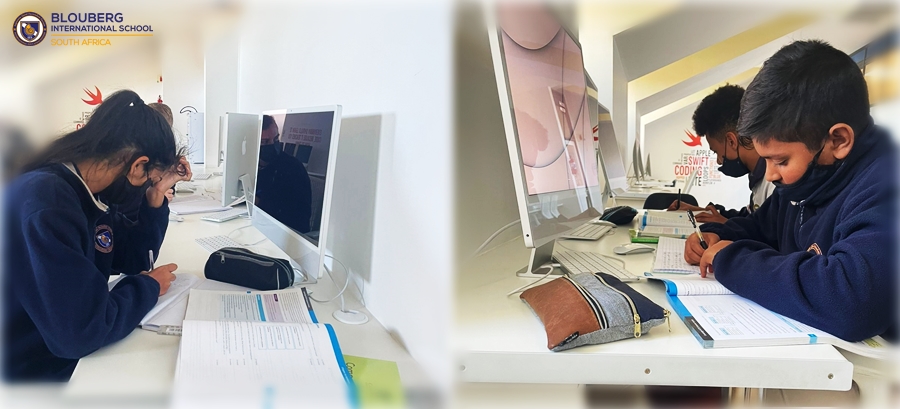
(PHOTO: IGCSE Computer Science students hit the ground running this week)
Read More

End Of Term
As Term 1 comes to an end, we can only reflect on how lucky we were to tackle this term without major disruptions and challenges. We are very fortunate that our programmes and events went as planned during the term. Students and staff were involved in a wide range of events and activities, and we once again enjoyed and celebrated many successes.
As our teachers continue to work hard this week to complete their extensive planning for Term 2, we are optimistic and hopeful that this landscape will continue into next term.
The High School’s academic reports once again testify that our students continue to develop and excel in their learning. The reports reflect the unique and distinctive scope and depth of our curriculum. Over the course of the term, we have received an increasing number of inquiries from parents, mostly for the High School, who hear about the value of a Cambridge education – especially the opportunities that the Cambridge qualification offers to students who want to study at international universities.
Our teachers are committed to building a school of excellence, and therefore, we kindly request that you actively participate in your child’s education. You are invited to contact or visit the school any time you have a question about your child’s progress. We consider it a great privilege and responsibility to be your child’s teachers and we look forward to working with each and every one of you in Term 2.
I trust that this holiday period will be a time of relaxation, family and special moments.
Carmen de Villiers
High School Coordinators


A special photo taken of our High School students after the Founder’s Day go-kart races.
Read More
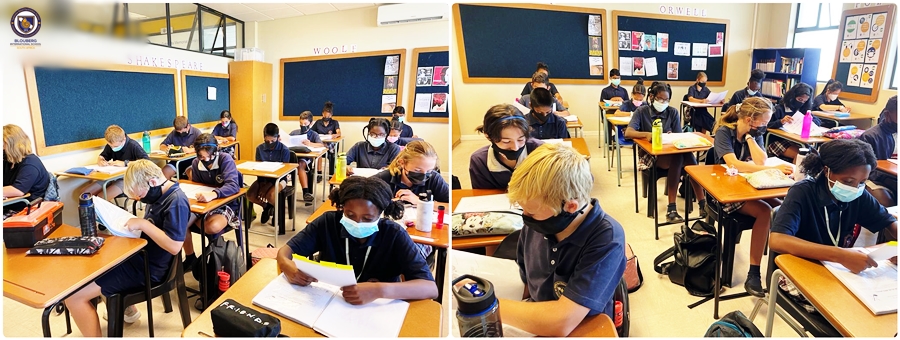
English
On more than one occasion I have had my students ask me why they need to learn English. As someone who has adapted to the language well since I was young, I never understood what was so challenging about it, until I found the poem below:
We’ll begin with box; the plural is boxes,
But the plural of ox is oxen, not oxes.
One fowl is a goose, and two are called geese,
Yet the plural of moose is never called meese.
You may find a lone mouse or a house full of mice;
But the plural of house is houses, not hice.
The plural of man is always men,
But the plural of pan is never pen.
If I speak of a foot, and you show me two feet,
And I give you a book, would a pair be a beek?
If one is a tooth and a whole set are teeth,
Why shouldn’t two booths be called beeth?
If the singular’s this and the plural is these,
Should the plural of kiss be ever called keese?
We speak of brother and also of brethren,
But though we say mother, we never say methren.
Then the masculine pronouns are he, his, and him;
But imagine the feminine… she, shis, and shim!
English is a language packed with rules, but at the same time has an exception to almost all of them! However, the beauty of the language lies within its sub-context. English allows us to say something without saying it. Imagine if a gentleman still wished ‘to be a glove upon that hand; that [he] may touch that cheek…’ or thought that you ‘doth teach torches to burn bright…’
Although the grammatical rules of the English language is not everyone’s cup of tea, it is the Literature that makes it worth loving.
There are so many words and phrases we use daily which were invented by the great William Shakespeare, that we don’t even realise we are quoting him when we do:
English isn’t an easy language and I understand why some students find it challenging. However, hopefully they won’t feel like they ‘haven’t slept a wink’ if they ever find themselves ‘in a pickle.’
And for those who choose to ‘fight fire with fire’ in English, it is definitely not for the ‘faint hearted’. In their case, they would much prefer to say, ‘what’s done is done,’ to ‘send [English] packing’ and wish it ‘good riddance.’
They may feel that ‘the world is their oyster’ and that they can never have ‘too much of a good thing’.
But in the end, ‘the naked truth’ is that in their ‘heart of hearts’, they know it is ‘a brave new world’ after all, and they can uncover a new love for English once they ‘break the ice.’ Their confusion and frustration will ‘vanish into thin air’, they will escape ‘out of the jaws of death’ and they will come ‘full circle’ in their new appreciation and love for English.
Mia Tossel
IGCSE, AS and A Level English Teacher
Read More
Year 7 and 8 Cultural Outing
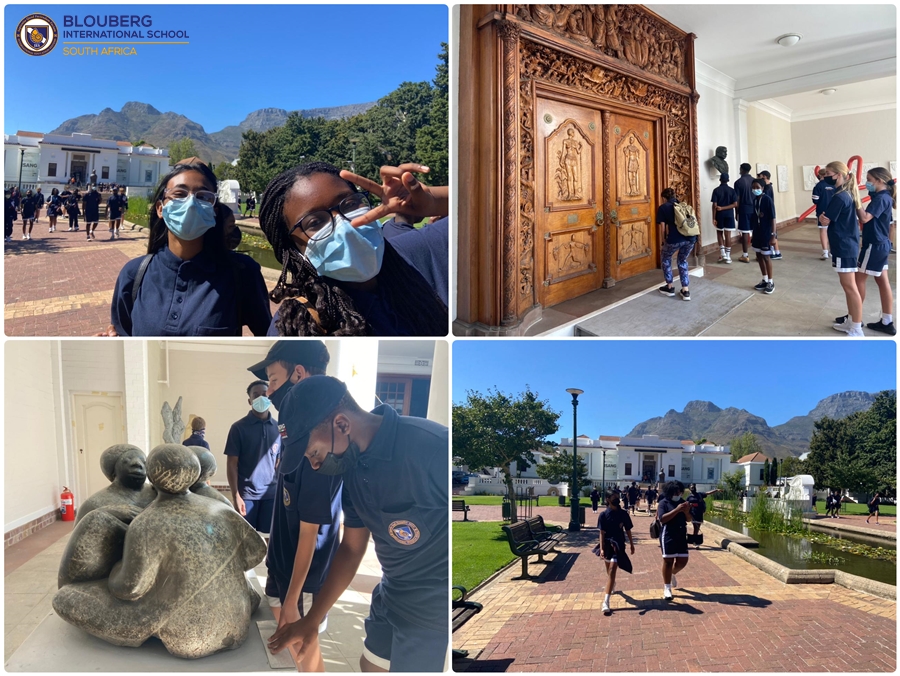
It is always a treat when the students are able to take some time away from their every day school routine for rejuvenation and energy. This is exactly what happened on Friday, 18 February, when the Year 7 and Year 8 students went on a cultural tour to Gardens and the Foreshore, where they visited the Iziko National Gallery and the Artscape theatre.
We were able to see two exhibitions at the National Gallery, “Drawing from the Collection” and “Tribute”.
“Drawing from the Collection” showcases a variety of drawings and works on paper from the Permanent Collection of Iziko South African National Gallery. The artworks represent an eclectic number of visual artists working in different styles and stretches across history and countries to provide an overview of drawing as a medium.
“Tribute” is an active display. Here we could interact with artworks especially chosen to support their classroom practice.
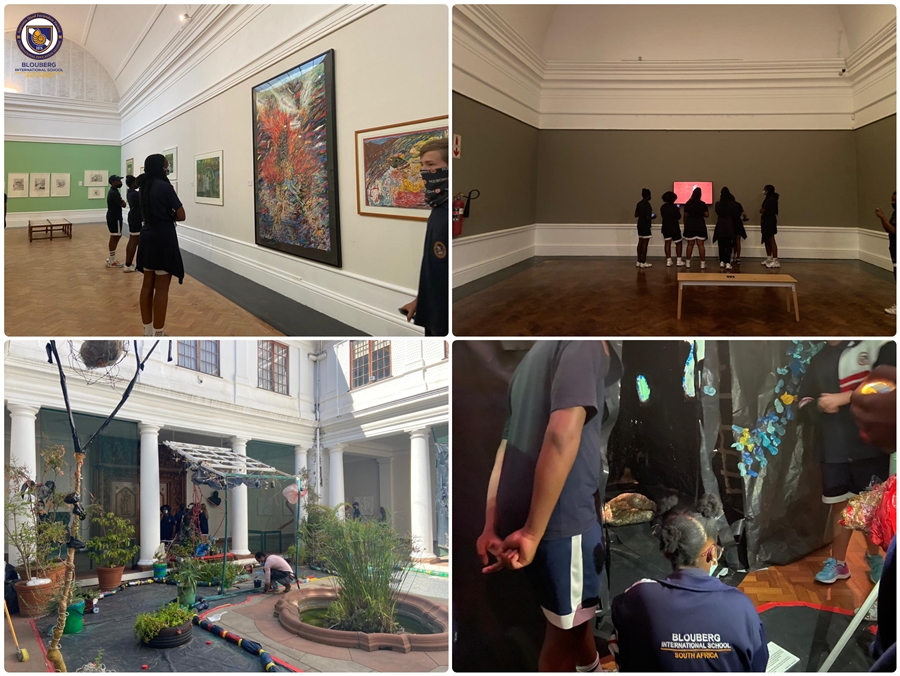
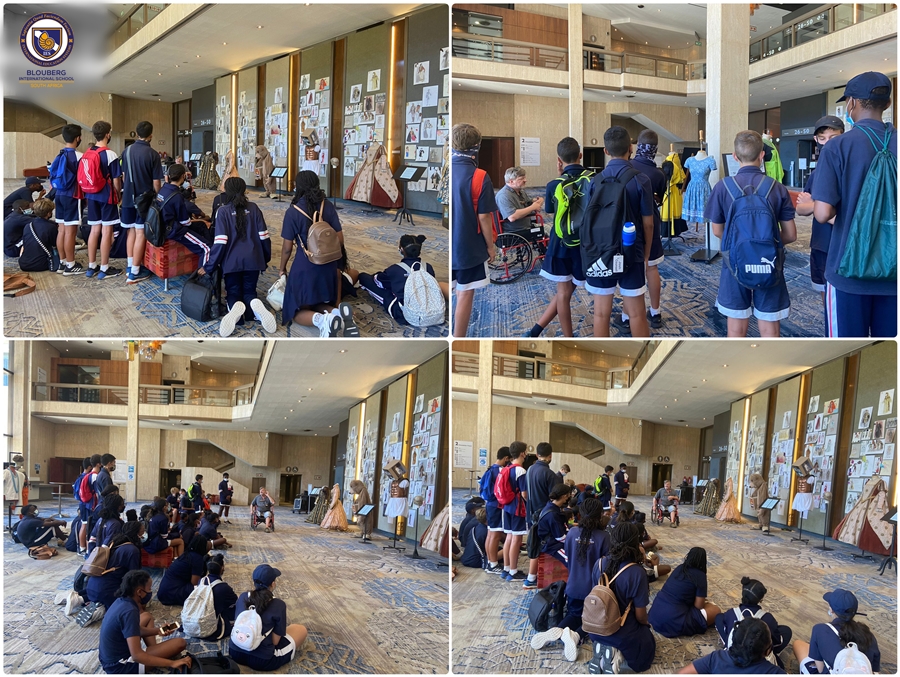
Our next stop was the Artscape Theatre in the Foreshore, where we had a guided tour of the costume exhibition. The exhibition portrayed the unforgettable moments for various productions dating back from 1971 to the present day.
After we had our fill of culture, we refuelled at the Food Court of the popular V&A Waterfront. This concluded our Cultural outing. With transport by Elwierda, we made our way back to Blouberg International School safe and sound.
Riaan Vosloo
IGCSE, AS and A Level Art and Design Teacher




Read More
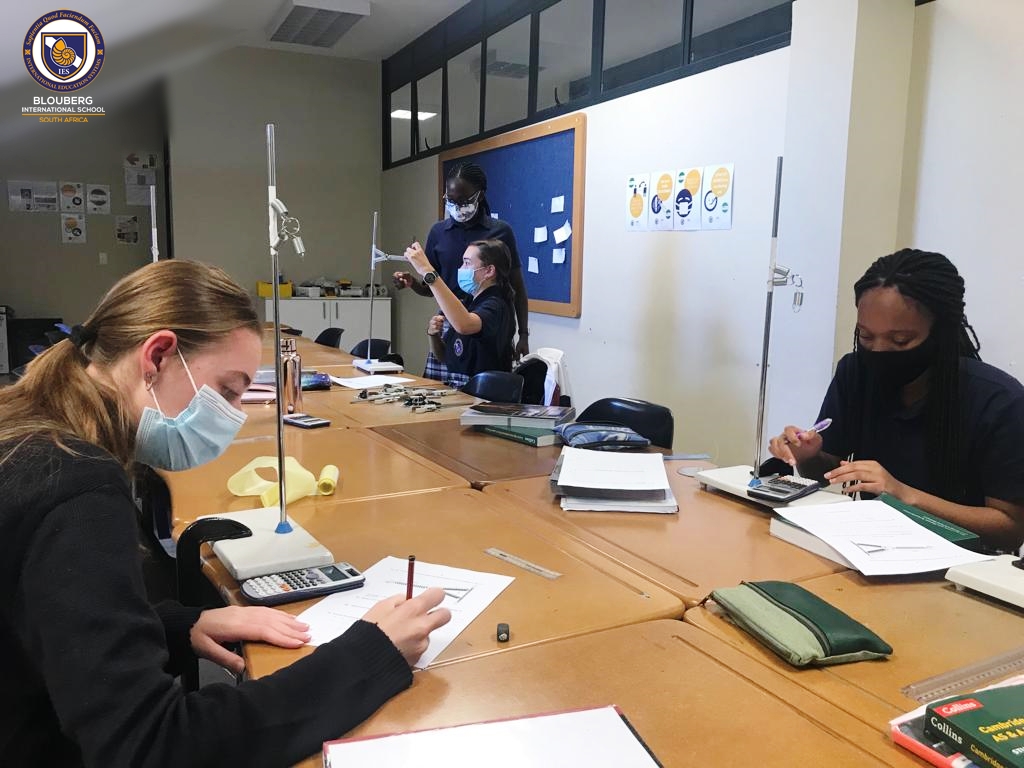
What role do physicists play in the advancement of human civilisation?
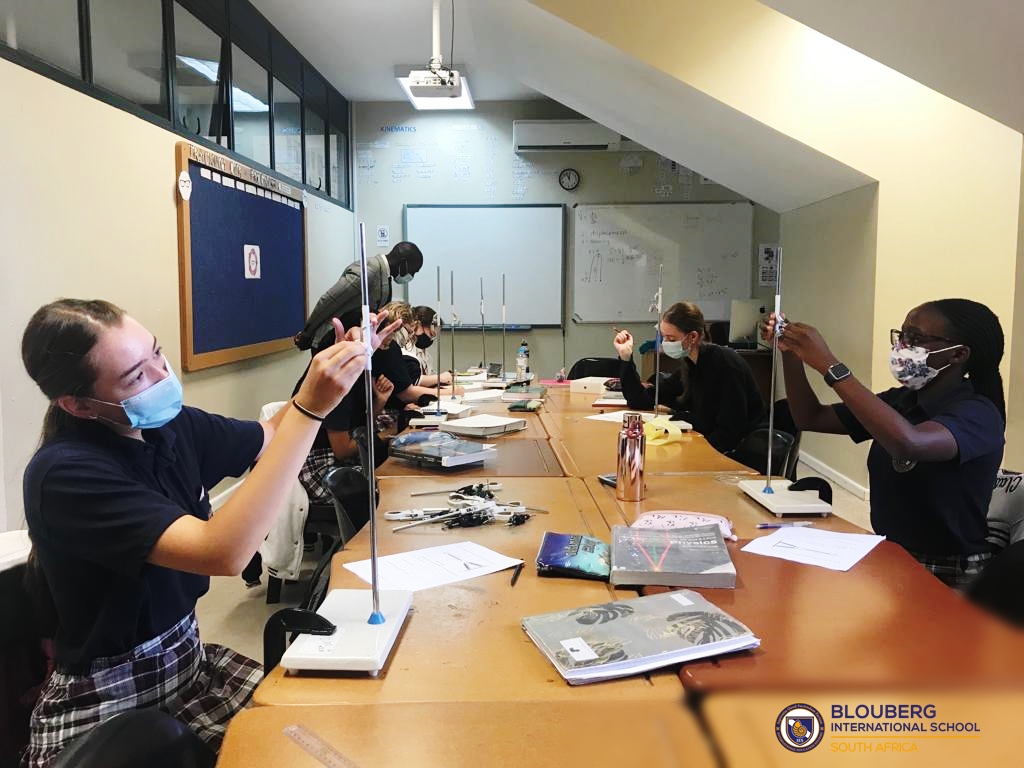
If it weren’t for physicists, the world as we know it, would be a very different place. I cannot imagine what life is like for the uncontacted North Sentinelese tribe which has none of our modern technology. If all modes of transportation and communication ceased to exist for a minimum of 30 days, how would your life be? Would the human race survive? It is these types of questions that drive physicists to constantly develop new technologies. Most of the cutting-edge technology used in the 20th century was developed by physicists collaborating with professionals from various disciplines. For example, in 1938, Lise Meitner and Otto Frisch discovered nuclear fission, which was used to build nuclear bombs and is used today in nuclear power plants to produce electricity for our homes and businesses.
A degree in physics equips one with analytical and problem-solving skills, which are in high demand. These skills also offer a background for understanding an increasingly technological society. Physics degree-holders wind up in a wide range of jobs, many outside of academia. Physics grads often work in the private sector and sometimes at government laboratories. “Financial institutions are always on the lookout for physics majors since they have the perfect blend of strong math skills and the training in how to apply math to modelling real-life problems,” says Jed Macosko.
Look at the evolution of computers: the first computer had a processing speed of 1 MHz, but through understanding quantum physics, the fastest computer to date, can process data at 100 million times faster than the classical computer.
Physics is the study of nature itself. The more we understand nature, the more we can advance as a civilisation.
Brian Sizani
IGCSE, AS and A Level Physics and Mathematics Teacher


Read More

A Fun-filled Year of Growth and Learning in Foundation Stage
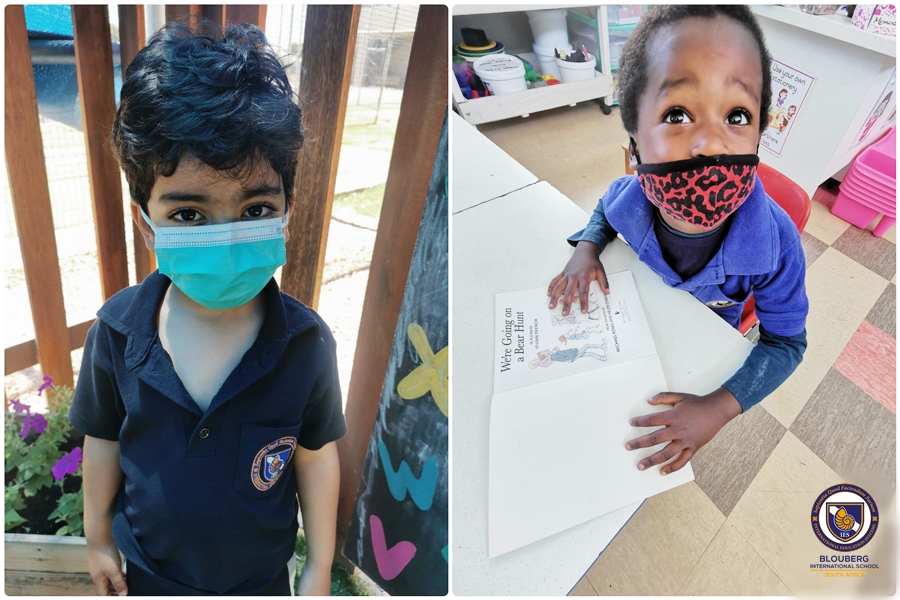
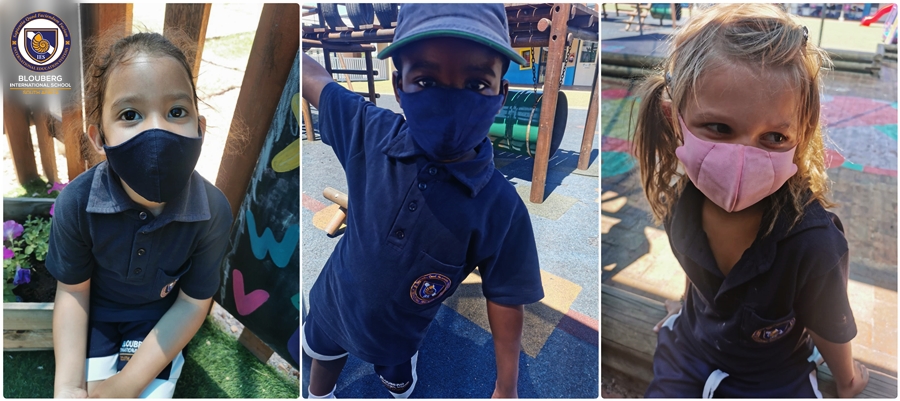
Our little ones have really grown from strength to strength this year with so much development taking place in all areas. It has been very rewarding to see them master many skills. Some have experienced the joy of writing their own name or cutting out a shape on a line. For others learning to read, write their own sentences or calculating sums has been a highlight.
On Tuesday, 30 November, the students will be meeting their new class teacher from the class they will be in next year. This is what the students are looking forward to: for 2022:
Nikraad Manoucheri: “I am looking forward to doing sums.”
Mackenzie Theunissen: “I am looking forward to doing homework.”
Liam Okebalidiet: “I am looking forward to learning to read.”
Joshua Mpako: “I am looking forward to finding new friends to play with.”
Isabella Oosthuizen:”I am also looking forward to making new friends.”
Myles Xegwana: “I am looking forward to meeting my new teacher and doing homework.”
Jadey Howes: “I am excited about wearing my new school uniform in Year 1.”
Arye: “I am looking forward to making new friends.”
Bronwen Nuthall
Reception Year Teacher
Read More
Monsters
The key to learning any language is practise. Therefore, oral presentations are a pivotal part of the German lesson and gives all the students the opportunity to show what they have learnt in class and to practice their pronunciation. This term in Year 5, we learnt all the vocabulary for naming and describing the body as well as describing the character of a person.
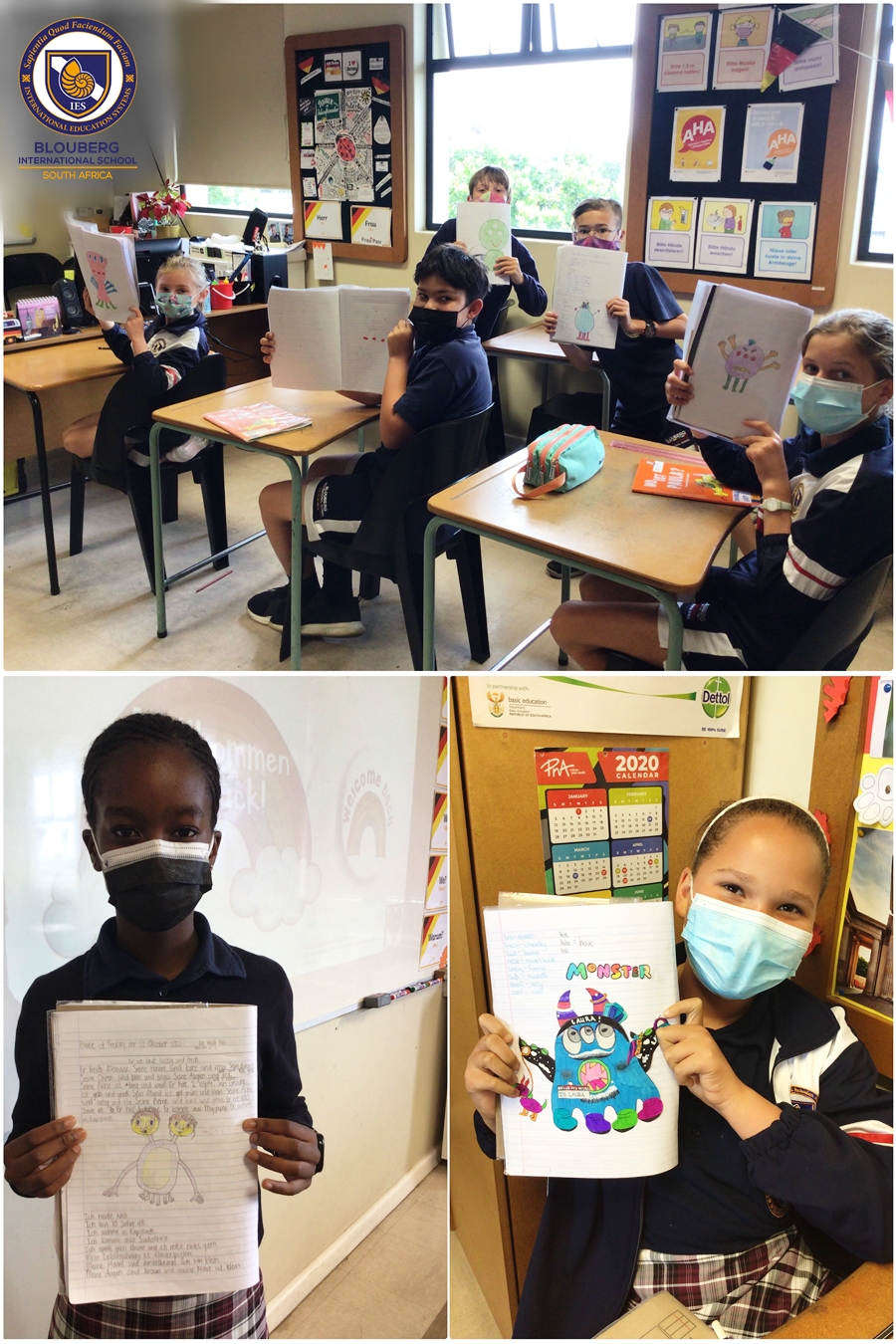
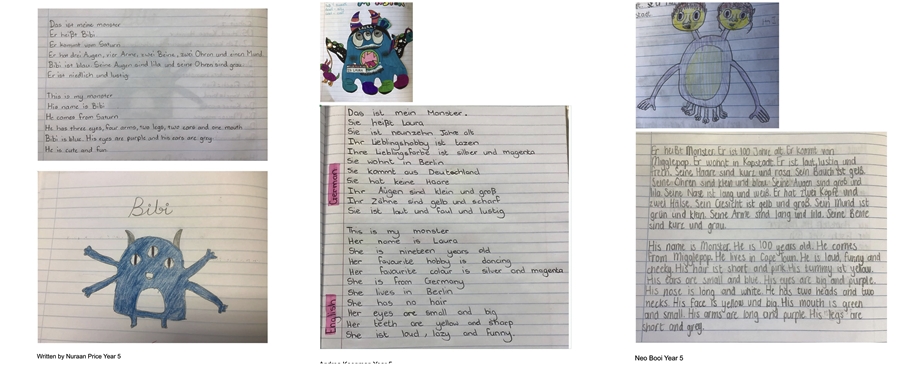
The project was to design a monster as colourful and different as possible and then to describe the monster using all the vocabulary including numbers, colours, plurals and grammar learnt in class.
The oral included a general introduction about the student and a description of their own body including colour of hair and eyes. A vital component to a good oral was using the sentence construction and vocabulary exactly as learnt in class so that all the students were able to understand the presentations.
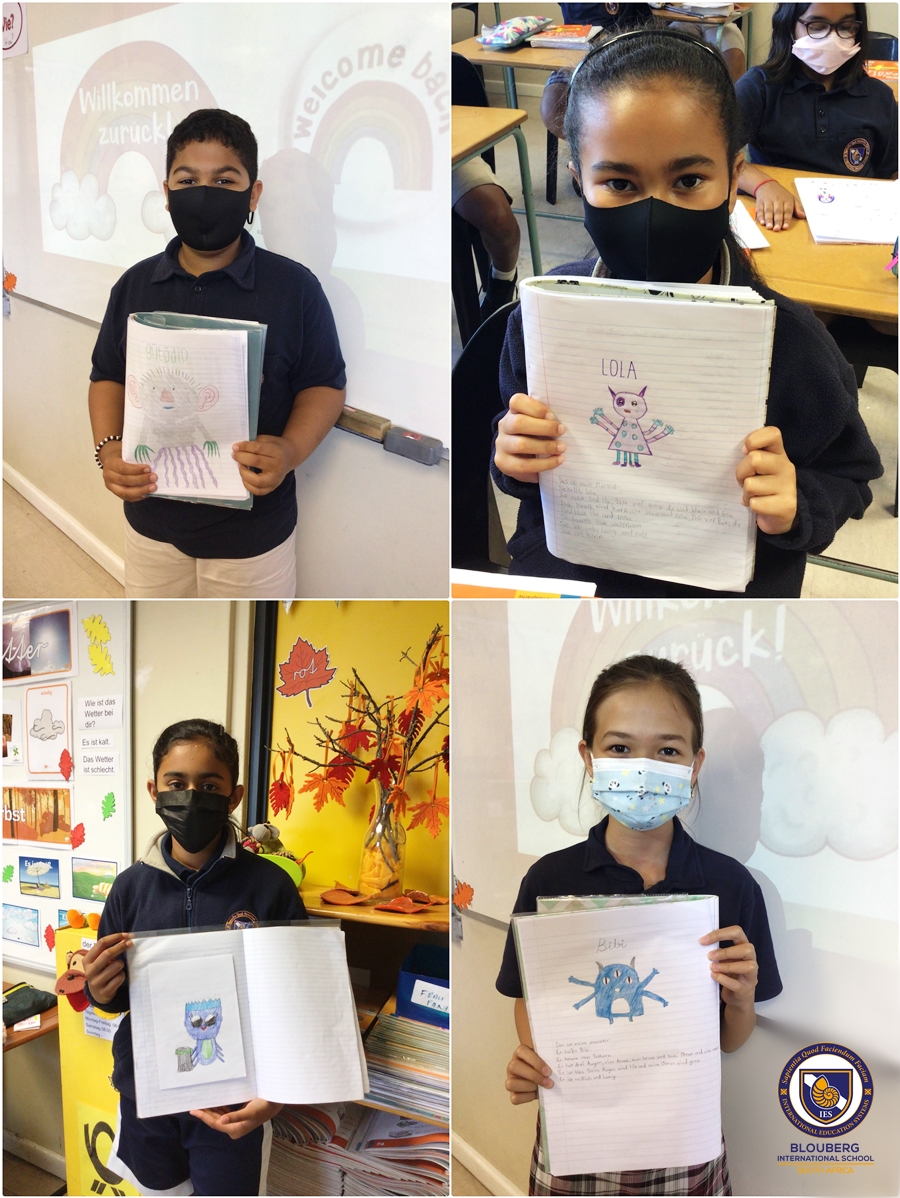
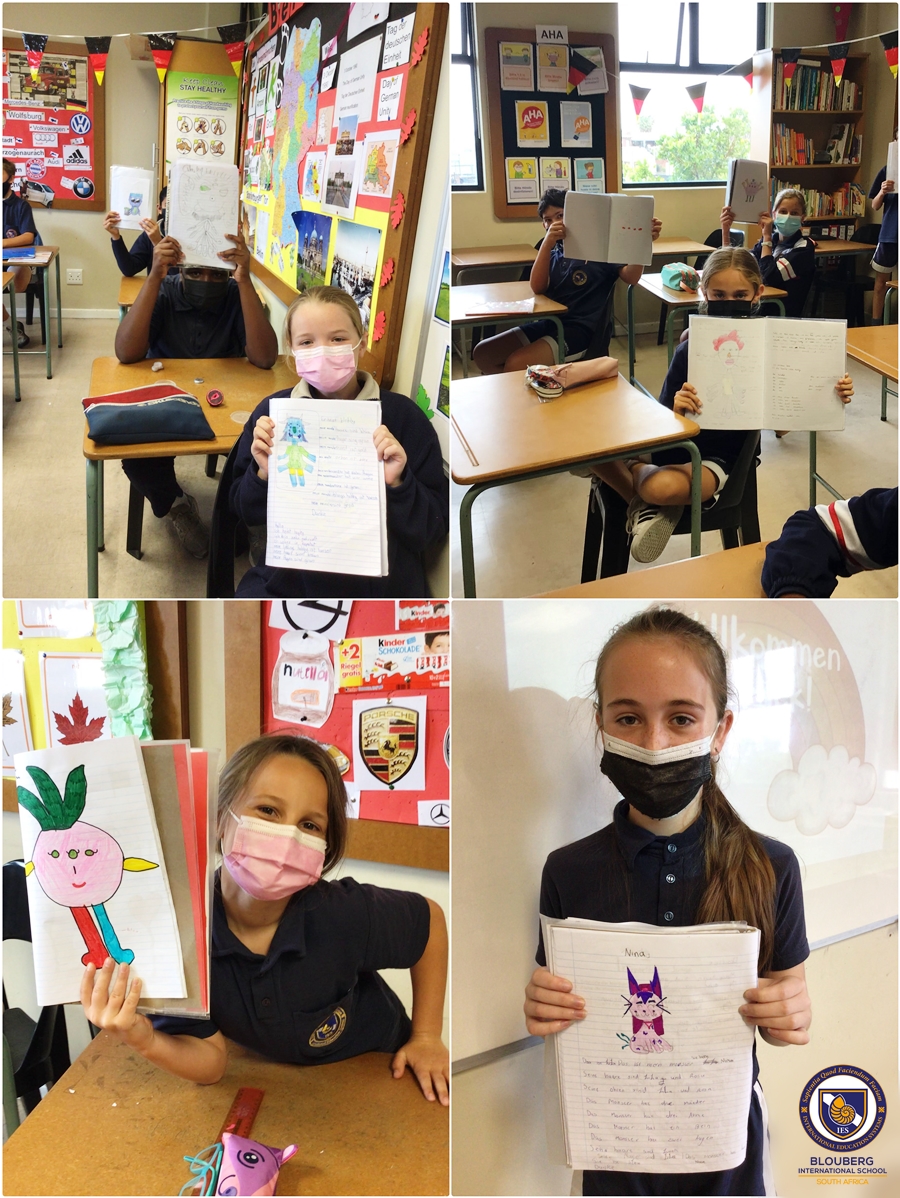
The Year 5’s invented many very interesting and original looking monsters and they were given very creative names. We were introduced to Gütädid, Laura, Bibi, Lola, Yu-de-cuta 1782, Nina, Blobby and Cerberus to name a few.
They came from very interesting places, as far as Pluto, and as close as Cape Town. They were very creative with all the colours then carefully naming them in German. They included many interesting amounts of body parts; 4 legs, 6 arms, 3 eyes, 2 heads and 2 necks. The description of the character of the monster included many similarities with the students themselves e.g. laut ,lustig und frech (loud, funny and cheeky). We also tested our listening skills, as the class was asked questions about the monster’s description to show understanding of what was presented.
Please see some examples of the students’ work in the photos attached. They did a great job in their presentations.
Well done Year 5’s and looking forward to continuing the journey in German with you next year in Year 6!
Frau Kerstin Pani
Primary School German Teacher

Read More