

Sound & Vibrations
Experi-Buddies came to visit Year 1, to teach us about sound and vibrations, which we are learning about in our Science this term.
The students had a lot of fun experimenting in class, making sounds using balloons, marbles, water in glasses and spoons hanging on string.
Sound is an integral part of a child’s development. In fact, the Parenting Research Centre says, “Sound is critically important to the way children learn about their world.”
The Inting was such a great tool to help our students grasp the concepts even more comprehensively. Perhaps ask your child if they can explain sound and vibrations to you, their first-hand knowledge might just surprise you.
Charlotte Cronje
Year 1 Teacher


Year 2 Loves Brain Breaks!
Students are easily distracted, but regular, short breaks can help them focus, increase their productivity, and reduce their stress.
Students, particularly young ones, often struggle with staying focused for long periods of time. In a 2016 study, psychologist Karrie Godwin and a team of researchers measured how attentive elementary students were during class, and discovered that they spent over a quarter of the time distracted, unable to focus on the teacher or the current task. Shorter lessons, however, kept students’ attention high: Teachers found it more effective to give several 10-minute lessons instead of fewer 30-minute ones.
I have found this to be an extremely worthwhile exercise. Even if it’s just to get them to stand up and stretch, or have a quick run-around the playground, or even a lively dance to some music.
Our class has a few favourites. I can recommend to parents to have a look at a website called ‘Go Noodle’. There are some really good ideas, even to do at home.
Kim Coetzer
Year 2 Teacher
Read More
The World Of Work And Having A Job
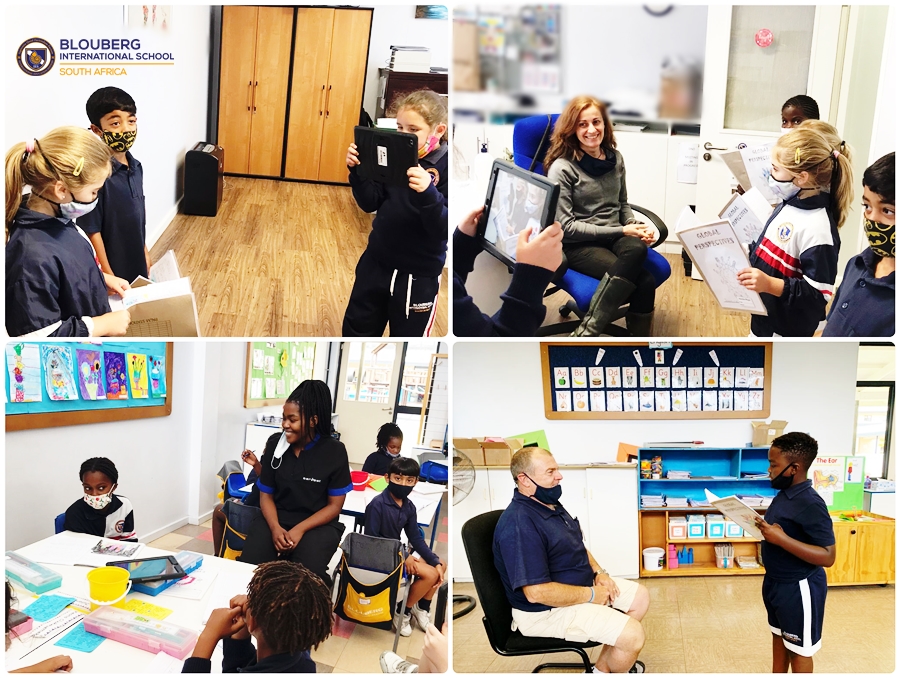
This term, the Year 1 challenge in Global Perspectives is ‘Working and having a job’. The students have had following discussions about work:
- What is work?
- What does it mean if someone has a job?
- What jobs do people do in our town/area?
- What different ways are there to sort jobs?
Last week, the students prepared interview questions for people who work in our school. They had to decide, as a group, the questions they wanted to ask. They then did mock interviews with their classmates pretending to be the people they are going to interview.
This week was the ‘real deal’ and armed with iPads the students interviewed, Mr Swart, Uncle Clive, Mrs Diana and Ms Zimbi.
Here are some of the questions they came up with:
- Do you like your job?
- What do you do?
- Do you work alone?
- What don’t you like about your job?
- What is your favourite part of your job?
- Do you have any issues?
We will end the term with a dress-up day, ‘What I want to be when I grow up!’
Ann Cordner
Year 1 Teacher and Key Stage 1 Coordinator

Farm Day In Year 2
“While we try to teach our children all about life, the farm teaches us what life’s all about – and how each seed tells its own story”
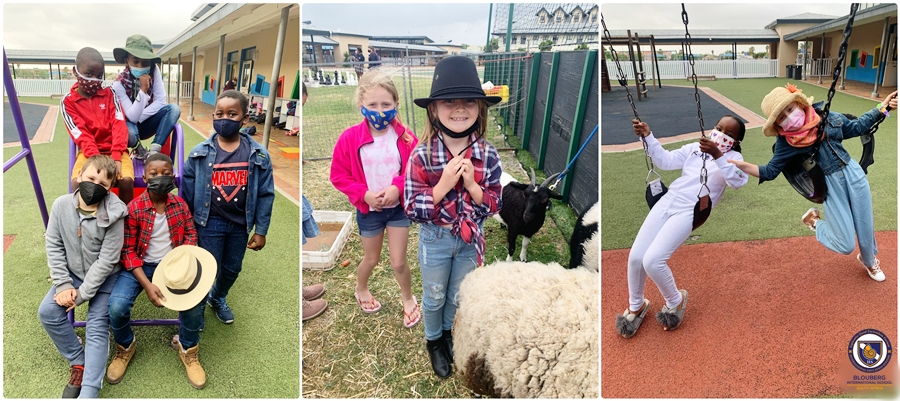
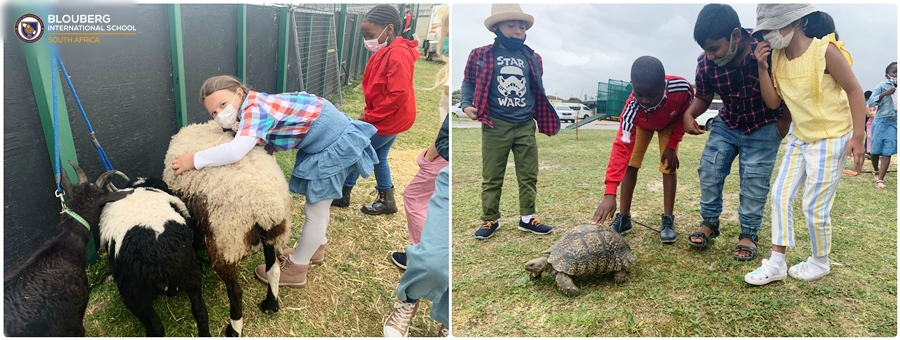
Last week Friday, our Year 2’s celebrated all things agricultural at Farm Day! Each student was encouraged to dress as a farmer and come to school with the farmer spirit, ready to chat about our wonderful Earth, and how it provides many natural and essential goods.
Dressed in our flannel shirts and cowboy hats, we had a fun day learning about animals that live on a farm and what they eat to get big and strong. We also learnt about what kinds of crops are grown on a farm, how they are grown and what they also need to grow big and strong.
One of our favourite parts of Farm Day was when we got the opportunity to interact with some of the farm animals who visited our school for the day. We saw some sheep, a tortoise, some bunnies, some chickens, and a few other very special and very cute animals. So grateful to have this experience!
Siobhan Hendry
Year 2 Teacher
Read More

Learning about Electric Circuits
“There is a driving force more powerful than steam, electricity and nuclear power: the will.” – Albert Einstein
The Year 2 students had an extremely fun and interesting Inting last week with Experi-Buddies. They have been learning about electricity for the past few weeks and this Inting helped build on their knowledge of how electricity works.
Learning about electricity at this age is vital for young students as it teachers them how electricity works, the importance of electricity as well as the hazards that come with it.
We learnt about the different types of electricity, namely: static electricity, mains electricity and current electricity. The students enjoyed this and seemed fascinated by electrical circuits. New terms were introduced to the students, such as: conductors and insulators, open circuits, closed circuits, series circuits and parallel circuits.
Experi-Buddies expanded the student’s knowledge by showing them what a circuit looks like and how it works. The students were fortunate enough to have the opportunity to connect a circuit themselves which was the highlight of the day.
“Talent is like electricity. We don’t understand electricity. We use it.” – Maya Angelou
Erin Hierse
Year 2 Teacher

Read More
The World Of Work
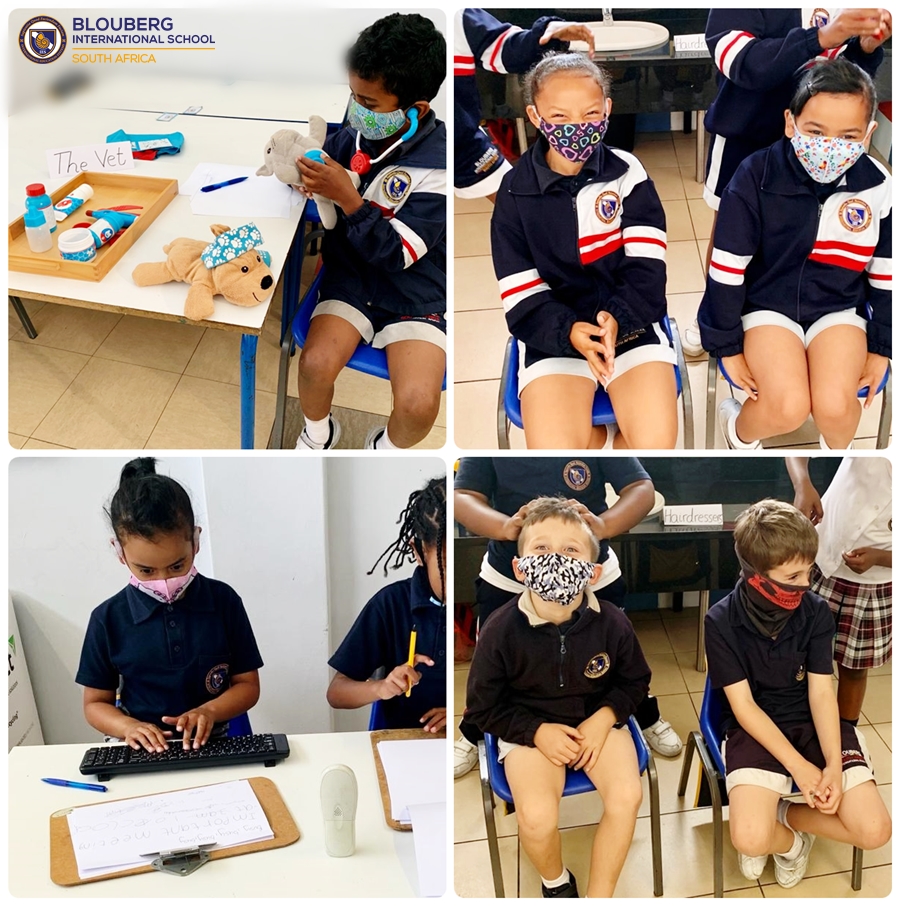
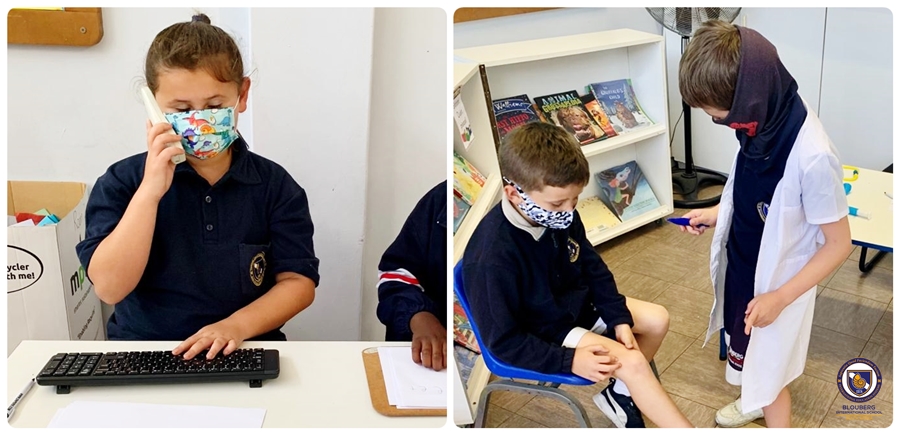
In Year 1, we have been having a lot of fun while learning about ‘The world of work’ in our Global Perspectives.
We have been role-playing a variety of different jobs in class from: ‘The Office’, to the ‘Doctor’s Surgery’, a ‘Shop’ and the ‘Hairdresser’s’. It has been wonderful to watch the students explore, collaborate and use their imagination.
Role-playing for children can really spark creativity, helping develop their language and communication skills while allowing them to make sense of real-life situations.
My students all did very well in their role-playing, they were creative and participated with so much enthusiasm and confidence. Well done Year 1!
Charlotte Cronje
Year 1 Teacher
Read More

Year 2 ICT Lesson Fun
“The mind, once enlightened, cannot again become dark.” – Thomas Paine
In ICT class, our Year 2 students have been having some fun learning about algorithms. In computer science, programming and mathematics, an algorithm is a sequence of instructions.
They received some instructions to follow on how to create a robot. Some of the instructions included drawing the head, face and body of a robot as well as creating a fun background and even more importantly – giving their robot a name!
The students learnt how they can use algorithms to describe ordinary activities in our everyday life. For example, we can consider a recipe as an algorithm for cooking a particular food. This will help them to understand how coding works when we code games and programs.
At this stage, the students are using the iPads to create some algorithms on Grok Learning by building their robot on the iPad.
Year 2 Teacher
