

Learning About Mr Plus In Reception Year
Earlier on in the term we started off by learning about the concept of more, which also helped the students understand the idea of counting forward and numbers getting bigger when one more is added.
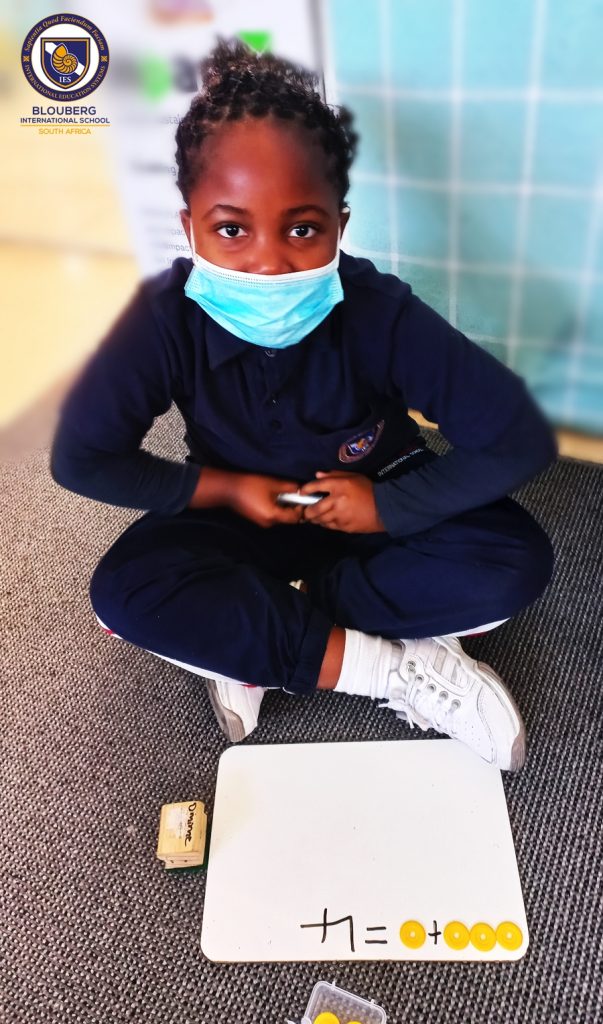
This week, the students were introduced to a very popular and friendly character in Numberland, called Mr Plus. Mr Plus likes to bring the numbers together by making friends with them and making them more. The students learnt a song about Mr Plus. Then the teacher pretended to be Mr Plus, using the students to make sums. The sums were made on the board using magnets and a whiteboard pen.
The students were reminded that the plus sign is in between the numbers to add them and the equals sign comes before the answer. Afterwards the students came to the mat in small groups for a focus group lesson with the teacher. They used their own counters on their whiteboards to make their own sums.
The students were so excited to be making sums with counters and learnt how to check if their answers were correct. Later on they will also be introduced to picture sums and progress to using counters or their own drawings to work out addition sums with numbers.
Mathematics can be so much fun!
Bronwen Nuthall
Reception Year Teacher
Read More

Investigative Thinking In Key Stage 2
“Children must be taught how to think, not what to think.” – Margaret Mead
Being both a student and teacher of the Cambridge Secondary Education system, I have had the privilege of watching it develop into the beautifully elaborate system we see before us today. If anything, the one thing I appreciate the most about growing up following one of the world’s leading education programmes, is the expansive opportunity I had for inquiry based, independent learning.
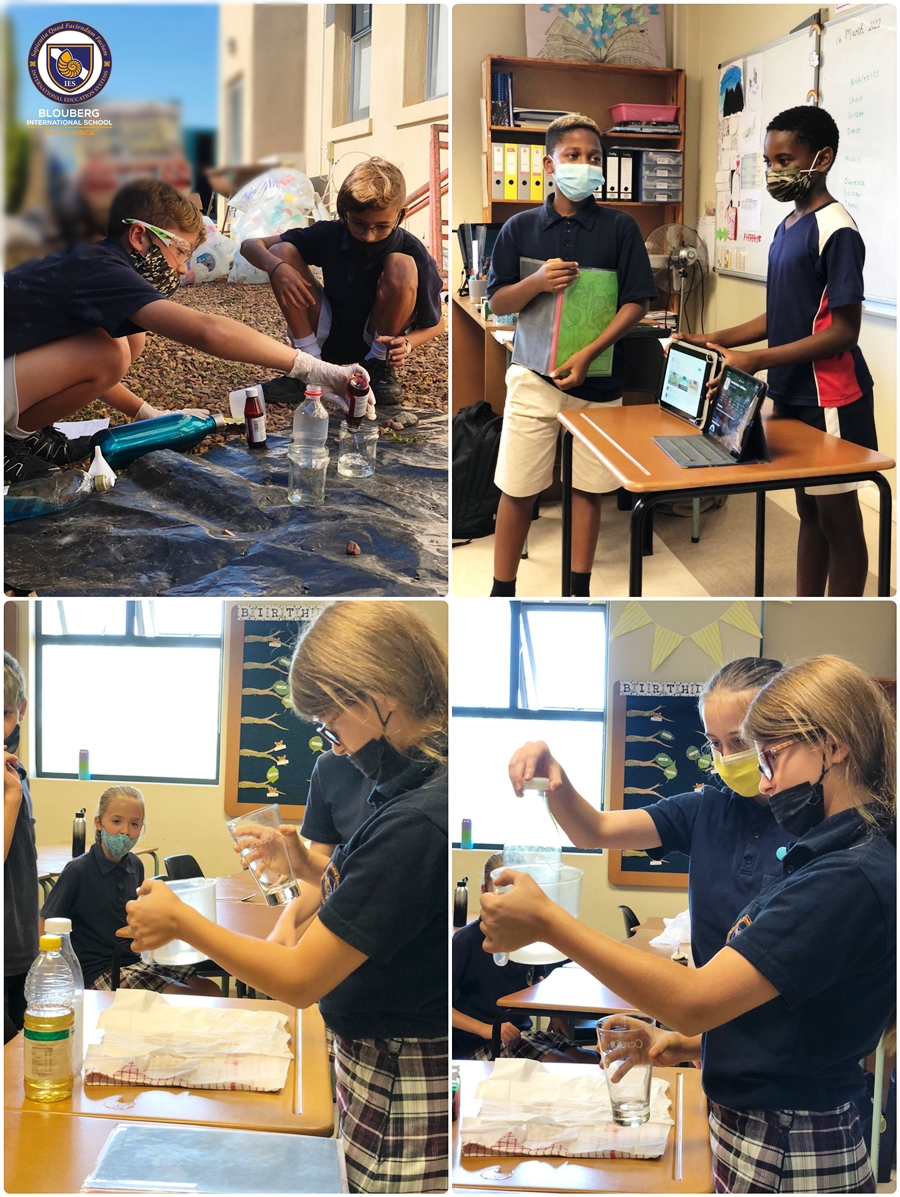
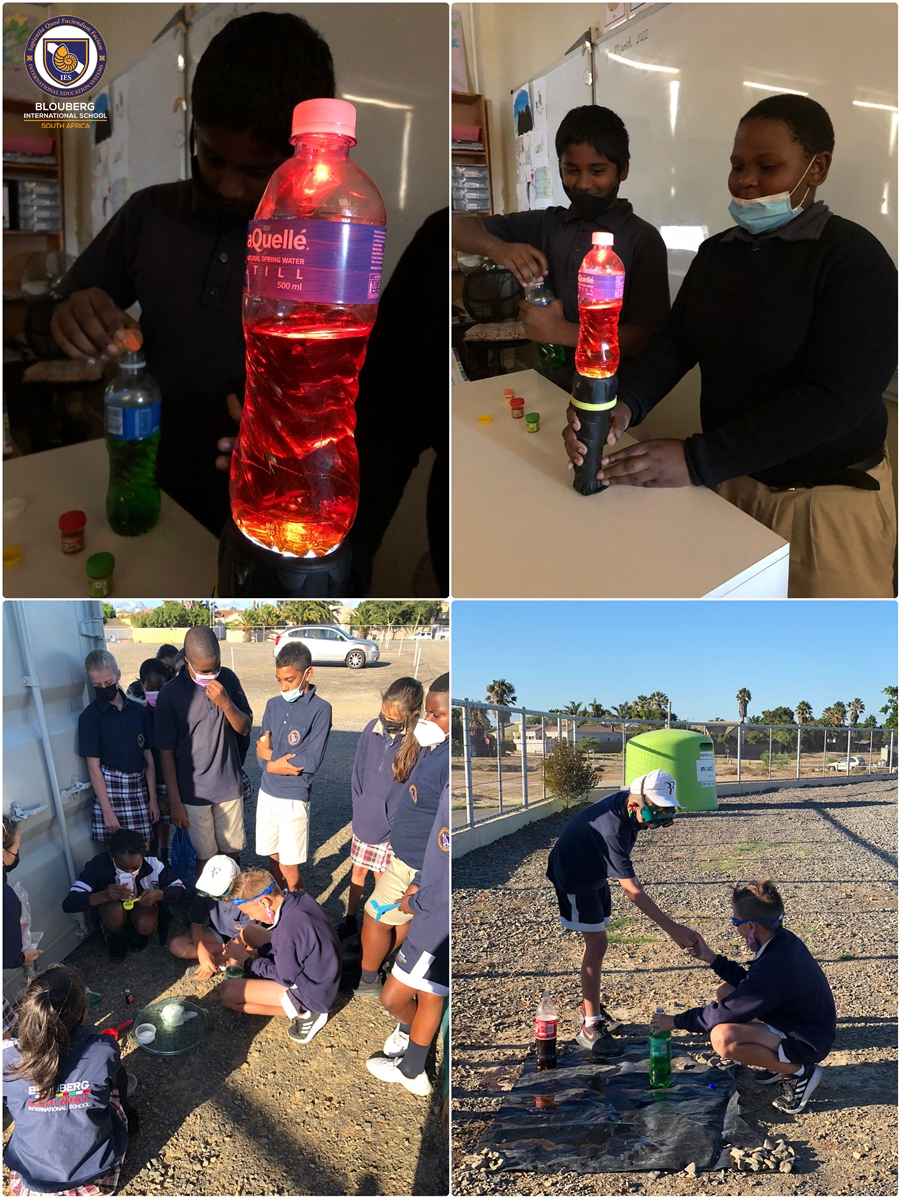
One of my favourite tools in the Cambridge Primary Science syllabus, today, would undoubtedly have to be the scientific inquiry thread, incorporated into our teaching and learning objectives. Not only do we work towards content specific outcomes under each topic, but Cambridge guides us through skill based, investigative thought processes as well.
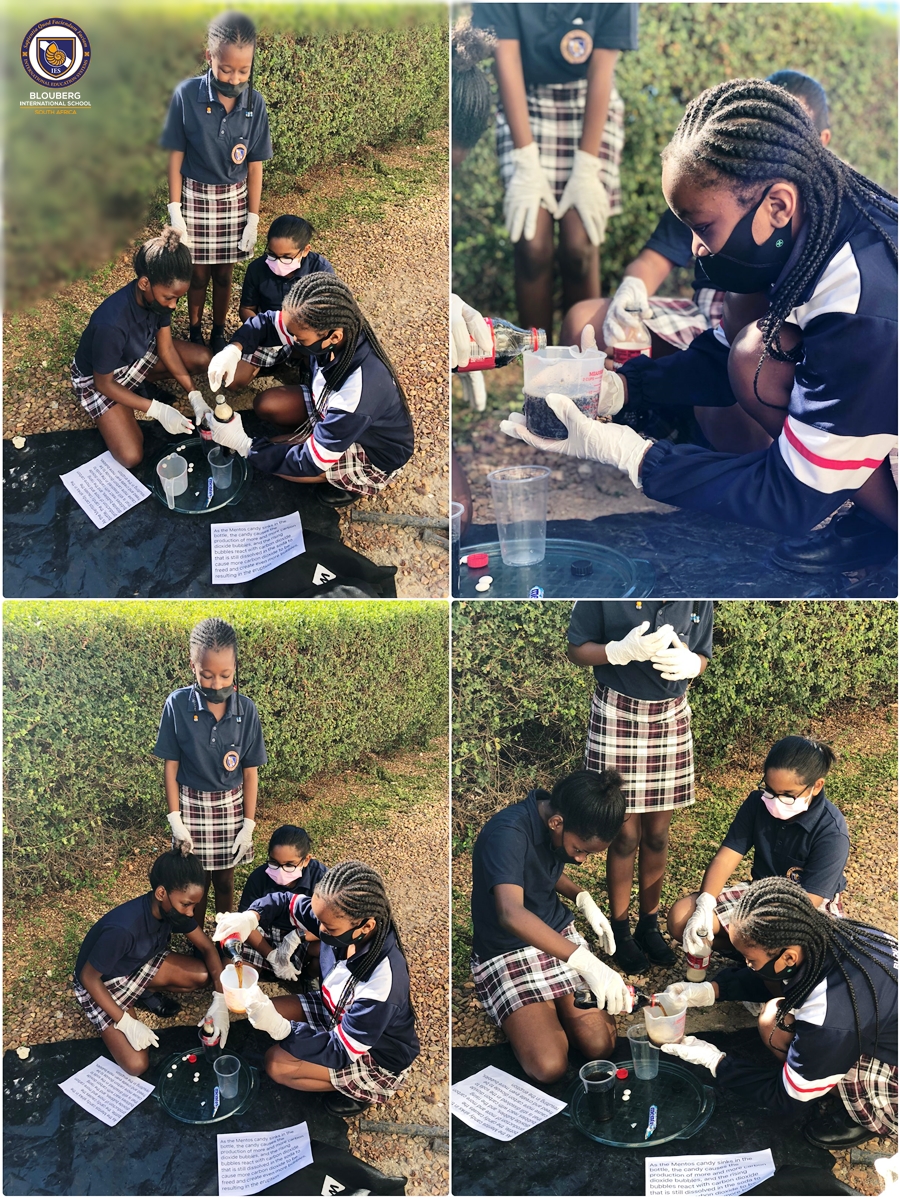
Each term, our students are given the chance to explore the workings of our world themselves by following these probing steps:
- Asking a question
- Making a prediction
- Planning a fair test
- Carrying out the investigation
- Recording the results
- Drawing a conclusion
This process promotes a beautifully curious approach to learning, where our students are granted the responsibility of their own learning journey.
Lastly, I have to acknowledge the multitude of fun this approach leads to, both in and out of our science classrooms! When having fun and building relationships run parallel to your learning, you know incredible things are bound to happen.
Robyn Pieters
Year 6 and 7 Teacher

Read More

A Recipe For A Good Friendship
Recently we have been discussing what it means to be a good friend or the ‘recipe’ for a good friendship. As a class, we shared many comforting stories about when others showed care for us. In further discussion, we highlighted the importance of our ‘Blue Badge’ system at school, which focuses on three simple foundations.
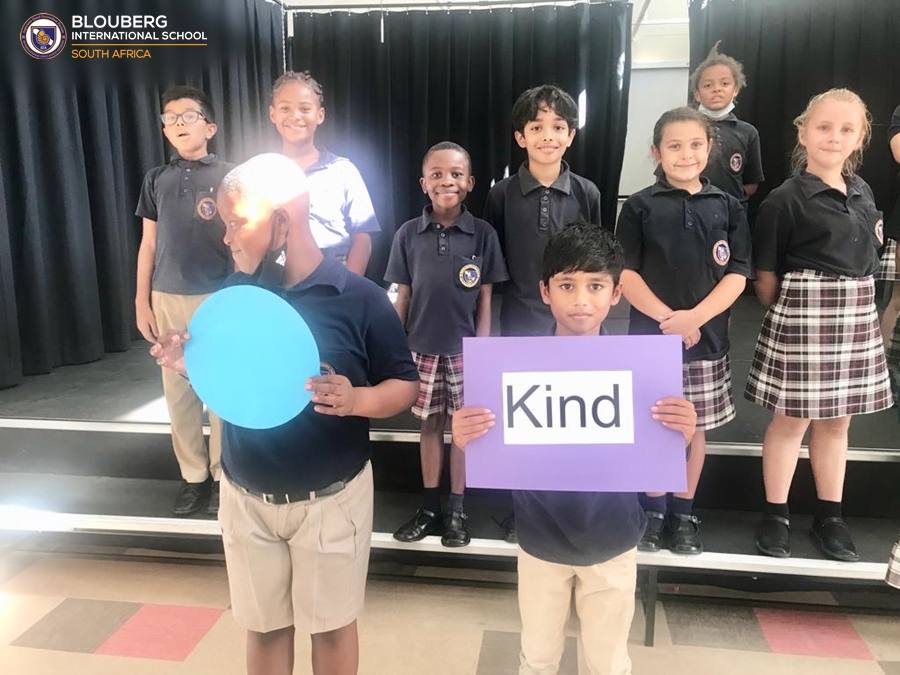
As a BIS student we aim to be KIND, CARING & ENCOURAGING.
Year 4NM came up with their own Recipe for a good friend, modelling the 3 simple foundations of kind, caring and encouraging.
How can you be kind…
- Say nice things to others.
- Smile, because it is the best and easiest exercise for the body.
- Be happy for others because when it is our turn we would want others to be happy for us.
- Offer to help whenever we can because giving is always more rewarding.
- Use good manners like saying:
- Good morning!
- Please.
- Thank you.
How can you be caring…
- Let your friends know that you are always there to listen.
- Ask, “How are you?” and remind them that you are a good friend even when they are not feeling good.
- Be patient and respectful to others.
What does it mean to be encouraging?
- It means we must support each other to do good or to be the best we can.
“Everyone needs encouragement like a plant needs water”
- Not everyone is having a good day all day, remember to show some support. It might brighten up their day.
- Be the reason someone feels good today!
Nadia Mahomed
Year 4 Teacher

Read More
The Importance Of Art In A Child’s Development
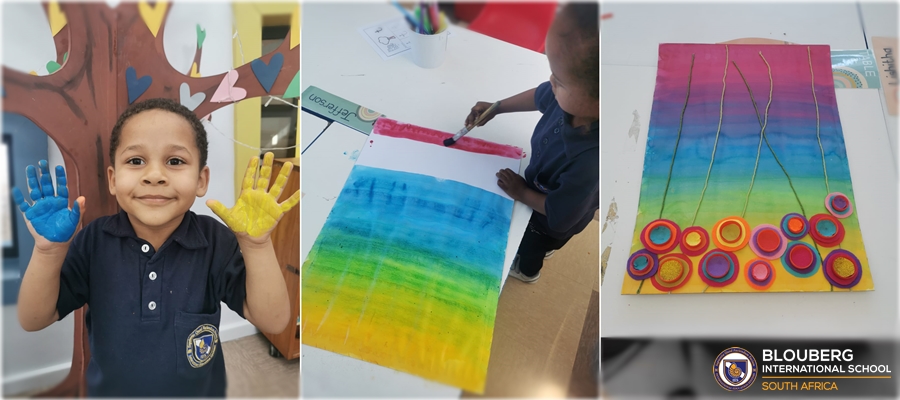
There is an overwhelming excitement and enthusiasm throughout the School as the students are busy creating the most amazing works of Art for the upcoming Art Auction on Tuesday, 26 April from 5:30pm.
It is wonderful to see the concentration on the students faces and the joyful expressions of art explored!
Creating art expands a child’s ability to interact with the world around them and provides a new set of skills for self – expression. Not only does art help to develop the right side of the brain, but it also cultivates important skills that benefit a child’s development.
SKILLS CHILDREN DEVELOP THROUGH ART ACTIVITIES:
- Life skills
- Communication skills
- Problem – solving skills
- Social & Emotional skills
- Fine Motor skills
- Self – expression & creativity
It is important, however, to separate “talent’ from ‘creativity” – a child does not have to create a masterpiece to have a meaningful artistic experience. Art is a process not just a product. It is the process of creating – exploring, discovering and experimenting – that is important and adds the greatest value. Through self – expression and creativity, a child’s skills will develop naturally. Art matters the same way language matters. It is a fundamental component of what makes us uniquely human.
Hope to see you all at our Art Auction!
Cindy Nunan
Pre-Reception Teacher

Read More

Healthy Eating
Going forward into a new term I encourage parents and students to consider adopting healthy eating habits throughout their day. In the Junior campus we have incorporated a robot system which gives the children a visual aid of which foods are a healthier choice.
The red light is used for foods which should be avoided in school lunches. “Red light” foods include items such as sweets, fizzy drinks, pastries, chocolates, etc.
The orange light is used for foods which can be incorporated occasionally in school lunches. “Orange light” foods include white grains (such as white bread or pasta), chips, etc.
The green light is used for foods which are encouraged in school lunches. “Green light” foods include fruit, vegetables, wholegrain foods (such as brown bread and whole-wheat products), water, etc.
It has been proven that sugar hampers a child’s ability to concentrate and focus. In the Junior classrooms the students are very proud when they have healthy items as snacks and love to show these to their classmates. We would like to encourage this behaviour and really adopt a positive attitude towards healthy eating habits. If we do this from a young age then we can be assured that our children will grow up with this healthy frame of mind regarding food habits.
For some inspiration for healthy school lunches, please see the below article entitled Healthy Food for Kids: Are your kids hooked on junk food? With these simple tips, you can get children to eat right without turning mealtimes into a battle zone.
https://www.helpguide.org/articles/healthy-eating/healthy-food-for-kids.htm
Kim Hahn
Reception Year Teacher


Year 5 Haikus
In English, the Year 5s have spent some time looking at poetry. We explored Haikus in particular, looking at their famous line and syllable structure, as well as delving a bit deeper into their usual subject matter. We also experimented with the balance between descriptive and figurative language often found in these Japanese poems.
Our favourite part of the lesson, of course, was writing our own!
Robins
Robins in a tree
Sitting high above the lake
Kings and queens they are.
- By Okuhle Williams
Saturn
Saturn spinning dream
Milky vision blurs your way
Falling into space
- By Christina Donald
Encanto
Magical People
Rhythm of its own design
Perfect Family
- By Dicla Tona
Buzz
Busy buzzing bee
Collecting honey for me
Oh so delightful
- By Emily Röhlandt
Rabbits
Rabbits, white or black
They’re adorable and cute
Hopping there and back.
- By Nivad Manouchehri
Hannah Kirkaldy
Year 5 Teacher
Read More

Leadership
Now that the Year 6’s are the heads of the Primary School, they have had to learn about leadership and what it is to be a leader. They took part in different activities during the Skills Programme we held. The end goal was for the students to apply to become Year 6 Prefects. They went through the process of discussing what a leader was, what a leader looks and sounds like and why they would want to be leaders for BIS.
Here are a few things the Year 6’s decided make a good leader:
“A leader is someone that has responsibility and is helpful and is respectful towards others. They always try their best and they think about others first.” – Emily Fouché
“A leader is someone who can help you with things you are struggling with and will guide you to do the right thing” – Maalik Daniels
“A leader is a person who is helpful, respectful, kind and caring. They help people when they need help.” – Nicolas East
The process the Year 6’s had to follow to apply to be prefects was as follows:
- Fill in an application form.
- Get 3 references from teachers of their choosing.
- Present in front of the other Year 6’s as to why they would make a good prefect.
- Vote for who they thought would make good prefects.
We know that the elected leaders will do a wonderful job this year!
“As we look ahead into the next century, leaders will be those who empower others.” – Bill Gates
Brittney Hakime
Year 6 Teacher


Read More

Year 2 Problem Solving Workshop
The Year 2’s have been learning about conflict resolution in our Skill’s Programme every second week this term. We split our weekly topics up into; problem solving, conflict resolution, dealing with mistakes and lastly, saying sorry.
We know that students need to learn how to listen to others. Children become more aware of their needs as they get older. They learn how to communicate their thoughts and feelings in a respectful way. They feel inspired to think creatively to search for solutions. No child is too young to learn how to play and cooperate with others, an important skill for young children to develop and grow. There are numerous other skills children learn when you inform them about how to resolve differences, as well:
- Students learn how to listen to others.
- They become more aware of their needs.
- They learn how to communicate their thoughts and feelings in a respectful way.
- They feel inspired to think creatively to search for solutions.
It is critical for children to understand that when they find a solution independently, they receive praise. That way they understand to continue exhibiting the behaviour. Conflict comes up in everyone’s lives, and the most important lesson to teach with these behaviours, is that conflict is normal.
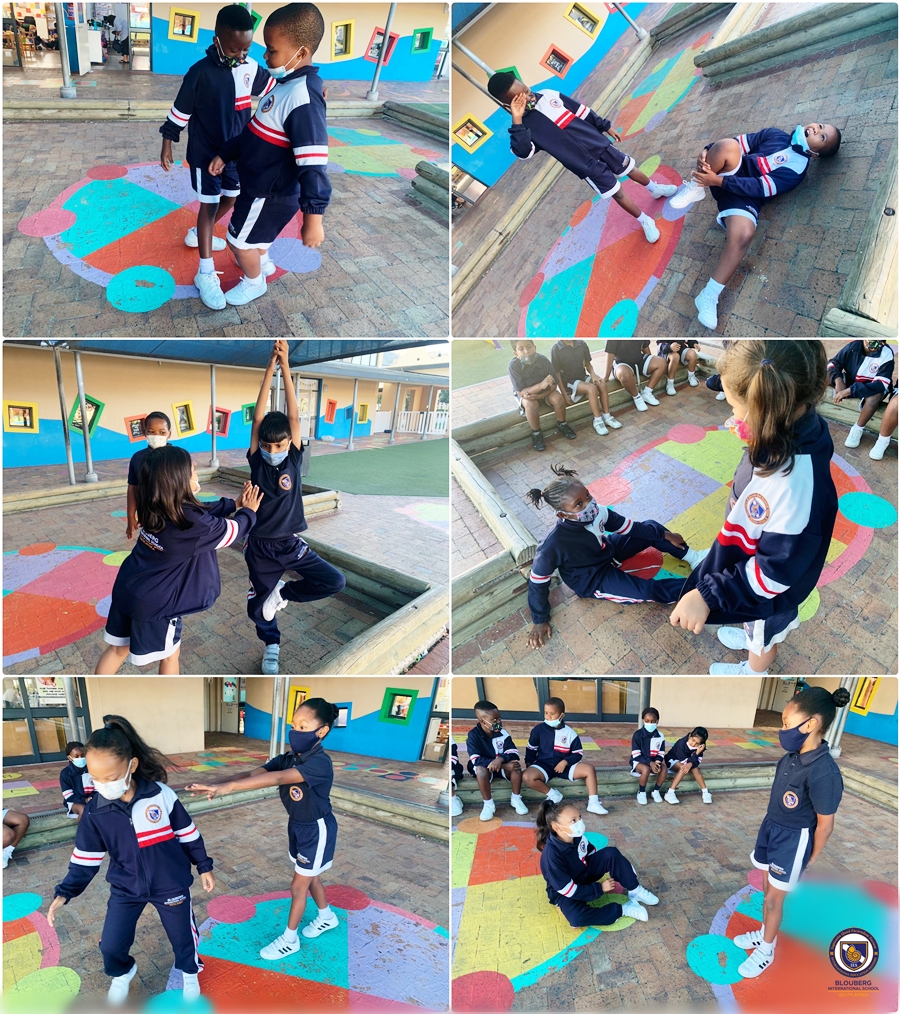
Our last workshop lesson involved some role play where our Year 2’s has the opportunity to act out how they think a potential conflict situation would play out and how they could solve it the right way.
We had fun learning!
Siobhan Hendry
Year 2 Teacher
Read More

Foundation Finger Fun (Fine Motor) Club
This year we reintroduced after school clubs. I decided to start a club that focuses on strengthening fine motor muscles and make it lots fun. I think I am starting to achieve my goal! The students do not even realise that they are refining their fine motor skills, because they are having a great time while doing so.
Fine motor skills refer to how we use smaller muscle groups in our bodies to perform tasks, mainly involving the muscles in their hands, fingers and wrists. Children use their fine motor muscles to do various things, namely, writing their names, cutting paper with scissors and to tie their shoelaces.
When a child develops their fine motor skills they are also mastering their coordination. Using the smaller muscles requires thought, action and precision. Fine motor skills are crucial for doing many of the actions we take for granted, like feeding ourselves, holding things, doing up zippers and buttons while getting dressed, drawing as well as colouring to name only a few. Learning to use smaller muscle groups leads to bigger accomplishments.
Fine motor movement:
- Allows a child to play with small objects.
- Encourages creativity.
- Assists in development of communication skills.
- Encourages independence.
- Improves physical awareness.
- Builds confidence.
It is really wonderful to see how enthusiastic the students are about our Finger Fun Club. They can’t wait for their lesson on Tuesday afternoons. Our last lesson of the term was a hit when they got to make shapes out of toothpicks and jelly tots.
We can’t wait to have more fun in Term 2.
Cindy Nunan
Pre-Reception Teacher
Read More
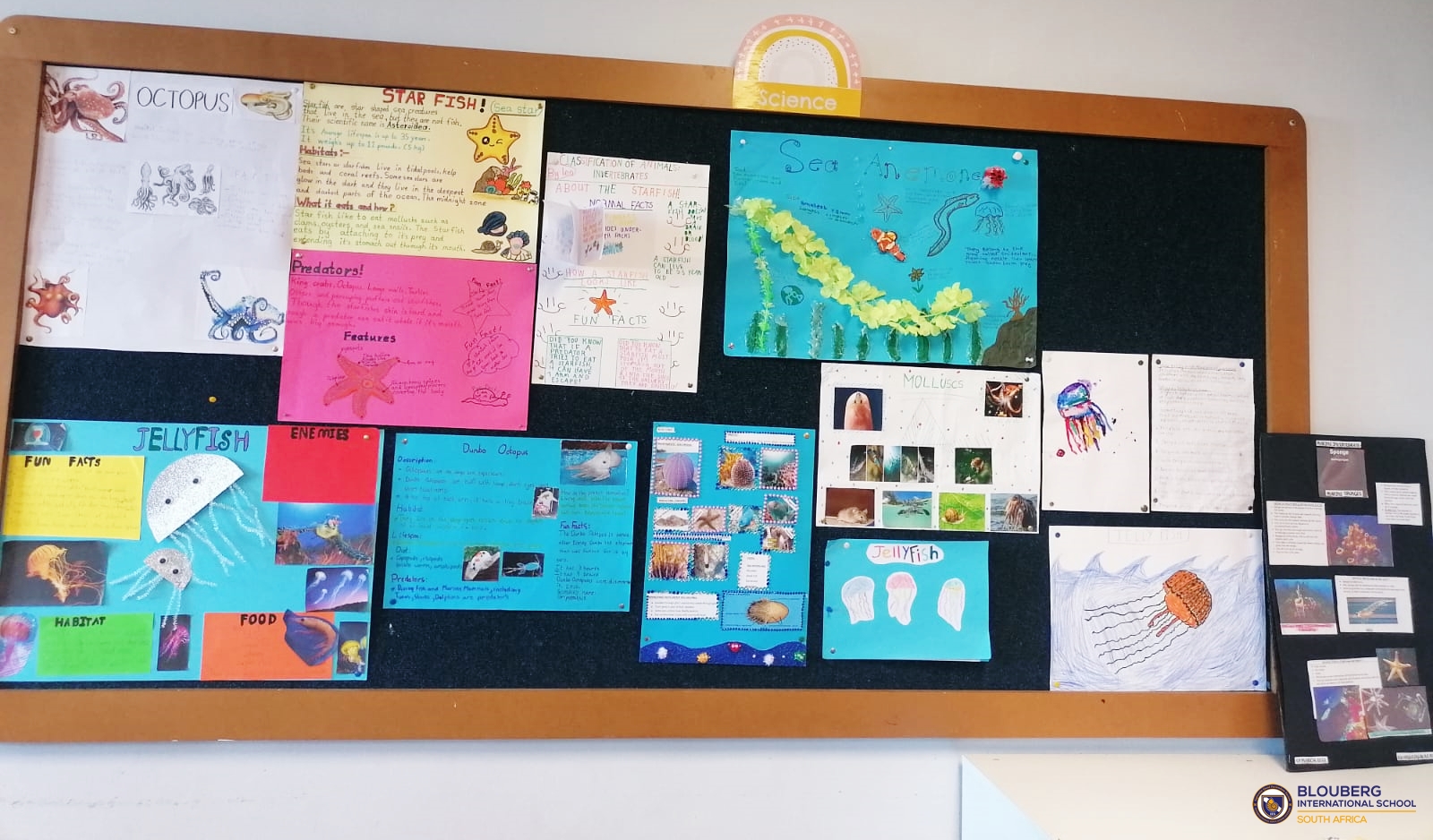
Animal Unit
As part of the Animal Unit in Science, the Year 4 students learned about vertebrates and invertebrates during the last few weeks. Vertebrates are animals with a skeleton and bone structure and invertebrates are animals without it.
The students were tasked to research invertebrates living in the ocean. They had to do an oral presentation about the appearance of their chosen animal as well as it’s habitat, feeding habits and some interesting facts.
Here are some fascinating facts we learnt about these creatures this week:
- The Dumbo octopus has 3 hearts and 9 brains.
- A Starfish pushes its stomach out of its mouth to be able to eat.
- Octopuses are blue blooded.
- Jellyfish are immortal and are made from 98 percent water.
Well done Year 4!
Yvette Fourie
Year 4 Teacher


Read More