
High Frequency Words
In term 2, our Reception students have been introduced to High Frequency Words. High Frequency Words otherwise known as sight words, Dolch words, refer to a set of words that most commonly are found on any page of text. Readers need to instantly recognize these words in a text and often the words cannot be sounded out. Readers therefore need to memorise these words in order to read more confidently and fluently. Learning High Frequency Words is an important skill that is incorporated into reading homework. It is therefore essential to learn High Frequency Words in fun ways. Listed below are some ideas for flash card games:
Flash Cards Games
- Can you find? Lay cards on a table. Ask the student to find a given word. If they find it, they keep it. Keep going until all the cards are picked up.
- Who has more? Show the cards to the student. If they read the word within 5 seconds, they keep the cards – if not the parent keeps the cards, the goal is that the student has more cards at the end.
- Concentration – Using double copies of words take turns turning over 2 cards at a time, trying to make a match. The player must read the words correctly to get the match.
- Go fish – Use double copies of cards, pass out all by 5-6 of the words. Put these in a stack face down on the table. Look for matches in your set of cards. (each player must be able to read the word or the set goes in the stack on the table. Take turns asking each other for cards to make matches. The person with the most matches at the end is the winner.
- Slap Jack – Draw a star on a blank flashcard. Place this star card and the other flashcards face down on the table. Take turns turning over a card and reading a word. When the star card is turned over, the first player to slap it wins.
Bronwen Nuthall
Reception Year Teacher

Read More

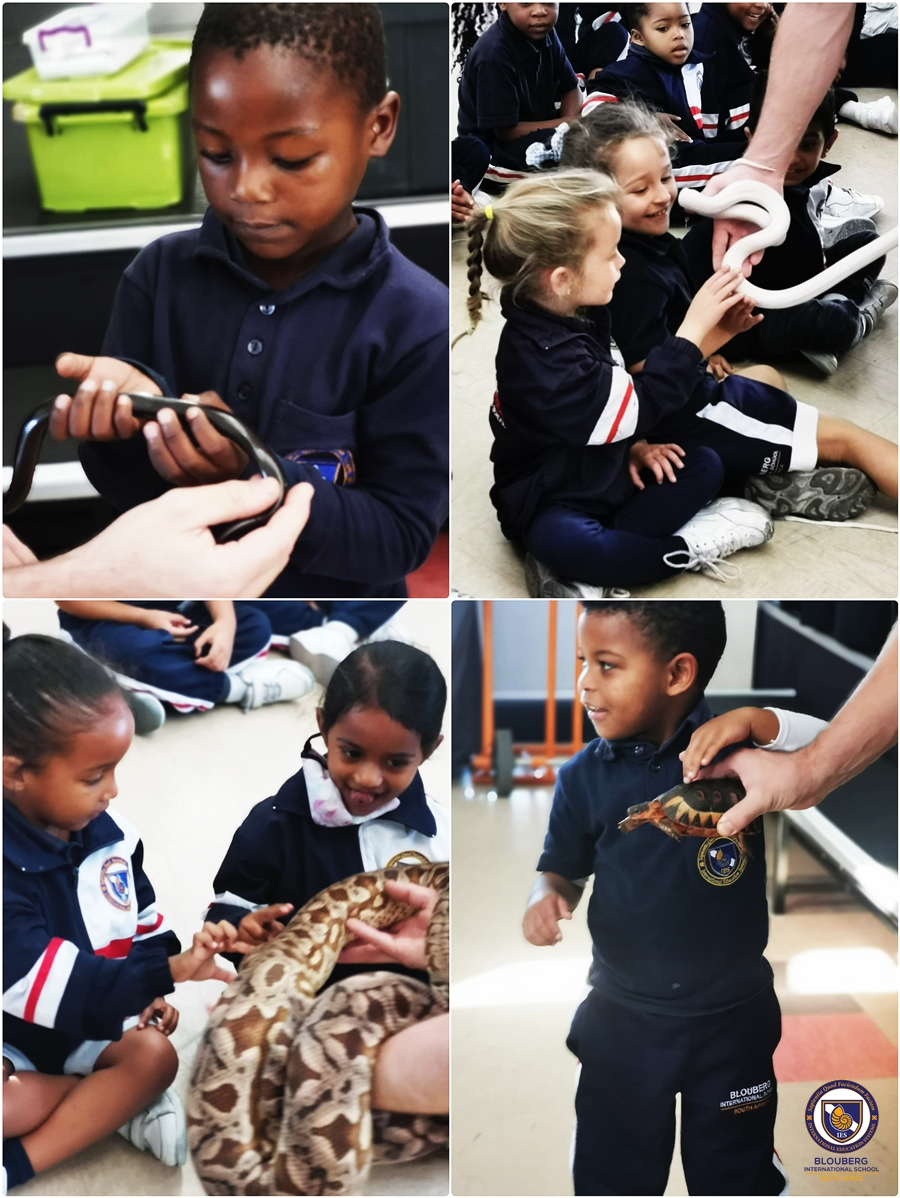
Pre-Reception Learning All About Reptiles
For the past week, Pre-Reception have been learning about Reptiles. They loved painting and making different Reptiles. The students also played games like snakes and ladders, learnt various Reptile rhymes and songs.
The highlight of the week was definitely when the Reptile Man came to visit, bringing his great collection of snakes, lizards, geckos and tortoises.
Some Reptile facts the students have learnt:
- All reptiles lay shelled eggs.
- A reptile breathes air.
- They have bony shells or are covered in scales.
- Majority of reptiles are cold-blooded.
- The most diverse reptiles are snakes and lizards.
- Most eat insects and small animals.
Our students were very brave and eager to touch and learn about the various reptiles. They couldn’t stop talking about all the wonderful things they saw during the special presentation by the Reptile Man.
Cindy Nunan
Pre-Reception Teacher


Read More
Multiplication Scavenger Hunt
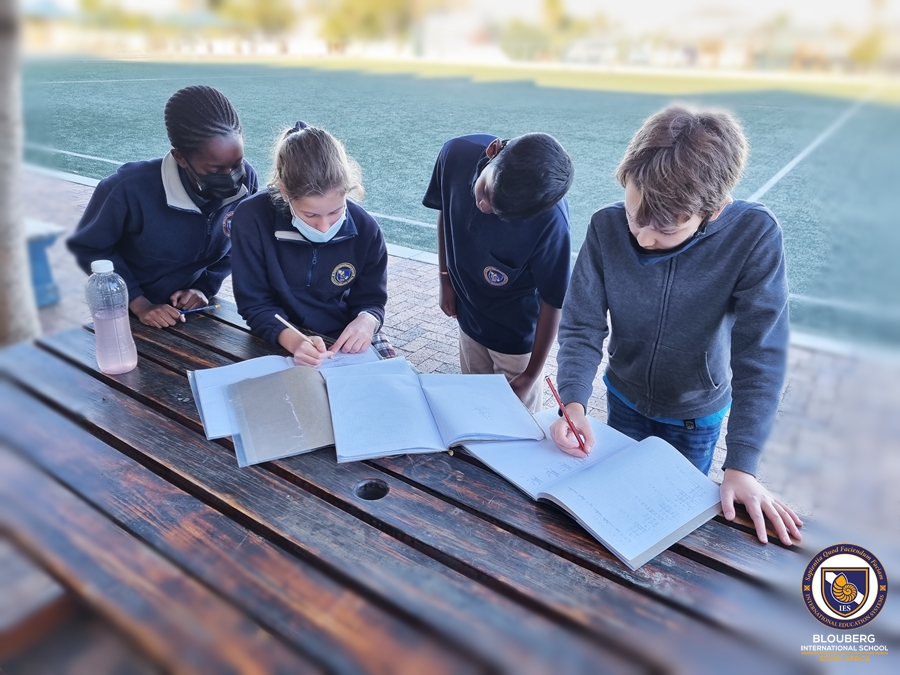
In Mathematics, the Year 6’s have been learning about multiplying whole numbers by two digit whole numbers. They have learnt about many different methods to work out their answers such as the Grid Method, Expanded Written Method and Formal Written Method. This week they put all this new information to the test and took part in a Multiplication Scavenger Hunt.
The Year 6’s received clues such as:
– I’m a four sided shape but people call me five.
– Here we hold meetings and celebrate stars of the week. To find the next clue go take a peek.
– With clothes of green, and bark not of a dog. Search me for the goods, I sleep like a log.
– A site of work and getting things done, and making calls for your sore tum.
– Back and forth I take you, higher and higher you fly. At time you can push me and I might make you cry.
Can you figure out where these locations are?
When they arrived at their destination, they would find a task card waiting for them with a number sum or a word problem on it. Once they worked out the correct answer they could come back to me and receive their next clue. This turned into a competition, with each group trying to get to as many task cards as they could.
This was a lot of fun and a more hands on way of learning. It allowed the Year 6’s to show off their newly learnt multiplication skills, as well as practice other skills such as: team building, patience, group work and time management skills.
Brittney Hakime
Year 6 and 7 Mathematics Teacher


Read More
Multi-Sensory Learning
The importance of teaching and learning with more than just sight and sound lessons.
Multi-sensory learning has the benefit of reinforcing strengths, improving students’ weaknesses and assisting the brain in making connections between current knowledge and the new knowledge that is being taught. It also helps students who differ in learning styles to make concrete connections during the lesson.
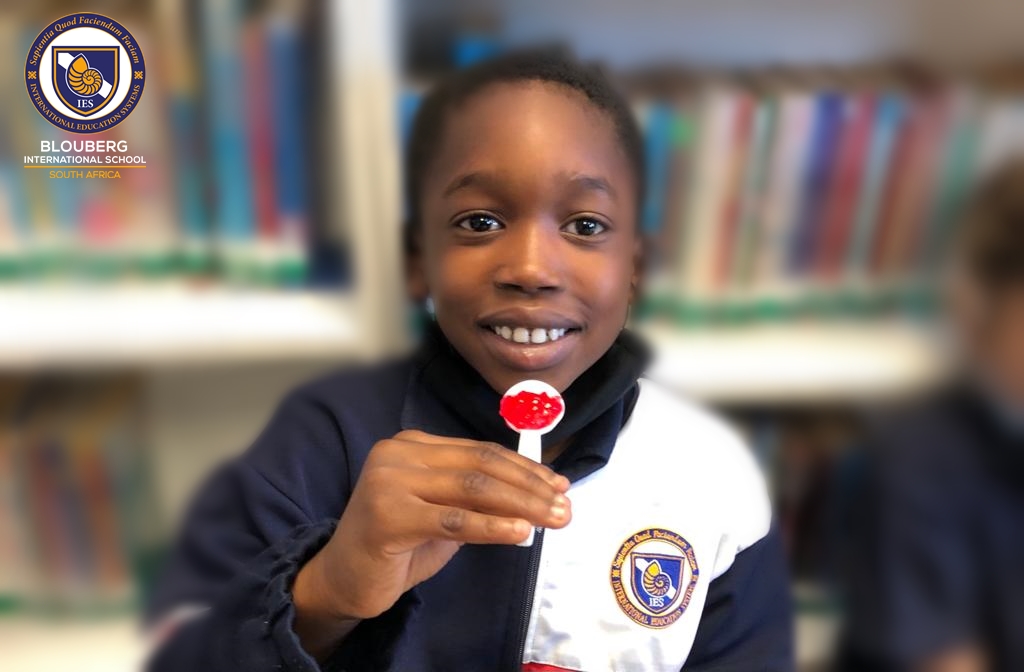
In the BIS Library – learning is dynamic, engaging and often involves more than three of the body’s senses. The ‘/j/’ sound lesson is the perfect example of a lesson where students are facilitated in remembering the sound by tasting jelly. After singing the jolly phonics song for ‘/j/’, they move their bodies like wobbling jelly and read a book about jelly. The students then have the opportunity to enjoy smelling and tasting some jelly. Multi-sensory lessons seem more like playing than learning to children and as research has shown, this is one of the best means for children’s brains to make connections and store information.
Facilitating learning through the senses is important, in particular learning to read because reading always leans towards sight and sound. Reading is an abstract concept that requires concrete learning methods in its teaching, and not only for those who need it with regard to their learning styles.
Kirsten Stoffberg
School Librarian and Teacher

Read More

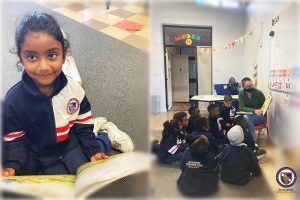
Book Week 2022: Foundation Phase And How To Ensure Success When Reading With Your Child
From the 3rd to 6th of May, we celebrated Book Week throughout the school. We do this to help foster a love and excitement for books and reading. There was a wide variety of fun and interesting events that took place.
On Tuesday, Hooked on Books came to school to entertain the students. They performed short excerpts from age appropriate books and the students even got to act out a poem with the actors’ guidance.
On Wednesday evening, the students joined their teachers in their pyjamas for hot chocolate and bedtime stories. It was an evening full of laughter, cuddles and creating fond memories with friends.
Throughout the week, The Book People gave students the opportunity to peruse a large variety of books and some purchased a book to add to their home library.
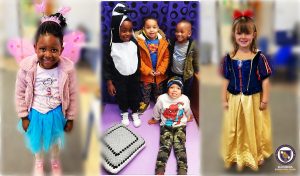
On Friday we had a character dress up day. It was wonderful seeing the creativity and pride that the children took in dressing up. During the week, Reception and Pre-Reception classes also swapped teachers at story time so that they could listen to the stories represented in the other classrooms.
Below are some tips you can use at home to make reading fun and to ensure success when reading with your child:
When you are creating fun reading activities for your children, you need to be excited about the activity too. You want to create something that is worth your child’s time to sit, listen, and learn. Here are some tips to help you succeed:
- Have a happy voice: Children are smart. If your voice is monotone and you are trying to cram in a book before bedtime, they will know it. Make your voice sound excited when you read the words. Remember to smile and have fun!
- Take your time: Plan ahead to make sure you have enough time to read before nap and bedtime. You don’t want to do fun reading activities when you or your kids are tired. They will be less likely to be engaged.
- Read over or skim the book before you get it: I found many books were not appropriate for children. They had things in there I was not ready to discuss at their young age. Protect their innocence and choose books that represent the same values you stand for at home.
- Don’t quit: Your children may not be excited at first. Keep working at it. Try different things to see what works. Don’t give up. Reading needs to be a lifelong skill that gets encouraged from when your children are young.
- Empower your children: Get your children to pick out books, give them a choice between two fun reading activities, let them pick out which book to read at bedtime, or let them choose a book to give another child as a birthday present. All these things give them ownership. If they come up with the idea or make the decision themselves, they are more likely to be engaged.
Kim Hahn
Reception Year Teacher
Read More
The Science of Play
‘Happy hearts and happy faces. Happy play in grassy places. That is how, in ancient ages, Children grew to be kings and sages.’ – Robert Louis Stevenson
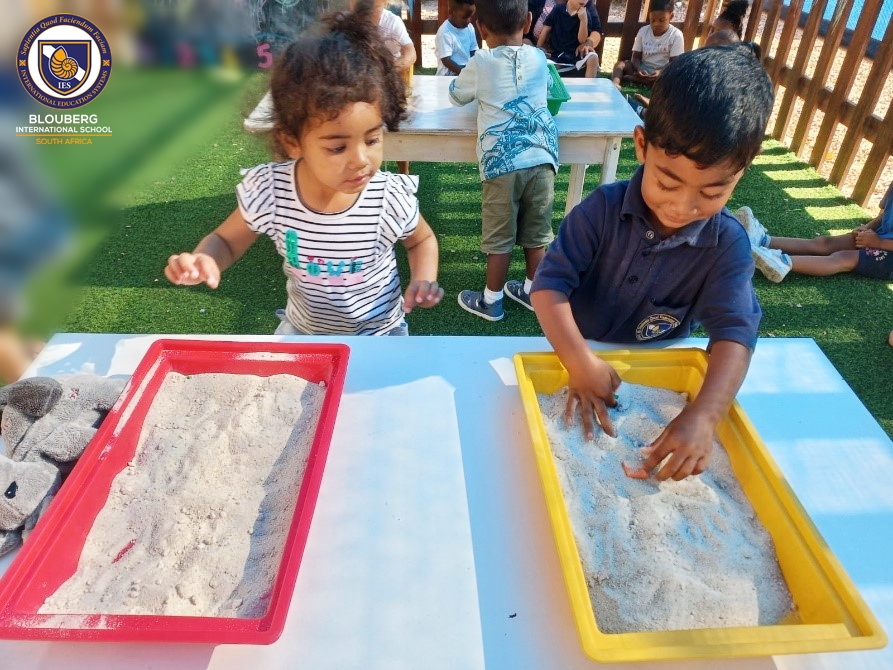
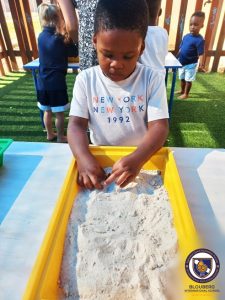
Play is one of the most important aspects of a child’s life. Why? Because through play they develop their social skills, language and communication. Play can be considered a child’s “work” as it is how they learn, how they figure out who they are, how the world works and where they fit into it. It offers children a chance to exercise and develop muscle strength and with nothing more than little imagination, a playground can become a fortress, a submarine, or even a spaceship. Their brain can connect and refine pathways that enable them to feel loved, happy and safe.
Young children are natural artists and one of the keys to supporting your child’s playtime effectively is to not take over. Yes sure, it’s frustrating when they make a mess and when they aren’t “doing it right”, but to every answer, there is a question that needs to be asked. Ask them questions and let them answer for themselves. Don’t panic or get anxious when they stumble or stutter, the very idea that you are with them, at that moment, provides them with answers to questions they weren’t even asking.
Children do not need expensive or elaborate toys, as real play only requires toys and resources that are open-minded in nature. That is why so many children are more interested in the toy box that the actual toy. However, it is important to remember that as children grow, and their imagination extends outside the box, the toy inside will define what enjoyment should look like for the majority of their young adult life.
The Value of Play
You say that you love your children,
And are concerned that they learn today,
As am I, that’s why I’m providing
A variety of kinds of play.
You are asking what’s the value
Of having your children play?
Your daughter’s creating a tower,
She may be a builder someday.
You’re asking me the value
of blocks and sand and clay.
Your children are solving problems,
They will use that skill every day.
You’re saying that you don’t want your son
To play in that way.
He’s learning to cuddle a doll,
He may be a father someday.
You’re questioning the learning centers,
They just look like useless play.
Your children are making choices,
They’ll be on their own someday.
You’re worried your children aren’t learning
And later they’ll have to pay.
They’re learning a pattern for learning,
For they’ll be learners always.
– by Laurie Monopoli
So, I would like to end off and say, yes it may just be child’s play, but when you engage and make the most out of playtime, you may even find answers to questions you were never asked.
Jo-Anne Dickason
Nursery Teacher

Read More

Sound
“Tell me and I forget. Teach me and I remember. Involve me and I learn”. – Benjamin Franklin.
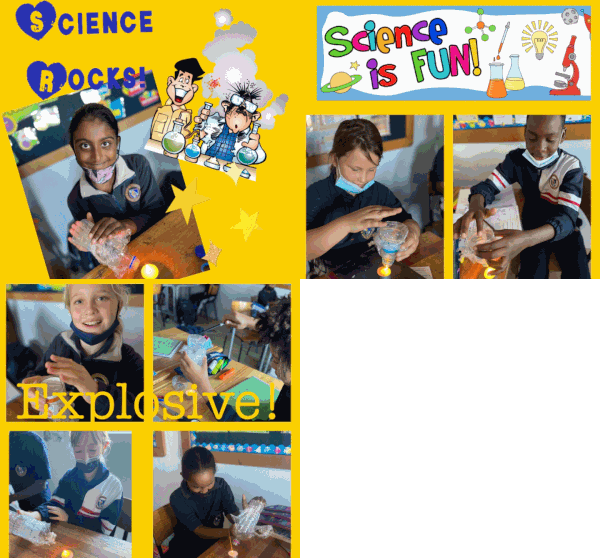
Our budding scientists in Year 5 have been learning all about how sound is created. As stated in the quote above by Benjamin Franklin, the best learning takes place when students are actively involved in the learning process. Hence, it was time for our students to put on their scientist hats and participate in some thrilling scientific experiments in class!
As seen in the pictures below, each student had to stretch a piece of plastic film tightly over the open end of a plastic bottle. They had to then light a small candle, causing endless excitement amongst the students! It was then that the fun started. The aim of the experiment was to test if sound vibrations travel through the air, as we cannot see them with our own eyes. If this theory was indeed correct, the flame would flicker when they tapped the bottom of their bottle!
And…EUREKA!
The experiment was a success and as any accomplished scientist would do…the experiment was done repeatedly and with much amazement by each student! After all the excitement, the lesson was concluded with some serious reflection, thinking, debating and discussion about our findings.
The best way to learn science is by doing science and to never stop questioning!
Jennifer Rose
Year 5 Teacher


Read More

Bright Science Sparks
“The Shadow Proves the Sunshine” – Switchfoot
The year 4’s have just completed a week of shadow investigation. On Monday morning we set out with a mission to discover how shadows move and change throughout the day. We started our lesson in groups by answering questions about shadows and light, discussing what we already know and what we still need to learn. It was key for every group to cooperate with one another by being polite and kind to the other members of the group. Sharing and taking turns was also a key factor in working towards a group agreement on their answers.
Our research starting point was making predictions about how the shadow would move or change. A simple upright pencil on cardboard was all we needed to set this test in motion. Our first observation was that light always travels in straight lines. Anything in the way would cause a shadow. Throughout the day, in fact every hour, we witnessed that our shadow moved to the east. Our pencil shadow was long in the morning. As the day progressed the shadow became shorter, being the shortest at noon. After midday the shadow of the pencil slowly grew in length again.
Our testing was not yet complete! Working in groups again, we investigated which objects were transparent, translucent and opaque. We also discovered that we could change the size of our shadow by moving closer or further away from our light source. After collecting and recording our observations over the course of the week, all our findings were crafted into games.
Looking back over this week it is clear that every Year 4 student has taken ownership in this investigation. In return, this will create a sure scaffolding for future light exploration.
Carol Blake
Year 4 Teacher


Read More
The Human Body!
Our Year 3’s kick started Term 2 with an introduction from Pinky, the skeleton, to our next Science unit – The Human Body! After much giggles and squeals, students were told that by the end of the unit they would need to be able to ‘dress’ Pinky with his organs all in the right places.
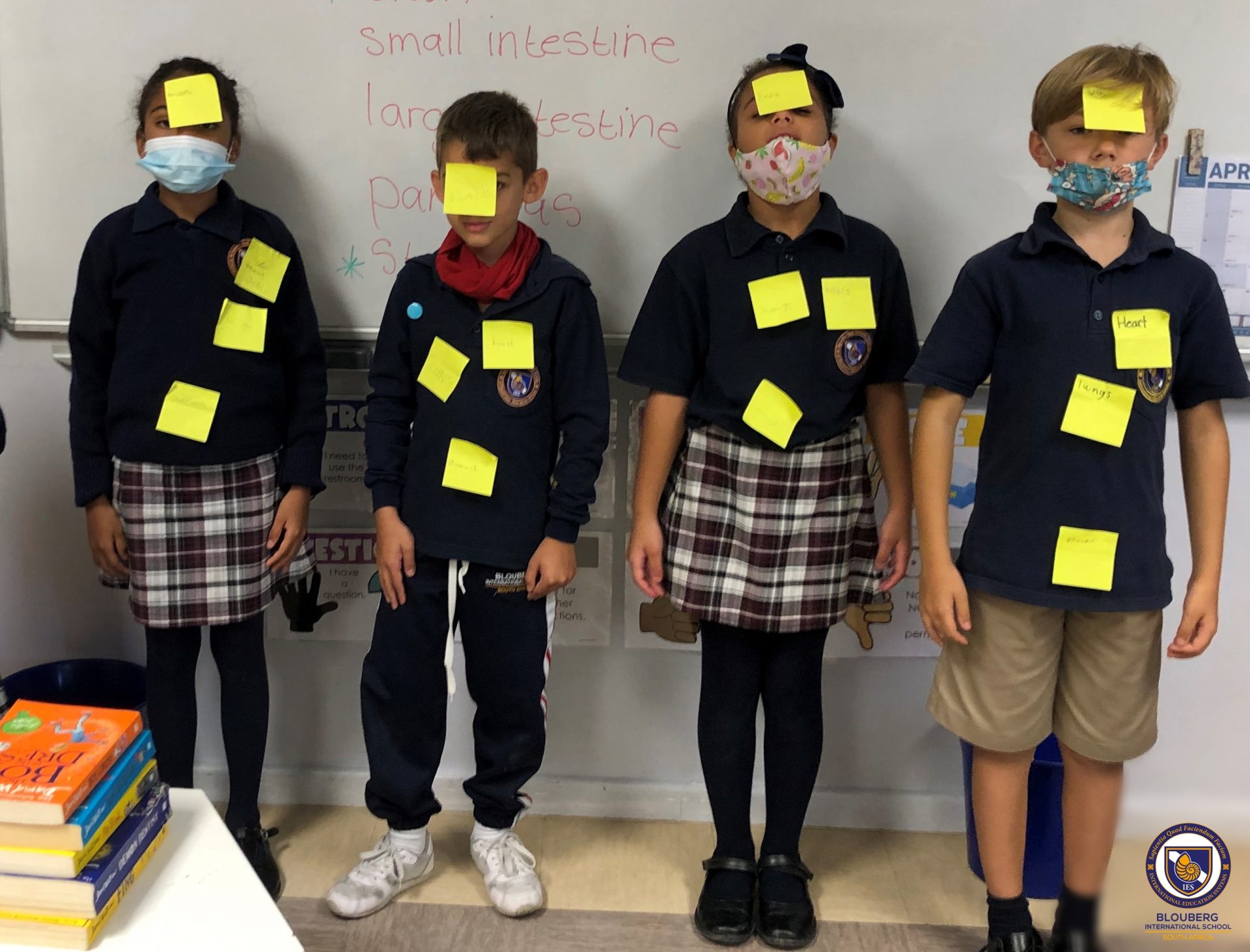
But first…. do the students know where each organ in our body is? Well….no…. not quite…. not at first. In groups, students had to choose one classmate and using yellow stickies, placed them on to the student in the right spot. Needless to say, we had some very strange locations for our small and large intestines!
Throughout the unit, the class enjoyed very student-centred lessons, which included making their own stethoscope out of plastic bottles, tape and toilet paper holders. They then used their stethoscopes to listen to one another’s heart beats.
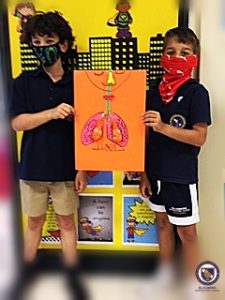
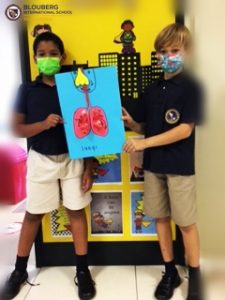
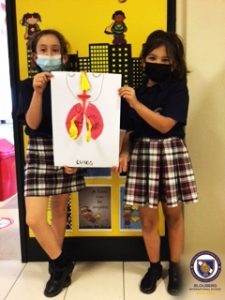
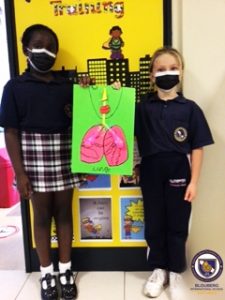
Another lesson involved students making a working lung model using cardboard, straws and balloons. In pairs, students designed and cut out their lungs. Next, they attached the straws and balloons. Then, they drew in their faces and for the grand finale…they blew out into their straws to simulate their working lungs.
The students had a fabulous time designing their models and thoroughly enjoyed the hands-on activities. Well done, Year 3! I think we are ready to ‘dress’ Pinky!
Mandy Goch
Year 3 Teacher


Read More
Next Week Is Book Week!
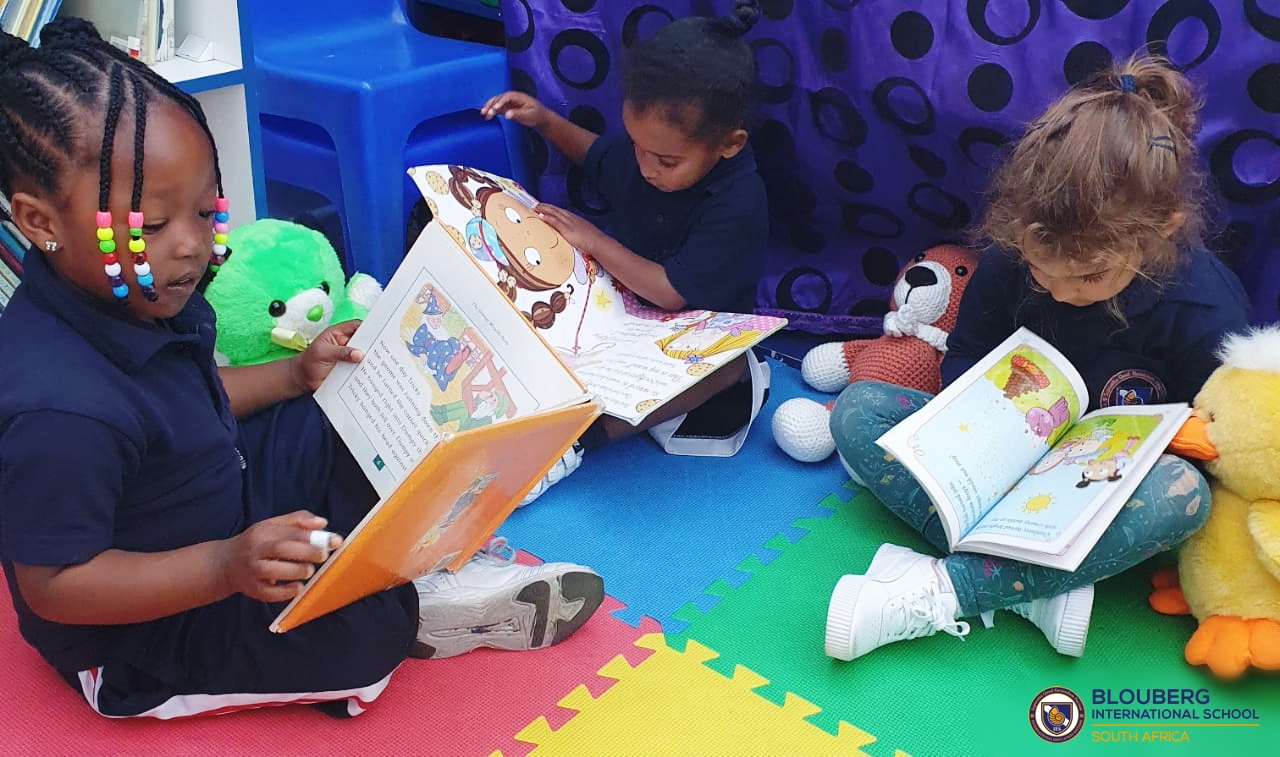
We will celebrate book week next week at BIS. It’s a fantastic opportunity to celebrate books and to see the young students getting excited about reading.
There will be many fun activities during Book Week:
- On Tuesday, 3 May 2022 we will do stop, drop and read. All students need to stop what they are doing and listen to or read a story for 10 minutes when they hear the bell ring.
- We are holding another night of fun stories and book sharing for Foundation Phase and Key Stage 1 students. Bedtime story evening on Wednesday, 4 May 2022 will start at 18:00. We invite all students to come along wearing pyjamas and snuggling their bedtime toy and listen to some great bedtime stories told by the teachers and parents.
- Book Character dress up day will be on Friday, 6 May 2022. Students are encouraged to bring a book to donate and dress up as their favourite book character.
As you can see our Book Week is packed full of exciting activities for the students.
Martie van Dyk
Pre-Reception Teacher


Read More