

Greeting Cards!
Unfortunately, with the arrival of Social Media, the exchange of actual greeting cards seems to have dwindled. It’s far easier to type a message using Facebook or Instagram, than hand selecting, or even making the traditional greeting card the older generation remember so fondly!
The making of greeting cards can be traced back to the Ancient Egyptians and through the middle ages. The invention of the postage stamp in 1840 revolutionised the distribution of these cards, and in 1930, the company Hallmark was established with their sole purpose to create and print greeting cards for many different occasions.
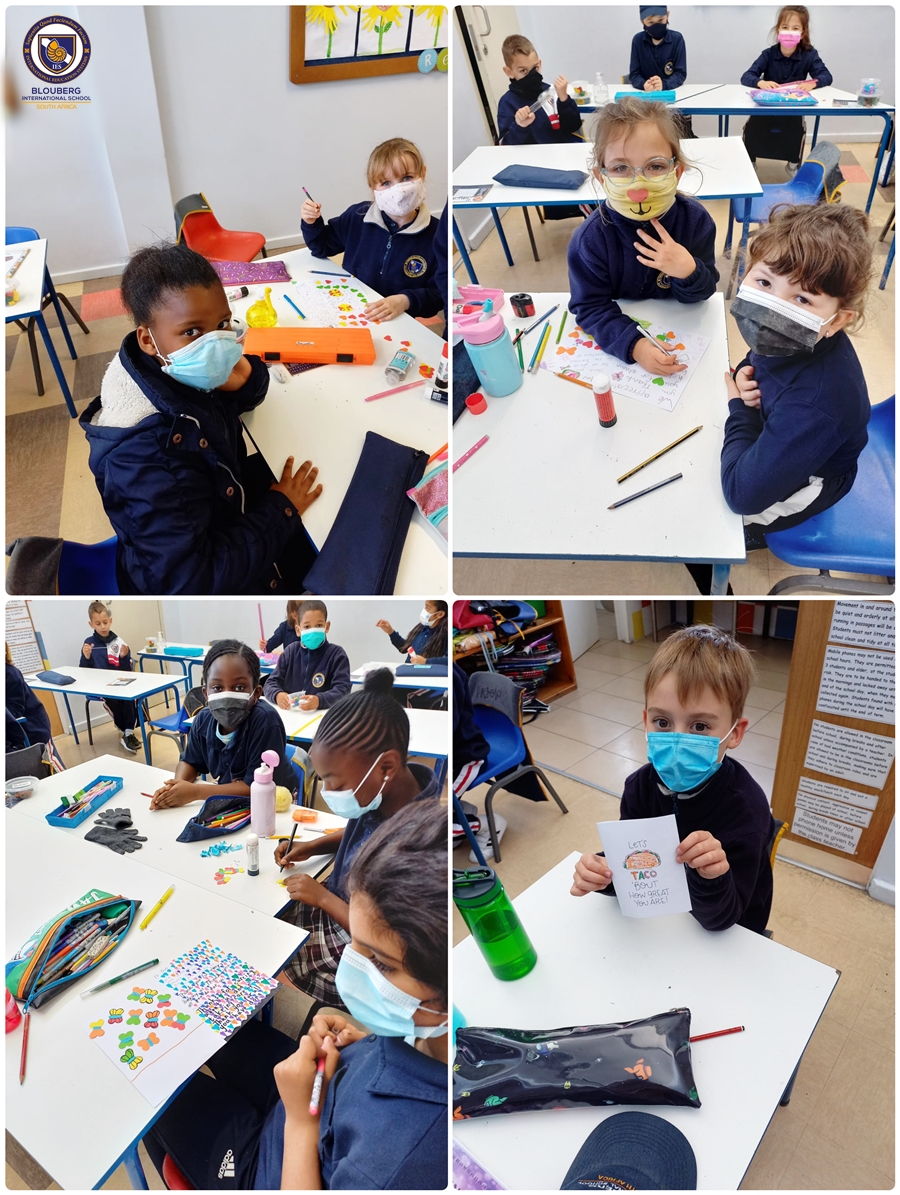
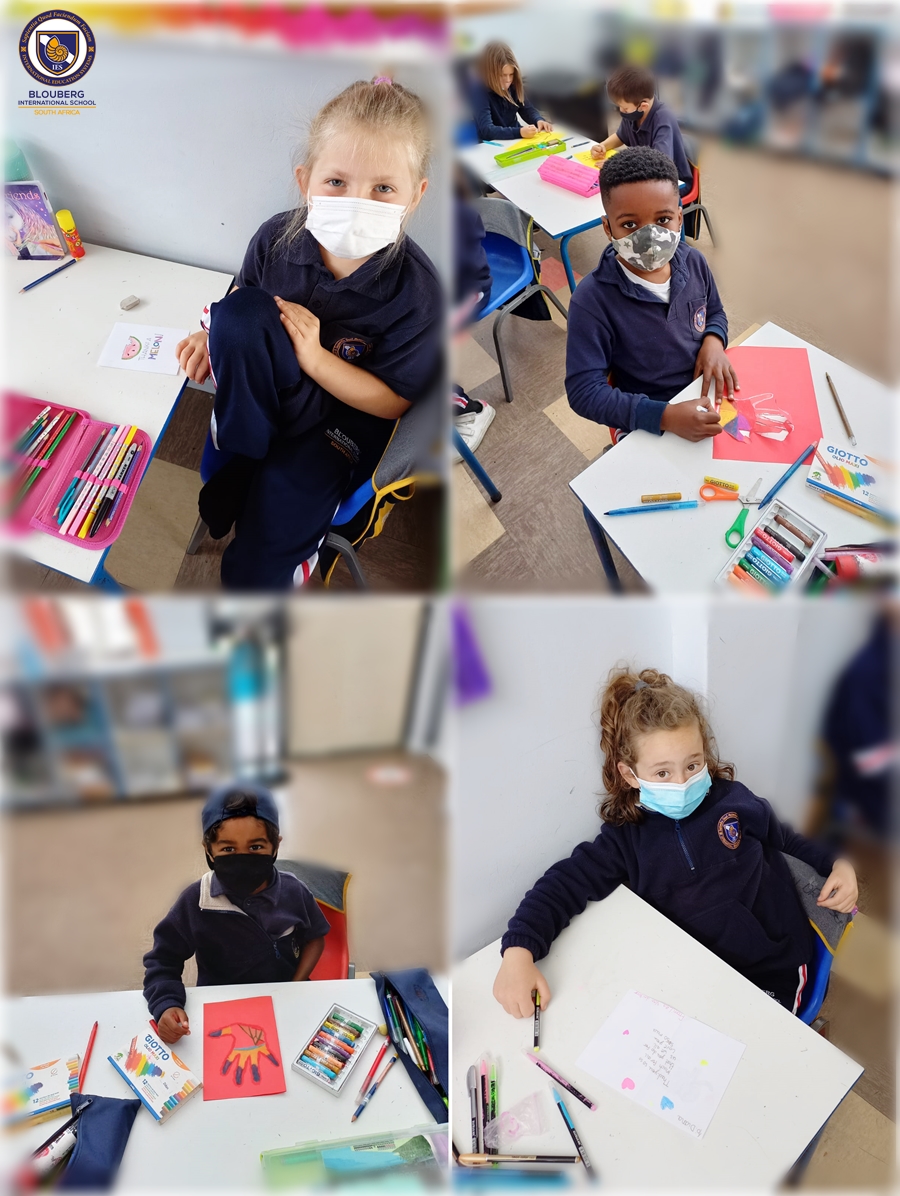
Luckily, children really enjoy making cards. It allows them to explore their creativity. What teacher, parent or friend isn’t delighted to receive a handmade card from a child? Just give them cardboard, colouring crayons, scissors and glue and the results are a work of love.
Kim Coetzer
Year 2 Teacher

Read More

Science – An Animal Nursery
This term, the year 1 students have enjoyed the Science theme, Being Alive. The students have learnt how to identify if something is alive or not. It is alive if it grows, breathes, eats and reproduces.
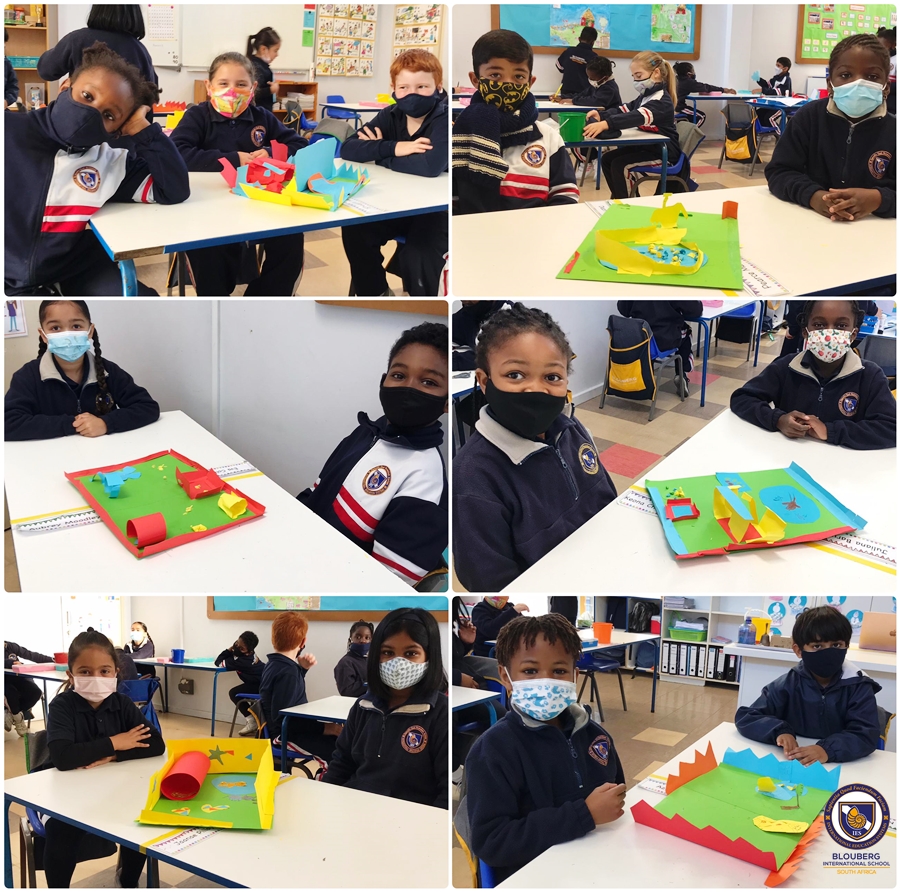
This week we learnt about baby animals and how to care for them. The students had to choose a baby animal and decide what it would need to grow to adulthood. They then worked in pairs and built the nursery using lots of creativity in their designs.
Well done Year 1!
Ann Cordner
Year 1 teacher
Read More
Hooked on Books – Year 2 Reading Fun!
“Books give a soul to the universe, wings to the mind, flight to the imagination and life to everything” – Plato
While reading is obviously important in order for us to understand the words on the page, it is also the foundation of one’s ability to learn, and ultimately our ability to function accordingly in an ever changing society. As children learn they no longer have to rely on their parents to read things to them – one of the most natural ways of building independence and self-confidence. As they read they begin to understand the world around them.
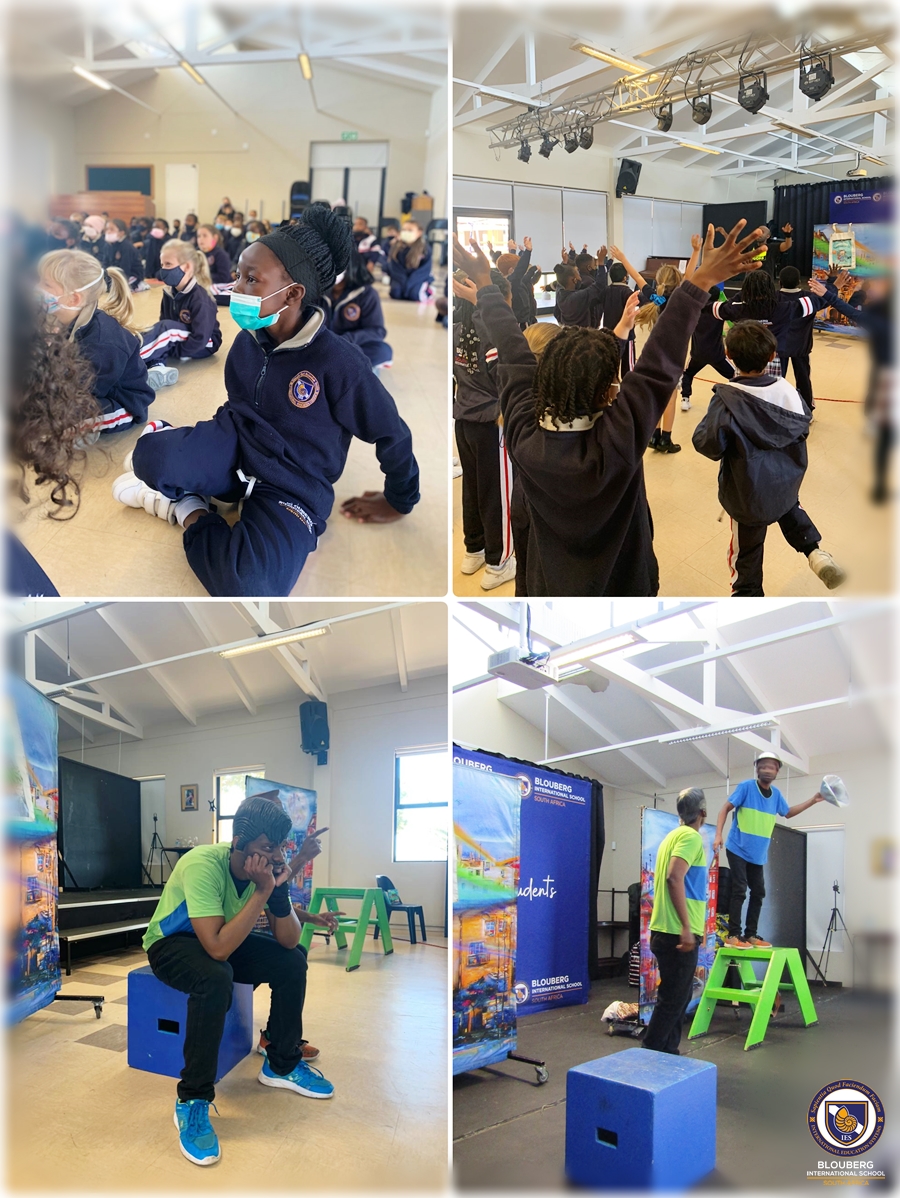
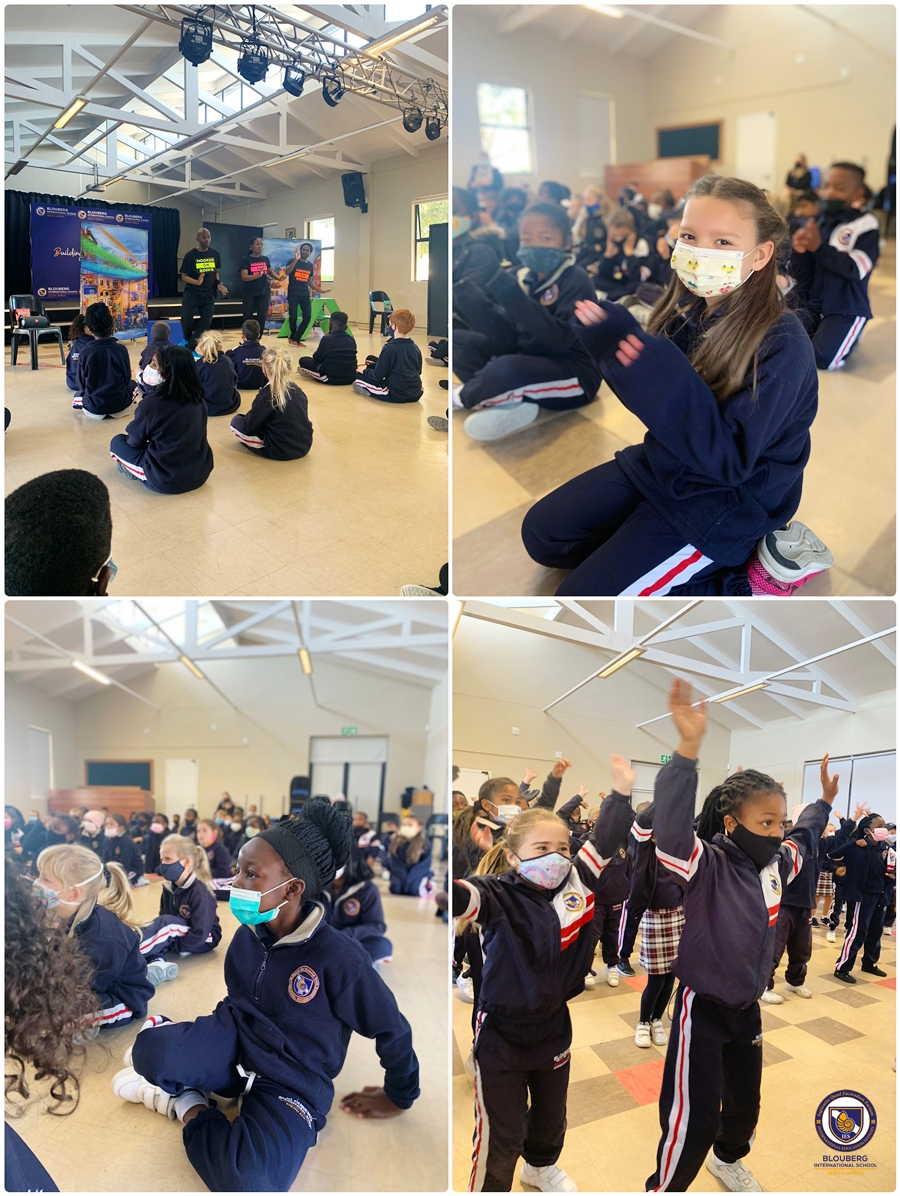
This week, our Year 2’s were lucky enough to experience the fun of Hooked on Books; is a touring Educational Theatre Company that has been igniting a love of reading in children across our country for the past 25 years. The Hooked on Books team dramatise book-trailers from contemporary children’s books, which change on an annual basis. The book-trailers provide a visual, dramatic preview of the book similar to that of a movie trailer. By leaving the story at a nail-biting cliff-hanger they entice the students to make a beeline for the library to find out how the story ends. Their secret is keeping the show simple and fun, encouraging students to use their imaginations to create make-believe worlds with colourful characters.
We had so much fun!
Siobhan Hendry
Year 2 Teacher

Read More
Our Senses – Year 3
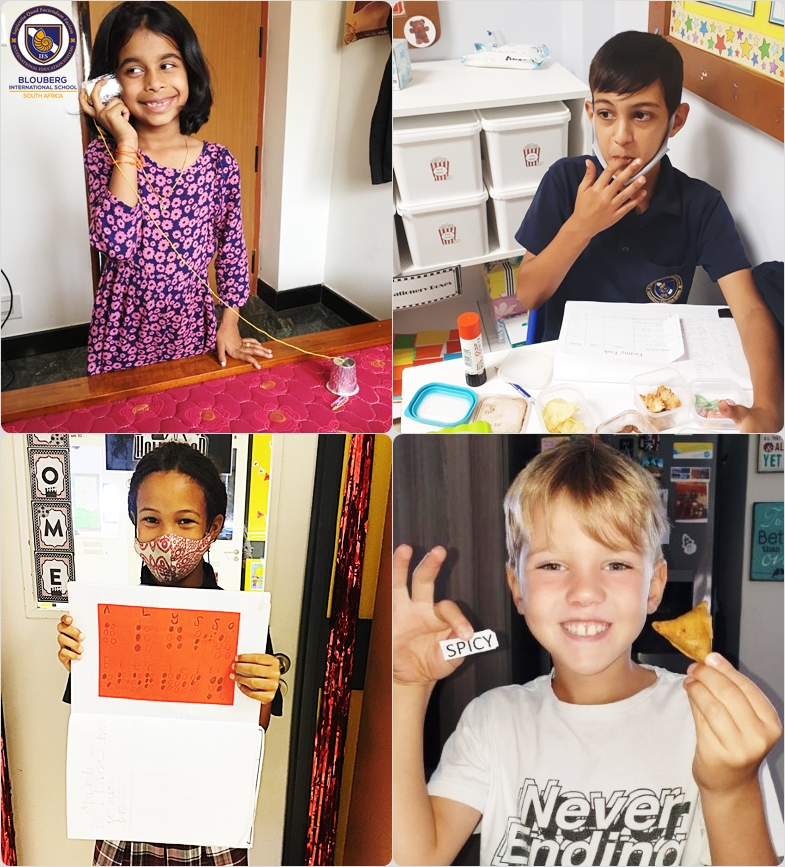
During the last few weeks of Term 1, we have been discussing and experimenting with our five senses. Although many of the students knew what their five senses are, they learnt so much more about them, using practical ways to explore them further and discover their importance.
Hearing:
Each student made a telephone using Styrofoam cups and fishing gut. They took them outside and learnt why it works so well. This is because the gut is dense, and the sound of our voices travels down the line and into the cup on the opposite side. Thus, allowing the recipient to hear what we have to say, even from a distance.
Sight:
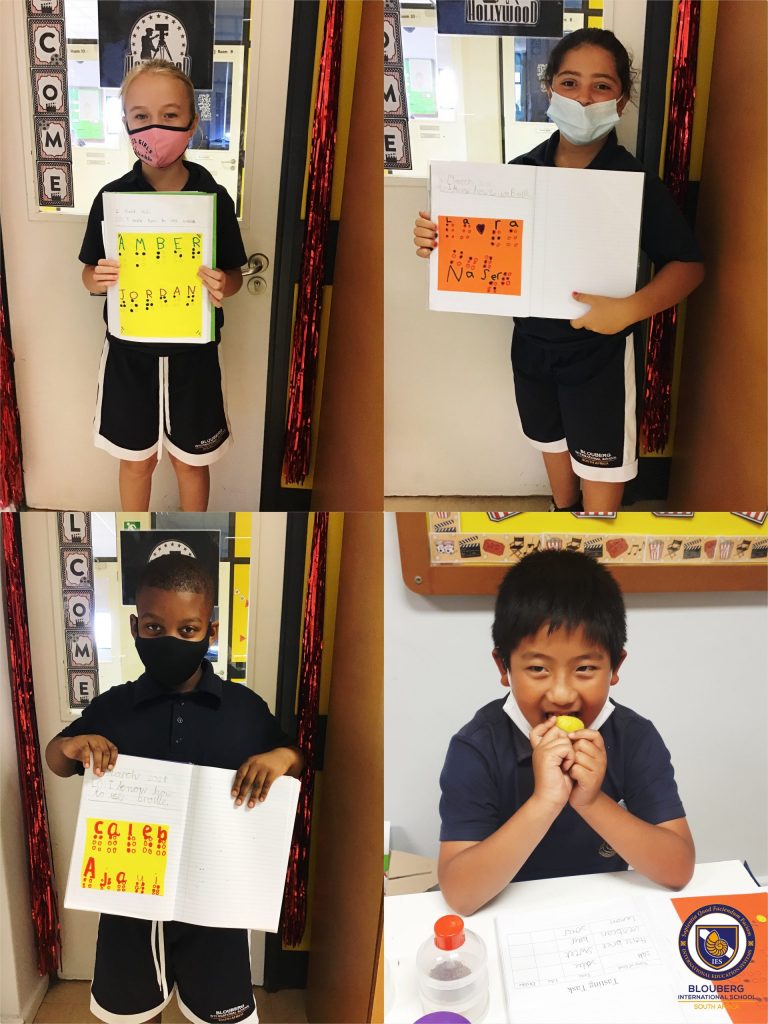
The students learnt who invented Braille and why it is so important. They saw what Braille looks like and had to use a Braille Alphabet to decipher words in a ‘Mystery Challenge’. Each student managed to write their name and surname using this amazing technique that many visually impaired people use all over the World.
Touch:
Each student was given a chance to choose an item while their eyes were closed. They had to describe it to the children in the class, and guess what they think it is without looking. It was rather interesting to see what a daunting task it can be to describe something using words, without seeing the actual item.
Taste and smell:
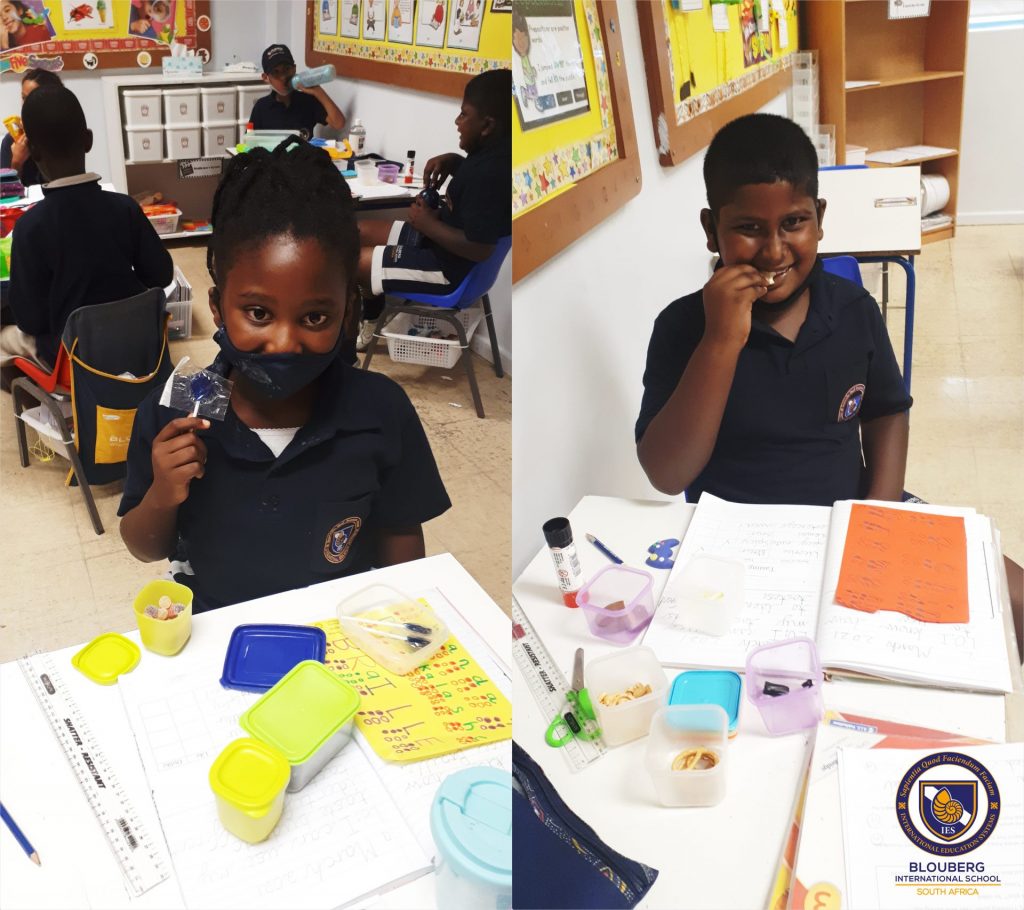
The students were asked to bring in small containers, containing something that tastes sweet, salty, bitter, sour and spicey. They had the opportunity to first smell each one and describe how it smells. Each student then had to fill in a table to say if they liked the taste or disliked it. The tasting bit was super fun! Just not bitter and sour. Those flavours received a number of thumbs down.
Next, the students will be making ‘Taste Monsters’ to complete their tasting experience. I am looking forward to seeing how those will turn out.
We hope that our Year 3 students will continue to experiment using their five senses, and always remember why they are so important.
Wendy Menton
Year 3 Teacher
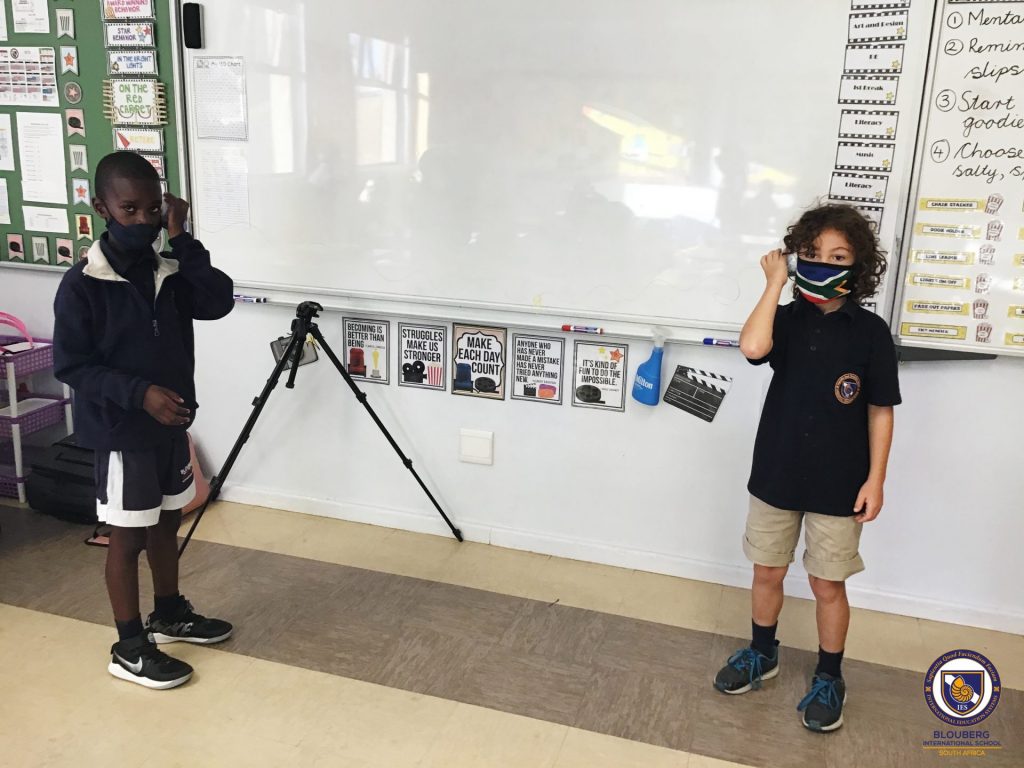
The Time of Our Lives
Self-reflection: the single biggest driving force in the journey of personal growth. In order to decide where we are headed, we need to recognize how far we have come!
To start off 2021, the Year 5’s spent some time looking at the idea of chronology, timelines and the important milestones in our lives which have brought us to where we are today. We did some research on our own history – beginning at birth – and presented our lives back to our classmates with the help of some beautifully creative visual aids.
Through this task, we were able to take a look at where we have come from, and subsequently consider where the near future may carry us.
We, the Year 5 teachers, were blown away by the effort, pride and creativity displayed by our students in completing this project, and are excited for our cameos in Chapter 2021!
Robyn Pieters
Year 5 Teacher






Year 7 & 8 English – Assignments
What makes a good assignment?
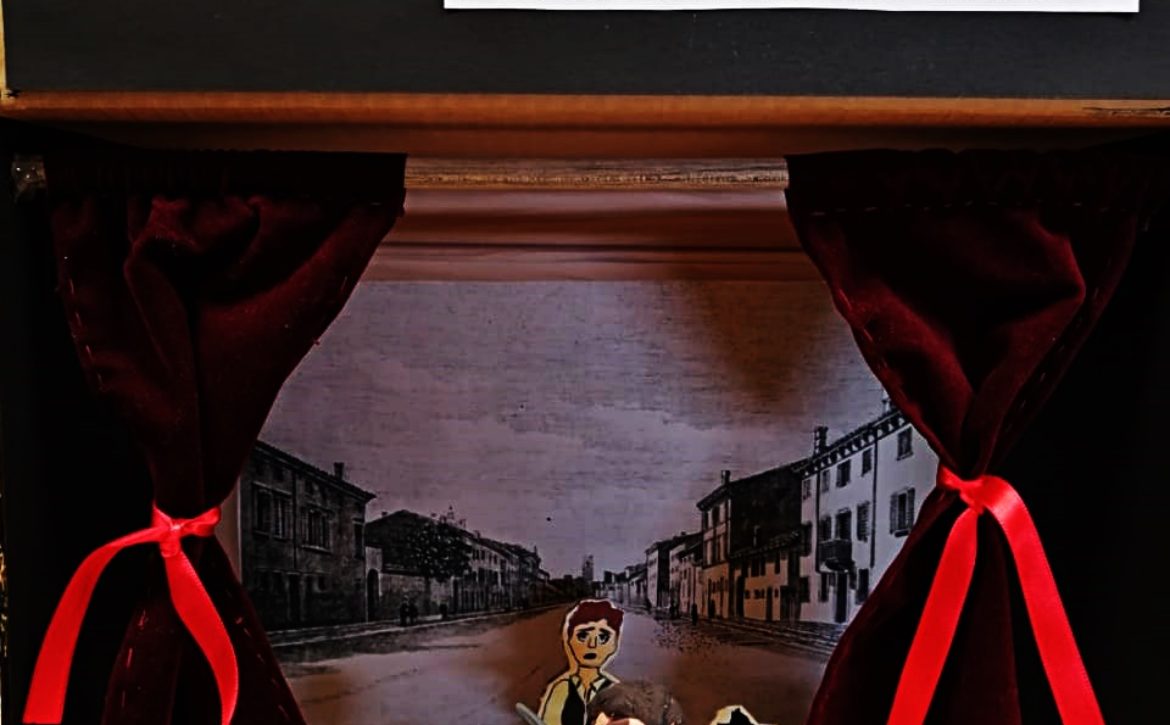
This term, the Year 7 and 8 students had to complete a creative assignment for which they had a variety of options from which to choose. These ranged from practical tasks supported by explanatory theory, including dioramas and masks, to written assignments like articles and essays. All were aimed at revealing student understanding and interpretation of a literary text.
The Year 7’s focused on the drama Romeo and Juliet, by William Shakespeare, and the Year 8 students centered theirs around the novel Lord of the Flies, by William Goulding.
Having taught English for many years, I have seen students produce assignments that were of the highest standard, with insight and creativity beyond their years. In stark contrast to this, many students put little to no effort into their work, belying their capabilities.
I am pleased to say that the majority of students at Blouberg International School had my soul singing with their astute, inspired and detailed projects. What is more important is that they took on the challenge and were, through their intensive efforts, beaming with pride in themselves.
One might wonder what it takes to produce a project that will bring a teacher to joyful tears.
Beyond carefully following the instructions and ensuring that all of the necessities are included – which will certainly result in a good mark – there are a few ingredients every student could add to their scholastic recipes.
Below is a list of strategies every student should attempt when tackling their next daunting assignment:
- Begin with the task as soon as it is assigned. Even if you work on it a little every other day, this will provide ample opportunity to clarify concerns you may have with your teacher or to correct any mishaps that may arise.
- Pay attention to the instructions. Use it as a check list to ensure that you have included all of the elements essential to the task. Tackle every objective.
- Use the resources your teacher provides, but conduct your own research as well. There are many reliable sources online.
- When compiling your research data, use only key words and phrases from your sources and rewrite information in your own words unless quoting. Always cite your sources. Your teacher wants to test your skills and understanding, not that of a university graduate – or a parent.
- Include your own opinion, but ensure that it is backed by fact. One should not have the opportunity to question your ideas, they should clearly link to accurate information.
- Thoroughly edit your assignment to safeguard against any trivial errors.
- Work as neatly as possible. A task that is well-organised and tidy immediately appears of a higher quality and will be more pleasant to assess. It is arduous for teachers to mark work that is illegible or poorly structured.
- Use your own initiative, be as creative as possible within the task framework and go the extra mile. Teachers revel in the little details you include and enjoy it when you think outside of the box, sometimes astounding us with components beyond that of the grade requirements and insights we might not have considered.
Students who used all or most of these strategies in this term’s assignments deserve an honourable mention:
– Catherine Fortuin 7B designed a beautiful diorama for which she created clay figures on a stage setting in the throws of an important fight scene between Romeo and Tybalt. Her talent and attention to detail is admirable.
– Marco de Mattos 7A cleverly included a public announcement and advert with his article about the deaths of Romeo and Juliet.
– Maya Mthwana of 7A designed a well-written, neat article, closely adhering to layout requirements.
– Mihlali Lumkwana of 7A went to great lengths to create her storyboard for Act IV in Romeo and Juliet.
– Ryan Barker in 8A put great effort into his Lord of the Flies Survival Manual. He’s the one with whom you want to end up stranded on a deserted island.
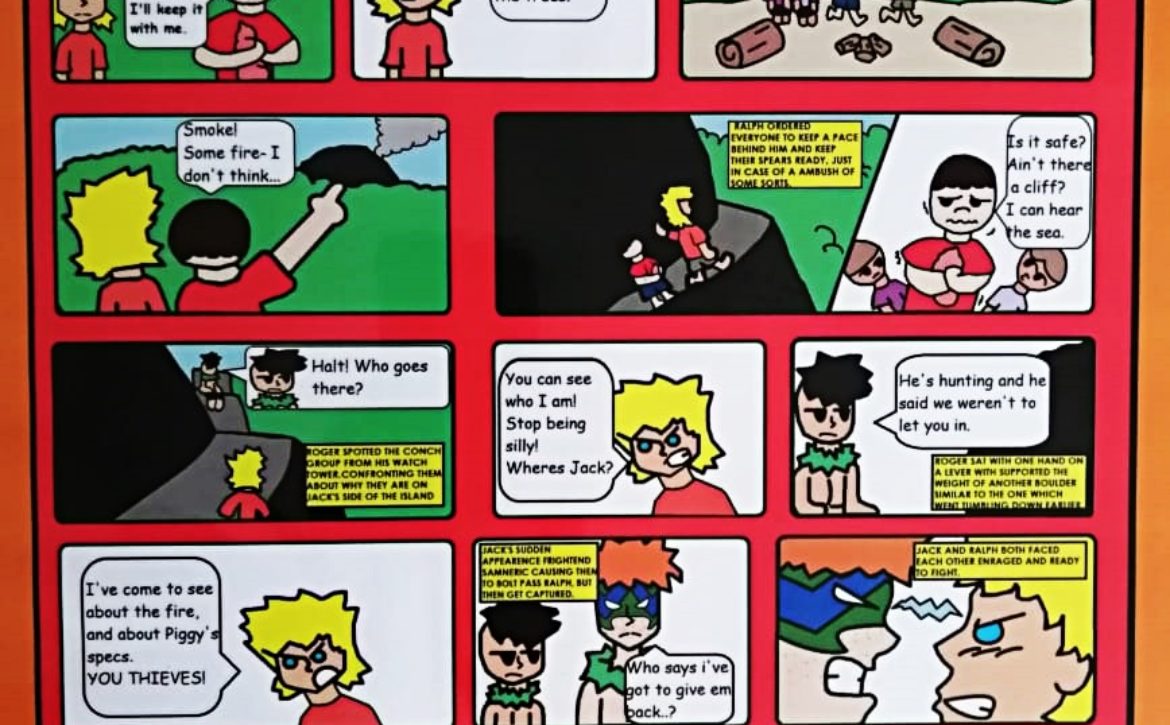
– Vincent Chamunorwa, 8B, designed an inspiring cartoon for Chapter 11 of Lord of the Flies. He has incredible talent!
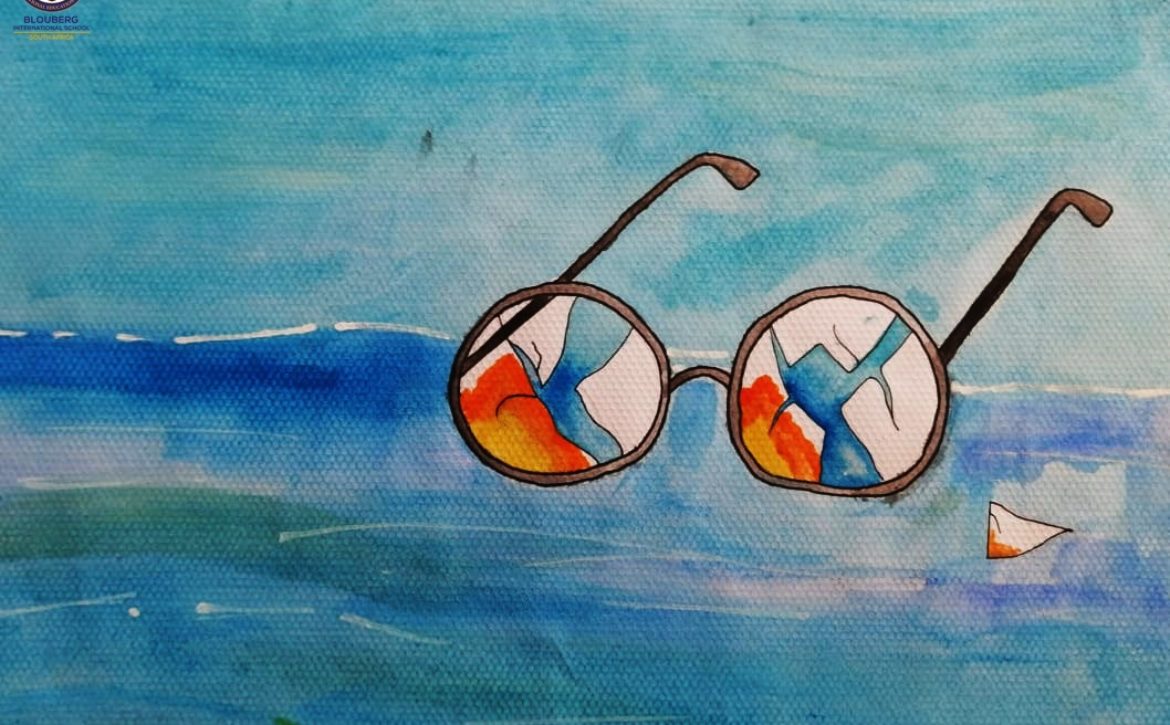
– Athena Thomas, 8B, has a gift for watercolour painting. Her contributing explanation as to what Piggy’s glasses in Lord of the Flies represents was thorough.
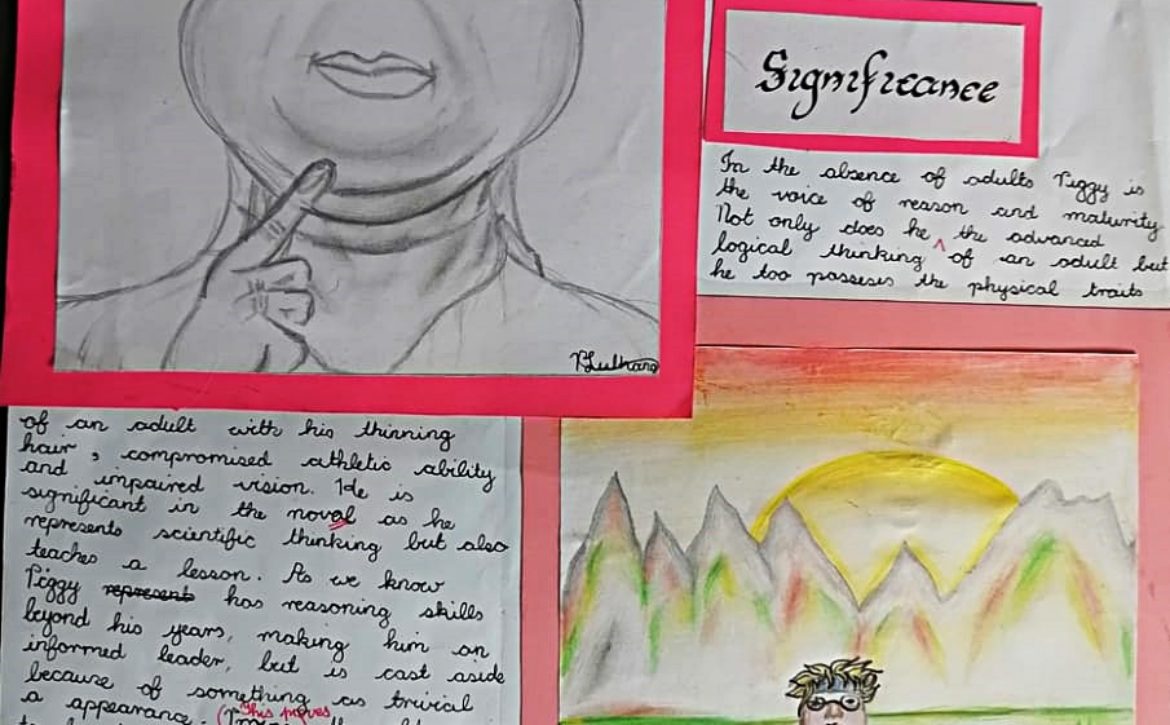
– Philade Luthango’s poster (8A) about the character, Piggy, immediately caught everyone’s attention due to its bold design and beautiful drawings.
– Layla Moodley, 8A, went the extra mile by designing a symbol to represent each chapter in her plot diagram of Lord of the Flies.
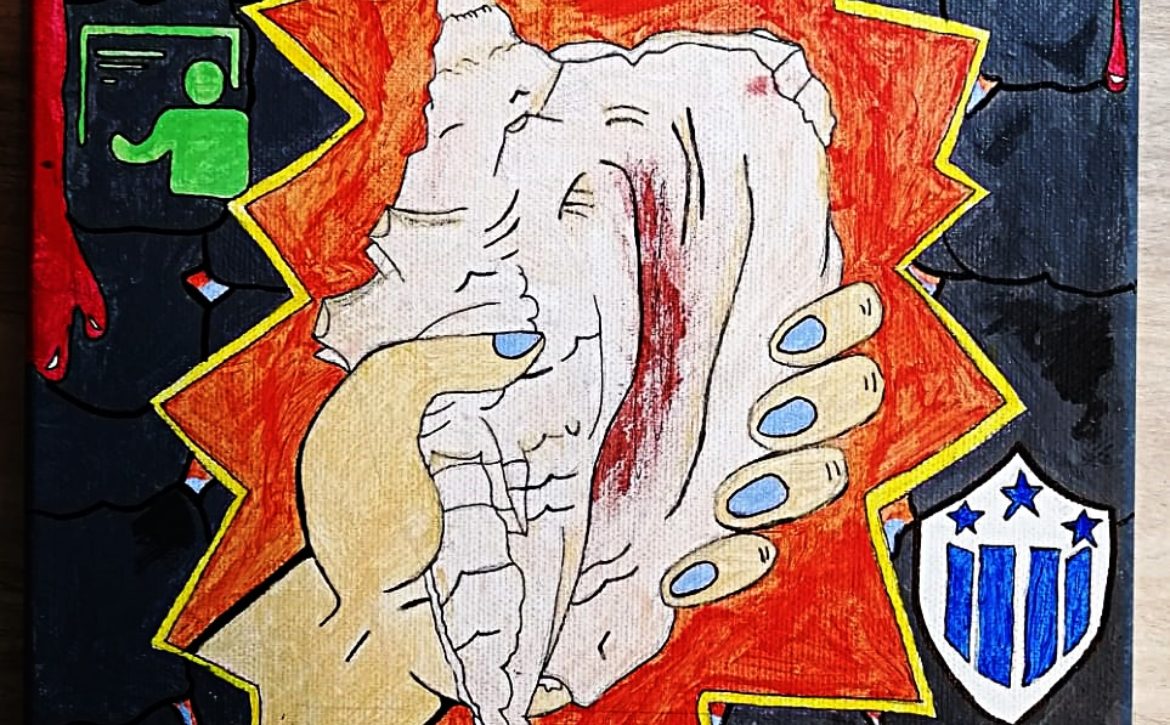
– Taylor Williams, 8A, not only painted an extremely detailed image of the conch from Lord of the Flies, but ingeniously included symbols associated with it and presented her explanation on a creatively designed poster. Her attention to detail is admirable.
– Mia Ross in 8B moulded these fantastic masks to her own face and painted them to represent characters from Lord of the Flies. There is even symbolism in the colours used.
– Oscar Berger, 8B, wrote a fantastic essay in which he explored the theme of Civilization versus Savagery in Lord of the Flies. His oral presentation was accompanied by a PowerPoint presentation filled with bold sub-headings and images to bring his points home. This was a far better option than simply reading out his essay.
There are more students I could individually praise, but alas I will simply state that I am ever so proud of all of the Year 7 and 8 students as I know that they put in their best effort.
Genevieve Kerswill
High School English Teacher




Why projects, posters, models and presentations?
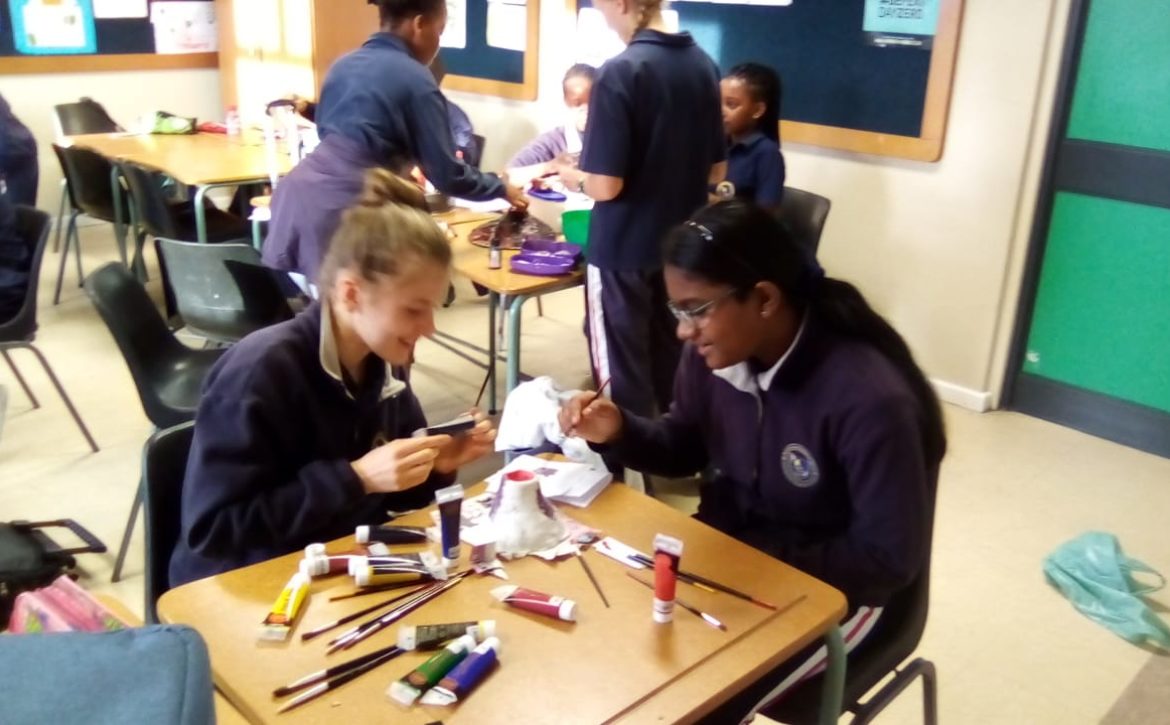
During the course of your child’s educational career they will be required to participate in projects, posters, models and presentations in many of their subjects. Some students prefer this method of learning, reveling in the creativity they can display, while others groan and moan about what the point is. Posters and models are not implemented just for display. They have significant value in the learning process and stimulating cognitive development. Yes, they do brighten up a classroom and provide relief from the normal assessment routine, but really, what is the point?
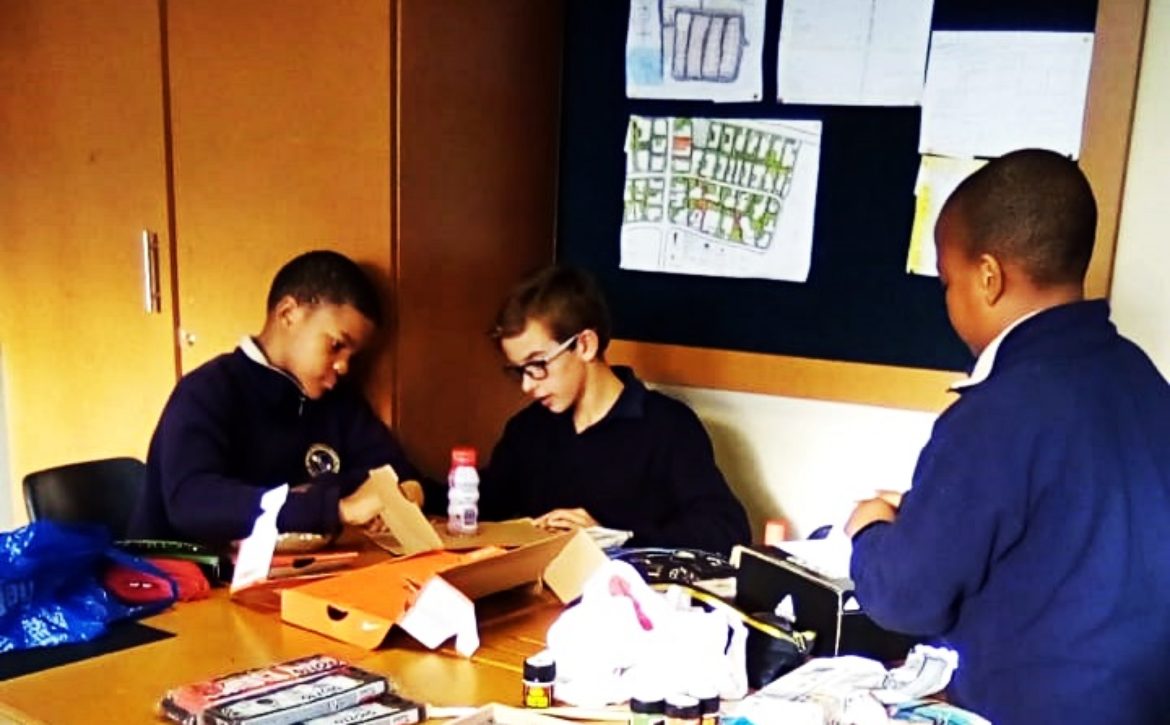
Projects, posters and models can have quite a positive effect on the process of learning. The advantage of these types of activities is that it promotes team work and understanding, along with facilitating creative thinking, extensive research and reading. It provides students with an opportunity to learn by doing, in turn strengthening their understanding of the concepts being explored. Students are able to visually represent the key points and while presenting, elaborate on the topic which facilitates their retention and recall of events and facts. Projects, posters, model making and presentation are also effective tools for evaluating the students’ knowledge and creates opportunities for active discussion and participation. Be it the traditional posters, handmade models or technologically advanced computer presentations it is evident that they can actively engage students in the learning process.
(credit source: The professional learning board)
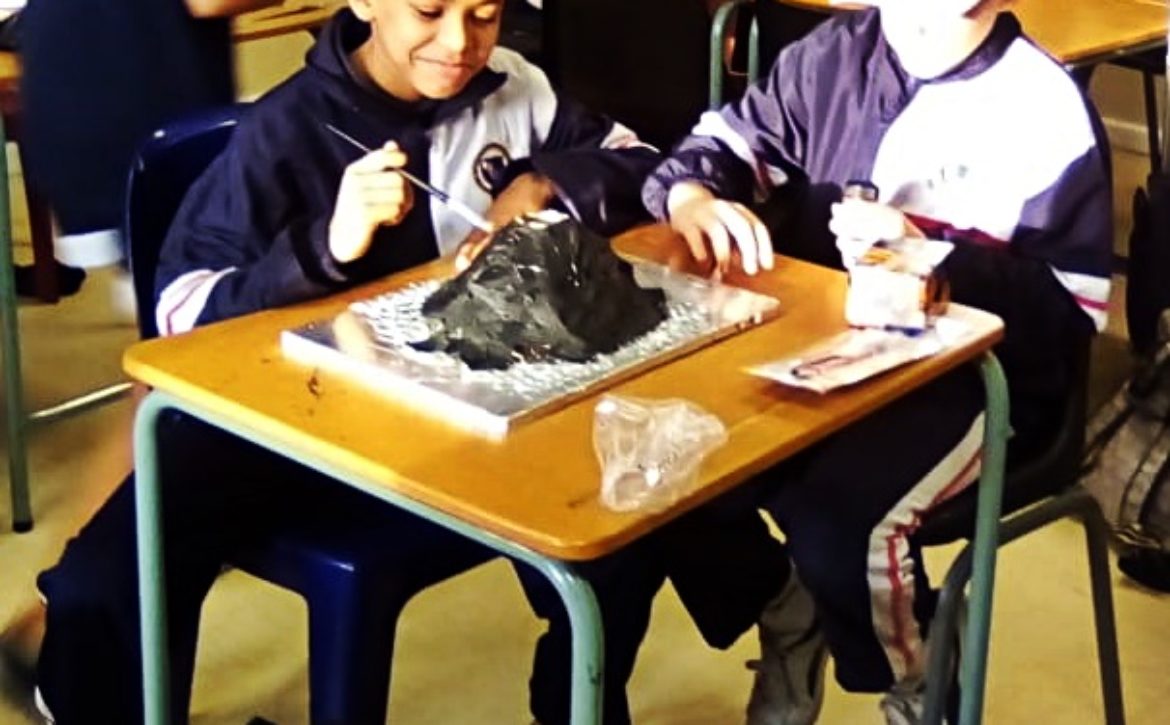
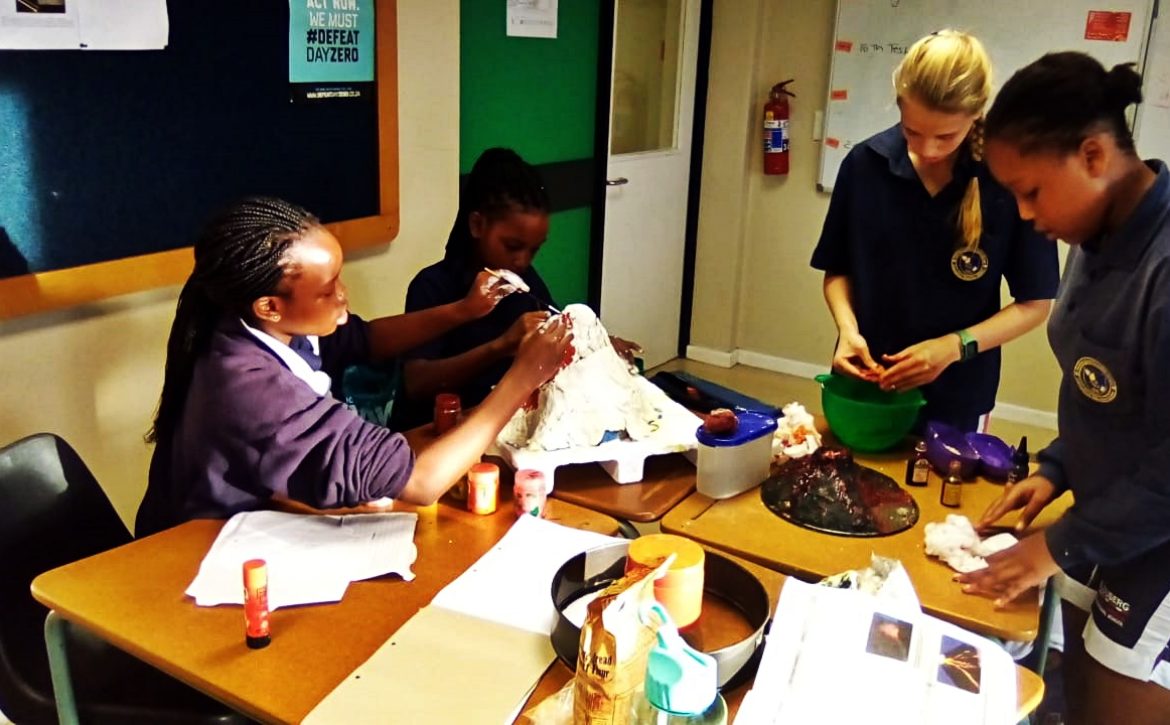
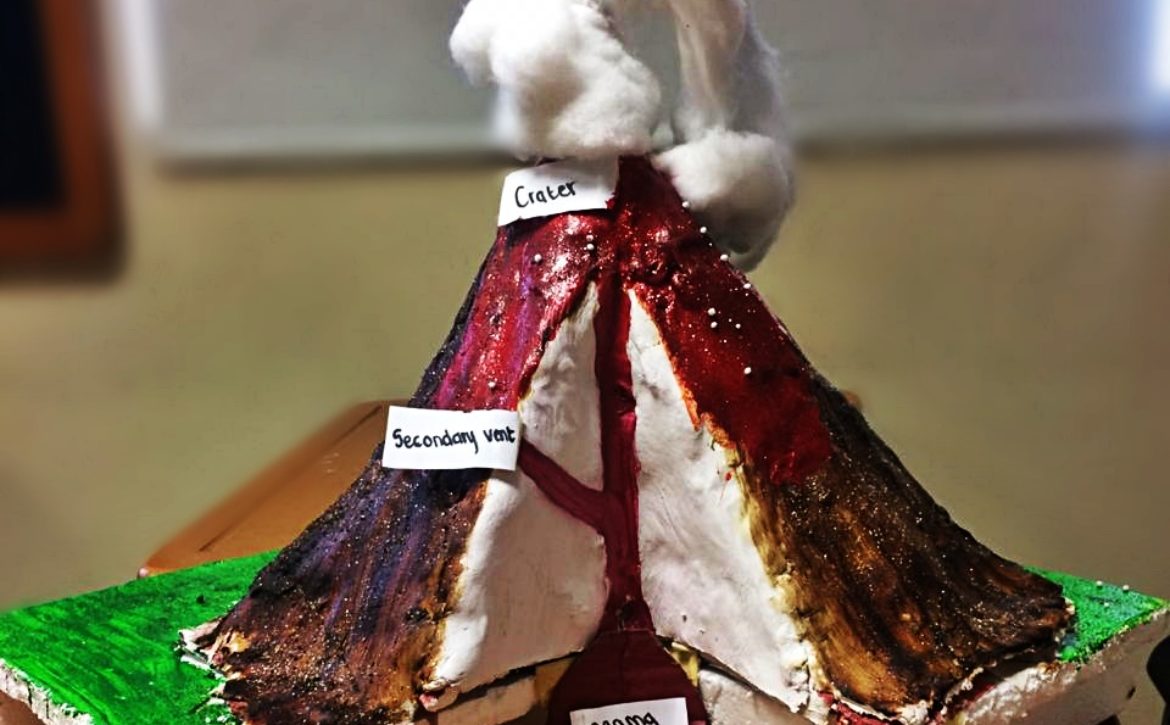
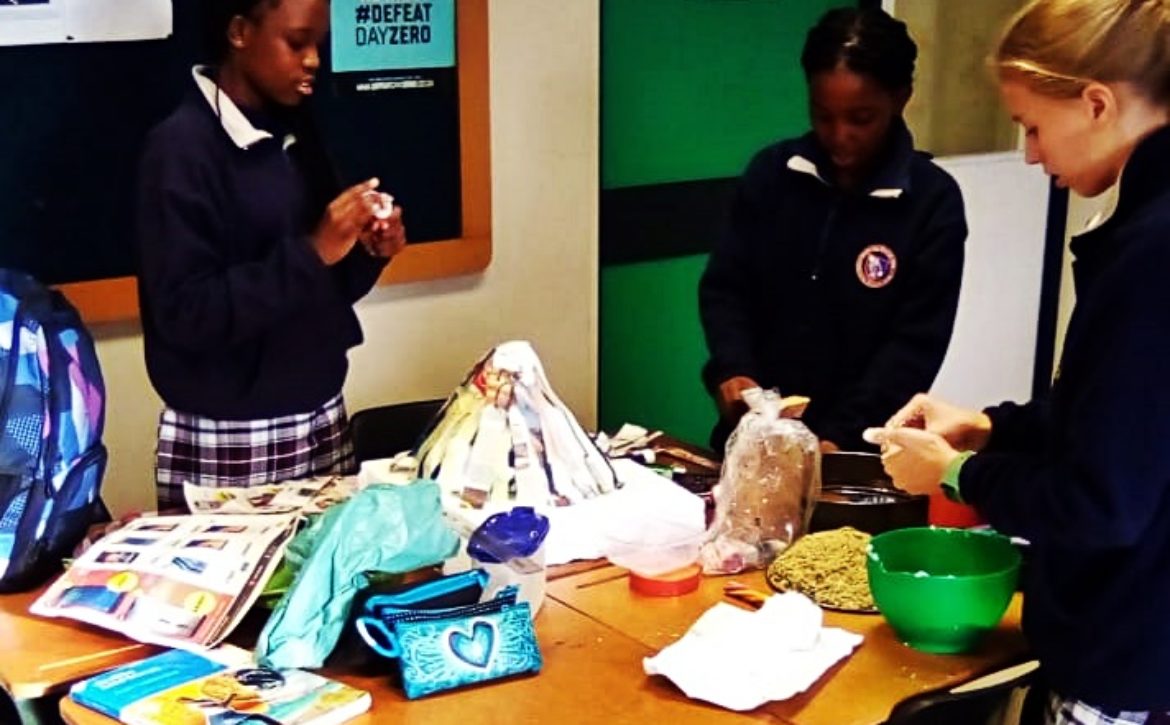
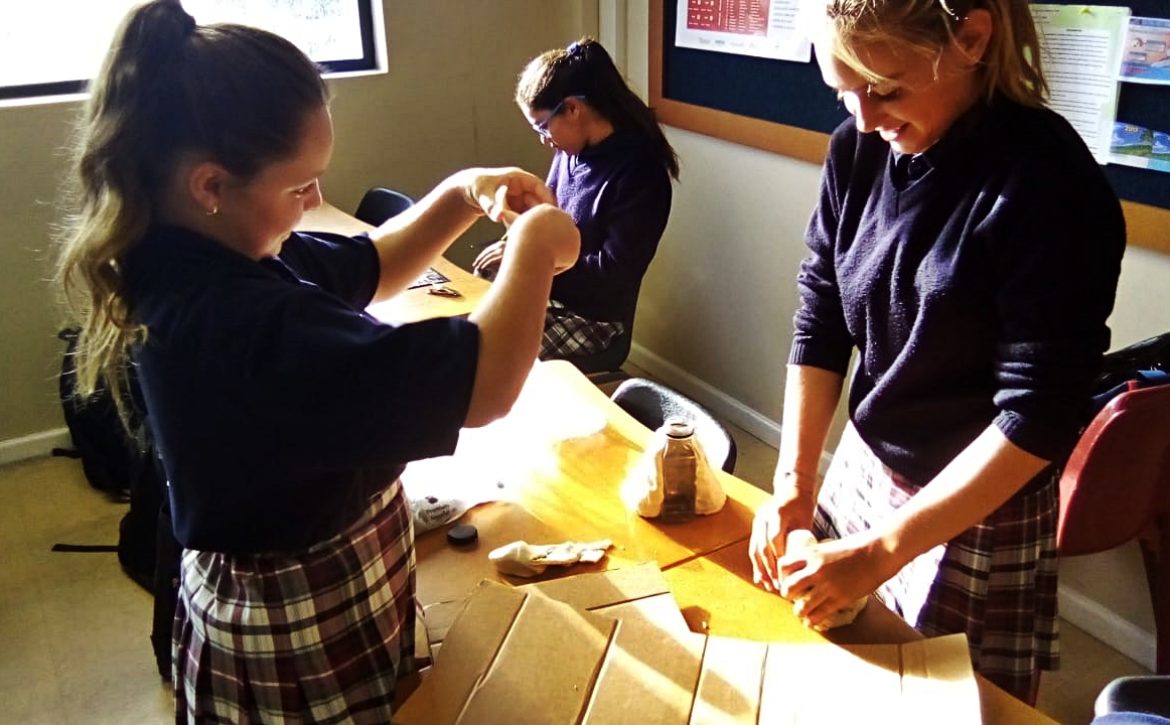
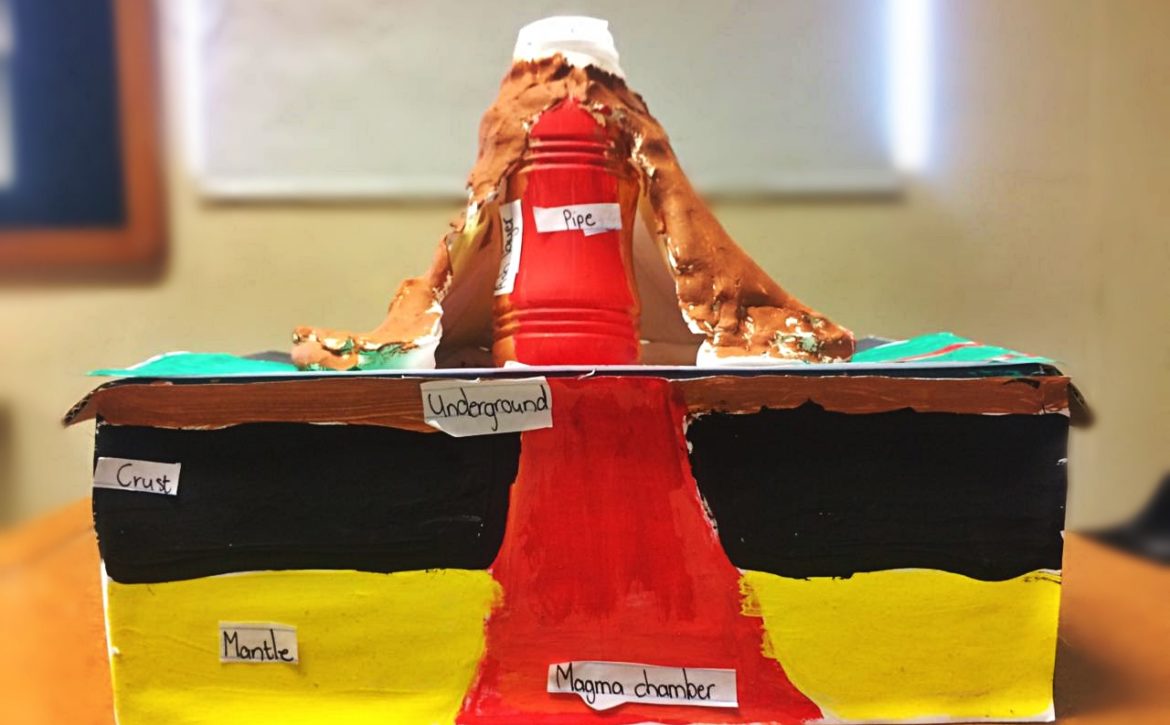
The year 7’s produced models of volcanoes with Mr Alex Fraqueiro this term in their quest to find out more about our earth and what goes on inside it. This activity helped them to identify they key features of volcanoes and what makes them erupt. They produced some beautiful and physically correct models of Strato-volcanoes (composite volcanoes) and thoroughly enjoyed the learning process behind it.
Janine van Niekerk
High School Geography
Skeletons in Year 4
The Year 4’s have been learning about Skeletons in Science. We have covered what skeletons are made of, why we need a skeleton, how muscles help us move and many other interesting facts.
Did you know that there are 206 bones in the human body?!
The students were always enthusiastic and willing to take part in the lessons and came to class full of questions. They took part in the “bend a bone” experiment which involved the leaving a chicken bone in vinegar for a few days. It was very exciting to see what happened to the bone at the end of the experiment, however we all were delighted to get rid of that “wonderful” vinegar smell in their classrooms!
The Year 4’s also built their own skeleton puppets out of recycled materials. So much effort was put into this, they really impressed their teachers. The students’ innovative abilities really shone through here and it was so pleasant to see how well they worked as a class, always offering to help each other!
If you would like to find out more about skeletons, please speak to our wonderful Year 4’s!
“Creativity is intelligence having fun.” – Albert Einstein
Miss Brittney Hakime
Year 4 Teacher


Key Stage 2: NATURAL DISASTERS
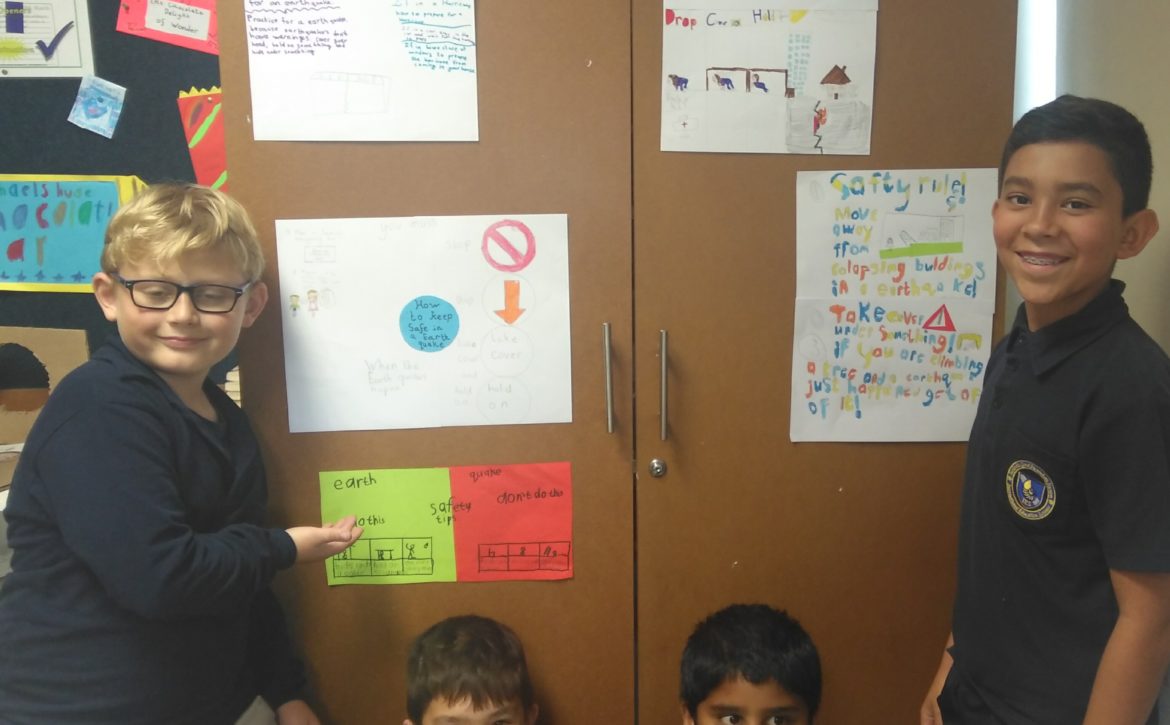
The Year 4’s have been learning about Natural Disasters. We have learnt about Tsunamis, Floods, Tornado’s, Earthquakes and Volcanic eruptions. We even had a look at our current local natural disaster happening in Durban and all the damage that the floods have caused. We have made collages of Tornado’s in art and presented orals on our choice of Natural disaster, explaining how the disaster occurs, where they occur and how to keep safe when a disaster strikes. This has been such an interesting topic especially since we can relate it to current affairs around the world.
Bridget Neal
Year 4 Teacher