
Building inspired students with The President’s Award at Blouberg International School
In 2019 Blouberg International School introduced The President’s Award and joined many of our international IES and SEK schools who are also doing The President’s Award.
For more than 35 years, The President’s Award has been making sure that young people develop a lifestyle that gives them the valuable life skills required to pursue their ambitions.
The President’s Award’s mission is to empower young people between the ages of 14 and 24, by providing a balanced, non-competitive framework for self-development that will increase their self-esteem and enhance their capacity to achieve in whatever context they find themselves; enabling them to become responsible active citizens within their communities.
The benefits of achieving The President’s Award at any level are endless. The Award is about helping you along the path to a productive and prosperous future. As many of our participants say, it’s a life-changing experience.
“Participating in The President’s Award gives one the edge over others when you apply for college, university or a job. Universities want to see evidence of so-called soft skills that you have developed through extracurricular activities, such as communication, commitment, leadership and teamwork. Your President’s Award is a fantastic way to demonstrate these skills in practice.”
Formal education alone is not enough to equip young people to be world ready. According to business leaders, the following skills are considered important in helping young people become ready for the world in the order of importance:
- Individual Skills
- Analytics
- Social Skills
- Humanitarian Skills
- Technical Ability
This leads to longer-term impacts, such as:
- Improved employability and earning potential
- Improved physical health and fitness
- Improved mental health and well-being
- Increased engagement with charitable and community causes
- Improved environmental impact
- Increased social cohesion
- Reduced offending
Students from 14 years old and up to Year 12 are encouraged to enrol for The President’s Award.
For more information contact Mr Riaan Vosloo (riaan.vosloo@iesmail.com), Ms Caroline Grix (caroline.grix@iesmail.com) or Heidi La Bercensie (heidi.labercensie@iesmail.com).
Kind regards
The President’s Award Team
Read More
Becoming A Biologist In South Africa
It is certainly not new information that we live in one of the most diverse countries in the world when it comes to South Africa’s endemic flora and fauna. In fact, according to SANBI, we are ranked in the top 3 countries with the highest percentage of endemic species. South Africa is estimated to be home to almost 100 000 endemic floral and faunal species, as reported by BIOFIN. Our floral diversity is estimated to be just short of two thirds endemic, with our reptiles, amphibia and marine species to be around half.
South Africa is a well-recognized biodiversity hotspot, with the Cape Floristic Region hosting almost 10 000 vascular plants, with a staggering endemism percentage of almost 70%. Endemism and biodiversity in South Africa have clear intrinsic value. Apart from that, it has been an enormous driving force in our tourism. It is also important to recognize its role in employment opportunities, alternative or traditional medicines, and environmental education.
So, what do we need in order to conserve this incredible ecological gift that we have been given? More importantly, who are the people behind conserving it? Unfortunately, conservation is not often second nature to us. We live fast paced lives driven by consumerism. Playing our part in conserving the Cape Floristic Region, our pride and joy, starts with being educated on its value and importance. Whether this is intrinsic value, monetary value or some other value such as preserving genetic variation, the development of herbal remedies and traditional medicines, or simply a feeling of stewardship.
An ecologist from Senegal, Baba Dioum, summed it up quite well: “In the end, we will conserve only what we love, we will love only what we understand, and we will understand only what we are taught.”
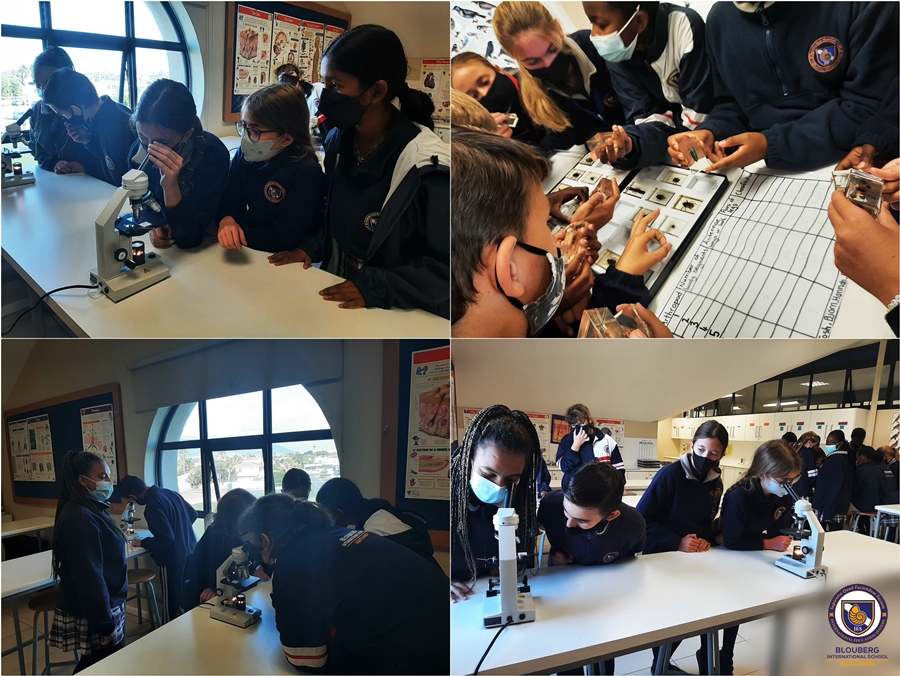
Education is the starting point to truly assigning value to something. In order to feel the drive to take an active part in conserving our country, one needs to realise its value, and what better way to do this than through receiving an education in Biology in one of the most unique countries in the world? Getting students excited about our natural world starts at an early age. At BIS, we incorporate practical implements to our coursework by allowing the students to see, hear, touch and experience. Practical work allows students to place their coursework into context with the real world, while also deepening their understanding of the topic. We as teachers are looking forward to the rest of our journey in guiding the next group of conservationists, farmers, park rangers, botanists, environmental educators and so much more.
Nadia Viljoen
High School Biology teacher

Read More
Preparing For Examinations
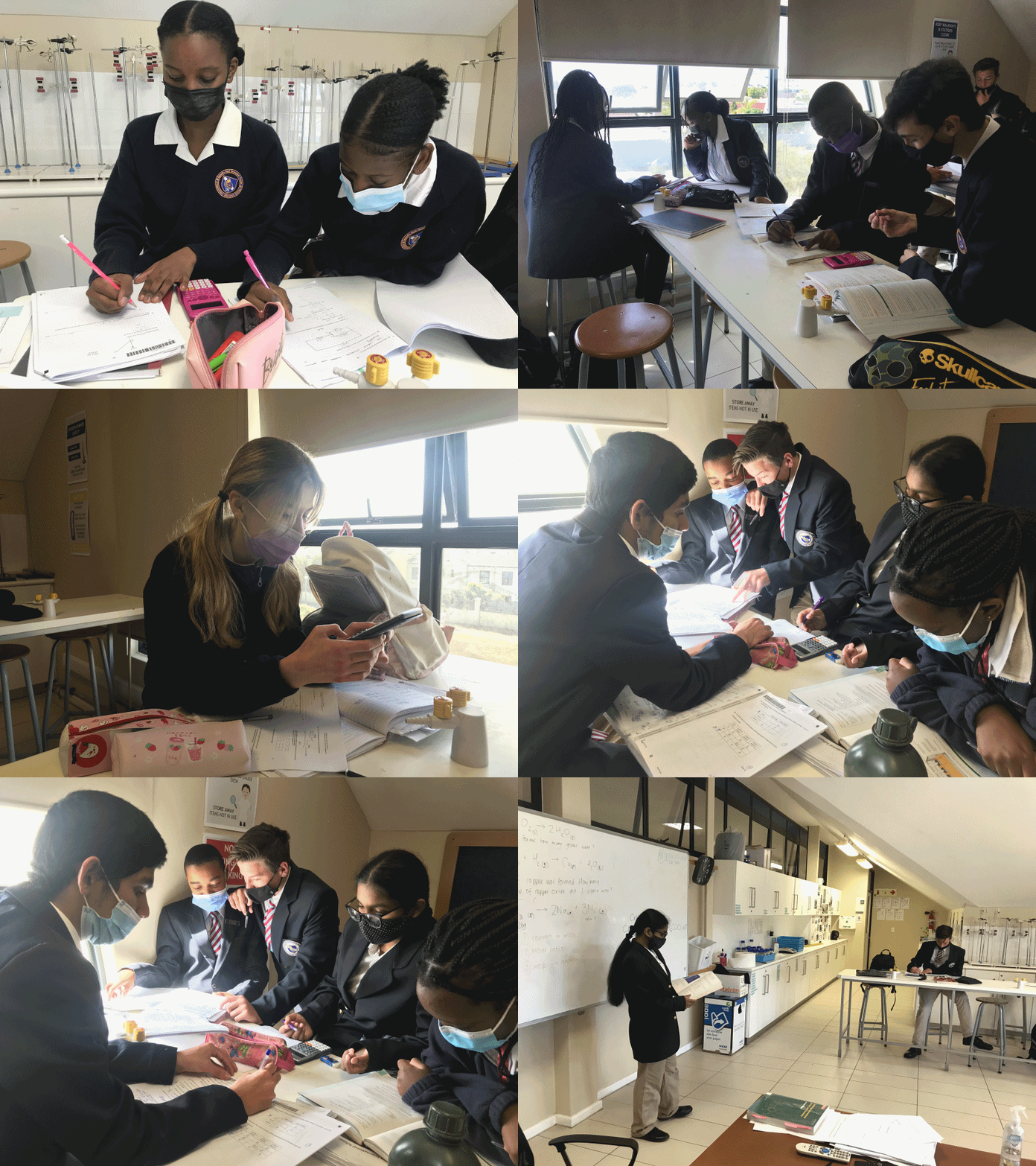
Our June examinations are around the corner and preparing for examinations is just as important as studying for your subjects. Below are some helpful hints on how to prepare for your examinations:
Helpful hints
- Familiarise yourself with your examination timetable.
- Ensure that you know exactly:
- what work will be covered in each subject,
- the format of each examination paper,
- the time allocation,
- the equipment that may be needed for the examination (e.g. calculator for Mathematics).
- Get copies of old examination papers and worksheets (IGCSE and AS/A Level).
- By now all your notes should be up to date and you should have all that you need to study effectively for the examinations.
- Prepare your study area. Some things to consider are:
- have a good source of light
- have lots of paper available
- a clear work surface
- coloured pens if you prefer to use colour
- light or unobtrusive music if you prefer to learn with music
Keeping healthy
- Eat fresh foods such as fruit and nuts. Pile up on the vegetables in the evenings and drink plenty of water and fruit juice to keep the flu at bay. The brain needs to be fed well in order for it to perform at its optimum.
- Try not to nibble on too many chocolates and sweets while studying.
- With that said, the odd sweet or chocolate will provide an energy boost when you feel really tired.
- Getting a good night’s rest is also important. Sleep will rejuvenate you and keep you going.
Just before the examination
- Get a good night’s sleep.
- Have a good breakfast.
- Arrive at the venue with time to spare.
- Make sure you have the right equipment, tissues, watch, etc.
During the examination
- Don’t rush into answering questions.
- Read the instructions at the beginning to ensure that you know how to answer all the questions and how many questions to answer.
- Read through the questions carefully.
- If there is a choice of questions, make your choice carefully. Underline key words in the questions.
- Stick to the time plan given to you by your teacher.
- At the end of the examination, if you have time, read through your paper to check that you have answered all of the questions.
Julian Harrison
Cambridge Examinations Officer




Read More
Physical Education
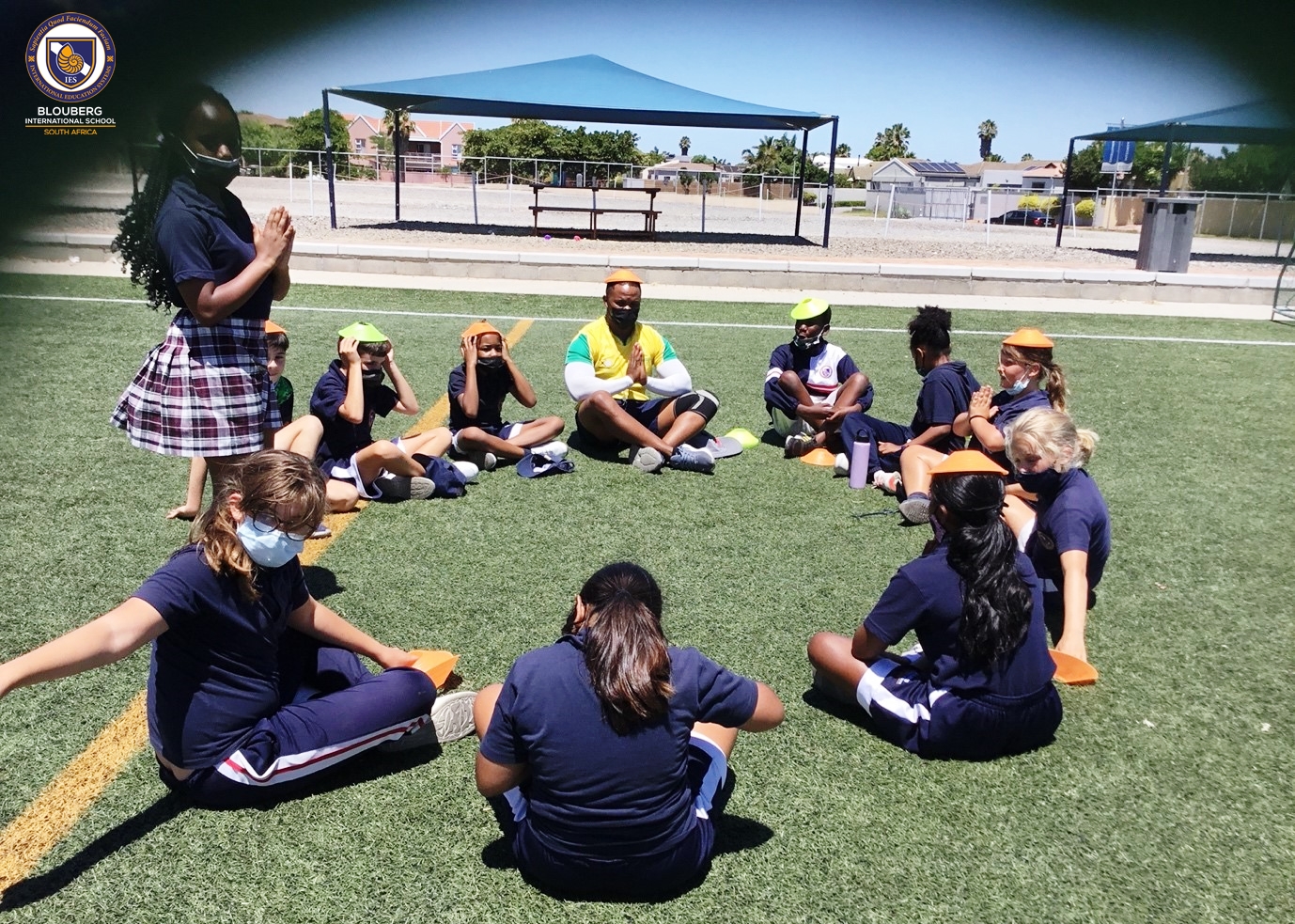
As we try to stay warm throughout the Winter sports season at Blouberg International School, we urge our parents and teachers to encourage each other in supporting and motivating our students to do their best on the sports field throughout the year.
Physical education uses exercise and information to promote healthy growth and physical development. It also encourages students to learn the facets of the curriculum involved and the benefits of participation in physical education and sports-related activities to the health and wellness of students from Pre-reception through High School.
Physical education is a course taught in school that focuses on developing physical fitness and the ability to perform and enjoy day-to-day physical activities with ease. Children also develop the necessary skills to participate in a wide range of activities, such as soccer, basketball, or swimming. Regular physical education classes prepare kids to be physically and mentally active, fit, and healthy into adulthood. An effective physical education program should include engaging lessons, trained P.E. teachers, adequate instructional periods, and student evaluation.
There has been a huge change in the schooling environment as we have seen in the past 2 years caused by the pandemic that is COVID-19 .
It has affected not only our sports in schools but also outside our schools in the way we think and live.
We come from being a nation that is brought together by our sports. Whether it be on a rugby, cricket, netball or soccer field within our beautiful country, we truly are a rainbow nation.
We have missed out on being inside a fully packed stadium with fans from all across the borders of the world, roaring in support of our favourite teams to being confined to our own spaces that are our homes.
Now that we are back outside on the pavilions ,inside the stadiums and in a better place as a country than we were two years ago, we hope to take this opportunity to explore, be adventurous and live a more fulfilling life than we ever have.
Our role as the Sports Department, Coaches and myself as The Physical Education teacher at Blouberg International School, is to bring out the best in our students on the sports field, to teach them about their bodies’ capabilities, and give them the opportunity to participate and challenge each other and themselves to becoming the best versions of themselves through our sporting activities on our PE and sports fields.
Our goal is to be one of the best sporting schools in our district, to produce well informed and educated athletes who are dedicated to their dreams and aspirations on and off the sports field.
We focus on creating an unforgettable sport schooling experience that will be engraved in our students’ memories forever. We would like to thank our parents for their support and may it continue as we build our school to be the best that it can be.
Once again, we urge our parents to give our students an opportunity to be a part of this wonderful adventure and give support to our coaches and staff on our sports fields, and build relationships with them that will be in our BIS family memories forever.
Mpho Mahlangu (Coach M)
Physical Education Teacher & Wellness Coach
Read More
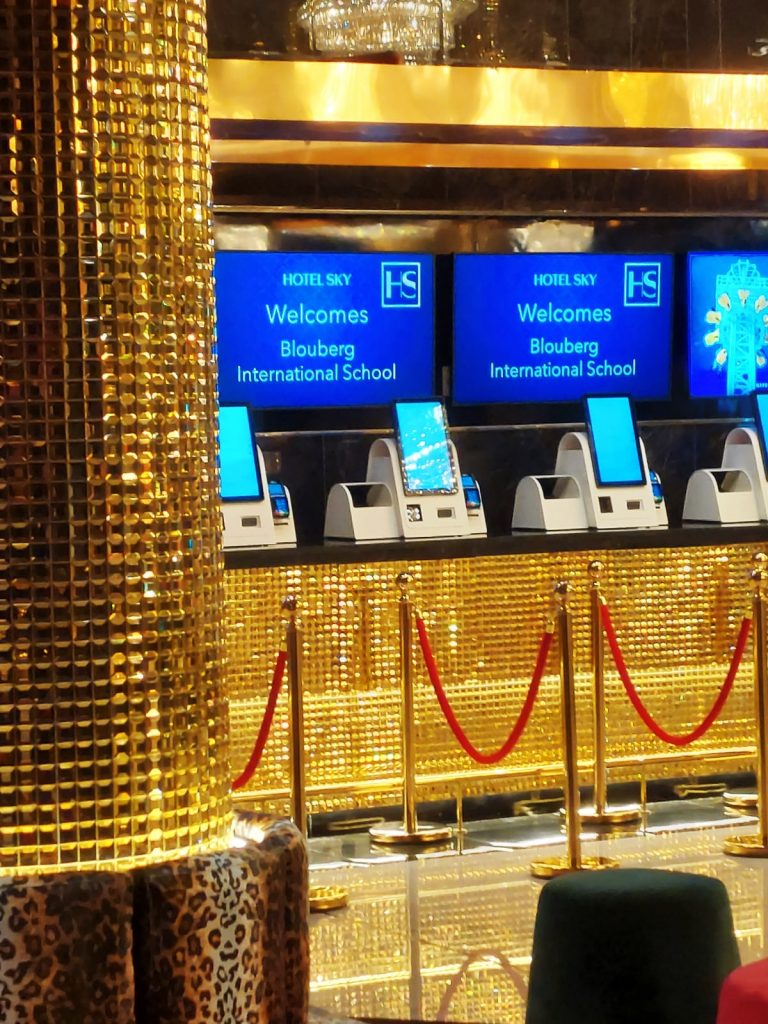
Year 9 Travel & Tourism and Art students’ Outing to Hotel Sky and the ZEITZ MOCAA
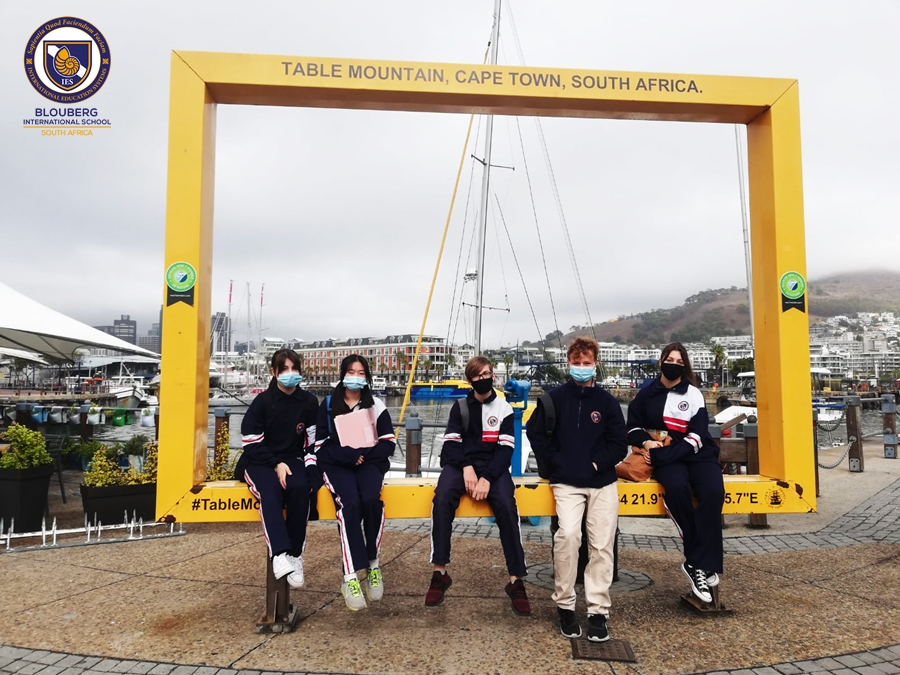
The Year 9 Travel & Tourism students had the opportunity on Friday, 13 May, to attend a guided tour of the 27 storey Hotel Sky in Loop Street, Cape Town. This included all the front of house responsibilities, the rooms, restaurants and even a behind the scenes look at the kitchen.
A highlight of the Hotel Sky visit was when the students, teachers and Mr. Swart, went on the Sky-Hi Ride, on the 28th floor of the hotel. Towering 35 metres above the Cape Town City Bowl, it gave us a bird’s eye view of one of the most beautiful cities in the world. One of only three in existence, and the first of its kind in Africa, this exhilarating, gravity-defying and breath-taking drop reaches a free fall speed of up to 100km per hour.
From there the Year 9 Art students went on a guided tour of the current exhibitions at the Zeitz MOCAA – Museum of Contemporary Art Africa – located in the Silo District at the V&A Waterfront. It is the largest museum of contemporary African art in the world.
The guided tour included visiting the largest comprehensive retrospective of the revolutionary work of Tracey Rose (b. 1974, South Africa). A radical voice in the international and South African art world, Rose’s cutting and uncompromising vision of work spans from 1996 to 2019.
The students then visited the exhibition of works by Johannes Phokela. “Only Sun in The Sky Knows How I Feel (A Lucid Dream)” is a major exhibition of new works by this South African artist. This project marks almost a decade since Phokela’s last institutional show and includes a select survey of his oeuvre from the last three decades. The exhibition forms part of an ongoing series of in-depth, research-based solo exhibitions by the museum that brings into focus and contextualises the practices of important African artists.
The Travel & Tourism and Art students joined each other for another highlight of the day: lunch at the famous V&A Waterfront’s Food Court.
Concluding our outing, we travelled safely back to BIS in the safe hands of our drivers, Mr. Clive Singlewood-Smith and Mr. Mpho Mahlangu.
Riaan Vosloo
IGCSE, AS and A Level Art and Design Teacher
WATCH!
Read More

Year 7 Camp At Disakloof
During the first week of May, the Year 7 group embarked on an exciting camp at Disakloof campgrounds in Betty’s Bay.
We met at school early on Wednesday morning and the students enthusiastically clambered onto the bus in anticipation of their first high school camp. The long trip came to an end, and we were warmly welcomed by the incredible Venture Forth crew at Disakloof.
The camp kicked off with ice breakers and games among the students. Thereafter the students were sent to select their dorms, where they were greeted by a rather terrifying and hairy guest – a passer-by baboon decided to greet the ladies of Blouberg International School right inside their dorm!
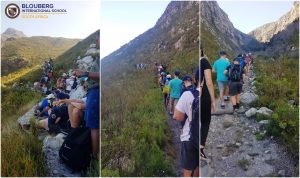
After all the excitement and shrieks, we set off on a picturesque hike within the Harold Porter botanical garden. We truly got to immerse ourselves in the natural beauty of the Western Cape by finding King- and Pincushion Proteas growing on the side of the mountains. We even found a small chameleon hiding between the fynbos.
We ended the day off by playing group games in the dark, in the midst of loadshedding.
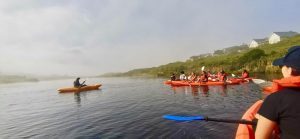
Thursday comprised of another exciting day filled with adventures. The students were divided into three groups that rotated between three fantastic activities. We got to pay a visit to the penguin sanctuary in Betty’s Bay, where we learned all about penguins, the old whaling station, and we even got to see rehabilitated penguins being released back into the wild. We then had the opportunity to grab hold of some paddles and row on a lovely dam between the reeds and mist from the morning. After a hearty lunch, we trekked to the most impressive sand dunes, where we had the opportunity to practice sandboarding. Beginner students decided to sit down on the board, while the braver souls tried standing up and a few even slid down the hill head-first! Laughs and screams of delight could be heard for kilometers.
We ended off our final evening with a lovely potjie made by the members of each group, as students found a brand-new appreciation for where their dinner comes from.
Friday morning arrived and we could not believe our trip had come to an end. We spent the morning having breakfast, tidying our dorms, and saying goodbye to the wonderful camp counselors. We departed Betty’s Bay just as the rain started to roll in, and we arrived back at BIS, ready to get back to another exciting school week ahead.
Mia Tossel
High School Teacher


Read More
Who’s-Done-It Mystery Game
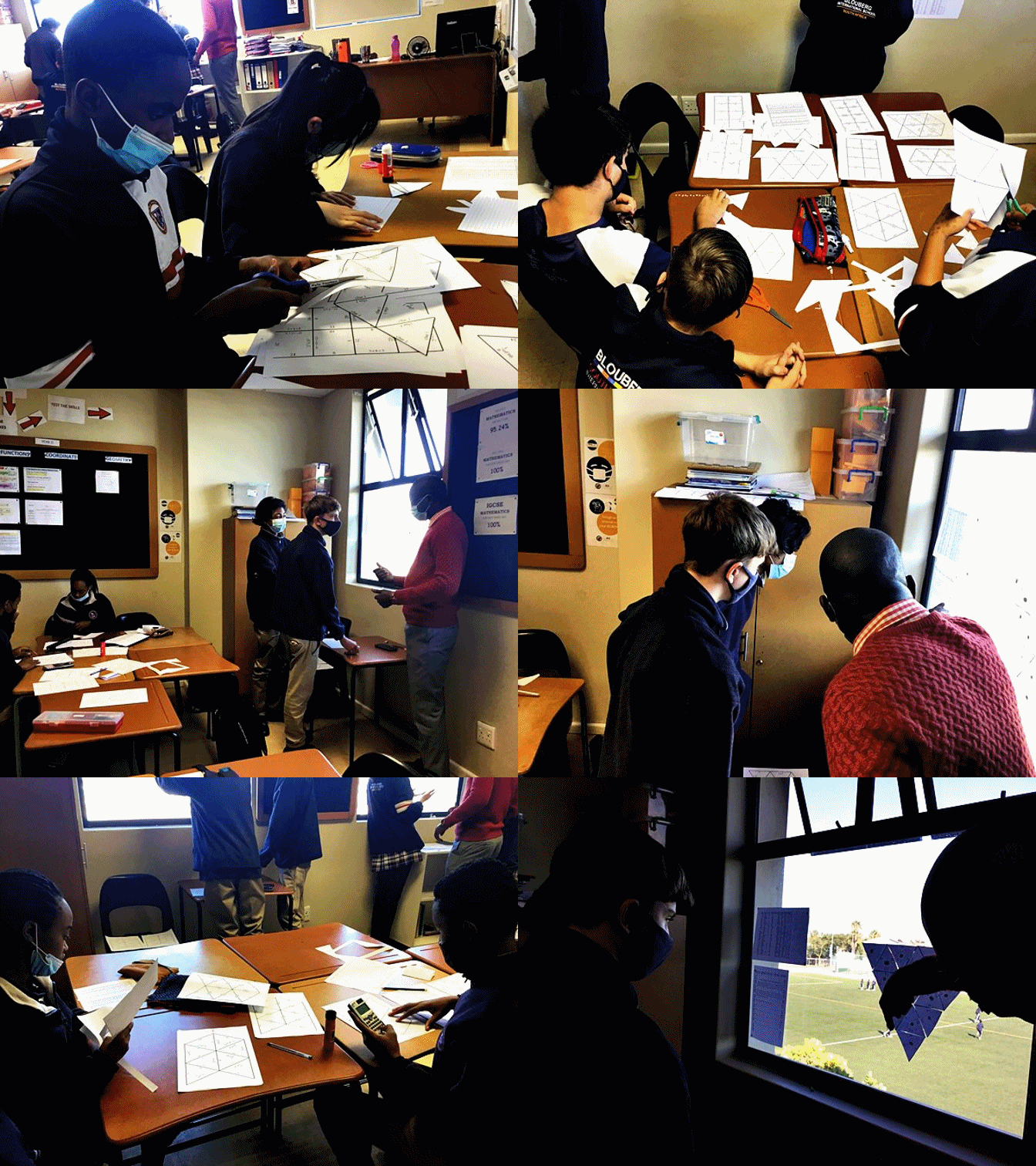
Learning mathematics is not fun for every student. At Blouberg International School, we believe in making mathematics fun and helping students love the learning journey. One way to do this is through interactive mathematics games, such as Who’s-Done-It Mystery – Death at the Jigsaw Shop.
Who’s-Done-It Mystery – Death at the Jigsaw Shop is an engaging mathematics mystery game to motivate Year 9 students to apply their mathematics skills independently to solve the mystery of a crime committed at the Jigsaw shop. The manager is dead, and the week’s takings have disappeared.
There are 32 suspects. There are 5 clues. Each clue gives a fact about the perpetrator and eliminates half of the suspects. The clues are jigsaws. To work out a clue, you must first make the jigsaw. Round the outer edge of the jigsaw are numbers. Each number represents a letter (a=1, b=2, c=3 etc.). The first letter of the clue is underlined and then the clue reads clockwise round the shape.
Students have the opportunity to apply a variety of mathematics skills to solve the mystery: fractions, percentages, directed numbers, and converting measurements.
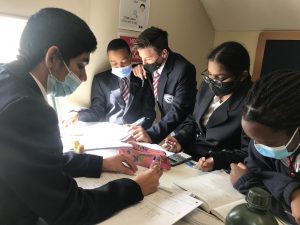
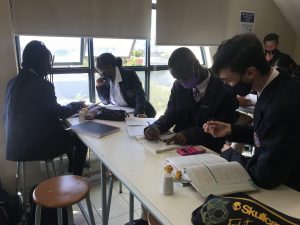
This week, Year 9 mathematics students paired up, played the game, and managed to eliminate suspects and come up with the real perpetrator’s name.
Here are some of my students’ immediate reactions to this fun exercise:
- Detective Riley Hanning: “This is a serious case; someone’s life is involved here, and we ought to be precise and accurate!”
- Detective Ruby Lee Gallagher: “It’s fun and engaging. How I wish this was my everyday math lesson from Year 1.”
- Detective Oratile Tsotetsi: “This is obviously one of my favourite lessons. A double lesson went quickly without notice!”
Want to take up the challenge yourself?
See below files of evidence collected by the arresting police officer at the shop and try to come up with the perpetrator’s name. You can post your evidence and proofs to my email (given below).
Let’s enjoy mathematics as a family.
Mr Hebert Tapfuma
High School Mathematics Teacher
HOD Science & Mathematics
clue1clue2clue3clue4clue5storysuspects final list
Read More

BIS Interact Club – Peace Home Homework Programme
One of BIS Interact’s main focuses is improving the quality and accessibility of education in our communities.
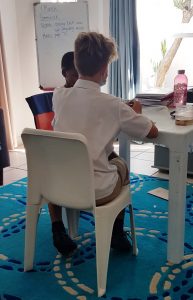
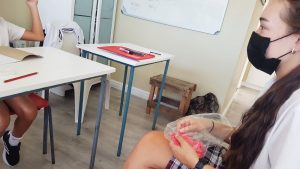
Next week our school will be celebrating Book Week. In commemoration of this, the BIS Interact Club will continue their weekly visits to ‘Peace Home’, a shelter for children with past challenges, who now have a safe environment thanks to their loving adoptive mother Aziza. Their task is to spend time with those children and assist them with their homework where possible.
This is an account of one of our member’s past visit to Peace Home:
A group of Interactors volunteered to go to “Peace Home” after school. We all hopped on the school bus feeling both excited and nervous. I myself was pretty nervous, as I had never been a tutor.
When we arrived, we were warmly greeted by Ms Nolan and the kids. They were very eager for us to help them with their homework. I was assigned a young boy with his maths. When we began he was struggling with adding and subtracting his fractions. I gave him some tips on how to easily do them. He quickly grasped the concept and no longer had any issues with his fractions. It felt very rewarding for both of us.
It was an amazing experience helping these kids. On our way back to school, we all shared the same good feeling. We all agreed we would volunteer again.
Oscar Berger (Year 11) – Interact Member
Read More
From The Spanish Classroom
My Spanish Mentor
What is a mentor?
Mentor is defined as someone who guides another to greater success. Helping them develop in their work.
Who is a good mentor?
Good mentors are enthusiastic people, enjoying the role they play in helping others achieve their goals. There are many qualities of a good mentor. While considering a mentor, look for someone who is enthusiastic, a good fit, respectful of others and a respected expert in their field, in this case, Spanish as a second language.
What is the role of a mentor in the Spanish class?
A mentor is a student that provides guidance, motivation, emotional support, and role modelling to a new student or someone that is struggling with the acquisition of a second language.
Who needs a mentor?
Everyone needs a mentor, no matter where they are in life. There is always room for growth and improvement. However, it is recommended more for the new students or the students that are struggling now. Perhaps you feel that you are falling behind or don’t understand a certain unit or topic. You can be brave and ask for a mentor; anytime is good to ask for help!
A mentor may help with:
- Supervising the daily routine, making sure that his or her protégé writes and understands all the information about the day.
- Motivating him or her to participate in the dynamics of the class.
- Providing guidance with the oral presentations and projects.
- Helping to find the information in google classroom about the CASS and final test content and other support materials.
- Encouraging him or her to use Rockalingua to review vocabulary.
- Supporting him or her during the oral presentations and projects.
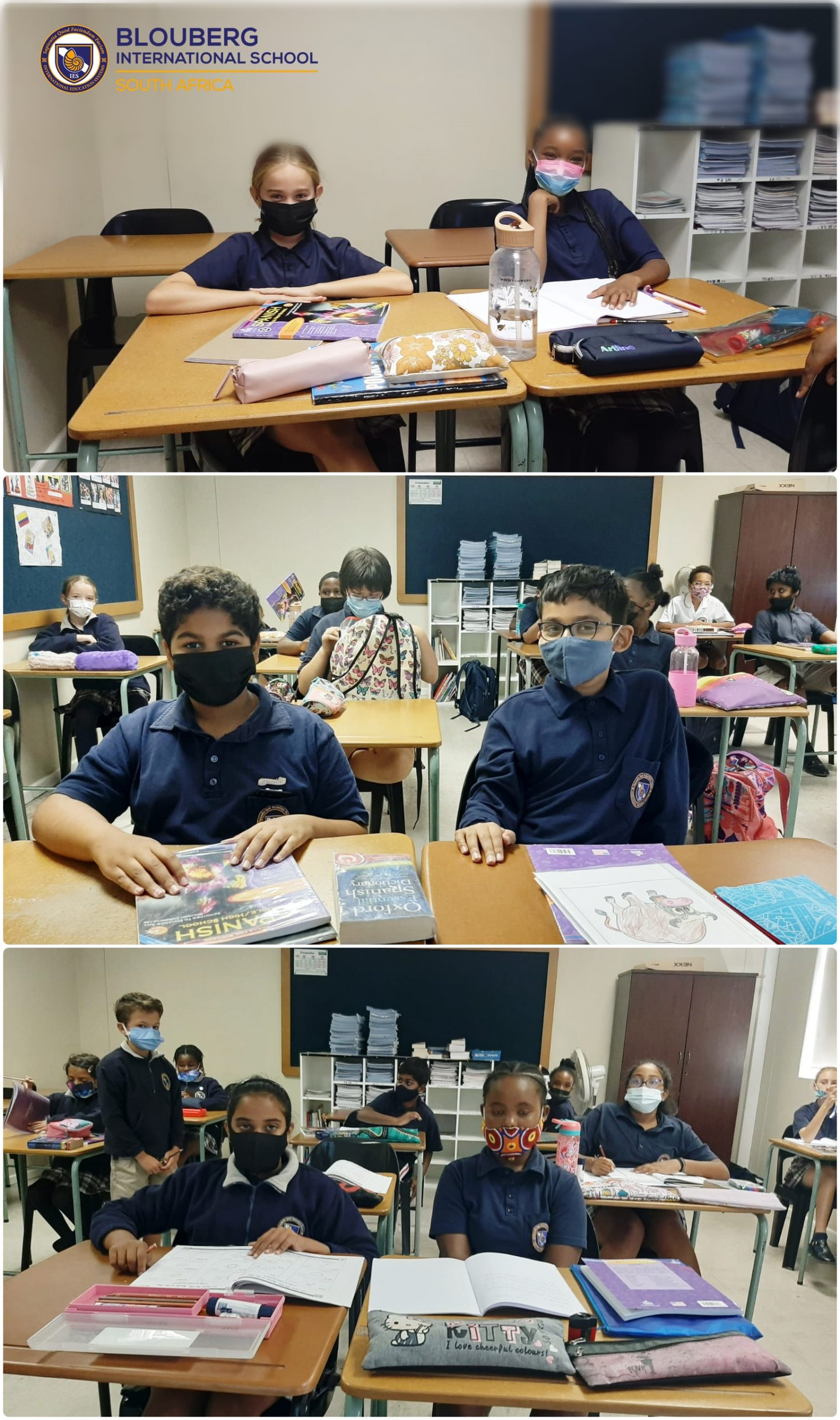
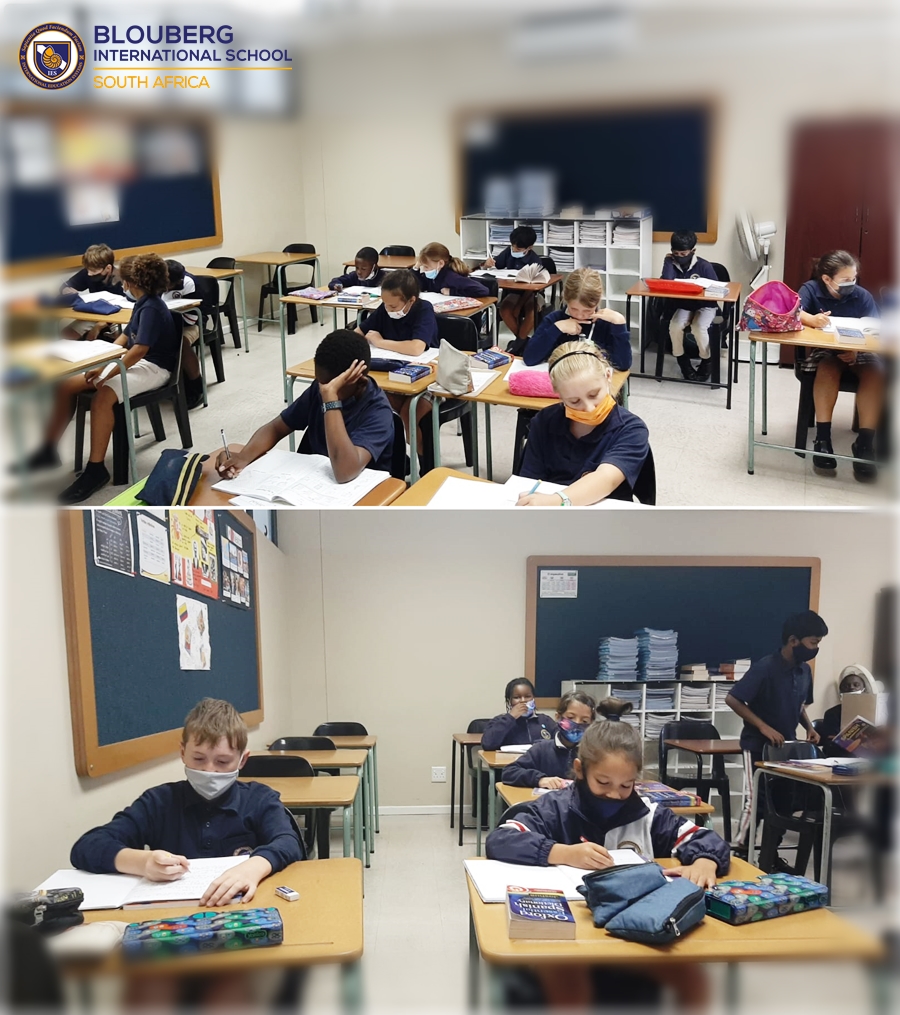
Below are some photographs of our school’s Spanish mentors and their protégés:
Read More
The Importance Of Reading
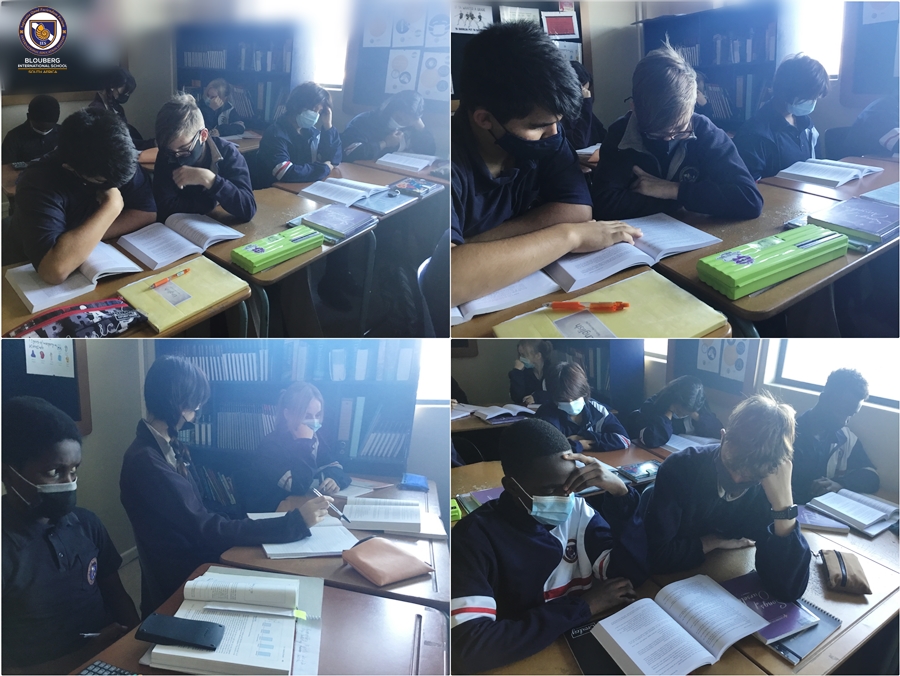
As an English teacher, I am no stranger to reading. I am also no stranger to students trying anything and everything they can to get out of reading. It has become apparent that children nowadays either refuse to read, or they are unaware of just how important reading is.
When I deal with students who are not performing up to standard, I always ask whether that student likes to read. The reason for this is that there is a proven correlation between achievement in English and the enjoyment of reading. This is because reading allows people to see how the language is supposed to be used. It enables one to see how to properly use grammar, how words are supposed to be spelled, how sentences are supposed to be structured, and it allows one to learn brand new words to expand one’s vocabulary.
In addition to reading having academic advantages, it also allows one to be transported into different worlds without even having to leave their couch. It enables the young aspiring adventurer to step into the world of swashbuckling pirates, crime fighting superheroes, or brave soldiers. Reading is an excellent way to broaden the imagination of young dreamers and creatives, as it inspires them to push the boundaries and think outside of the box.
I will forever encourage students to read as much as possible. For the non-reader, I always suggest reading articles or blogs – anything that contains subject matter that is of interest to them. Hate reading, but love soccer? Pick up an autobiography about your favourite soccer player. Can’t stand a novel, but love Science? Grab yourself a National Geographic magazine and read the articles. Reading can be so diverse that even the most stubborn nay-sayers will be tempted to pick something up and read.
In celebration of Book Week, I would like to encourage all our students, staff and parents to pick up a book this week, and immerse yourself in the joys of reading.
Mia Tossel
IGCSE, AS and A Level English Teacher

Read More