

A Recipe For A Good Friendship
Recently we have been discussing what it means to be a good friend or the ‘recipe’ for a good friendship. As a class, we shared many comforting stories about when others showed care for us. In further discussion, we highlighted the importance of our ‘Blue Badge’ system at school, which focuses on three simple foundations.
As a BIS student we aim to be KIND, CARING & ENCOURAGING.
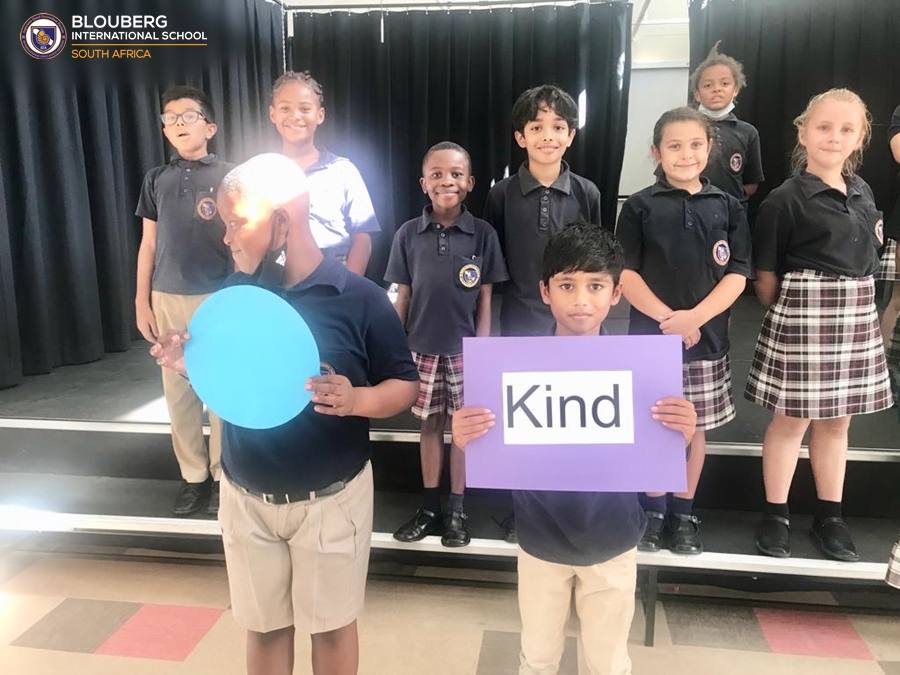
Year 4NM came up with their own Recipe for a good friend, modelling the 3 simple foundations of kind, caring and encouraging.
How can you be kind…
- Say nice things to others.
- Smile, because it is the best and easiest exercise for the body.
- Be happy for others because when it is our turn we would want others to be happy for us.
- Offer to help whenever we can because giving is always more rewarding.
- Use good manners like saying:
- Good morning!
- Please.
- Thank you.
How can you be caring…
- Let your friends know that you are always there to listen.
- Ask, “How are you?” and remind them that you are a good friend even when they are not feeling good.
- Be patient and respectful to others.
What does it mean to be encouraging?
- It means we must support each other to do good or to be the best we can.
“Everyone needs encouragement like a plant needs water”
- Not everyone is having a good day all day, remember to show some support. It might brighten up their day.
- Be the reason someone feels good today!
Nadia Mahomed
Year 4 Teacher

Read More
Inspiring Your Child To Read
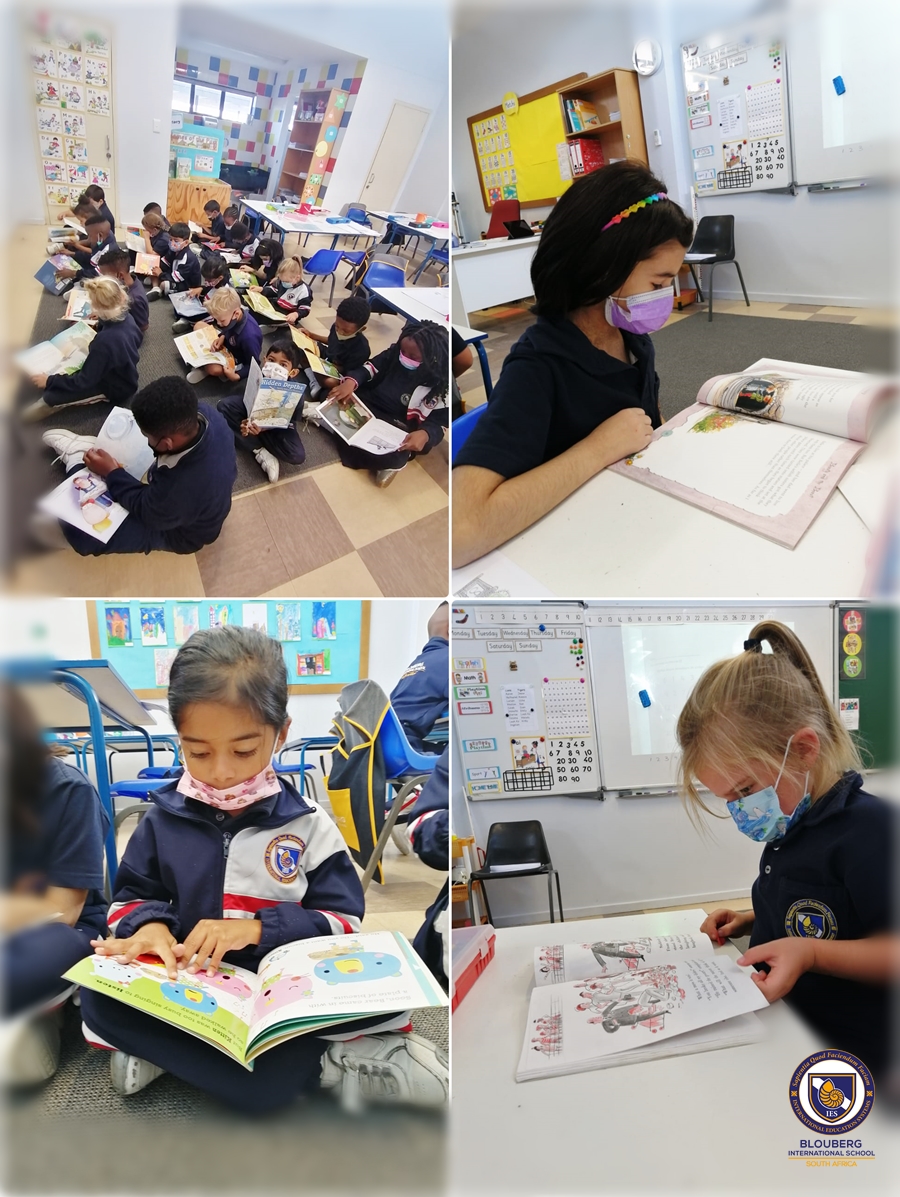
This week, I want to share a few basic and wonderful tips on how to get your little one to become a life long lover of reading…
We all know it can sometimes feel daunting to explain to our children how important it is to build good reading habits. Reading is a vital component of education. All students need good reading skills to succeed not only at school but in life in general.
I hope that sharing these insights with you can inspire you as much as it did me. See the image below titled: Building a Reader At Home
Ann Cordner
Year 1 Teacher and Key Stage 1 Coordinator

Read More

Year 5 Haikus
In English, the Year 5s have spent some time looking at poetry. We explored Haikus in particular, looking at their famous line and syllable structure, as well as delving a bit deeper into their usual subject matter. We also experimented with the balance between descriptive and figurative language often found in these Japanese poems.
Our favourite part of the lesson, of course, was writing our own!
Robins
Robins in a tree
Sitting high above the lake
Kings and queens they are.
- By Okuhle Williams
Saturn
Saturn spinning dream
Milky vision blurs your way
Falling into space
- By Christina Donald
Encanto
Magical People
Rhythm of its own design
Perfect Family
- By Dicla Tona
Buzz
Busy buzzing bee
Collecting honey for me
Oh so delightful
- By Emily Röhlandt
Rabbits
Rabbits, white or black
They’re adorable and cute
Hopping there and back.
- By Nivad Manouchehri
Hannah Kirkaldy
Year 5 Teacher
Read More

Leadership
Now that the Year 6’s are the heads of the Primary School, they have had to learn about leadership and what it is to be a leader. They took part in different activities during the Skills Programme we held. The end goal was for the students to apply to become Year 6 Prefects. They went through the process of discussing what a leader was, what a leader looks and sounds like and why they would want to be leaders for BIS.
Here are a few things the Year 6’s decided make a good leader:
“A leader is someone that has responsibility and is helpful and is respectful towards others. They always try their best and they think about others first.” – Emily Fouché
“A leader is someone who can help you with things you are struggling with and will guide you to do the right thing” – Maalik Daniels
“A leader is a person who is helpful, respectful, kind and caring. They help people when they need help.” – Nicolas East
The process the Year 6’s had to follow to apply to be prefects was as follows:
- Fill in an application form.
- Get 3 references from teachers of their choosing.
- Present in front of the other Year 6’s as to why they would make a good prefect.
- Vote for who they thought would make good prefects.
We know that the elected leaders will do a wonderful job this year!
“As we look ahead into the next century, leaders will be those who empower others.” – Bill Gates
Brittney Hakime
Year 6 Teacher


Read More
From the German classroom
Back to school in South Africa is always an exciting time of the year. Students start a new grade with a new teacher, enter a new classroom and meet new classmates.
The Year 1’s also started this year with new languages to learn – German being one of them. In the introduction to German and Germany they learnt the phrase ‘Ich lerne Deutsch’ (I am learning German) and the colours of the German flag. The Year 1’s were very surprised to hear that most German schools start in September after the summer holidays in Europe and that the students do not wear uniforms at school.
They were also introduced to the Schultüte (a school cone), a German tradition that all Klasse 1 (Year 1) students look forward to on the first day of school. Before Klasse 1, they would usually be attending a type of Kindergarten (a playgroup or nursery) at another institution, therefore making the first day of school one of the most important days of their childhood.
So, what exactly is the Schultüte?
It is “a colourful and elaborately decorated cone which is prepared by a students’ parents and filled with goodies such as small school supplies (like pens, pencil cases, erasers, etc.), toys and sweets.
This German tradition originated in the early 1800s in the cities of Jena, Dresden and Leipzig. Back then, parents brought the Schultüten directly to the schools, where they were hung on a so-called Schultütenbaum (‘school cone tree’) in the classroom. When the tree was ‘ripe’ with school cones, it meant that students were ready to begin first grade. On the first day of school, students were instructed to pick the cone with their name on it.
Naturally, the tradition spread and evolved over time. Today, students often receive their Schultüten before they leave their homes to go to school and the kids proudly carry their Schultüten to their new classrooms. Of course a photo with the Schultüte is a must and a memory for the years to come.
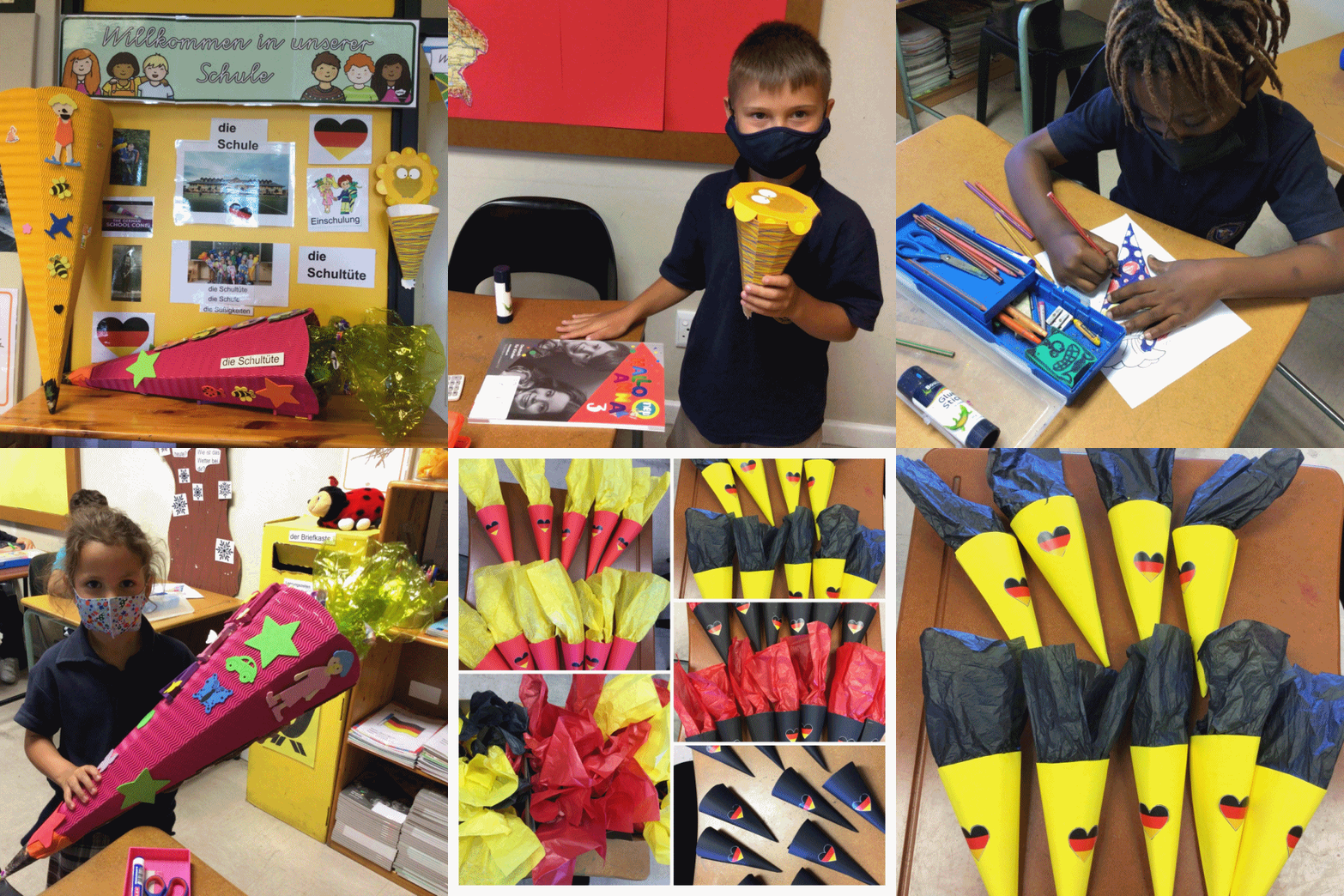
The photos below show our Year 1 students with their beautifully coloured in pictures of a Schultüte in class; the designed and decorated Schultüten by the Year 2 students and the Year 3’s completing a Schultüten craft from their Hallo Anna neu 3 workbook to take home.
The Year 1 students enjoyed holding the Schultüte in my classroom and wished so much for their own Schultüte and to be in Germany for this tradition. With this in mind the German Club embarked on a project to do exactly that, to make a school cone for each Year 1 student.
The German club was launched this year and as the first task in the first meeting the students prepared for making the Schultüte. This proceeded to be a huge task crafting 60 cones with an individualised card welcoming the students to BIS and Year 1.
Thank you to the German Club and friends who spent many breaks crafting, colouring in, pasting, decorating and then eventually filling them with some German treats for the Year 1’s.
All Year 1 students will be receiving their own Schultüte to take home and enjoy. We hope that they will remember this tradition and the Schultüte they received here at BIS for years to come. Please remember to take a photo!
Looking forward to being part of the students’ journey with the German language and traditions in 2022.
Frau Kerstin Pani
Primary School German Teacher


Read More
Animal Unit
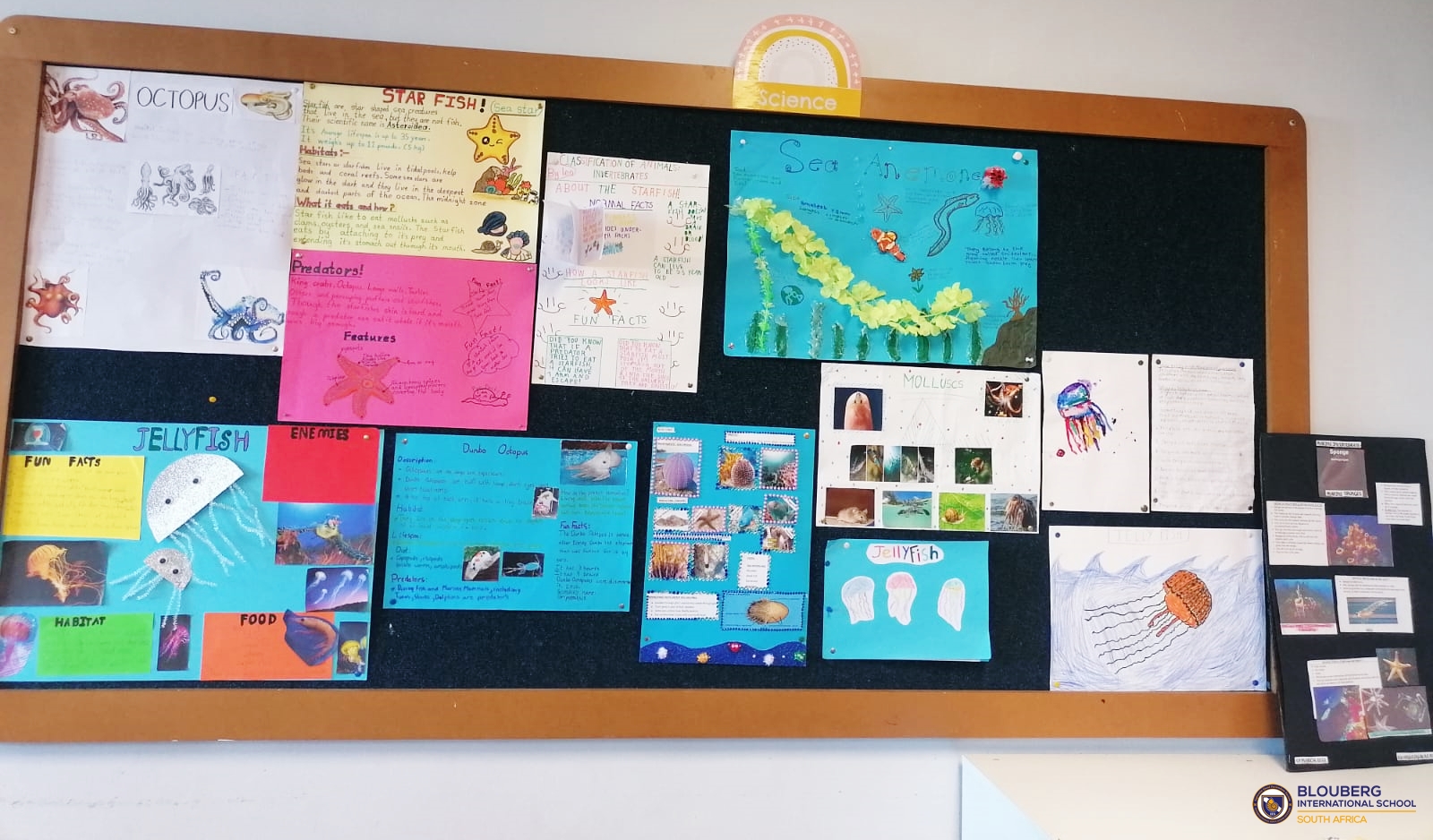
As part of the Animal Unit in Science, the Year 4 students learned about vertebrates and invertebrates during the last few weeks. Vertebrates are animals with a skeleton and bone structure and invertebrates are animals without it.
The students were tasked to research invertebrates living in the ocean. They had to do an oral presentation about the appearance of their chosen animal as well as it’s habitat, feeding habits and some interesting facts.
Here are some fascinating facts we learnt about these creatures this week:
- The Dumbo octopus has 3 hearts and 9 brains.
- A Starfish pushes its stomach out of its mouth to be able to eat.
- Octopuses are blue blooded.
- Jellyfish are immortal and are made from 98 percent water.
Well done Year 4!
Yvette Fourie
Year 4 Teacher


Read More

The Power Of Music
Every Friday afternoon when school is out, a group of students and teachers gather around a common passion… music! For the past few weeks Miss Hazel, Miss La Bercensie and Ms Blake have been teaching and coaching a few students to play together and experience the joy of performing music they love.
Music is a language that speaks to all people. It has the ability to bring people together. Without a doubt, human interaction is at the centre of this art. The ability to connect through playing music together has been strained due to covid, but we are finding new ways to have these opportunities where we can create music.
Music stimulates the brain, which enhances memory whilst reducing levels of pain and stress. In a digital age where life is fast paced and instant gratification is a norm, learning a musical instrument provides a platform for people to achieve through discipline and perseverance.
Playing with a group of other musicians develops teamwork and leadership qualities. These are not only skills required in music, but life skills that equip individuals for their future employment and wider social lives.
Music is an expression. It is a creative outlet so needed in today’s world where pressure is inevitable.
Music brings great joy! Whether we are playing songs in the top rafters of Blouberg International or performing to an audience, the joy of creating music is enough of a motivation to bring people together.
We are very excited about this journey that we have started. Watch this space!
Carol Blake
Year 4 Teacher


Read More
Everything has a cycle and every person a story to tell
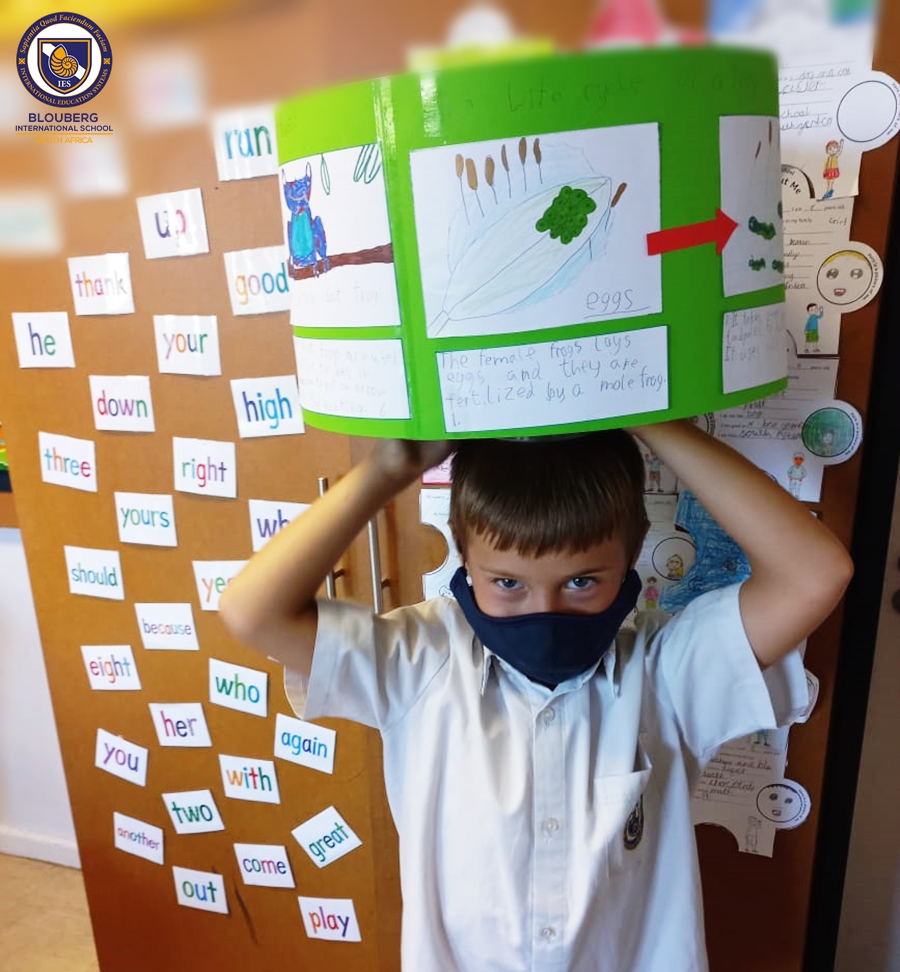
The Year 3’s have been learning about Living things this term. As part of this theme, each student was asked to make a presentation about the life cycle of different types of animals and include an interesting fact.
These they presented with great pride and excitement in an oral.
We learned that:
- Baby koalas eat their mother’s poop to learn to digest eucalyptus leaves.
- The poison from the blue poison dart frog is used to tip the arrows of Amazon hunter’s darts.
- A dog has 28 teeth and 1700 taste buds.
- Jellyfish do not have brains.
- A Monarch butterfly – the female is attracted to the male’s perfume.
- Dolphins have two stomachs.
- A koala bear is as small as a jelly baby when it is born.
Well done to the Year 3 students for making their projects so visually stimulating and extremely interesting.
Carey Schoots
Year 4 Teacher


Read More

Year 5 Solar Systems
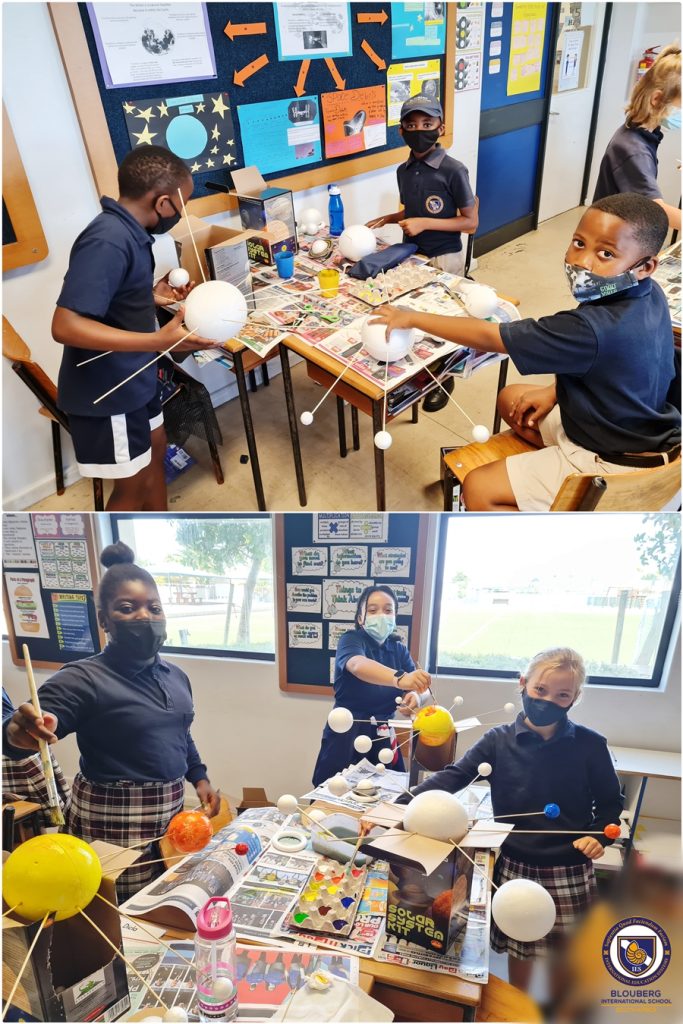
In Science, the Year 5s have been learning about The Earth in Space. One of the core concepts this unit of work is based on is the fact that everything in the solar system orbits the sun.
We decided that a practical demonstration was in order, so we built ourselves some solar systems. This helped us to gain a concrete grasp of how the solar system fits together. We included the eight planets of the solar system – and some of us even got creative and added Earth’s moon to our models!
Now, as we like to say, the whole world is not only in our hands, but also hanging from our classroom ceiling…
Hannah Kirkaldy
Year 5 Teacher


Read More

Habitats
A habitat is a place where an animal lives. It provides food, water and shelter. There are many different types of habitats around the world from forests to grasslands and from mountain slopes to deserts. Different habitats are home to different animals. They live well together because they all do things to help keep the whole habitat healthy and in balance.
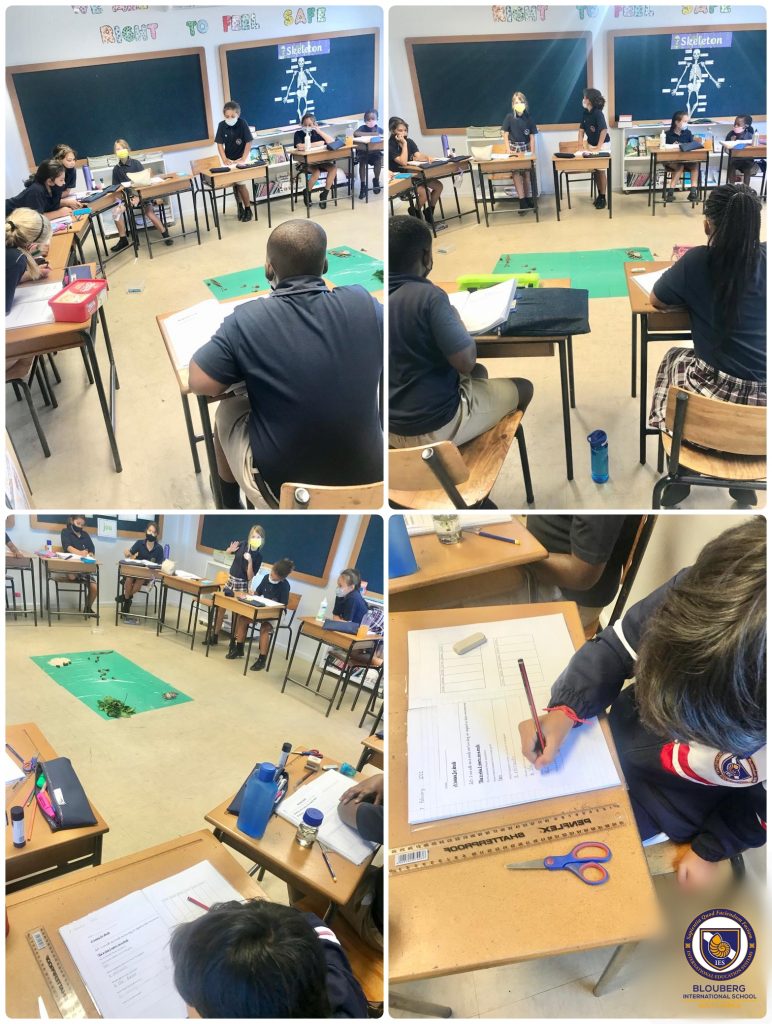
This week, the Year 4’s have been learning all about habitats and the adaptations of animals for their habitats.
Have you ever wondered what the purpose of a cockroach is? We often see them as dirty pests that infest the spaces they live in. Animals like cockroaches are really important in a habitat—they eat the dead plants and recycle the nutrients back into the soil, which helps the plants to grow.
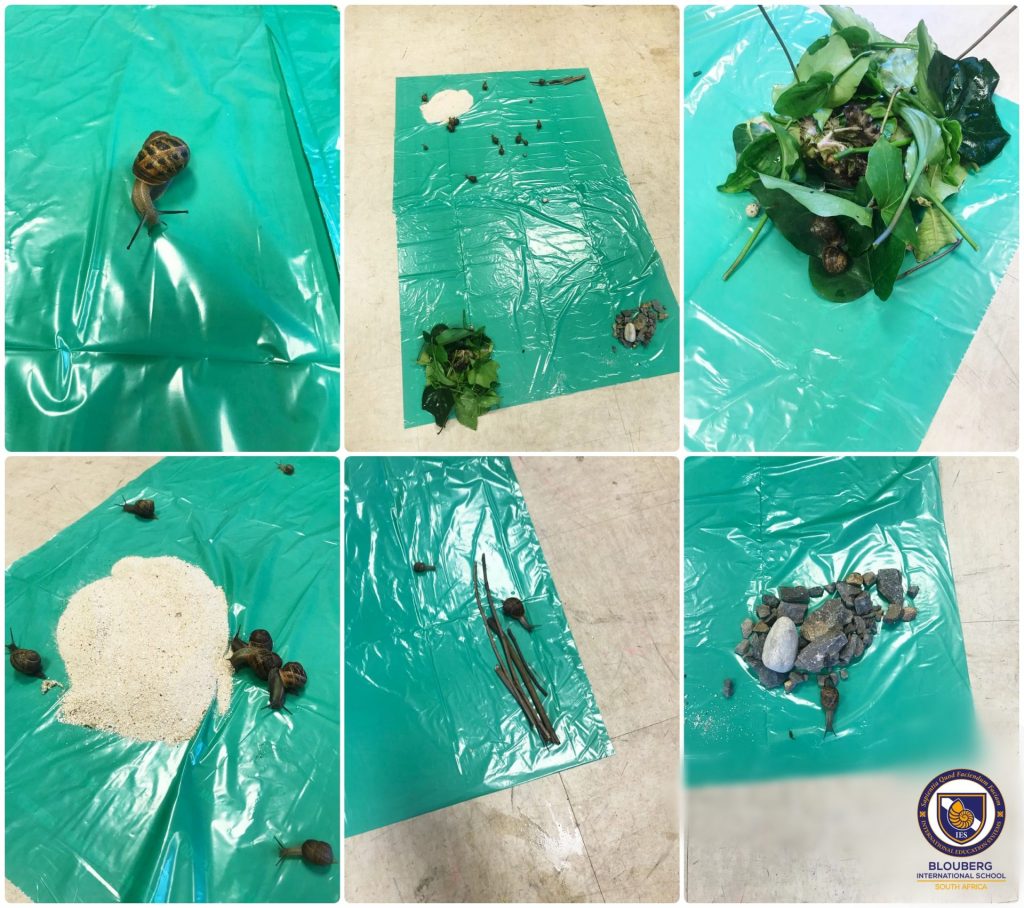
The Year 4 students were curious about animals in their own habitats and they decided to observe snails. To fulfil this curiosity we designed a choice tray. We planned how we will test some snails to see where they like to be most in the environment. We placed 4 variables on each corner of the choice tray, twigs, leaves, sand and stone. We observed where the snails ventured towards, over a half an hour period, and noted our findings.
There were interesting findings across the year group in the different classrooms. One conclusion we could all agree on- if the environment changed, animals can sometimes change the way they behave.
Well done to our budding scientists!
Nadia Mahomed
Year 4 Teacher
Read More