
Keep Calm And Create A Calm Space
Emotions play such an important role in our lives. It helps us to think and behave in certain ways. They help us to build relationships, avoid or resolve conflicts better. Emotions help us make decisions for the future and helps us cope with what we are dealing with during the day.
We start feeling emotions from when we are little, and as we grow and mature, we learn how to identify them far better and hopefully become more skilled in how to express them appropriately. With practise we get better at understanding what we are feeling and why.
Just for a moment, think about what you did today versus what you did yesterday. Did different emotions on different days, allow you to behave in different ways? Are you more tolerant today than you were yesterday? Have you smiled more today than yesterday? Have you made some rash decisions based on how you were feeling? Have you made the best decisions you could have made so far this year?
Emotions can last for a second or for an hour. They change constantly throughout our day. Emotions are part of a person’s character. Without them we would be robots.
We read emotions from facial expressions, body language, hand gestures, tone of voice and even eyes. Notice the feel of a handshake, a hug or a touch. These are many cues that help us to pick up on someone’s emotional wellbeing.
Many adults today find it difficult to identify what it is they are really feeling, let alone be able to express their emotions appropriately. Am I angry or just irritated? Am I happy or just proud? There are so many emotions that are closely linked and can be misunderstood. There are so many different emotions that sometimes it can be impossible to recognise them all. It can also be very confusing and extremely challenging.
Being able to accept what you are feeling allows you to become more self-aware and self-compassionate. I know this can sound all airy-fairy, but being able to have a good emotional intelligence, to me, is far better that having a good IQ. This will help you in all aspects of life, in the workplace and in relationships that you build along the way.
Using a feelings wheel helps us to open up our feeling’s vocabulary and learn to understand the extent of them a lot better. Once you have used the feelings wheel for some time, you won’t need to go back and look up what the feeling is, you will identify it straightaway.
There are many students today that need assistance with feelings and emotions, and need to learn some healthy strategies to overcome or face them head-on.
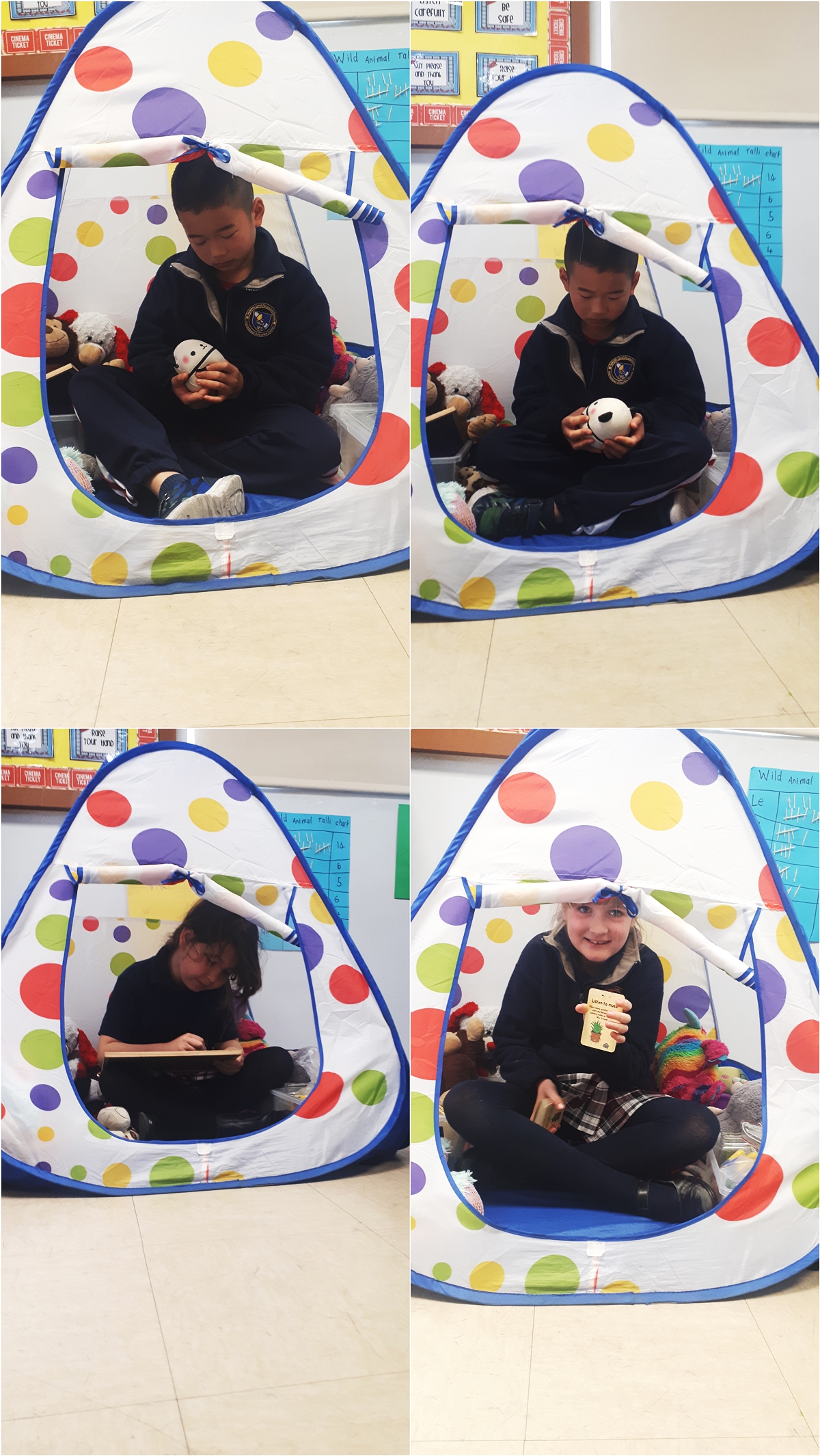
I have a number of feelings wheels and charts around my class to help my students with their emotions. I have a dedicated calm space for my students to retreat to whenever they feel overwhelmed or need a place to ‘check in’ with themselves.
You can create a calm space in your own home for your children, or even for yourself. When children see that you use the space, it allows them to realise that we, as adults, also have emotions and sometimes need to refocus and recentre.
This calm space is different to a time-out space for consequences. It is a place of safety. Children are not to be sent there by a parent, rather it must be a child’s choice to go there. You can suggest it, but it should not be enforced. This space does not have a time limit.
Decide as a family, where this calm space will be. Decorate it together if that’s something that they might like. You can even give the space a name.
Leave them alone in their space to reflect, to let out some anger or other emotions. Try not hover around them or speak to them. Allow them this time to be on their own.
You can include some calming tools in your calm space to help them with self-regulation. Some good ideas are therapy putty or a stress ball to squeeze, a liquid timer or a glitter jar to look at, books to read about emotions, calming cards or positive thinking cards, a teddy bear, or some simple calming toys, such as a Rubik’s cube, that keep their minds busy. Some nice, calming smells can help too. I use lavender in my class, and my students love rubbing it onto their temples. This relaxes them completely. Believe me, I have used it several times!
Embrace your emotions, and talk about them with your family, your friends, your colleagues. The more we accept that we have them and that they are a normal part of our lives, the more skilled we will become, and your EQ will be what people talk about instead of your IQ.
Wendy Menton
Year 3 Teacher

Read More
Auto Museum Outing
To fully appreciate the future, we need to appreciate the past.
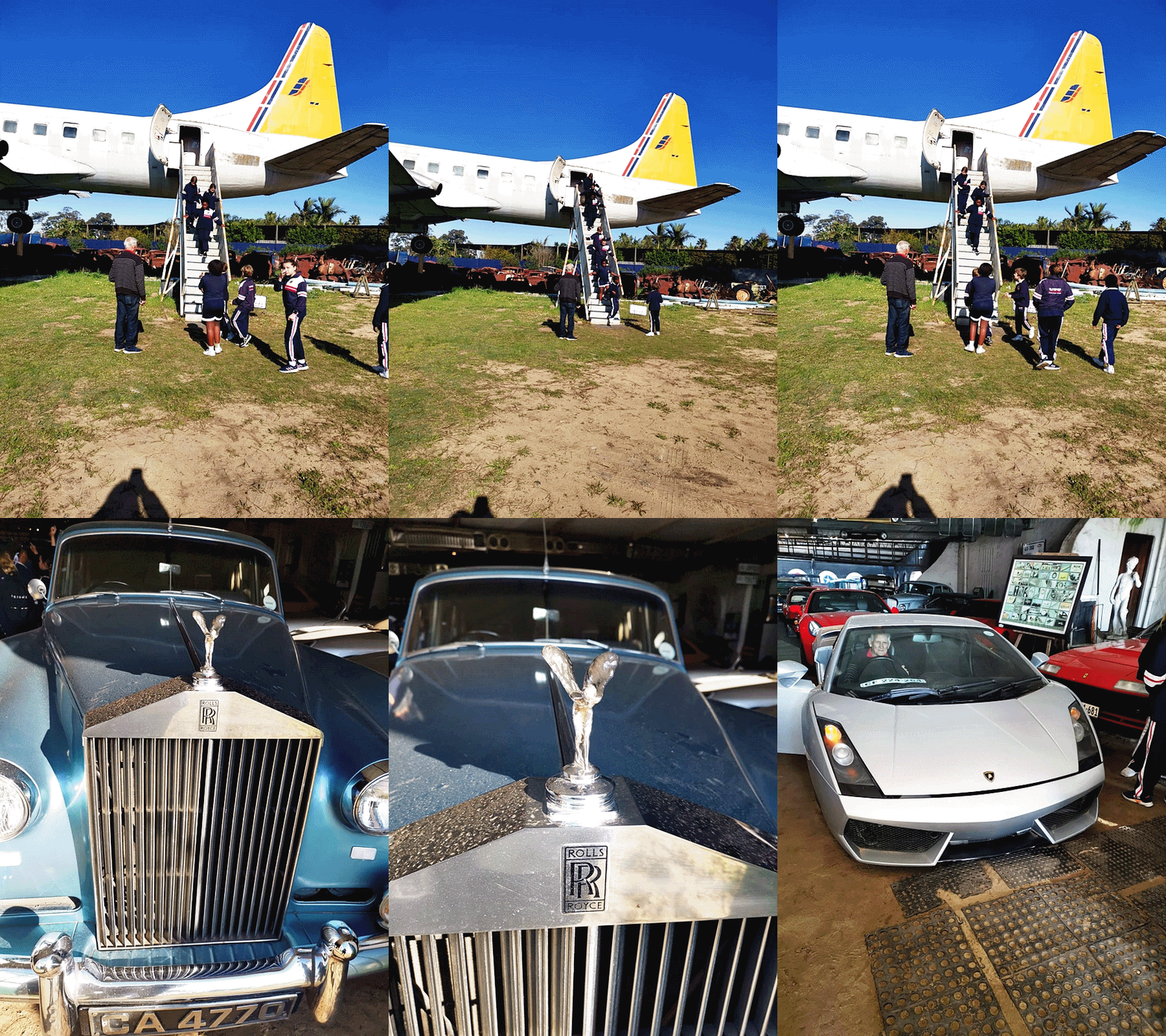
Our Year 4 classes visited the Wijnland Auto Museum in Joostenberg vlakte, as part of the Transportation unit that we have been studying in History.
Throughout the term, we have investigated the various types of transport, how transport has evolved over time and the importance of the different modes of transportation.
During our visit to the museum, the students learned about cars and how the design and technology has changed over the years. We saw various amazing antique cars, army tanks and even went inside an old passenger airplane.
We cannot wait to discuss this topic further in class.
Yvette Fourie
Year 4 Teacher

Read More
The Magic In Allowing Learners To Take Control Of Their Own Learning
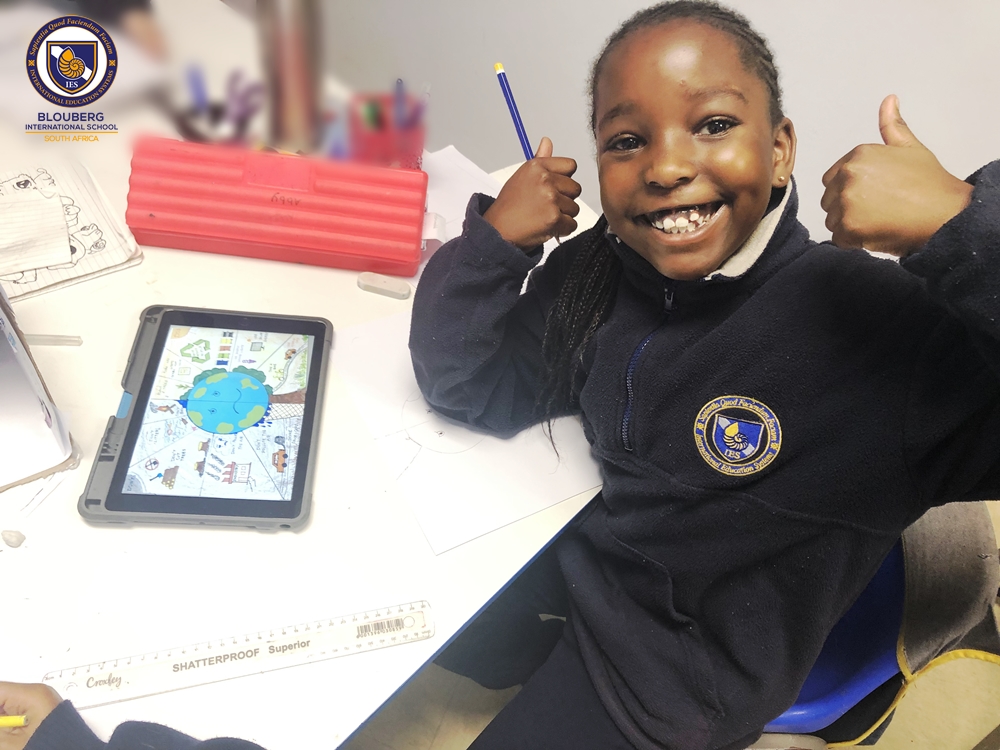
In Year 3 this term we have been exploring the concepts of natural disasters, the water cycle and global warming. The students had the opportunity to discover these topics through their own research, whilst using the Ipads. They have slowly built upon their prior knowledge, lesson by lesson. With Geography as the subject, global warming as the topic and Google at their fingertips, the students decided to take the lesson in a different direction.
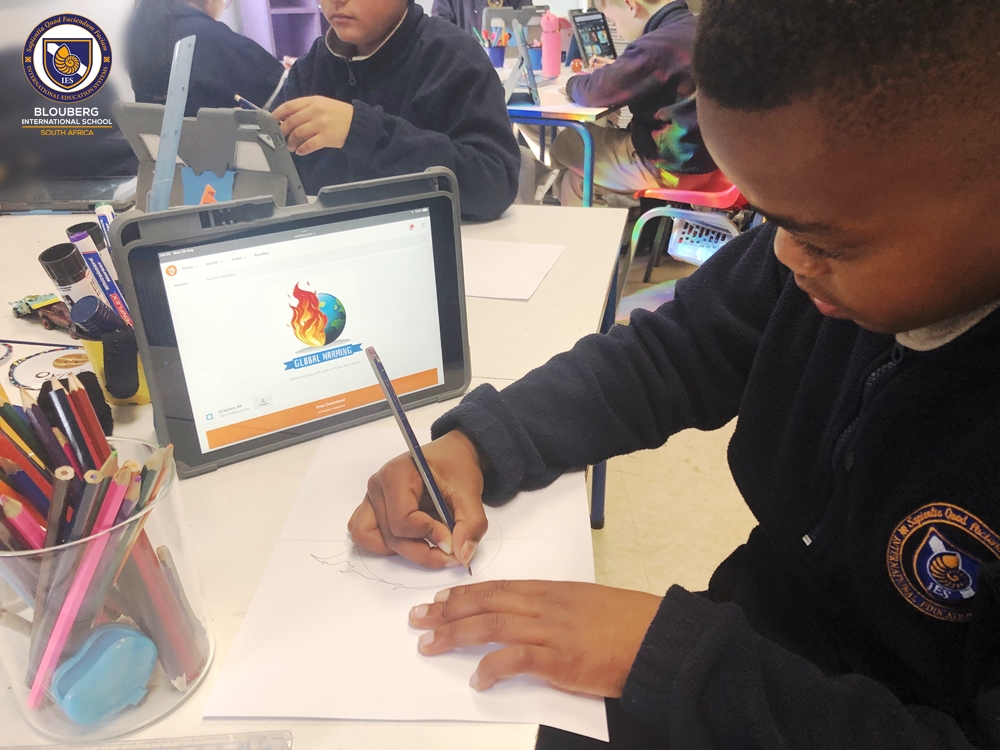
Once the students had begun their search and discovered what both causes and alleviates global warming, they discovered some images that they wanted to recreate.
The students had found an interest and wanted to pursue an activity that they had come up with themselves. Each one of them chose to represent the information they had learnt with something that summed it all up into one image. Pictures were produced, that represented our earth in two states and they were drawn and coloured in by the very hands that may one day construct the solutions to the problems we face.
Autonomy is developed through our students having some choice and control in their lessons, and if the knowledge and learning objectives stay the same, then does it matter how they discover it?
Kirsten Stoffberg
Year 3 Teacher


Read More
States Of Year 5
We all know that our children matter. What the Year 5s have been learning recently is that they are also MADE of matter.
We have been looking at the particle model and states of matter in Science, and the students have explored the topics in a variety of different ways. They have used their textbooks to learn independently and peer-teach each other about processes like boiling and melting, practising the skill of reading information to pick out salient points, as well as their communication skills (and producing some useful posters for the classroom walls in the process).
They observed what happens when a solid is dissolved in water and described the process on the particle level, while reminding themselves that while you may not be able to see the salt in salt water, you would definitely know it’s still there if you tasted it.
They practised their Science enquiry skills by looking at available equipment and figuring out how to test the effect of temperature on the rate of dissolving, writing a practical report to systematically record their findings.
Now they are turning their hand to some research, using the iPads to look up some information about the properties of water.
Throughout the topic, I have been impressed by the students’ willingness to jump into the world of Science and test things out, whether it be research skills, observation skills, or designing a fair test. It would be fair to say that the students have been vibrating with energy – much like their particles!
Hannah Kirkaldy
Year 5 Teacher

Read More

Observing The Weather Using A Wind Vane
Our budding Year 5 meteorologists (a physical scientist who observes, studies and forecasts the weather) have been learning all about the wonders of the weather in Geography this term.
They started by learning about the four main elements of the weather (temperature, wind, rainfall and cloud cover) and how these can be used to describe the weather. They are currently completing a 2-week weather project, where they need to observe and track the weather on a daily basis. These observations require the use of various weather instruments, such as a thermometer for temperature; a rain gauge to measure rainfall and a wind vane to measure wind direction. Using these instruments accurately is a skill they need to master and demonstrate over the course of the project.
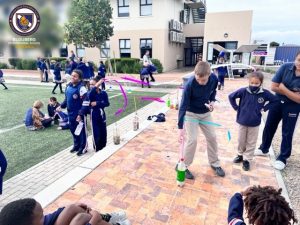
But we can’t accurately measure wind direction without an instrument to help us, so, the Year 5 students started the project by designing and making their very own creative and colourful wind vanes! The idea behind making these weather instruments was that they could then be used by each student at home when making their observations on the direction of the wind.
Great fun was had by all when they put their wind vanes to the test outside on the school field! The direction of the wind (moving air) is the compass direction that the wind blows from. On the day the Year 5’s did their test, the wind was blowing in a northerly direction. They knew this because they had first accurately plotted the 8 compass directions on the ground, using a compass.
We are looking forward to seeing the results of their investigations on weather at the end of this exciting project!
Cindy Drury
Year 5 Teacher


Read More
Showtime
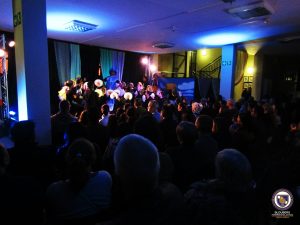
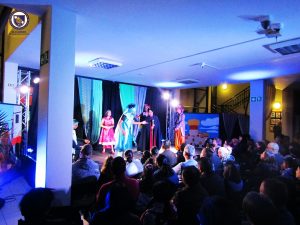
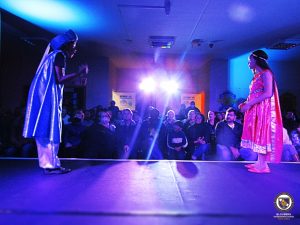
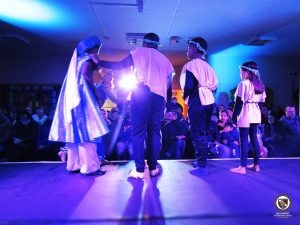
Last week KS2 put on the Disney Jnr play, Aladdin. We spent a total of 80640 minutes, which is equivalent to 1344 hours or better yet 56 days rehearsing, preparing and setting up for this spectacular event.
A lot of hard work, long hours and dedication was put into making our KS2 concert a success. Today when I look back I do not think of the challenges or the long hours, the stress or the worry in the details. I remember the fun moments we all had during our shared time. I remember the laughs, jokes and even the mishaps that made the show even more memorable.
The cast was phenomenal. They are certainly stars in the making. I admire their dedication and tenacity. Without them we would not have had this amazing play. I have seen them grow in confidence and independence. Many of them began very shyly and quietly however by the time we ended those very same actors displayed admirable traits of fortitude, bravery and confidence. It is a true reminder to us all how remarkable our children are.
As Augusto Boal said, “We must all do theatre, to find out who we are, and to discover who we could become.”
It was a tiring 4 day event and even though there was a lot of relief in its success, the evening of Day 4 left us with an empty space as we all shared the same sentiment, “What will we do with our time now?”
Comments from the cast…
“It has been a dream come true to play the part of Genie”
“I will miss the time with everyone”
“It was so much fun, thank you for giving us the opportunity.”
The KS2 concert has shown us that not only is academics important in a student’s life, but the cultural aspect is needed to nurture a well-balanced, diverse student.
Until the next show, let us share the written words of Shakespeare when he said, “All the world’s a stage.”
Nadia Mahomed
Year 4 Teacher
Watch our KS2 students sing at assembly to celebrate a successful concert:


Skills Programme – Online Etiquette
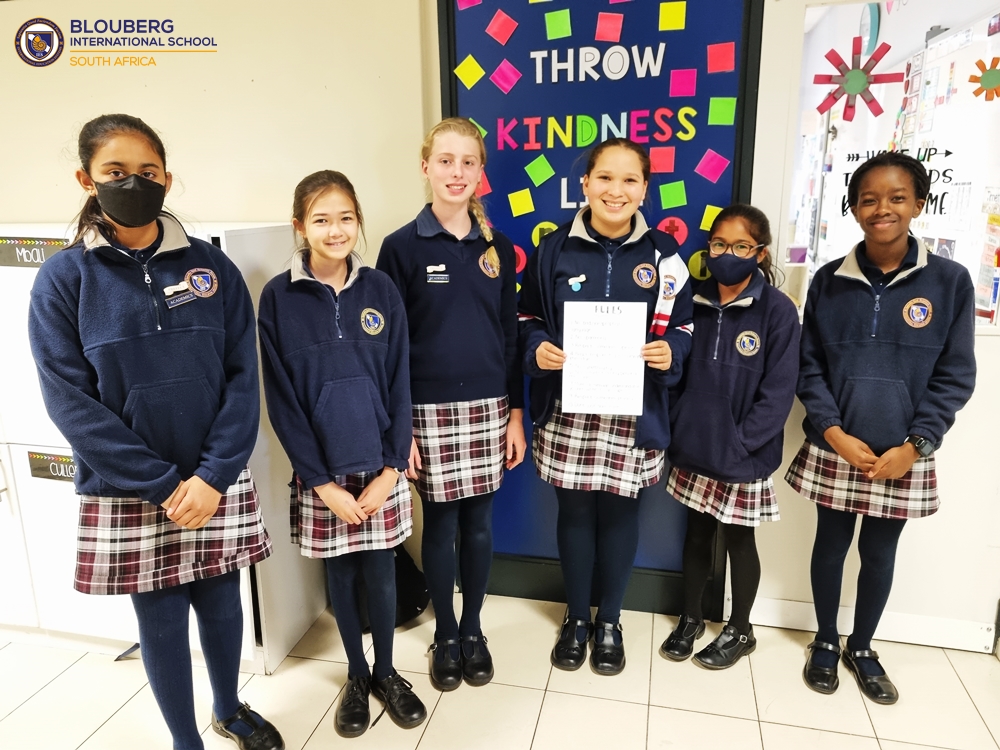
The Year 6’s have been focusing on Online Etiquette during their skills programme and how to conduct themselves in a respectful manner online. Online communication can be challenging at times for children. Not being able to read one’s body language or listen to their tone of voice can make it difficult to understand the meaning of a message.
During our skills lesson, we started by watching students act out a scenario. There could be no sounds or movement, just a still image. We then discussed what we thought was happening and what each person was feeling. The students started to notice that it was difficult to read the scenario without there being any context, sounds or movements.
We went on to watch a video that involved a message being misunderstood and discussed the meaning behind the video, how the students would have dealt with the scenario and what would have been the best way to deal with the issue. The students also spoke about “Why are people sometimes less respectful online?” and they were also able to explain the importance of always turning to a trusted adult when they are in a position they do not understand, makes them uncomfortable or nervous.
Finally, the students worked in groups to create rules for when they are online. With minimal guidance from the teachers, they all got into groups and began making their list of rules.
The Year 6’s have impressed us with their online rules as well as showing maturity and respect when creating them.
Brittney Hakime
Year 6 Teacher

Read More
Solids, Liquids And Gases
What is a solid, liquid and gas? This was the question posed to our Year 3’s in our first Science lesson in Term 3. But… instead of telling the students, they set about discovering it for themselves. In groups, students were supplied with a plastic bottle of water, a plastic bottle of ice and a plastic bottle of air. Together a discussion was held on which material is a solid, liquid and gas and why.
Roll on lesson 3! Gases are invisible! Now this lesson took our Year 3’s by surprise! In pairs, students were given a plastic bottle filled with vinegar and a balloon filled with bicarbonate of soda. Instructions were given to place the balloon at an angle on the plastic bottles and then to lift the balloon and observe what happened. But first students had to make a prediction. With zero faith in their teacher, most students predicated an explosion! On the count of 3, students then lifted their balloons and voila… no explosion!
Faces of students caught completely by surprise… priceless!!
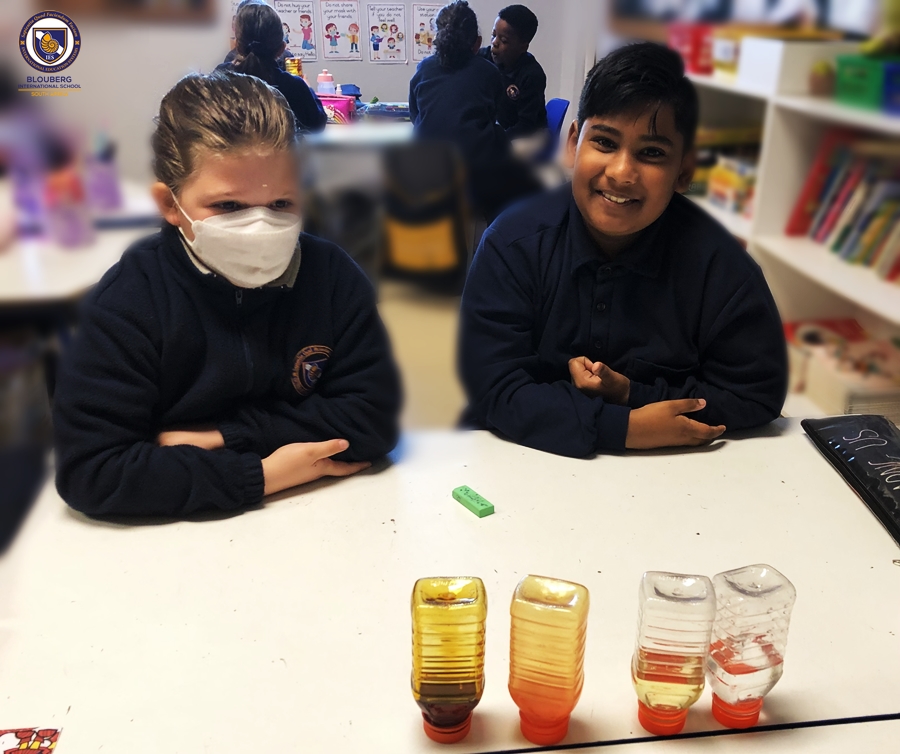
Then it was time to learn about the velocity of different liquids. In groups of four, students were supplied with 4 plastic bottles containing different liquids – shampoo, water, oil and syrup. The task was to turn the bottles upside down and observe what happened to the liquid in each bottle. Groups then took turns explaining the velocity of each liquid.
The skills-based Science lessons this term have been interactive, hands-on, collaborative and most importantly – fun! Students are not only learning new concepts but are also learning to work with one another by investigating, making predictions and talking about their observations.
Thank you for always being such enthusiastic young scientists, Year 3!
Mandy Goch
Year 3 Teacher


Read More
Moments And Memories
“Life is a beautiful collage of priceless moments and memories, which when pieced all together creates a unique treasured masterpiece” – Melanie M. Koulouris
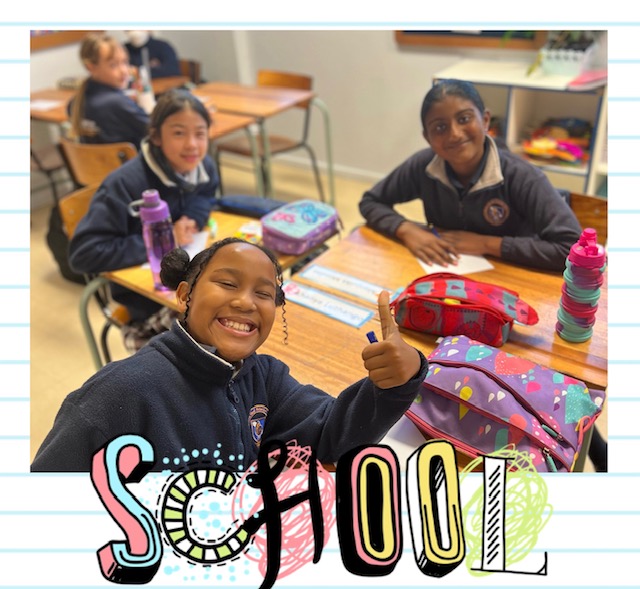
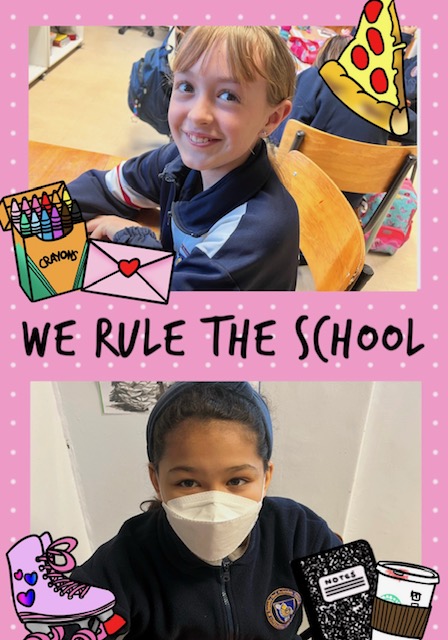
To start the new term, the Year 5’s were tasked with reflecting on not only the wonderful moments and memories they made during the holidays, but also on why they treasured them as a part of their life’s masterpiece. They were also asked to share these memories and stories with each other in groups and with the class.
Here are just some of the special memories our students shared:
The best moment and memory was probably cuddling with my dogs, because I’m obsessed with dogs! – Zoe Floor
My best moment is when I saw all the pretty trees in Canada and the hotels looked amazing; in Hermanus I went to the beach and saw dolphins and sharks. I love having fun and spending time with my family. – Bohlale Malatji
My happiest moment was a sleepover I had with my best friends in Shanghai. We had it in a hotel, especially for us! – Emily Yu
I went ‘glamping’ with my Mom; Step-Dad and my sister. I loved it because I went with my family and we were not allowed to bring our phones! – Sian-Lia Jenkinson
The best moment I had during the holidays was seeing my Mom. This moment was very special because I haven’t seen her in a very long time. – Unknown
It is, however, important to not only reflect on the past, but also to also look to and dream about the future. So for the second task, the Year 5’s were required to write down what they were most excited about experiencing this term. Here are some of their answers:
I am excited about the Aladdin play and doing work and getting higher marks in each of my subjects. – Khanya Luthango
I am excited for this term, because I won’t be wearing a mask! – Indiphile Jentile.
Making more friends, being happy and improving my sign language. – Zoe Floor.
I am excited about soccer this term and the new students. I also want to improve my marks. – Etana Mueke.
The Year 5’s are looking forward to a wonderful Term 3!
Jennifer Rose
Year 5 Teacher


Read More

From The German Club
Willkommen! Welcome to the new German Club!
The German Club was launched at the beginning of the year and has become a highlight of my week when 20 very enthusiastic German Club members meet on a Friday afternoon in my classroom for an hour. These members are students from Year 5, 6 and High School.
We cover various topics and themes as well as test and taste many different treats and snacks from Germany.
This term we explored the questions ‘Where in the World is Germany?’ and ‘Where in Europe is Germany?’
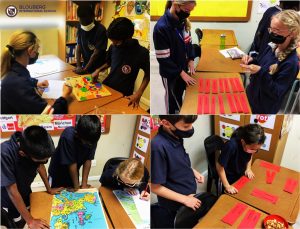
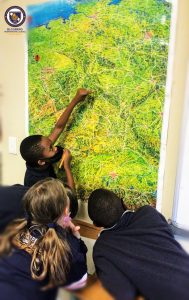
The students were divided into groups and rotated to different stations consisting of maps of the world, including Germany and a puzzle of Europe’s countries that they had to complete. They also had a questionnaire that needed to be answered as a group for each station. In this way, they were able to discover for themselves where Germany’s location is in relation to hemispheres, continents, oceans and then which countries, seas, rivers and lakes border Germany.
During Book Week in the German classroom, all the students were introduced to the fairy tales and stories by the brothers, Jakob and Wilhelm Grimm. We watched and listened to the animated story of the ‘Die Bremer Stadtmusikanten’ (The Bremen Town Musicians) and learnt a song.
Read the previous article here: https://blouberg.stjohnsdevon.desarrolloadhoc.com/2022/05/20/the-brothers-grimm/
In the German Club, we further explored this story and a highlight was watching a 60 minute movie with real live characters all in German with no English subtitles. The 4 animals; the donkey, dog, cat and rooster in the story could talk to the special humans, as they should of course in fairy tales.
In preparation before we watched the movie, we worked on the vocabulary from the movie by working in groups and matching the English and German words.
Parts of the movie were filmed in the German city of Bremen, which brought the story to life. The students really enjoyed the movie and we will definitely watch more in the future.
The German club also worked on a short play of the story and they presented it to the Year 1-6 students in the KS1 and KS2 assemblies this week. The students especially loved singing along to the song with much enthusiasm.
We look forward to the next term with the German Club.
Frau Kerstin Pani
Primary School German Teacher


Read More