
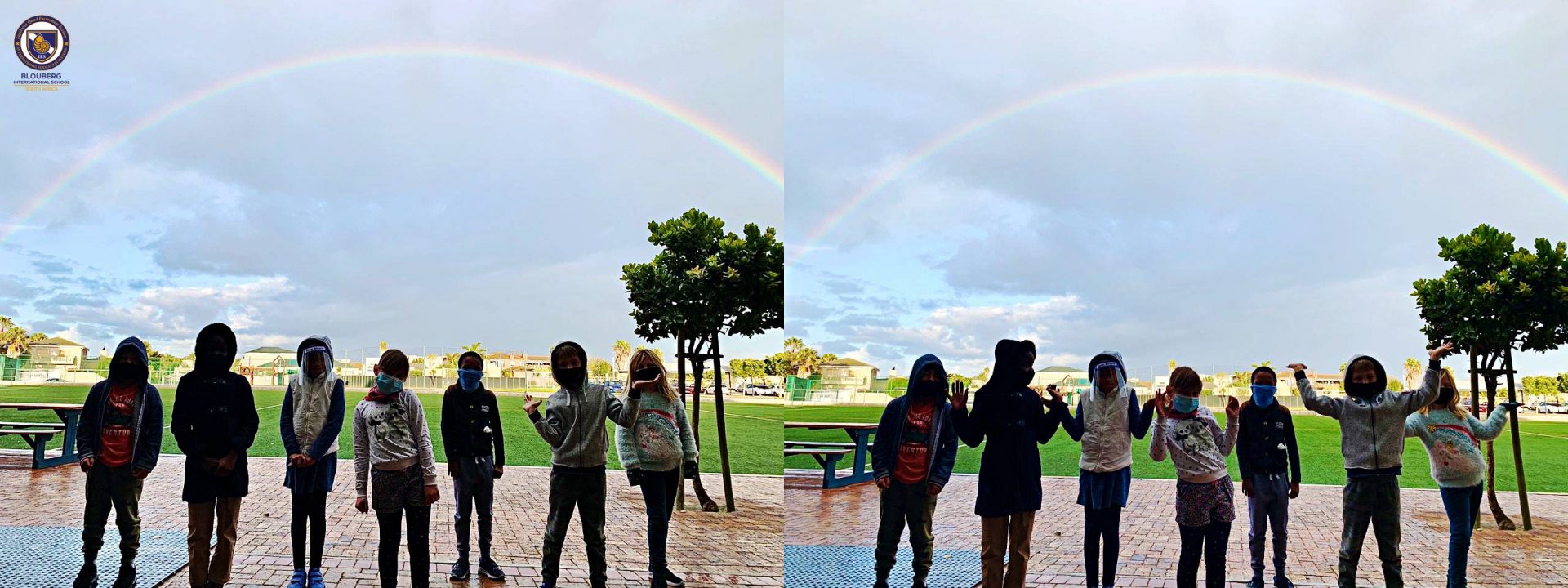
From the Principal’s Desk, 6 August 2020
Dear Parents
We may all feel overwhelmed at times and begin to second guess our decisions and the value and purpose of our actions.
Ms. Kiley and I met this week to discuss the challenges, and possible solutions, faced by our teachers and students. As a school we are blessed to have a counselor who can offer guidance to students and staff alike. It is important that although times are not easy, we focus on the positive aspects and not the negative.
On Wednesday afternoon the primary school teachers met for a workshop lead by Ms. Kiley and facilitated by Mrs. Cindy Arenstein. Teachers were given the opportunity to raise concerns and offer solutions to the challenges of dual teaching. After a productive discussion, each staff member was given a stone and encouraged to write on it a message of positivity and give it to another staff member. This was an awesome way of encouraging each other and strengthening the bond amongst staff members. We should all be looking for ways to encourage one another, to engender trust and build a sense of community. For children, this comes naturally, but as adults it is often a skill which must be remembered and developed.
Our staff are committed to ensuring the safety of our students and maintaining the protocols we have in place. We remind our students continuously about social distancing during break and in class and we ask that you remind them at home as well. This is all very unfamiliar to them and constant reminders are necessary until social distancing becomes habitual.
Our year 10 and year 12 students are starting their mock exams in a week. We are confident that they will be ready to write their final examinations in the October/November Cambridge sitting.
As we are preparing for a much-needed long weekend, I would like to encourage you with the following quote from Anne Frank.
“Everyone has inside them a piece of good news. The good news is you don’t know how great you can be! How much you can love! What you can accomplish and what your potential is!”
Have a wonderful long weekend with your family.
Kind regards
Edna
Read More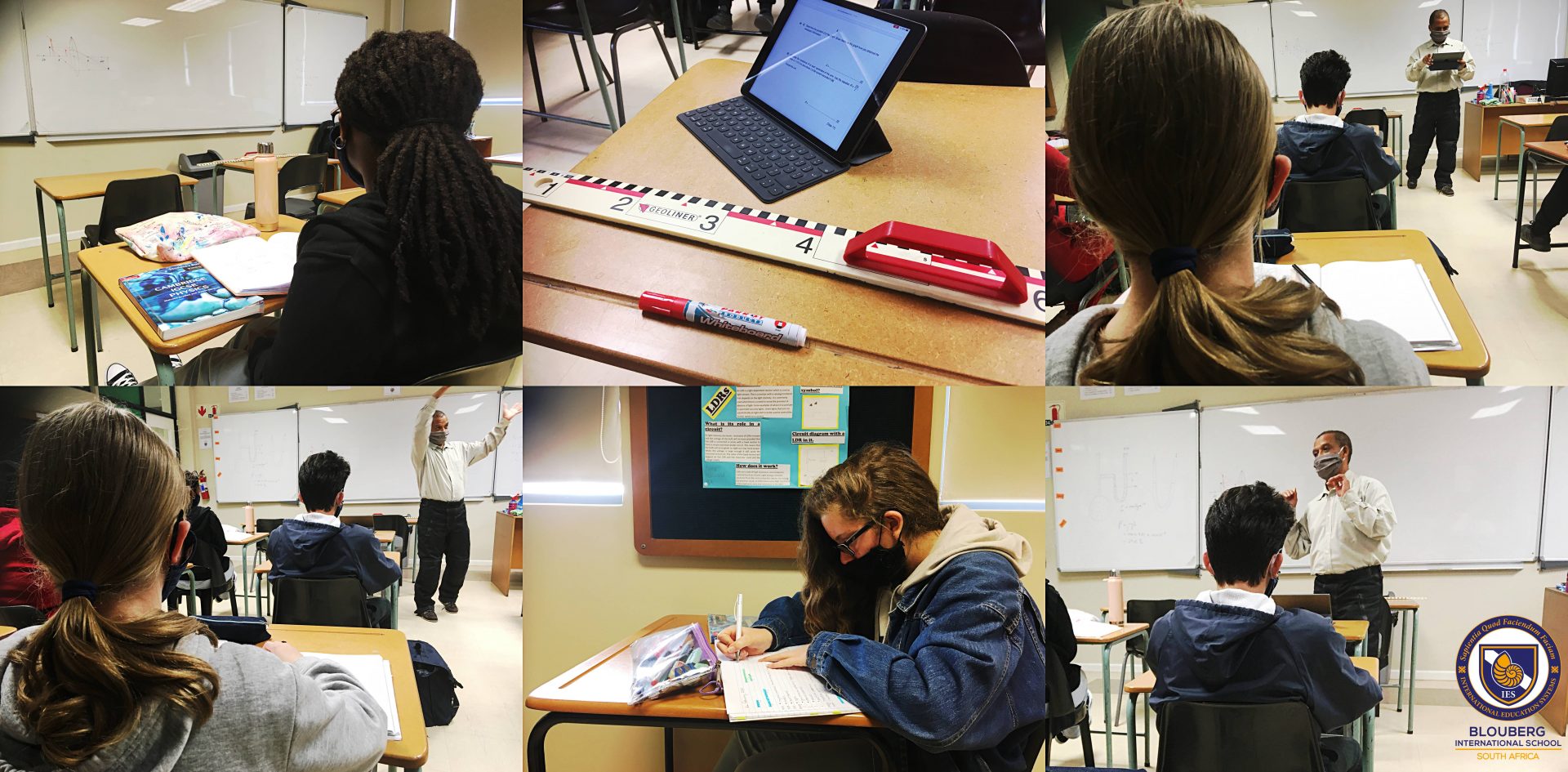
The Importance of Physics to Society
The future of any country and its contribution to the global economy is linked to its ability to develop its human capital in the field of science and engineering. Through its scientists and engineers, it is able to develop infrastructure for trade and industry.
In order to pursue a career in science and engineering one needs to have the ability to think analytically. The student, in Physics, studies an array of interesting topics ranging from matter, energy and their interactions. Physics is an international enterprise, which plays a prominent role in the future progress and survival of humanity.
Support for Physics and research is important because:
- Physics is an exciting intellectual adventure that inspires young people and expands the frontiers of our knowledge about Nature.
- Physics generates fundamental knowledge needed for the future technological advances that will continue to drive the economic engines of the world.
- Physics contributes to the technological infrastructure and provides trained personnel needed to take advantage of scientific advances and discoveries.
- Physics is an important element in the education of chemists, engineers and computer scientists, as well as practitioners of the other physical and biomedical sciences.
- Physics extends and enhances our understanding of other disciplines, such as the earth, agricultural, chemical, biological, and environmental sciences, plus astrophysics and cosmology – subjects of substantial importance to all peoples of the world.
- Physics improves our quality of life by providing the basic understanding necessary for developing new instrumentation and techniques for medical applications, such as computer tomography, magnetic resonance imaging, positron emission tomography, ultrasonic imaging, and laser surgery.
All educational institutions should thus promote physics as a subject with fervor and commit the necessary resources to create the infrastructure where students will be able to explore and satisfy their quest for scientific knowledge and solutions to everyday challenges.
Patrick Katzen
High School Physics Teacher
Read More

Year 3 Are Writing Japanese Poetry!
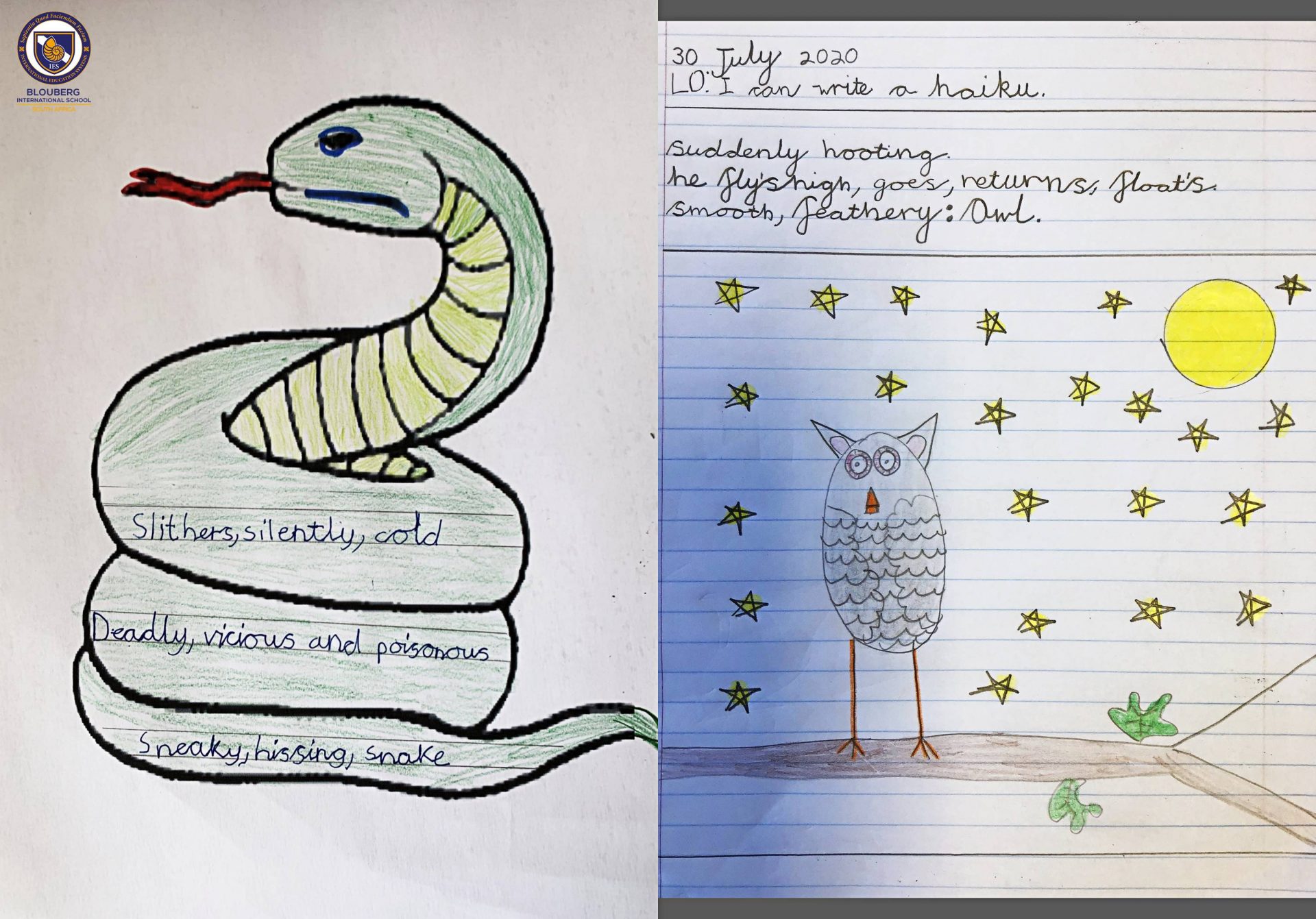
This term, Year 3 have completed an English unit called Poems from around the world. In this unit, the students read and performed different poems from around the world. They investigated how poems are linked to places and explored the words and sounds in the poems. At the end of the unit, they needed to copy the style of a poem and write a poem of their own.
We decided to focus on Japanese poetry and the students wrote their very own Haiku’s. A Haiku is a Japanese poem with a total of just 17 syllables and three lines… but that’s not all. Line 1 must have 5 syllables, line 2 must have 7 syllables and line 3, 5 syllables again.
Year 3 took on the task with great zest and promptly chose an animal each to write about. Next they created a word bank which had to include noun phrases and adjectives. Once the creative juices started flowing, they set about arranging their word bank into a Haiku. The results were amazing!
Well done, Year 3! We’ll make poets of you yet!
Mandy Goch
Year 3 Teacher
Measuring Fun
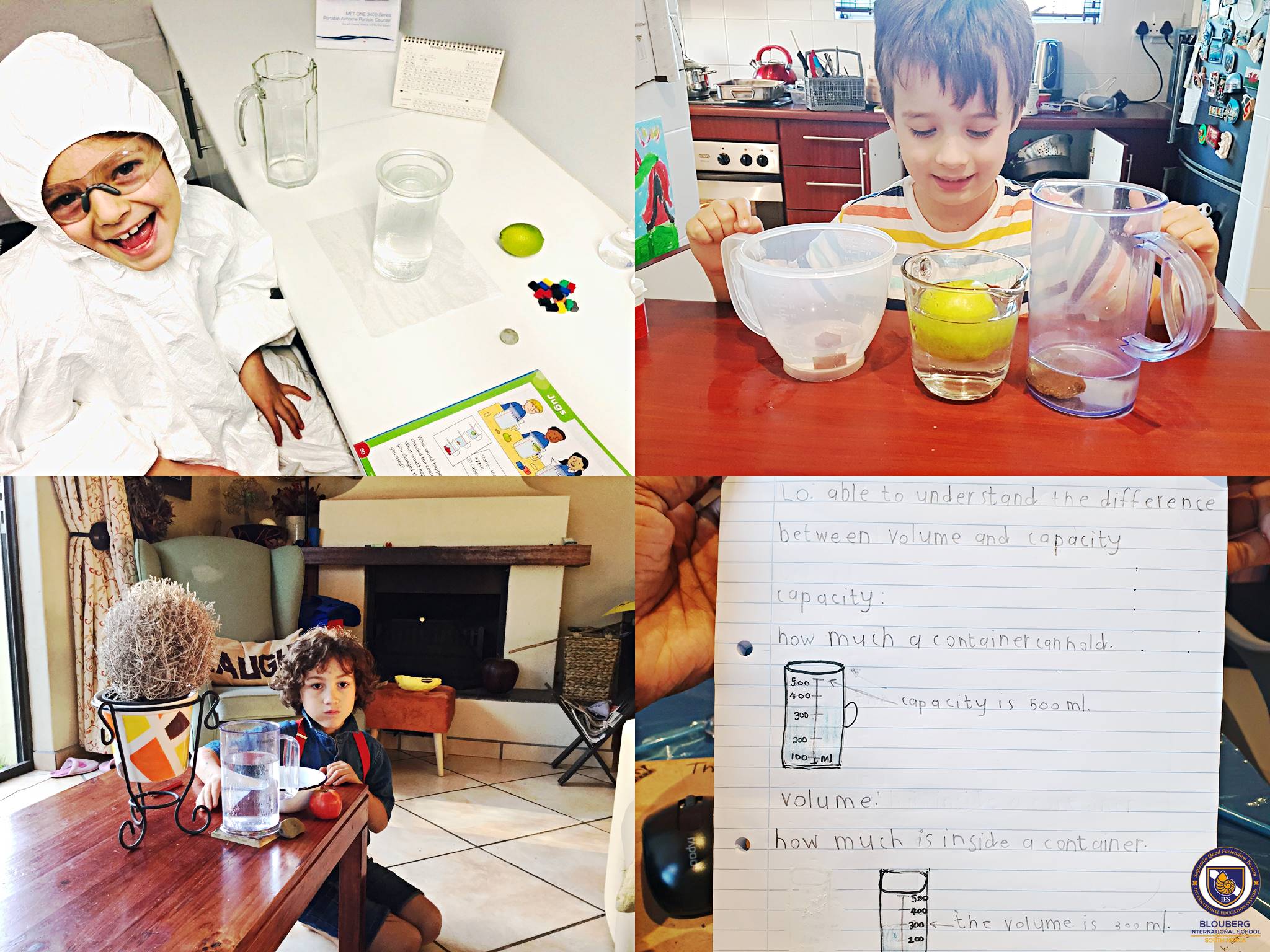
Learning Maths can be fantastic fun, as the Year 2 classes discovered this week.
We have been exploring volume and capacity and the difference between the two. In class we had some practical examples, experimenting with stones, Lego blocks, rice and water, in an attempt to identify which would float or sink. The students at home were asked to use items they have available to them to conduct experiments.
They had great fun predicting the outcomes of the different experiments. Some even remembered the Science topic about materials and could accurately predict the outcome and record their findings.
We are very proud of all our students for doing such great work!
Kim Coetzer
Year 2 Teacher


This Week In The Nursery
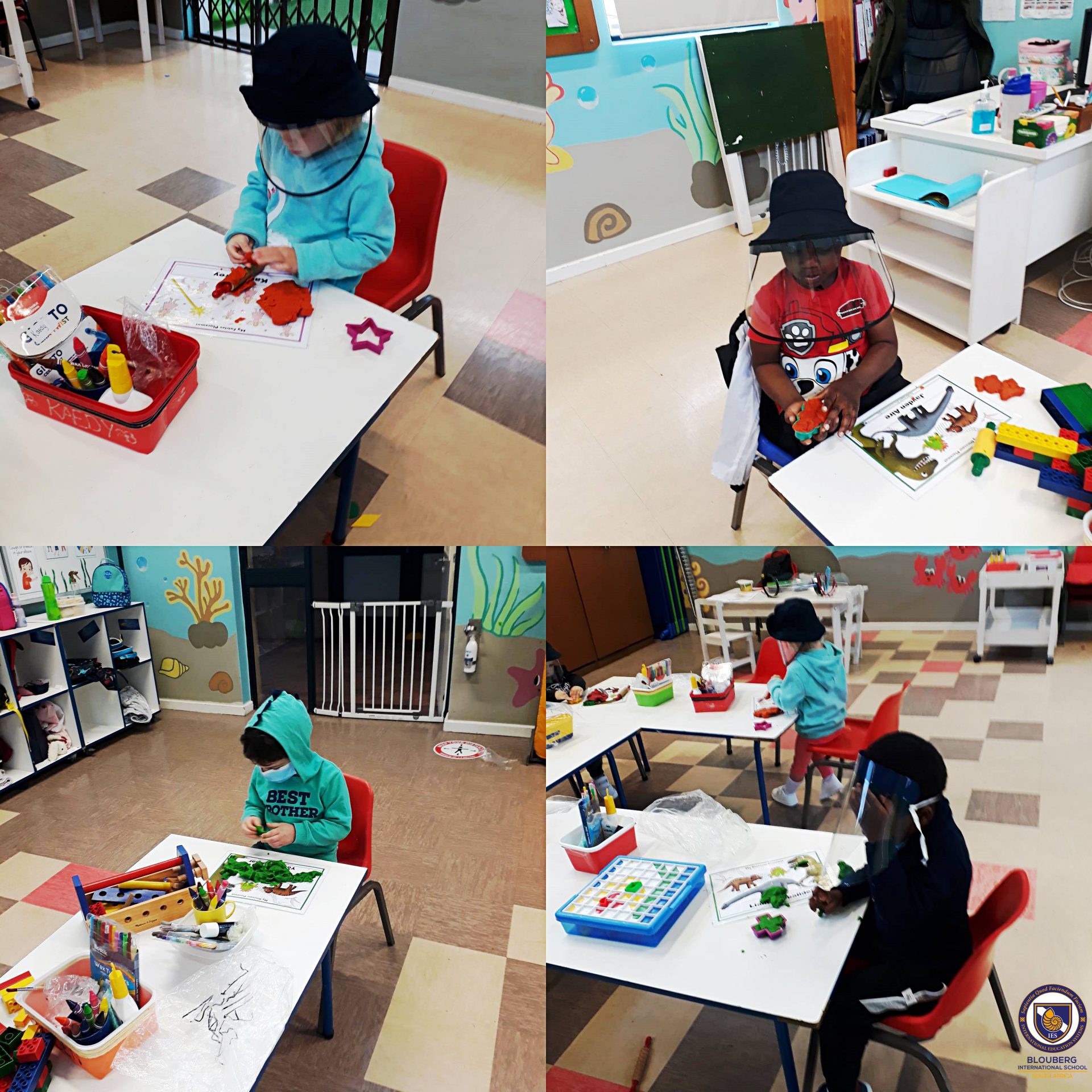
The Nursery students are having such a wonderful time discovering new things. They are getting used to sanitising their hands and learning to play alongside each other in a safe and fun way.
They have been learning about the colour red and learning about the Letter “A” from Jolly Phonics. My students sang the “A” song from our weekly Jolly Phonics lesson, followed by colouring in their ant. They really enjoyed the story that went along with it.
We have also focused on developing their fine motor muscles by manipulating play dough and making worms. Play dough is a fantastic sensory play tool.
We look forward to the next couple of weeks as we learn about more letters and colours.
Jacky Billings
Nursery Teacher

From the Principal’s Desk, 31 July 2020
Dear Parents
It is the end of the third week of term 3 and all our year groups have been phased in as per our return to school plan. Although all students are not at campus, we are well on our way to running at full capacity again.
There have been quite a few changes this term: from the morning routine and the way classes are conducted, to the collection of students in the afternoon. Despite the changes, disruptions, and uncertainties, we remain positive and in good spirits.
I wish to thank all our parents for adhering to our Covid protocols when dropping and collecting students. Please remember that if you wish to meet with a staff member, you need to book an appointment beforehand and go directly to the front office for the screening process. This is for your own protection as well as the health and safety of our staff.
To ensure the health and safety of our students and staff, we conduct risk assessments and screening throughout the day. The questions that arose this week, regarding quarantine procedures and contact with possible cases, led me to address the following in this week’s editorial.
Direct contact and casual contact
The issue of direct contact and casual contact is important to understand. Any direct contact with a positive case will result in such a person being isolated for a period of 14 days and possibly even tested, should he/she experience any symptoms of Covid-19. Direct contact in this case would mean physical contact with a positively tested person or someone sharing an immediate space (within 1,5m without wearing a mask) or shared such a person’s belongings. By merely sharing a classroom or workspace does not constitute direct contact. Such a situation is regarded as casual contact, without any risk as all the necessary health and safety precautions are strictly observed regarding social distancing, the wearing of masks and the washing and sanitizing of hands.
I wish to re-iterate that there is no shame in contracting the virus as it can happen to anyone and no stigmatization will be tolerated at our school. We all need to continue exercising the necessary health and safety measures such as the wearing of masks, proper social distancing, regular sanitizing, and thorough washing of hands. The school is sanitized regularly according to all protocols.
Let us be mindful that we are in this together and it is only through understanding and cooperation that we will endure this time of hardship.
“Character cannot be developed in ease and quiet. Only through experience of trial and suffering can the soul be strengthened, ambition inspired, and success achieved.” – Helen Keller
I wish you all a wonderful weekend.
Kind regards
Edna
Read More
Year 2 Duckling Art
You may already know that art is a great way to treat anxiety and stress in children. But did you know that it also positively impacts their cognitive and physical development? Especially during strange and uncertain times like the ones we’re going through.
This week our Year 2’s had some fun making their very own little ducklings. We got creative with some paper plates, watercolour paint, googly eyes and some cool feathers! So much fun was had by all, we really relaxed and enjoyed ourselves with some cool music on in the background and some creative juices flowing.
They look super great up on our walls displayed in the classroom!
Siobhan Hendry
Year 2 Teacher


The Original Gangster Rapper
Young, intense, fickle love; arranged marriages; civil and parental disobedience; gangster warfare; silly jokes, nasty insults and suicide… these are all themes and issues the Year 7 and 8 students will be exploring in English this term. Sounds like some of the hot topics in the “no-good” music our youth listen to these days. Shocking? Nay, Shakespeare! The tragedy of Romeo and Juliet to be specific. Throw in a convoluted love square, a plot to kidnap a kid, some fairies and a magical flower and you have the comedic A Midsummer Night’s Dream too.
Oftentimes Shakespeare’s plays are viewed as stuffy, filled with “fancy” language and are considered unrelatable for modern audiences. When one realises that the language Shakespeare used was true to how everyday man spoke at the time and that he mixed formal and informal diction and structure to represent social status (and thus level of education), with colloquial language, slang and all of the drama that continues to plague mankind to this day, it becomes clear that the only barrier that truly sets Shakespeare’s work apart from us is our translation of Old English. Overcome this and we can appreciate the brilliance of Shakespeare’s plays in our world today and perhaps also develop an understanding of how language evolves.
When questions of modernity come to the fare, I enjoy emphasising that with rhyme, wit and themes that criticise and mimic society and mankind at large, drawing out every manner of emotions in the audience, Shakespeare’s poetry and plays are comparable to modern day “gangster rap”, gut-wrenching love songs or stories and creations of fantastical worlds in which we love to lose ourselves. Let’s not forget the thousands of words and phrases that first appeared in Shakespearean writings and are still made use of today.
Is Shakespeare irrelevant? Never! Shakespeare not only gives us a view into Elizabethan era society but forces into focus how much humanity has progressed in some ways and remained unchanged in others. The human condition seems to be eternal. When I asked students if they would allow their parents to choose their love interests, for example, they were in strong opposition to the idea and would rather choose to respectfully decline or flee – as epitomised in the characters of Juliet and Hermia. They seemed relieved at the fact that the patriarchy of the 16th and 17th century no longer holds as much weight in their world as it still does in many countries across the globe. They were also shocked and amused by how grungy Shakespeare can be in his diction chosen for many a comedic character. They expect that kind of language from their rap musician interests and controversial comedians or a movie their parents might be opposed to them watching. But from “Mr Fancy Pants” himself? Lo, how we misinterpret thee and thou for anything other than a casual ‘you’.
Considering topics of woe and misfortune, murder and the use of mind-altering magic as well as lingo one’s grandmother would threaten with soap, perhaps we should take Shakespeare out of the curriculum? How dare we putrefy young minds with 400-year-old madness? Surely however, if art imitates life, everything portrayed in Shakespearean plays is out there anyway and we cannot shelter our youth from what is thrown at them during a news report, in the lyrics of popular songs and a favoured game, television show or film? Indeed, man has not progressed far beyond many of these scourges since the bubonic plague hit London in the 15-1600’s. Shakespeare is thus certainly still relevant. Why else do we learn about history? Why else to we try to change governmental policies that seem to have been implemented in the stone ages and fight for our ever-changing human rights? Why do we learn to communicate with all manner of man, to explore and to grow in knowledge towards changed minds and hearts? In my opinion, what we can learn about ourselves from the works of a long-dead playwright, is far more beneficial than the darkness of humanity he reveals is scarring.
I asked my students about their opinions of Shakespeare this week and whether or not they think it should be kept in the yearly curriculum. There was definitely some strong opposition, with Year 8 students describing Shakespeare as dramatic, tedious, but entertaining, and acknowledgement that when one doesn’t understand the original text it is like reading Arabic. However, one student in Year 7B stated, with a chorus of agreement from his classmates, “I thought it was going to be boring, but now I am entertained,” and another chimed in, “The more I read, the more I want to read.” A few in 7A are intrigued and feel that Romeo and Juliet contains some of the best pick-up lines they have heard and are keeping note so that they might use them in future. Some of the Year 9 students who have studied a few of Shakespeare’s plays describe Shakespeare’s work as hallucinogenic, dark, tragic and, “Hectic! PG!”
Whatever one’s personal opinion on the matter of Shakespeare in the curriculum, along with his “low-down”, dark talk and tales, Shakespeare offers us gripping storylines, undeniably beautiful poetry, truer words than anyone else knows how to express, laughs and advice we would do well to heed.
“These violent delights have violent ends
And in their triumph die, like fire and powder
Which, as they kiss, consume.”“Wisely and slow; they stumble that run fast.”
Warnings by Friar Lawrence in Romeo and Juliet
“Do not swear by the moon, for she changes constantly. Then your love would also change.”
Juliet to Romeo – hints at the fickle nature of a young man’s love, epitomised by Romeo’s instantaneous switch from obsession over Roseline to Juliet.
“What’s in a name? That which we call a rose
By any other name would smell as sweet.”
Juliet, pondering the relevance of Romeo’s surname and standing as a Montague, her family’s (the Capulets’) sworn enemy.
“O serpent heart hid with a flowering face!
Did ever a dragon keep so fair a cave?
Beautiful tyrant, fiend angelical, dove feather raven, wolvish-ravening lamb! Despised substance of devinest show, just opposite to what thou justly seemest – A dammed saint, an honourable villain!”
Juliet describing Romeo after she finds out he has killed her cousin in a murderous, vengeful rage. A commentary on how appearances and behaviour can stand in contrast to one another and how despair can lead one to act out of character. This also displays Shakespeare’s love of oxymorons – contrast through contradiction.
A few special quotes from A Midsummer Night’s Dream:
“The course of true love never did run smooth.”
“Love looks not with the eyes, but with the mind,
And therefore is winged Cupid painted blind.”“Lord, what fools these mortals be!”
“And yet, to say the truth, reason and love keep little company together nowadays.”
A few great TEDx talks for those who love Shakespeare but not Hip Hop or visa-versa:
- Shakespeare was the First Gangster Hip-Hop Artist by Doug Rappaport – https://www.youtube.com/watch?v=iIojIWLnMiU
- ·Hip-Hop & Shakespeare? by Akala at TEDxAldeburgh https://www.youtube.com/watch?v=DSbtkLA3GrY
High School English Teacher

Year 5’s Return To The Classroom
It has been quite a wonderful return of the Year 5’s this week. There was a little bit of nerves and worry, however it was quickly eclipsed by the excitement of seeing friends and teachers again.
Our first day back saw us going through our Covid-19 classroom rules and getting to listen to everyone share their experiences of Lockdown. Our online students then joined us and it was wonderful to see them all. We spent some time chatting and catching up.
Work continued full steam ahead and we got stuck into making Probability Spinners for our mathematics class. Both students, in class and online enthusiastically enjoyed this task.
Break times required a little creativity and fun social distancing games of “123 block”, handstand competitions, and even a little exercise.
We are exceptionally proud of our students, the ones returning and the ones online. Each of them have shown great tenacity and determination. It has not been easy to adjust and make changes to something they have known to be the normal, however their willingness to learn, stands stronger than any virus or pandemic state we may be facing.
To Quote Dr Seuss, “And I learned there are troubles of more than one kind, some come from ahead and some come from behind. But I’ve bought a big bat, I’m already you see. Now my troubles are going to have troubles with me!”
Nadia Mahomed
Year 5 Teacher


Exploring Countries
This week our theme was countries around the world. We enjoyed leaning about the following countries:
South Africa– After locating South Africa on the map, the students learned that Johannesburg is the largest city in South Africa and that Cape Town is known as the Mother City as it was the first western settlement established in our country. There are 11 official languages in South Africa, but English, Xhosa and Afrikaans are widely used. We also know that South Africans eat a wide variety of foods similar to most western countries. Some traditional foods are biltong, rusks, potjiekos, braai, samp and beans, melktert and bobotie. The South African flag represents the coming together of our Rainbow Nation in the new democratic South Africa. The students loved decorating the South African flag.
China- The students discovered that China is the fourth largest country and that the capital city of China is Beijing. The national flag consists of a red background and five golden-yellow stars. The Chinese are known for eating a wide variety of foods. The staple foods however, are rice and noodles accompanied by vegetable or stir fried meats. The Lantern Festival is a fun festival where people flock to the streets with a variety of lanterns under the full moon, watching Lion or Dragon dancing and lighting up fireworks. The students made a dragon during art and craft time.
Australia- We did Aboriginal Art while we learned more about Australia. Australia is the only country that is also a continent. It is also one of the driest places on earth. It is a multicultural country and they have cuisine from all over the world including Greek, Middle-Eastern and Asian food as well as good English fish and chips.
Russia- We made a Russian cityscape collage during art and craft time. We learned that Russia is the world’s largest city. Russians enjoy eating caviar or fish eggs, served on little pancakes called ‘blini’ topped with sour cream. Borscht, a hearty soup made from beetroot is also very popular during the cold winter.
We enjoyed learning about these countries and we will discover more about France, England, Spain and America next week.
Martie van Dyk
Reception Teacher
