From the Principal’s Desk, 24 July 2020
Dear Parents
We are in the final stage of phasing in students and look forward to welcoming back nursery, year 5 and year 6 students on Monday, 27 July 2020.
It is such a joy to hear the voices of children in the school building again. We are very aware of the necessity in ensuring protocols are strictly adhered to and wish to ensure you that students are in good spirits and taken care of at school.
The obvious joy the students feel being back at school far outweighs all the new responsibilities that comes with it. We are teachers by heart and having children in our classes is what makes the job worthwhile.
Further to the announcement our President, Cyril Ramaphosa made last night, I wish to confirm that we will remain open even if public schools are closed. No mention was made about independent schools and unless we receive a mandate, we will continue to be at your service both at school as well as online.
We are dealing with new mandates and changes continually and our staff are required to adapt daily. As parents, I am sure you are experiencing a similar rollercoaster of emotions. Given how surreal and scary these circumstances are, we need to ask ourselves continuously how we are coping. Our emotional wellbeing is crucial in making our children feel safe. This is important for you as a parent, for our educators and our children. In such difficult times, we must remember to cut ourselves a little slack. Nobody is perfect and we can all only do our best.
As the weekend is ahead of us, I wish to remind you to take care of yourselves, your emotions, your health, and most of all your family bond.
Kind regards
Edna
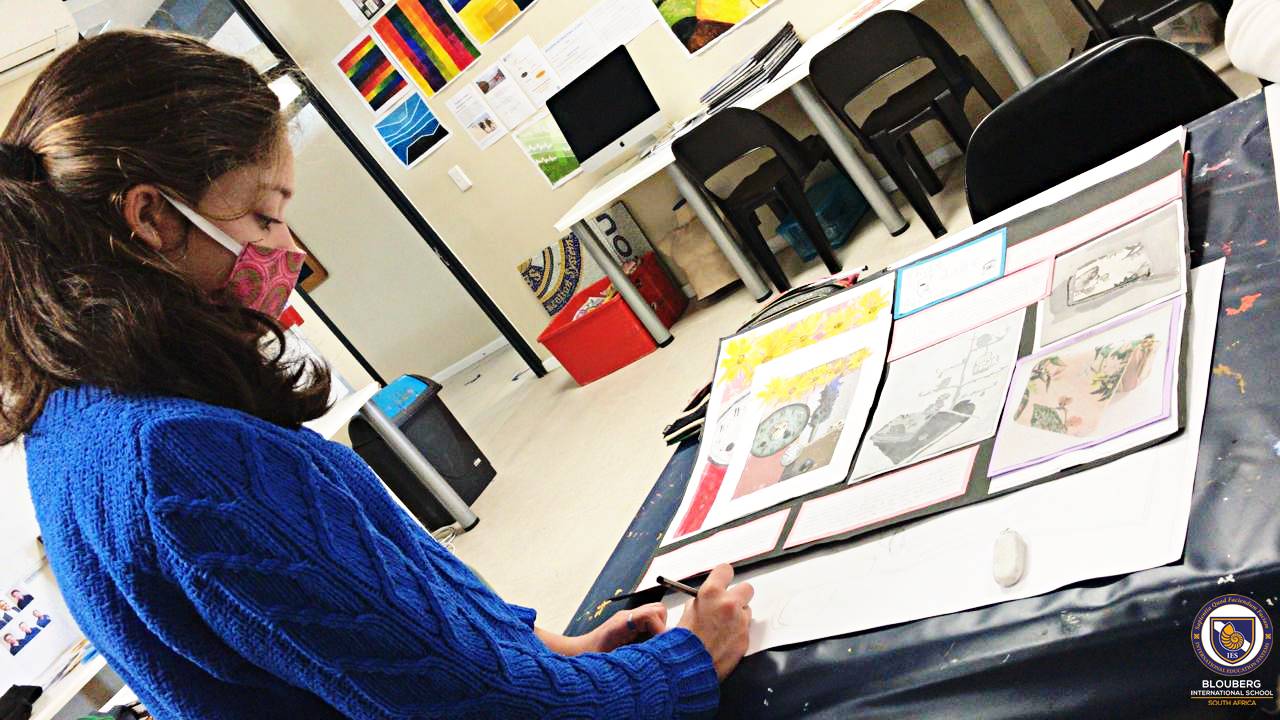
Not only drawing and painting
Cambridge Art and Design is not just one subject; it is many subjects. The syllabus covers a wide range of artistic activity divided into broad areas of study: Painting & related media, Non-traditional media, Mixed media, 3-D Painting, New Media, Printmaking, Three-dimensional studies, Photography and digital media, Graphic communication and Textile or Fashion Design and Craft design.
What is non-traditional media?
Non-traditional media include a wide range of modern materials that are used together or combined with traditional materials. They include collage, textiles, and waste materials. Collage artists often collect magazine photographs and coloured papers which enables them to choose a range of shapes and colours for their work.

BRC Designs’ Capped Out Chair consist of hundreds of salvaged bottle caps layered over a structure composed of 99% recycled steel finished with a white powder coating. The soda bottle caps are attached using zip ties, giving the chair a colourful and comfortable surface for sitting. The Capped-Out Chair is part of a collection also includes a spiky fruit bowl made from bottle tops and zip ties.

“The Scrabble Game, January 1”, 1983, David Hockney, photographic collage.
In the early 1980’s, English painter David Hockney began creating intricate photo collages that he called “joiners”. His collages consists of compositions made up of photographs.
3-D Painting
Combining painting with 3-D objects has been popular since Cubism. Picasso and Braque added small pieces of card, wood, and metal to their canvas. By painting this assemblage, the viewer must try and work out what is real and what is painted, and what is 2-D and what is 3-D.

One person’s trash can be another person’s treasure. Kirkland Smith makes assemblages with an overwhelming array of “found” objects. Smith’s assemblages have been displayed individually at environmental conferences and meetings, but more often are collected and displayed simply for their aesthetic appeal.
Three-dimensional studies
Three-dimensional (3-D) studies include a large variety of materials and approaches for creating art. These studies involve working in 3-D forms with one or more materials rather than on a flat, 2-D surface. This means you need to be particularly aware of space, volume, and form. 3-D studies can include: sculpture, ceramics, theatre and set design, environmental and architectural design, product design and craft design.
3-D studies can also overlap with other areas of art depending on which materials you work with. For example, a sculpture made of fabric might also be described as textiles.
Theatre design / Set design or Environmental / Architectural design
Theatre and set design involve creating ideas to support performances or productions of drama, dance, or music. This can include design work such as: a stage set or scenery, props or accessories, costumes, masks, and headdresses.
Like other areas of 3-D studies, you can present your work in various formats, including: photographs, digital images, scale drawings and 3-D scale models.
You can choose any aspect of theatre or set design as your focus, which will help to decide the materials and scale of your work. For example, if you enjoy working with fabrics and have an interest in fashion, you can design a costume for a character in a performance. Alternatively, you can make a stage set for a production as a scale model. You may also design the lighting for a stage production and consider what impact this has on the audience.

A set design for “Trick or Treat” by scenic designer, Michael Ganio.
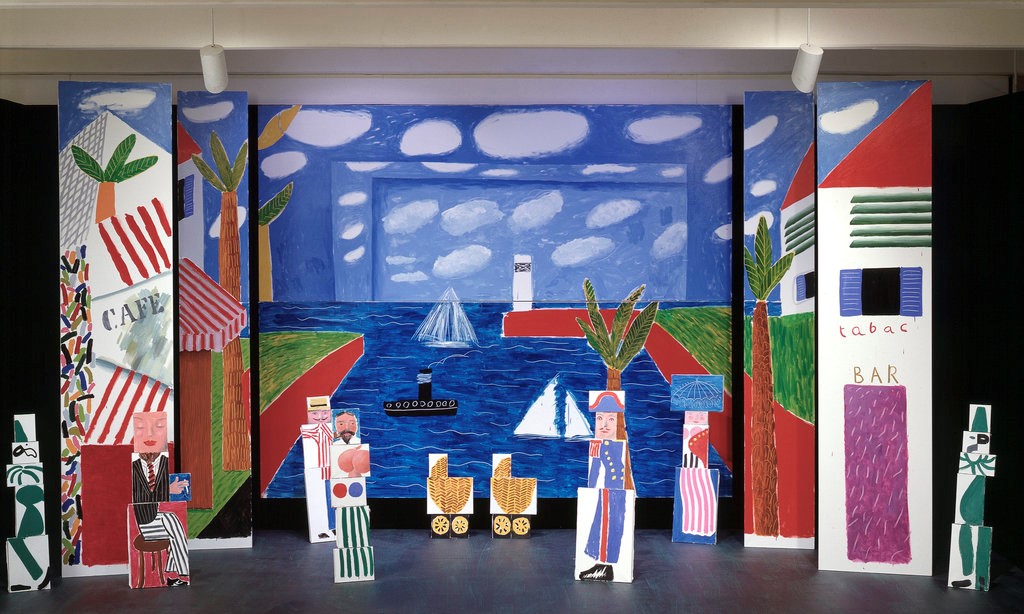
Small scale stage set design with painted environment with separate elements based on the set design for Poulenc’s opera, The Breasts of Tirésias, 1983 by David Hockney.
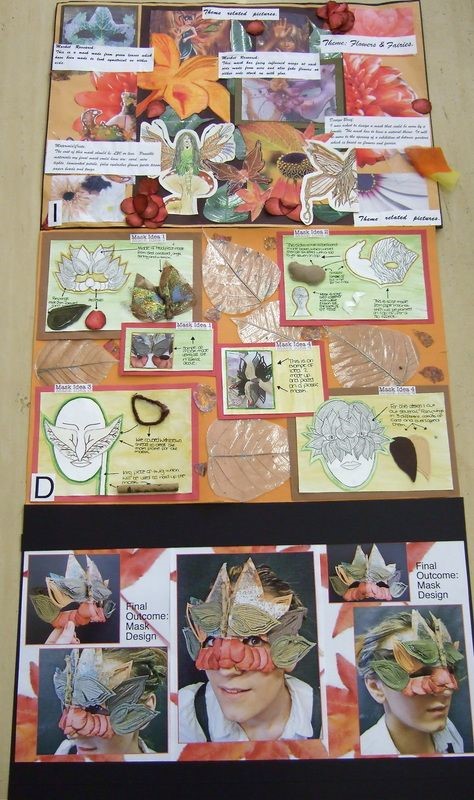
IGCSE design using craft to make designs for a mask.
What is environmental and architectural design?
Environmental and architectural design involves creating ideas on a large scale. It includes designing new buildings, structures, or spaces that people can use. This type of 3-D design is about enhancing the surroundings in which people live and work.
You could design for a domestic, commercial, or retail space, you might also consider designing a garden or landscape. Creating sustainable and environmentally friendly design can also be a consideration.

IGCSE Art project using corrugated cardboard
You can use the following techniques to present your work, or any other technique that you think is useful or relevant: scale models, scale drawings, CAD, and photo montage.
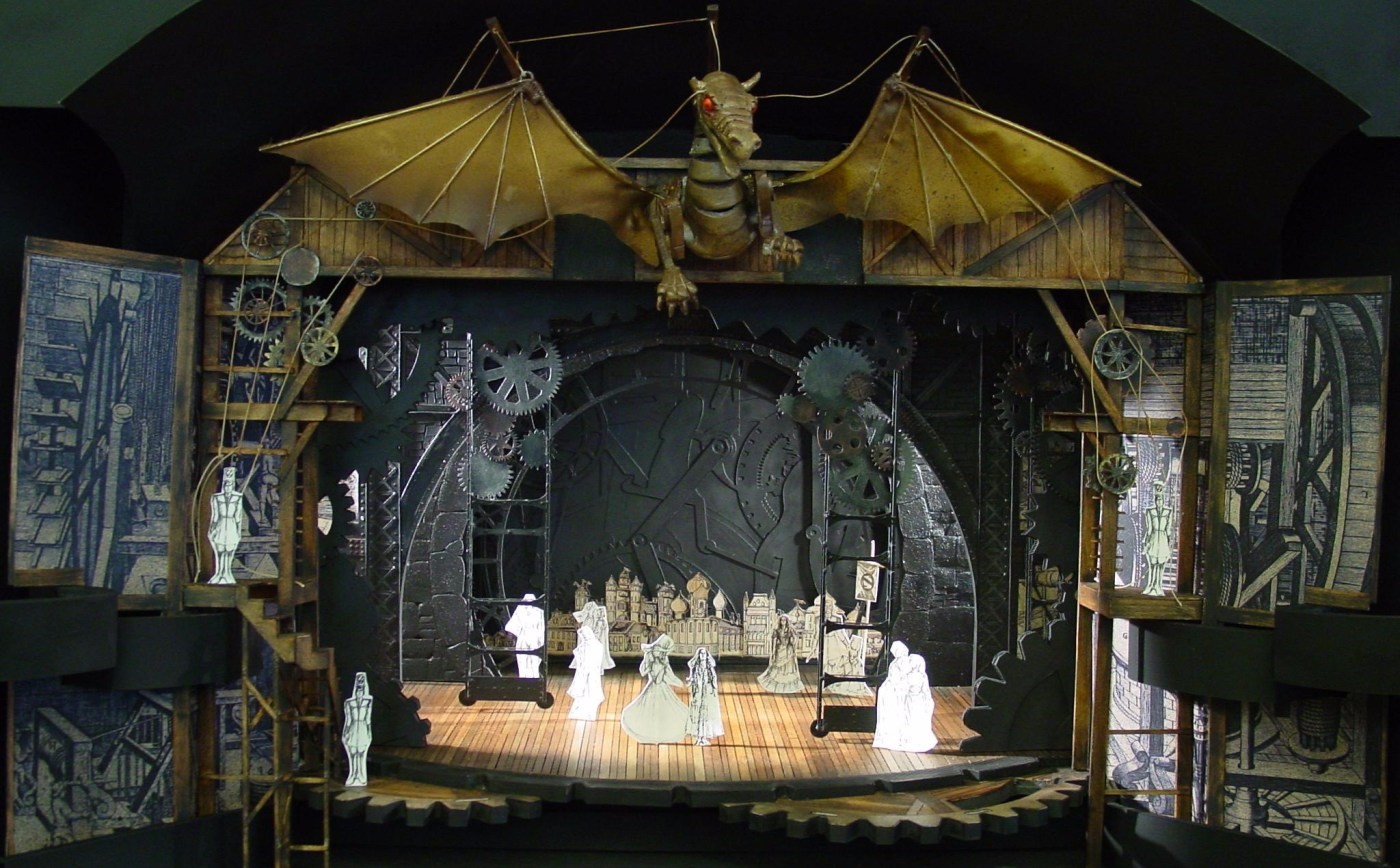
Set design for “Wicked” by Tony Award winner, Eugene Lee, and Edward Piece.
Product design
Product design involves inventing new items that are either functional, decorative or both. Most products overlap between the categories. Products are often created in response to a design brief. This means that the design of a product involves solving any problems and requirements that are necessary to fulfill the brief. This process includes selecting the right materials and making sure the product functions properly, as well as looks attractive. It must also include making sure that the product is cost-efficient.

Product designs

Product designs
Like other areas of 3-D design, product design can range in scale from small to exceptionally large. You may decide to design a large-scale product such as a piece of furniture, but you do not need to make a full-sized model. You can communicate your designs as a scale model. However, you do need to show your understanding of how the full-size product would be made. This should include any manufacturing processes or specific techniques that are required to make the outcome. You must also use 2-D techniques to record the various stages of your work and ideas.
Craft design
Craft design covers many types of skillful making by hand. Like most areas of 3-D studies, craft can be either functional or decorative, or both.
Examples of craft design are jewellery, wire and metalwork, paper mâché, mosaic, puppet-making and local craft such as basket weaving.

IGCSE Craft design
Jewellery
Jewellery is any sort of design object that can be worn on the body. It is usually fairly small scale but can also be quite large and elaborate. Consequently, jewellery is often linked with fashion design. Examples of jewellery are rings, necklaces or pendants, bracelets or bangles, earrings, and brooches or badges.
Traditional materials for making jewellery include wood, metal, glass, clay, precious stones and natural fibers or products such as shells, seeds, bone, or seedpods.
Modern materials and creative techniques use other materials such as plastic, paper, recycled materials, resin, and fabrics.
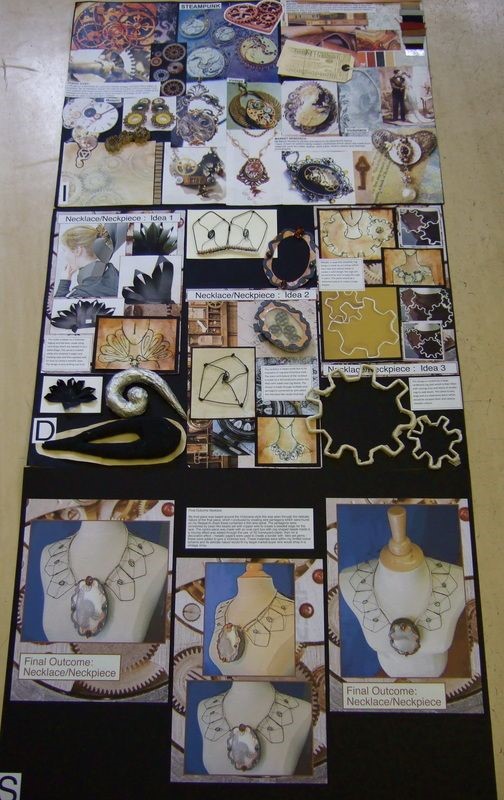
Jewellery design
The use of digital technology has also enabled some designs to be mass-produced. An example of this is plastic jewellery that has been laser-cut into a pattern so that the same design can be cut out in the same pattern lots of times.
Constructed textiles
Traditional textiles are made from yarns that are woven, knitted, crocheted, knotted, felted, or fused together. The yarns are placed close together to form a solid fabric, or spaced to form a more open structure. Constructed textiles can be large or small scale, handmade, or mass-produced by machine. They can be two-dimensional, like a carpet, or three-dimensional, like a yurt.
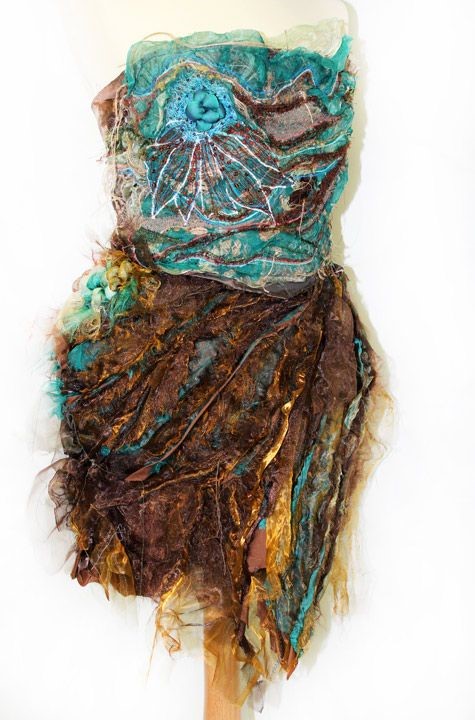
Fashion design with constructed textiles
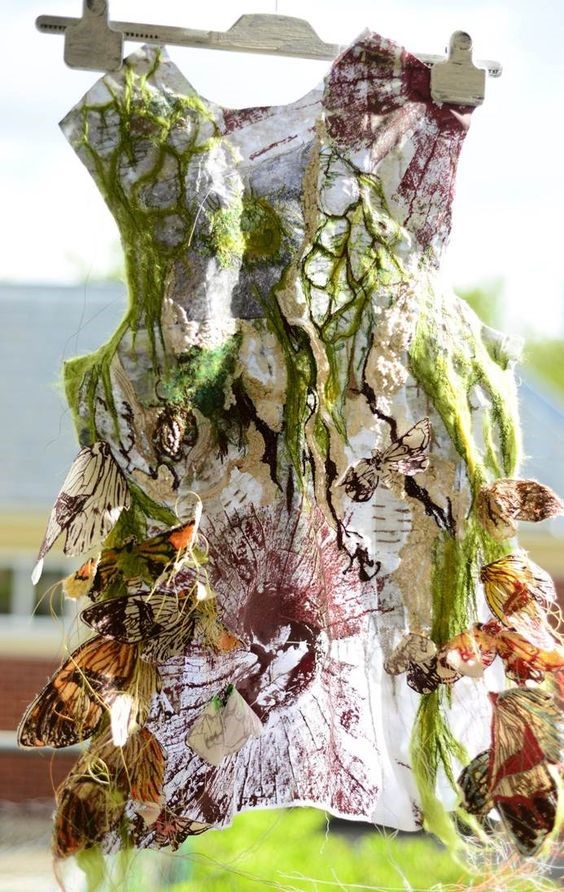
Fashion design with constructed textiles
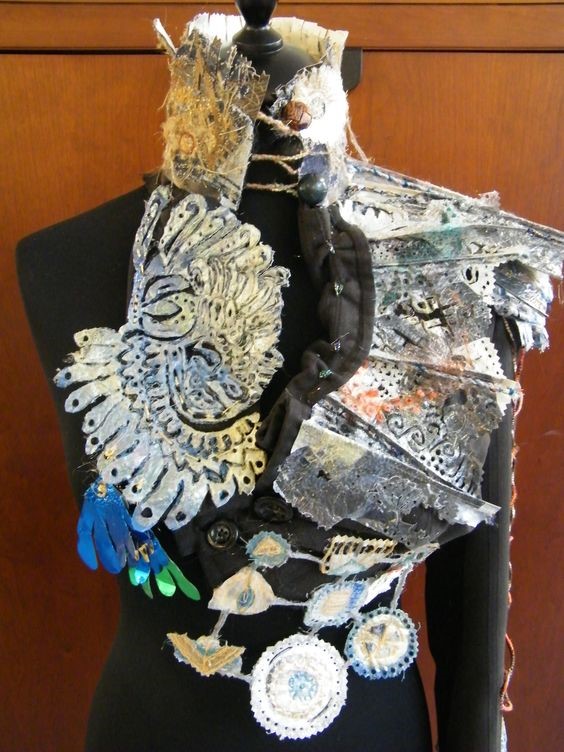
Jewellery design with constructed textiles
Riaan Vosloo
IGSCE/AS & A Level Art and Design Teacher
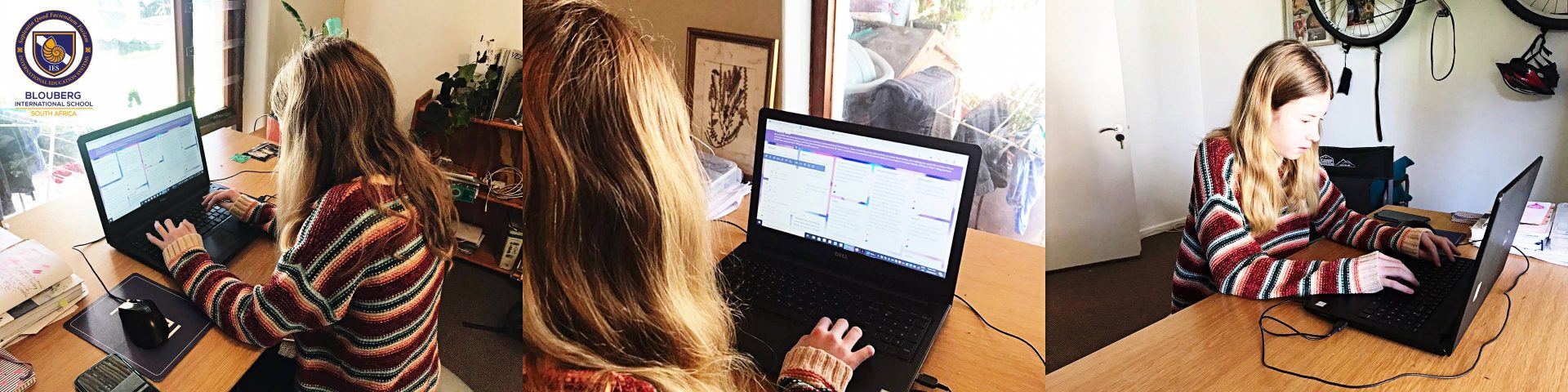
Padlet Has Me Thinking…
This term, the Year 6’s started off their English unit with poetry.
At the beginning of each term, I ask the students to brainstorm what they notice and wonder about a topic. As we are still online teaching, I created a Padlet Poetry Wall for the year group. Their first instruction was to post what they knew about the topic, what they want to know and then lastly, wait for their peers to post their responses. They needed to comment on at least 3 of their peer’s posts and provide them with constructive feedback.
The Year 6’s took this Padlet Poetry Wonder Wall and made it their own. Before I knew it quotes, pictures and even some of the student’s own poems were posted on the wall. After week 1 was completed, I had the students reflect on their week of learning and post one thing they had learned and one thing they were still unsure of.
The creativity and uniqueness of the Year 6 students never fails to astound me, and I am very impressed by how quickly they adapt to a new online tool. As we progress with our Poetry Unit, we will keep using our Wonder Wall to showcase our learning journey.
Katherine Nel
Year 6 Teacher
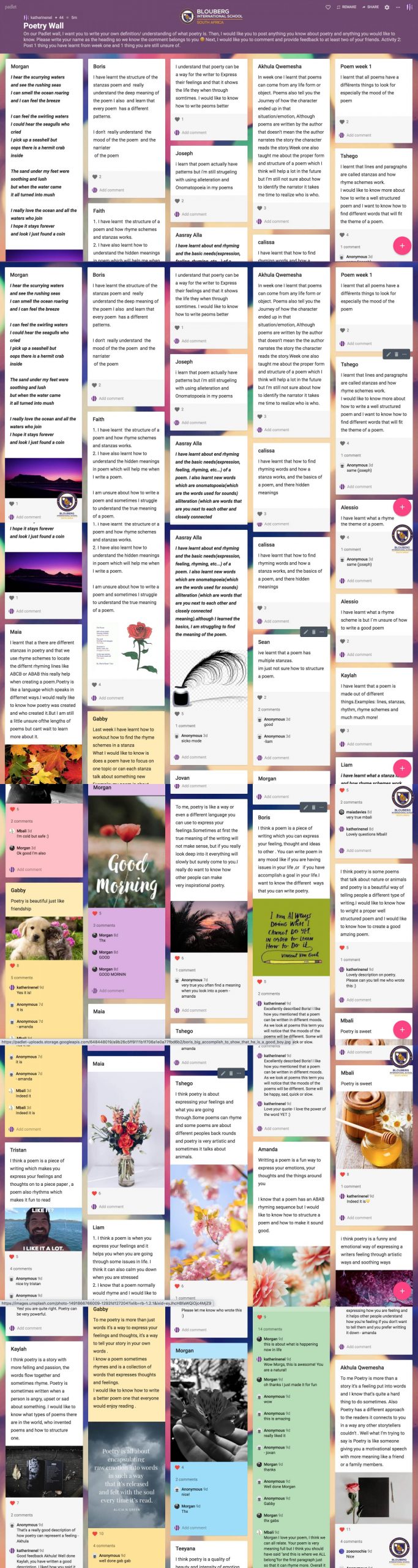
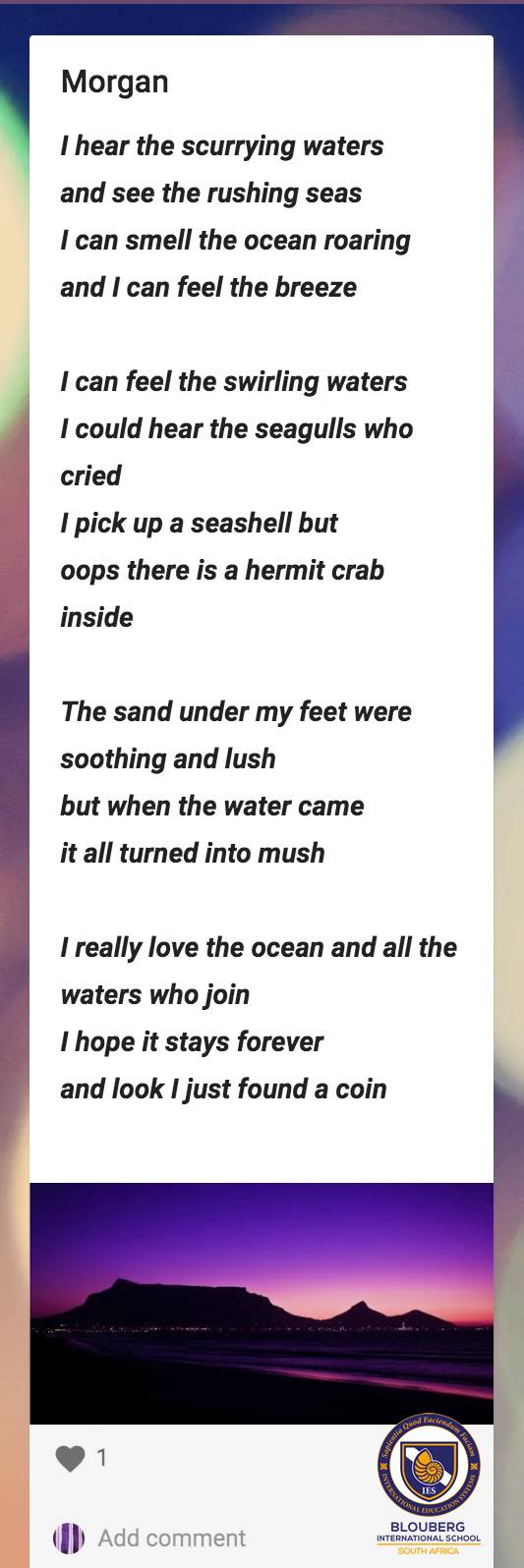
PHOTO: Morgan Glanville created her own poem, using the inspiration of water that we are currently exploring as a theme in our English Unit.

Developing A Love Of Reading In Your Child
“Children are made readers in the laps of their parents’’ – Emilie Buchwald
It is so important to encourage a love of reading in your child from a young age. Reading in a wonderful opportunity to bond and build memories as a family together. Research shows that reading to children, even before they can understand words, teaches them to associate books with love and affection. Reading is a multifaceted process involving word recognition, comprehension, fluency and motivation.
The first words children encounter in their reading are often known as High Frequency Words. Some High Frequency Words can be sounded out, but often they need to be memorised. It can be useful for children to learn phonics rules to help them break down words so that they can make sense of them. Some High Frequency Words can be taught as word families where the rule is the same. For example in the short words ending in ‘o’ such as ‘go’, ‘no’ and ‘so’ the ‘o’ is pronounced as ‘oh’, However in ‘to’ and ‘do’ the ‘o’ sound is pronounced as an ‘oo’ sound. In this example children would learn that short words ending in ‘o’ either sound like ‘oh’ or ‘oo’ at the end of the word. Jolly phonics is really great at helping children be more aware of where they hear the sound in the word. The sound buttons help them see and find beginning middle and end sounds in words with ease. This helps them with both blending sounds to make words and breaking words up into sounds to read them.Once your child has knowledge of phonics skills and has mastered some of their High Frequency Words, they are ready to start reading books with simple sentences. A good knowledge of High Frequency Words will help with good fluency and gaining confidence in reading. As confidence improves it motivates your child to want to read more. It is so important to make your child’s reading homework experience as enjoyable as possible.
Here are some tips for parents:
- Find a quiet area in a relaxed area of the home where there won’t be distractions or interruptions.
- Encourage your child to use their knowledge of their phonics skills and spelling rules to sound out words.
- Be patient and allow your child to get the word wrong. Ask questions such as “Does it make sense?” “Does it sound right” “Does it look right?”rather than giving them the answer or losing patience when they are making the same errors.
- Tell your child to look for clues in the pictures for words they are unsure of.
- Practising learning High Frequency Words in fun ways such as writing them in fun ways or playing games.
Children often learn by imitating those most important in their life. It is vital to model attitudes towards reading in positive ways as motivation plays such an important role in the acquisition of reading skills. If your own experience with learning reading has not been positive, you need to be aware of not carrying that over to your child.
Create opportunities for your child to be aware of reading words in their environment such finding familiar words on signs, grocery products, menus and in magazines, etc. As you use opportunities to encourage reading, the whole world will to open up to your child, allowing them to interact with their world and achieve new goals they have never before imagined.

From the Principal’s Desk, 17 July 2020
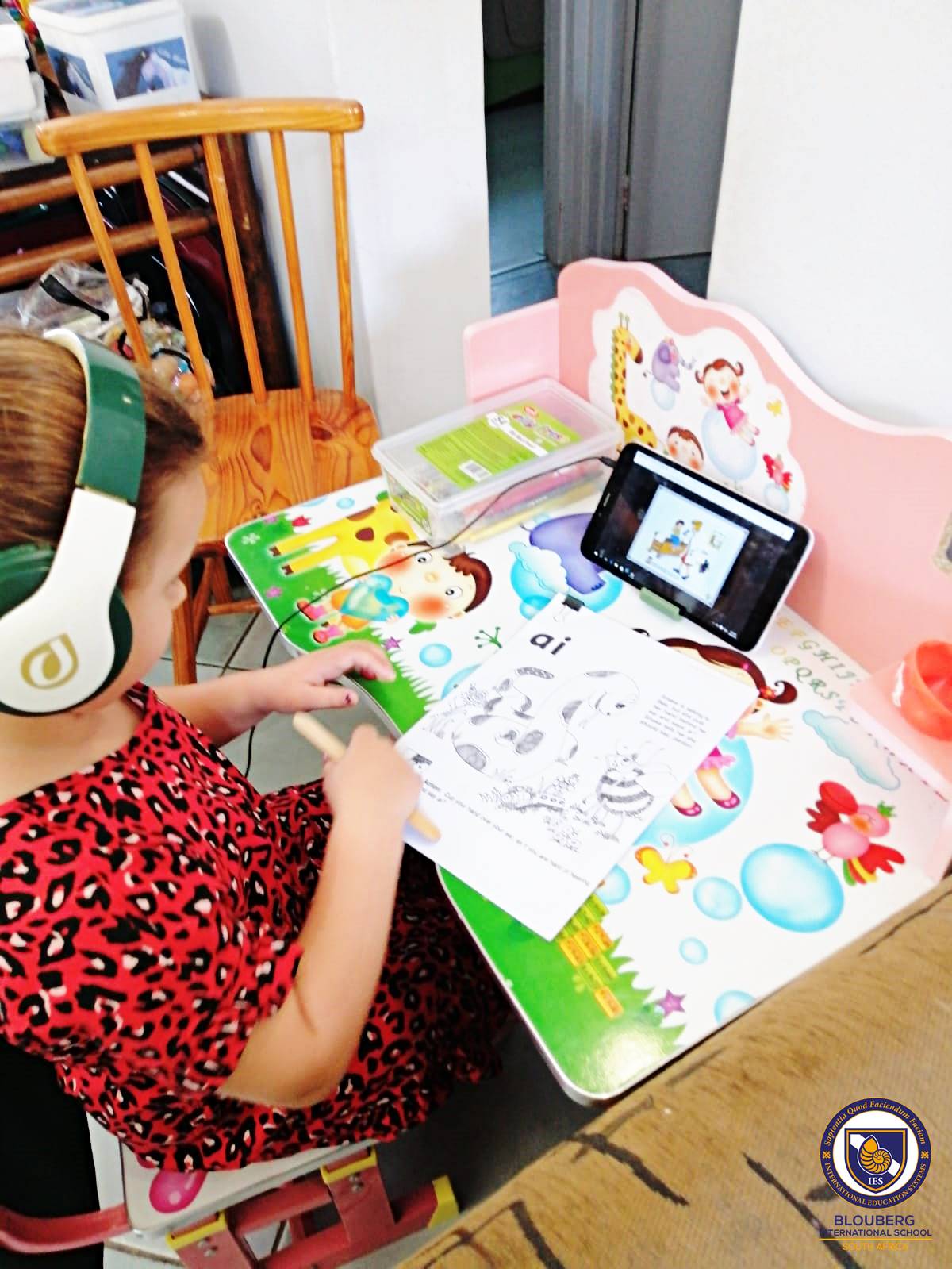
Welcome to the 3rd Term of 2020! I salute every one of you for staying strong and keeping faith. It has not been easy planning the re-opening of the school with so much contradictory information, safety precautions and family matters to consider. Planning the way forward has been stressful for us all, particularly for the teachers. They are the unsung heroes. We cannot overlook the fact that they have their health, and that of their family, to consider whilst juggling teaching in the classroom and online.
This is a time for kindness, empathy, and unity. Every precaution is being taken to ensure the health and safety of our students, but this term is unlike any we have experienced before and we therefore ask your patience should changes take place to accommodate changing circumstances or to improve the current systems in place. During this time, we ask for your patience; it is not a time to be critical and judgmental, but rather of encouragement and support.
We are looking forward to welcoming back our next phase of students on Monday, 20th July. Please remember the following:
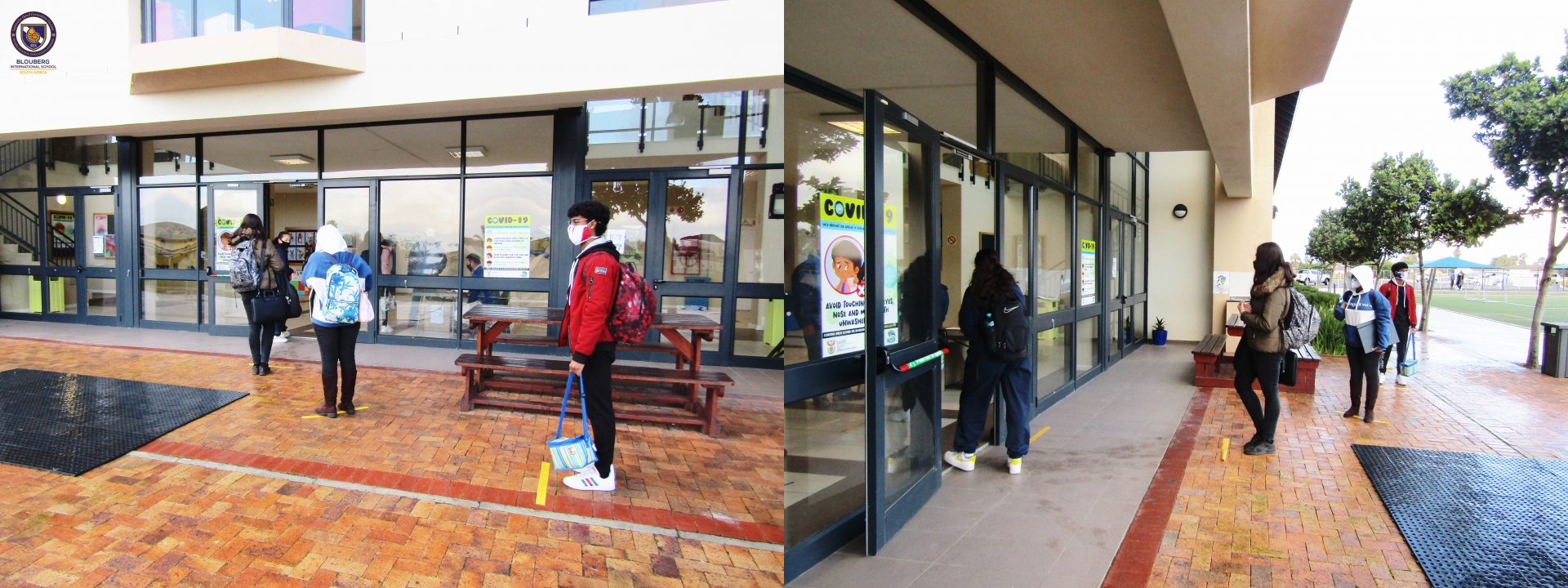
- High school students are to be dropped of at the gravel parking area and screened at the double doors of the main building. (Should it rain, they may be dropped off at the drop and go area and proceed straight to the reception area for screening.)
- Parents, please do not proceed passed the demarcated area at the drop of and go. We need to be respectful of our own health as well as each other’s.
- When students are collected, teachers will be at the drop and go area to assist students to get into your vehicles to ensure a smooth flow of traffic.
To every parent who sent us messages of encouragement and who understands that these are unprecedented times, I thank you for your support.
I am exceptionally proud of the spirit of Ubuntu amongst my staff. These difficult times have proven their endurance, character and most of all, the heart of a true teacher.
May you have a wonderful weekend, remain strong in spirit and physically healthy.
Best wishes
Edna

Welcome To Term 3
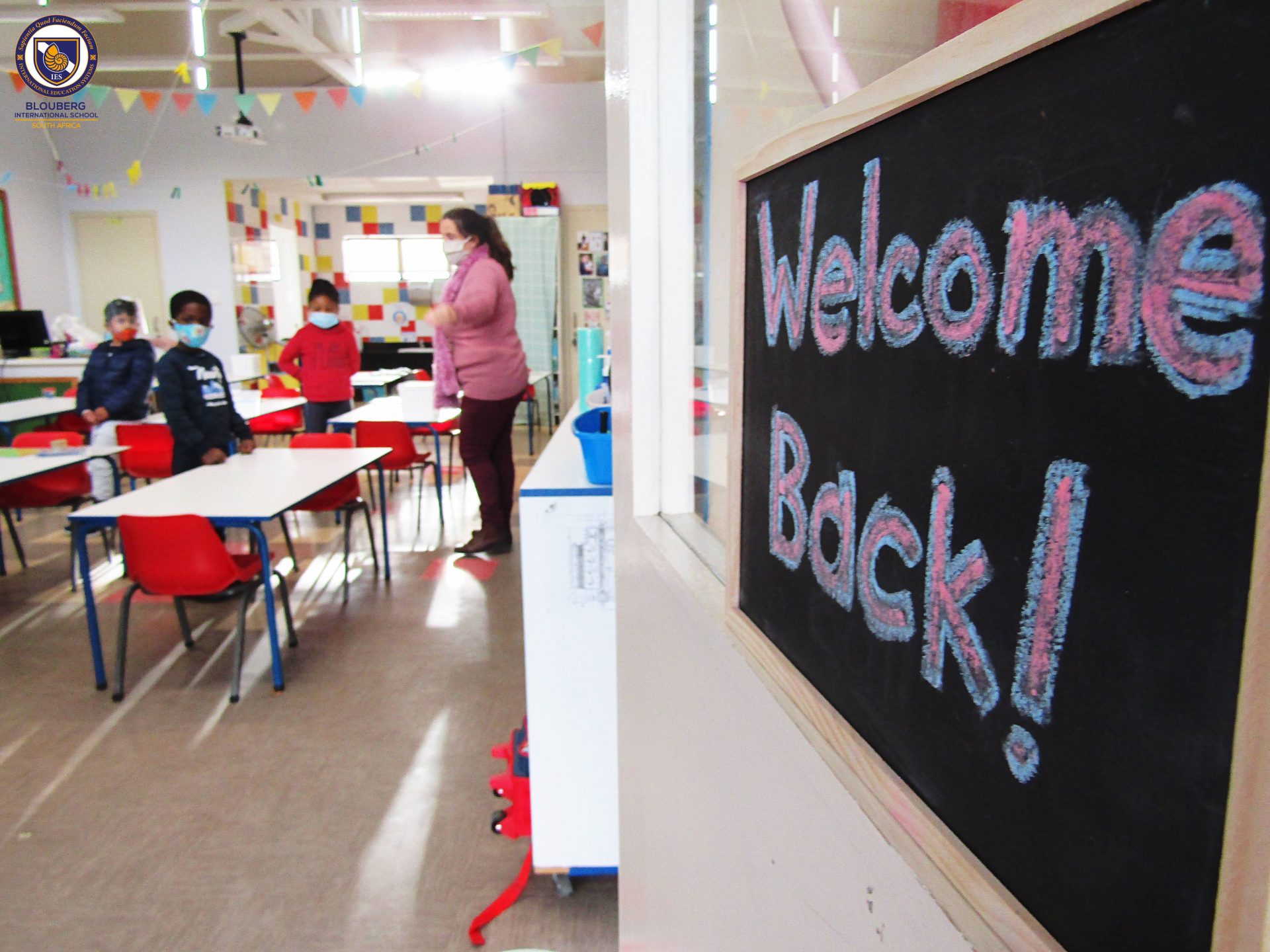
Blouberg International would like to welcome all High School students and parents to Term 3. We hope everyone is well rested and ready to take on the term with the “new normal” as we have come to call it. On Tuesday we welcomed back the Year 7’s, 10’s, 11’s, 12’s and 13’s. We look forward to welcoming back the Year 8’s and 9’s next week.
In terms of academics, it’s going to be a busy term with Year 10 and 12 students writing their prelim examinations. These examinations are an important step in preparing them for their final Cambridge IGCSE and AS/A Level examinations in Term 4.
We would also like to thank our parents for their ongoing support through this difficult time. By working together and supporting each other we will get through this.
Julian Harrison
Head of Academics High School




Coming Together
As BIS opens its doors for Term 3, I am certain that we are all excited, and perhaps a little nervous.
With the precautions we need to take to keep us all safe from Covid-19, I suspect that students, staff and parents alike are wondering what the school version of the “new normal” is going to be like. We are prepared for the technicalities of the term with masks, social distancing guidelines, hand sanitiser and a plan for hybrid teaching, but school has never just been about the technicalities of getting an education. One of the amazing strengths of our school is that it is a strong community, full of people who come together to learn, helping and supporting each other all the way. It is a community that emphasises the African Philosophy of Ubuntu meaning, “I am because we are.”
I see this sense of community everywhere – in the learners who asked me in my first Google Meet session if I could show them the classroom, in the teacher who turned off a projector so her diabetic colleague wouldn’t have to touch the button, in the students who are greeting each other so enthusiastically and so carefully, who are eager to share with their classmates after their holidays, in the parent who checked that I was keeping warm before asking me about the new term, in the teacher who told me her plan for how she is going to make sure that each child in her class feels welcome and loved as they begin to Term 3.
So, beyond our new regulations and systems, beyond our masks and hand sanitiser, my challenge to the students, staff and parents of BIS is this:
We are living in a time of uncertainty, of unfamiliar rules, and unintuitive distance from each other. Let’s make sure that these challenges bring us together instead of driving us apart. Let’s build the “new normal” out of little kindnesses and big hearts, and support each other as we do so.
Let’s do this, BIS!
Hannah Kirkaldy
Year 5 Teacher
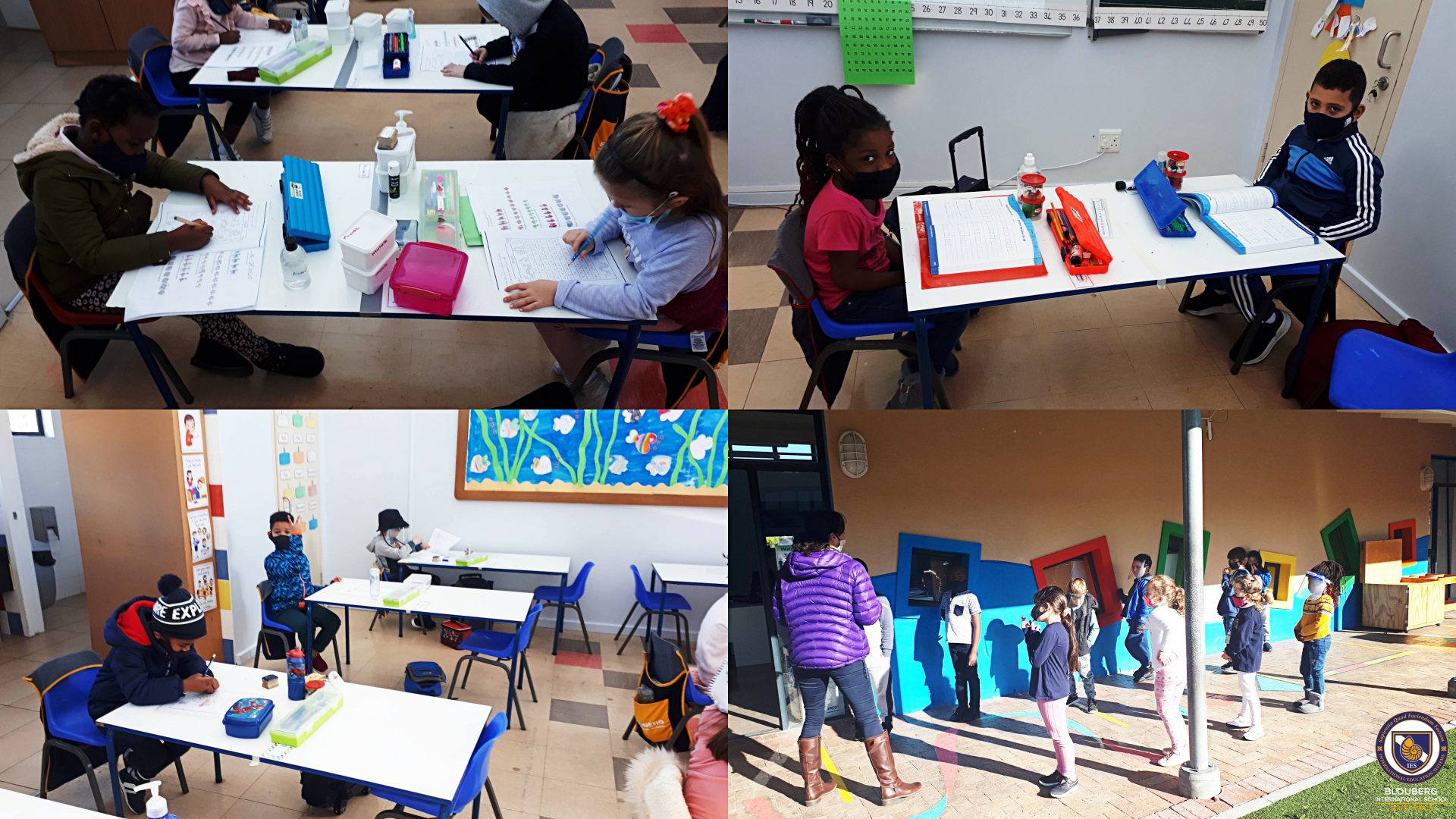
A Big, Warm Welcome Back!
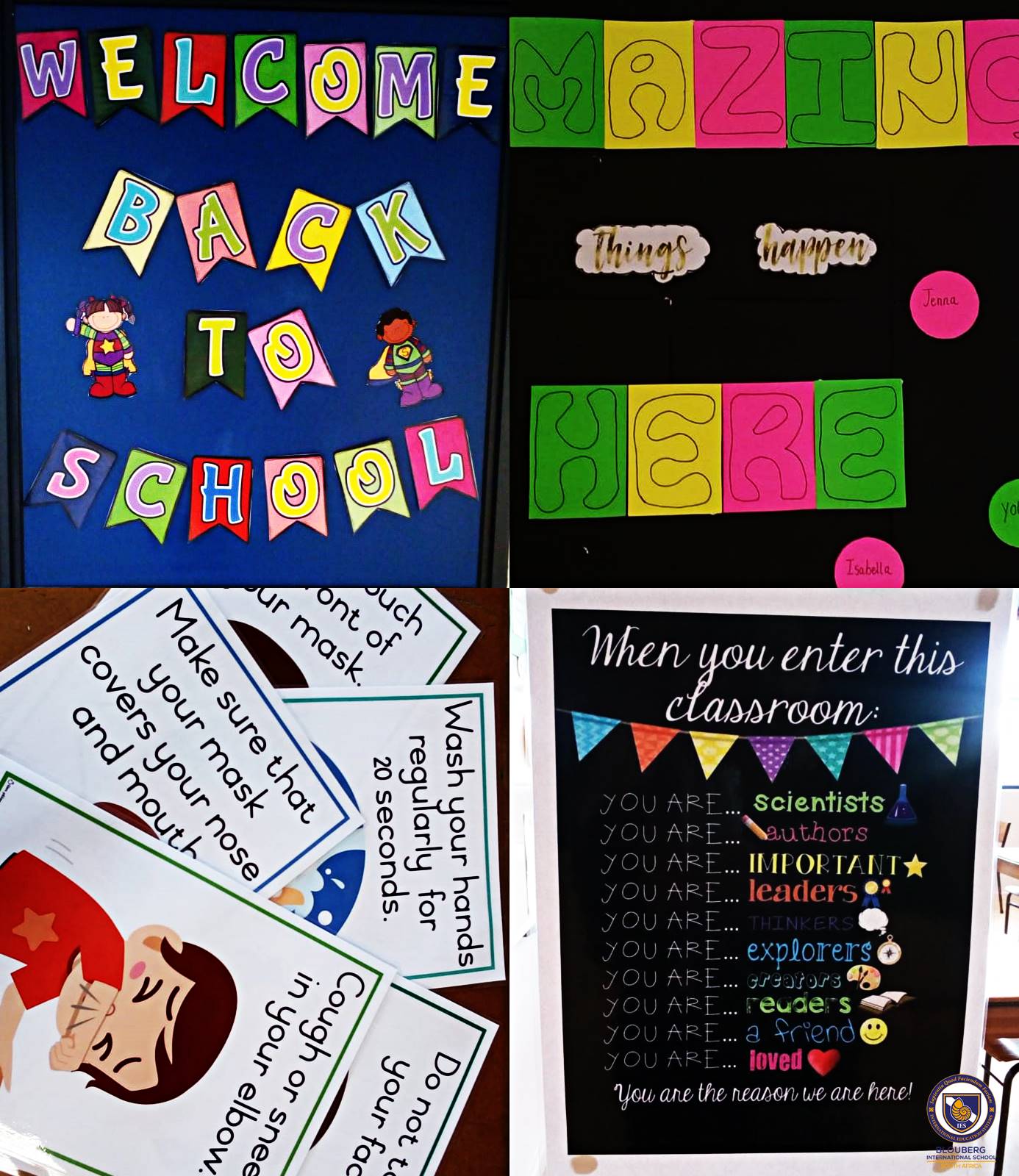
After much uncertainty from government, the Department of Education finally gave the nod for some grades to return to school. The good news came during the holiday and much needed to be done to prepare for the safe return of the children.
The school’s management team and staff worked hard to “reset” the school facilities to ensure COVID compliance for the safety of the children and staff. Deep cleaning, PPE, sanitizing and social distancing assurance became the new vernacular between teachers and staff.
I was certainly looking forward to some ‘normality’ in my life, and I am certain there are many others that felt the same.
The school break had finally come to an end and many children returned to school on Tuesday. It has been wonderful to hear the silence being filled by the laughter, banter and excitement of our children again. Many parents seemed just as excited as their children. Who would have thought that?
The children have done so well keeping their masks on at all times, sanitizing and washing hands constantly, and keeping social distance. Even during break, they still managed to have so much fun with their friends. It has been such an eye opener to realise how easily they adapt to change.
Well done to our SUPER STARS!
Wendy Menton
Year 1 Teacher
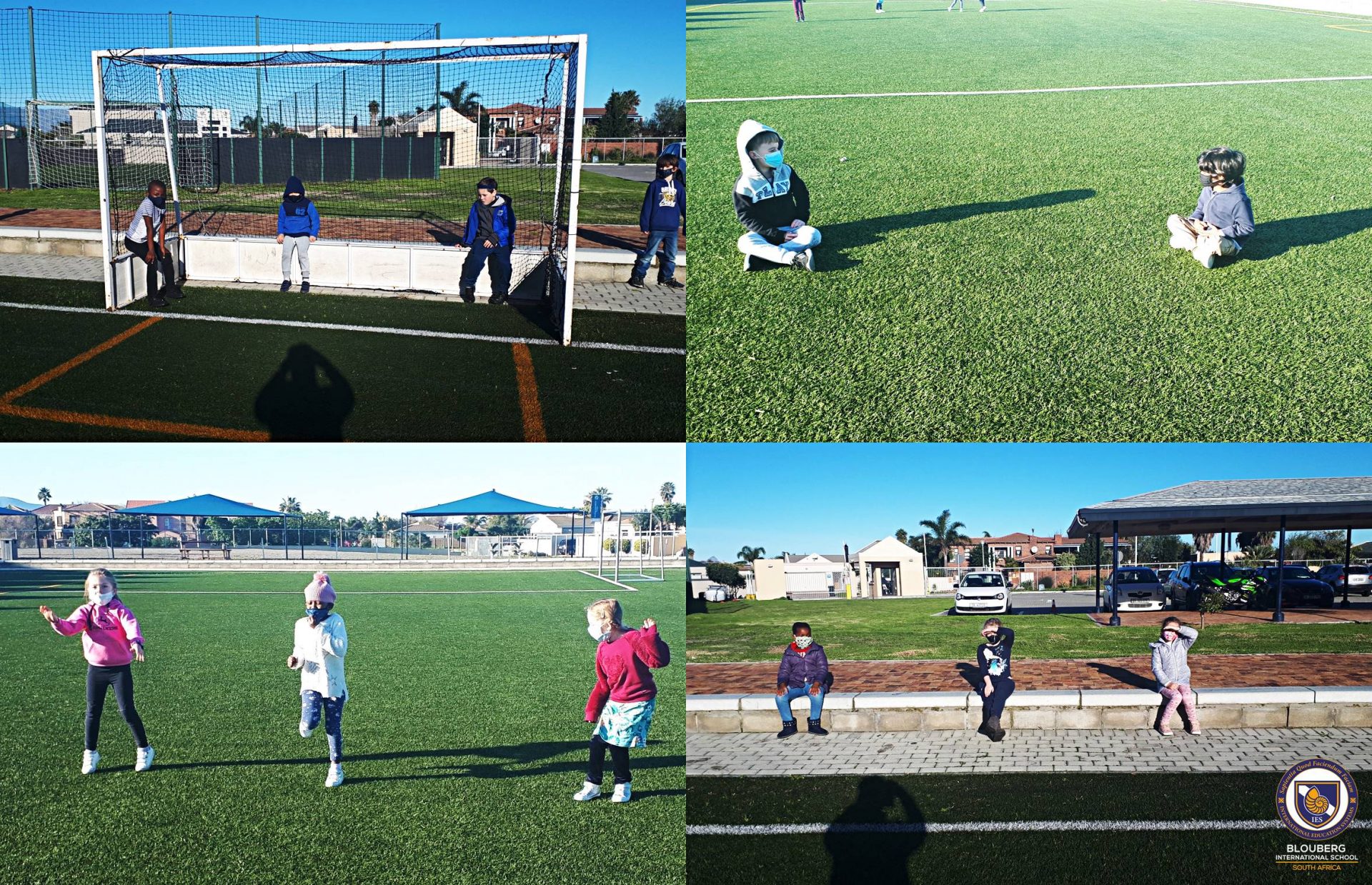
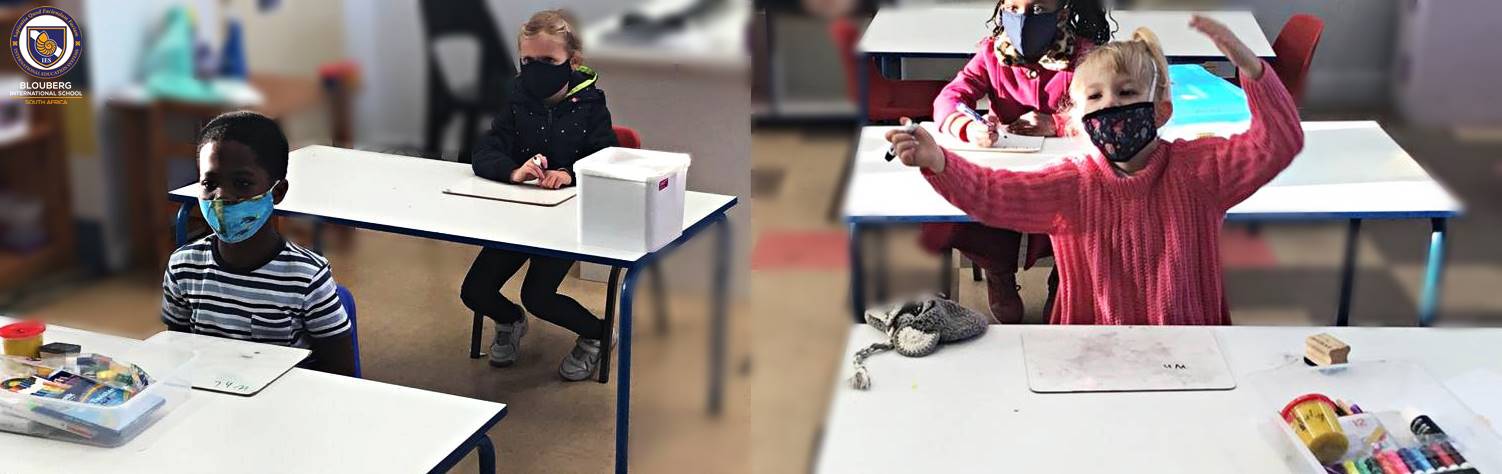
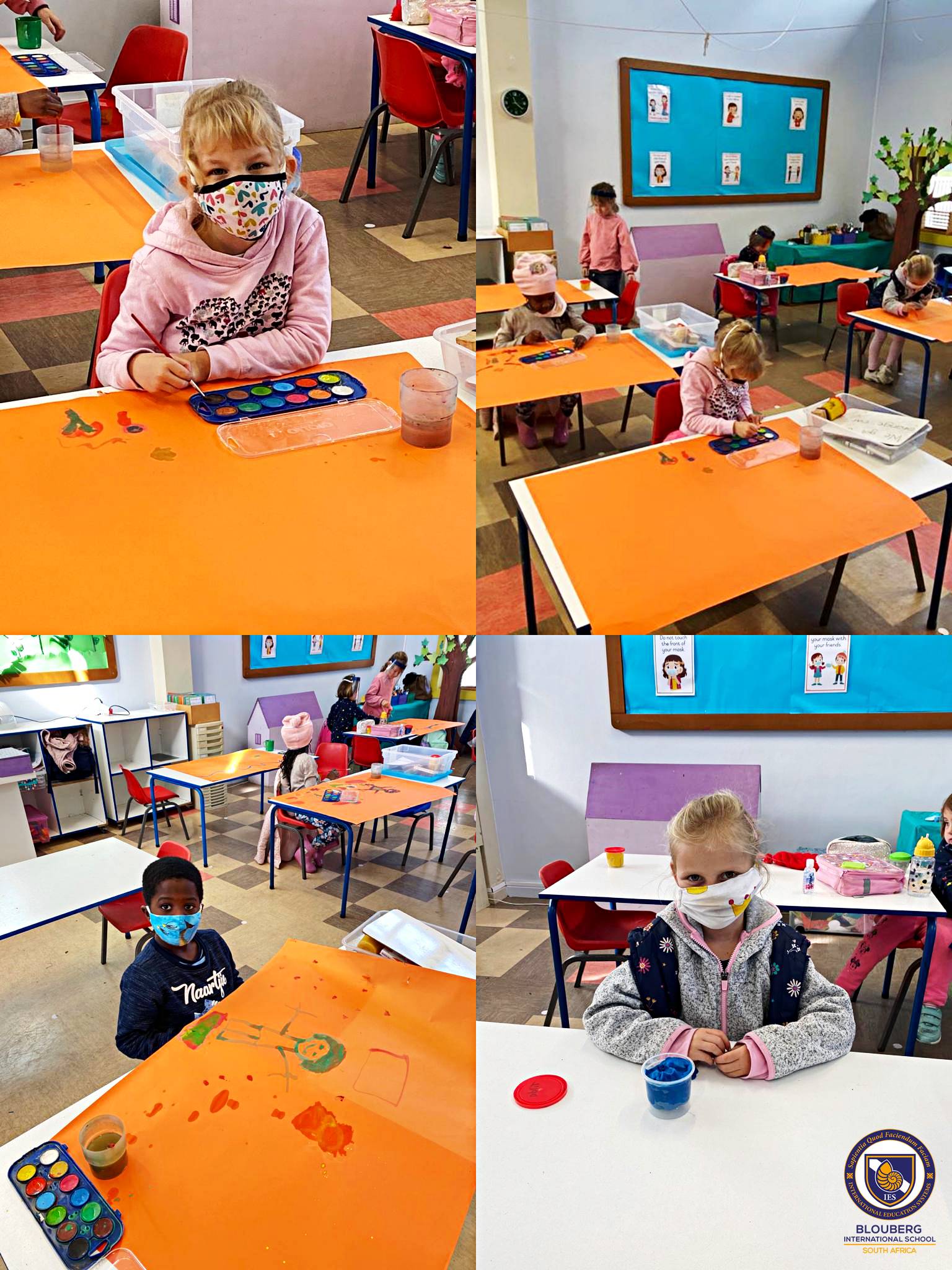
Back To School – Foundation Stage
Monique Crawley
Reception Teacher
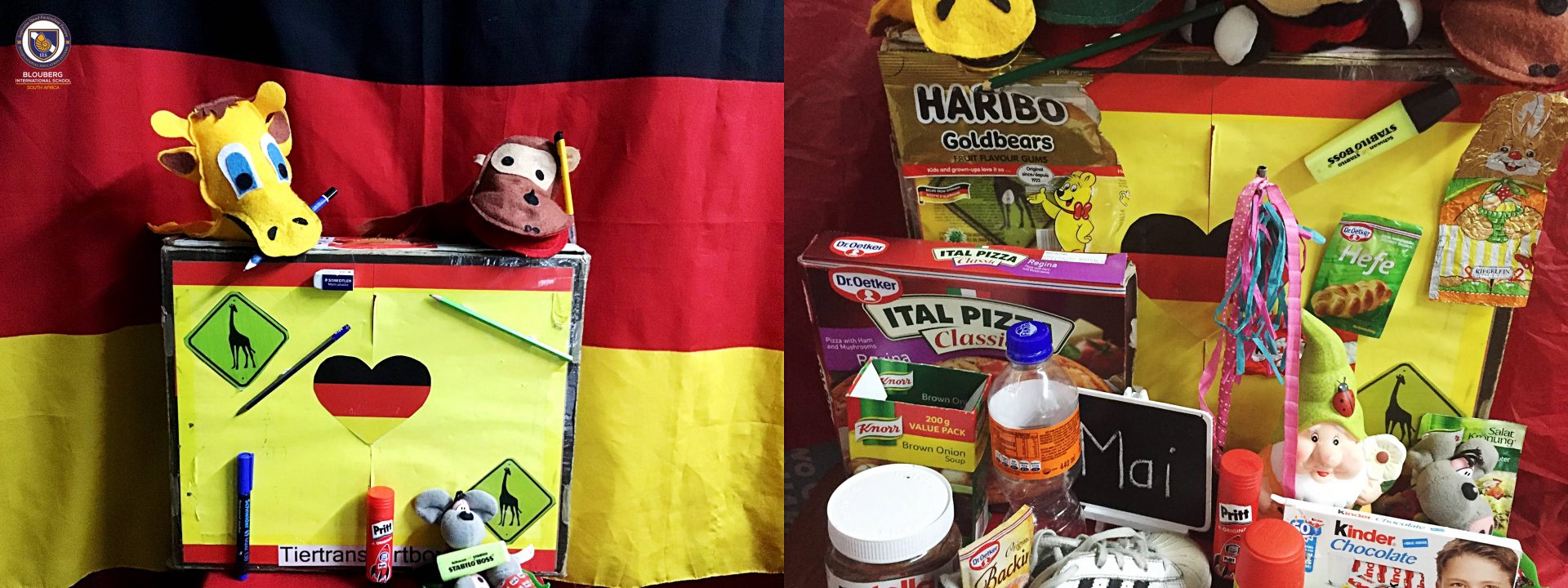
Das ist Deutsch = That is German
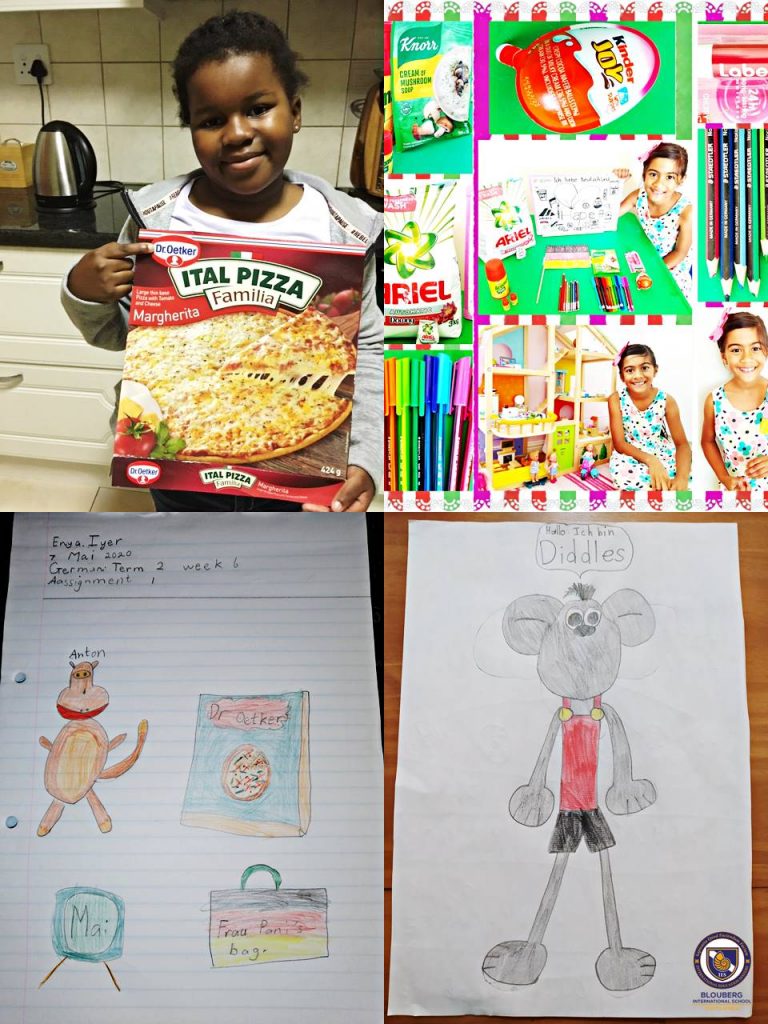
In German this term, the students in Year 1, 2 & 3 were welcomed to online learning each week with a greeting video and lesson. The students were able to feel right at home with the familiar animals who are always with me when I travel to their classroom at school. Anton der Affe (the monkey), Gerti die Giraffe (the giraffe) und Diddl die Maus (the mouse).
The greeting video included all the songs to say Hallo (hello) Guten Morgen (good morning) and Guten Tag (Good day), and to ask and answer the question Wie geht’s? (How are you?).
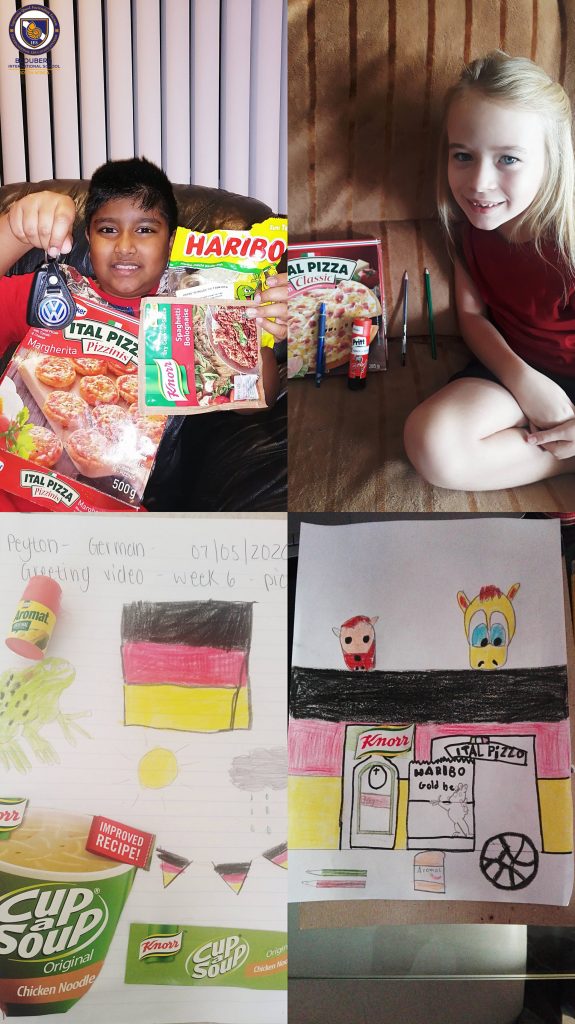
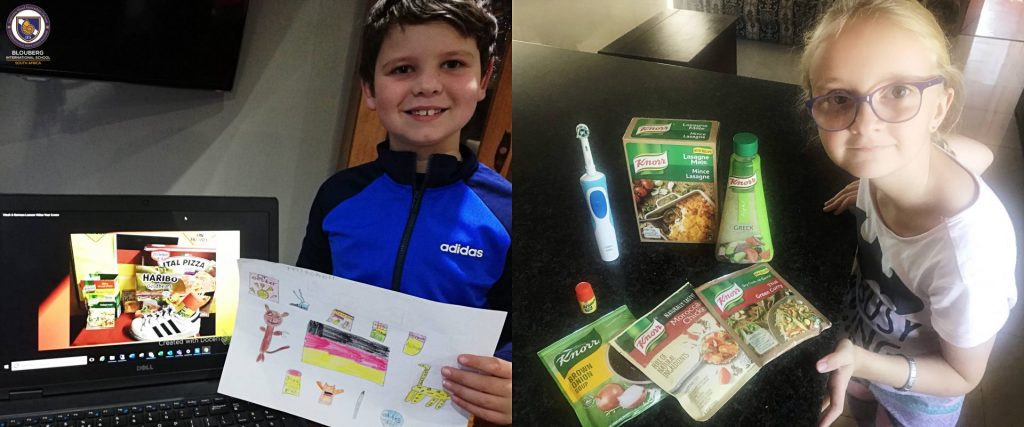
I asked the students each week to check the video to see if they could find anything new on the screen and to draw it on a piece of paper as a record of all the weeks. Then I would tell them all about the item from the previous week’s video.
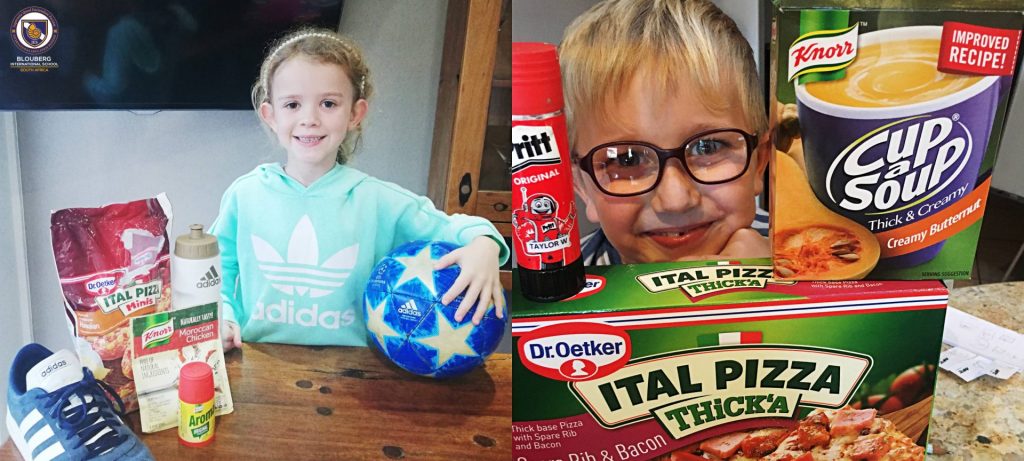
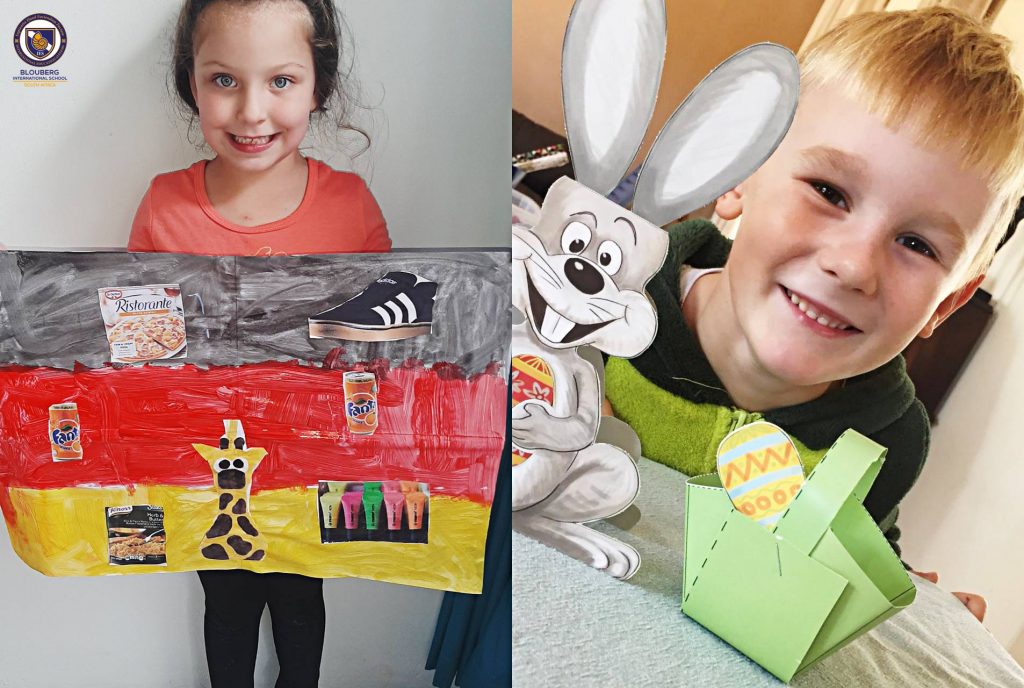
Here are some of the items they found in the video; a shoe, a German soccer shirt, pens, rulers, pencils, Pritt glue stick, Aromat, pizza and a packet of sweets. These items introduced the famous German companies such as Adidas, Staedtler, Faber-Castell, Henkel, Knorr, Dr Oetker and Haribo. All products that we can buy in our local shops that are German.
We discussed celebrations in Germany around this time; Easter in Germany and made an Easter craft from the Hallo Anna Workbook. We learnt about the Maibaum (Maypole) festival that is celebrated in Germany to say goodbye to the winter and discovered that the Maikäfer (May Beetle) and Marienkäfer (ladybug) are all symbols of hope in Germany, that the summer and warm weather is near.
We were surprised about the fact that Fanta was invented in Germany and that the word originates from the words Fantasie (imagination) and Fantastisch (fantastic) and we were disappointed that Nutella and Kinder chocolate are not produced by a German company, but yet are part of the German culture. The chocolate even has a German name Kinder meaning children.
As a task to end the term, I asked the students to send in a picture that they had made or a photo of themselves and any of the German products. Thank you, it was Fantastisch to see your smiling faces and the German products. I could see that Dr Oetker pizzas, Aromat on popcorn and Haribo might just become a favourite in your home.
At the end of every lesson we sing Auf Wiedersehen (Goodbye), bis bald (see you soon) to all the animals. We have learnt that the words in German do not just say ‘Goodbye’ but that it always has a hope in it that we will see each other again, and I hope Klasse (Year) 1,2, & 3, that I will see you again soon. I am really looking forward to it.
Auf Wiedersehen, bis bald!
Frau Kerstin Pani
German Teacher Primary School