
The History Department
Our A-Level student is completing her final module on European dictators. I wish her all the best for her final exam.
AS Level students are learning about the Unification of Germany. Students are learning how to tackle advanced source-based papers and are becoming increasingly responsible for their own learning as they carry out research.
IGCSE students are learning about the events that precipitated the Second World War. They are forming judgements about the significance of events, as well as learning how to approach source-based questions.
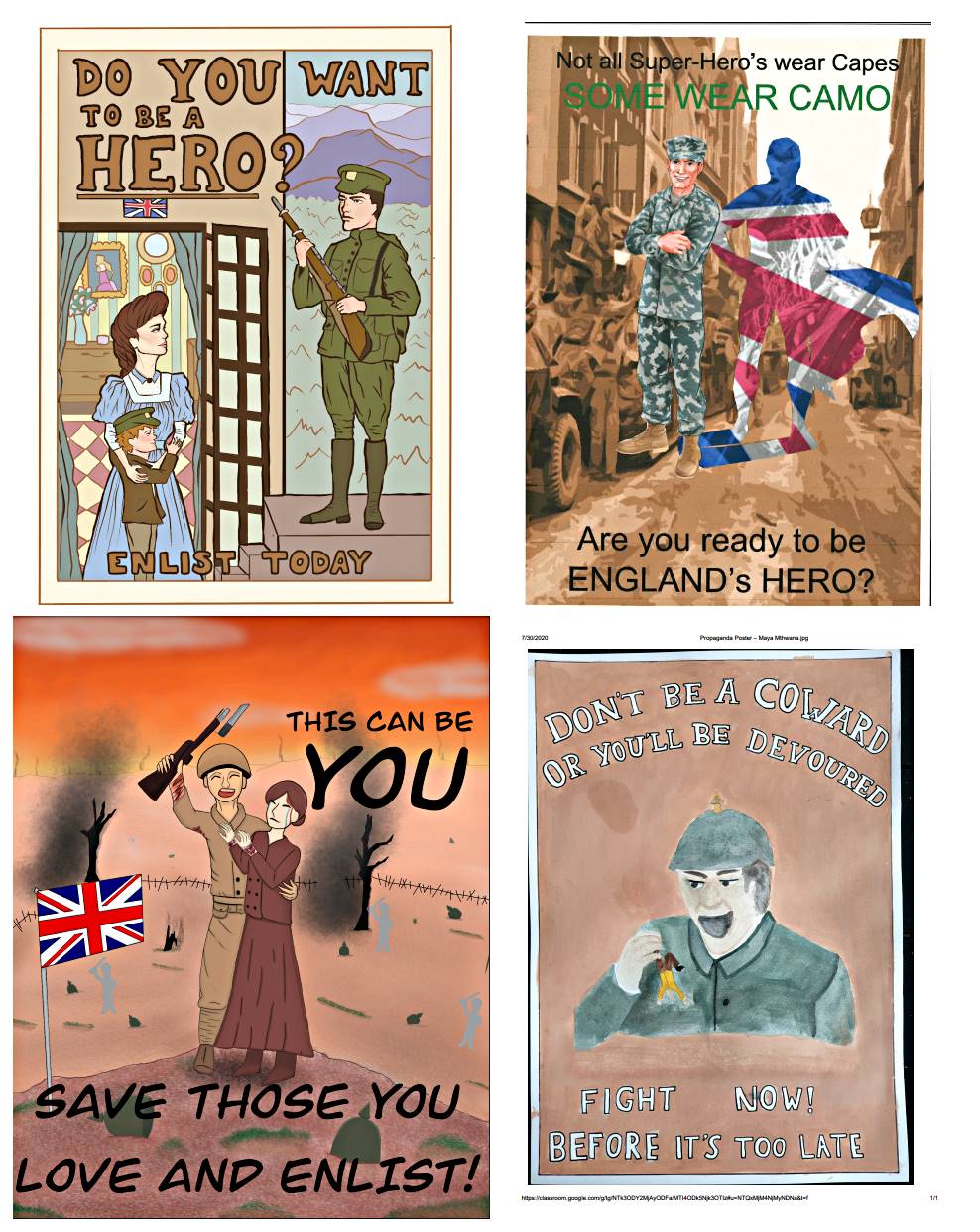
The Year 8 students are currently learning about the First World War. Thus far, they have learnt about things such as the reasons for the war, the alliance system, wartime propaganda, the weapons that were used during the war and life in the trenches. Students created propaganda posters to recruit soldiers for the war effort.
The senior IGCSE and AS Level students are currently writing their Prelim exams. I wish them all the best as they prepare for their finals.
Sheila Marais
High School History Teacher

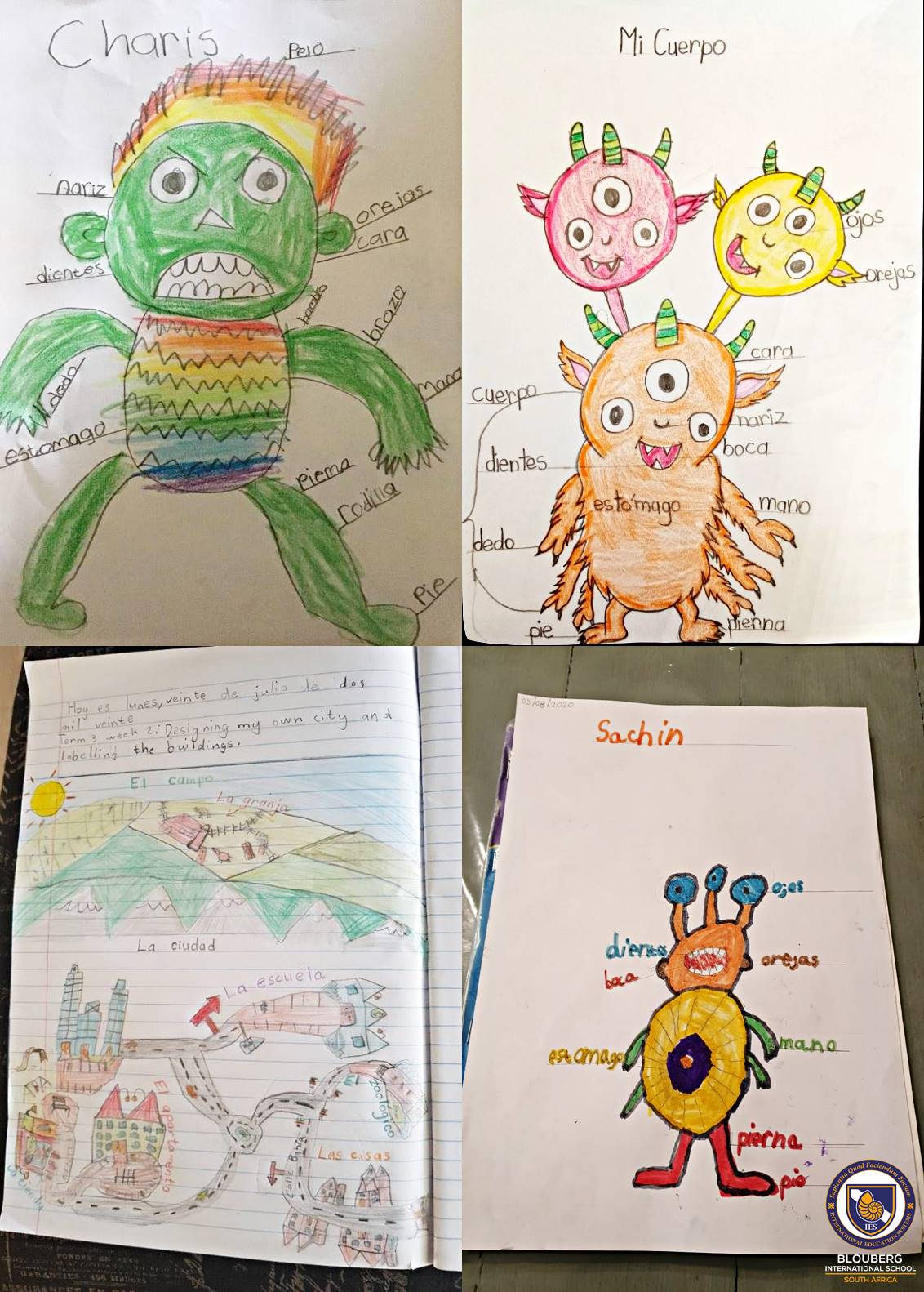
Learning Spanish Using The TPRS Methods
TPRS is a language teaching method based on the idea that the brain needs enormous amounts of Comprehensible Input (CI) to acquire a new language. It focuses on using interactive books and oral stories that contain the most used words and phrases in Spanish or other foreign languages to help students get familiar with the new language in an easily and more enjoyable way.
Story telling: Creating new stories where the students can identify the vocabulary or expressions that they have learnt previously in their books or during the class.
Stories like:
-My city: buildings and days of the week.
-The zoo: animal and parts of the body and adjectives.
-Maria and the vegetables: feelings and food.
-Pedro, and the mountain: work feelings and weather expressions.
Reading: Rockalingua comic’s: the adventures of Tapon and stories written by the teacher.
We are reading comics during class, and then answering different types of questions related with the story for example:
-Closed questions – yes/no or true/false, was it Monday?
-Open questions – which day of the week was it?
-Multiple choice – was it Monday or Saturday?
Video viewing: During the classes we also watch music video clips, short films, and YouTube videos. All of them relevant to the topic we are working on. The students acquire the vocabulary from the stories, answering questions, or completing the lyrics of the songs.
Story writing: The teacher posts or plays different audios of daily conversations and dialogues with a friend, about the family, in a Restaurant or about the weather. The students are asked to take active part during stories, reading for some of the parts and creating their own lines adding personalized, interesting, and comprehensible details to it, using the most common expressions that they have learnt.
What does a TPRS class look like at Blouberg?
Year 6 have stories about hobbies, likes and dislikes:
The teacher creates a story using repetitive structures of the topic that they are learning about (use of the verb “to like”), each student reads and translates some part of the story and the teacher asks the class several questions to ensure that the class understands the language. They answer different questions about the story (what food, sports or music the character in the story likes), and finally the teacher asks similar questions to the class about themselves to personalize, make it more interesting and comprehensible to the students. (What food, sports or music do you like?). Then the story is played again making sure that this time they understand 100% of the structures and vocabulary.
Javier Vidal

Global Citizenship
The Year 6’s have been learning about what it means to be a global citizen. A global citizen is someone who takes an active role in their community and works to make the planet a better place. The students have gained a better understanding of the world and are learning to get more involved in local and global communities. They have learnt that they have the power to change the world around them and that they can be a positive influence for all of those they may meet. They have the power to create a more positive, fair, safe and secure world for everyone.
Here are a few definitions of a Global Citizen that the Year 6’s came up with:
“A global citizen is a person that helps out with society, takes care of the environment, recycles and treats people the way they want to be treated.” – Treasure Mpofu
“A person that helps the world and other people in tough situations.” – Teeyana Shaik Mahomed
“A person who is dedicated to helping the world and the environment.” – Saumya Maharaj
“A person that volunteers to help the community.” – Wonke Qokela
“A person who takes responsibility for the environment and takes care of others.” – Iviwe Matakata
“A global citizen is someone who plants trees and helps people in need.” – Morgan Glanville
“A global citizen is someone that takes responsibility for their country and environment.” – Joseph Banutelo
The Year 6 students investigated Global Warming and how they can reduce their carbon footprint. They learnt how to be responsible citizens and to help those in their community. The students designed slogans on how to make the environment a better place and are looking forward to discovering more about how to be a Global Citizen.
“To become a true global citizen, one must abandon all notions of ‘otherness‘ and instead embrace ‘togetherness‘.” – Suzy Kassem (US Author & Poet)
Brittney Hakime
Year 6 Teacher

*Masks only removed for the photographs*
“Science is a way of thinking.” – C. Sagan
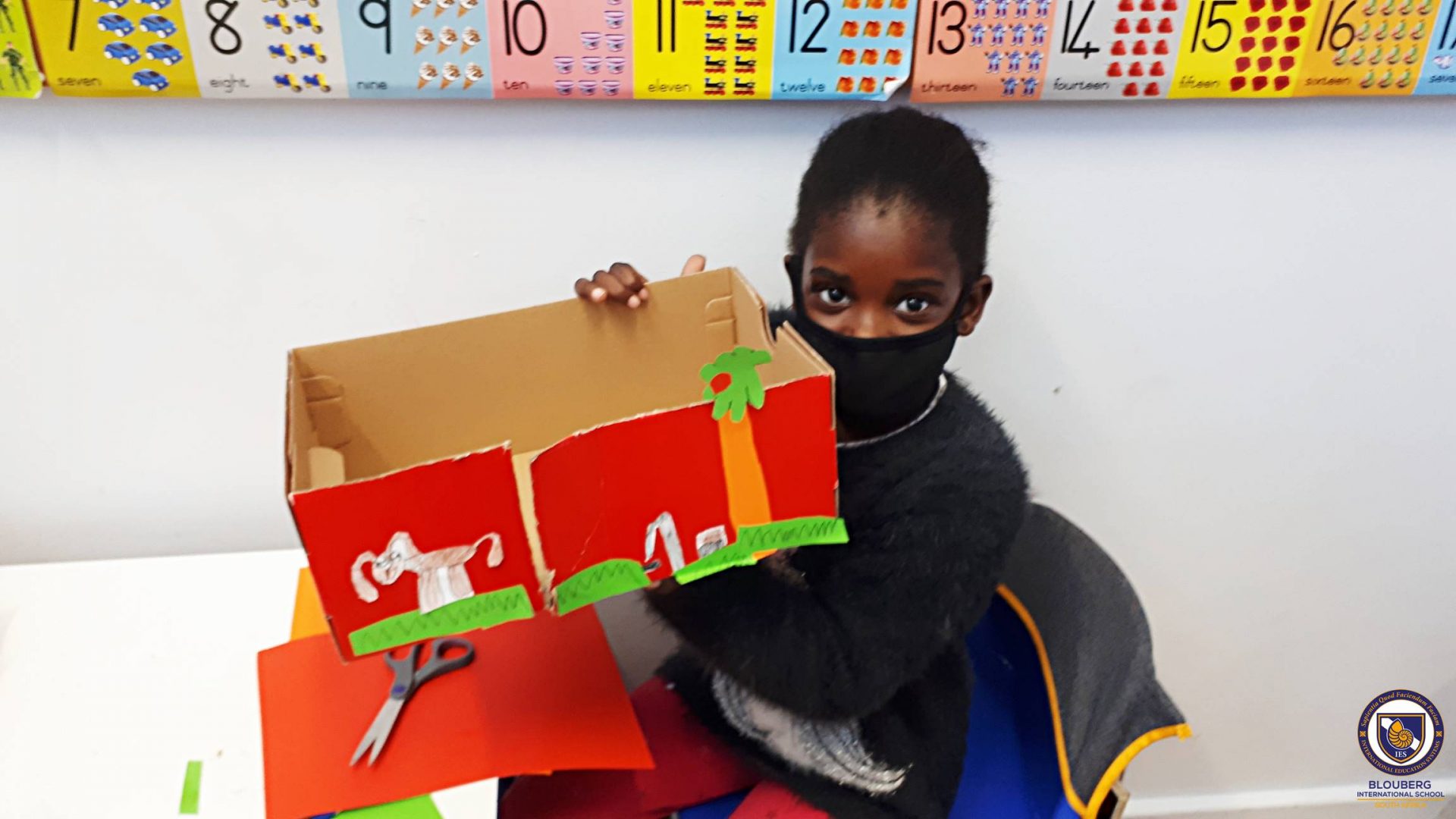
It was a treat to watch them draw pictures of their favourite animals, work out how to create their habitat and add in all the bits and bobs that they need to make an ideal environment for their animal.
They all came up with so many ideas, and were able to assist each other in ways that could encourage new designs. I saw them make cylinders, cubes and domes. I was super impressed.
They were all so proud of their accomplishments, and I am sure that we can all agree that we are proud of them too.
Wendy Menton
Year 1 Teacher


Pre-Reception – Wild Animal Safari
Our world is filled with a variety of plants and animals and it is important for children to know as much as possible about them. Information about animals helps children explore the world of animals. As children grow, they will be exposed to wild and domestic animals through books, television, zoos, wild animal parks or go on an actual safari. Knowing animal facts will make their experiences more profound and real, which will remain with them all through their lives and enrich their knowledge
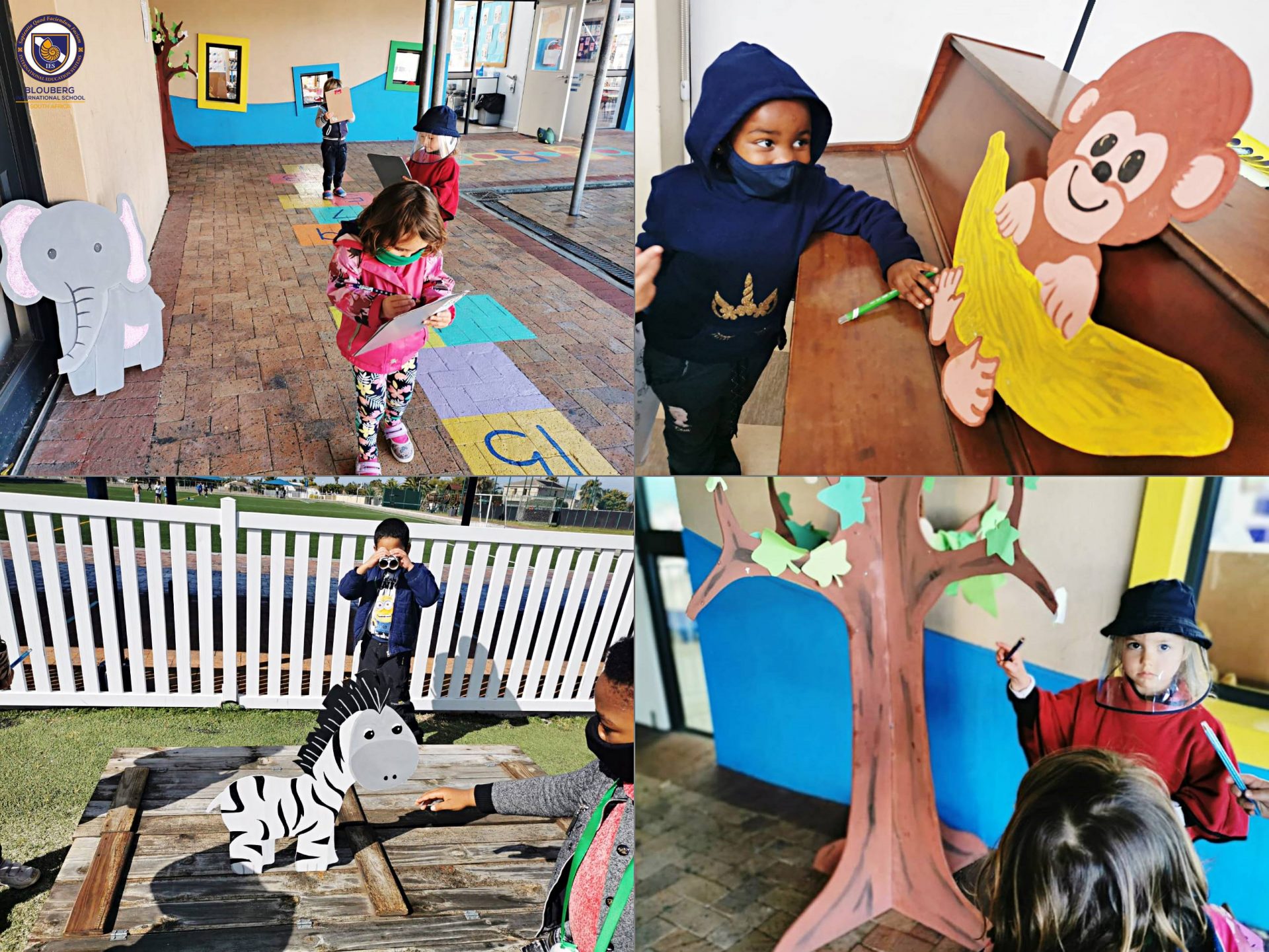
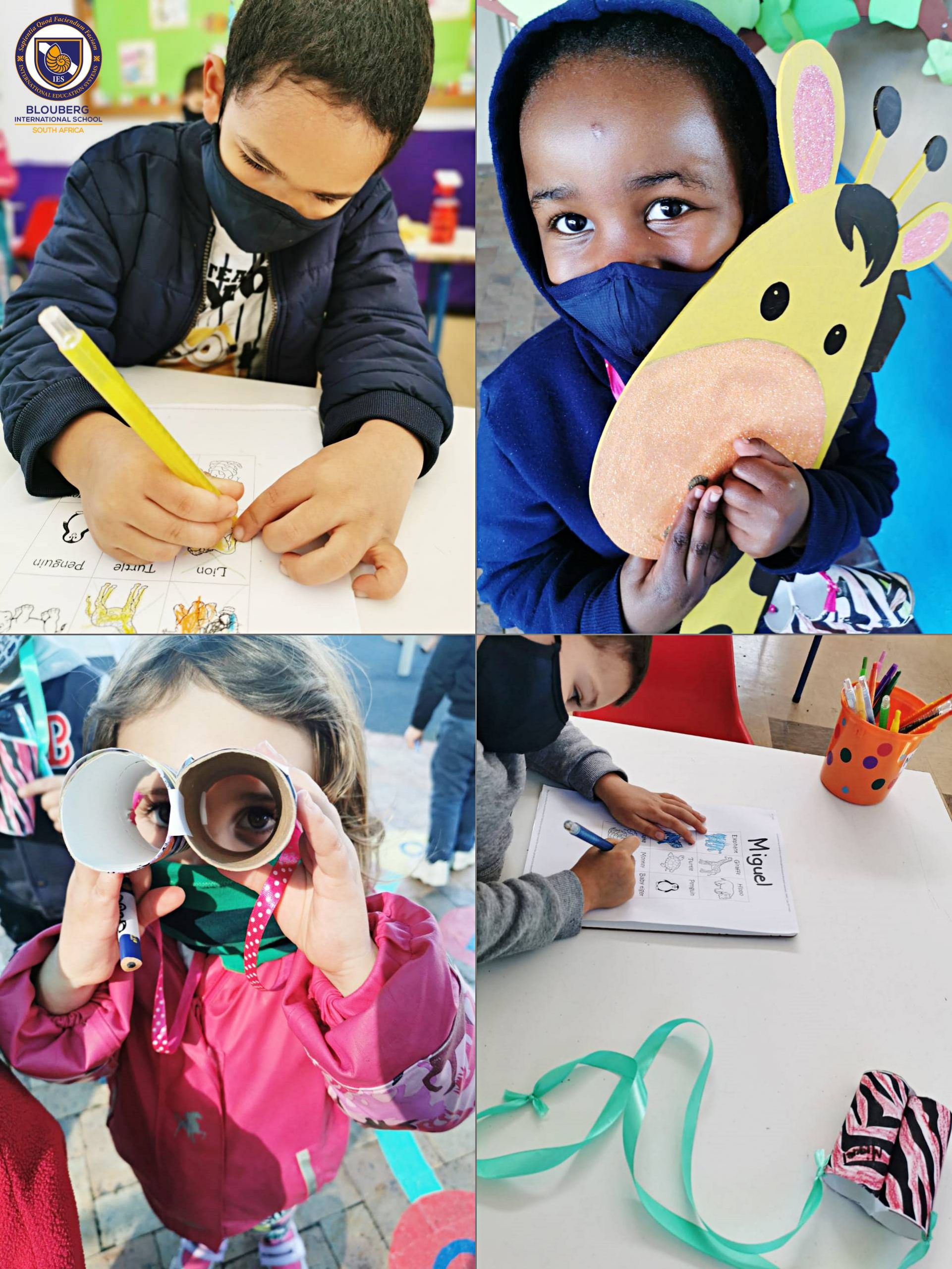
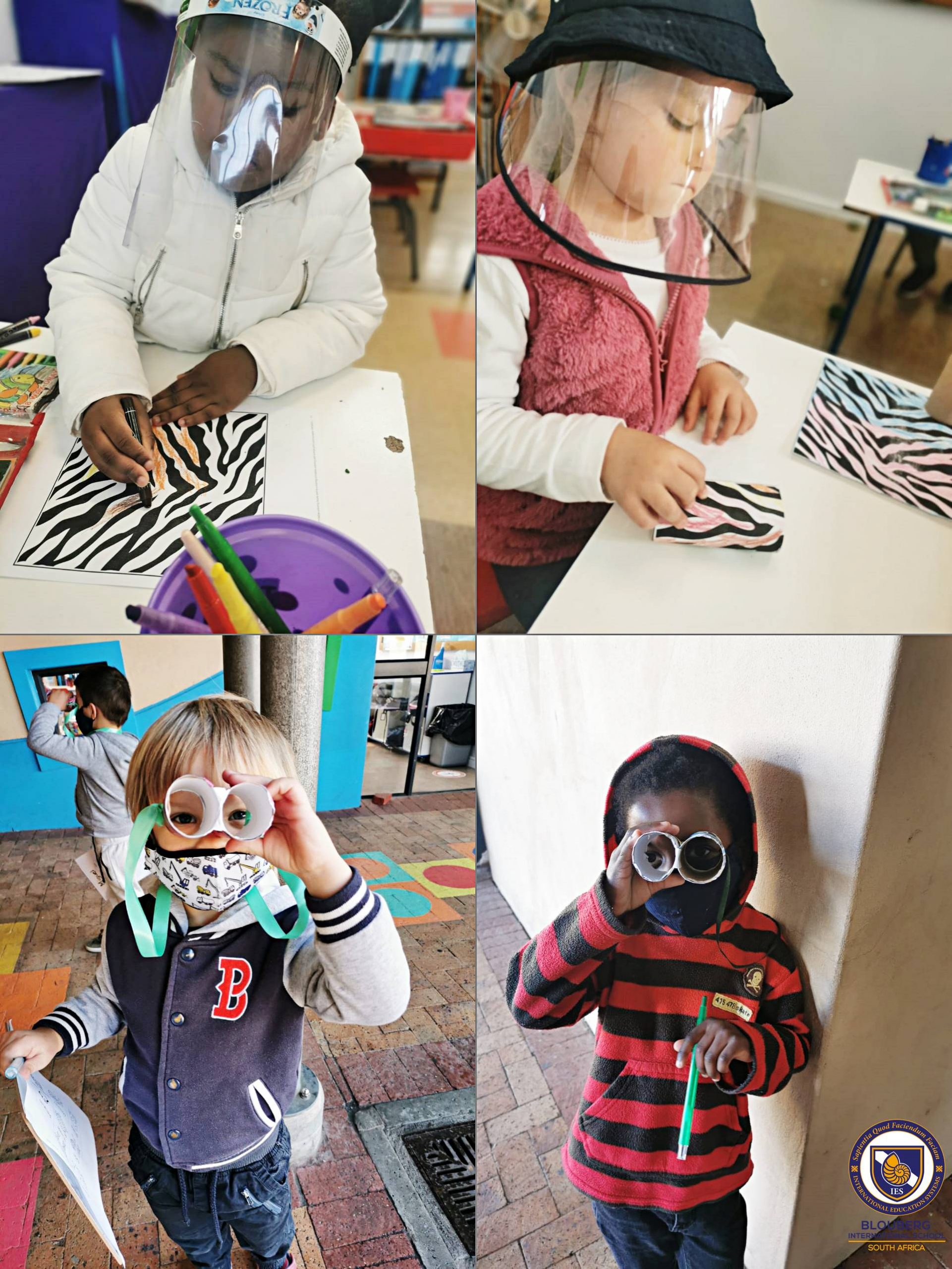
Pre-Reception students have been learning about wild animals. A fun approach, to teach the students to identify the different wild animals and to learn interesting facts about them, was to go on an adventurous Safari around the school. Unfortunately the weather did not play along so we had to keep it undercover and inside.
We placed wild animal cut outs around the classrooms and each child got a checklist which they had to tick off when they found the corresponding animal.
They enthusiastically set off with their binoculars they made in class the previous day out of toilet roll inners, to spot the animals in their habitat. Even though we could not go on an outing in these times, we made the best of the situation, much was learnt and fun was had.
- Elephants are the world’s largest mammals living on land.
- A giraffe has four stomachs, which speeds up the digestion process.
- A lion’s roar is so powerful, that it can be heard from eight kilometres away.
- The cheetah is the fastest animal to roam the earth.
- Tigers are excellent swimmers.
Cindy Nunan
Pre-Reception Teacher

From the Principal’s Desk, 14 August 2020
Dear Parents
This Friday, the 14th of August, we are launching our new Virtual Open Days. We are fast approaching the end of the 2020 academic year and are thus in the process of finalizing plans for 2021’s academic year. I am sure many of you are also planning as the current uncertainties have an influence on all the plans we make in our personal and professional lives.
School tours are different than they were before. Open Days are now virtual and the interaction minimal. We are also having an Assessment Day on Friday, 14 August, for prospective students. We are looking forward to welcoming them to our school.
I found myself in a very frustrating place this week. I thrive when I can plan, identify potential pitfalls and plan accordingly. Over the past few months, I have had to change many of my planning strategies, leaving room for possible changes. Change is good, but the unknown can leave one with a sense of uncertainty. It is the role of management to ensure that any change has a positive impact.
The following are steps in change management:
- Awareness and the time frame or urgency of change
- There needs to be a desire for change
- Change should be enabling
- There should be a driving as well as sustaining of change
- Evaluation and reinforcement
We have all been challenged with sudden change and yet we persevere. Take some time today or over the weekend to reflect on how you have coped with the changes of the past few months. Embrace every victory and give yourself a pat on the back for surviving. Then decide that no matter what change is yet to come, that too will be a steppingstone and not a stumbling block.
“There are far better things ahead than any we leave behind.”- C.S. Lewis
Have a great weekend.
Regards
Edna

The Science of Life
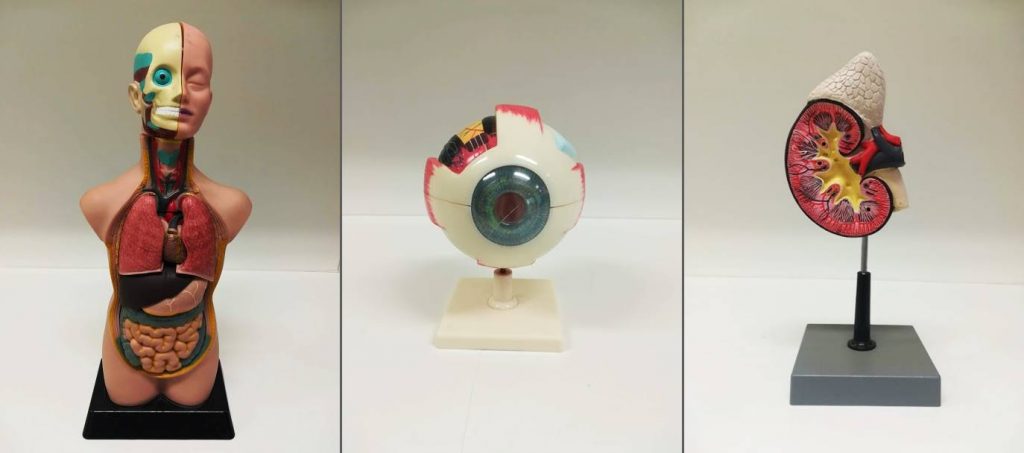
Biology is the study of living organisms, both in terms of their structure (anatomy) and how their different parts function (physiology). The cell is introduced as the basic unit of life, which then form tissues, organs, systems and ultimately an organism.
Biology can be divided into many different fields of study, such as biochemistry, genetics, microbiology and biotechnology to name but a few. Each of these directions delve deeper into the complexity of being alive. As a school subject Biology skims the surface on all these topics to provide a platform from which to launch for those interested in further studies at university level. It is important to understand how the different components of an organism function together as a whole. The intricacy of organs such as the heart or the eye is astounding and every part of these structures have a very specific and complementary purpose. Emphasis is placed on the practical application of Biology in the real world, from developing vaccines for infectious diseases, how gene therapy is able to provide hope to people with currently incurable conditions to understanding the impact of lifestyle choices on our health. Biology often overlaps with Chemistry as we investigate the chemical components of cells and study the equations of photosynthesis, respiration and the binding of gases to haemoglobin in blood. Mathematical calculations also make a regular appearance in Biology papers and is a necessary skill that students require.
Practical work is another important component of Biology as it gives students the opportunity to handle apparatus and chemicals, while conducting a scientific investigation based on work covered in class. Other skills developed are the ability to present the results obtained from practical work in a suitable table as well as reading and interpreting graphs. AS students begin preparation for their practical exam from Year 11 to ensure they have the necessary confidence and skills when the Cambridge exams arrive. The Year 12’s recently did a practical where they investigated the effect of different concentrations of an enzyme (catalase) on the breakdown of hydrogen peroxide. Filter paper discs were soaked in a solution containing catalase and then placed in a container with hydrogen peroxide. As the enzyme breaks down the peroxide it produces oxygen gas which causes the filter paper discs to rise to the surface. Students had to time the movement of the discs dipped in different concentrations of catalase.
Biology is a subject which provides countless career options, especially in the field of medicine or research. It is a diverse Science involved with finding answers to some of life’s most interesting questions. Despite the biological advances made over the years there are still many things to learn and discover.
Marlene Feltoe
Biology Teacher
Let’s Light Up Year 4 With Science!
The Year 4’s spent the past few weeks learning about the spectacular Science topic: States of Matter.
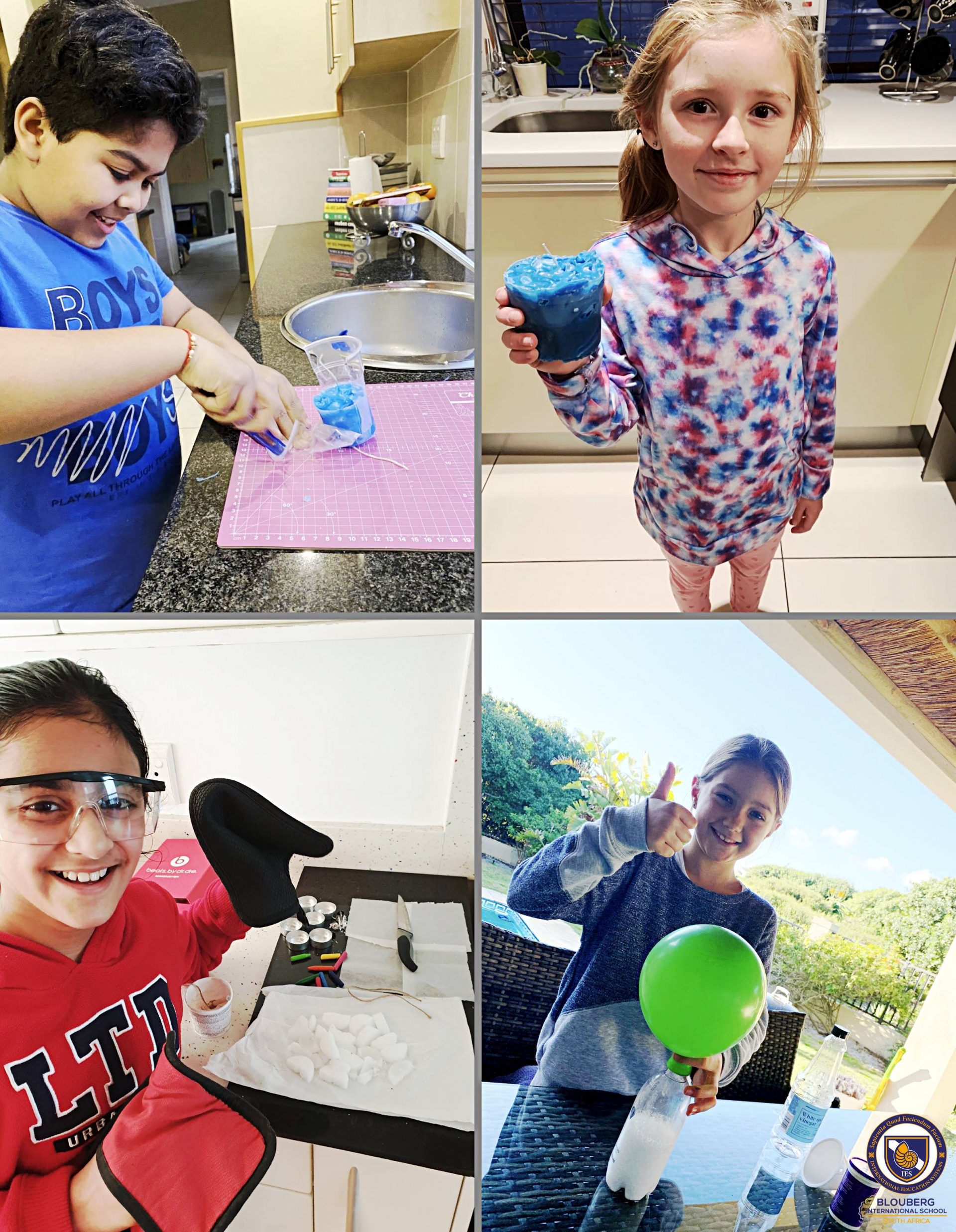
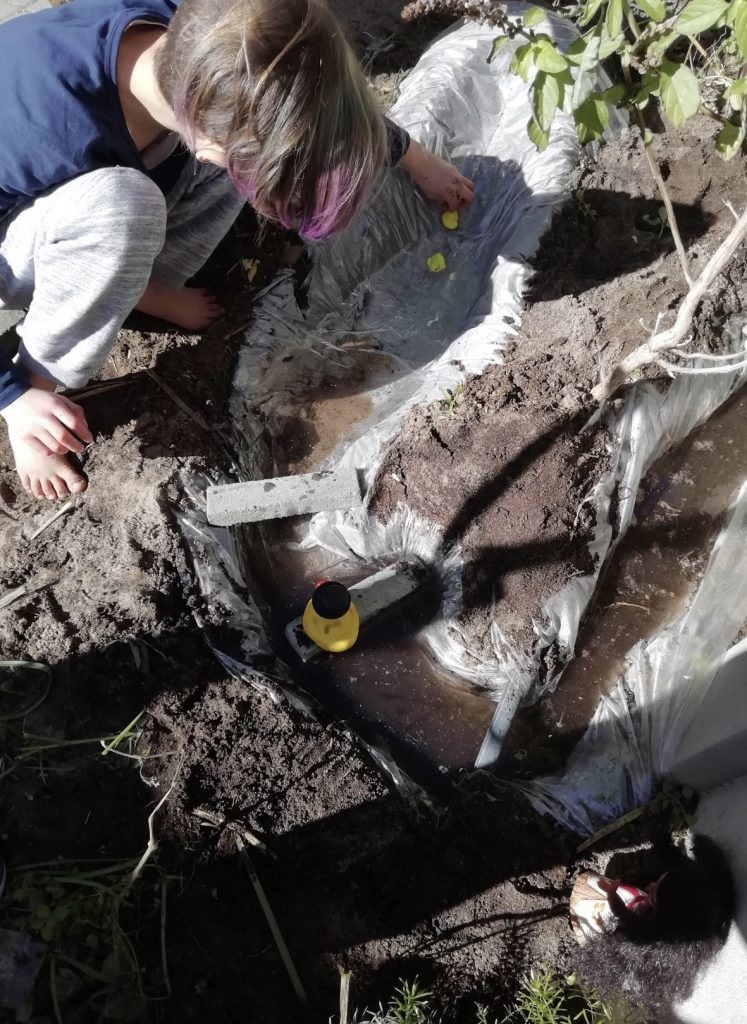
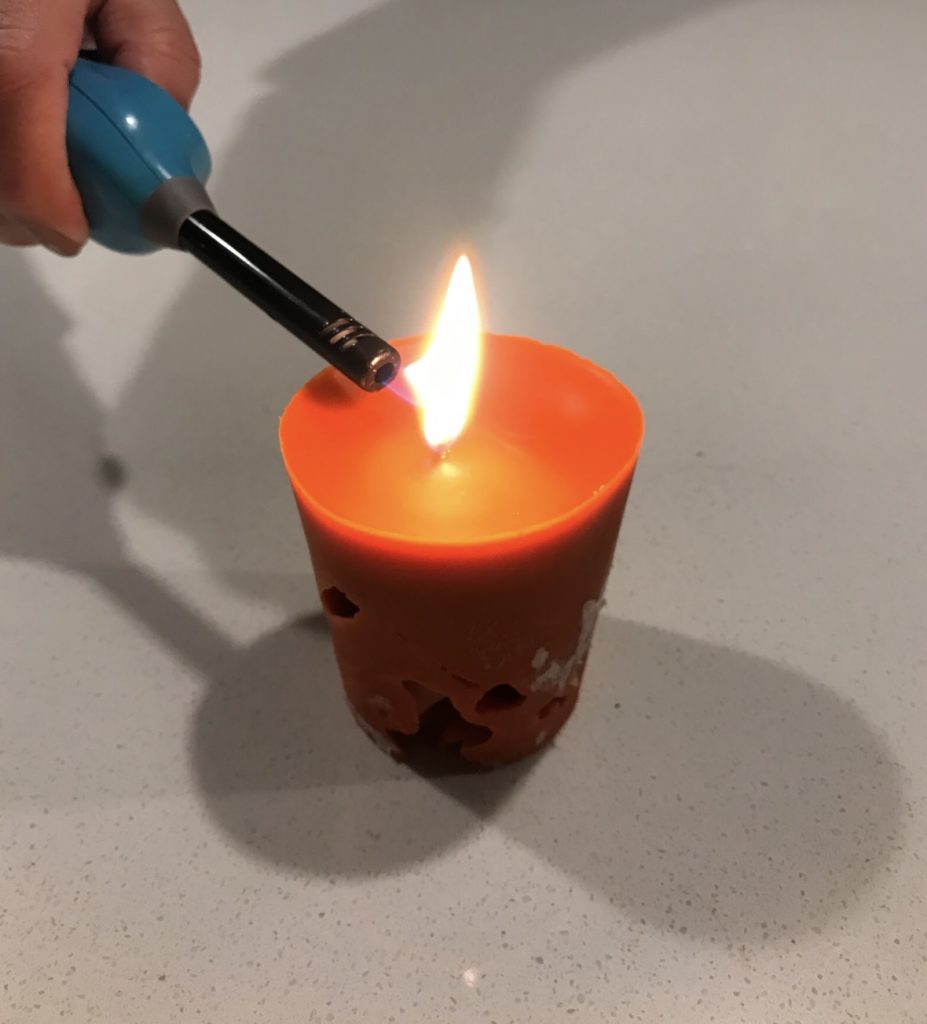
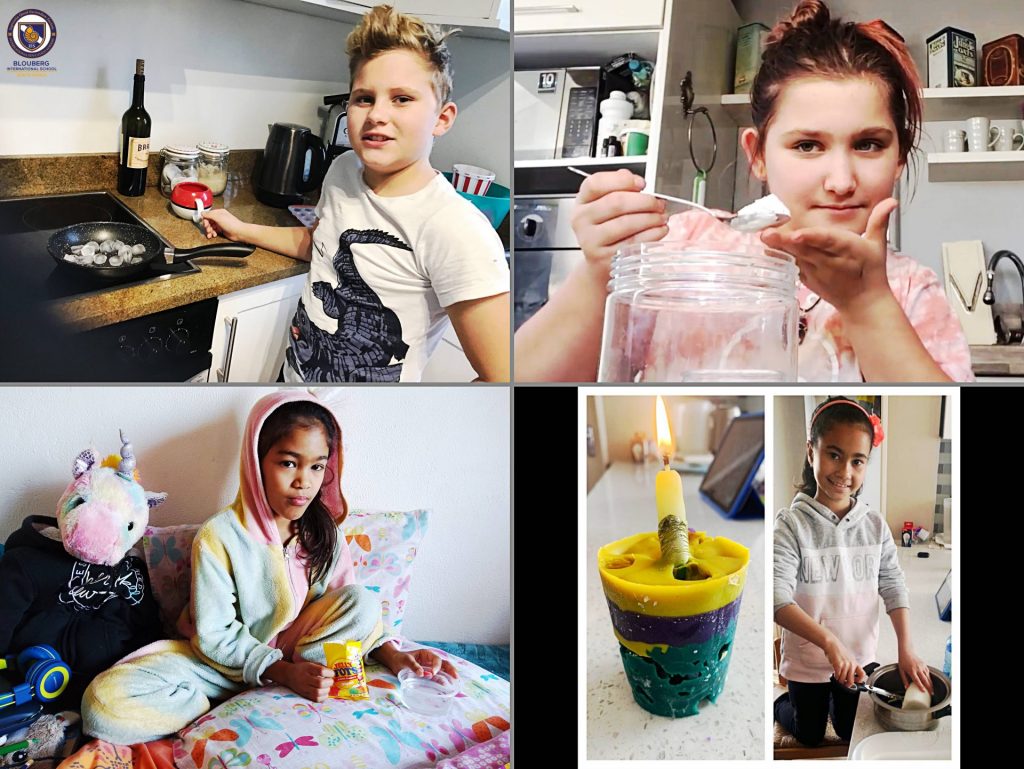
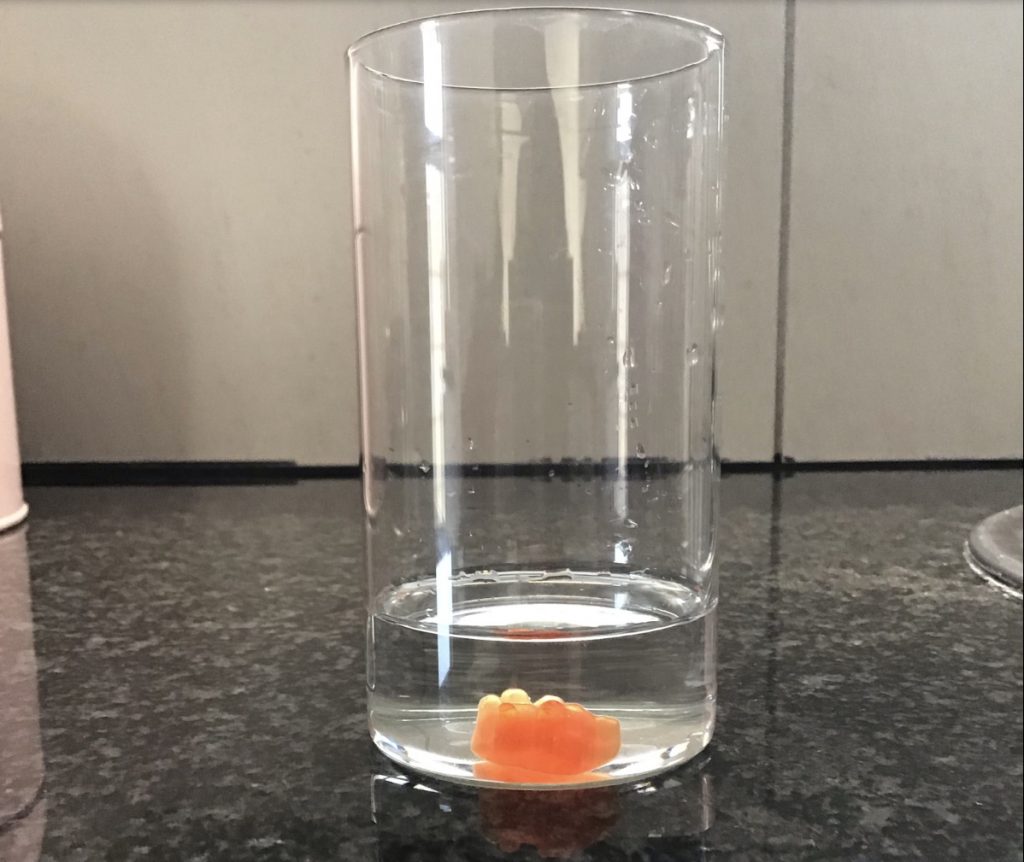
They learned about the different phases: solids, liquids and gases; and had to apply their knowledge with some very interesting practical activities. These investigations allowed them to observe matter changing from one phase to another; and they discovered various changes in matter properties such as colour, size, shape and texture.
They built rivers, investigated growing Gummy Bears, made Ice Candles and Mystery Matter; and conducted numerous other exciting experiments.
Take a look at some of the fantastic photos that the students sent in. It is clear that they absolutely loved the “hands on” approach to learning.
A huge thank you to all the students that submitted photos of their marvelous experiments. We are so proud of you!
“Science is simply the word we use to describe a method of organizing our curiosity.” – Robert Frost
Year 4 Teacher


Keeping Poetry Alive In Year 2
There are a number of reasons why poetry is important for young students. It helps motivate young readers to want to read, it builds on their vocabulary, fluency and writing skills. These skills are crucial in the development of strong readers.
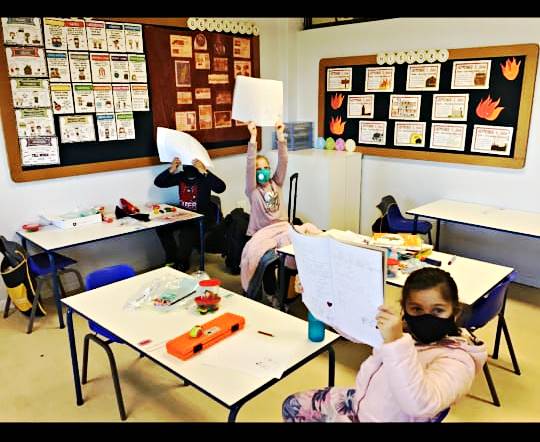
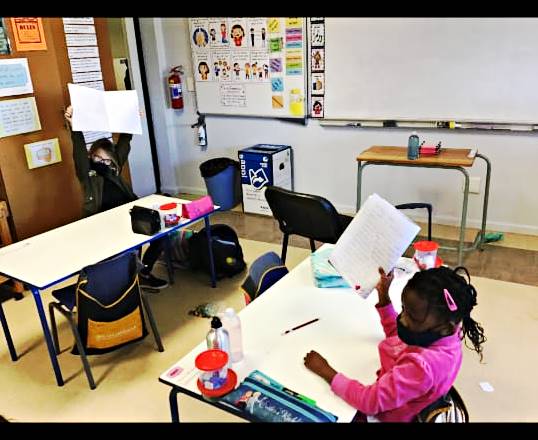
This past week, the students in Year 2 learnt about a poem written by Julia Donaldson, “The Food Train” poem, which brought a lot of fun and creativity in the class when the students were asked to write their own Food Train poems.
The poem uses words about food to make the rhythm of an old-fashioned train. The students therefore needed to create their own poem using different food names from their kitchen to recreate their own Food train poem which needed to sound like an old-fashioned train.
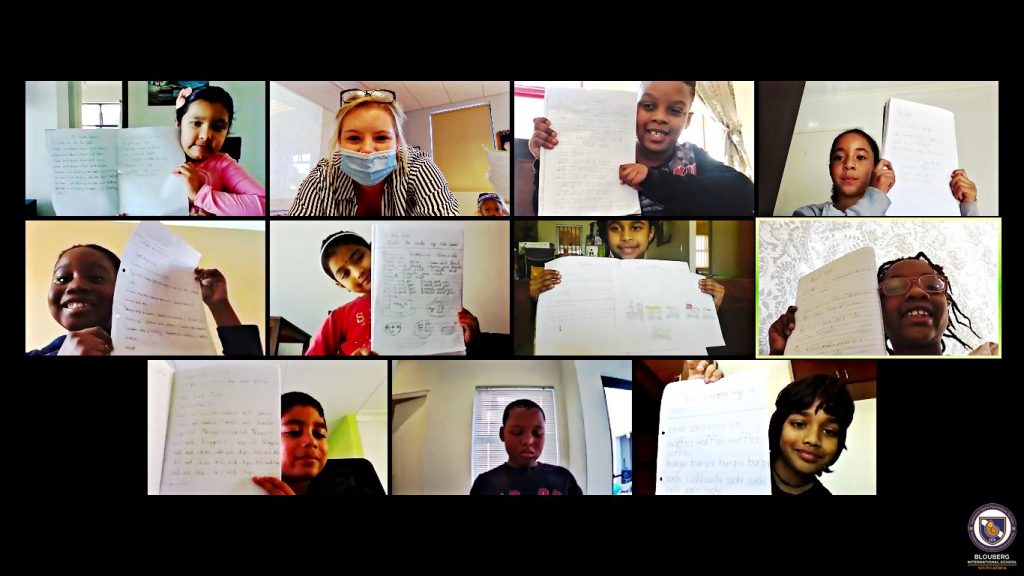
We used these poems for Show and Tell and included the students at home on a Zoom meeting. They read their poems out to the class. This brought a lot of laughter, excitement and some nerves as the students had not been able to stand in front of the class for Show and Tell in a while.
Teachers have always found that poetry allows for students to express their feelings, which is of great importance during this time of an emotionally changing situation. Keeping poetry alive in the classroom has proven once again just how creative and insightful students can be, and going forward, we will continue to develop and find creative means to spice up English, with the use of poetry.
Erin Hierse
Year 2 Teacher


Building Aeroplanes In Design Technology
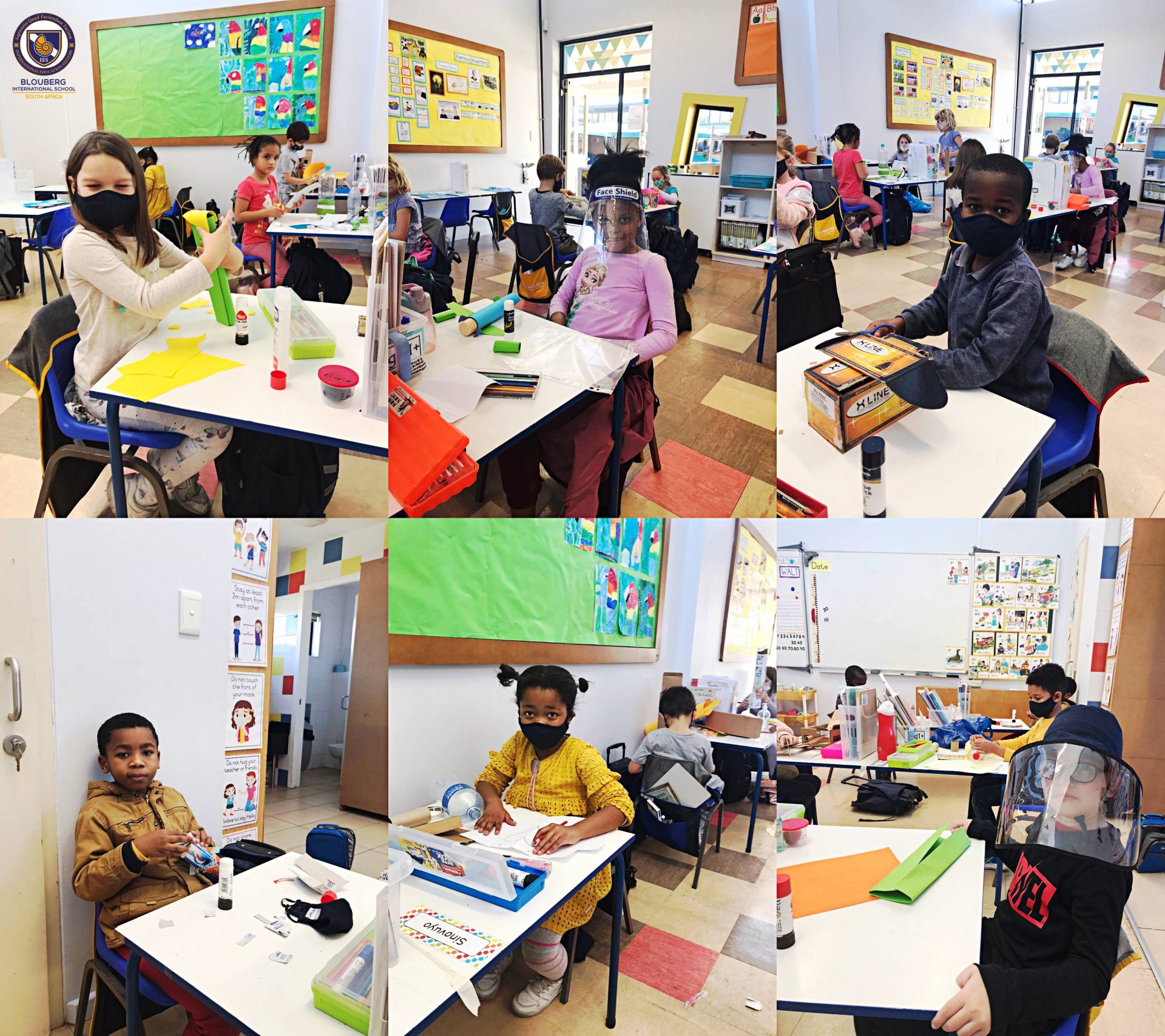
The Year 1 students love Design Technology and there is always an air of excitement when they get to build their very own design. During history they learnt about the Wright brothers’ first flight and we thought it would be fun for the students to design and build an aeroplane.
First, the students used play dough to build their aeroplane and then did some research at home to find different recyclable materials with which to build their design. They were very creative in making aeroplanes of all shapes and sizes.
Usually in our Design Technology lessons the students collaborate and assist each other to build their designs, but this time they had to be physically distant. However, they still managed to tell one another how they could put the planes together.
Ann Cordner
Year 1 Teacher

