
From the Principal’s Desk, 7 May 2020
Dear Parents
We celebrated our teachers this week and a big thank you to everyone who left them a special message on our Facebook page. It was wonderfully encouraging to see how much they are valued and appreciated.
This week we sent out a second letter explaining the plans and proposals that management are considering should school re-open in June. The measures which need to be in place require careful thought regarding planning and implementation and unfortunately, no simple solutions exist yet. For public schools, Years 7 and 12 students are critical for academic advancement but for us, the focus is on Years 10 and 12 as these two grades write their external Cambridge examinations in October.
There is also the reality that even if the government allows schools to re-open soon, some parents might not feel comfortable sending their children back to school. Our management team are therefore working on plans for hybrid-teaching. Similarly, we might have staff members who cannot return to work just yet as they are high risk individuals and this needs to be accounted for in our planning. These are just a couple of the issues that we are considering.
We will be prepared, with policies in place, to ensure the safety of staff and students when we return to campus. As per the letter I sent out earlier this week, we have already begun purchasing the necessary supplies (hand sanitizers, face masks, thermometers etc.) and have begun drafting a Covid 19 Policy Document.
During this difficult time, let us remember to be kind and encouraging to one another. We all need a bit of motivation in our lives and hopefully the later start to the school day, and the opportunity to exercise, will give us the boost we all need.
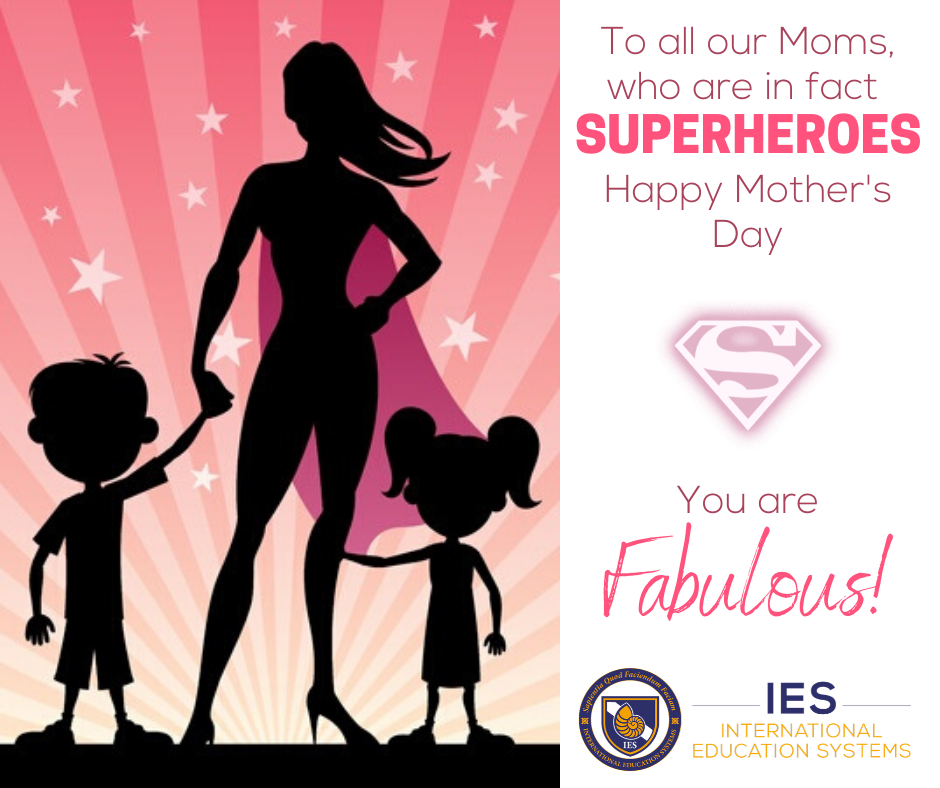
I would like to wish all the mothers a happy Mother’s Day this Sunday. I hope you will be spoiled and feel appreciated for all you do!
Kind regards
Edna

From the Principal’s Desk, 30 April 2020
Dear Parents
Like me, I am sure all of you have been following the news avidly, waiting for an announcement from the Minister of Education which will see us return to school. The process of returning to school is a balancing act in which we weigh the need for students to return to the classroom with the necessity of ensuring everyone’s safety. Rest assured though that when the day comes when we do return to school, there will be strict safety measures in place to ensure the safety of everyone on campus.
When I think about returning to school, I realise the enormity of the task ahead of us; the factors we must consider and the preparations which need to take place. Even our ‘drop and go’ routine in the mornings will have to alter radically. We will have to screen temperatures and ensure that all the classrooms remain hygienic throughout the day. It will be a continuous process of sanitizing: hands, doors, desks, bathrooms and corridors. And let’s not forget the all-important face masks!
The questions which roll through one’s mind as we contemplate the process follow a common pattern: Will the children understand the requirement of social distancing? How will we handle classroom management? How do we prevent contact and overcrowding? All these questions and so many more are exactly what we Heads mull over together.
This week we started with our first online assemblies. The responses from 198 students on one platform at the same time was overwhelming, but then as I watched I could see the excitement on their faces and I realized that it was being together again which was evoking such an enthusiastic response from the children. After a vigorous run of muting everyone so we could hear ourselves think, we were able to begin the assembly. We listened to Mrs. Schoots deliver words of encouragement and handed out star certificates. Our second attempt the following day was much smoother and less chaotic.
I am reminded once again of the lessons which we learn something from our children. They have an incredible ability to be resilient in any crisis. They adapt and thrive to any challenging situation we immerse them in and grow to be even stronger than we thought possible. Our involvement as parents in their education is crucial during this difficult time as their daily struggles and achievements provide insight into their development and character.
Let’s not walk away from experience without taking some good lessons with us. Together we are better.
Have a wonderful long weekend!
Edna

Lockdown Learning
What Shakespeare can teach us about surviving online learning.
What do we English teachers do when times are tough? We look to the Bard of course! Who better to guide us through the online educational space than a writer who has been dead for over 400 years! Now before you scoff “nonsense” over the rim of your coffee mug and scroll to the next page, let’s consider this in a little more depth. The transition to online learning has been challenging for students and teachers alike and we have all been plagued by fears and doubts. First Language English is a subject which you may consider one of the easier subjects to study online and perhaps you have a point. I can email you a poem- you can read it- you can write me an essay about it. Bob’s your uncle, done and dusted. Bring on the next one… Well, not quite.
Why does an author write a book? Obviously they want people to read it, but more than that, they want people to talk about it; it’s the hushed conversation in smoky cafes, the heated discussions over a plate of Thai chicken niblets at an annual Book Club meeting and the dog-eared, coffee stained pages of a favourite book passed from parent to child. Literature provokes dialogue and debate and as I always say to my students “It’s okay to hate the story you’ve just read, but you must be able to tell me why”. Stories, poems, plays- they are meant to be read and shared and isn’t it a truism that it is just as satisfying to discuss something you love as something you hate?
This is why I want to be back in my classroom! Not just for my view of the mountain, but for the interaction; the back and forth across the classroom, the heated opinions and different perspectives which mingle and lap the edges of the room like a gentle wave on a summer’s day.
Simply put, it’s a lot more difficult to discuss a work of literature isolated from each other as we currently are. You can read the play yourself, sure, but where’s the fun in that? A play isn’t meant to be performed by one person, now is it? My belabored point is that teaching First Language English online is a challenge and no Zoom meeting or Google Hangout Meet can replicate the wonderful disorder of a good class discussion.
Back to my original point. So, what do we do when we feel the pressure, the stalking fear and self-doubt that comes with being chucked in the deep end of the pool and having to paddle like a crazed duck to stay afloat? To whom do we turn when the challenges of online learning become all too real? Why, to Shakespeare of course! As usual, our dear Bard has a few life lessons up his sleeve to help us cope.
- “Our doubts are traitors, and make us lose the good we oft might win, by fearing to attempt.” We have all suffered the pangs of fear and self-doubt in navigating online learning and adapting to different methods of teaching. We should not doubt our abilities, for nothing ventured is nothing gained, and I am fairly sure our students are prey to the very same emotions which trouble us. We are capable of a lot more than we think- from teachers, to students and parents and self-doubt is the enemy of success.
- “Give every man thy ear, but few thy voice.” Learn to listen. Perhaps the most valuable exercise I have done during online learning is to have my students to talk to me, rather than I to them. “Tell me the truth”, I say to them. “How is it really going?” I have spent many minutes at the beginning of online sessions just listening… listening to the complaints, the fears, the excuses and you know what? I really have learnt a lot. I am learning what is working and what isn’t. Online learning is a collaborative process and if both sides are honest about their expectations and progress, then the game is half won.
- “Better three hours too soon than a minute too late.” Don’t be late. Shall we leave it at that and move on?
- “Pleasure and action make the hours seem short.” Keep busy and keep your mind active. I always imagined myself as the perfect lounge lizard, but to be honest, if I wasn’t working, I would’ve gone mad on Day 3 (Day 4 if Netflix released Outlander season 4). It’s important to keep ourselves busy and I don’t just mean with hours of admin and slog in front of the computer; I mean busy with activities which stimulate the mind. This goes for our students as well- research tasks which require them to think and engage with material. I enjoy setting argumentative and discursive topics for my students; topics which require them to have a good think and do a bit of research to support their opinions. They had to write a magazine article on the topic of cosmetic surgery and boy, the opinions flooded the room like bees after Pooh’s spilt honey pot. But they were engaged, I can promise you that.
- “The miserable have no other medicine, but only hope.” I’m sure we’ve all felt the cold tickling of misery at least once during lockdown but on the bright side, as the saying goes, there’s no way but up from here. Shakespeare reminds us that the doldrums only increase our focus on the horizon and the calm flats which lie ahead. Let us remain positive and instill this positivity in the students. Complaining may be temporarily cathartic but does little good. We are learning new skills, finding hidden talents and drawing on resources we never knew we had. It’s an adventure and like all good tales, it starts out filled with peril and looming disaster, but by the end we’re all safe at home with a nice cup of tea. Or more aptly for our context, by the end we’re all in each other’s homes sharing a nice pot of tea.
Take the Bard’s words to heart. Enjoy a good book and don’t try and argue with me that Shakespeare is no longer relevant! Stay safe everyone.
Alice Pryor
High School English Language and Literature Teacher

An amazing article compiled by Catherine Fortuin (Year 8) while using the e-learning systems from Blouberg International School.

Year 3 Are Writing Poetry!
Water animal
You swim
In a pond
You sit still and catch flies
With your tongue
Mandy Goch
Year 3 Teacher


Creative Writing in Year 2
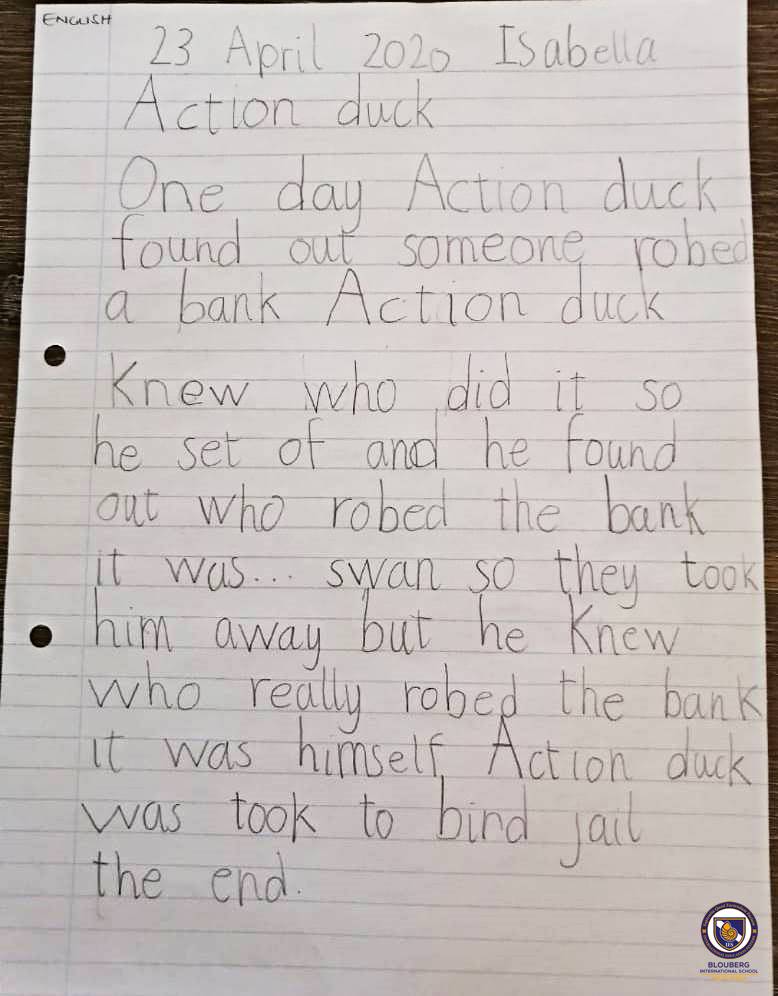
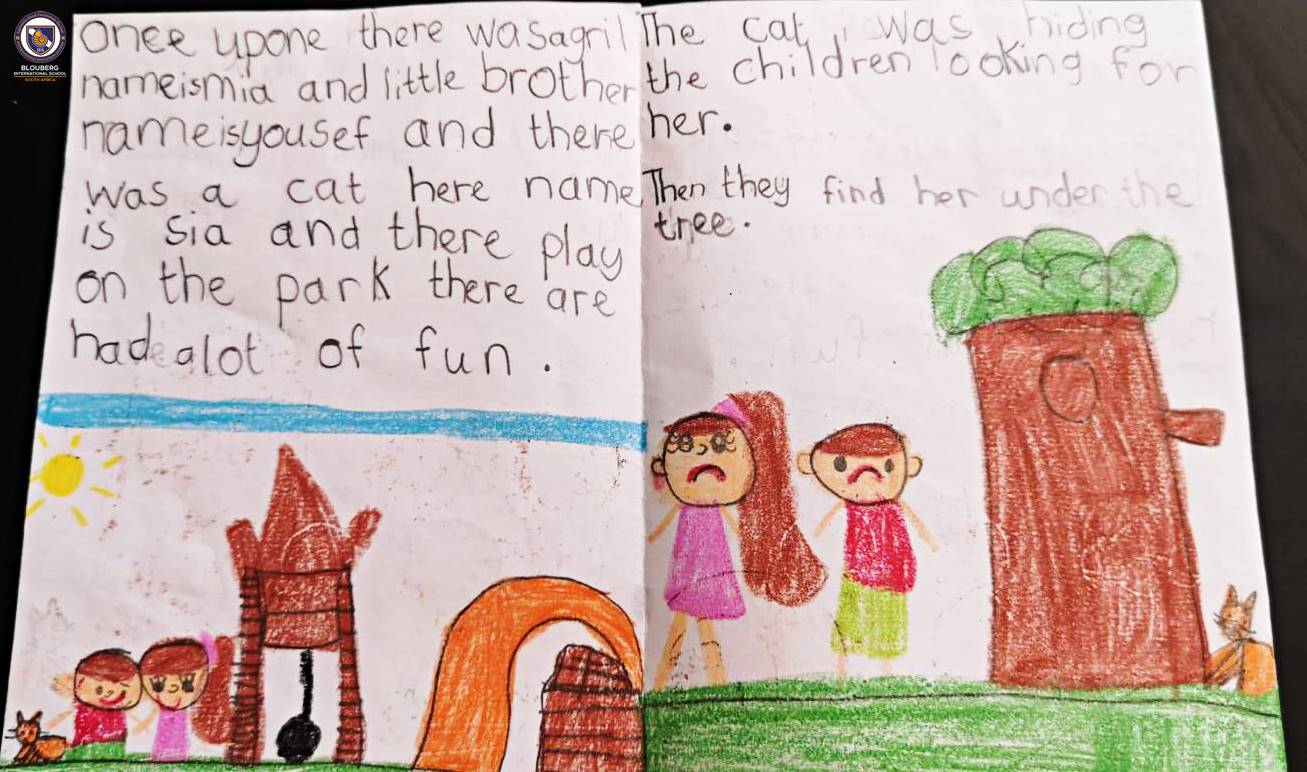
The students have put in great effort to create stories that take the reader on an adventure while in the comfort of their own home. Some of the stories involve action and heroism while others revolve around emotion, tugging on the strings of our hearts, leaving the reader with a soft and warm feeling. Other learners have chosen a more humorous path in their story, which has left readers feeling joyful and giggling.
We hope you enjoy reading some of the examples included here.
Erin Hierse
Year 2 Teacher




Message Of Thanks And Hope
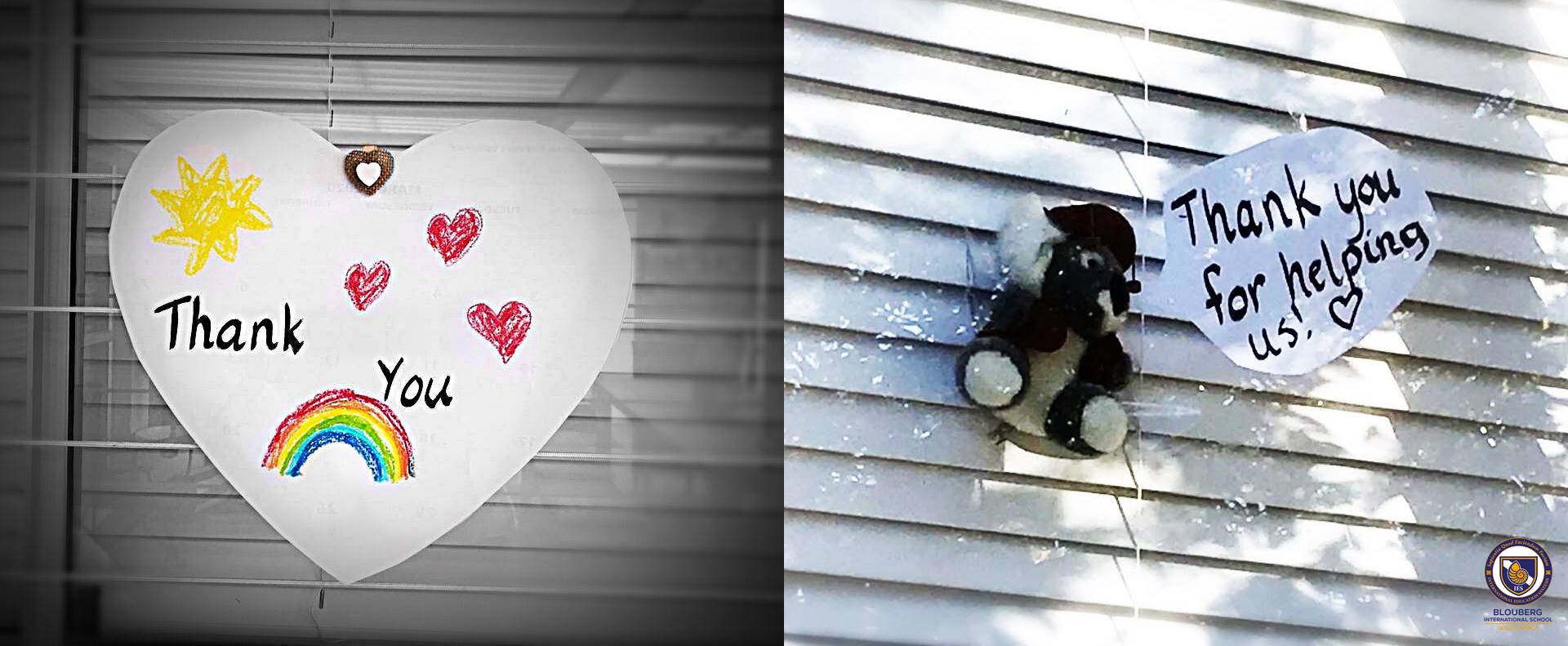
Let us show our appreciation to them by making a poster and putting it in a window, closest to the street, in our homes, to say thank you to all the essential workers in our communities. We could even put a fluffy toy in the window with a speech bubble giving a message of thanks to those who are helping us. People driving past will see that we appreciate all the essential workers in our communities.
Lets see if we can start a movement in the area we live by showing messages of support in the windows of our homes.
Ann Cordner
Year 1 Teacher

From the Principal’s Desk, 23 April 2020
Dear Parents
During this period of e-learning, the question in all our minds is: “Are the students coping?” This new method of teaching and learning is new to all of us and a shade of insecurity here and there is normal.
After observing my own daughter’s work habits, I have come to realise that the connection between students is incredibly important. Often after a lesson she will catch up with her peers as this is an opportunity for them to clear up any uncertainties about the lesson’s content or exchange information about pending assignments.
Collaboration is the key to success. This is not just true for the students, but also for teachers and parents. The support structure which exists between parents, teachers and students has never been more important in the goal of furthering and improving the e-learning experience. Let us not neglect student interaction during this time, as this sharing of information and collaboration would otherwise be a normal part of the school day.
In this theme of collaboration, we will be having our first online assemblies next week. A link will be sent to you via the Engage platform.
Monday, 27th of April, is a public holiday and we will thus continue our online lessons on Tuesday 28 April.
Don’t forget to have fun with your children during this time and I have therefore included a link to indoor activities for our children.
https://kidsactivitiesblog.com/50578/stuck-inside-games/
Kind regards
Edna

Living Life As An Artistic Being
Teenagers are at high risk for depression and anxiety. They know what we want to hear, and that is what they often give us. Teens know the buzzwords, and talking about their emotions can be wrongly impacted by their preconceived ideas about what they think we want to hear.
Teens who are good with words can use them as a disguise rather than a method of self-discovery. Furthermore, for other adolescents, discussing feelings may be frightening or uncomfortable. The creative process does not allow for that kind of manipulation to happen. Creative arts get teens out of their heads and into their bodies. The teen brain is wired for creativity. Consequently, creative expression is a natural fit to support thriving in adolescents. Creativity is part of building one’s identity. In addition, it supports brain development. Being creative even reduces anxiety. It makes us happier. Creativity and teen mental health go hand in hand.
The act of doing something creative employs various parts of the brain. That is why being creative enhances connectivity in the brain. Connectivity refers to the relationships between different areas of the brain. A study published in 2014 suggests that people with artistic training have improved connectivity between the two hemispheres of their brains. Creative arts, including music and visual art go beyond the rational mind, tapping into our most authentic self. Adolescents, in particular, are attracted to making symbols and graphic depictions. Therefore, they are more attracted to using art as language than to verbal questioning.”
Creativity help teens develop what is known as divergent thinking. Divergent thinking is a process of generating creative ideas by exploring many possible solutions. The creative experience produces a natural “high”. Simply viewing art and listening to music stimulates the brain to release dopamine, the “pleasure chemical”. This is the same chemical that is triggered when we fall in love.
Actively making art or music has a similar effect. In addition, it induces a state of flow, a term coined by psychologist Mihaly Csikszentmihalyi. This flow describes the experience of being completely absorbed in an activity. It means participating in a reality that is different from that of everyday life. As a result, experiences of flow are the key to sustainable happiness. Teenagers ascribe ‘happiness’ to their moods when they are able to engage in flow activities that stretch their skills and makes them feel alive and proud. Creativity, in particular, produces flow. Moreover, unplugged creative activities for teenagers offer both flow and a mini digital detox.
Creative arts prepares teens to be creative in other areas of life. It comes into play as teens learn new ways of relating to their past, present and new approaches to dealing with pain, trauma, or difficult relationships.
Riaan Vosloo
High School Art and Design Teacher

The Resilience Of Education
The Oxford Dictionary defines the term “resilience” as “the capacity to recover quickly from difficulties; toughness”.
This week, the Year 5 classes eagerly started prepping and practicing for their virtual oral presentations about their experiences of distance learning. They have quickly adapted to a different way of answering questions in the form of interactive Google Slides and Google Docs assignments. We have been performing experiments on shadows and mirrors at home, and are marveled at how much science can be done using nothing but ordinary household items!
If we take a look at the circumstances in which majority of the world currently finds itself, it is safe to say that we have all been exposed to a fair share of both difficulties and toughness over the past number of weeks. While observing how commendably the Year 5 students have been able to adapt to this uncertain and unstable situation, something beautiful has caught my eye; The Resilience of Education.
Before we could learn about shadows, periscopes, factors and multiples, we were faced with the challenge of teaching ourselves how to navigate through a new digital world in which this learning was to take place. A tremendous amount of pressure is placed on students, parents and teachers to not only ensure the schoolwork has been adequately done, but to do so without the support, structure and comfort of their daily school routines.
The Year 5 students have very quickly proven that no matter what obstacles or setbacks we are faced with, determination and hard work will always prevail. They have taken the bull by the horns and, in some instances, taught me a thing or two. Education could never be confined to the idea of only an educator providing insight and information to a student. If there is one thing that this lockdown has taught me it is that, even in a time of isolation and social distancing, there is so much we can learn from each other – no matter our age or title.
I could not be prouder to be a part of a community who has taken the unknown and, through strength and resolution, created an environment full of unity, understanding and bucket loads of support. We may have no classroom, no school desks, no whiteboards or projectors, but as long as we have eager minds – ready to learn – education and will always be possible.
Robyn Pieters
Year 5 Teacher


Year 2 Science Experiment
“Science is simply the word we use to describe a method of organising our curiosity” – Tim Minchin
This week for science our Year 2 students were asked to do a fun home experiment on Dissolving Matter. The test was to see which out of the given products would dissolve in a cup of water. Each child was given a worksheet where they could state their prediction of the probability of the product dissolving in the water, and also where they could record their findings after testing each. At least 5 or 6 cups of water was needed, placing each product in one cup at a time and stirring thoroughly. Some of the products used included salt, coffee, hot chocolate, soap, cooking oil, sugar and chalk. This is an exciting and fun way to watch as the product either sinks to the bottom, rises to the top or dissolves into the water completely. The important part is to watch and record as you’re going to make sure you’ve learned from your experiment and are able to ask more questions that will lead you to the next one.
Curiosity and discovery go great together. Much fun was had by all!
Siobhan Hendry
Year 2 Teacher
