

From the Principal’s Desk, 14 May 2020
Dear Parents
I am sure that, like me, you have mixed feelings about the President’s address last night. Earlier this month, the 5th of May 2020, you received a letter regarding potential dates for the return to school and the measures which need to be in place before this is possible.
Although we are an independent school, we are obliged (as are government schools) to await confirmation from the government before we reopen. Originally, we were informed that students in Year 7 and Year 12 would be returning to school on the 1st of June 2020 and hence, management took the necessary measures of ordering hand sanitizer, face masks, thermometers and having the school deep-cleaned.
The Minister of Basic Education, Mrs. Angie Motshekga, is scheduled to address the nation on Monday the 18th of May, after which we hope to have a better idea of which grades will return to school. The results of our second survey, regarding students returning to school, indicated that 75% of parents are not willing to send their children back for the two weeks before the end of the second term (which ends on the 12th of June 2020). We respect and understand your feelings in this matter and hope to reassure you that the best interests of our students are always at the forefront of our planning. To accommodate the needs of all our students, we will therefore implement a plan of hybrid teaching for as long as is required.
A letter detailing the plan of action for Blouberg International will be sent to you after Minister Motshekga’s address on Monday. Let us continue building our children and planning for a better future for them.
In the words of Nelson Mandela:
“It is so easy to break down and destroy. The heroes are those who make peace and build.”
Have a wonderful weekend
Edna

Teaching Design and Technology Online
By the time you read this we will have been under lockdown for 49 days… who would’ve thought? Two weeks became 3 weeks then it was extended again or was it the other way around?
When we started online teaching most of us felt lost and must have watched the various “how to” videos at least 50 times. Now however, 49 days in, it’s old hat. Teaching Design and Technology has made me realise that things are always changing, and people are always looking for innovative ways to produce new products.
When reflecting on the situation in which we find ourselves today, I cannot help but think that Design and Technology will play a huge role in the future. For example, think about all those Zoom meetings you have attended. Now, as you know, you can change the background, but how professional is that Eiffel Tower in the background? Is that the look you want when hosting that all important board-meeting? I see that there is a South African company that sells professional-looking office and boardroom backgrounds. They can even recreate your actual office so you and your staff can feel right at home. Isn’t it amazing what Design and Technology software can do?
In Design and Technology, students are taught to improve the design of an existing product or design a something completely new altogether- the aim being to create something which will make our daily lives that little bit easier. My students are busy designing health care facilities made from shipping containers, vertical farming installations, fold-away study tables and an eco-friendly school, to name just a few of the exciting projects we have underway.
I am sure that we are all looking forward to seeing their final designs.
Julian Harrison
Design and Technology Teacher


Second Language Acquisition
In my modest opinion and experience, as a second language teacher, this statement looks to me a little bit simplistic- I also believe that through the communication approach or using of the language in real live situations, the creation of role play classes, at least a minimum understanding of the structure of the grammar and the verb conjugation, will take us to the same objective or goal.
Also, the gamification or use of games like in Rockalingua has proven itself as an excellent tool to gain vocabulary and expressions related with a topic, also within a low anxiety environment.
To summarise, the use of different techniques such as the ones that have been mentioned before: gamification, role play, storytelling, the communication approach, the learning of some basic grammar together with the maximum exposure to the second language obtaining comprehensible input (reading and listening), looks to me like the right mixing formula and the way to plan and structure the second language lessons.
I completely agree with Professor Stephen Krashen, reading and listening is key to progress – not only in this language acquisition or learning process – it is fundamental in all knowledge acquisition processes: Research, read books, develop good habits, set obtained goals and believing in yourself can also be named as methods to acquire effective knowledge.
As part of the online Spanish class – I will be including and creating more storytelling and comics as a perfect tool to create meaningful input for the students in the topics that they have worked on before.
Other important facts:
1 – Children learn what they hear most. We need to expose them to the second language that they are learning as much as we can. I love to play Spanish music during my lessons.
2 – Children learn words for things and events that interest them. music, movies, cartoons, magazines, books, comics, reading the sports news in Spanish on the internet.
3 Interactive and responsive rather than passive context promotes language learning. Storytelling and Rockalingua games are great tools .
4 – Children learn words best in meaningful context, for example vocabulary related with clothes in a role play about going shopping or talking about food and recreating a Restaurant experience in class.
Below are some of the movies that I can recommend watching in Spanish for the students. You might find this link useful:
How to change the language in Netflix to Spanish
https://www.youtube.com/watch?v=F5YrpKEaTTk
COCO
Description: A young Mexican boy, Miguel, has dreams of being a musician. Unfortunately, music is the one thing that is forbidden in his family. Miguel ends up visiting the Land of the Dead, where he uncovers old family secrets. This must be one of the most beautiful Latino movies made, with good music, stunning visuals, and a heart-warming tale of family, love, and memory. Keep the tissues nearby. Coco was meticulously researched and is an excellent introduction to Day of the Dead traditions in Mexico.
Available on Netflix.
Info: PG | Spanish/English Audio, Subtitles | 1hr 45min
ZIPI Y ZAPE Y LA ISLA DEL CAPITÁN (ZIP AND ZAP AND THE CAPTAIN’S ISLAND
Description: Zipe and Zape– the main characters in the film, are based on two popular, mischievous Spanish comic book characters that have been read for decades. In this movie (the sequel is also on Netflix!), a family vacation goes wrong and they end up at a mysterious home with missing parents.
Available on Netflix.
Info: PG | Spanish Audio | 1hr 45min
PACHAMAMA
Description: An original Netflix production, Pachamama is a film deeply entrenched in the indigenous traditions of Andes culture in South America, while also introducing Incan culture and the invasion of the Spaniards. A young boy living in a remote village takes it upon himself to rescue a cherished relic, on a dangerous journey to the capital Incan city of Cusco.
Available on Netflix.
Info: PG | Spanish Audio | 1hr 12min
The Book of Life
2014 ‧ Animation/Family ‧ 1h 35m
Description: In a bid to save the love of his life, Manolo sacrifices himself and is transported to the Land of the Remembered, where he reunites with his dead ancestors and strives to get his life back.
Other Spanish movies and cartoons:
https://spanishmama.com/spanish-movies-for-kids/
https://spanishmama.com/spanish-movies-and-shows/
https://spanishmama.com/spanish-cartoons-on-netflix/
Javier Vidal
Primary School Spanish Teacher

Passionate, Playful Poetry!
The Year 4’s spent the past few weeks learning about a wonderful new topic in English: Poetry.
They looked at some examples of poems, answered some poetry comprehensions and discussed different poetic features such as alliteration, similes, onomatopoeia, descriptive words and rhyme. Last week they got the chance to apply their knowledge by writing their own poems. They wrote some marvelous acrostic poems about fireworks and also wrote some extremely creative poems about their favourite colour.
Take a look at some of our amazing poems – we hope you enjoy reading the poems as much as we enjoyed writing it!
“Poetry is when an emotion has found its thought and the thought has found words.” – Robert Frost
Year 4 Teacher

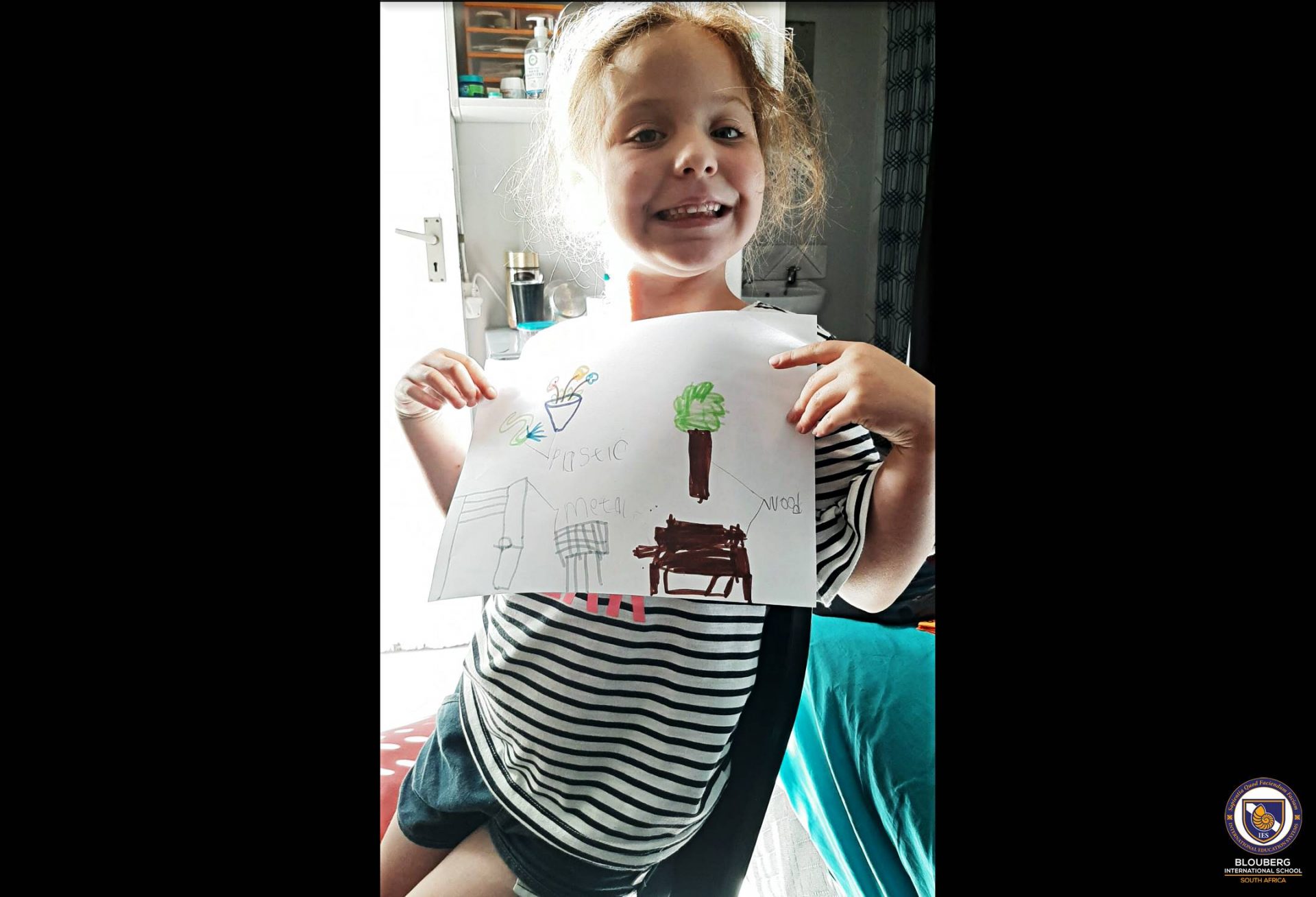
Materials
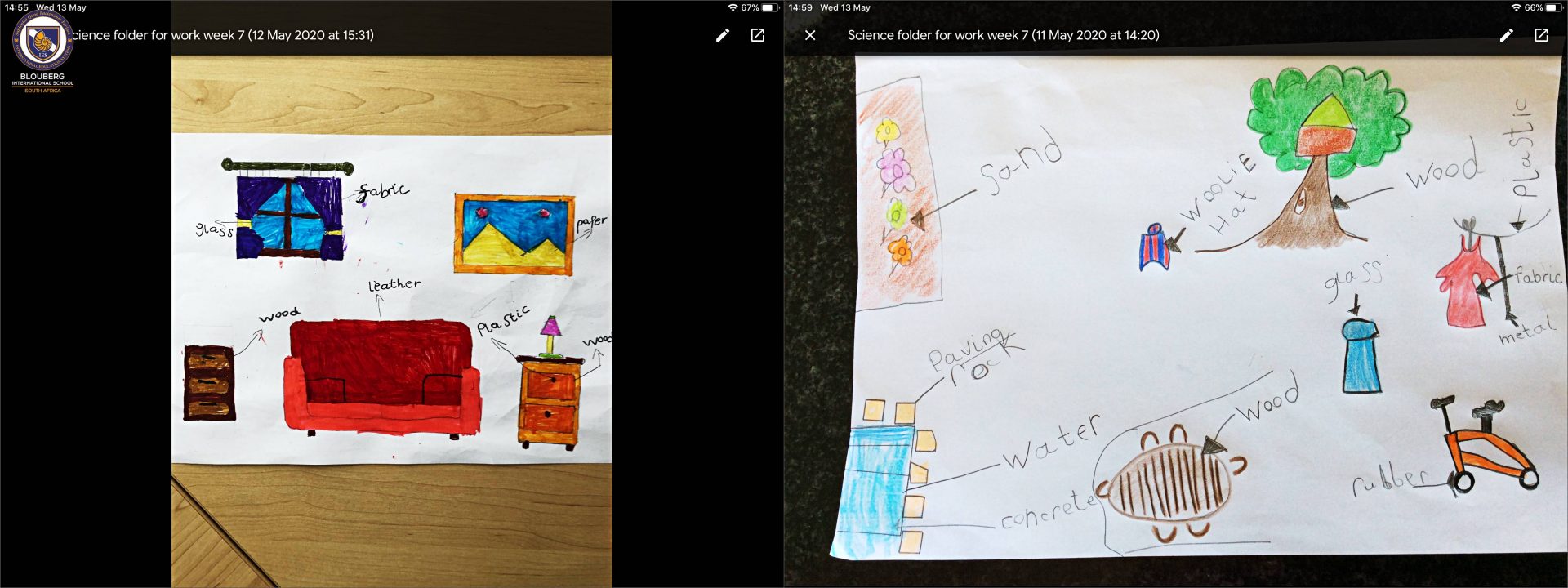
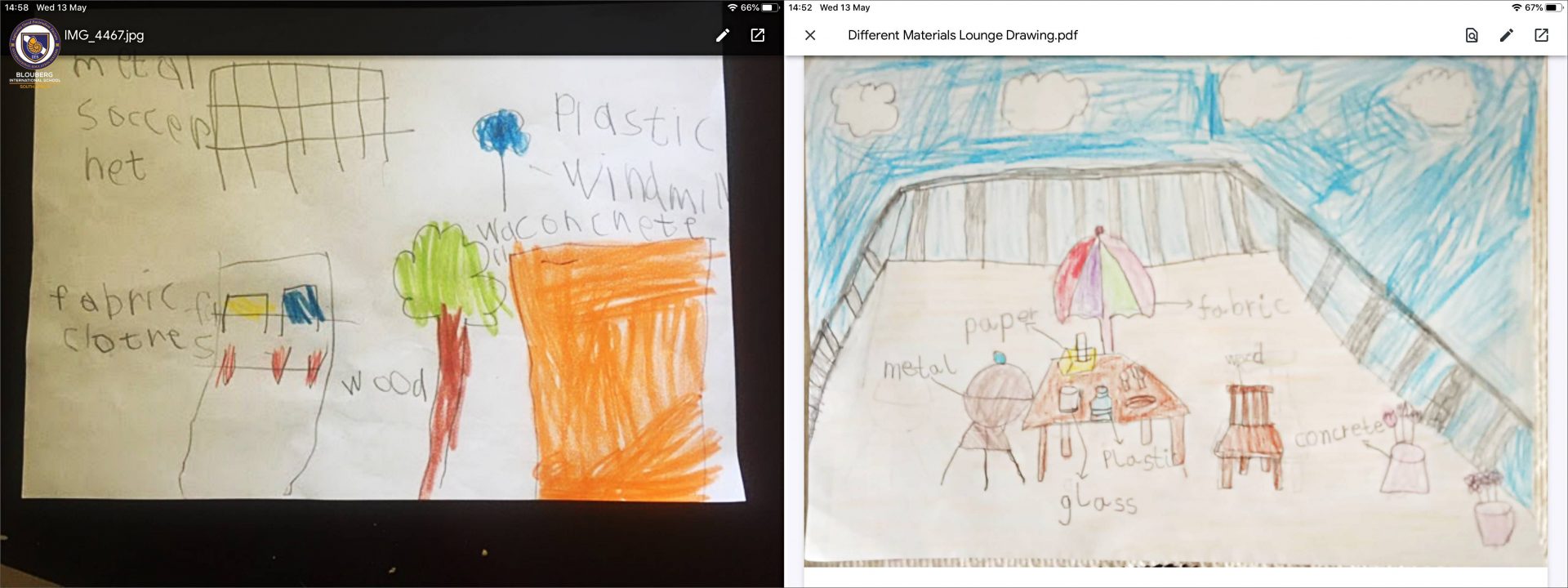
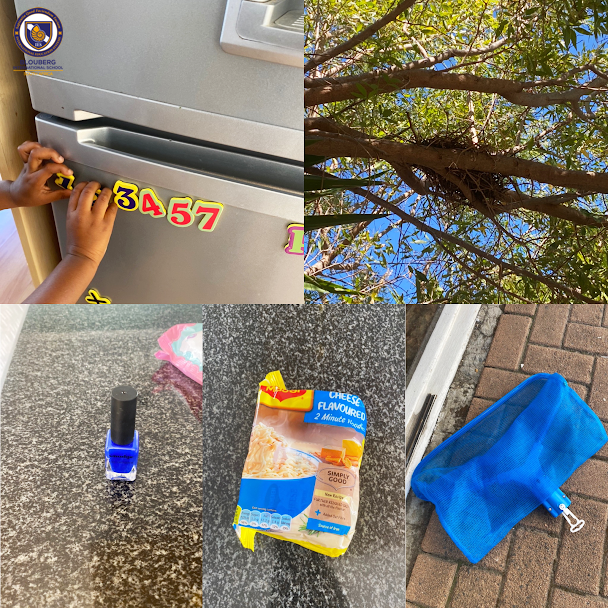
This is very interesting while we are at home as we can explore and observe, like real scientists, and find all of the different materials we have at home and use everyday.
As you can see from the beautiful drawings, the students in my class have had a lot of fun finding different materials in their back gardens and labeling their pictures.
I’m so proud of Year 1 and all their hard work and ongoing commitment to their studies. Well done Year 1!
Charlotte Cronje
Year 1 Teacher

Learning About Reptiles


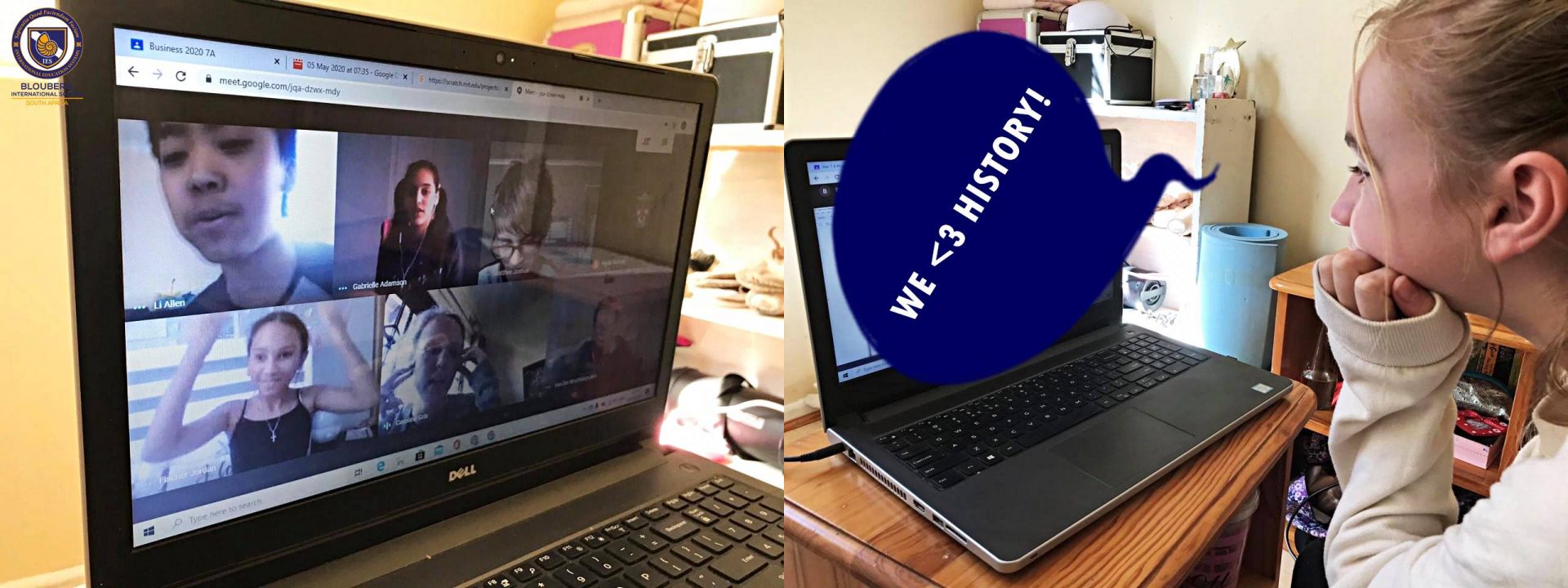
Teaching History Online – Experience and Tips
I will be one of the first to admit that online teaching and learning certainly took some adapting to. My students and I rose to the challenge and I’m proud of what they have achieved.
Once more traditional expectations regarding the teaching of History have been removed, one discovers that the subject rather lends itself to the online environment. While history may have been taught to many as a long (and very boring) list of dates, the best way to learn history is to study historical sources. This is where online learning comes into its own as students have more time and room to explore than they would in a conventional classroom setting. Many activities can be easily adapted to the online environment and even the shy students can make their opinions heard.
I’ll admit to being especially proud of my senior students. Their dedication and passion for the subject is extremely encouraging, as is their continued academic excellence. They are true Cambridge students in every regard. The world needs more diligent, creative and passionate individuals like them.
- Pace yourself and use your time effectively
- Remove distractions from your work environment (put the phone away)
- Plan your essays – it actually helps you to write faster
- Speak to the teacher if you are uncertain or experiencing problems – we are here to help
- Collaborate with your peers – online learning does not mean that you have to learn alone
- Shortcuts lead to long delays – complete that classwork task!
The Coronavirus has led me to think that it is likely more fun to read about history than to create it (the parts that make the History books at any rate). Will we study this in years to come?
Sheila Marais
High School History Teacher

Change Is Good
“For the things we have to learn before we can do them, we learn by doing them.” – Aristotle
This term in Year 6, we have been learning about Material changes. The students have been focusing on topics such as reversible and irreversible changes, mixing and separating solids, soluble and insoluble substances, separating insoluble substances, solutions, how can we make solids dissolve faster and how does grain size affect dissolving.
It has been a very interesting journey for the Year 6’s as experiments have been conducted each time they learnt about a new topic. They tested each of the above topics and came up with their own predictions, methods, results and conclusions. I hope that they cleaned their parents kitchen straight afterwards!
Here are some things the students enjoyed about Science:
“Well in science I really enjoyed conducting the experiments and finding out some things that I didn’t know, for example, I did not know why things dissolve faster in hot water but I then did the experiment and checked my textbook, I found out the answer. I also liked making the picture that we did at the beginning of the term about irreversible and reversible changes.” – Treasure Daniel
“I really enjoy the experiments because they give me a greater understanding on how things work like solutions and dissolving it is really fun.” – Maia Davies
“The thing I like about science is that when I conduct an experiment it makes it easier for me to understand the lesson. Like for the insolubles as I did the experiments it helped me understand and for the irreversible work when the teachers told us to make pictures in our book it helped because I used highlighting, so it stood out in my book. In science I’m 100 percent understanding the work.” – Yadar Mashoene
“On online schooling in science, we have learnt about material changes, solutions and mixtures, soluble and insoluble substances, different methods on how to separate mixtures and solutions, factors that affect dissolving, how to conduct a fair experiment and how to record our results. My favourite part of science is conducting experiments and learning the outcome of each one. I also enjoy learning about how to separate different mixtures and solutions.” – Saumya Maharaj
We are very proud of the excellent work our Year 6 classes are consistently producing!
Brittney Hakime
Year 6 Teacher
Teachers VS Technology
During the last few weeks, the world has focused on the ‘Front-line’ workers for their amazing contribution in supporting the sick, ensuring that we can work remotely from home and for keeping the food shelves stocked. We applaud them! Their bravery and commitment is astounding.
While this was happening, there was a small group of people that may not have been on the front-lines, but were working tirelessly between the trenches and ‘no mans land’.
The people I am referring to are the teachers.
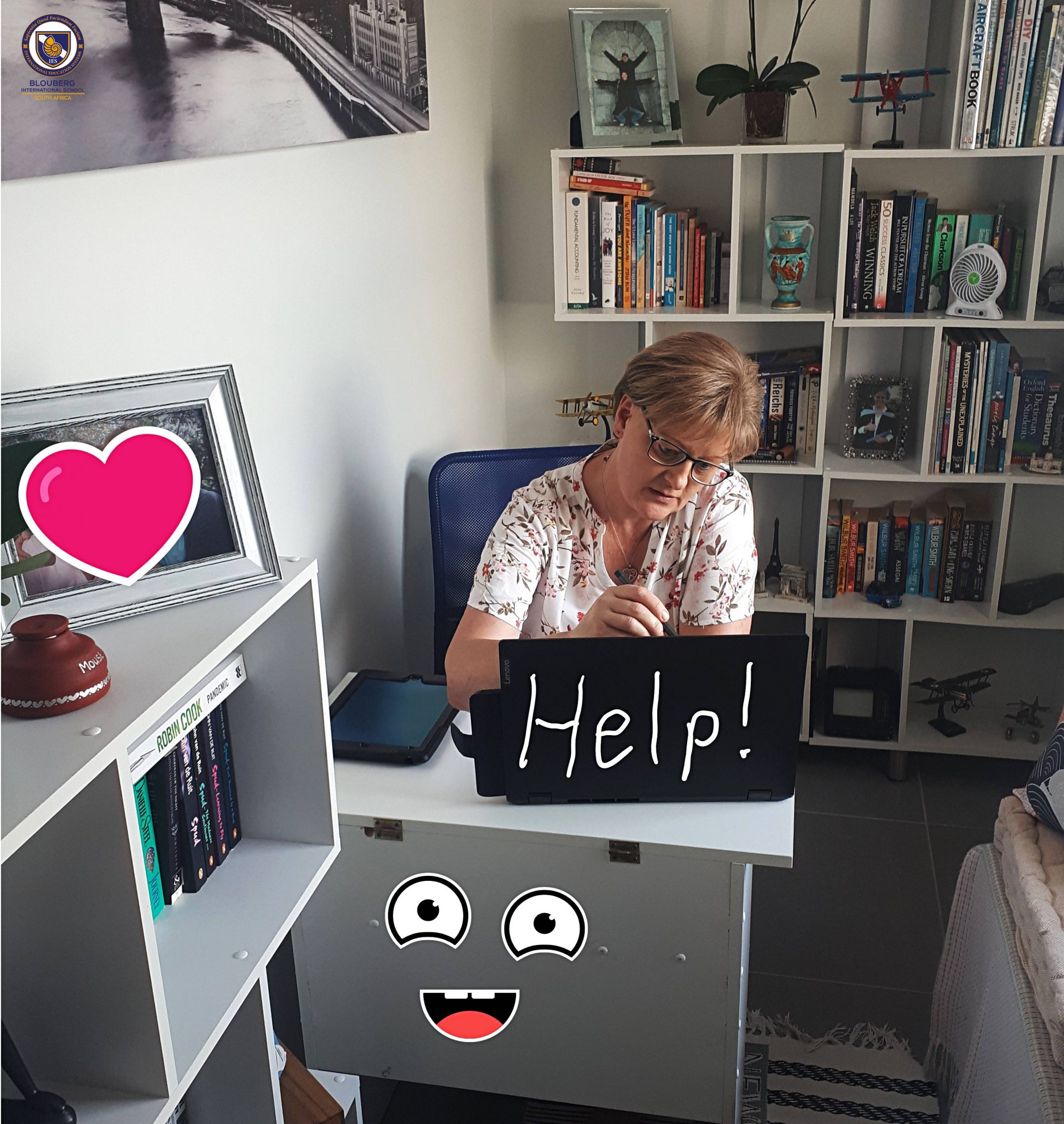
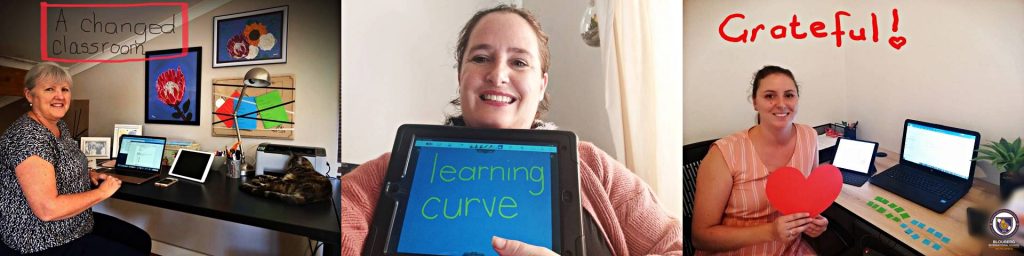
Although I may have thought that I have sufficient tech knowledge to teach effectively in the modern world and to support my admin skills, it became quite clear to me that this was not entirely the case. Teaching in the virtual classroom was going to be a challenge for sure. It was time to teach an old dog a few new tricks.
Teachers scrambled from left to right, learning how to balance home life, teaching online, learning new skills and staying sane at the same time. We had to learn how to navigate different platforms, and boy that mute button is a saving grace.
After finding my way and seeing the difference between the classroom and the virtual world, I realised that this was going to be tough, but I could do this. There were many obstacles for a number of us, but we overcame them and continued nonetheless.
Reaching out for support, I realized that I was not alone in this. Most of my colleagues felt the same way that I did. Lost, but determined to do this correctly for our students. We soldiered on.
I asked some of my friends and colleagues a few questions regarding how they feel about teaching in the classroom versus teaching online; this is what they had to say:
What do you enjoy most about online teaching?
“I have enjoyed finding different resources and approaches to lessons. While it has been a lot of work to get used to and comfortable with the technology, there has been time to find new resources and research ideas to implement in lessons now and when we return to school.”
“I really enjoy putting together the slides for the video lessons. We are using a programme called Doceri on the i-pad, which allows us to record a voice over as we move through the slides to create our lesson videos. We then upload our video lessons to Google Classroom for the students and parents to access.
I love the interaction I have with the students during the Zoom focus group lessons. The focus groups are smaller groups of 4-5 students. It really is so rewarding to see how they are progressing.”
What do you find most challenging about the virtual classroom?
“Although I am enjoying online teaching, I really miss being in the classroom and interacting with all the students and families from my class. As a classroom teacher, I have become accustomed to having all my teaching tools and resources at my fingertips. In the virtual classroom, we have to make new resources and convert them into a digital format. Students also need to do practical activities, and we have to try and use things they already have at home to do these activities. I am also using a lot more technology and learning as I go, which sometimes takes a bit longer to get things done. Sometimes there are also technical difficulties that I have to work around.”
Has online teaching changed your thinking and/or methods of effective teaching?
“Yes, absolutely – more tech savvy!”
“Yes, I’m positive about what can be achieved online, and how versatile it can be depending on the teacher and their willingness. Though I don’t think it is a one-size-fits all, it doesn’t work for every student. I’m more mindful of how I come across and what the children in class need to see from their teacher. If all you see is a face on screen, it needs to be a friendly one, with a huge smile, open, kind and warm. I enjoy trying new things with my class; especially some fun games, which I’d like to continue when back in our classroom.”
“Yes, to a degree. But the live interaction and discussion in the classroom, takes lessons in different directions and has a lot of value in developing the concepts the children learn.”
Is there a place for the virtual classroom concept in the future? If yes, how could it compliment the curriculum or your teaching strategies? If no, why?
“Yes and no.
Yes because during a time like this where we need to stay away from school to be safer, it allows the students to learn in their own comfort of their homes, at their own pace. As well as with the times we live in, students prefer to use technology. It allows teachers to get creative and think of ways to teach incorporating the different styles of learning. In this, teachers are learning new strategies to teach.
No, because as a Primary School teacher, it is important for students to socialize and have human interaction. Being in a classroom allows students to grow not just developmentally, but emotionally and socially as well. The classroom also allows us to bring in fun lessons, via the projector.”
“I think putting up videos on Google Classroom to explain how we teach different concepts, will be great for parents to understand how we teach. It would also be great to, sometimes, teach lessons for the children to do at home and then come back to school to do the practical work and application. (Flipping the classroom)”
“Yes, there is definitely a place for the virtual classroom in the future. Although I don’t feel that it could
ever replace the classroom, it can be beneficial alongside the classroom. The virtual classroom can be used for extra enrichment to practise concepts learnt in the classroom. It allows parents to become more familiar with the curriculum. Through the online videos, parents are exposed to teaching methods and vocabulary that they can use with their children. This also provides more continuity when discussing concepts and prevents the child from possibly becoming confused.”
What do you miss most about the classroom?
“The hugs, the humor and the “ah-ha” moments.”
“I miss seeing my children in class every day, their smiles and beautiful pictures they like to draw for my walls. I miss the physical interactions with my class, the high fives or hugs each morning, and being able to comfort them when they are having a sad day.”
“I miss the instant feedback from the children in order to assess their learning and plan for the next lessons.”
“I miss everything about school. I miss seeing the children’s smiling faces every morning, and greeting
their family members as they are dropped off or collected from school. In the classroom, I miss our morning rings and presenting lessons on the carpet. I miss helping the students during play time and watching them play. I miss putting on plasters, giving out icepacks. I really also miss my colleagues and the support we give each other daily. I miss the admin staff and being able to just pop into Ms. Kiley or Mrs. Lawrence’s office for a chat. I miss sitting together during meetings instead of just seeing each other on a screen.”
After reviewing their responses, the virtual classroom in some form has a place in the future. It can be used to compliment our teaching methods within the classroom, but in my opinion not replace it.
It is certainly clear that the classroom is still the best for personal interactions, and for nurturing emotions and feelings. The close contact is what we strive for as human beings.
I recently read an article that endeavored to explain why we are more exhausted at the end of the virtual ‘school day’. It is not because we have to deal with behavioral issues or with multiple duties, but being on a video call requires more intense focus than face-to-face chats. The article stated that ‘we need to work harder to process non-verbal cues like facial expressions, the tone and the pitch of the voice, and body language; paying more attention to those consumes a lot of energy’. We also have to try to drown out the distracting noises and voices in the background, and the moving and shaking of screens.
So, when you are clanging your pots and pans, clapping your hands and singing songs every night at 8:00 pm, please leave a small space in your heart for the teachers out there. They are most likely not there to join their family; they are busy preparing their lessons for tomorrow.
Wendy Menton
Year 1 Teacher
What We Are Learning In Pre-Reception
For the past two weeks, the Pre-Reception students have been learning about Fairy Tales & Pirates. They enjoyed creating works of art for this exciting theme. They also made maps and went on scavenger hunts to discover hidden treasure.
In Literacy, they learnt about the ‘i’ & ‘n’ sounds. They really enjoyed finding things around their houses starting with the sound of the week and diligently practised to write these sounds down.
In Numeracy, the focus was on ordering numbers, completing patterns and recognising shapes.
On the first Friday of the theme, students dressed up as Princesses and Pirates for our live session. So even though we were not at school they had fun dressing up and discussing their favourite Fairy Tales.
Over the next two weeks, Pre-Reception is leaning about Reptiles. So far, they have learnt about the differences between tortoises and turtles, crocodiles and alligators. Next week we will be concentrating on snakes, lizards and chameleons. The letter of the week is ‘c’ and next week ‘k’. In numeracy, we are learning about light and heavy objects with many fun activities in store.
I am very proud of my student’s hard work and enthusiasm during this time. Well done Pre-Reception!
See you later alligator!
Cindy Nunan
Pre-Reception Teacher

