
From The Principal’s Desk, 14 February 2020
Dear Parents
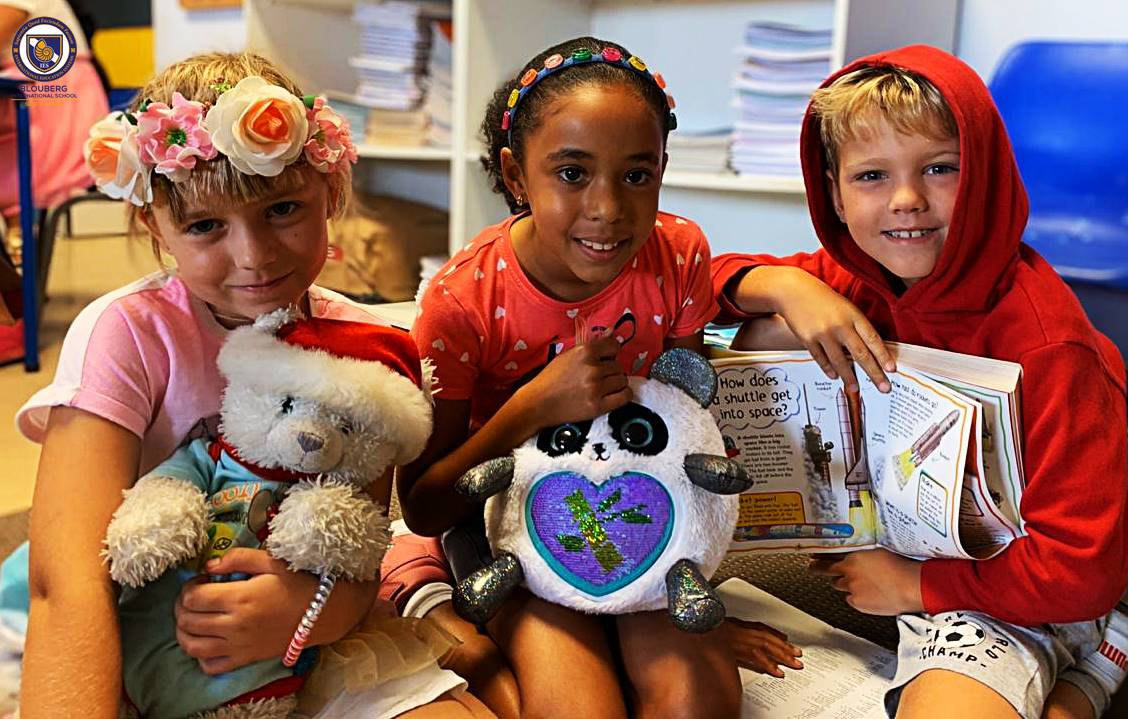
It was an absolute pleasure to see our students dress up for the civvies day yesterday. What was even more awesome to see, is how the love was shared through friendships and that the emphasis was on loving one another as friends.
This is a key lesson of kindness and care that should be instilled at a very young age.
In our newsletter last week, I shared on the challenges we as educators face at school regarding cyber bullying, so called “freedom of speech” in Whatsapp groups and the negative effect it has on our children. Sadly, this is not a teenage problem, but students as young as 9 years old, are bombarded with content on their phones which are not age appropriate.
We had the pleasure of hosting a talk with Emma Sadleir last night and we are very grateful to the parents who made the effort to come and listen. We wish to commend each and every one who attended last night as it showed your support in raising a generation equipped to deal with the technological challenges.
We will schedule another session with her to address our students soon. It is vital that we are aware of the beast we deal with and as parents to be equipped to train our children.
Have a wonderful weekend of shared love with family and friends
Best regards
Edna

Shades And Tones
The High School Art students discovered the magic of creating colours in a variety of shades and tones.
Learning how to mix colour is a matter of knowing the right steps and with practice, the process becomes almost instinctive. Having some knowledge of colour theory is good, but in practice, when you pick up your paintbrush, the theories do not help that much.
Colour theory helps us to understand the possibilities of colour in art and design and appreciate the different ways that artists use colour. The effects of light fascinate some artists; some are interested in the symbolic meaning of colour; and some use colour to express their emotions.
Colour theory in art can be summed up under three headings: Colour as Light, Colour as Symbol and Colour as Emotion. A knowledge of Colour Terms helps us to express how this visual element is used in art and design. It gives us the vocabulary to clearly state our feelings about an artwork or design.
Understanding the placement of the colours on the colour wheel will help you to name any given colour. The name of a colour is called “hue”. In painting and drawing, artists name their colours as “red-violet,” “blue-green,” “yellow-green,” etc.
Do not confuse the commercial names of wall paint colours with “hue,” because they do not necessarily tell you much about the colour and they are often misleading.
Students used scientific thinking to observe, predict and compare, and they experimented with cause and effect. “What will happen if we mix all three primary colours together?” “How much yellow do you need to add to make green?” “Can I make the exact same colour twice?”
They used problem-solving skills and came up with ideas for what to do when the colour they were mixing did not turn out quite the way they had hoped. The students used mathematical concepts such as more and less, and devised ways to measure how much paint they were adding.
When mixing colours and painting, students used a multitude of fine motor skills like squeezing, pouring and mixing, and worked on controlling those skills. It is not always easy to pour just a little bit of colour! They had hands on learning and experience with primary, secondary and tertiary colours, as well as tints, and shades. “What happens if you add white?” “What about when you add black?”
The Year 8 Art students also learned how to create form by acquiring the skills to do different shading techniques. Once they realised it is a matter of seeing lights and darks, and all the tonal varieties in between, they produced drawings that made us all very proud.
Riaan Vosloo
High School Art Teacher

Show and tell in Year 1
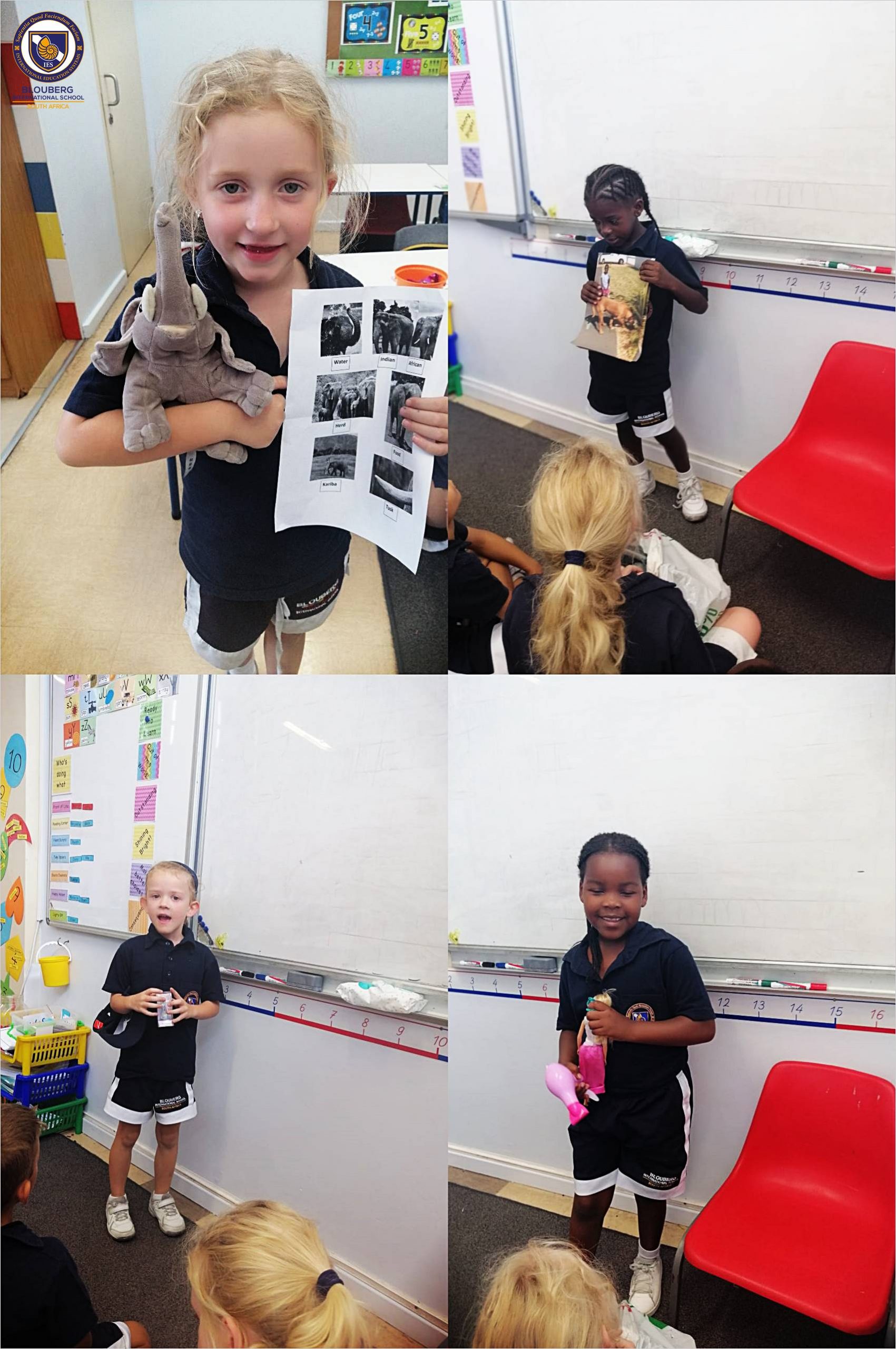
The aim of Show and Tell is to motivate students to speak in front of each other, it builds confidence and allows them to speak about something they know and are comfortable with discussing.
The process of preparing a show and tell encourages students to consider the importance of a special item and appreciate its significance in different ways.
Being part of a show and tell audience is also an important part of learning. Most importantly, the audience learns to sit still and listen closely to someone other than their teacher, and to be respectful. We always congratulate our peers after their Show and tell and create a positive and uplifting environment.
In Year 1 the students get a chance twice a term to prepare their Show and Tell. We link our topics to the themes of our different core subjects. In History the students are learning about the history of toys.
On Friday, a few students had their first Show and tell with the topic “Toys”, where they could bring anything of interest or a special toy to speak about.
They enjoyed this topic very much and we all had the opportunity to learn something new.
Tayla White
Year 1 Teacher

Share The LOVE This Valentine’s Day
Have we forgotten the main reason of Valentine’s Day? Is it just about the love between two people and expensive gifts or should it simply be about showing affection and appreciation for the ones around us such as our parents, family, friends and teachers etc.
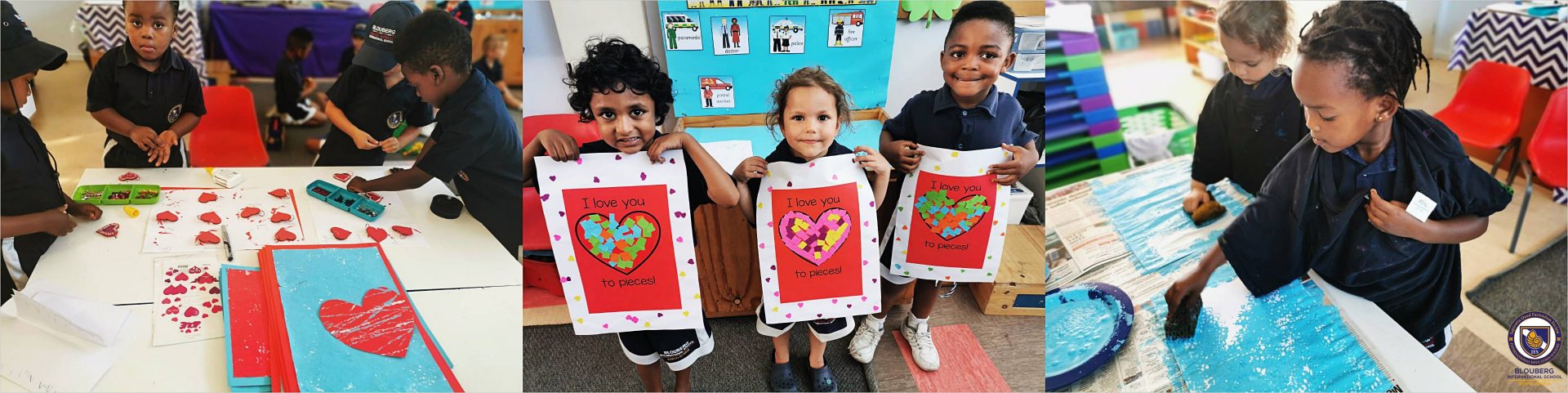
The students are very busy in the Pre-Reception classroom making various crafts to give their loved ones this Valentine’s Day. It has not cost them anything except a fun experience as they have been up to their elbows in paint and they are very excited and proud of their efforts. This kind of gift comes straight from the heart!
Why not start in our classrooms, not just on Valentine’s Day but throughout the year! Instead of saying something mean and hurtful to our classmates why not rather think before you speak and give your classmate a compliment or share with them or just give them a turn, let them go in front of you in line. Why not give them a hug or just smile at them. These actions cost nothing!
Love on Valentine’s Day does not only have to be expressed through expensive materialistic gifts it can also be shown with a random act of kindness within the classroom and our school to our friends, other classmates and our teachers.
Lets start with ourselves and share the LOVE not only this Valentine’s Day but every day of the year!
Bonus Facts: Did you know that Bishop Valentine was sentenced to death for refusing to stop marrying Roman soldiers to their beloveds? Or that Mr. Richard Cadbury was the first person to create chocolates specifically for Valentine’s Day?
Cindy Nunan
Pre-Reception Teacher
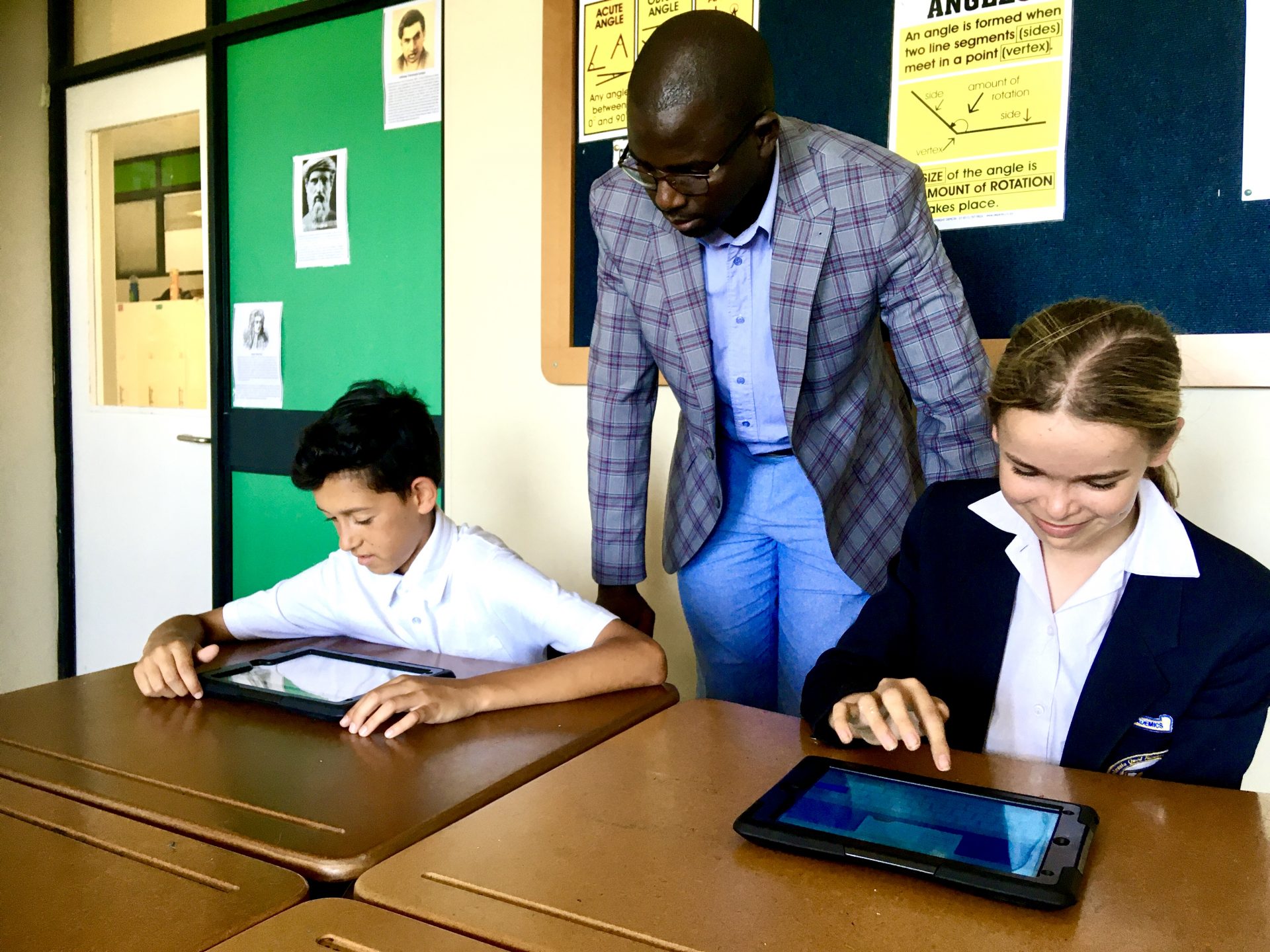
Training The Mind Everyday, Anytime And Anywhere – Sparx Maths Homework Approach
One of the common quotes is by a German-American physicist Albert Einstein, “Education is not the learning of facts, but the training of mind to think.” What do you think of when you think about learning mathematics? Most people tend to think about hard work and practice, practice, practice. Yes it is! Sparx Mathematics Homework develops deep mathematical thinking skills and prepares our Learners to be strong problem solvers.
Engaging young people with any homework can be tough, let alone tackling maths. Sparx Mathematics Homework Program allows parents to be involved in their child’s maths learning journey.
How does Sparx work?
Compulsory
Students must correctly answer all of these questions before your hand-in deadline.
Optional
Students can choose whether or not to do this. It’s only half as long as their Compulsory homework but is great for helping them feel more confident with everything learnt in maths.
Target
Students can choose whether or not to do this. It contains up to 6 questions and will advance your maths skills even further. It is slightly trickier than Compulsory and Optional homework.
Unique content covering the KS3 and GCSE maths curriculum. Over 33,000 handwritten questions are supported by more than 7,800 tutorial videos, which help explain concepts and encourage independent learning.
Sparx’ intuitive, adaptive technology creates an individual learner profile and delivers bespoke homework for each student, which is designed to be challenging yet achievable. This personalised homework is set and marked automatically, providing instant feedback to students and helping them to progress quicker. Homework matches the curriculum and appropriate extension work is always available for those who want to challenge themselves.
Sparx Homework learns where students’ strengths and weaknesses lie, and how long they take to complete different types of questions. It then determines which homework questions would help improve and consolidate their learning. Question difficulty is gradually increased to suit the learner and topics are repeated during the year to help them fully understand the skill for the long term.
Progress in core subjects such as mathematics has a recognized effect on overall attainment. Tackling issues such as ‘maths anxiety’ and rewarding progress for all students creates confidence that is evidenced at end of Term or Year tests and Exam results.
Keep your child motivated
Students collect XP (experience points) and are rewarded with mini-games. This energizes, directs and sustains behavior. Because it involves goals and requires activity. Goals provide the impetus for and the direction of action, while action entails effort and persistence in order to complete their homework.
Hebert Tapfuma
Mathematics Department / Sparx Leader
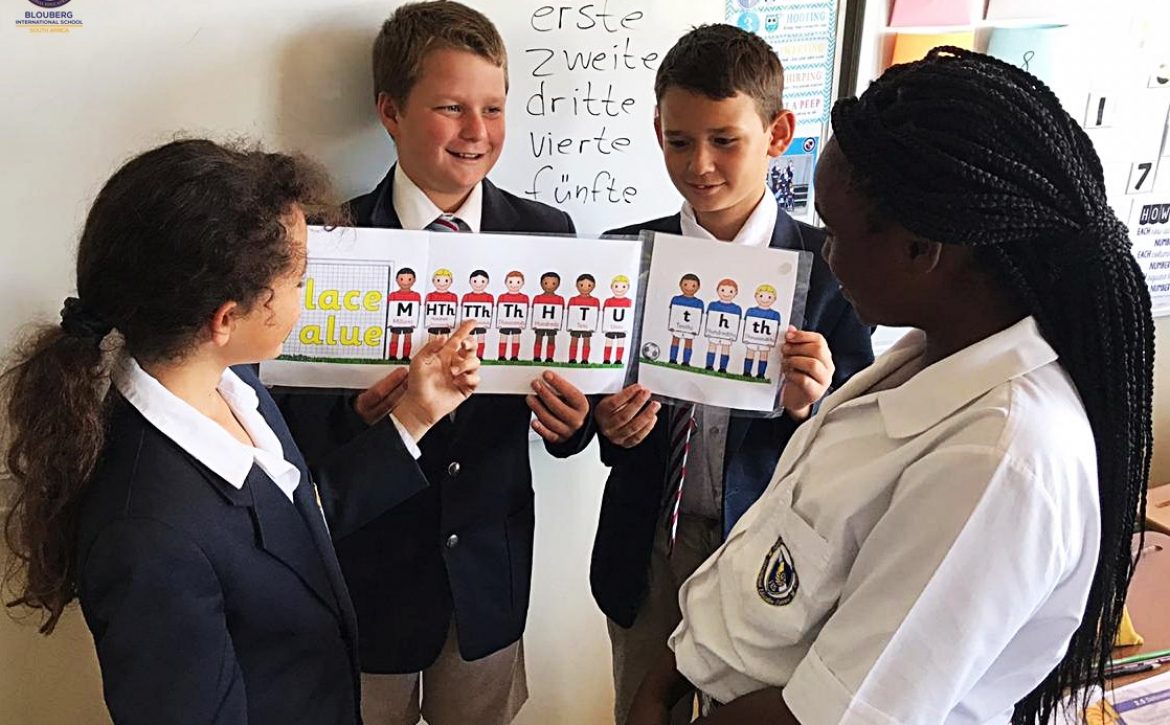

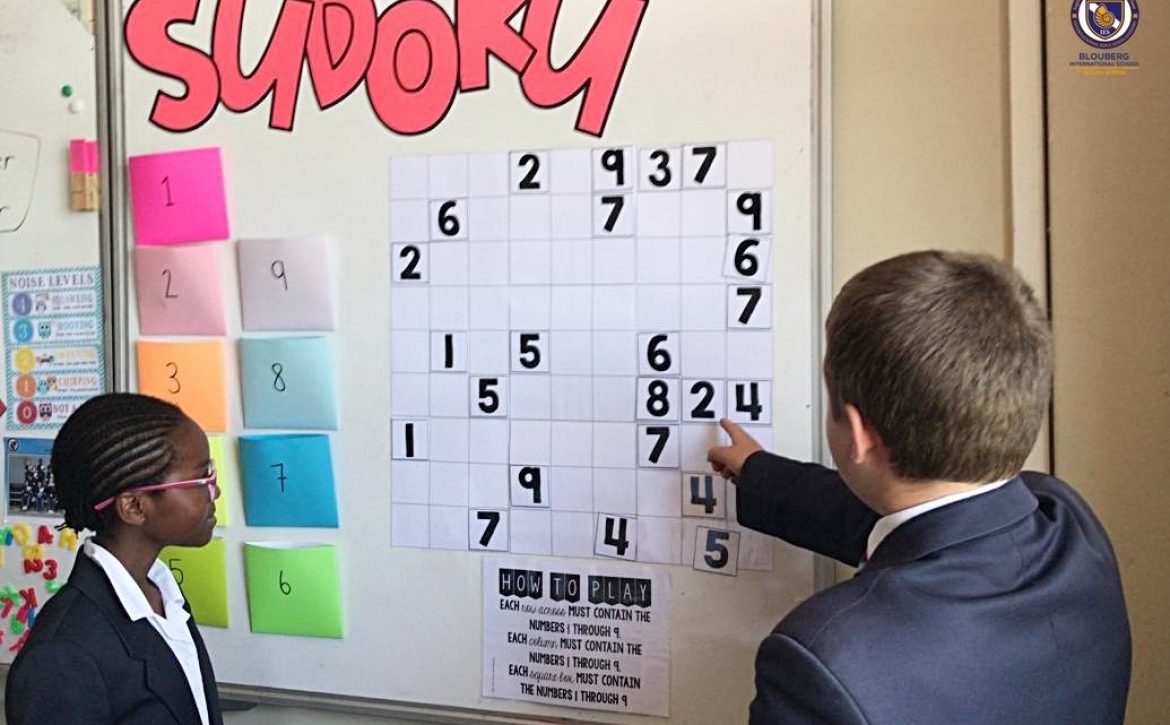
Winning At Maths
I am going to give you some advice on how you can revise with your child at home, improve their confidence in the subject and encourage them to want to learn:
- Make the exercise hands-on, place things in front of your child to help them see and feel the problem.
- Make use of Mathletics – this is a fun, engaging way for your child to practice work learnt, at home.
- Ask your child to explain how they got to their answer. They will recall information and you will understand their thought process.
- Ask questions daily when you aren’t doing extra work, such as “what’s the time?” or “How many bananas would we need to buy if each person got 3?” – This will help your child relate Math’s to real life problems.
- Mistakes are good! It is a learning curve for your child.
Allow
Thinking to
Happen
Things the Year 6’s suggested that help them learn:
- Constantly practicing
- Having someone sit down with them and going over what they don’t understand
- Using blocks
- Working in a group
- Asking questions
- When work is explained using games
- Correcting their mistakes
- Motivation
“Mathematics is not about numbers, equations, computations, or algorithms. Mathematics is about understanding.” — William Paul Thurston
Brittney Hakime
Year 6 Teacher
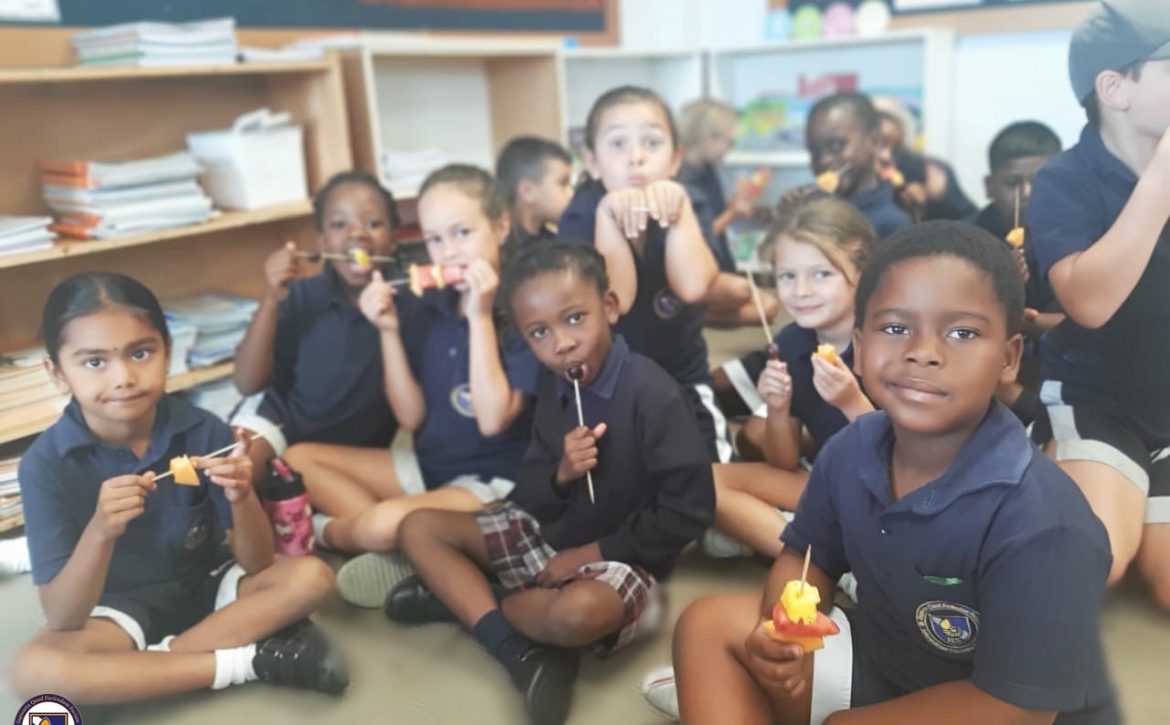
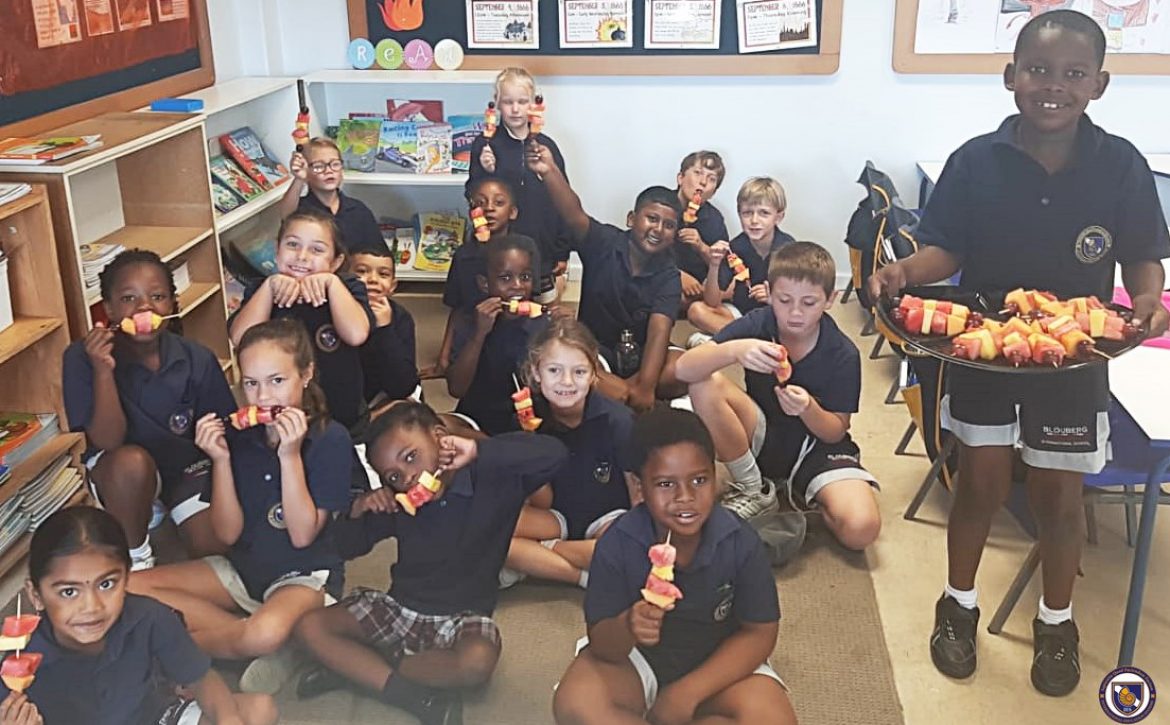
Our Year Two Learners Started Off The Year With A Sweet Taste!
I was very impressed by some of the healthy choices and reasons behind their favourite foods.
Thabelo Magoro chose fruit for his presentation because “it helps you to grow and run fast” and came to class with lovely fruit kebabs which he handed out.
Sachin Gramoney thoroughly enjoys his grans dish because “it’s tasty and I like the cheese with the roti”.
Zach Gouws chose pizza as it is an Italian dish and his family is Italian and because “I like to put hot sauce on my pizza”
Tyler decided on banana bread because “it is nice to eat, the taste isn’t salty and I like it for breakfast”.
Joshua Gamanya chose steak and burgers because “it has BBQ sauce, burgers have lettuce on it and because I love meat”.
Willow Camara came with two lovely bananas and explained to the class that she loves them because “it has Vitamin B and C, it is very healthy and I can gum it”.
Khalid Al-Anazi came with a very interesting fruit called a mandarin and explained that “it is good for your heart”.
We had many other favourite foods and dishes which the learners went the extra mile to present to the class. Overall, a happy class and a proud teacher.
I look forward to our next “show and Tell” with 2EH.
Erin Hierse
Year 2 Teacher
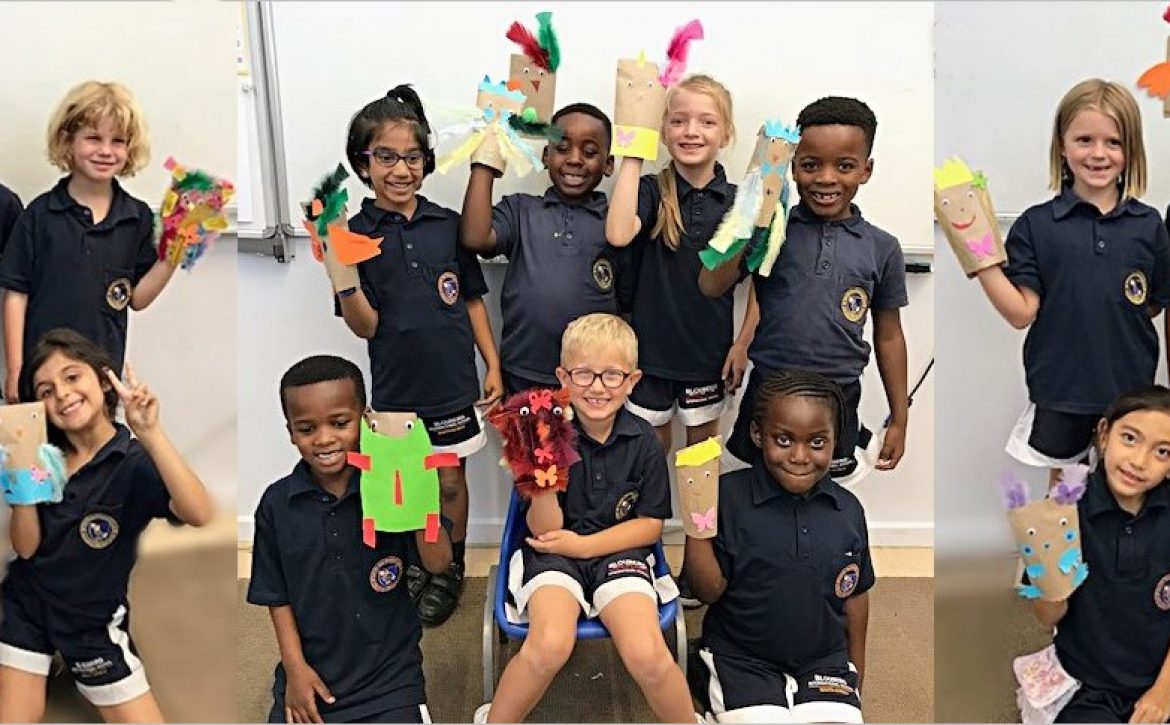
Integrating English and Design Technology in Year 1
In English lessons the Year 1 students have been reading stories about Bear, Dragon and Hedgehog. They have read and then acted out the stories. One of the stories was called, “What shall we make?” and the characters made a robot.
We decided that it would be fun to make puppets in Design and Technology, so the students could make up their own stories and perform a puppet show for their class. The students were given a small paper bag and two eyes, and then they had to use their imaginations to create their own puppets.
When the puppets we all enjoyed the puppet show.
Ann Cordner
Year 1 Teacher
From the Principal’s Desk, 7 February 2020
Dear Parents
Schools, like all other institutions, often face challenges. I was reminded of this during the week when a water pipe was accidentally cut during the renovations to the downstairs bathrooms. Luckily, this was easily and quickly repaired, but not before the, already busy, bathrooms on the first floor flooded and we ended up escorting students to the bathrooms in the admin block.
Crisis management is often part of a normal school day and this is when everyone has an opportunity to step forward and assist. This is our school and we want to create a culture of pride and excellence! This requires that we all pick up litter, maintain parts of the garden and report faulty equipment in the building. If we all work together, we can most certainly do better!
Our school community is of central importance and anything which could be potentially harmful to our students needs to dealt with in an open and honest manner. Over the past two weeks, management has met with various year groups and their parents to discuss potential technological threats affecting our students.
In the light of this, management has contacted the Digital Law Company and we are happy to let you know that Emma Sadlier will address our school community next Thursday, 13th February. Please visit the Quicket website and book your seats. Her talk is applicable to students between the ages of 12-18 as she will be addressing the current trends on social media and the dangers parents need to be aware of. We look forward to seeing you all at the talk next Thursday.
Have a lovely weekend.
Regards
Edna

Blouberg Rotary Club Children’s Christmas Party
On Saturday, the 7th of December, several members of our school’s Interact club were accompanied by Ms. Berger and Ms. van Niekerk to share shifts at the Italian Club of Cape Town where Blouberg Rotary hosted a Christmas Party for numerous underprivileged children. They spent the morning refereeing soccer games, among other things and the afternoon was spent serving lunch. The kids were entertained by a petting zoo which contained all sorts of farm animals (rabbits and chickens, to name a few), a horse cart ride, face painting, a photo booth, a jumping castle and a game of friendly football.
It was a lovely sunny day filled with loads of laughter and smiles. The children then got to watch a magic show, meet Santa and receive Christmas boxes and a meal of hamburgers and chips.
This is an annual event that is organized to see to it that those less fortunate get to experience the festivities of Christmas time as well.
It was a pleasure to see so many smiles and we cannot wait to participate once again next year!
Hope Munkondia
Year 10 Student