

Our First Ever Blouberg International School Arts Eisteddfod!
The BIS Arts Eisteddfod was created to offer students a chance to build confidence and skills through performing to an audience and provide feedback from external expert adjudicators. It is also an opportunity to watch and share with fellow musicians. We are excited for this to be the beginning of a new annual tradition at our school!
The Music category took place on Wednesday, 11 August 2021. As the music department, we aim to create multiple platforms for our students to perform in front of audiences and adjudicators, so that they have firm goals to work towards, and have the opportunity to learn something new and different from each experience. It is very important for our musicians to not only learn how to play their instrument, but to also learn how to become a confident performer.
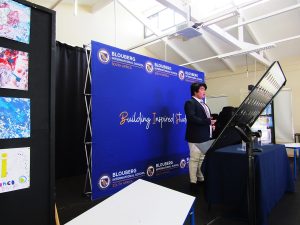
We welcomed Ms Elizabeth Retief, head of music at Elkanah House, as our adjudicator for the music Eisteddfod. For the high school category, we congratulate Mateja Mitic, Faith Chivaka, Iviwe Matakata, Jéan Marie Schoots, Saumya Maharaj and Niklyn Pillay on their outstanding performances and results. A special congratulations to Zoe Onochie for winning the high school Eisteddfod Music category for 2021.
We hope to see and hear many more of our students in future Eisteddfods.
Heidi La Bercensie
Music Teacher – IGCSE Music

A special congratulations to Zoe Onochie for winning the high school Eisteddfod Music category for 2021.



Read More
Dynamic Classroom – Become actively involved in the process of learning!
One of the challenges after online teaching has been to bring the students back to be part of the dynamics of the class. We must adapt activities to help students continue to feel connected with their own learning, but also with their peers.
In my opinion, no online learning experience can replace the classroom dynamics that include student behaviour, emotions and imagination; giving space to the students for their self-expression.
It also includes a teacher’s way of presenting academic materials and students’ interactions. A teacher’s profession demands dynamism, you must also be organized, encourage participation, surprise your students, try new things, give them structure and consistency (beginning of the class routine, role-play lessons, oral projects) and challenge students to think through appropriate questioning strategies. We move from the simplest to more complex ones, helping them to build their confidence. (* Please see some examples below)
Teachers also need to promote relationships between students in the class, as with team work skills. These relationships need to be positive and productive, because they will have a big impact on the result of the group. We can make them positive by choosing useful aims, relevant topics, and appropriate and fun activity types. Effective teaching and learning cannot take place in a poorly managed classroom.
One recommendation is to make things more visual by showing your class ways they can use images to practice high-frequency structures in Spanish. For example, in my class, I worked on how to present the prepositions of place and present continuous form in a fun and practical way.
To expand on this idea, I asked the students to take “crazy” photos or capture funny videos of their pets during their holidays.
I asked students to describe in Spanish where the animals are and what they are doing in those images, using the prepositions of place and present continuous expressions that we are learning. These videos and photos have personal meaning to them, they are fun to watch and have an academic purpose.
In class, we display the images, and I start lessons by asking the students questions:
A simple yes/no question for the students to answer:
“Is the cat on top of the bed?” ¿Está el gato encima de la cama?
Then asking two option questions:
“Is the cat on top or under the bed?” ¿Está el gato encima o debajo de la cama?
Finally, more difficult and open questions:
“Where is the cat?” ¿Dónde está el gato?
Visual images have become an essential tool in language learning and such a big part of the new generations. They are so adaptable and help students interact with the Spanish language in multiple ways at the same time. During our Spanish lessons this last year, I have encouraged the classes more than ever to send me pictures or videos practicing everything that we have learned in the class.
Javier Vidal
Spanish Teacher
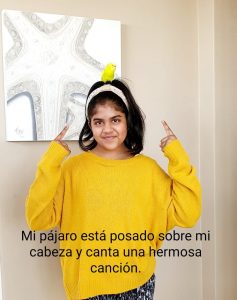
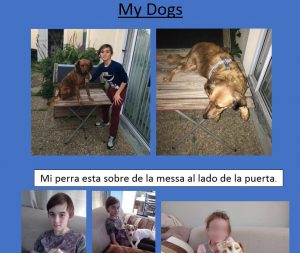
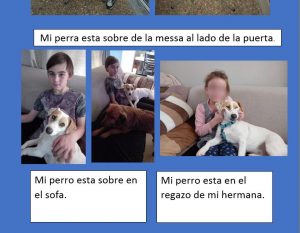
Here are some examples of the images that the students brought to the class or sent to Google classroom for their pets projects:
Read More

The Next World Leaders
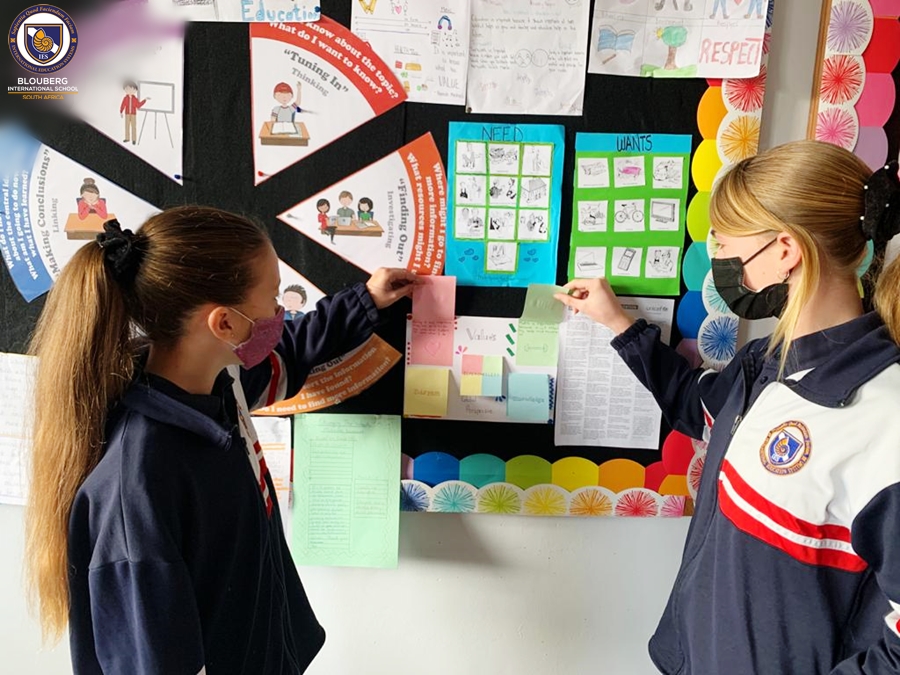
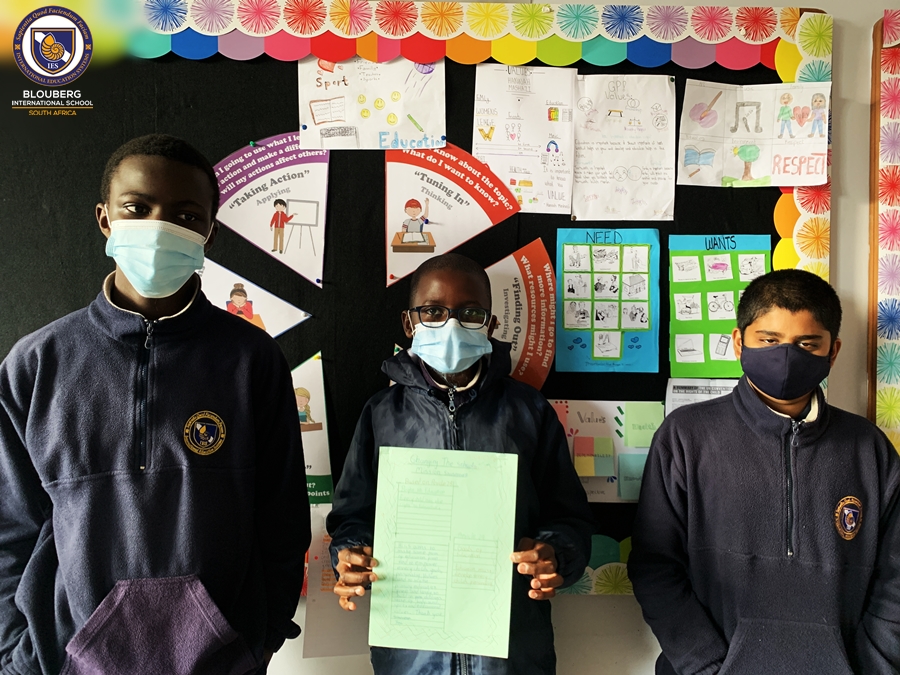
In Global Perspectives this term, the Year 6 students have been learning about values. To start off the discussion, they were asked to brainstorm their own personal values. They needed to design and create a poster illustrating which of these values were important to them and explain why. The students presented their posters in class, and wow, the Year 6 teachers were so impressed with their heart-warming presentations.
We then moved on to discuss the differences between ‘wants’ and ‘needs’ and looked through the UN Convention on the Rights of the Child. Once the students gained a better understanding of children’s rights, they explored how all their educational needs are met, and who is responsible for this.
They then had the opportunity to read our school’s mission and vision statement. In groups, they had a discussion on how the mission statement could be changed or adapted and made suggestions on what they would add to the school’s mission statement.
The Year 6’s will soon move on to researching information on school attendance worldwide and research an organisation that is helping to get every child into school. They will present their findings in class.
It is very impressive to watch the Year 6 students collaborate, develop and unify their ideas. We cannot wait to see what the next presentations hold in store for us.
Keep up the great work Year 6!
Katherine Nel
Year 6 Teacher
Read More

Wild Animals
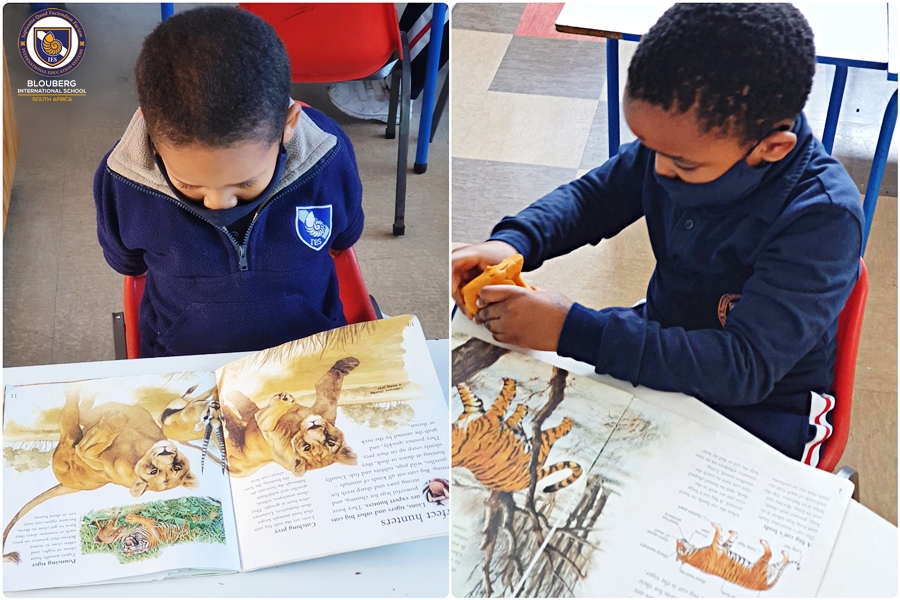
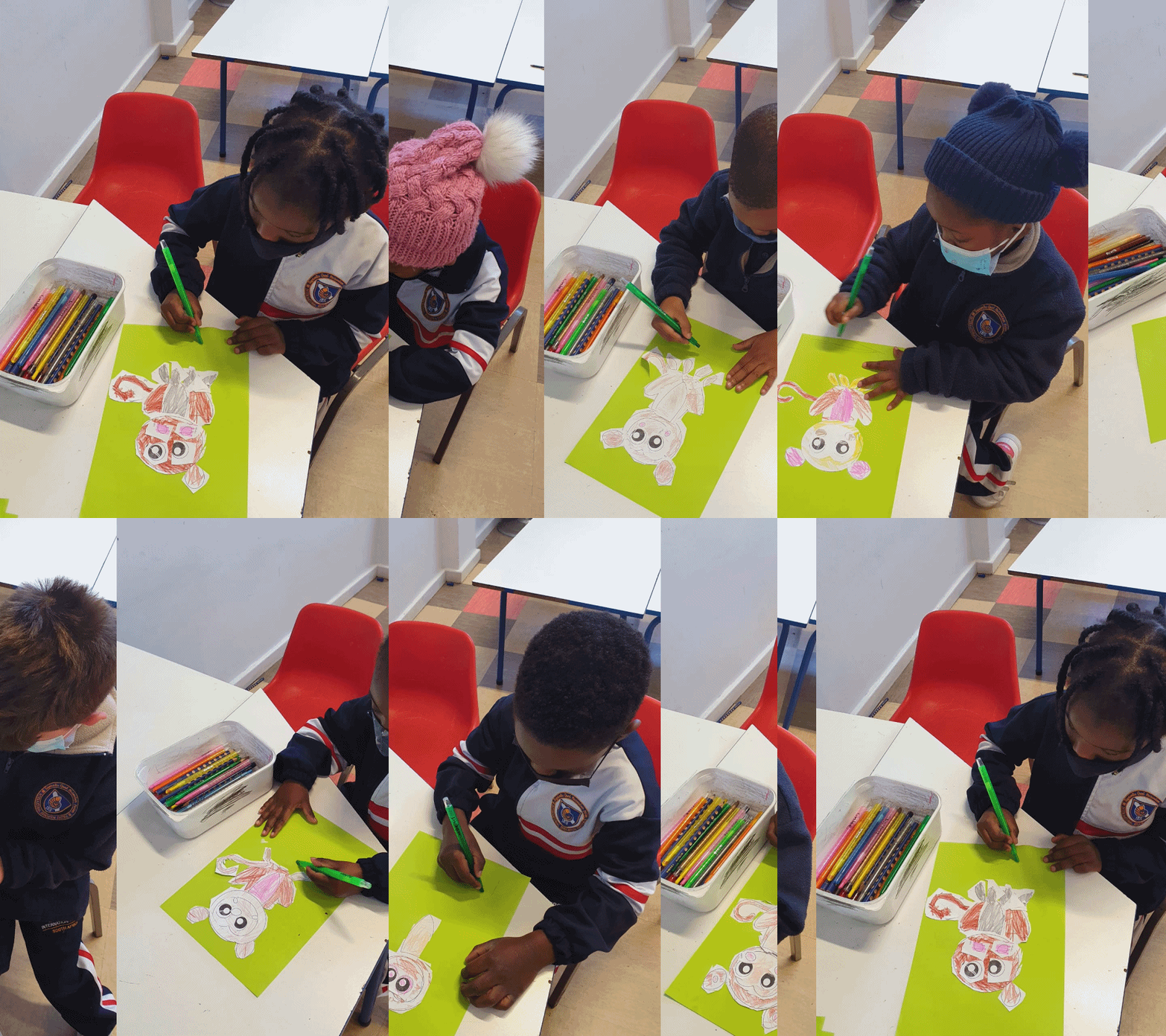
We are learning more about wild animals in Foundation Stage. Picture books with animal characters are firm favourites with the students and they simply love to observe animals on the whiteboard shows. We even made our own wild animals in Art.
According to an article in ONE GREEN PLANET, animals can teach us 10 important things:
- Compassion: Compassion is based on being able to understand the feelings of others/another.
- Patience: There is no rushing an animal to do anything they aren’t ready to do.
- How to live in the now: People waste so much time obsessed with following ‘what will happen next’ that we completely forget to enjoy the now.
- We’re all connected: Ecosystems only thrive when there is balance.
- Humans aren’t as different as we thought: If there’s ever been a time to re-evaluate our relationship with animals, it’s now.
- Respect your elders: Moving forward and advancing towards innovation is a wonderful thing, but we should also learn to respect the wisdom of those who came before us.
- Responsibility: Growing up with a pet has been shown to instill a deeper understanding in children.
- Listen carefully: Animals sit and listen before they react to situations, something we could surely all stand to do.
- Live lightly: Animals learn to live within their means.
- We must stick together: Being able to set aside differences and work together for the mutual benefit of our species.
Martie van Dyk
Pre-Reception Teacher

Interact 2022
My name is Rifqah Price and I have been a member of the Interact Club since I was able to join in year 8, 2018 and I have loved being a part of it. I have been able to watch it grow in size over the years and observe as the club comes up with new ideas on how to better the community, ourselves and help those in need. I have recently been elected as the new 2022 president of the Interact club and I am so excited to be able to continue the work of the previous presidents in reaching out to the local community and helping out wherever we can.
Covid-19 has made social interaction with the community quite difficult, but that just leaves room for more creative ideas to surface. I hope that in the coming year, I alongside the rest of the board members, will be able to become an integral part of the community again, not only reaching out to the main charity organizations, but also the lesser known ones, who don’t have as many resources at their disposal. I plan to make the effort to inform the club and the school about exactly who we are helping, what they stand for and in doing so we not only help those less fortunate, but are also able to unify the club, put a face to a name and effort into a cause. I know that with the help of 2022’s board members, we can grow the interact club even more in size and in perspective.
Rifqah Price
President of the BIS Interact Club 2022
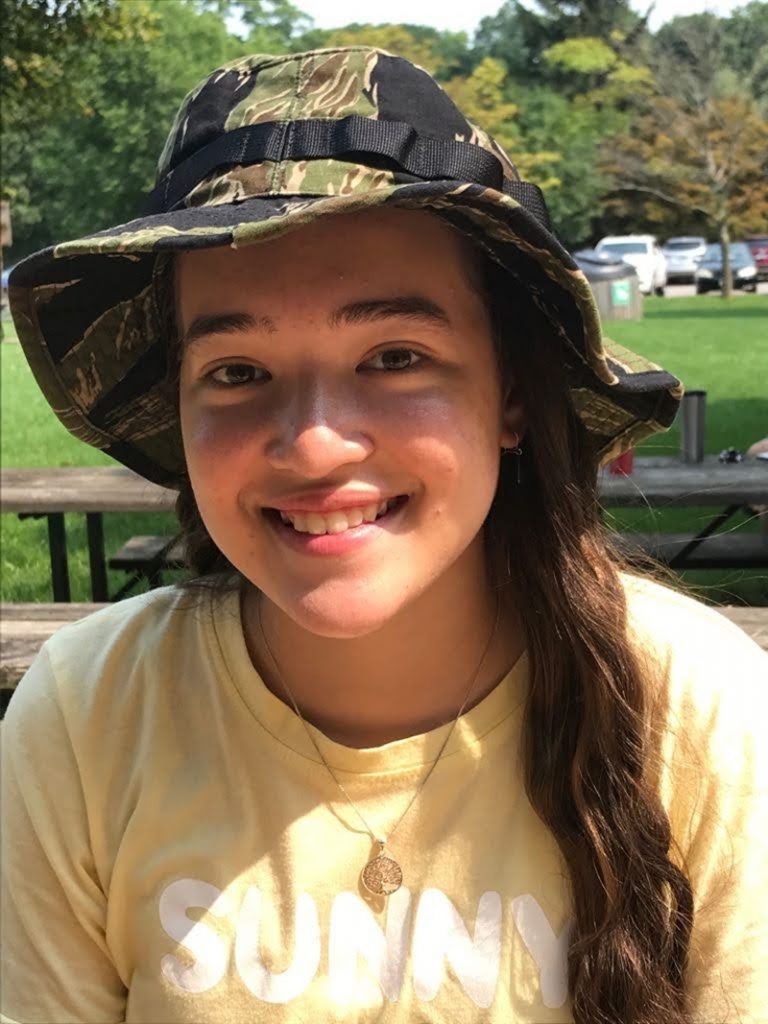
Rifqah is currently overseas with her family and has been doing e-learning with us until she can return to South Africa.

Read More

Year 5 Looks To The Future
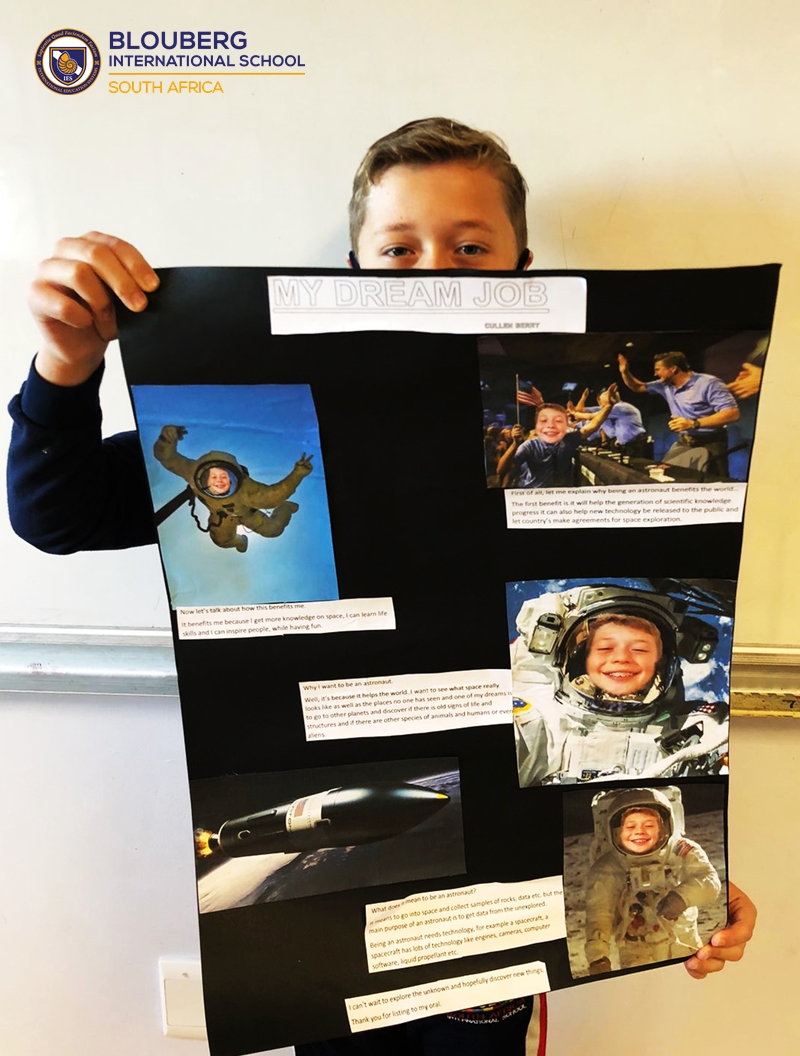
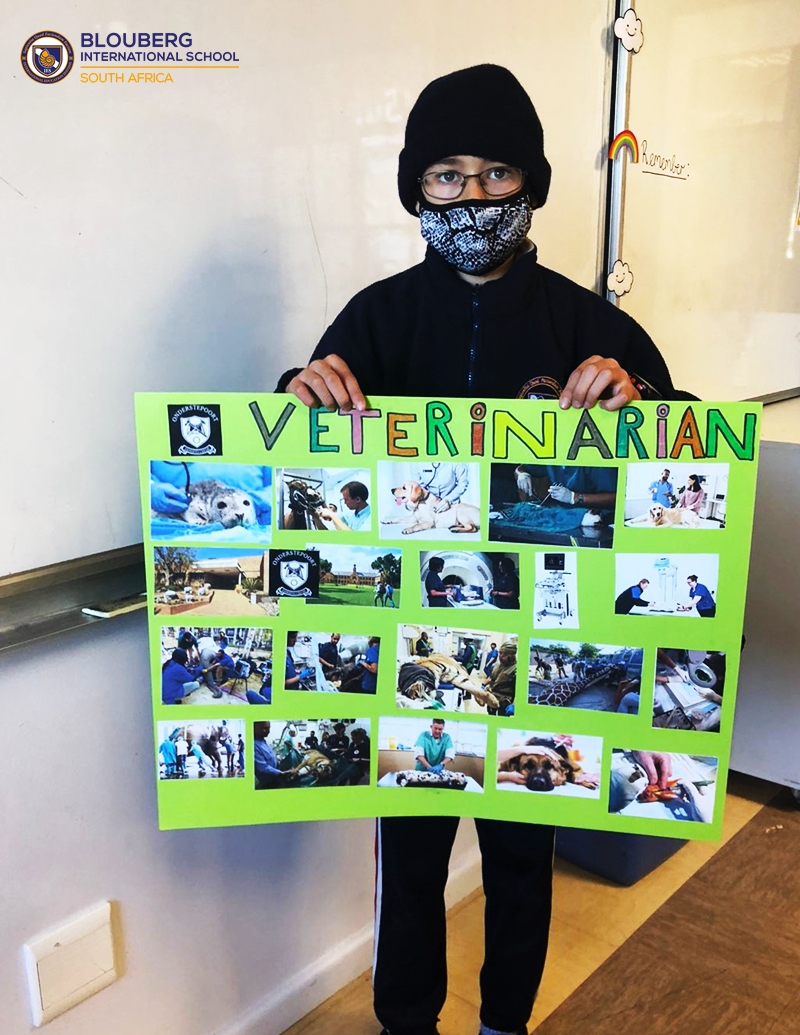
Throughout the course of Term 3, the Year 5’s have been exploring the different aspects of the working world, thinking a little deeper about the type of jobs they wish to one day have.
We have done extensive research, conducting interviews and internet searches, to find out more about what to expect in our future lives.
We also investigated the possibility of a robot taking our job in the future – making predictions and checking our answers using a website called “Will Robots Take My Job”.
After of all this thought and preparation the Year 5’s were ready to report back to their classes about the jobs they hope to hold when they are older. Let me tell you – considering the vets, astronauts, engineers, teachers and pilots who stood before me this week – I can confidently say that our future is in great hands!
Robyn Pieters
Year 5 Teacher


Read More

The Importance Of Learning To Write Poetry
“Poetry is the spontaneous overflow of powerful feelings: it takes its origin from emotion recollected in tranquility.” – William Wordsworth
Poetry is known as a form of expression. It allows for one to get their feelings and thoughts out on a subject which we, the Year 2 teachers, find important for students to start doing at a young age. Poetry encourages us to connect and find meaning in our experiences. Teachers have experienced that poetry can have a positive impact on the social and emotional learning of young students. It may also offer them a new and creative way of thinking about something which is encouraged.
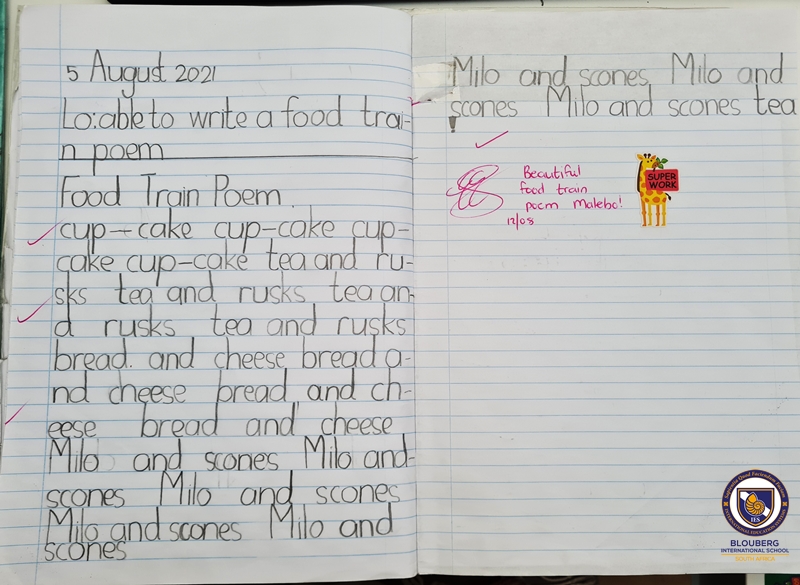
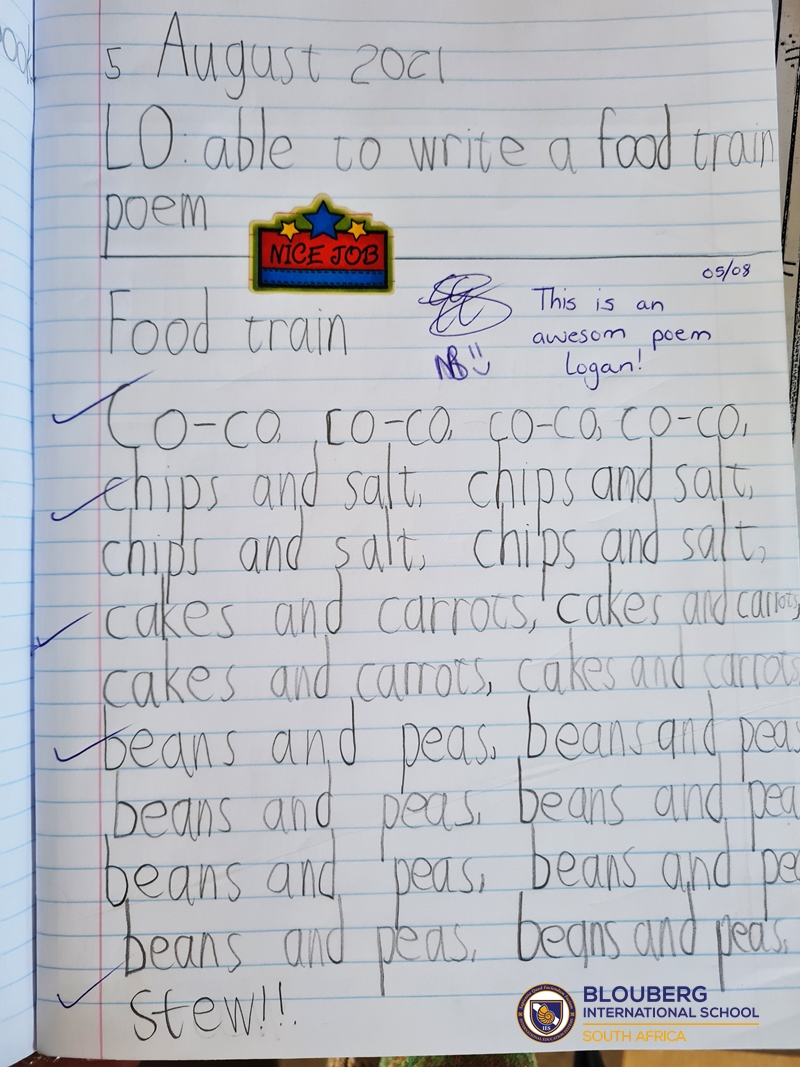
This past week we learnt about a Food Train Poem written by Julia Donaldson. This was a fun and creative way for our students to try recreating the idea of the poem using their own favourite foods. They came up with incredible Food Train poems and thoroughly enjoyed reading them out to the class.
The Food Train, poem by Julia Donaldson
THE FOOD TRAIN
COFFEE, COFFEE, COFFEE,
BREAD AND BUTTER, BREAD AND BUTTER, BREAD AND BUTTER,
BREAD AND BUTTER,
BISCUITS AND CHEESE, BISCUITS AND CHEESE, BISCUITS AND CHEESE, BISCUITS AND CHEESE,
FISH AND CHIPS, FISH AND CHIPS, FISH AND CHIPS, FISH AND CHIPS, FISH AND CHIPS, FISH AND CHIPS, FISH AND CHIPS, FISH AND CHIPS,
SOUP!
Erin Hierse
Year 2 Teacher


Read More

Countries Around The World
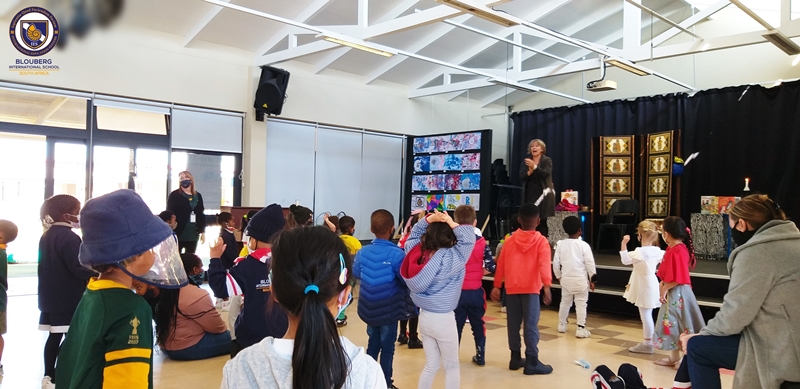
The Foundation Stage students have really enjoyed the Countries Around the World theme. Each morning we used our imagination to board an aeroplane and fasten our seatbelts to set off for a new country. Using a PowerPoint presentation, we “visited” a new country each day. The students have learnt so much about the landmarks, traditions and cultures of South Africa, Australia, Russia, China, France, England, Spain, America and England over the past two weeks.
We even made our own passports for our daily journey – complete with a drawing of the student’s passport photo and some of their personal information.
This past Friday, the Foundation Stage dressed up according to their favourite country. The students delighted in telling their classmates which country they had chosen, which was a real highlight of the theme. The students were also treated to an amazing Inting by Gilly the Storyteller. She skillfully used the student’s imaginations to bring the lovely stories she told to life.
Now that the travel bug has bitten, we are sure to have many world travelers in the years to come.
Bronwen Nuthall
Reception Year Teacher
Read More
From the Principal’s Desk, 12 August 2021
Dear Parents
WHAT OUR SCHOOL STANDS FOR…
We would like our school to be known as a “Bully Free Zone”. Let’s consider this a little.
More details to follow!
COVID AND ONLINE LEARNING
I have had a few queries as to what extent the school is affected by Covid cases. As with most other work places we are most certainly affected. However, we try and manage it per class/group and discreetly as possible. We have over the past 3 weeks closed certain classes or phases and isolated staff where necessary. During these times we follow all health & safety protocols and often ask for professional advice.
We continue with Hybrid teaching until the end of August. We will re-assess this towards the end of the month before we communicate the way forward in September. Thank you to everyone for working together and supporting one other.
Online learning should be taken seriously, and all classes should be attended.
FEATURE PHOTO
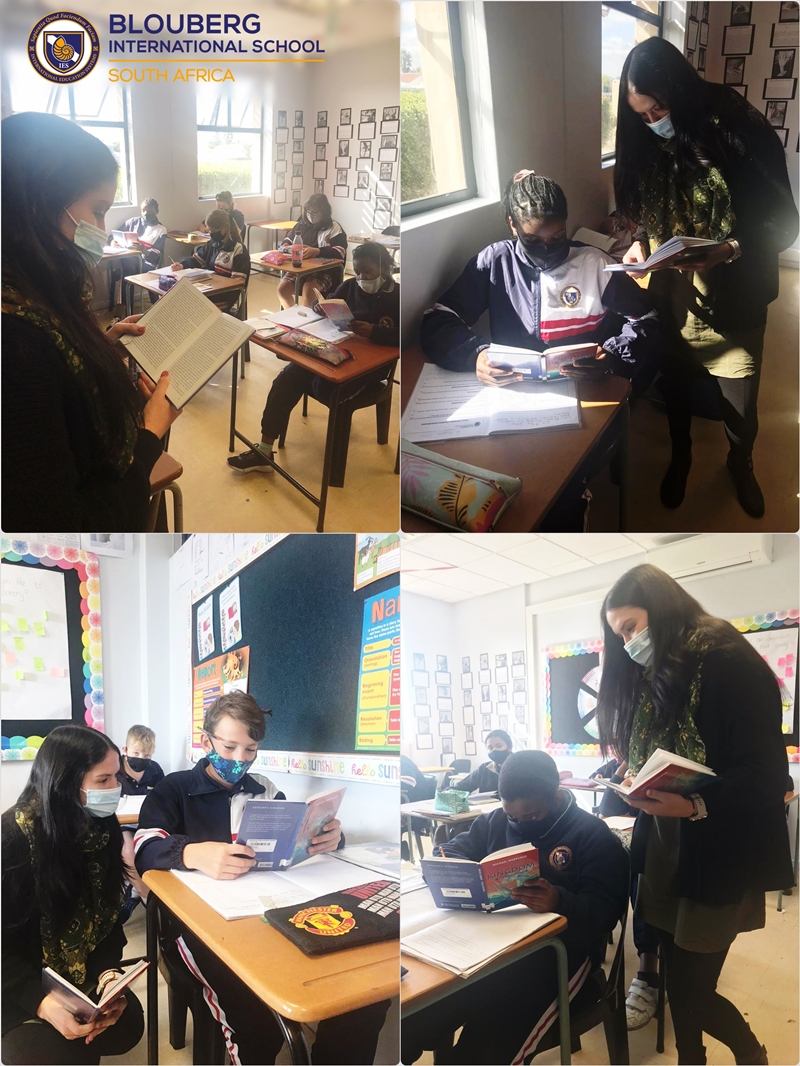
Our main newsletter photograph features our newly appointed Key Stage 2 Coordinator, Ms Katherine Nel. Katherine started her journey at BIS in 2016. She then moved to Dubai in 2018 where she taught at an international school. In 2020, Katherine came back to our BIS family.
- Katherine is originally from Gqeberha (Port Elizabeth) and moved to Cape Town in 2016.
- She has three dogs and shares a birthday with her Poodle, Bentley.
- She has lived and worked at schools in both London and Dubai.
- Katherine enjoys studying (maybe a bit too much) and has a Bachelor of Arts degree in Media, Communication and Culture (majoring in English Literature and Public Relations), a Postgraduate Degree in Education, an Honours Bachelor of Education- with specialisation in Inclusive Education, an Honours Bachelor of Education- with specialisation in Psycho-Educational Support and she is currently studying a Bachelor of Arts Honours in Psychology. She also hopes to one day complete her Master of Education in Educational Psychology. Wow!
- When she was in pre-school, she wanted to be a waitress in Paris.
Thank you, Katherine, for your contribution in making our school a great place to be.
WEEKLY THOUGHT: Little Things
“Sometimes when I consider what tremendous consequences come from little things, I am tempted to think there are no little things.” – Bruce Barton
We live in a culture where everything is measured by size and numbers. A normal meal doesn’t catch the eye until it’s “SUPER-SIZED”; when we expect 30 people at a gathering and only 5 people pitch, the event is considered a failure; when raising funds for a certain cause and end up with less than expected, we become discouraged.
We live in a world in which size matters more than ever before. Although most families can live in a home of around 150 square meters, we look at the guy living in a 1,000-square house and somehow think that’s better.
All these ways of thinking have brought us to a place where we no longer take notice of the little things. This is very detrimental, as we will most likely miss some wonderful opportunities in life because of it.
Take business for instance: How do the majority of businesses start? With 100,000 clients on day one? Of course not – they start with one! Valuing that client and giving them the best possible service will then hopefully draw the 2nd, 3rd, 5th & 10th clients in. And so, it starts.
Looking for that business or opportunity that will give you “instant” wealth or success will lead you down a road of emptiness and discouragement – not because there aren’t opportunities, but because you aren’t sensitive to the ventures and opportunities in life that start off small.
Once we reset our bias toward big things and tune in to the many small opportunities all around us, we, like Barton, will start to consider the consequences of little things and realize that they weren’t all that little after all.
“Let’s get all the little things right”. The big things will take care of themselves.
Have a brilliant weekend – give someone a reason to smile.
Andre
Read More

From the Principal’s Desk, 5 August 2021
Dear Parents
WHEN YOUR CHILD IS NOT WELL
Please be reminded that if your child is not well, rather keep them at home. Given the current pandemic we would prefer you err on the side of caution.
We are aware that this may be an inconvenience for you but this is to ensure that we all stay healthy and safe.
ONLINE LEARNING
We continue with Hybrid teaching next week. Thank you to everyone for working together and supporting each other.
Please do not keep your children at home if they do not have access to the learning platforms. If there are concerns or problems, please contact me so that we can assist.
HAPPY WOMEN’S DAY
Monday, 9 August, is Women’s Day. While this day may be celebrated for various reasons, I believe it is a day where we should honour and celebrate the ladies/girls in our lives. This is a perfect opportunity to spoil our wives, girlfriends, daughters and mothers.
While we are celebrating Women’s Day, let us honour our latest Olympic gold medallist, Tatjana Schoenmaker. What an incredible swim in the 200m breaststroke final – Gold medal and a world record.
Happy Women’s Day to all the ladies/girls in our community.
FEATURE PHOTO
Our main newsletter photograph features Mrs Beverley du Plessis. Beverley is one of our Music teachers and started at BIS in 2018.
Did you know….
- She is pregnant with her second daughter.
- She does Triathlons and has done various races like Ironman 70.3 and Double Century cycle race.
- She enjoys outdoor activities like hiking and running.
- She loves to explore new places and travel. Having been to various countries, the most recent was Bali, just before Covid.
- She has a lot of animals and only adopts animals to give them a second chance at life.
Thank you for all your amazing work, Beverley.
WEEKLY THOUGHT: What am I alone with?
“Being alone with fear can rapidly turn into panic. Being alone with frustration can rapidly turn into anger. Being alone with disappointment can rapidly turn into discouragement and, even worse, despair.” – Mark Goulston
In a time where “lockdown”, “social distancing”, and “curfew” have become all-too-frequent words in our vocabularies, it may be a good time to ask the question: “What am I alone with?”
Goulston suggests that being alone with fear, frustration and disappointment can lead to panic, anger, and despair. It also seems as if mainstream media and news outlets want to push us toward these negative and very detrimental human emotions. Do you agree?
Although there are a multitude of wonderful stories of hope, courage, and survival against all odds playing out in our communities every day, these don’t seem to appear on our social feeds. We need to guard against becoming prisoners of what we do see and hear on a daily basis.
Yes, there certainly is hurt and pain – even death – closer to us than ever before in our lifetimes, but by making these things our only reality, we will inevitably go down an ugly road of which our minds were partly the architects.
If each of us are determined to share uplifting stories – the real-life dramas of friends and family showing courage and compassion and coming out on the other side when nobody thought they’d have a chance – I am convinced that they will awaken a sense of hope and purpose in all of us. So, before simply repeating a story we’ve heard or read, we need to ask ourselves: “Am I building or breaking with what I am about to say?”
Whenever speaking with others, reading articles or watching news clips, let us continue to ask ourselves: “What am I alone with?”
Have a fantastic weekend and encourage those around you. It’s all or nothing in SA’s final test against the British and Irish Lions on Saturday!
Andre
Read More