

Valedictory and SRC 2022
Although things looked a little different at BIS this term, we are so fortunate that our students were able to attend school for the majority of the term. Thank you to everyone who supported the staff and students through this journey.
We will continue to ensure that the curriculum is comprehensively covered, ensuring that we stay on track for the rest of the academic year.
Our sincere thanks go to the teachers for all their hard work with the planning and delivery of the online lessons, as well as the teaching of the students in the classroom.
On Wednesday, we held a special Valedictory & Prize-Giving Awards Ceremony on the school campus for the Matric Class of 2021, joined online by students and parents. Ceremonies like this one enable us to pause as we recognize, acknowledge, and celebrate our students’ success and development.
We also had the pleasure of announcing the 2022 SRC Leadership Team:
Remy Wang
Michael Mkandawire
Rifqah Price
Kazimla Dyakalashe
Savanna Prinsloo
We are so incredibly proud of all the year 11 students who nominated themselves and gave speeches a few weeks ago. Whether they have received a formal position or not, they will all be incredible leaders for our school in 2022. I have no doubt that they will work hard to make our school an even better place by upholding our school’s values throughout the year.
This holiday is a short one, and I hope that you have time to rest and recuperate.
We look forward to welcoming our students back to school on Wednesday, 29th September.
Carmen de Villiers
High School Coordinator
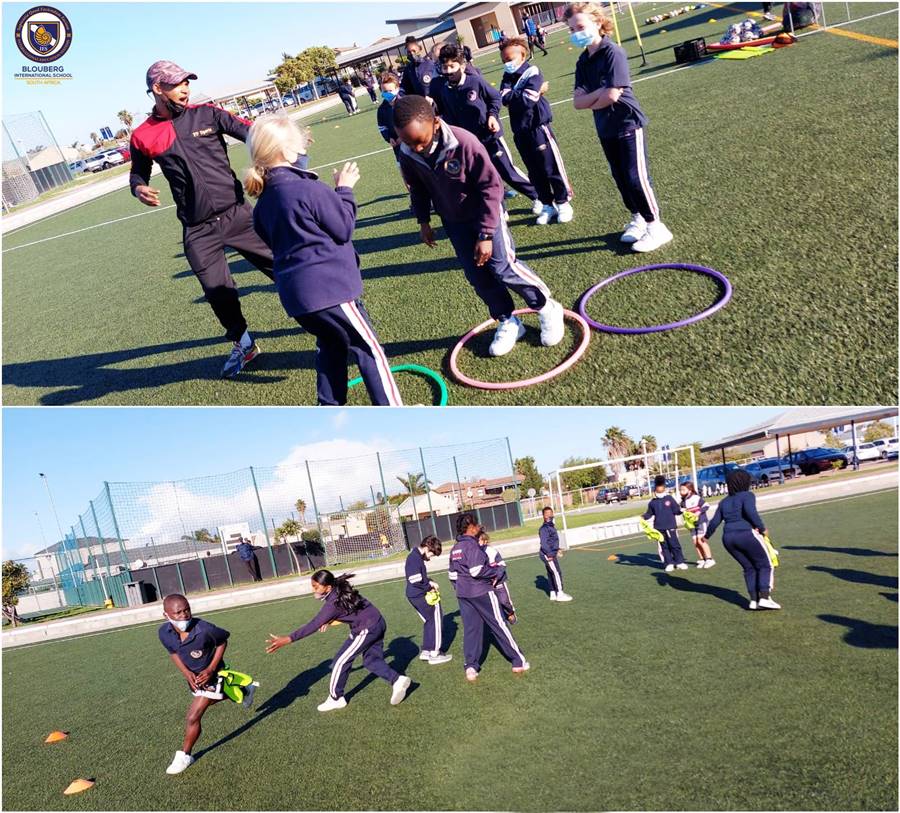
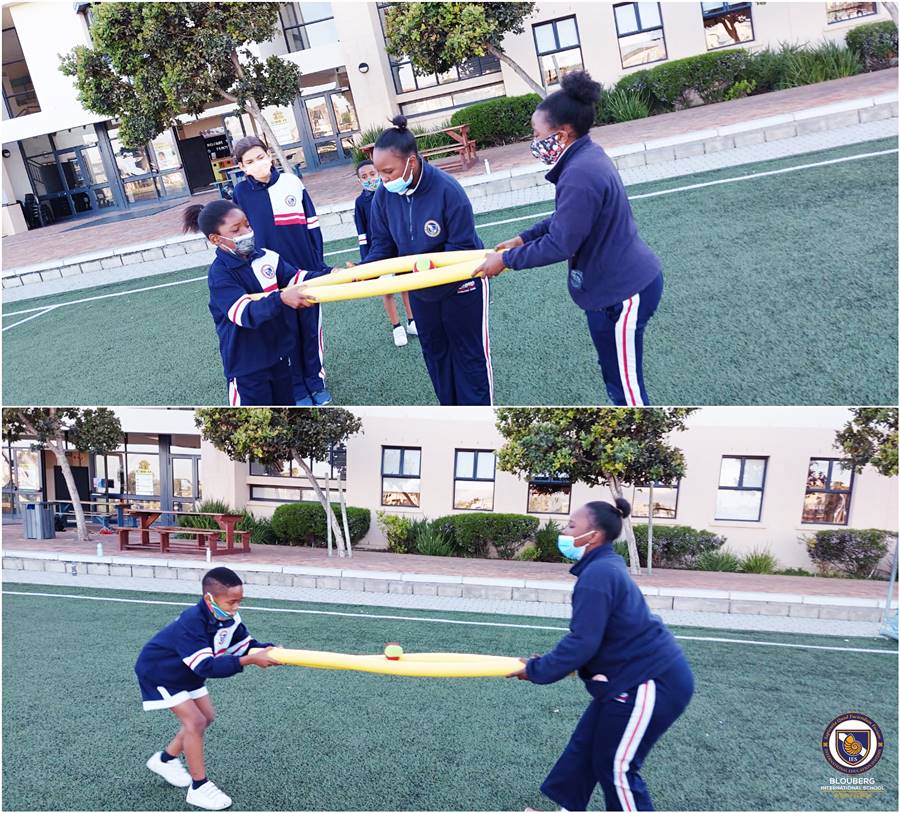
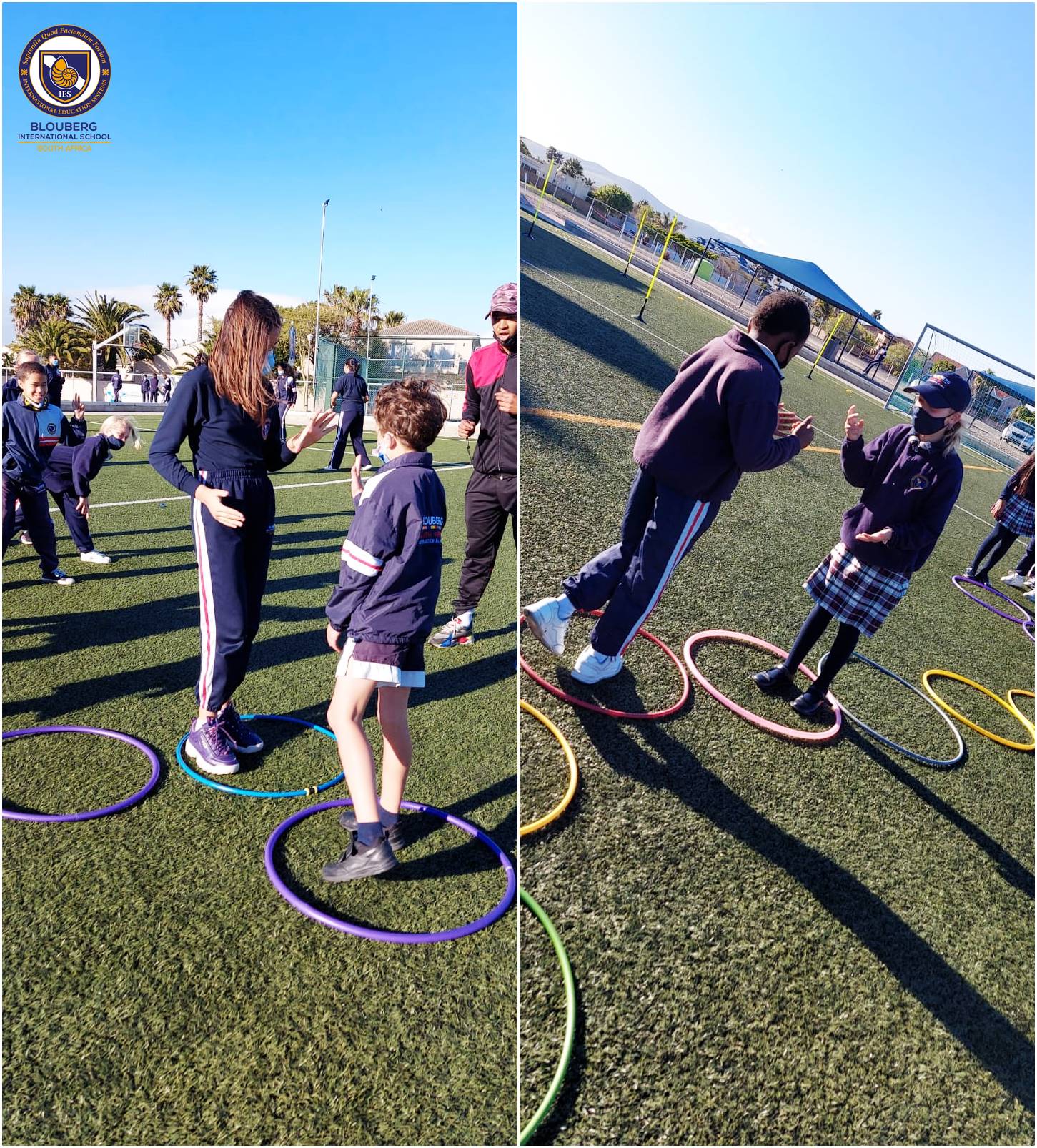
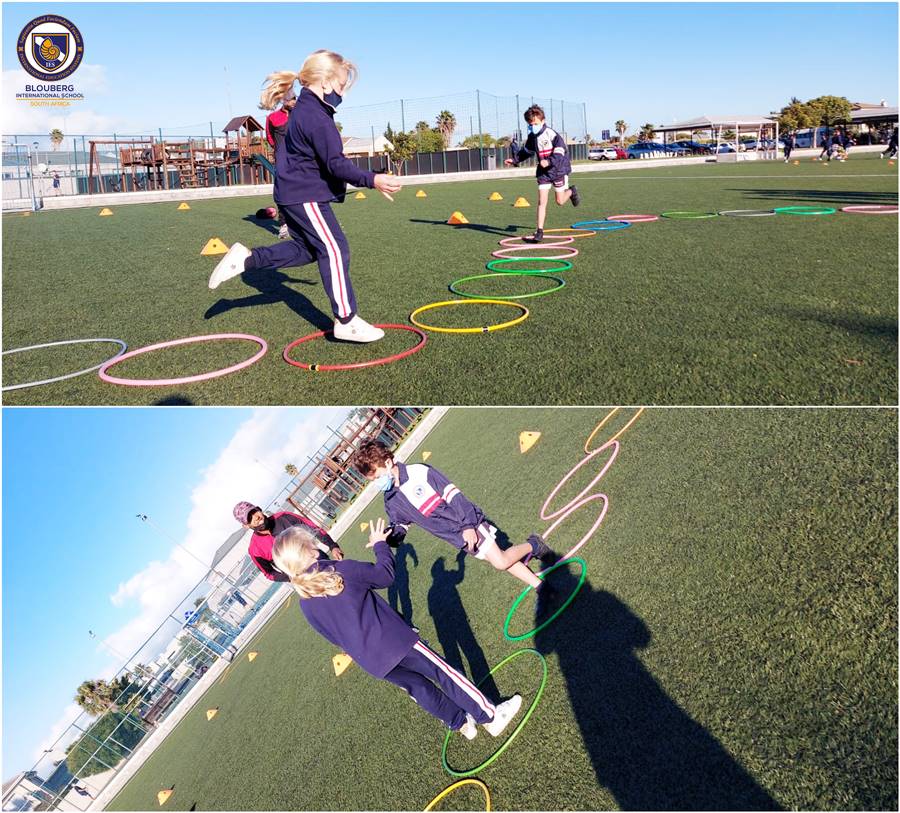
Team Building Tournament
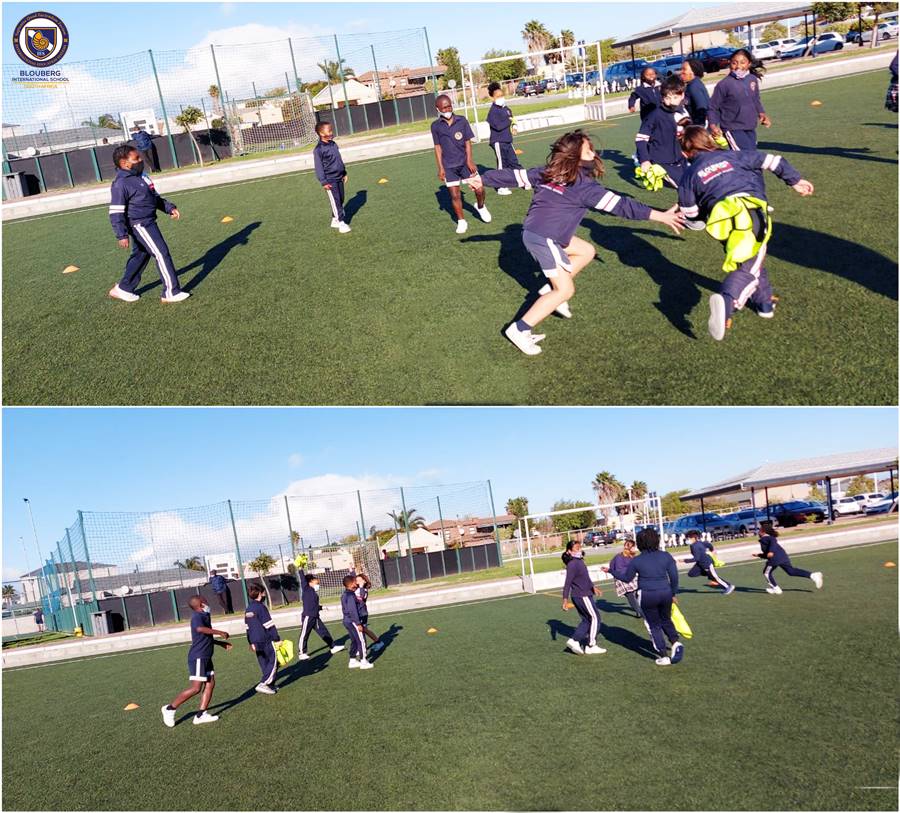
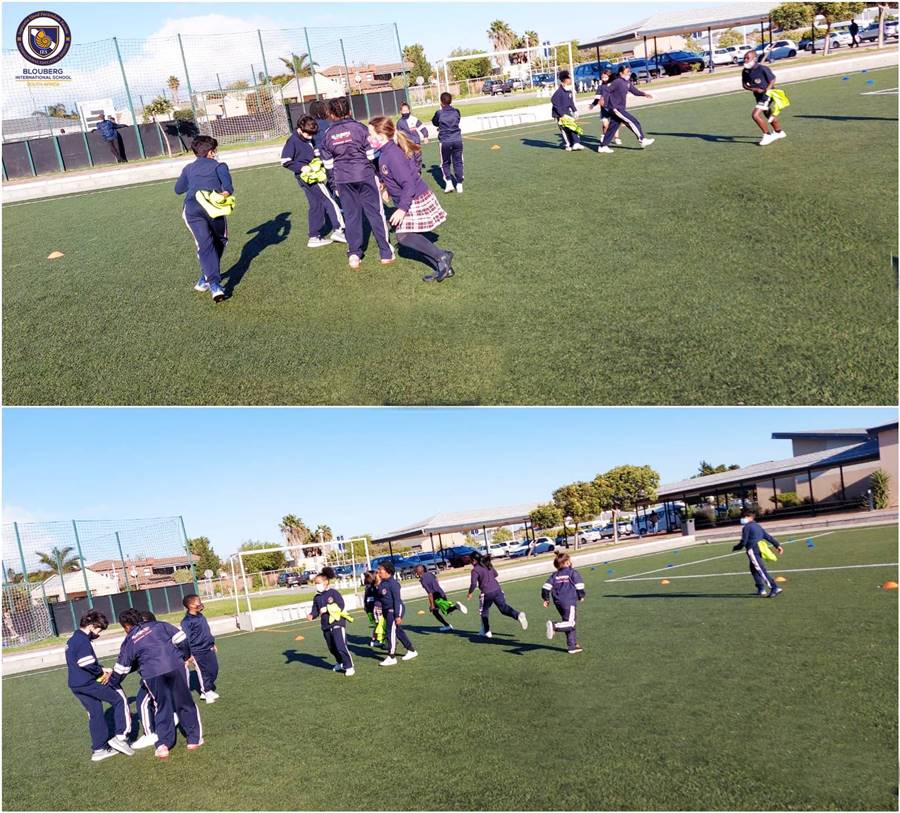
Year 4 students enjoyed a lovely morning of team building to end the term. Coach Fabein from FP Sports and his team of professional coaches organised some fun activities for the classes to complete in a Round Robin competition. The students had a great time and Mrs du Plessis’ class won the challenge overall.
We would like to thank our wonderful team of coaches for the care and support that they show our students every day. We look forward to a well-deserved holiday and to come back refreshed and ready in Term 4.
Yvette Fourie
Year 4 Teacher




Read More
Learning About Sundials
“Hide not your talents, they for use were made. What’s a sundial in the shade?” – Benjamin Franklin
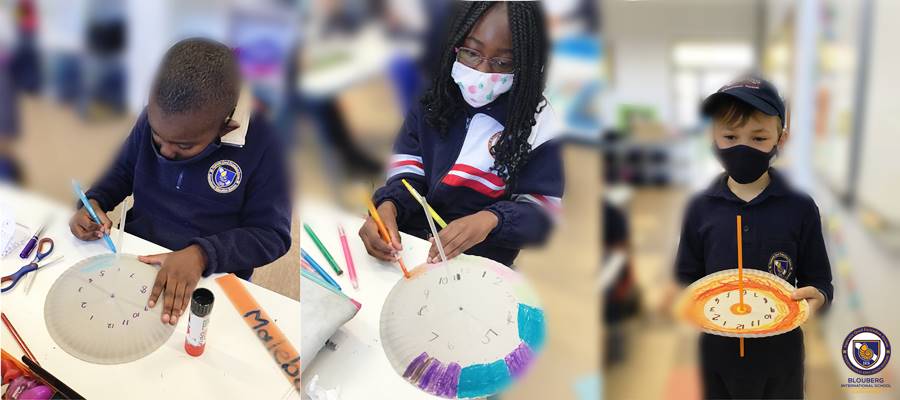
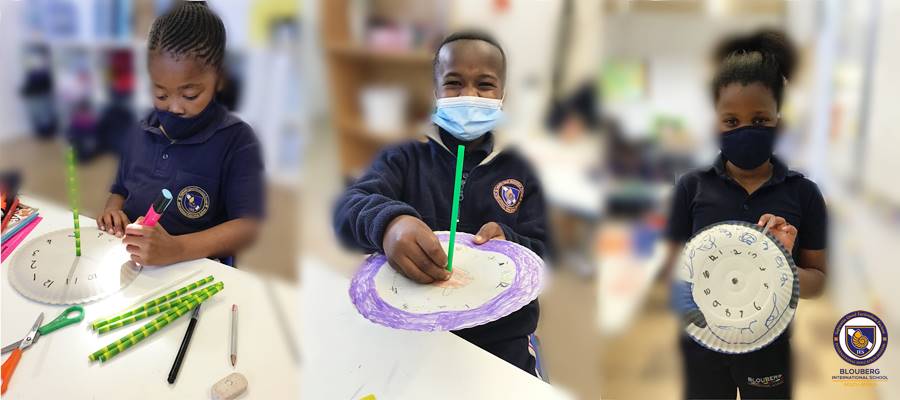
The year 2 students thoroughly enjoyed learning about sundials and the purpose of them last week.
The teachers find it important that students know the reason behind sundials as they are the oldest known instrument for telling the time. The sundial also allows for us to track the position of the sun with accuracy..
In our Science lesson, students were able to make their own sundials out of paper plates and straws. After decorating their sundials, the students went outside and set their beautiful paper sundials on the ground and tried to tell the time accurately (11:30). The students were very intrigued by the lesson and engaged in the activity with such eagerness to learn.
“Be as true to each other as this dial is to the Sun” – Unknown
Erin Hierse
Year 2 Teacher


Read More

Fun Day
As the end of term has arrived, it was with great excitement that the little ones came to school dressed in Civvies ready for their Fun day.
The teachers planned various activities, mostly making a big mess, because making a mess is always the most fun. The little ones painted the most beautiful pictures, dancing, playing outside and generally having lots of adventures.
We would like to thank our parents for everything they do to support their children’s learning journey. We cannot do this without them.
Wishing everyone a fantastic holiday!
Monique Meyer
Foundation Stage Coordinator


Read More
From The German Classroom
“What’s red and black and brings good luck?”
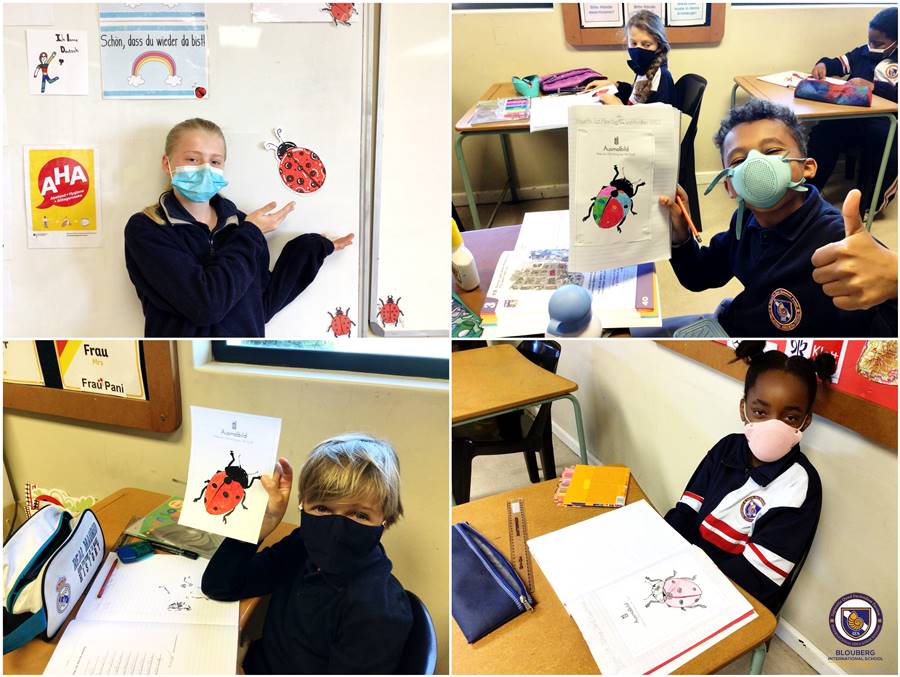
If you ask anyone in Germany the above question the answer would be, the Marienkäfer! This is directly translated as the ‘Marie bugs’, also called Ladybug, Lady beetle or Ladybird as we know it. In many cultures they bring good luck and in Germany they are a popular good luck charm also called a Glückskäfer the ‘lucky bugs’. The true Marienkäfer is red and has seven spots. Red symbolizes love, while seven is a lucky number for some.
This is all attributed to the fact that they were traditionally seen as a gift to farmers because one Marienkäfer can eat up to 5,000 aphids and other common garden pests, in a year. A legend has it that the farmers in Europe prayed to Mother Mary when pests were destroying their crops. At this time of crisis, ladybirds came as their rescue, destroying the pests. Since then, the farmers named them “the beetle of our lady” and love them because they eat aphids and other plant-eating pests and save their crops every year.
The German people not only see the Marienkäfer as good luck, but also as a sign from nature that the summer has at last arrived in Germany usually after a very long winter. During summer, when they are most active, these incredible insects can be seen fluttering around or walking on the leaves of plants to the delight of the young and old. A group of Marienkäfer is called a loveliness, which so aptly describes them.
But as soon as it turns cold and autumn arrives in Germany, the Marienkäfer looks for a warm, secluded place to hibernate, such as in barks of trees, in logs, under rocks or even inside houses, usually with other ladybirds in groups of up to 1000. They then only come out the next summer.
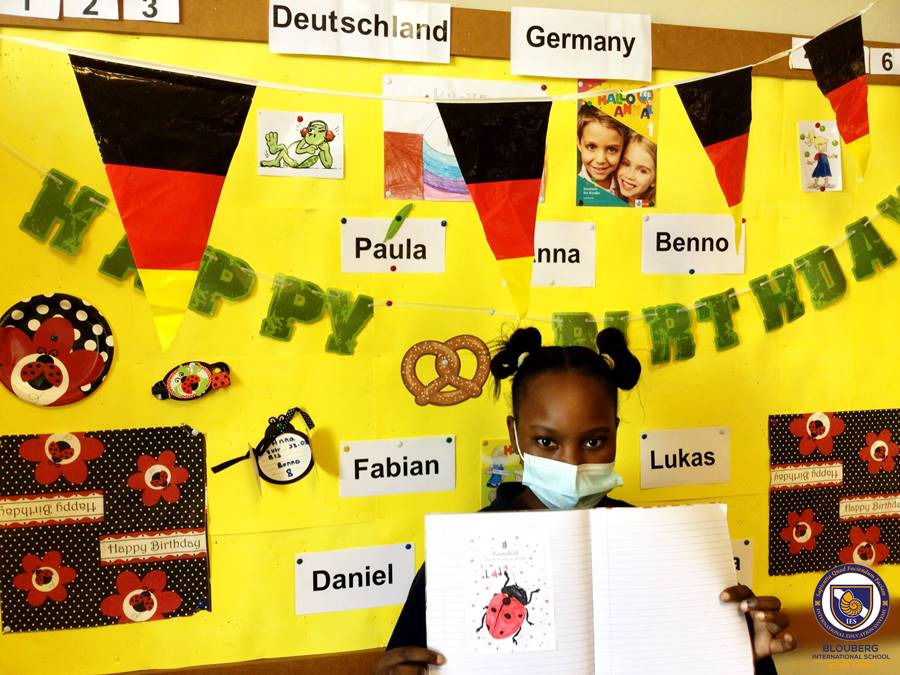
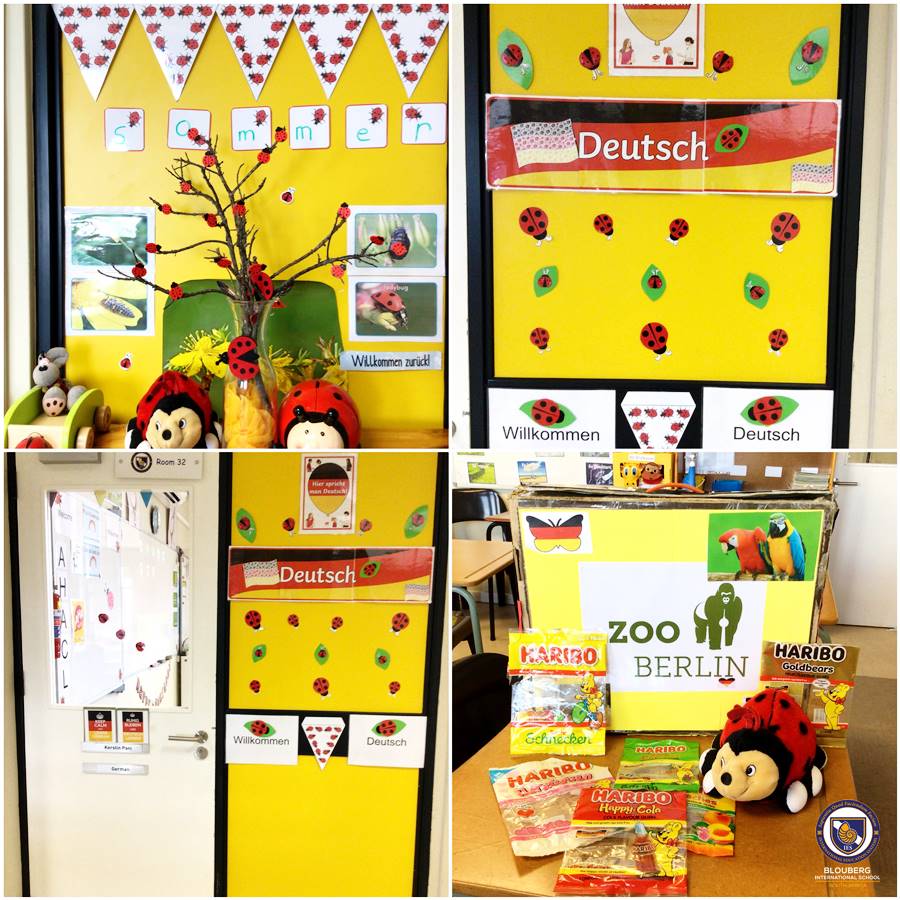
The German classroom received a special visitor from Germany this term, all the way from the Berlin Zoo arriving in the animal transport suitcase that travels between Berlin and our classroom at Blouberg International. The students in Year 1 and 2 were especially intrigued at what had arrived and were very excited to meet Marie the Marienkäfer. The animals from the Berlin Zoo also sent us a few packets of Haribo, the special German gummy bears, but we were surprised when we found all the packets empty and really wondered who had eaten them on the way from Berlin.
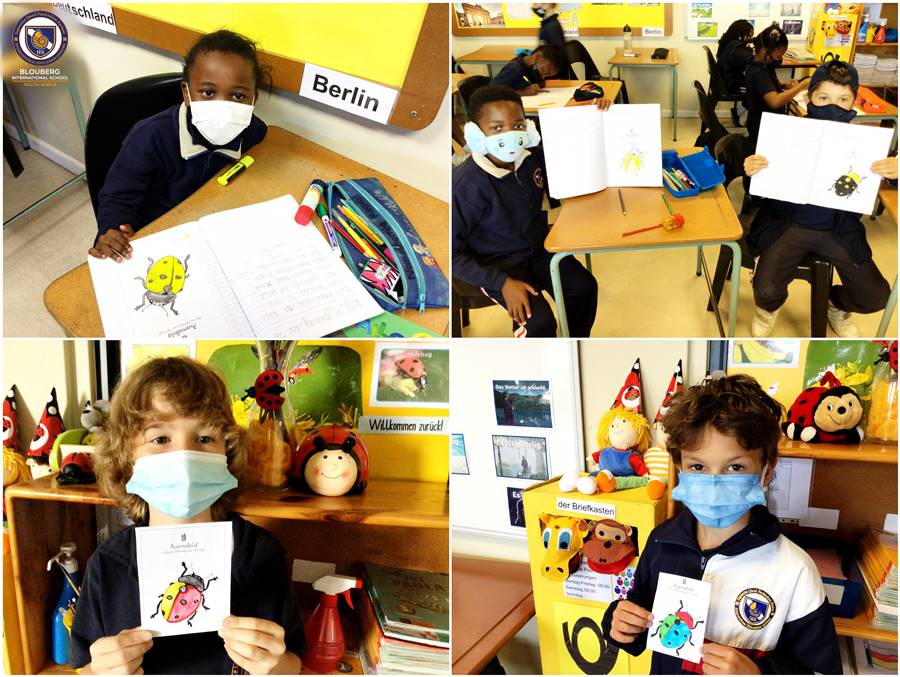
We also discussed the lifecycle of the Marienkäfer and we were fascinated by this little creature. Some students were also inspired to draw pictures of them and we included Marie in our greetings and songs at the beginning of the German lesson.
In Germany, the summer has come to an end and sadly the Marienkäfer are going into hibernation, but they will be back and are eagerly awaited next summer.
A student asked me this week if Marie the Marienkäfer will be returning to Germany and I was happy to let them know that she will be staying in South Africa to enjoy the coming summer months with us in our German classroom.
Have a good spring break.
Frau Kerstin Pani
Primary School German Teacher
Here are some links with more interesting information on the Marienkäfer:
https://www.dw.com/en/gl%C3%BCcksk%C3%A4fer/a-16555043
https://www.animalspot.net/ladybugs
https://www.natgeokids.com/za/discover/animals/insects/ladybird-facts/

Robots And Our Futures
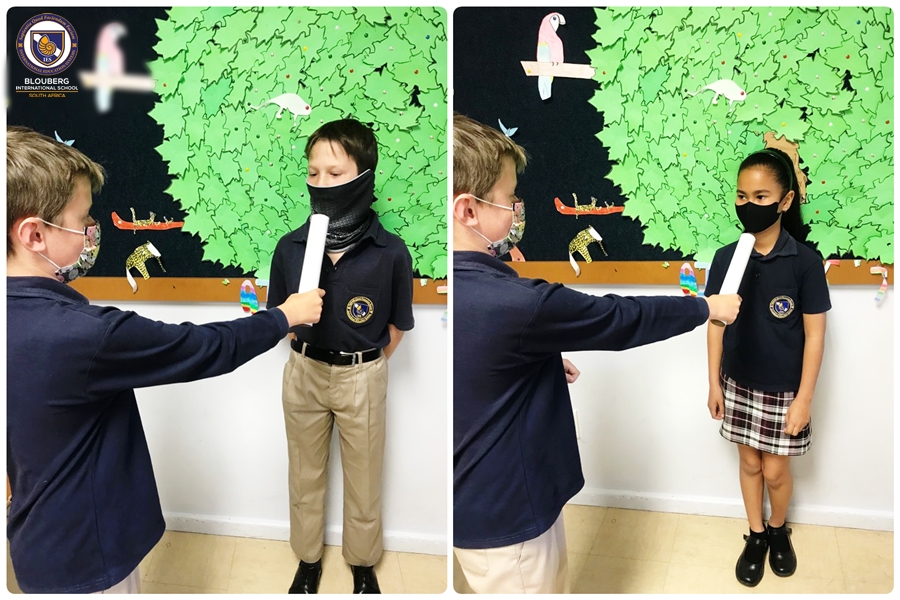
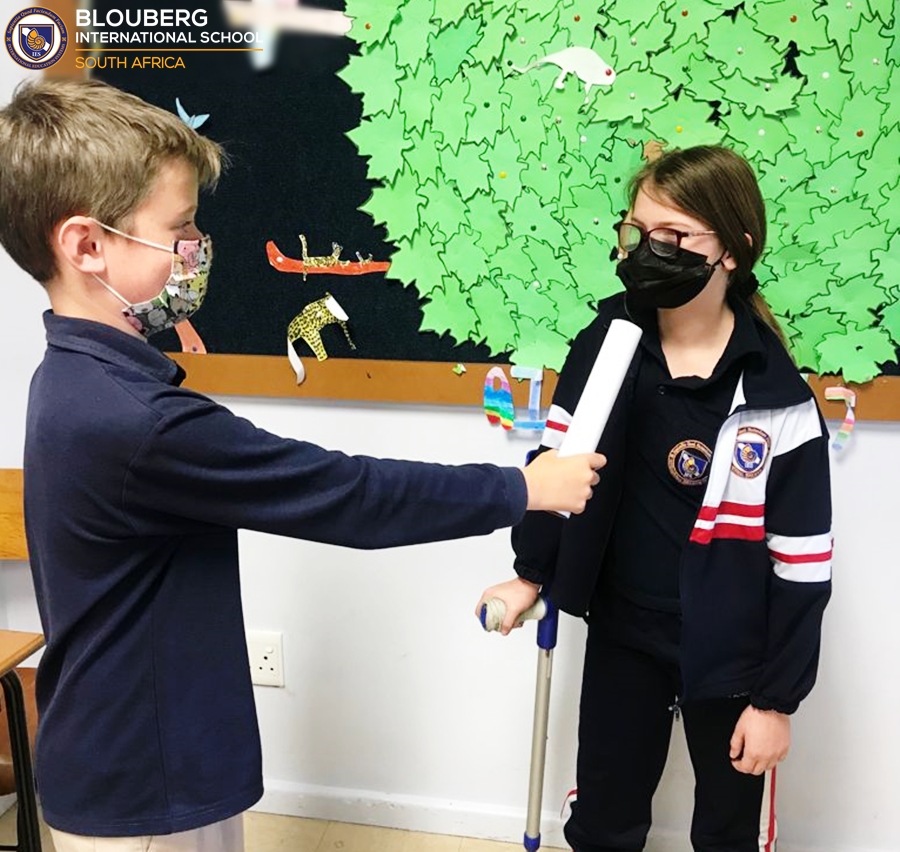
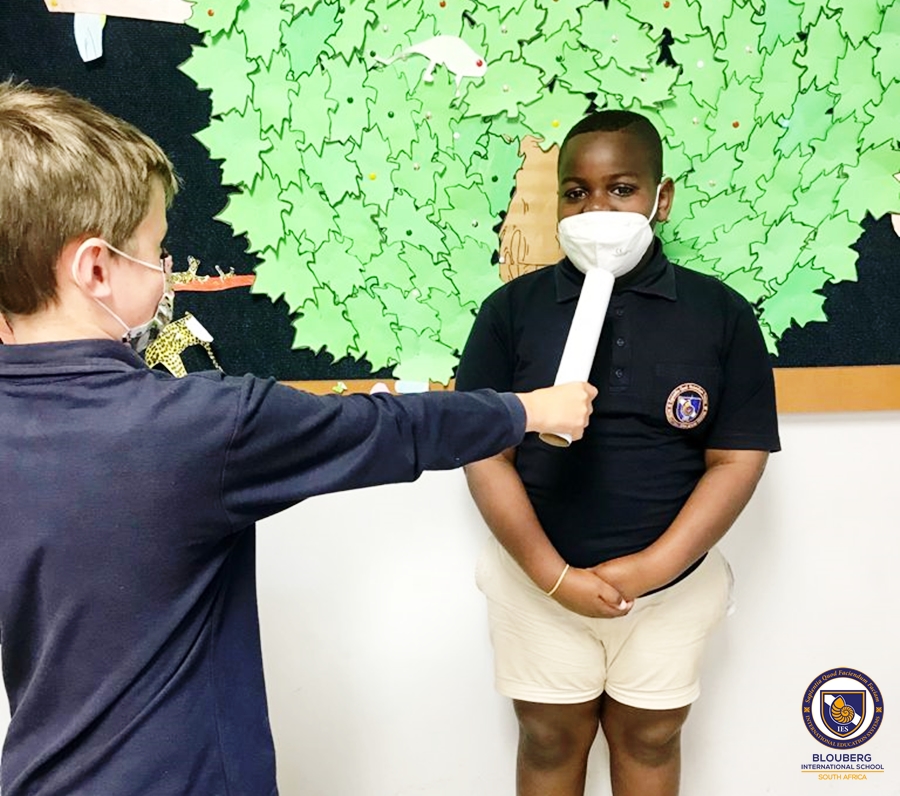
This term, the Year 5’s have been interestingly looking at the impact of modern technology on our world. We have specifically looked at Robots taking over our jobs. The students were asked to work in groups of 4 or 5 and put together a news broadcast, where they interview a factory owner who has decided to replace his factory workers with Robots.
Here is an example of a News Broadcast written by Nuraan Price (Year 5 Student)
News Reporter: Good morning all and thank you for joining our live broadcast! We have an interesting crisis for you this morning between a factory owner and his workers. Apparently he wants to replace them with robots! I am here today with all the people involved including Dave; the owner of the factory, one of his workers, the son of this worker and last but not least, the robot designer herself! Let’s start off with you Dave. How’s it going?
Factory Owner: Morning y’all, my name is Dave, and I’m the owner of Sweets & Treats, the Candy Factory.
News Reporter: So tell us Dave, what is the future you see for Sweets & Treats?
Factory Owner: Well, I’m a little ashamed to say, but Sweet & Treats hasn’t been doing so well this last year. And I know our employees are quite tired and a little stressed out trying to get orders and money in, so yeah, we’re struggling. Unfortunately, the factory might have to close down soon if this keeps up. So to anyone listening, go and order or buy some of Sweets & Treats’ delicious candy today! It’s available at any shop near you!
News Reporter: That must be hard, so what’s the deal with the robots?
Factory Owner: I think what’s best for the factory is for robots to do the work. That way all the candy can be made more cheaply and they can work faster for long periods and without making any mistakes. I am very aware this means that many people at my factory will lose their jobs, so when we make enough money from the robots I will give those who need it $1000 just to get them on their feet and help everyone out a little bit. The robots will probably be here and ready by January.
News Reporter: Thank you so much for sharing your opinion with us Dave! And you’re right, this must have a big impact on your workers, in fact we have one right here with us today! Would you mind telling us your name?
Factory Worker: Hello! Thank you for having me, my name is Tom, and I currently work at Sweets & Treats!
News Reporter: How has Dave’s new decision affected you and your life?
Factory Worker: Well I’ve worked at the factory for 7 years now and I’m one of Dave’s best workers and honestly I find it a little offensive that Dave would just throw us under the bus like that haha, but I know that he is just doing what’s best for the company and I respect that. I am however a little worried that I won’t be able to support my family anymore and trying to find a new job will be extremely hard for me especially during these times. Of course Dave’s $1000 will help a lot and I really appreciate it but I’m afraid that it won’t be enough until I find a job.
News Reporter: Wow, I hope it goes well for you and thank you for sharing with us. We also have your son here today to hear his say in the matter. Hi, would you mind introducing yourself?
Factory Worker’s Son: Hello there, my name is Alex and I’m 12 years old.
News Reporter: How are you today?
Alex: I’m good and you?
News Reporter: I’m very well thank you. How do you feel about the situation your dad is in right now?
Alex: Um, well I’m a little scared that my dad won’t be able to provide for me and my mom, but I think that it’s really nice of Dave to give us $1000. Another thing I’m worried about is my future. I’ve been studying and working as hard as I can in school and I’ve been getting A’s but I don’t know what job I’ll be able to get when I’m older since robots are taking over so many jobs. My mom says I can try to become a robot designer or programmer since robots can’t take over that job and I think that’s a great idea and it would be really cool to do, but I’m afraid that I’m not smart enough or it will be too difficult.
News Reporter: Don’t be silly Alex! Of course you’re smart enough! You can be anything you want to be. And if you do decide to study it, it will get easier over time. And I hope you enjoy it! Thank you to you and your father for sharing your sides of the story with us and I wish you the best of luck! I have one more person here with me, and that is the Robot Designer herself!
Robot Designer: Hi everyone, my name is Wendy Hensler. I’m 27 years old and I work for the tech company, AI. Inc.
News Reporter: So how has Dave’s decision helped your company?
Robot Designer: Sweets & Treats is the third company to call us and ask for this, we’ve been very busy and it’s pretty exciting to be able to design and make more robots than ever. I studied hard to become a robot designer, I love my job and I’m so happy to be able to work for one of the best tech companies in the country. Many manufacturers are moving to automation, to compete with overseas companies that are making the same product for much cheaper. I feel that without Robots, many companies will have to close down, but of course humans are just as powerful too.
News Reporter: Well there you have it folks, one robot and so many lives affected, is this the future? Good or Bad? I guess only time will tell. Well thank you to everyone for joining me today and thank you for sticking around, and I’ll see you next time folks, Good morning!
*End of interview*
We can never predict what will happen in the future, but we can rest easy knowing that we are preparing our students to ask the right questions and shape the world they want to live in.
Nadia Mahomed
Year 5 Teacher
Read More
From The Spanish Classroom
Some language teachers will say that one of the most important aspects of teaching, especially when the language is not spoken at home or outside of the classroom, is pronunciation. Many times, this can be difficult to apply in the class, because in the process of achieving our final goal of getting our students communicating in Spanish, we don’t want to discourage them. Sometimes we overlook pronunciation errors for the greater good of creating a positive learning environment and giving them the necessary confidence to start speaking the foreign language.
In my opinion, pronunciation can be something to improve on in the later stages of learning a second language or at least not be the focus in their first years. I am more prone to the idea of improving pronunciation in a more natural way, giving them some tips during class when they are learning new vocabulary, rather than during their oral presentations.
At Blouberg International, one my favourite ways of teaching the correct pronunciation is through songs, stories, and role plays.
Songs are the perfect resource for teaching pronunciation, especially when they have great rhythm, related and comprehensible vocabulary, and have repetitive and memorable lyrics.
Cesar, the creator of Rockalingua, explains it this way: “Focuses on creating songs that combine useful vocabulary with functional language structures, rhythm, and ample opportunities to repeat the words heard, using the pronunciation presented in the song.” I completely agree with him. Songs are a great way to practice meaningful listening while you work on pronunciation, but stories are as well.
By listening, reading, and creating stories – especially for the Year 5 and 6 students – that they can replicate using their own vocabulary during the role-play lessons, the students absorb more vocabulary in a more relaxed, practical and fun environment.
It is very important to listen to the stories more than once:
- The first time you can focus in identifying vocabulary and expressions that you have learned during the class.
- The second time focus on the content, try to understand the whole story.
- The third time you can focus on the pronunciation.
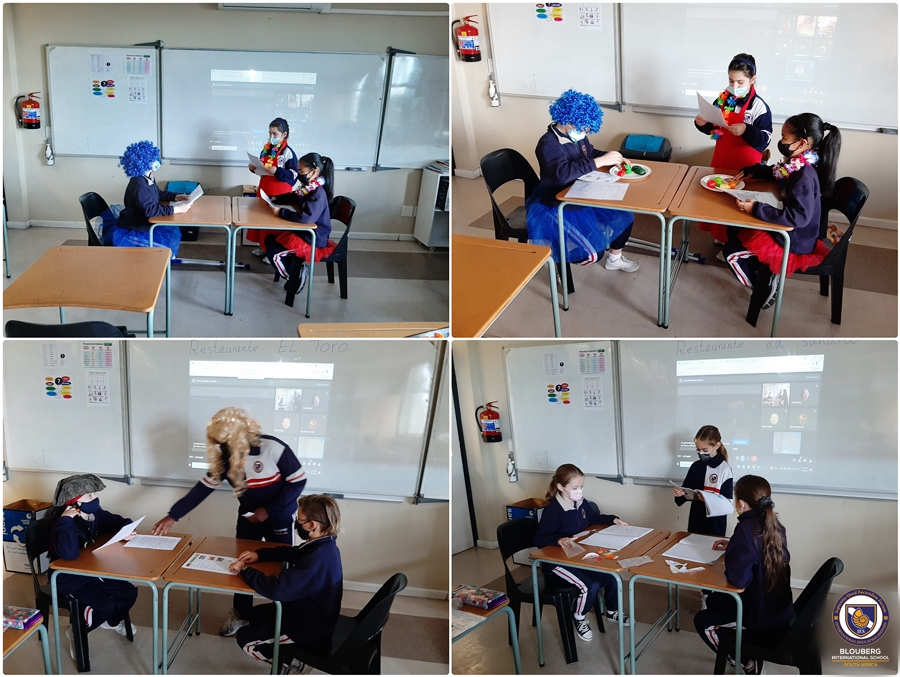
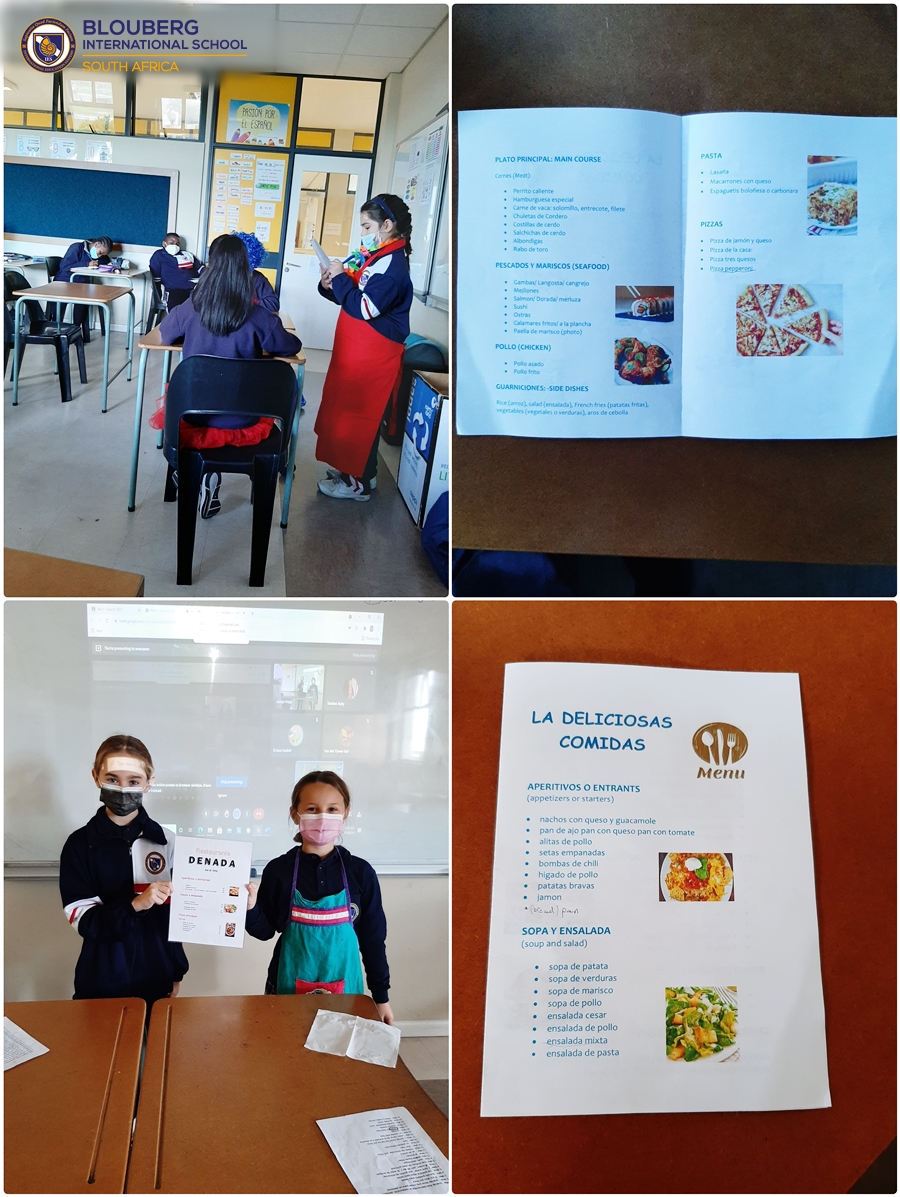
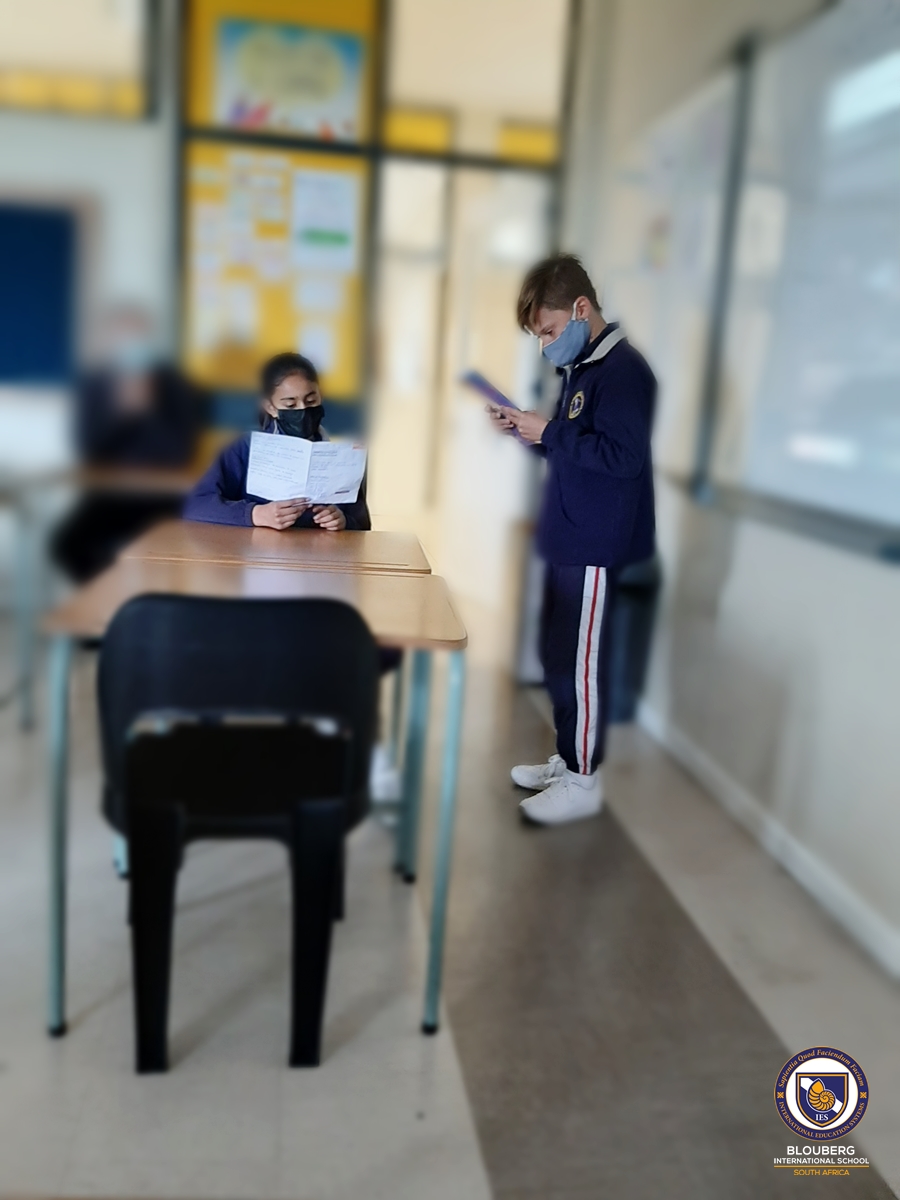
A good example of this is the Term 3 Year 5 project about the restaurant. This can apply to any topic that you wish your students to learn…
– Students learn the vocabulary and expressions related with the food. They also make use of book practice and Rockalingua.
– They create a menu with the food related vocabulary for their role-play.
– Add some relevant grammar to the mixture. “I would like; I prefer; I want or need”.
– Create a story using those expressions and vocabulary for the students to listen and practice during the class with some questions at the end.
– They need to decide the name of the Restaurant and the menu.
– Ask them to create a similar story and present it to the class.
I look forward to seeing my students develop even better pronunciation as the year progresses.
Javier Vidal
Spanish Teacher
Read More
High Frequency Words
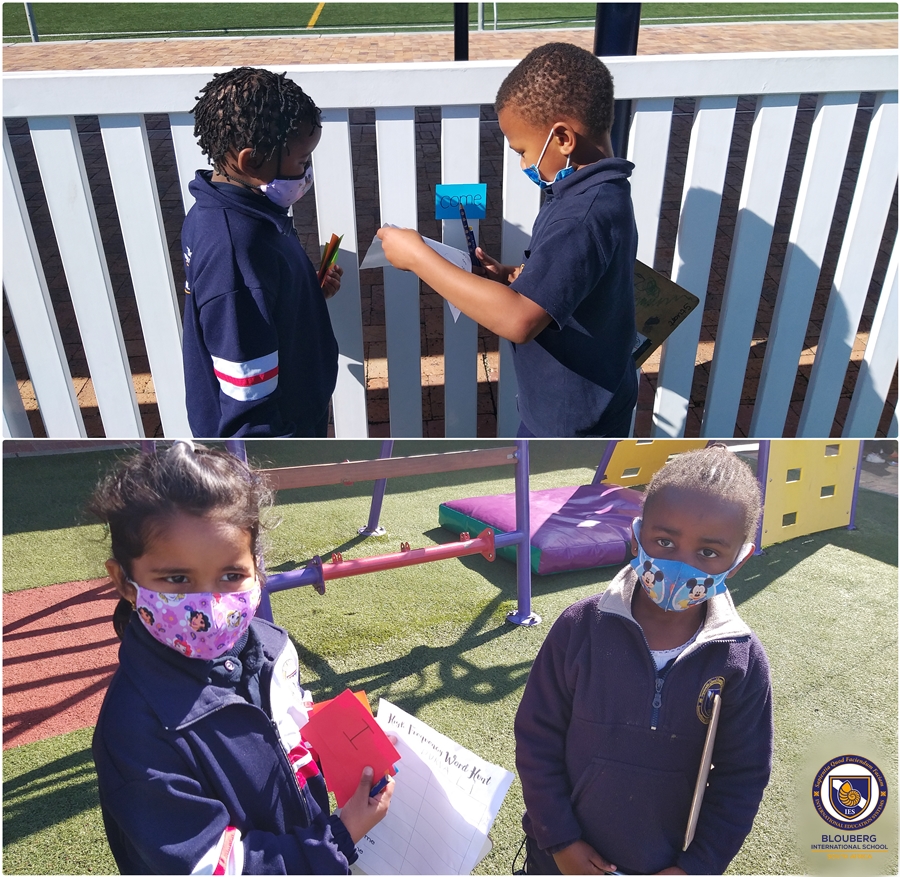
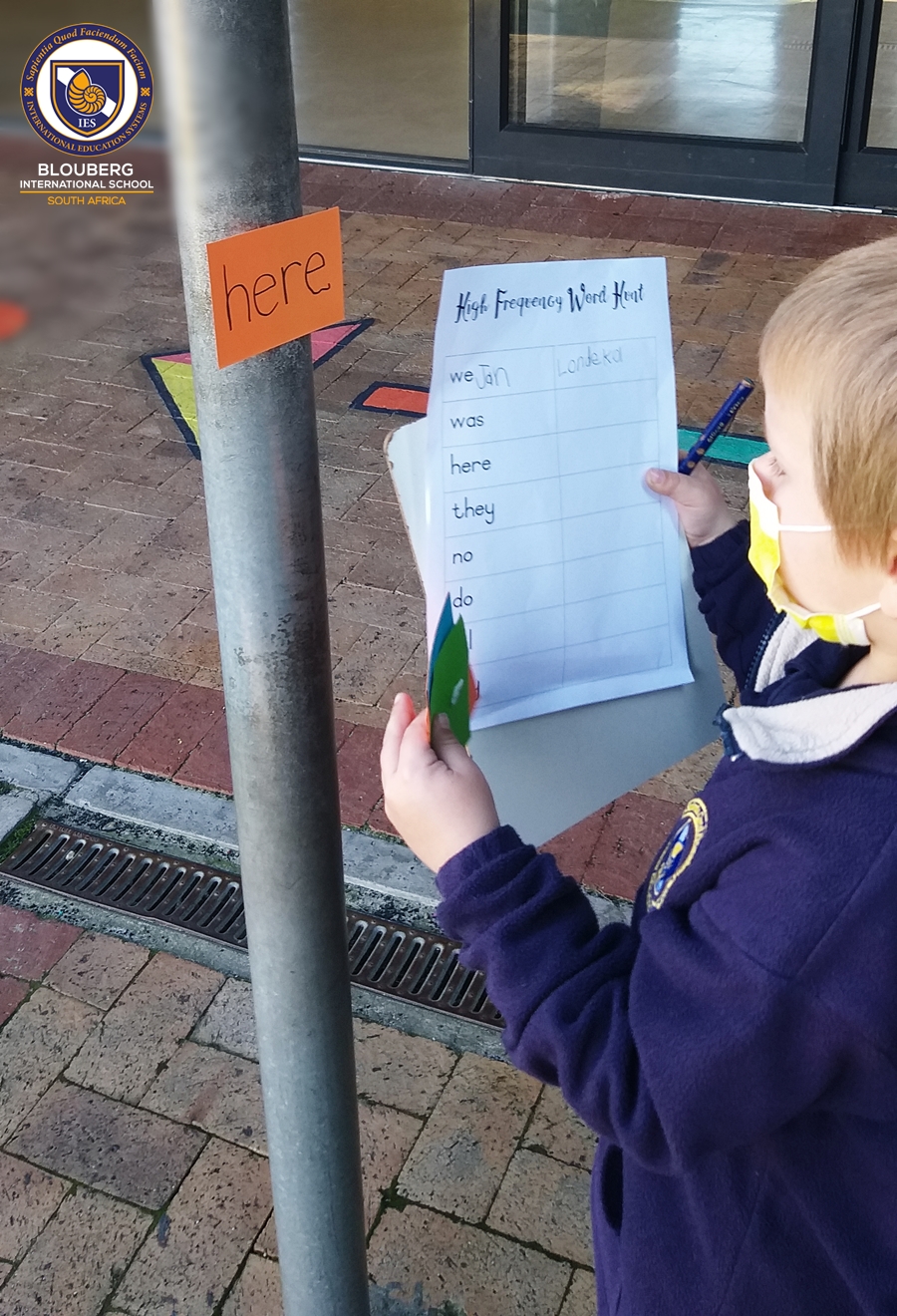
Last week we had a High Frequency Word Hunt. The students had to go and find flashcards of words on the playground according to a list in pairs. They thoroughly enjoyed this activity and excitedly showed the teachers all the words they could find from their lists.
Learning to read is a complex process, which involves many skills. Two of these skills is phonological knowledge and the other is memorising High Frequency Words. Phonological knowledge helps students to decode or sound out words. That is why it is more important to know the phonetic sound of letters rather than the alphabet name, so that words can be spelt out phonetically, like the word c-a-t. Knowledge of High Frequency words is important for those words that cannot be sounded out phonetically, such as the word ‘you’ or ‘the’. These words commonly occur in sentences, hence the term High Frequency Words. That is also why students have greater confidence and fluency when they have been spending time memorising High Frequency Words as part of their reading homework at home.
It’s important that parents try to make learning High Frequency Words fun. Here are some helpful ideas in the links below:
https://www.curiousworld.com/blog/sight-word-games
https://www.weareteachers.com/sight-word-activities/
https://www.themeasuredmom.com/25-low-prep-sight-word-activities/
Bronwen Nuthall
Reception Year Teacher

Read More

The upcoming Cambridge IGCSE and AS/A Level examinations and how to prepare for them
The October/November Cambridge IGCSE and AS/A Level examinations are fast approaching, with the first examinations already taking place on 28 September 2021. It is vital that students prepare themselves for these examinations.
Below are some helpful hints and tips for preparing for the examinations:
- Familiarise yourself with your examination timetable.
- Ensure that you know exactly:
– what work will be covered in each subject;
– the format of each examination paper;
– the time allocation;
– the equipment that may be needed for the examination (e.g. calculator for mathematics).
- Get copies of old examination papers and worksheets.
- By now, all your notes should be up to date and you should have all that you need to study effectively for the examinations.
- Prepare your study area. Some things to consider are:
– have a good source of light;
– have lots of paper available;
– a clear work surface;
– coloured pens if you prefer to use colour;
– light or unobtrusive music if you prefer to learn with music.
- Keeping healthy! Eat fresh foods such as fruit and nuts. Pile up on the vegetables in the evenings and drink plenty of water and fruit juice to keep the flu at bay. The brain needs to be fed well to perform at its optimum.
- Try not to nibble on too many chocolates and sweets while studying.
- That said, the odd sweet or chocolate will provide an energy boost when you feel really tired.
- Getting a good night’s rest is also important. Sleep will rejuvenate you and keep you going.
Devising a Revision Timetable:
If you plan your revision carefully, you will enjoy the feeling of being well prepared for the examinations, secure in the knowledge that you have done your best and have covered all the work.
- Create a calendar for this purpose, using bright colours/larger paper etc.
- Start by marking in the dates and times of your examinations.
- Shade in the dates and times when you know you have other commitments, e.g. sports fixtures/family function.
- Work out how much time you would need per section per subject. Remember to spend more time on those subjects you find more difficult.
- Using a pencil, begin to draw up your revision timetable by writing in the subject and the sections that you wish to cover each day.
- You could leave a revision time blank each week, as a “safety net” for work not covered as planned. This may be as a result of those unforeseen circumstances that make life interesting.
- Do not get stressed out if you don’t stick rigidly to the timetable. Sometimes you start by expecting to cover too much at one time. The main idea is to get you to focus on the work that needs to be covered and to work towards a goal.
- Be sure to timetable rest and relaxation.
- Before changing subjects, take a longer break of about 20 – 30 minutes and try to get outside or do something different.
Study Methods:
Each one of you will have your own method of studying and it is important that you feel comfortable with your chosen style. It is equally important that you admit if your method has not worked in the past.
Here are some tips that you may like to try out. These are tried and tested methods.
- Start by reading through a section from beginning to end. This will give you an overview of what is to come. Focus on headings and pictures and diagrams.
- Ask questions as to the content of the section (why, what, when, where, how and who?). This will help to get your mind in touch with the main areas within each section (e.g. What do I need to know about this topic? What exactly is this text about? How does this section link up with what I have just studied?).
- Re-read the passage with the aim of answering your questions. Look up words you do not understand, refer closely to graphs and diagrams, highlight important ideas in colour, etc. Do not try to make notes at this stage.
- Aim to check that you have understood the work. Think about the passage and focus on key points. Re-read the passage, making notes on the relevant material. This may take the form of block notes or diagrammatic notes e.g. mind maps/spider diagrams.
- It is a good idea to redo mathematics exercises and worksheets as well as work through past papers.
- Diagrams can become excellent forms of summary in subjects such as geography and biology. A diagram should be drawn clearly with large labels for easy identification.
- When encouraging a difficulty concept, try to break it up into smaller units and talk your way through the steps of the problem.
- If you have difficulty remembering something, pin up key words on your bedroom wall or cupboard door as a constant reminder. Each time you walk past the word, stop, and ask yourself a question or two about it to trigger a response.
- In language, you need to understand the rule to apply it, e.g. rules for the past and present tense.
- Review. Aim to ensure that you remember what you have learned by reviewing worksheets/past papers/testing yourself with questions that you set or working with a friend and testing each other verbally.
Just before the examination:
- Get a good night’s sleep.
- Have a good breakfast.
- Arrive at the venue with time to spare.
- Make sure you have the right equipment, tissues, watch, etc.
During the examination:
- Don’t rush into answering questions.
- Read the instructions at the beginning to ensure that you know how to answer all the questions and how many questions to answer.
- Read through the questions carefully.
- If there is a choice of questions, make your choice carefully. Underline key words in the questions.
- Stick to the time plan given to you by your teacher.
- At the end of the examination, if you have time, read through your paper to check that you have answered all the questions.
I would like to wish all students the best with their 2021 examinations.
Julian Harrison
Cambridge Examinations Officer
Read More

Saving Our Planet
In Year 1 we have been learning about, ‘Saving our Planet’ in Global Perspectives.
We also went on a litter walk around the school. My class showed such passion and commitment to cleaning up the litter in and around the school, I am so proud of them all.
I have even had reports from parents informing me that their child picks up litter when they are out walking at the beach.
They have been working very hard and even created their own display for our classroom’s ‘Art and Design’ board, to raise awareness about litter.
Well done Year 1!
Charlotte Cronje
Year 1 Teacher
Read More