

Assessments And Amphibians
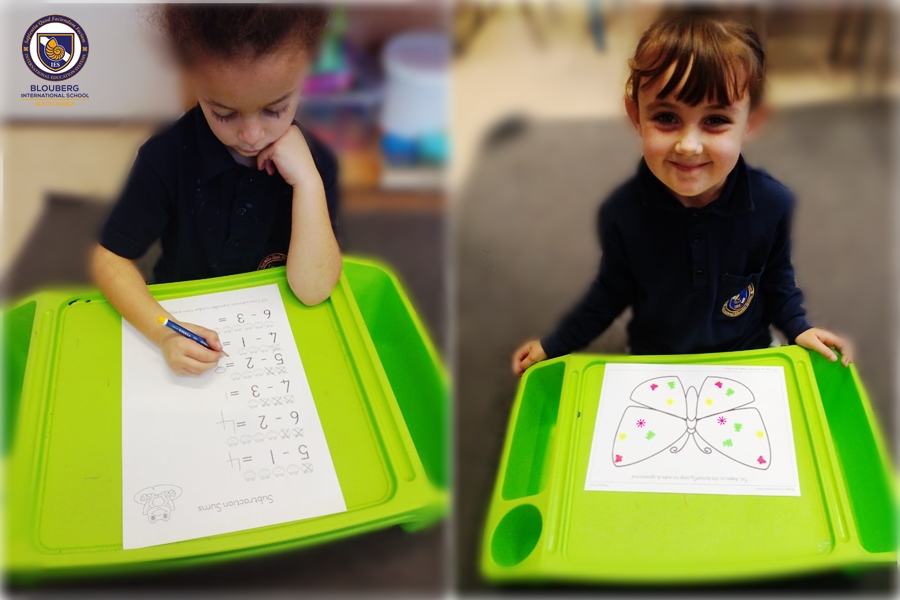
Over the last two weeks, Foundation stage have been doing their end of term assessments. Every day the students are learning new things and continue to approach each challenge with a positive attitude. The assessments have given each student an opportunity to show their teachers how much they have learnt this term and we are so proud of them.
Recently, Foundation stage have been learning all about amphibians. The students asked, what is an amphibian? What is the difference between a reptile and an amphibian? And what is the difference between a frog and a toad? They have learnt so many interesting facts, especially what makes a frog different from a toad.
Did you know that…
- Frogs are smaller and slimmer than toads and have a more pointed nose.
- Toads are much bigger and broader than toads and have a wider nose.
- A frog’s skin is smoother than a toad. Therefore, they need to live near water because they need to keep their skin moist.
- Toads have a hard, dry skin and don’t need to stay near water.
- A toad’s eye shape is also different from a frog’s. Frogs usually have big bulging eyes, as opposed to a toad’s, that is a bit more subtle in appearance.
- Frogs have long legs made for hopping and they can jump up to 20 times the length of their own body.
- Toads have shorter legs and prefer to crawl instead of hop.
The foundation stage students enjoyed learning about these interesting facts. We are confident that the next time they see an amphibian, they’ll be able to tell us whether it’s a frog or a toad.
Lauren Bloem
Reception Teacher


Read More
Bugs, Bugs, Bugs Everywhere…
Learning about bugs is so much fun for our Foundation Stage students. Isn’t it funny how young students are just curious about everything and don’t have the grossed out reaction that we have as adults.
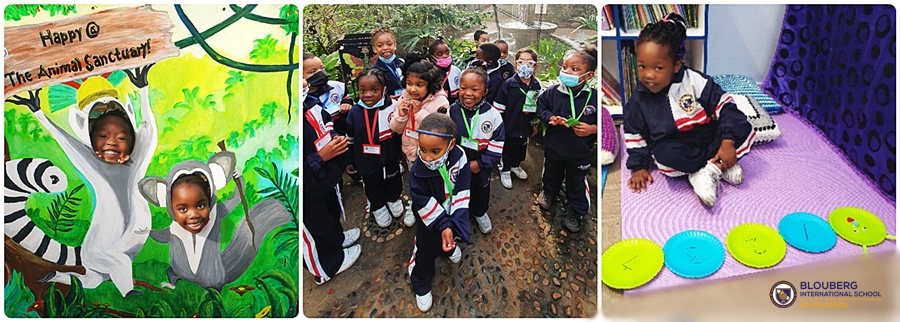
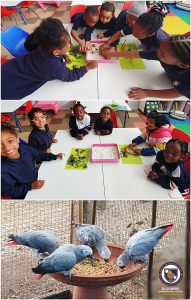
During the past two weeks we have been learning about all sorts of bugs and insects through hands-on learning activities.
Some of the activities we have done includes:
- Butterfly life cycle sequencing: The students practised sequencing the cards in the correct life cycle order.
- Bug or not sorting: Is everything that crawls a bug? Is everything with wings a bug? With a container full of toys the students had to investigate what it takes to be called a bug. This sorting game helps them learn to scientifically classify and observe.
- Butterfly Symmetry Smash: We cut the butterfly out of card. The students then squirted paint onto one side of each butterfly. We folded the butterflies in half and smashed the paint.
- Which bugs can fly: The students learned which bugs could fly and which could not.
The students enjoyed looking at books about bugs and learning interesting facts about bugs by watching Blippi Wonders.
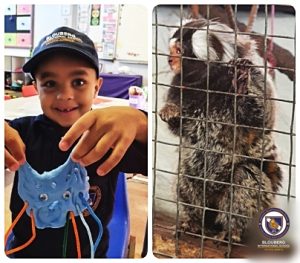
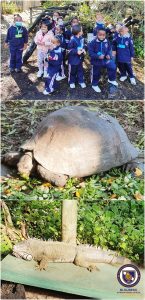
On Friday, 27 May, the Pre-Reception and Reception students went on an educational Outing to the Exotic Animal World. The students saw different types of insects, spiders, reptiles and animals like: birds, iguanas, tortoises and meerkats to name a few. The students enjoyed an interesting and informative lesson about reptiles. It was an amazing experience for the students to end off our theme.
Martie van Dyk
Pre-Reception Teacher

Read More
A “Safety Circle”
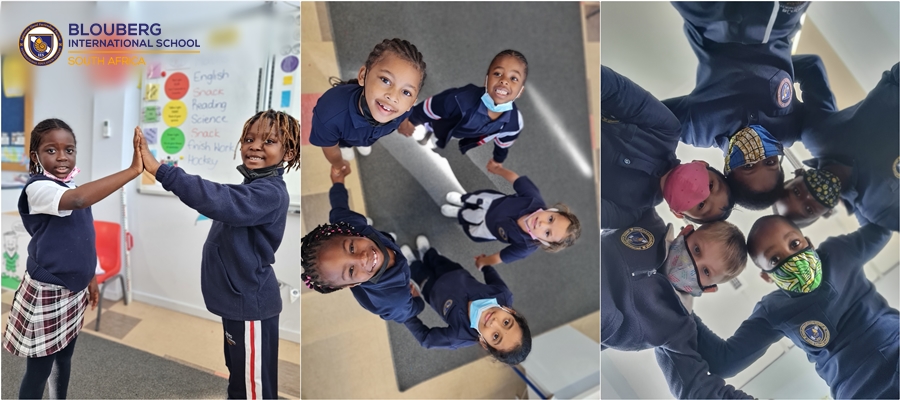
The Year One teachers focused on teaching the students about their safety circle this week. We feel that it is important that our students have a safe group or safe circle that they may approach whether they are in trouble, unhappy, worried or just want to talk. A safe group or safe circle is the few most trusted people in our student’s life.
It is important for students to have a safety circle. Students should be able to name five people on their hand who they can trust and rely on. The Year One students discussed who is in their safety circle, the reason for a safety circle and to know when to use their safety circle.
We encourage parents to communicate with their children to see if anything is disturbing them and to continue to check in on them from time to time without being too controlling. We have noticed that being casual in the way one communicates with children will give them the courage to open up to you more.
“At the end of the day, the goals are simple: safety and security.” – Jodi Rell.
Year 1 Teacher
Erin Hierse

Read More
Creating 3D Shapes

During the term, the Year 4 students have been learning about 3D shapes, forming part of their Mathematics curriculum. Through research, collaboration and investigation the students learned the names of these shapes as well as their properties.
As part of a class project, students were given the task of creating a structure/model using no less than three different 3D shapes. They had to construct each shape, using nets, before assembling their project. Our budding engineers worked tirelessly to come up with amazing designs and we could not be any prouder.
After the construction was complete, students had the opportunity to share their project with their peers in an oral presentation.
We are very proud of our students.
Yvette Fourie
Year 4 Teacher
Read More
Becoming A Biologist In South Africa
It is certainly not new information that we live in one of the most diverse countries in the world when it comes to South Africa’s endemic flora and fauna. In fact, according to SANBI, we are ranked in the top 3 countries with the highest percentage of endemic species. South Africa is estimated to be home to almost 100 000 endemic floral and faunal species, as reported by BIOFIN. Our floral diversity is estimated to be just short of two thirds endemic, with our reptiles, amphibia and marine species to be around half.
South Africa is a well-recognized biodiversity hotspot, with the Cape Floristic Region hosting almost 10 000 vascular plants, with a staggering endemism percentage of almost 70%. Endemism and biodiversity in South Africa have clear intrinsic value. Apart from that, it has been an enormous driving force in our tourism. It is also important to recognize its role in employment opportunities, alternative or traditional medicines, and environmental education.
So, what do we need in order to conserve this incredible ecological gift that we have been given? More importantly, who are the people behind conserving it? Unfortunately, conservation is not often second nature to us. We live fast paced lives driven by consumerism. Playing our part in conserving the Cape Floristic Region, our pride and joy, starts with being educated on its value and importance. Whether this is intrinsic value, monetary value or some other value such as preserving genetic variation, the development of herbal remedies and traditional medicines, or simply a feeling of stewardship.
An ecologist from Senegal, Baba Dioum, summed it up quite well: “In the end, we will conserve only what we love, we will love only what we understand, and we will understand only what we are taught.”
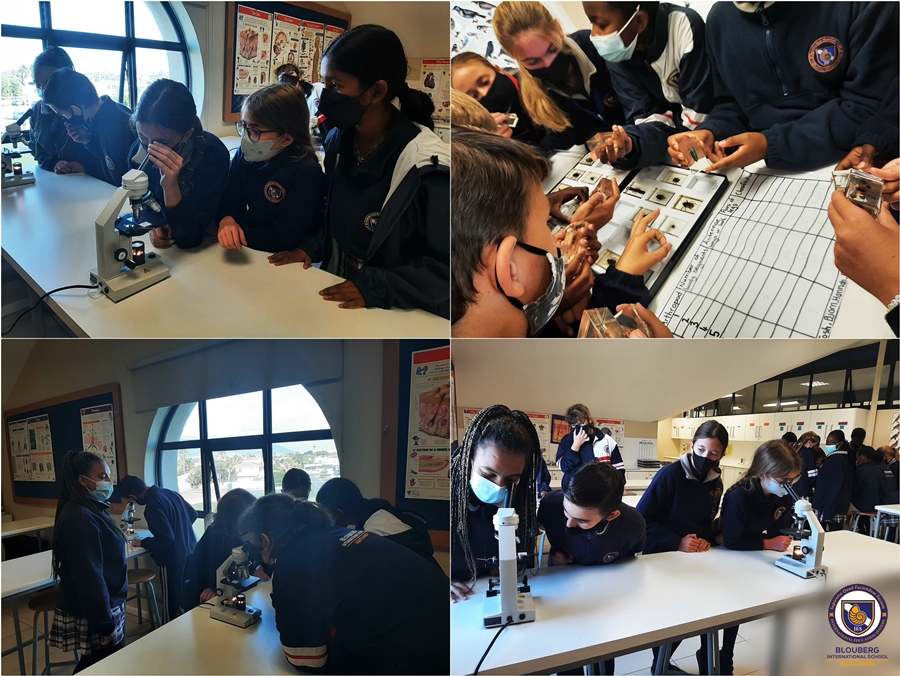
Education is the starting point to truly assigning value to something. In order to feel the drive to take an active part in conserving our country, one needs to realise its value, and what better way to do this than through receiving an education in Biology in one of the most unique countries in the world? Getting students excited about our natural world starts at an early age. At BIS, we incorporate practical implements to our coursework by allowing the students to see, hear, touch and experience. Practical work allows students to place their coursework into context with the real world, while also deepening their understanding of the topic. We as teachers are looking forward to the rest of our journey in guiding the next group of conservationists, farmers, park rangers, botanists, environmental educators and so much more.
Nadia Viljoen
High School Biology teacher

Read More
Preparing For Examinations
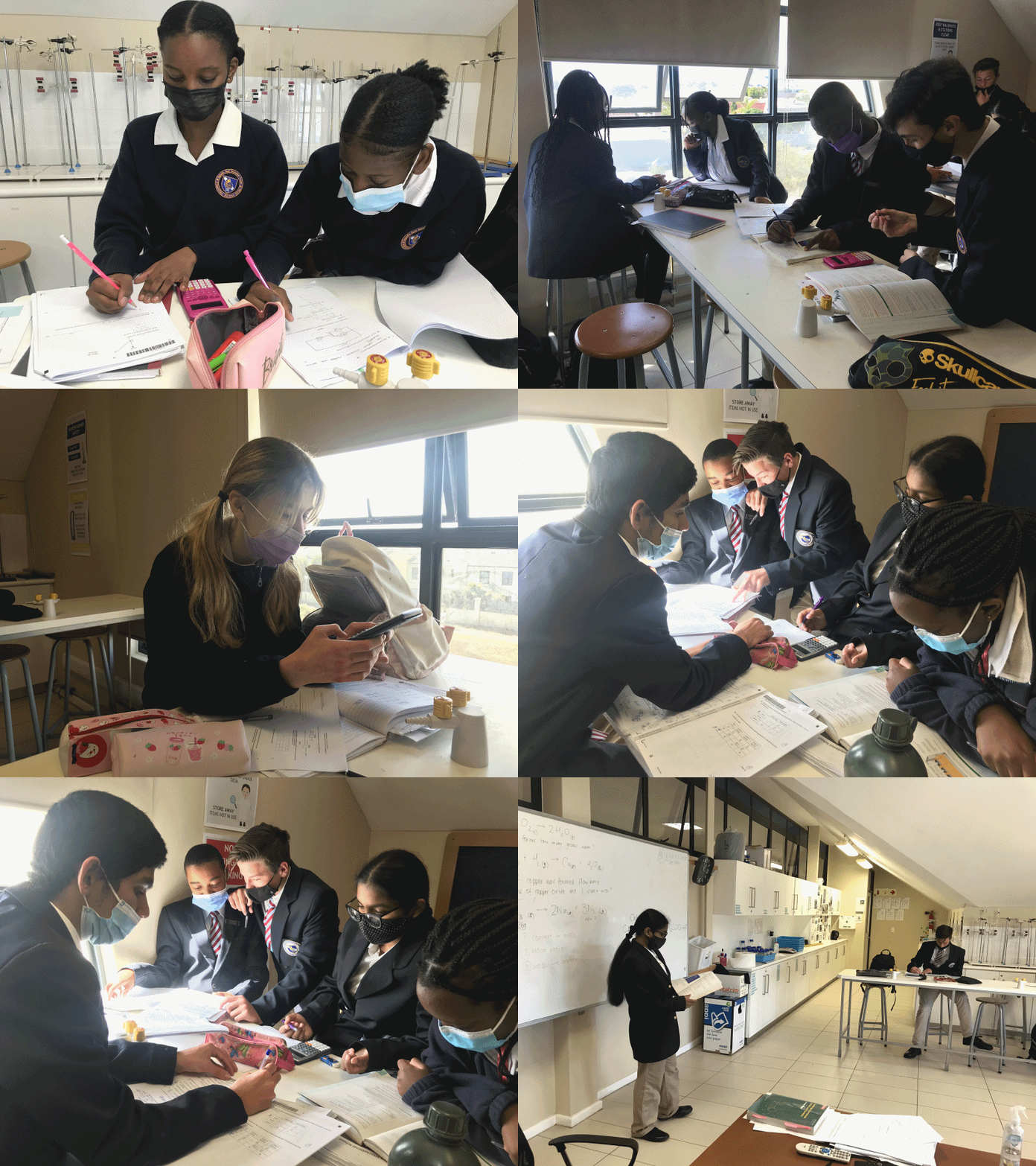
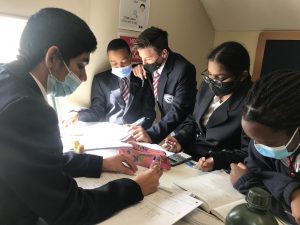
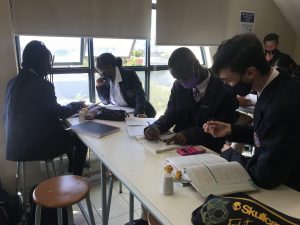
Our June examinations are around the corner and preparing for examinations is just as important as studying for your subjects. Below are some helpful hints on how to prepare for your examinations:
Helpful hints
- Familiarise yourself with your examination timetable.
- Ensure that you know exactly:
- what work will be covered in each subject,
- the format of each examination paper,
- the time allocation,
- the equipment that may be needed for the examination (e.g. calculator for Mathematics).
- Get copies of old examination papers and worksheets (IGCSE and AS/A Level).
- By now all your notes should be up to date and you should have all that you need to study effectively for the examinations.
- Prepare your study area. Some things to consider are:
- have a good source of light
- have lots of paper available
- a clear work surface
- coloured pens if you prefer to use colour
- light or unobtrusive music if you prefer to learn with music
Keeping healthy
- Eat fresh foods such as fruit and nuts. Pile up on the vegetables in the evenings and drink plenty of water and fruit juice to keep the flu at bay. The brain needs to be fed well in order for it to perform at its optimum.
- Try not to nibble on too many chocolates and sweets while studying.
- With that said, the odd sweet or chocolate will provide an energy boost when you feel really tired.
- Getting a good night’s rest is also important. Sleep will rejuvenate you and keep you going.
Just before the examination
- Get a good night’s sleep.
- Have a good breakfast.
- Arrive at the venue with time to spare.
- Make sure you have the right equipment, tissues, watch, etc.
During the examination
- Don’t rush into answering questions.
- Read the instructions at the beginning to ensure that you know how to answer all the questions and how many questions to answer.
- Read through the questions carefully.
- If there is a choice of questions, make your choice carefully. Underline key words in the questions.
- Stick to the time plan given to you by your teacher.
- At the end of the examination, if you have time, read through your paper to check that you have answered all of the questions.
Julian Harrison
Cambridge Examinations Officer




Read More
Physical Education
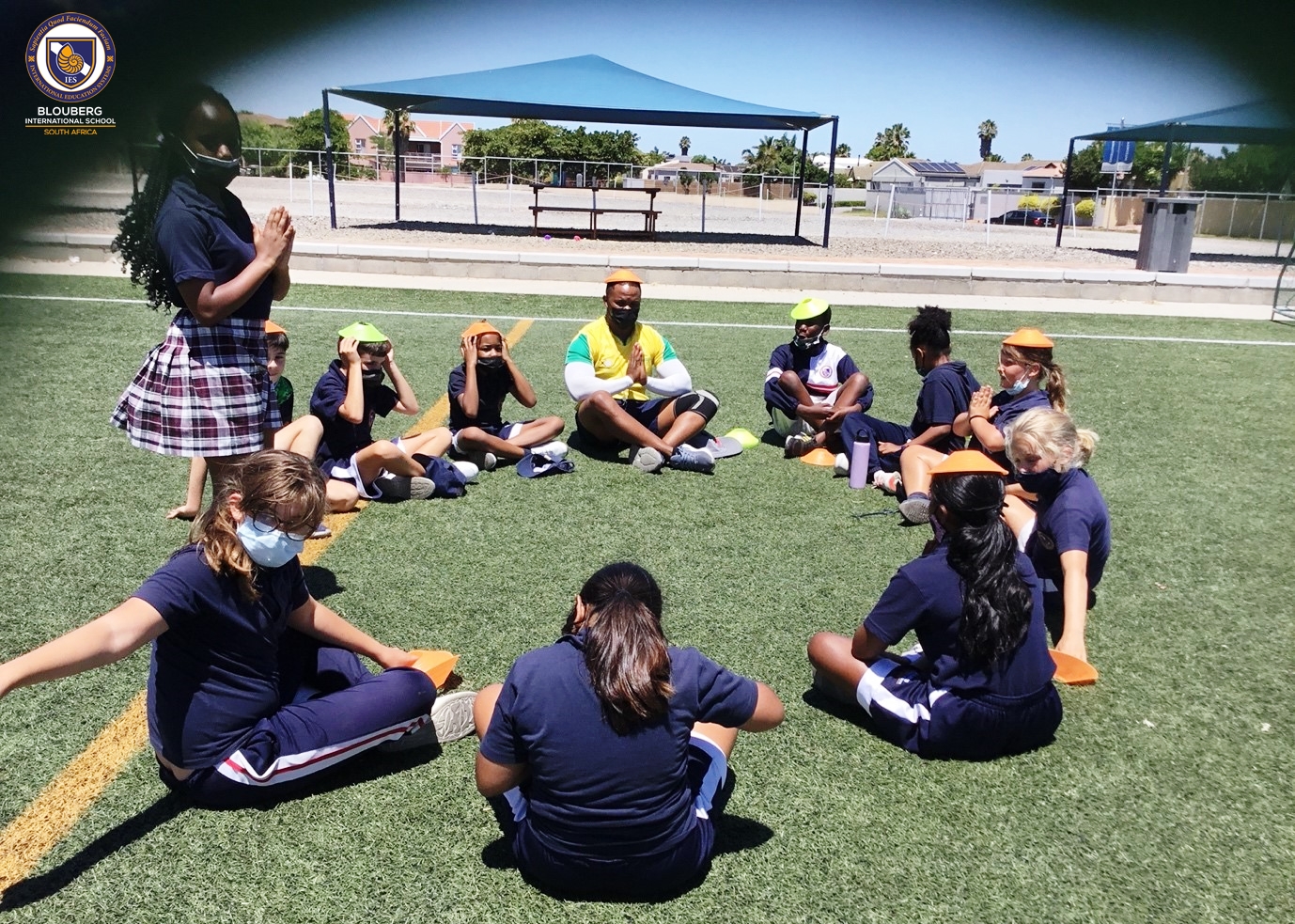
As we try to stay warm throughout the Winter sports season at Blouberg International School, we urge our parents and teachers to encourage each other in supporting and motivating our students to do their best on the sports field throughout the year.
Physical education uses exercise and information to promote healthy growth and physical development. It also encourages students to learn the facets of the curriculum involved and the benefits of participation in physical education and sports-related activities to the health and wellness of students from Pre-reception through High School.
Physical education is a course taught in school that focuses on developing physical fitness and the ability to perform and enjoy day-to-day physical activities with ease. Children also develop the necessary skills to participate in a wide range of activities, such as soccer, basketball, or swimming. Regular physical education classes prepare kids to be physically and mentally active, fit, and healthy into adulthood. An effective physical education program should include engaging lessons, trained P.E. teachers, adequate instructional periods, and student evaluation.
There has been a huge change in the schooling environment as we have seen in the past 2 years caused by the pandemic that is COVID-19 .
It has affected not only our sports in schools but also outside our schools in the way we think and live.
We come from being a nation that is brought together by our sports. Whether it be on a rugby, cricket, netball or soccer field within our beautiful country, we truly are a rainbow nation.
We have missed out on being inside a fully packed stadium with fans from all across the borders of the world, roaring in support of our favourite teams to being confined to our own spaces that are our homes.
Now that we are back outside on the pavilions ,inside the stadiums and in a better place as a country than we were two years ago, we hope to take this opportunity to explore, be adventurous and live a more fulfilling life than we ever have.
Our role as the Sports Department, Coaches and myself as The Physical Education teacher at Blouberg International School, is to bring out the best in our students on the sports field, to teach them about their bodies’ capabilities, and give them the opportunity to participate and challenge each other and themselves to becoming the best versions of themselves through our sporting activities on our PE and sports fields.
Our goal is to be one of the best sporting schools in our district, to produce well informed and educated athletes who are dedicated to their dreams and aspirations on and off the sports field.
We focus on creating an unforgettable sport schooling experience that will be engraved in our students’ memories forever. We would like to thank our parents for their support and may it continue as we build our school to be the best that it can be.
Once again, we urge our parents to give our students an opportunity to be a part of this wonderful adventure and give support to our coaches and staff on our sports fields, and build relationships with them that will be in our BIS family memories forever.
Mpho Mahlangu (Coach M)
Physical Education Teacher & Wellness Coach
Read More

Learning Using Models And Research
Learning is more than remembering terms and concepts. It is the start of a lifelong adventure of inquiry. The Year 3’s have been challenged and assisted in their research by using technology, observations, and secondary sources to study the Earth, Moon and Sun. What they have discovered, they have demonstrated using models.
Last Monday, the early risers had the privilege of seeing a Blood Moon. Aside from watching and discussing a YouTube video to learn what causes a Blood Moon lunar eclipse, they took photos and created a couple of beautiful collages of the Cape Town May 2022: Blood Moon.
The iPads have also been used to research lengthy websites and discover the 7 ways the Earth is round. They did this by simply using the subtitles as a reference. We also explored how to use Kiddle – a search engine designed for kids to use to find information quickly. We then moved on to using YouTube as we mined for diamonds of information on a Dr Bionics video about the structure of the Earth.
Of course an interactive way to display our knowledge, is to use models.
This term we have used our hands to demonstrate how the primitive (reactive) brain and the prefrontal cortex helps us focus and solve problems.
We made interactive lungs with cards, balloons and straws to show how air comes in through our nose and mouth and inflates our lungs.
We are especially proud of our plate models, which show the phases of the Moon; the names of each stage as the Moon rotates on its axis and orbits the Earth. Some students were even able to show where the Sun would be during a lunar eclipse.
Information that students find for themselves, discuss, and demonstrate their understanding of becomes a lived experience instead of a book study.
Carey Schoots
Year 3 Teacher


Read More

Having Fun With Shadows
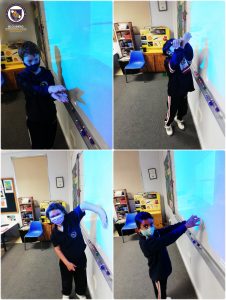
The Year 2 classes have been learning about light and dark during their Science lessons. They have looked at different light sources and can identify those which are man-made and those which occur naturally.
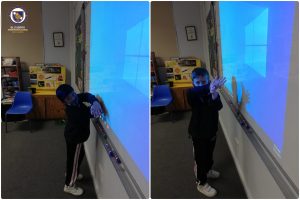
We had some fun during our last Science lesson, using shadows to make funny creatures on the whiteboard, using the light from the projector to create shadows. My class decided that this was the best Science lesson. There was much laughter as their classmates tried to guess what the creature made by their friends were.
Kim Coetzer
Year 2 Teacher
Read More
High Frequency Words
In term 2, our Reception students have been introduced to High Frequency Words. High Frequency Words otherwise known as sight words, Dolch words, refer to a set of words that most commonly are found on any page of text. Readers need to instantly recognize these words in a text and often the words cannot be sounded out. Readers therefore need to memorise these words in order to read more confidently and fluently. Learning High Frequency Words is an important skill that is incorporated into reading homework. It is therefore essential to learn High Frequency Words in fun ways. Listed below are some ideas for flash card games:
Flash Cards Games
- Can you find? Lay cards on a table. Ask the student to find a given word. If they find it, they keep it. Keep going until all the cards are picked up.
- Who has more? Show the cards to the student. If they read the word within 5 seconds, they keep the cards – if not the parent keeps the cards, the goal is that the student has more cards at the end.
- Concentration – Using double copies of words take turns turning over 2 cards at a time, trying to make a match. The player must read the words correctly to get the match.
- Go fish – Use double copies of cards, pass out all by 5-6 of the words. Put these in a stack face down on the table. Look for matches in your set of cards. (each player must be able to read the word or the set goes in the stack on the table. Take turns asking each other for cards to make matches. The person with the most matches at the end is the winner.
- Slap Jack – Draw a star on a blank flashcard. Place this star card and the other flashcards face down on the table. Take turns turning over a card and reading a word. When the star card is turned over, the first player to slap it wins.
Bronwen Nuthall
Reception Year Teacher

Read More