

From The German Club
Willkommen! Welcome to the new German Club!
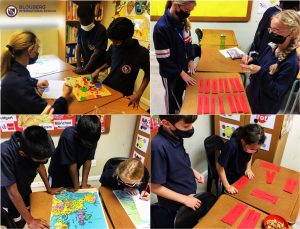
The German Club was launched at the beginning of the year and has become a highlight of my week when 20 very enthusiastic German Club members meet on a Friday afternoon in my classroom for an hour. These members are students from Year 5, 6 and High School.
We cover various topics and themes as well as test and taste many different treats and snacks from Germany.
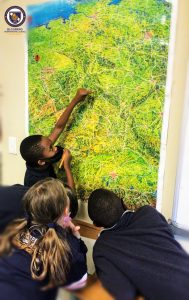
This term we explored the questions ‘Where in the World is Germany?’ and ‘Where in Europe is Germany?’
The students were divided into groups and rotated to different stations consisting of maps of the world, including Germany and a puzzle of Europe’s countries that they had to complete. They also had a questionnaire that needed to be answered as a group for each station. In this way, they were able to discover for themselves where Germany’s location is in relation to hemispheres, continents, oceans and then which countries, seas, rivers and lakes border Germany.
During Book Week in the German classroom, all the students were introduced to the fairy tales and stories by the brothers, Jakob and Wilhelm Grimm. We watched and listened to the animated story of the ‘Die Bremer Stadtmusikanten’ (The Bremen Town Musicians) and learnt a song.
Read the previous article here: https://blouberg.stjohnsdevon.desarrolloadhoc.com/2022/05/20/the-brothers-grimm/
In the German Club, we further explored this story and a highlight was watching a 60 minute movie with real live characters all in German with no English subtitles. The 4 animals; the donkey, dog, cat and rooster in the story could talk to the special humans, as they should of course in fairy tales.
In preparation before we watched the movie, we worked on the vocabulary from the movie by working in groups and matching the English and German words.
Parts of the movie were filmed in the German city of Bremen, which brought the story to life. The students really enjoyed the movie and we will definitely watch more in the future.
The German club also worked on a short play of the story and they presented it to the Year 1-6 students in the KS1 and KS2 assemblies this week. The students especially loved singing along to the song with much enthusiasm.
We look forward to the next term with the German Club.
Frau Kerstin Pani
Primary School German Teacher


Read More
Investigating Weight And Mass In Year 1
We have had a fantastic time in Year 1 this last week, introducing weight and mass in some practical lessons.
The students learnt how to use the balance scales to compare the mass of different objects. They discovered that mass is not always related to size. They used mathematical vocabulary to describe their discoveries by using the words ‘heavier’, ‘lighter’, ‘heaviest’, ‘lightest’, ‘the same’ and ‘equal to’. They then explained their reasoning.
We set up a shop in each class and asked the students to work in pairs and “go shop”. They then discussed and compared the mass and weight of different items in the shops. They had a lot of fun learning this concept in Mathematics.
Perhaps next time you take your child to the shops to buy food, you can do some practical weight/mass investigations together!
Charlotte Cronje
Year 1 Teacher


Fairy Tales
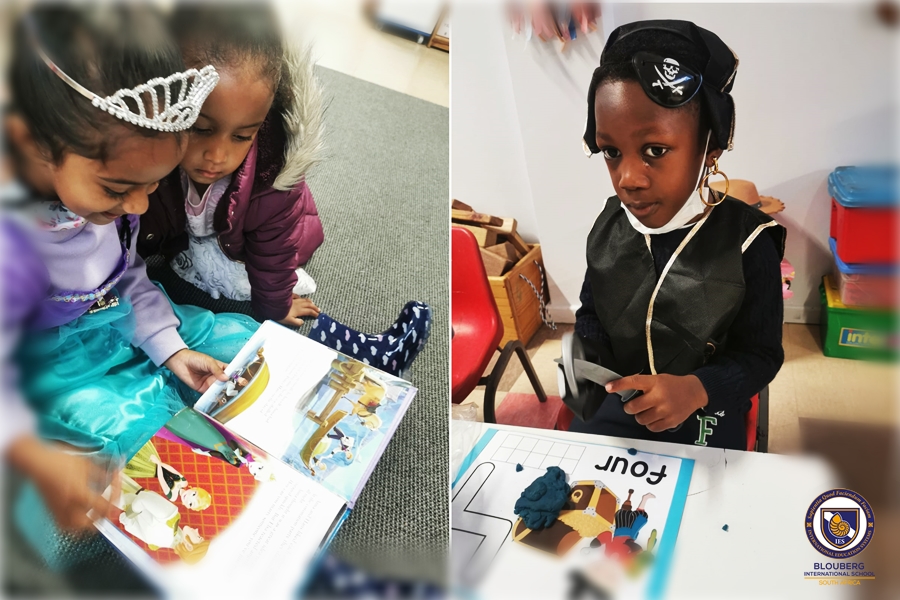
Our Foundation Stage students have been learning about Fairy Tales. The classrooms were abuzz with excitement as we embraced the theme by building Fairy Tale puzzles, made crowns fit for a prince and princess, paged through our many Fairy Tale books in the book corners, made beautiful crafts relating to the theme and of course read various Fairy Tales at story time.
Fairy Tales offer something a little different to a child’s development. They enrich imagination, cultivate a deeper understanding of life’s great truths as well as elevate an understanding of things that can be difficult and complex to convey.
Reasons Fairy Tales are good for children:
- They see good conquer evil
- Consequences for actions
- They see great obstacles overcome by ordinary characters
- They enrich imagination
- They benefit every age
- They build emotional resiliency
- Teach critical thinking skills
- Fairy Tales teach lessons
- Vocabulary
- Emotional Processing
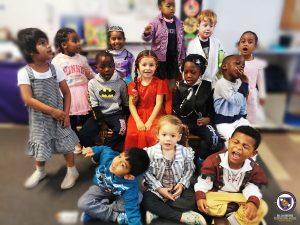
We ended off the theme with a dress up day, which was the most fun of all. The students got to tell the class about their favourite Fairy Tale and some got to dress up as and talk about their favourite characters (See photos). As Hans Christian Andersen once said: “Life itself is the most wonderful Fairy Tale.”
Cindy Nunan
Pre-Reception Teacher


Read More

Year 1 Outing To The Science Centre
A visit to the Cape Town Science Center is a highlight for many students. On Tuesday, 7 June the Year 1 students enjoyed the morning at the center.
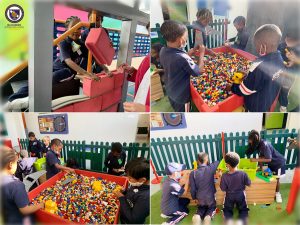
The students were fascinated to see the camera obscura where they saw a 360 view of cape town while sitting inside a dark room. They then enjoyed a lesson about shapes and had to complete a challenging shape sudoku. Working together to build a wall on the construction site was great fun; however when it came time to tidy up the students were not as enthusiastic.
The interactive exhibits allow the students to see how science works in the world around us. Finally, we had the Wizz, Pop, Bang Show, with lots of exciting chemical reactions making fire and sounds and the genie coming out the bottle had everyone enthralled.
The bus ride back to school was quiet and some even fell asleep after a very busy morning.
Here is what some of the students had to say about the Outing:
My favourite part is the … bottle rocket and the lighting box! (Ozioma)
I liked the food table and I liked the bottle rocket. (Leah Koopman)
I saw coloured fire and I saw the camera obscura. (Nathaniel)
I liked building a wall and mommy came with me. (Leah Karstel)
I liked the Lego site and I liked the speaking tubes. (Uche)
Ann Cordner
Year 1 Teacher and Key Stage 1 Coordinator



Read More
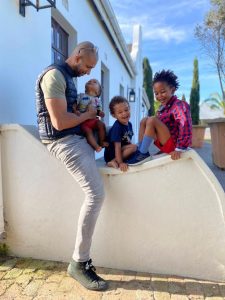
Happy Father’s Day
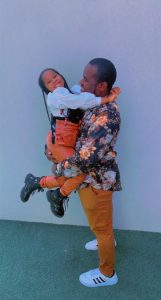
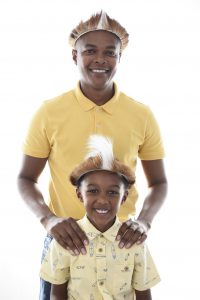
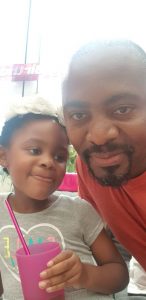
Father. Dad. Superhero. Protector. Best friend.
These are just a few ways that we can describe the most important men in our lives. Even as an adult, my dad is still my hero and I am still learning from him all the time. Father figures come in many different forms throughout the world and all of them represent beacons of light and a guiding path for those that they take care of.
In my Reception class, I asked the students some questions about their dads in preparation for Father’s Day this coming Sunday. Here are their responses:
How old is your dad?
Kopano: My dad is 44 years old.
Mahadhyuth: I don’t know – I didn’t ask him.
Lolwam: 14
Chimdindu: 60
Zande: 32
What does your dad do during the day?
Kopano: He showers and builds a library, church and school out of Lego.
Naif: He drinks Coke.
Chimdindu: My dad buys me stuff every day.
Bavani: He works and he goes to the shops and he takes my dog for a walk.
Isabella: He stays in bed or works with chicken.
What is your dad’s job?
Enhle: He sends messages for work.
Samuel: He works on his laptop.
Does your dad have super powers?
Naif: Yes, Sonic super powers.
Samuel: His muscles.
My favourite thing about my dad:
Enhle: He always let’s me play games.
Anam: Sitting down and watching movies as a family.
Bavani: For bringing me a dog.
Isabella: When he fetches me from school.
Is your dad funny? Why is your dad funny?
Purity: He tells me jokes.
Lolwam: No.
Amelia: Yes, he tickles me and tells jokes.
Anam: Sometimes, he tries to make puppets.
Zande: He plays tricks on me.
Emmanuel: He does magic tricks that are funny.
What is your dad’s favourite thing to do?
Purity: He likes to go camping.
Mahadhyuth: He loves to do work.
Amelia: Play with me.
Emmanuel: Work at the police station.
From the whole of the Foundation Phase we wish all of the Father figures in our lives a Happy Father’s Day and we thank you from the bottom of our hearts for all that you do for us!
Kim Hahn
Reception Year Teacher




Read More
Sensory Day
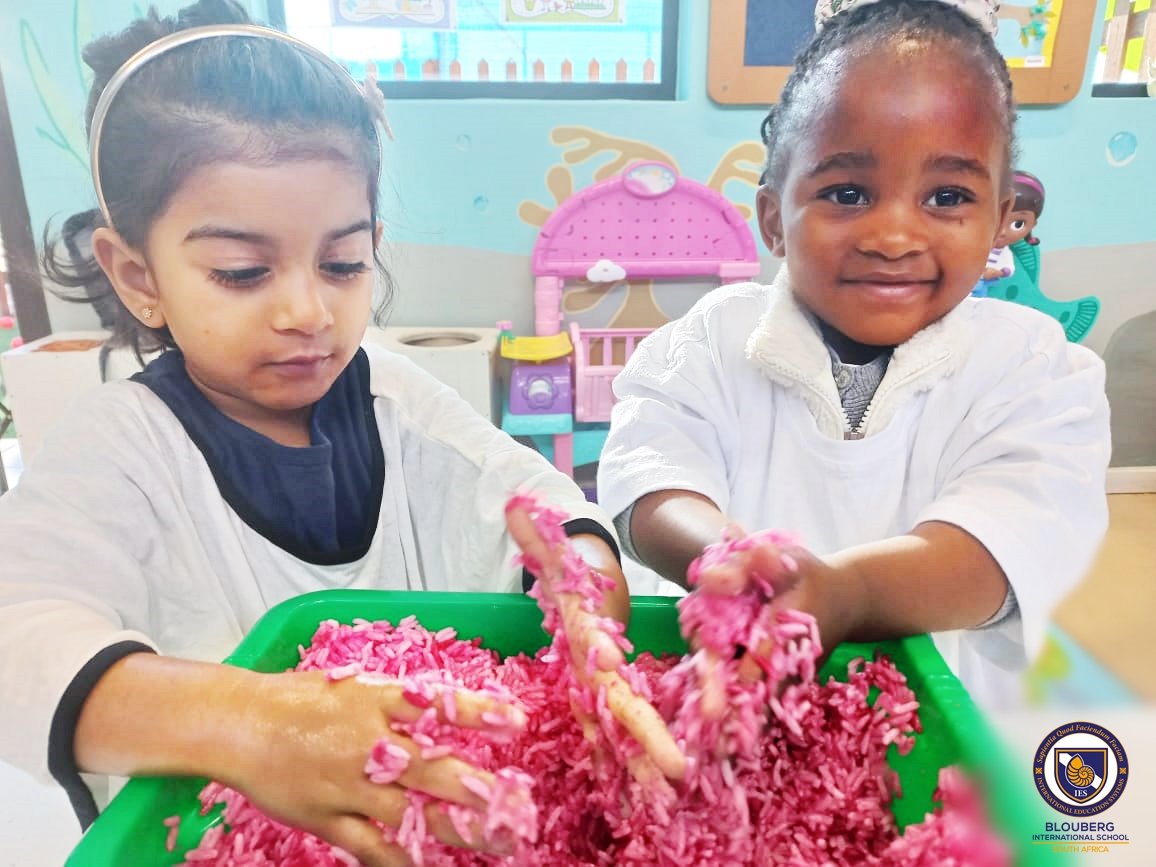
Even though it was messy, and oh the clean-up was a delight, the toddlers thoroughly enjoyed every minute of exploring the colourful spaghetti, the mushy sago and the sticky rice. They were able to hop out of the ‘clean class’ box and just enjoy making a mess.
Sensory play is an important part of childhood and there are really no limits to what you can use in your sensory activities. However, nature and food can often be your best friend when it comes to sensory play.
To help you keep your youngster busy during the holidays, here are a few great sensory play ideas for home:
- For keeping their hands busy:
- Soapy Jars: Fill a plastic peanut butter jar halfway with water, a pinch of dish soap and food colouring. Seal it tightly, and let your toddler roll it/shake it around outside.
- To explore their sense of smell (ages 4-6):
- Smell it and guess: Blend up six different fruits/vegetables in small quantities and pour them into separate dishes. Allow your little one to taste and guess.
- For co-ordination and organisation:
- Alphabet scoop and transfer: You will need alphabet magnets or water-safe letters, a storage container, a wooden spoon, two dish buckets and water. Pour enough water into your container to allow the letters to float and allow your child to scoop each letter out individually. You can practice various beginner literacy activities with them!
- To assist with emotions, and to keep them calm:
- Place beach sand or regular sand into a big container and hide small toys in the sand. Make sure the toys are all of the same themes. Once they have been able to scoop out each toy, engage with them to create a fantasyland on the sand. It’s like a zen garden for kids.
Jo-Anne Dickason
Nursery Teacher


Read More

Figurative Language: Putting Words To Work
I walked towards the door, my shoes squeaking on the tiles like nervous mice. The door at the end of the corridor gaped open, the wind whispering secrets between the hinges. I reached out and gripped the door handle, the metal a chunk of ice on this wintry morning. I checked that I had my book, and slipped into the English classroom, ready for my descriptive language lesson…
This term in English, the Year 6 students have been learning about figurative language, imagery in writing and the plot elements in a narrative plot structure (rising action, climax and falling action).
Their focus has been to include figurative and sensory language when writing, to help their writing pieces to become more descriptive. They used tools like similes, metaphors and personification (figurative language) to help paint a picture in the reader’s mind. They didn’t just tell stories, they created worlds. By using imagery (sensory details) in their writing, they transported their readers far and wide, taking them on adventures where they could see, hear, taste, smell or touch whatever the characters were experiencing.
For their final writing task, the students needed to apply what they had learnt, writing a story chapter that included the rising action, climax and falling action of their story, as well as using figurative and sensory language to help their readers visualise their setting and action. Of course, stories don’t just write themselves, and sometimes starting a plot can be tricky. To give them a jump-start on choosing their setting, students were given visual prompts of various possible settings and sensory details that matched them. They also made use of a bank of resources for metaphors, similes, personification, synonyms and adjectives, which they could use to describe the feelings and actions of their characters.
The Year 6s really stepped up to the challenge, showing that they could work independently, use their resources effectively, and give meaningful feedback on their peers’ work. They created impressive writing pieces, which I thoroughly enjoyed reading!
-“Wet, heavy drops splattered all over, like paint messily across a canvas, as their fire was quickly dying.”- Nuraan Price
-“He could feel his tears welling up again. They blended with the rain, bucketing down.”- Siyana Manawar
-“He stared forward examining the crude, rusty train tracks that seemed to go on for kilometres before disappearing into the thick ominous fog. He pinched himself on his forearm, hoping that this was all a dream, but nothing.”- Sadie E’ Silva
-“Jannet woke up to a crack as loud as thunder and shot up as fast as an elastic band”. – Aimée Davies
Katherine Nel
Year 6 Teacher and KS2 Coordinator


Read More

Aftercare And Holiday Care
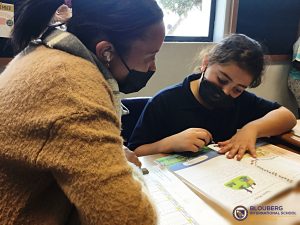
At BIS our main focus for Aftercare is to provide support for students when formal school activities close for the day. Some of the benefits and value that students receive when enrolled in our BIS Aftercare Programme includes:
- Basic homework routines support by aftercare assistant.
- Fun activities such as reading, drawing, arts and crafts, movies.
- Basic needs are met which includes safety, a snack, play time.
- Strengthened relationships with peers and more quality time to spend with parents at home, as homework and other activities are completed at Aftercare.
We also offer a fun, interactive and structured Holiday Care Programme, where extra-mural activities and recreation forms part of the daily routine.
Some of these activities include:
- Participation in sporting activities to strengthen and develop physical and team building skills.
- Learn life skills through participation in a range of informal and structured activities that teach children how to cope with everyday situations.
We have an exciting Holiday Care Programme planned for the June/July school holidays; enroll your child by clicking on the link below.
Avril Lai Wing
Aftercare Manager




Read More
‘X’ Marks The Spot
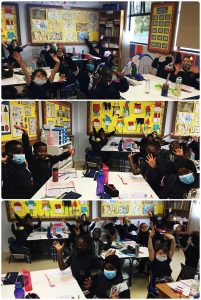
This Term in Geography, the Year 3 students have been learning how to read a map, what map symbols are used for and following directions on a map. They also learnt a great deal about grid references and compass roses. This all coincides with History where we are learning about ‘Explorers’.
When investigating map symbols, the students had to create their own map symbols for the classroom. Once they had completed that, they used those symbols to draw a birds-eye view of their classroom to show their knowledge and understanding of the concept.
We extended the concept by playing directions board games and completed a compass challenge game in groups.
The best part of the whole term was that each student was given a chance to create their own treasure map, and present an oral about their map explaining how to get to the treasure using directional language. Each map had to have an appropriate name, a key showcasing exciting locations, feature a compass rose for directions and footprints to the treasure (x marks the spot).
Students were allowed to stain their maps with tea or coffee and burn the maps to age them so that it looks authentic. I remember doing this exact activity in primary school, so I was very excited to see what each student came up with. I loved the various locations they used, like skull caves, waterfalls, sinking sand and volcanoes, only naming but a few. The Year 3 teachers are super proud of how much effort all our students put into this task. I am sure that you will agree with us when you see their beautiful maps.
We will continue exploring maps and atlases for the rest of this term while discussing the various famous explorers. I cannot wait to do the scavenger hunt and I am certain the Year 3 students will enjoy it too!
Wendy Menton
Year 3 Teacher

Read More

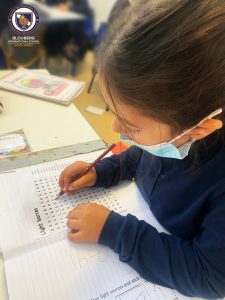
Year 2 Word Search Fun!
Word searches for children are available in a variety of themes and age-appropriate versions, which means that there is a word search out there for every type of child. Each word search features a list of words, some of which a child will be familiar with, and some of which will be new. The more a child encounters new words, the bigger his or her vocabulary will grow.
The following are the benefits of a word search:
- Provide hours of fun
- Improves vocabulary
- Improves spelling skills
- Can enhance productivity
- Provide a way for adults and children to bond
- Offers an appropriate way for children to socialize
- Develops problem-solving and pattern-recognition skills
- Nurtures an attitude of persistence
- Provide effective stress relief and working memory
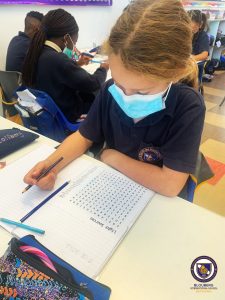
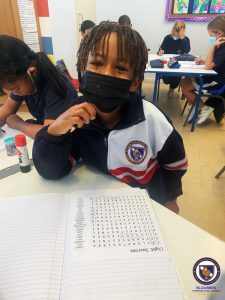
This week our Year 2’s had some fun doing a word search activity in their Science class. For Science this term we have been looking at Light and Dark Sources. We find that this kind of activity is a fun way to learn and also revise what we have learnt as well.
Siobhan Hendry
Year 2 Teacher

Read More