

Observing The Weather Using A Wind Vane
Our budding Year 5 meteorologists (a physical scientist who observes, studies and forecasts the weather) have been learning all about the wonders of the weather in Geography this term.
They started by learning about the four main elements of the weather (temperature, wind, rainfall and cloud cover) and how these can be used to describe the weather. They are currently completing a 2-week weather project, where they need to observe and track the weather on a daily basis. These observations require the use of various weather instruments, such as a thermometer for temperature; a rain gauge to measure rainfall and a wind vane to measure wind direction. Using these instruments accurately is a skill they need to master and demonstrate over the course of the project.
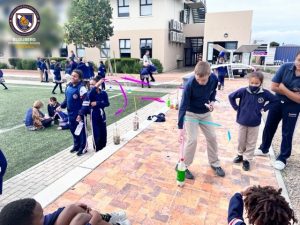
But we can’t accurately measure wind direction without an instrument to help us, so, the Year 5 students started the project by designing and making their very own creative and colourful wind vanes! The idea behind making these weather instruments was that they could then be used by each student at home when making their observations on the direction of the wind.
Great fun was had by all when they put their wind vanes to the test outside on the school field! The direction of the wind (moving air) is the compass direction that the wind blows from. On the day the Year 5’s did their test, the wind was blowing in a northerly direction. They knew this because they had first accurately plotted the 8 compass directions on the ground, using a compass.
We are looking forward to seeing the results of their investigations on weather at the end of this exciting project!
Cindy Drury
Year 5 Teacher


Read More
Library Etiquette
Do you still remember the majesty of the Public Libraries that we had to frequent in our youth? The days before internet was a quick fix search. Dewey decimal systems and the smells of old and new books. The librarian peeking at you over her reading glasses as you quietly and carefully walked past her massive counter. The feeling of excitement when you held your first library card. The library was an ocean of possibilities, peacefully beckoning you to crack the spine of a hardcover adventure. Hours were spent finding corners to read in, and making sure you returned your books on time to avoid that dreaded R2 fine. If you were lucky, you didn’t have to take notes by hand, but could make copies of those precious pages before using them for your school projects.
As mystical as the library was, it was also a character forming experience. We all knew the rules, almost as sure as muscle memory. From the moment we walked through those heavy doors, we understood that this was a place of resolute respect and consideration, quietly whispering to one another as we discovered other universes hidden in the pages of classic novels.
I have asked our students during the course of this week if they have visited the local library and not surprisingly, most of them have not. We all know that with the hustle and bustle of this day and age, we rarely have the time for simple pleasures, like visiting our local library. If you do ever find that you have a free morning with your child, then I would like to recommend Milnerton Library to you. The facilities are very well kept, and the staff are knowledgeable and kind. This would be a wonderful introduction to the vast community of libraries that our city has to offer. Proper library use is a vital skill, especially when it comes to the later years of education. Why not set our children up for success sooner rather than later. University and high school notoriously consists of ample amounts of research, and knowing how to effectively utilize the available facilities would be extremely beneficial to our children.
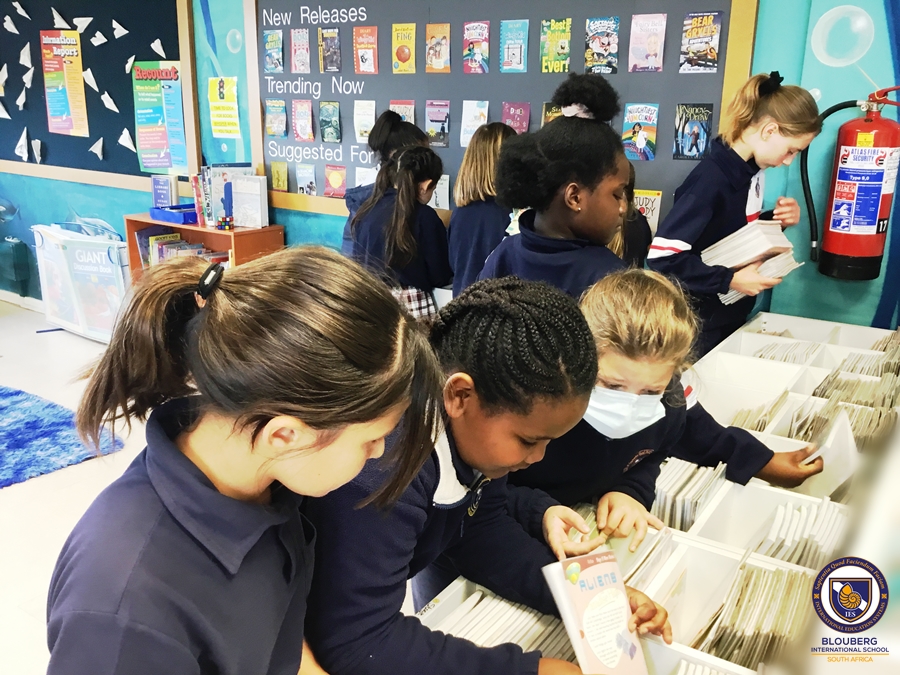
In our very own school library, we have discussed library etiquette this week during our lessons. It almost feels like a lost art and is certainly a worthwhile topic.
We discussed a few of the items below:
- What is the function of a library? We established that the library is one of the few places in society that is completely free. You don’t need to spend money to visit and enjoy the facilities. Being afforded the use of the facilities does come with some responsibility though. The resources are loaned to you in good faith, which makes you accountable for how it is treated and returned. Everyone is welcome in a library as it is a public space, cementing in our minds that education should be fully inclusive and knowledge freely available to all. Libraries can be used to study, do research, read, create awareness and so much more. However, the primary function is the loan and return of books.
- Where do we get our books? The students showed a great sense of understanding that the school library mainly grows through your kind donations, this includes the Birthday Book Programme as well as books that you would like to donate when you are no longer using them. We also discussed the purchasing of resources like our readers; and why we should look after the resources in the library. Some classes even delved into publishing, which is a very interesting topic in its own right.
- General Manners: We explored the rules of libraries and especially our school library. Students were reminded that we enter a library quietly; how to look for books and keep the shelves neat; and, where to return the books and how to check out new books for the week. Our conduct in a library is also extremely important: remembering that one must remain kind, caring and encouraging. If we conduct ourselves with consideration to our fellow library users, everyone will enjoy their experience and continue to benefit from the facilities.
- Returns: We discussed books not being returned and why we should always return our books. We should all have access to the knowledge in the library and if we fail to return our loaned books, the next student will not have access to the material. At this stage there are so many books outstanding at our library, that I would like to ask parents to please check if there are any school library books still at home. Your assistance with this will be greatly appreciated.
It has been such a privilege and a pleasure the last few weeks, getting to know the students even better, sharing stories, reading and brainstorming. I simply can’t wait to see what the future holds for our school library.
Trindade Camara
School Librarian

Read More

Year 12 Cultural Outing
On Friday, 12 August, the Year 12 Art students braced the winter cold and headed out to explore the cultural aspects and art galleries in the Tygerberg area.
We visited the Art.b gallery at the Bellville Library Centre, the Sanlam Art Collection at the headquarters of Sanlam, and a collection of international ceramics and mosaic artworks.
“Uncle Clive” drove us around in a BIS minibus and returned us safe and sound to BIS.
Art.B gallery
https://www.artb.co.za/vuleka-2/
Art.b, the Arts Association of Bellville, is an innovative, community–orientated organisation, sensitive to new ideas and supportive of established and emerging artists from all cultural backgrounds. Art.b, through its vibrant art gallery, creates a platform for and showcases visual art and artists in the Western Cape to raise public awareness of art.
The Arts Association of Bellville is the Western Cape branch of the South African National Association of Visual Art. It is a non-profit membership-based organisation open to all. The gallery is maintained and managed with the support of the City of Cape Town.
https://blog.sanlam.co.za/her-sanlam-art-gallery-bellville/
The Sanlam Art Collection came into being on 9 March 1965 when the Sanlam Board approved the acquisition of 12 paintings by well-known artists for the production of a prestige calendar in the coming year. The collection has grown considerably since and has proved to be a good investment, with the current valuation of the collection exceeding twenty times what it has cost to acquire.
The collection is seen not only in Sanlam offices but also in touring exhibitions across South Africa. Sanlam continues to acquire significant images from established and emerging artists in South Africa and this Centennial exhibition reaffirms its commitment to supporting the visual arts for generations to come.“Her… An exhibition of painting, sculpture, and printing from the Sanlam Art Collection celebrating South African Women Artists.”
Sanlam Art Gallery, Bellville 4 August – 22 October 2022
The present exhibitions in the Sanlam Art Gallery, Bellville, and Sanlam Art Lounge, Bellville celebrates the artistic talents of South African women artists from the early twentieth century to the present. The images by a diversity of women in different media allow for a multiplicity of themes to emerge pertinent to the concerns of women artists over the past century. The exhibition ranges from the capturing of mood and beauty in flowers, the domesticity of daily life and motherhood to the reflection on discrimination and violence against women.
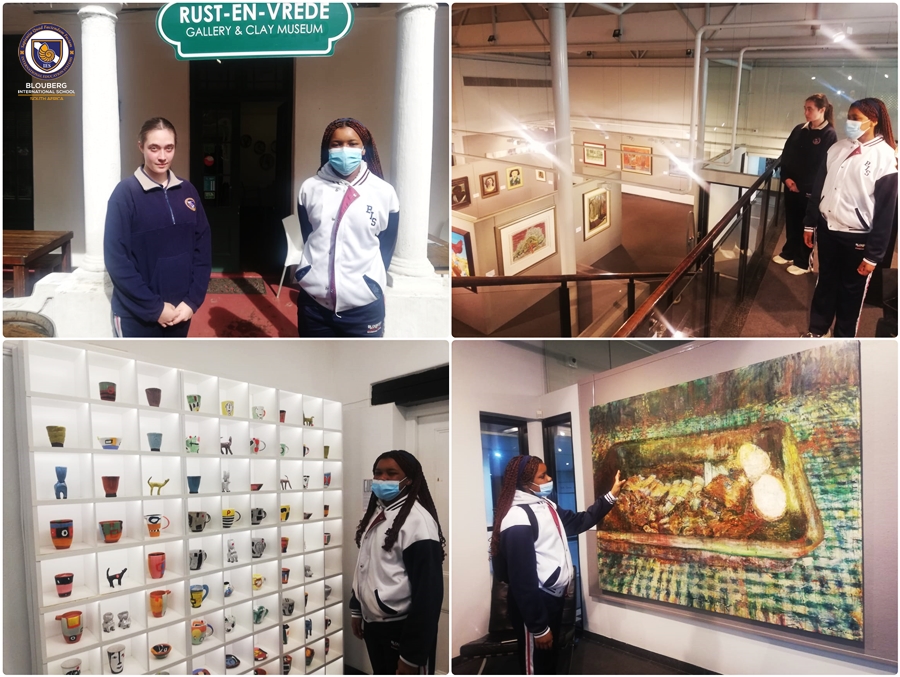
Rust-en-Vrede Gallery, Wellington Rd, Durbanville
The well-established Rust-en-Vrede Art Gallery showcases works of art by established and emerging artists. There are three exhibition spaces at Rust-en-Vrede.
The main gallery consists of two rooms and is referred to as Salon A and Salon B. Salon C is in the entrance room, which is a more informal space used for small solo- or group exhibitions.
Gallery Hours are Monday – Friday 09:00 – 16:00 and Saturday 09:00 – 13:00. The exhibitions change monthly and are freely open to the public. Artists who wish to exhibit at Rust-en-Vrede are requested to submit work and a short proposal to Gallery Management.
The members serving on this committee are nominated at the Annual General Meeting in August. They meet monthly to assess new applicants for exhibitions with the curator.
PIET-MY-VROU MOSAIC STUDIO
27 July ’22
An exhibition of mosaics by the students of Piet-My-Vrou Mosaic Studio. Exhibition opens on Saturday 30 July 2022 at 11 am.
Riaan Vosloo
IGCSE, AS and A Level Art and Design Teacher

Read More
BIS Performs At The Baxter Theater!
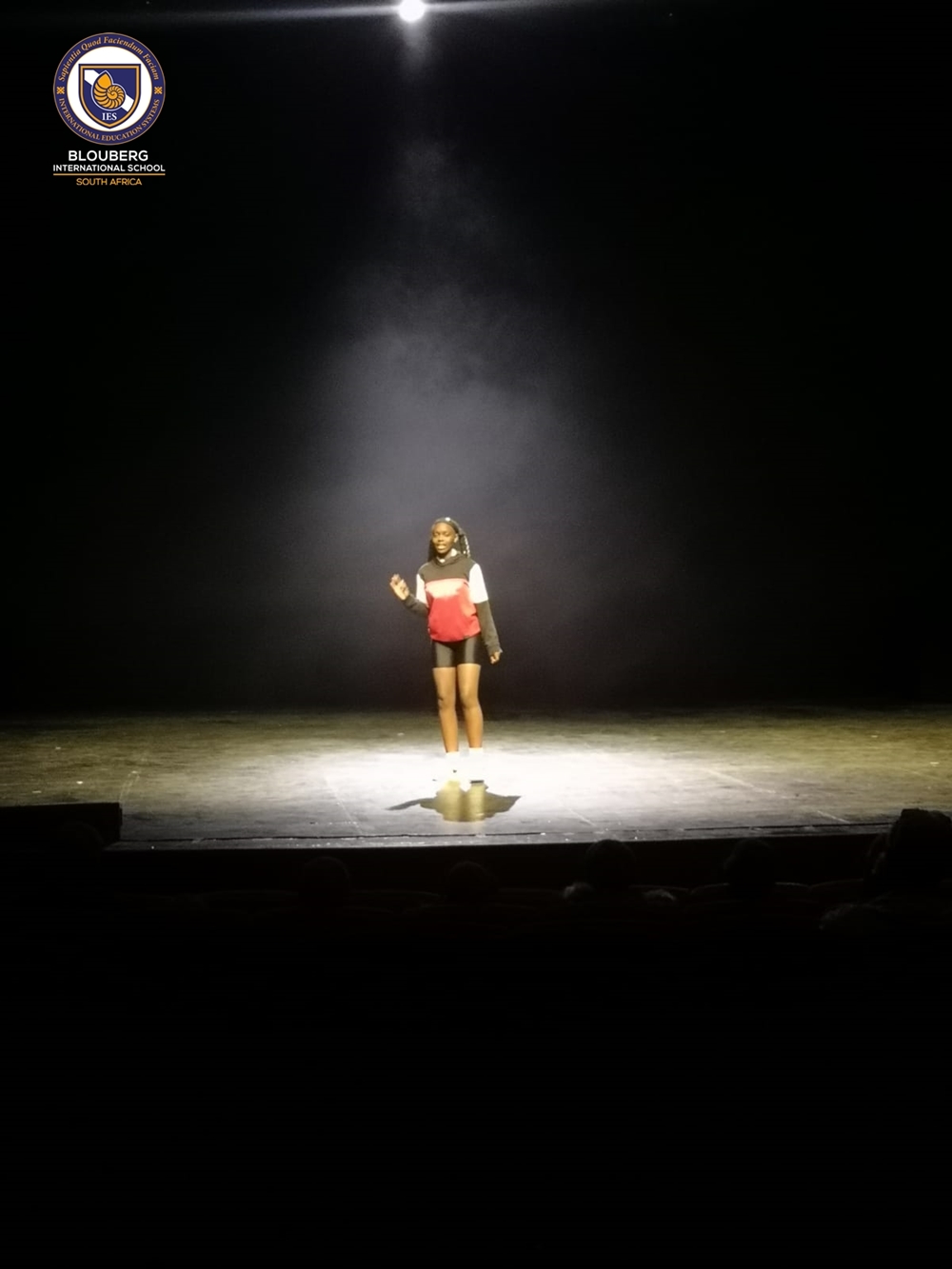
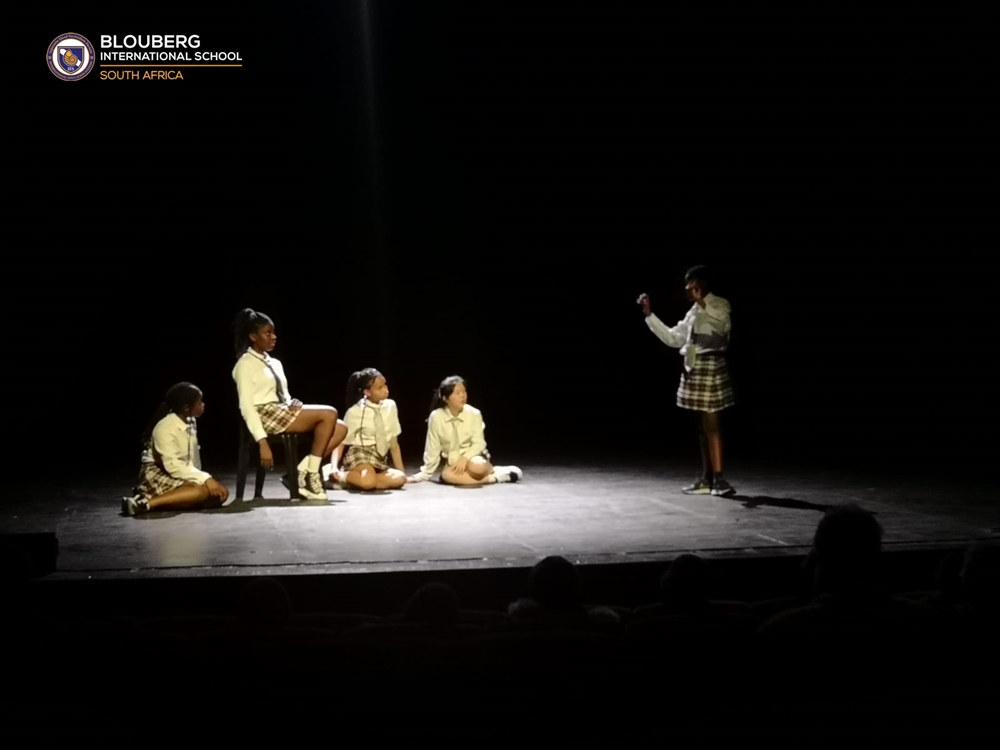
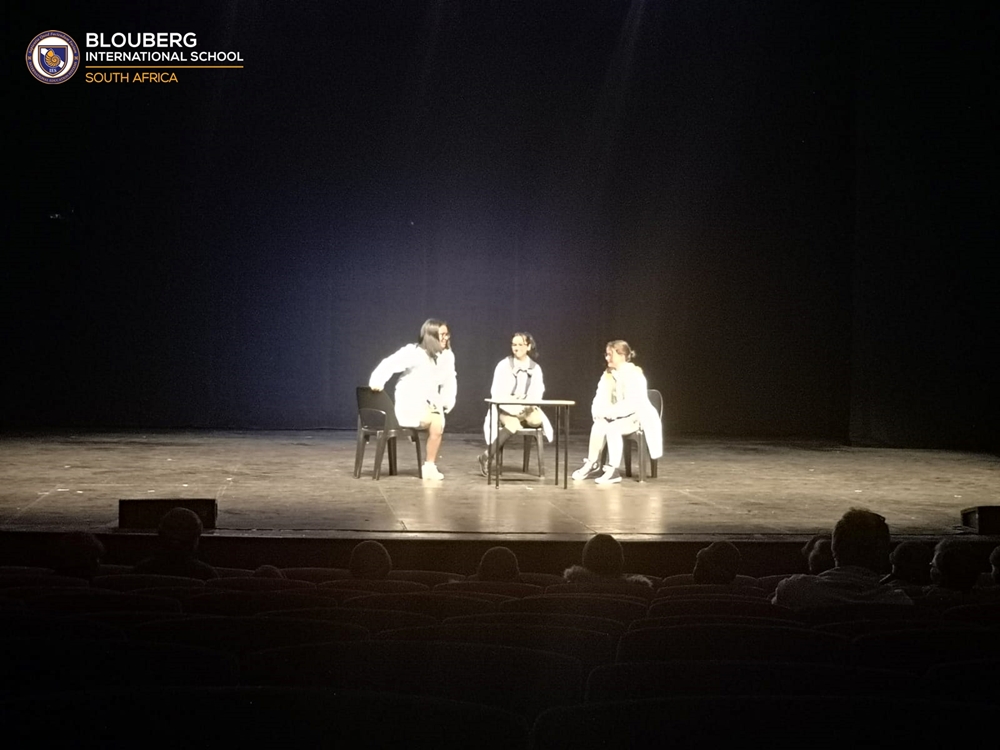
A few of our High School students had the experience of a lifetime on Wednesday, when they got perform to a very large audience on a professional theatre stage. BIS participated in the annual Shakespeare Schools Festival, which since it’s inception, the festival has become Africa’s largest Shakespeare youth drama program and has worked with over 490 schools, 9000 youth, 670 teachers across the Western Cape, Gauteng, Kwa-Zulu Natal and the Eastern Cape.
About the play:
The play is a modernised version of the “The Scottish Play” Macbeth by William Shakespeare. It is a spin off that takes place in an all-girls’ school, Dunsinane High, and instead of aspiring to be king or queen, Macbeth wants to be Headgirl. “Lady Macbeth” in this version is Bethany. The decision to modernise the play was made in order to help the students connect with the characters.
BIS took A Midsummer Night’s Dream to the Shakespeare School’s Festival in a previous year and we enjoyed it so much; that it was decided to make it an annual endeavour. This helps to allow our students the opportunity to develop their talents and passion and to perform on a professional stage. Though we were rehearsing intermittently for some time, the script change was only complete about a month ago.
I am so proud of the entire cast and crew members, many of whom were on stage in this capacity for the first time. They were extremely nervous, but did their utmost. Thank you to everyone who came to support our performance at the Baxter Theatre.
We look forward to our performances at school tonight at 18:30 and again at 19:30.
Tickets are only R40 and will be sold at the door.
High School Performing Arts and English Teacher

Read More
Coding!
It is safe to say that coding is one of the most constructive hobbies for your child to adopt, especially since it can help them develop persistence, communication, creativity, and higher-order thinking.
Yes, learning to code also sets your child up for potentially lucrative career opportunities, but it also offers children so much more than that. A modern parent cannot go wrong by encouraging their child to program.
At BIS, we have coding and robotics lessons every day during the week – Monday to Friday. The students enjoy their coding lessons and it is rewarding to see them grasp the concepts and solve problems by themselves. Here are reasons why coding is so important for children:
1. Coding Boosts Problem-Solving Skills
Coding is, without a doubt, one of the most straightforward ways for children to boost their problem-solving skills.
In a programming context, coders are constantly challenged and asked to problem-solve. The practice all but requires them to break issues down into more manageable sub-problems, then progress through an iterative process of identifying, prioritising, and implementing solutions. Thus, children start honing their problem-solving skills as soon as they take on their first coding challenge.
Research indicates that even if your child doesn’t want to go into coding as an adult, establishing a practice of coding early in life will nevertheless help them build highly-transferable cognitive skills. Is it any wonder why children should code?
2. Coding Improves Computational Thinking
Computational thinking is a branch of knowledge that involves expressing problems in a way that a computer would. Students who learn this model of thinking are encouraged to break down complex problems into smaller issues, thereby revealing underlying process patterns.
As researchers for an earlier study wrote on the matter, “We believe that children as young as ten can directly benefit from opportunities to engage in computational thinking […] Children can begin by solving puzzles on paper, continue on game boards, and ultimately complete their solutions on computers. Through this process, students can be guided through increasingly complex algorithmic thinking activities that are built from their tacit knowledge and excitement about game play.”
2. Coding Encourages Persistence
Computer science is one of the few professional disciplines where it’s entirely acceptable to be near-constantly failing. Not only is failure immediately recognisable — i.e. a program “breaks,” and doesn’t work as intended — but success literally cannot be achieved until all errors are handled. Even the most straightforward programs require a coder to understand a set of problems and solve them; otherwise, the code won’t run as intended.
However, with all this frustration and failure comes a real, lifelong character benefit: persistence.
When children begin programming, they come to learn that failure is transient, and doesn’t have to be frustrating or a progress-stopper. Even small successes can provide the encouragement kids need to push through issues in their programming. Over time, this perseverance can bolster a child’s grit — and serve as one of the most important indicators of their future educational and career success.
Coding can help your child develop a growth mindset: a philosophy wherein one’s ability to learn can be improved upon, adjusted as needed, and stand firm against demoralizing failures. What better mentality could a child adopt early in life?
3. Coding Improves Computational Thinking
Computational thinking is a branch of knowledge that involves expressing problems in a way that a computer would. Students who learn this model of thinking are encouraged to break down complex problems into smaller issues, thereby revealing underlying process patterns.
As researchers for an earlier study wrote on the matter, “We believe that children as young as ten can directly benefit from opportunities to engage in computational thinking […] Children can begin by solving puzzles on paper, continue on game boards, and ultimately complete their solutions on computers. Through this process, students can be guided through increasingly complex algorithmic thinking activities that are built from their tacit knowledge and excitement about game play.”
4. Coding Teaches Creativity
Creativity, creativity, creativity; it’s something every early educator and parent is wholly concerned with, and yet it’s not a quality prized by most working adults.
Creativity tends to decrease as we age. The adage is true — adults tend to be less creative than children. By the time we reach our sunset years, we have effectively “unlearned” one of the most important skills in life.
“Creative people have rapid and effective responses that help them to achieve their life goals and allow them to enjoy the journey… It is both a skill set and a unique and individual personality structure that’s developed throughout childhood and fine-tuned in adolescence,” Notre Dame researcher Doireann O’Connor once noted.
So, how do we preserve a child’s creative skills as they age?
Experts suggest that kids should learn to code. As a practice, coding positions developers as “creators” or “world-builders” within a programming environment — by definition, the discipline requires creative thinking and an experimental mindset.
With programming, kids are constantly prompted to experiment. Once they understand basic functionalities, they can continually ask themselves, What if I tried this? Would that work?
5. Coding is a Career-Building Skill
The importance of programming cannot be understated in our economy, which is now overwhelmingly driven by technology.
The biggest hurdle is just mastering that first programming language — but once they do, they will be well-positioned to learn different languages, frameworks, and technologies later on in life.
Sonia Terblache
ICT, Coding & Robotics Teacher

Read More
Showtime
Last week KS2 put on the Disney Jnr play, Aladdin. We spent a total of 80640 minutes, which is equivalent to 1344 hours or better yet 56 days rehearsing, preparing and setting up for this spectacular event.
A lot of hard work, long hours and dedication was put into making our KS2 concert a success. Today when I look back I do not think of the challenges or the long hours, the stress or the worry in the details. I remember the fun moments we all had during our shared time. I remember the laughs, jokes and even the mishaps that made the show even more memorable.
The cast was phenomenal. They are certainly stars in the making. I admire their dedication and tenacity. Without them we would not have had this amazing play. I have seen them grow in confidence and independence. Many of them began very shyly and quietly however by the time we ended those very same actors displayed admirable traits of fortitude, bravery and confidence. It is a true reminder to us all how remarkable our children are.
As Augusto Boal said, “We must all do theatre, to find out who we are, and to discover who we could become.”
It was a tiring 4 day event and even though there was a lot of relief in its success, the evening of Day 4 left us with an empty space as we all shared the same sentiment, “What will we do with our time now?”
Comments from the cast…
“It has been a dream come true to play the part of Genie”
“I will miss the time with everyone”
“It was so much fun, thank you for giving us the opportunity.”
The KS2 concert has shown us that not only is academics important in a student’s life, but the cultural aspect is needed to nurture a well-balanced, diverse student.
Until the next show, let us share the written words of Shakespeare when he said, “All the world’s a stage.”
Nadia Mahomed
Year 4 Teacher
Watch our KS2 students sing at assembly to celebrate a successful concert:






The Day The Teachers Became Penguins
The Year 2 classes had visitors yesterday! Educators from SANCCOB came to tell us all about penguins and sea birds. The students thoroughly enjoyed watching videos about all the ways SANCCOB helps injured seabirds and penguins. Did you know that glass takes 1,000,000 years to break down? Plastic takes 200 years to disintegrate. The students were horrified to see some of the photos of how litter could harm these gentle creatures.
There were fun activities as well. In groups, we had to identify good foods and bad foods for seabirds and penguins. However, the highlight of the morning was the dressing up of three teachers in penguin suits! Mrs. Coetzer, Miss Hendry and Teacher Angelique were then ‘assisted’ by groups of students, leading them through the different rehabilitation stages. This included, x-rays, food-giving, receiving medication and finally, gently helping the ‘injured penguins exercise.
Great fun was had by all, even the teachers.
Kim Coetzer
Year 2 Teacher


Read More
Why Should We Encourage Fantasy Play With Our Children?
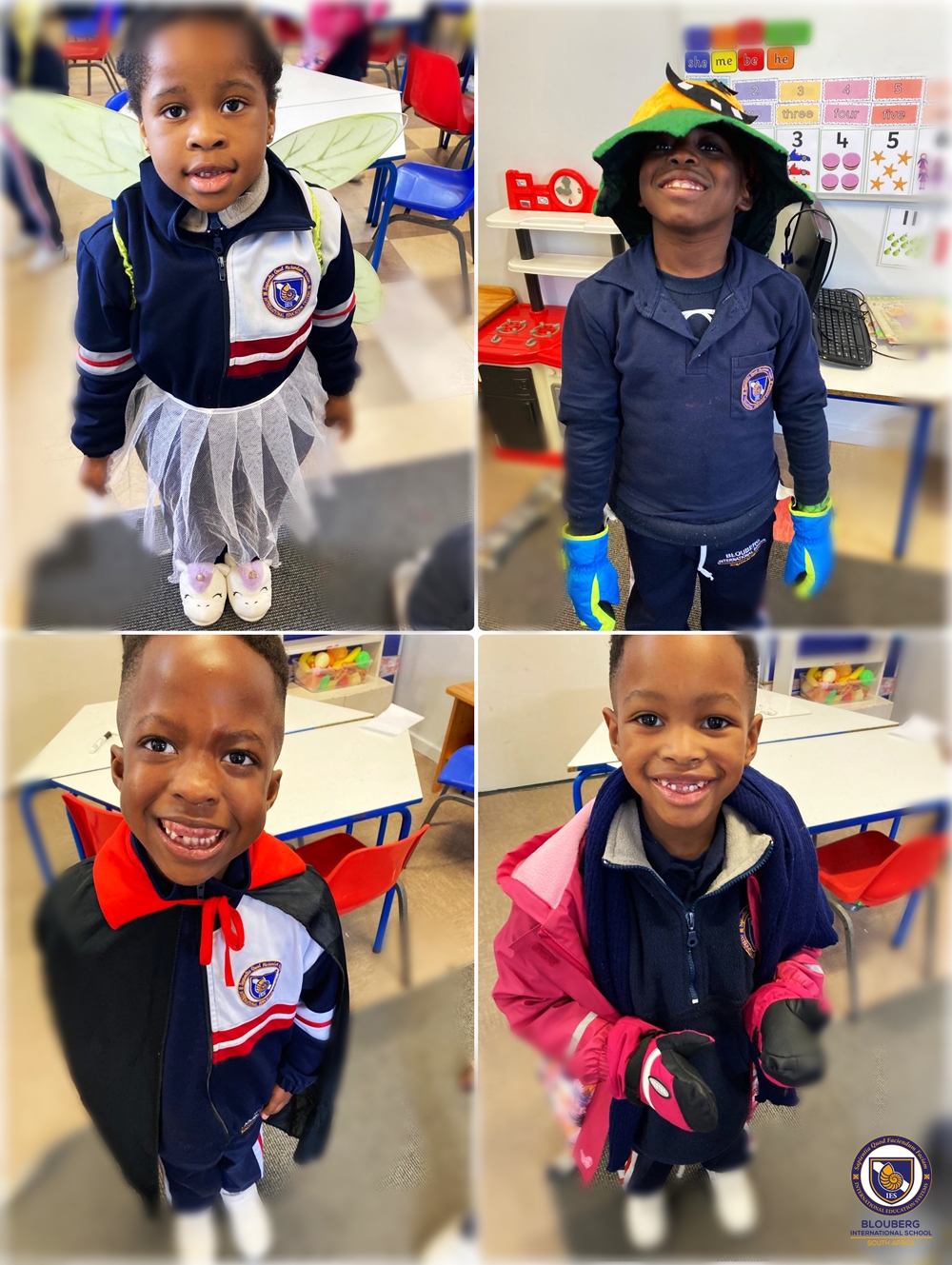
Learning through play has become widely recognised by practitioners as an essential method of learning and development for young children. Many theorists and researchers have identified the values of pretend or fantasy play as a vital contribution towards the normal development of a child.
Children will use objects to represent something else, or assign themselves and others in their environment “roles” and then act them out. It may seem very simple as an observer, but in these moments of escaping reality children are learning and developing many different and important life skills.
Fantasy play allows different perspectives to be taken and ideas and emotions can be moulded and rearranged which are both key features of a child’s social and cognitive development.
Here are 5 key reasons why teachers of younger children encourage their students to get involved in the world of make believe and to participate in fantasy play daily:
1. To encourage imagination and creativity
2. To support social and emotional development
3. To improve language and communication skills
Fantasy play allows children to experiment with and learn about the power of language, how it affects us and those around us, helps them to understand that words give us the ability to re-enact scenarios, to relay our point across to others and to make ourselves heard and understood.
4. To develop thinking, learning and problem solving abilities
5. To enhance physical development
Aside from all the wonderful cognitive benefits that pretend play has to offer, it is important to remember that pretend play is very often physical and is a wonderful way for children to be active, to exercise and to develop their gross and fine motor skills.
Let us not forget the key factor to any type of play: It is fun! And when we let our imaginations take over and we really play together, as children do, there are no limits as to where our minds can take us and there is no chance of running out of things to enjoy!
Kim Hahn
Reception Year Teacher

Read More
Social Media: What Is The Link To Children’s Mental Health
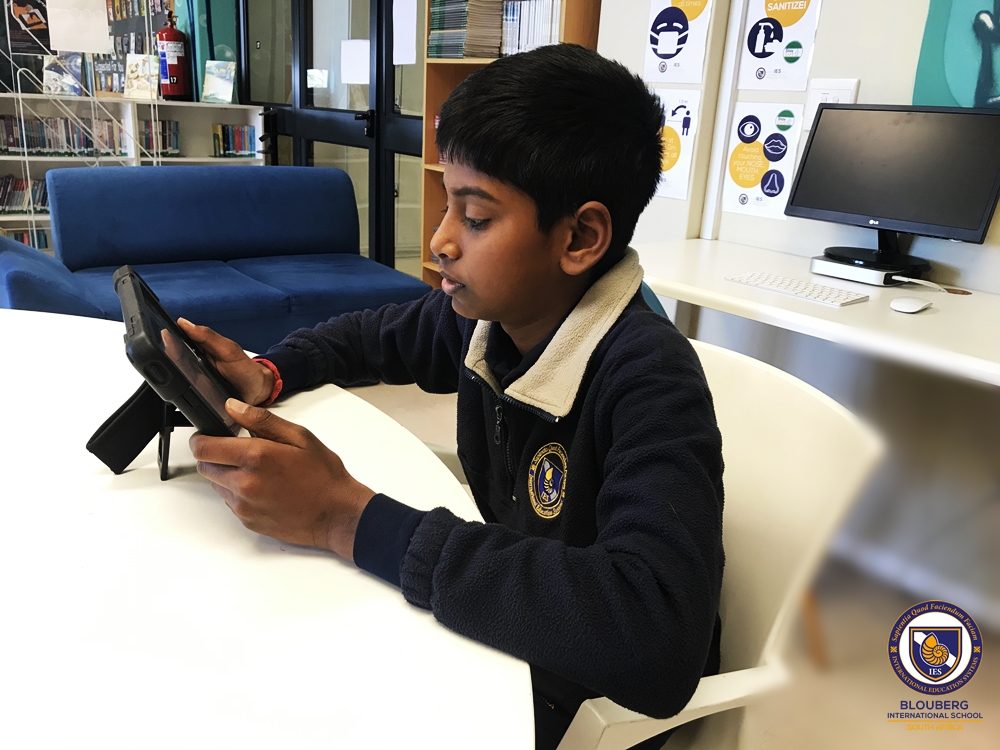
These days most children regularly make use of communication devices whether it be a cellphone, computer, tablet or iPad. The amount of time children are spending online with these devices is increasing at a rapid rate. That brings the question, what is the impact of this increased use of social media on our children’s emotional and mental well-being?
Currently we are experiencing a mental health crisis amongst our youth on a global scale. There have been sharp increases in the rates of depression, anxiety, self‐harm, loneliness and even suicide amongst our children worldwide. This has of course led to much research as to what the connection is between our children’s mental health and their exposure to and use of social media.
Many have said that the rise of social media use in young people coincides with the rise in mental health concerns. One of the most highly discussed and debated topics amongst parents today is screen time. How much is too much and what impact will it have on my child’s development? Researchers are sounding the alarm that screen time and social media use amongst our children and teenagers is something we should very much look at curbing, if we are wanting to make a positive difference in our youth’s mental health and emotional well- being in the future.
Our social media natives – Generation Z – don’t know much about a time before social media and easily accessible technology. According to the World Health Organisation (WHO), children between the ages of 5 to 17 years old should only have a maximum daily screen time of 2 hours. I am sure that on reflection, the majority of us can agree that our children and teenagers are spending far more time than this on social media daily. The time our children spend on their screens and social media is stealing time away from healthy activities that promote physical, social and emotional development like engaging in extra murals at school, hiking, exercise, and joining social groups.
Social media has become young people’s primary way of connecting with one another and for most within this generation, being online is described as a positive experience. So what is the big fuss then? Let’s explore some enlightening but frightening statistics, according to WHO. 1 out of 3 internet users is below the age of 18 years old. 3 out of 4 children spend less than an hour playing and exploring outside – that is less than a prisoner! 4 out of 5 tweens are on social media platforms like TikTok, Instagram and Snapchat by the age of 12 (the legal age required for most of these social media platforms is 13). 7 out of 10 children have accidentally come across pornographic images online. This means that even when our children aren’t actively seeking out dangerous or risky content, they continue to be exposed to and flooded with imagery and content that is not age appropriate. Imagine the psychological impact this is having on our children daily. The immersion into the virtual world can delay children and teens’ emotional and social development. Increased feelings of isolation and loneliness can develop with excessive device and social media use. This is because when talking online begins to dominate our social interactions, we engage less in the real world which exacerbates a feeling a loneliness.
Social media platforms are designed in such a way to hold the users attention for as long as possible. If we as adults are able to fall into this trap of mindless scrolling, our children and teens stand little to no chance with a still- developing prefrontal cortex in the brain. The notion of addiction to devices and social media is the biggest downside. The ‘likes’ and ‘shares’ for example, activate the reward system in the brain. It is instant gratification at our fingertips. The desire for validation and the fear of rejection is very much enforced by social media. “How many likes did I receive on that post?”, “What nasty comments have they left for me this time?”, “How can I look more like her/him?”. These are some common thoughts amongst users of social media. The consistent social comparison to others and their lives can have a detrimental impact on children’s self-esteem, leading to feelings of low self-worth and value.
Cyberbullying is one of the biggest risks when it comes to children’s engagement on social media. Children and teens insecurities are easily exacerbated by the use of social media, according to Unicef. Bullies have 24 hour access to their victims, with a tap of the finger. Those who experience digital violence online are more likely to engage in alcohol and substance use, missing school more regularly and achieving poorer academics. In extreme cases, we know of cyberbullying leading to suicide.
Social media use and technology in general offers amazing benefits for society and our children but we cannot forget the risks and danger it brings us too. Screen time and social media is stealing from us on a daily basis – it can take away our peace, our sleep, our connections and in Gen Z’s case, it can steal away our childhood. Some argue that “the genie is already out of the bottle” in relation to screen time, but there is still time to act.
What can parents do to help?
- Talk to your children about what they do online in a non-judgemental way. Trying to understand the “why” behind the excessive device or social media use is important before trying to curb or limit social media use.
- Limit screen time according to the age of your child. Even coming up with your own family device rule plan has shown to work and brings family together.
- Learn more about the technology your children are using. Have your children teach you and help you understand what they are doing online. This allows us to assess their personal risks being online and help support appropriately when needed. Screen time shouldn’t always be alone time. Co- view and co- engage as it encourages social interactions and bonding.
- Talk to your child regularly about the responsibilities we have as online users. Just as in the real world there are boundaries and rules to abide by, this is also the case online. Warn them about the importance of privacy and the dangers of predators online.
- Teach your children to be critical thinkers online. We can’t believe everything we see online as there will always be misinformation.
- Research parent controls that work for you and your family. Both Apple and Android have safety and parent controls features available. Even further, there are amazing parental control applications such as FYI play it safe, that help monitor and assess your child’s risk online, giving you ample opportunity to intervene and prevent harm to your child.
- Lastly but importantly, be a good digital role model. If your children witness you making hurtful comments on a social networking site or over using your device during family time, they will be less inclined to listen to your judgement around safe and responsible social media and device use. Model good behaviour so that they know what healthy and responsible digital behaviour looks like.
This long weekend, I encourage us all to pop the devices down and to truly connect. Pull out the dusty board games and the treasured family dominoes and enjoy some device free time with your family and children.
Kayla Smith
School Counsellors
Read More
Skills Programme – Online Etiquette
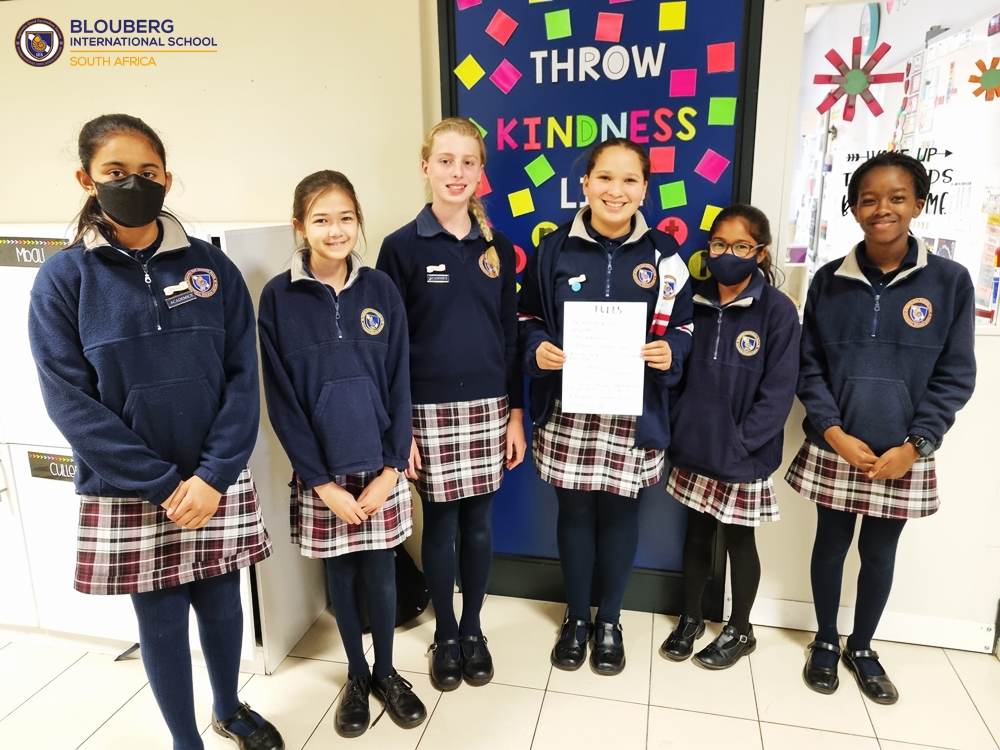
The Year 6’s have been focusing on Online Etiquette during their skills programme and how to conduct themselves in a respectful manner online. Online communication can be challenging at times for children. Not being able to read one’s body language or listen to their tone of voice can make it difficult to understand the meaning of a message.
During our skills lesson, we started by watching students act out a scenario. There could be no sounds or movement, just a still image. We then discussed what we thought was happening and what each person was feeling. The students started to notice that it was difficult to read the scenario without there being any context, sounds or movements.
We went on to watch a video that involved a message being misunderstood and discussed the meaning behind the video, how the students would have dealt with the scenario and what would have been the best way to deal with the issue. The students also spoke about “Why are people sometimes less respectful online?” and they were also able to explain the importance of always turning to a trusted adult when they are in a position they do not understand, makes them uncomfortable or nervous.
Finally, the students worked in groups to create rules for when they are online. With minimal guidance from the teachers, they all got into groups and began making their list of rules.
The Year 6’s have impressed us with their online rules as well as showing maturity and respect when creating them.
Brittney Hakime
Year 6 Teacher

Read More