
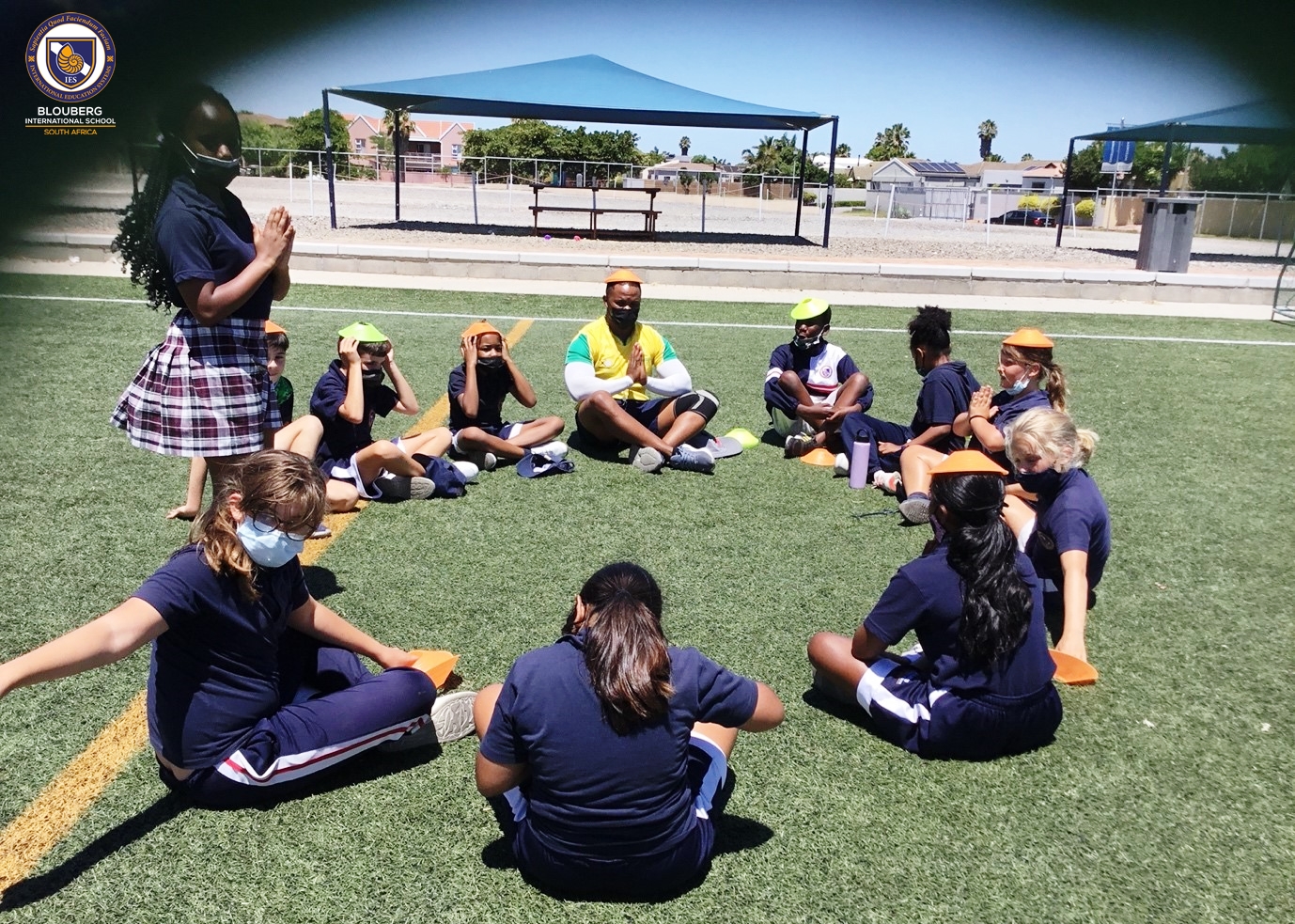
Physical Education
As we try to stay warm throughout the Winter sports season at Blouberg International School, we urge our parents and teachers to encourage each other in supporting and motivating our students to do their best on the sports field throughout the year.
Physical education uses exercise and information to promote healthy growth and physical development. It also encourages students to learn the facets of the curriculum involved and the benefits of participation in physical education and sports-related activities to the health and wellness of students from Pre-reception through High School.
Physical education is a course taught in school that focuses on developing physical fitness and the ability to perform and enjoy day-to-day physical activities with ease. Children also develop the necessary skills to participate in a wide range of activities, such as soccer, basketball, or swimming. Regular physical education classes prepare kids to be physically and mentally active, fit, and healthy into adulthood. An effective physical education program should include engaging lessons, trained P.E. teachers, adequate instructional periods, and student evaluation.
There has been a huge change in the schooling environment as we have seen in the past 2 years caused by the pandemic that is COVID-19 .
It has affected not only our sports in schools but also outside our schools in the way we think and live.
We come from being a nation that is brought together by our sports. Whether it be on a rugby, cricket, netball or soccer field within our beautiful country, we truly are a rainbow nation.
We have missed out on being inside a fully packed stadium with fans from all across the borders of the world, roaring in support of our favourite teams to being confined to our own spaces that are our homes.
Now that we are back outside on the pavilions ,inside the stadiums and in a better place as a country than we were two years ago, we hope to take this opportunity to explore, be adventurous and live a more fulfilling life than we ever have.
Our role as the Sports Department, Coaches and myself as The Physical Education teacher at Blouberg International School, is to bring out the best in our students on the sports field, to teach them about their bodies’ capabilities, and give them the opportunity to participate and challenge each other and themselves to becoming the best versions of themselves through our sporting activities on our PE and sports fields.
Our goal is to be one of the best sporting schools in our district, to produce well informed and educated athletes who are dedicated to their dreams and aspirations on and off the sports field.
We focus on creating an unforgettable sport schooling experience that will be engraved in our students’ memories forever. We would like to thank our parents for their support and may it continue as we build our school to be the best that it can be.
Once again, we urge our parents to give our students an opportunity to be a part of this wonderful adventure and give support to our coaches and staff on our sports fields, and build relationships with them that will be in our BIS family memories forever.
Mpho Mahlangu (Coach M)
Physical Education Teacher & Wellness Coach
Read More

Learning Using Models And Research
Learning is more than remembering terms and concepts. It is the start of a lifelong adventure of inquiry. The Year 3’s have been challenged and assisted in their research by using technology, observations, and secondary sources to study the Earth, Moon and Sun. What they have discovered, they have demonstrated using models.
Last Monday, the early risers had the privilege of seeing a Blood Moon. Aside from watching and discussing a YouTube video to learn what causes a Blood Moon lunar eclipse, they took photos and created a couple of beautiful collages of the Cape Town May 2022: Blood Moon.
The iPads have also been used to research lengthy websites and discover the 7 ways the Earth is round. They did this by simply using the subtitles as a reference. We also explored how to use Kiddle – a search engine designed for kids to use to find information quickly. We then moved on to using YouTube as we mined for diamonds of information on a Dr Bionics video about the structure of the Earth.
Of course an interactive way to display our knowledge, is to use models.
This term we have used our hands to demonstrate how the primitive (reactive) brain and the prefrontal cortex helps us focus and solve problems.
We made interactive lungs with cards, balloons and straws to show how air comes in through our nose and mouth and inflates our lungs.
We are especially proud of our plate models, which show the phases of the Moon; the names of each stage as the Moon rotates on its axis and orbits the Earth. Some students were even able to show where the Sun would be during a lunar eclipse.
Information that students find for themselves, discuss, and demonstrate their understanding of becomes a lived experience instead of a book study.
Carey Schoots
Year 3 Teacher


Read More

Having Fun With Shadows
The Year 2 classes have been learning about light and dark during their Science lessons. They have looked at different light sources and can identify those which are man-made and those which occur naturally.
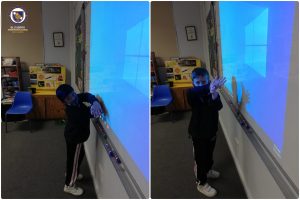
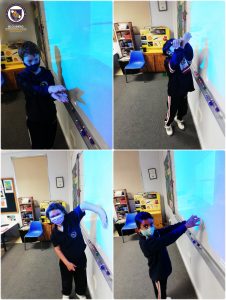
We had some fun during our last Science lesson, using shadows to make funny creatures on the whiteboard, using the light from the projector to create shadows. My class decided that this was the best Science lesson. There was much laughter as their classmates tried to guess what the creature made by their friends were.
Kim Coetzer
Year 2 Teacher
Read More
High Frequency Words
In term 2, our Reception students have been introduced to High Frequency Words. High Frequency Words otherwise known as sight words, Dolch words, refer to a set of words that most commonly are found on any page of text. Readers need to instantly recognize these words in a text and often the words cannot be sounded out. Readers therefore need to memorise these words in order to read more confidently and fluently. Learning High Frequency Words is an important skill that is incorporated into reading homework. It is therefore essential to learn High Frequency Words in fun ways. Listed below are some ideas for flash card games:
Flash Cards Games
- Can you find? Lay cards on a table. Ask the student to find a given word. If they find it, they keep it. Keep going until all the cards are picked up.
- Who has more? Show the cards to the student. If they read the word within 5 seconds, they keep the cards – if not the parent keeps the cards, the goal is that the student has more cards at the end.
- Concentration – Using double copies of words take turns turning over 2 cards at a time, trying to make a match. The player must read the words correctly to get the match.
- Go fish – Use double copies of cards, pass out all by 5-6 of the words. Put these in a stack face down on the table. Look for matches in your set of cards. (each player must be able to read the word or the set goes in the stack on the table. Take turns asking each other for cards to make matches. The person with the most matches at the end is the winner.
- Slap Jack – Draw a star on a blank flashcard. Place this star card and the other flashcards face down on the table. Take turns turning over a card and reading a word. When the star card is turned over, the first player to slap it wins.
Bronwen Nuthall
Reception Year Teacher

Read More

Pre-Reception Learning All About Reptiles
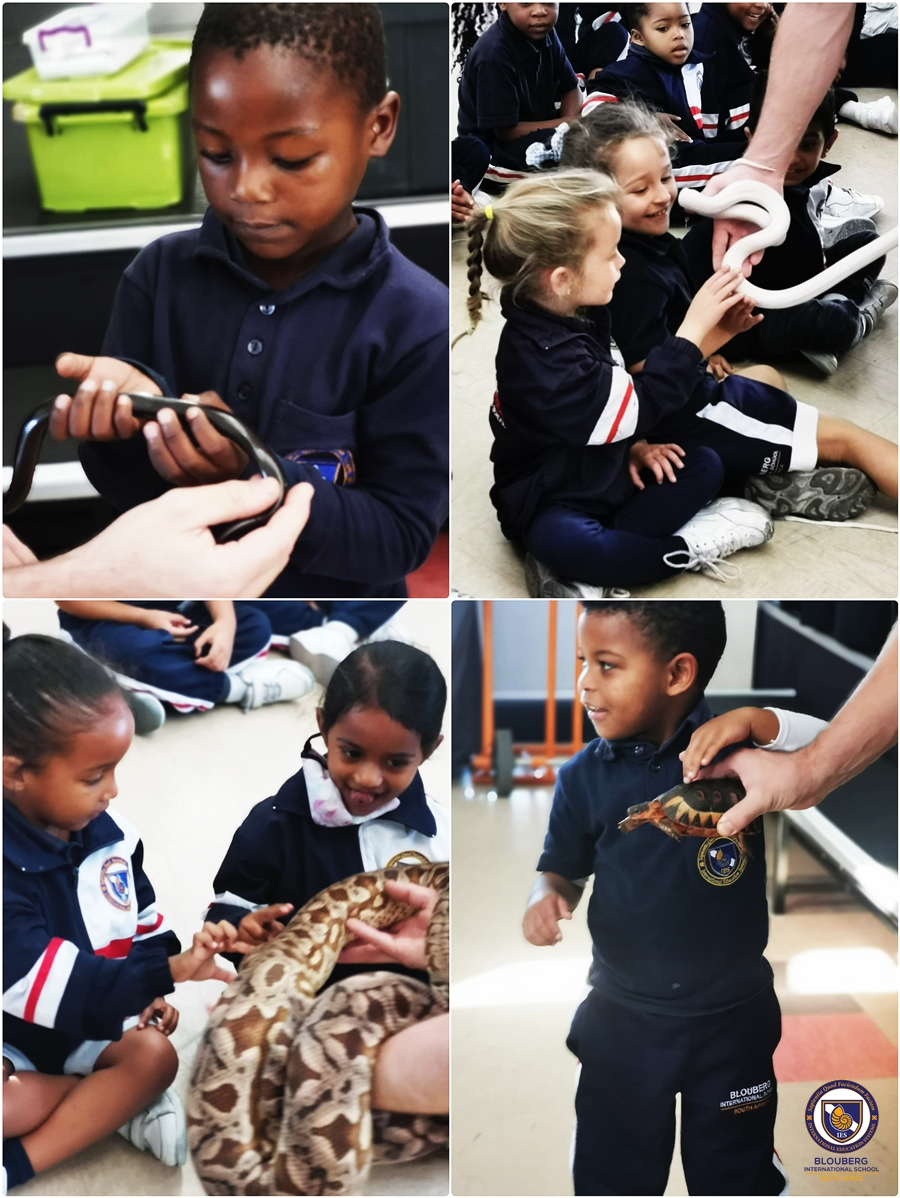
For the past week, Pre-Reception have been learning about Reptiles. They loved painting and making different Reptiles. The students also played games like snakes and ladders, learnt various Reptile rhymes and songs.
The highlight of the week was definitely when the Reptile Man came to visit, bringing his great collection of snakes, lizards, geckos and tortoises.
Some Reptile facts the students have learnt:
- All reptiles lay shelled eggs.
- A reptile breathes air.
- They have bony shells or are covered in scales.
- Majority of reptiles are cold-blooded.
- The most diverse reptiles are snakes and lizards.
- Most eat insects and small animals.
Our students were very brave and eager to touch and learn about the various reptiles. They couldn’t stop talking about all the wonderful things they saw during the special presentation by the Reptile Man.
Cindy Nunan
Pre-Reception Teacher


Read More
Marvellous Materials
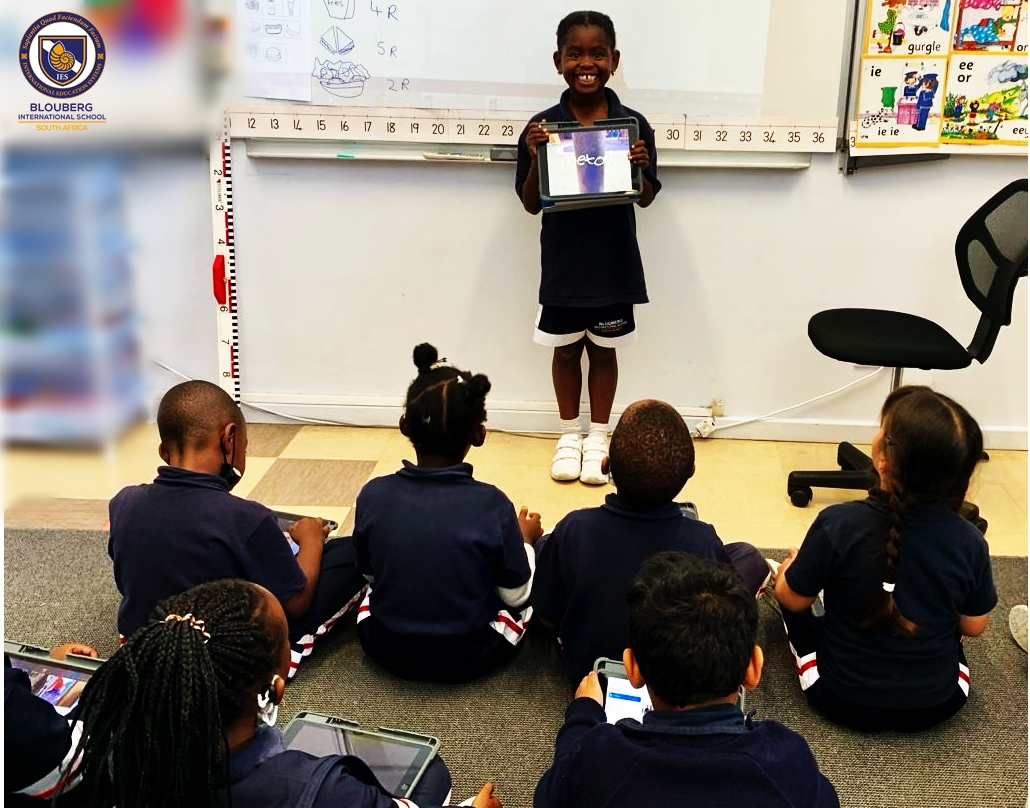
We have been learning about marvellous materials in our Science lessons in Year 1. Exploring, investigating and identifying different materials is all part of the fun and we have been very busy this week.
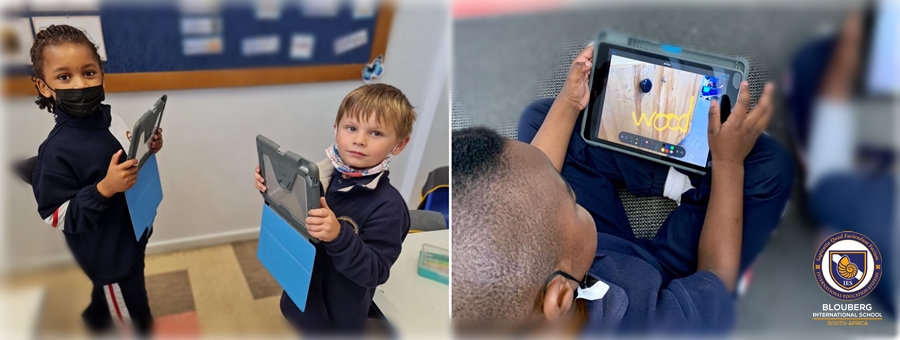
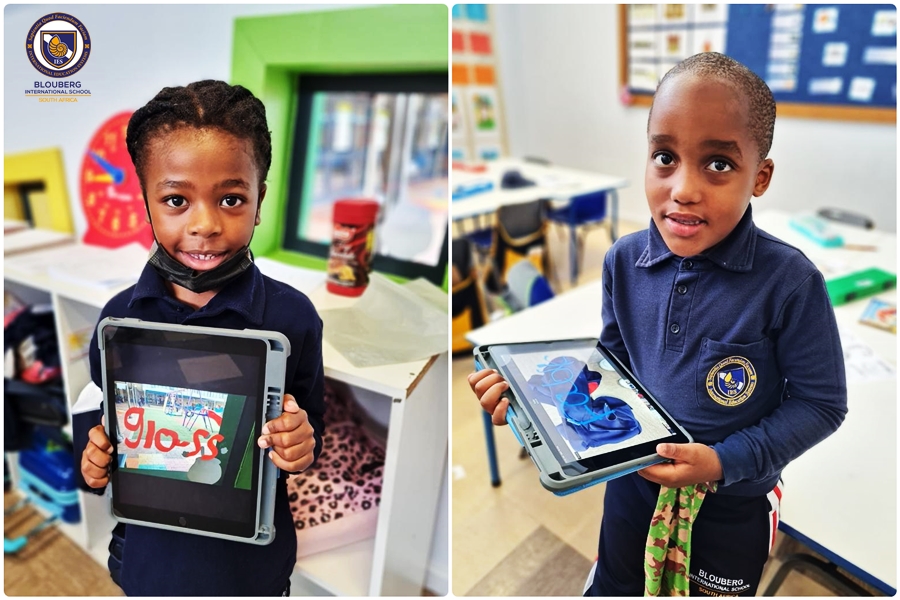
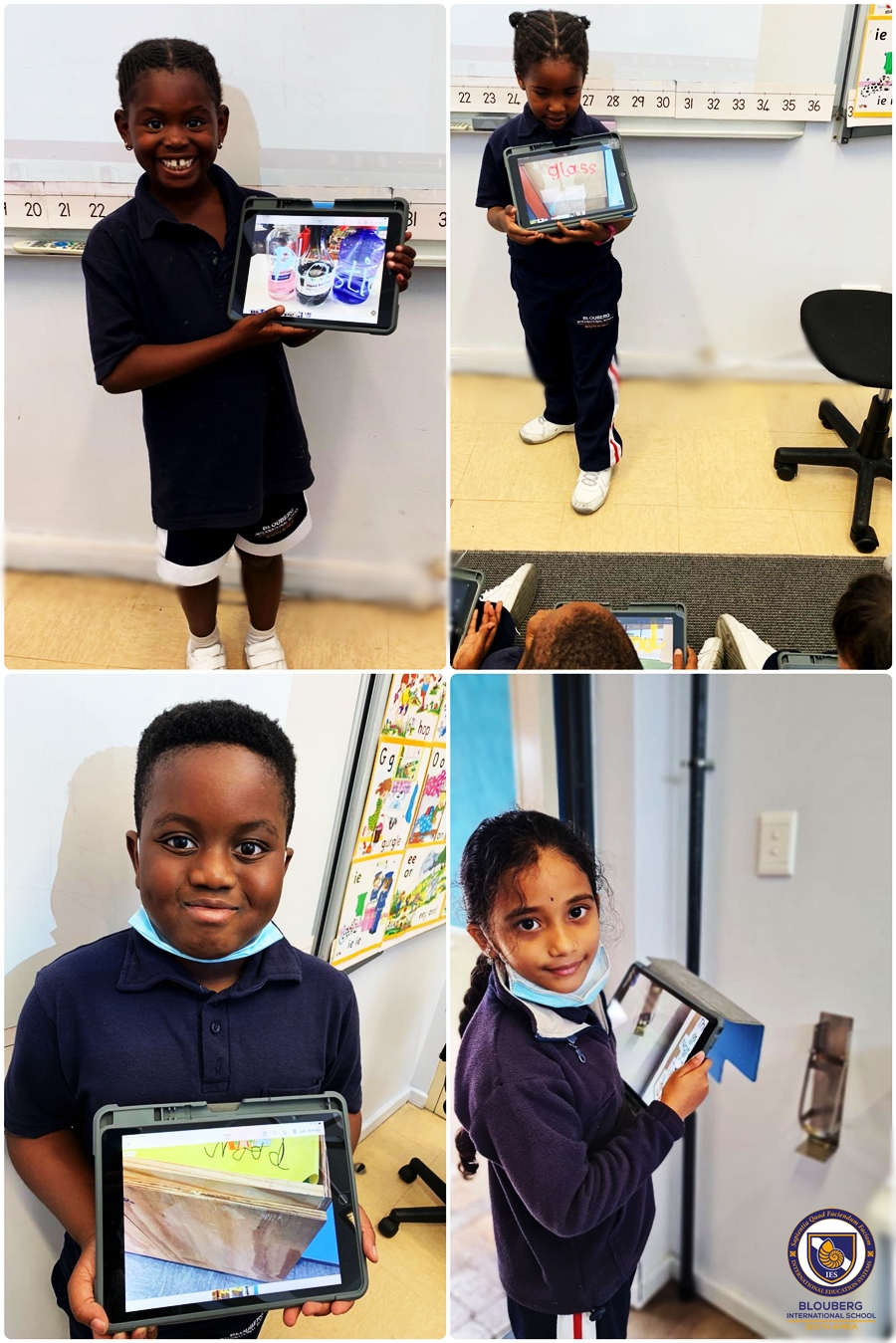
We used the school Ipads to identify and take pictures both inside and outside of the classroom of 4 different types of materials, “glass, plastic, wood and metal.” The students then edited and labelled each picture they took and presented it back to their friends in class.
We were very impressed by the discoveries the Year 1s made and how well they recorded their findings.
The students thoroughly enjoyed these interactive activities!
Charlotte Cronje
Year 1 Teacher

Read More
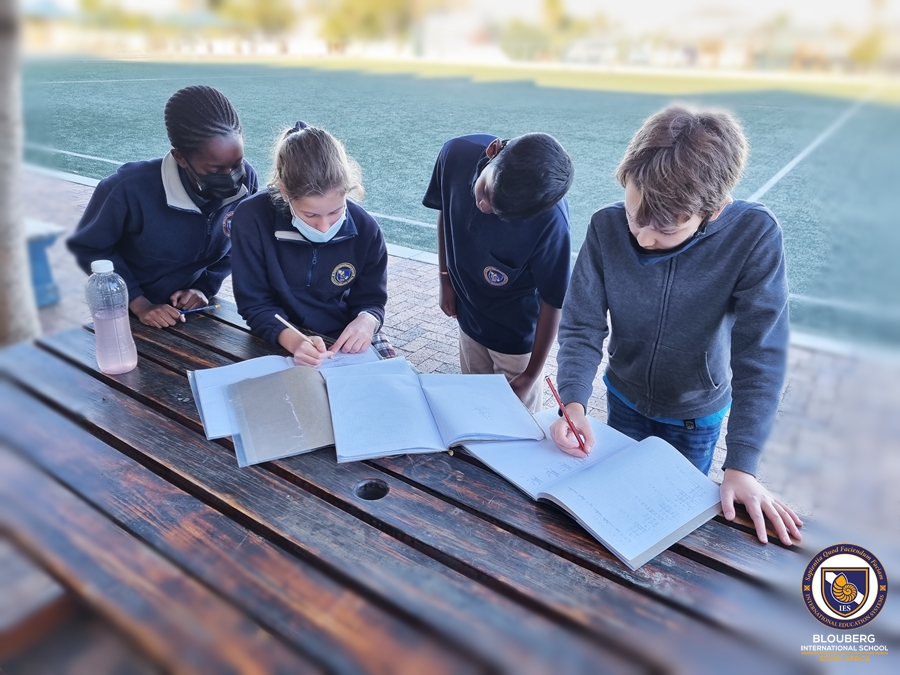
Multiplication Scavenger Hunt
In Mathematics, the Year 6’s have been learning about multiplying whole numbers by two digit whole numbers. They have learnt about many different methods to work out their answers such as the Grid Method, Expanded Written Method and Formal Written Method. This week they put all this new information to the test and took part in a Multiplication Scavenger Hunt.
The Year 6’s received clues such as:
– I’m a four sided shape but people call me five.
– Here we hold meetings and celebrate stars of the week. To find the next clue go take a peek.
– With clothes of green, and bark not of a dog. Search me for the goods, I sleep like a log.
– A site of work and getting things done, and making calls for your sore tum.
– Back and forth I take you, higher and higher you fly. At time you can push me and I might make you cry.
Can you figure out where these locations are?
When they arrived at their destination, they would find a task card waiting for them with a number sum or a word problem on it. Once they worked out the correct answer they could come back to me and receive their next clue. This turned into a competition, with each group trying to get to as many task cards as they could.
This was a lot of fun and a more hands on way of learning. It allowed the Year 6’s to show off their newly learnt multiplication skills, as well as practice other skills such as: team building, patience, group work and time management skills.
Brittney Hakime
Year 6 and 7 Mathematics Teacher


Read More

The Brothers Grimm
What do ‘Snow White’, ‘Little Red Riding Hood’, ‘Sleeping Beauty’ and ‘Rapunzel’ have in common?
They share the fact that they were first written down and published in a book over 200 years ago by The Brothers Grimm. Jakob and Wilhelm Grimm born in Hanau near Frankfurt in Germany studied to be lawyers and later became university professors, but their most loved hobby was collecting stories, especially fairy tales. This led them on a trip across Germany and Europe in search of all the many folk songs and folklore that was rich to those areas. In 1812, they first published ‘The Grimm’s Fairy Tales’ in two volumes called Kinder- und Hausmärchen (Children’s and Household Tales) with over 200 stories that have endured to this day for the young and old.
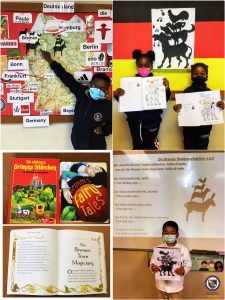
One of these perhaps lesser-known stories ‘Die Bremer Stadtmusikanten’ (The Bremen Town Musicians) came to life in the German classroom in Book Week this term.
The Year 1-6 students were all introduced to The Brothers Grimm and enjoyed watching and listening to the fairy tale all about the four animals. Der Esel (the donkey), der Hund (the dog), die Katze (the cat) and der Hahn (the rooster) were on the way to Bremen (a city in the north of Germany), to become the town musicians after no longer being of any use to their owners. On the way, they had some adventures and learnt that through teamwork anything could be accomplished.
The students especially loved singing along to the song with much enthusiasm:
Wir sind die Bremer Stadtmusikanten-holla-di-ladio! (We are the Bremen town musicians- Holla-di-ladio.)
Der Esel macht I-Ah, I-Ah.
Der Hund der macht Wau-Wau, Wau-Wau.
Die Katze macht Miau, Miau.
Der Hahn macht Kikeriki, Kikeriki.
Sie singen so wunderbar! (They sing so wonderfully!)
It was wunderbar to be part of Book Week and celebrate ‘How do you Book?’ by bringing to life a fairy tale with a song.
Click here for the link to the music and the song to sing along. https://www.youtube.com/watch?v=KUU5gNPpJ70
Frau K. Pani
Primary School German Teacher
WATCH:


Reference:
https://www.britannica.com/biography/Brothers-Grimm
Read More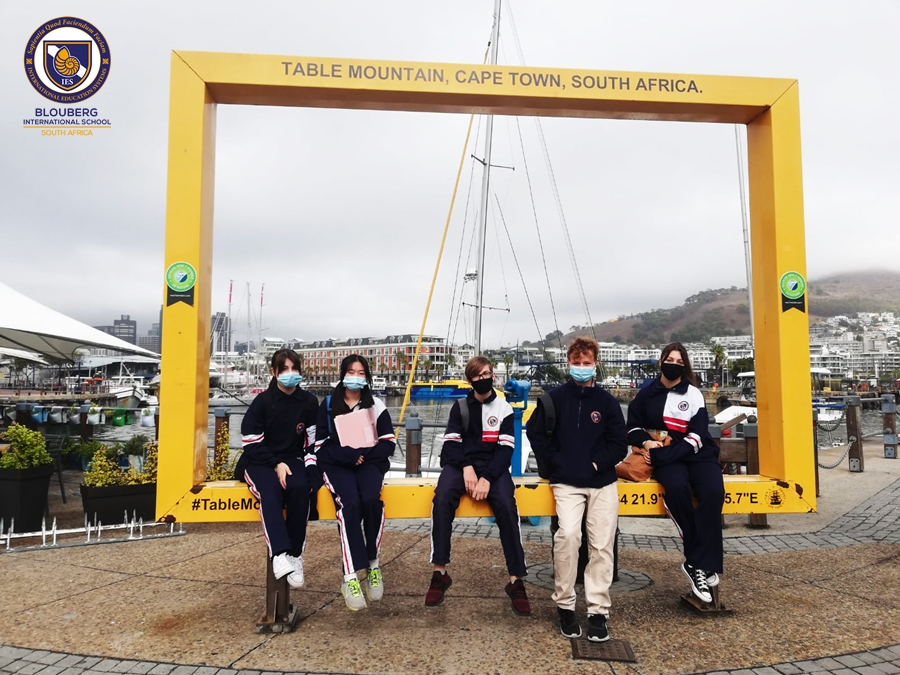
Year 9 Travel & Tourism and Art students’ Outing to Hotel Sky and the ZEITZ MOCAA
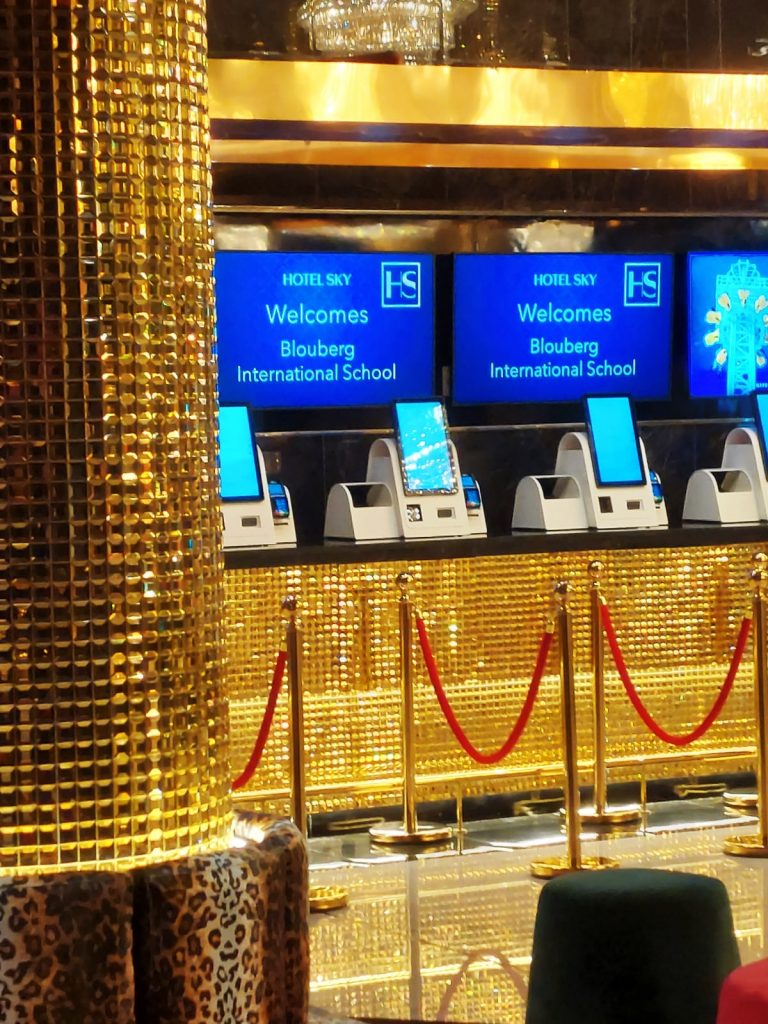
The Year 9 Travel & Tourism students had the opportunity on Friday, 13 May, to attend a guided tour of the 27 storey Hotel Sky in Loop Street, Cape Town. This included all the front of house responsibilities, the rooms, restaurants and even a behind the scenes look at the kitchen.
A highlight of the Hotel Sky visit was when the students, teachers and Mr. Swart, went on the Sky-Hi Ride, on the 28th floor of the hotel. Towering 35 metres above the Cape Town City Bowl, it gave us a bird’s eye view of one of the most beautiful cities in the world. One of only three in existence, and the first of its kind in Africa, this exhilarating, gravity-defying and breath-taking drop reaches a free fall speed of up to 100km per hour.
From there the Year 9 Art students went on a guided tour of the current exhibitions at the Zeitz MOCAA – Museum of Contemporary Art Africa – located in the Silo District at the V&A Waterfront. It is the largest museum of contemporary African art in the world.
The guided tour included visiting the largest comprehensive retrospective of the revolutionary work of Tracey Rose (b. 1974, South Africa). A radical voice in the international and South African art world, Rose’s cutting and uncompromising vision of work spans from 1996 to 2019.
The students then visited the exhibition of works by Johannes Phokela. “Only Sun in The Sky Knows How I Feel (A Lucid Dream)” is a major exhibition of new works by this South African artist. This project marks almost a decade since Phokela’s last institutional show and includes a select survey of his oeuvre from the last three decades. The exhibition forms part of an ongoing series of in-depth, research-based solo exhibitions by the museum that brings into focus and contextualises the practices of important African artists.
The Travel & Tourism and Art students joined each other for another highlight of the day: lunch at the famous V&A Waterfront’s Food Court.
Concluding our outing, we travelled safely back to BIS in the safe hands of our drivers, Mr. Clive Singlewood-Smith and Mr. Mpho Mahlangu.
Riaan Vosloo
IGCSE, AS and A Level Art and Design Teacher
WATCH!
Read More

Year 7 Camp At Disakloof
During the first week of May, the Year 7 group embarked on an exciting camp at Disakloof campgrounds in Betty’s Bay.
We met at school early on Wednesday morning and the students enthusiastically clambered onto the bus in anticipation of their first high school camp. The long trip came to an end, and we were warmly welcomed by the incredible Venture Forth crew at Disakloof.
The camp kicked off with ice breakers and games among the students. Thereafter the students were sent to select their dorms, where they were greeted by a rather terrifying and hairy guest – a passer-by baboon decided to greet the ladies of Blouberg International School right inside their dorm!
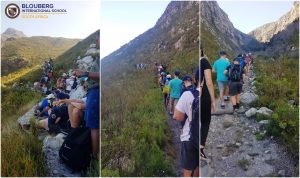
After all the excitement and shrieks, we set off on a picturesque hike within the Harold Porter botanical garden. We truly got to immerse ourselves in the natural beauty of the Western Cape by finding King- and Pincushion Proteas growing on the side of the mountains. We even found a small chameleon hiding between the fynbos.
We ended the day off by playing group games in the dark, in the midst of loadshedding.
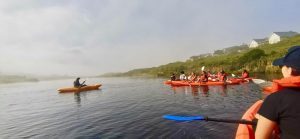
Thursday comprised of another exciting day filled with adventures. The students were divided into three groups that rotated between three fantastic activities. We got to pay a visit to the penguin sanctuary in Betty’s Bay, where we learned all about penguins, the old whaling station, and we even got to see rehabilitated penguins being released back into the wild. We then had the opportunity to grab hold of some paddles and row on a lovely dam between the reeds and mist from the morning. After a hearty lunch, we trekked to the most impressive sand dunes, where we had the opportunity to practice sandboarding. Beginner students decided to sit down on the board, while the braver souls tried standing up and a few even slid down the hill head-first! Laughs and screams of delight could be heard for kilometers.
We ended off our final evening with a lovely potjie made by the members of each group, as students found a brand-new appreciation for where their dinner comes from.
Friday morning arrived and we could not believe our trip had come to an end. We spent the morning having breakfast, tidying our dorms, and saying goodbye to the wonderful camp counselors. We departed Betty’s Bay just as the rain started to roll in, and we arrived back at BIS, ready to get back to another exciting school week ahead.
Mia Tossel
High School Teacher


Read More