

The Brothers Grimm
What do ‘Snow White’, ‘Little Red Riding Hood’, ‘Sleeping Beauty’ and ‘Rapunzel’ have in common?
They share the fact that they were first written down and published in a book over 200 years ago by The Brothers Grimm. Jakob and Wilhelm Grimm born in Hanau near Frankfurt in Germany studied to be lawyers and later became university professors, but their most loved hobby was collecting stories, especially fairy tales. This led them on a trip across Germany and Europe in search of all the many folk songs and folklore that was rich to those areas. In 1812, they first published ‘The Grimm’s Fairy Tales’ in two volumes called Kinder- und Hausmärchen (Children’s and Household Tales) with over 200 stories that have endured to this day for the young and old.
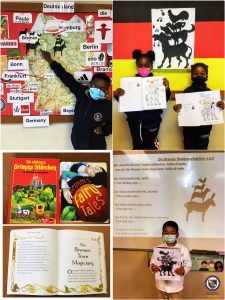
One of these perhaps lesser-known stories ‘Die Bremer Stadtmusikanten’ (The Bremen Town Musicians) came to life in the German classroom in Book Week this term.
The Year 1-6 students were all introduced to The Brothers Grimm and enjoyed watching and listening to the fairy tale all about the four animals. Der Esel (the donkey), der Hund (the dog), die Katze (the cat) and der Hahn (the rooster) were on the way to Bremen (a city in the north of Germany), to become the town musicians after no longer being of any use to their owners. On the way, they had some adventures and learnt that through teamwork anything could be accomplished.
The students especially loved singing along to the song with much enthusiasm:
Wir sind die Bremer Stadtmusikanten-holla-di-ladio! (We are the Bremen town musicians- Holla-di-ladio.)
Der Esel macht I-Ah, I-Ah.
Der Hund der macht Wau-Wau, Wau-Wau.
Die Katze macht Miau, Miau.
Der Hahn macht Kikeriki, Kikeriki.
Sie singen so wunderbar! (They sing so wonderfully!)
It was wunderbar to be part of Book Week and celebrate ‘How do you Book?’ by bringing to life a fairy tale with a song.
Click here for the link to the music and the song to sing along. https://www.youtube.com/watch?v=KUU5gNPpJ70
Frau K. Pani
Primary School German Teacher
WATCH:


Reference:
https://www.britannica.com/biography/Brothers-Grimm
Read More
Year 9 Travel & Tourism and Art students’ Outing to Hotel Sky and the ZEITZ MOCAA
The Year 9 Travel & Tourism students had the opportunity on Friday, 13 May, to attend a guided tour of the 27 storey Hotel Sky in Loop Street, Cape Town. This included all the front of house responsibilities, the rooms, restaurants and even a behind the scenes look at the kitchen.
A highlight of the Hotel Sky visit was when the students, teachers and Mr. Swart, went on the Sky-Hi Ride, on the 28th floor of the hotel. Towering 35 metres above the Cape Town City Bowl, it gave us a bird’s eye view of one of the most beautiful cities in the world. One of only three in existence, and the first of its kind in Africa, this exhilarating, gravity-defying and breath-taking drop reaches a free fall speed of up to 100km per hour.
From there the Year 9 Art students went on a guided tour of the current exhibitions at the Zeitz MOCAA – Museum of Contemporary Art Africa – located in the Silo District at the V&A Waterfront. It is the largest museum of contemporary African art in the world.
The guided tour included visiting the largest comprehensive retrospective of the revolutionary work of Tracey Rose (b. 1974, South Africa). A radical voice in the international and South African art world, Rose’s cutting and uncompromising vision of work spans from 1996 to 2019.
The students then visited the exhibition of works by Johannes Phokela. “Only Sun in The Sky Knows How I Feel (A Lucid Dream)” is a major exhibition of new works by this South African artist. This project marks almost a decade since Phokela’s last institutional show and includes a select survey of his oeuvre from the last three decades. The exhibition forms part of an ongoing series of in-depth, research-based solo exhibitions by the museum that brings into focus and contextualises the practices of important African artists.
The Travel & Tourism and Art students joined each other for another highlight of the day: lunch at the famous V&A Waterfront’s Food Court.
Concluding our outing, we travelled safely back to BIS in the safe hands of our drivers, Mr. Clive Singlewood-Smith and Mr. Mpho Mahlangu.
Riaan Vosloo
IGCSE, AS and A Level Art and Design Teacher
WATCH!

Read More

Year 7 Camp At Disakloof
During the first week of May, the Year 7 group embarked on an exciting camp at Disakloof campgrounds in Betty’s Bay.
We met at school early on Wednesday morning and the students enthusiastically clambered onto the bus in anticipation of their first high school camp. The long trip came to an end, and we were warmly welcomed by the incredible Venture Forth crew at Disakloof.
The camp kicked off with ice breakers and games among the students. Thereafter the students were sent to select their dorms, where they were greeted by a rather terrifying and hairy guest – a passer-by baboon decided to greet the ladies of Blouberg International School right inside their dorm!
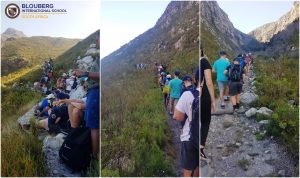
After all the excitement and shrieks, we set off on a picturesque hike within the Harold Porter botanical garden. We truly got to immerse ourselves in the natural beauty of the Western Cape by finding King- and Pincushion Proteas growing on the side of the mountains. We even found a small chameleon hiding between the fynbos.
We ended the day off by playing group games in the dark, in the midst of loadshedding.
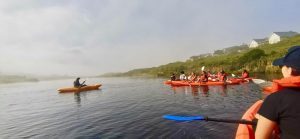
Thursday comprised of another exciting day filled with adventures. The students were divided into three groups that rotated between three fantastic activities. We got to pay a visit to the penguin sanctuary in Betty’s Bay, where we learned all about penguins, the old whaling station, and we even got to see rehabilitated penguins being released back into the wild. We then had the opportunity to grab hold of some paddles and row on a lovely dam between the reeds and mist from the morning. After a hearty lunch, we trekked to the most impressive sand dunes, where we had the opportunity to practice sandboarding. Beginner students decided to sit down on the board, while the braver souls tried standing up and a few even slid down the hill head-first! Laughs and screams of delight could be heard for kilometers.
We ended off our final evening with a lovely potjie made by the members of each group, as students found a brand-new appreciation for where their dinner comes from.
Friday morning arrived and we could not believe our trip had come to an end. We spent the morning having breakfast, tidying our dorms, and saying goodbye to the wonderful camp counselors. We departed Betty’s Bay just as the rain started to roll in, and we arrived back at BIS, ready to get back to another exciting school week ahead.
Mia Tossel
High School Teacher


Read More
Multi-Sensory Learning
The importance of teaching and learning with more than just sight and sound lessons.
Multi-sensory learning has the benefit of reinforcing strengths, improving students’ weaknesses and assisting the brain in making connections between current knowledge and the new knowledge that is being taught. It also helps students who differ in learning styles to make concrete connections during the lesson.
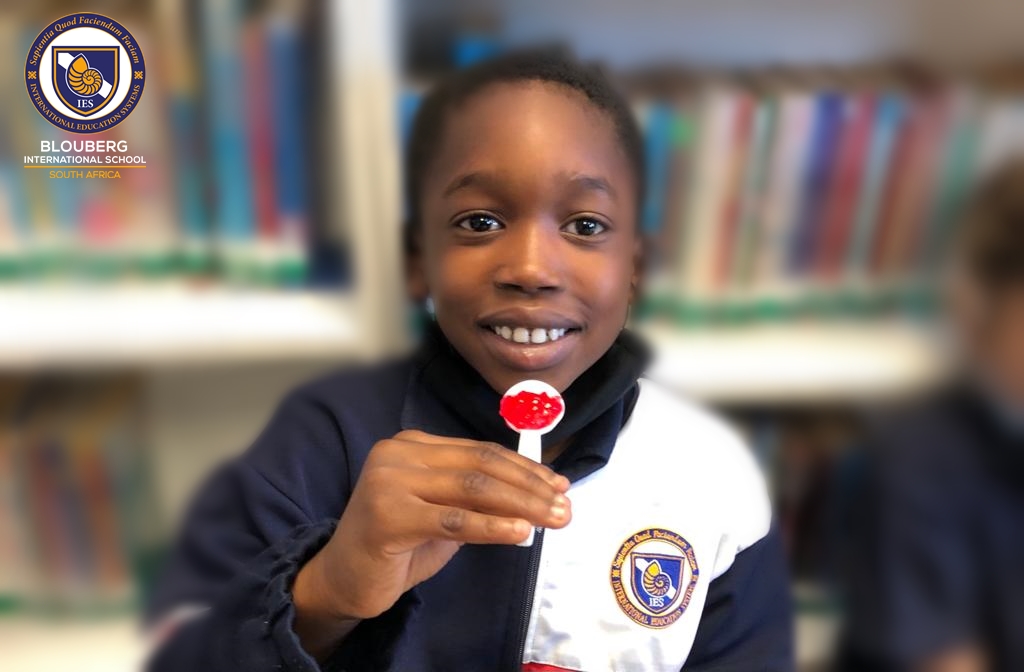
In the BIS Library – learning is dynamic, engaging and often involves more than three of the body’s senses. The ‘/j/’ sound lesson is the perfect example of a lesson where students are facilitated in remembering the sound by tasting jelly. After singing the jolly phonics song for ‘/j/’, they move their bodies like wobbling jelly and read a book about jelly. The students then have the opportunity to enjoy smelling and tasting some jelly. Multi-sensory lessons seem more like playing than learning to children and as research has shown, this is one of the best means for children’s brains to make connections and store information.
Facilitating learning through the senses is important, in particular learning to read because reading always leans towards sight and sound. Reading is an abstract concept that requires concrete learning methods in its teaching, and not only for those who need it with regard to their learning styles.
Kirsten Stoffberg
School Librarian and Teacher

Read More

Book Week 2022: Foundation Phase And How To Ensure Success When Reading With Your Child
From the 3rd to 6th of May, we celebrated Book Week throughout the school. We do this to help foster a love and excitement for books and reading. There was a wide variety of fun and interesting events that took place.
On Tuesday, Hooked on Books came to school to entertain the students. They performed short excerpts from age appropriate books and the students even got to act out a poem with the actors’ guidance.
On Wednesday evening, the students joined their teachers in their pyjamas for hot chocolate and bedtime stories. It was an evening full of laughter, cuddles and creating fond memories with friends.
Throughout the week, The Book People gave students the opportunity to peruse a large variety of books and some purchased a book to add to their home library.
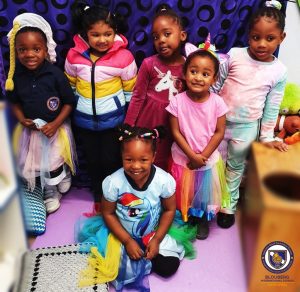
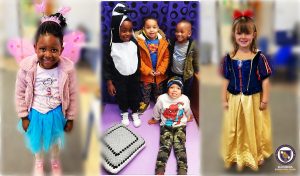
On Friday we had a character dress up day. It was wonderful seeing the creativity and pride that the children took in dressing up. During the week, Reception and Pre-Reception classes also swapped teachers at story time so that they could listen to the stories represented in the other classrooms.
Below are some tips you can use at home to make reading fun and to ensure success when reading with your child:
When you are creating fun reading activities for your children, you need to be excited about the activity too. You want to create something that is worth your child’s time to sit, listen, and learn. Here are some tips to help you succeed:
- Have a happy voice: Children are smart. If your voice is monotone and you are trying to cram in a book before bedtime, they will know it. Make your voice sound excited when you read the words. Remember to smile and have fun!
- Take your time: Plan ahead to make sure you have enough time to read before nap and bedtime. You don’t want to do fun reading activities when you or your kids are tired. They will be less likely to be engaged.
- Read over or skim the book before you get it: I found many books were not appropriate for children. They had things in there I was not ready to discuss at their young age. Protect their innocence and choose books that represent the same values you stand for at home.
- Don’t quit: Your children may not be excited at first. Keep working at it. Try different things to see what works. Don’t give up. Reading needs to be a lifelong skill that gets encouraged from when your children are young.
- Empower your children: Get your children to pick out books, give them a choice between two fun reading activities, let them pick out which book to read at bedtime, or let them choose a book to give another child as a birthday present. All these things give them ownership. If they come up with the idea or make the decision themselves, they are more likely to be engaged.
Kim Hahn
Reception Year Teacher
Read More
The Science of Play
‘Happy hearts and happy faces. Happy play in grassy places. That is how, in ancient ages, Children grew to be kings and sages.’ – Robert Louis Stevenson
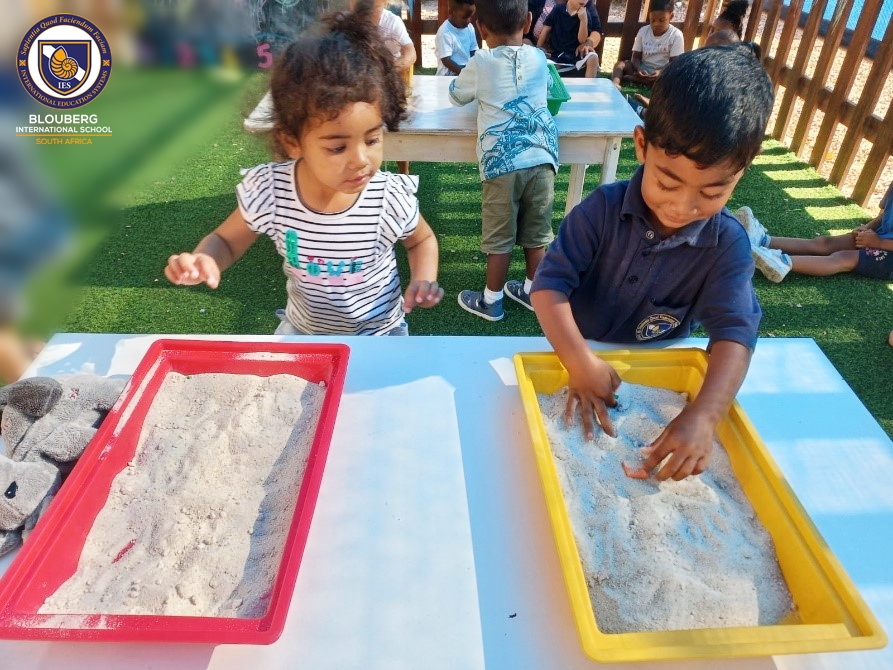
Play is one of the most important aspects of a child’s life. Why? Because through play they develop their social skills, language and communication. Play can be considered a child’s “work” as it is how they learn, how they figure out who they are, how the world works and where they fit into it. It offers children a chance to exercise and develop muscle strength and with nothing more than little imagination, a playground can become a fortress, a submarine, or even a spaceship. Their brain can connect and refine pathways that enable them to feel loved, happy and safe.
Young children are natural artists and one of the keys to supporting your child’s playtime effectively is to not take over. Yes sure, it’s frustrating when they make a mess and when they aren’t “doing it right”, but to every answer, there is a question that needs to be asked. Ask them questions and let them answer for themselves. Don’t panic or get anxious when they stumble or stutter, the very idea that you are with them, at that moment, provides them with answers to questions they weren’t even asking.
Children do not need expensive or elaborate toys, as real play only requires toys and resources that are open-minded in nature. That is why so many children are more interested in the toy box that the actual toy. However, it is important to remember that as children grow, and their imagination extends outside the box, the toy inside will define what enjoyment should look like for the majority of their young adult life.
The Value of Play
You say that you love your children,
And are concerned that they learn today,
As am I, that’s why I’m providing
A variety of kinds of play.
You are asking what’s the value
Of having your children play?
Your daughter’s creating a tower,
She may be a builder someday.
You’re asking me the value
of blocks and sand and clay.
Your children are solving problems,
They will use that skill every day.
You’re saying that you don’t want your son
To play in that way.
He’s learning to cuddle a doll,
He may be a father someday.
You’re questioning the learning centers,
They just look like useless play.
Your children are making choices,
They’ll be on their own someday.
You’re worried your children aren’t learning
And later they’ll have to pay.
They’re learning a pattern for learning,
For they’ll be learners always.
– by Laurie Monopoli
So, I would like to end off and say, yes it may just be child’s play, but when you engage and make the most out of playtime, you may even find answers to questions you were never asked.
Jo-Anne Dickason
Nursery Teacher

Read More

Sound
“Tell me and I forget. Teach me and I remember. Involve me and I learn”. – Benjamin Franklin.
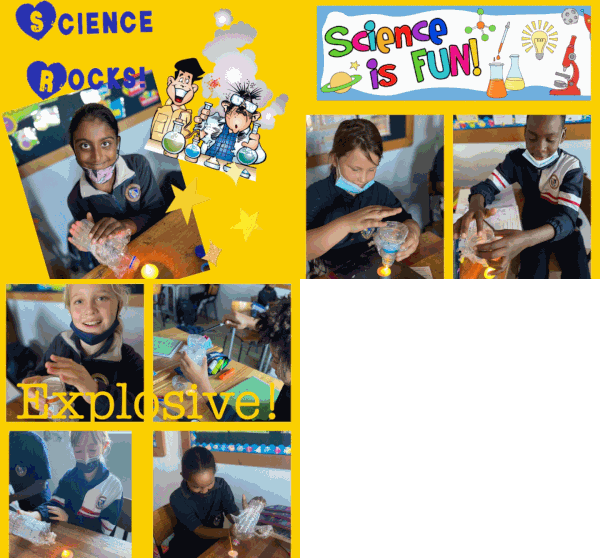
Our budding scientists in Year 5 have been learning all about how sound is created. As stated in the quote above by Benjamin Franklin, the best learning takes place when students are actively involved in the learning process. Hence, it was time for our students to put on their scientist hats and participate in some thrilling scientific experiments in class!
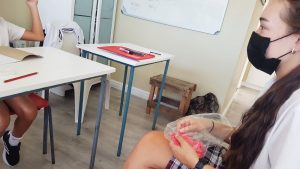
As seen in the pictures below, each student had to stretch a piece of plastic film tightly over the open end of a plastic bottle. They had to then light a small candle, causing endless excitement amongst the students! It was then that the fun started. The aim of the experiment was to test if sound vibrations travel through the air, as we cannot see them with our own eyes. If this theory was indeed correct, the flame would flicker when they tapped the bottom of their bottle!
And…EUREKA!
The experiment was a success and as any accomplished scientist would do…the experiment was done repeatedly and with much amazement by each student! After all the excitement, the lesson was concluded with some serious reflection, thinking, debating and discussion about our findings.
The best way to learn science is by doing science and to never stop questioning!
Jennifer Rose
Year 5 Teacher


Read More

Bright Science Sparks
“The Shadow Proves the Sunshine” – Switchfoot
The year 4’s have just completed a week of shadow investigation. On Monday morning we set out with a mission to discover how shadows move and change throughout the day. We started our lesson in groups by answering questions about shadows and light, discussing what we already know and what we still need to learn. It was key for every group to cooperate with one another by being polite and kind to the other members of the group. Sharing and taking turns was also a key factor in working towards a group agreement on their answers.
Our research starting point was making predictions about how the shadow would move or change. A simple upright pencil on cardboard was all we needed to set this test in motion. Our first observation was that light always travels in straight lines. Anything in the way would cause a shadow. Throughout the day, in fact every hour, we witnessed that our shadow moved to the east. Our pencil shadow was long in the morning. As the day progressed the shadow became shorter, being the shortest at noon. After midday the shadow of the pencil slowly grew in length again.
Our testing was not yet complete! Working in groups again, we investigated which objects were transparent, translucent and opaque. We also discovered that we could change the size of our shadow by moving closer or further away from our light source. After collecting and recording our observations over the course of the week, all our findings were crafted into games.
Looking back over this week it is clear that every Year 4 student has taken ownership in this investigation. In return, this will create a sure scaffolding for future light exploration.
Carol Blake
Year 4 Teacher


Read More
Who’s-Done-It Mystery Game
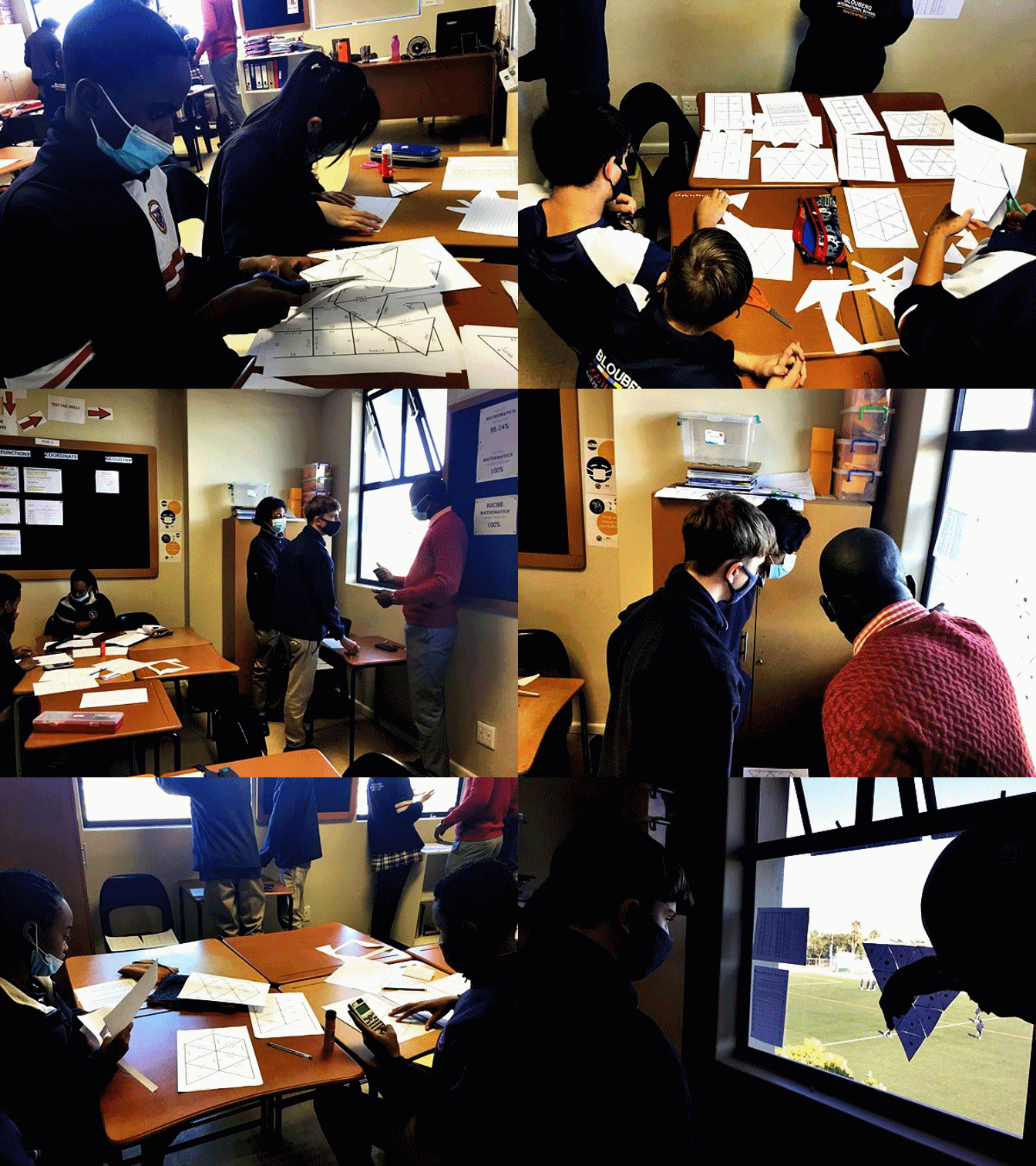
Learning mathematics is not fun for every student. At Blouberg International School, we believe in making mathematics fun and helping students love the learning journey. One way to do this is through interactive mathematics games, such as Who’s-Done-It Mystery – Death at the Jigsaw Shop.
Who’s-Done-It Mystery – Death at the Jigsaw Shop is an engaging mathematics mystery game to motivate Year 9 students to apply their mathematics skills independently to solve the mystery of a crime committed at the Jigsaw shop. The manager is dead, and the week’s takings have disappeared.
There are 32 suspects. There are 5 clues. Each clue gives a fact about the perpetrator and eliminates half of the suspects. The clues are jigsaws. To work out a clue, you must first make the jigsaw. Round the outer edge of the jigsaw are numbers. Each number represents a letter (a=1, b=2, c=3 etc.). The first letter of the clue is underlined and then the clue reads clockwise round the shape.
Students have the opportunity to apply a variety of mathematics skills to solve the mystery: fractions, percentages, directed numbers, and converting measurements.
This week, Year 9 mathematics students paired up, played the game, and managed to eliminate suspects and come up with the real perpetrator’s name.
Here are some of my students’ immediate reactions to this fun exercise:
- Detective Riley Hanning: “This is a serious case; someone’s life is involved here, and we ought to be precise and accurate!”
- Detective Ruby Lee Gallagher: “It’s fun and engaging. How I wish this was my everyday math lesson from Year 1.”
- Detective Oratile Tsotetsi: “This is obviously one of my favourite lessons. A double lesson went quickly without notice!”
Want to take up the challenge yourself?
See below files of evidence collected by the arresting police officer at the shop and try to come up with the perpetrator’s name. You can post your evidence and proofs to my email (given below).
Let’s enjoy mathematics as a family.
Mr Hebert Tapfuma
High School Mathematics Teacher
HOD Science & Mathematics
clue1clue2clue3clue4clue5storysuspects final list
Read More

BIS Interact Club – Peace Home Homework Programme
One of BIS Interact’s main focuses is improving the quality and accessibility of education in our communities.
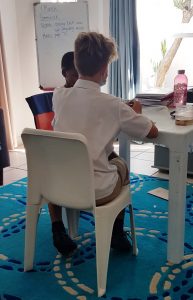
Next week our school will be celebrating Book Week. In commemoration of this, the BIS Interact Club will continue their weekly visits to ‘Peace Home’, a shelter for children with past challenges, who now have a safe environment thanks to their loving adoptive mother Aziza. Their task is to spend time with those children and assist them with their homework where possible.
This is an account of one of our member’s past visit to Peace Home:
A group of Interactors volunteered to go to “Peace Home” after school. We all hopped on the school bus feeling both excited and nervous. I myself was pretty nervous, as I had never been a tutor.
When we arrived, we were warmly greeted by Ms Nolan and the kids. They were very eager for us to help them with their homework. I was assigned a young boy with his maths. When we began he was struggling with adding and subtracting his fractions. I gave him some tips on how to easily do them. He quickly grasped the concept and no longer had any issues with his fractions. It felt very rewarding for both of us.
It was an amazing experience helping these kids. On our way back to school, we all shared the same good feeling. We all agreed we would volunteer again.
Oscar Berger (Year 11) – Interact Member
Read More