
A fun way to learn our initial sounds of words in Pre-Reception
A fun way to learn our initial sounds of words in Pre-Reception
It is important for children to learn letter-sound relationships because the English language uses letters in the alphabet to represent sounds.
Phonics teaches this information to help children learn how to read. Children learn the sounds that each letter makes.
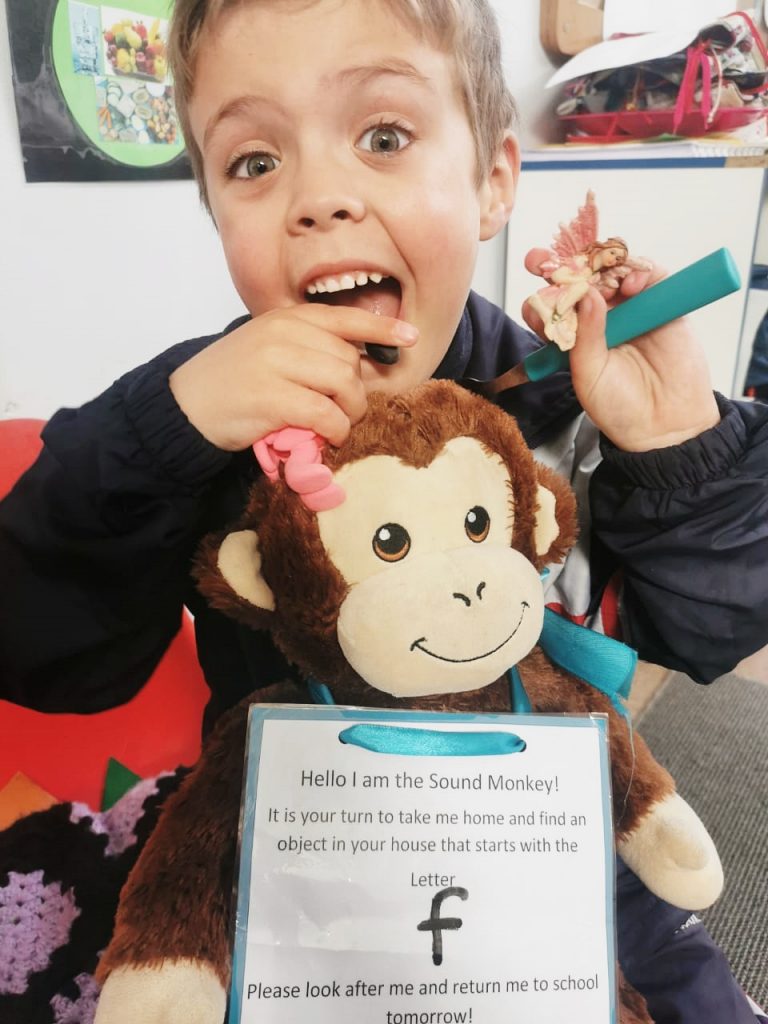
A fun way through which the Pre-Reception students learn the initial sound of words is… I would like to introduce you to a very important member of our class. His name is the Sound Monkey and the students take turns to take him home with them and find something that starts with the letter of the alphabet that we are learning about that week.
The students are always very excited when it is their turn and can’t wait. It is always very interesting to see what the sound monkey has in his bag the next day. It’s usually things that I did not even think of.
It is very interesting to see how quickly the students have been learning the initial sounds of words in this manner. Now let us see whose turn it is today!
Cindy Nunan
Pre-Reception Teacher



Read More

Shaping Positive Eating Habits
Wow! What a busy week it has been. Our main focus in Nursery this week has been on Healthy Eating, and believe me when I tell you that I have had to explain why chocolate is not a fruit more times than I have had to sing “Let it go”, and that’s A LOT.
Explaining to our students why their chips and chocolates should not be eaten in the morning, is similar to arguing with a qualified lawyer about the law, it hardly ever ends well. However, as the week progressed, our little ‘pre-lawyers’ began enjoying learning about healthy eating so much, that we actually had to send some of the unhealthy snacks back home, and that itself is like a snowy day in summer.
This has reinforced my belief that teaching young students about healthy living does not have to be done through a strict, structured routine, but rather through fun, play-based activities. Play-based learning helps support our children’s desire to explore and interact with the world around them. Providing them with opportunities to explore and learn about foods, separate from meal times, not only exposes them to new foods but allows those fussy eaters to explore non-preferred foods in an encouraging way.
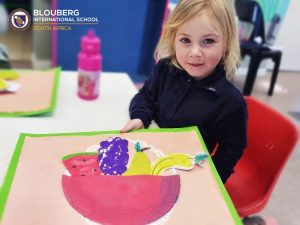
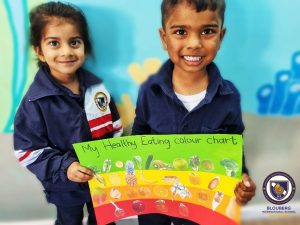
As our school follows the wonderful Traffic Light System, our students are already aware of the foods that are not healthy, but maintaining that diet can be tricky with toddlers. So this week, we introduced healthy eating through colour, exploration and a lot of gentle encouragement. Some of the students helped create a healthy eating colour chart that explored the principle of ‘eating the rainbow’ and even chose some of their favourite fruits and created crafty fruit baskets for our next picnic. We also explored shopping for fruits and vegetables, and students picked out various healthy foods that we can find at the grocery store.
By making healthy eating fun, engaging and hands-on, our students found it less daunting to face the vegetables on their plate and supported our long-term goal of building a foundation for lifelong healthy eating habits.
Jo-Anne Dickason
Nursery Teacher

Read More

Administrative Professional’s Day
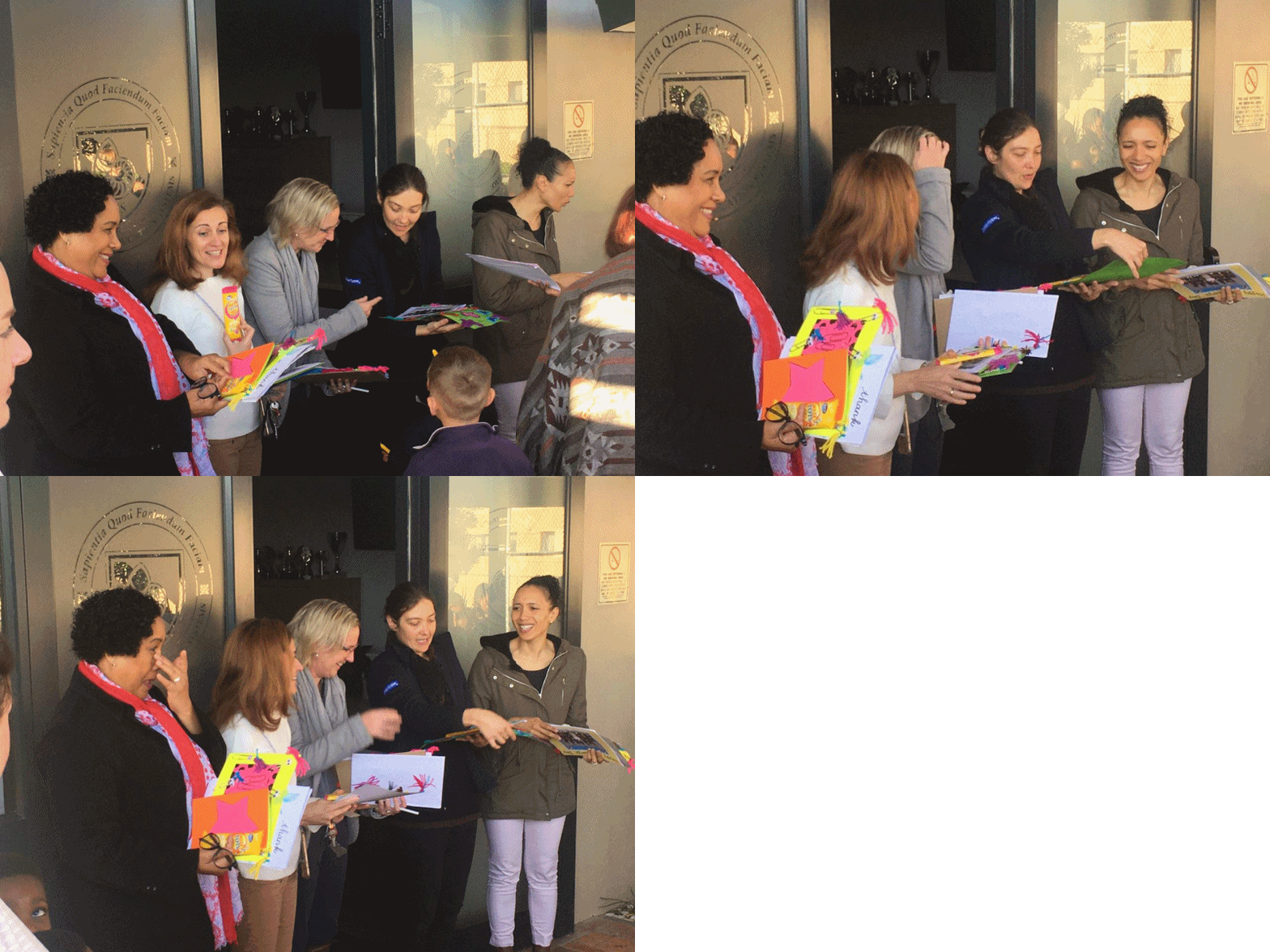
On Wednesday, 7 September, we celebrated Administrative Professional’s Day aka Secretary’s Day by thanking and paying tribute to all of the wonderful ladies in our Admin department at school. They received cards, sweet treats and a guard of honour from the children throughout the phases as an early morning surprise.
We have such a diverse team of people who fulfil very important roles; Avril – our front desk secretary, Aftercare manager and Mr Swart’s right hand “man”, Razonne – the lady we run to when we need some money for our classrooms, Diana – if it wasn’t for her our children wouldn’t have uniform to wear, Eldri – our school representative and admissions person, and last but not least, Trindade – our librarian and master of communication!
As you can see our team is extremely essential to ensuring that BIS is the well-oiled machine that it is! As these faces are so busy behind the scenes I thought I would ask my Reception Year class what Aunty Avril does all day – here are their responses:
- She works on her computer and in Aftercare sometimes she comes. – Lolwam
- She works in Aftercare. – Amelia
- Aunty Avril is strict! – Naif
- When people don’t listen and they go to Mr Swart then she sends them to his office to visit. – Purity
- She always wants to go home. – Enhle
- When my dad drops off something for me, like money, she will call me. – Anam
- Aunty Avril is a good teacher. – Kopano
- She always comes to Aftercare to talk to the teachers. – Samuel
- She works at the office. – Isabella
Thank you for all that you do, not only on Secretary’s Day, but every day!
Kim Hahn
Reception Year Teacher

Read More
The Aim Of PE
Our weekly programme that is derived from the Cambridge curriculum helps us perform different exercises and play games that are skill based and always motivate teamwork rather than focusing on individual skills only.
We learn about our bodies and how we can use them to the best of our abilities within the sports fields.
The curriculum is based on the sporting codes we provide at BIS, thus, it is important for students to participate and enjoy the different skill sets taught throughout the year as per the curriculum requirements.
As coaches we want our students to participate in different activities and expose them to different types of sports within our lessons, hence we provide the support that is needed to achieve this goal.
We cannot achieve all of this without the help of our lovely parents, so we ask that our lunch boxes are filled with health conscious nutritious food on a daily basis.
Promoting good eating habits is vital to a child’s development physically and mentally, It is said that eating healthier 80% of the time and doing 20% exercise compliment each other.
What Experts Say
“The 80/20 rule approaches healthy eating with a message of moderation-80 percent healthy choices and 20 percent flexibility for less healthy option. Nutrition professionals back this approach, as it is feasible for all, allows for variety of foods, and avoids deprivation.” – Chrissy Carrol,RD,MPH
Let’s try and pack a healthy lunch box.
We are most certainly improving and setting the tone at our PE lessons every week and I (Coach Mpho), am getting the greatest joy seeing the improvement and the strides that our students are making, getting the idea of how to move the body over a game of dodgeball, soccer, handball and more.
Also knowing the amount of power needed to make a short or long pass, throwing skills, learning new games and most of all having fun with your peers and improving your game.
Week 6 – Handball skills, teamwork, accuracy and movement.
Class – 5HK
ATL skills observed – Listening and communication skills, self-awareness and sense of urgency – teamwork
Planning
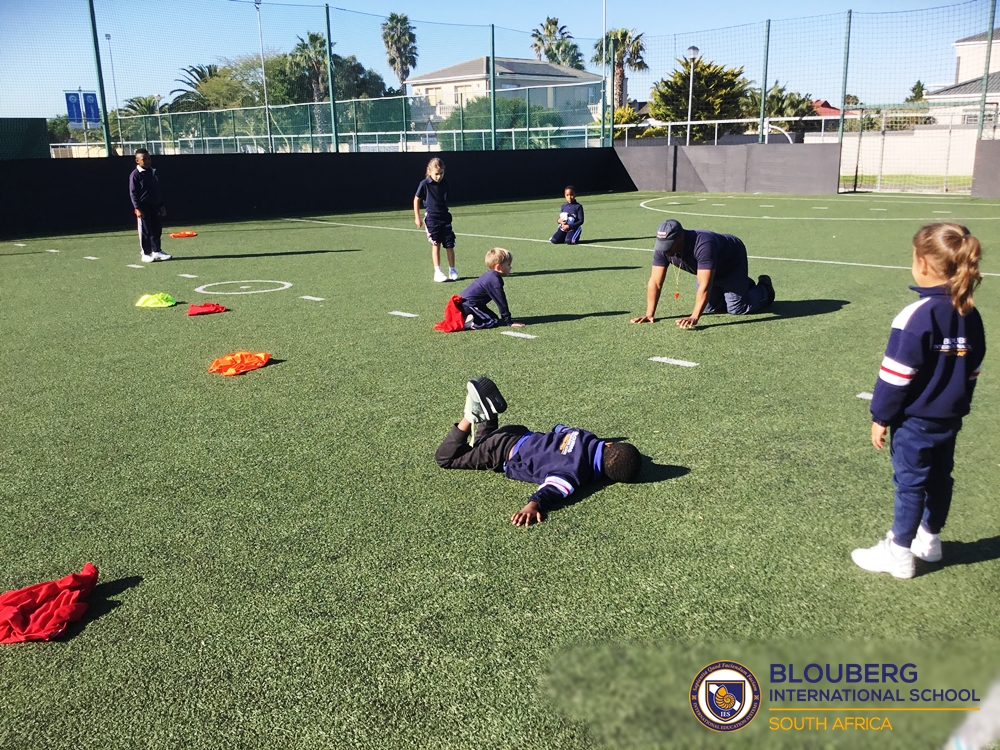
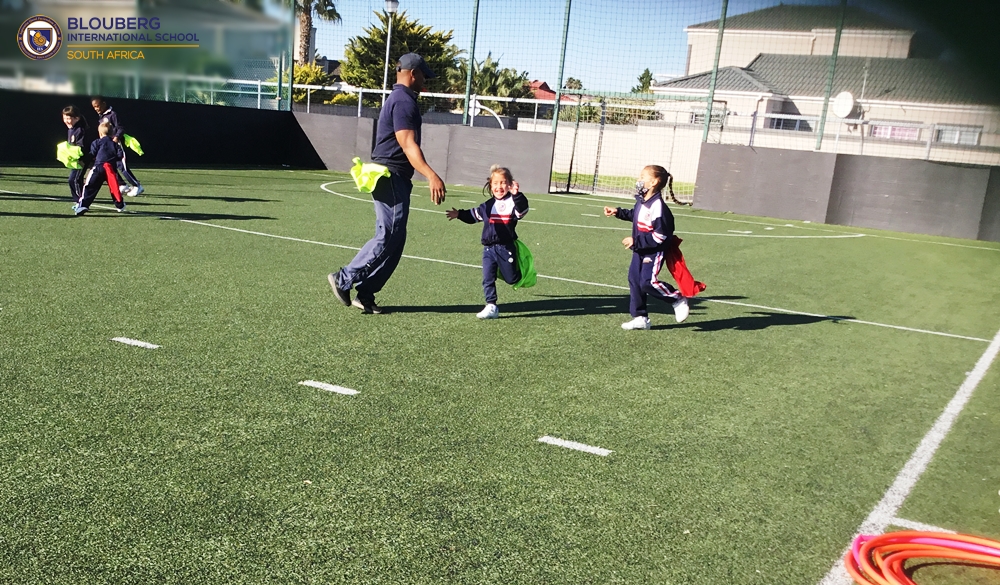
The students warm up by taking a jog around the 5 aside court ,do shuttles that incorporate push ups, sits, lunges, jumping jacks/body weighted squats to get the blood flowing and the heart rate going.
They then go into stretches from neck to toes, whilst illustrating and explaining to them which parts of the muscles they are stretching and the importance thereof.
In this case, a class is split into 2 teams that verse each other etc. (red vs orange team)
Instructions are as follows:
- No one is allowed to keep the ball for more than 3 seconds creating a sense of urgency in their play.
- Teams have to pass to everyone in their team to have a legitimate goal awarded, which creates a team effort where everybody participates, teams are not allowed to run with the ball which forces them to work together – teamwork.
- Teams are allowed to pass the ball by either bouncing or no bounce, two-handed passes for more accurate passes.
Objective
The objective of the lesson is to establish and develop good communication skills, passing accuracy and most importantly following the rules of the game and applying all the skills taught throughout the curriculum.
Assessing
Can a student apply themselves through the activity that is focused and based on team building?
Can they pass, throw and catch the ball?
Can they be creative in terms of movement and creating space on the field?
Are they calling for the ball, communicating to their teammates?
Do they understand the rules of the game abide by them?
The students attitude, enthusiasm and the will to do better is as important as his performance.
In Closing
As the winter season slowly drags on to its end, we welcome Spring and the sunshine. I am grateful for the support that has been shown by our BIS family, parents, teachers, ground staff and all who make our school united and warm throughout the soccer and netball season by rooting for our students.
I also wish congratulate all our junior and senior Tennis teams that represented BIS in Sun City last week as well as all our soccer and netball boys and girls who participated with much courage and enthusiasm in all their matches this season.
Well done to you all, we are all very proud to be part of the winning mindset.
Mpho Mahlangu
PE Teacher

Read More
Going On a Dinosaur Hunt…
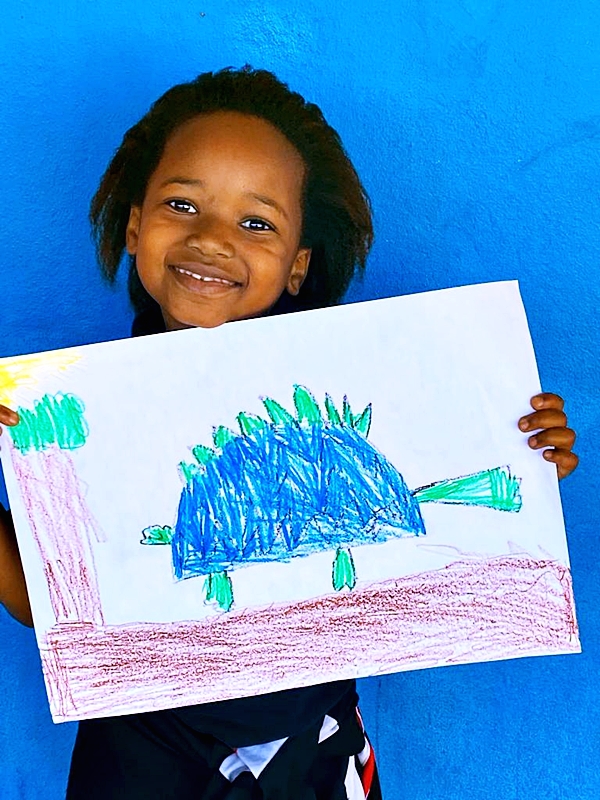
In our class we have been learning about dinosaurs. We have had lots of fun reading dinosaur books, drawing dinosaur pictures and even doing a show and tell about dinosaurs. The little ones were very excited to share some of the things that makes their favourite dinosaur special.
“I like a t-rex because it is a predator to plant dinosaurs” Aiden Jackson
“Stegosaurus, because it has cool spikes on his back and tail” Jayden Aire
“My favourite dinosaur is a triceratops, because it has spiky horns on its face” Liam Okebalidet
“My favourite dinosaur is a triceratops because it’s very harmless and it also has very sharp horns” Naleli Tsietsi
“My favourite dinosaur is a t-rex because it can roar load” Alupheli Mango
“I like a t-rex because it goes fast” Kason Frey
“I like t-rex because it hunts for food” Isabella Dunkley
“My fvourite is a brontosaurus because it is a herbivore and it eats plants” Leah Laguma
“I like a flying dinosaur because it can fly and it can glide” Leonardo Elsmore
“I like a pterodactyl because it can fly” Likani Moleejani
“I like a velociraptor because it can run fast and it has sharp teeth and nails, and it can hunt prey very easily” Emmanual Chukwumeka
Monique Meyer
Foundation Stage Coordinator and Reception Year Teacher




Read More

Kipper And The Secret
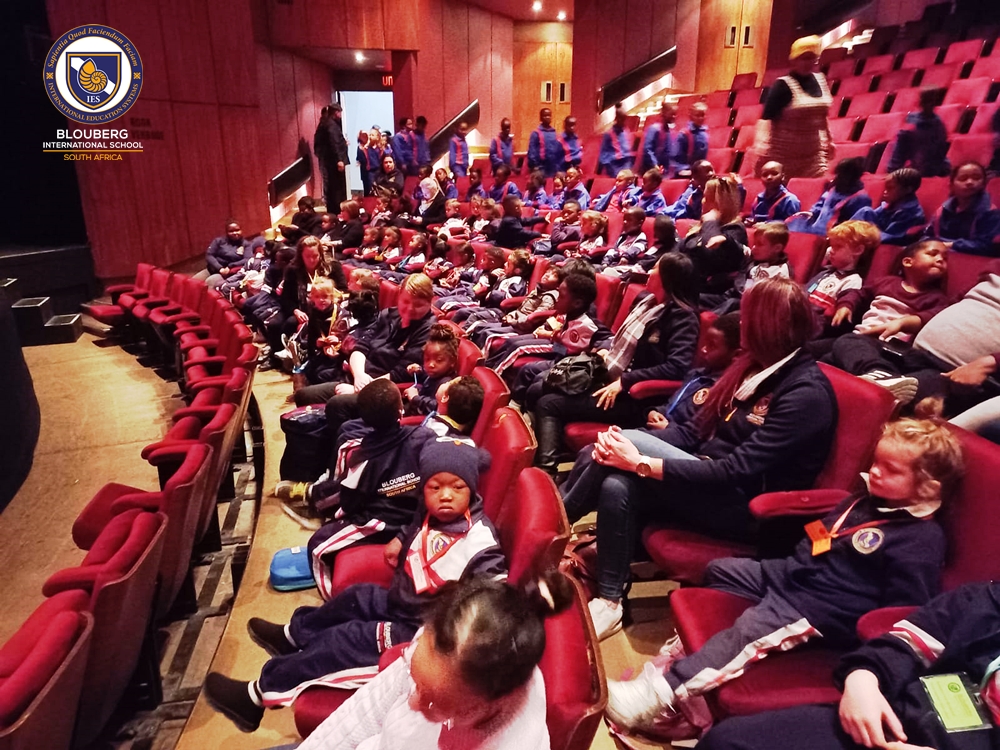
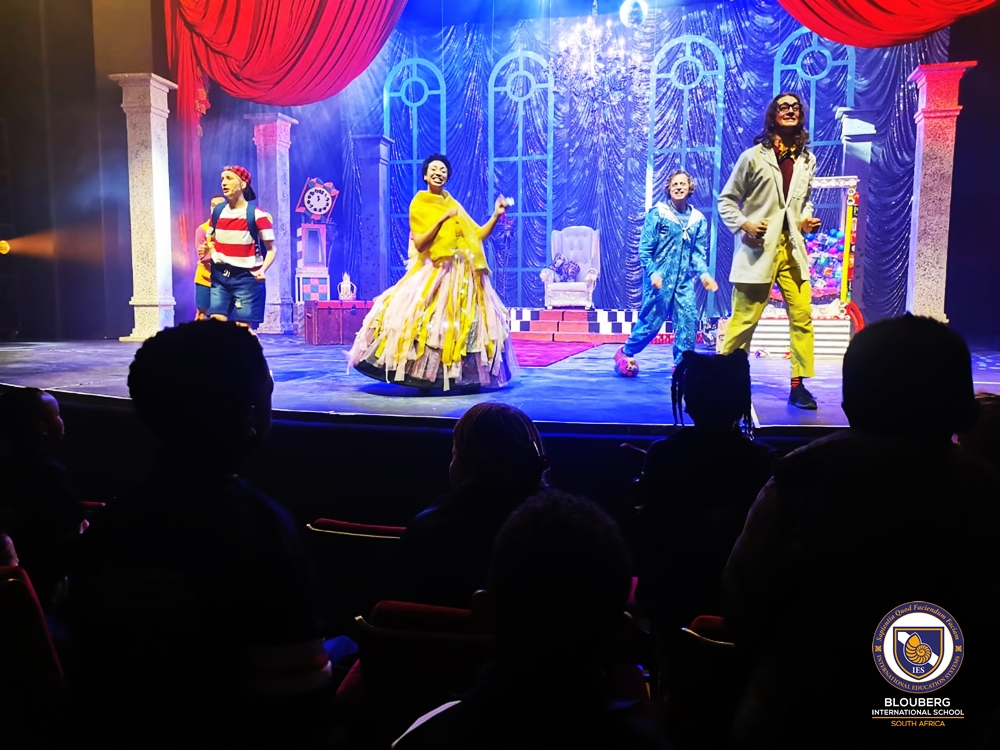
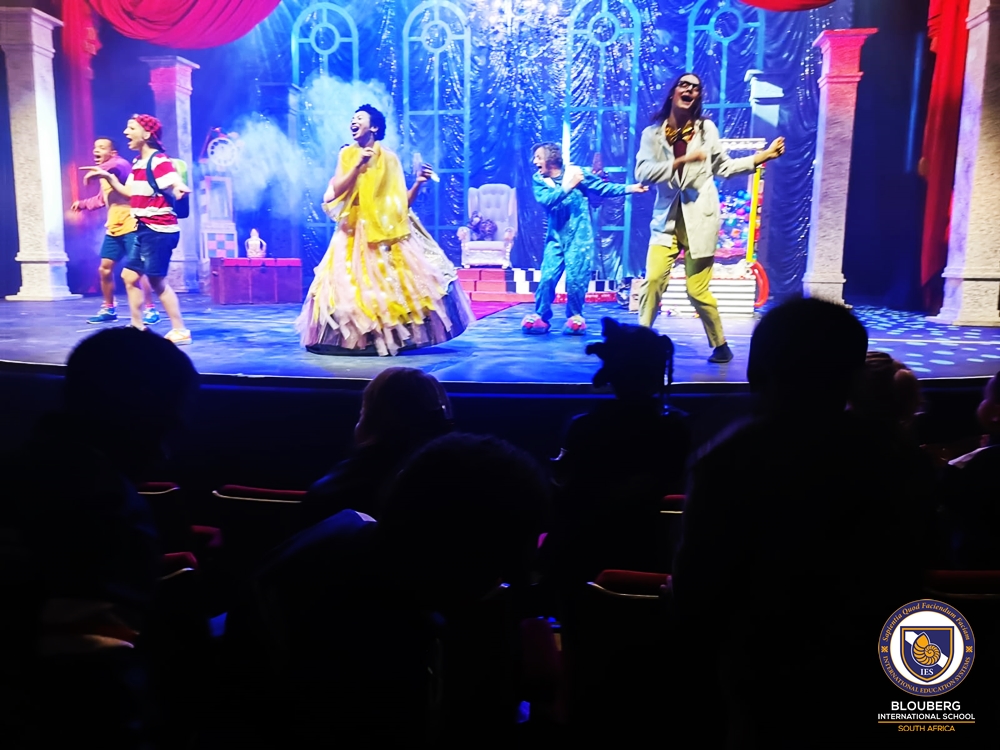
It was a very early start for our Foundation Stage students this past Friday, as they came to school bubbling with excitement for our Outing to the Artscape Theatre.
The Magic Key took us on an adventure to a castle on a huge recycling island. Kipper, Biff and Chip needed our students’ help, because King Recycle had lost complete control over his Kingdom and he forgot the password of the recycling machine. His daughter, Princess Dauphine, was also captured and turned into a bird.
Kipper and his friends figured out all the secrets and Princess Dauphine magically turned back into a princess when the clock struck twelve and the recycling machine started working again.
The production focused on the importance of recycling, encouraging the students to do their part to keep planet earth clean.
Here are some amazing ways to Reduce, Reuse, and Recycle:
- Avoid the use of disposable goods, such as lighters, paper cups and plastics.
- Purchase products made from recycled materials.
- Use cloth bags when buying groceries or reuse grocery bags.
- Instead of using plastic wraps, use resalable containers.
- Instead of using paper cups or bottled water, use coffee mugs or personal water bottles.
- Avoid goods that are over-packaged
- Learn to reuse products in different ways.
It was a fantastic adventure, enjoyed by all.
Martie van Dyk
Pre-Reception Teacher
Read More
Learning About Wild Animals
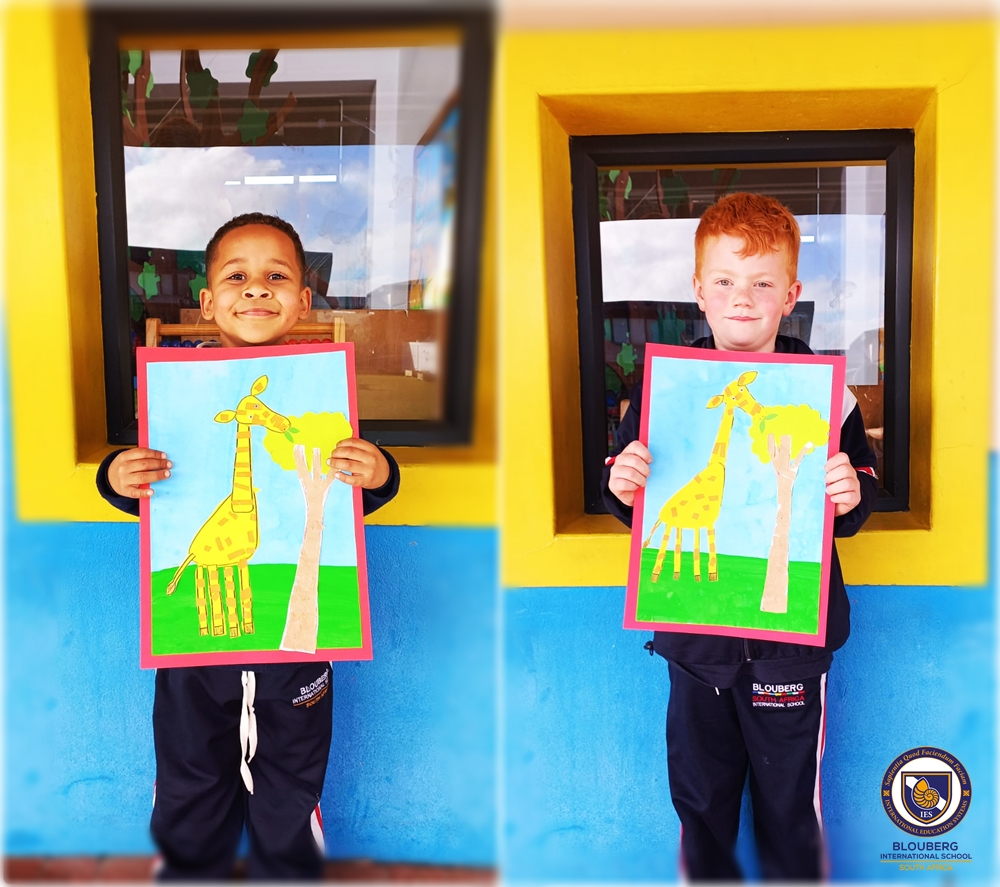
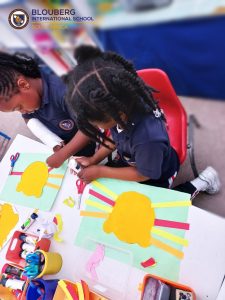
We have been learning about wild animals in Foundation Stage over the past 2 weeks. The students have been so excited about this topic and some have even been bringing their favourite animal stories to share with the class during story time.
As a class we learnt what it means to be a wild animal and why it isn’t a good idea to keep a wild animal as a pet. We also discussed how wild animals are different and how they are adapted to their habitats and the food that they eat. Food chains were also discussed. We learnt that all plants are producers, and all animals are consumers. The links in animal part of the food chain were broken down into herbivores, carnivores and omnivores. We even touched on animals and other organisms that fulfil the role of decomposers, so that the circle of life continues making nutrients needed for plants to make food.
Our students have also done some amazing art work over the past 2 weeks. They have really enjoyed making lions, giraffes and elephants. We have certainly learnt a lot during the course of this topic and are looking forward to learning about extinct animals – dinosaurs in our next theme.
Bronwen Nuthall
Reception Year Teacher

Read More
Countries Of The World
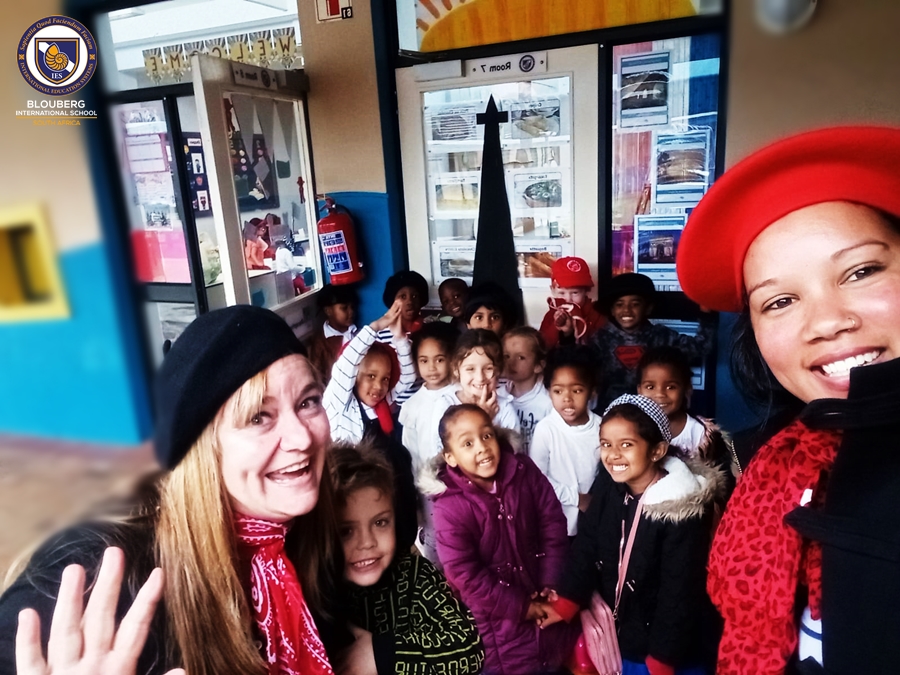
For the past two weeks, the Foundation Stage has been learning about countries of the world. We ended off this very interesting theme on Friday, 12 August by having a dress up day, each class dressing up in their chosen class’ country’s traditional dress and bringing a plate of eats representing the country of their choice.
The teachers decorated their classroom doors representing the country they had chosen and the classrooms were decorated with the students’ art, flags, lanterns, etc.
Great excitement filled the air as the students arrived at school on this rainy, cold morning, dressed in their brightly coloured outfits and bearing plates of tasty treats to share.
All the Foundation students went around to the different countries with their ‘class made’ passports in hand and learnt interesting facts about England, Australia, America, France, Italy and China. Their little passports that they made were stamped in each new country they visited. The students learnt something about each place for example what traditional food they eat, historical monuments, the country’s flag, language they speak etc.
After touring ‘around the world’ the children worked up a healthy appetite and got to choose food to taste from the different countries displayed outside the classrooms.
There are many different ways for children to learn about different cultures around the world. By trying different activities, they can explore all parts of the world without even leaving the classroom. This was a fun way for the students to learn through an all–immersive experience and the ultimate way to share with the students the amazing people of the world and their diverse cultures!
Cindy Nunan
Pre-Reception Teacher


Read More
Library Etiquette
Do you still remember the majesty of the Public Libraries that we had to frequent in our youth? The days before internet was a quick fix search. Dewey decimal systems and the smells of old and new books. The librarian peeking at you over her reading glasses as you quietly and carefully walked past her massive counter. The feeling of excitement when you held your first library card. The library was an ocean of possibilities, peacefully beckoning you to crack the spine of a hardcover adventure. Hours were spent finding corners to read in, and making sure you returned your books on time to avoid that dreaded R2 fine. If you were lucky, you didn’t have to take notes by hand, but could make copies of those precious pages before using them for your school projects.
As mystical as the library was, it was also a character forming experience. We all knew the rules, almost as sure as muscle memory. From the moment we walked through those heavy doors, we understood that this was a place of resolute respect and consideration, quietly whispering to one another as we discovered other universes hidden in the pages of classic novels.
I have asked our students during the course of this week if they have visited the local library and not surprisingly, most of them have not. We all know that with the hustle and bustle of this day and age, we rarely have the time for simple pleasures, like visiting our local library. If you do ever find that you have a free morning with your child, then I would like to recommend Milnerton Library to you. The facilities are very well kept, and the staff are knowledgeable and kind. This would be a wonderful introduction to the vast community of libraries that our city has to offer. Proper library use is a vital skill, especially when it comes to the later years of education. Why not set our children up for success sooner rather than later. University and high school notoriously consists of ample amounts of research, and knowing how to effectively utilize the available facilities would be extremely beneficial to our children.
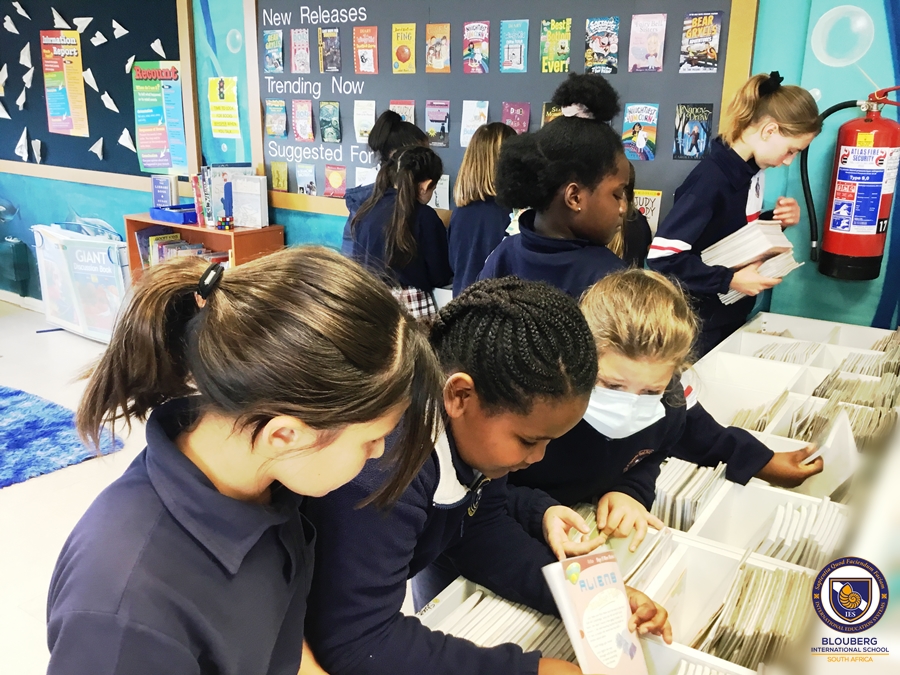
In our very own school library, we have discussed library etiquette this week during our lessons. It almost feels like a lost art and is certainly a worthwhile topic.
We discussed a few of the items below:
- What is the function of a library? We established that the library is one of the few places in society that is completely free. You don’t need to spend money to visit and enjoy the facilities. Being afforded the use of the facilities does come with some responsibility though. The resources are loaned to you in good faith, which makes you accountable for how it is treated and returned. Everyone is welcome in a library as it is a public space, cementing in our minds that education should be fully inclusive and knowledge freely available to all. Libraries can be used to study, do research, read, create awareness and so much more. However, the primary function is the loan and return of books.
- Where do we get our books? The students showed a great sense of understanding that the school library mainly grows through your kind donations, this includes the Birthday Book Programme as well as books that you would like to donate when you are no longer using them. We also discussed the purchasing of resources like our readers; and why we should look after the resources in the library. Some classes even delved into publishing, which is a very interesting topic in its own right.
- General Manners: We explored the rules of libraries and especially our school library. Students were reminded that we enter a library quietly; how to look for books and keep the shelves neat; and, where to return the books and how to check out new books for the week. Our conduct in a library is also extremely important: remembering that one must remain kind, caring and encouraging. If we conduct ourselves with consideration to our fellow library users, everyone will enjoy their experience and continue to benefit from the facilities.
- Returns: We discussed books not being returned and why we should always return our books. We should all have access to the knowledge in the library and if we fail to return our loaned books, the next student will not have access to the material. At this stage there are so many books outstanding at our library, that I would like to ask parents to please check if there are any school library books still at home. Your assistance with this will be greatly appreciated.
It has been such a privilege and a pleasure the last few weeks, getting to know the students even better, sharing stories, reading and brainstorming. I simply can’t wait to see what the future holds for our school library.
Trindade Camara
School Librarian

Read More
Coding!
It is safe to say that coding is one of the most constructive hobbies for your child to adopt, especially since it can help them develop persistence, communication, creativity, and higher-order thinking.
Yes, learning to code also sets your child up for potentially lucrative career opportunities, but it also offers children so much more than that. A modern parent cannot go wrong by encouraging their child to program.
At BIS, we have coding and robotics lessons every day during the week – Monday to Friday. The students enjoy their coding lessons and it is rewarding to see them grasp the concepts and solve problems by themselves. Here are reasons why coding is so important for children:
1. Coding Boosts Problem-Solving Skills
Coding is, without a doubt, one of the most straightforward ways for children to boost their problem-solving skills.
In a programming context, coders are constantly challenged and asked to problem-solve. The practice all but requires them to break issues down into more manageable sub-problems, then progress through an iterative process of identifying, prioritising, and implementing solutions. Thus, children start honing their problem-solving skills as soon as they take on their first coding challenge.
Research indicates that even if your child doesn’t want to go into coding as an adult, establishing a practice of coding early in life will nevertheless help them build highly-transferable cognitive skills. Is it any wonder why children should code?
2. Coding Improves Computational Thinking
Computational thinking is a branch of knowledge that involves expressing problems in a way that a computer would. Students who learn this model of thinking are encouraged to break down complex problems into smaller issues, thereby revealing underlying process patterns.
As researchers for an earlier study wrote on the matter, “We believe that children as young as ten can directly benefit from opportunities to engage in computational thinking […] Children can begin by solving puzzles on paper, continue on game boards, and ultimately complete their solutions on computers. Through this process, students can be guided through increasingly complex algorithmic thinking activities that are built from their tacit knowledge and excitement about game play.”
2. Coding Encourages Persistence
Computer science is one of the few professional disciplines where it’s entirely acceptable to be near-constantly failing. Not only is failure immediately recognisable — i.e. a program “breaks,” and doesn’t work as intended — but success literally cannot be achieved until all errors are handled. Even the most straightforward programs require a coder to understand a set of problems and solve them; otherwise, the code won’t run as intended.
However, with all this frustration and failure comes a real, lifelong character benefit: persistence.
When children begin programming, they come to learn that failure is transient, and doesn’t have to be frustrating or a progress-stopper. Even small successes can provide the encouragement kids need to push through issues in their programming. Over time, this perseverance can bolster a child’s grit — and serve as one of the most important indicators of their future educational and career success.
Coding can help your child develop a growth mindset: a philosophy wherein one’s ability to learn can be improved upon, adjusted as needed, and stand firm against demoralizing failures. What better mentality could a child adopt early in life?
3. Coding Improves Computational Thinking
Computational thinking is a branch of knowledge that involves expressing problems in a way that a computer would. Students who learn this model of thinking are encouraged to break down complex problems into smaller issues, thereby revealing underlying process patterns.
As researchers for an earlier study wrote on the matter, “We believe that children as young as ten can directly benefit from opportunities to engage in computational thinking […] Children can begin by solving puzzles on paper, continue on game boards, and ultimately complete their solutions on computers. Through this process, students can be guided through increasingly complex algorithmic thinking activities that are built from their tacit knowledge and excitement about game play.”
4. Coding Teaches Creativity
Creativity, creativity, creativity; it’s something every early educator and parent is wholly concerned with, and yet it’s not a quality prized by most working adults.
Creativity tends to decrease as we age. The adage is true — adults tend to be less creative than children. By the time we reach our sunset years, we have effectively “unlearned” one of the most important skills in life.
“Creative people have rapid and effective responses that help them to achieve their life goals and allow them to enjoy the journey… It is both a skill set and a unique and individual personality structure that’s developed throughout childhood and fine-tuned in adolescence,” Notre Dame researcher Doireann O’Connor once noted.
So, how do we preserve a child’s creative skills as they age?
Experts suggest that kids should learn to code. As a practice, coding positions developers as “creators” or “world-builders” within a programming environment — by definition, the discipline requires creative thinking and an experimental mindset.
With programming, kids are constantly prompted to experiment. Once they understand basic functionalities, they can continually ask themselves, What if I tried this? Would that work?
5. Coding is a Career-Building Skill
The importance of programming cannot be understated in our economy, which is now overwhelmingly driven by technology.
The biggest hurdle is just mastering that first programming language — but once they do, they will be well-positioned to learn different languages, frameworks, and technologies later on in life.
Sonia Terblache
ICT, Coding & Robotics Teacher

Read More