
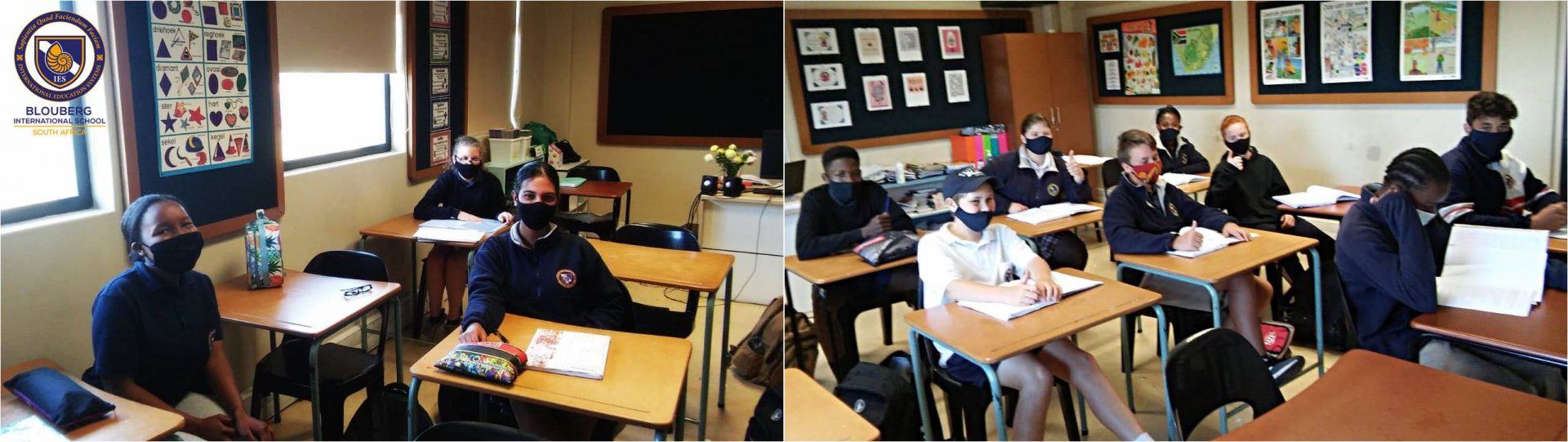
Why Afrikaans
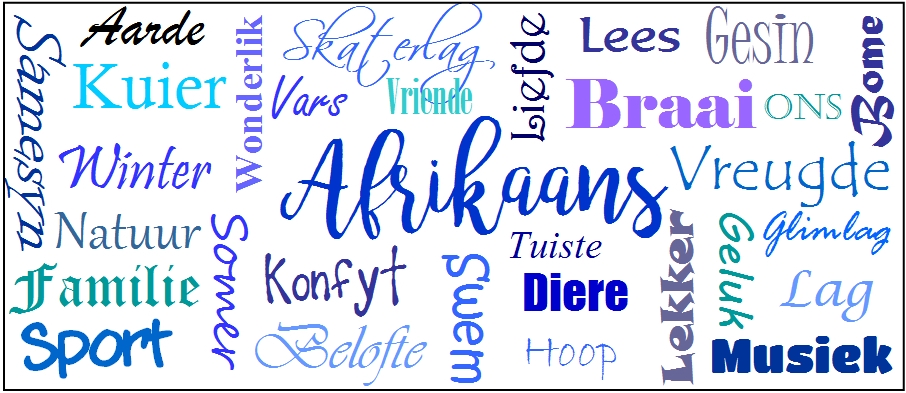
With just around 7 million native speakers, Afrikaans is one of the world’s youngest languages.
Afrikaans originated in South Africa in the 17th century with the arrival of Dutch settlers in the Western Cape region. The language evolved from European Dutch dialects and drew influences from indigenous South African languages, Malay, Portuguese and Indonesian. Although sometimes described as a Dutch-based creole, Afrikaans is recognised as a distinct language in its own right.
Afrikaans is spoken in South Africa and neighbouring Namibia and Botswana. You’ll also find large expat Afrikaans communities in places like Australia, New Zealand and the UK.
So, let’s get into it. Here are 4 reasons you should learn Afrikaans.
It’s easy!
Afrikaans is considered one of the easiest languages to master for English speakers. The Foreign Service Institute (FSI) classifies Afrikaans as a Category 1 language, meaning you’ll need around 23-24 weeks (575-600 hours) to reach proficiency.
It can help you learn Dutch
Afrikaans is a descendant or daughter language of Dutch. Although Afrikaans has borrowed from other languages such as Malay, Portuguese and French, around 90% of Afrikaans vocabulary is derived from Dutch.
If your plan is to become a polyglot, Afrikaans is a good stepping stone to mastering Dutch and Flemish (and maybe even German at a bit of a push).
Experience the vibrant South African culture
If you’re planning a trip to sunny South Africa, knowing a bit of Afrikaans will instantly make you the most popular tourist in the room. Throw in some isiXhosa and we’ll practically hand you the key to the city.
Although pretty much everyone speaks English, knowing the local lingo will enrich your travel experience and may even get you invited to a ‘lekker’ braai (a fun barbeque).
Access a whole new world of exciting literature
Afrikaans has a rich literary tradition. From the poetry of N. P. van Wyk Louw to the fast-paced crime thrillers of Deon Meyer, you won’t be wanting for good reading material.
Students favourite Afrikaans words:
| pikkewyn | penguin | Danie M (Year 9) |
| pannekoek | pancakes | Connor N (Year 7) |
| koejawel | guava | Tumelo M ( Year 11) |
| Leeu | lion | Brenden A (Year 8) |
| tannie | aunt | Oratile T & Damon M ( Year 7) |
| braai | barbeque | Keno T ( Year 9) |
| verlief | in love | Siena A ( Year 7) |
| spookasem | candyfloss | Layla M ( Year 9) |
| pantoffels | slippers | Chloe R ( Year 7) |
Carmen de Villiers
High School Afrikaans Teacher
From the Principal’s Desk, 9 October 2020
Dear Parents
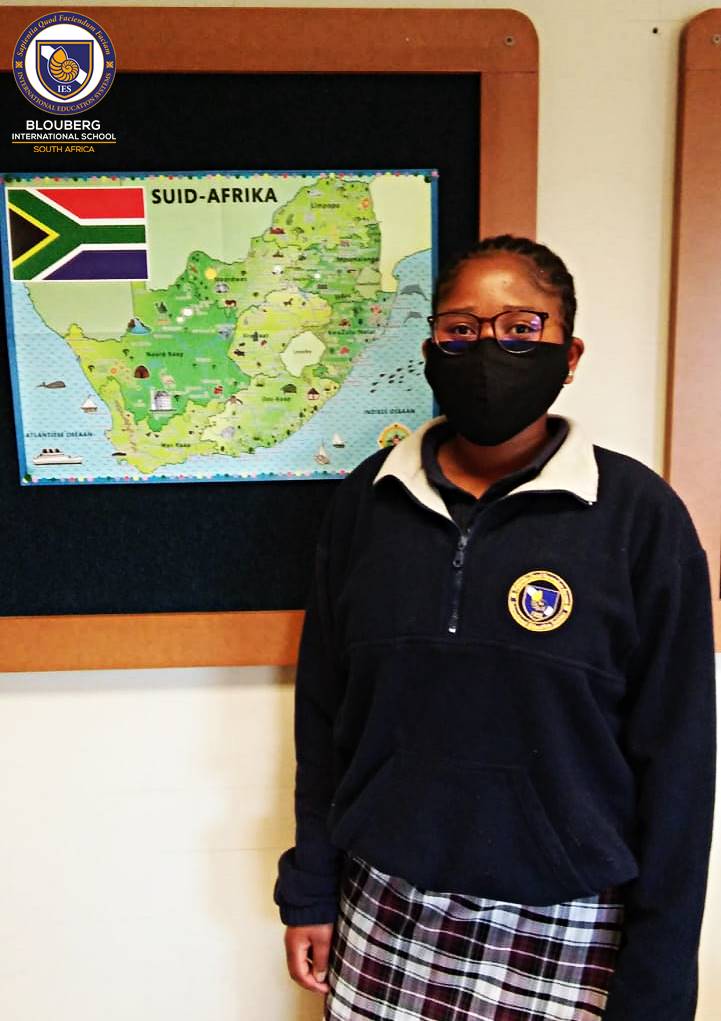
One of the best feelings is the glow of satisfaction that comes with reaching one’s goals. As a school we have been consistent in our hygiene and safety protocols. Whether it be the regular temperature checks and sanitizing throughout the day or continuous reminders about the necessity of social distancing, we have worked hard to keep our staff and students safe.
This week I was busy with my report on these protocols and it is with relief and satisfaction that I can report that, thus far, we have not had one positive case amongst our students. It is such a great relief to know we are all in good health! Our school is almost at full capacity and it is therefore essential that we follow the protocols with rigorous attention.
Student well-being is important to us. When they are emotionally healthy, they have the necessary foundation for academic stability and success. It is thus important that we as educators, as well as parents, are mindful of their wellbeing.
Here are a few ways we can promote student well-being:
- It is important that parents and educators check in with students and allow them to vocalize their feelings.
- Journaling their feelings is a good way of expressing how they feel, especially if they are not naturally talkative or open to sharing their feelings.
- We should equip them to be able to make choices. By allowing them to make choices, we are allowing them to take responsibility of their choices. This creates accountability in return.
- The old saying of “children should be seen and not heard” is a total no go! Children should be allowed to have a voice and express it. As adults we should teach them it is how they say things that is as important as what they are saying. Respect is key.
“Every day may not be good, but there is something good in every day!”- Author unknown
Have a wonderful weekend ahead.
Warm regards
Edna

Matric Dinner 2020 – A Night To Remember
The annual matric dances and dinners have evolved from being just a farewell party for matriculates, to somewhat of a ‘red-carpet’ event. It has become one of the most exciting and luxurious nights for high-school graduates, and although this year was definitely different for us, we still had the chance to feel glamorous and socialise with our friends and teachers.
From receiving our beautiful invitations, and between mock exams; the weeks and days leading up to the matric dinner were mostly spent picking out dresses, suits, shoes and accessories, and eagerly sharing pictures and descriptions amongst friends the following day. The farewell had been something that we had thought and spoken about since the beginning of the year, or even last year, and when the lockdown began, the idea that it wasn’t going to take place began to set in. The perseverance and commitment of our teachers and heads to give us a memorable farewell, despite this, is what made the evening, as well as the valedictory and the matric breakfast, even more special.
On Wednesday, 16th of September, the Class of 2020 had their matric dinner at the Gorgeous George rooftop restaurant. From the moment we stepped into the building we were treated, and felt like absolute royalty. Each matric student proceeded to make their own elegant entrance in their beautiful dresses and classy suits, being served extravagant welcome drinks and compliments going all around. Two photographers attended to us throughout the evening, capturing the memories being made and snapping gorgeous individual and group photos. We were treated to a mouth-watering 3 course meal of various options, which did not disappoint. Sharing memorable moments from over the years, whilst eating and taking pictures was definitely something I think we will all remember.
The spectacular evening could not have been what it was without the hard work and dedication of Miss Pryor and Mrs de Villiers. On behalf of the Matric Class of 2020 I would like to express our gratitude and appreciation for everything they did to make it a memorable evening, in spite of the interesting final year we had.
Katherine Lott
Year 12 Student (Class of 2020)





Be Kind To Yourself!
“If you have good thoughts they will shine out of your face like sunbeams and you will always look lovely.” – Roald Dahl
It’s that time of the year again where tests and exams are starting. Sometimes it’s easy to get caught up in the pressure we feel as parents, teachers or students. We all want our children, students and class to do well, but it can be an extremely stressful time which makes it very easy to self-critique.
Do you ever catch yourself talking down to yourself? I know I do. We often motivate, encourage and compliment others – we should do the same for ourselves! Being your own best cheerleader is a much better choice than being your own best critic. When negative thoughts about yourself come into your head, quickly refocus to a positive thought about yourself. See your strong points and be proud.
According to the blog ‘Coffee Cups and Crayons’, figuring out how to be kind to yourself is trickier for children than it is for adults. Encourage your child to really think about things that help fill them up inside, not just 5 fun things they like. Talk aloud things you’ve noticed to help them start thinking in the right direction. Say things like, “I notice how happy and peaceful you get while you are colouring.” or “Dancing really brings a smile to your face.”
Older children may struggle with this even more. Life gets pretty busy for them and they may not know at first what they can do to be kind to themselves. Give them a day or two to brainstorm and “try out” some ideas to see what resonates.
5 Simple Ways To Be Kind To Yourself for Children:
- Find something you love. Whether it’s a passion for football, baking, running or reading – engaging in a fun hobby can be one of the kindest things we can do for ourselves.
- Talk about the good things. Ask each person in your family to say one good thing about their day. This helps us to identify and focus on positive experiences from the day.
- Lend a helping hand. Helping others can be a great way to show kindness – and it can make you feel good too! Help your little brother get dressed, clean up your books, help mom wash the dishes or set the dinner table.
- Be kind to your body. Eating healthy foods, like fruits and veggies, and being active by riding bikes, kicking a ball or playing on the playground are all ways to show our bodies kindness. Getting lots of sleep is important too.
- Encourage yourself. Go me! It can be easy to say unkind things about ourselves when we make a mistake or do not do well on a test. Instead, try saying encouraging things like “At least I won’t make that mistake again!” or “I just need to keep practicing and I’ll do better every time.”
Year 4 Teacher

Traveling With Barnaby Bear
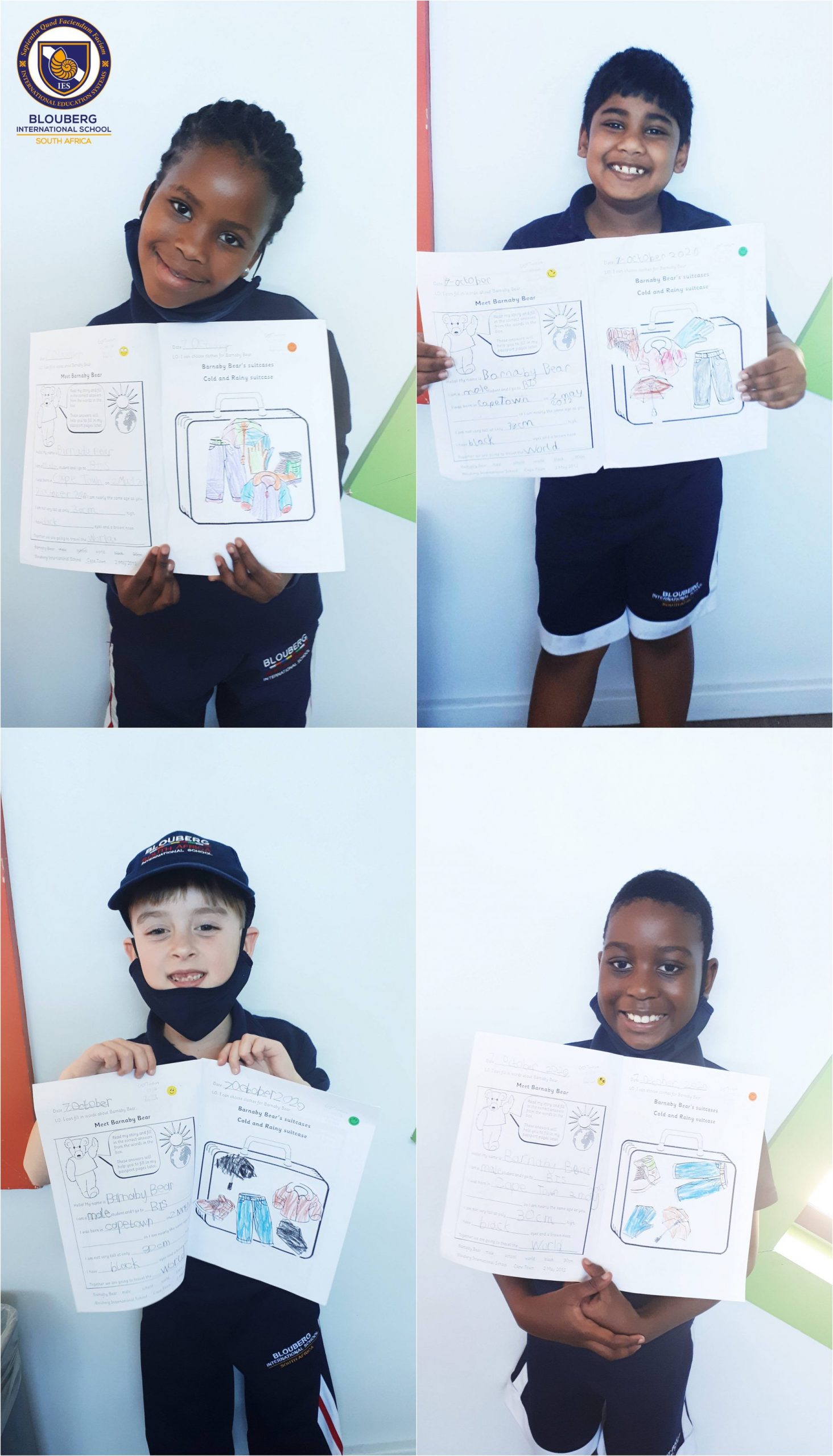
In Geography this term, the Year 1’s will be traveling with Barnaby Bear to various countries across the World. His first destination was London, England.
The Year 1’s learnt how far Barnaby had to travel to get to London. He used many different modes of transport to get around to all the famous landmarks, like an airplane, the London Tube, a Black Cab, and a red double-story bus. It made me think of the movie ‘Planes, trains and automobiles’.
Barnaby sent us a postcard telling us about all the landmarks he visited. He first took the tube to London Paddington Station, where his famous friend ‘Paddington’ was found. There he saw hundreds of people playing music, drawing and shopping. This made Barnaby Bear miss home, so he had to call his mum from a red telephone box. This cost him a pretty penny!
Barnaby took a cab and went to the Palace, where he saw the Queen and her famous Yeomen. The students had a good giggle at their silly outfits. He rode the London Eye and felt really ill. He saw the Millennium Dome, Big Ben and the Tower Bridge. Barnaby watched for hours how the bridge lifted for boats to pass through.
Barnaby just had to visit the monument erected to remember the Great Fire of London, to prepare the students for Year 2. His last visit took him to St. Paul’s Cathedral, which was largely destroyed in the Great Fire.
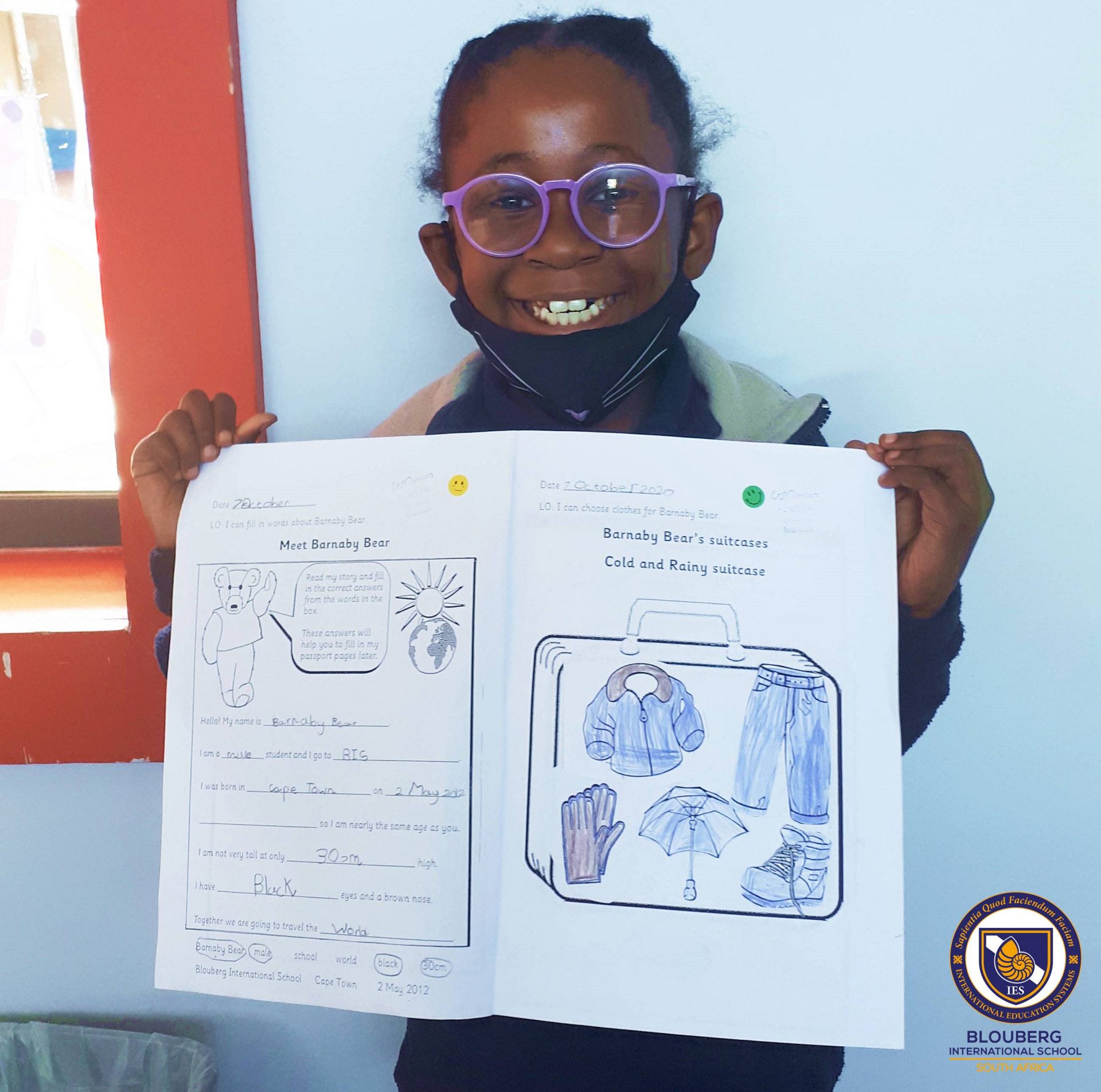
It was starting to get cold and rainy in London, as it is autumn there now. Barnaby really found it difficult to decide what he needed to take with him, so our Year 1 students helped him pack his case for the journey before he left. I certainly know that he was dressed right for the weather that awaited him.
We are looking forward to the next leg of his journey, where he will continue in London and look at art, culture, dress and food of the people that live there.
Wendy Menton
Year 1 Teacher
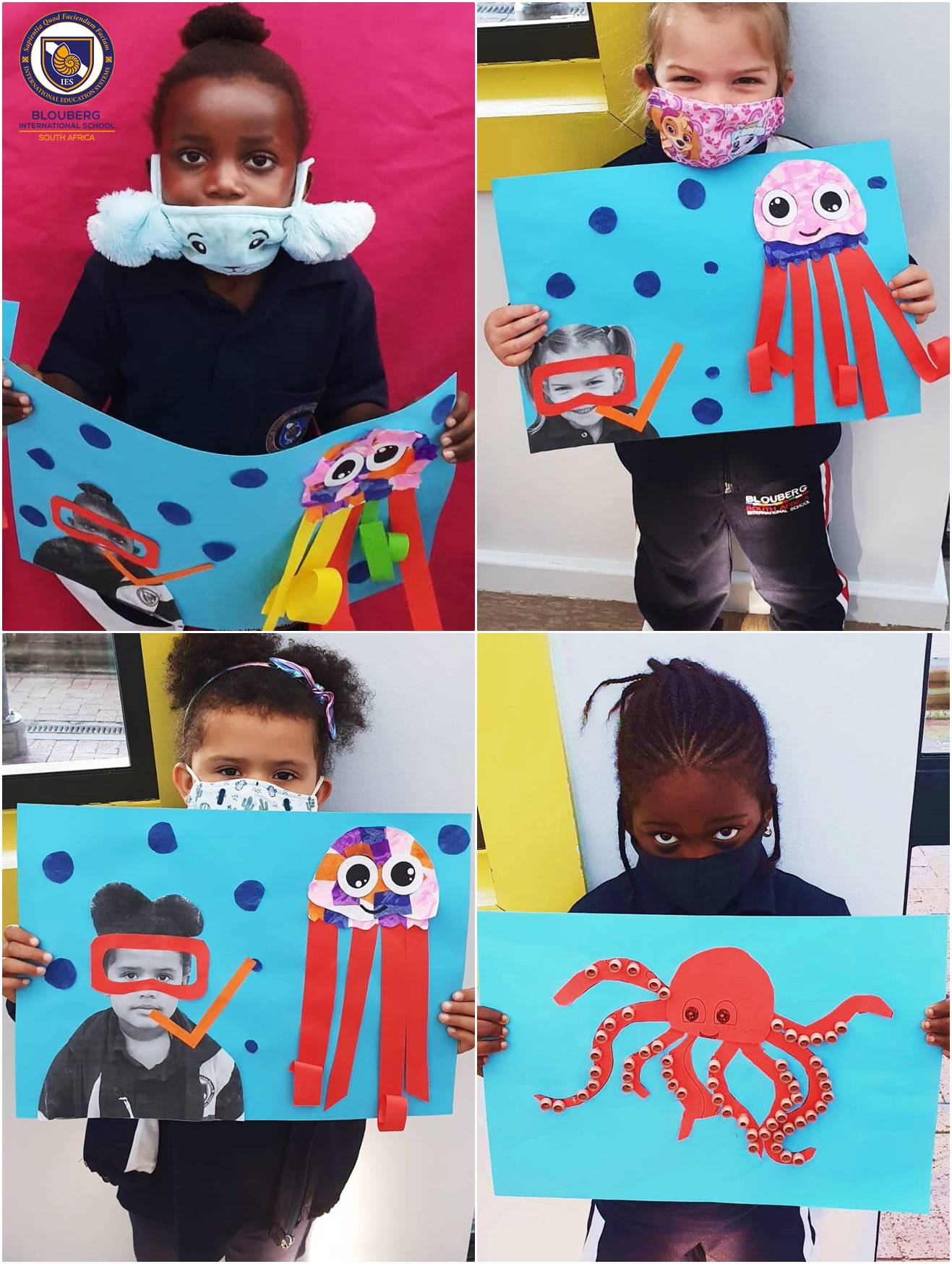
Under The Sea
Using our shared ideas, we started our investigation discovering life under the sea. We used books and online research, including videos and information to gain new knowledge about sea animals.
The Aquarium is a great way to teach students about the animals under the sea. We went on a virtual tour with Blippi to the Aquarium. We discovered facts about sea animals, the purpose of coral and a very important topic, pollution. We learned that the oceans cover 70% of the Earth and that it is our responsibility to protect the oceans.
Here are a few things that we can teach our students to do in order to help protect our oceans:
- Buy recyclable products
- Pick up any litter
- Stop using plastic as much as possible
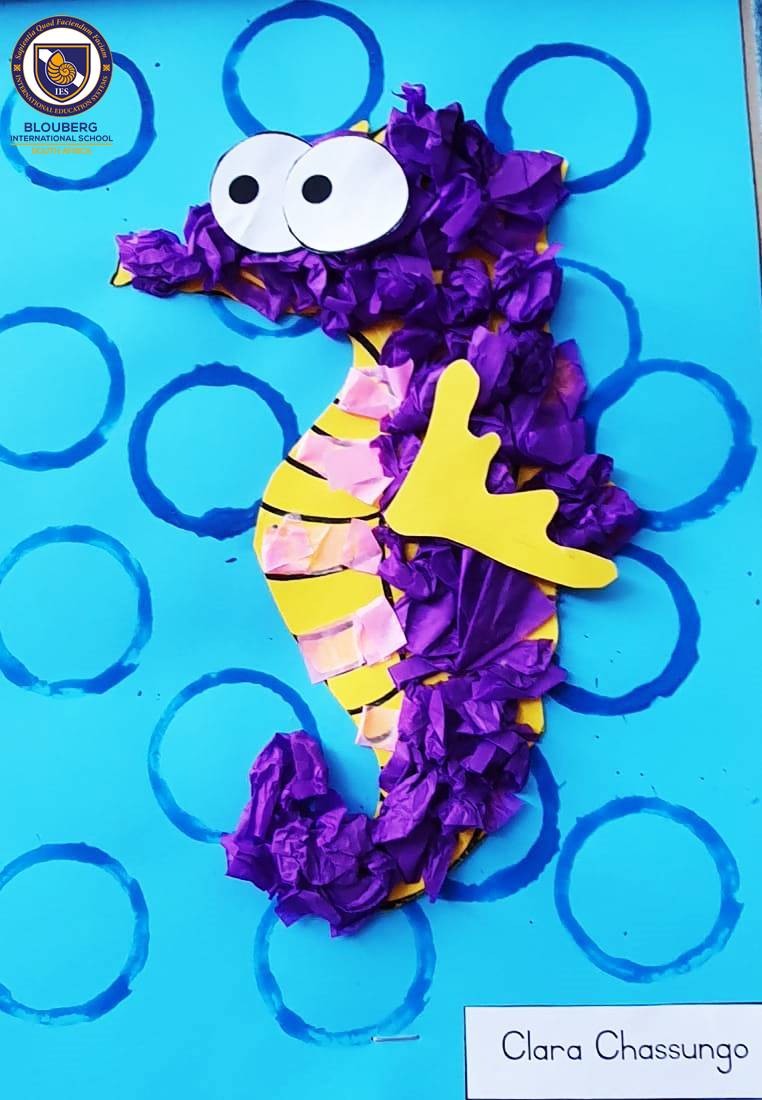
For art, we created beautiful pictures to represent our knowledge and understanding and in numeracy we had to colour in a rainbow fish following a colour code.
This week has taught us we can all make a difference, no matter how big or small.
Martie van Dyk
Pre-Reception Teacher
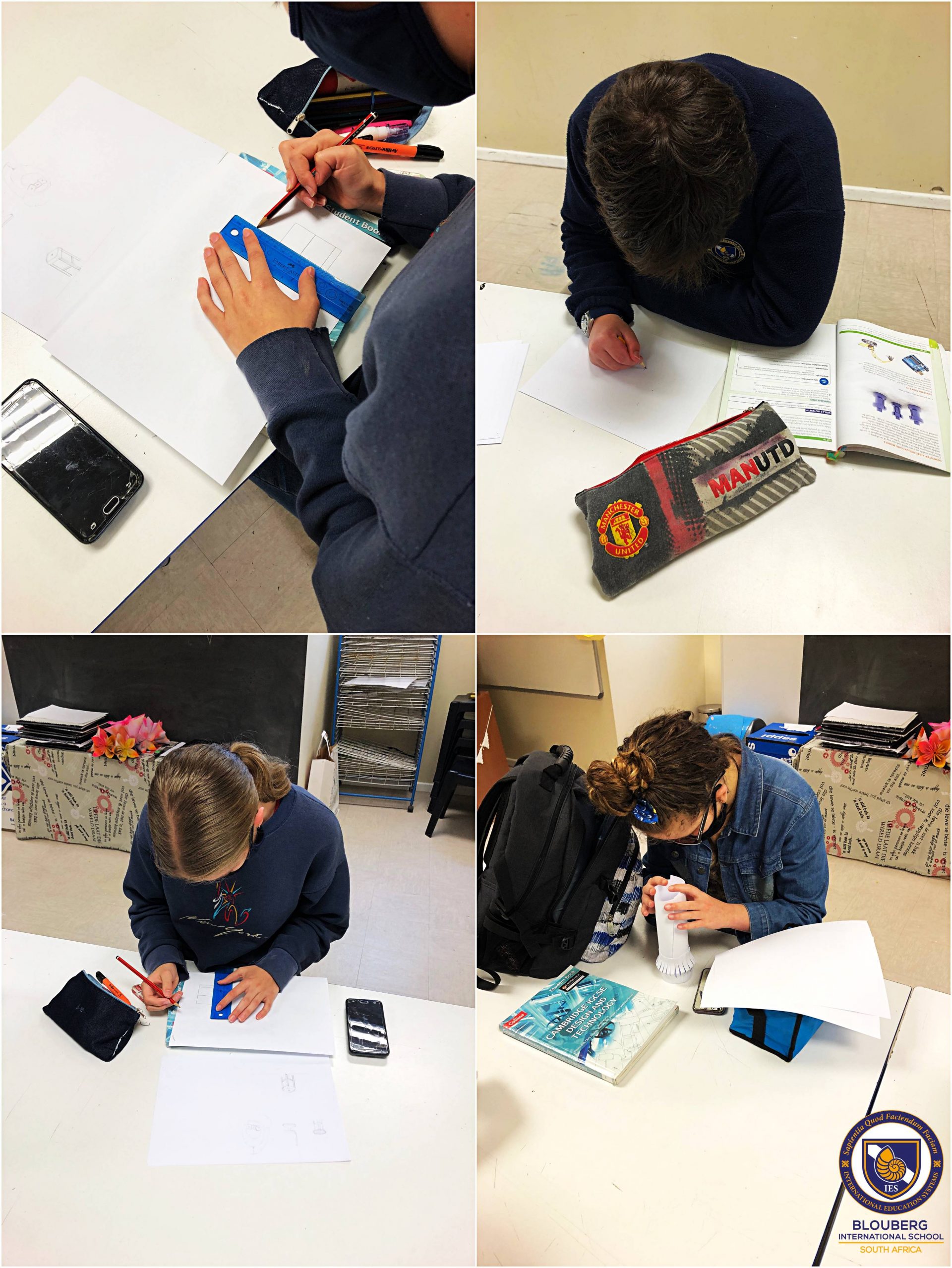
Design & Technology – The Importance Of Mock-Ups
Designers often come up with new ideas or create new products for clients or consumers. An important part of the syllabus for IGCSE Design and Technology is to be able to produce a new product or improve an existing one that was created by a need.
Once students have designed possible solutions or ideas, the next step is to make mock-ups or models. This is an important part of the design process as it allows the student to visualise their product as well as get a better understanding of its functions and capabilities. Importantly, mock-ups allow the students to test mechanical functioning of the product.
During this important process, students gain an understanding of construction techniques, the different materials available, sizing and proportions and assembly details, just to name a few.
Our Year 9 students recently did an activity where they had to design a chair and build a model from a single A4 page. This was a successful activity and putting their models to the test proved a lot of fun.
Julian Harrison
Design and Technology Teacher
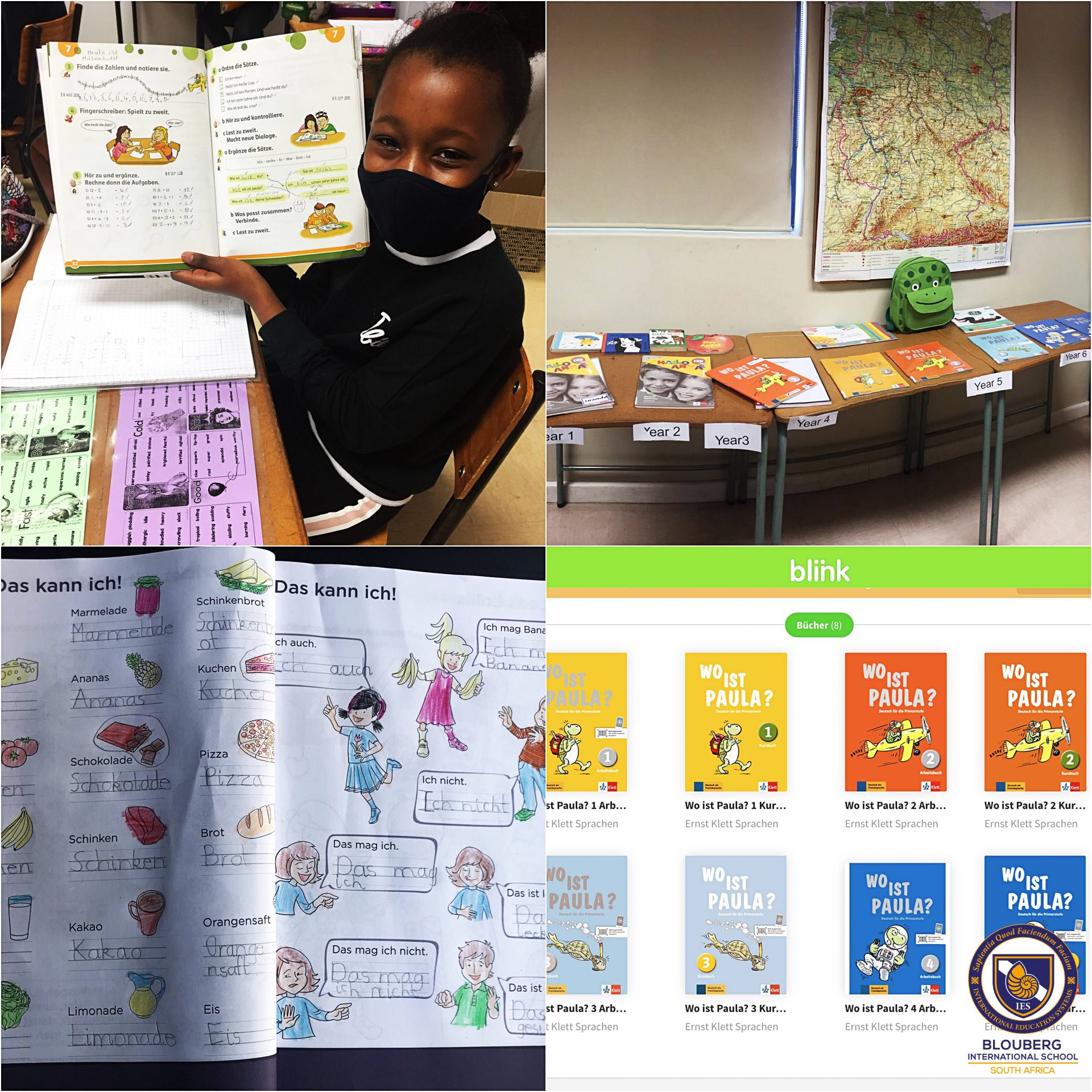
From the German Classroom – Hallo BIS!
*Wir lernen Deutsch zusammen! Das ist einfach wunderbar! *(We are learning German together! That is simply wonderful!)
In January this year all the students were welcomed to German with a new workbook that is made up of a curriculum in the form of a programme that has age appropriate teaching materials specifically for German as a foreign language. These programmes are based on the levels from the Common European Framework of Reference (CEFR) which are “guidelines used to describe achievements of students of foreign languages and provide a method of learning, teaching and assessing which applies to all languages in Europe’’. The CEFR levels are for grading an individual’s language proficiency focusing on the areas of understanding (listening & reading), speaking (spoken interaction & production) and writing skills.
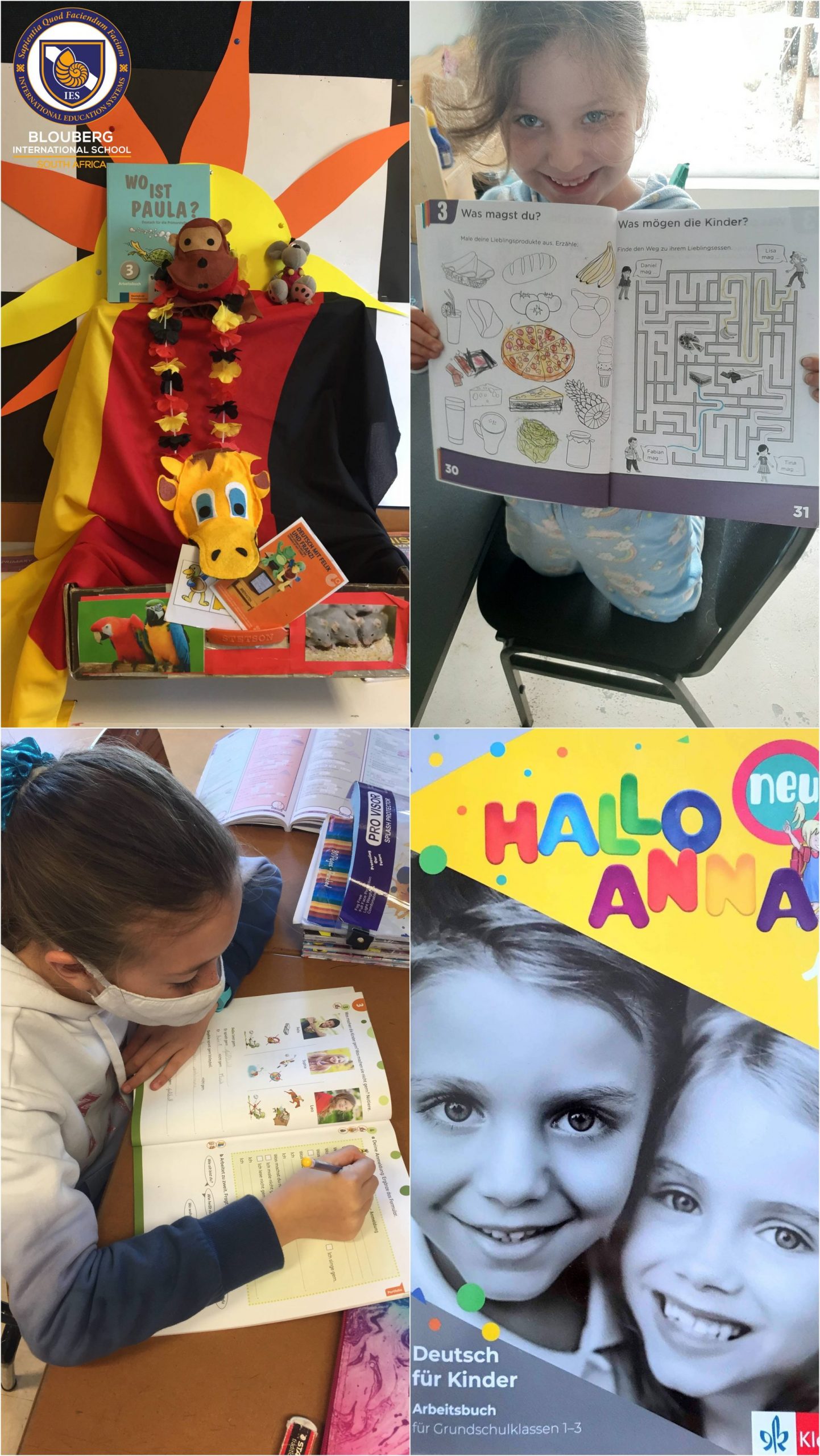
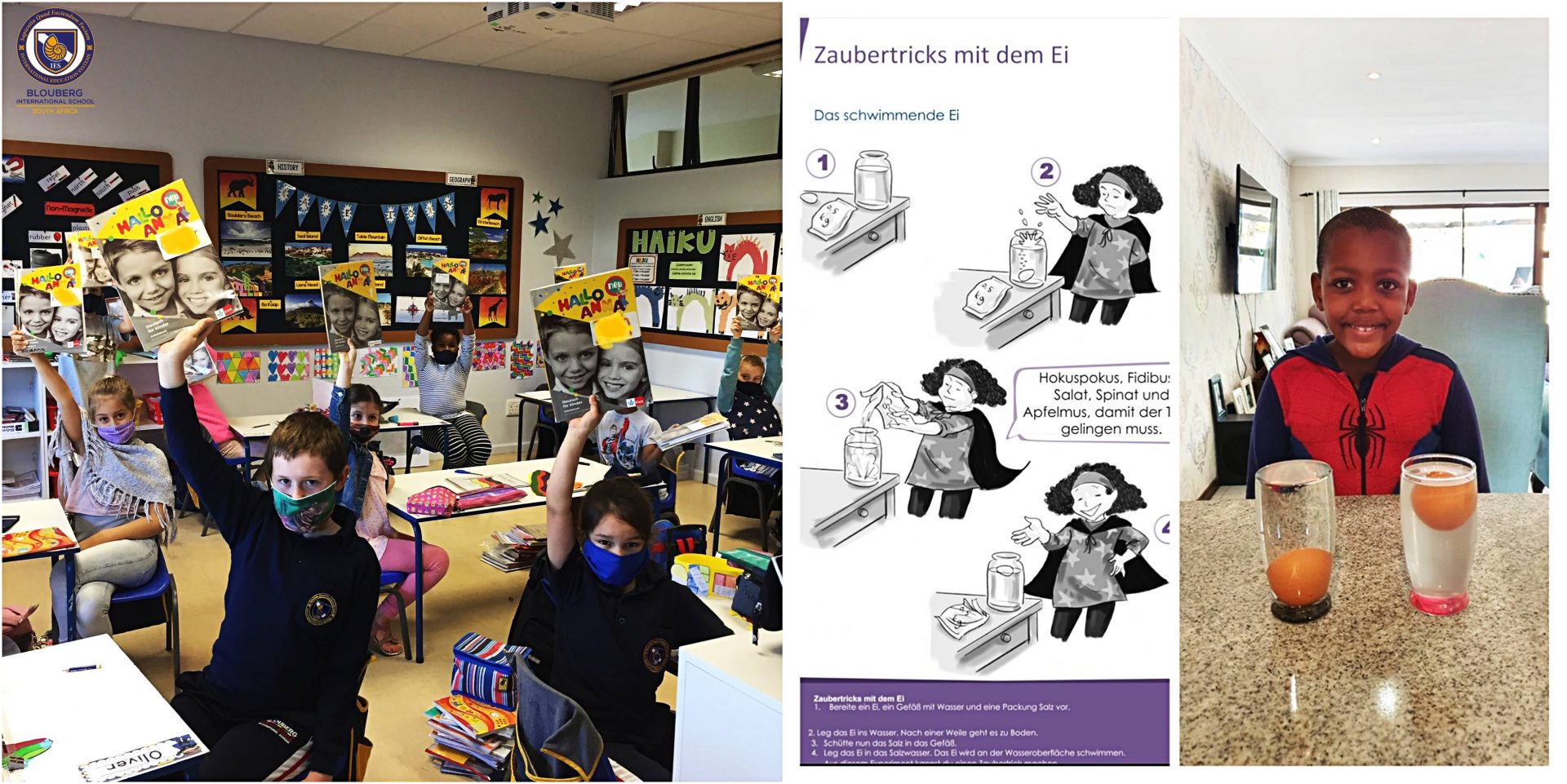
In Year 1, 2 & 3 we started the Hallo Anna workbooks, a Level A1 (CEFR level) introduction for ages 5-9.
This edition is specifically for children who are learning to read and write an additional language other than their mother tongue or 1st language. Therefore, it gently introduces German as a foreign language and concentrates on learning German mainly through listening and speaking in Year 1 and then the skill of reading and writing are gradually introduced in Year 2 and progress in Year 3.
These skills are taught using various methods including songs, comics, audios, experiment and a colourful workbook with lots of creative ideas.
The students are taken on an adventurous and exciting journey with the 2 main characters Anna and her friend Benno in the city of Munich in Germany.
These adventures take place at school in the classroom, with topics including my greetings, my day, my likes, my classroom and stationery and at home with my family and celebrations in Germany. The students enjoy seeing the characters come alive in the workbook and the interactive online programme I use in class.
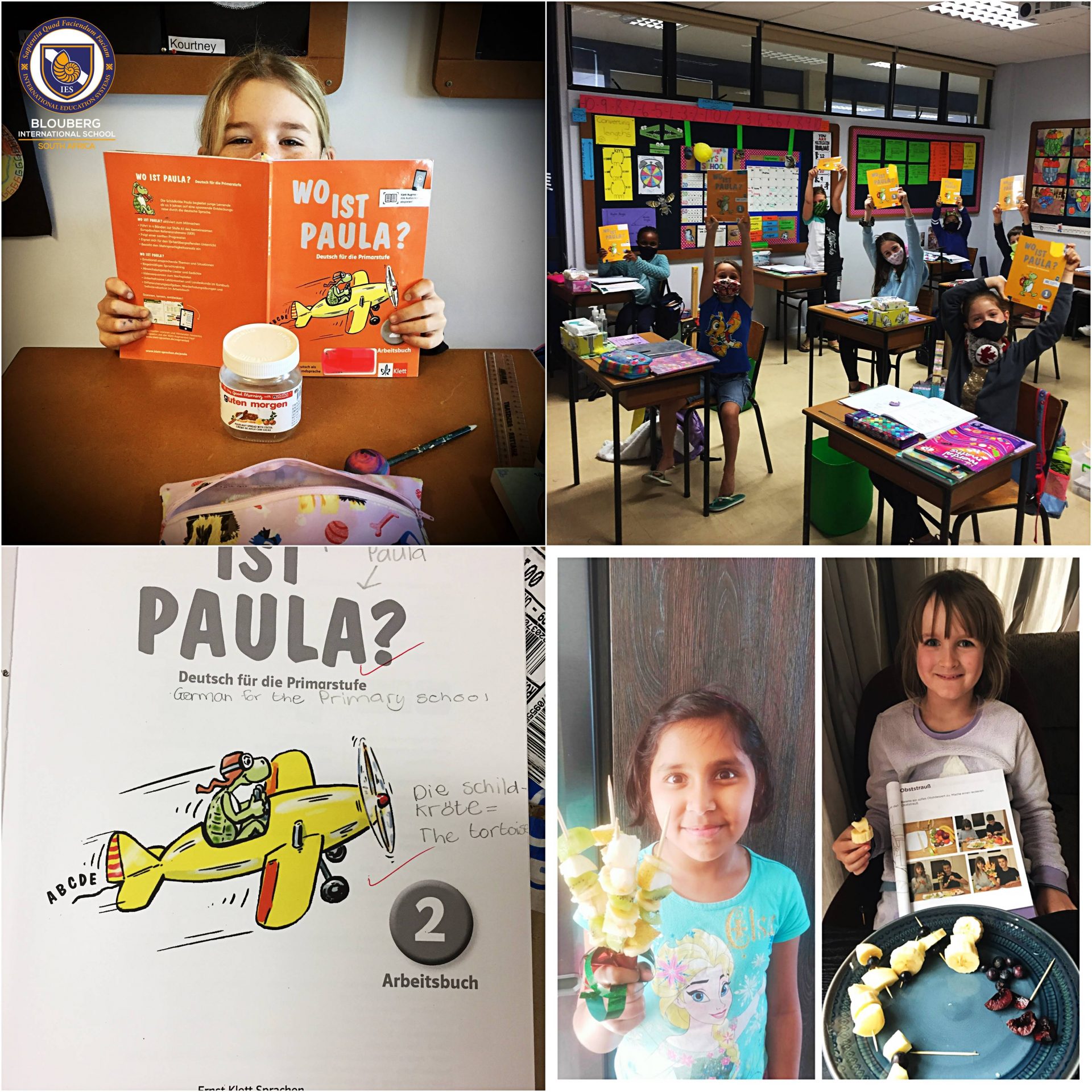
In Year 4, 5 & 6 the students were introduced to the Wo ist Paula (Where is Paula?) range of workbooks and programme.
It has especially been created for the over 9-year olds and has a progression from book 1-4 to acquire the Level A1 (CEFR level) and then allowing for an easy transition into High School (Year 7) and the Cambridge curriculum.
The programme is set up to motivate participation using interdisciplinary teaching across subjects and a multilingual approach, perfect for a school with an international perspective.
It includes language training and vocabulary, various topics, songs, videos, learning about Germany and Europe, it has differentiation tasks for extension learning, revision and the students have opportunity for self-evaluation to see their progress.
The students have been introduced to using the audios to improve their listening and speaking skills at home anytime via CD, downloads or an app. I use the Blink digital educational platform to show the videos, audios and pages from the coursebook and workbook in class.
The students in Year 4, 5, & 6 are on a journey with Paula the tortoise with various topics including: answering questions about myself, name, age, where I live and come from, my family, my classroom, stationery, my hobbies, telling the time and what I do in my day.
“With 100 million mother tongue speakers, German is the most widely spoken language in Europe. A new survey has shed light on where people are learning German around the world. Some 15.4 million people are learning German as a foreign language all over the world” and you the students at Blouberg International in Cape Town South Africa are very much part of this growing number.
*Deutsch ist cool und genial! Deutsch ist International! *(German is cool and awesome! German is International!)
*Song lyrics from the Hallo Anna programme. See the Year 2’s singing the song Hallo Anna Hallo Benno filmed in Term 1.
Auf Wiedersehen, bis bald!
Frau Kerstin Pani
German Teacher Primary School
Year 3 Creating Masterpieces!
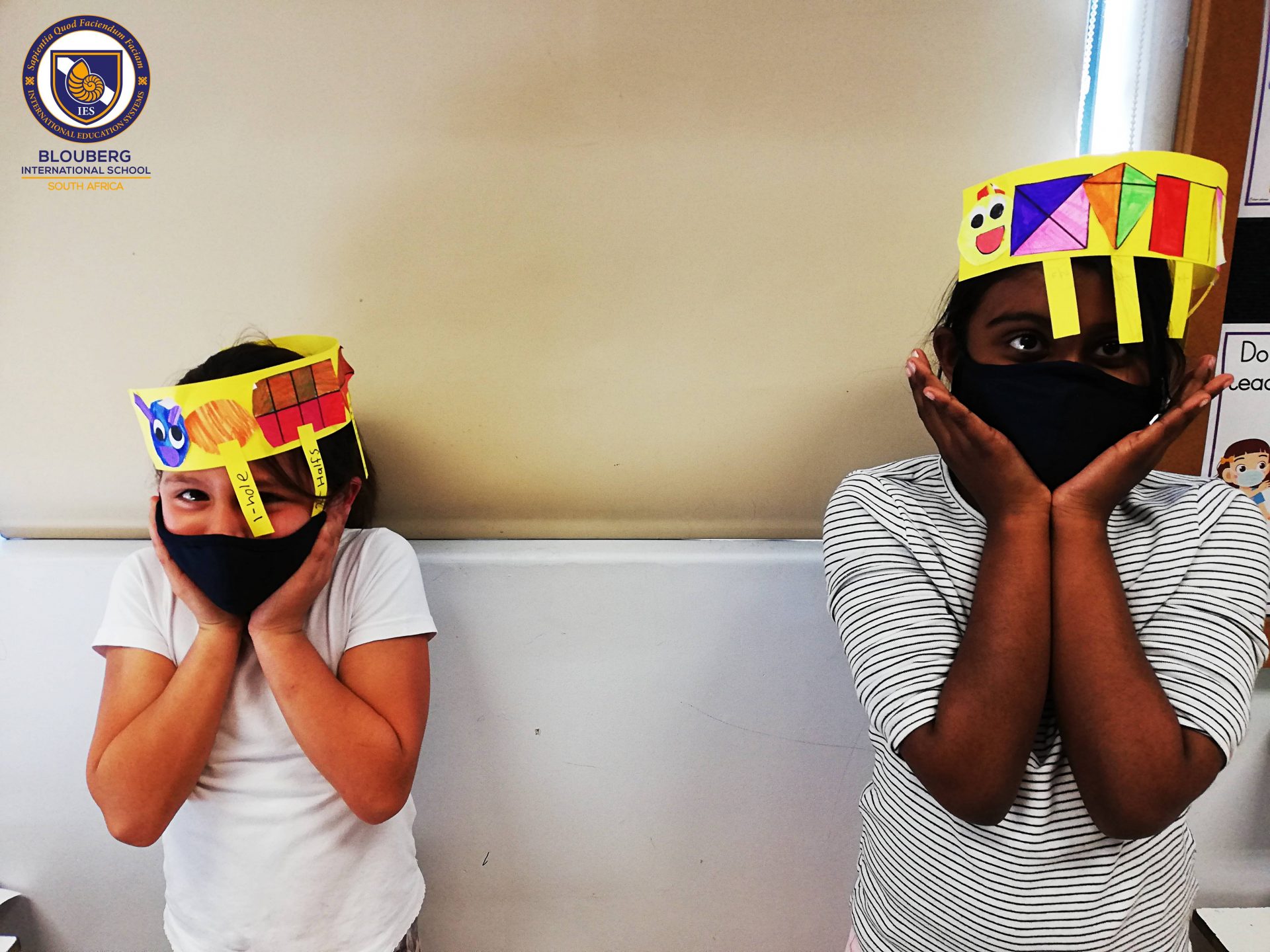
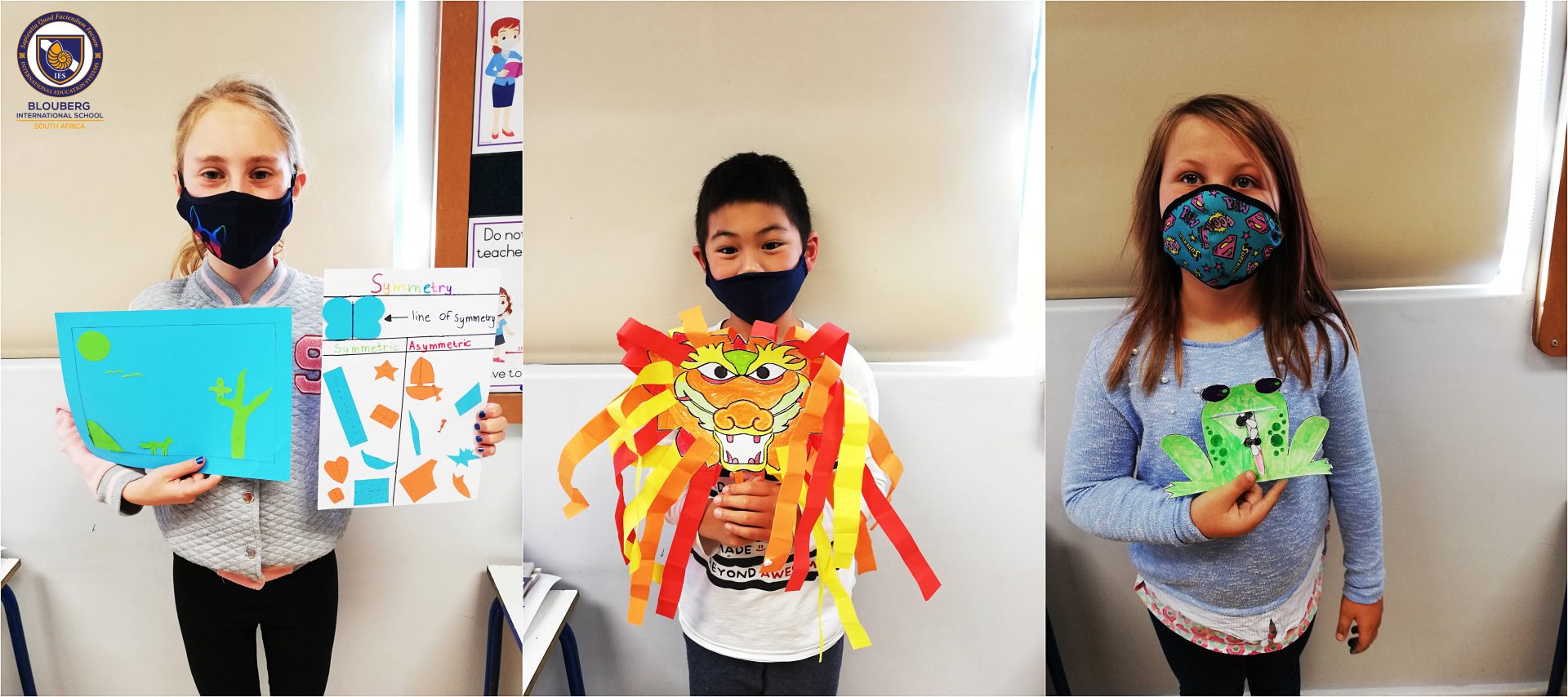
The year 3 classes have worked very hard over the last few weeks to interpret symmetry and its relevance to adventure. After being able to apply the concept they created perfectly symmetrical frogs and beautiful tessellation patterns.
The year 3’s also created beautiful Chinese Dragons, silhouettes and the cutest caterpillar hats that displayed their knowledge of fractions.
The bright colors and exciting projects has given Spring a warm welcome!
Sasha Rajah
Year 3 Teacher

From the Principal’s Desk, 4 September 2020
Dear Parents
If like me you were expectantly waiting for spring to arrive, you must be sharing my disappointment at being stuck in a winter wardrobe. We have much to be grateful for and, despite the bitter cold of the past few days, it is still wonderful to hear the voices and laughter of our children back at school.
This week we opened our Aftercare facility again and I wish to thank you for adhering to the protocols so diligently. Your conscientiousness makes the work of the teachers and aftercare staff much easier and we appreciate your cooperation with collection times. We have also reintroduced the holiday care program as we are acutely aware of the need for such a facility.
Next week our staff will be doing verbal feedback meetings. I trust you have managed to schedule some time with your children’s teachers as the feedback from these meetings is crucial for both parties.
We are celebrating Mrs. Avril Lai Wing this week and wish to honor her for the daily tasks she is doing so gracefully. She is always available to our students and receives them with a big heart. Secretaries are the first face you see as you enter the building and the welcoming smiles to our children. We are blessed to have her as part of our team.
“Spring is when you feel like whistling even with a shoe full of slush.”- Doug Larson
I wish you a happy weekend and may it be filled with sunshine and no rain!
Regards
Edna
