

Year 1 Outing To The Science Centre
A visit to the Cape Town Science Center is a highlight for many students. On Tuesday, 7 June the Year 1 students enjoyed the morning at the center.
The students were fascinated to see the camera obscura where they saw a 360 view of cape town while sitting inside a dark room. They then enjoyed a lesson about shapes and had to complete a challenging shape sudoku. Working together to build a wall on the construction site was great fun; however when it came time to tidy up the students were not as enthusiastic.
The interactive exhibits allow the students to see how science works in the world around us. Finally, we had the Wizz, Pop, Bang Show, with lots of exciting chemical reactions making fire and sounds and the genie coming out the bottle had everyone enthralled.
The bus ride back to school was quiet and some even fell asleep after a very busy morning.
Here is what some of the students had to say about the Outing:
My favourite part is the … bottle rocket and the lighting box! (Ozioma)
I liked the food table and I liked the bottle rocket. (Leah Koopman)
I saw coloured fire and I saw the camera obscura. (Nathaniel)
I liked building a wall and mommy came with me. (Leah Karstel)
I liked the Lego site and I liked the speaking tubes. (Uche)
Ann Cordner
Year 1 Teacher and Key Stage 1 Coordinator



Read More

Figurative Language: Putting Words To Work
I walked towards the door, my shoes squeaking on the tiles like nervous mice. The door at the end of the corridor gaped open, the wind whispering secrets between the hinges. I reached out and gripped the door handle, the metal a chunk of ice on this wintry morning. I checked that I had my book, and slipped into the English classroom, ready for my descriptive language lesson…
This term in English, the Year 6 students have been learning about figurative language, imagery in writing and the plot elements in a narrative plot structure (rising action, climax and falling action).
Their focus has been to include figurative and sensory language when writing, to help their writing pieces to become more descriptive. They used tools like similes, metaphors and personification (figurative language) to help paint a picture in the reader’s mind. They didn’t just tell stories, they created worlds. By using imagery (sensory details) in their writing, they transported their readers far and wide, taking them on adventures where they could see, hear, taste, smell or touch whatever the characters were experiencing.
For their final writing task, the students needed to apply what they had learnt, writing a story chapter that included the rising action, climax and falling action of their story, as well as using figurative and sensory language to help their readers visualise their setting and action. Of course, stories don’t just write themselves, and sometimes starting a plot can be tricky. To give them a jump-start on choosing their setting, students were given visual prompts of various possible settings and sensory details that matched them. They also made use of a bank of resources for metaphors, similes, personification, synonyms and adjectives, which they could use to describe the feelings and actions of their characters.
The Year 6s really stepped up to the challenge, showing that they could work independently, use their resources effectively, and give meaningful feedback on their peers’ work. They created impressive writing pieces, which I thoroughly enjoyed reading!
-“Wet, heavy drops splattered all over, like paint messily across a canvas, as their fire was quickly dying.”- Nuraan Price
-“He could feel his tears welling up again. They blended with the rain, bucketing down.”- Siyana Manawar
-“He stared forward examining the crude, rusty train tracks that seemed to go on for kilometres before disappearing into the thick ominous fog. He pinched himself on his forearm, hoping that this was all a dream, but nothing.”- Sadie E’ Silva
-“Jannet woke up to a crack as loud as thunder and shot up as fast as an elastic band”. – Aimée Davies
Katherine Nel
Year 6 Teacher and KS2 Coordinator


Read More

Aftercare And Holiday Care
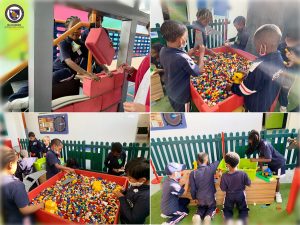
At BIS our main focus for Aftercare is to provide support for students when formal school activities close for the day. Some of the benefits and value that students receive when enrolled in our BIS Aftercare Programme includes:
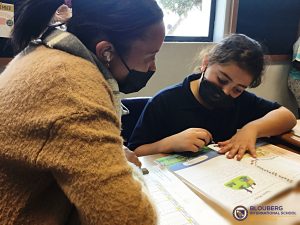
- Basic homework routines support by aftercare assistant.
- Fun activities such as reading, drawing, arts and crafts, movies.
- Basic needs are met which includes safety, a snack, play time.
- Strengthened relationships with peers and more quality time to spend with parents at home, as homework and other activities are completed at Aftercare.
We also offer a fun, interactive and structured Holiday Care Programme, where extra-mural activities and recreation forms part of the daily routine.
Some of these activities include:
- Participation in sporting activities to strengthen and develop physical and team building skills.
- Learn life skills through participation in a range of informal and structured activities that teach children how to cope with everyday situations.
We have an exciting Holiday Care Programme planned for the June/July school holidays; enroll your child by clicking on the link below.
Avril Lai Wing
Aftercare Manager




Read More
‘X’ Marks The Spot
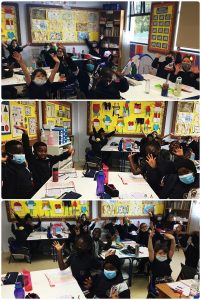
This Term in Geography, the Year 3 students have been learning how to read a map, what map symbols are used for and following directions on a map. They also learnt a great deal about grid references and compass roses. This all coincides with History where we are learning about ‘Explorers’.
When investigating map symbols, the students had to create their own map symbols for the classroom. Once they had completed that, they used those symbols to draw a birds-eye view of their classroom to show their knowledge and understanding of the concept.
We extended the concept by playing directions board games and completed a compass challenge game in groups.
The best part of the whole term was that each student was given a chance to create their own treasure map, and present an oral about their map explaining how to get to the treasure using directional language. Each map had to have an appropriate name, a key showcasing exciting locations, feature a compass rose for directions and footprints to the treasure (x marks the spot).
Students were allowed to stain their maps with tea or coffee and burn the maps to age them so that it looks authentic. I remember doing this exact activity in primary school, so I was very excited to see what each student came up with. I loved the various locations they used, like skull caves, waterfalls, sinking sand and volcanoes, only naming but a few. The Year 3 teachers are super proud of how much effort all our students put into this task. I am sure that you will agree with us when you see their beautiful maps.
We will continue exploring maps and atlases for the rest of this term while discussing the various famous explorers. I cannot wait to do the scavenger hunt and I am certain the Year 3 students will enjoy it too!
Wendy Menton
Year 3 Teacher

Read More

Year 2 Word Search Fun!
Word searches for children are available in a variety of themes and age-appropriate versions, which means that there is a word search out there for every type of child. Each word search features a list of words, some of which a child will be familiar with, and some of which will be new. The more a child encounters new words, the bigger his or her vocabulary will grow.
The following are the benefits of a word search:
- Provide hours of fun
- Improves vocabulary
- Improves spelling skills
- Can enhance productivity
- Provide a way for adults and children to bond
- Offers an appropriate way for children to socialize
- Develops problem-solving and pattern-recognition skills
- Nurtures an attitude of persistence
- Provide effective stress relief and working memory
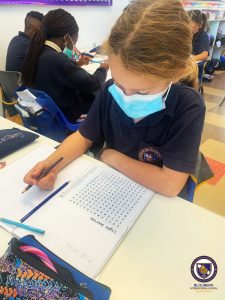
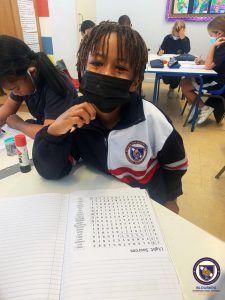
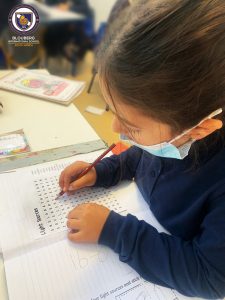
This week our Year 2’s had some fun doing a word search activity in their Science class. For Science this term we have been looking at Light and Dark Sources. We find that this kind of activity is a fun way to learn and also revise what we have learnt as well.
Siobhan Hendry
Year 2 Teacher

Read More
A “Safety Circle”
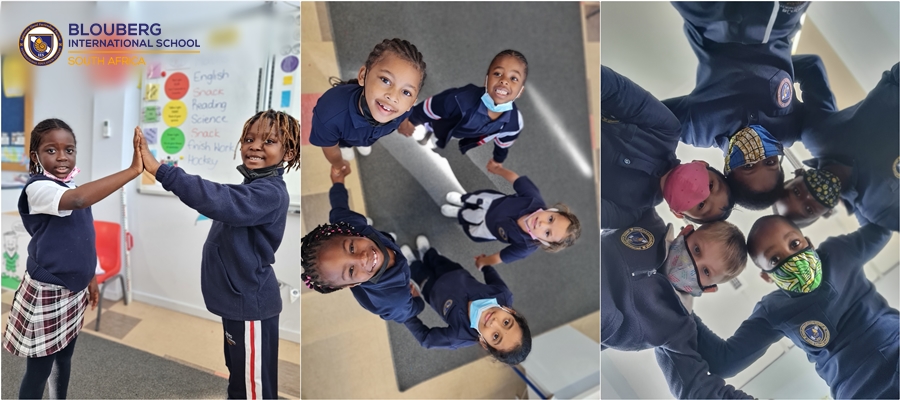
The Year One teachers focused on teaching the students about their safety circle this week. We feel that it is important that our students have a safe group or safe circle that they may approach whether they are in trouble, unhappy, worried or just want to talk. A safe group or safe circle is the few most trusted people in our student’s life.
It is important for students to have a safety circle. Students should be able to name five people on their hand who they can trust and rely on. The Year One students discussed who is in their safety circle, the reason for a safety circle and to know when to use their safety circle.
We encourage parents to communicate with their children to see if anything is disturbing them and to continue to check in on them from time to time without being too controlling. We have noticed that being casual in the way one communicates with children will give them the courage to open up to you more.
“At the end of the day, the goals are simple: safety and security.” – Jodi Rell.
Year 1 Teacher
Erin Hierse

Read More
Creating 3D Shapes

During the term, the Year 4 students have been learning about 3D shapes, forming part of their Mathematics curriculum. Through research, collaboration and investigation the students learned the names of these shapes as well as their properties.
As part of a class project, students were given the task of creating a structure/model using no less than three different 3D shapes. They had to construct each shape, using nets, before assembling their project. Our budding engineers worked tirelessly to come up with amazing designs and we could not be any prouder.
After the construction was complete, students had the opportunity to share their project with their peers in an oral presentation.
We are very proud of our students.
Yvette Fourie
Year 4 Teacher
Read More

Learning Using Models And Research
Learning is more than remembering terms and concepts. It is the start of a lifelong adventure of inquiry. The Year 3’s have been challenged and assisted in their research by using technology, observations, and secondary sources to study the Earth, Moon and Sun. What they have discovered, they have demonstrated using models.
Last Monday, the early risers had the privilege of seeing a Blood Moon. Aside from watching and discussing a YouTube video to learn what causes a Blood Moon lunar eclipse, they took photos and created a couple of beautiful collages of the Cape Town May 2022: Blood Moon.
The iPads have also been used to research lengthy websites and discover the 7 ways the Earth is round. They did this by simply using the subtitles as a reference. We also explored how to use Kiddle – a search engine designed for kids to use to find information quickly. We then moved on to using YouTube as we mined for diamonds of information on a Dr Bionics video about the structure of the Earth.
Of course an interactive way to display our knowledge, is to use models.
This term we have used our hands to demonstrate how the primitive (reactive) brain and the prefrontal cortex helps us focus and solve problems.
We made interactive lungs with cards, balloons and straws to show how air comes in through our nose and mouth and inflates our lungs.
We are especially proud of our plate models, which show the phases of the Moon; the names of each stage as the Moon rotates on its axis and orbits the Earth. Some students were even able to show where the Sun would be during a lunar eclipse.
Information that students find for themselves, discuss, and demonstrate their understanding of becomes a lived experience instead of a book study.
Carey Schoots
Year 3 Teacher


Read More

Having Fun With Shadows
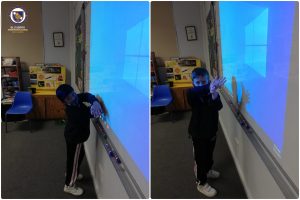
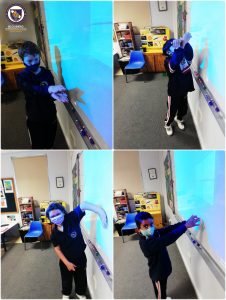
The Year 2 classes have been learning about light and dark during their Science lessons. They have looked at different light sources and can identify those which are man-made and those which occur naturally.
We had some fun during our last Science lesson, using shadows to make funny creatures on the whiteboard, using the light from the projector to create shadows. My class decided that this was the best Science lesson. There was much laughter as their classmates tried to guess what the creature made by their friends were.
Kim Coetzer
Year 2 Teacher
Read More
Marvellous Materials
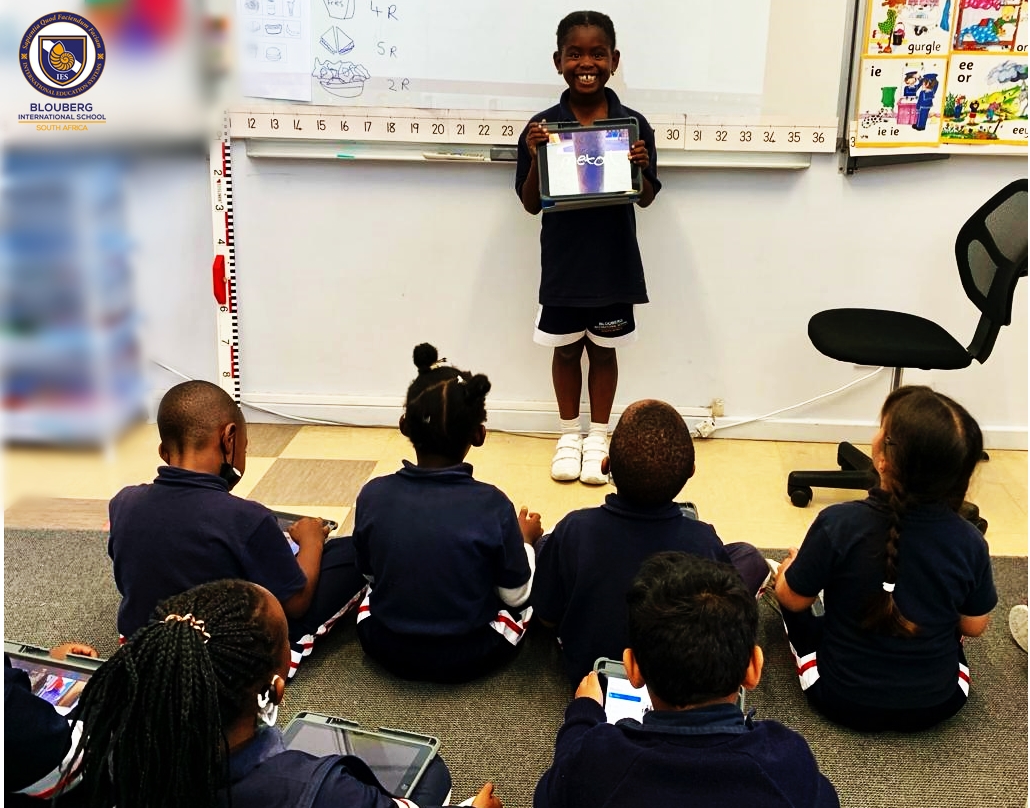
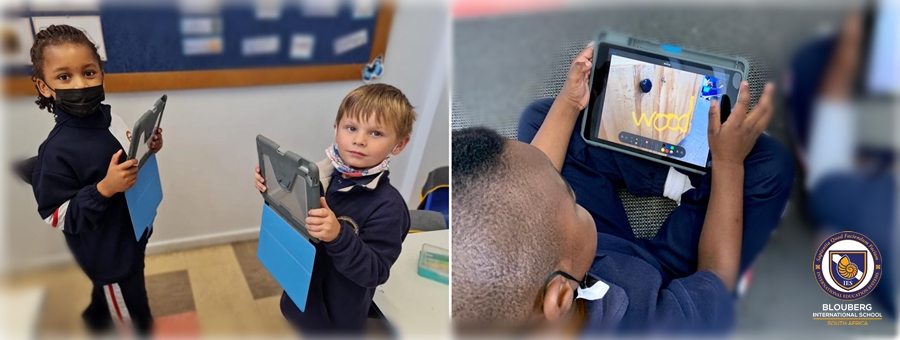
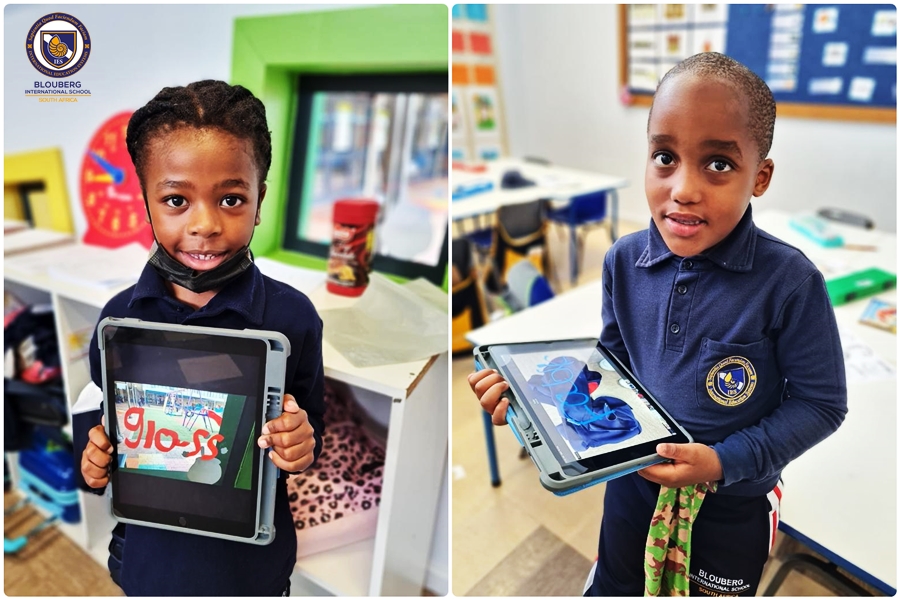
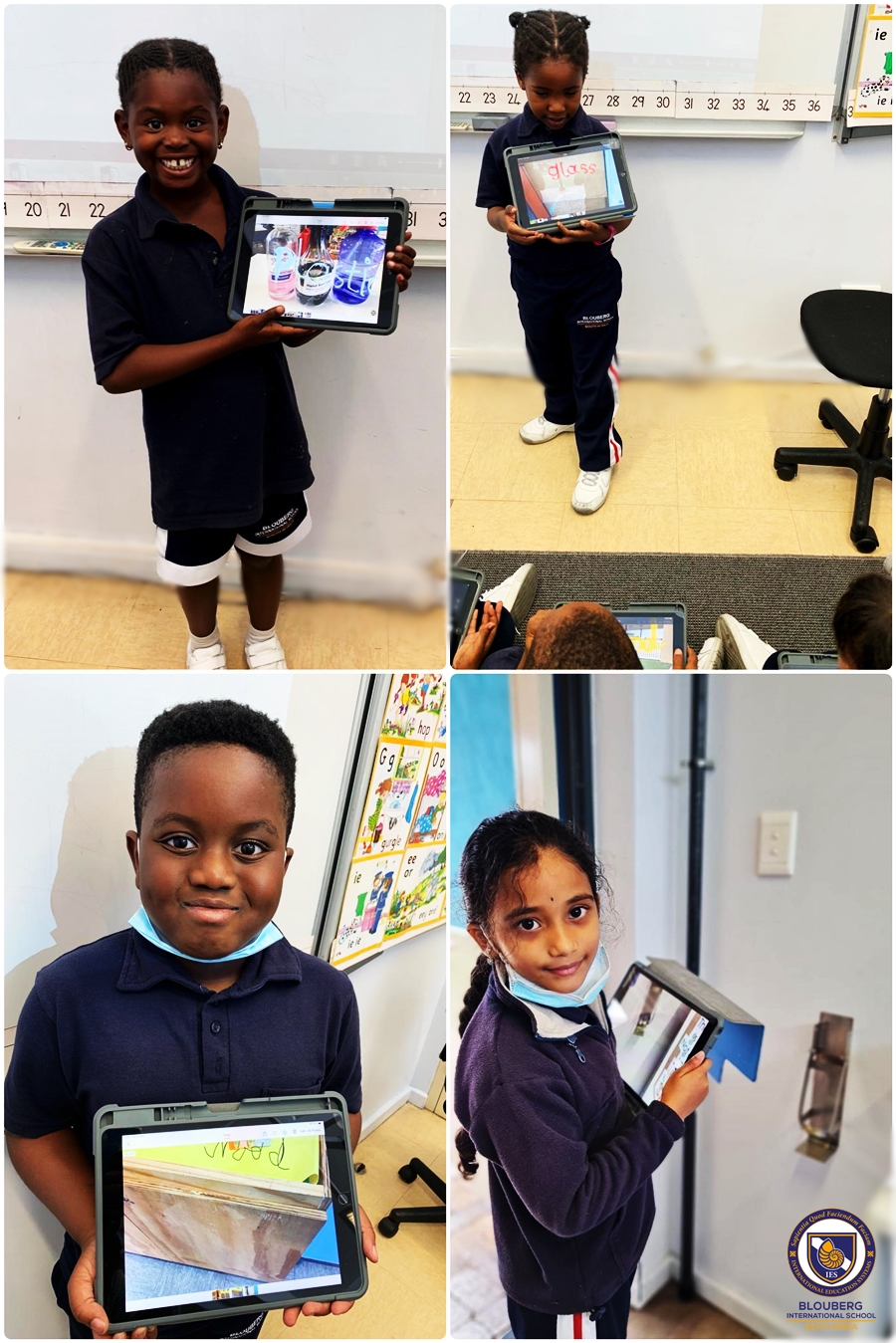
We have been learning about marvellous materials in our Science lessons in Year 1. Exploring, investigating and identifying different materials is all part of the fun and we have been very busy this week.
We used the school Ipads to identify and take pictures both inside and outside of the classroom of 4 different types of materials, “glass, plastic, wood and metal.” The students then edited and labelled each picture they took and presented it back to their friends in class.
We were very impressed by the discoveries the Year 1s made and how well they recorded their findings.
The students thoroughly enjoyed these interactive activities!
Charlotte Cronje
Year 1 Teacher

Read More