
Multiplication Scavenger Hunt
In Mathematics, the Year 6’s have been learning about multiplying whole numbers by two digit whole numbers. They have learnt about many different methods to work out their answers such as the Grid Method, Expanded Written Method and Formal Written Method. This week they put all this new information to the test and took part in a Multiplication Scavenger Hunt.
The Year 6’s received clues such as:
– I’m a four sided shape but people call me five.
– Here we hold meetings and celebrate stars of the week. To find the next clue go take a peek.
– With clothes of green, and bark not of a dog. Search me for the goods, I sleep like a log.
– A site of work and getting things done, and making calls for your sore tum.
– Back and forth I take you, higher and higher you fly. At time you can push me and I might make you cry.
Can you figure out where these locations are?
When they arrived at their destination, they would find a task card waiting for them with a number sum or a word problem on it. Once they worked out the correct answer they could come back to me and receive their next clue. This turned into a competition, with each group trying to get to as many task cards as they could.
This was a lot of fun and a more hands on way of learning. It allowed the Year 6’s to show off their newly learnt multiplication skills, as well as practice other skills such as: team building, patience, group work and time management skills.
Brittney Hakime
Year 6 and 7 Mathematics Teacher


Read More

Investigating Capacity
The most effective way for students to learn new concepts is by taking part in practical investigations. This makes their learning more meaningful.
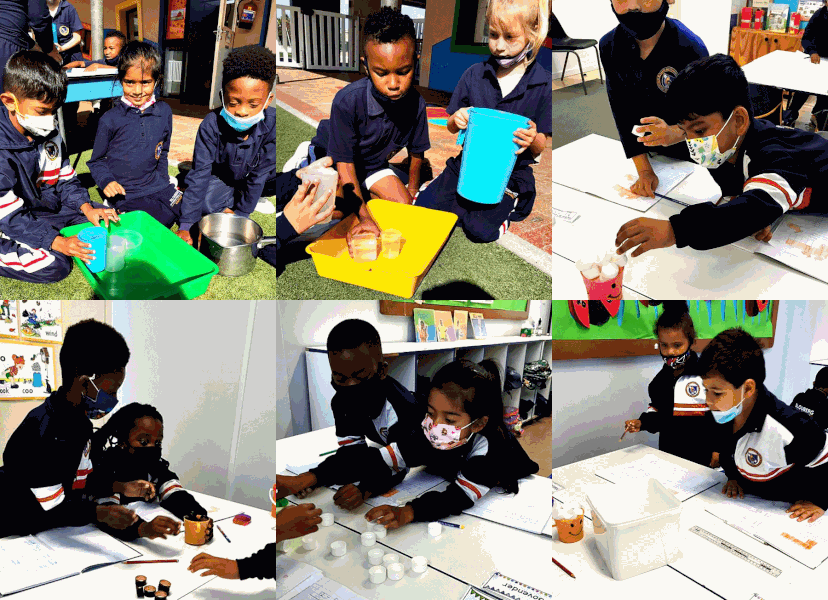
This week, the Year 1 students have learnt that capacity means how much something can hold. Our classes had great fun investigating this concept and conducted various experiments.
Fortunately, the weather was kind to us and the students could go outside and use the water troughs to do practical activities. They had to find out how many cups of water could fill a pot, beaker, vase etc. In groups they had to predict which container could hold the most water and then find a way to prove their answer. This required them to communicate their ideas and reasoning with their peers.
In class we learnt that capacity is not only about how much liquid a container can hold, we filled cups with bottle tops and corks. First making an estimate and then checking, by counting the number of bottle tops and corks the cups contained.
An important part of investigation is being able to accurately record your findings. The Year 1 students did a wonderful job of recording their findings after conducting all the capacity experiments. Well done Year 1!
Ann Cordner
Year 1 teacher
Read More

Sound
“Tell me and I forget. Teach me and I remember. Involve me and I learn”. – Benjamin Franklin.
Our budding scientists in Year 5 have been learning all about how sound is created. As stated in the quote above by Benjamin Franklin, the best learning takes place when students are actively involved in the learning process. Hence, it was time for our students to put on their scientist hats and participate in some thrilling scientific experiments in class!
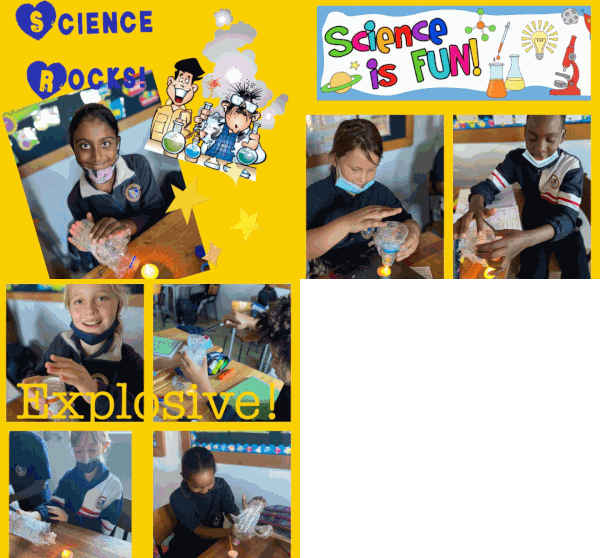
As seen in the pictures below, each student had to stretch a piece of plastic film tightly over the open end of a plastic bottle. They had to then light a small candle, causing endless excitement amongst the students! It was then that the fun started. The aim of the experiment was to test if sound vibrations travel through the air, as we cannot see them with our own eyes. If this theory was indeed correct, the flame would flicker when they tapped the bottom of their bottle!
And…EUREKA!
The experiment was a success and as any accomplished scientist would do…the experiment was done repeatedly and with much amazement by each student! After all the excitement, the lesson was concluded with some serious reflection, thinking, debating and discussion about our findings.
The best way to learn science is by doing science and to never stop questioning!
Jennifer Rose
Year 5 Teacher


Read More

Bright Science Sparks
“The Shadow Proves the Sunshine” – Switchfoot
The year 4’s have just completed a week of shadow investigation. On Monday morning we set out with a mission to discover how shadows move and change throughout the day. We started our lesson in groups by answering questions about shadows and light, discussing what we already know and what we still need to learn. It was key for every group to cooperate with one another by being polite and kind to the other members of the group. Sharing and taking turns was also a key factor in working towards a group agreement on their answers.
Our research starting point was making predictions about how the shadow would move or change. A simple upright pencil on cardboard was all we needed to set this test in motion. Our first observation was that light always travels in straight lines. Anything in the way would cause a shadow. Throughout the day, in fact every hour, we witnessed that our shadow moved to the east. Our pencil shadow was long in the morning. As the day progressed the shadow became shorter, being the shortest at noon. After midday the shadow of the pencil slowly grew in length again.
Our testing was not yet complete! Working in groups again, we investigated which objects were transparent, translucent and opaque. We also discovered that we could change the size of our shadow by moving closer or further away from our light source. After collecting and recording our observations over the course of the week, all our findings were crafted into games.
Looking back over this week it is clear that every Year 4 student has taken ownership in this investigation. In return, this will create a sure scaffolding for future light exploration.
Carol Blake
Year 4 Teacher


Read More

Arts And Crafts Club Key Stage 1
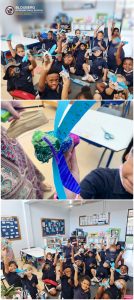
Every second week KS1 meet for our after school Arts & Crafts club run by myself and Ms Hierse. We introduced this club at the beginning of this year and it seems to have taken off wonderfully.
The students look so forward to being able to come and have the opportunity to fully express their artistic and creative talents. One of our biggest aims is to utilize as many recycled materials as possible. It is a passion of ours to witness the beautiful creations that are created from simple previously used items.
We hope to see the Arts & Crafts Club grow more and more throughout the year!
Siobhan Hendry
Year 2 Teacher

Read More
Leading By Example – Teacher Support System
“Teaching kids to count is fine, but teaching them what counts is best.” – Bob Talbert
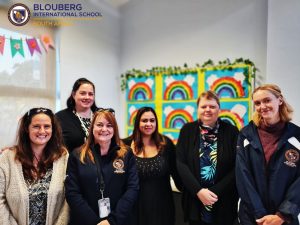
As teachers, we all strive towards one goal; for all our students to succeed. The KS1 and Foundation Phase teachers believe whole heartedly in a teacher support system where all teachers are encouraged, motivated and cared for each day by one another in order to be at our best for our students.
We, as teachers, feel that this support system is very important as its allows us to communicate our feelings, rely on each other, share our specific skills and strategies and build confidence in one another to stay ahead of the game in a rapidly-changing world.
We would like this support system to mirror how the students should want to care for each other as many students do not feel comfortable expressing their feelings to adults. A care buddy is the one friend you can speak to about anything that is going on in your life, whether it be positive or negative.
With the continuous support from all the teachers, the teachers have decided to follow a different system where their care buddy stays anonymous for the year. This care buddy is there to leave you notes of encouragement, recognition, to motivate you for a busy time ahead or a little treat to brighten up their day.
We would like to encourage students to follow this system and show kindness and support to their friends without reason because if they can make at least one friend smile in a day, it will create a ripple effect.
“Everyone who remembers his own education, remembers teachers, not techniques. The teacher is the heart of the educational system.” – Sidney Hook
Erin Hierse
Year 1 Teacher

Read More
The Human Body!
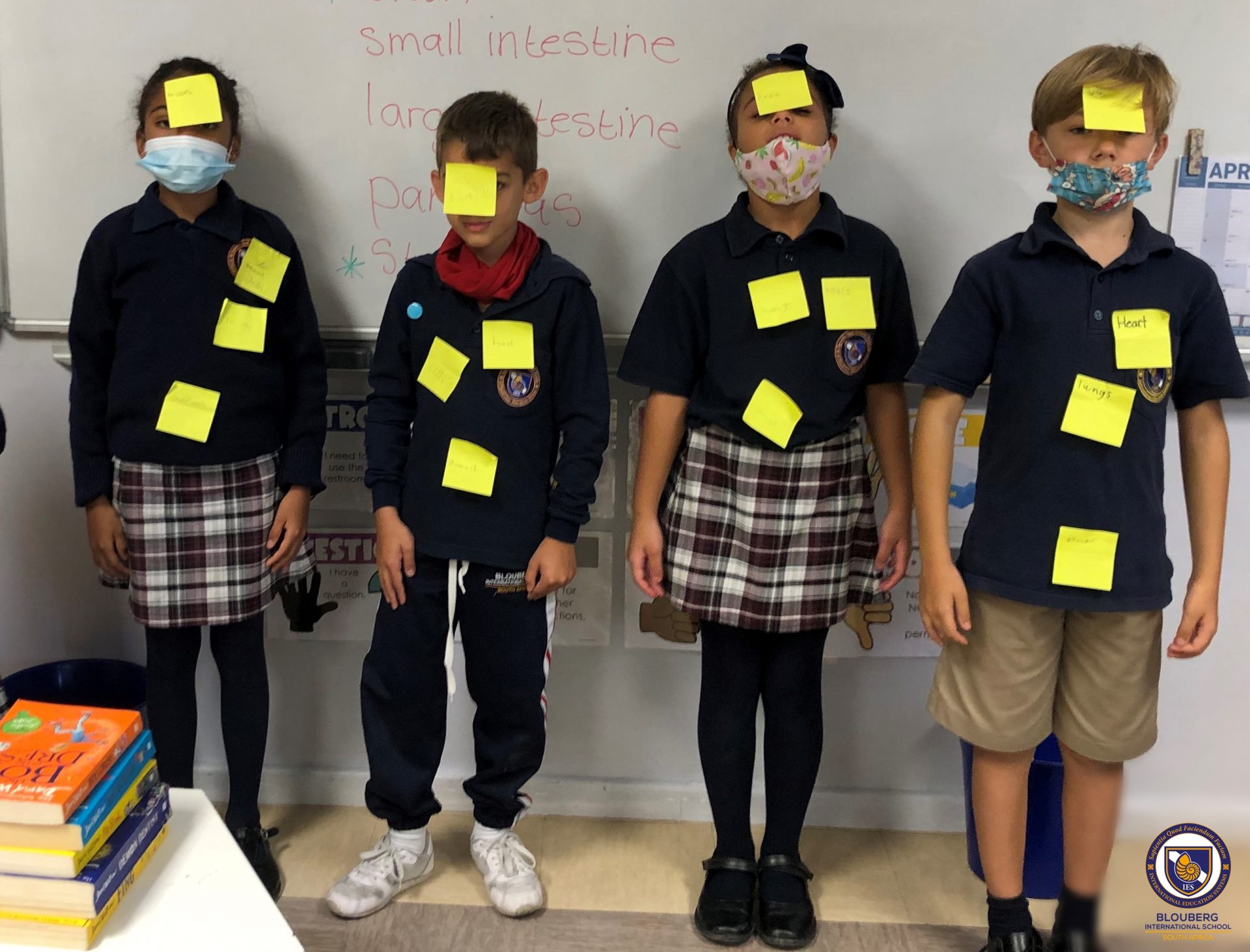
Our Year 3’s kick started Term 2 with an introduction from Pinky, the skeleton, to our next Science unit – The Human Body! After much giggles and squeals, students were told that by the end of the unit they would need to be able to ‘dress’ Pinky with his organs all in the right places.
But first…. do the students know where each organ in our body is? Well….no…. not quite…. not at first. In groups, students had to choose one classmate and using yellow stickies, placed them on to the student in the right spot. Needless to say, we had some very strange locations for our small and large intestines!
Throughout the unit, the class enjoyed very student-centred lessons, which included making their own stethoscope out of plastic bottles, tape and toilet paper holders. They then used their stethoscopes to listen to one another’s heart beats.
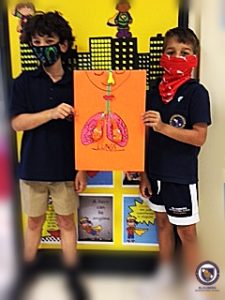
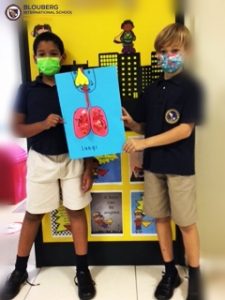
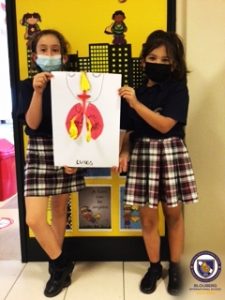
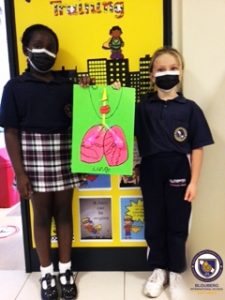
Another lesson involved students making a working lung model using cardboard, straws and balloons. In pairs, students designed and cut out their lungs. Next, they attached the straws and balloons. Then, they drew in their faces and for the grand finale…they blew out into their straws to simulate their working lungs.
The students had a fabulous time designing their models and thoroughly enjoyed the hands-on activities. Well done, Year 3! I think we are ready to ‘dress’ Pinky!
Mandy Goch
Year 3 Teacher


Read More
To Write Or Not To Write…
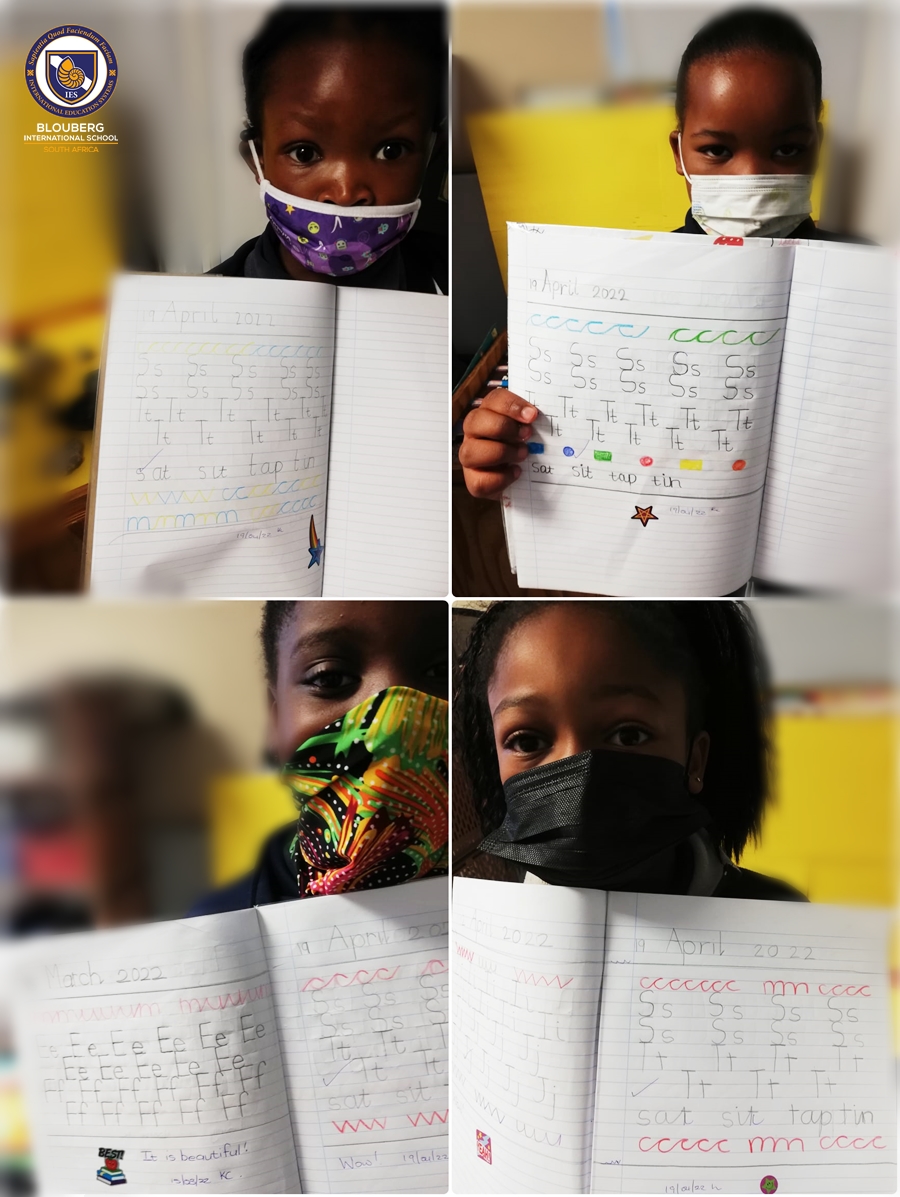
With today’s technology, where even the youngest of young are accustomed to typing on laptops, tablets or iPads, the question is often raised: Just why do children need to learn handwriting skills at school. They probably won’t need these skills in whatever field they find themselves in. However, proven studies have shown that it is extremely beneficial for young children to learn how to grip a pencil or colouring crayon, or learn the correct formation of a letter.
“There is this assumption that we live in the computer age, and we don’t need handwriting anymore. That’s wrong,” says Virginia Berninger, PhD, a professor of educational psychology at the University of Washington.
A few facts to consider:
- Children who learn to write correctly, read more fluently.
- Handwriting requires concentration.
- It trains the brain circuits responsible for motor coordination, vision, and memory to work together.
- Visual-motor skills, such as hand-eye coordination, are associated with academic achievement. Scientists have found that developing fine motor skills in early childhood can predict not only writing success, but also better performance in reading and mathematics in elementary school.
Left-handed children more likely to write untidily? Myth or fact? Unfortunately for the 10% of the world’s population who are left-handed, their handwriting does tend to be untidier than those writing with their right hand. However, if a child is taught to tilt their paper or book a different way, neat handwriting is very achievable!
Kim Coetzer
Year 2 Teacher

Read More

Investigative Thinking In Key Stage 2
“Children must be taught how to think, not what to think.” – Margaret Mead
Being both a student and teacher of the Cambridge Secondary Education system, I have had the privilege of watching it develop into the beautifully elaborate system we see before us today. If anything, the one thing I appreciate the most about growing up following one of the world’s leading education programmes, is the expansive opportunity I had for inquiry based, independent learning.
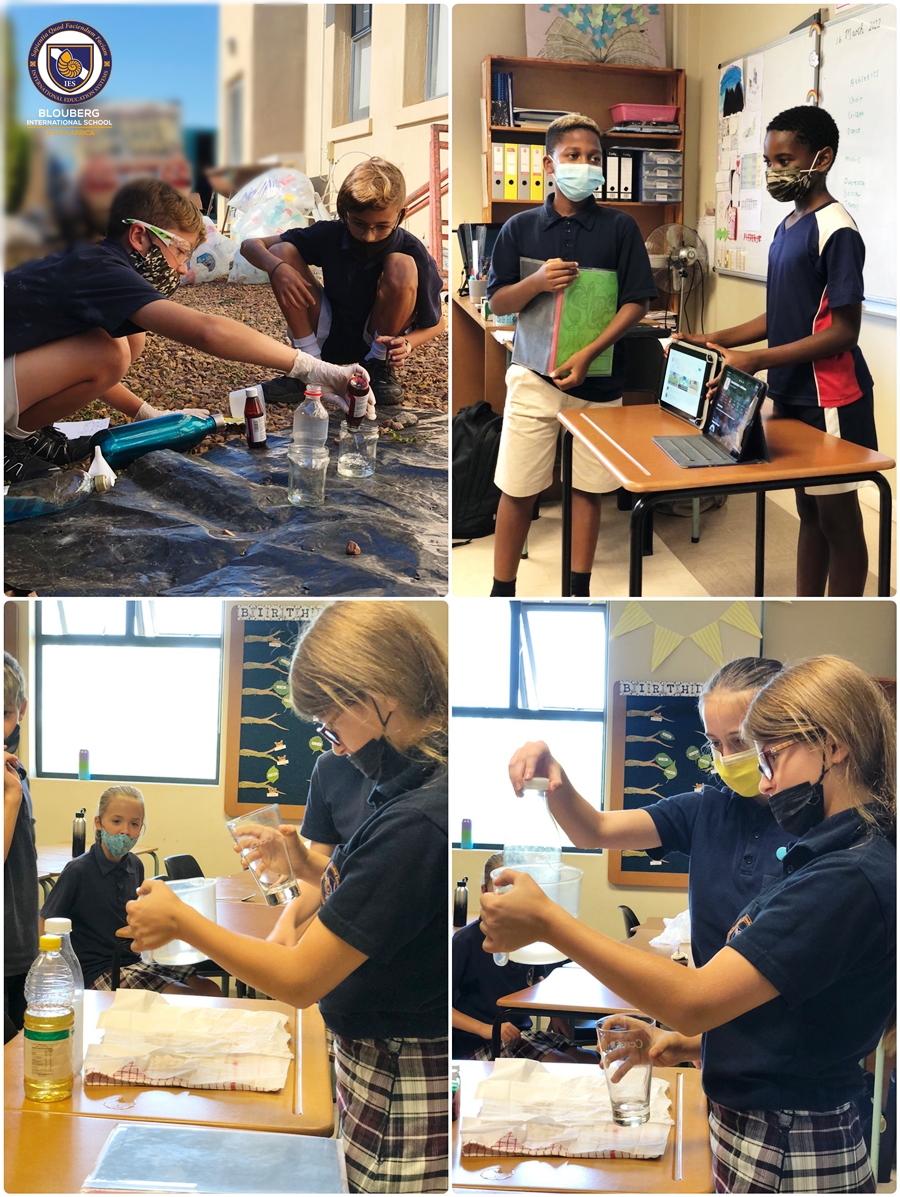
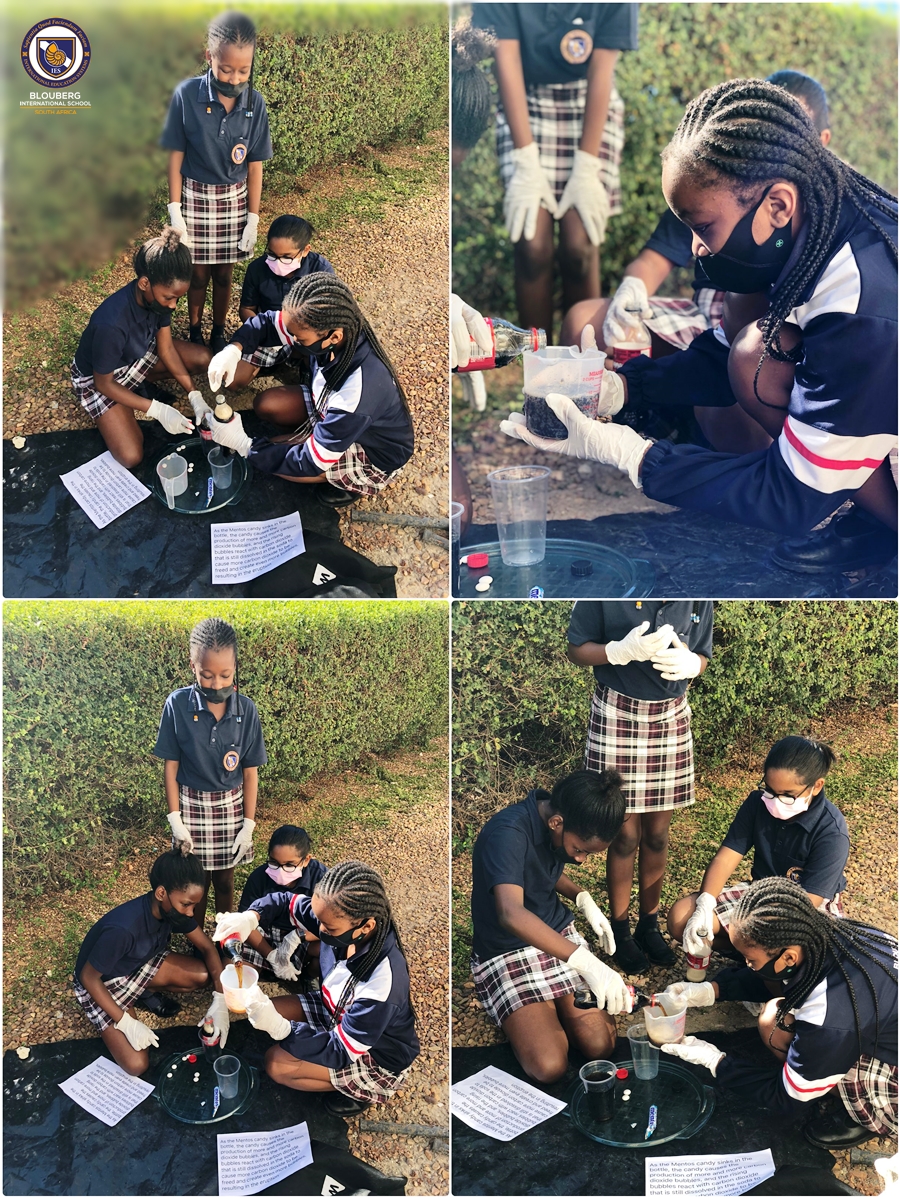
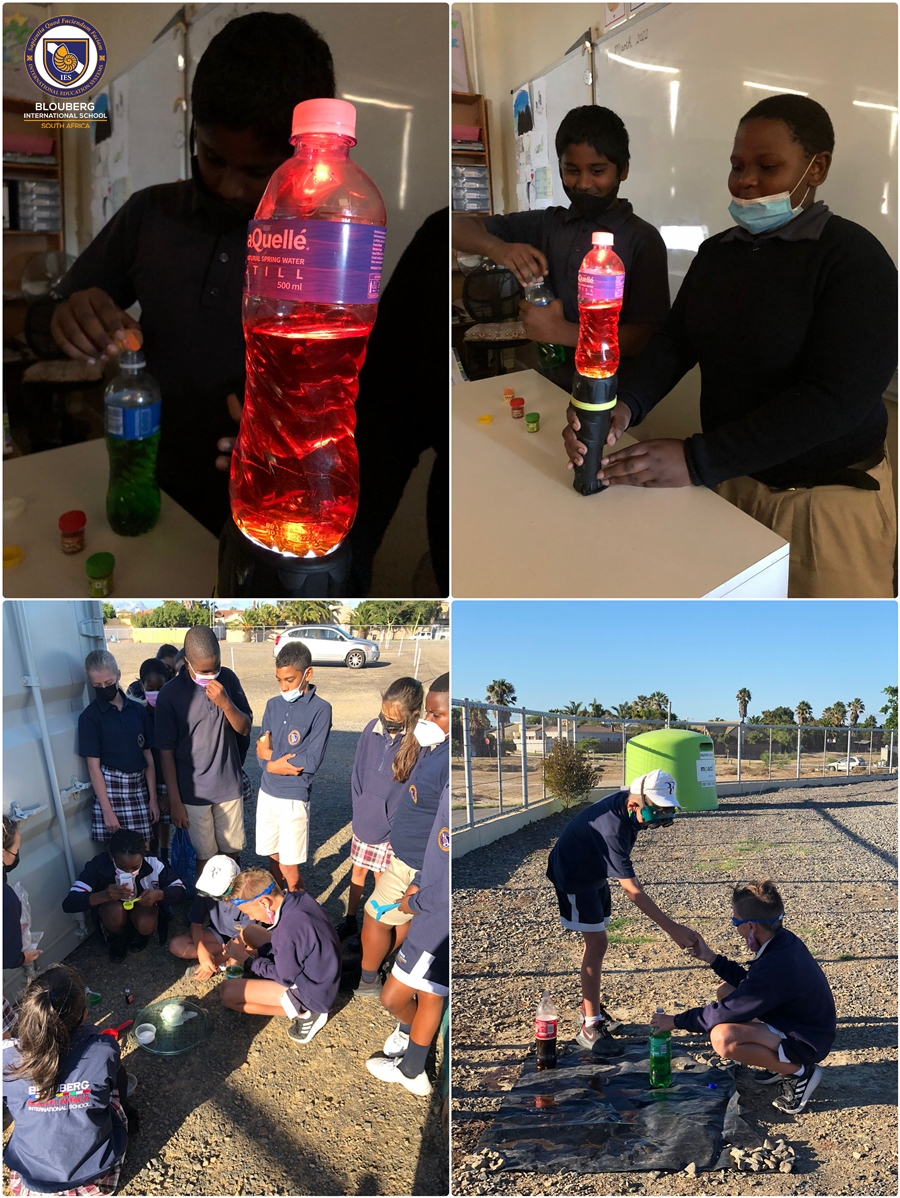
One of my favourite tools in the Cambridge Primary Science syllabus, today, would undoubtedly have to be the scientific inquiry thread, incorporated into our teaching and learning objectives. Not only do we work towards content specific outcomes under each topic, but Cambridge guides us through skill based, investigative thought processes as well.
Each term, our students are given the chance to explore the workings of our world themselves by following these probing steps:
- Asking a question
- Making a prediction
- Planning a fair test
- Carrying out the investigation
- Recording the results
- Drawing a conclusion
This process promotes a beautifully curious approach to learning, where our students are granted the responsibility of their own learning journey.
Lastly, I have to acknowledge the multitude of fun this approach leads to, both in and out of our science classrooms! When having fun and building relationships run parallel to your learning, you know incredible things are bound to happen.
Robyn Pieters
Year 6 and 7 Teacher

Read More

A Recipe For A Good Friendship
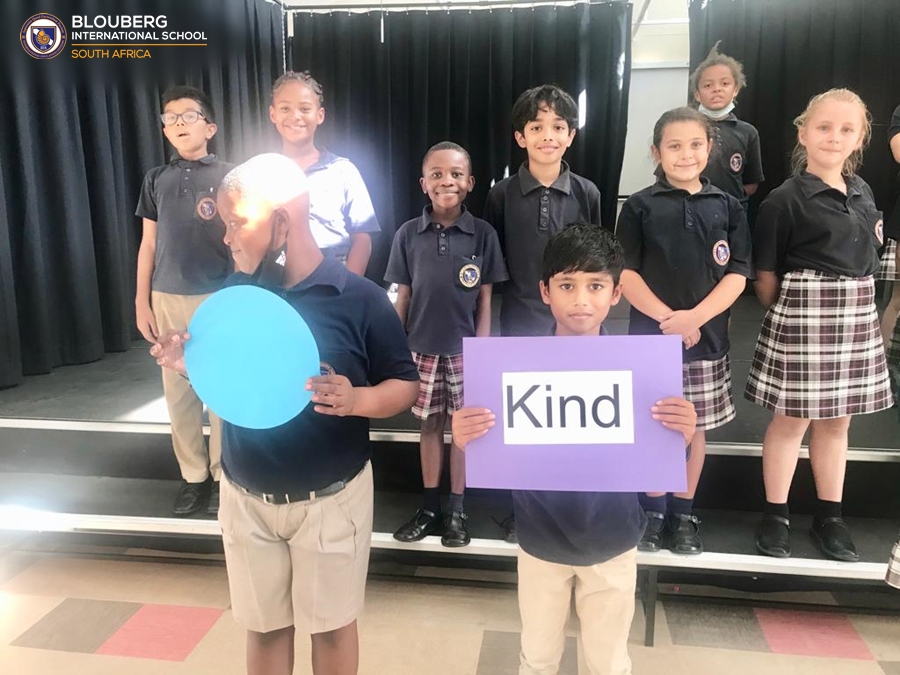
Recently we have been discussing what it means to be a good friend or the ‘recipe’ for a good friendship. As a class, we shared many comforting stories about when others showed care for us. In further discussion, we highlighted the importance of our ‘Blue Badge’ system at school, which focuses on three simple foundations.
As a BIS student we aim to be KIND, CARING & ENCOURAGING.
Year 4NM came up with their own Recipe for a good friend, modelling the 3 simple foundations of kind, caring and encouraging.
How can you be kind…
- Say nice things to others.
- Smile, because it is the best and easiest exercise for the body.
- Be happy for others because when it is our turn we would want others to be happy for us.
- Offer to help whenever we can because giving is always more rewarding.
- Use good manners like saying:
- Good morning!
- Please.
- Thank you.
How can you be caring…
- Let your friends know that you are always there to listen.
- Ask, “How are you?” and remind them that you are a good friend even when they are not feeling good.
- Be patient and respectful to others.
What does it mean to be encouraging?
- It means we must support each other to do good or to be the best we can.
“Everyone needs encouragement like a plant needs water”
- Not everyone is having a good day all day, remember to show some support. It might brighten up their day.
- Be the reason someone feels good today!
Nadia Mahomed
Year 4 Teacher

Read More