
Preparing For Examinations
“ Good preparation is better than hoping for a miracle.” – Sunday Adelaja
The end-of-year examination has dawned upon us and there is nothing worse than going into the exam hall unprepared. This is a lot like a doctor walking into the surgery without the necessary tools or know-how to deal with an emergency situation. What do you think the consequences will be for that, and do you think you can trust that doctor? Every profession requires effective performance that eventually results in success, but the key ingredient for achieving this is good preparation. Think about this the next time you enter the exam room.
So here is a useful guide to help students with their exam preparations, starting with a list of ten practical study hacks from the University of Augustana[1] and Murdoch University[2]:
- Have a positive attitude. This is the first and most important attribute.
- Begin early and find a comfortable study space to cater for your needs.
- Create a music playlist for your study sessions.
- Have specific goals for each study session and set a time frame for your goals. For instance, make a note to cover section one for two hours between 12-2pm today, etc.
- Organise your study materials before you start the session. Make sure that you create short study sessions at multiple intervals so that you do not burn out and avoid procrastination.
- Create your own study materials, for example, flashcards, mindmaps, personal study notes, etc.
- Develop critical thinking abilities where you are able to seriously question concepts. In other words, ask lots of questions!
- Explain the subject or concepts to a study buddy. If you cannot find anyone, then stand in front of a mirror and practise on your own. You are your own best person.
- Take advantage of school resources.
- Eat healthy and engage in physical exercise/meditation to beat anxiety and stress.
Remember that you are more than capable of achieving success if you put your mind and heart into it, no matter what the circumstances. All the best with your preparations moving forward into the exams. Aim to go into the new year with great success.
Michellene Williams
High School English Teacher

[1] Adapted from Augustana University. 2021. 10 Ways to Prepare for Exams. Viewed at https://www.augie.edu/10-ways-prepare-exams
[2] Adapted from Murdoch University. 2021. Exam Study Hacks. Viewed at https://www.murdoch.edu.au/news/articles/exam-revision-hacks
Read More
Music
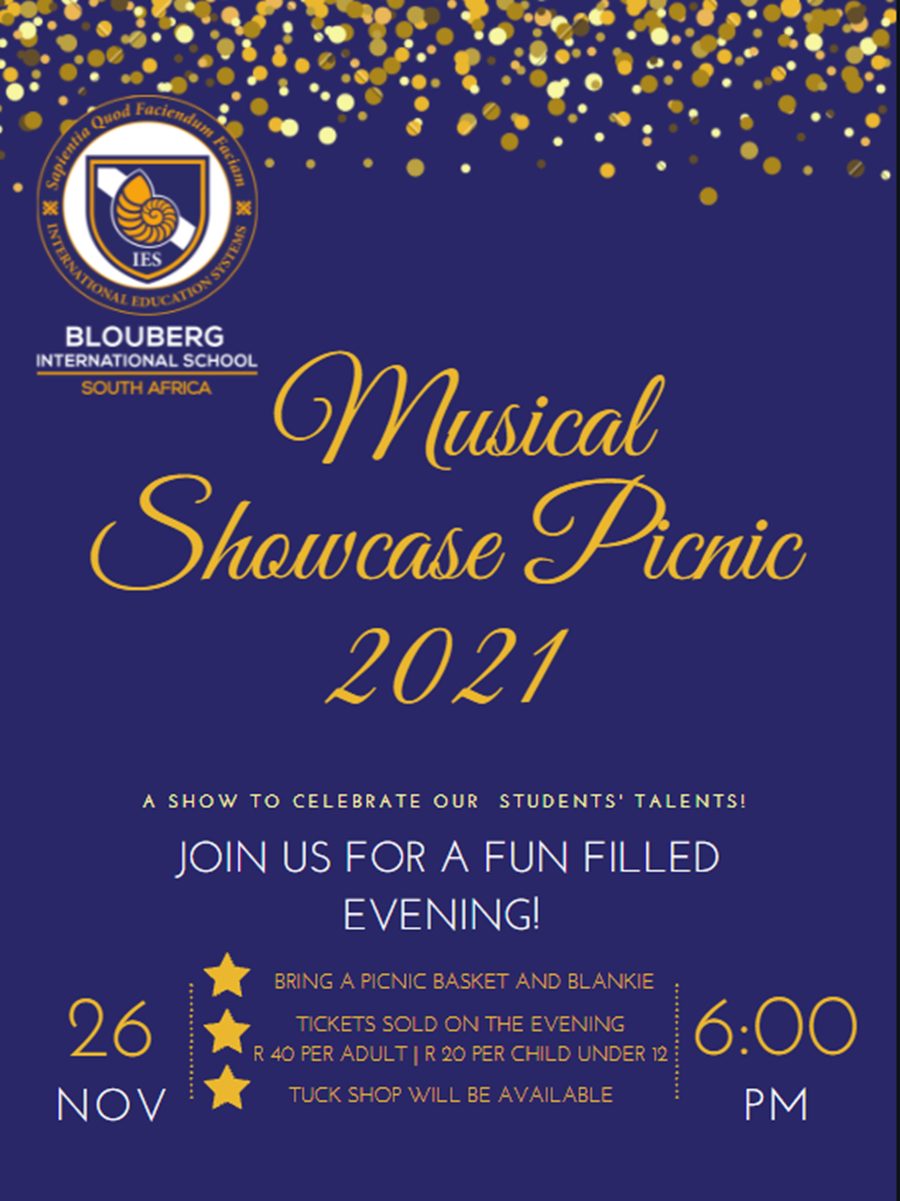
After our first successful BIS Arts Eisteddfod, the music department has been working towards preparing for internal and external examinations. The students are currently in the process of recording their Trinity examinations. This year, all these will be online due to the examiners from London not being able to examine the students in person.
We also look forward to our first in-person and end-of-year music concert since 2019!
This year’s concert will be on the 26th of November at 18:00 and will take place in the form of an outdoor sunset picnic. We are so excited to celebrate all our students’ hard work and achievements throughout 2021. So bring your picnic baskets and blankets, and come and enjoy a fun and relaxing evening with us.
Beverley du Plessis
Music Teacher
Read More
Hands On Physics
I often hear people say, “Physics is hard” or “it’s for intelligent individuals” and I beg to differ. When we were toddlers, we were curious, we asked questions frequently, we were hands on and our parents encouraged us to explore the world around us. As we progressed into adolescence, some of us stopped asking questions and started believing everything we see or hear.
Many neurological studies have shown that curiosity enhances people’s abilities to learn and retain new information. Physics is for curious people. Anyone who isn’t afraid to ask “foolish questions” such as why the sky is blue, what causes ocean waves, are we the only human beings in the universe, etc., can be a good physicist.
In a quest to find answers to nature’s great mysteries one needs to have an enquiring mind. Great physicists have strong scientific ability. They have an analytical approach to solving any problem.
This term the focus was on developing the students’ scientific skills such as:
- Problem solving skills, other technical skills
- Mathematical skills applied to physical systems
- Analyzing and modeling physical process
- Gathering data, making testing models and predictions
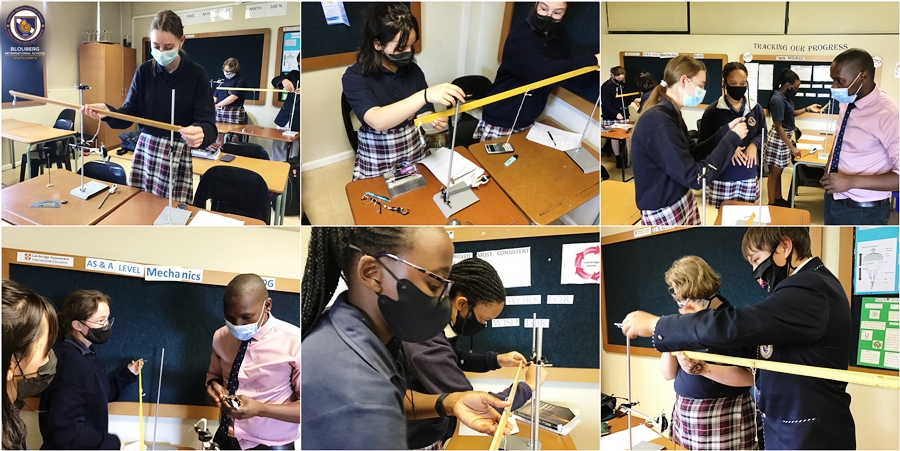
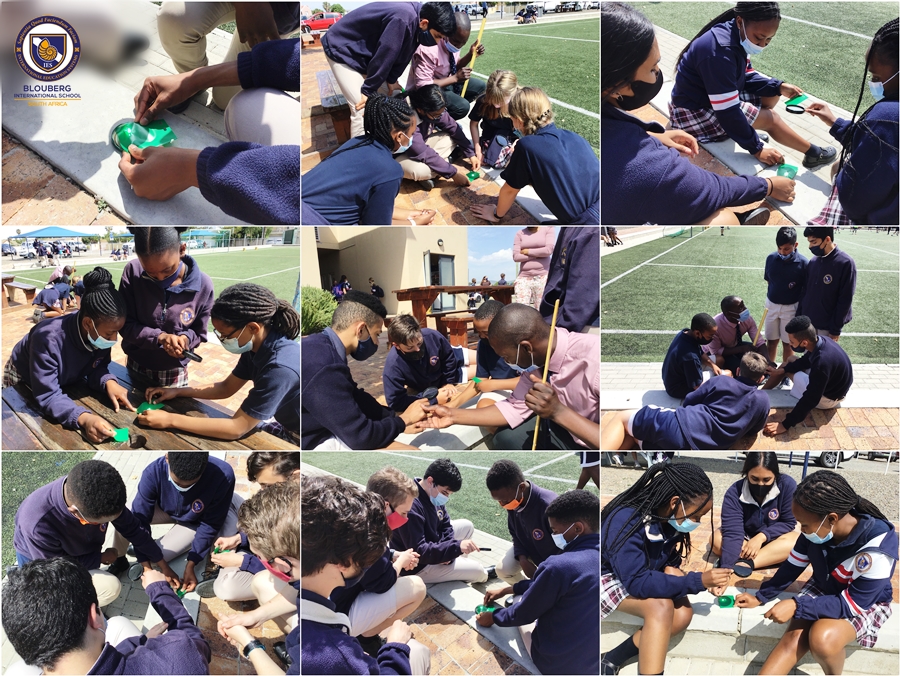
The year 9 students were given a task to build a model of a periscope for SA NAVY. A periscope is an instrument for observation over, around or through an object or obstacle, it is usually used in land and sea warfare by the military. The underlying physics concept is internal reflection of light.
In year 11, the students are making a remote-controlled toy car. This project will help them understand how motors work, the role of rheostats in a circuit and they will also get to do a bit of engineering while at it.
All these HANDS ON projects are aimed at developing the above mentioned scientific skills. Whether or not students continue with physics post high school, they will have these essential skills for any field of work.
Brian Sizani
IGCSE, AS and A-Level Physics Teacher
Read More
Valedictory Ceremony Top Achievers 2021
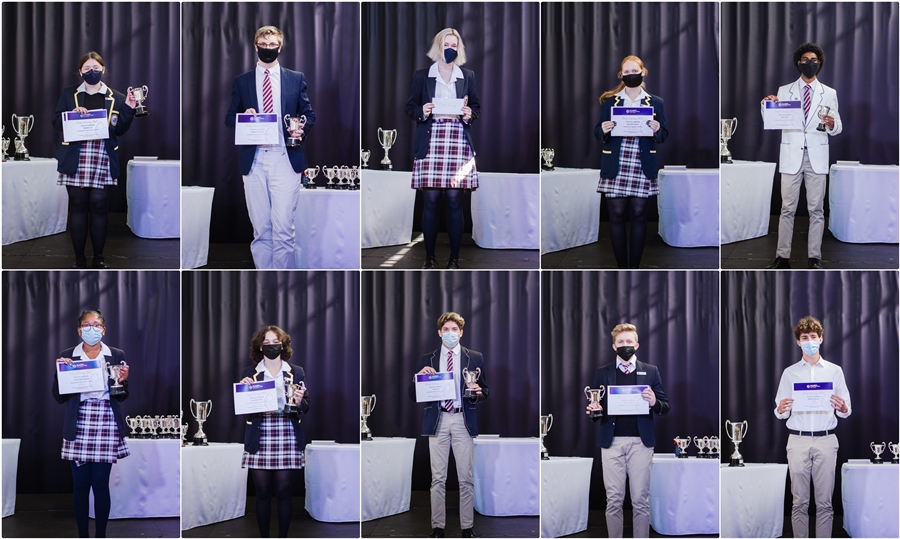
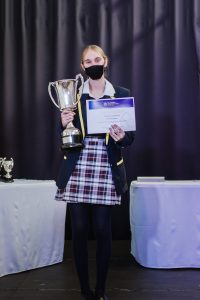
Congratulations to the following Matric students for receiving various awards at this year’s Valedictory Ceremony:

Chloë Goldman (Awarded the DUX trophy)
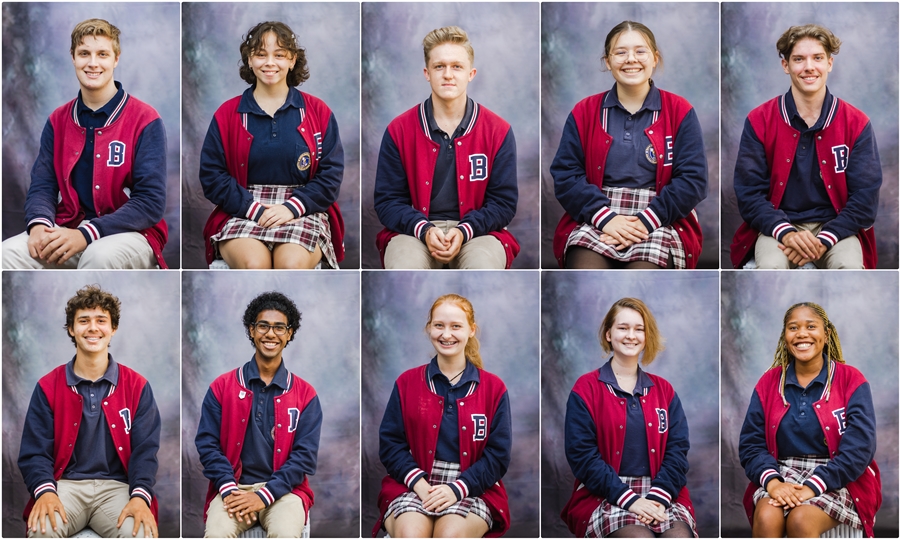
Adriaan Rademan, Courtneigh Harris, Daniel Schlacher, Gabrielle Luyt, James Hart, Matthew Petersen, Niklyn Pillay, Samantha Wynne, Siobhan Smorenberg and Tumelo Mpofu-Mketwa.
Below is the list of awards they all received:
ACADEMIC: |
|||
| Chloë Goldman – DUX WINNER | Gabrielle Luyt | Adriaan Rademan | Siobhan Smorenberg |
| Highest mark achieved in Biology | Highest mark achieved in German | Highest mark achieved in Accounting | Highest mark achieved in Art |
| Highest mark achieved in Chemistry | Highest mark achieved in History | Highest mark achieved in Computer Science | |
| Highest mark achieved in English | Merit award Aggregate of 75% or more | ||
| Highest mark achieved in Mathematics | |||
| Highest mark achieved in Spanish | |||
| Full colours Aggregate of 85% or more | |||
| Dux Scholar Highest marks in Year 12 | |||
| Tumelo Mpofu-Mketwa | James Hart | Niklyn Pillay | Samantha Wynne |
| Highest mark achieved in Afrikaans | Highest mark achieved in Geography | Highest mark achieved in Physics | Academic acknowledgement certificate Aggregate of 70% or more |
| Courtneigh Harris | SPORT: Cricket – Full Colours | ||
| Highest mark achieved in Business Studies | James Hart | ||
| Matthew Petersen | |||
| Daniel Schlacher | |||

Read More
From The Spanish Classroom
To acquire a second language is it very important… to be a good listener.
“Active listening is a valuable technique that requires the listener to thoroughly absorb, understand, respond, and retain what’s being said”. – Centre of creative leadership.
Becoming an Active Listener
- Pay Attention. Give the speaker your undivided attention and acknowledge the message.
- Show That You’re Listening. Use your own body language and gestures to show that you are engaged.
- Provide Feedback.
- Respond Appropriately.
Prepare yourself for the message:
- Limit distractions. Move away from distractions so that you can pay full attention to the other person. Take note of the person’s tone of voice and body language as well.
- Pay attention to what’s being said, not what you want to say. Set a goal of being able to repeat the last sentence the teacher says. This keeps your attention on each statement.
- Be okay with silence. You don’t have to always reply or have a comment. A break in dialogue can give you a chance to collect your thoughts.
- Encourage the teacher to clarify ideas and offer more examples.
- Restate the key points you heard and ask whether they’re accurate. “Let me see whether I understand you correctly…” is an easy way to clarify any confusion.
If you are listening:
- Look at the person that is presenting.
- Avoid any distractions (close your books, notes, and put away any other objects that can make you lose the focus on the presentation).
- Be ready to answer some questions that the student that is presenting has prepared for the class.
If you are presenting:
- Prepare some questions about the project for the class.
- Try to speak clear and loud enough.
- Bring some visual materials to make it more attractive for the class.
In conclusion, concentrate on what’s being said and think about what the speaker is saying rather than about what to say next.
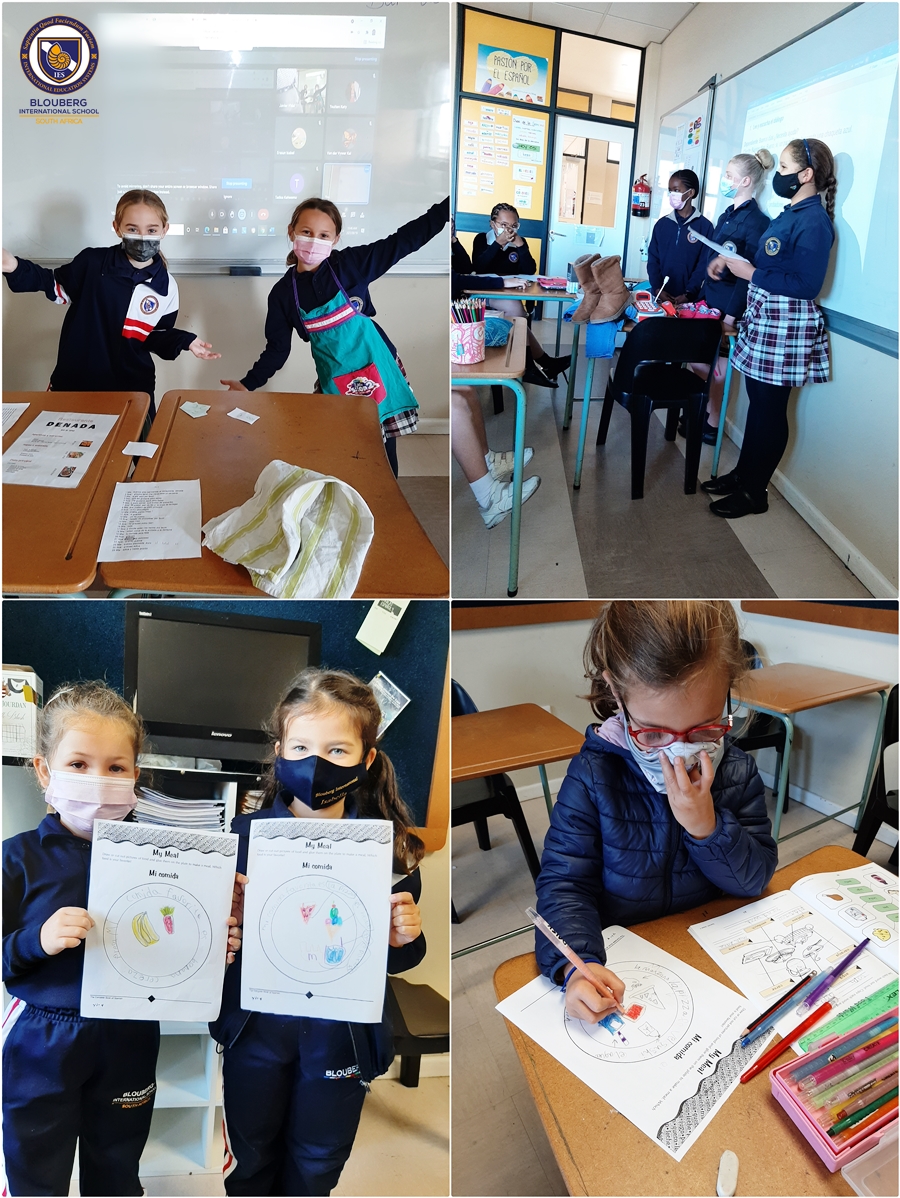
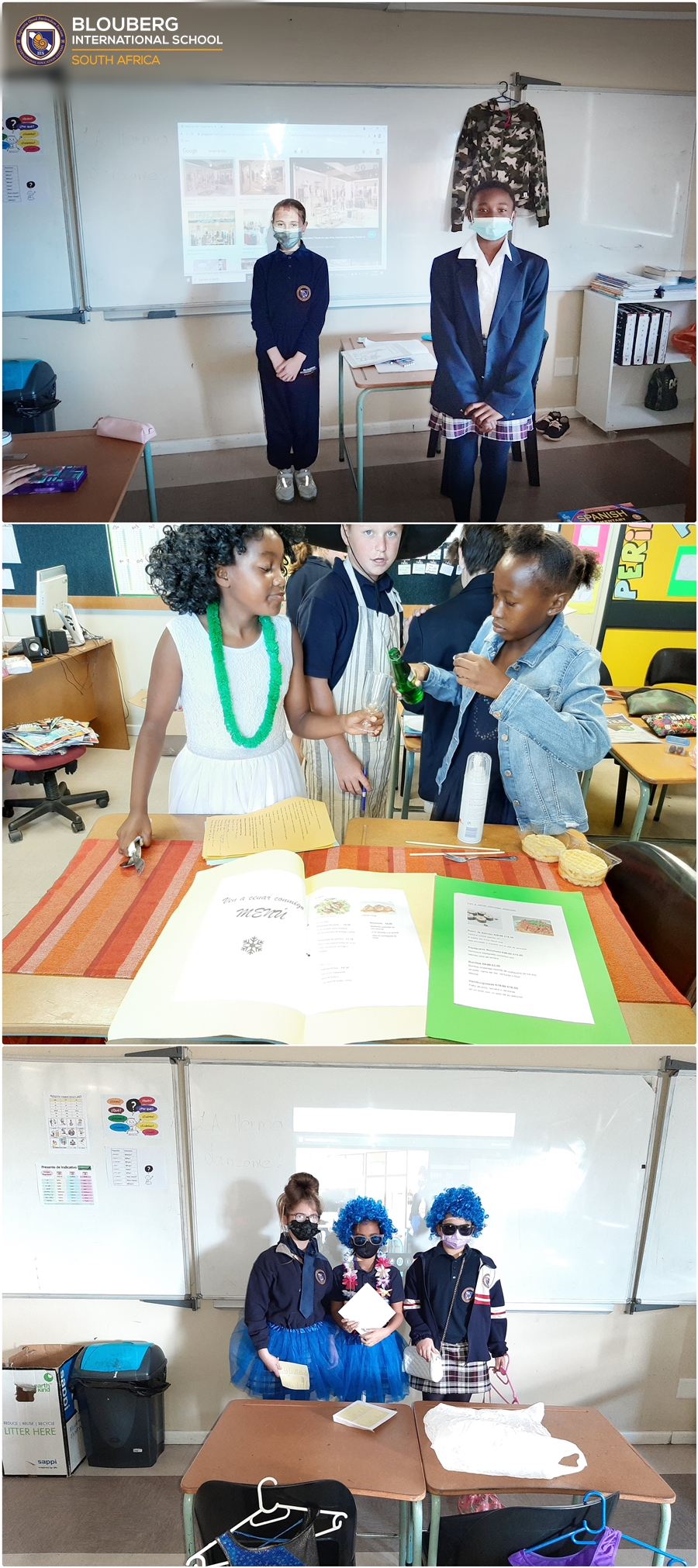
Almost every week the Spanish students can present an oral project about the different topics that they have been learning: The house, family, weather, the city, food, clothing, animals, and much more. This is a great opportunity to put their communication skills into practice and make the lessons fun, useful and interactive.
Javier Vidal
Spanish Teacher
Read More
Mental Health Awareness Month
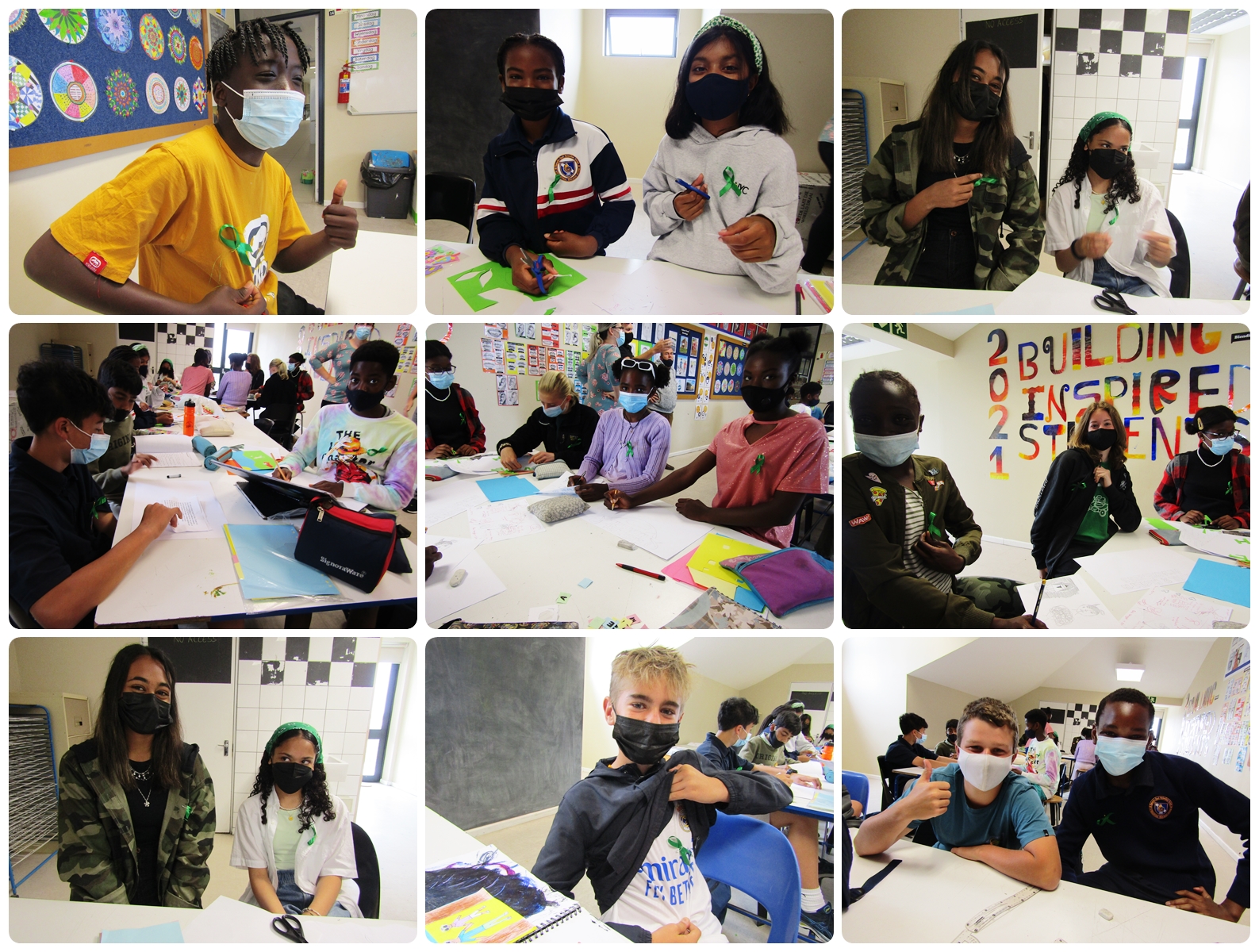
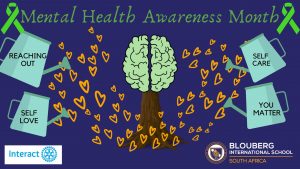
The High School dressed in green civvies today, in support of Mental Health Awareness Month.
Everyone’s lives can sometimes become overwhelming and we as a school, want to empower our students when it comes to mental health, encouraging healthy dialogue and support for sufferers.
“The month of October has been declared Mental Health Awareness Month with the objective of not only educating the public about mental health but also to reduce the stigma and discrimination that people with mental illness are often subjected to.” Quoted from https://www.gov.za/speeches/mental-health-awareness-month-2021-13-oct-2020-1232
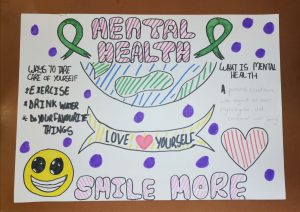
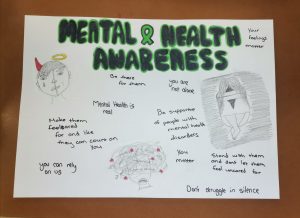
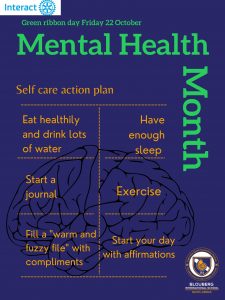
The BIS Interact Club members have placed posters around the school with tips and good habits that can help maintain good mental health. During the civvies day today, students were given green ribbons to show acknowledgement and support for this important cause.
We would like to thank all our High School students for coming together and embracing this wonderful initiative.
BIS Interact Club




Read More

Year 11 Leadership Inting
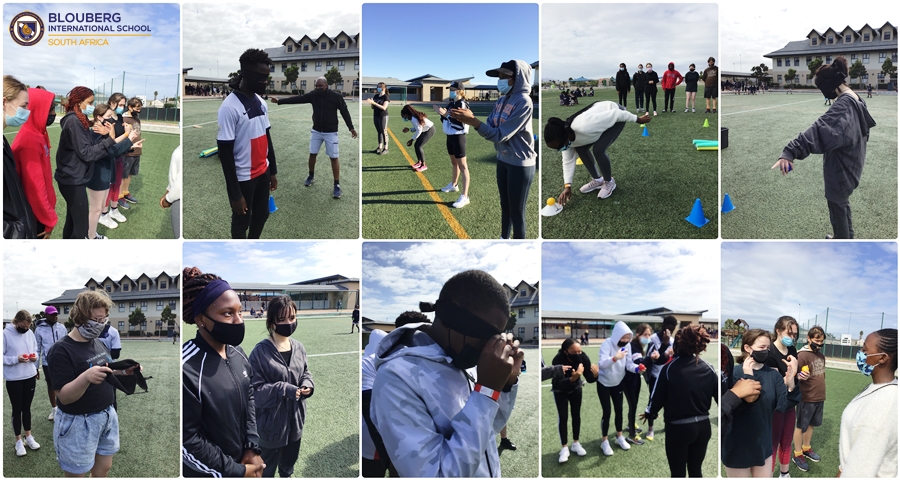
On the 7th and 8th of October, instead of the usual Year 11 annual leadership camp, we participated in an inting hosted on the school grounds. This forged a space for us to develop our team building and leadership skills, and it also unified us as a year group.
Camp instructors came from their stomping grounds at High Africa Adventure Centre, bringing along with them several pieces of equipment for interactive and physically challenging activities. These not only tested our physical abilities and how we navigated around the capabilities of our fellow classmates, but also quickly revealed just how limited our patience is!
For both days, we were spilt into two teams, the members changing slightly each day. This illuminated the strengths and weaknesses each person brought to the team dynamic, and how they could be utilised to ultimately bring the teams to victory. At the end of each day, a winning team, as well as an outstanding leader and camper were chosen. Through games such as “red light, green light”’ with a teddy bear (this stirred an uproar of frustration!), as well as “pool noodle hockey” and a spin on the popular “musical chairs” game, we were able to establish and nurture new ways of communication.
There was an abundance of mind-bending tasks that tested our trust in each other’s abilities, as well as in ourselves. The skill to integrate oneself into team environments was introduced to us, driven by games that included illustrating a story out of a random assortment of picture cards and constructing a sailboat out of geometric wooden pieces. Whether we were human chess pieces or building strange structures with melting marshmallows and brittle spaghetti straws, one thing was for certain: we couldn’t have grown closer as a class after that week.
Yes, we embarked on this inting with the intention of becoming confident leaders, a goal we certainly achieved! However, we also came out as stronger teammates and more self-assured individuals. Communication and trust were qualities that we learned are vital to becoming a valuable team member; also, the skill to be able to listen and follow, as well as to lead. But most importantly, I believe we were reminded of how our individual uniqueness and defining qualities can be used to realise and achieve a common goal.
Kazimla Dyakalashe
Year 11 Student and 2022 SRC Member


Read More

Business Studies Simulation Game
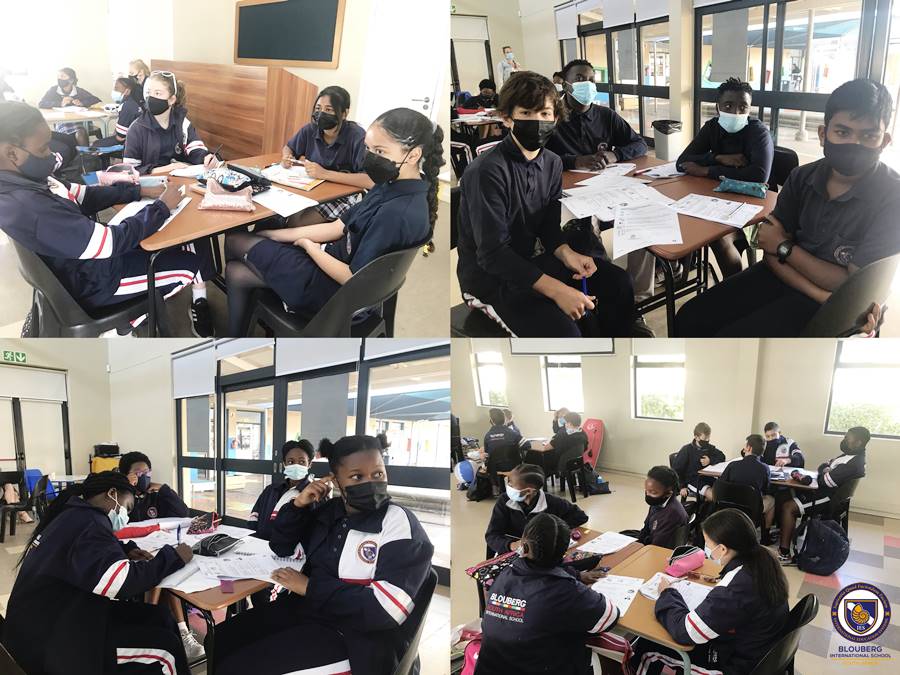
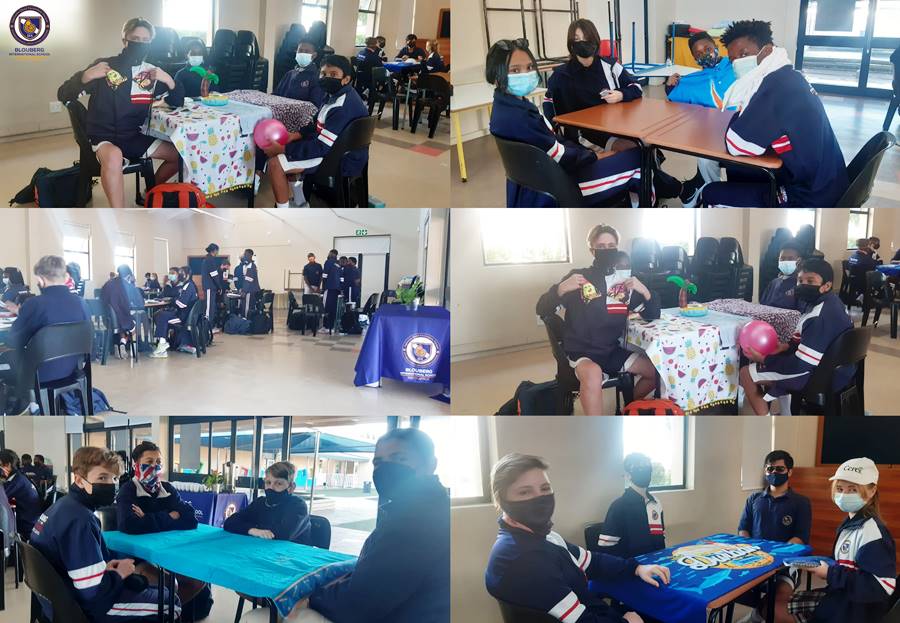
On Thursday and Friday last week, the Year 7 and 8 students participated in the Banango Traders Business Simulation Game run in affiliation with the Johannesburg School of Finance. This initiative is a great opportunity for students to improve and test their business knowledge by running a virtual business.
The event brought out our students’ competitive nature as they competed in teams against one another in order to generate the highest profit. Many congratulations to the teams in each year group that won and the Year 7s for making the most profit out of the two groups.
“The business stimulation taught us the importance of quick thinking and taking risks in business,” is just one of the examples of positive feedback that was received by the students.
The students undoubtedly left with a first-hand appreciation for entrepreneurs and a new, energetic enthusiasm for starting their own businesses. We definitely have a couple of budding entrepreneurs amongst this group!
Caroline Grix
High School Business Studies Teacher



Winning At Maths
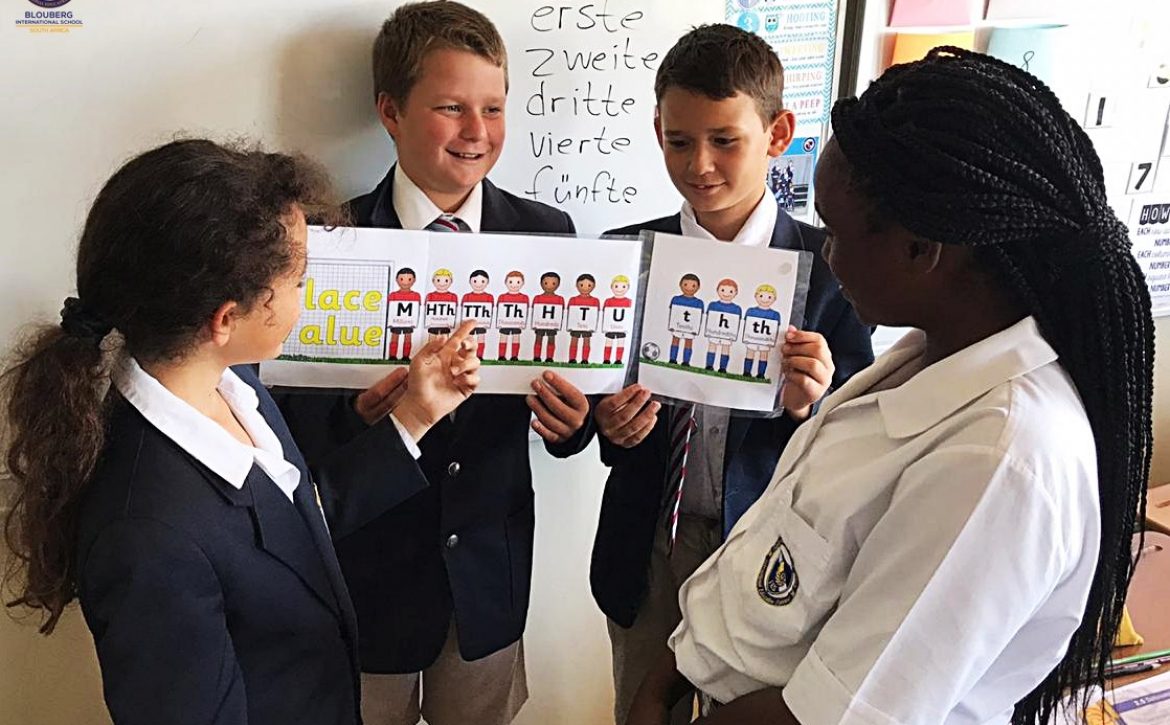
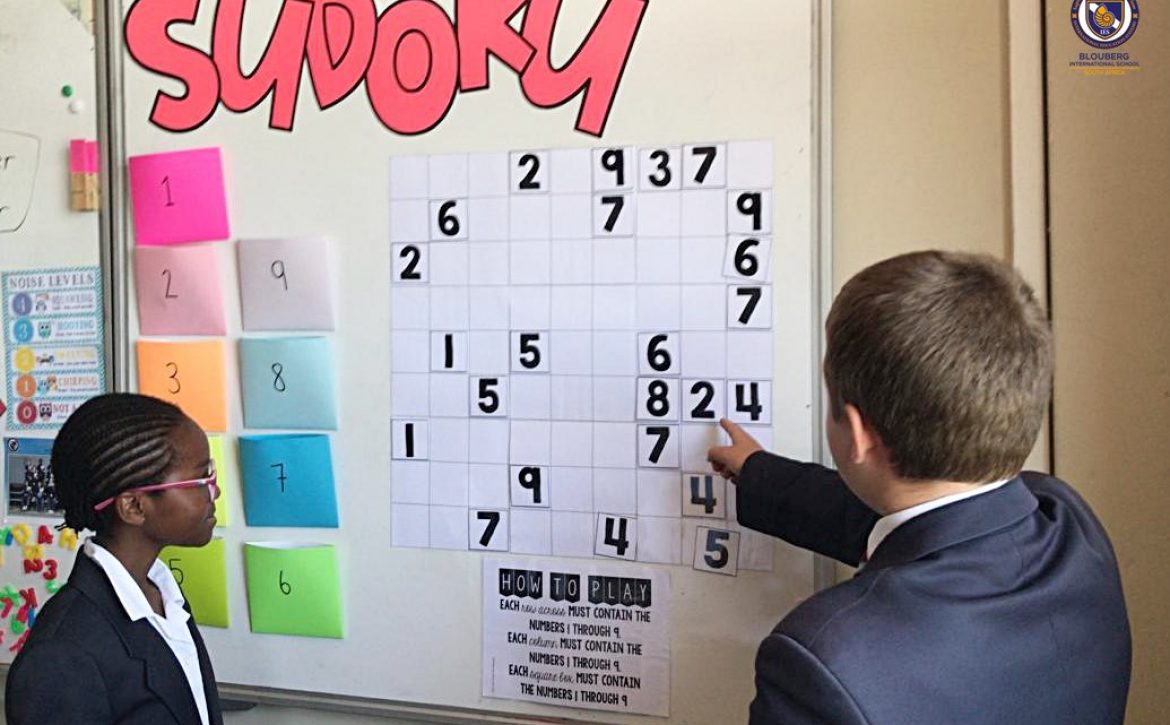
I am going to give you some advice on how you can revise with your child at home, improve their confidence in the subject and encourage them to want to learn:
- Make the exercise hands-on, place things in front of your child to help them see and feel the problem.
- Make use of Mathletics – this is a fun, engaging way for your child to practice work learnt, at home.
- Ask your child to explain how they got to their answer. They will recall information and you will understand their thought process.
- Ask questions daily when you aren’t doing extra work, such as “what’s the time?” or “How many bananas would we need to buy if each person got 3?” – This will help your child relate Math’s to real life problems.
- Mistakes are good! It is a learning curve for your child.
Allow
Thinking to
Happen
Things the Year 6’s suggested that help them learn:
- Constantly practicing
- Having someone sit down with them and going over what they don’t understand
- Using blocks
- Working in a group
- Asking questions
- When work is explained using games
- Correcting their mistakes
- Motivation
“Mathematics is not about numbers, equations, computations, or algorithms. Mathematics is about understanding.” — William Paul Thurston
Brittney Hakime
Year 6 Teacher