

Healthy Eating
Going forward into a new term I encourage parents and students to consider adopting healthy eating habits throughout their day. In the Junior campus we have incorporated a robot system which gives the children a visual aid of which foods are a healthier choice.
The red light is used for foods which should be avoided in school lunches. “Red light” foods include items such as sweets, fizzy drinks, pastries, chocolates, etc.
The orange light is used for foods which can be incorporated occasionally in school lunches. “Orange light” foods include white grains (such as white bread or pasta), chips, etc.
The green light is used for foods which are encouraged in school lunches. “Green light” foods include fruit, vegetables, wholegrain foods (such as brown bread and whole-wheat products), water, etc.
It has been proven that sugar hampers a child’s ability to concentrate and focus. In the Junior classrooms the students are very proud when they have healthy items as snacks and love to show these to their classmates. We would like to encourage this behaviour and really adopt a positive attitude towards healthy eating habits. If we do this from a young age then we can be assured that our children will grow up with this healthy frame of mind regarding food habits.
For some inspiration for healthy school lunches, please see the below article entitled Healthy Food for Kids: Are your kids hooked on junk food? With these simple tips, you can get children to eat right without turning mealtimes into a battle zone.
https://www.helpguide.org/articles/healthy-eating/healthy-food-for-kids.htm
Kim Hahn
Reception Year Teacher

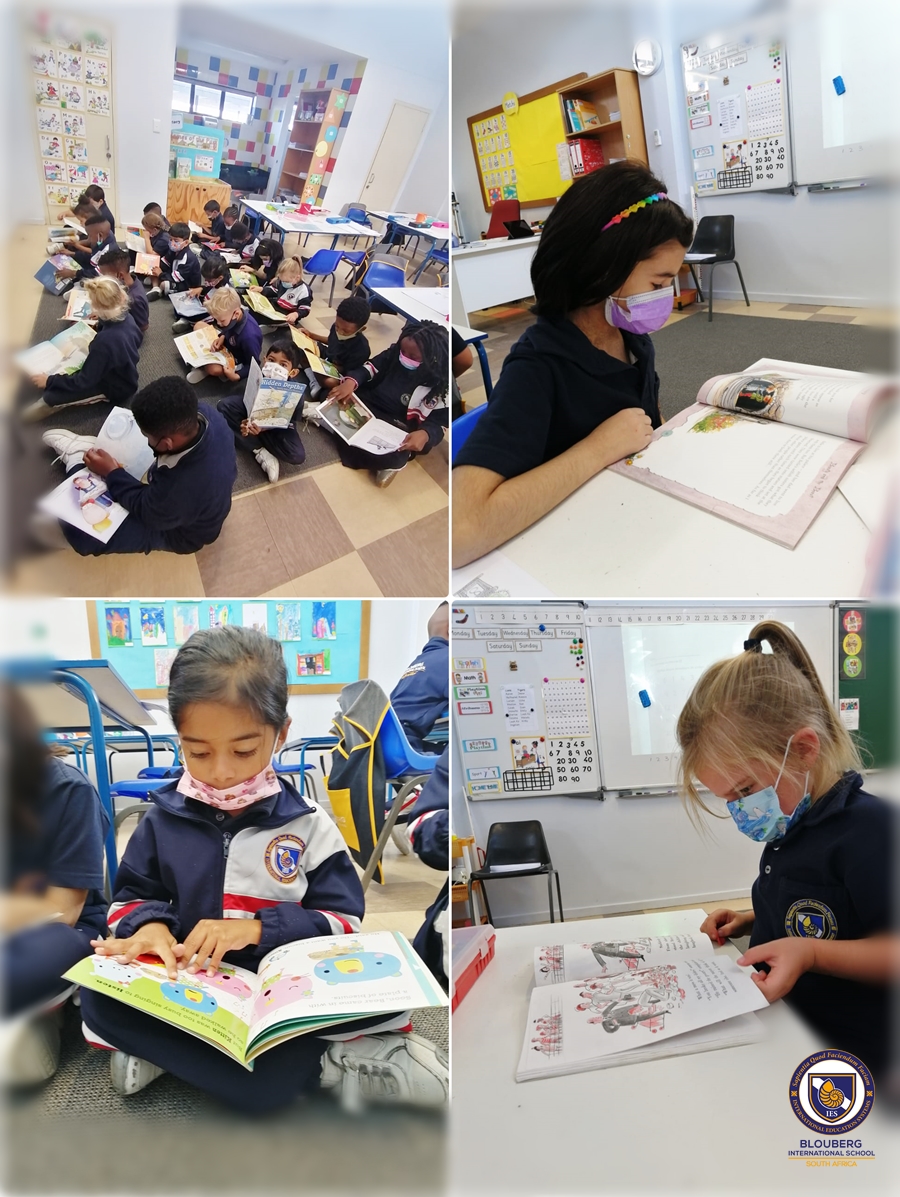
Inspiring Your Child To Read
This week, I want to share a few basic and wonderful tips on how to get your little one to become a life long lover of reading…
We all know it can sometimes feel daunting to explain to our children how important it is to build good reading habits. Reading is a vital component of education. All students need good reading skills to succeed not only at school but in life in general.
I hope that sharing these insights with you can inspire you as much as it did me. See the image below titled: Building a Reader At Home
Ann Cordner
Year 1 Teacher and Key Stage 1 Coordinator

Read More

Year 5 Haikus
In English, the Year 5s have spent some time looking at poetry. We explored Haikus in particular, looking at their famous line and syllable structure, as well as delving a bit deeper into their usual subject matter. We also experimented with the balance between descriptive and figurative language often found in these Japanese poems.
Our favourite part of the lesson, of course, was writing our own!
Robins
Robins in a tree
Sitting high above the lake
Kings and queens they are.
- By Okuhle Williams
Saturn
Saturn spinning dream
Milky vision blurs your way
Falling into space
- By Christina Donald
Encanto
Magical People
Rhythm of its own design
Perfect Family
- By Dicla Tona
Buzz
Busy buzzing bee
Collecting honey for me
Oh so delightful
- By Emily Röhlandt
Rabbits
Rabbits, white or black
They’re adorable and cute
Hopping there and back.
- By Nivad Manouchehri
Hannah Kirkaldy
Year 5 Teacher
Read More
Term 2
Dear Parents
Welcome back to Term Two! We hope you have had an enjoyable holiday break and that you are as excited as we are to start the new term.
It is evident to us that the culture of the school is centred around our students’ well-being, and we value that. A safe and supportive school environment, as well as providing social-emotional support, is certainly at the core of our work.
Our school will be stronger with the support of its community. We invite you to take advantage of the opportunities to support our students’ learning and experiences. We look forward to meeting you at our parent-teacher meetings next week and working with you this term.
To start the term on a light note, I would like to share these amusing “Teenager Pro Tips” that were sent to me during the holiday. I think many parents and teachers can relate to these:
Teenager to Teenager Tips
“9pm is the proper time to request supplies for tomorrow’s school project.”
Or 10pm, if you’re an overachiever.
“When asked to go get a sibling, don’t go. Instead, stand next to the person who asked and scream your sibling’s name.”
“When reminded to do something say ‘I did’ until proven otherwise.”
“Teenager comes home from his first day of school, and his mother asks, what did you learn today? ‘Not enough,’ teen replies. They said I have to go back tomorrow.”
We continue to appreciate your unwavering support and encouragement; it makes a critical difference to our success.
Thank you.
Carmen de Villiers
High School Coordinator
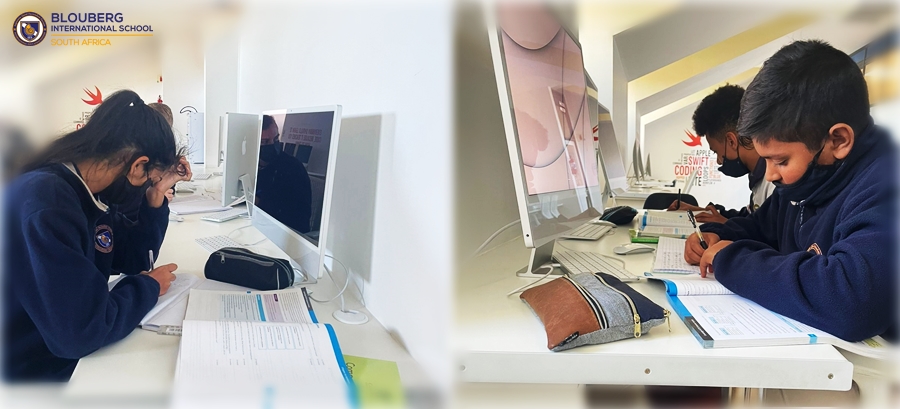
(PHOTO: IGCSE Computer Science students hit the ground running this week)
Read More

End Of Term
As Term 1 comes to an end, we can only reflect on how lucky we were to tackle this term without major disruptions and challenges. We are very fortunate that our programmes and events went as planned during the term. Students and staff were involved in a wide range of events and activities, and we once again enjoyed and celebrated many successes.
As our teachers continue to work hard this week to complete their extensive planning for Term 2, we are optimistic and hopeful that this landscape will continue into next term.
The High School’s academic reports once again testify that our students continue to develop and excel in their learning. The reports reflect the unique and distinctive scope and depth of our curriculum. Over the course of the term, we have received an increasing number of inquiries from parents, mostly for the High School, who hear about the value of a Cambridge education – especially the opportunities that the Cambridge qualification offers to students who want to study at international universities.
Our teachers are committed to building a school of excellence, and therefore, we kindly request that you actively participate in your child’s education. You are invited to contact or visit the school any time you have a question about your child’s progress. We consider it a great privilege and responsibility to be your child’s teachers and we look forward to working with each and every one of you in Term 2.
I trust that this holiday period will be a time of relaxation, family and special moments.
Carmen de Villiers
High School Coordinators


A special photo taken of our High School students after the Founder’s Day go-kart races.
Read More

Leadership
Now that the Year 6’s are the heads of the Primary School, they have had to learn about leadership and what it is to be a leader. They took part in different activities during the Skills Programme we held. The end goal was for the students to apply to become Year 6 Prefects. They went through the process of discussing what a leader was, what a leader looks and sounds like and why they would want to be leaders for BIS.
Here are a few things the Year 6’s decided make a good leader:
“A leader is someone that has responsibility and is helpful and is respectful towards others. They always try their best and they think about others first.” – Emily Fouché
“A leader is someone who can help you with things you are struggling with and will guide you to do the right thing” – Maalik Daniels
“A leader is a person who is helpful, respectful, kind and caring. They help people when they need help.” – Nicolas East
The process the Year 6’s had to follow to apply to be prefects was as follows:
- Fill in an application form.
- Get 3 references from teachers of their choosing.
- Present in front of the other Year 6’s as to why they would make a good prefect.
- Vote for who they thought would make good prefects.
We know that the elected leaders will do a wonderful job this year!
“As we look ahead into the next century, leaders will be those who empower others.” – Bill Gates
Brittney Hakime
Year 6 Teacher


Read More
From the German classroom
Back to school in South Africa is always an exciting time of the year. Students start a new grade with a new teacher, enter a new classroom and meet new classmates.
The Year 1’s also started this year with new languages to learn – German being one of them. In the introduction to German and Germany they learnt the phrase ‘Ich lerne Deutsch’ (I am learning German) and the colours of the German flag. The Year 1’s were very surprised to hear that most German schools start in September after the summer holidays in Europe and that the students do not wear uniforms at school.
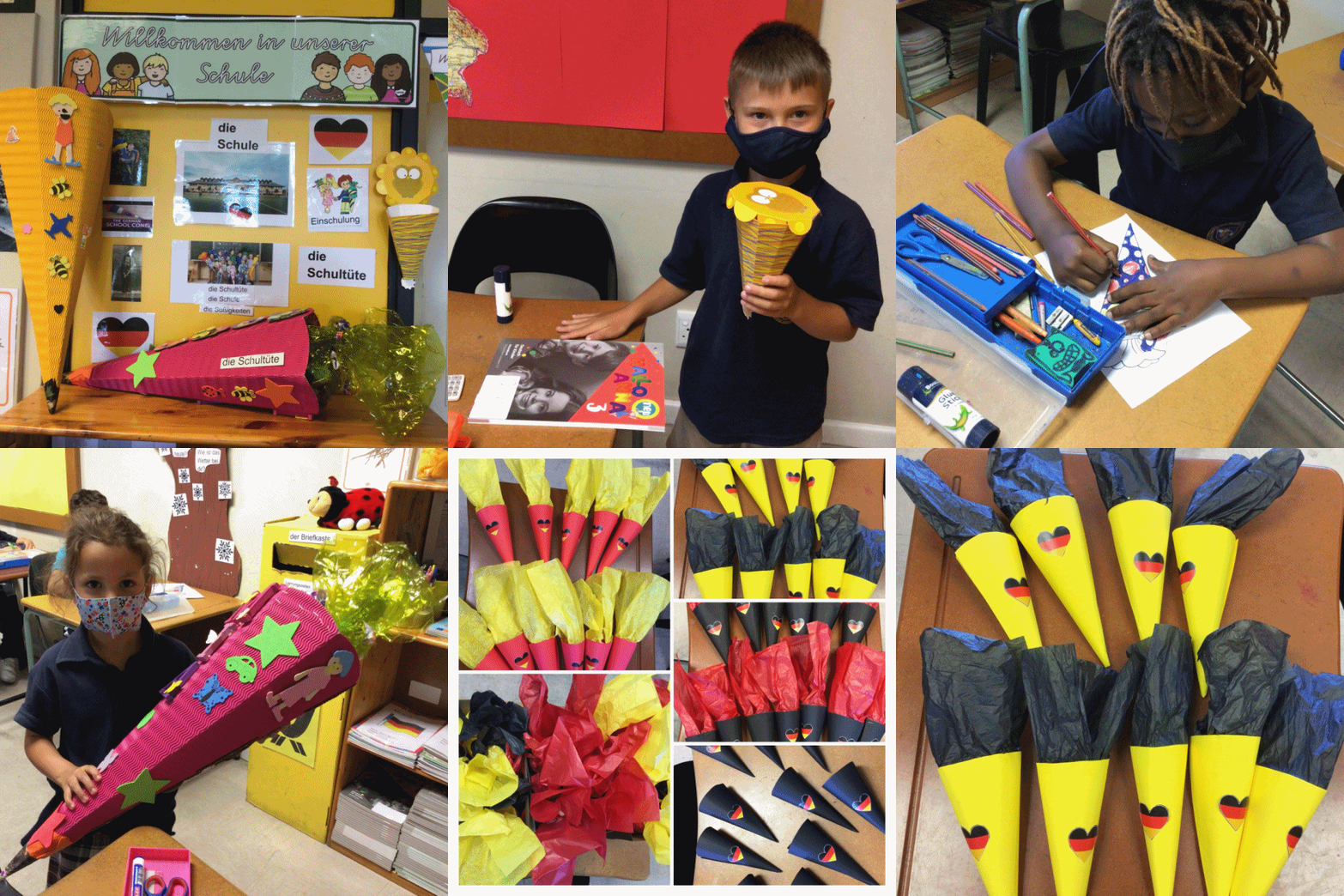
They were also introduced to the Schultüte (a school cone), a German tradition that all Klasse 1 (Year 1) students look forward to on the first day of school. Before Klasse 1, they would usually be attending a type of Kindergarten (a playgroup or nursery) at another institution, therefore making the first day of school one of the most important days of their childhood.
So, what exactly is the Schultüte?
It is “a colourful and elaborately decorated cone which is prepared by a students’ parents and filled with goodies such as small school supplies (like pens, pencil cases, erasers, etc.), toys and sweets.
This German tradition originated in the early 1800s in the cities of Jena, Dresden and Leipzig. Back then, parents brought the Schultüten directly to the schools, where they were hung on a so-called Schultütenbaum (‘school cone tree’) in the classroom. When the tree was ‘ripe’ with school cones, it meant that students were ready to begin first grade. On the first day of school, students were instructed to pick the cone with their name on it.
Naturally, the tradition spread and evolved over time. Today, students often receive their Schultüten before they leave their homes to go to school and the kids proudly carry their Schultüten to their new classrooms. Of course a photo with the Schultüte is a must and a memory for the years to come.
The photos below show our Year 1 students with their beautifully coloured in pictures of a Schultüte in class; the designed and decorated Schultüten by the Year 2 students and the Year 3’s completing a Schultüten craft from their Hallo Anna neu 3 workbook to take home.
The Year 1 students enjoyed holding the Schultüte in my classroom and wished so much for their own Schultüte and to be in Germany for this tradition. With this in mind the German Club embarked on a project to do exactly that, to make a school cone for each Year 1 student.
The German club was launched this year and as the first task in the first meeting the students prepared for making the Schultüte. This proceeded to be a huge task crafting 60 cones with an individualised card welcoming the students to BIS and Year 1.
Thank you to the German Club and friends who spent many breaks crafting, colouring in, pasting, decorating and then eventually filling them with some German treats for the Year 1’s.
All Year 1 students will be receiving their own Schultüte to take home and enjoy. We hope that they will remember this tradition and the Schultüte they received here at BIS for years to come. Please remember to take a photo!
Looking forward to being part of the students’ journey with the German language and traditions in 2022.
Frau Kerstin Pani
Primary School German Teacher


Read More

Foundation Finger Fun (Fine Motor) Club
This year we reintroduced after school clubs. I decided to start a club that focuses on strengthening fine motor muscles and make it lots fun. I think I am starting to achieve my goal! The students do not even realise that they are refining their fine motor skills, because they are having a great time while doing so.
Fine motor skills refer to how we use smaller muscle groups in our bodies to perform tasks, mainly involving the muscles in their hands, fingers and wrists. Children use their fine motor muscles to do various things, namely, writing their names, cutting paper with scissors and to tie their shoelaces.
When a child develops their fine motor skills they are also mastering their coordination. Using the smaller muscles requires thought, action and precision. Fine motor skills are crucial for doing many of the actions we take for granted, like feeding ourselves, holding things, doing up zippers and buttons while getting dressed, drawing as well as colouring to name only a few. Learning to use smaller muscle groups leads to bigger accomplishments.
Fine motor movement:
- Allows a child to play with small objects.
- Encourages creativity.
- Assists in development of communication skills.
- Encourages independence.
- Improves physical awareness.
- Builds confidence.
It is really wonderful to see how enthusiastic the students are about our Finger Fun Club. They can’t wait for their lesson on Tuesday afternoons. Our last lesson of the term was a hit when they got to make shapes out of toothpicks and jelly tots.
We can’t wait to have more fun in Term 2.
Cindy Nunan
Pre-Reception Teacher
Read More
English
On more than one occasion I have had my students ask me why they need to learn English. As someone who has adapted to the language well since I was young, I never understood what was so challenging about it, until I found the poem below:
We’ll begin with box; the plural is boxes,
But the plural of ox is oxen, not oxes.
One fowl is a goose, and two are called geese,
Yet the plural of moose is never called meese.
You may find a lone mouse or a house full of mice;
But the plural of house is houses, not hice.
The plural of man is always men,
But the plural of pan is never pen.
If I speak of a foot, and you show me two feet,
And I give you a book, would a pair be a beek?
If one is a tooth and a whole set are teeth,
Why shouldn’t two booths be called beeth?
If the singular’s this and the plural is these,
Should the plural of kiss be ever called keese?
We speak of brother and also of brethren,
But though we say mother, we never say methren.
Then the masculine pronouns are he, his, and him;
But imagine the feminine… she, shis, and shim!
English is a language packed with rules, but at the same time has an exception to almost all of them! However, the beauty of the language lies within its sub-context. English allows us to say something without saying it. Imagine if a gentleman still wished ‘to be a glove upon that hand; that [he] may touch that cheek…’ or thought that you ‘doth teach torches to burn bright…’
Although the grammatical rules of the English language is not everyone’s cup of tea, it is the Literature that makes it worth loving.
There are so many words and phrases we use daily which were invented by the great William Shakespeare, that we don’t even realise we are quoting him when we do:
English isn’t an easy language and I understand why some students find it challenging. However, hopefully they won’t feel like they ‘haven’t slept a wink’ if they ever find themselves ‘in a pickle.’
And for those who choose to ‘fight fire with fire’ in English, it is definitely not for the ‘faint hearted’. In their case, they would much prefer to say, ‘what’s done is done,’ to ‘send [English] packing’ and wish it ‘good riddance.’
They may feel that ‘the world is their oyster’ and that they can never have ‘too much of a good thing’.
But in the end, ‘the naked truth’ is that in their ‘heart of hearts’, they know it is ‘a brave new world’ after all, and they can uncover a new love for English once they ‘break the ice.’ Their confusion and frustration will ‘vanish into thin air’, they will escape ‘out of the jaws of death’ and they will come ‘full circle’ in their new appreciation and love for English.
Mia Tossel
IGCSE, AS and A Level English Teacher
Read More
Animal Unit
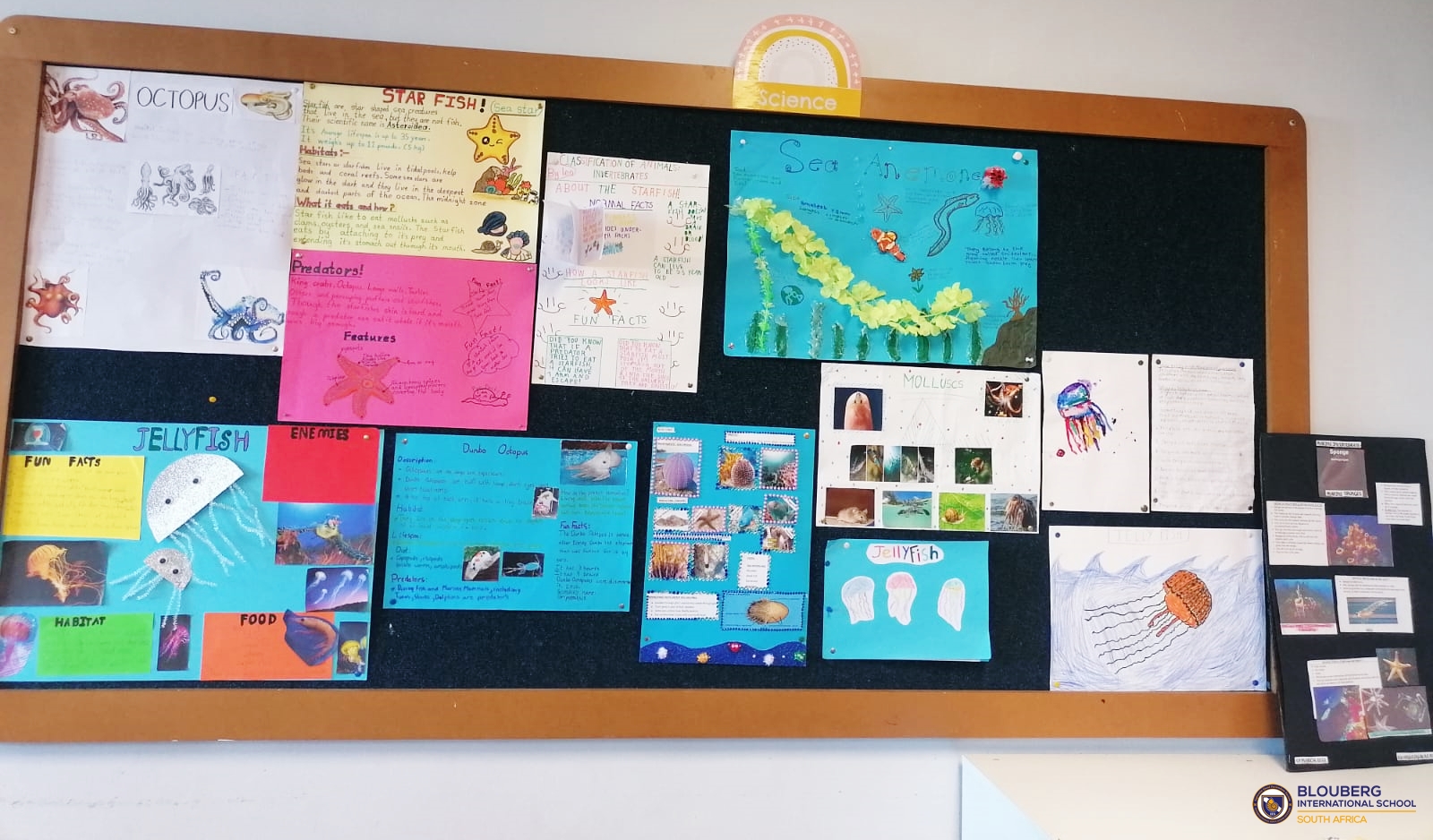
As part of the Animal Unit in Science, the Year 4 students learned about vertebrates and invertebrates during the last few weeks. Vertebrates are animals with a skeleton and bone structure and invertebrates are animals without it.
The students were tasked to research invertebrates living in the ocean. They had to do an oral presentation about the appearance of their chosen animal as well as it’s habitat, feeding habits and some interesting facts.
Here are some fascinating facts we learnt about these creatures this week:
- The Dumbo octopus has 3 hearts and 9 brains.
- A Starfish pushes its stomach out of its mouth to be able to eat.
- Octopuses are blue blooded.
- Jellyfish are immortal and are made from 98 percent water.
Well done Year 4!
Yvette Fourie
Year 4 Teacher


Read More