Yes, Year 9 students are allowed to focus on Photography for their IGCSE Art & Design course and it is not too late to start.
Do you love taking photographs and playing around with the images?
IGCSE Photography is for creative students who love photography and image manipulation. The photography coursework requirements are the same as the IGCSE Art.
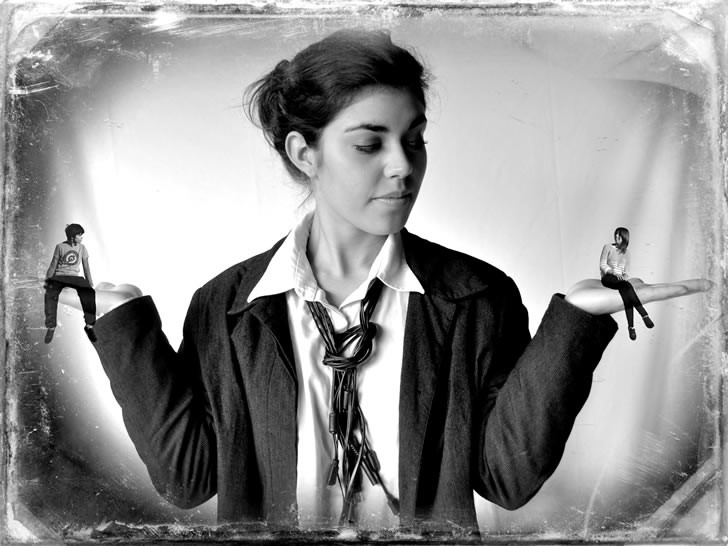
This image was awarded 1st place in the Youth Section at the Huntly Artz Festival in 2012. (Credit: Photography by Melissa Kelsey, ACG Strathallan. NZ. From www.studentartguide.com)

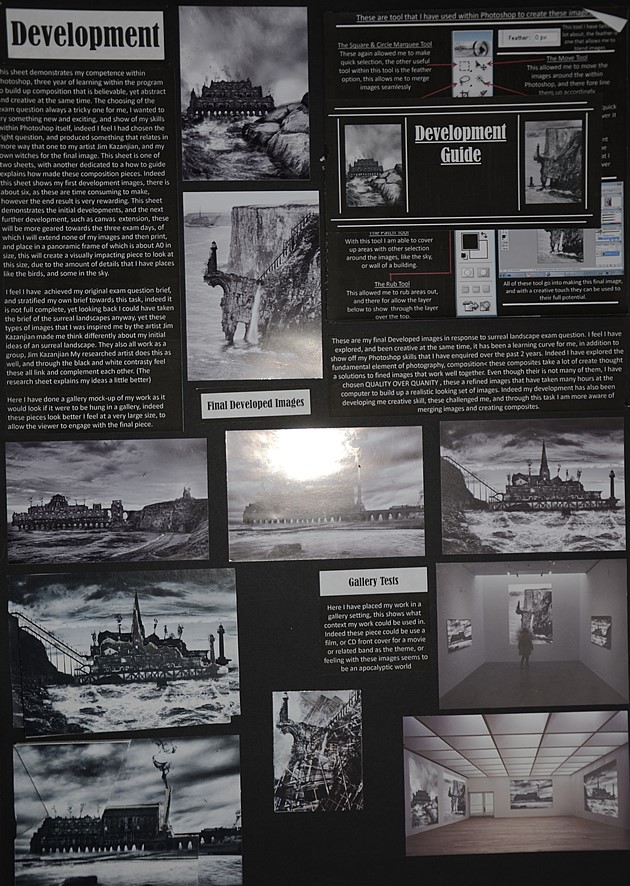


These coursework pages are excellent examples of how to approach a project in a riveting and original way: combining local imagery to create breathtaking fantasy scenes.
Students are required to research photographers and develop their own ideas. They will learn how to experiment with cameras, studio lighting and editing. They are required to have an entry level SLR camera with a standard 18-55 camera and access to a colour printer.
Candidates are taught how to use traditional and new media processes to produce outcomes such as photomontage, printed photography, and digital photography. Their photographic artworks will be in colour and black & white.
The Photography curriculum guides students in responding to the influences and characteristics of the world around them in creating photographic artworks. They explore the traditional and contemporary genres of photography and a range of techniques.
The curriculum includes the study of:
- Shutter speeds
- Aperture
- ISO
- Exposure
- Depth of field
- F-stop
- Digital editing and postproduction with Photoshop
All Art Photography candidates complete two components:
Component 1
This coursework is completed in Year 9 and 10 and counts 50% of their total mark. There are two parts to the coursework:
- a portfolio and
- a final outcome.
Component 2
This component is done in exam sessions in a total of 8 hours. Component 2 is completed in the third term of Year 10 and counts 50% of their total mark.
The four Cambridge assessment objectives count 25% each.
The Assessment Objectives (AOs) are:
- Record, 25%: Record ideas, observations, and insights relevant to intentions as work progresses.
- Explore, 25%: Explore and select appropriate resources, media, materials, techniques, and processes.
- Develop, 25%: Develop ideas through investigation, demonstrating critical understanding.
- Present, 25%: Present a personal and coherent response that realises intentions and demonstrates an understanding of visual language.
Riaan Vosloo
IGCSE, AS and A Level Art and Design Teacher
Read More

The Importance Of Drawing For Children
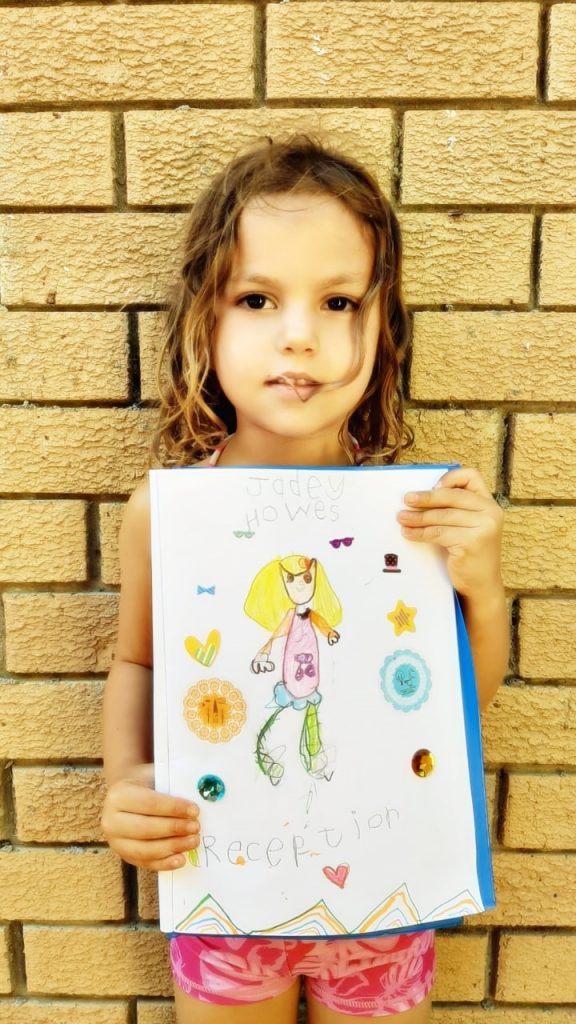
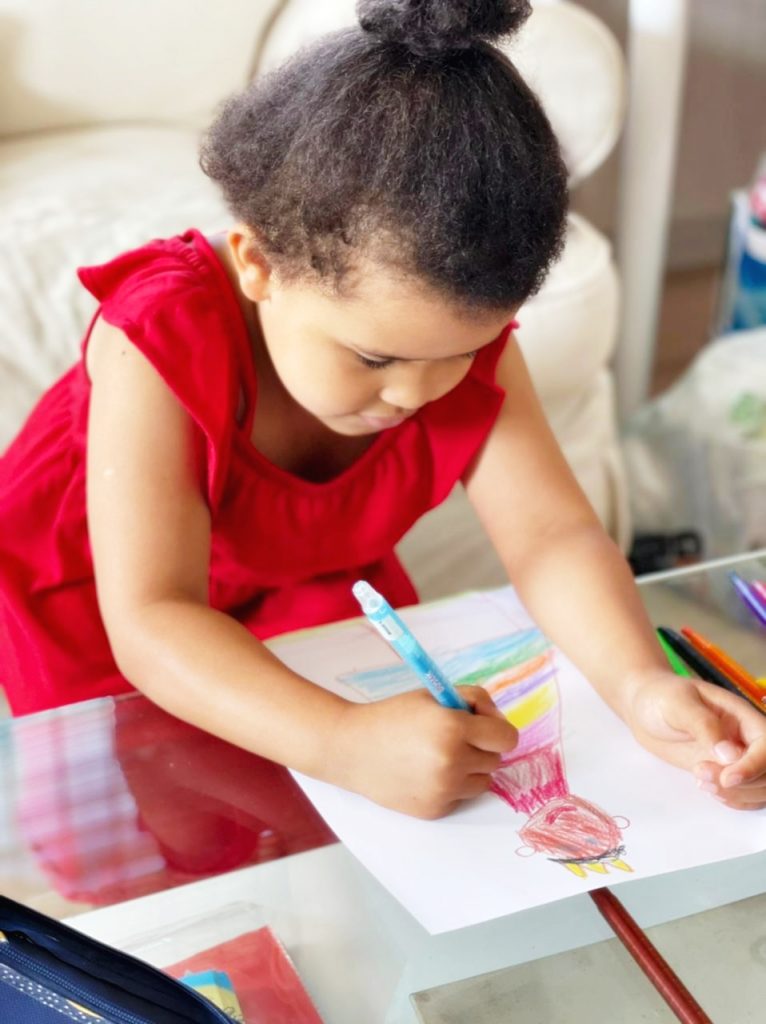
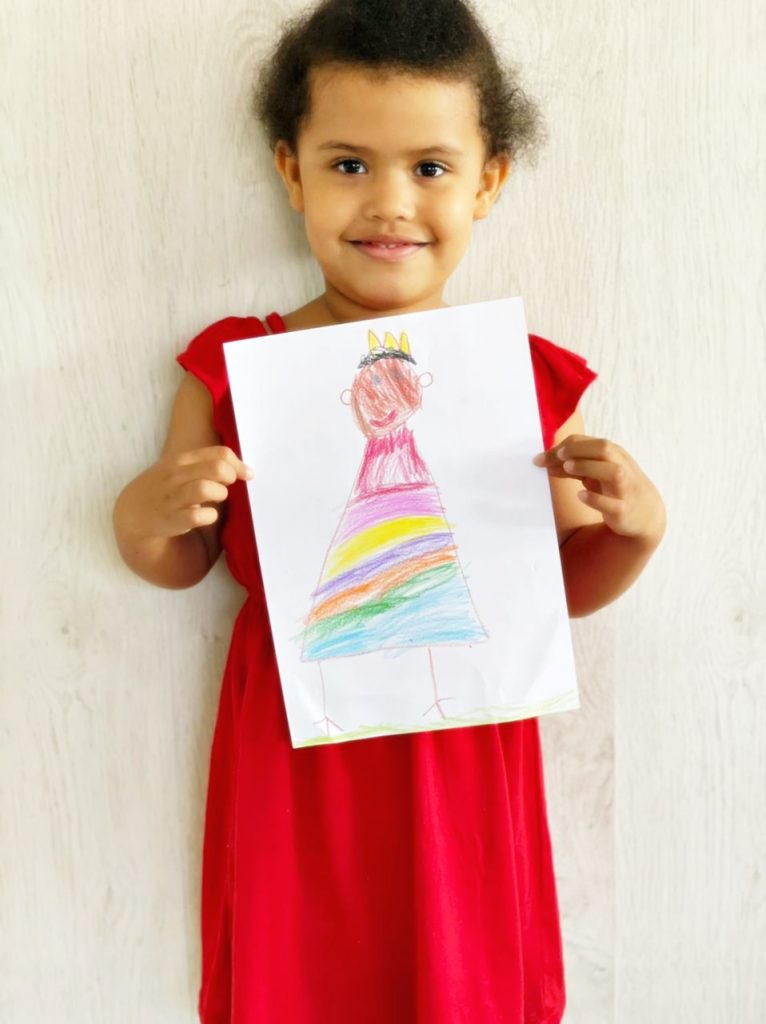
Drawing is one of a child’s favourite activities, but it has so much more value for them than just making pretty pictures. Drawing helps children develop in so many different ways. Through drawing children learn and practice many foundational skills needed at school. It is a wonderful way for children to make sense of the world around them and boosts confidence and emotional intelligence. Here are just a few of the skills that are developed through drawing.
Fine Motor and Visual Skills
Drawing from a young age helps strengthen and fine-tune your child’s fine motor skills. Drawing helps develop hand eye co-ordination. When planning out their pictures children also learn about spatial awareness, size, distance as well as depth perception.
Problem Solving
When drawing, your child is able to express themselves creatively. It provides them the opportunity to ask and solve many questions such as which colour to use or where to place an object. They are also able to develop their picture through the creative process and can change and improve it as they go. Through making mistakes, they learn how to do things differently or how to include their mistake by changing it into something else to enhance their picture. Drawing also develops concentration and helps children to focus on working towards achieving a goal.
Imagination
Drawing helps your child awaken their creativity and imagination. It gives them the opportunity to express their creative thoughts on paper. It is also an important way of expressing and processing their feelings and emotions.
Confidence
As a parent you will have experienced the joy a child has sharing their finished pictures or artwork with others. Through drawing children make pictures that represent their thoughts, imagination and experiences which give them an immense sense of achievement. Children’s pictures are also a record of events that have happened. As they share these experiences with their loved ones, it is also an opportunity for them to bond and develop vocabulary and language skills. As their communication skills progress, it gives children more freedom and confidence during social interaction with others. Drawing also develops important pre-writing and pre-reading skills that translates to greater confidence when learning new skills at school.
As a parent it is important to encourage drawing. Here are some fun ideas to try at home:
- Draw with chalk on paving
- Think of a topic to draw about like a recent birthday party
- Ask your child to draw a picture, but include an object with a specific colour or letter sound
- Draw on black paper using pastels or chalk
- Read your child a story and ask them to draw their favourite part or a new ending to the story
- Draw a background to play with other toys on afterwards, like a home for Lego people, a farm for plastic animals or a town for cars (this is good for visual perspectives and spatial awareness)
- Draw on different surfaces like a chalk board or on the floor
- Trace around your child’s body and allow them to draw in the details of their faces, body parts and clothing
Most children draw something new every day and it is often the most precious gift they have to offer their loved ones. Wishing you many happy memories of drawing fun with your child at home.
Bronwen Nuthall
Reception Year Teacher



Hands on Chemistry
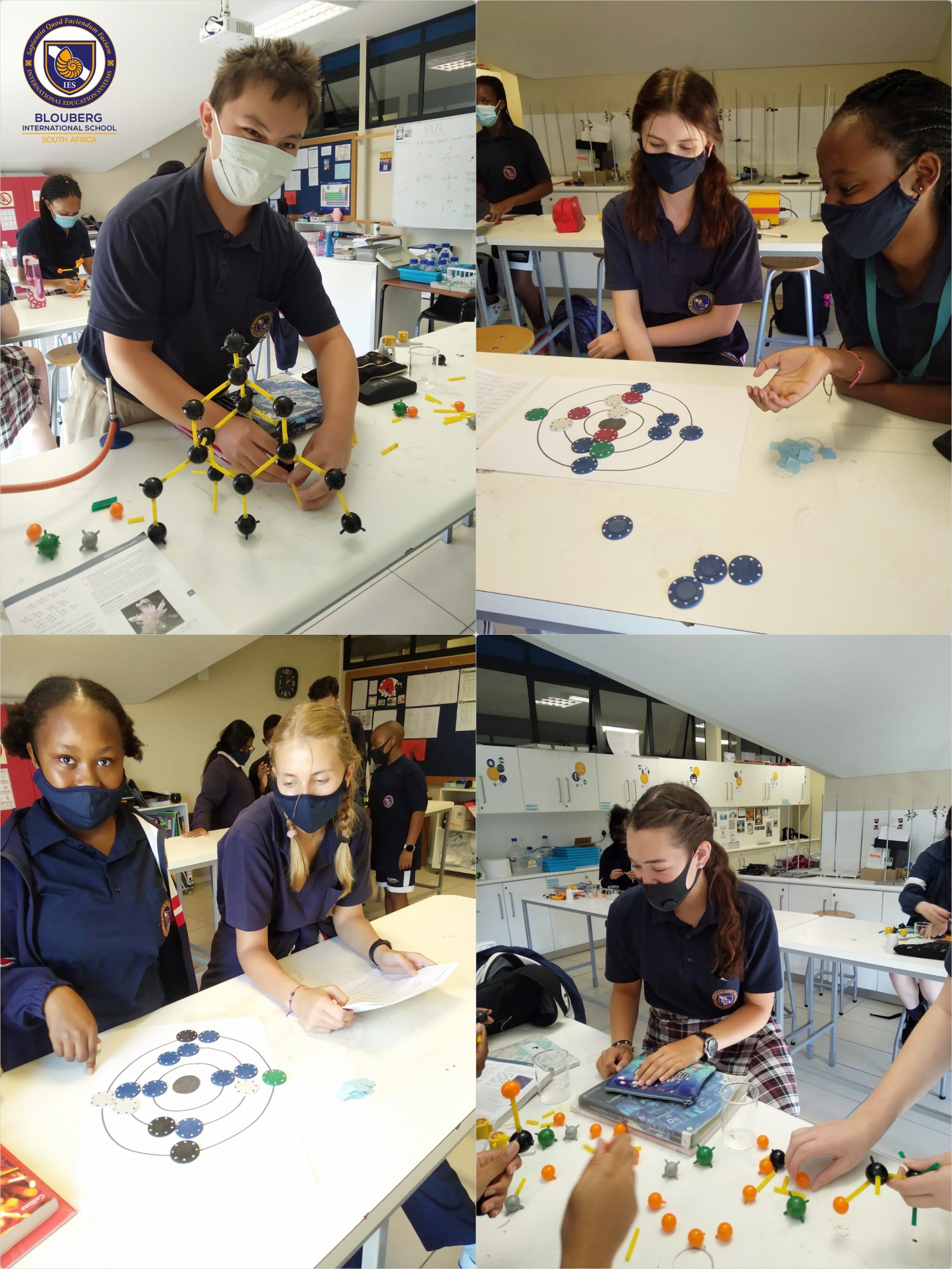
In Chemistry this term, we have focused on hands-on, student-centered learning. Chemistry is an interactive subject and what better way to experience science than to “do science”. Benjamin Franklin is quoted as saying “Tell me and I forget, teach me and I may remember, involve me and I learn”.
In Year 9, students are learning about the structure of atoms and where electrons are found around the nucleus. In order to understand this concept, students played a game with giant-sized atoms and had to correctly place poker chips representing electrons around a nucleus. The game became quite competitive and students very quickly learned their way around the Periodic Table.
In Year 10, students made their own soluble and insoluble salts and filtered and crystallised these to separate them from impurities. Different separation methods are used for different salts and so it is important that students can correctly identify and explain these methods. In the external IGCSE examinations, students write an alternative to practical examination. Hands-on experience in the laboratory is essential for students to understand laboratory techniques and be able to design their own experiments.
The Year 11 students started the AS Chemistry syllabus this term. Students are required to master laboratory techniques as they are assessed on this in an individual practical examination next year. As we cover the necessary theoretical concepts in class, we have done practicals to apply these concepts. Students are becoming more and more confident working individually and are able to obtain accurate experimental results. They have done both titration and gravimetric practicals.
The students in Year 12 had a challenging start to the AS Chemistry course with COVID-19 last year. We were not always able to do a practical experiment at the same time as the theoretical concept was introduced. But students are back in the laboratory this term, and with some extra lessons and hard work, they have been able to complete many practicals already. We have covered all possible laboratory techniques needed in the course and I have seen a marked improvement in the students’ laboratory skills. We are focusing on accurate data presentation and using appropriate data calculations.
This year BIS is also offering A-level Chemistry in Year 13. The syllabus compliments the AS syllabus and students enjoy this course because the added detail explains the trends and concepts covered in Year 11 & 12.
Philippa Goch
Chemistry Teacher – IGCSE, AS and A-level

Healthy Eating
In Year 1, we often talk about what is in our lunch boxes for the day. We have competitions to see which child has the healthiest lunch box.
The importance of packing a healthy lunch box is immeasurable. Children are more alert and focused when they’re fuelled with healthy food. Higher levels of sustained concentration mean that kids can more readily retain information and therefore learn.
Crisps, chocolates, cakes and juice are full of sugar and additives, which do not help a growing child.
Below are some of my class’s awesome super healthy lunch boxes.
Charlotte Cronje
Year 1 Teacher


From the Principal’s Desk, 19 February 2021
Dear Parents
It is hard to believe that we are already halfway through Term 1, with only five weeks till the holidays. This week we were able to reintroduce sporting codes after new regulations regarding sport at school were gazetted. Sport and physical activity play an integral role in a child`s development, health, and wellbeing. We therefore ask parents to encourage their children to participate in the sports offered at school.
Last year we all became overly familiar with the word ‘online’, using it in almost every sentence. The ability to do things online has it’s benefits, but it also has it`s dangers. We tend to leave our children to their own devices when they tell us they are busy online with schoolwork or the class WhatsApp group. The school has recently become aware of some of the conversations that take place on these social media platforms and we therefore urge parents to monitor their children`s devices.
Things we can do to keep our children safe online:
- Know what social media platforms your child is on.
- Be aware of age restrictions and read the T & Cs of each social media platform.
- Ensure privacy settings are secure on each platform they are on.
- Install parental control software on their devices. These apps are free.
- Ensure that screen time is limited.
Thank you for your ongoing support.
Mr J Harrison
Head of Academics High School
Read More

Rocks, Rocks and more Rocks!
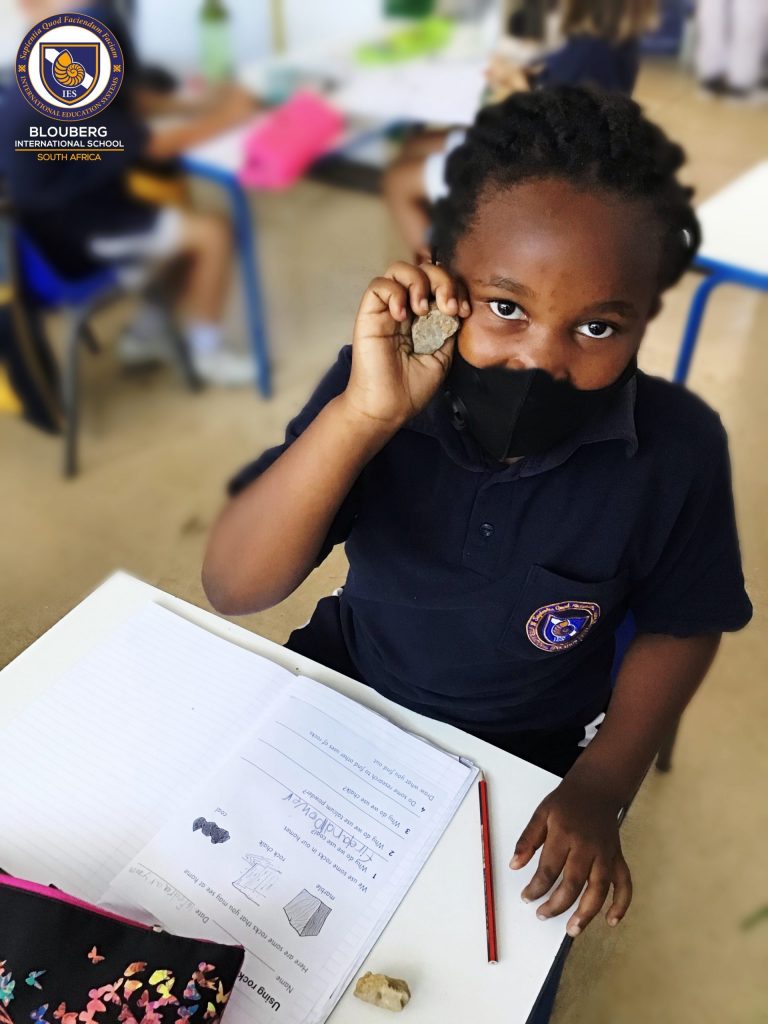
The Year 2 students’ enthusiasm for their new Science topic, Rocks, is over-whelming. After the first lesson, where they learned the difference between Igneous, Sedimentary and Metamorphic rocks, they scoured the playground and surrounding areas for rocks during their break.
We tried to find the correct category for each specimen and then match them to their possible uses. A few students had found small pieces of limestone and the class was so surprised when they learned that chalk and talcum powder were made from limestone. This prompted many questions! ‘Which rock did our roof tiles start off as?’ ‘Which rock did my mom’s kitchen counter top start off as?’
We will be building on this knowledge for the last half of this term, and I am looking forward to investigating the marvels of Rocks with my class even further.
Kim Coetzer
Year 2 Teacher

From the Principals Desk, 12 February 2021
Dear Parents
“Whatever is true, whatever is noble, whatever is right, whatever is pure, whatever is lovely, whatever is admirable – if anything is excellent or praiseworthy – think about such things.”– Phil. 4:8 NIV.
MINDFULNESS
To be mindful means to be conscious or aware of something. “It is a mental state that is achieved by focusing one’s awareness on the present moment.”- Dictionary.
This is often easier said than done. It is easy to become fearful and negative in today’s world. Listening to the news, reading the newspapers, can be a depressing reminder of the situation worldwide.
I believe it’s so important, amidst the worry of our daily lives, to focus our hearts and minds on what is noble and lovely. We are in the middle of February and already our students and teachers have achieved so much. Public schools will only reopen on Monday 15th February and their teachers and students are only now preparing for the academic year.
I am proud that our students have been busy with their academic programme since the beginning of the year and commend their enthusiasm and dedication. Sir Winston Churchill once said, “young men and young women, take up your mantle and rise; it is time for change.” We, the educators and parents, are the ones who empower and equip this generation for change. Let us pass the torch with pride!
Our students are all dressed up and ready to celebrate Valentine’s Day today. Such celebrations are important for morale and fellowship. Therefore, it is with joy, laughter, treats and music they celebrate the day and share the love!
On Monday, 15th February, we will have all students back on campus and we are sure they cannot wait to join their peers. Teachers will continue to prepare work for students who are abroad or have co-morbidities. As communicated two weeks ago, all other hybrid teaching ends today. Although our hybrid programme is running smoothly, the students need to have the benefit of face-to-face communication with their teachers.
As we look forward to the weekend, I encourage you to share the love with your family and friends. We cannot know what tomorrow will bring but we can celebrate today!
Kind regards
Edna
(Follow us on Instagram to see some of the Valentine’s Day photos and videos.)
Read More
The Importance of Mathematical Thinking
“To solve math problems, you need to know the basic mathematics before you can start.” – Catherine Asaro
One thing that I have reiterated to all my students over the years is to consider Mathematics as a way of thinking. Kaye Stacey (2012, University of Melbourne) submitted that mathematical thinking is important in three ways.
- Mathematical thinking is an important goal of schooling.
- Mathematical thinking is important as a way of learning mathematics.
- Mathematical thinking is important for teaching mathematics.
As students are introduced to high school Mathematics, it would be wonderful if many students could have just a small taste of the spirit of discovery of Mathematics as described in the quote below from the Mathematician Andrew Wiles.
“One enters the first room of the mansion and it’s dark. One stumbles around bumping into furniture, but gradually you learn where each piece of furniture is. Finally, after six months or so, you find the light switch, you turn it on, and suddenly it’s all illuminated. You can see exactly where you were. Then you move into the next room and spend another six months in the dark. So each of these breakthroughs, while sometimes they’re momentary, sometimes over a period of a day or two, they are the culmination of, and couldn’t exist without, the many months of stumbling around in the dark that precede them.” (Andrew Wiles 1997)
Because Mathematical thinking is a process, l will discuss examples of what l do every time and again with my students in and out of the classroom.
- Logical Puzzles
A logical puzzle is a problem that can be solved through deductive reasoning.
In class we have used this website many times and my students find Mathematics easy if engaged in an interactive and fun way. They start to enjoy how mystifying, puzzling and challenging it is.
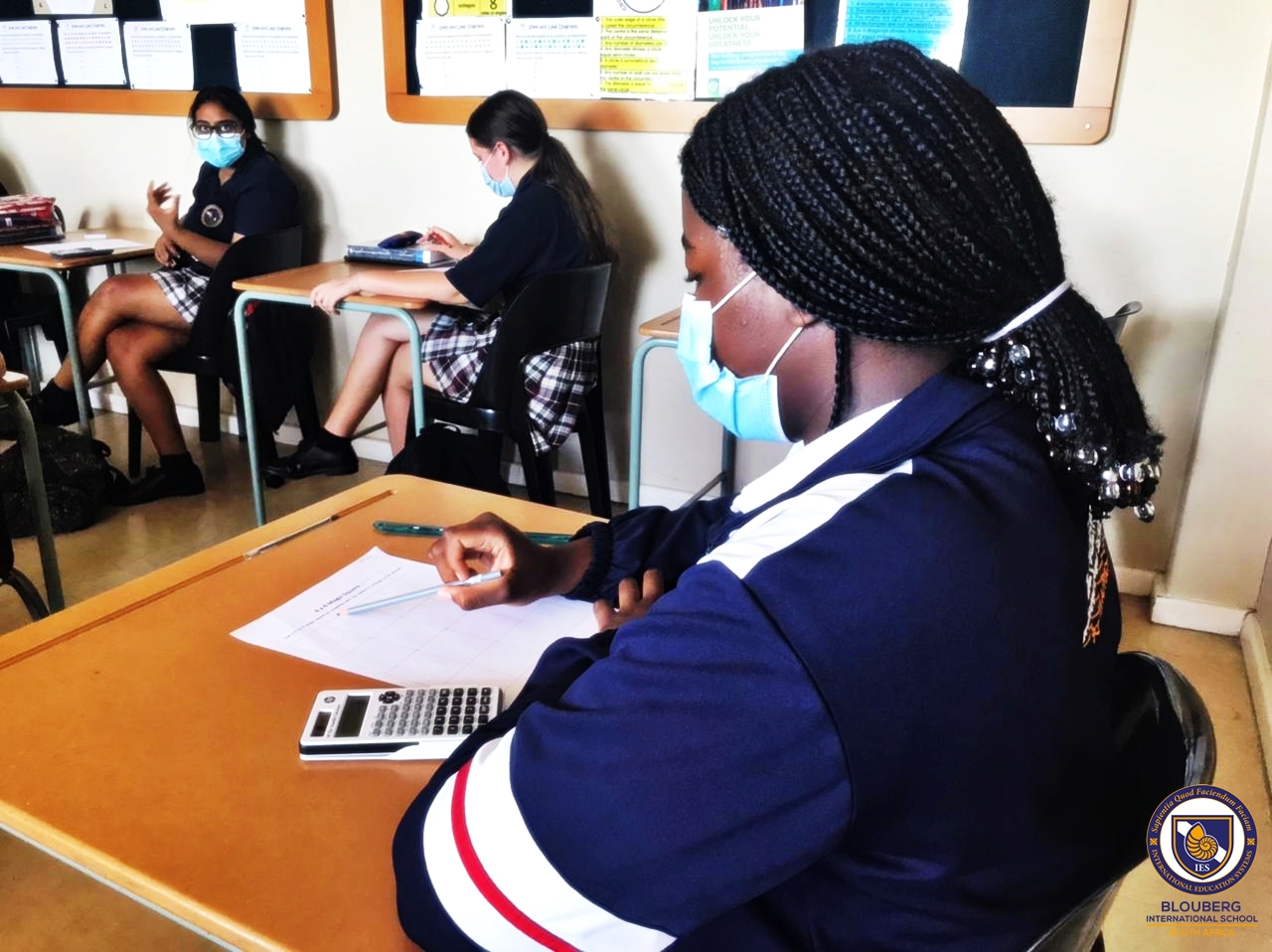
- 4 x 4 Magic Square Puzzles

Magic Square Puzzle
In conclusion, math skills are about much more than all the minutiae we teach in school because they are a strong indicator of broader cognitive abilities. And because cognitive aptitude is one of the most predictive factors of job success, testing my candidates’ math abilities is a great way to assess their ability to succeed in any given Maths test and after school activities.
Hebert Tapfuma
High School Mathematics


Read More

Interactive Ways To Start Your Language Classes – Spanish Teaching Routines
“¡Hola amigos y amigas!”
This year, I am focusing on working with simple and effective resources to get the students into routines in Spanish class.
I believe that routines are essential for them to practice basic and simple expressions – every day, in a way that all our students can participate. Starting my lessons the same way, it helps students focus and start thinking and interacting in Spanish.
It takes time to establish a routine but once they get familiar with the vocabulary, the students can complete the tasks by themselves in less than 3 weeks.
The worksheet is designed to help students begin to understand themselves and be aware of how they are feeling each day (feelings), as well as what is going on around them. (The date, the season, the weather). It practices simple and practical language in a visual way that makes it accessible to the whole class.
To print less, I hand out a copy of the worksheet to students, at the beginning of the year, asking them to stick it on their notebook first page.
Then I use the projector in class to help them write down the same information in their notebook at the beginning of each lesson, especially at the beginning of the year.
I can say that I am very impressed with the positive impact that a solid beginning of the class routine creates, especially with the youngest students.
Having a repetitive start gives students the opportunity to settle in and feel comfortable with the change in language. It gives everyone in the class a chance to speak and sets the tone for the class.
In my classes, we start with general information (day, date, weather, feelings) and we will be adding more sections, especially in the last years of Primary school (express likes and dislikes, describe themselves).
It is important to note that I only see my classes once or twice per week, but they can still write down their routine in Spanish every day.
This is what I do at the beginning of class:
(It might take a few classes for students to master these basic routines but in 3 or 4 classes they will be familiarized with it and it will make the beginning of class smooth)
Routine 1 – Greetings.
I say, “Hola”
Students say, “hola”
Then I say, “buenos días” (good morning) or “buenas tardes” (good afternoon/evening)
Students say, “buenos días” or “buenas tardes”
Then I ask, “¿Cómo estáis?” (How are you?)
Students say, “bien. Gracias, ¿Y usted?” (Well. Thank you and you sir?)
I say “Bien. Gracias” “Well. Thank you.”
Routine 2 – Days of the Week – ¿Qué día es hoy?
I have a poster in the class with the days of the week, the months and colours (please see the photo)
The first week we sang the Spanish days of the week from Rockalingua, which the students will use later in a practical way to write down the date.
I ask, “¿Qué días es hoy?” (What or which day is today?)
I call on a volunteer and he or she says, “hoy es martes.” (Today is Tuesday)
I ask, “¿Qué día es mañana?” (Year 3 and 4) (What or which day is tomorrow?)
I call on another student that says “mañana es miércoles.” (Tomorrow is Wednesday)
I ask, “¿Qué día fue ayer?” (Year 5 and 6) (What or which day it was yesterday?)
Another student says, “ayer fue lunes.” (Yesterday was Monday)
Routine 3 – Months
We do the same thing that we did on routine 2 with the days of the week. We watch the months of the year song in Rockalingua. I ask “¿En qué mes estamos?” (Which month are we in now)
I call on a student and he or she says, “estamos en febrero.” (We are in February)
Routine 4 – Date
I ask “¿Quién me puede decir la fecha?” (Who can tell me the date?) I call on a student to say the date in a full sentence. For example, “hoy es viernes doce de febrero de dos mil veintiuno.” (Today is Friday, the 12th of February 2021.) I make sure the sentence is correct and then I have the whole class repeat.
Routine 5 – Feelings
“¿Cómo estás?” (How are you?) I ask the students how they feel today.
(I am tired.) Estoy cansado (masculine) or cansada (feminine)
(I am happy/well/not well.) Estoy feliz/bien/mal
Routine 6 – Weather
¿Qué tiempo hace hoy? (How is the weather today?)
I say, “mirad por la ventana” (Look out the window). I have students look out the window and I call on a volunteer to respond using a sentence about the weather. For example, “hoy hace sol” (Today it is sunny) “hoy está lloviendo,” (Today it is raining) etc. I use the Rockalingua song “¿Qué tiempo hace hoy?” about the weather in Spanish that contains vocabulary and grammar structures related to weather.
Routine 7 – Clothes
The students write down the clothes that they would like to wear according to the weather and have to choose a colour also for each clothing item. For example, (Today I am wearing a red dress or a blue t-shirt.) “Hoy llevo puesto un vestido rojo o una camiseta azul.”
I read the whole routine again for them and in a few minutes the students are speaking and interacting or at least getting compressible information in Spanish while they are reviewing basic and important topics, and most of the class is now focused on only one thing.
During the first lesson of the year, I hang out a copy of the beginning of the class routine (click here to view the document) and during the first 3 weeks we are filling in the document together to make sure that the students understand the vocabulary and time.
We also listen to all the Rockalingua songs that contain vocabulary and grammar structures related to this routine: the greetings songs, what’s your name, the feelings, the weather, so the students memorize the vocabulary in a fun and more effective way.
Javier Vidal
Spanish Teacher
Different Habitats
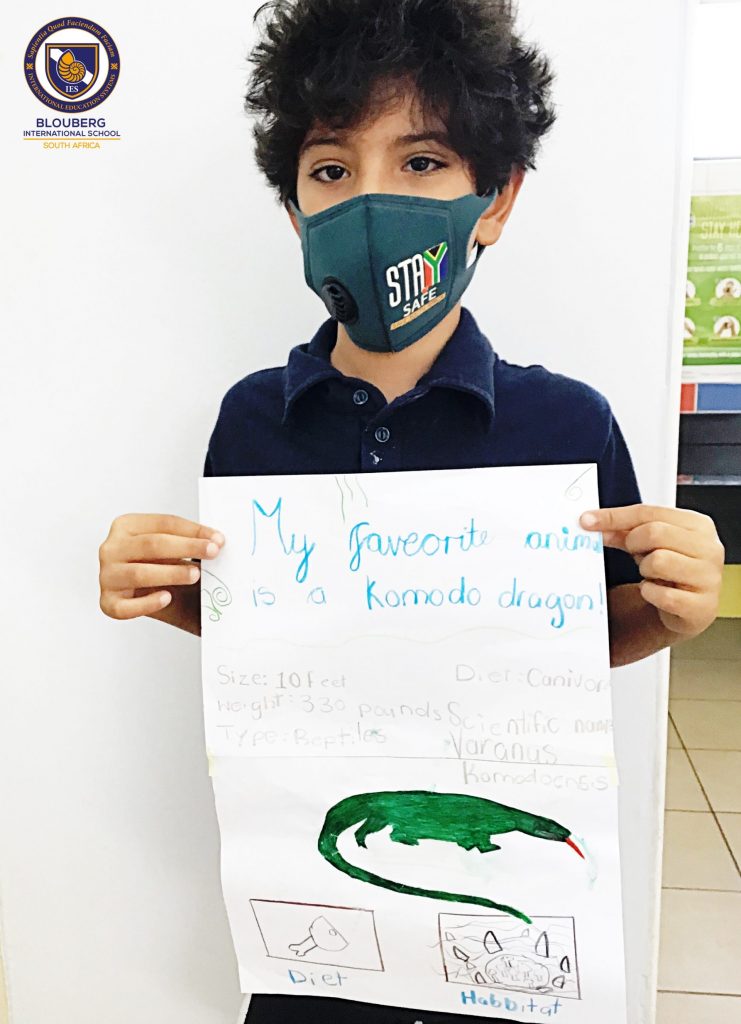
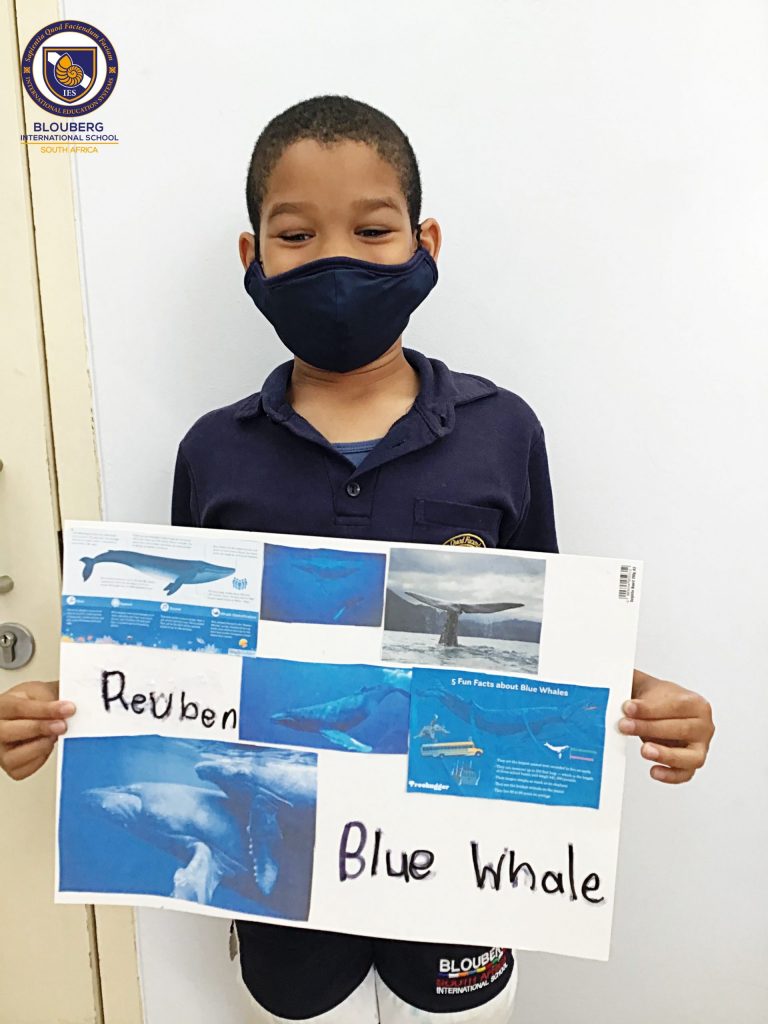
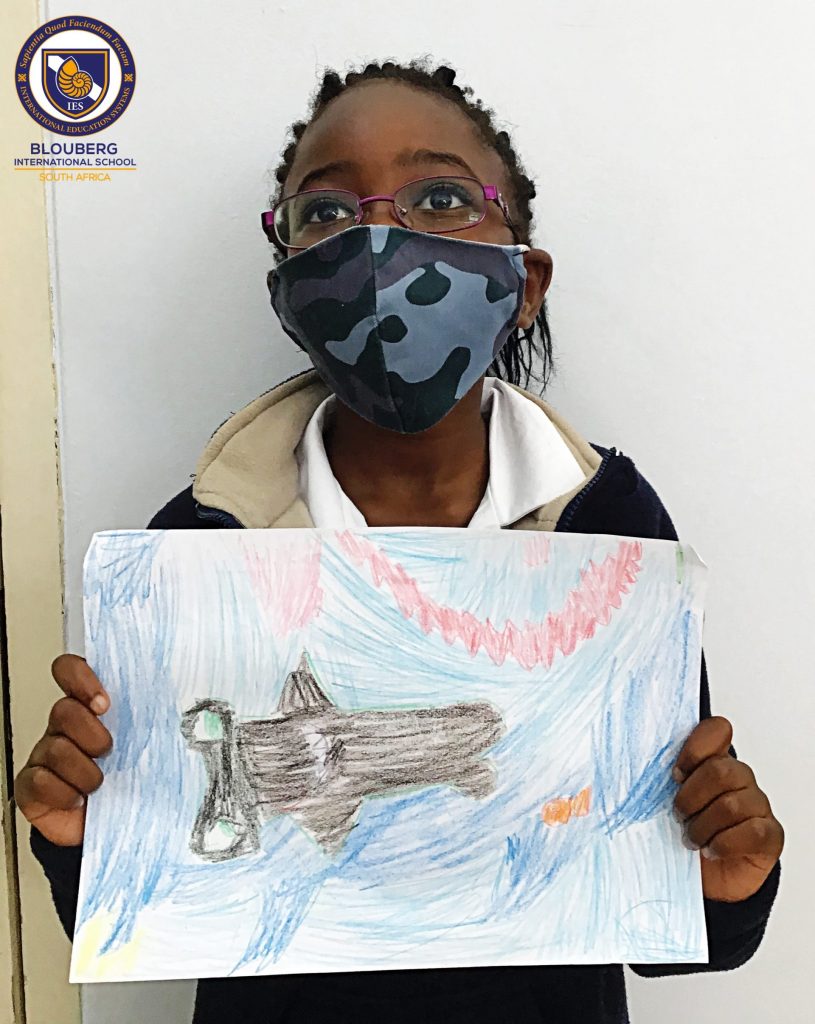
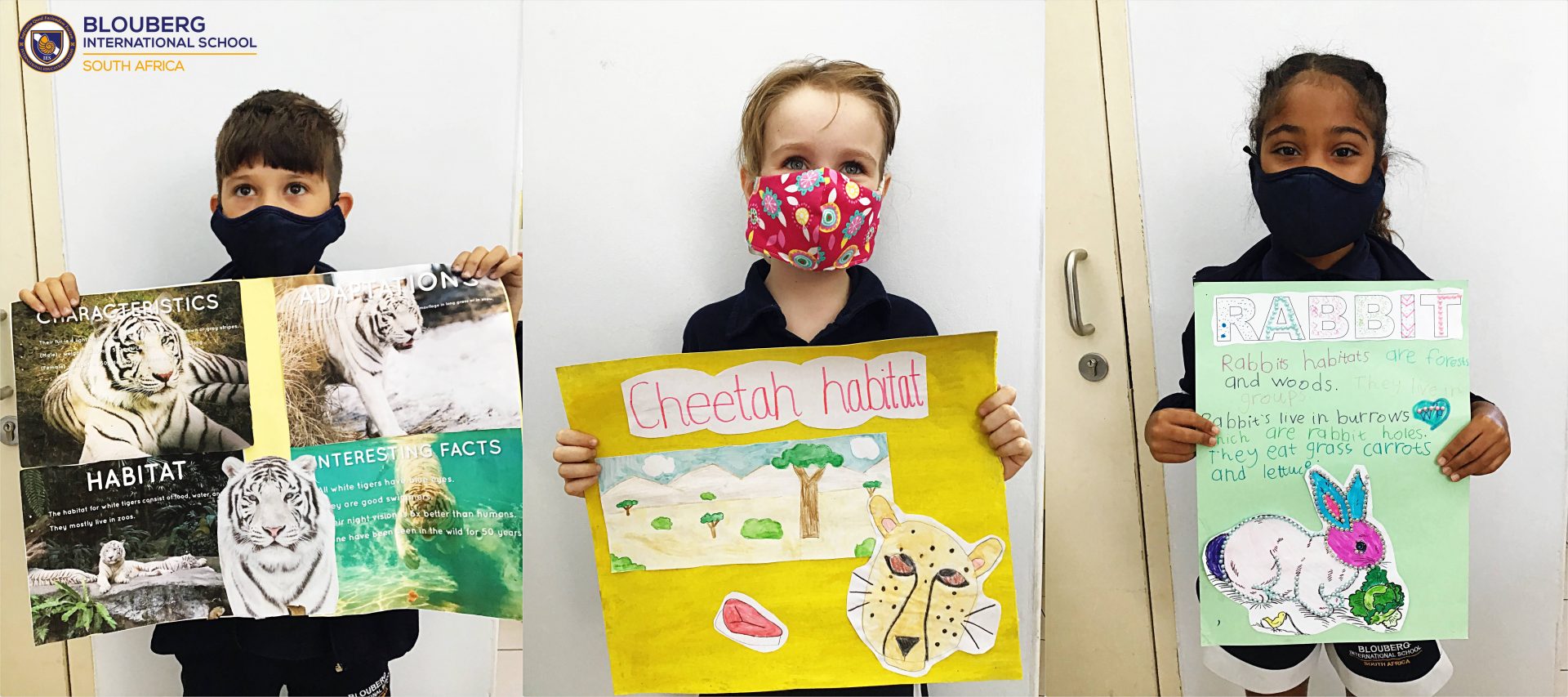
The Year 2 students have been learning many different facts about various animals and their habitats.
“The most important thing is to preserve the world we live in. Unless people understand and learn about our world, habitats, and animals, they won’t understand that if we don’t protect those habitats, we’ll eventually destroy ourselves.” – Jack Hanna
It is crucial that the Year 2 students learn about different habitats as they begin to understand the importance of both living and non-living things in a habitat. In learning this, students have learnt how plants and animals have adapted in order to thrive where they live. They have learnt that without the different habitats, we would not exist, therefore it is important for us to protect and appreciate the different habitats on Earth.
“We don’t own the planet Earth; we belong to it. And we must share it with our wildlife.” – Steve Irwin
Some fun facts we learnt:
-Wolves are part of the dog family.
-The blue whale is much louder than a jet, which only reaches 140 decibels.
-Koala Bears choose their habitat by the group of food trees.
-The Komodo Dragon can weigh up to 150 kilograms.
-Camels have long eyelashes to protect their eyes from sand.
Erin Hierse
Year 2 Teacher