

The Shine and Strength Programme
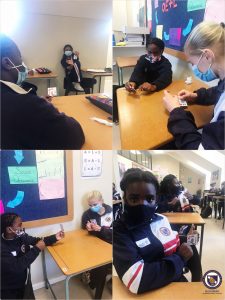
The Shine and Strength personal development programmes aim to equip participants with the knowledge and skills needed to develop greater self-awareness and personal growth. These programmes have been endorsed by the Institute of Group Leaders (IGL). In 2015, the Shine programme achieved the Institute of Group Leaders (IGL) Gold Endorsed Programme criteria.
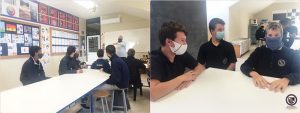
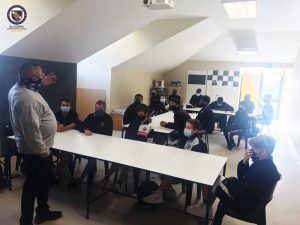
The target audience is girls and boys aged 11 – 17 years. We have launched this within our High School for Year 7 and 8 this term and students will participate in Shine for girls and Strength for boys respectively.
The programme is broken down into 3 units, with each focusing on achieving specific objectives. The first unit, Worth/Significance focuses on enhancing self-esteem; the second, Strength/Resilience aims to increase emotional intelligence; and lastly, Purpose/Courage encourages participants to dream and set goals for the future.
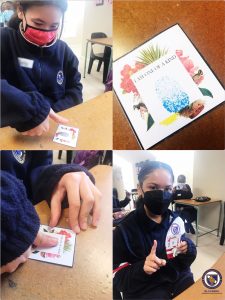
Group activities and discussions are used to help participants think critically, solve problems, and address problems of delinquency. More specifically, the activities aim to assist individuals in changing unhealthy or unhelpful thoughts and behaviours into healthy, helpful ones. The programme covers relevant topics such as self-worth, emotional wellbeing, healthy relationships, and personal dreams.
Shine and Strength is supported by empirical evidence through doctoral research with findings revealing that graduates of the programme are likely to make positive changes in their own lives. The key findings showed that self-esteem, emotional intelligence, purpose, and mobilisation significantly increased in participants after completing the programme. Examples include Shine graduates applying for jobs, enrolling in training or university, starting their own business, and reporting enhanced social connections.
Melinda Twycross
High School Teacher


Read More
Yes, Year 9 students are allowed to focus on Photography for their IGCSE Art & Design course and it is not too late to start.
Do you love taking photographs and playing around with the images?
IGCSE Photography is for creative students who love photography and image manipulation. The photography coursework requirements are the same as the IGCSE Art.
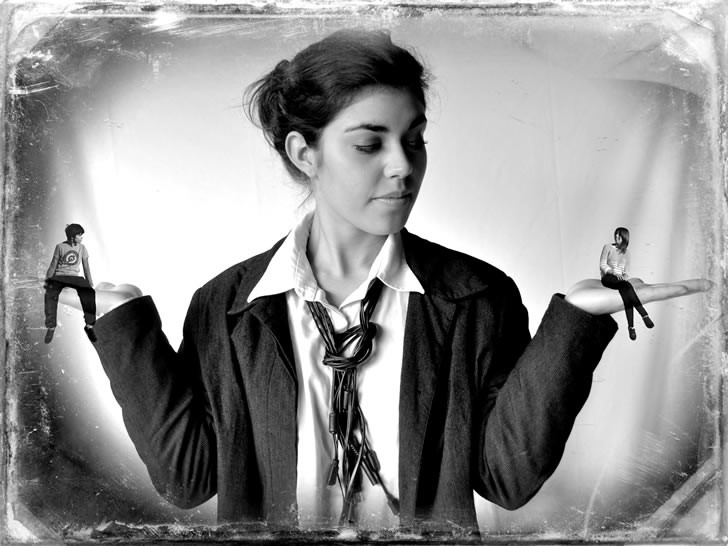
This image was awarded 1st place in the Youth Section at the Huntly Artz Festival in 2012. (Credit: Photography by Melissa Kelsey, ACG Strathallan. NZ. From www.studentartguide.com)

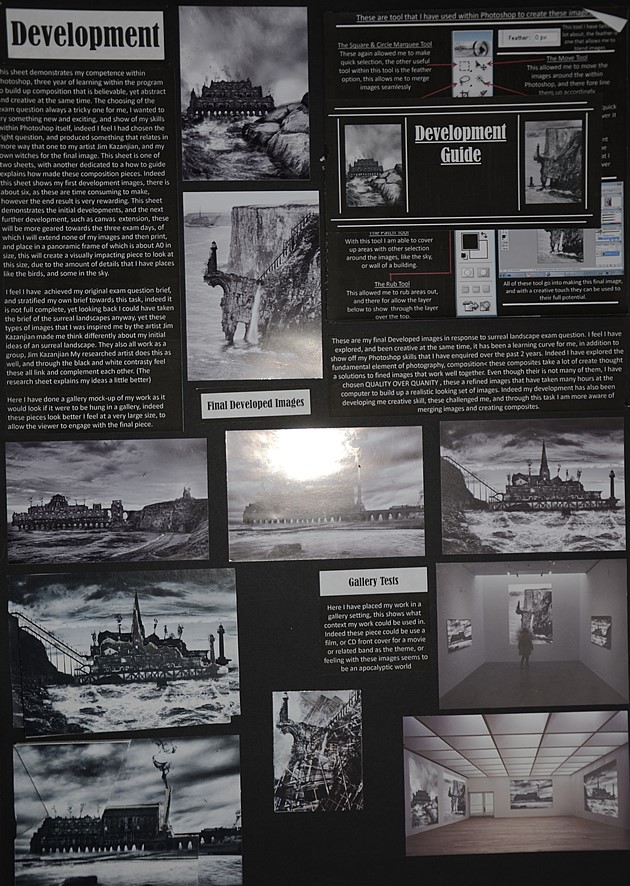


These coursework pages are excellent examples of how to approach a project in a riveting and original way: combining local imagery to create breathtaking fantasy scenes.
Students are required to research photographers and develop their own ideas. They will learn how to experiment with cameras, studio lighting and editing. They are required to have an entry level SLR camera with a standard 18-55 camera and access to a colour printer.
Candidates are taught how to use traditional and new media processes to produce outcomes such as photomontage, printed photography, and digital photography. Their photographic artworks will be in colour and black & white.
The Photography curriculum guides students in responding to the influences and characteristics of the world around them in creating photographic artworks. They explore the traditional and contemporary genres of photography and a range of techniques.
The curriculum includes the study of:
- Shutter speeds
- Aperture
- ISO
- Exposure
- Depth of field
- F-stop
- Digital editing and postproduction with Photoshop
All Art Photography candidates complete two components:
Component 1
This coursework is completed in Year 9 and 10 and counts 50% of their total mark. There are two parts to the coursework:
- a portfolio and
- a final outcome.
Component 2
This component is done in exam sessions in a total of 8 hours. Component 2 is completed in the third term of Year 10 and counts 50% of their total mark.
The four Cambridge assessment objectives count 25% each.
The Assessment Objectives (AOs) are:
- Record, 25%: Record ideas, observations, and insights relevant to intentions as work progresses.
- Explore, 25%: Explore and select appropriate resources, media, materials, techniques, and processes.
- Develop, 25%: Develop ideas through investigation, demonstrating critical understanding.
- Present, 25%: Present a personal and coherent response that realises intentions and demonstrates an understanding of visual language.
Riaan Vosloo
IGCSE, AS and A Level Art and Design Teacher
Read More

Coming Together
As BIS opens its doors for Term 3, I am certain that we are all excited, and perhaps a little nervous.
With the precautions we need to take to keep us all safe from Covid-19, I suspect that students, staff and parents alike are wondering what the school version of the “new normal” is going to be like. We are prepared for the technicalities of the term with masks, social distancing guidelines, hand sanitiser and a plan for hybrid teaching, but school has never just been about the technicalities of getting an education. One of the amazing strengths of our school is that it is a strong community, full of people who come together to learn, helping and supporting each other all the way. It is a community that emphasises the African Philosophy of Ubuntu meaning, “I am because we are.”
I see this sense of community everywhere – in the learners who asked me in my first Google Meet session if I could show them the classroom, in the teacher who turned off a projector so her diabetic colleague wouldn’t have to touch the button, in the students who are greeting each other so enthusiastically and so carefully, who are eager to share with their classmates after their holidays, in the parent who checked that I was keeping warm before asking me about the new term, in the teacher who told me her plan for how she is going to make sure that each child in her class feels welcome and loved as they begin to Term 3.
So, beyond our new regulations and systems, beyond our masks and hand sanitiser, my challenge to the students, staff and parents of BIS is this:
We are living in a time of uncertainty, of unfamiliar rules, and unintuitive distance from each other. Let’s make sure that these challenges bring us together instead of driving us apart. Let’s build the “new normal” out of little kindnesses and big hearts, and support each other as we do so.
Let’s do this, BIS!
Hannah Kirkaldy
Year 5 Teacher

Lockdown Learning
What Shakespeare can teach us about surviving online learning.
What do we English teachers do when times are tough? We look to the Bard of course! Who better to guide us through the online educational space than a writer who has been dead for over 400 years! Now before you scoff “nonsense” over the rim of your coffee mug and scroll to the next page, let’s consider this in a little more depth. The transition to online learning has been challenging for students and teachers alike and we have all been plagued by fears and doubts. First Language English is a subject which you may consider one of the easier subjects to study online and perhaps you have a point. I can email you a poem- you can read it- you can write me an essay about it. Bob’s your uncle, done and dusted. Bring on the next one… Well, not quite.
Why does an author write a book? Obviously they want people to read it, but more than that, they want people to talk about it; it’s the hushed conversation in smoky cafes, the heated discussions over a plate of Thai chicken niblets at an annual Book Club meeting and the dog-eared, coffee stained pages of a favourite book passed from parent to child. Literature provokes dialogue and debate and as I always say to my students “It’s okay to hate the story you’ve just read, but you must be able to tell me why”. Stories, poems, plays- they are meant to be read and shared and isn’t it a truism that it is just as satisfying to discuss something you love as something you hate?
This is why I want to be back in my classroom! Not just for my view of the mountain, but for the interaction; the back and forth across the classroom, the heated opinions and different perspectives which mingle and lap the edges of the room like a gentle wave on a summer’s day.
Simply put, it’s a lot more difficult to discuss a work of literature isolated from each other as we currently are. You can read the play yourself, sure, but where’s the fun in that? A play isn’t meant to be performed by one person, now is it? My belabored point is that teaching First Language English online is a challenge and no Zoom meeting or Google Hangout Meet can replicate the wonderful disorder of a good class discussion.
Back to my original point. So, what do we do when we feel the pressure, the stalking fear and self-doubt that comes with being chucked in the deep end of the pool and having to paddle like a crazed duck to stay afloat? To whom do we turn when the challenges of online learning become all too real? Why, to Shakespeare of course! As usual, our dear Bard has a few life lessons up his sleeve to help us cope.
- “Our doubts are traitors, and make us lose the good we oft might win, by fearing to attempt.” We have all suffered the pangs of fear and self-doubt in navigating online learning and adapting to different methods of teaching. We should not doubt our abilities, for nothing ventured is nothing gained, and I am fairly sure our students are prey to the very same emotions which trouble us. We are capable of a lot more than we think- from teachers, to students and parents and self-doubt is the enemy of success.
- “Give every man thy ear, but few thy voice.” Learn to listen. Perhaps the most valuable exercise I have done during online learning is to have my students to talk to me, rather than I to them. “Tell me the truth”, I say to them. “How is it really going?” I have spent many minutes at the beginning of online sessions just listening… listening to the complaints, the fears, the excuses and you know what? I really have learnt a lot. I am learning what is working and what isn’t. Online learning is a collaborative process and if both sides are honest about their expectations and progress, then the game is half won.
- “Better three hours too soon than a minute too late.” Don’t be late. Shall we leave it at that and move on?
- “Pleasure and action make the hours seem short.” Keep busy and keep your mind active. I always imagined myself as the perfect lounge lizard, but to be honest, if I wasn’t working, I would’ve gone mad on Day 3 (Day 4 if Netflix released Outlander season 4). It’s important to keep ourselves busy and I don’t just mean with hours of admin and slog in front of the computer; I mean busy with activities which stimulate the mind. This goes for our students as well- research tasks which require them to think and engage with material. I enjoy setting argumentative and discursive topics for my students; topics which require them to have a good think and do a bit of research to support their opinions. They had to write a magazine article on the topic of cosmetic surgery and boy, the opinions flooded the room like bees after Pooh’s spilt honey pot. But they were engaged, I can promise you that.
- “The miserable have no other medicine, but only hope.” I’m sure we’ve all felt the cold tickling of misery at least once during lockdown but on the bright side, as the saying goes, there’s no way but up from here. Shakespeare reminds us that the doldrums only increase our focus on the horizon and the calm flats which lie ahead. Let us remain positive and instill this positivity in the students. Complaining may be temporarily cathartic but does little good. We are learning new skills, finding hidden talents and drawing on resources we never knew we had. It’s an adventure and like all good tales, it starts out filled with peril and looming disaster, but by the end we’re all safe at home with a nice cup of tea. Or more aptly for our context, by the end we’re all in each other’s homes sharing a nice pot of tea.
Take the Bard’s words to heart. Enjoy a good book and don’t try and argue with me that Shakespeare is no longer relevant! Stay safe everyone.
Alice Pryor
High School English Language and Literature Teacher

An amazing article compiled by Catherine Fortuin (Year 8) while using the e-learning systems from Blouberg International School.