

The Importance Of Drawing For Children
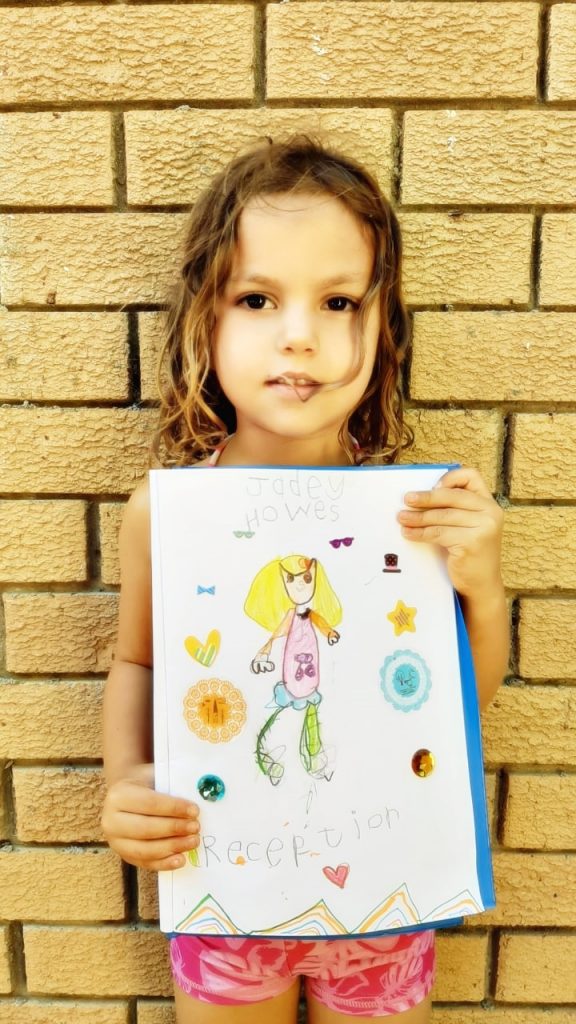
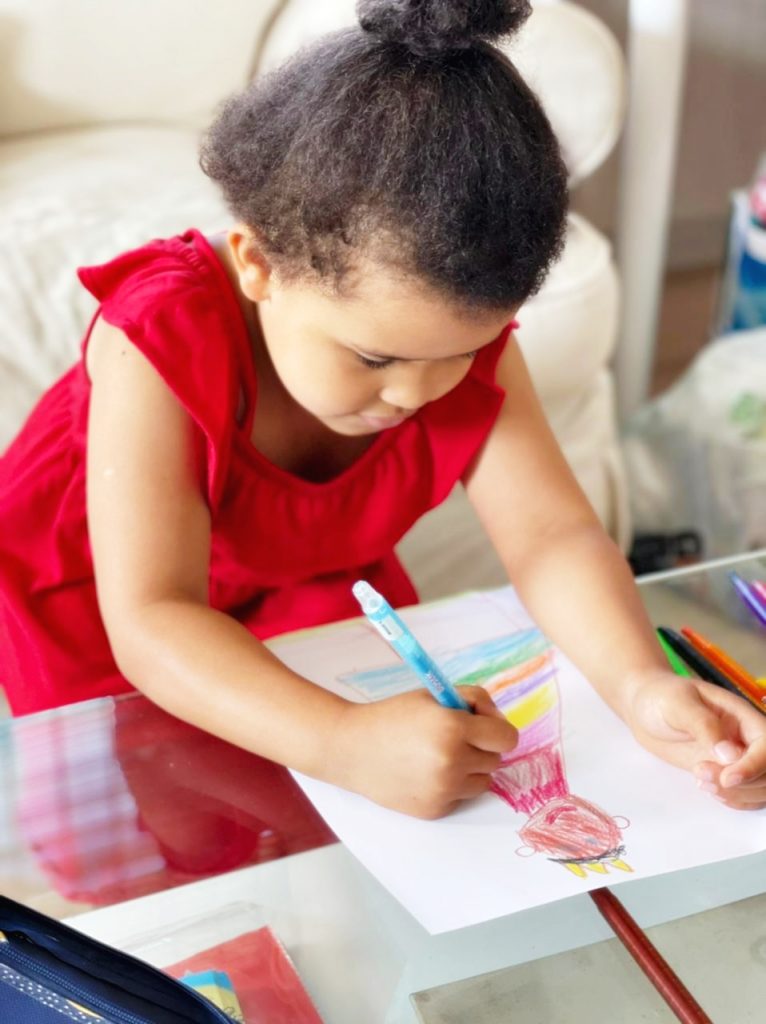
Drawing is one of a child’s favourite activities, but it has so much more value for them than just making pretty pictures. Drawing helps children develop in so many different ways. Through drawing children learn and practice many foundational skills needed at school. It is a wonderful way for children to make sense of the world around them and boosts confidence and emotional intelligence. Here are just a few of the skills that are developed through drawing.
Fine Motor and Visual Skills
Drawing from a young age helps strengthen and fine-tune your child’s fine motor skills. Drawing helps develop hand eye co-ordination. When planning out their pictures children also learn about spatial awareness, size, distance as well as depth perception.
Problem Solving
When drawing, your child is able to express themselves creatively. It provides them the opportunity to ask and solve many questions such as which colour to use or where to place an object. They are also able to develop their picture through the creative process and can change and improve it as they go. Through making mistakes, they learn how to do things differently or how to include their mistake by changing it into something else to enhance their picture. Drawing also develops concentration and helps children to focus on working towards achieving a goal.
Imagination
Drawing helps your child awaken their creativity and imagination. It gives them the opportunity to express their creative thoughts on paper. It is also an important way of expressing and processing their feelings and emotions.
Confidence
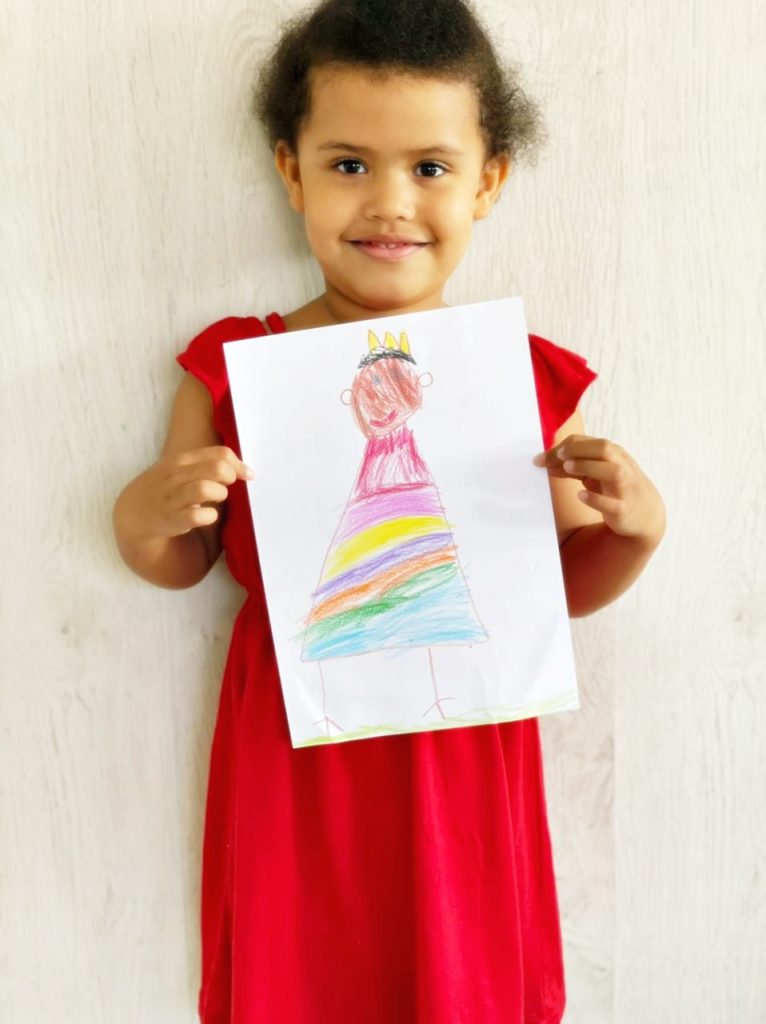
As a parent you will have experienced the joy a child has sharing their finished pictures or artwork with others. Through drawing children make pictures that represent their thoughts, imagination and experiences which give them an immense sense of achievement. Children’s pictures are also a record of events that have happened. As they share these experiences with their loved ones, it is also an opportunity for them to bond and develop vocabulary and language skills. As their communication skills progress, it gives children more freedom and confidence during social interaction with others. Drawing also develops important pre-writing and pre-reading skills that translates to greater confidence when learning new skills at school.
As a parent it is important to encourage drawing. Here are some fun ideas to try at home:
- Draw with chalk on paving
- Think of a topic to draw about like a recent birthday party
- Ask your child to draw a picture, but include an object with a specific colour or letter sound
- Draw on black paper using pastels or chalk
- Read your child a story and ask them to draw their favourite part or a new ending to the story
- Draw a background to play with other toys on afterwards, like a home for Lego people, a farm for plastic animals or a town for cars (this is good for visual perspectives and spatial awareness)
- Draw on different surfaces like a chalk board or on the floor
- Trace around your child’s body and allow them to draw in the details of their faces, body parts and clothing
Most children draw something new every day and it is often the most precious gift they have to offer their loved ones. Wishing you many happy memories of drawing fun with your child at home.
Bronwen Nuthall
Reception Year Teacher


Year 2 Art Fun
“Art is a place for children to trust their ideas themselves, and to explore what is possible.” – Maryann F. Kohl
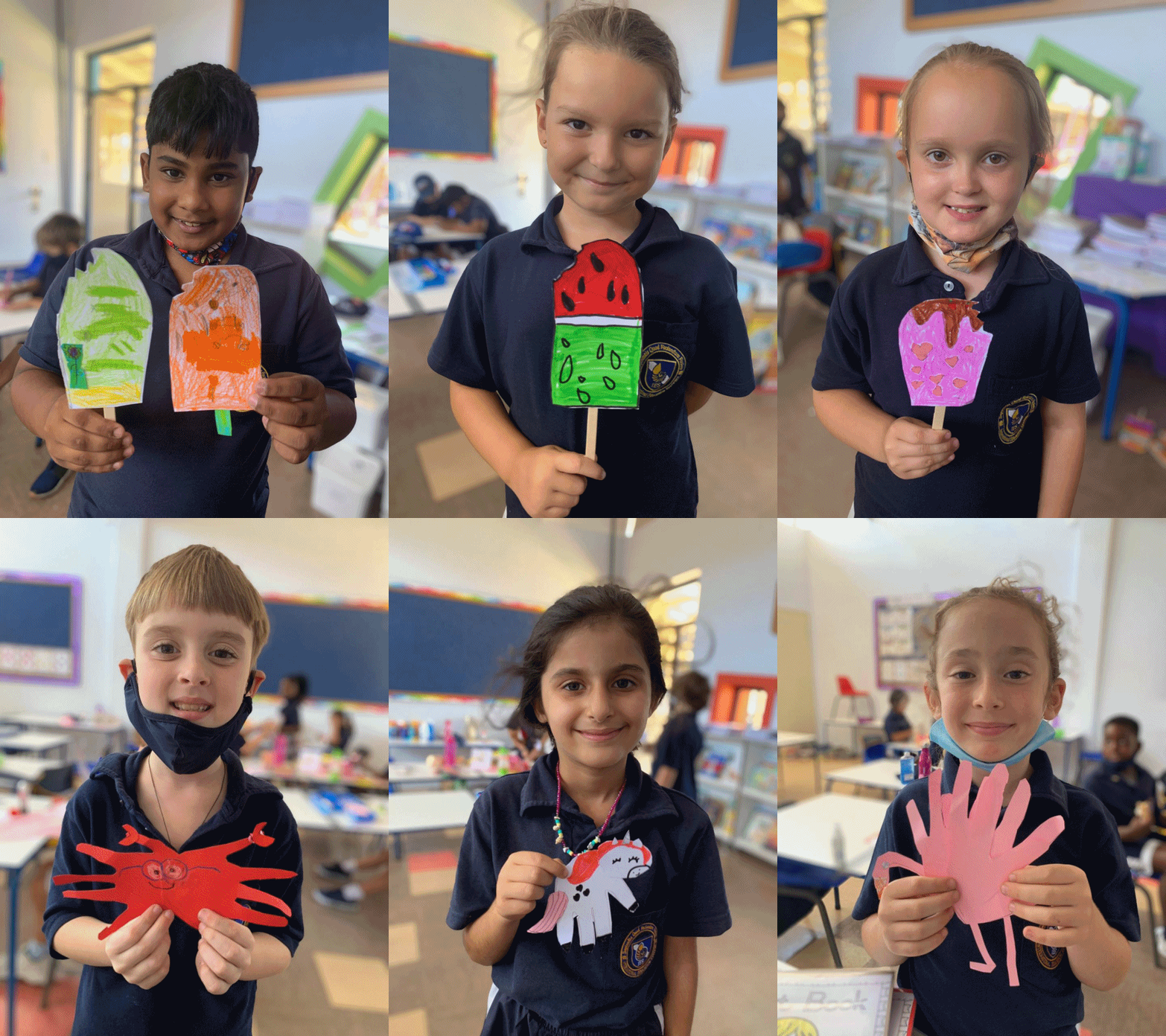
In the last couple of weeks, our Year 2’s have been having great fun during Art class! We explored and experimented with various mediums to make Lollipop and Animal Hand Art creations.
Being such wonderful hot summer weather lately, we found the Lollipop art to be particularly fitting. We thought about what our favourite lollipops flavours were and created them using cardboard, colouring things and some ice-cream sticks. The various flavours that the students selected look super yummy! From caramel chocolate to strawberry and even watermelon. How fun!
We also experimented with the idea of creating some cool animals using our hands as body cutouts. We had some really creative ideas like bunny rabbits, unicorns and even flamingos. The Year 2’s love getting creative and look forward to Art time every week!
Siobhan Hendry
Year 2 Teacher
(*Masks were removed for photograph purposes only.)

New Techniques In Art
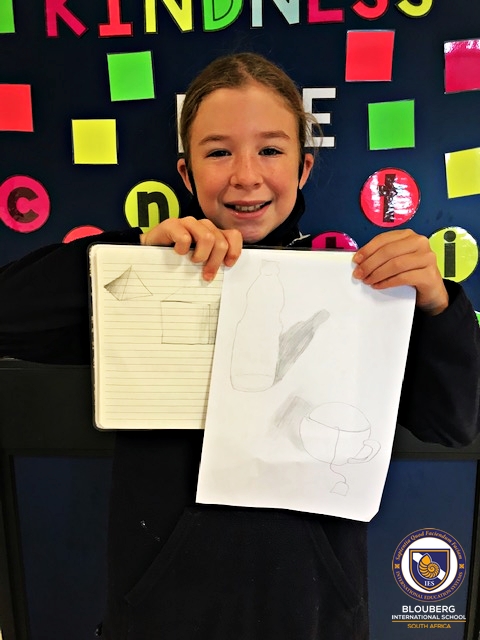
The past two weeks the Year 6 students have been learning how to shade and add depth to their Art. They started off creating their own value scales. Value scales consist of values ranging from white to black with several shades of gray between. These shades of gray help to create the illusion of depth and tone. Once completing their very own value scales, the Year 6’s went on to shade 3D shapes and add depth to their pictures using cross hatching, smooth shading and stippling.
Finally, they had to find a real life object, place it in front of them and draw what they saw, including all the shadows that fell on the object. The Year 6’s really impressed us with their art skills and followed the different techniques perfectly.
We look forward to seeing what they come up with in future art pieces.
Brittney Hakime
Year 6 Teacher



Year 3 Are Writing Japanese Poetry!
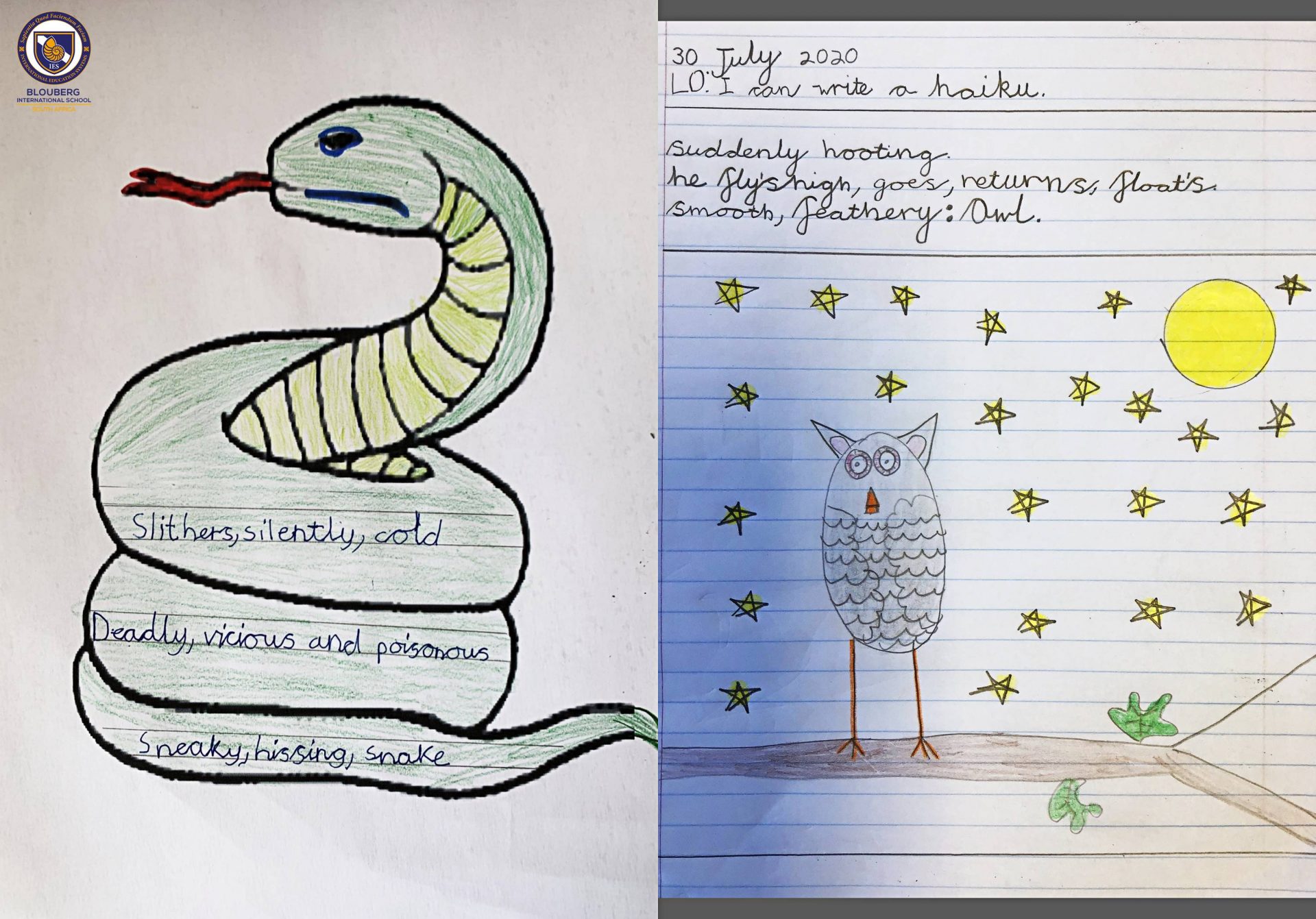
This term, Year 3 have completed an English unit called Poems from around the world. In this unit, the students read and performed different poems from around the world. They investigated how poems are linked to places and explored the words and sounds in the poems. At the end of the unit, they needed to copy the style of a poem and write a poem of their own.
We decided to focus on Japanese poetry and the students wrote their very own Haiku’s. A Haiku is a Japanese poem with a total of just 17 syllables and three lines… but that’s not all. Line 1 must have 5 syllables, line 2 must have 7 syllables and line 3, 5 syllables again.
Year 3 took on the task with great zest and promptly chose an animal each to write about. Next they created a word bank which had to include noun phrases and adjectives. Once the creative juices started flowing, they set about arranging their word bank into a Haiku. The results were amazing!
Well done, Year 3! We’ll make poets of you yet!
Mandy Goch
Year 3 Teacher
Padlet Has Me Thinking…
This term, the Year 6’s started off their English unit with poetry.
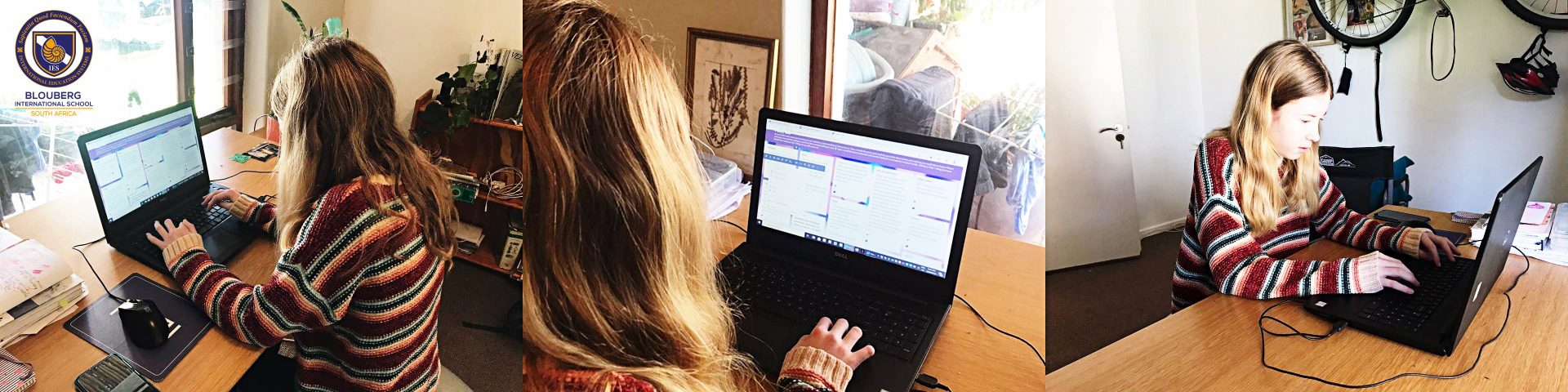
At the beginning of each term, I ask the students to brainstorm what they notice and wonder about a topic. As we are still online teaching, I created a Padlet Poetry Wall for the year group. Their first instruction was to post what they knew about the topic, what they want to know and then lastly, wait for their peers to post their responses. They needed to comment on at least 3 of their peer’s posts and provide them with constructive feedback.
The Year 6’s took this Padlet Poetry Wonder Wall and made it their own. Before I knew it quotes, pictures and even some of the student’s own poems were posted on the wall. After week 1 was completed, I had the students reflect on their week of learning and post one thing they had learned and one thing they were still unsure of.
The creativity and uniqueness of the Year 6 students never fails to astound me, and I am very impressed by how quickly they adapt to a new online tool. As we progress with our Poetry Unit, we will keep using our Wonder Wall to showcase our learning journey.
Katherine Nel
Year 6 Teacher
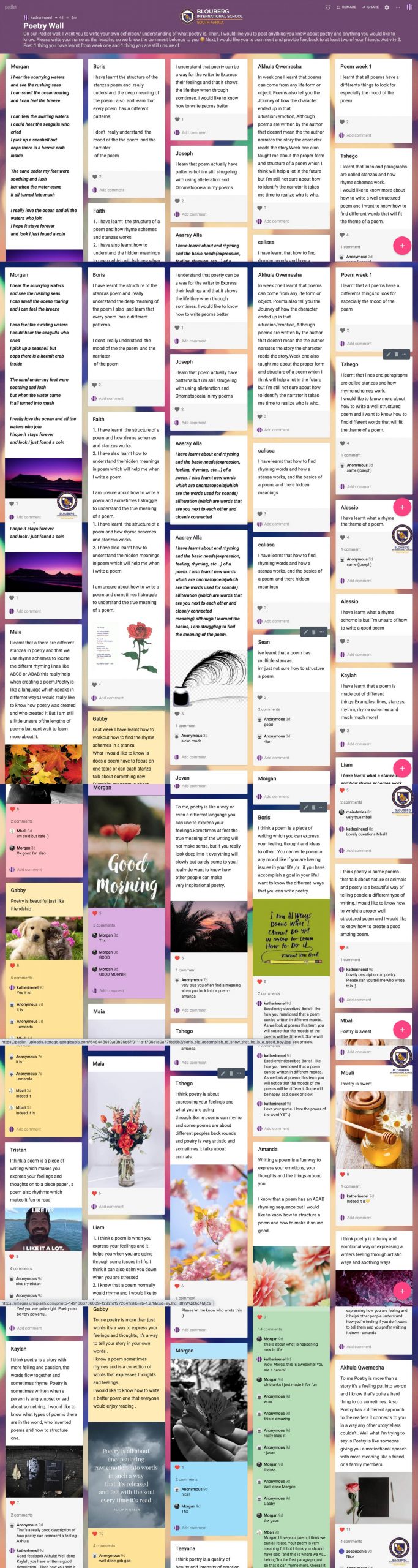
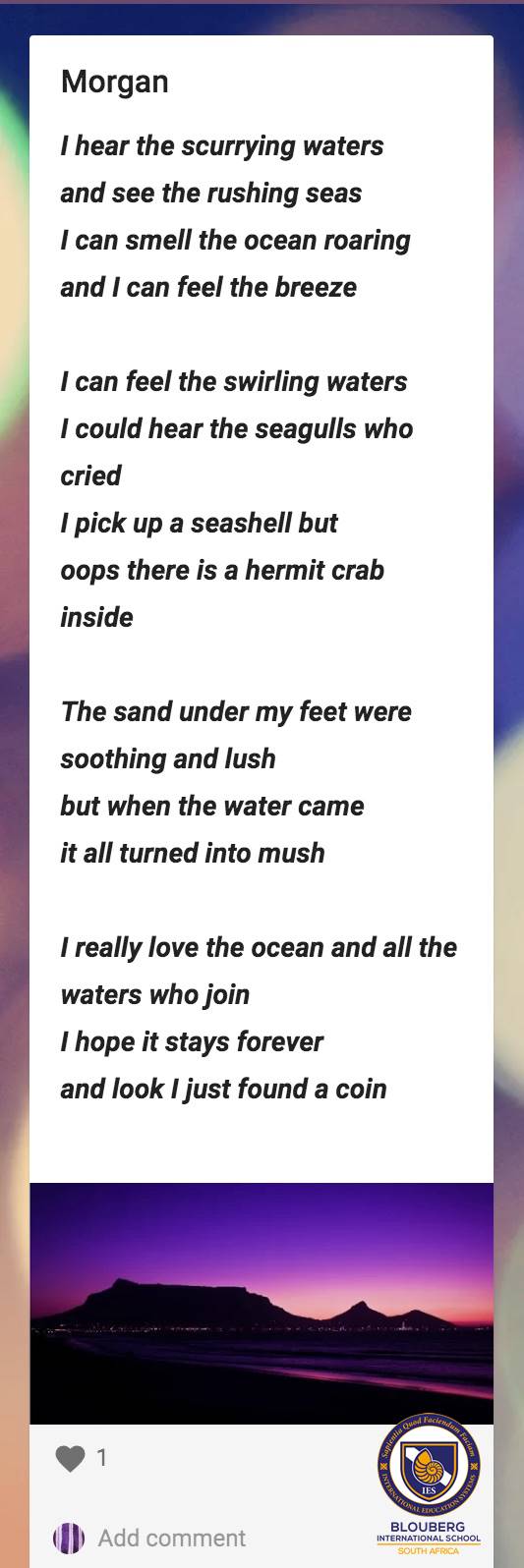
PHOTO: Morgan Glanville created her own poem, using the inspiration of water that we are currently exploring as a theme in our English Unit.

Passionate, Playful Poetry!
The Year 4’s spent the past few weeks learning about a wonderful new topic in English: Poetry.
They looked at some examples of poems, answered some poetry comprehensions and discussed different poetic features such as alliteration, similes, onomatopoeia, descriptive words and rhyme. Last week they got the chance to apply their knowledge by writing their own poems. They wrote some marvelous acrostic poems about fireworks and also wrote some extremely creative poems about their favourite colour.
Take a look at some of our amazing poems – we hope you enjoy reading the poems as much as we enjoyed writing it!
“Poetry is when an emotion has found its thought and the thought has found words.” – Robert Frost
Year 4 Teacher


Learning About Reptiles


Year 3 Are Writing Poetry!
Water animal
You swim
In a pond
You sit still and catch flies
With your tongue
Mandy Goch
Year 3 Teacher


Living Life As An Artistic Being
Teenagers are at high risk for depression and anxiety. They know what we want to hear, and that is what they often give us. Teens know the buzzwords, and talking about their emotions can be wrongly impacted by their preconceived ideas about what they think we want to hear.
Teens who are good with words can use them as a disguise rather than a method of self-discovery. Furthermore, for other adolescents, discussing feelings may be frightening or uncomfortable. The creative process does not allow for that kind of manipulation to happen. Creative arts get teens out of their heads and into their bodies. The teen brain is wired for creativity. Consequently, creative expression is a natural fit to support thriving in adolescents. Creativity is part of building one’s identity. In addition, it supports brain development. Being creative even reduces anxiety. It makes us happier. Creativity and teen mental health go hand in hand.
The act of doing something creative employs various parts of the brain. That is why being creative enhances connectivity in the brain. Connectivity refers to the relationships between different areas of the brain. A study published in 2014 suggests that people with artistic training have improved connectivity between the two hemispheres of their brains. Creative arts, including music and visual art go beyond the rational mind, tapping into our most authentic self. Adolescents, in particular, are attracted to making symbols and graphic depictions. Therefore, they are more attracted to using art as language than to verbal questioning.”
Creativity help teens develop what is known as divergent thinking. Divergent thinking is a process of generating creative ideas by exploring many possible solutions. The creative experience produces a natural “high”. Simply viewing art and listening to music stimulates the brain to release dopamine, the “pleasure chemical”. This is the same chemical that is triggered when we fall in love.
Actively making art or music has a similar effect. In addition, it induces a state of flow, a term coined by psychologist Mihaly Csikszentmihalyi. This flow describes the experience of being completely absorbed in an activity. It means participating in a reality that is different from that of everyday life. As a result, experiences of flow are the key to sustainable happiness. Teenagers ascribe ‘happiness’ to their moods when they are able to engage in flow activities that stretch their skills and makes them feel alive and proud. Creativity, in particular, produces flow. Moreover, unplugged creative activities for teenagers offer both flow and a mini digital detox.
Creative arts prepares teens to be creative in other areas of life. It comes into play as teens learn new ways of relating to their past, present and new approaches to dealing with pain, trauma, or difficult relationships.
Riaan Vosloo
High School Art and Design Teacher
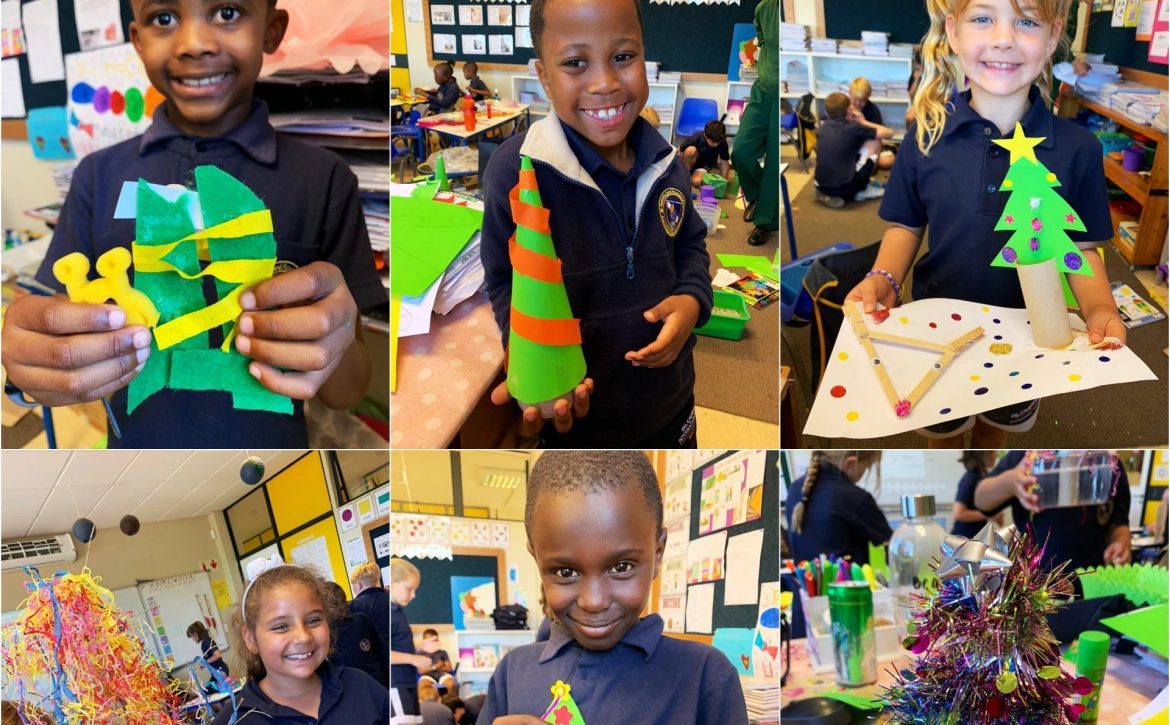
Year 2 Design & Technology: Festive Trees
“Design and Technology in primary school develops children’s skills and knowledge in design, structures, mechanisms, electrical control and a range of materials, including food. It encourages children’s creativity and encourages them to think about important issues.” https://www.data.org.uk/for-education/primary/
Last week, out Year 2’s got to design and create their own Festive Trees. First, we began the design process by drawing our trees the way we pictured them in our heads. Then, we labelled each part of our tree depicting exactly what materials we would like to make it out of. Colouring in was the next part of the process. We had to display our tree in the colours we wished to build and present it.
Once the design part of the process is done, the constructing stage begins. Each child was asked to bring in the various materials that they chose to use to build their tree. Many different type of materials were used. We had egg trays, cardboard boxes, coloured paper, festive decorations and various other exciting creative materials.
We had so much fun! The most beautiful part is that every single one of them is different and so lovely in its own way.
Siobhan Hendry
Year 2 Teacher
