

Fun Day
As the end of term has arrived, it was with great excitement that the little ones came to school dressed in Civvies ready for their Fun day.
The teachers planned various activities, mostly making a big mess, because making a mess is always the most fun. The little ones painted the most beautiful pictures, dancing, playing outside and generally having lots of adventures.
We would like to thank our parents for everything they do to support their children’s learning journey. We cannot do this without them.
Wishing everyone a fantastic holiday!
Monique Meyer
Foundation Stage Coordinator


Read More
From The German Classroom
“What’s red and black and brings good luck?”
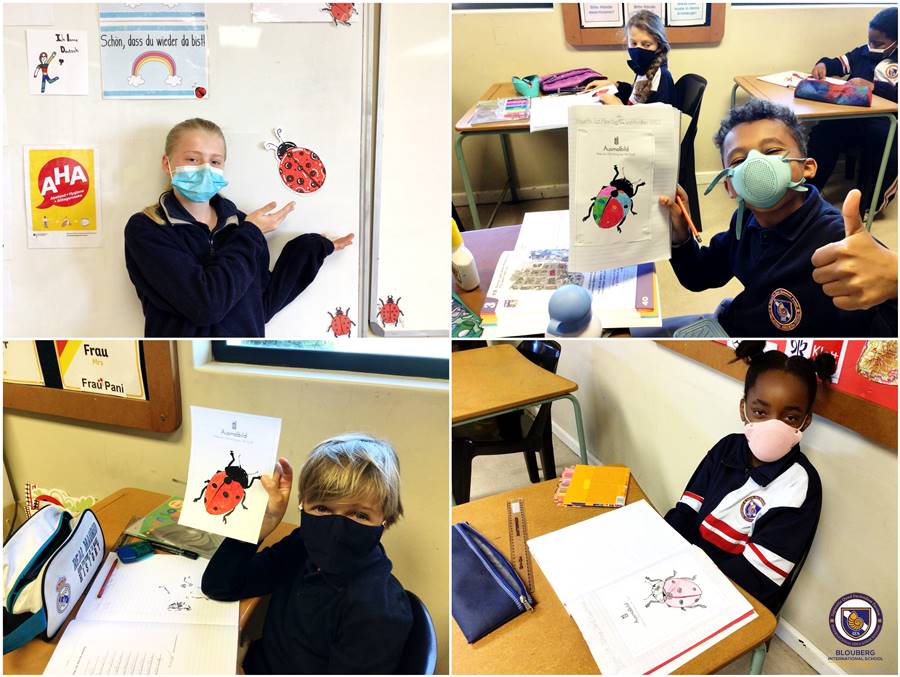
If you ask anyone in Germany the above question the answer would be, the Marienkäfer! This is directly translated as the ‘Marie bugs’, also called Ladybug, Lady beetle or Ladybird as we know it. In many cultures they bring good luck and in Germany they are a popular good luck charm also called a Glückskäfer the ‘lucky bugs’. The true Marienkäfer is red and has seven spots. Red symbolizes love, while seven is a lucky number for some.
This is all attributed to the fact that they were traditionally seen as a gift to farmers because one Marienkäfer can eat up to 5,000 aphids and other common garden pests, in a year. A legend has it that the farmers in Europe prayed to Mother Mary when pests were destroying their crops. At this time of crisis, ladybirds came as their rescue, destroying the pests. Since then, the farmers named them “the beetle of our lady” and love them because they eat aphids and other plant-eating pests and save their crops every year.
The German people not only see the Marienkäfer as good luck, but also as a sign from nature that the summer has at last arrived in Germany usually after a very long winter. During summer, when they are most active, these incredible insects can be seen fluttering around or walking on the leaves of plants to the delight of the young and old. A group of Marienkäfer is called a loveliness, which so aptly describes them.
But as soon as it turns cold and autumn arrives in Germany, the Marienkäfer looks for a warm, secluded place to hibernate, such as in barks of trees, in logs, under rocks or even inside houses, usually with other ladybirds in groups of up to 1000. They then only come out the next summer.
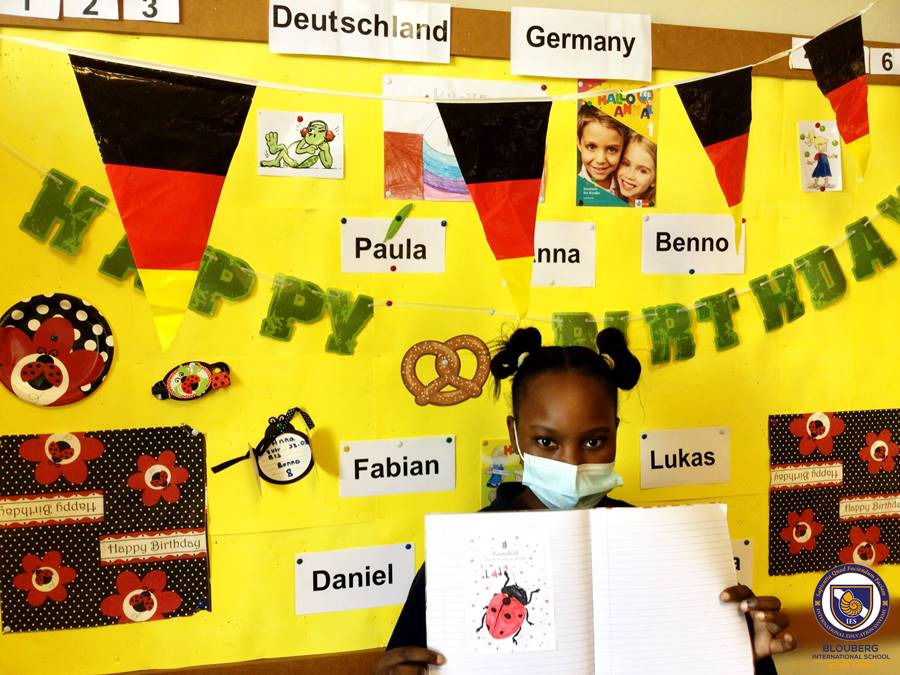
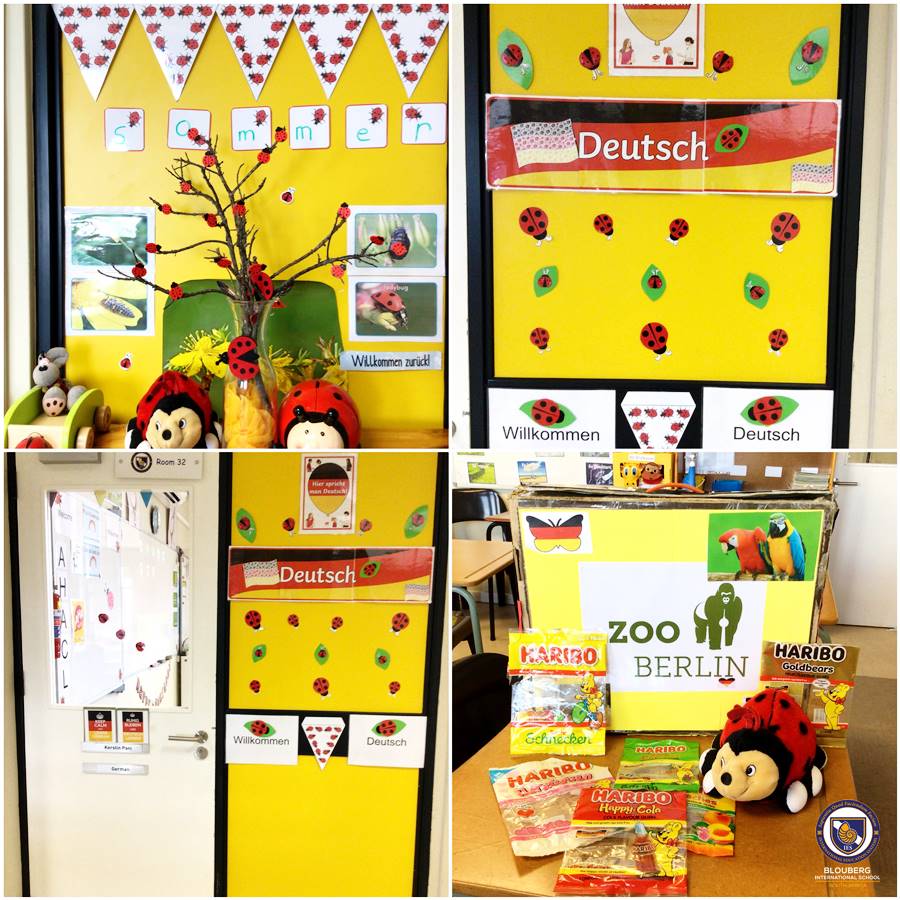
The German classroom received a special visitor from Germany this term, all the way from the Berlin Zoo arriving in the animal transport suitcase that travels between Berlin and our classroom at Blouberg International. The students in Year 1 and 2 were especially intrigued at what had arrived and were very excited to meet Marie the Marienkäfer. The animals from the Berlin Zoo also sent us a few packets of Haribo, the special German gummy bears, but we were surprised when we found all the packets empty and really wondered who had eaten them on the way from Berlin.
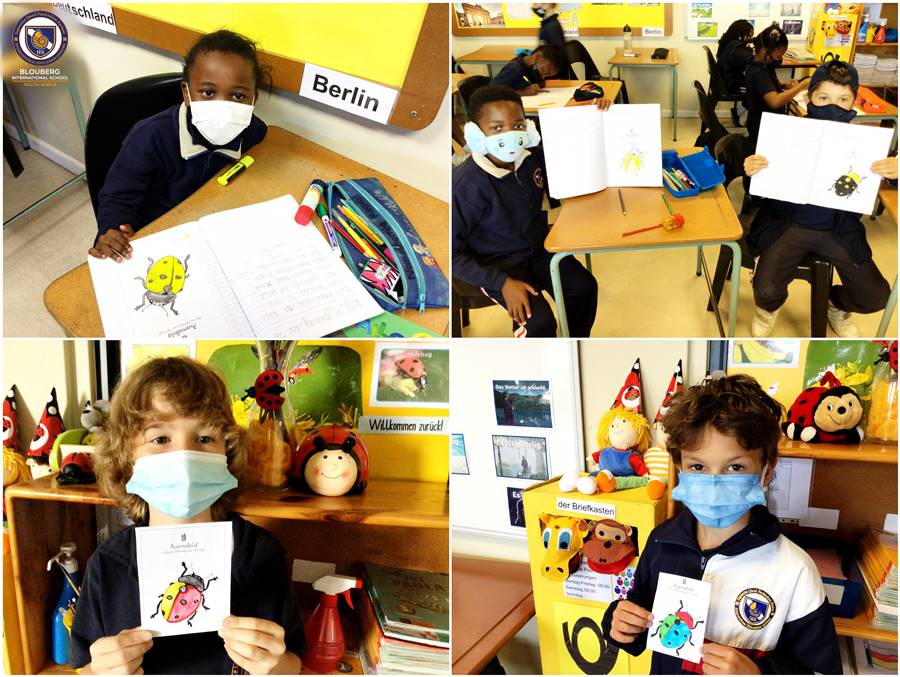
We also discussed the lifecycle of the Marienkäfer and we were fascinated by this little creature. Some students were also inspired to draw pictures of them and we included Marie in our greetings and songs at the beginning of the German lesson.
In Germany, the summer has come to an end and sadly the Marienkäfer are going into hibernation, but they will be back and are eagerly awaited next summer.
A student asked me this week if Marie the Marienkäfer will be returning to Germany and I was happy to let them know that she will be staying in South Africa to enjoy the coming summer months with us in our German classroom.
Have a good spring break.
Frau Kerstin Pani
Primary School German Teacher
Here are some links with more interesting information on the Marienkäfer:
https://www.dw.com/en/gl%C3%BCcksk%C3%A4fer/a-16555043
https://www.animalspot.net/ladybugs
https://www.natgeokids.com/za/discover/animals/insects/ladybird-facts/

From The Spanish Classroom
Some language teachers will say that one of the most important aspects of teaching, especially when the language is not spoken at home or outside of the classroom, is pronunciation. Many times, this can be difficult to apply in the class, because in the process of achieving our final goal of getting our students communicating in Spanish, we don’t want to discourage them. Sometimes we overlook pronunciation errors for the greater good of creating a positive learning environment and giving them the necessary confidence to start speaking the foreign language.
In my opinion, pronunciation can be something to improve on in the later stages of learning a second language or at least not be the focus in their first years. I am more prone to the idea of improving pronunciation in a more natural way, giving them some tips during class when they are learning new vocabulary, rather than during their oral presentations.
At Blouberg International, one my favourite ways of teaching the correct pronunciation is through songs, stories, and role plays.
Songs are the perfect resource for teaching pronunciation, especially when they have great rhythm, related and comprehensible vocabulary, and have repetitive and memorable lyrics.
Cesar, the creator of Rockalingua, explains it this way: “Focuses on creating songs that combine useful vocabulary with functional language structures, rhythm, and ample opportunities to repeat the words heard, using the pronunciation presented in the song.” I completely agree with him. Songs are a great way to practice meaningful listening while you work on pronunciation, but stories are as well.
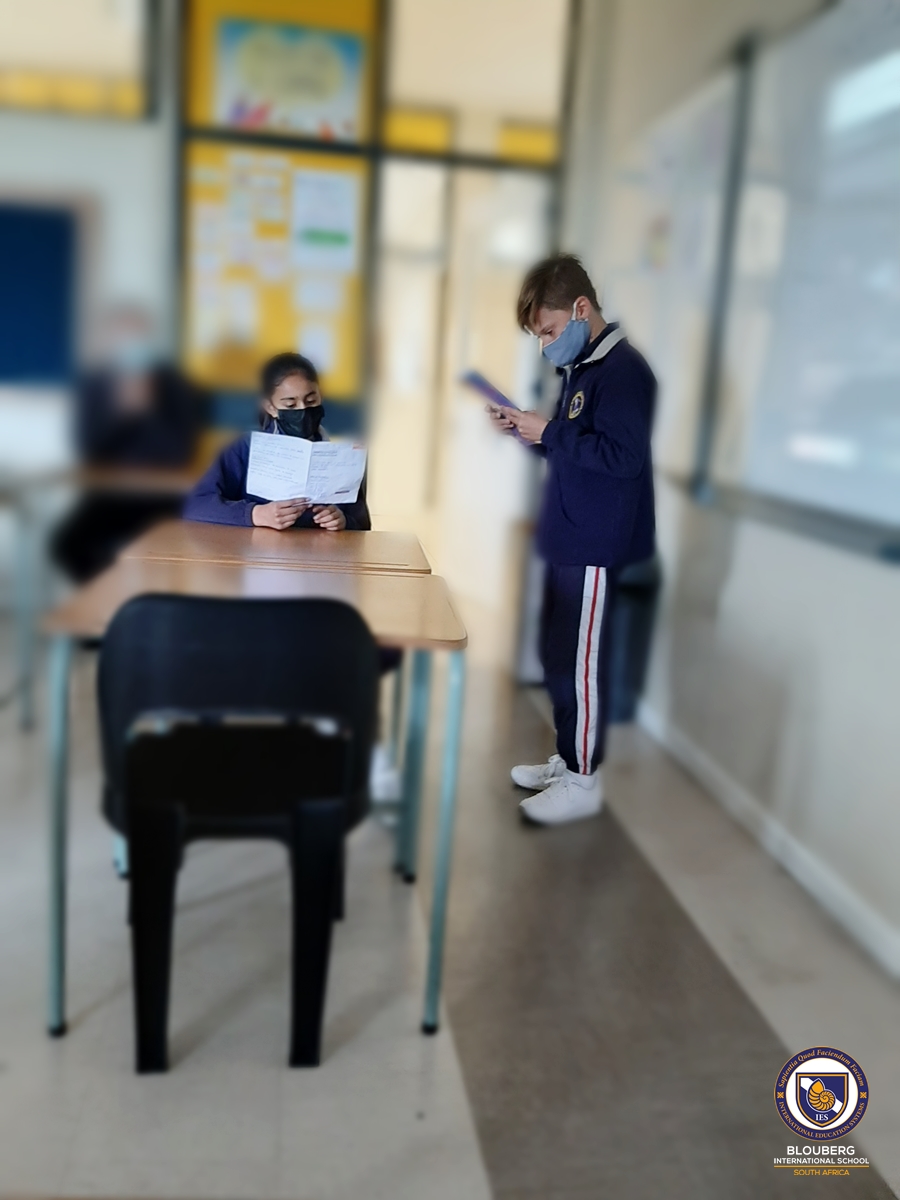
By listening, reading, and creating stories – especially for the Year 5 and 6 students – that they can replicate using their own vocabulary during the role-play lessons, the students absorb more vocabulary in a more relaxed, practical and fun environment.
It is very important to listen to the stories more than once:
- The first time you can focus in identifying vocabulary and expressions that you have learned during the class.
- The second time focus on the content, try to understand the whole story.
- The third time you can focus on the pronunciation.
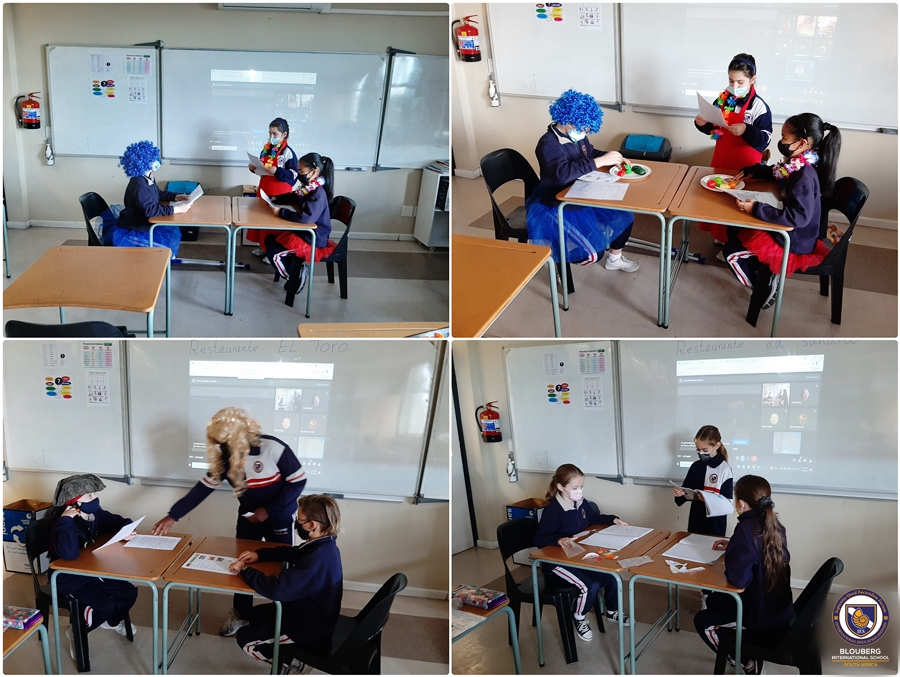
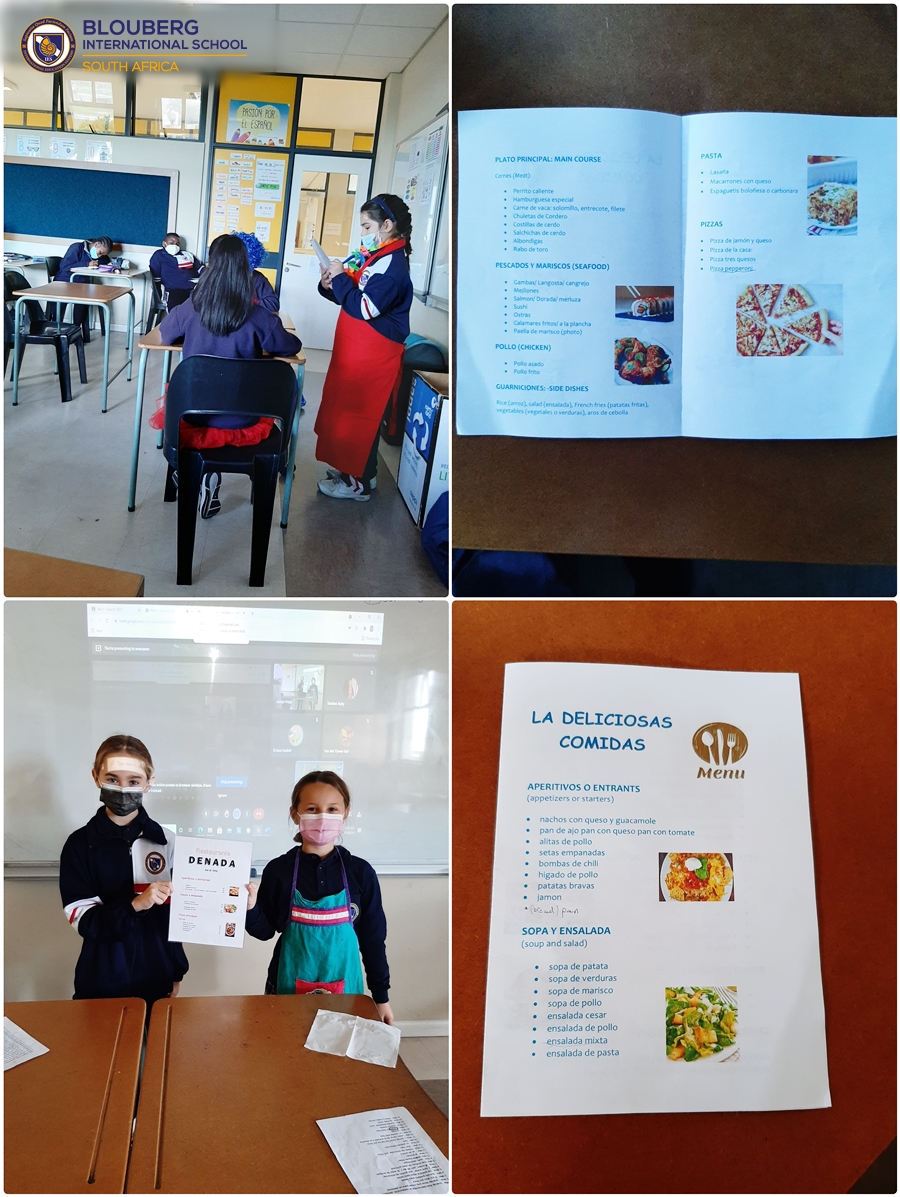
A good example of this is the Term 3 Year 5 project about the restaurant. This can apply to any topic that you wish your students to learn…
– Students learn the vocabulary and expressions related with the food. They also make use of book practice and Rockalingua.
– They create a menu with the food related vocabulary for their role-play.
– Add some relevant grammar to the mixture. “I would like; I prefer; I want or need”.
– Create a story using those expressions and vocabulary for the students to listen and practice during the class with some questions at the end.
– They need to decide the name of the Restaurant and the menu.
– Ask them to create a similar story and present it to the class.
I look forward to seeing my students develop even better pronunciation as the year progresses.
Javier Vidal
Spanish Teacher
Read More
High Frequency Words
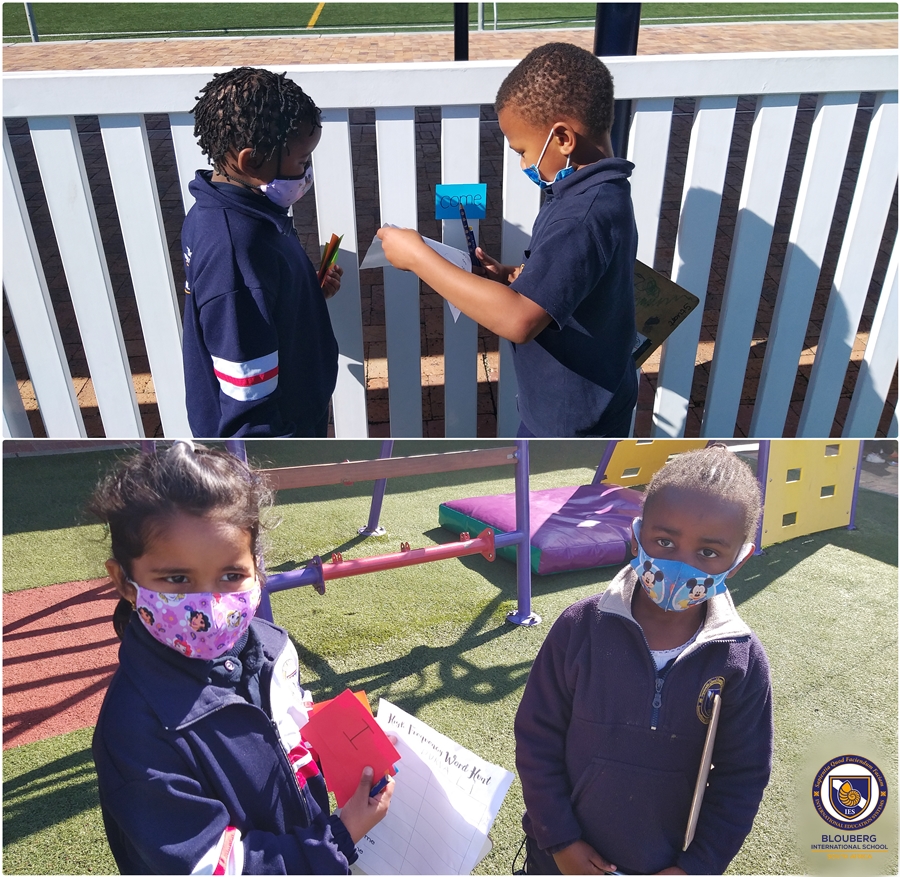
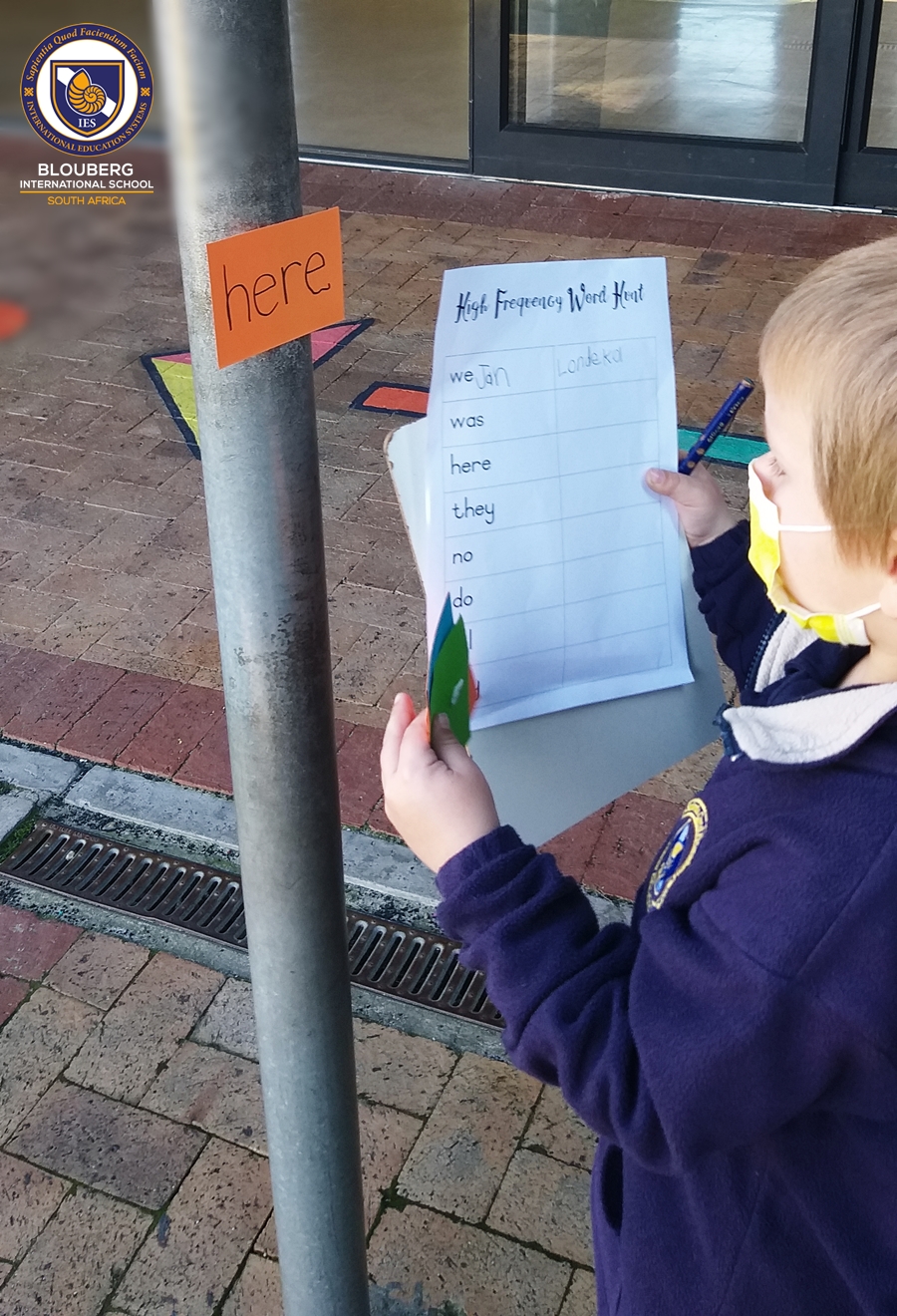
Last week we had a High Frequency Word Hunt. The students had to go and find flashcards of words on the playground according to a list in pairs. They thoroughly enjoyed this activity and excitedly showed the teachers all the words they could find from their lists.
Learning to read is a complex process, which involves many skills. Two of these skills is phonological knowledge and the other is memorising High Frequency Words. Phonological knowledge helps students to decode or sound out words. That is why it is more important to know the phonetic sound of letters rather than the alphabet name, so that words can be spelt out phonetically, like the word c-a-t. Knowledge of High Frequency words is important for those words that cannot be sounded out phonetically, such as the word ‘you’ or ‘the’. These words commonly occur in sentences, hence the term High Frequency Words. That is also why students have greater confidence and fluency when they have been spending time memorising High Frequency Words as part of their reading homework at home.
It’s important that parents try to make learning High Frequency Words fun. Here are some helpful ideas in the links below:
https://www.curiousworld.com/blog/sight-word-games
https://www.weareteachers.com/sight-word-activities/
https://www.themeasuredmom.com/25-low-prep-sight-word-activities/
Bronwen Nuthall
Reception Year Teacher

Read More

Saving Our Planet
In Year 1 we have been learning about, ‘Saving our Planet’ in Global Perspectives.
We also went on a litter walk around the school. My class showed such passion and commitment to cleaning up the litter in and around the school, I am so proud of them all.
I have even had reports from parents informing me that their child picks up litter when they are out walking at the beach.
They have been working very hard and even created their own display for our classroom’s ‘Art and Design’ board, to raise awareness about litter.
Well done Year 1!
Charlotte Cronje
Year 1 Teacher
Read More

Greeting Cards!
Unfortunately, with the arrival of Social Media, the exchange of actual greeting cards seems to have dwindled. It’s far easier to type a message using Facebook or Instagram, than hand selecting, or even making the traditional greeting card the older generation remember so fondly!
The making of greeting cards can be traced back to the Ancient Egyptians and through the middle ages. The invention of the postage stamp in 1840 revolutionised the distribution of these cards, and in 1930, the company Hallmark was established with their sole purpose to create and print greeting cards for many different occasions.
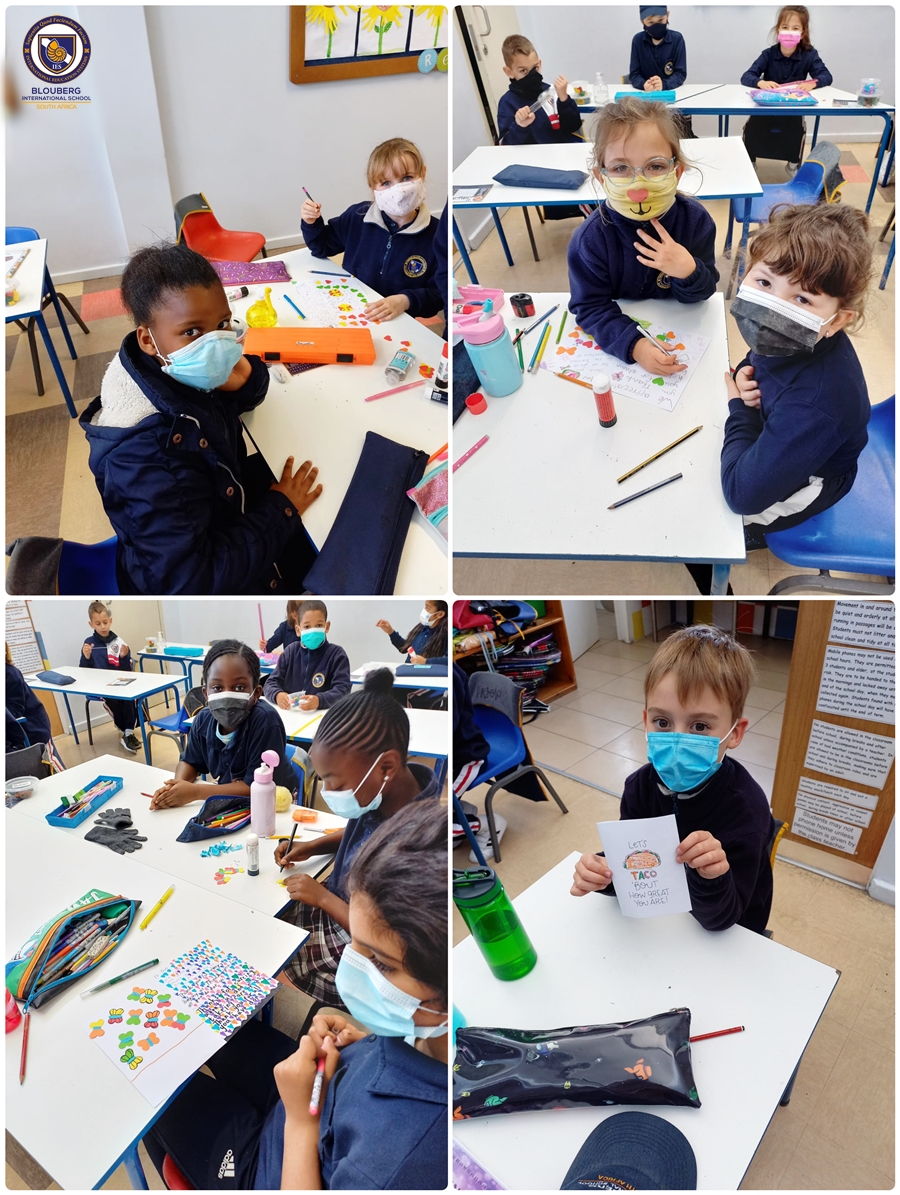
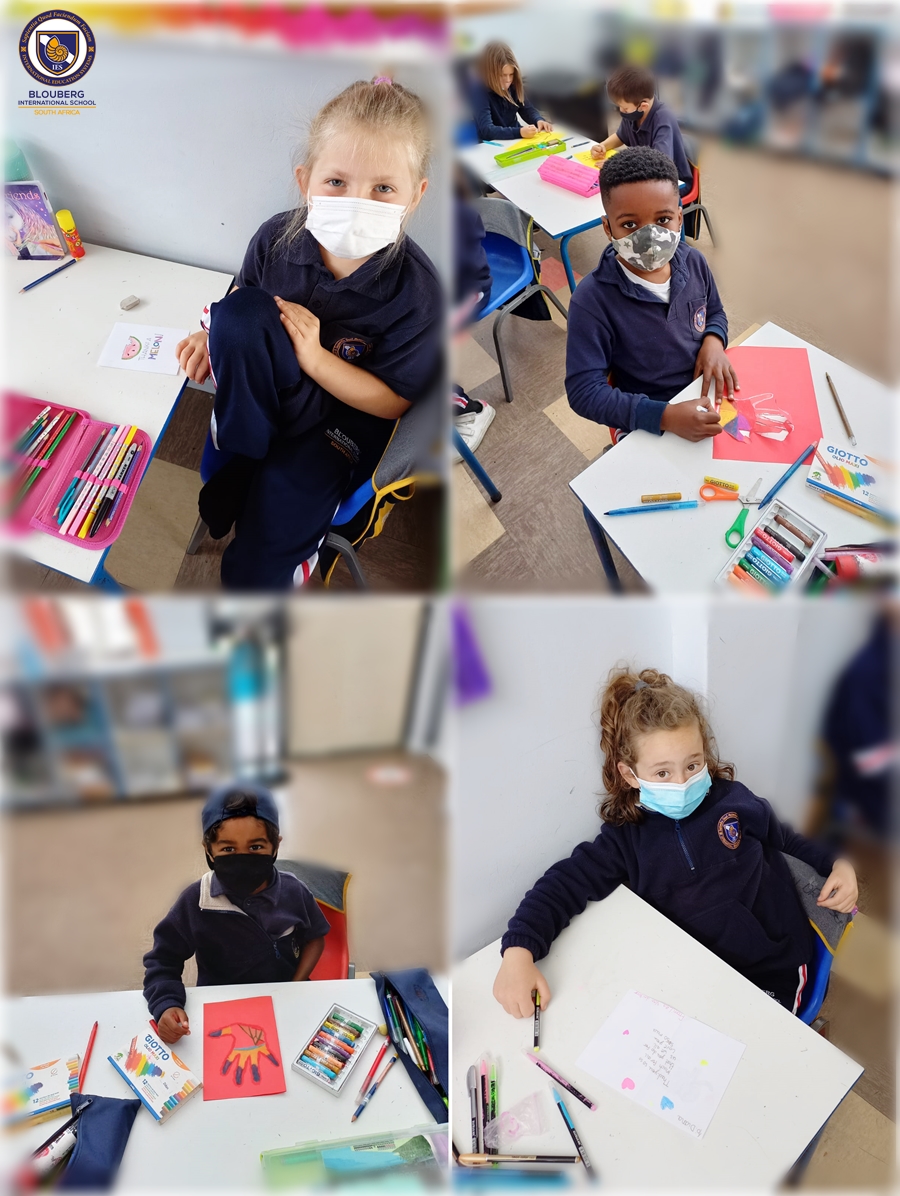
Luckily, children really enjoy making cards. It allows them to explore their creativity. What teacher, parent or friend isn’t delighted to receive a handmade card from a child? Just give them cardboard, colouring crayons, scissors and glue and the results are a work of love.
Kim Coetzer
Year 2 Teacher

Read More

The Importance Of Outside Play
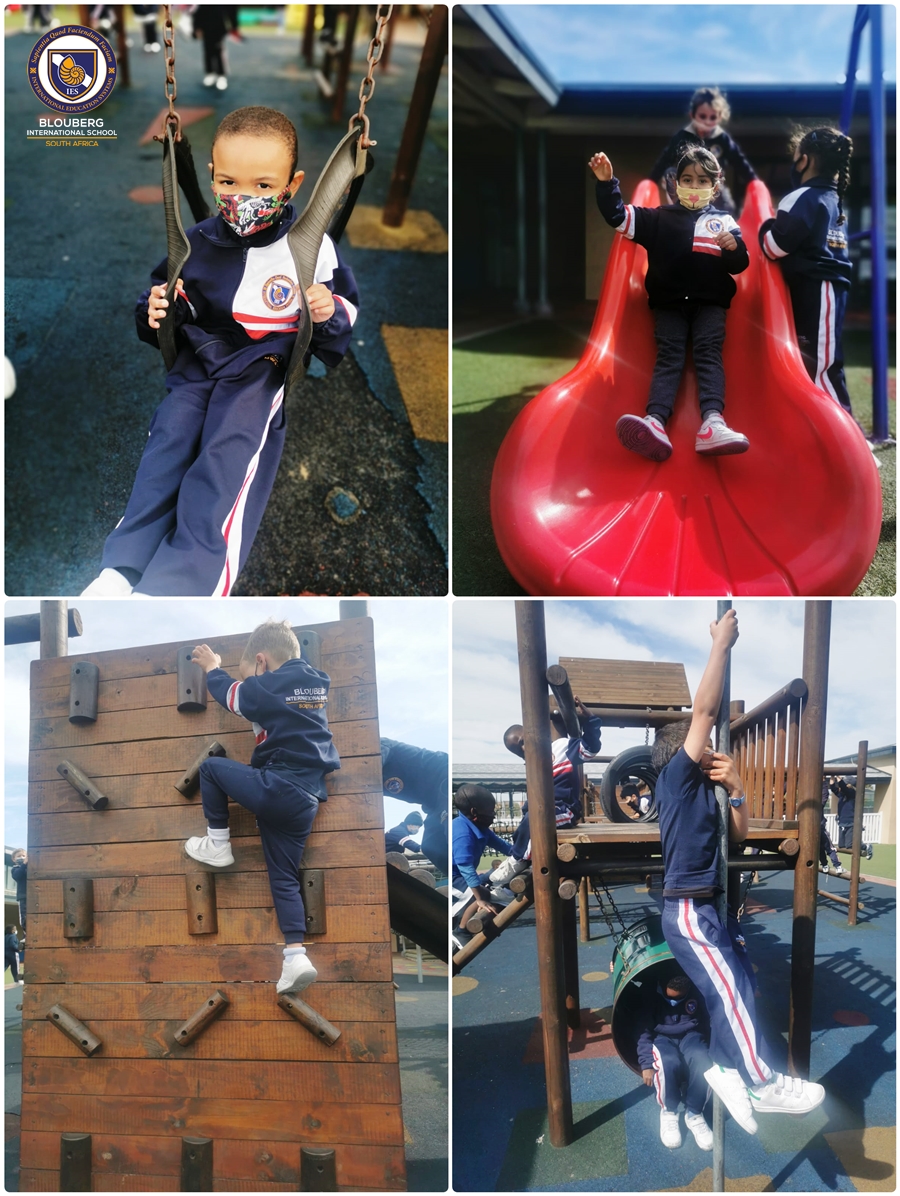
One of the main ways children learn and develop their gross motor skills is through playtime, on the playground, during outside time. As they play, their gross motor skills improve even without them knowing they are actually working on these abilities.
How playground equipment helps develop these skills:
- Climbing a ladder up to a slide or steps helps children learn to start balancing and shifting their weight. Going down a slide, children experiment with different body positions while working on balance and control of their bodies.
- While they are on swings they are in motion which helps them work on balance and coordination. When kids learn to pump up their feet to propel themselves on the swings, they work on sequencing and coordinating their body parts and movements to control the swing.
- The jungle gym strengthens arms, legs, their core and even their fingers. It provides an excellent way to work on balance, coordination and sequencing of which hand or foot moves next.
- The monkey bars strengthen hands and upper body strength as well as developing coordination and sequencing.
While there are many physical benefits to outside play, it provides a huge opportunity for social development in children as well. They also develop stronger reasoning and observation skills, giving them the opportunity to explore the world from a different perspective.
There are endless benefits to playing outside!
Cindy Nunan
Nursery and Pre-Reception Teacher



Science – An Animal Nursery
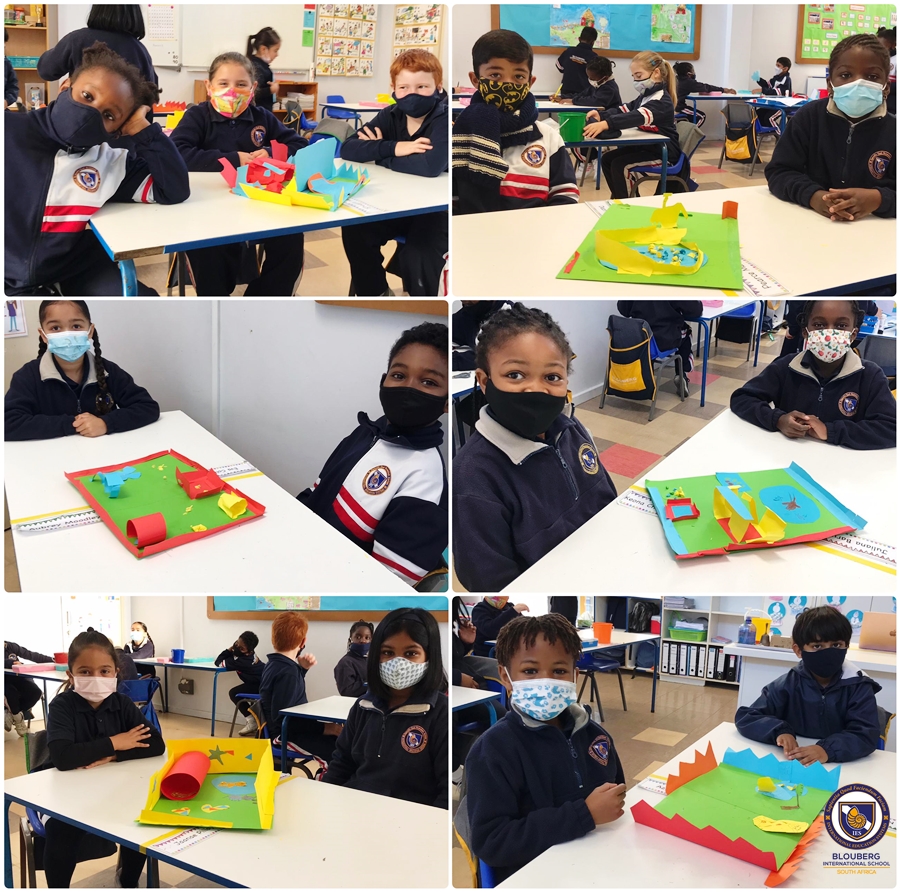
This term, the year 1 students have enjoyed the Science theme, Being Alive. The students have learnt how to identify if something is alive or not. It is alive if it grows, breathes, eats and reproduces.
This week we learnt about baby animals and how to care for them. The students had to choose a baby animal and decide what it would need to grow to adulthood. They then worked in pairs and built the nursery using lots of creativity in their designs.
Well done Year 1!
Ann Cordner
Year 1 teacher
Read More

Hooked On Books in Foundation Stage
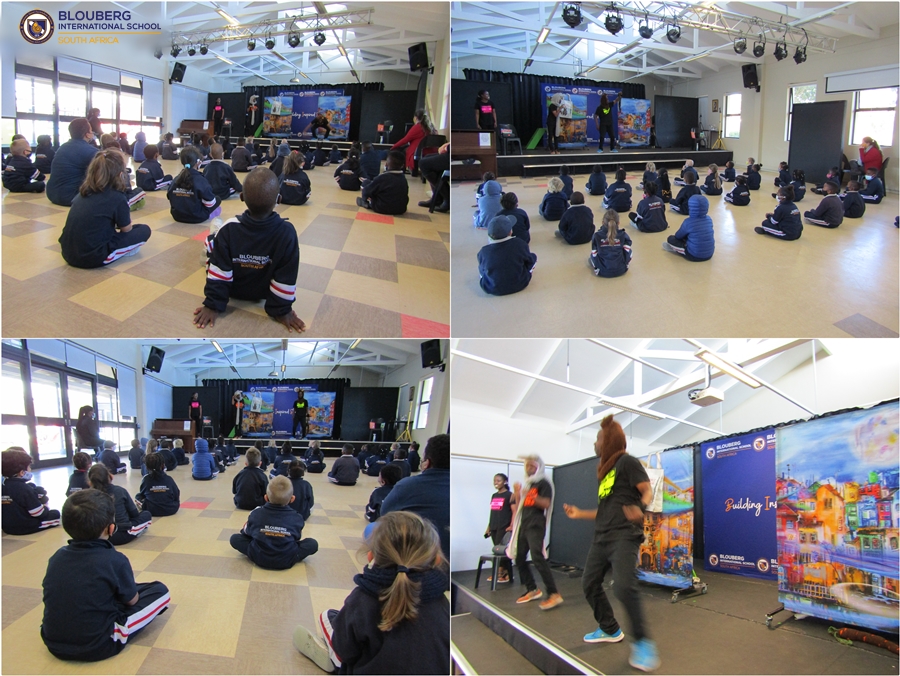
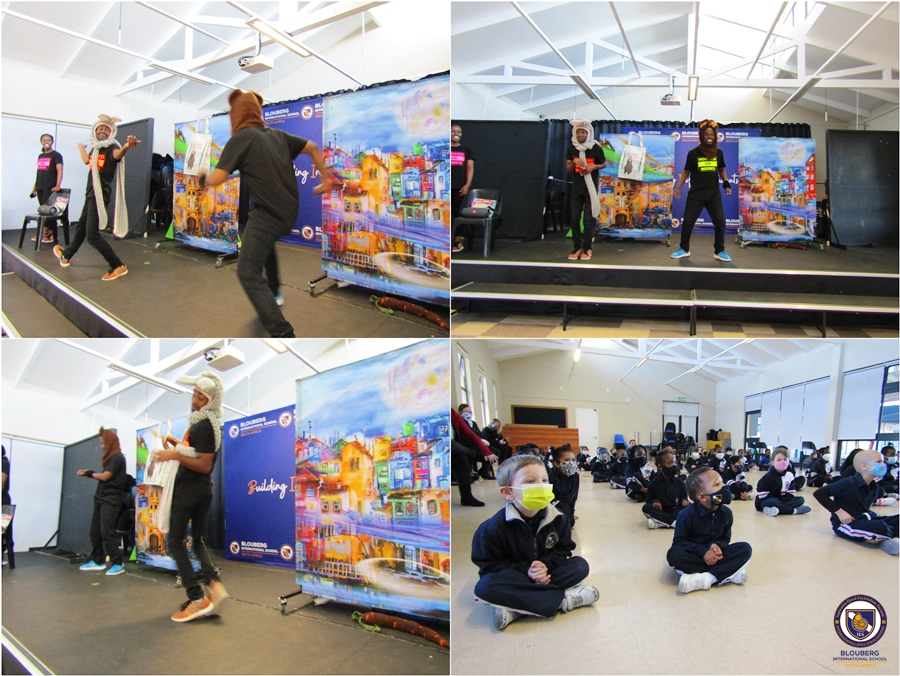
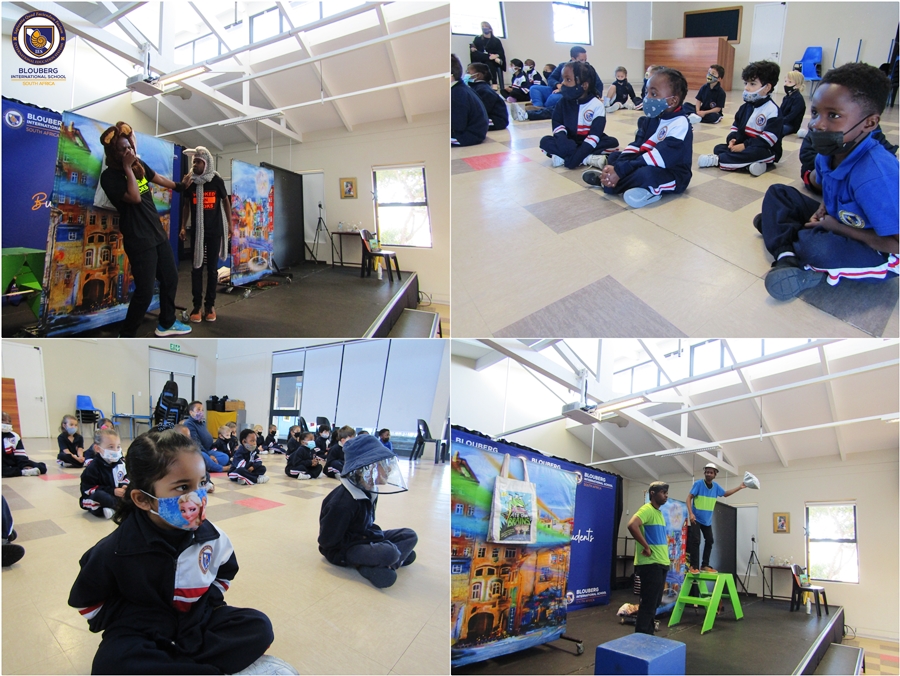
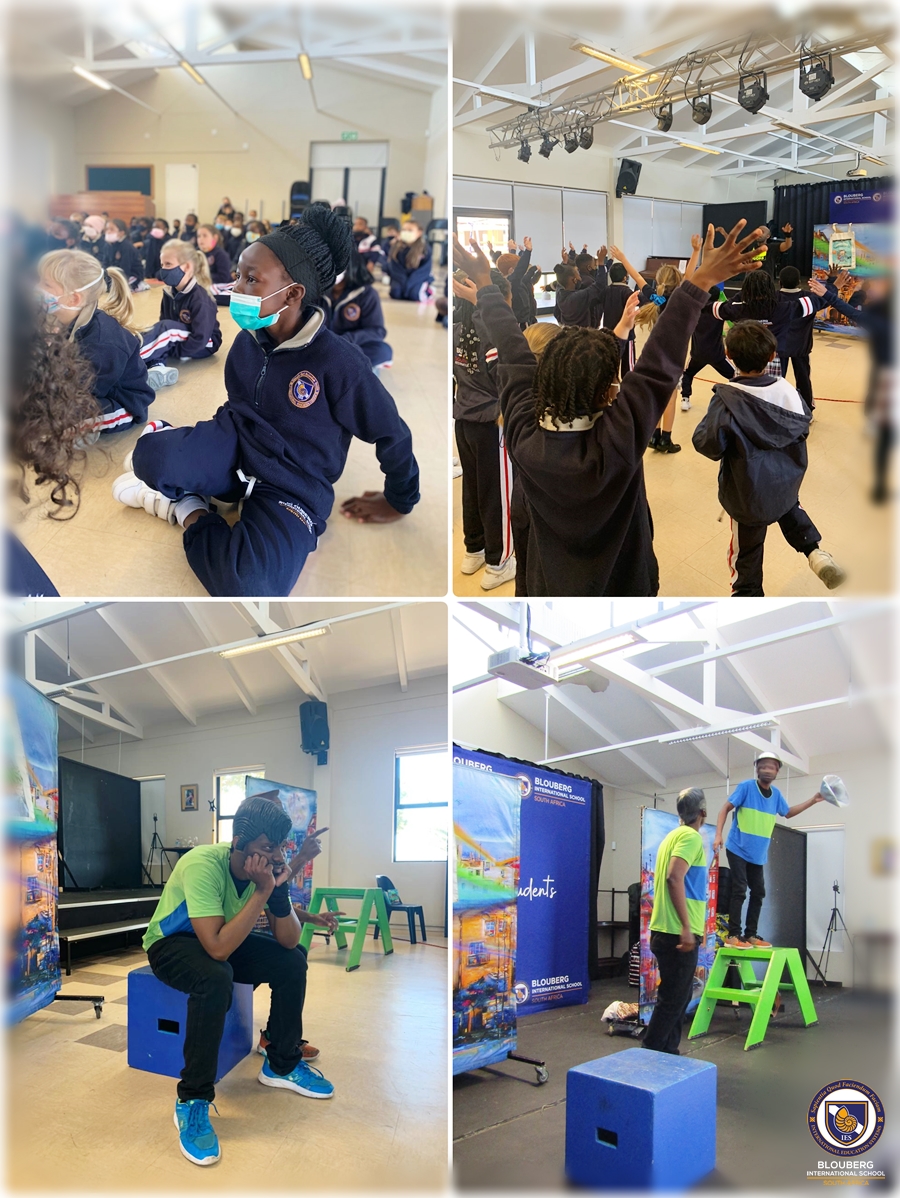
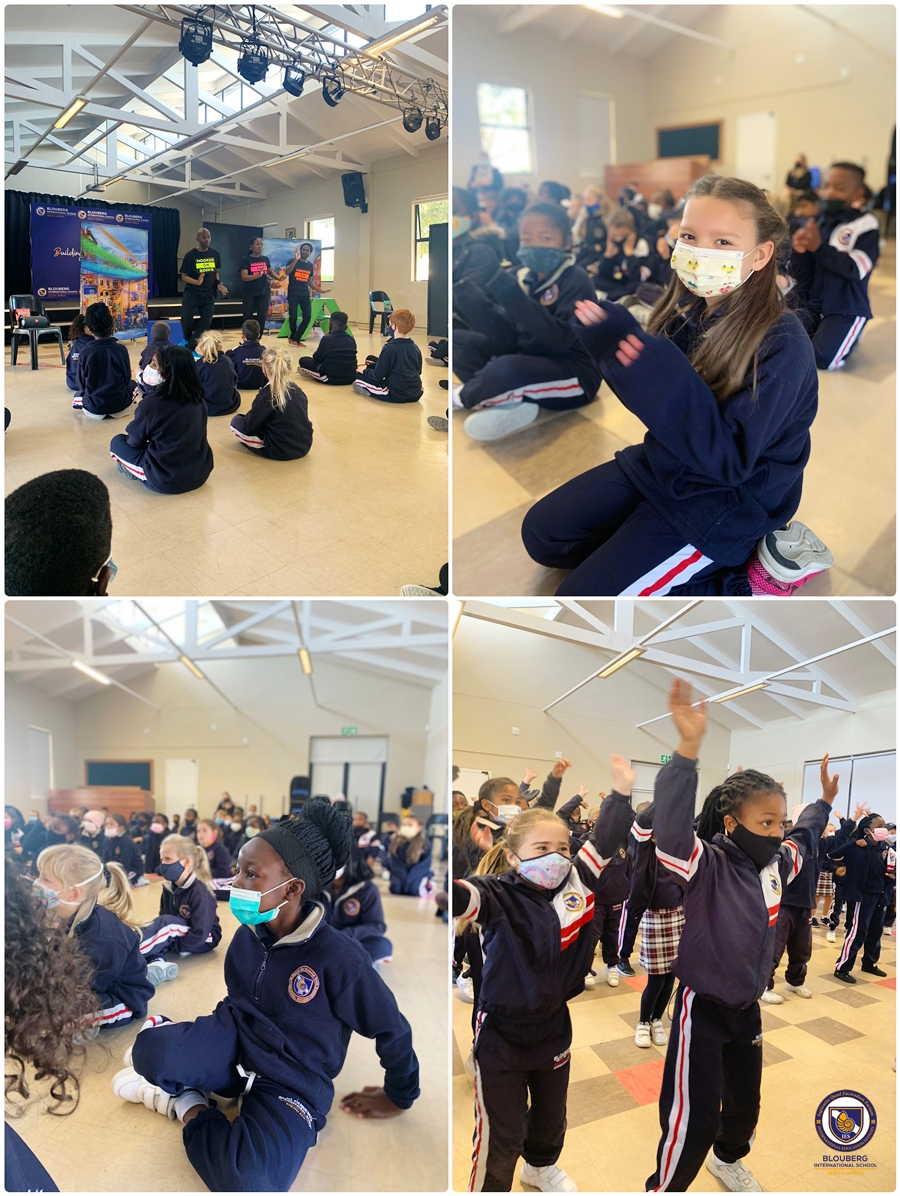
On Friday, 20th of August, we were elated to welcome the team from Hooked on Books to Blouberg International School. The annual event is a highlight in the school and it was with great excitement that the students lined up to go watch the performance in the Junior Hall.
Hooked on Books is a touring Educational Theatre Company that shares their love of books and stories with the students. Each year they choose a selection of stories and dramatise excerpts from the books. The actors are amazing and encourage audience participation, which of course the students love. They end each story on a cliff-hanger to encourage the students to go read the books for themselves.
It was a lovely day and we look forward to Hooked on Books visiting again next year.
Monique Meyer
Reception Year Teacher

Read More
Hooked on Books – Year 2 Reading Fun!
“Books give a soul to the universe, wings to the mind, flight to the imagination and life to everything” – Plato
While reading is obviously important in order for us to understand the words on the page, it is also the foundation of one’s ability to learn, and ultimately our ability to function accordingly in an ever changing society. As children learn they no longer have to rely on their parents to read things to them – one of the most natural ways of building independence and self-confidence. As they read they begin to understand the world around them.
This week, our Year 2’s were lucky enough to experience the fun of Hooked on Books; is a touring Educational Theatre Company that has been igniting a love of reading in children across our country for the past 25 years. The Hooked on Books team dramatise book-trailers from contemporary children’s books, which change on an annual basis. The book-trailers provide a visual, dramatic preview of the book similar to that of a movie trailer. By leaving the story at a nail-biting cliff-hanger they entice the students to make a beeline for the library to find out how the story ends. Their secret is keeping the show simple and fun, encouraging students to use their imaginations to create make-believe worlds with colourful characters.
We had so much fun!
Siobhan Hendry
Year 2 Teacher

Read More