
Our Senses – Year 3
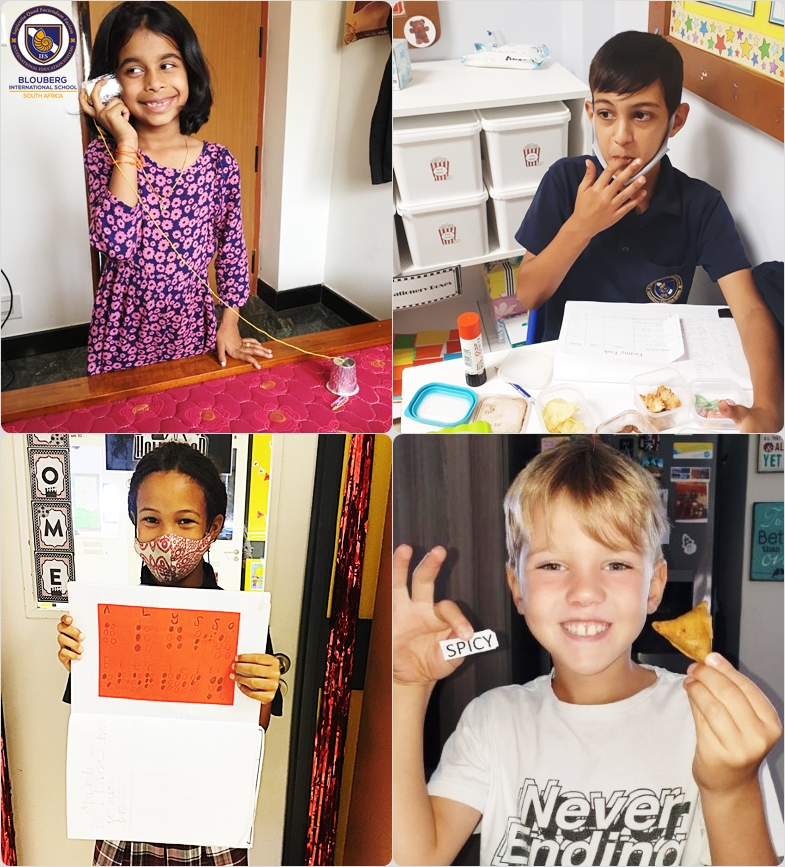
During the last few weeks of Term 1, we have been discussing and experimenting with our five senses. Although many of the students knew what their five senses are, they learnt so much more about them, using practical ways to explore them further and discover their importance.
Hearing:
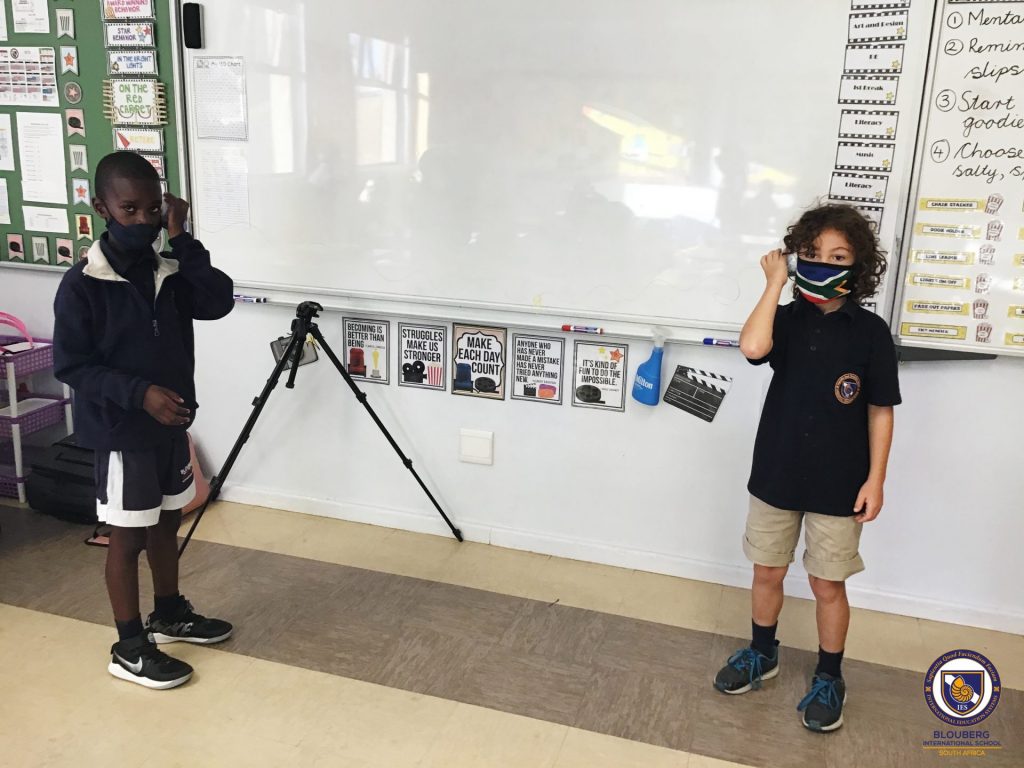
Each student made a telephone using Styrofoam cups and fishing gut. They took them outside and learnt why it works so well. This is because the gut is dense, and the sound of our voices travels down the line and into the cup on the opposite side. Thus, allowing the recipient to hear what we have to say, even from a distance.
Sight:
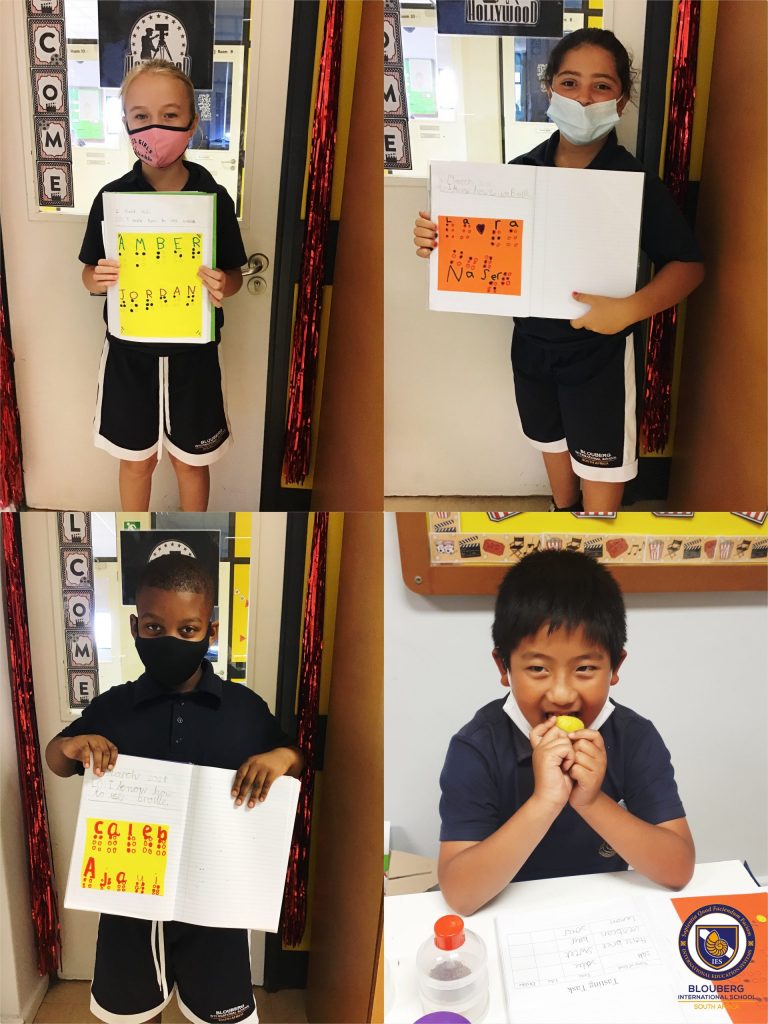
The students learnt who invented Braille and why it is so important. They saw what Braille looks like and had to use a Braille Alphabet to decipher words in a ‘Mystery Challenge’. Each student managed to write their name and surname using this amazing technique that many visually impaired people use all over the World.
Touch:
Each student was given a chance to choose an item while their eyes were closed. They had to describe it to the children in the class, and guess what they think it is without looking. It was rather interesting to see what a daunting task it can be to describe something using words, without seeing the actual item.
Taste and smell:
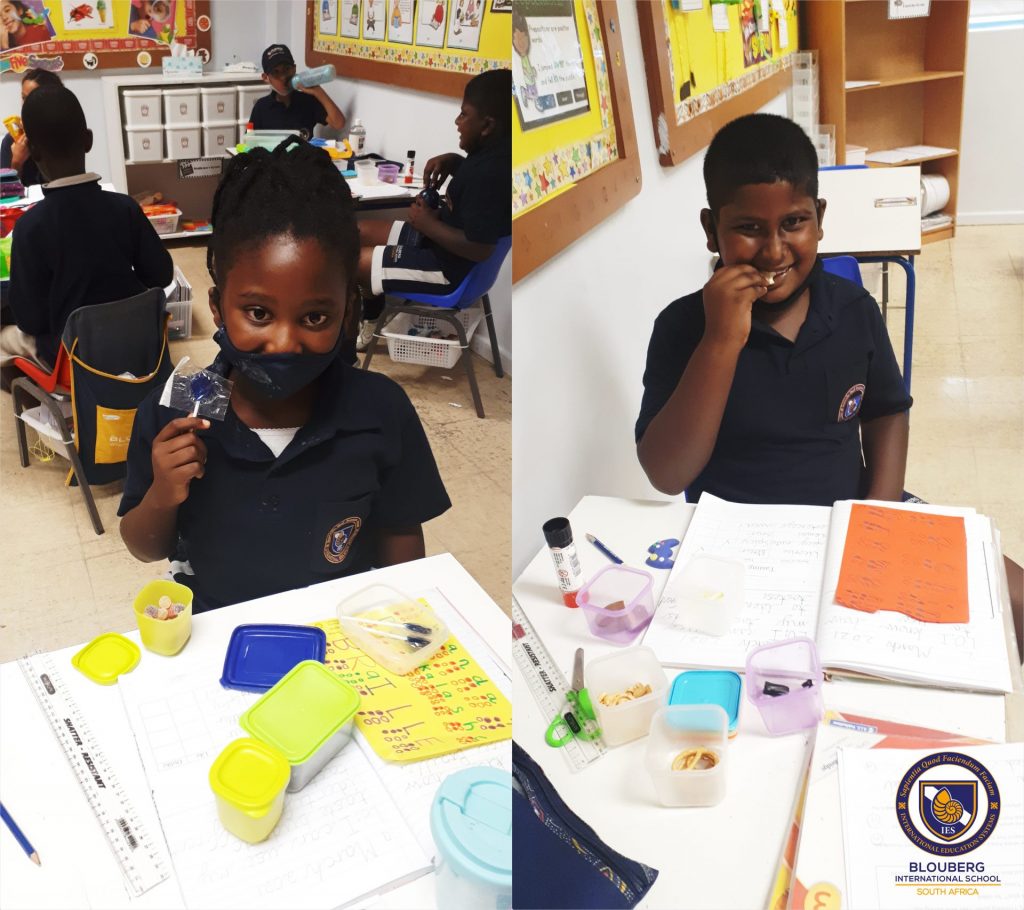
The students were asked to bring in small containers, containing something that tastes sweet, salty, bitter, sour and spicey. They had the opportunity to first smell each one and describe how it smells. Each student then had to fill in a table to say if they liked the taste or disliked it. The tasting bit was super fun! Just not bitter and sour. Those flavours received a number of thumbs down.
Next, the students will be making ‘Taste Monsters’ to complete their tasting experience. I am looking forward to seeing how those will turn out.
We hope that our Year 3 students will continue to experiment using their five senses, and always remember why they are so important.
Wendy Menton
Year 3 Teacher
Year 2 Maths Fun!
“Learning shapes helps children identify and organize visual information. An early step in understanding numbers and letters is to recognize their shape. Learning shapes also helps children understand other signs and symbols.” – Jennie Ito
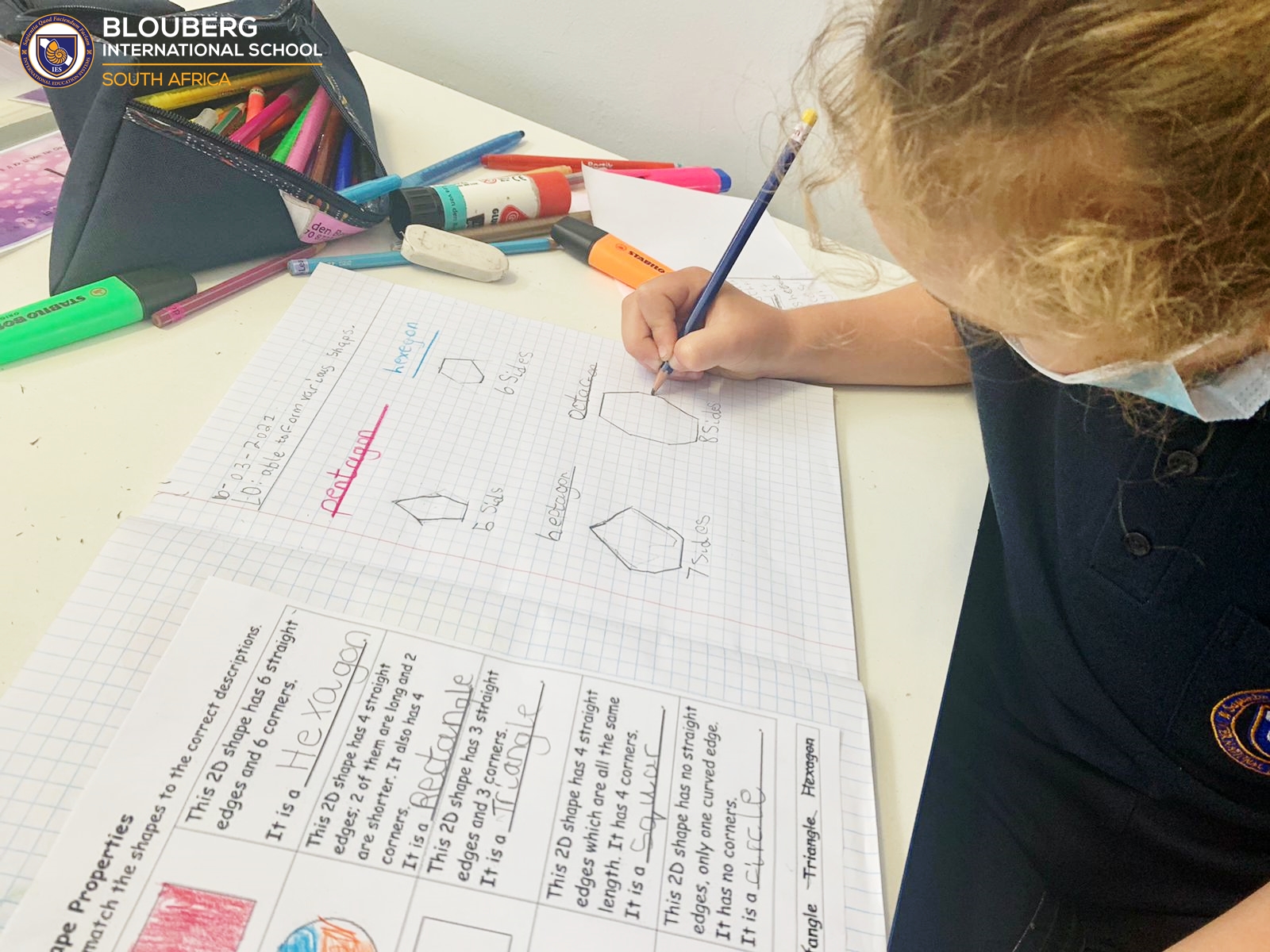
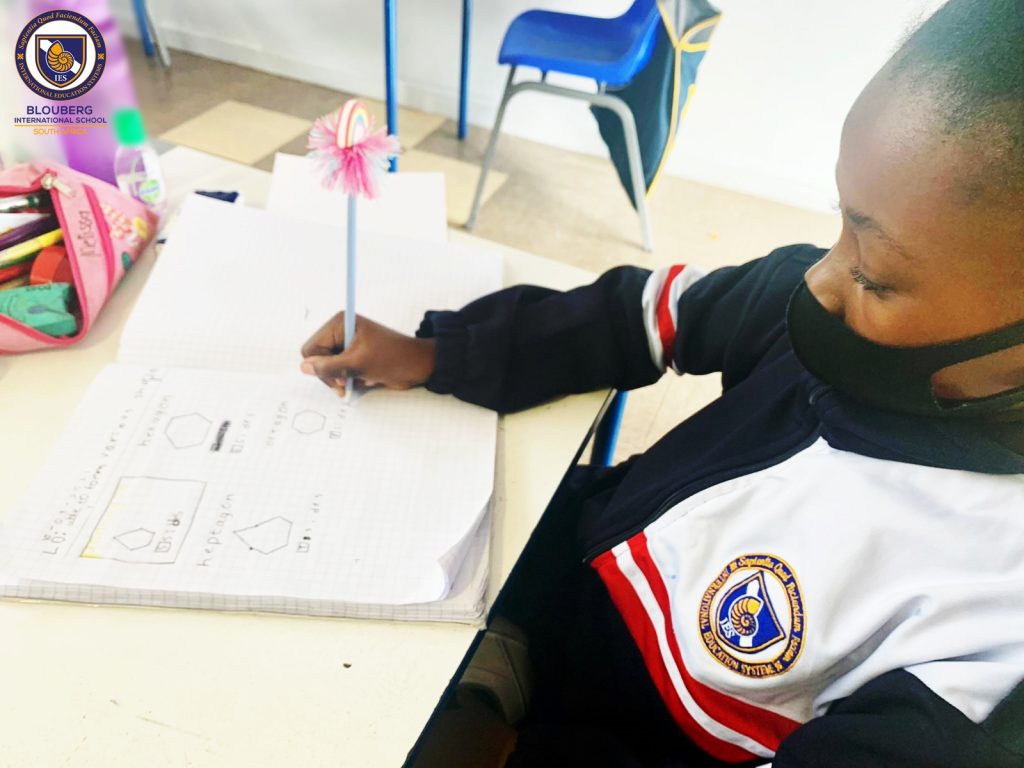
This week our Year 2’s had some fun with shapes in their Maths classes. The topic was introduced with some happy “shape songs” that we could sing and dance along too. We looked around our classrooms and thought about what shapes we could see. We also thought beyond our classroom and discussed what kinds of shapes we would see in the world around us, on the roads, in the shopping centers, in our home etc.
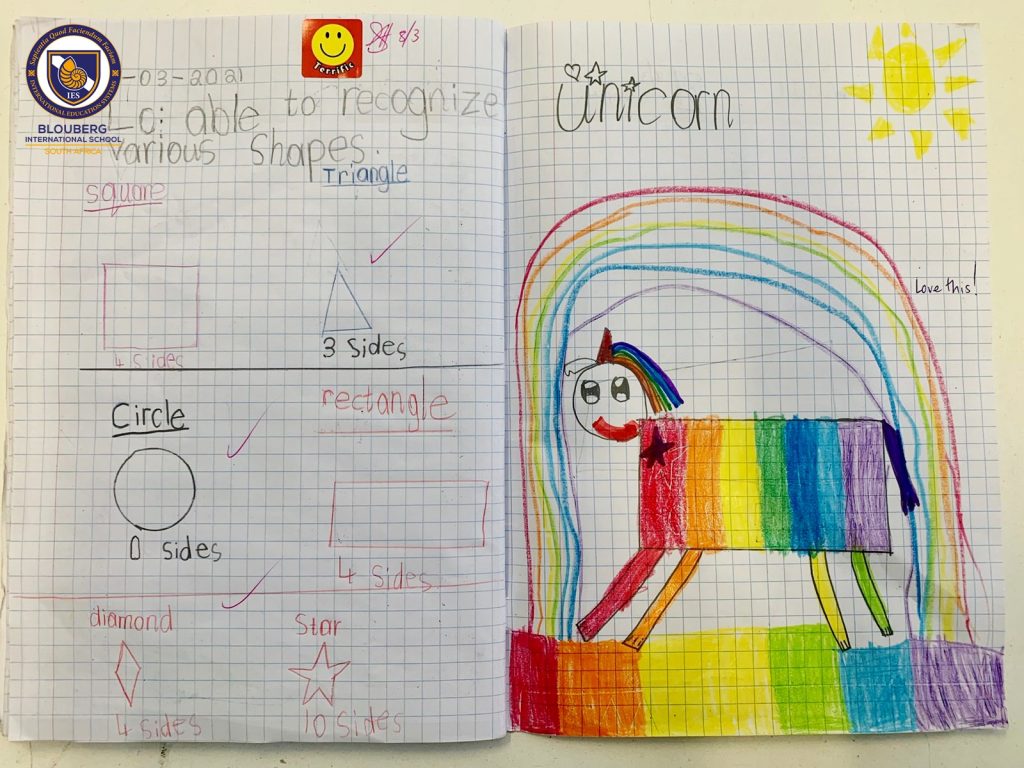
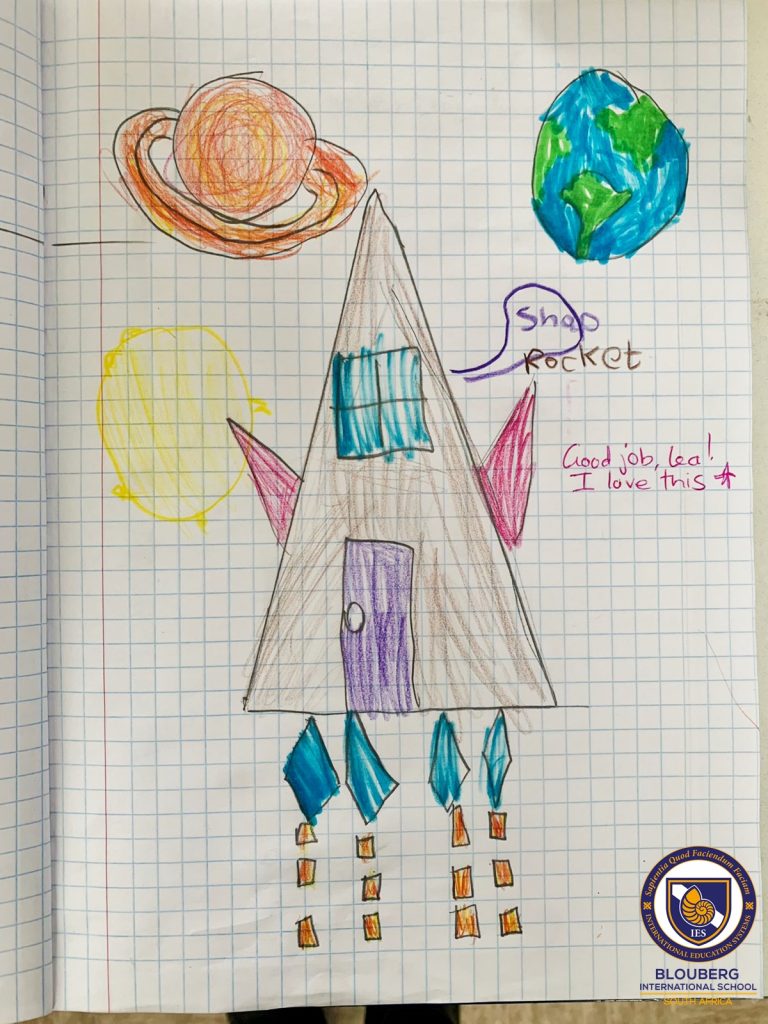
We explored these most commonly seen shapes by learning their names, learning how many sides they have and what they look like in 3D. We even got to think of and design our own creations using the various shapes we had learned about.
So much fun was had!
Siobhan Hendry
Year 2 Teacher
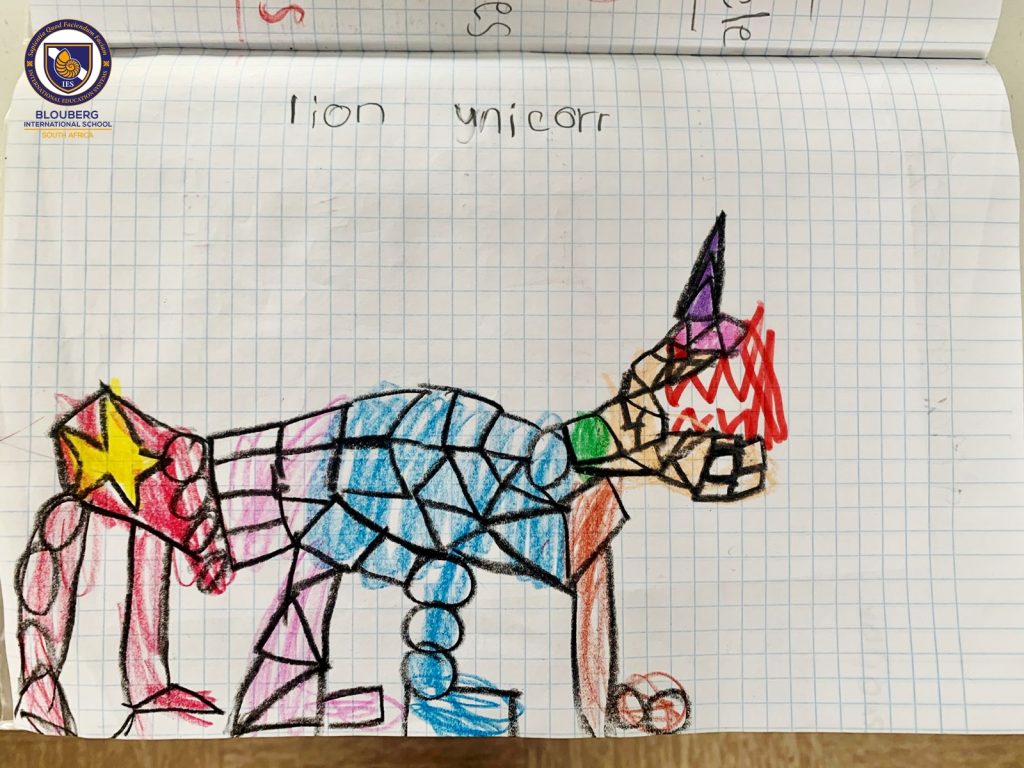

Transport
During the past two weeks, we learned more about air, land and sea transport.
We have been working on our fine motor skills during arts and craft time by making a truck out of different shapes and then we learned more about the traffic light (red means stop, orange means slow and green means go) we made our own traffic light by sticking tissue paper in the right order.
During Numeracy, we played the road number game. The students loved using a toy car to trace the numbers that they are learning about. We had to start at the “go” sign and stop at the “stop” sign. By doing this they will have an in-depth sense of how shapes of numbers are formulated. We also used shapes to make different modes of transport. The students had great fun sorting the colourful blocks and making different modes of transport out of Play dough.
Literacy was all about the “t” and “p” sound. The students enjoyed tracing the sounds they have learned so far.
Martie van Dyk
Pre-Reception Teacher


The Importance Of Drawing For Children
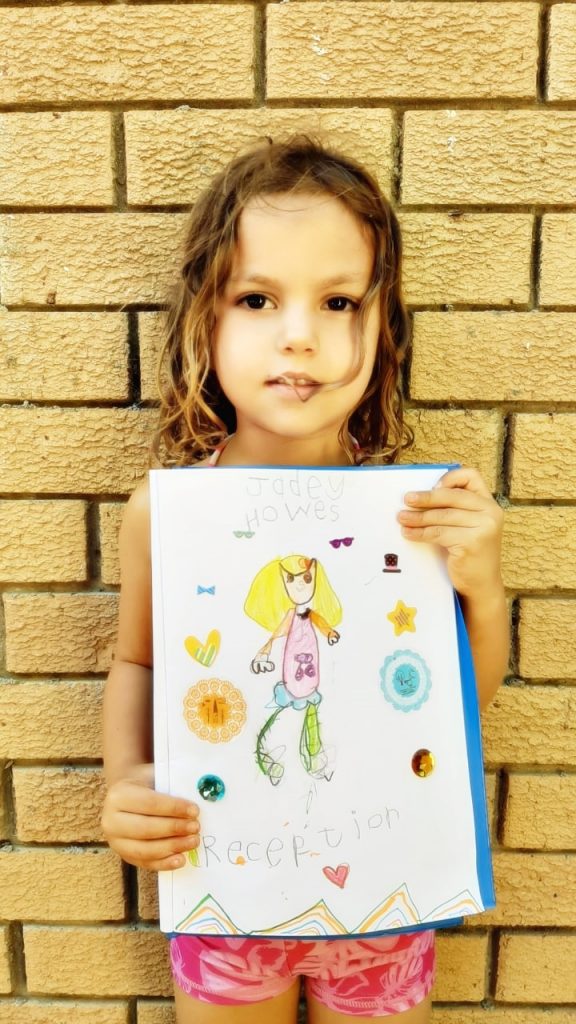
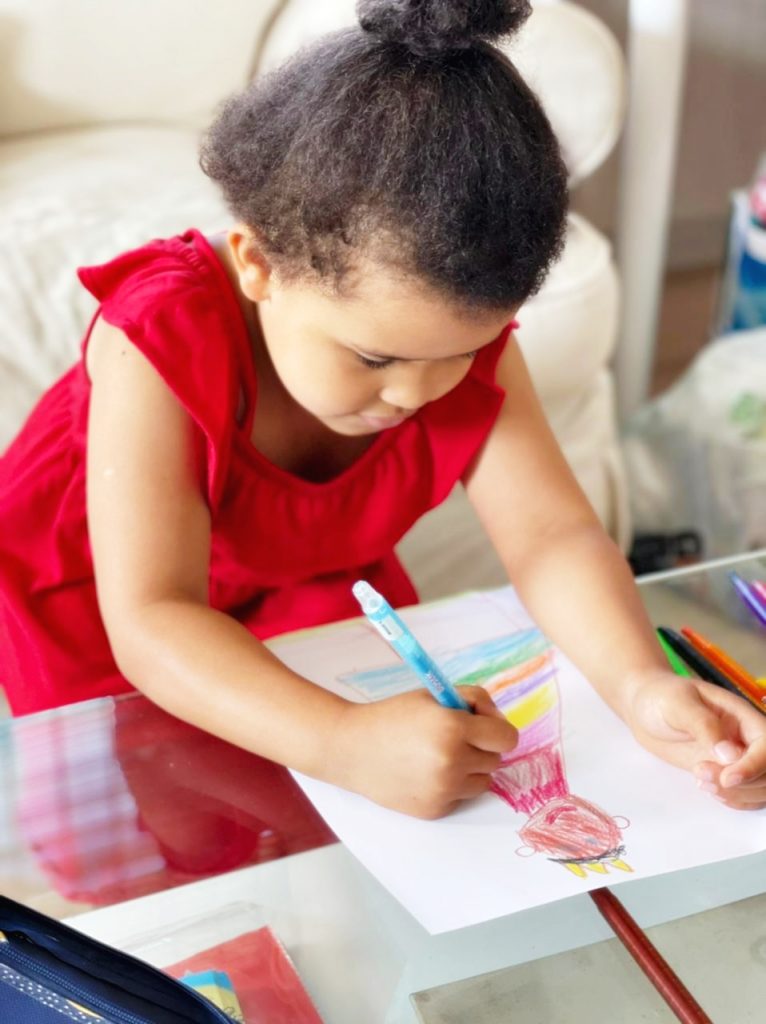
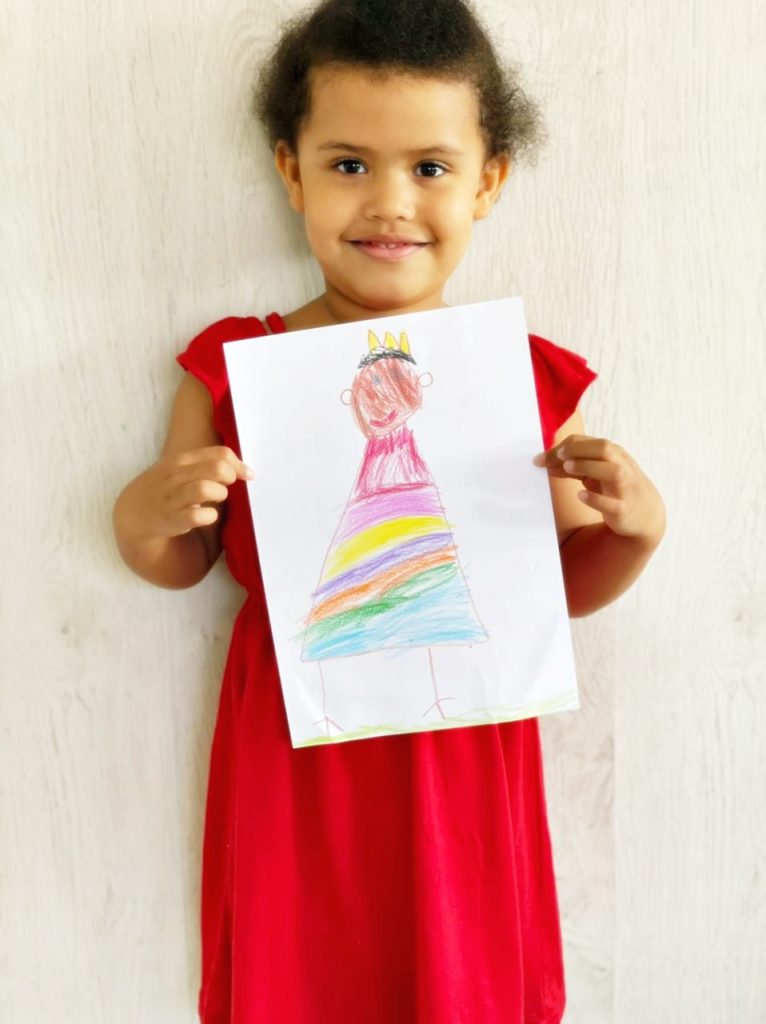
Drawing is one of a child’s favourite activities, but it has so much more value for them than just making pretty pictures. Drawing helps children develop in so many different ways. Through drawing children learn and practice many foundational skills needed at school. It is a wonderful way for children to make sense of the world around them and boosts confidence and emotional intelligence. Here are just a few of the skills that are developed through drawing.
Fine Motor and Visual Skills
Drawing from a young age helps strengthen and fine-tune your child’s fine motor skills. Drawing helps develop hand eye co-ordination. When planning out their pictures children also learn about spatial awareness, size, distance as well as depth perception.
Problem Solving
When drawing, your child is able to express themselves creatively. It provides them the opportunity to ask and solve many questions such as which colour to use or where to place an object. They are also able to develop their picture through the creative process and can change and improve it as they go. Through making mistakes, they learn how to do things differently or how to include their mistake by changing it into something else to enhance their picture. Drawing also develops concentration and helps children to focus on working towards achieving a goal.
Imagination
Drawing helps your child awaken their creativity and imagination. It gives them the opportunity to express their creative thoughts on paper. It is also an important way of expressing and processing their feelings and emotions.
Confidence
As a parent you will have experienced the joy a child has sharing their finished pictures or artwork with others. Through drawing children make pictures that represent their thoughts, imagination and experiences which give them an immense sense of achievement. Children’s pictures are also a record of events that have happened. As they share these experiences with their loved ones, it is also an opportunity for them to bond and develop vocabulary and language skills. As their communication skills progress, it gives children more freedom and confidence during social interaction with others. Drawing also develops important pre-writing and pre-reading skills that translates to greater confidence when learning new skills at school.
As a parent it is important to encourage drawing. Here are some fun ideas to try at home:
- Draw with chalk on paving
- Think of a topic to draw about like a recent birthday party
- Ask your child to draw a picture, but include an object with a specific colour or letter sound
- Draw on black paper using pastels or chalk
- Read your child a story and ask them to draw their favourite part or a new ending to the story
- Draw a background to play with other toys on afterwards, like a home for Lego people, a farm for plastic animals or a town for cars (this is good for visual perspectives and spatial awareness)
- Draw on different surfaces like a chalk board or on the floor
- Trace around your child’s body and allow them to draw in the details of their faces, body parts and clothing
Most children draw something new every day and it is often the most precious gift they have to offer their loved ones. Wishing you many happy memories of drawing fun with your child at home.
Bronwen Nuthall
Reception Year Teacher



Hands on Chemistry
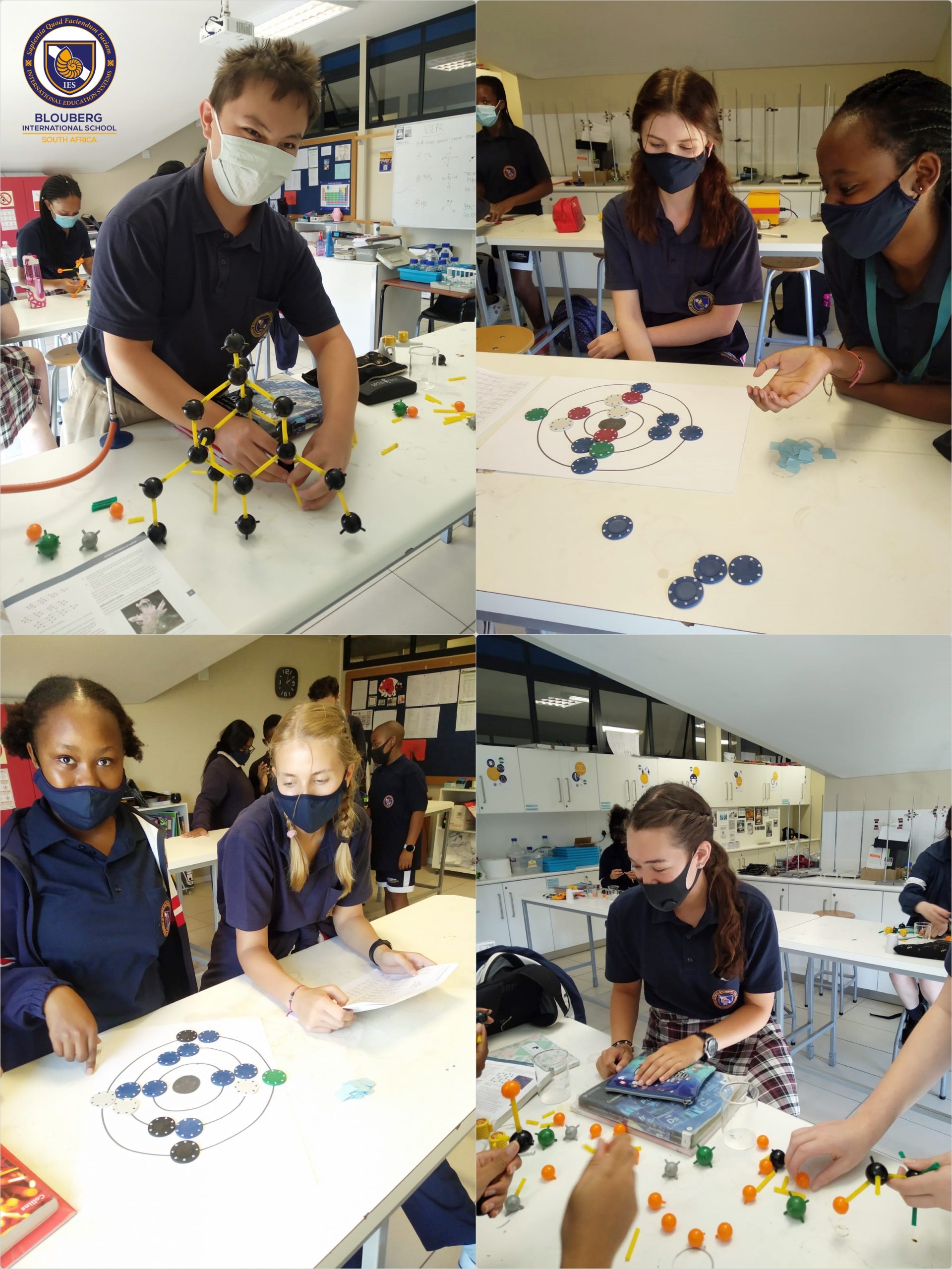
In Chemistry this term, we have focused on hands-on, student-centered learning. Chemistry is an interactive subject and what better way to experience science than to “do science”. Benjamin Franklin is quoted as saying “Tell me and I forget, teach me and I may remember, involve me and I learn”.
In Year 9, students are learning about the structure of atoms and where electrons are found around the nucleus. In order to understand this concept, students played a game with giant-sized atoms and had to correctly place poker chips representing electrons around a nucleus. The game became quite competitive and students very quickly learned their way around the Periodic Table.
In Year 10, students made their own soluble and insoluble salts and filtered and crystallised these to separate them from impurities. Different separation methods are used for different salts and so it is important that students can correctly identify and explain these methods. In the external IGCSE examinations, students write an alternative to practical examination. Hands-on experience in the laboratory is essential for students to understand laboratory techniques and be able to design their own experiments.
The Year 11 students started the AS Chemistry syllabus this term. Students are required to master laboratory techniques as they are assessed on this in an individual practical examination next year. As we cover the necessary theoretical concepts in class, we have done practicals to apply these concepts. Students are becoming more and more confident working individually and are able to obtain accurate experimental results. They have done both titration and gravimetric practicals.
The students in Year 12 had a challenging start to the AS Chemistry course with COVID-19 last year. We were not always able to do a practical experiment at the same time as the theoretical concept was introduced. But students are back in the laboratory this term, and with some extra lessons and hard work, they have been able to complete many practicals already. We have covered all possible laboratory techniques needed in the course and I have seen a marked improvement in the students’ laboratory skills. We are focusing on accurate data presentation and using appropriate data calculations.
This year BIS is also offering A-level Chemistry in Year 13. The syllabus compliments the AS syllabus and students enjoy this course because the added detail explains the trends and concepts covered in Year 11 & 12.
Philippa Goch
Chemistry Teacher – IGCSE, AS and A-level

The Time of Our Lives
Self-reflection: the single biggest driving force in the journey of personal growth. In order to decide where we are headed, we need to recognize how far we have come!
To start off 2021, the Year 5’s spent some time looking at the idea of chronology, timelines and the important milestones in our lives which have brought us to where we are today. We did some research on our own history – beginning at birth – and presented our lives back to our classmates with the help of some beautifully creative visual aids.
Through this task, we were able to take a look at where we have come from, and subsequently consider where the near future may carry us.
We, the Year 5 teachers, were blown away by the effort, pride and creativity displayed by our students in completing this project, and are excited for our cameos in Chapter 2021!
Robyn Pieters
Year 5 Teacher


The Importance of Mathematical Thinking
“To solve math problems, you need to know the basic mathematics before you can start.” – Catherine Asaro
One thing that I have reiterated to all my students over the years is to consider Mathematics as a way of thinking. Kaye Stacey (2012, University of Melbourne) submitted that mathematical thinking is important in three ways.
- Mathematical thinking is an important goal of schooling.
- Mathematical thinking is important as a way of learning mathematics.
- Mathematical thinking is important for teaching mathematics.
As students are introduced to high school Mathematics, it would be wonderful if many students could have just a small taste of the spirit of discovery of Mathematics as described in the quote below from the Mathematician Andrew Wiles.
“One enters the first room of the mansion and it’s dark. One stumbles around bumping into furniture, but gradually you learn where each piece of furniture is. Finally, after six months or so, you find the light switch, you turn it on, and suddenly it’s all illuminated. You can see exactly where you were. Then you move into the next room and spend another six months in the dark. So each of these breakthroughs, while sometimes they’re momentary, sometimes over a period of a day or two, they are the culmination of, and couldn’t exist without, the many months of stumbling around in the dark that precede them.” (Andrew Wiles 1997)
Because Mathematical thinking is a process, l will discuss examples of what l do every time and again with my students in and out of the classroom.
- Logical Puzzles
A logical puzzle is a problem that can be solved through deductive reasoning.
In class we have used this website many times and my students find Mathematics easy if engaged in an interactive and fun way. They start to enjoy how mystifying, puzzling and challenging it is.
- 4 x 4 Magic Square Puzzles

Magic Square Puzzle
In conclusion, math skills are about much more than all the minutiae we teach in school because they are a strong indicator of broader cognitive abilities. And because cognitive aptitude is one of the most predictive factors of job success, testing my candidates’ math abilities is a great way to assess their ability to succeed in any given Maths test and after school activities.
Hebert Tapfuma
High School Mathematics


Read More

Interactive Ways To Start Your Language Classes – Spanish Teaching Routines
“¡Hola amigos y amigas!”
This year, I am focusing on working with simple and effective resources to get the students into routines in Spanish class.
I believe that routines are essential for them to practice basic and simple expressions – every day, in a way that all our students can participate. Starting my lessons the same way, it helps students focus and start thinking and interacting in Spanish.
It takes time to establish a routine but once they get familiar with the vocabulary, the students can complete the tasks by themselves in less than 3 weeks.
The worksheet is designed to help students begin to understand themselves and be aware of how they are feeling each day (feelings), as well as what is going on around them. (The date, the season, the weather). It practices simple and practical language in a visual way that makes it accessible to the whole class.
To print less, I hand out a copy of the worksheet to students, at the beginning of the year, asking them to stick it on their notebook first page.
Then I use the projector in class to help them write down the same information in their notebook at the beginning of each lesson, especially at the beginning of the year.
I can say that I am very impressed with the positive impact that a solid beginning of the class routine creates, especially with the youngest students.
Having a repetitive start gives students the opportunity to settle in and feel comfortable with the change in language. It gives everyone in the class a chance to speak and sets the tone for the class.
In my classes, we start with general information (day, date, weather, feelings) and we will be adding more sections, especially in the last years of Primary school (express likes and dislikes, describe themselves).
It is important to note that I only see my classes once or twice per week, but they can still write down their routine in Spanish every day.
This is what I do at the beginning of class:
(It might take a few classes for students to master these basic routines but in 3 or 4 classes they will be familiarized with it and it will make the beginning of class smooth)
Routine 1 – Greetings.
I say, “Hola”
Students say, “hola”
Then I say, “buenos días” (good morning) or “buenas tardes” (good afternoon/evening)
Students say, “buenos días” or “buenas tardes”
Then I ask, “¿Cómo estáis?” (How are you?)
Students say, “bien. Gracias, ¿Y usted?” (Well. Thank you and you sir?)
I say “Bien. Gracias” “Well. Thank you.”
Routine 2 – Days of the Week – ¿Qué día es hoy?
I have a poster in the class with the days of the week, the months and colours (please see the photo)
The first week we sang the Spanish days of the week from Rockalingua, which the students will use later in a practical way to write down the date.
I ask, “¿Qué días es hoy?” (What or which day is today?)
I call on a volunteer and he or she says, “hoy es martes.” (Today is Tuesday)
I ask, “¿Qué día es mañana?” (Year 3 and 4) (What or which day is tomorrow?)
I call on another student that says “mañana es miércoles.” (Tomorrow is Wednesday)
I ask, “¿Qué día fue ayer?” (Year 5 and 6) (What or which day it was yesterday?)
Another student says, “ayer fue lunes.” (Yesterday was Monday)
Routine 3 – Months
We do the same thing that we did on routine 2 with the days of the week. We watch the months of the year song in Rockalingua. I ask “¿En qué mes estamos?” (Which month are we in now)
I call on a student and he or she says, “estamos en febrero.” (We are in February)
Routine 4 – Date
I ask “¿Quién me puede decir la fecha?” (Who can tell me the date?) I call on a student to say the date in a full sentence. For example, “hoy es viernes doce de febrero de dos mil veintiuno.” (Today is Friday, the 12th of February 2021.) I make sure the sentence is correct and then I have the whole class repeat.
Routine 5 – Feelings
“¿Cómo estás?” (How are you?) I ask the students how they feel today.
(I am tired.) Estoy cansado (masculine) or cansada (feminine)
(I am happy/well/not well.) Estoy feliz/bien/mal
Routine 6 – Weather
¿Qué tiempo hace hoy? (How is the weather today?)
I say, “mirad por la ventana” (Look out the window). I have students look out the window and I call on a volunteer to respond using a sentence about the weather. For example, “hoy hace sol” (Today it is sunny) “hoy está lloviendo,” (Today it is raining) etc. I use the Rockalingua song “¿Qué tiempo hace hoy?” about the weather in Spanish that contains vocabulary and grammar structures related to weather.
Routine 7 – Clothes
The students write down the clothes that they would like to wear according to the weather and have to choose a colour also for each clothing item. For example, (Today I am wearing a red dress or a blue t-shirt.) “Hoy llevo puesto un vestido rojo o una camiseta azul.”
I read the whole routine again for them and in a few minutes the students are speaking and interacting or at least getting compressible information in Spanish while they are reviewing basic and important topics, and most of the class is now focused on only one thing.
During the first lesson of the year, I hang out a copy of the beginning of the class routine (click here to view the document) and during the first 3 weeks we are filling in the document together to make sure that the students understand the vocabulary and time.
We also listen to all the Rockalingua songs that contain vocabulary and grammar structures related to this routine: the greetings songs, what’s your name, the feelings, the weather, so the students memorize the vocabulary in a fun and more effective way.
Javier Vidal
Spanish Teacher
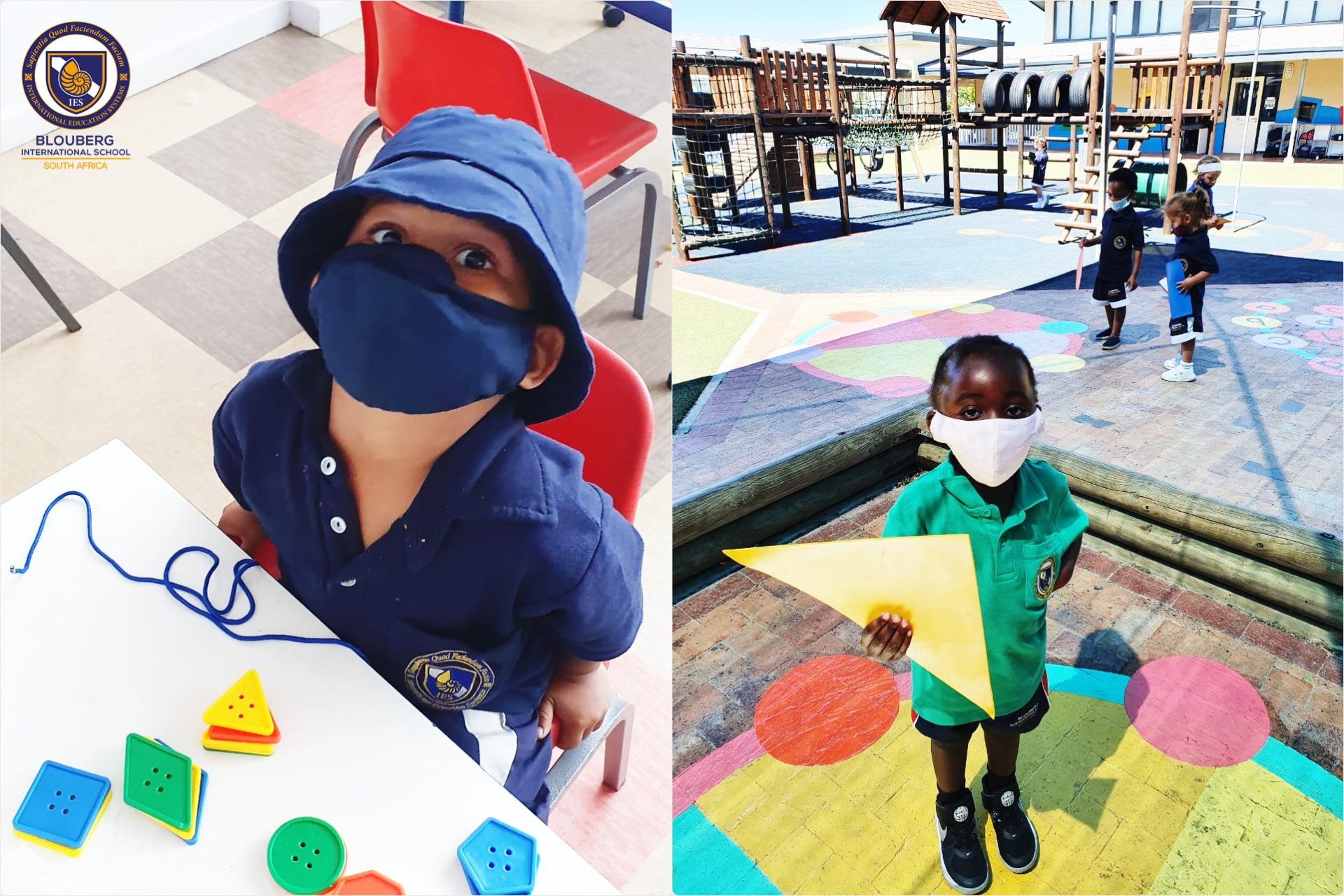
Learning More About Shapes
We have been learning about making and recognising basic shapes in Pre-Reception. The students had the opportunity to create and explore with shapes to learn what shapes look like and how to make them
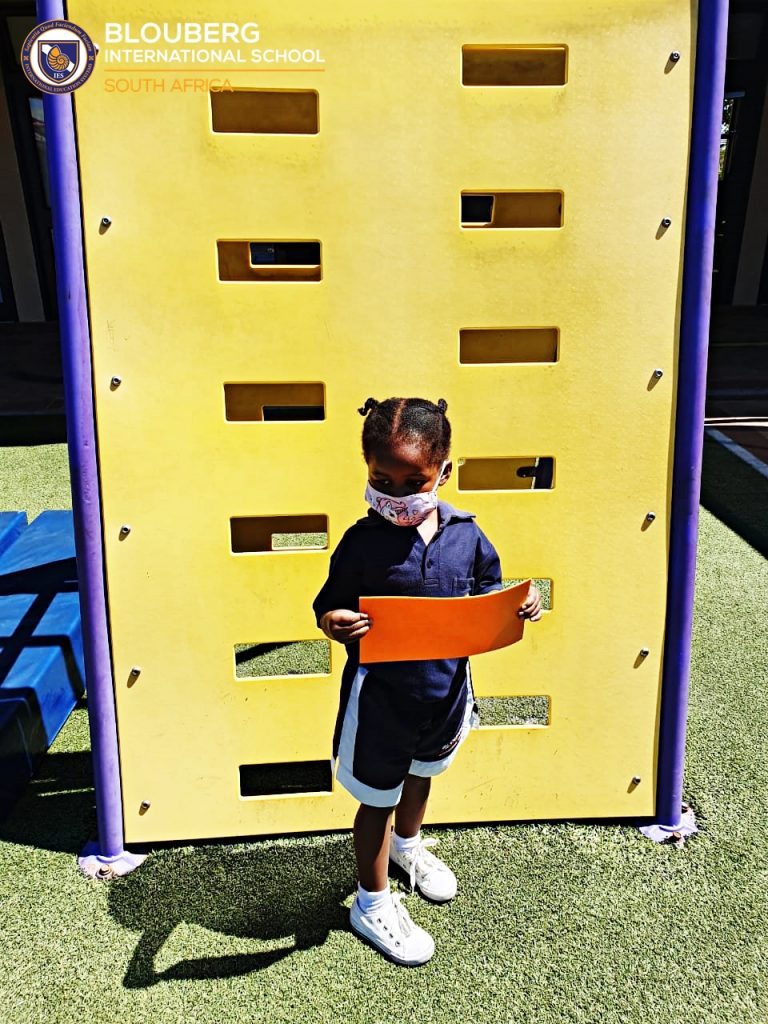
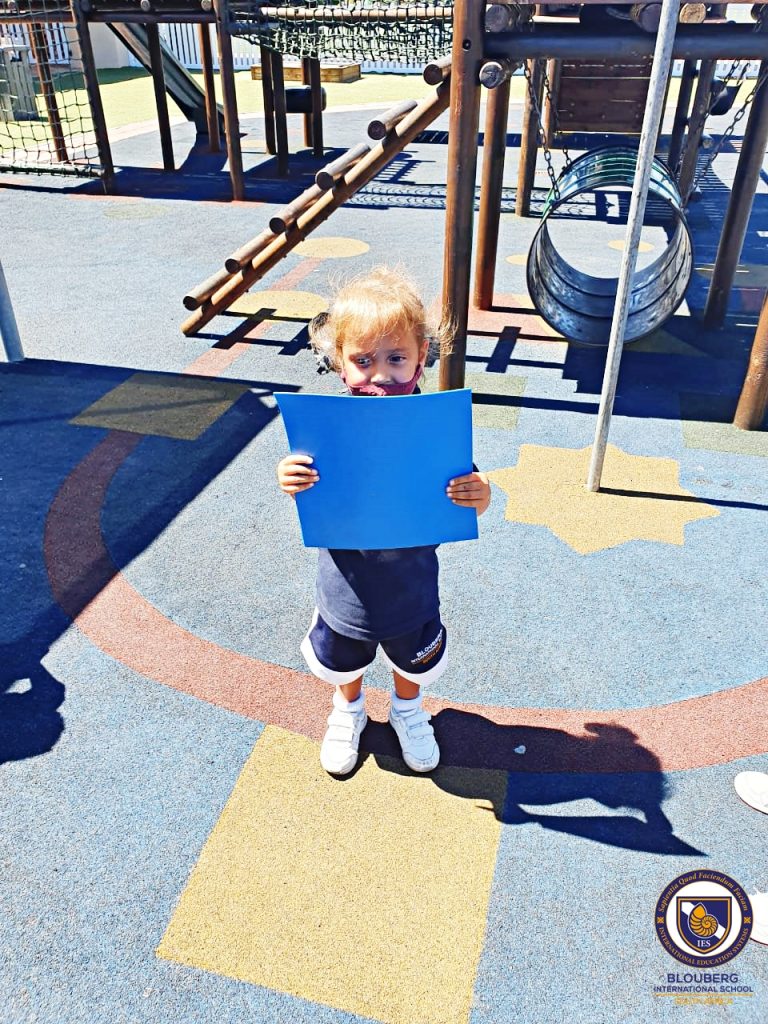
We went on a shape treasure hunt in our playground. The students had to match their given shape with the shapes of the hopscotch and other games on the playground.
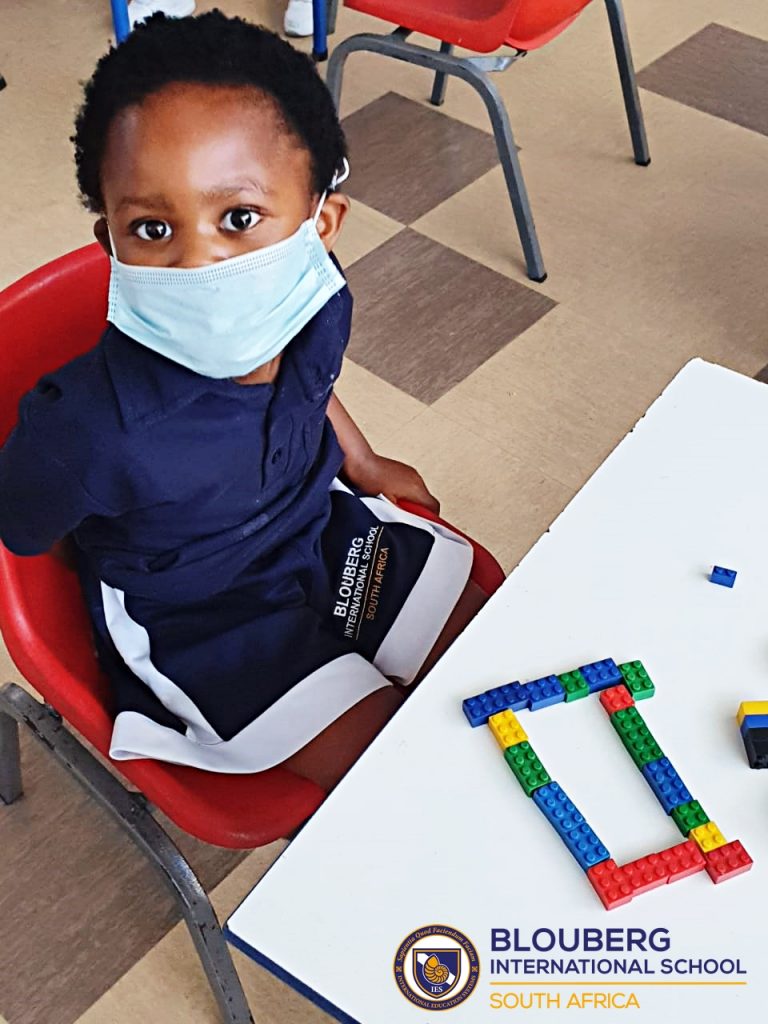
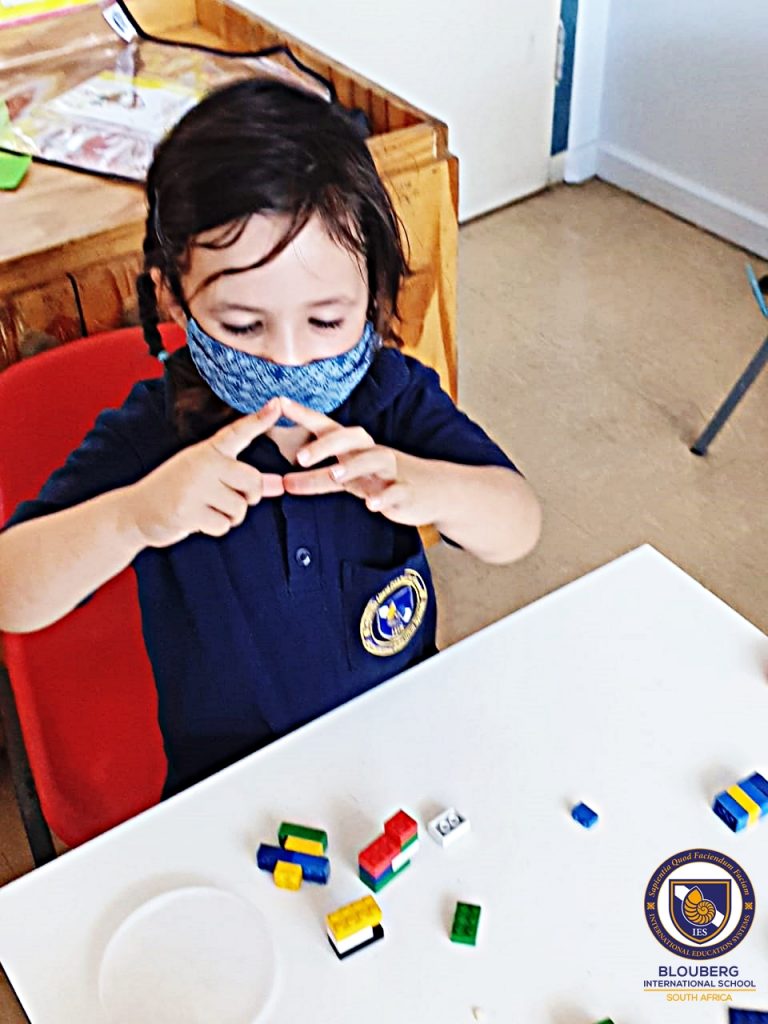
In the classroom we used Lego blocks, beads, play dough and match sticks to make different shapes. We also practised drawing shapes and cutting them out. We made even a square man during arts and craft time.
The students will continue to observe shapes in every activity they do and every book they read. Shapes are everywhere and fun to explore throughout the year.
Martie van Dyk
Pre-Reception Teacher

The Duke Of Edinburgh’s Iinternational Award At Blouberg International School
Blouberg International School is working with The President’s Award for Youth Empowerment (TPA) to offer our learners new ways to broaden their curriculum. TPA delivers The Duke of Edinburgh’s International Award in South Africa, and both our organisations believe that learning should not be confined to the classroom but should also take place in the school environment and wider community.
Blouberg International School provides students with an opportunity to develop soft skills such as leadership, teamwork, and confidence. We are working together to develop confident, responsible, reflective, innovative, and engaged learners and create opportunities for young people to develop skills, get physically active, serve their local community and experience adventure. By offering the Award as non-formal education alongside the academic Cambridge programmes, we are able to provide students with a holistic education.
The President’s Award for Youth Empowerment (TPA) is affiliated to The Duke of Edinburgh’s International Award for Young People and is a full member of the International Award Foundation which oversees the Award Programme in over 130 countries globally, with 18 of these being in Africa, and over 1.3million active participants internationally. TPA is a registered non-profit organisation (004-920NPO) with Public Benefit Organisation status, registered with SARS (PBO#930001329).
TPA motivates young people to develop character, discover their purpose and determine their future to contribute towards building a great South Africa. The Award Programme targets 14–24-year-olds across the socio-economic spectrum, from public and private schools, children’s homes, correctional services centres, universities, etc.
There are more than 100 ISASA affiliated schools implementing the Award Programme nationally.
On the Programme, there are three levels: Bronze, Silver and Gold. Within those levels there are four sections:
1. Skills Development.
2. Physical Recreation.
3. Service to the Community and
4. an Adventurous Journey.
With guidance from volunteer adult Award Leaders, each young person builds confidence by reflecting upon their interests, abilities, and ambitions to set themselves challenges. Youth Participants progress at their own pace through the three Award levels; however, each level has minimum requirements.
At completion of the Award, young people get an internationally recognised certificate that bares the signatures of His Royal Highness the Duke of Edinburgh, Prince Philip, and President Cyril Ramaphosa. The certificates are recognised by employers and universities worldwide.
The Programme was founded in South Africa in 1983 under the banner of the Gold Shield Award, with Dr Ian Player, as the first Chairman. In 1994 the organisation was re-launched as The President’s Award for Youth Empowerment with Mr. Nelson Mandela as its Patron-in-Chief.
Once the individual is registered, participants manage their progress with the Online Record Book (ORB) application.
The Online Record Book (ORB) is an easy-to-use online system in which Participants can record their activities and achievements. Participants can set up activities, record their efforts, upload evidence, and submit assessor reports. Award Leaders can monitor progress behind the scenes and help if required.
For more information about The President’s Award (TPA) email Mr. Riaan Vosloo, email: riaan.vosloo@iesmail.com. You can also visit the official website of TPA: www.presidentsaward.co.za
Ms. Caroline Grix and Mr. Riaan Vosloo are the registered President’s Award Leaders at Blouberg International School:
Ms. Grix: caroline.grix@iesmail.com
Mr. Vosloo: riaan.vosloo@iesmail.com