

Wild Animals
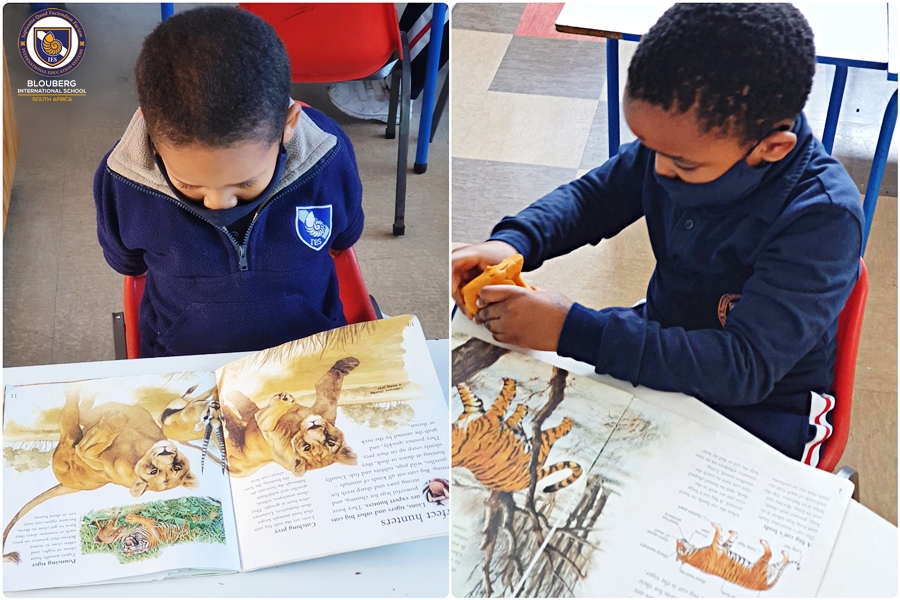
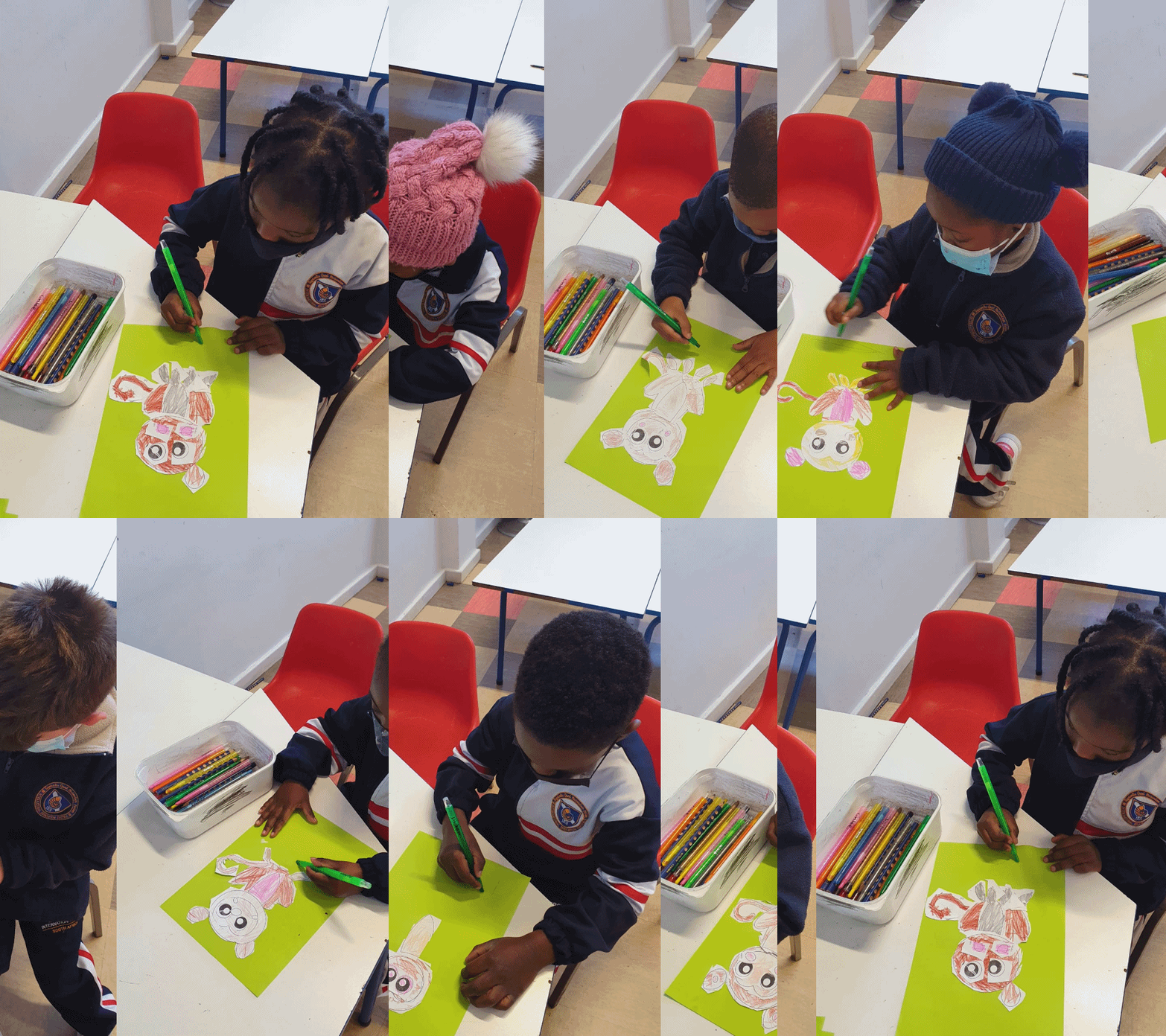
We are learning more about wild animals in Foundation Stage. Picture books with animal characters are firm favourites with the students and they simply love to observe animals on the whiteboard shows. We even made our own wild animals in Art.
According to an article in ONE GREEN PLANET, animals can teach us 10 important things:
- Compassion: Compassion is based on being able to understand the feelings of others/another.
- Patience: There is no rushing an animal to do anything they aren’t ready to do.
- How to live in the now: People waste so much time obsessed with following ‘what will happen next’ that we completely forget to enjoy the now.
- We’re all connected: Ecosystems only thrive when there is balance.
- Humans aren’t as different as we thought: If there’s ever been a time to re-evaluate our relationship with animals, it’s now.
- Respect your elders: Moving forward and advancing towards innovation is a wonderful thing, but we should also learn to respect the wisdom of those who came before us.
- Responsibility: Growing up with a pet has been shown to instill a deeper understanding in children.
- Listen carefully: Animals sit and listen before they react to situations, something we could surely all stand to do.
- Live lightly: Animals learn to live within their means.
- We must stick together: Being able to set aside differences and work together for the mutual benefit of our species.
Martie van Dyk
Pre-Reception Teacher


The Importance Of Learning To Write Poetry
“Poetry is the spontaneous overflow of powerful feelings: it takes its origin from emotion recollected in tranquility.” – William Wordsworth
Poetry is known as a form of expression. It allows for one to get their feelings and thoughts out on a subject which we, the Year 2 teachers, find important for students to start doing at a young age. Poetry encourages us to connect and find meaning in our experiences. Teachers have experienced that poetry can have a positive impact on the social and emotional learning of young students. It may also offer them a new and creative way of thinking about something which is encouraged.
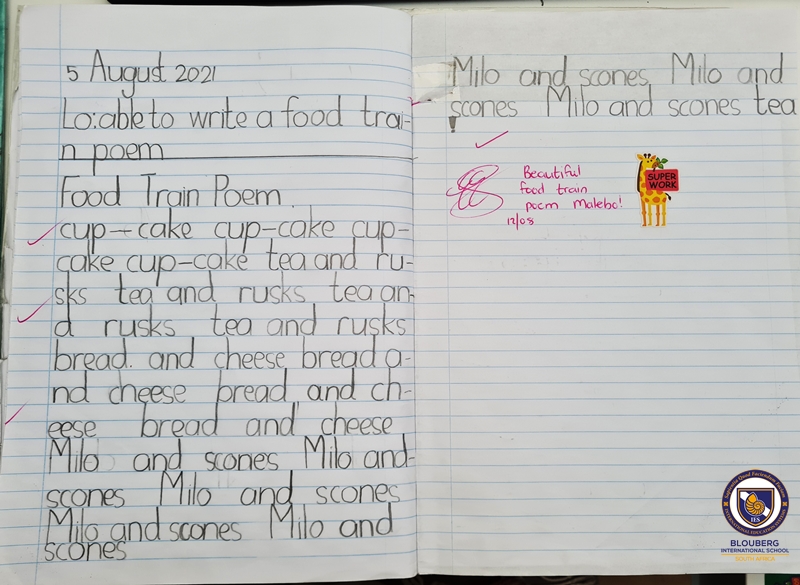
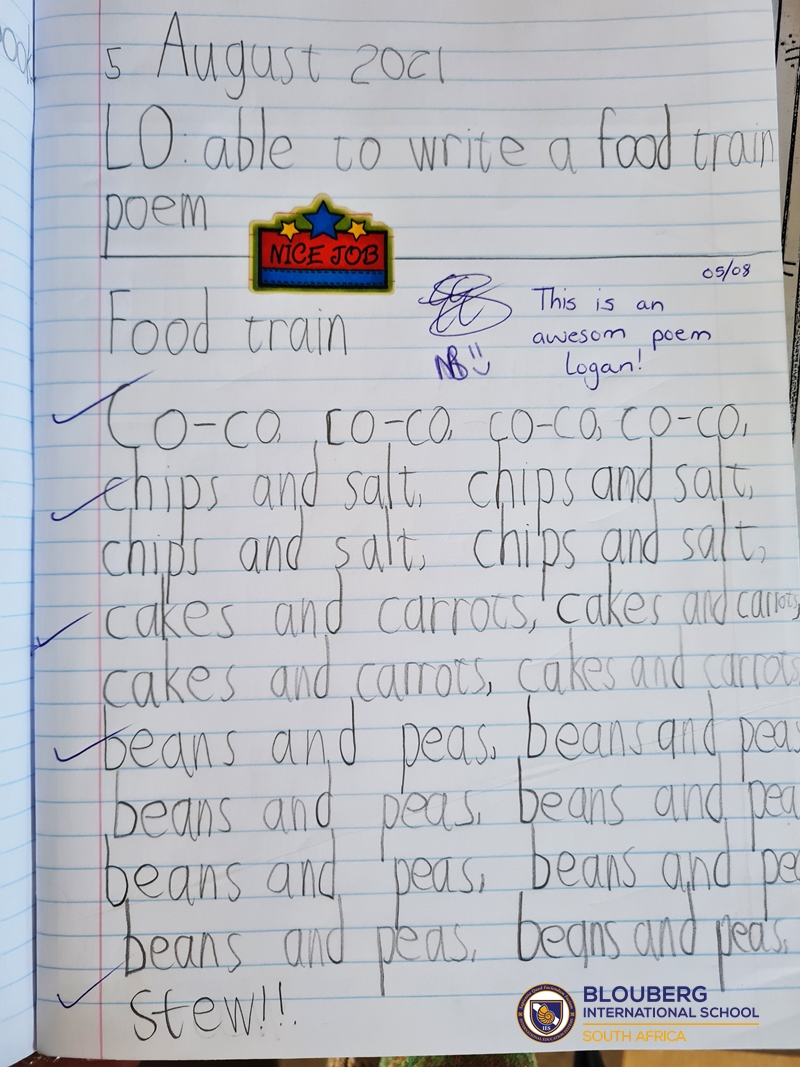
This past week we learnt about a Food Train Poem written by Julia Donaldson. This was a fun and creative way for our students to try recreating the idea of the poem using their own favourite foods. They came up with incredible Food Train poems and thoroughly enjoyed reading them out to the class.
The Food Train, poem by Julia Donaldson
THE FOOD TRAIN
COFFEE, COFFEE, COFFEE,
BREAD AND BUTTER, BREAD AND BUTTER, BREAD AND BUTTER,
BREAD AND BUTTER,
BISCUITS AND CHEESE, BISCUITS AND CHEESE, BISCUITS AND CHEESE, BISCUITS AND CHEESE,
FISH AND CHIPS, FISH AND CHIPS, FISH AND CHIPS, FISH AND CHIPS, FISH AND CHIPS, FISH AND CHIPS, FISH AND CHIPS, FISH AND CHIPS,
SOUP!
Erin Hierse
Year 2 Teacher


Read More

Writing About Harp Seals
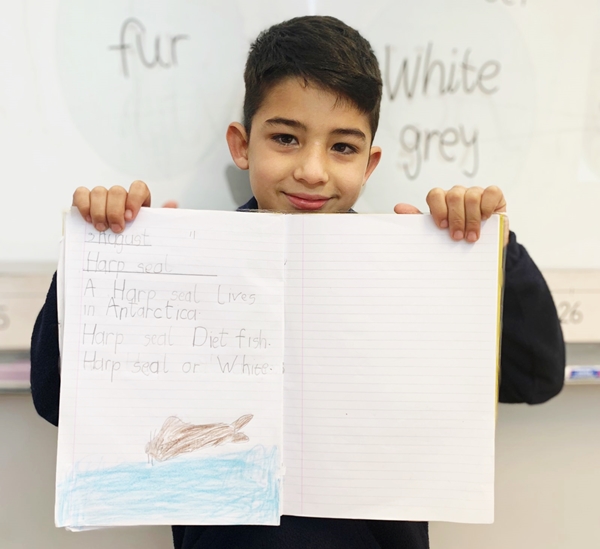
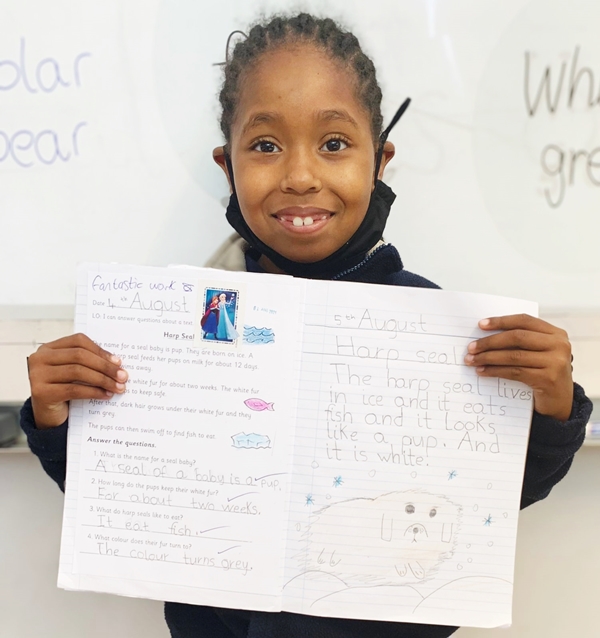
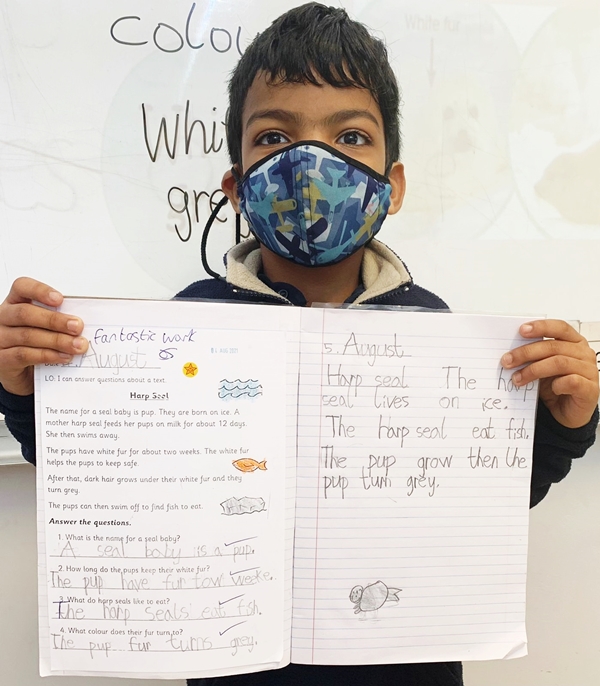
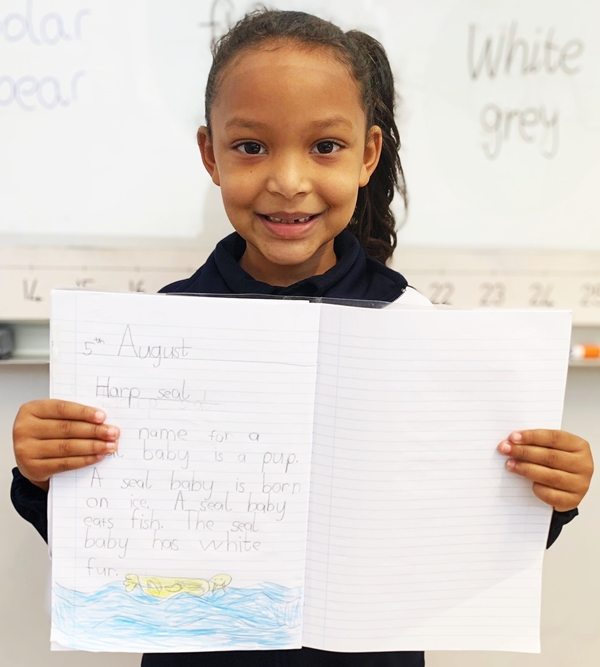
This week in Year 1, we have been writing reports about ‘Harp Seals’ in English.
My students in class had to produce their own reports including information about their habitat, diet and appearance.
Students need continuous experience in writing. They need the chance to experiment using what they know about writing and the opportunity to apply and practise their developing skills and knowledge.
My class worked really hard, using mind maps and I am very proud of their efforts.
Charlotte Cronje
Year 1 Teacher
Read More

Learning About Nesting Shapes In Year 2
“Children are confident in spirit, infinite in resources, and eager to learn. Everything is still possible.”
This week in Maths class, our Year 2’s learned all about nesting shapes. Nesting shapes are shapes of increasing/decreasing size that fit inside one another. They are perfect for teaching children various skills such as, fine motor skills, coordination, counting skills, spatial abilities as well as problem solving skills.
It is wonderful to watch the students nest, stack and sort all while learning some important math concepts. When using nesting materials, students aren’t simply playing or building – they are experimenting, they are problem-solving and developing critical thinking skills.
We had some fun learning about what nesting shapes are and where we can find them in everyday life. We looked at measuring cups, cookie cutters and even some Russian dolls.
In one of our Maths lessons we got super creative and made some of our own Russian dolls. We coloured them in beautifully, paying specific attention to the detail on each one and how they would all fit perfectly into each other. What fun!
Siobhan Hendry
Year 2 Teacher


A Warm Welcome To The Third Term Of 2021
I trust you were able to enjoy quality time with your family and are well rested.
On behalf of all our staff members, I would like to welcome back our high school students, who are currently online for now and will hopefully soon be back in class.
We have big smiles (and smiling eyes), positive attitudes and a group of children who have settled marvellously into the new normal.
We would like to welcome Mr. Louis Marais, our new junior high school Science, Maths and PE teacher and Ms. Michellene Williams, our high school IGCSE, AS and A Level English teacher, to our team and wish them the very best for the term to come.
Also, sincere congratulations to the newly elected Interact Board Members for 2021-2022:
Rifqah Price – President
Ayanda Gumede- Vice President
Altesse Cimbalanga – Secretary
Oscar Berger – Treasurer
Ben Cimbalanga – Board member
High School parent-teacher meetings for Term 3 will take place over the following dates:
26/07/2021 – 08:00 – 16:00
27/07/2021 – 08:00 – 16:00
28/07/2021 – 08:00 – 16:00
Parents are kindly requested to book meetings with subject teachers via the Engage platform. Further communication regarding the booking process will be sent out on Friday, 23 July 2021.
As an outstanding school, we value the holistic education and growth of our children and I want to thank all parents, students and staff for working endlessly and incredibly hard to continue to maintain a very high standard of work in the school and also at home.
Carmen de Villiers
High School Coordinator

(PHOTO: BIS INTERACT BOARD of 2022 – Top Left to Right: Altesse, Oscar & Ben; Bottom Left to Right: Rifqah & Ayanda)
Read More
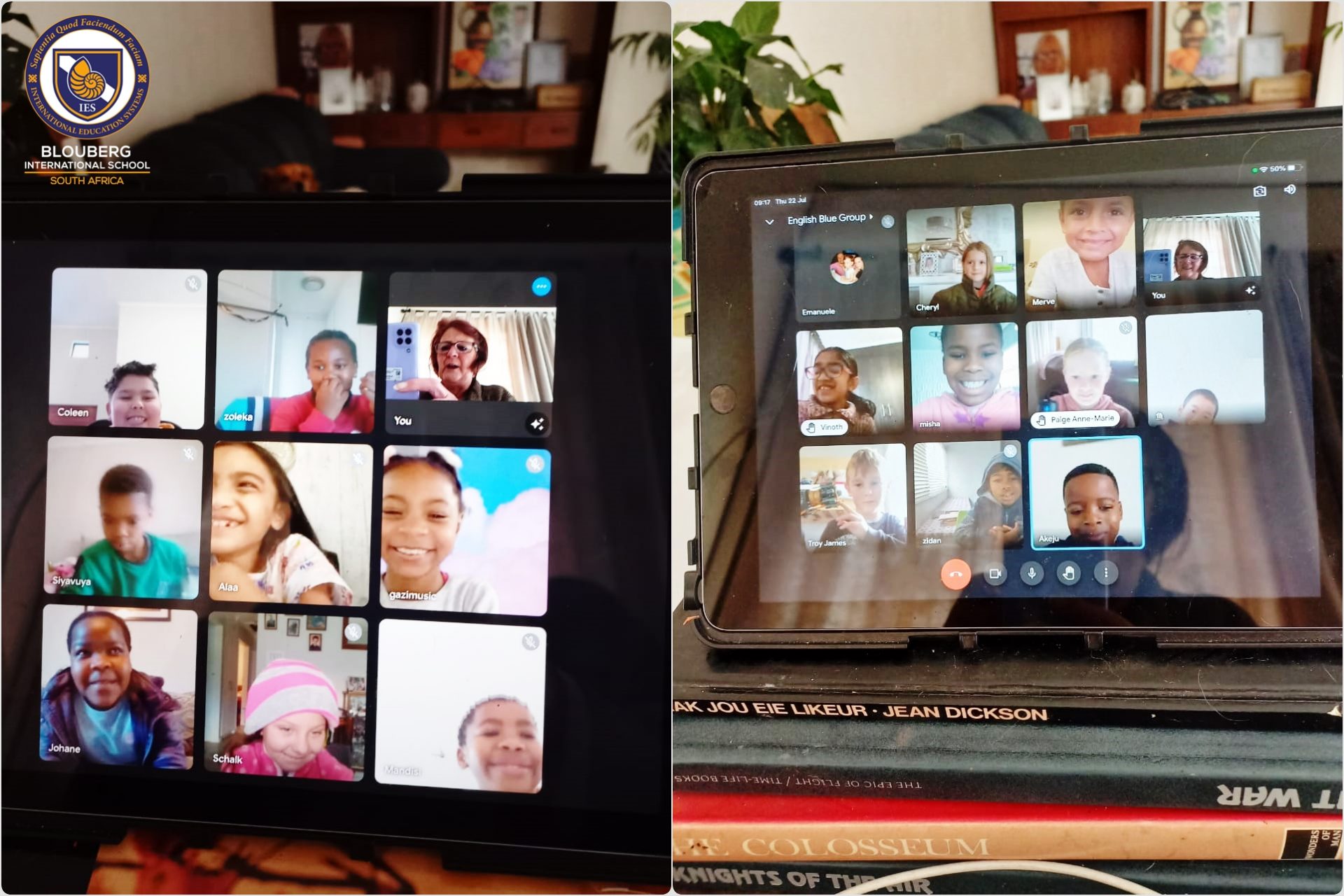
Year 2’s Rock Online Learning!
We sometimes tend to underestimate our children’s ability to adapt to change and forget how resilient they are. The dreaded ‘online learning’ loomed over our heads during the holidays. Would we? Wouldn’t we?
Of course, I can only speak for us teachers and have no idea how much effort, bribing or even begging, parents have had to resort to, to ensure their children are online and also complete their work daily. So, our heartfelt thanks go to all the parents, grandparents, family members and friends who are supporting the children during this process.
I have really enjoyed the one-on-one chats I have had with my class over the last few days. In a classroom situation, often there just is not enough time to listen to every child’s story or viewpoint.
Yes, it is stressful for parents and teachers alike, but if I compare Term 3 now, to the hard lockdown during Term 2 last year, I think we have all come a long way.
We look forward to welcoming our students back into the classroom and sincerely hope it will be sooner than later.
Kim Coetzer
Year 2 Teacher

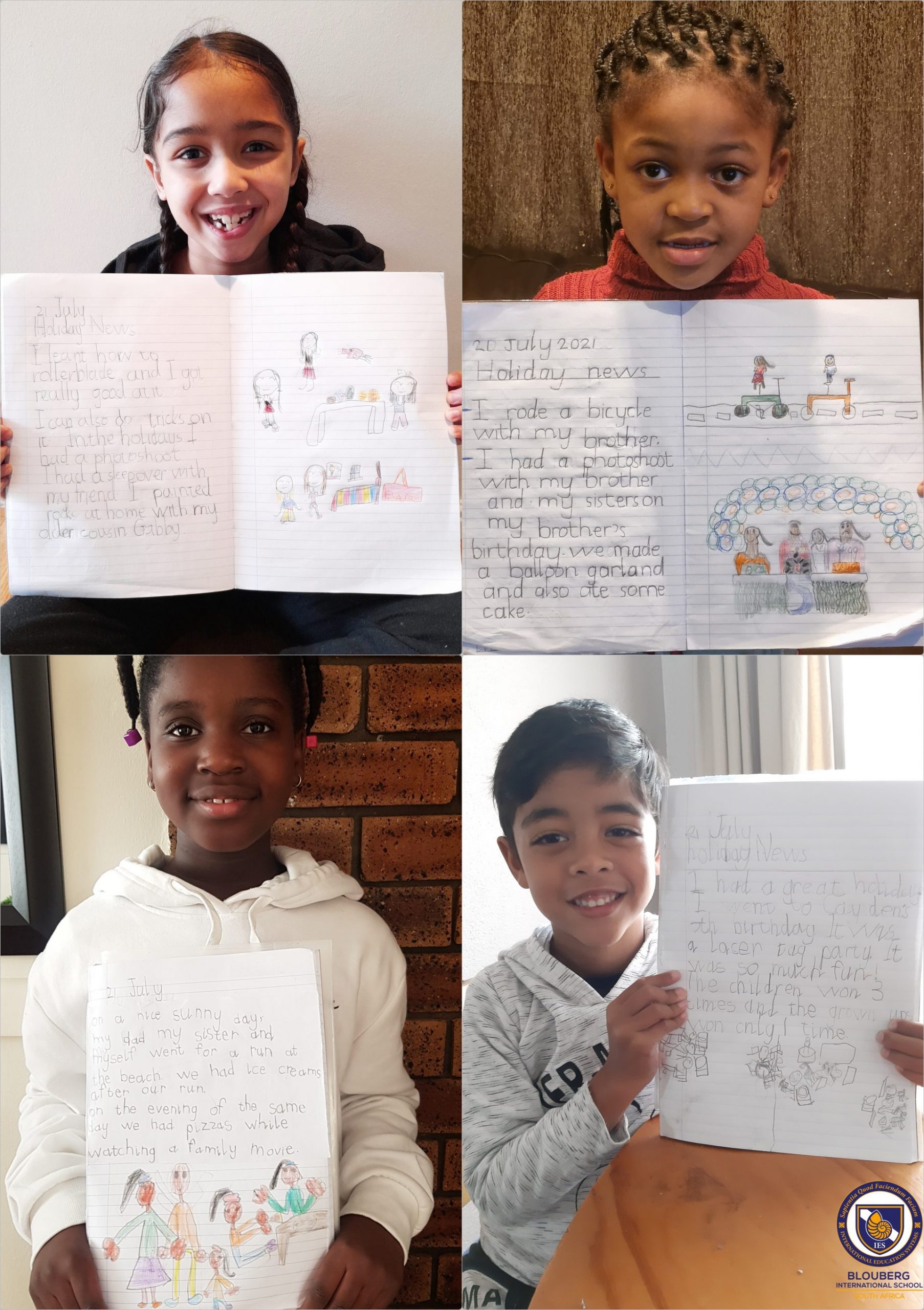
Holiday News
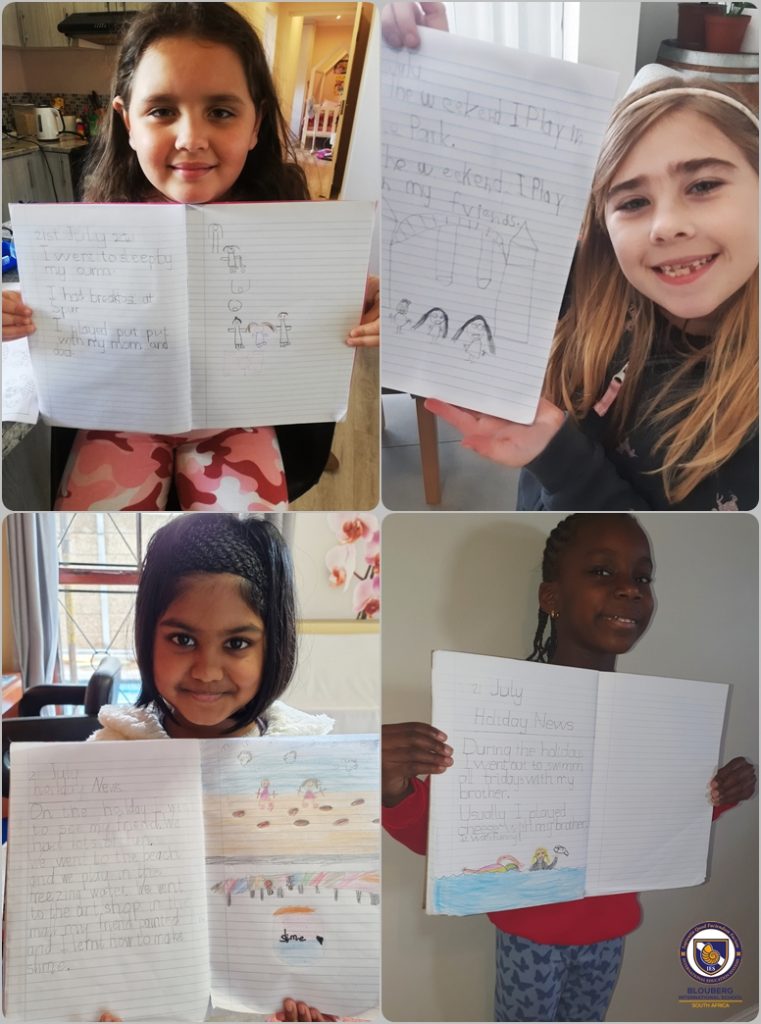
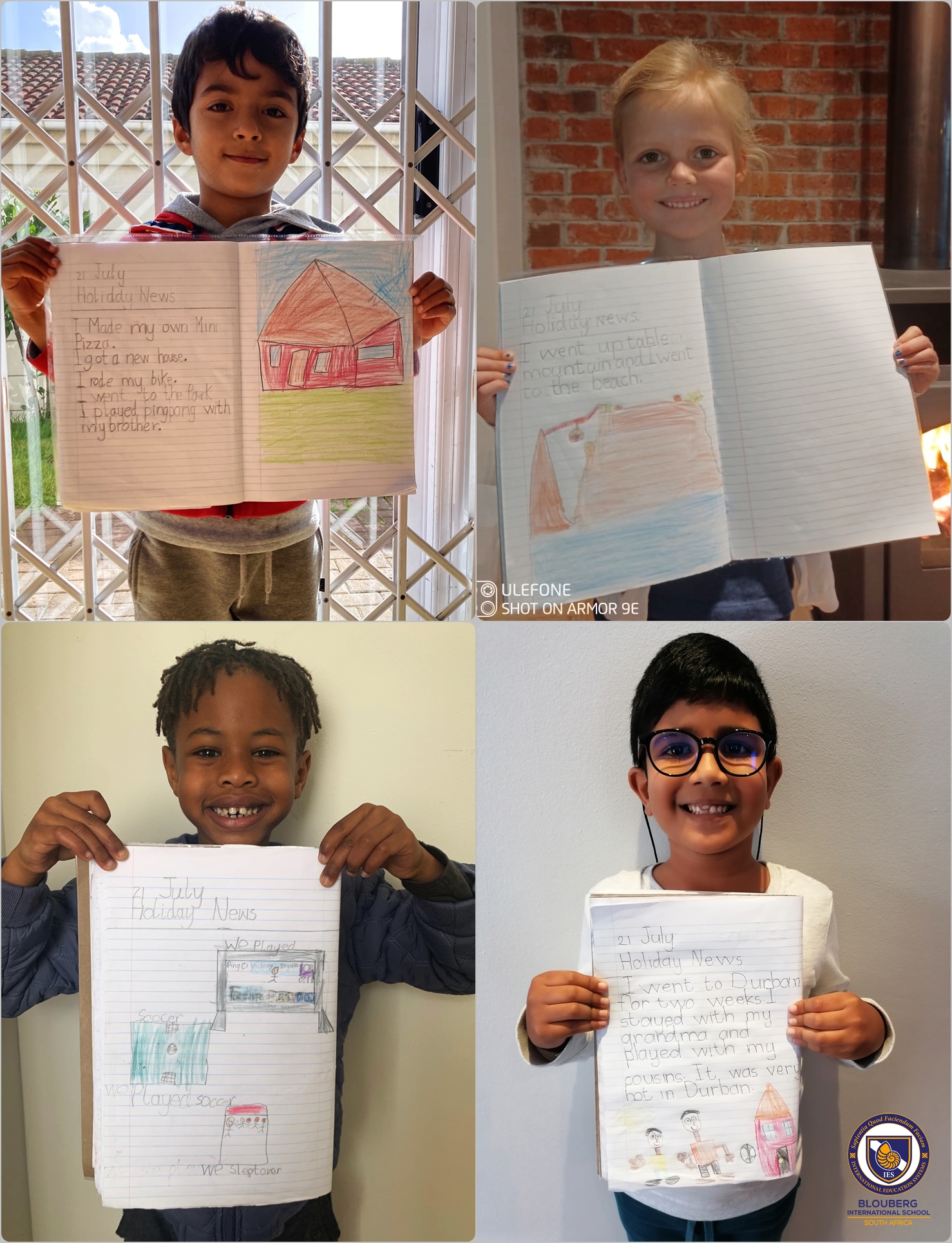
The winter holidays are often a challenge for many parents especially when there are rainy days. However, the Year 1 students enjoyed the time at home and had lots of fun.
Usually on the first day back at school, they love to share their news with their peers, but could not do that with online learning. Instead, they have practiced their writing skills and wrote about the highlights of their holiday.
Ann Cordner
Year 1 Teacher

End Of Term News
I think we can all agree that this term has flown by, and I can’t quite believe that we are already halfway through the year. It has been a busy term with prelim examinations, internal June Examinations and external Cambridge Examinations taking place.
Term 2 reports will be available on Engage on Friday, 25 June 2021. A letter was sent out on Engage explaining how to access your child`s report. If you experience any problems please contact Ms Trindade Camara on 021 557 9071 or at trindade.camara@iesmail.com.
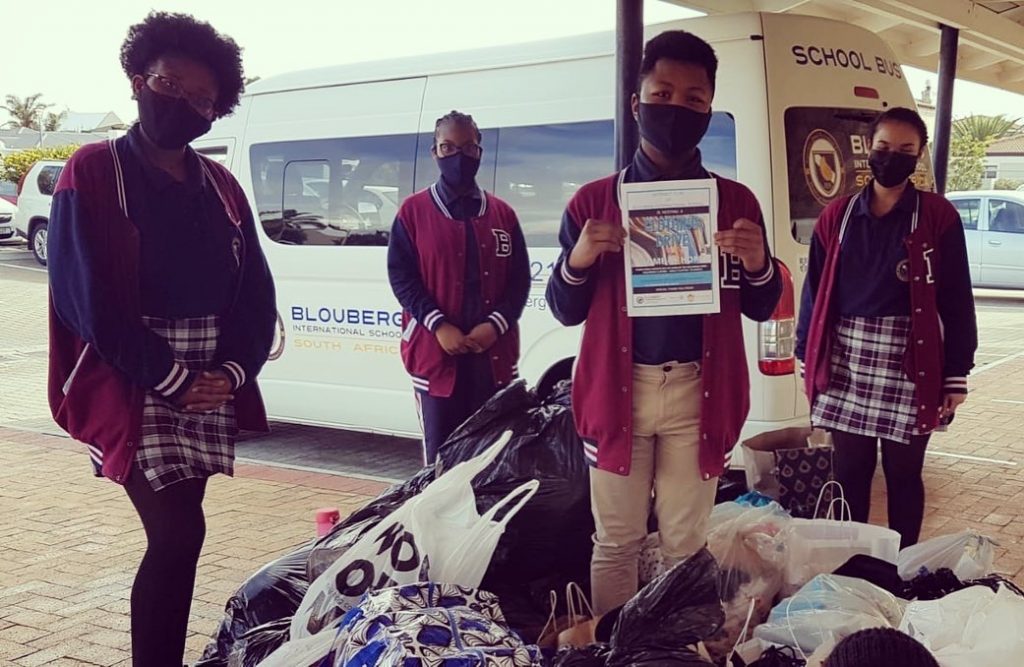
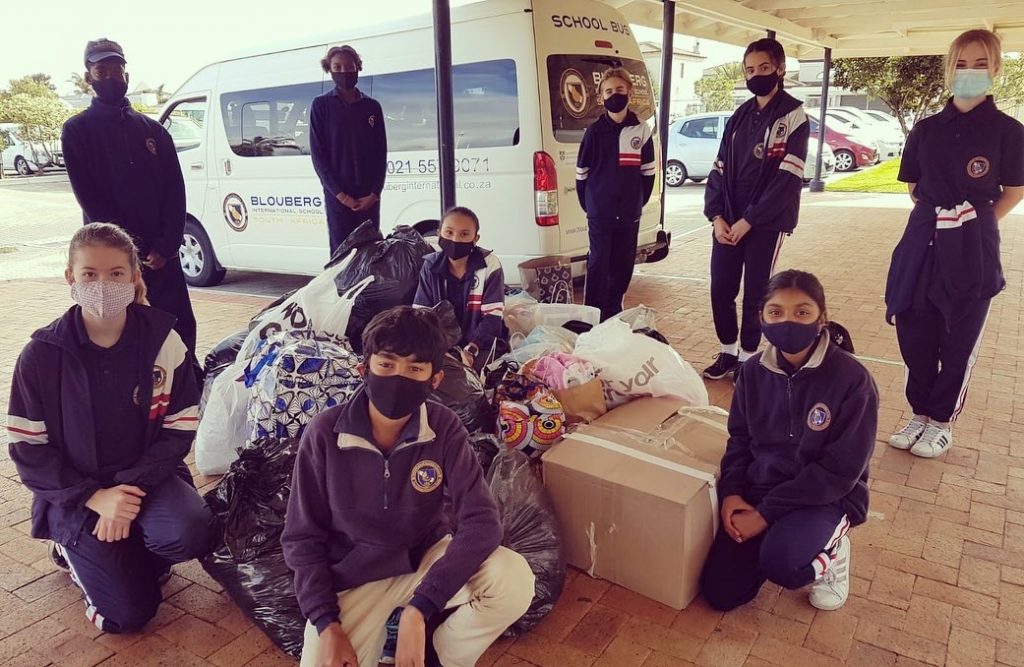
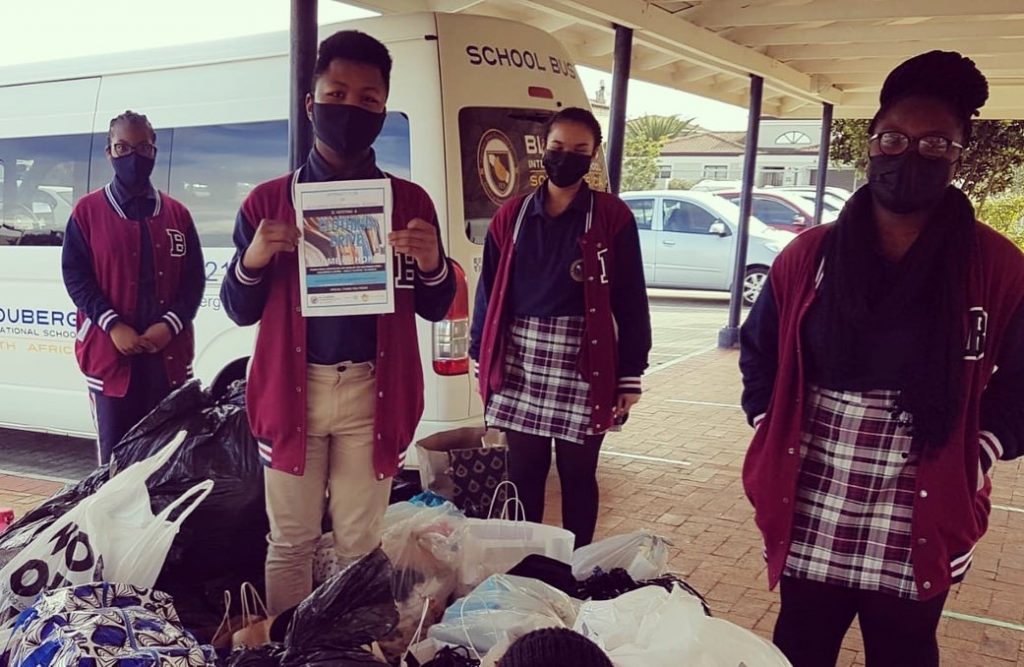
I also want to congratulate our Interact Club on a successful clothing project. Yesterday they delivered 38 bags of clothing to Home of Hope. A special thank you to the parents who donated clothing and other items.
As a staff would like to thank each and every parent for their support during the term and we look forward to working with you in Term 3.
Julian Harrison
Head of Academics High School
Read More
Working With Clay
“There is a relationship between sight and touch, something about eyes being able to see through the fingers touching the clay, about fingers being able to feel what the eyes are seeing without the fingers actually touching it.” – Jose Saramago
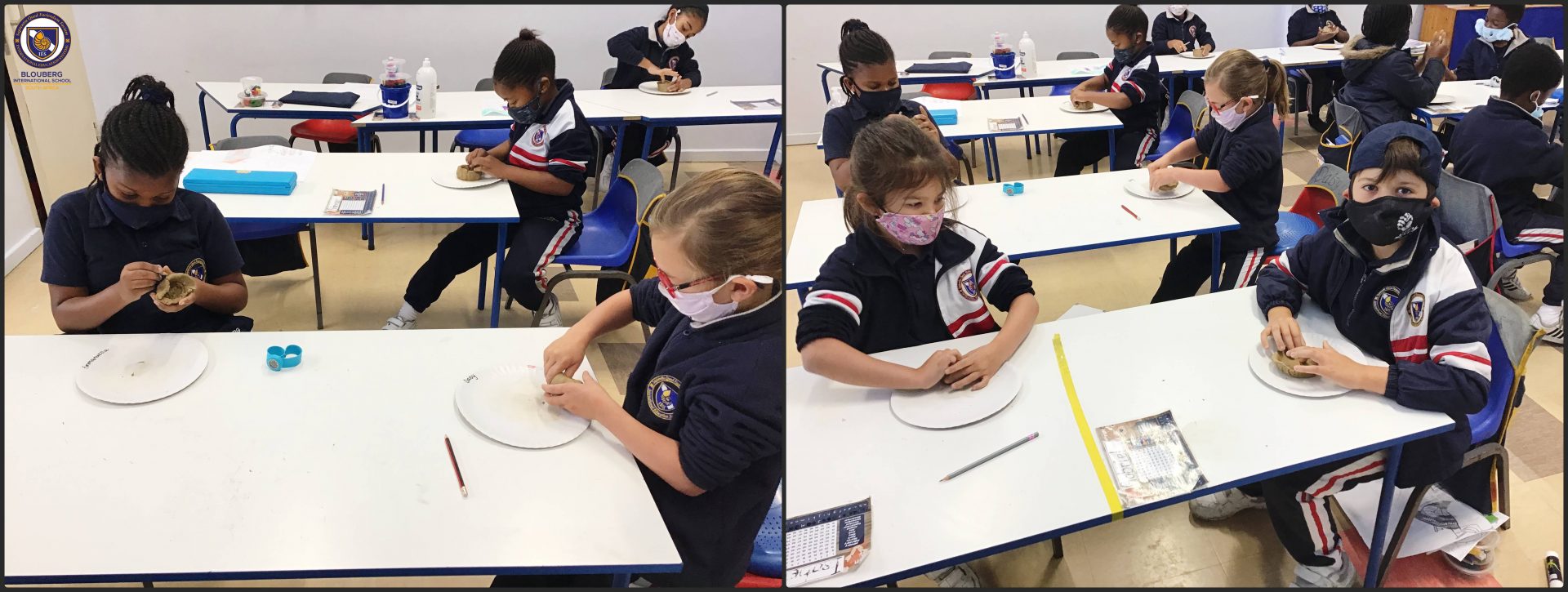
During the Term, our Year 2 students learnt about Manipulating Materials in Science. The students were enthusiastic and showed an eager attitude towards this concept, so to end off the Term, the Year 2 students were given some clay to manipulate into making a small bowl, which they would later paint if they wish to.
Clay plays an important role in developmental growth in students from a young age. Manipulating (squishing, squeezing, pulling, pushing, etc.) helps develop a student’s large and small muscles, fosters eye-hand coordination, builds on fine motor skills and it helps teach to them the ability to focus.
The use of clay with infants and toddlers allows for discovery of body awareness as it provides a tactical experience. The older the student gets, the more creative he/she may find themselves when manipulating clay which is extremely important for the developmental growth of all students.
“Learn to humble yourself, you are but earth and clay.” – Thomas Kempis
Erin Hierse
Year 2 Teacher


Energy Robots
The Year 7’s were given a Science project to create their own “Energy robots”. This fun and integrated project was a means to assess their understanding of the different forms of energy that they had just learnt about in class.
They had to design, draw and then build their own robot that could produce at least three different forms of energy; such as heat, sound or light energy. All of the students really thought “out of the box” and incorporated a range of innovative ideas.
I was extremely impressed by the final products of the year 7’s, they really seemed to enjoy using a bit more of a creative side to learning about energy.
Tayla Shergold-Smith
Year 7 and 8 Mathematics and Natural Science Teacher