

Year 2 Science Experiment
“Science is simply the word we use to describe a method of organising our curiosity” – Tim Minchin
This week for science our Year 2 students were asked to do a fun home experiment on Dissolving Matter. The test was to see which out of the given products would dissolve in a cup of water. Each child was given a worksheet where they could state their prediction of the probability of the product dissolving in the water, and also where they could record their findings after testing each. At least 5 or 6 cups of water was needed, placing each product in one cup at a time and stirring thoroughly. Some of the products used included salt, coffee, hot chocolate, soap, cooking oil, sugar and chalk. This is an exciting and fun way to watch as the product either sinks to the bottom, rises to the top or dissolves into the water completely. The important part is to watch and record as you’re going to make sure you’ve learned from your experiment and are able to ask more questions that will lead you to the next one.
Curiosity and discovery go great together. Much fun was had by all!
Siobhan Hendry
Year 2 Teacher


Two Oceans Aquarium Outing 2020 – High School
On Tuesday the 10th of March the year 9 to 12 Biology and Business students, together with the 9 and 10 Geography students, visited the Two Oceans Aquarium.
Among the most interesting things that were discovered was that fish have their own personalities, such as the fish that loves cuddles! About Yoshi the turtle who was released back into the wild 2 years ago after 20 years in captivity and has since traveled a record breaking 37 000km!
We learned how the marketing team at the aquarium aim to not only promote the aquarium to attract customers, but also how they use this platform to communicate about causes that are close to their heart. A few causes they mentioned were sustainable fishing, single use plastic and environmental sustainability.
Another interesting fact is that South Africa ranks as the 3rd most bio-diverse country in the world.
The Two Oceans Aquarium is truly a magical place with so many treasures to enjoy!
Exploring Our World
The Year 4’s have had an exciting first 3 weeks of school. We’ve started with an interesting topic in Science: Habitats.
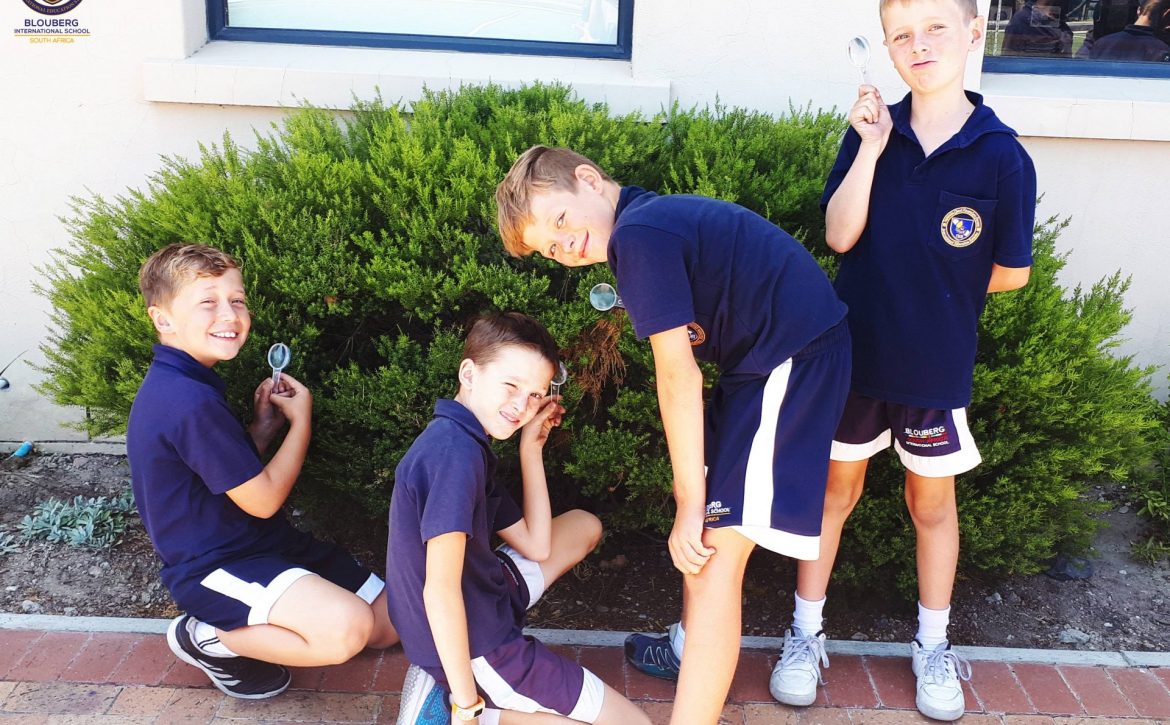
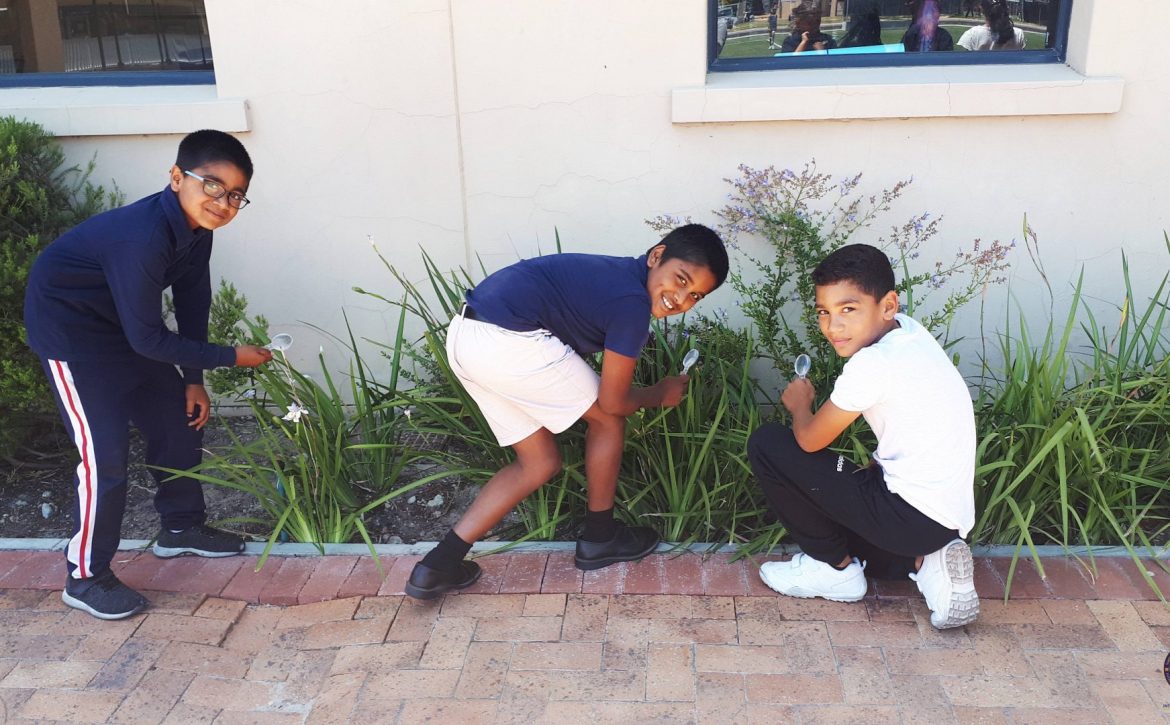
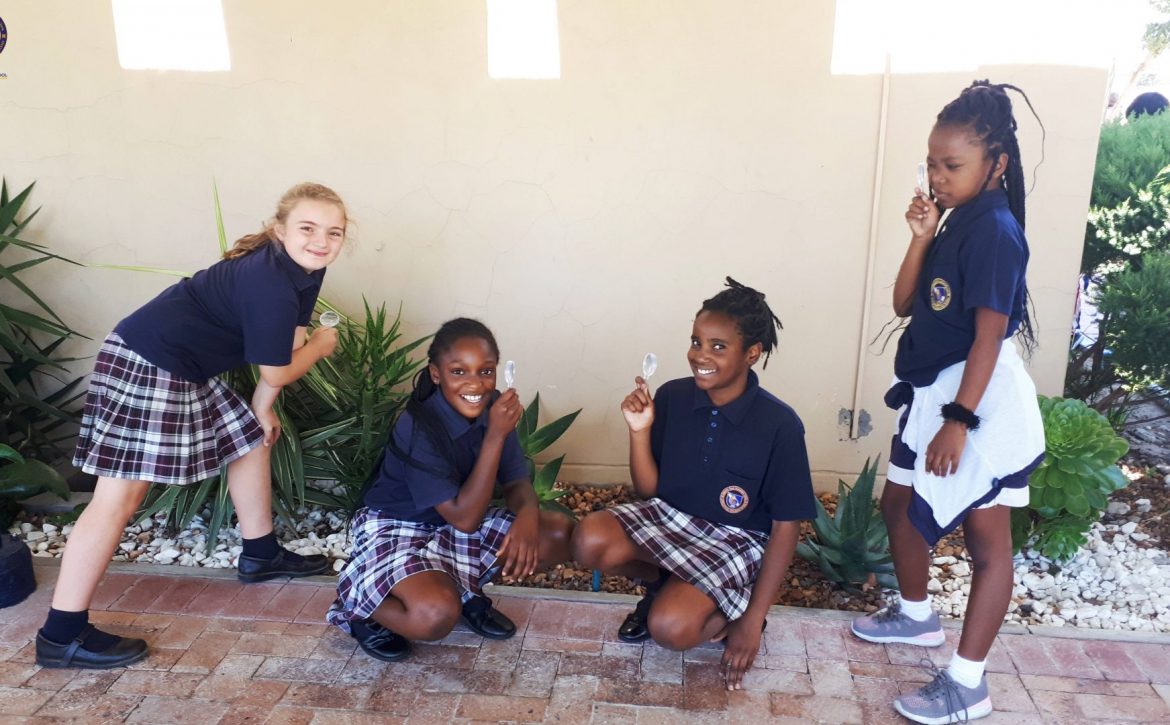
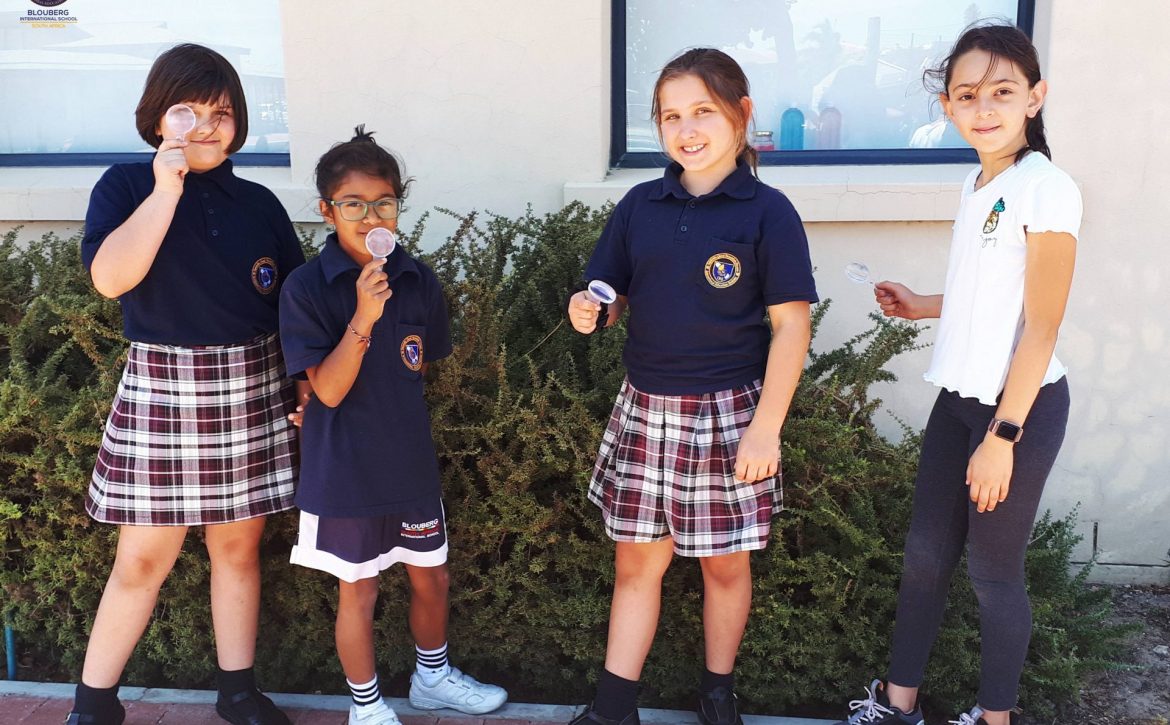
We’ve learned some new scientific terminology such as habitat, micro habitats and adaptations. Last week we got the chance to practically apply our knowledge by exploring the school’s garden. We found loads of animals and insects such as doves, swallows, beetles, butterflies, ants, moths and spiders! Once back in class, we had to draw the habitats and list all the animals we found.
Mrs Schoots also spoke about her class’s pet rats and how they are adapted to live in a cage and what makes them different from rats living in nature. It really helped us to understand how some animals might be able to survive in more than one habitat. We will continue with this topic for the next few weeks.
We are so blessed to live in a country with such a vast variety of animals and plants. It is important that we respect these animals and their habitats – no matter how small they are!
“Animals are such agreeable friends—they ask no questions; they pass no criticisms.” –George Eliot
Ria du Plessis
Year 4 Teacher

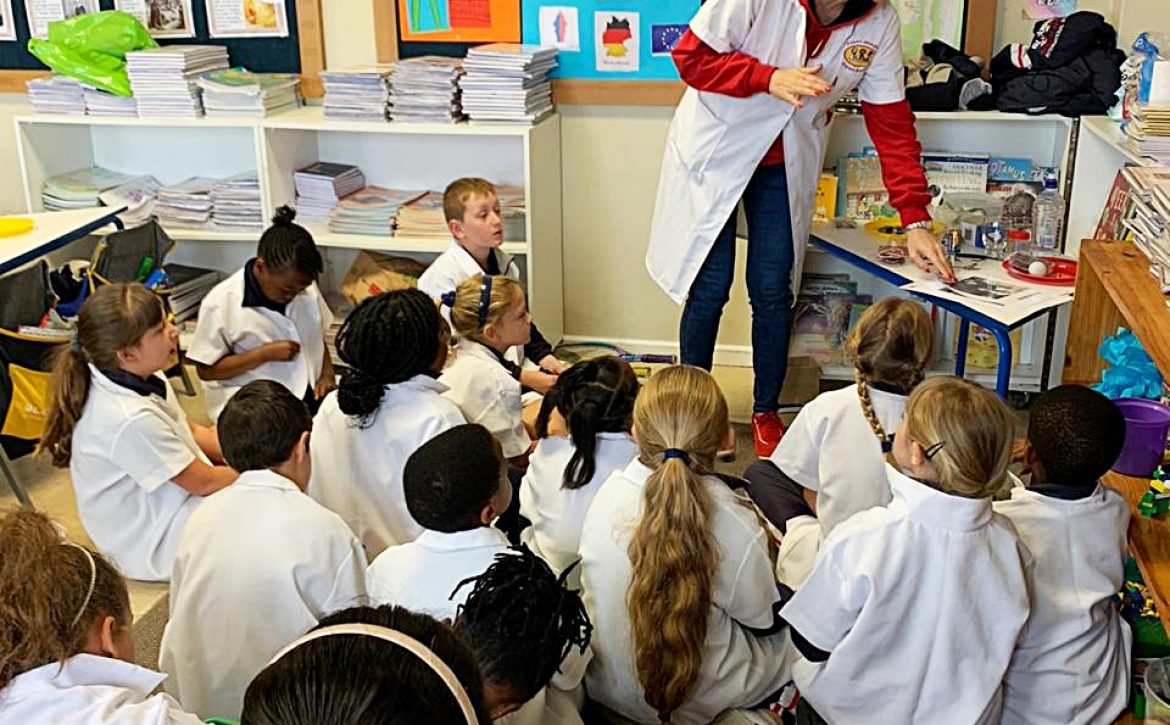

Year 2 Experi-buddies Inting
“Our greatest weakness lies in giving up. The most certain way to succeed is always to try just one more time” – Thomas Edison
In science, this term, our Year 2’s are learning about all the wonders of electricity! We are so excited for fun in class and exciting new experiments.
This week we enjoyed a visit from the Experi-buddies team. Our Inting started with a small demonstration from the team where we learnt about what Electricity is and who Thomas Edison was. After this we got into batteries and how we can use them to power up light bulbs, set off buzzers and even power up a small fan.
Our favourite part was when we got to go back to our tables and start experimenting with our own batteries and light bulbs. We learnt about open and closed circuits and exactly what we need to make the light go on. We also learnt about solar power and how that works, after experimenting with light switches too.
It was so much fun learning about things we are able to find and observe in our everyday lives!
Visit the link to learn more about Experi-buddies:
Siobhan Hendry
Year 2 Teacher

Electrical Excitement
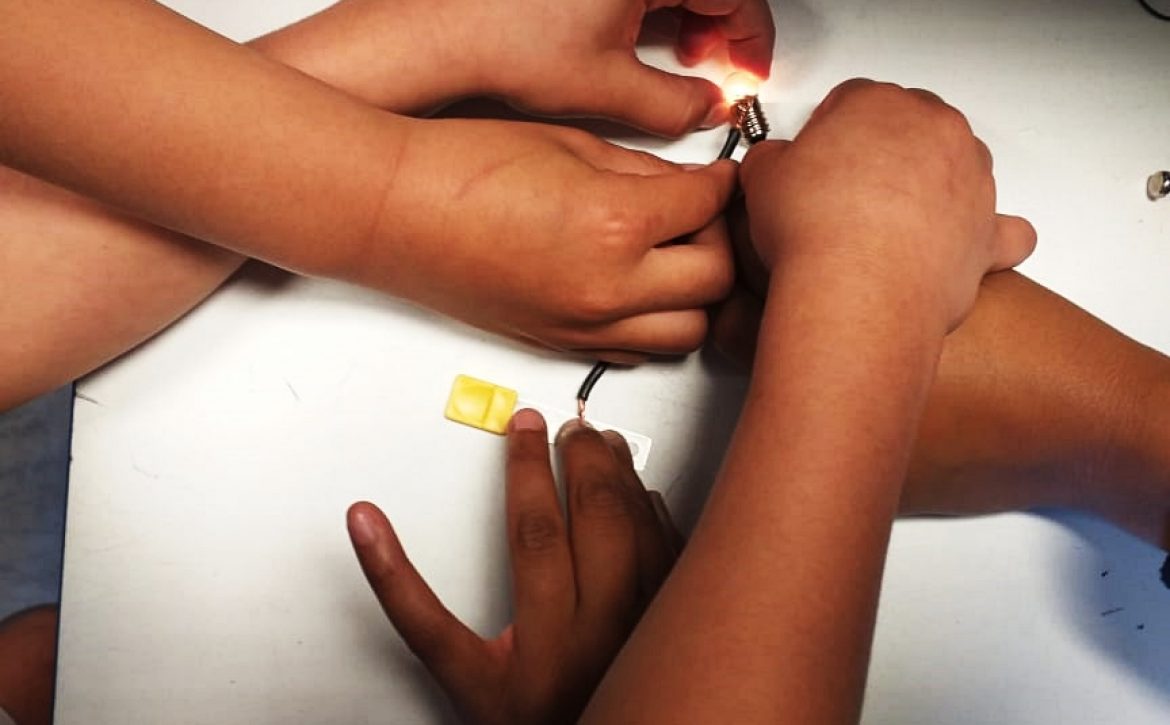
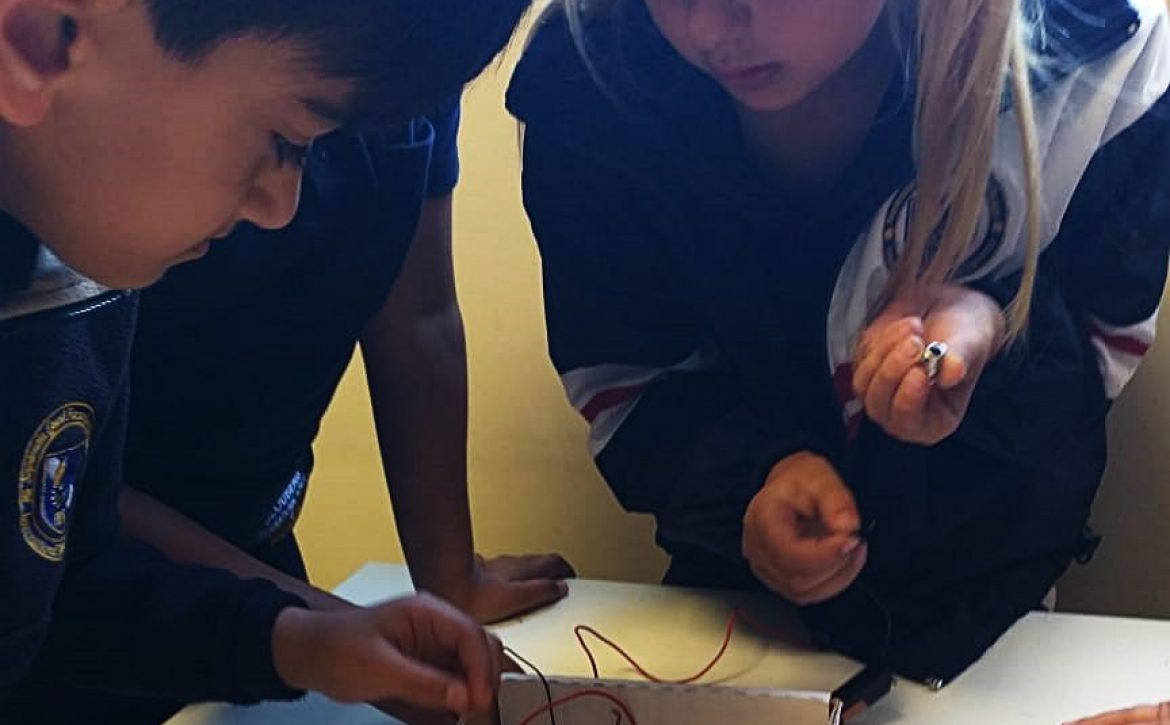
The Year 2s are learning about electricity and simple circuits. Mrs. Baker’s class were guided safely to discover how electricity works.
The class was divided into four groups. They were given: a small light bulb, some wires, a battery, a battery holder, and a switch. Their task? Make the light bulb glow!
Much consternation, frustration and excitement followed. Each group was determined to be the first group to get the light bulb to glow. Mrs. Baker soon realized that a couple of tips were needed. The students got back on task, and before long, an excited shout could be heard as one of the groups were able to get their bulb to glow.
Why do such an activity in Year 2?
Science allows for many skills to be integrated in one subject. Students were expected to collaborate to complete the task. They had to problem solve and critically analyse what they were doing to change what wasn’t working and improve on what they had done so far. Once the students saw that all the wires and metal parts had to be touching for the light bulb to glow, immediate cohesion was seen in the group with each child having to hold a wire or a battery holder or the bulb to make sure everything was working in circuit.
I don’t think these Year 2s will easily forget this lesson! Hopefully this will ignite their curious minds to ask questions and discover new things daily.
Gillian Baker
Year 2 Teacher


Sound In Science
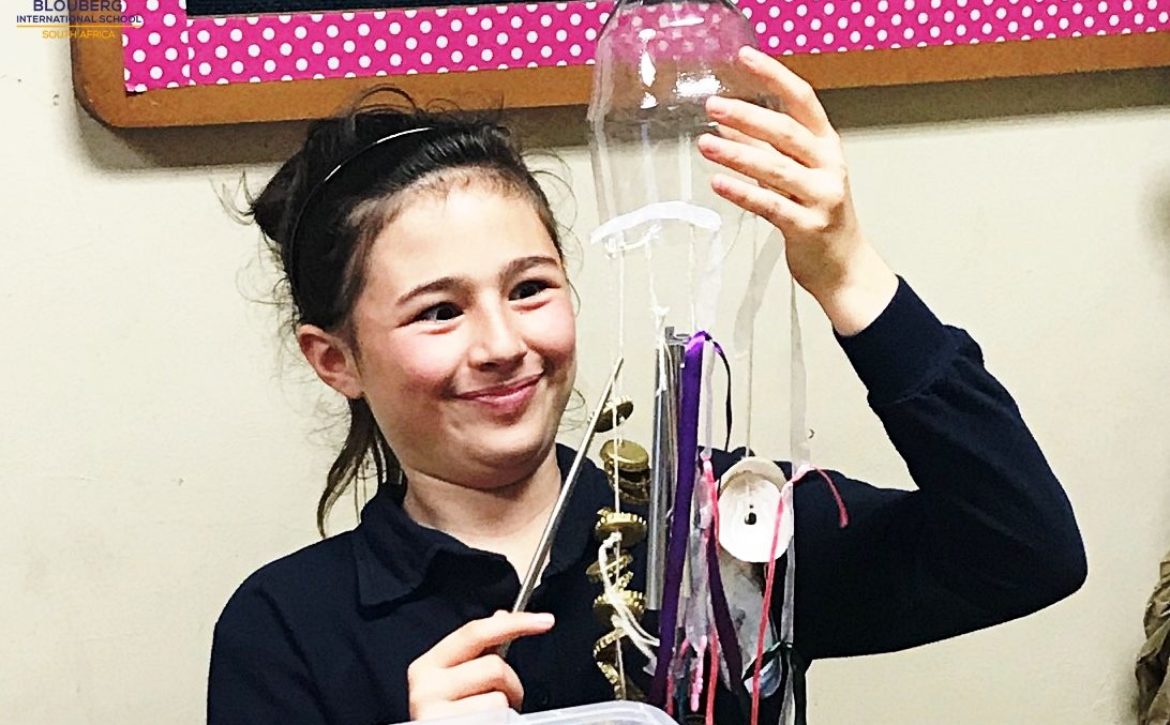
In Year 4 we have been learning about Sound in Science this term.
Sounds are made when things vibrate. A vibration is a quick movement that makes a backwards and forwards motion. Sound has different volumes and pitches and the size and shape of the sound waves determines the kind of sound we hear. Animals such as bats, dolphins and whales use Echolocation to help direct themselves through their surroundings. Echolocation is the process of using sound waves to find objects that are not in sight range.
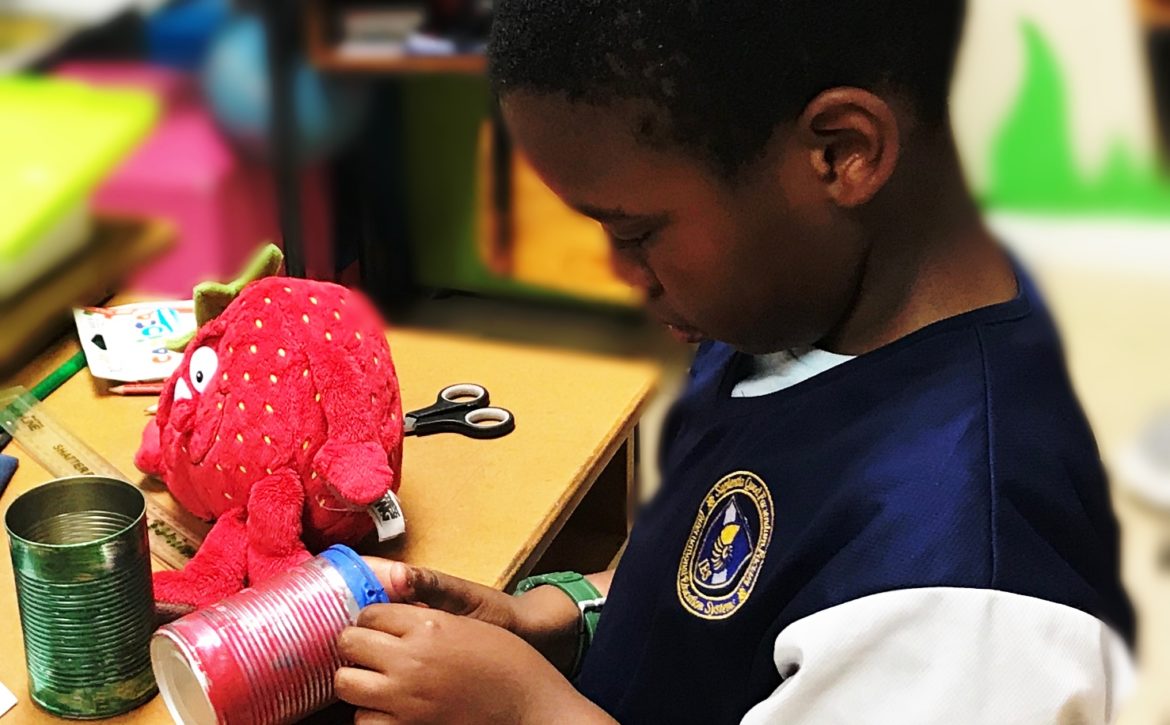
The Year 4’s have been investigating what causes pitch to change and how one can create music using that. They are now building their own creative instruments which need to be created from recycled materials and built in class. The students are not only learning from the teacher regarding the topic but they are also able to teach themselves when it comes to practical tasks such as this.
At this stage they are still busy building their own musical instruments and we are all very excited to see the final outcome.
“Tell me and I forget, teach me and I may remember, involve me and I learn.”
― Benjamin Franklin
Brittney Hakime
Year 4 Teacher

Science & Sundials!
“Have you ever played outside all day and noticed that the length and location of your shadow changed as the hours went by?”
You probably also noticed that the sun changed location in the sky throughout the day too. The sun’s change in location caused a difference in the size, shape and direction of your shadow.
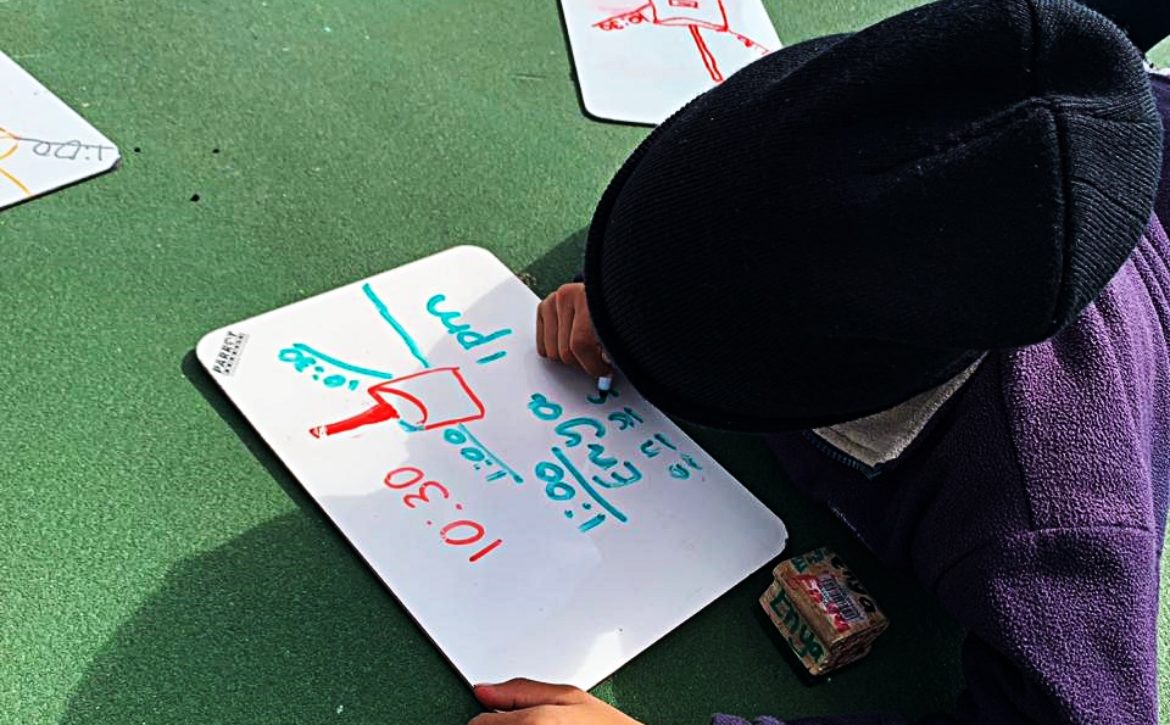
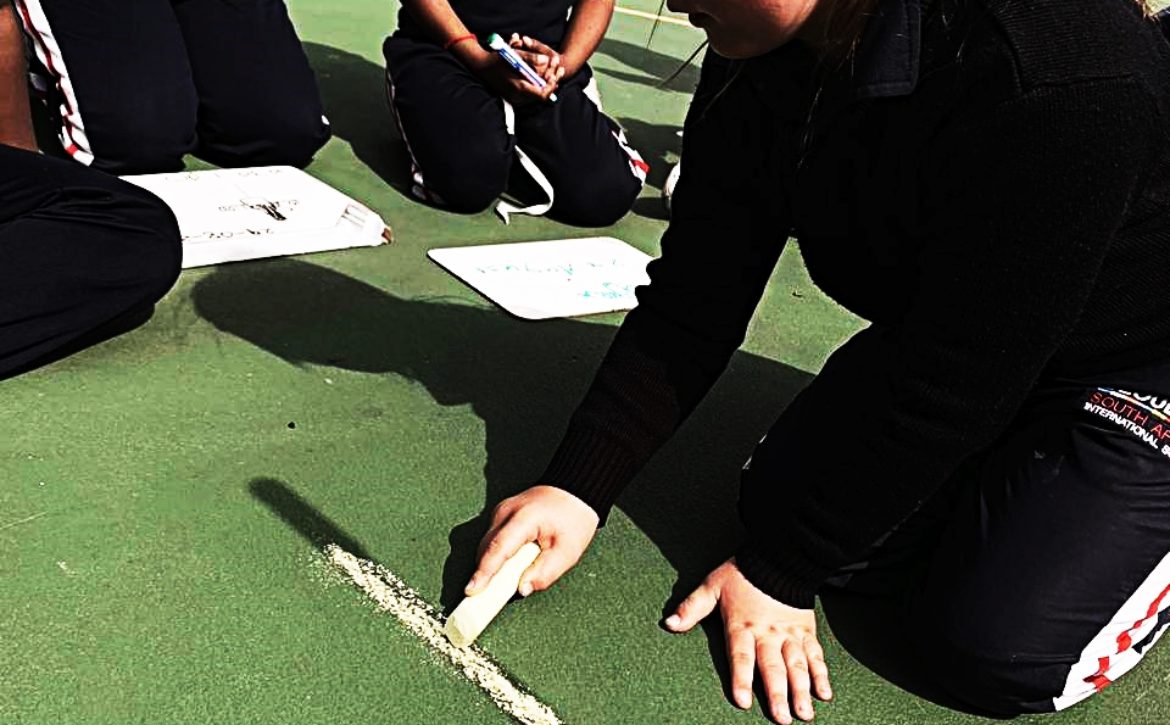
This week our Year 2’s grabbed the opportunity to work with a real sundial and see first-hand how it works.
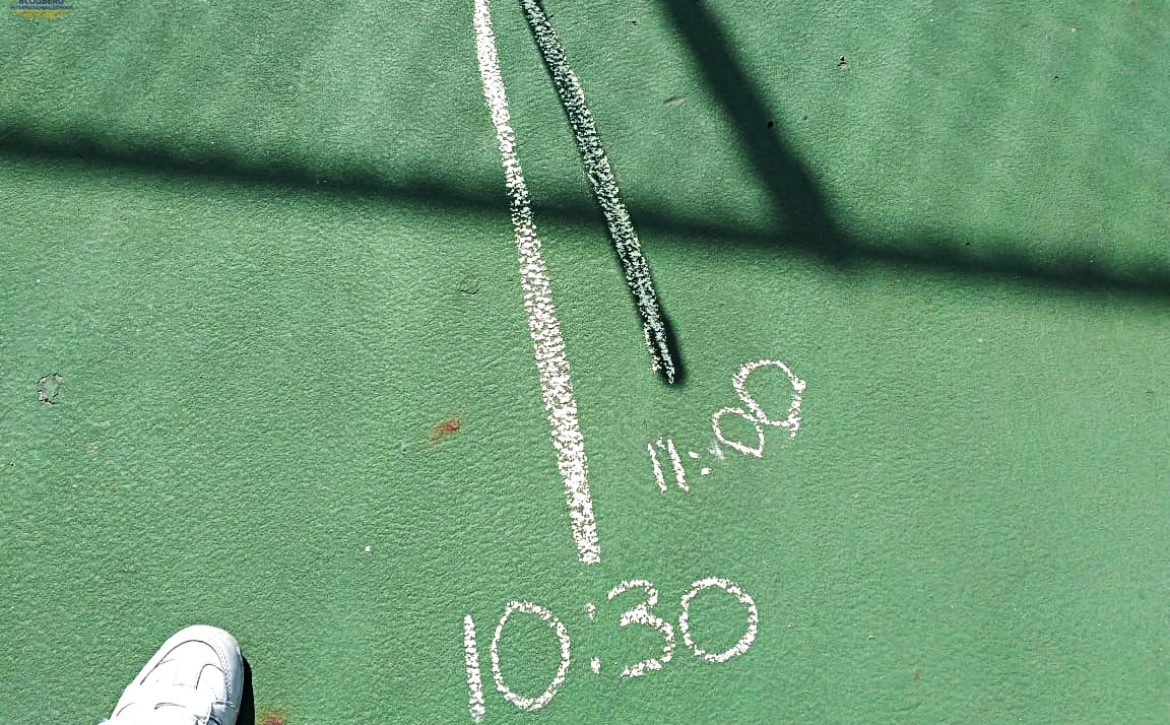
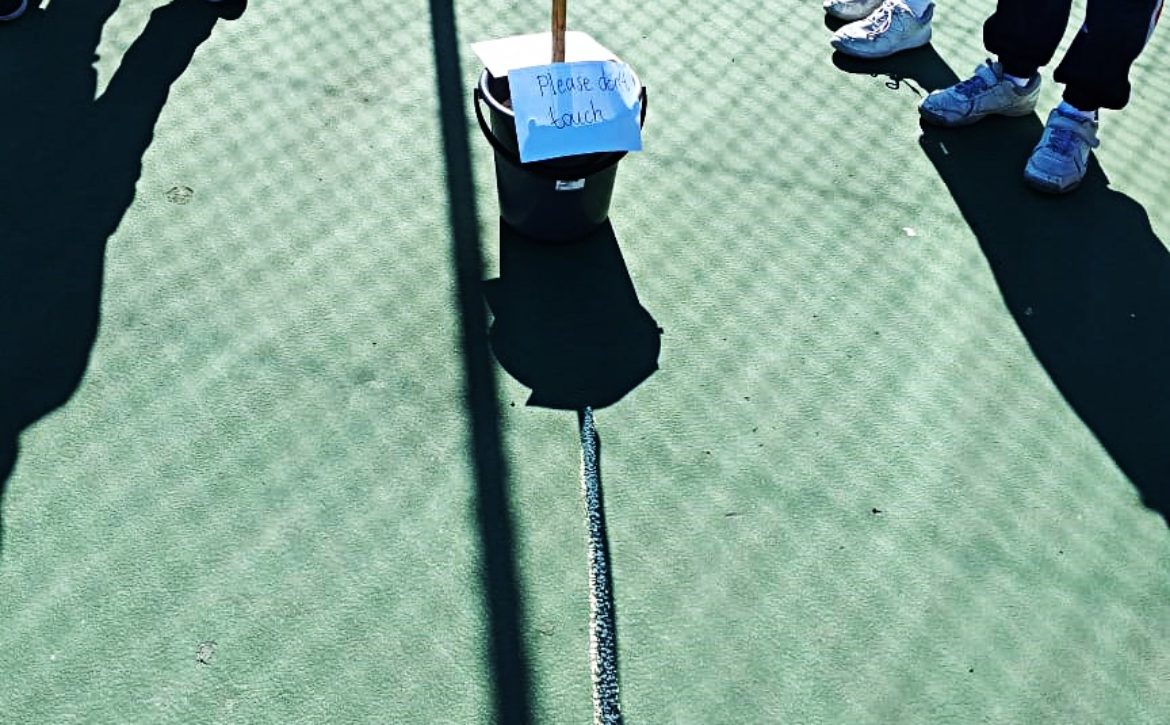
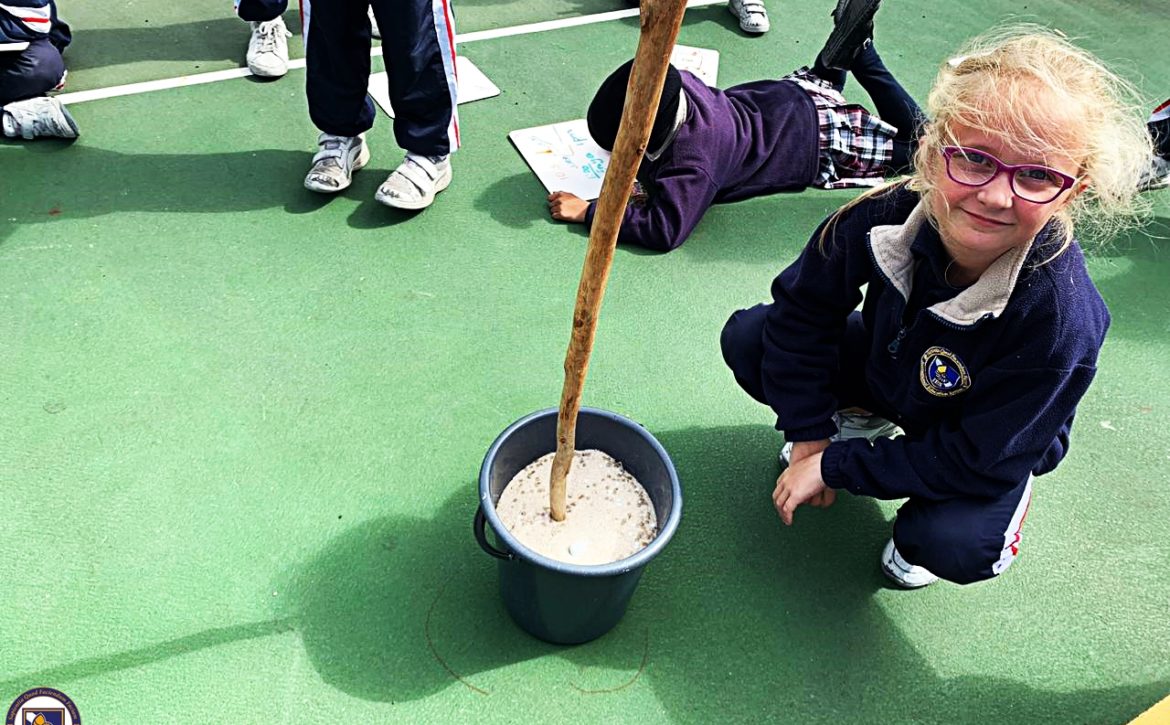
We set up a “home-made” sundial on our tennis court using a bucket filled with sand, holding a tall stick in its center. Each Year 2 class was taken out to observe this “make-shift” sundial at 3 different points in the day. Every time a child is chosen to draw a line in chalk exactly where the shadow of the tall stick is at that point. The time of observation is written next to the drawing, for the next class to come out a little later to observe and record their results.
The students thoroughly enjoyed the realism and practicality of this experiment. They enjoyed being able to go back to class and record the data they had collected, drawing pictures for each observation taken. They have now seen, first-hand, the way in which a shadow moves throughout the day as well as how and why the sundial came about.
Sundial for Kids: Facts & History
https://study.com/academy/lesson/sundials-lesson-for-kids-facts-history.html
Siobhan Hendry
Year 2 Teacher


Physics – What is it?
Physics is a branch of science concerned with the nature and properties of matter and energy. The subject matter of physics includes mechanics, heat, light and other radiation, sound, electricity, magnetism, and the structure of atoms. The world of Physics is an exciting but daunting field of study and spans many different aspects of our universe.
We develop different theories to understand and predict the world around us. Experiments are then conducted to validate or disprove our original theory. Theory, without practice would be very boring and very difficult. For this reason, we conduct regular experiments and visit industry where many of the theories can be seen in action and the power of our knowledge be harnessed to benefit mankind.
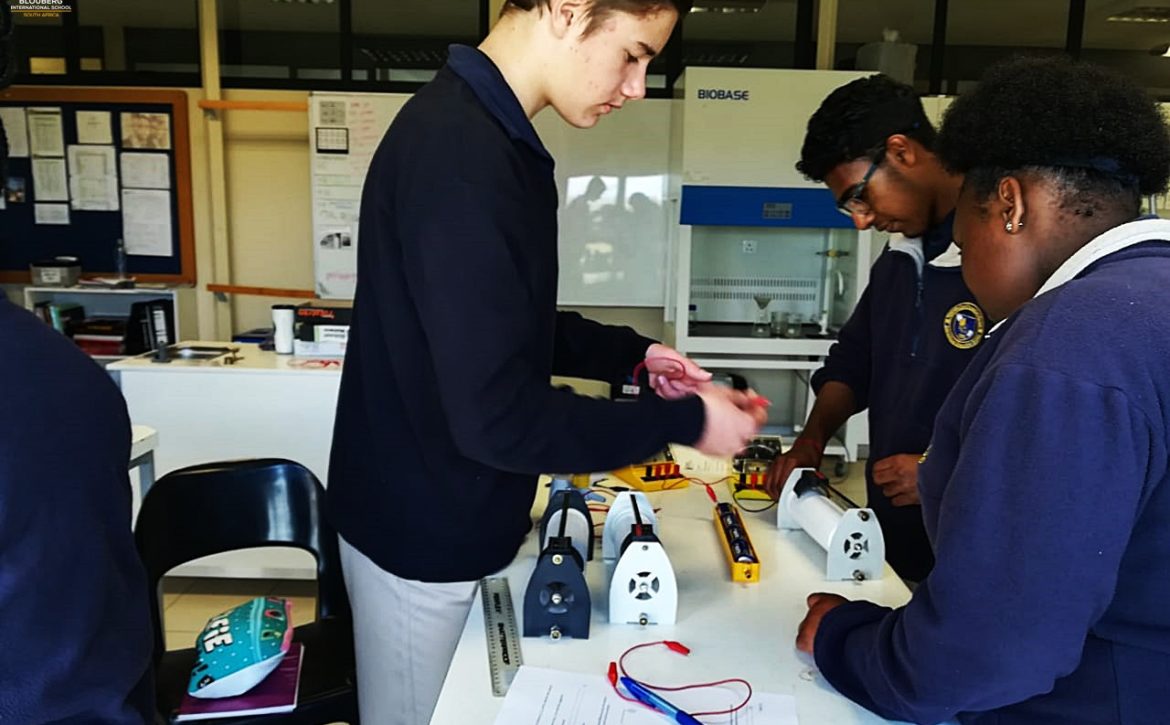
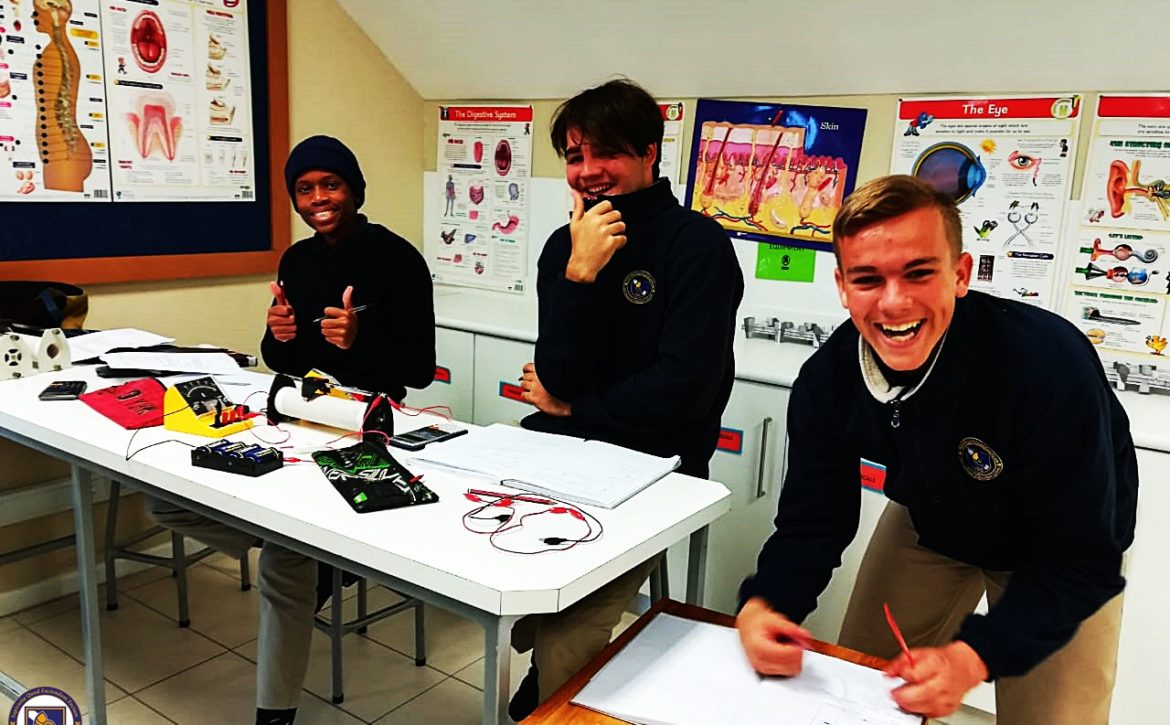
Our Year 10 & 11 students recently conducted experiments to prove Ohm’s Law. Definition: a law stating that electric current is proportional to voltage and inversely proportional to resistance.
For more information on the application of physics follow the link to this brilliant article.
https://www.topuniversities.com/student-info/careers-advice/what-can-you-do-physics-degree
Patrick Katzen
High School Physics Teacher
Read More


Our Year 2’s Maths & Science Week
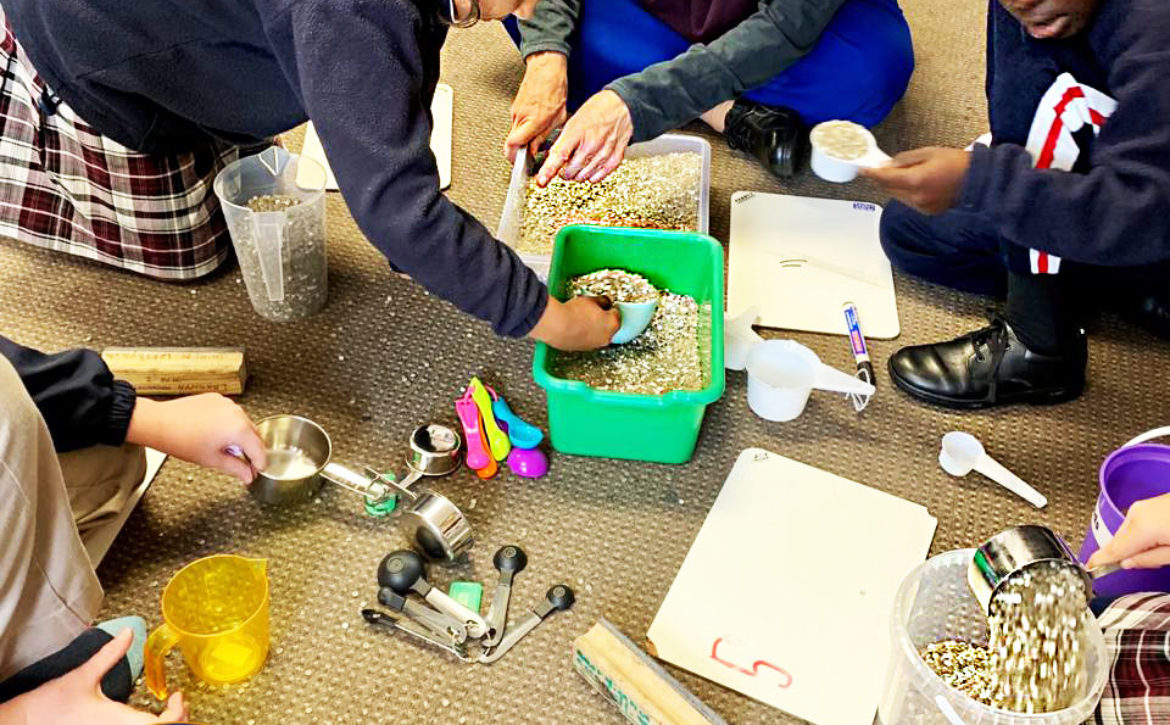
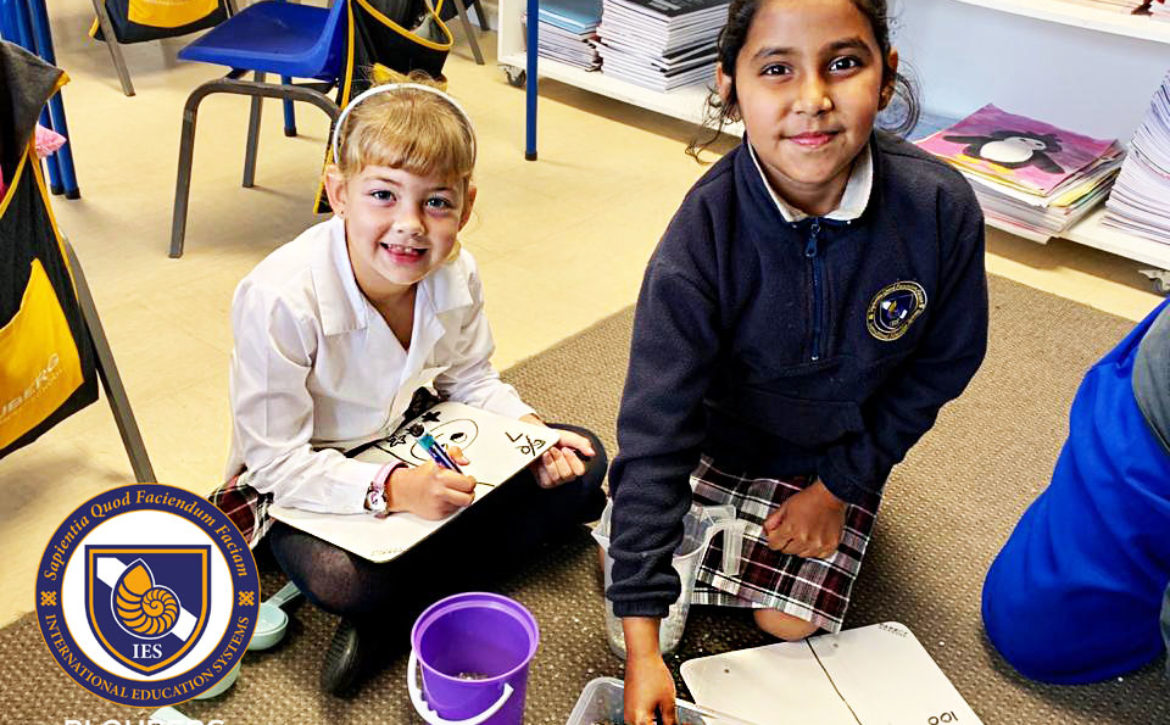
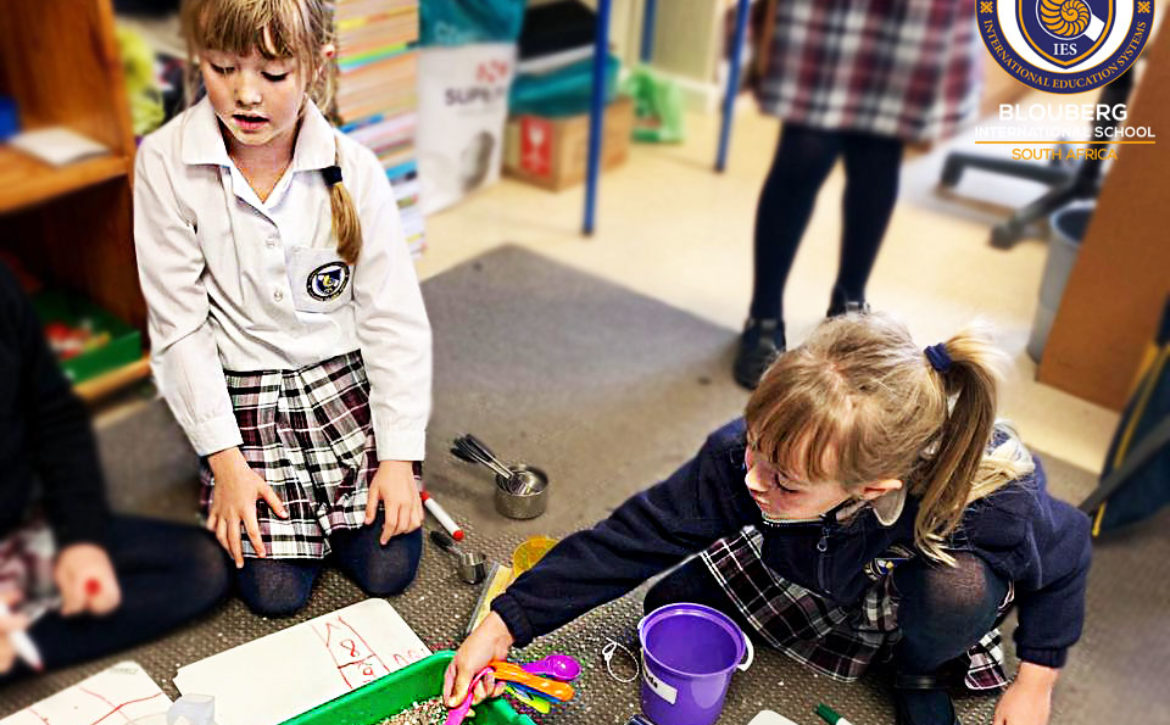
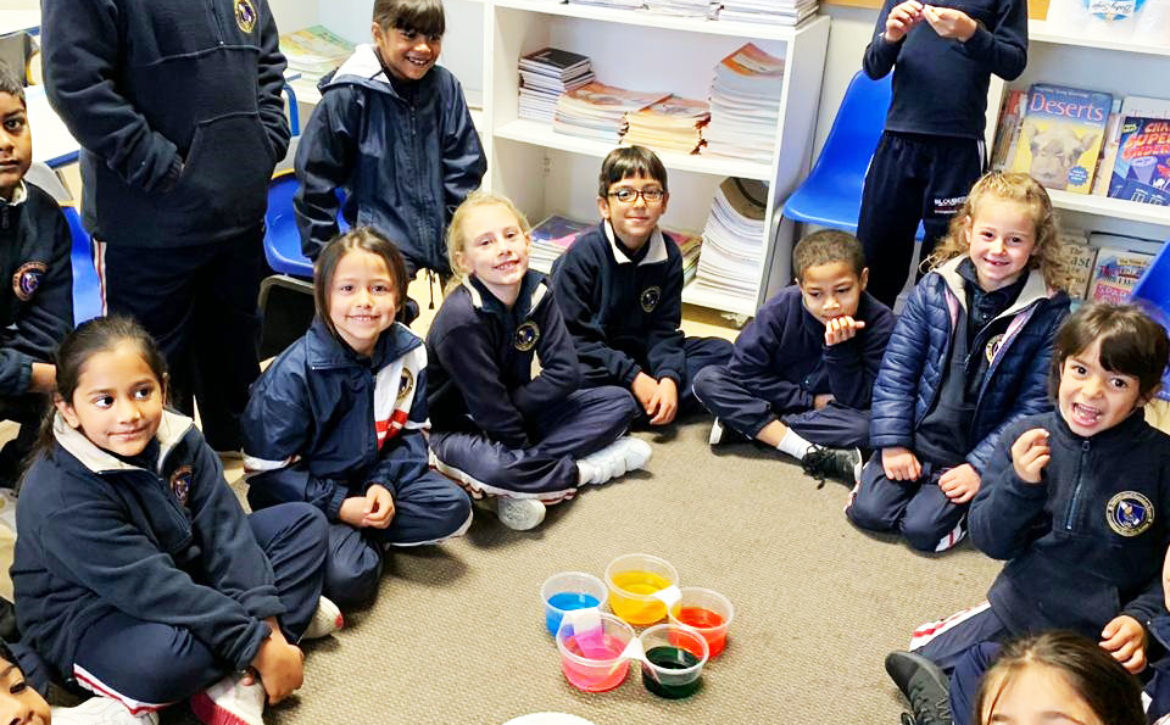
This week our Year 2’s got to have some fun with all sorts of different Maths and Science activities. Our Science activities involved all sorts of fun experiments such as “Rainbow Walking Water” with water, food colouring and paper towel, “Rainbow Candy” with smarties and water, “Rain Cloud” with shaving cream, water and food colouring and “Elephant Toothpaste” with soap, yeast and food colouring. So much fun was had experimenting with different colour mixing, creating clouds and watching rain fall through. Getting to watch the colour slowly soak off of the smarties was a particular favourite!
“Science helps children develop vital life-skills such as problem-solving, communication and research. Science is one of the most important subjects a child can learn because of its relevance to our lives and its capacity to apply these vital life-skills to everyday activities”
– Minimegeology
For Maths this week, we had fun testing out different forms of measurement and experimenting with shape in art. One of our Year 2’s favourite activities was getting to play with “Dragons Tears”, using jugs and other measuring utensils to test and compare the volume and capacity of various containers. We learned about what these terms mean and what various amounts of milliliters’s look like. It has been great opportunity to keep the fun in our school work!
Siobhan Hendry
Year 2 Teacher



DISSOLVING SCIENCE – YEAR 2
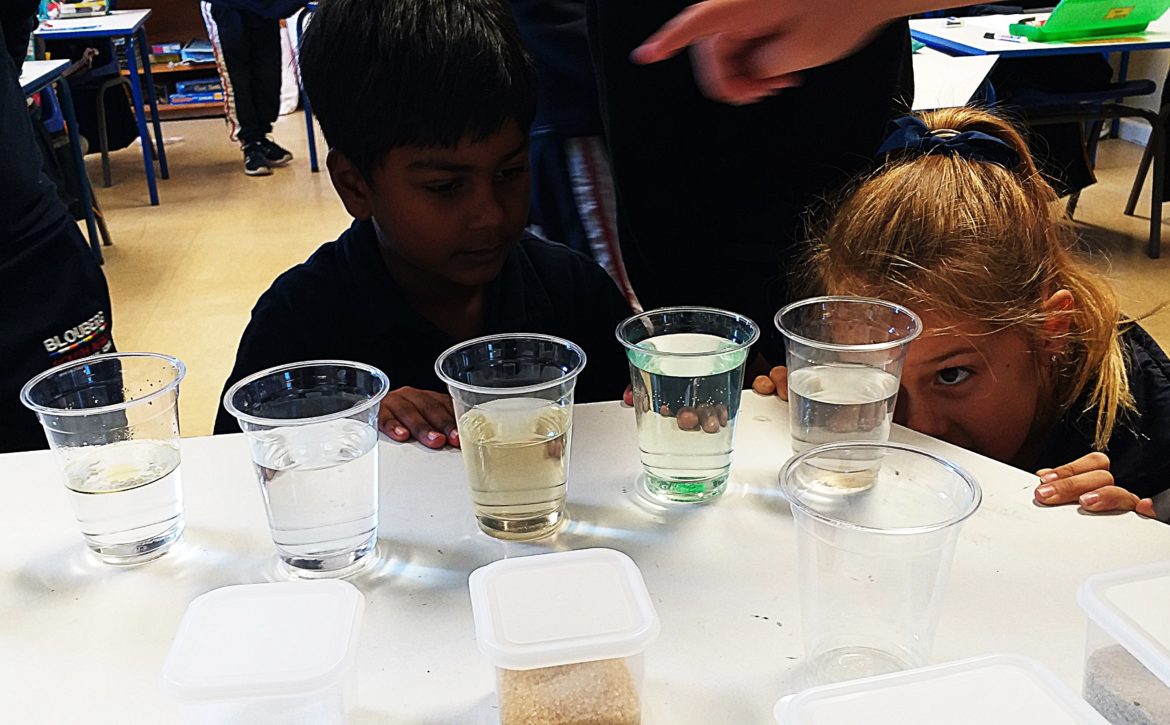
Science has the ability to grab a child’s attention from the get-go. Place an experiment in front of a class and you’ll have a focused group of students in seconds. In Year 2, we have been learning about dissolving. Disappear, vanish, melt away, evaporate, dissipate, diffuse are a few synonyms for the word dissolve. In Science, dissolving is when something becomes incorporated into a liquid to form a solution.
What is scientific enquiry?
- Ideas and evidence – collecting evidence by making observations to try to answer a science question.
- Plan investigative work – Ask questions, predict what will happen, and recognise that a test or comparison may be unfair.
- Obtain and present evidence – make and record observations, take simple measurements, and use a variety of ways to tell other what happened.
- Consider evidence and approach – make comparisons, talk about predictions, and review and explain what happened (draw conclusions).
- The Year 2’s had to go through the scientific process from start to finish. Mrs. Baker began by asking them a scientific question: Which substances will dissolve in the water?
Prediction comes next: Different substances – sugar, salt, chalk, sand, oil and flour – were shown to the students, and they had to predict which substances would dissolve in water. If the teacher allows for discussion, students use their debating abilities to convince their peers why they think they are right. Wonderful banter ensues!
The experiment was performed and students were eager to see what would happen. Here they were obtaining the evidence and recording what they observed.
The last step is to conclude: Students were required then to conclude according to their predictions.
Science is a wonderful subject that promotes problem-solving and critical thinking. If anything, it promotes an inquiring mind allowing children to engage and ask questions about the natural world.
Gillian Baker
Year 2 Teacher