

Wild Animals
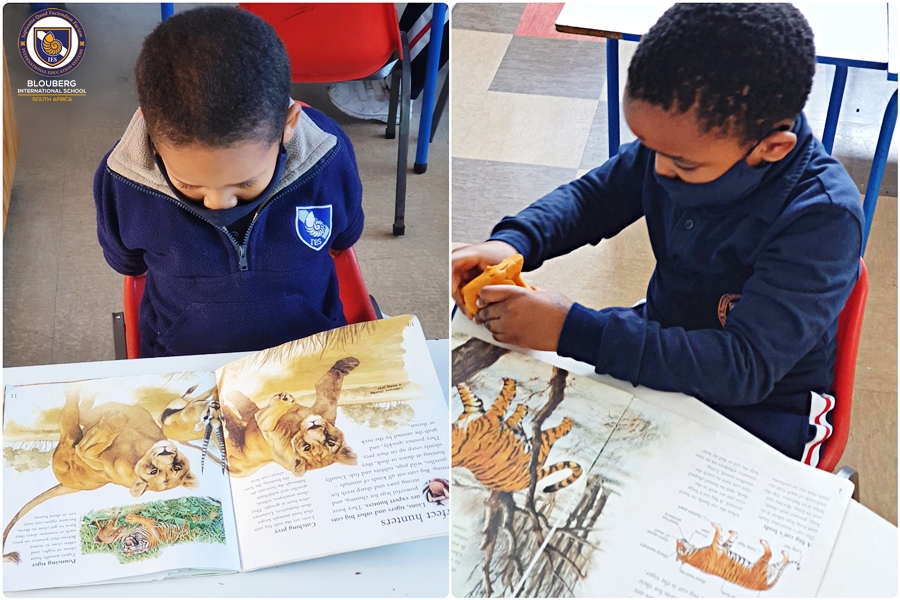
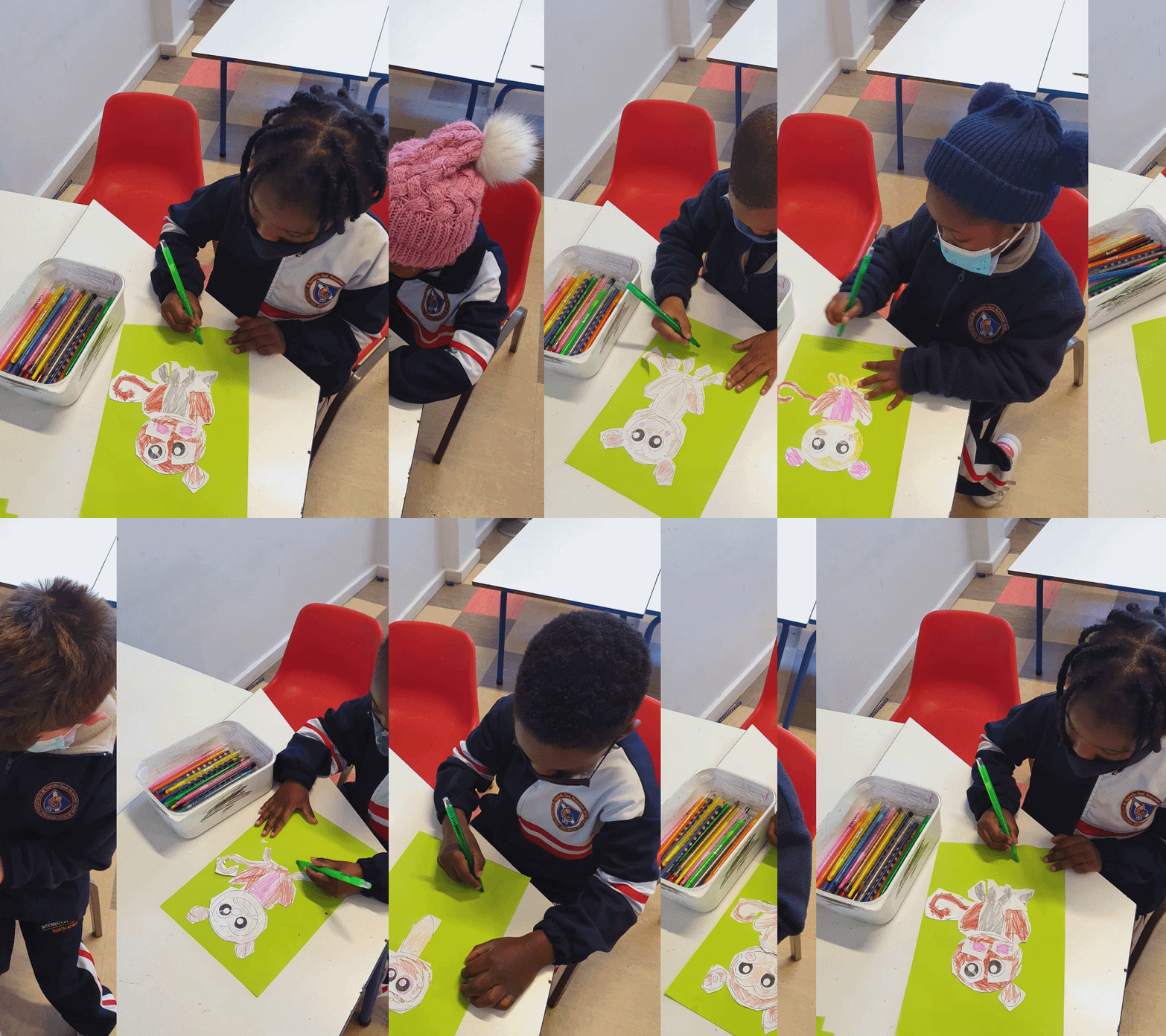
We are learning more about wild animals in Foundation Stage. Picture books with animal characters are firm favourites with the students and they simply love to observe animals on the whiteboard shows. We even made our own wild animals in Art.
According to an article in ONE GREEN PLANET, animals can teach us 10 important things:
- Compassion: Compassion is based on being able to understand the feelings of others/another.
- Patience: There is no rushing an animal to do anything they aren’t ready to do.
- How to live in the now: People waste so much time obsessed with following ‘what will happen next’ that we completely forget to enjoy the now.
- We’re all connected: Ecosystems only thrive when there is balance.
- Humans aren’t as different as we thought: If there’s ever been a time to re-evaluate our relationship with animals, it’s now.
- Respect your elders: Moving forward and advancing towards innovation is a wonderful thing, but we should also learn to respect the wisdom of those who came before us.
- Responsibility: Growing up with a pet has been shown to instill a deeper understanding in children.
- Listen carefully: Animals sit and listen before they react to situations, something we could surely all stand to do.
- Live lightly: Animals learn to live within their means.
- We must stick together: Being able to set aside differences and work together for the mutual benefit of our species.
Martie van Dyk
Pre-Reception Teacher

Welcome Back To Term 3 2021!
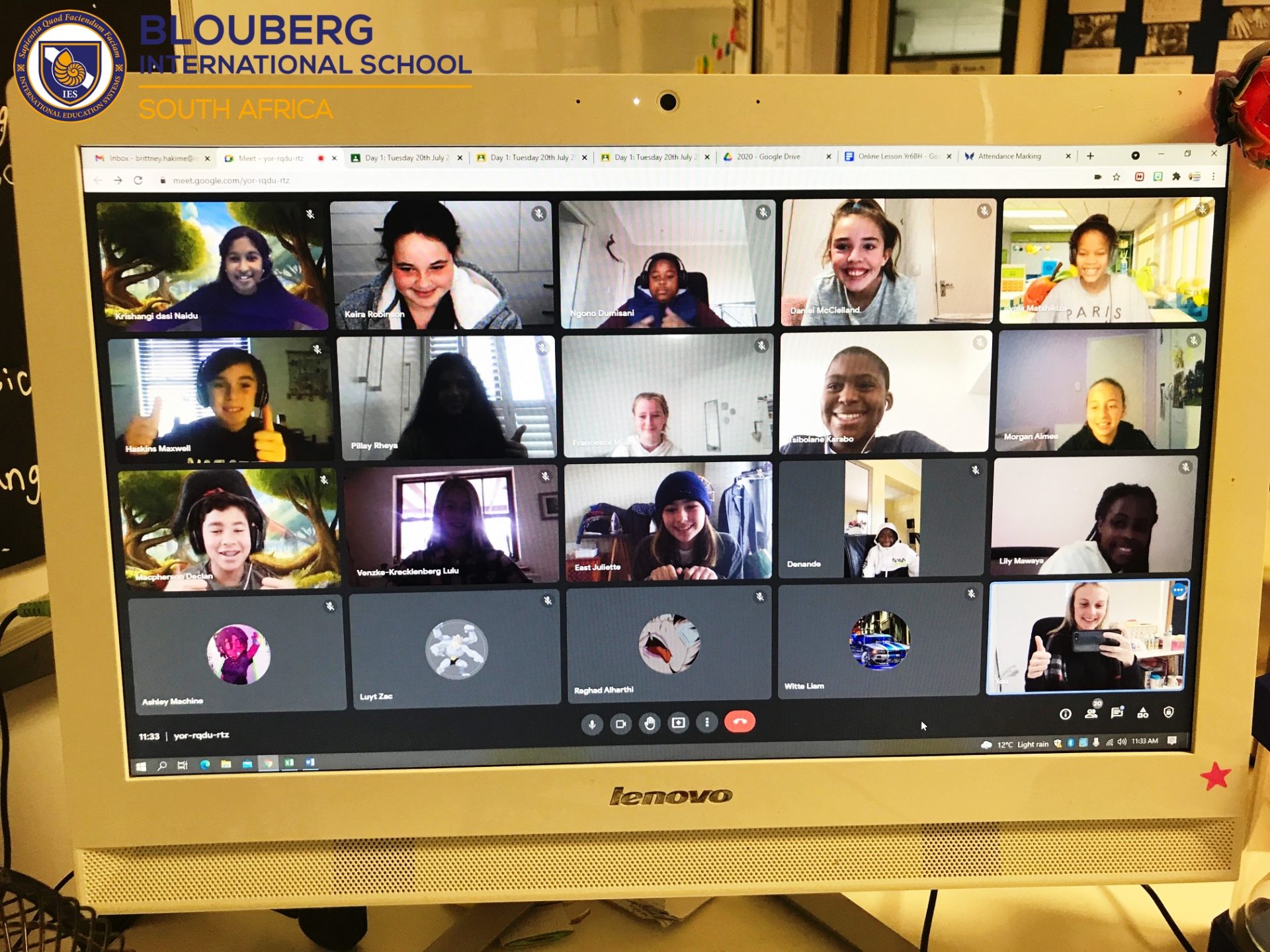
The Year 6 teachers are incredibly excited to be back at school and starting lessons with our students! Even though we are online, we can still feel the eagerness and commitment resonate through the screens from our Year 6 students. It is lovely to see their faces and hear them contribute to lessons just as they would in class.
This week, the Year 6’s entertained our lessons by showing us their new pets that graced their homes over the holidays!
During Science, we started learning about Electrical Conductors and Insulators and we were able to see an impressive circuit presented by Year 6 student, Juliette East.
We giggled when I shouted “selfie” to take a picture for the Newsletter.
The students also opened up about missing everyone during the holidays and that they were happy to be back.
It was a great first week back and we are all looking forward to the rest of the term. The Year 6’s have a lot in store for Term 3 and we look forward to sharing this with all of you as we progress.
Brittney Hakime
Year 6 Teacher
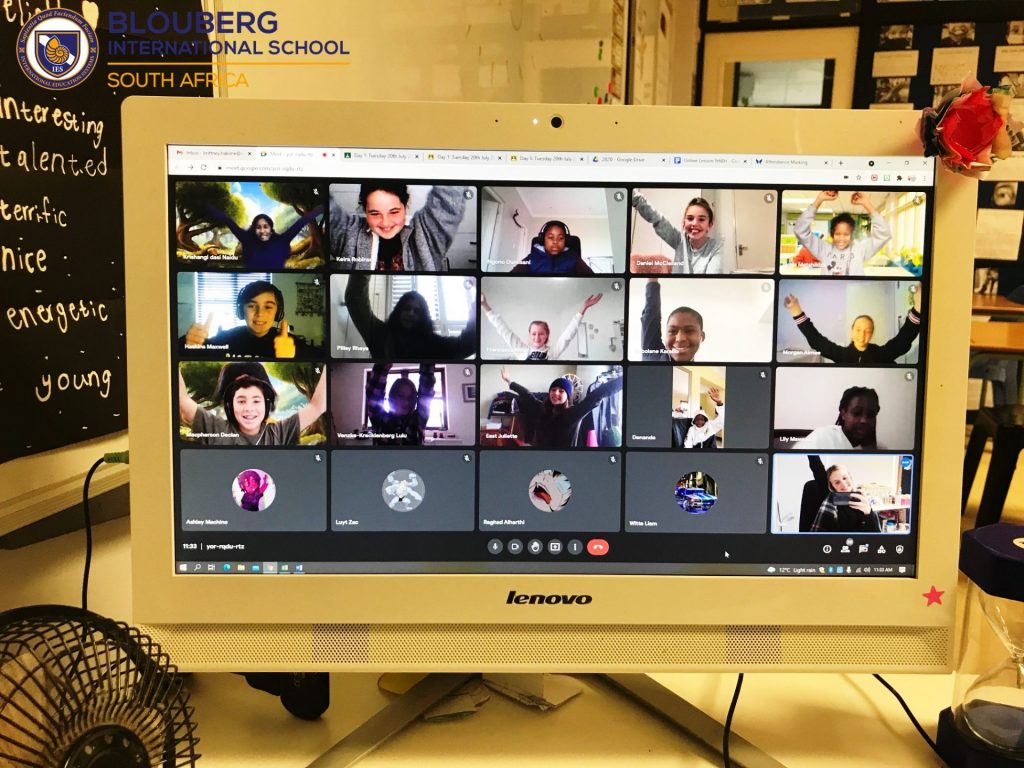

Here are some great tips and tricks I know I have definitely learnt from my students to make an online lesson a little more interesting:

Read More

Energy Robots
The Year 7’s were given a Science project to create their own “Energy robots”. This fun and integrated project was a means to assess their understanding of the different forms of energy that they had just learnt about in class.
They had to design, draw and then build their own robot that could produce at least three different forms of energy; such as heat, sound or light energy. All of the students really thought “out of the box” and incorporated a range of innovative ideas.
I was extremely impressed by the final products of the year 7’s, they really seemed to enjoy using a bit more of a creative side to learning about energy.
Tayla Shergold-Smith
Year 7 and 8 Mathematics and Natural Science Teacher

Year 2 ICT Lesson Fun
“The mind, once enlightened, cannot again become dark.” – Thomas Paine
In ICT class, our Year 2 students have been having some fun learning about algorithms. In computer science, programming and mathematics, an algorithm is a sequence of instructions.
They received some instructions to follow on how to create a robot. Some of the instructions included drawing the head, face and body of a robot as well as creating a fun background and even more importantly – giving their robot a name!
The students learnt how they can use algorithms to describe ordinary activities in our everyday life. For example, we can consider a recipe as an algorithm for cooking a particular food. This will help them to understand how coding works when we code games and programs.
At this stage, the students are using the iPads to create some algorithms on Grok Learning by building their robot on the iPad.
Year 2 Teacher

Different Habitats
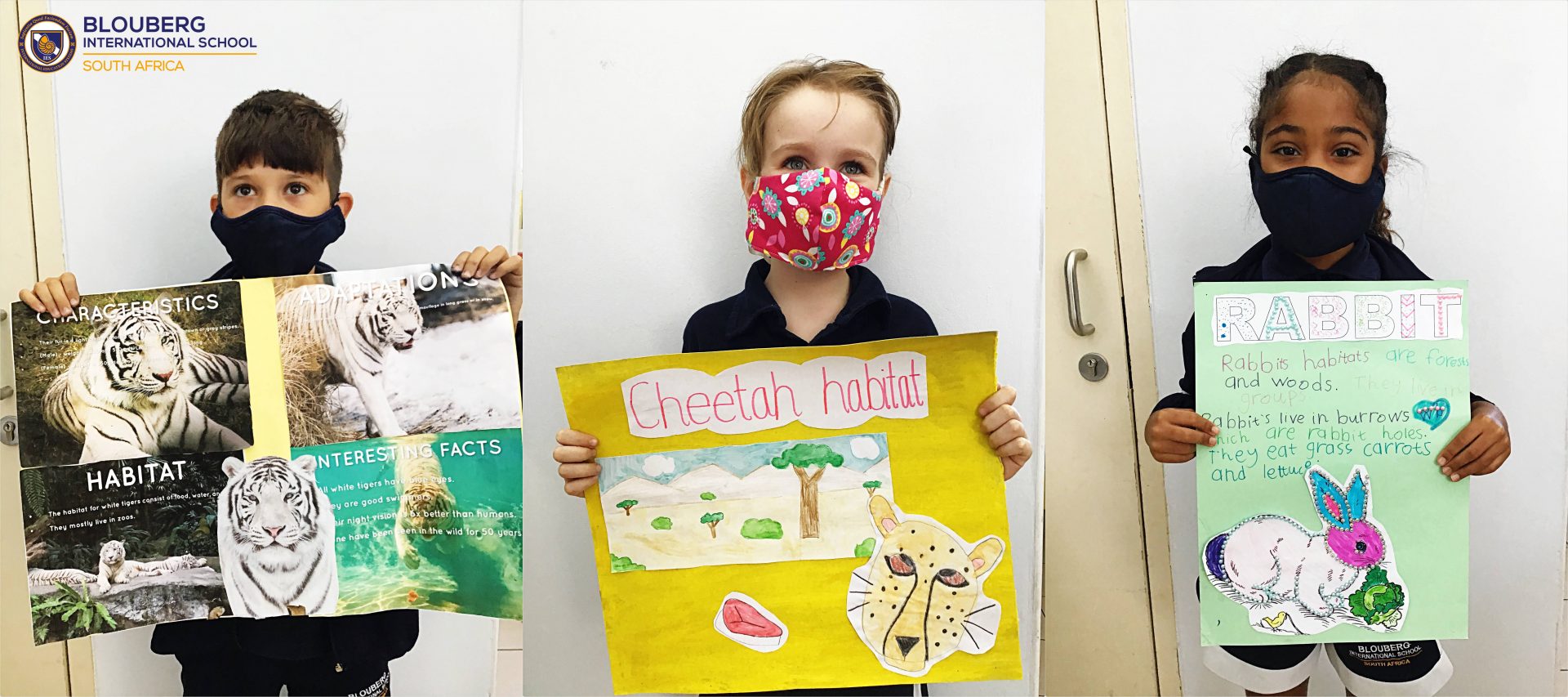
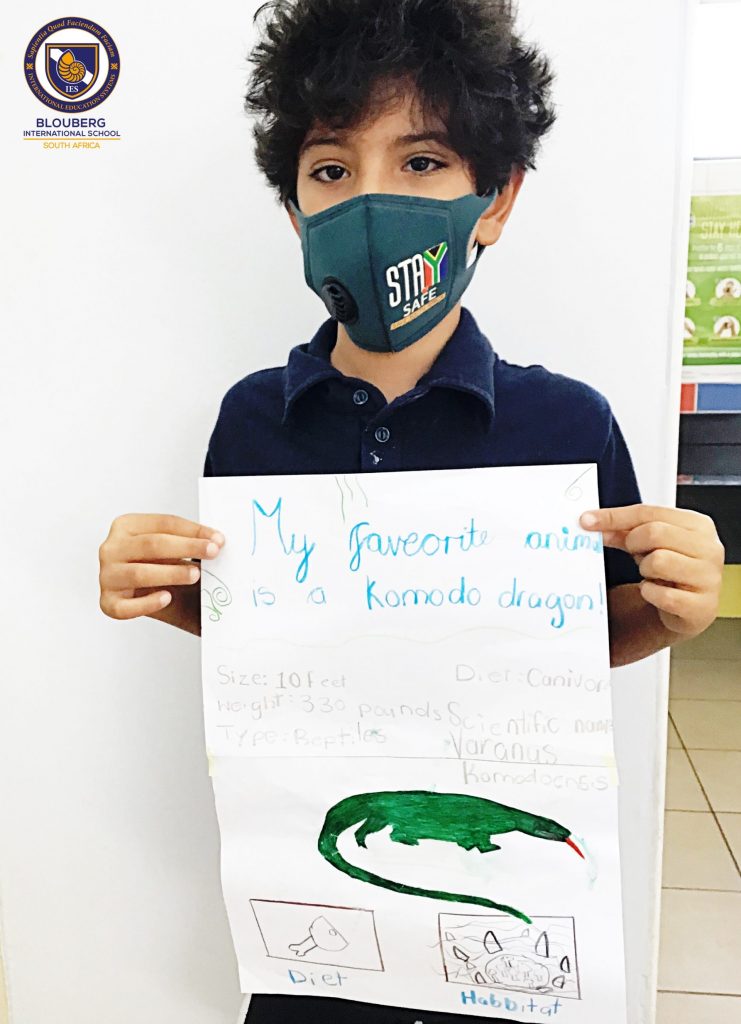
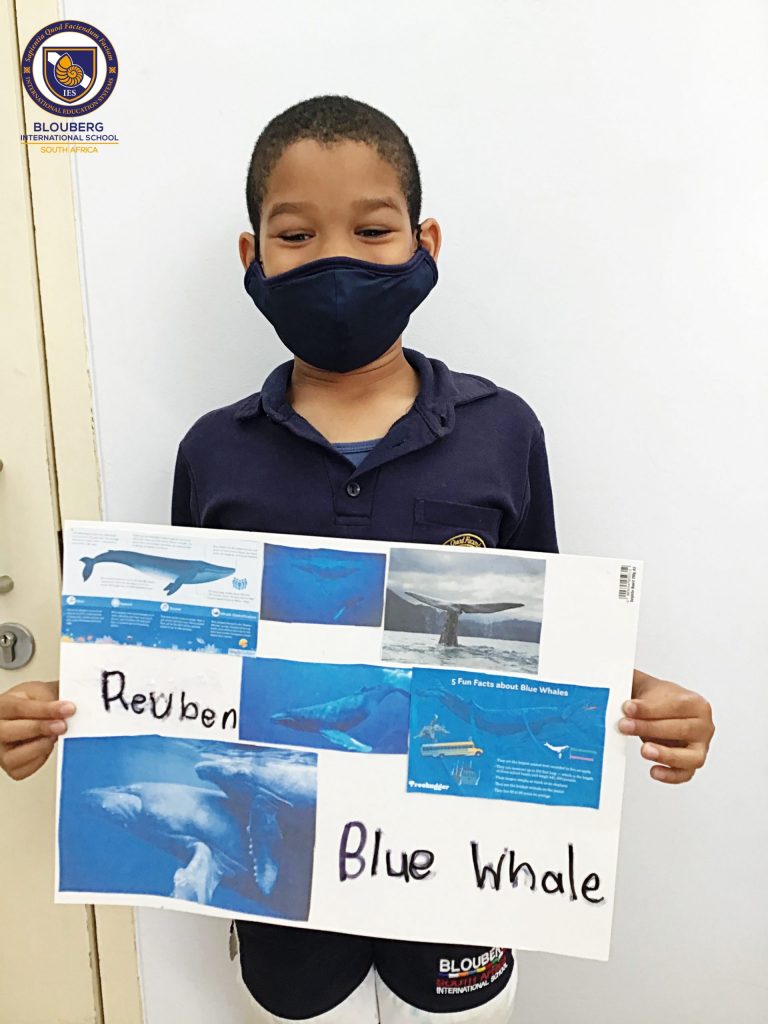
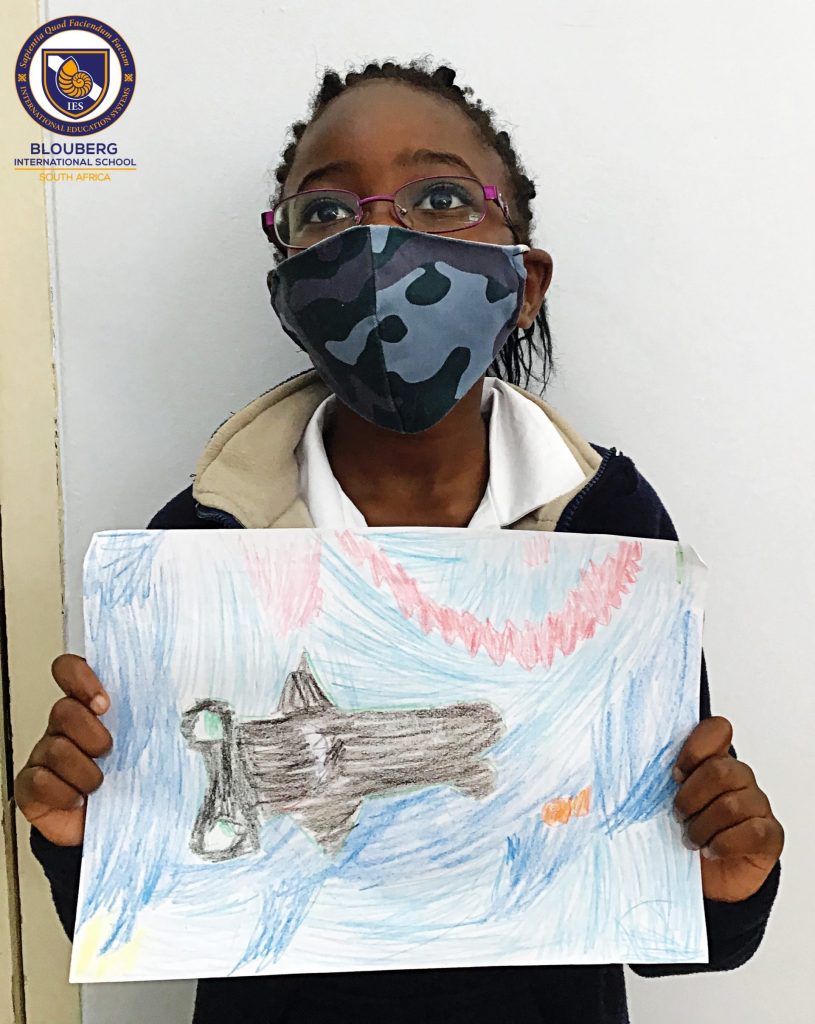
The Year 2 students have been learning many different facts about various animals and their habitats.
“The most important thing is to preserve the world we live in. Unless people understand and learn about our world, habitats, and animals, they won’t understand that if we don’t protect those habitats, we’ll eventually destroy ourselves.” – Jack Hanna
It is crucial that the Year 2 students learn about different habitats as they begin to understand the importance of both living and non-living things in a habitat. In learning this, students have learnt how plants and animals have adapted in order to thrive where they live. They have learnt that without the different habitats, we would not exist, therefore it is important for us to protect and appreciate the different habitats on Earth.
“We don’t own the planet Earth; we belong to it. And we must share it with our wildlife.” – Steve Irwin
Some fun facts we learnt:
-Wolves are part of the dog family.
-The blue whale is much louder than a jet, which only reaches 140 decibels.
-Koala Bears choose their habitat by the group of food trees.
-The Komodo Dragon can weigh up to 150 kilograms.
-Camels have long eyelashes to protect their eyes from sand.
Erin Hierse
Year 2 Teacher


Necessity Is The Mother Of All Invention – (Plato)
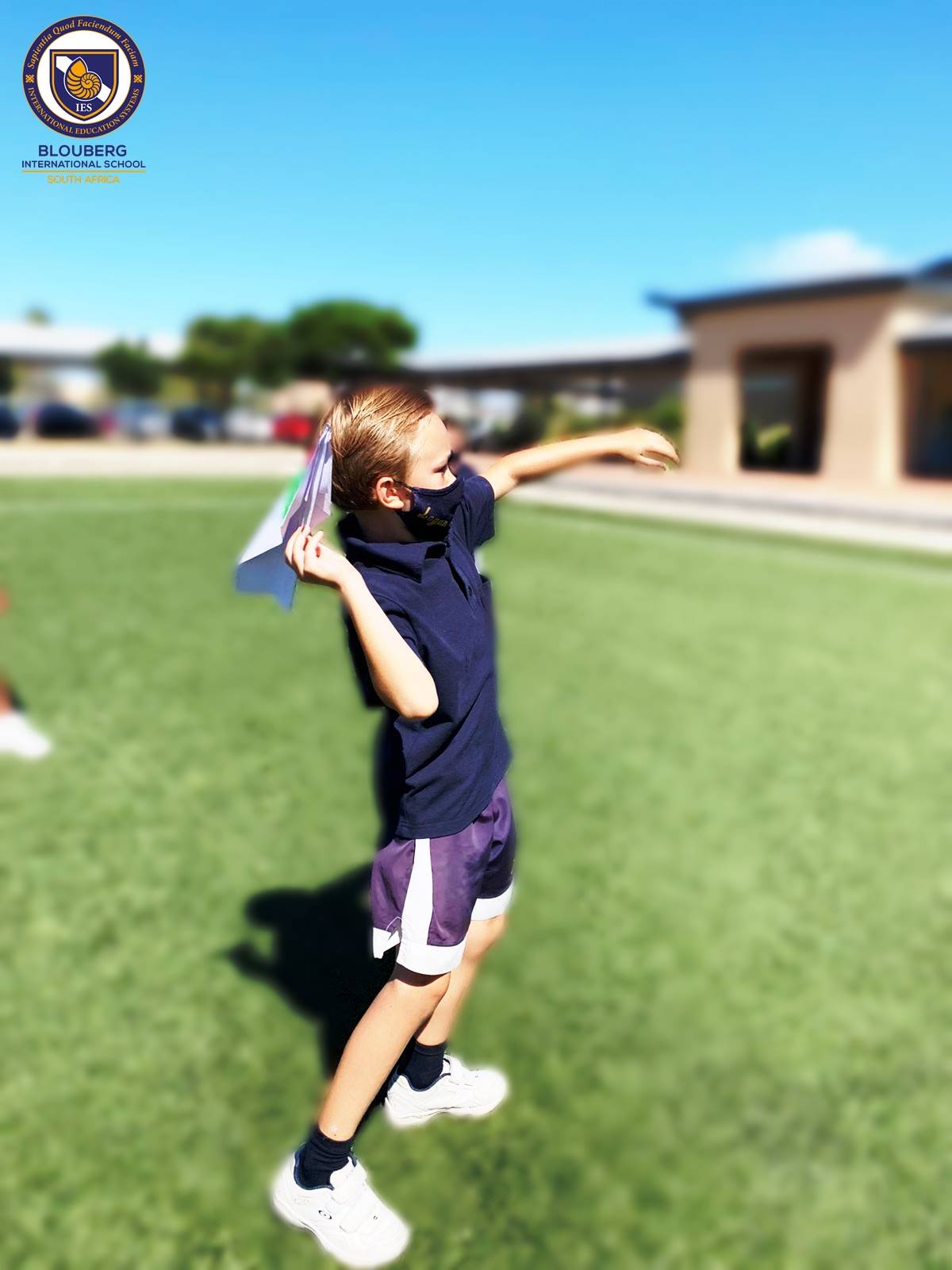
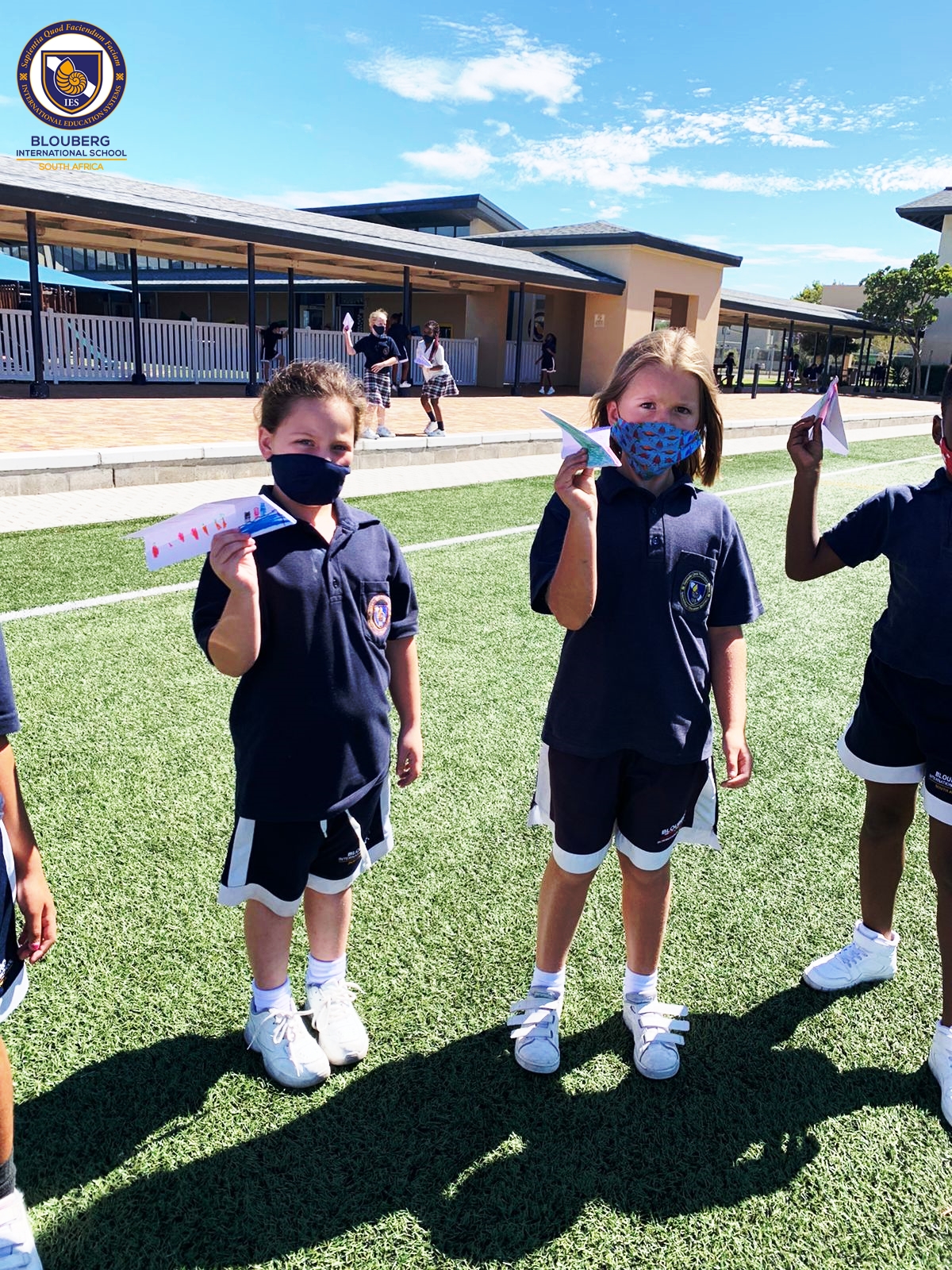
We all know children love and need to play. During these trying times, break times are not as much fun as they used to be. Wearing masks in this heat, social distancing, etc. are not conducive to an exciting playtime for young children.
The same can be said for ‘free time’ in the classroom. Getting together in groups playing card games, or building Lego together is just not an option. Drawing a picture or colouring in can become pretty boring. Some students in my class decided to make paper jets, which was a good idea, until ducking flying objects became a hazardous situation, not to mention a distraction to students still completing work.
But, as Plato said, necessity IS the mother of invention. Last week, I observed some students taking to the field, flying their paper jets, and having races! I really was impressed at how these young minds saw a problem and created their own solution. They had so much fun, that this has become the norm most break times.
Kim Coetzer
Year 2 Teacher


Read More
Chemistry
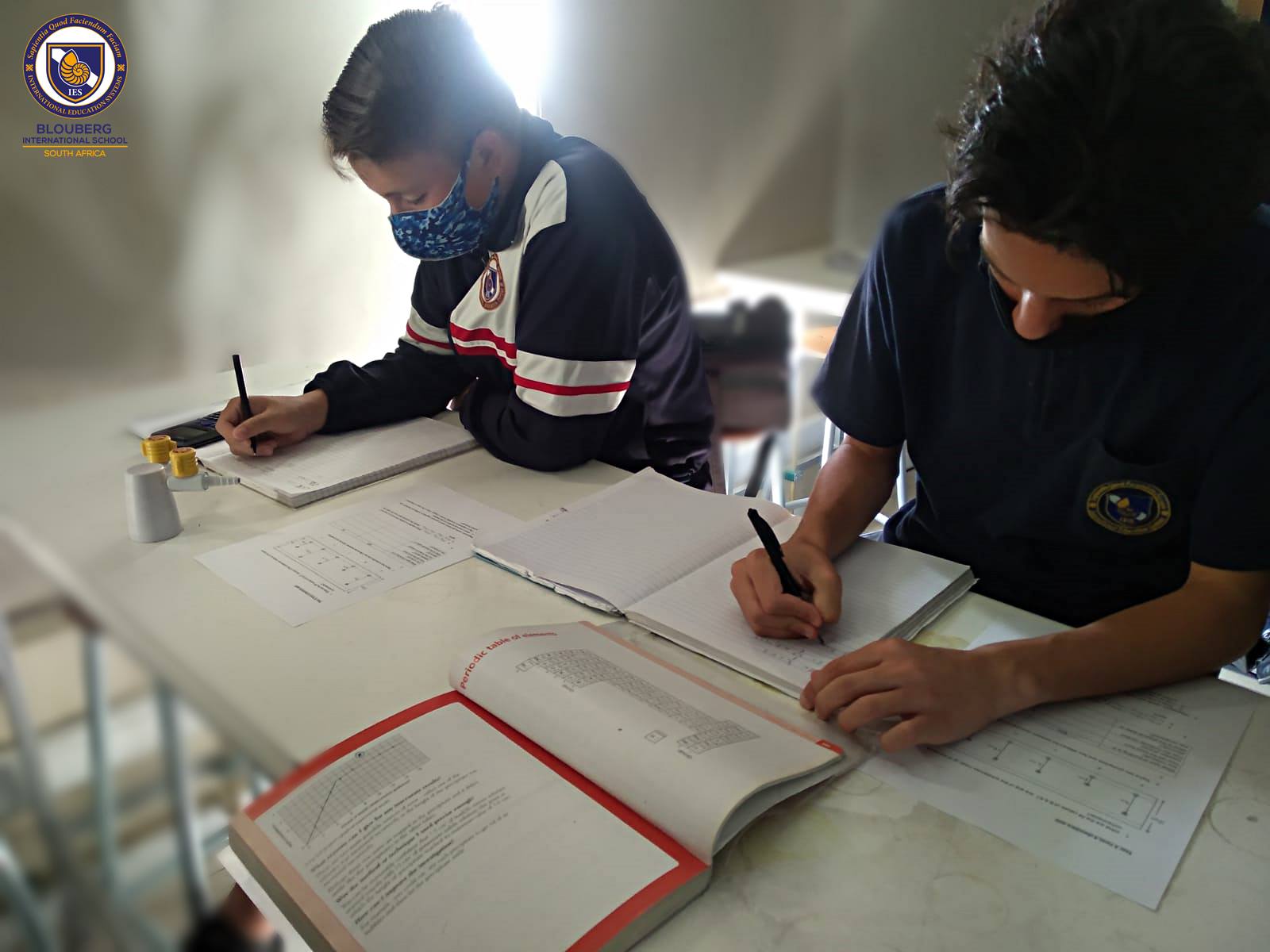
At BIS students can choose Chemistry as a subject from Year 9. This provides students with a unique opportunity to have more variety in high school as Chemistry and Physics can be taken separately instead of as a single subject. Students can choose between Chemistry and History and between Physics and Art. This often results in some interesting subject combinations such as Chemistry and Art or Physics and History.
After a long period of online lessons, it is exciting to have the Chemistry students back in the classroom. Since BIS is privileged to have a well-equipped science laboratory, Chemistry practicals can now take place again.
This term the Year 9’s have been revising electrochemistry and enthalpy changes, whilst the Year 11’s have been revising chemical equilibrium, Hess’s Law and Maxwell-Boltzmann distributions.
Philippa Gogh
High School Chemistry Teacher


Year 7 ScienceBiology
The subject ScienceBiology is the amalgamation of three different areas of science namely: Biology, Chemistry and Physics. During each term we cover work from all three areas.
Biology is the study of living organisms where we delve into the structure of cells and how they are arranged to ultimately form different organisms. We look at how these organisms are adapted to live in different habitats and how human activities are impacting fragile ecosystems. Lastly, we discuss the concept of species and the systems that biologists use to classify organisms into different groups, based on features they have in common.
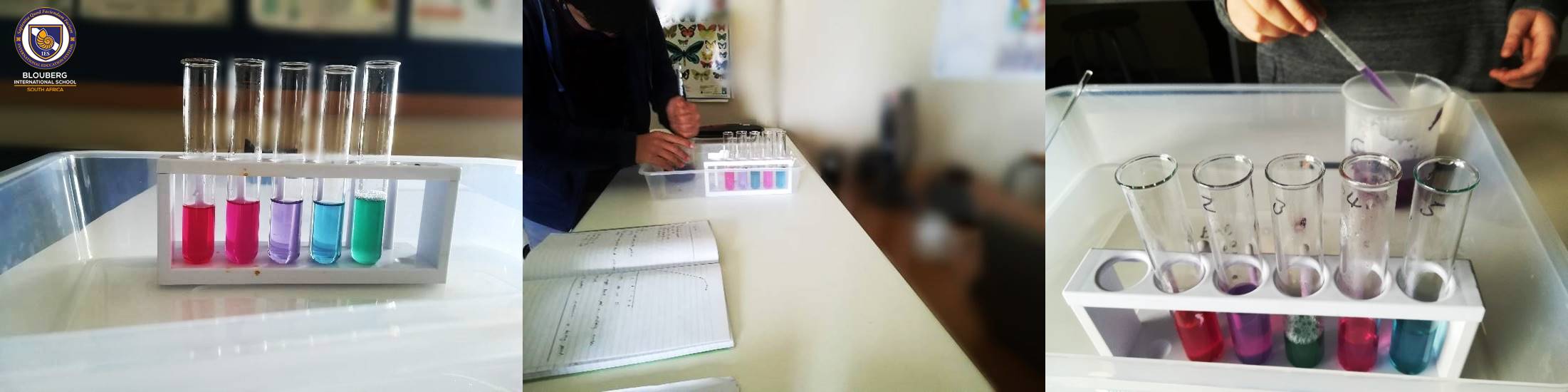
Chemistry is the study of chemical substances that form the Earth and our Universe. We learn about the different states of matter and the changes occurring in the particles of matter when it changes from one state to another. Next we compare the differences between metals and non-metals, as well as studying the properties of different materials such as plastic and glass. Another interesting area of Chemistry is investigating material changes. We studied acids and alkalis and did a practical investigation on the effect they have on substances called indicators. Red cabbage juice is an example of an indicator which changes to different colours, depending on whether it is added to an acidic or alkaline solution. Students had to make their own red cabbage indicator in class and add it to a variety of unknown solutions. They had to observe the colour change to find out whether a solution was acidic (pink/red colour), alkaline (green/blue colour) or neutral (purple colour). Much fun was had and students unexpectedly stumbled upon neutralization reactions when they added the acidic and alkaline solutions together at the end of the experiment and saw the colour change back to purple. We ended the Chemistry section of the book by studying the different types of rocks and minerals that make up the Earth and how different processes can weather them away over time. When certain types of rock weather away they reveal the fossils of organisms that lived millions of years ago. These fossils tell cryptic stories that gives a glimpse of what life on Earth was like in the distant past.
Physics is the study of nature and properties of matter, energy, and forces. Students investigate forces in a variety of practical ways. One practical challenge was for students to lift a plastic container using only rice and a chopstick. Thanks to the force of friction between the rice and chopstick, students were able to achieve the seemingly impossible. We continued delving into the world of Physics by discussing different stores of energy as well as energy changes. Energy does not disappear, but simply changes from one form to another. The last part of Physics covered in Year 7 investigates astronomy and how far we have come in our understanding of our planet, solar system and galaxy. It gave us a true sense of how tiny we are in the universe when comparing the size of Earth to some of the largest stars discovered so far.
ScienceBiology takes students on a very diverse educational journey and lays the foundation for all three areas of science on which to build in future years.
Marlene Feltoe
Year 7 ScienceBiology Teacher
Why Should We Teach Children About Pollution And Waste?
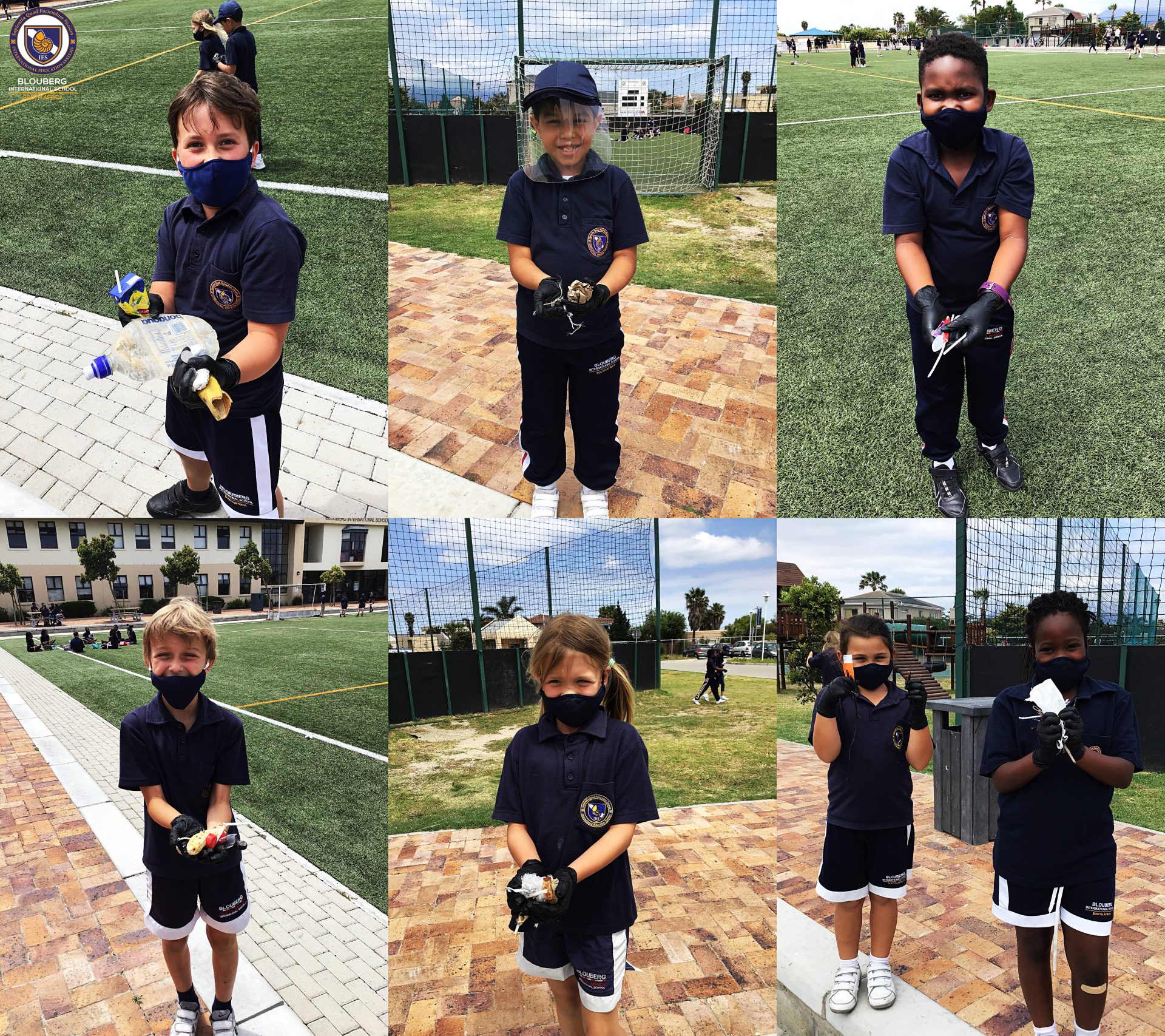
The Year 2 students have been learning about pollution and waste over the past few weeks in Science and they have been taking the topic very seriously.
The teachers find it a very important topic for students to learn about as it benefits not only the students, but also the environment around us. Pollution affects our health and welfare every single day as it directly relates to the status of our environment, therefore making it an exceptionally important topic to have knowledge on, from a young age.
A crucial part of development is that students learn that they have a choice and the power to make a difference in the world.
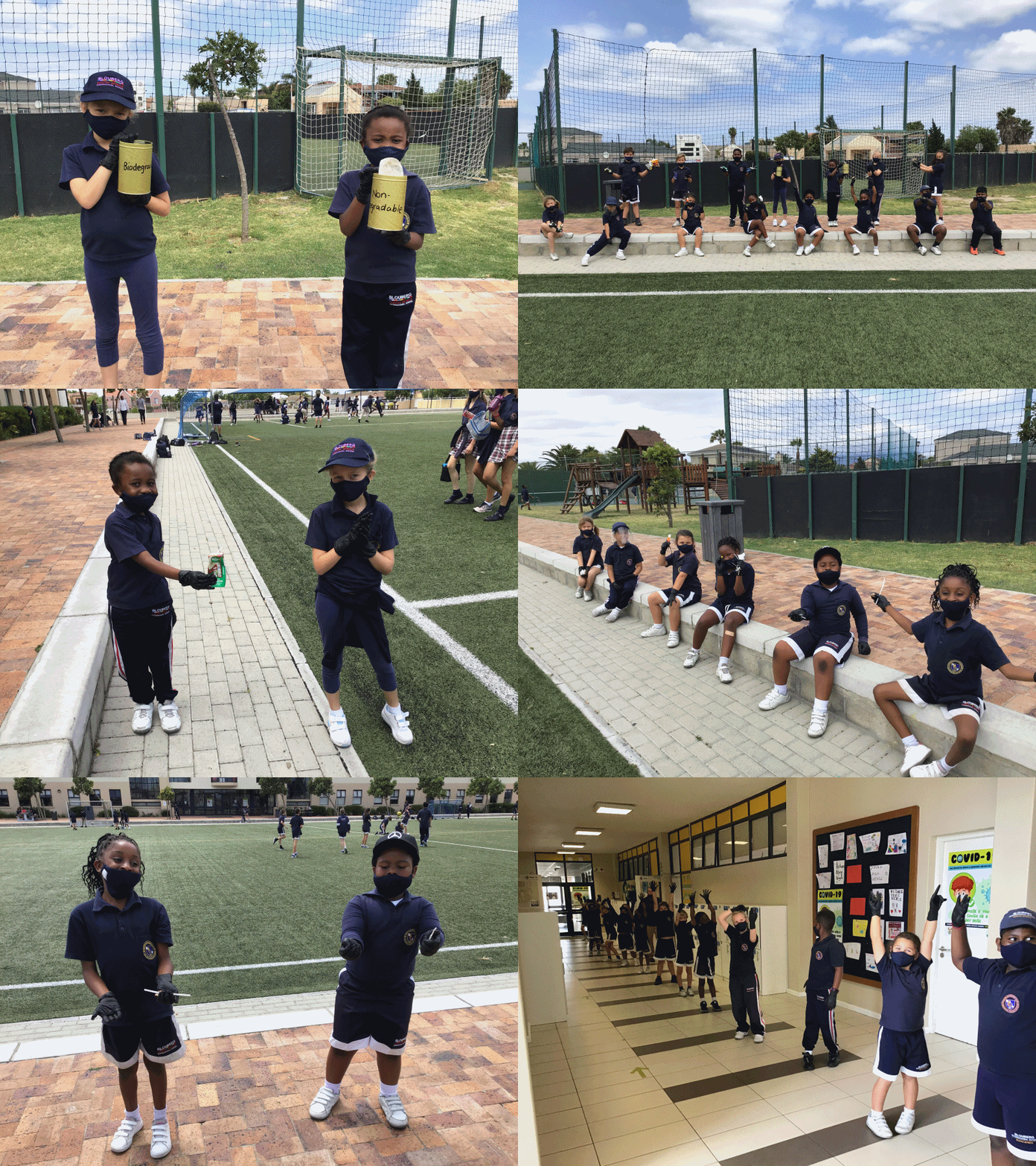
The Year 2 teachers took the students outside to collect litter around the school and then discussed the different types of waste they had found (fruits, paper, and plastic). We also discussed which of the waste was biodegradable and which were non-biodegradable. This was a fun activity of learning new information and Year 2 thoroughly enjoyed it.
Erin Hierse
Year 2 Teacher
Science Investigation
An important part of science is collecting and recording data. The Year 1 students are learning about Sound and Hearing. During this theme they have learnt to recognise sources of sounds.
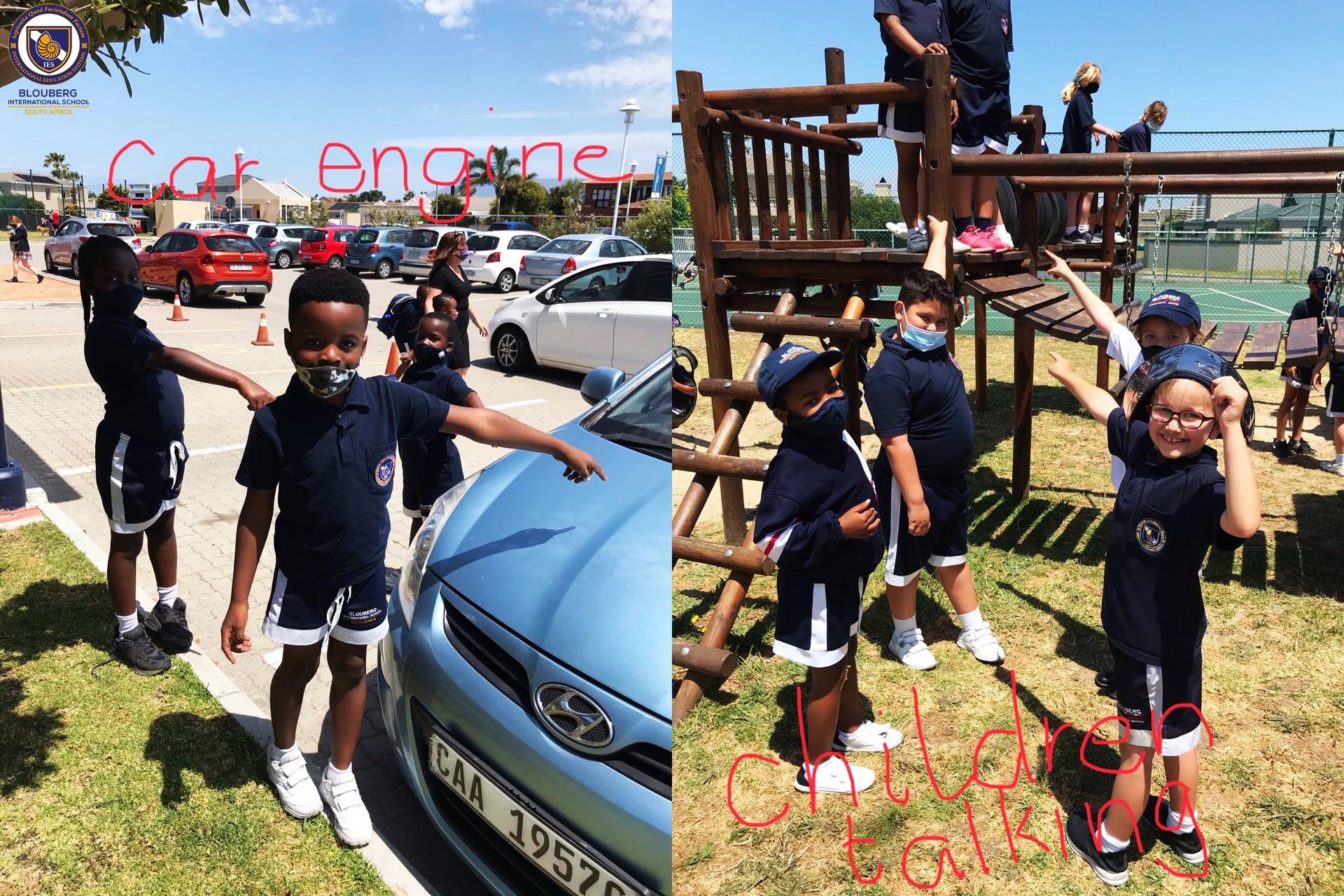
Armed with Ipads, the students went out onto the playground to photograph different sources of sound. When they had collected their data they shared the photos with their peers, explaining the source of the sound. The students then recorded their observations, by drawing the sources of sound they had photographed.
When students learn to record and report on data collected, it helps them make sense of what they have observed, thus giving them greater insight into the topics we cover.
All in all our little scientists had so much fun exploring and reporting their findings, we look forward to doing this again soon.
Ann Cordner
Year 1 Teacher
