
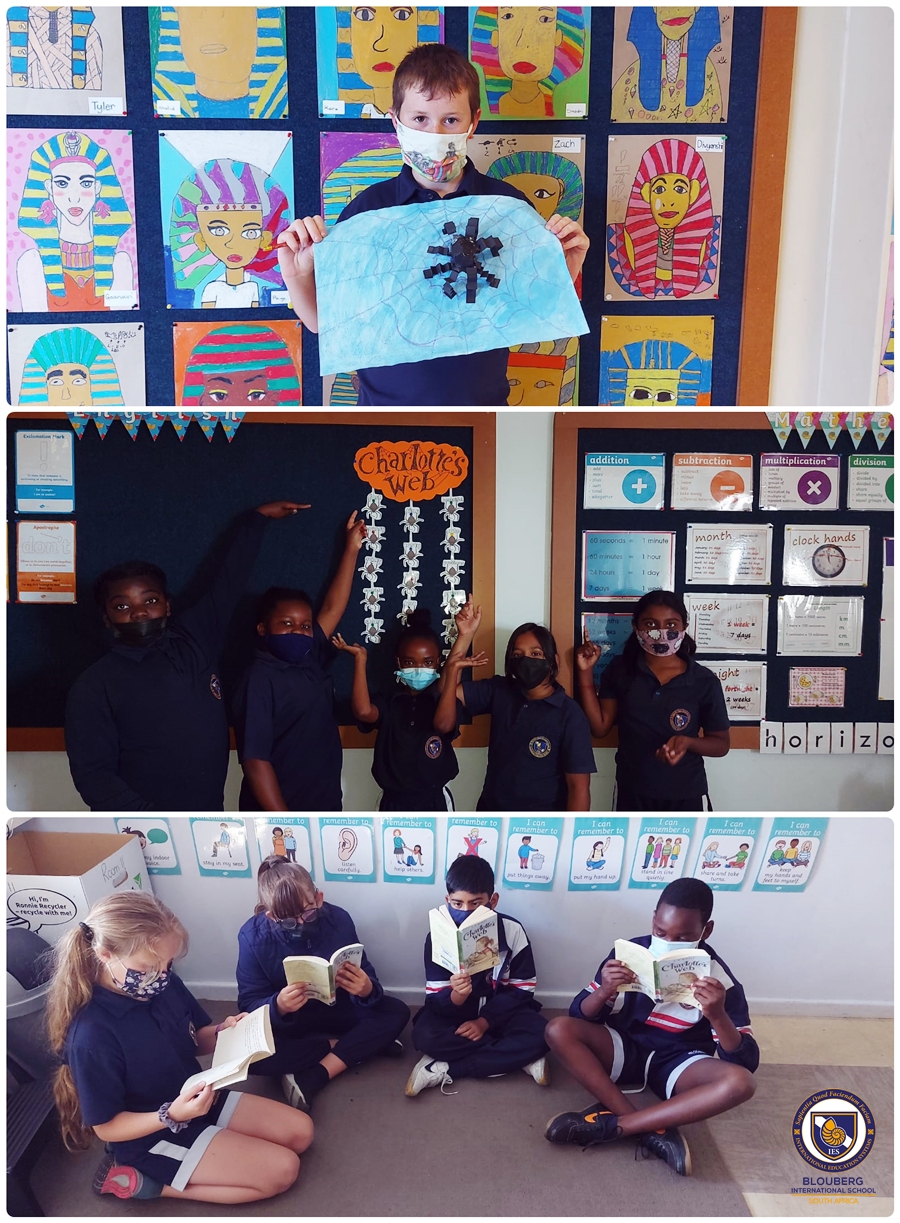
Charming Charlotte
As part of our English Literature Component, the Year 4 students have been reading “Charlotte’s Web” by E.B. White. The book tells the story of girl Fern, who rescues a runt pig and names him Wilbur. Once on the farm, Wilbur makes friends with Charlotte, a beautiful large, grey spider. They become best friends and face a few challenges together. Although a fictional tale, the story also teaches valuable life lessons such as teamwork, friendship and overcoming obstacles.
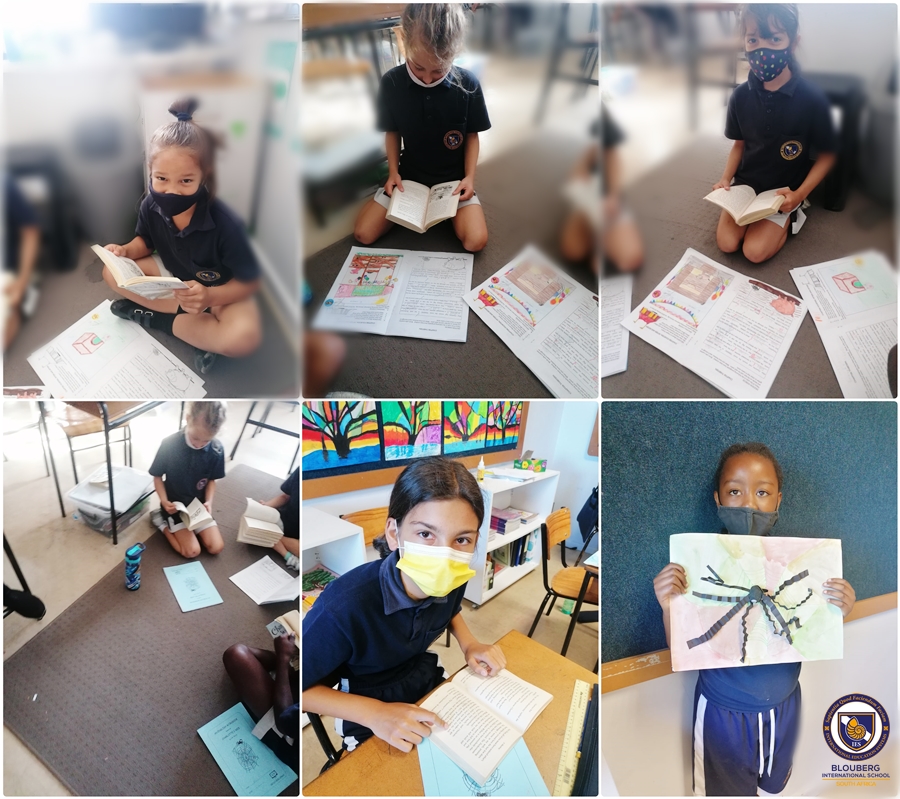
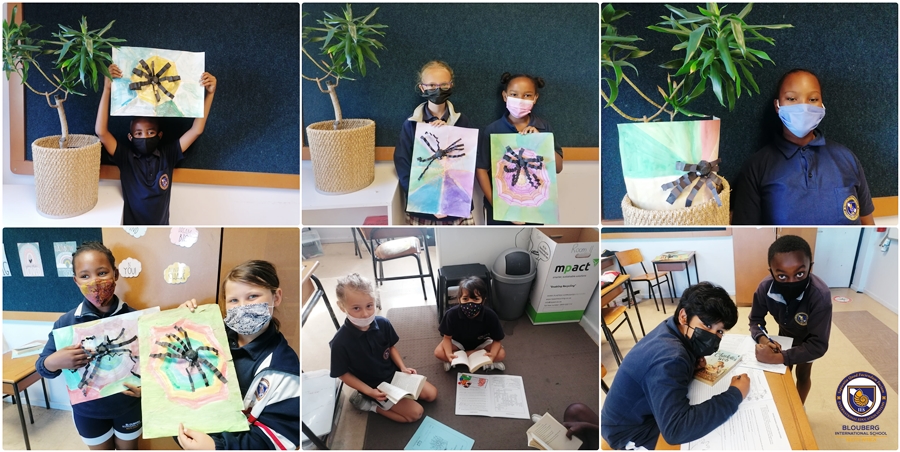
Over the last few weeks, the students have been reading the novel in class, sharing their opinions and thoughts in groups and completing tasks based on the novel.
In Art, they created beautiful spider webs and spiders, and to end the unit, they will watch the classic movie.
The students have blown us away with their reading aloud skills as well as their thought provoking questions and answers about the novel. We are very proud of our stars!
Yvette Fourie
Year 4 Teacher

Read More
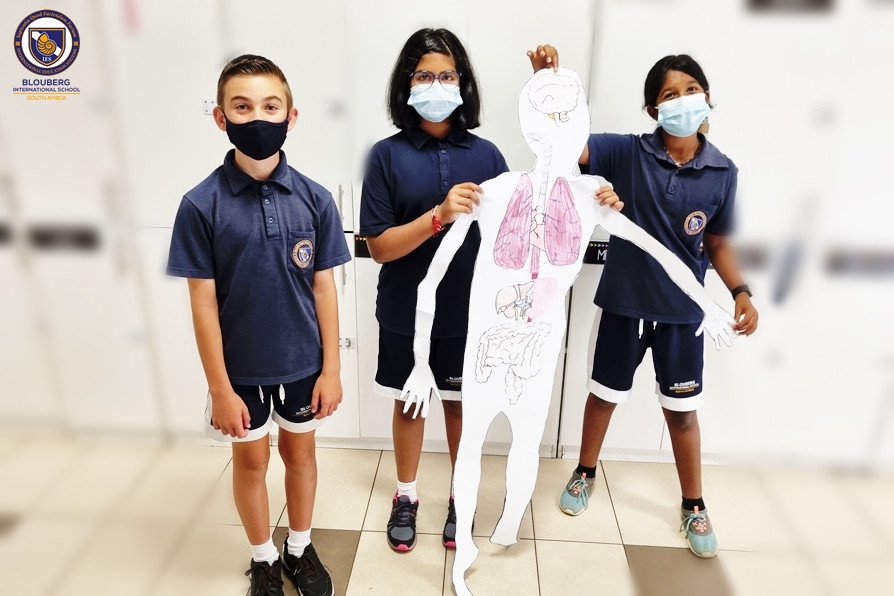
The body Of Science
This term in Science, the Year 6’s learnt about the Human Body. We discussed the different organs such as the heart, liver, lungs, stomach, brain, intestines and kidneys. We also looked at the functions of each of these organs.
In order to understand where each organ is located, the students got into groups and outlined one group member’s body. They then went on to draw the different organs and place them in the correct positions on the body. Each group member had a specific role to play in these creations and the Year 6’s truly impressed their teachers with their creativity and group work.
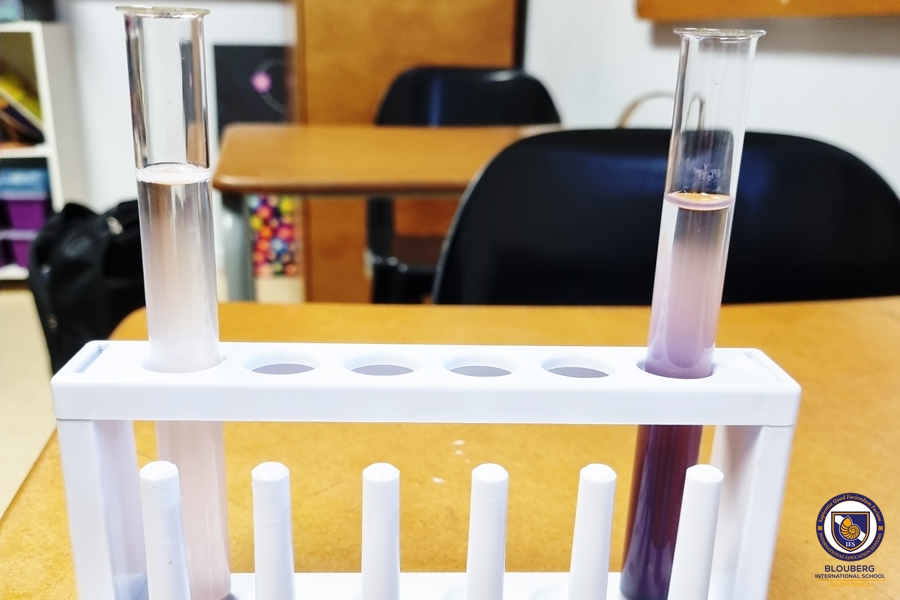
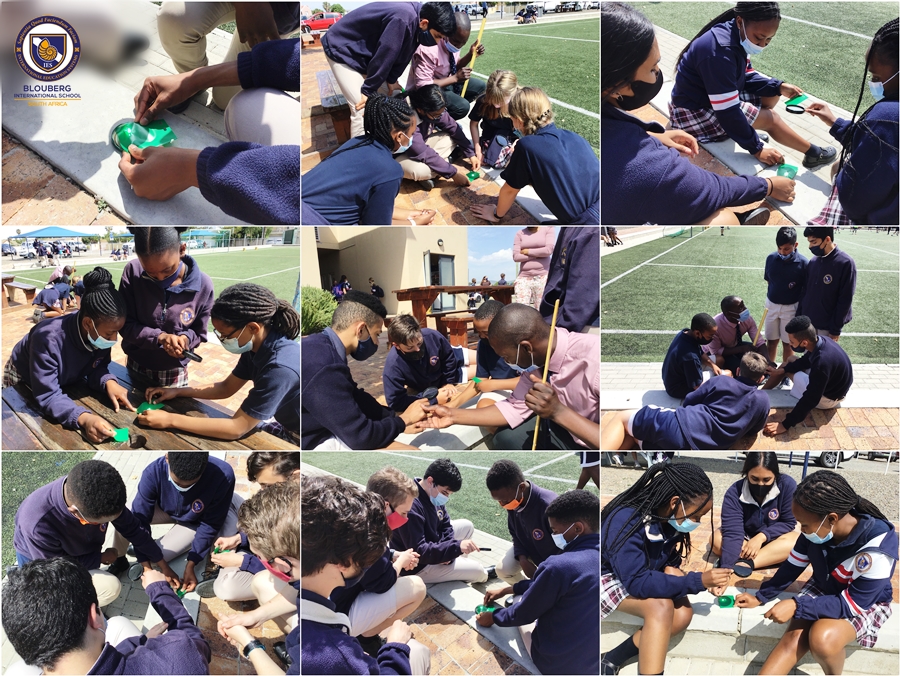
The students also learnt about the different processes in the body. In order to see that digestion begins in the mouth, the Year 6’s became scientists and did an experiment. They took two test tubes and filled them with water and starch powder. Iodine (which shows the presence of starch by turning a blue colour), was placed in both test tubes and then saliva was placed in one. If the test tube stayed blue then we knew starch was present, if it went clear then we knew there was no starch present. After a while, the test tube with saliva in it turned a clear colour and this proved that the saliva broke down the starch.
Fun facts about the human body:
- You are going to be taller in the morning.
- Your heart beats about 100,000 times a day.
- Your highest blood flow is in your kidneys.
- You can produce enough saliva to fill two bathtubs a year.
- Your blood vessels could circle the globe.
- Your strongest and longest bone is your femur.
- More than half of your bones are located in the hands, wrists, feet, and ankles.
Brittney Hakime
Year 6 Teacher


Read More

Sound & Vibrations
Experi-Buddies came to visit Year 1, to teach us about sound and vibrations, which we are learning about in our Science this term.
The students had a lot of fun experimenting in class, making sounds using balloons, marbles, water in glasses and spoons hanging on string.
Sound is an integral part of a child’s development. In fact, the Parenting Research Centre says, “Sound is critically important to the way children learn about their world.”
The Inting was such a great tool to help our students grasp the concepts even more comprehensively. Perhaps ask your child if they can explain sound and vibrations to you, their first-hand knowledge might just surprise you.
Charlotte Cronje
Year 1 Teacher


Foundation Stage Experi-Buddies Inting
The Foundation Stage was very excited to have Experi–Buddies visit us for an inting to teach us more about Space. Experi–Buddies is an educational extra mural program that uses experiments to show young children that the world of Science can be fun.
The students could not wait to put the lab coats on! They learned that Neil Armstrong was the first astronaut on the moon and that astronauts have to wear weighted moon boots to stop them from floating around because of no gravity in space. They spoke about the Solar System and were delighted to learn the planet song.
They all participated in the experiments and took great pleasure in watching the rocket take off outside, when Mentos were added to Coca-Cola and it “exploded”!
Students should do experiments for the same reason that they listen to stories, take part in sport, etc. Experiments encourage them to be inquisitive, creative and build their self-confidence. Experiments also help to teach children to observe, compare and to predict outcomes while having fun!
Cindy Nunan
Pre-Reception Teacher


Read More

Year 2 Loves Brain Breaks!
Students are easily distracted, but regular, short breaks can help them focus, increase their productivity, and reduce their stress.
Students, particularly young ones, often struggle with staying focused for long periods of time. In a 2016 study, psychologist Karrie Godwin and a team of researchers measured how attentive elementary students were during class, and discovered that they spent over a quarter of the time distracted, unable to focus on the teacher or the current task. Shorter lessons, however, kept students’ attention high: Teachers found it more effective to give several 10-minute lessons instead of fewer 30-minute ones.
I have found this to be an extremely worthwhile exercise. Even if it’s just to get them to stand up and stretch, or have a quick run-around the playground, or even a lively dance to some music.
Our class has a few favourites. I can recommend to parents to have a look at a website called ‘Go Noodle’. There are some really good ideas, even to do at home.
Kim Coetzer
Year 2 Teacher
Read More

Learning About Space
For the last two weeks, we have been learning all about Space in the Foundation Stage.
The little ones have been very busy, making beautiful rocket pictures and alien pictures. We even have a few astronauts floating about our classroom.
It is a very exciting topic and the students are always eager to share some of their own knowledge with their friends. It is so encouraging to see their love of learning when they share their stories.
We have even incorporated our sensory play into the theme. Simple flour and oil has magically been turned into “moon sand” by our very imaginative little ones.
It is such an amazing privilege for the teachers to experience every learning opportunity with the little ones. Their excitement and enthusiasm make every day special.
Monique Meyer
Reception Year Teacher and Foundation Stage Coordinator

The World Of Work And Having A Job
This term, the Year 1 challenge in Global Perspectives is ‘Working and having a job’. The students have had following discussions about work:
- What is work?
- What does it mean if someone has a job?
- What jobs do people do in our town/area?
- What different ways are there to sort jobs?
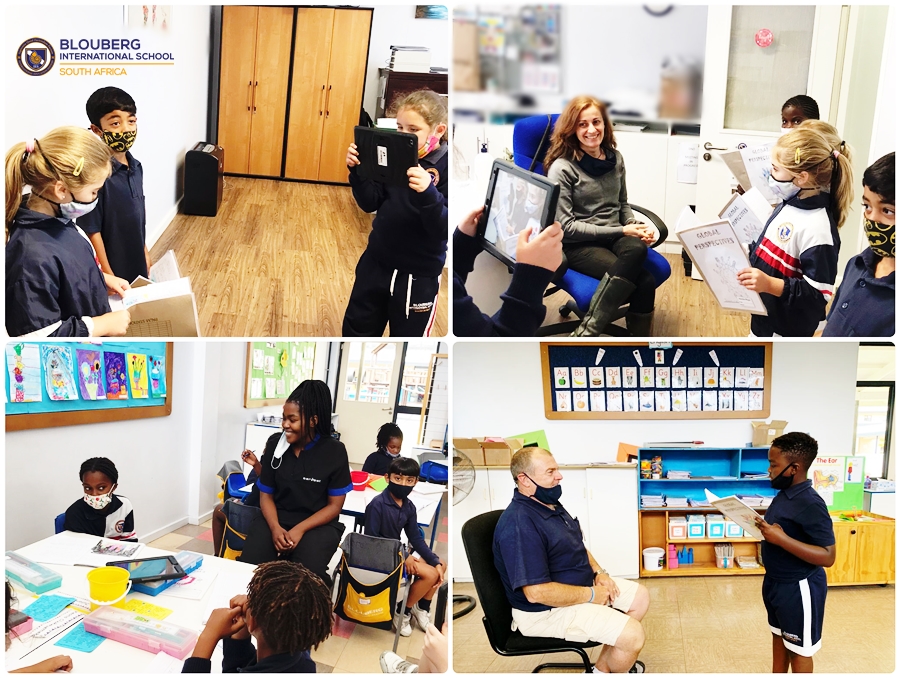
Last week, the students prepared interview questions for people who work in our school. They had to decide, as a group, the questions they wanted to ask. They then did mock interviews with their classmates pretending to be the people they are going to interview.
This week was the ‘real deal’ and armed with iPads the students interviewed, Mr Swart, Uncle Clive, Mrs Diana and Ms Zimbi.
Here are some of the questions they came up with:
- Do you like your job?
- What do you do?
- Do you work alone?
- What don’t you like about your job?
- What is your favourite part of your job?
- Do you have any issues?
We will end the term with a dress-up day, ‘What I want to be when I grow up!’
Ann Cordner
Year 1 Teacher and Key Stage 1 Coordinator

Living And Non-Living
This term, our Year 3’s have been focusing on Living and Non-Living things in Science. The unit provides opportunities for the students to observe a range of living and non-living things and to consider how they know whether or not something is alive. The activities we covered so far, encourages consideration of the seven life processes (movement, respiration, sensitivity, nutrition, excretion, reproduction, and growth) as providing evidence of something being alive.
The students also conducted a survey and collected data about the hair and eye colour of classmates, and then collated their findings into a tally chart.
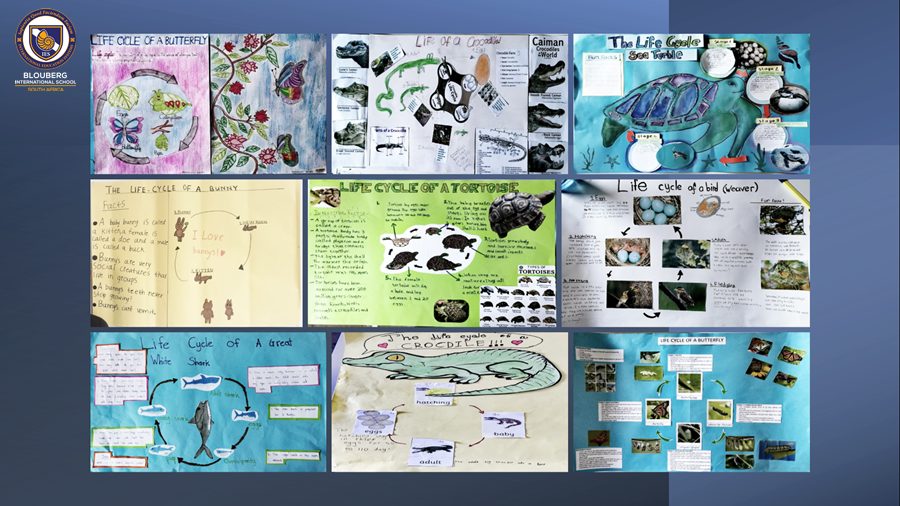
To end the unit, we looked at stages in the human, animal, and plant life cycle. Students were then given an opportunity to create their own life cycle poster and present their work to the class in the form of an oral. The students put in a lot of effort and hard work and both their posters and orals were amazing. There were many fun and interesting facts presented to the class, and I am certain that we all learnt something new about the various animals.
Well done Year 3! I am so proud of you all
Monalisa Maphosa
Year 3 Teacher
Read More
Hands On Physics
I often hear people say, “Physics is hard” or “it’s for intelligent individuals” and I beg to differ. When we were toddlers, we were curious, we asked questions frequently, we were hands on and our parents encouraged us to explore the world around us. As we progressed into adolescence, some of us stopped asking questions and started believing everything we see or hear.
Many neurological studies have shown that curiosity enhances people’s abilities to learn and retain new information. Physics is for curious people. Anyone who isn’t afraid to ask “foolish questions” such as why the sky is blue, what causes ocean waves, are we the only human beings in the universe, etc., can be a good physicist.
In a quest to find answers to nature’s great mysteries one needs to have an enquiring mind. Great physicists have strong scientific ability. They have an analytical approach to solving any problem.
This term the focus was on developing the students’ scientific skills such as:
- Problem solving skills, other technical skills
- Mathematical skills applied to physical systems
- Analyzing and modeling physical process
- Gathering data, making testing models and predictions
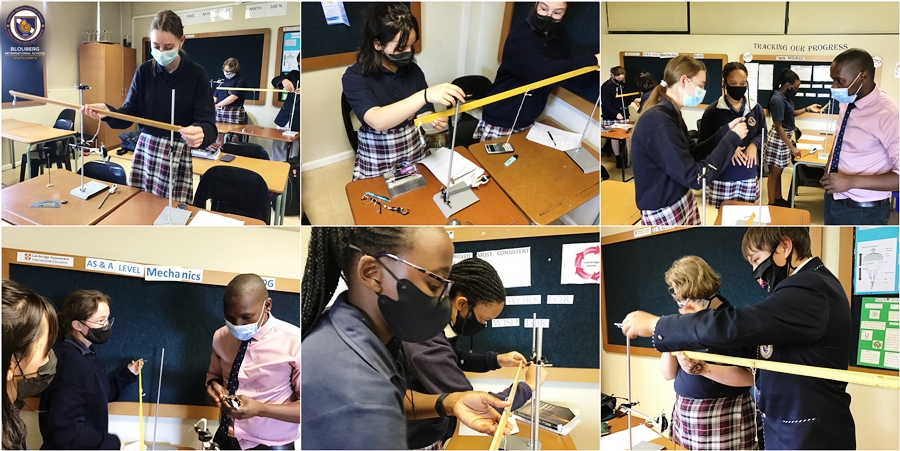
The year 9 students were given a task to build a model of a periscope for SA NAVY. A periscope is an instrument for observation over, around or through an object or obstacle, it is usually used in land and sea warfare by the military. The underlying physics concept is internal reflection of light.
In year 11, the students are making a remote-controlled toy car. This project will help them understand how motors work, the role of rheostats in a circuit and they will also get to do a bit of engineering while at it.
All these HANDS ON projects are aimed at developing the above mentioned scientific skills. Whether or not students continue with physics post high school, they will have these essential skills for any field of work.
Brian Sizani
IGCSE, AS and A-Level Physics Teacher
Read More

Farm Day In Year 2
“While we try to teach our children all about life, the farm teaches us what life’s all about – and how each seed tells its own story”
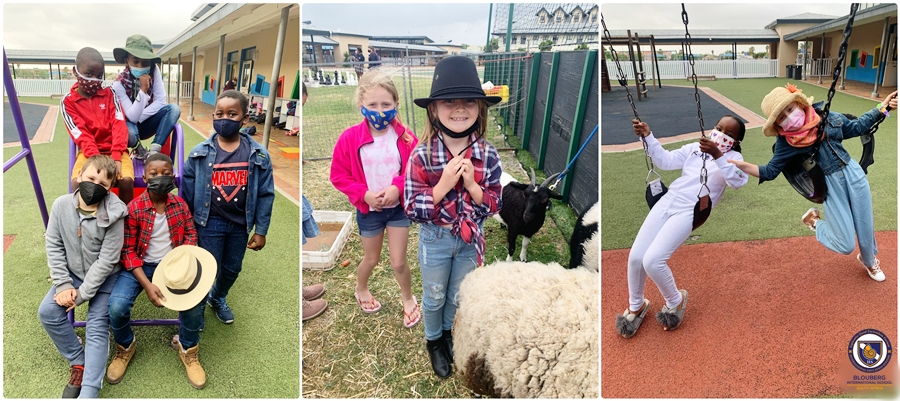
Last week Friday, our Year 2’s celebrated all things agricultural at Farm Day! Each student was encouraged to dress as a farmer and come to school with the farmer spirit, ready to chat about our wonderful Earth, and how it provides many natural and essential goods.
Dressed in our flannel shirts and cowboy hats, we had a fun day learning about animals that live on a farm and what they eat to get big and strong. We also learnt about what kinds of crops are grown on a farm, how they are grown and what they also need to grow big and strong.
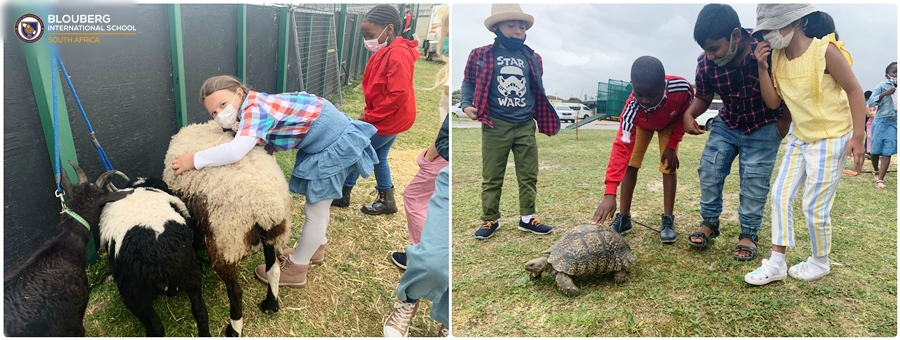
One of our favourite parts of Farm Day was when we got the opportunity to interact with some of the farm animals who visited our school for the day. We saw some sheep, a tortoise, some bunnies, some chickens, and a few other very special and very cute animals. So grateful to have this experience!
Siobhan Hendry
Year 2 Teacher
Read More